Courtesy of National Catholic Reporter
A book bearing the title The Trojan Horse in the Catholic Church and published by the group Catholics for Catholics arrived in the mailboxes of Catholic bishops across the country this past winter, warning them of hidden forces reshaping the church from within. The book’s central claim is stark: that the synod on synodality, Pope Francis’ three-year global process of listening and discernment that concluded in October 2024, is a calculated effort to dismantle the church’s hierarchical structure and overturn its moral teaching on sexuality and the family.
The book’s author has given no name, only the pseudonym “Enoch” borrowed from an Old Testament prophet who, tradition holds, never died and will return at the end of the world to fight the Antichrist. Its foreword was written by a participant in the very synod it condemns — one voice among more than 300 in that assembly whose account of what took place is directly and specifically contested by others who were present in the same room.
The famous Trojan horse from Greek mythology succeeded because no one looked inside of it. I am one of the bishops who received the book. Unlike in the story of the Trojan horse, I opened it. And as I read, I found myself thinking of the two disciples walking away from Jerusalem.
Two disciples, trying to make sense of a catastrophe they could not yet name. And a stranger joined them on the road. He did not announce himself. He asked, “What are you discussing?” He listened before he spoke. Only when they had been fully heard did their hearts begin to burn, and only then did they recognize him in the breaking of the bread.
That sequence — walking alongside, asking, listening, opening the word — is what the church calls synodality. It is as old as Emmaus, as old as the Council of Jerusalem, where the apostles and the whole community gathered to discern together and wrote: “It has seemed good to the Holy Spirit and to us” (Acts 15:28). Synodality is not a novelty but an inheritance.
Know the source
Before engaging the book’s theological claims, intellectual honesty requires a word about its publisher.
Catholics for Catholics is not a theological institute and it holds no magisterial standing. It is a political-religious activist organization founded in 2022 that describes itself as the “fastest growing Catholic movement in America” and serves as an official partner of the White House’s “America Prays” campaign.
The book, available for sale, is also being distributed through a crowdfunded campaign at $25 a copy with the intention to reach every bishop in the country.
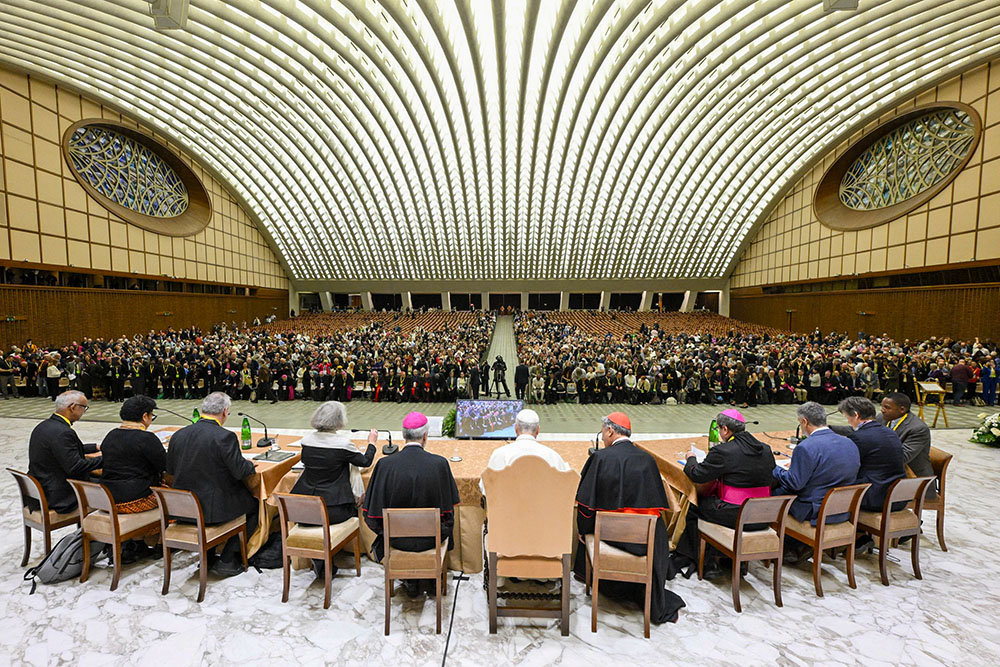
The book’s foreword lends a prestige worth examining carefully. Its author, a senior churchman who attended both sessions of the synod on synodality at the Vatican as a voting participant in 2023 and 2024, describes a process manipulated to produce predetermined outcomes. But another participant present at both sessions, Jesuit Fr. Agbonkhianmeghe Orobator, described the above account as “inconsistent with reality,” writing in America magazine in October 2025.
Pope Leo XIV, himself a voting synod delegate before his papal election, has described synodality as “an attitude, an openness, a willingness to understand.”
I am a Vietnamese bishop, and in our culture we have a proverb: “Một cây làm chẳng nên non, ba cây chụm lại nên hòn núi cao,” which means, “One tree cannot make a forest, but three trees gathered together form a great mountain.”
Well over 300 voices were in those assemblies. One account does not make the whole forest.
The book gets tradition backward
The Trojan Horse in the Catholic Church makes two central theological claims. The first is that the synod on synodality was designed to “eradicate the hierarchical structure of the Church as instituted by Christ, replacing it with a democratic model.” The book accentuates the image of an “inverted pyramid” that appeared in synodal discussions as proof of this intent.
The argument sounds alarming, but it is a fundamental misreading of both the image and the final document of the XVI General Assembly of the Synod of Bishops, available in full at the Vatican’s website.
The inverted pyramid was never proposed as a new governance structure. Rather, it was used to describe how authority is exercised in a manner conformed to Christ, who said with startling clarity, “Whoever would be great among you must be your servant, and whoever would be first among you must be your slave, even as the Son of Man came not to be served but to serve” (Matthew 20:26-28). The pyramid is inverted not to place the laity above the bishop, but to place the bishop’s authority in the posture of Christ: at the service of, not in dominion over, the people of God. The bishop who listens is not a weaker bishop. He is a more Christlike one.
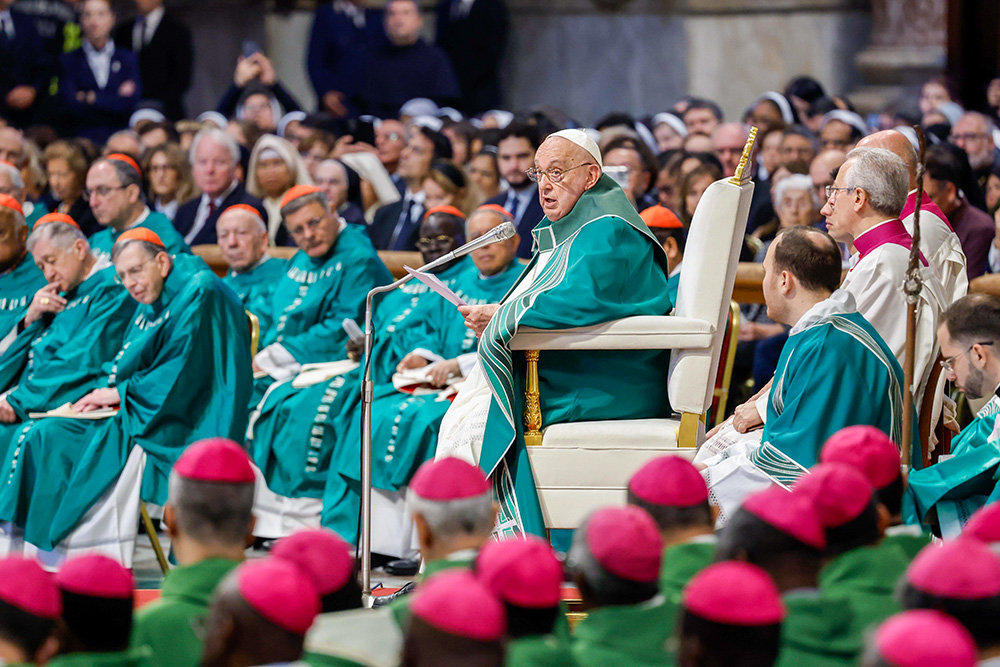
The final document reaffirms without qualification the teaching of Lumen Gentium on the hierarchical constitution of the church. It states that the episcopal ministry is irreplaceable. It affirms that bishops, as successors of the apostles, hold genuine authority to teach, sanctify and govern. It calls not for the elimination of hierarchy but for its evangelical purification toward a more servant-hearted, listening, missionary exercise of the authority Christ gave his apostles.
The book also claims that a bishop’s authority cannot be “dependent on listening and learning from those under his care.” But this directly contradicts the 1962-65 Second Vatican Council. Christus Dominus teaches that “it is especially the duty of bishops to seek out men and both request and promote dialogue with them.” Lumen Gentium teaches that the whole body of the faithful possesses a supernatural sense of faith, the “sensus fidei,” through which the Holy Spirit illumines the people of God from within.
Listening to the faithful is not a concession to democracy. It is fidelity to the Spirit who speaks through the whole church, not only through its ordained ministers.
Accompaniment is not capitulation
The book’s second claim is more inflammatory: that synodality is a calculated mechanism for overturning Catholic moral teaching, particularly on sexuality and the family. This argument conflates three things that Catholic theology has always carefully distinguished: doctrinal definition, doctrinal development, and pastoral accompaniment. This conflation is not an innocent error.
The deposit of faith — what God has revealed and what the church guards as sacred trust — is not and cannot be subject to revision by any synod, any council, or any pope. The church’s teaching on marriage, on the dignity of every human person, on the moral order that flows from the truth about the human person — none of this is on the table. No vote can or will change it and the final document does not suggest otherwise. Not on a single page.
What synodality opens is the harder, more demanding question: How does the church walk with human beings whose lives are complicated, wounded and often far from the fullness of what the church proclaims?
This is the question that gave us the good Samaritan, the prodigal son, the woman at the well. It is the question Jesus answered by going to where people actually were, listening to what they carried, and only then speaking the word that could reach them. To accompany a person who is struggling is not to approve of the struggle. It is to walk with them, as the stranger walked with the disciples on the road to Emmaus, even when they could not yet recognize him.
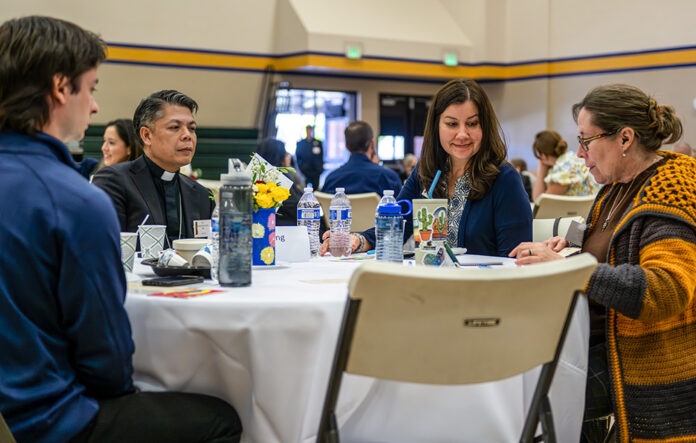
In the Phoenix Diocese, our Synod of Young Adults gave the opportunity to more than 950 young people in 2025 to have their voices heard — some far from the practice of the faith — in venues ranging from parishes to coffee shops to the Arizona Opera. It was not an exercise in doctrinal relativism. It was an act of evangelical courage by going out to find people who had drifted, listening to their real experiences, and asking how the unchanging Gospel of Jesus Christ might be proclaimed to them with renewed credibility and love.
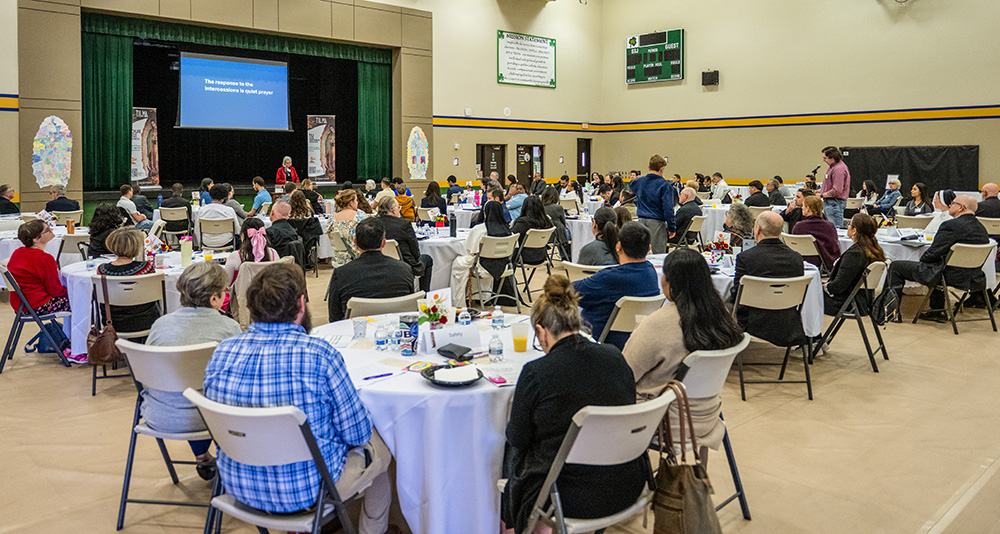
That is precisely what Pope Francis’ Evangelii Gaudium asks of the whole Church. It is what it means to go out, as the Gospel demands, and find the lost sheep where they actually are. The synodal listening sessions revealed that — in many ways — our young adults long for belonging, healing, formation, safety and accompaniment. Our next step is to work with the young people so that we can develop an action plan to begin addressing these needs.
What I know about journeying together
I came to this country as a refugee, crossing the South China Sea by boat in 1977, and the first thing the church gave my family was a community that already knew how to journey together. The boat was not where I began my journey with synodality, but at Mary Queen of Vietnam Church, the parish that eventually received us in New Orleans, where our family first arrived from Vietnam in 1978. Mary Queen of Vietnam was established in 1983 as the first Vietnamese national parish in the United States.
In Vietnamese Catholic communities, both in Vietnam and in the diaspora parishes that carried the tradition across the sea, the parish is divided into neighborhood sections called khu. This is the local expression of what the Vietnamese Catholic tradition formally calls the họ đạo, or the subparish community. Each bears the name of a patron saint. The khu is not an administrative unit. It is a living community.
Families within a khu gather regularly to discuss whatever is happening in their lives — joys, struggles, illnesses, needs. When a member dies, the khu organizes evenings of prayer at the family’s home. In October, the month of the rosary, each household takes its turn hosting the evening prayer, praying the rosary from door to door through the neighborhood like a flame passed from candle to candle. When a great parish feast comes, each khu is given its role, its responsibility, its part to carry in the common celebration.
The leaders of each khu meet periodically with the community president, always a layperson, and with the pastor, bringing the real needs and real voices of the families they serve.
But the khu itself is fed by something smaller and more intimate. The communal life of the parish flows from the life of the family, and the heart of family life in Vietnamese culture is the evening meal.
Every evening, the whole family gathers at the dinner table, not only to eat, but to speak and to listen to one another. What is carried in from the street, from the school, from the fields or the workplace, is laid on that table along with the rice.
The grandparents sit at the center of that circle, honored and consulted, and their wisdom is received as a gift rather than a burden. The young learn from their earliest years that truth is not discovered alone. It is discovered together, around a table, with the elders speaking and the young listening, and then the young speaking and the elders listening in return.
No one in my world used the word synodality. But every structure of that world — the khu, the prayer evening, the shared feast day, the dinner table, the pastor listening to the khu leaders, the khu leaders listening to the families — was synodal to its core.
It is worth pausing to reflect: The họ đạo, the subparish community, did not emerge from a Vatican document or a pastoral planning process. It was forged across four centuries of intermittent persecution of Vietnamese Catholics, when priests were scarce or imprisoned and communities had to pass the faith from household to household. The faith was kept alive through lay leadership, communal prayer and shared responsibility. It survived because it was built on listening. It was a church that listened before it spoke, that walked alongside before it judged, that served before it governed.
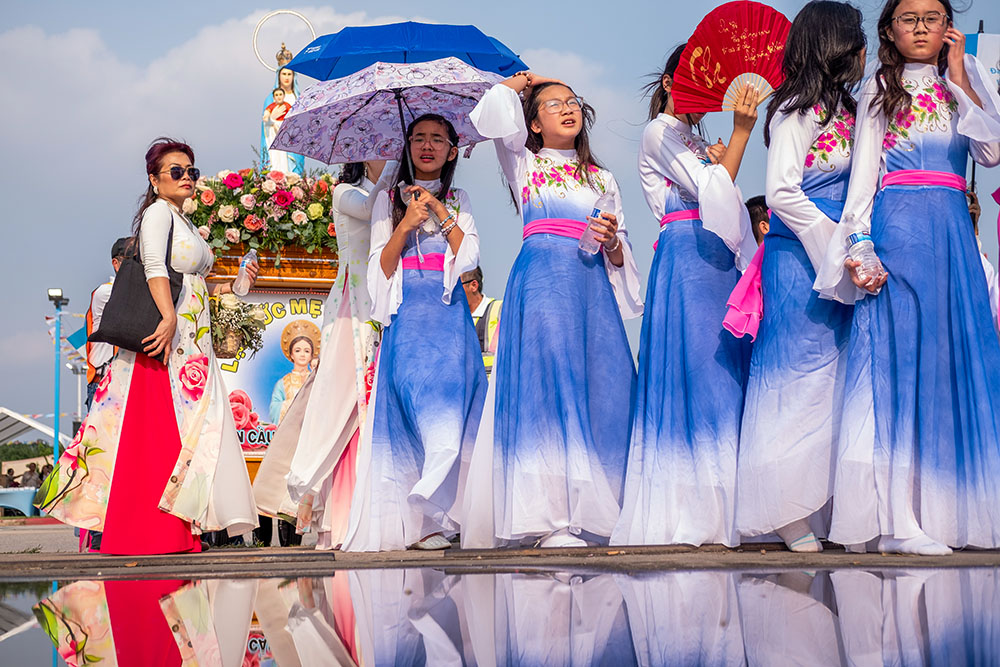
What the final document of the XVI General Assembly has done is give that ancient, living practice a more careful theological name: synodality. It has not invented something new. It has recognized something the people of God have always known.
In the Phoenix Diocese, nearly half of our 228 active priests were born outside of the United States, and our Vietnamese, Latino, Filipino and African communities each carry these deep traditions of communal discernment. As vicar for clergy, I have seen synodality not as a threat to priestly identity but as its deepening.
The priest who listens to his people is not diminished. He is formed. The bishop who walks with his priests, who hears what they carry rather than only directing them, is not abdicating authority. He is exercising it in the only way the Gospel endorses: as service, in love.
My episcopal motto is “Omnia in caritate fiant,” “Let all that you do be done in love” (1 Corinthians 16:14). That includes how we hold the truth, how we respond to those who are anxious and afraid, and how we engage a book that is — whatever its intentions — sowing alarm among the very priests who most need to be accompanied in hope rather than mobilized in fear.
Back to the road
The two disciples walking away from Jerusalem did not know that the stranger who joined them was the risen Christ. They knew only that their hearts burned within them when he opened the Scriptures and that they recognized him, finally and unmistakably, in the breaking of the bread. The church has been making that same journey ever since, walking together, sometimes in confusion, sometimes in grief, but always with the risen one alongside us even when we do not yet recognize him.
To priests and faithful across the country who have received alarming materials about the synod on synodality, your love for the church is not in question. Bring your questions to your bishop and pastor. Read the final document in its own words rather than in the words of its critics. Trust the Holy Spirit who has guided the church through 20 centuries of controversy, council and renewal. The same Holy Spirit who has led the church through the Council of Jerusalem, through Nicaea, through Trent, through Vatican II, and now through this present moment of discernment.
And remember, the tradition has never been preserved by those who walked away from Jerusalem. It has been preserved by those who, despite their fear and confusion, stayed on the road — walking together, listening, waiting for the moment when the stranger beside them would finally be recognized.
Reprinted by permission of NCR Publishing Company www.NCROnline.org. Link to original article: www.ncronline.org/opinion/guest-voices/fear-not-theology-bishops-response-campaign-against-synodal-church