(OSV News) — On Aug. 9, 1991, two young Polish missionaries were killed by Peru’s Maoist Shining Path guerrillas after refusing to abandon the people they served.
Thirty-five years after Conventual Franciscan Fathers Michal Tomaszek and Zbigniew Strzalkowski were martyred, their legacy endures as a reminder that the Gospel is lived not through privilege, but through closeness to the people entrusted to the Church’s care.
For Father Jaroslaw Wysoczanski, the only surviving member of the three-man Polish Franciscan team that established the mission in Peru’s western coastal Diocese of Chimbote, the anniversary of their death is not primarily about coming back to the day his friends perished, but rather to why they chose to remain in Peru.
“A good shepherd does not abandon his flock when danger comes,” Father Wysoczanski, who now ministers to migrants and refugees in El Paso, Texas, told OSV News.
Pope Leo XIV, who spent more than two decades as a missionary and bishop in Peru before his election, has pointed to the country’s modern martyrs as examples of missionary fidelity. Polish missionaries were murdered in the Andean town of Pariacoto.
The making of a missionary
Father Wysoczanski’s memories offer a firsthand account of the months leading up to the killings.
They “set foot in Latin America for the first time”in the first days of December 1988, after leaving communist Poland, and traveling through Moscow. He said he and Father Strzalkowski arrived first. Months later they were joined by Father Tomaszek, completing the small Franciscan fraternity that would begin one of the Polish province’s first missionary ventures in Peru.
“We were young Franciscans who, responding to the Lord’s call, left our homeland, our culture and the security of a strong, well-organized Church to become brothers to distant and unknown people,” he said.
The missionaries quickly discovered that Peruvians knew exactly where they had come from.
‘Charming way of breaking the first barriers’
“As soon as people heard we were from Poland, they immediately mentioned John Paul II,” Father Wysoczanski said. “Sometimes they also mentioned a football player, Grzegorz Lato, and his famous speed during the World Cup. It was a charming way of breaking the first barriers.”
Father Wysoczanski said that from the moment they set foot on Peruvian soil, “we felt people had been waiting for us for a long time,” he told OSV News. “We were welcomed not as foreign missionaries but as members of the family.”
The friars had to learn a new language and serve isolated mountain communities scattered across the Andes. Many villages sat more than 6,500 feet above sea level and could only be reached on horseback or by mule after hours of travel over rough dirt roads.
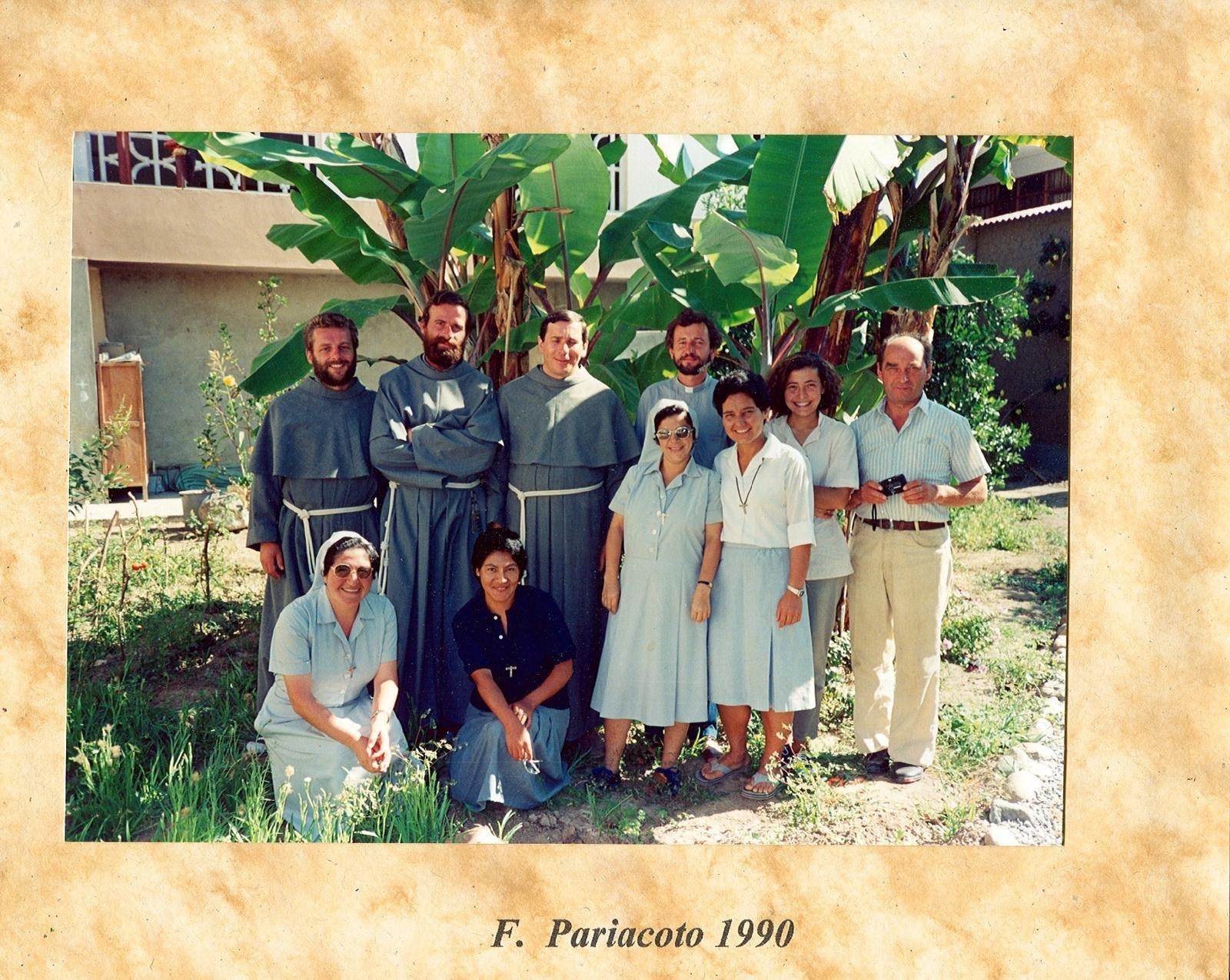
Sister Servants of the Most Sacred Heart of Jesus, who had already been serving in Pariacoto, became instant allies of the young friars. “They introduced us to the local reality,” Father Wysoczanski said, recalling how the sisters helped them understand the people, their customs and needs. “Their experience became an invaluable school of missionary life.”
Widespread poverty, cholera epidemic, drought
At the time of the Franciscan arrival to the region, Peru struggled with widespread poverty, a severe cholera epidemic and prolonged drought. At the same time, the Shining Path insurgency was spreading terror across rural regions.
In those circumstances “our missionary work could not be limited to proclaiming the Gospel,” Father Wysoczanski told OSV News.
Alongside organizing a school for catechists and serving more than 70 mountain communities, they helped local residents build roads and irrigation canals while responding to everyday needs. “We tried to help people overcome daily difficulties, restore hope and recover their dignity,” he said.
“We understood that the Gospel is lived not through privileges but through closeness; not through comfort but through self-giving,” he told OSV News. “That is why we chose to live among the people of the Peruvian Andes, to walk with them, learn their culture, listen to their suffering and proclaim the good news of Jesus Christ.”
“We worked with great enthusiasm and dedication,” he recalled. “The greatest reward was the response of the people. We encountered extraordinary kindness, trust and willingness to cooperate.” He said they “felt loved by the people” to whom they had been sent.
One of the bloodiest periods of Peru’s modern history
Peru was entering one of the bloodiest periods in its modern history as Sendero Luminoso — Spanish for Shining Path — intensified attacks against civilians and public institutions.
“Bombings, attacks on police stations, power outages caused by acts of sabotage, and a growing number of victims of violence became part of everyday life. We lived in an atmosphere of constant tension and uncertainty,” Father Wysoczanski told OSV News.
“We often spoke in our religious community about security and wondered what we should do if the terrorists came to our mission,” Father Wysoczanski recalled.
For some time, missionaries were told that the Catholic Church was not a primary target. That assumption eventually proved false. Father Wysoczanski explained that for the Maoist insurgents, the Catholic Church was increasingly perceived as an obstacle to the revolutionary project because it defended human dignity, peace and freedom of conscience.
Shining Path a Maoist guerrilla movement
The Shining Path was a Maoist guerrilla movement founded in Peru in 1970 by Abimael Guzmán, a former philosophy professor who sought to launch a violent communist revolution modeled on Mao Zedong’s Cultural Revolution in China.
The group waged a two-decade insurgency marked by bombings, assassinations and attacks on civilians, government institutions and the Catholic Church. Peru’s Truth and Reconciliation Commission estimated that about 70,000 people were killed during the country’s internal conflict from 1980 to 2000, with Shining Path responsible for roughly 37,800 of those deaths. The conflict also devastated Peru’s economy and left deep social scars.
Conscious decision to stay
Several months before the killings, a terrorist attack near Pariacoto claimed the life of an engineer working on a road construction project. “We had a conversation with the bishop and with the sisters,” Father Wysoczanski said. “Then we consciously made the decision that we would stay. We would not abandon the people or the community to which we had been sent. It was a common decision of all the missionaries.”
That choice cannot be explained simply in human terms, the Franciscan friar said. “Father Michal and Father Zbigniew … could have moved to a safer place. No one forced them to stay,” he said. But “they were convinced that a good shepherd does not abandon his flock when danger comes. They wanted to remain with the people not only when life was peaceful, but also when they needed their pastors the most.”
Prayer, he added, shaped those choices. “Father Michal and Father Zbigniew were, above all, men of prayer,” he told OSV News. “In our small monastery chapel, there were often no kneelers available because one of the brothers would spend long hours before the Blessed Sacrament. I am convinced that their most difficult decisions matured there. It was not heroism based on human courage, but the fruit of a deep relationship with Christ.”
August tragedy in Pariacoto
On the evening of Aug. 9, 1991, Shining Path militants seized Fathers Tomaszek and Strzalkowski and later executed them outside Pariacoto. Less than two weeks later, diocesan priest Father Alessandro Dordi was also murdered.
All three were beatified together in 2015 as martyrs killed “in hatred of the faith.”
Father Wysoczanski was not in Pariacoto that night. He had returned to Poland for a family visit and to bless his sister’s wedding, after exchanging places with a younger Franciscan friar.
“They preached peace in a time of violence, taught people to pray the rosary, shared bread with the hungry and witnessed through their lives that God has a special love for the poor,” he recalled.
“They were murdered because they remained faithful to the people they served,” he said.
Priest pleas that attackers spare postulants
According to witnesses, Father Strzalkowski pleaded with the attackers to spare the postulants who were with them. “In a certain sense, it recalls Christ’s words in Gethsemane: ‘If you are looking for me, let these men go,'” Father Wysoczanski said. “Even in the face of death, they were thinking first about others.”
Looking back after 35 years, he said one word now summarizes their witness more than any other. “Faithfulness,” he told OSV News.
“Faithfulness until death, born of love,” he said. “As the years pass, I discover new meanings in their lives and in their deaths,” he said, adding: “I have always been aware that I could have shared their fate.”
Their witness, he emphasized, speaks especially to those who hesitate to follow God’s call.
Most important message of their lives
“I am convinced that this remains the most important message of their lives today,” Father Wysoczanski said. “Love that leads to faithful presence beside another person, and faith stronger than fear.”
Today, Father Wysoczanski serves migrants and refugees along the U.S.-Mexico border in El Paso.
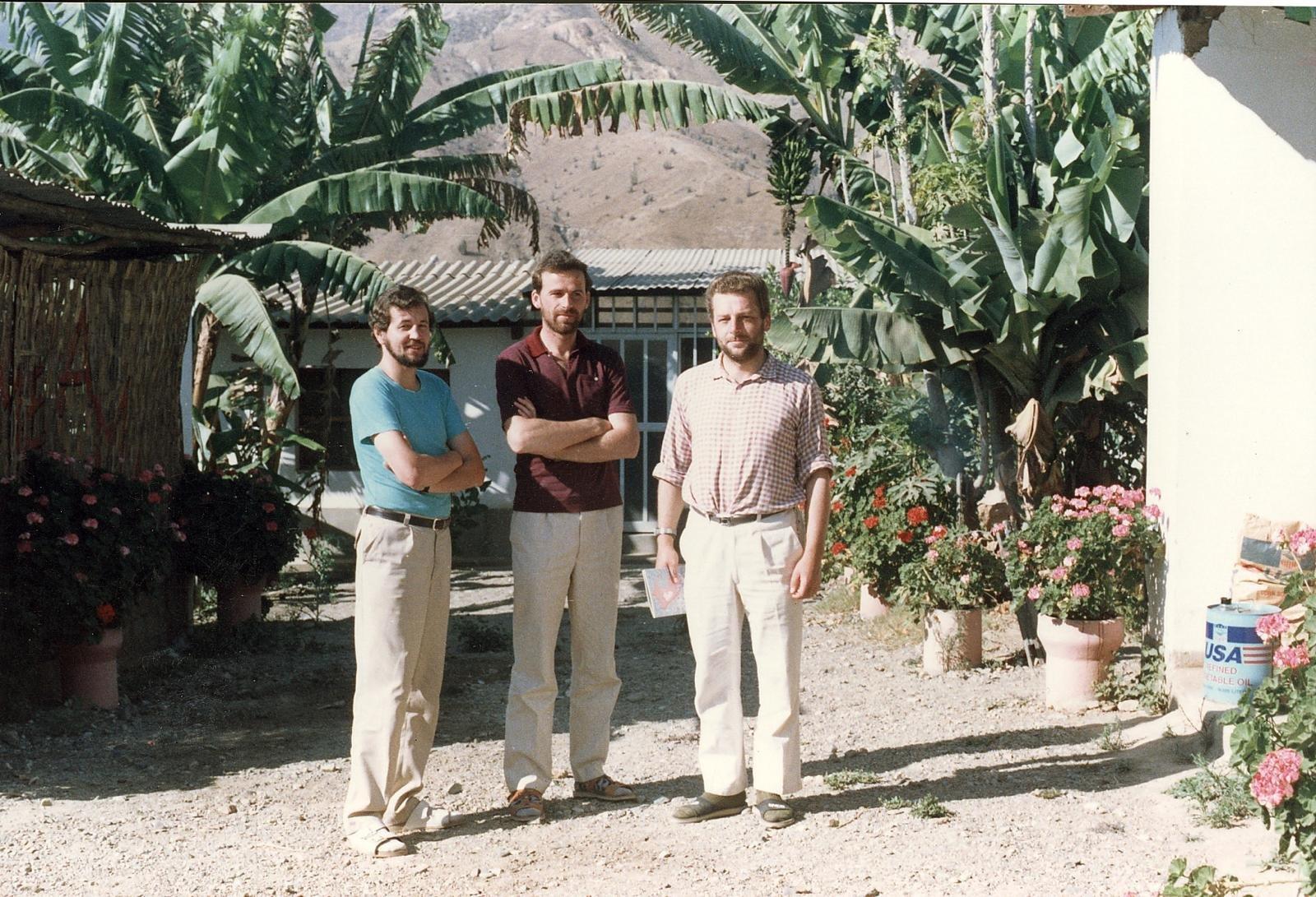
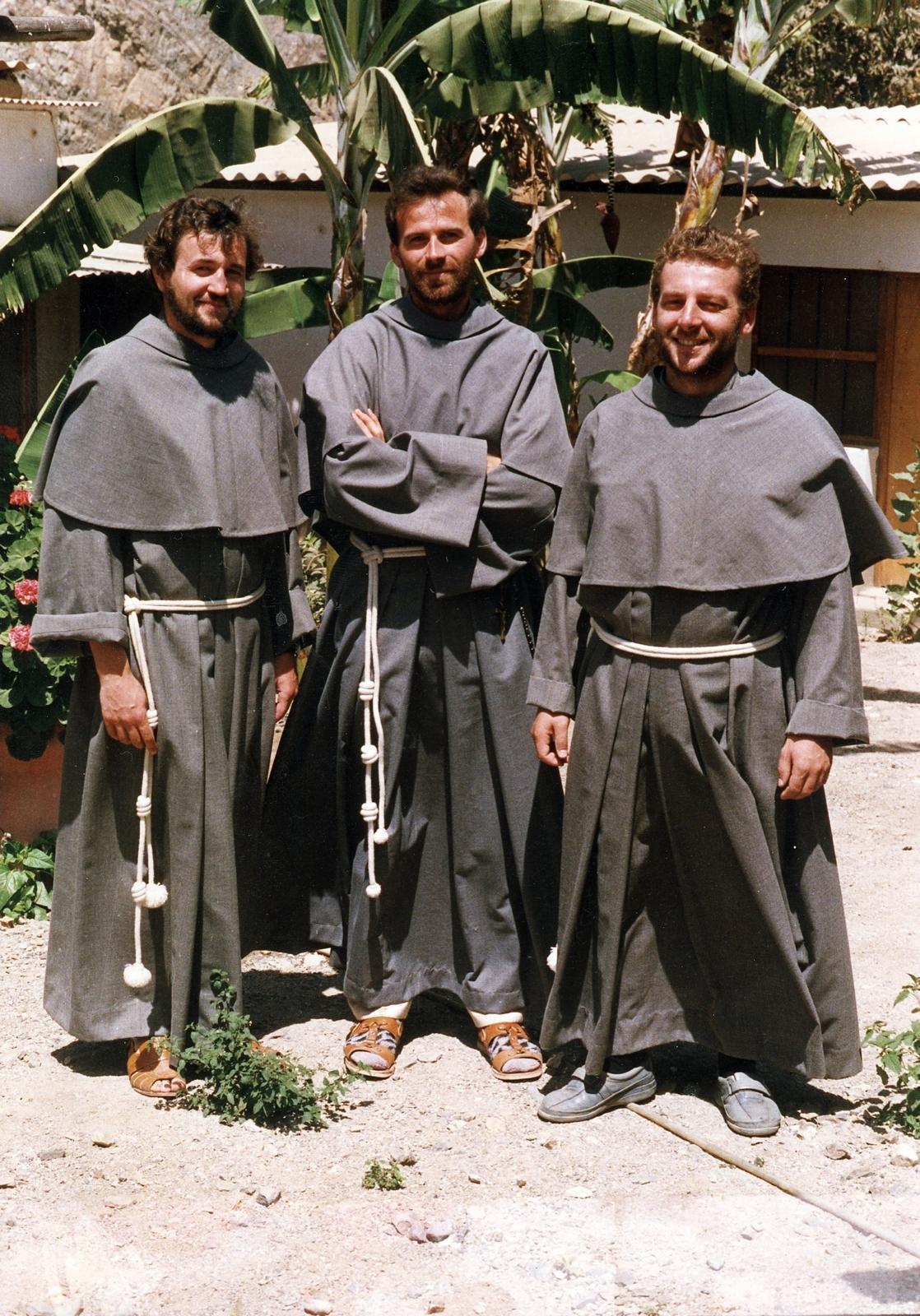
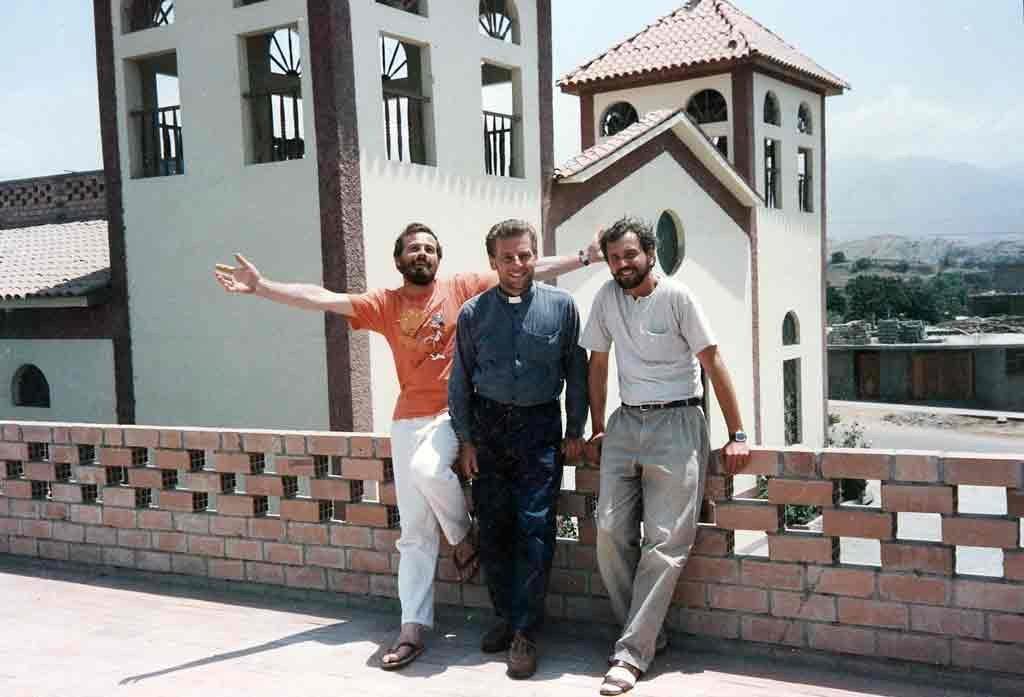
A picture used as an official beatification photograph of Fathers Tomaszek and Strzalkowski is in fact the picture of the three of them, the missionary shared with OSV News.
“Very often, tired and exhausted by serving these people, I return in my thoughts to those first months and years we spent in Peru,” he said. “I realized that what I am doing today is a deep and very close echo of what Michal, Zbigniew and I did together then. It was the pure Gospel then, and I feel it is the same Gospel leading me today.”
Katarzyna Szalajko writes for OSV News from Warsaw, Poland.