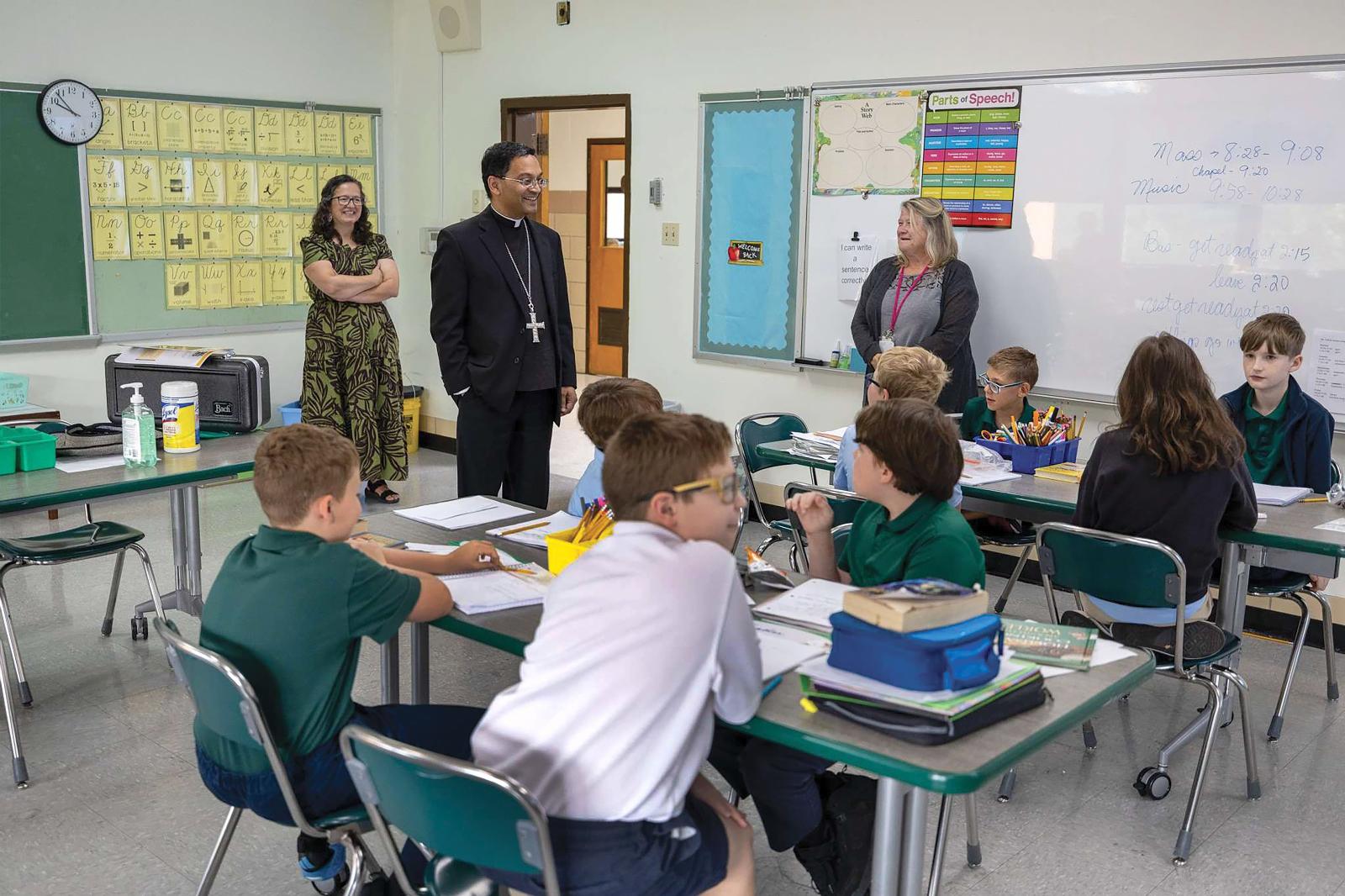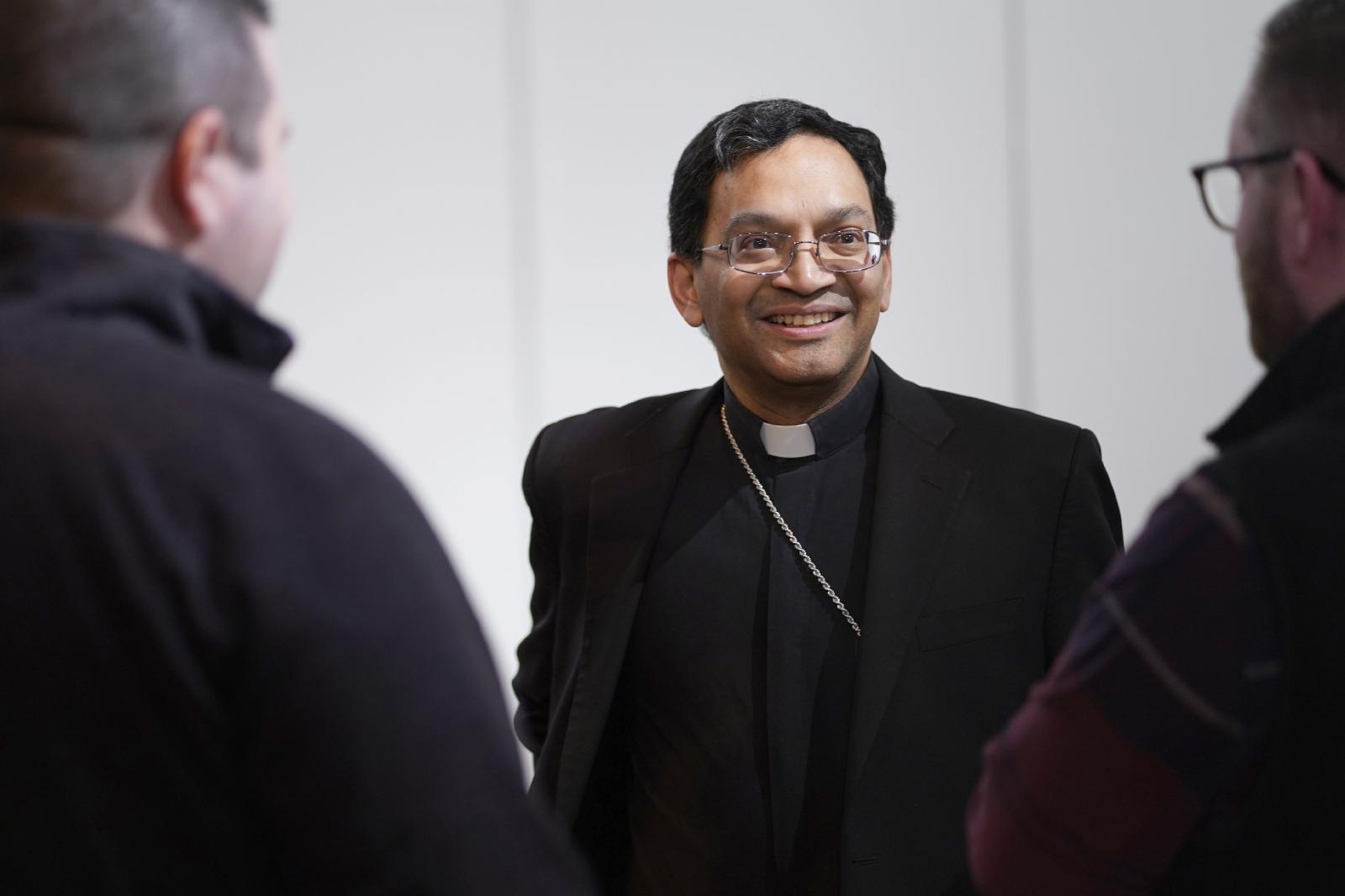
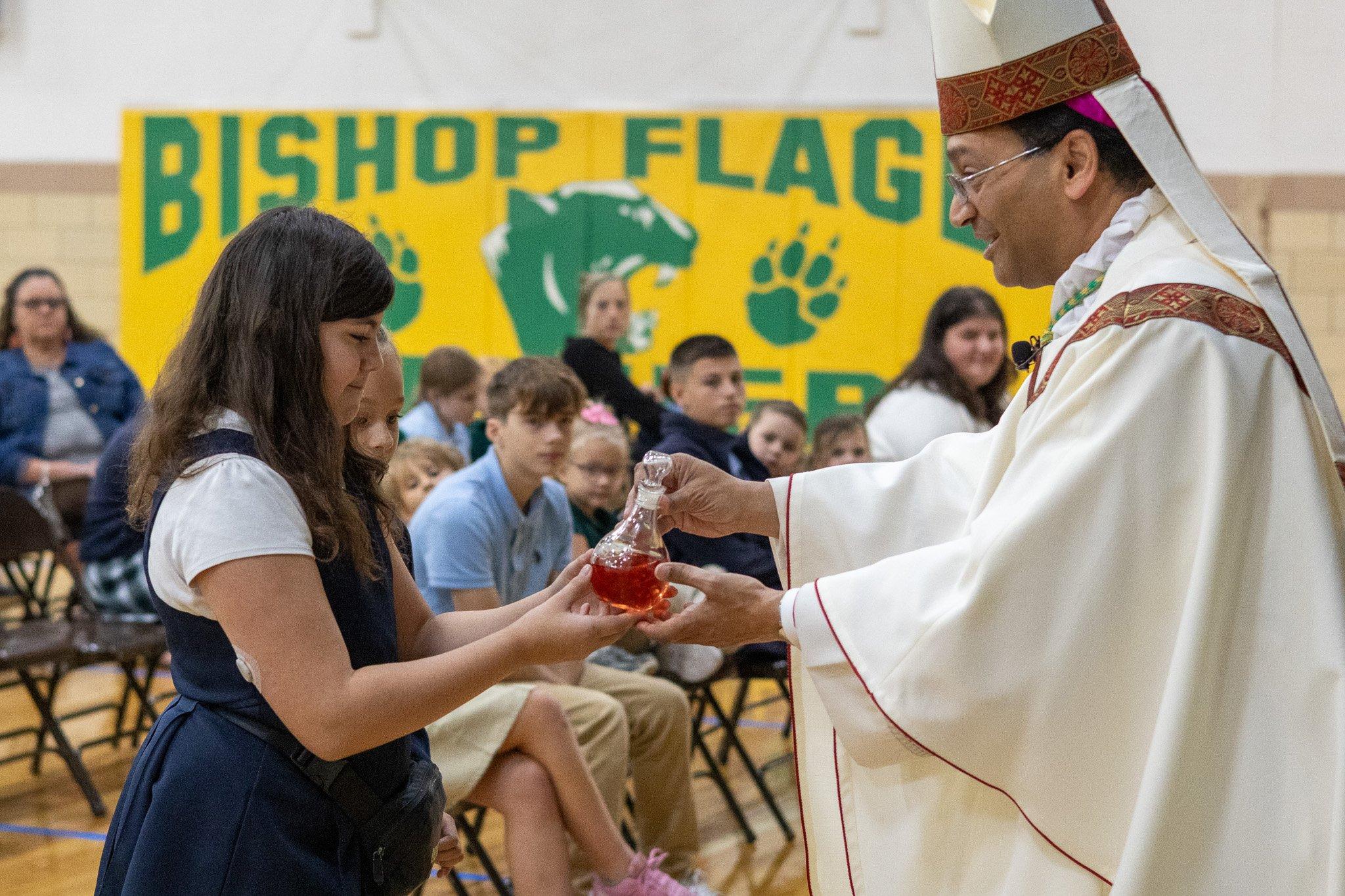
(OSV News) — Catholic education is “an act of hope” that demands a holistic commitment from parents, clergy and teachers to form children in the truth of Christ’s love, said Bishop Earl K. Fernandes of Columbus, Ohio.
The bishop shared his thoughts in the 11-page pastoral letter “Catholic Education: An Act of Hope.” Released Aug. 18, the letter was accompanied by a strategic vision for Catholic education in the Diocese of Columbus, written by superintendent Adam J. Dufault.
Bishop Fernandes also included a copy of the Front Royal Statement, which outlined seven cardinal principles of Catholic elementary and secondary education agreed upon during a May 2026 conference at Christendom College.
The bishop was one of 45 initial signatories of the statement, which recognized the supernatural end of education; the nature and dignity of the human person; the roles and rights of children, parents and the state; the ecclesial responsibility of bishops and priests; the formation and responsibilities of teachers and leaders; the integrity and order of curriculum; and the transmission of a “living Catholic culture.”
Bishop Fernandes’ pastoral letter and its supporting texts come as the Columbus diocese has seen significant growth in its Catholic population, which Bishop Fernandes said has “swelled to nearly 500,000 Catholics,” with seminary enrollment more than doubling and waitlists at most parish schools.
Catholic schools introduce students to reality
In his text, Bishop Fernandes drew on a number of Church documents, including Pope Leo XIV’s encyclical on artificial intelligence, “Magnifica Humanitas,” and the pope’s 2025 apostolic letter “Drawing New Maps of Hope,” a reflection on the 60th anniversary of the Second Vatican Council’s declaration on Christian education, “Gravissimum Educationis.”
Catholic schools “exist to evangelize,” since education itself is “an introduction of the person” — who is “made in God’s image and likeness, as a unity of body and soul” with both the capacity and free will to choose the good — “to reality,” said Bishop Fernandes.
Amid “a tumultuous political, social, and cultural context” in which “profound isolation” and other challenges beset many young people, “Catholic education is rooted in a fundamental anthropological vision” holding “we were made by God to love and for love,” said Bishop Fernandes.
Communicating that vision, he said, requires a lived witness to the faith on the part of both Catholic educators and parents, the latter of whom are primarily responsible for their children’s growth and formation according to Church teaching.
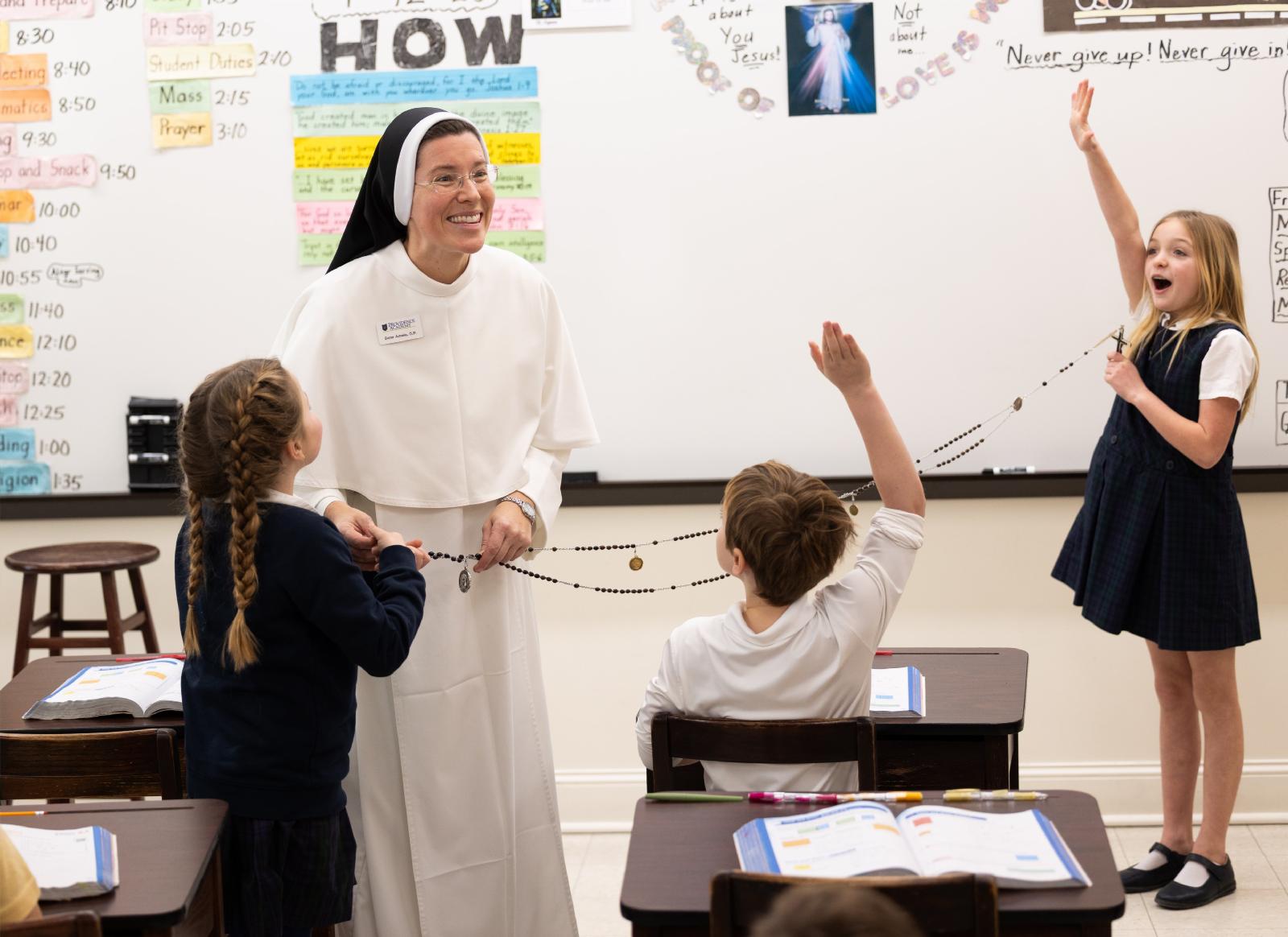
Both professional educators and parents must partner in the mission of Catholic education, said Bishop Fernandes, who also expressed his “sincere hope that more priests and seminarians will consider teaching and working in our Catholic schools.”
That shift “will require not only additional formation but also hard work and patience,” he added.
He stressed that the bishop, as the “chief teacher” of the diocese, “entrusts in a special way his teaching authority to the pastor of the parish” — who in turn is “not a mere figurehead,” but “the one responsible for the governance of the school, which is an extension of the evangelizing mission of the parish.”
Education renewal begins with relationships
Bishop Fernandes said in his letter that “the renewal of Catholic education must begin with the renewal of the relationships that sustain authentic human formation.”
Curriculum in the Diocese of Columbus’ schools incorporate St. John Paul II’s theology of the body, said Bishop Fernandes, “which helps ground the student in a proper anthropology, while, at the same time, challenging the materialistic worldview proposed by the secular culture to our young people.”
He warned that while “modern society often reduces education to objective measurable outcomes, such as test scores, college preparation, and career success,” Catholic schools “must offer something more” — namely, formation that embraces “the entire human person, not the intellect alone.”
“Our schools must help students understand that their lives are gifts from God and that every talent entrusted to them carries with it a responsibility to serve others and to glorify the Lord,” said Bishop Fernandes.
He stressed that Catholic schools in his diocese “must rediscover and renew their commitment to the Catholic intellectual tradition” — a task made “more urgent in the age of artificial intelligence” — and “provoke intellectual curiosity rather than simply provide answers.”
Interiority, unity, love and joy
Bishop Fernandes highlighted the importance of incorporating into Catholic education the principles of interiority, unity, love and joy — four pillars identified by Pope Leo in his address at the 2025 Jubilee of the World of Education.
With young people often “turned inward” and mesmerized by social media, Catholic schools must foster true interiority by creating “spaces for prayer, contemplation, and encounter with God,” said the bishop.
In “a polarized and fragmented world,” said Bishop Fernandes, Catholic education offers unity, proposing “a way to help young people see reality as a coherent whole rather than a collection of disconnected experiences.”
Along with parents, Catholic schools can help children practice charity and live out the Church’s social doctrine, making God’s love a concrete reality, the bishop said.
And, he said, Catholic schools “should be places where students encounter” the “the joy of being loved by the Lord.”
“In a world often marked by fear and isolation, joyful Christian witness may be among the most powerful forms of evangelization available to the Church and our Diocese,” said Bishop Fernandes.
Gina Christian is a multimedia reporter for OSV News. Follow her on X @GinaJesseReina.