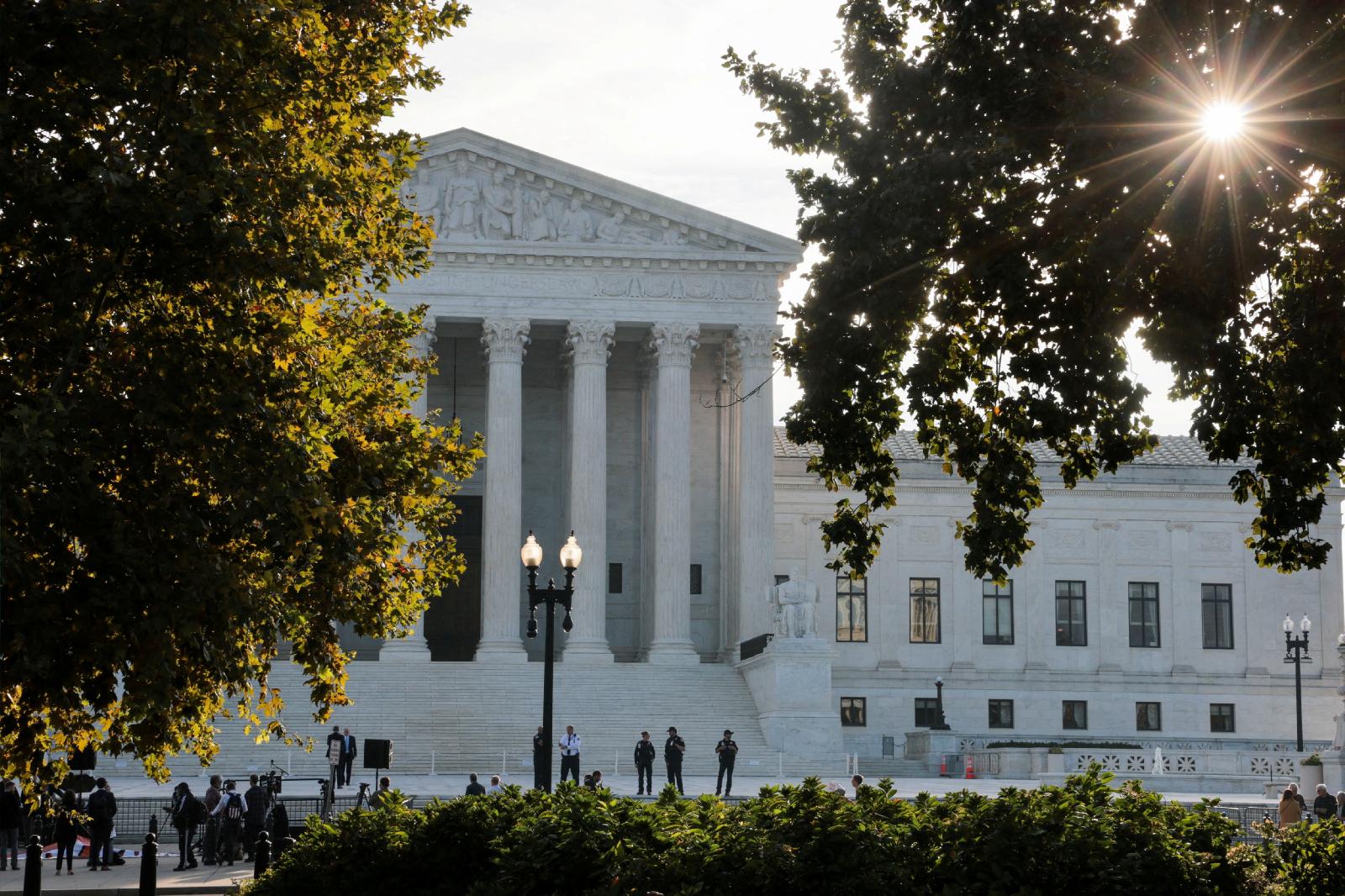
WASHINGTON (OSV News) — In the first case of its new term Oct. 5, the Supreme Court heard oral arguments in a lawsuit from officials in Boulder, Colorado, against two major oil companies over climate change.
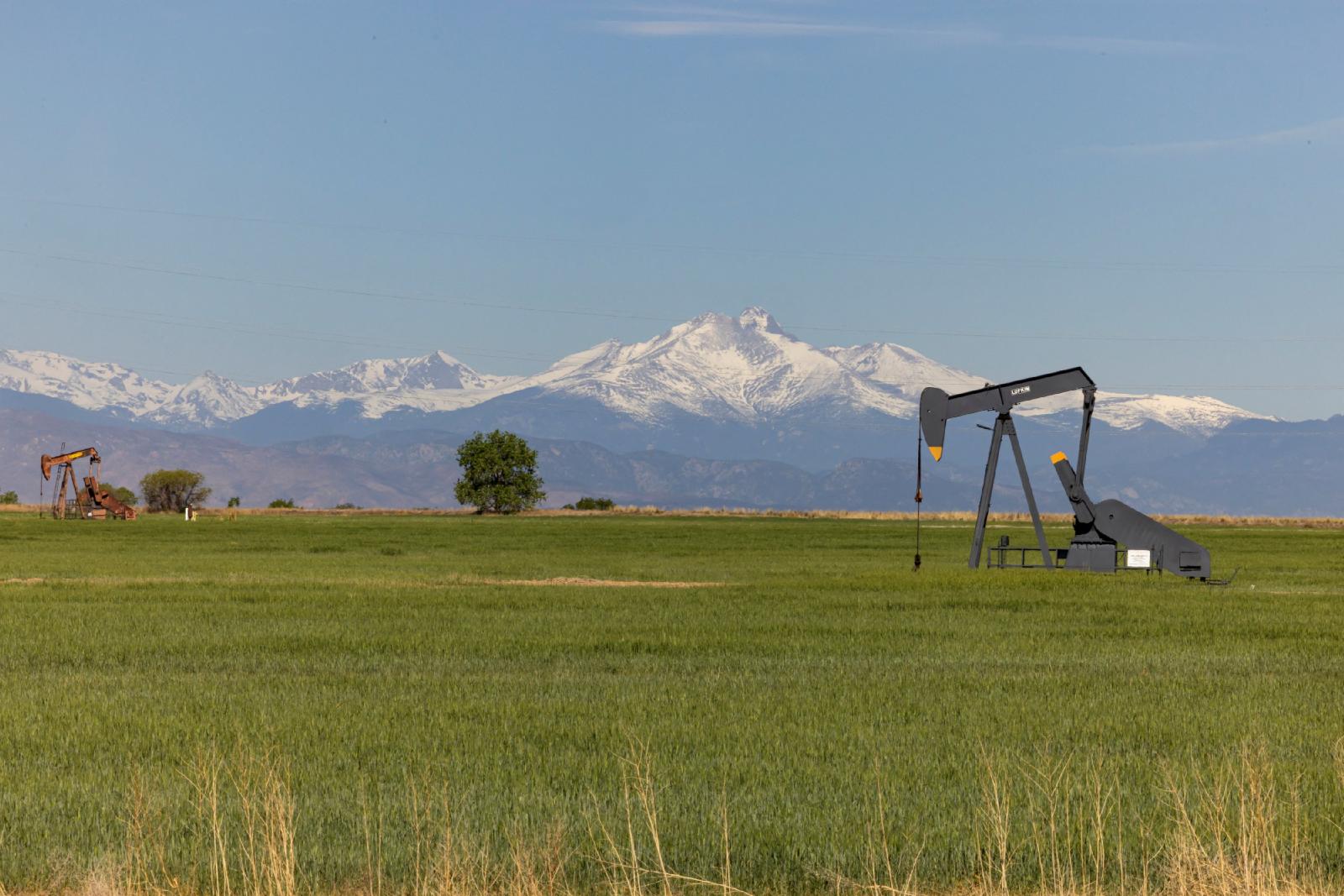
Almost a decade ago, officials in Boulder sued Exxon Mobil and Suncor Energy, alleging they were responsible for climate change in Colorado, such as increased temperatures and the related risk of wildfires. The oil companies have argued that the lawsuit should be thrown out since it was filed in state courts rather than federal ones.
Dan Misleh, founder and executive director of the Catholic Climate Covenant — a Washington-based nonprofit the U.S. bishops helped to form in support of care for creation, told OSV News, “This is a very difficult case.”
“On the one hand, too much of the world still depends on energy produced from fossil fuels,” he said. “On the other hand, scientists have known since early in the 20th century that burning fossil fuels will warm the planet. Fossil fuel companies have also known this fact but have obfuscated it over the years.
“And the questions posed by today’s arguments at the U.S. Supreme Court,” he continued, “are challenging, involving Catholic moral principles such as promoting the common good, examining the principle of subsidiarity (individual, local, national or global responsibility for the harms and costs of fossil fuels), and the preferential option for the poor and solidarity, among others.”
Climate impacts are felt ‘locally, nationally, globally’
“Nevertheless, climate impacts are now being felt locally, nationally and globally in the form of intense storms, prolonged droughts, and terrifying wildfires all fueled by a warmer planet,” he said.
A key legal question in the case is whether the Supreme Court has jurisdiction at the current point in the lawsuit, since the Colorado Supreme Court allowed the case to proceed rather than addressing the merits. Under federal law, the Supreme Court generally has jurisdiction in such cases after final rulings from state supreme courts.
Justices pressed attorneys on the procedural question, with Justice Ketanji Brown acknowledging the case may be “premature” for the Supreme Court to address.
During oral arguments, Kannon Shanmugam, who argued for the oil companies, said, “This court has held for over a century that federal law governs interstate pollution claims. That principle applies with even greater force to claims involving global climate change.”
But Kevin Russell, who represented Boulder, argued that states may pursue remedies for “injuries occurring within their borders, even when the conduct causing those injuries occurred elsewhere.”
State law vs. federal law on providing a remedy
“When somebody in New York defames a citizen of Boulder on national television, or somebody in California releases a computer virus on the internet, or a biological virus into the world, and it causes mass damage in Colorado. It has never been thought that only federal law can provide a remedy,” he argued.
Care for creation is a key tenet of Catholic social teaching. In September, the International Theological Commission published a new document calling for ecological conversion due to “sin against creation and the Creator,” because a failure to be good stewards of the Earth “concerns our relationship with God the Creator, with our neighbors, and with creation itself, distorting the three relationships that define us.”
In his landmark encyclical “Laudato Si’, on Care for Our Common Home,” Pope Francis, citing the writings of St. John Paul II, wrote, “The human environment and the natural environment deteriorate together; we cannot adequately combat environmental degradation unless we attend to causes related to human and social degradation.”
“In fact, the deterioration of the environment and of society affects the most vulnerable people on the planet,” Pope Francis wrote.
Misleh said Pope Francis and many other Catholic leaders “have urged us to move away from fossil fuels as fast as possible; they urge us to hear both the cry of the Earth and the cry of the poor.”
Faith community ‘setting example’ for less reliance on fossil fuels
“As a faith community, we should be setting the example for a life less dependent on fossil fuels, both as individuals and as an institution,” he said. “So regardless of the ultimate outcome of this decision, let’s join together to live more simply and preserve our common home for future generations.”
In another aspect of the case, Justice Samuel Alito recused himself, meaning the case will be decided by the remaining eight justices, an even number that leaves the potential for a deadlocked outcome and uncertainty for dozens of similar lawsuits.
No official reason for Alito’s recusal was given by the court, but some had called for Alito to recuse himself due to financial ties to the energy industry. In May, the court indicated his holdings did not include the companies in the dispute.
A decision in the case, seen as one of the major cases it will hear this year, is expected by the end of the court’s term, which typically ends in June.
Kate Scanlon is a national reporter for OSV News covering Washington. Follow her on X @kgscanlon.