VATICAN CITY (CNS) — Bishops will go home from a weeklong meeting on marriage and family life, with a renewed commitment to listen to the realities of modern families as well as to reach young people and their hesitancy to marry.
“In a world increasingly shaped by robots, anonymity and isolation, the family has a prophetic role to play not only in society but in the future of humanity,” Archbishop Charles Scicluna of Malta said at the conclusion of a Vatican gathering on marriage and family life.
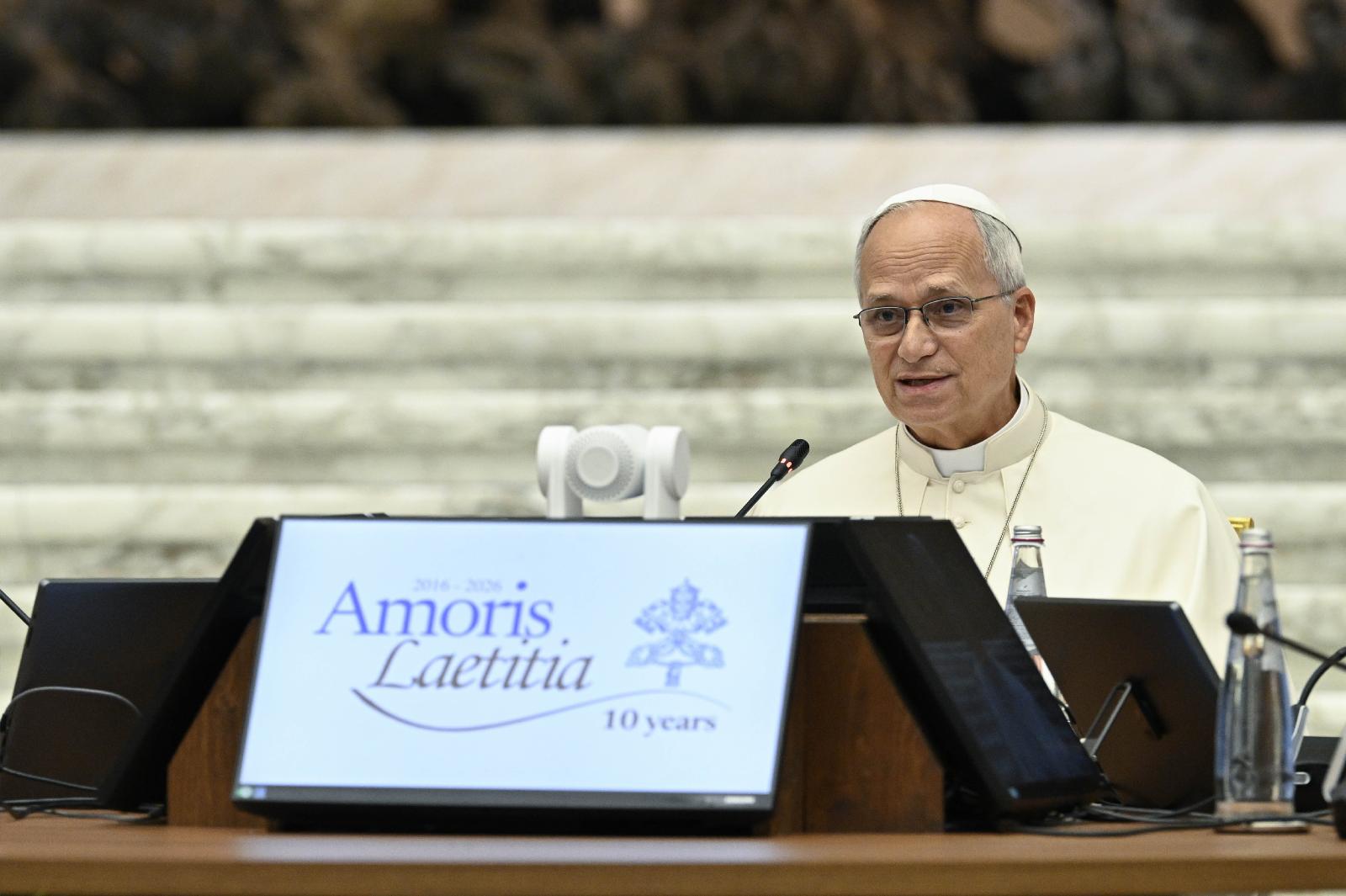
Speaking at an Oct. 14 briefing marking the end of a weeklong meeting Pope Leo XIV called to discuss what has been done in local churches to implement Pope Francis’ 2016 document, “Amoris Laetitia,” on love in the family. Archbishop Scicluna and other participants said the text remains as relevant today as it was a decade ago, challenging the Church to listen to families before passing judgment and to meet people where they are.
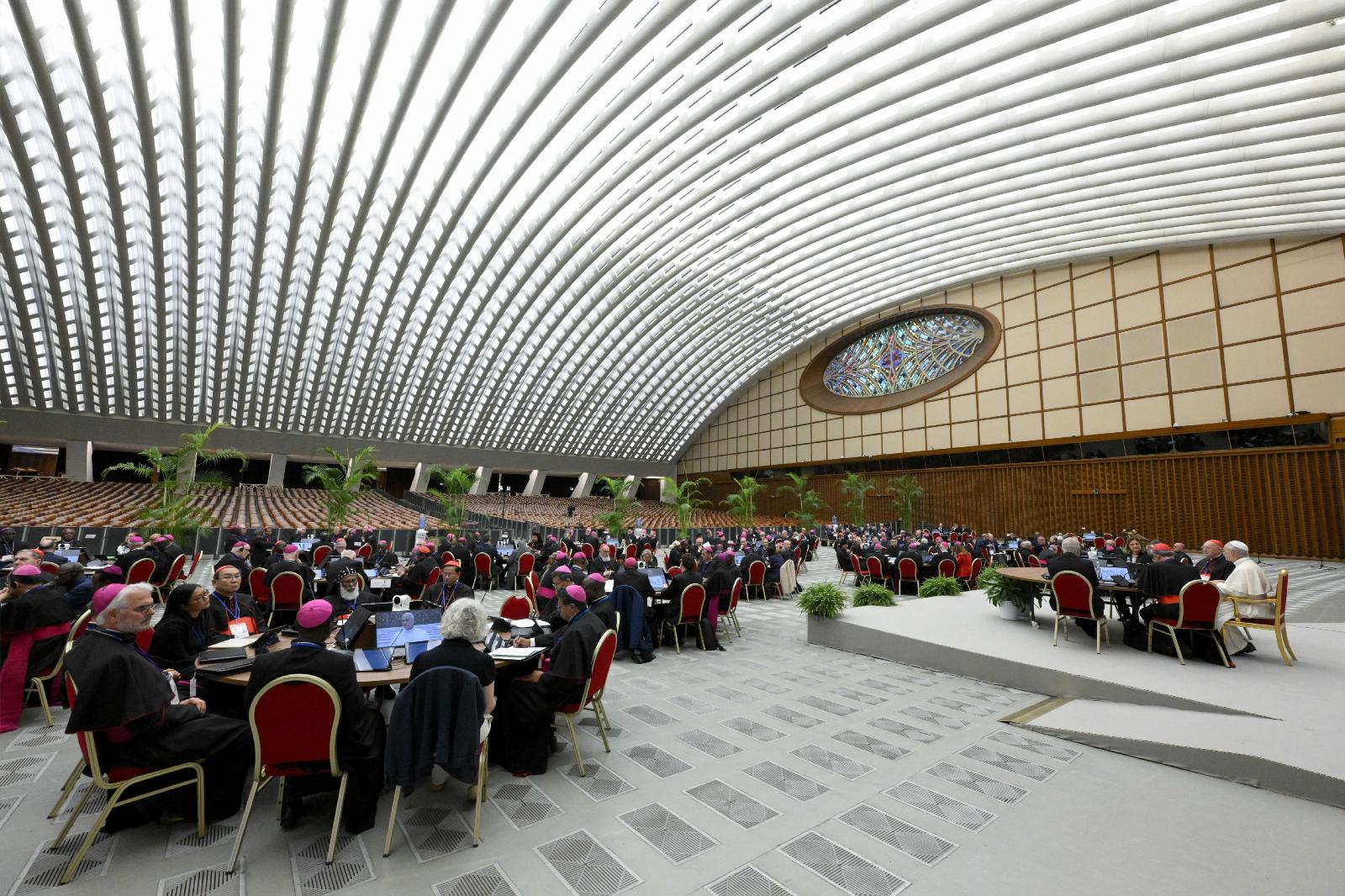
The gathering, held Oct. 7-14, brought together 115 presidents of bishops’ conferences, experts in family ministry, heads of Eastern Catholic churches and lay people to reflect on the Church’s pastoral approach to marriage and family life and the steps to be taken in order to proclaim the Gospel to families today.
Synthesis report to be released after Pope Leo has reviewed it
The meeting’s synthesis report will not be released until Pope Leo XIV has reviewed it, leaving its publication date uncertain as the pope remains hospitalized following Oct. 13 surgery to remove cancerous tissue from his lung.
Organizers of the meeting spoke at a Oct. 14 briefing, describing a world in which the challenges facing families have changed dramatically over the past decade, from economic uncertainty and declining confidence in the permanence of marriage to migration, poverty, separation and war.
Yet rather than seeking universal solutions, “Amoris Laetitia” urged Church leaders and local parishes to understand families’ lived experiences and develop pastoral responses suited to their unique circumstances.
Above all, the discussions reflected a desire to remain faithful to the Gospel without treating mercy and truth as opposing principles, Jesuit Father Giacomo Costa, a consultant to the General Secretariat of the Synod of Bishops, said in the briefing at the Vatican press office.
Archbishop Paul S. Coakley of Oklahoma City, president of the U.S. Conference of Catholic Bishops, said that although “Amoris Laetitia” has often been associated with controversies surrounding its interpretation, its broader message has already transformed how Catholics discuss marriage and family life.
‘There is so much more to this document’
“Most Catholics who know anything about ‘Amoris Laetitia’ know it for the footnotes, the controversies that surrounded it,” he said in an interview with Catholic News Service Oct. 14. “But there’s so much more to this document.”
The emphasis on listening and accompaniment, he said, has become part of the Church’s everyday pastoral vocabulary.
Bishop Daniel E. Flores of Brownsville, Texas, vice president of the USCCB, told CNS Oct. 14 that the Church must pay particular attention to the reasons young people increasingly hesitate to marry, whether because of economic pressures, uncertainty about the future or a feeling that they are unprepared for lifelong commitment.
The challenge for local churches, Bishop Flores said, is to foster renewed confidence in the possibility of a happy married life rather than assume that the same pastoral response will work in every part of the world.
He also emphasized the need to accompany couples long after their wedding day, observing that marriage preparation programs, however comprehensive, cannot prepare couples for every challenge they will encounter.
Older couples who have faced marriage difficulties can helper younger couples
Older couples, including those who have experienced difficulties in their own marriages, can play an important role in sustaining younger families and helping them navigate the evolving demands of married life.
Archbishop Coakley echoed that concern, noting that priests are expected to continue their formation after ordination, while marriage preparation often ends at the wedding.
“The reality is always changing, and the church needs to continue to accompany these young families, these more mature families,” he told CNS.
During the weeklong meeting, bishops also considered the role of marriage tribunals, access to procedures for declarations of nullity and the need to form the consciences of those responsible for accompanying families.
The meeting also underscored the relationship between “Amoris Laetitia” and synodality, particularly the need for families to participate actively in the life and decisions of the Church rather than remain passive recipients of pastoral guidance.
Cardinal Tagle reads homily prepared by pope
At a Mass marking the conclusion of the gathering, Cardinal Luis Antonio Tagle read the homily prepared by Pope Leo XIV, who urged Catholics to recognize the family as the first school of love and to support married couples and families throughout their lives.
The pope encouraged the faithful to build a Church that is a “family of families,” in which young couples receive encouragement, parents find support, older people are valued for their wisdom and those experiencing crises are met with affection rather than judgment.
“In this way, love lived within the family — with its moments of struggle, mistakes and failures, yet also with the marvel of its unpredictable, everyday life — becomes the first school of human affection, the first precious and irreplaceable apprenticeship in the ‘joy of love,'” Cardinal Tagle read from the pope’s prewritten homily. “For this reason, we should recognize and support the efforts of so many families who live out their vocation and mission day by day, without fanfare, yet at times with heroic fidelity.”
Meeting did not resolve every question for some
For some participants, however, the meeting did not resolve every question about how the Church should respond to the changing realities of family life.
Father Stanislaus Chu Ilo of Chicago said the discussions demonstrated that the Church can acknowledge unresolved questions while continuing to move forward together.
“You can live in complexities,” the Nigerian priest and theologian said at the Oct. 14 briefing. “There are always two sides to everything.”
The gathering, he said, offered hope that by paying closer attention to the fragility of family life, the Church could better recognize God’s presence in the uncertainties shaping its future.