WASHINGTON (OSV News) — A proposed and later canceled livestream of a military execution and the botched execution of Tennessee inmate Christa Pike should prompt “renewed courage and determination” to end capital punishment, Archbishop Paul S. Coakley of Oklahoma City said Oct. 21.
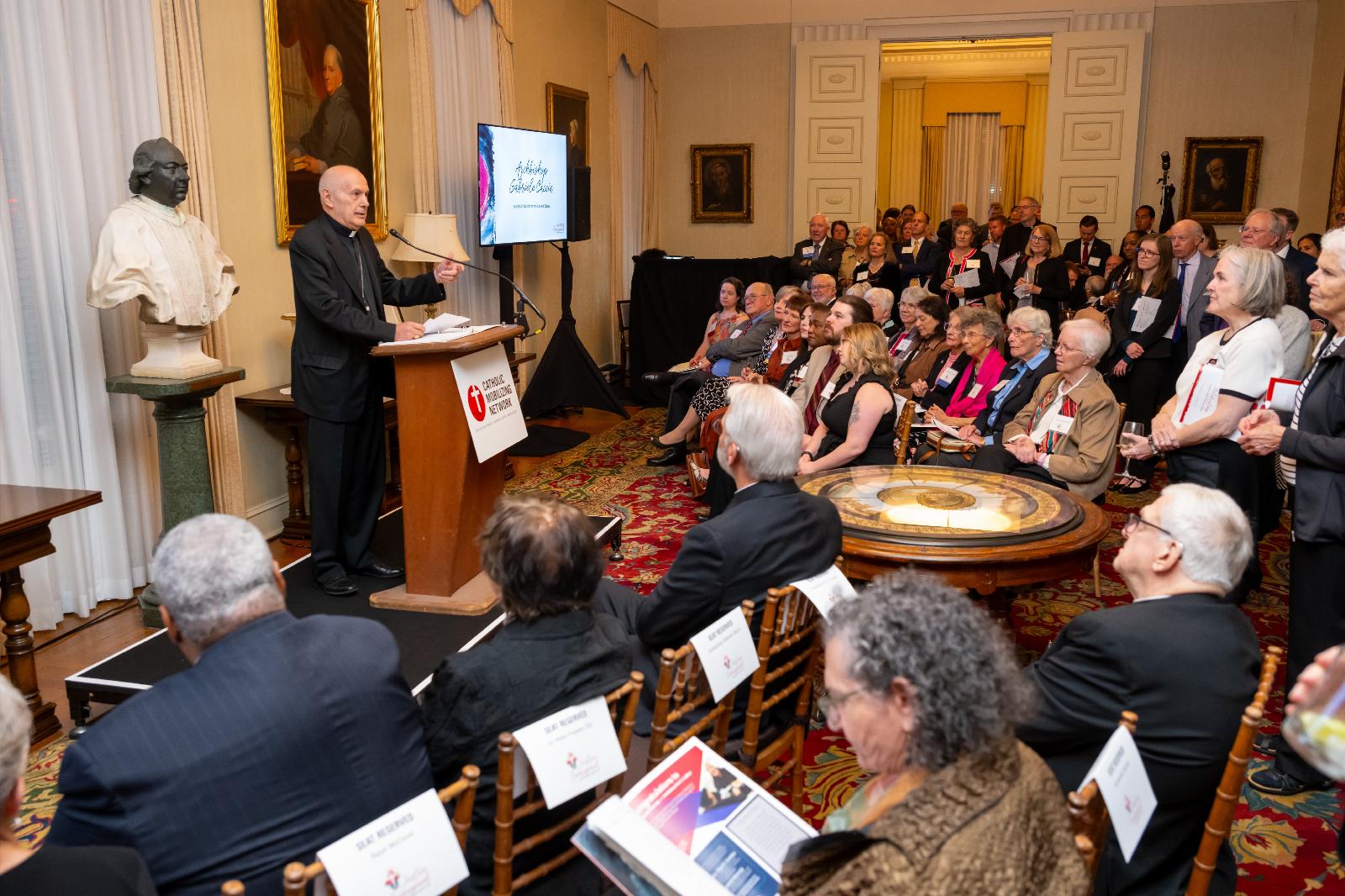
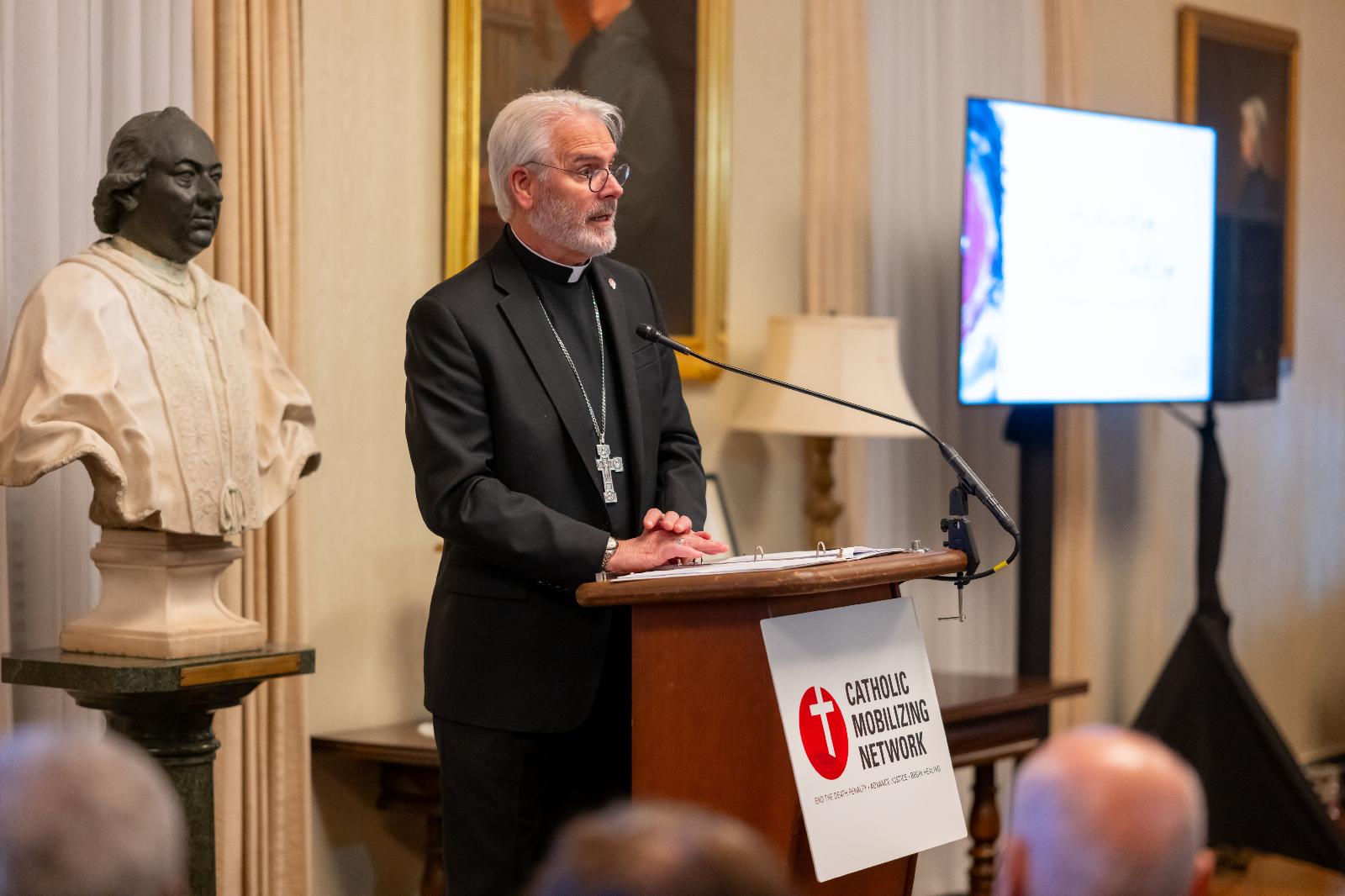
The archbishop, who is president of the U.S. Conference of Catholic Bishops, made the remarks in an address to death penalty opponents gathered at the apostolic nunciature, the Vatican’s diplomatic mission to the United States in Washington for the biennial Justice Reimagined Awards and Celebration.
The event was hosted by Catholic Mobilizing Network, a group that advocates for the abolition of capital punishment in line with Catholic teaching.
Archbishop Coakley recently issued a strong rebuke of Secretary of Defense Pete Hegseth’s plans to livestream the execution of Fort Hood shooter Nidal Malik Hasan by firing squad in December at the U.S. Army base in Texas. The plan was met with widespread condemnation, including a poll showing 80% of Americans opposed it. Trump ultimately called off the livestream, but said the execution would still take place.
In remarks at the event, Archbishop Coakley said Oklahoma is a state that is “very solidly pro-life in terms of supporting the right to the life of the unborn” but presents an “anomaly” in its “unforgiving” approach to capital punishment.
‘The meaning of respect for life from conception to its natural end’
“For many years, in terms of life issues, opposing abortion and advocating for the right to the life of the unborn was really my primary passion and concern,” he said. “It’s no less a passion and concern today than it was in 1975 or 1990 or whatever, but only later did I come to appreciate, I think, the meaning of respect for life from conception to its natural end.”
“That gradual awakening,” he said, as well as “the responsibility that was entrusted to me as an archbishop” helped him to “begin to find a voice and to speak more confidently and more boldly about the sanctity of life from conception to its natural end.”
“Being in Oklahoma, and in fact being in the United States of America at this time, has really turned my attention more toward advocating for the condemned on death row and the need for us as a people, as a church, as a nation to recognize the injustice and the inhumanity of what is being done in our name,” he said.
Referencing the “things that have been in the news of late,” Archbishop Coakley said he hoped “we’ll all find renewed courage and determination to continue this fight to advocate for the sanctity, the dignity of every human life from conception to its natural end.”
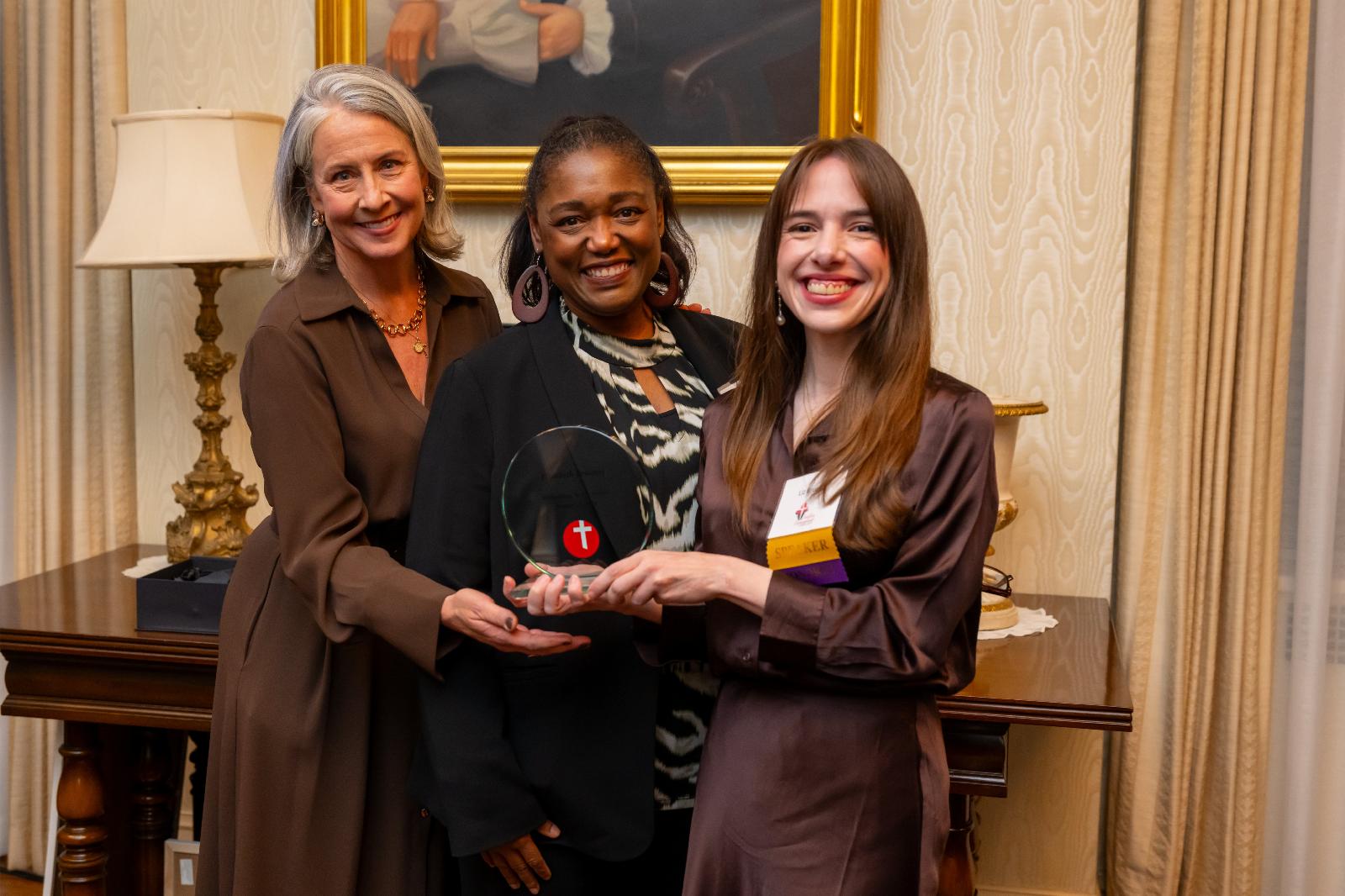
Catholic Mobilizing Network presented Archbishop Coakley with its Archbishop Joseph A. Fiorenza Dignity & Life Award, and Liz Bruenig, a staff writer for The Atlantic, received its Reimagining Justice Award.
‘The decisive moral leadership we needed most’
Krisanne Vaillancourt Murphy, executive director of Catholic Mobilizing Network, said in remarks at the event that Archbishop Coakley’s “voice was critical when speaking out against the Trump resumption of federal executions, and when Secretary Hegseth just recently called for livestreaming executions,” calling the statement he issued “the decisive moral leadership we needed most.”
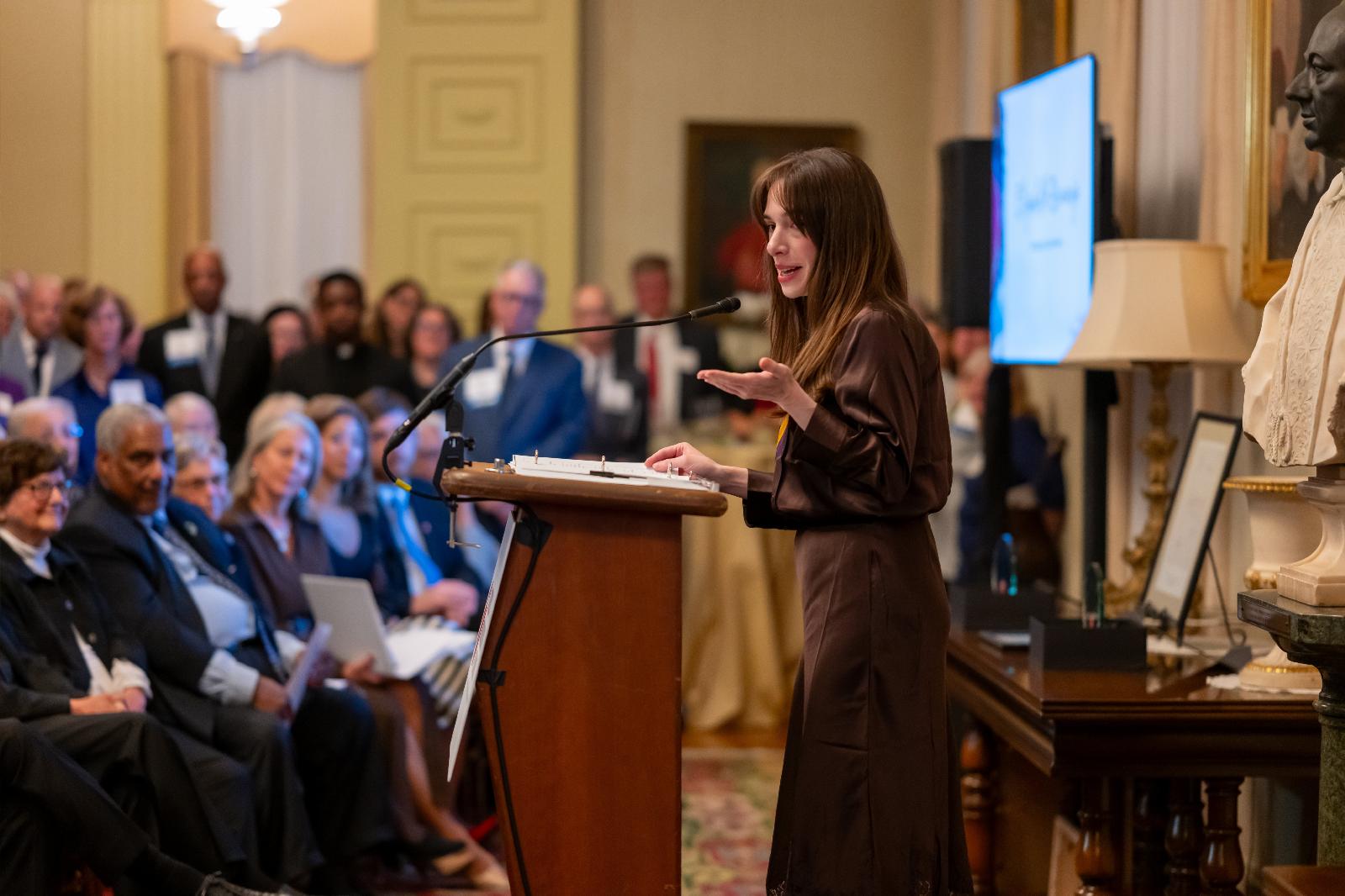
In remarks at the event, Bruenig said some of the most vulnerable people in the United States are “those who are condemned to die.”
“This is not easy work, in part because so many people feel that prisoners facing death have entirely forfeited their human dignity and right to life,” she said.
Bruenig called the Catholic Church’s “commitment to respecting human life in every case” a “jewel of our shared faith.”
“It is easy to ignore capital punishment compared to other life issues, both because prisoners are not always sympathetic, and because executions in the United States are relatively rare compared to abortion or medical assistance in dying, but every execution is a tragedy and a travesty,” she said. “I’ve been inspired by Pope Francis and Pope Leo’s strong words about the inadmissibility of the death penalty, which encourages us to defend human life even when no one else is willing to.”
Message from Vatican secretary of state
Archbishop Gabriele G. Caccia, apostolic nuncio to the United States, read a message at the event from Cardinal Pietro Parolin, the Vatican secretary of state.
“The Church does not minimize the gravity of crime or the terrible suffering endured by those who have lost loved ones to violence,” the message said. “Indeed, compassion for victims and their families must remain at the heart of our efforts to build a more just society. At the same time, our faith teaches us that no human being ceases to bear the image of God, even after committing a grave evil. The dignity of the human person is not something that can be forfeited, ever.”
The Catholic Church’s official magisterium opposes the use of capital punishment as a violation of the inherent sanctity of human life, and advocates for the practice’s abolition worldwide.
The late Pope Francis revised the Catechism of the Catholic Church in 2018 to clarify the church’s teaching that capital punishment is morally “inadmissible” in the modern world “because it is an attack on the inviolability and dignity of the person.”
In his 2020 encyclical, “Fratelli Tutti,” Pope Francis cited the writings of St. John Paul II, saying that his predecessor “stated clearly and firmly that the death penalty is inadequate from a moral standpoint and no longer necessary from that of penal justice.”
Earlier this year, Pope Leo XIV delivered a video message to Catholic death penalty abolitionists marking 15 years since the abolition of the death penalty in his home state of Illinois.
Kate Scanlon is a national reporter for OSV News covering Washington. Follow her on X @kgscanlon.