WASHINGTON (OSV News) — Violence bookended both the beginning and end of Blessed Stanley Rother’s 46 years of life: Born in 1935 — during the fury of a Great Depression-era Oklahoma dust storm — the missionary pastor died in 1981, shot by masked assailants in the midst of Guatemala’s almost four-decade civil war.
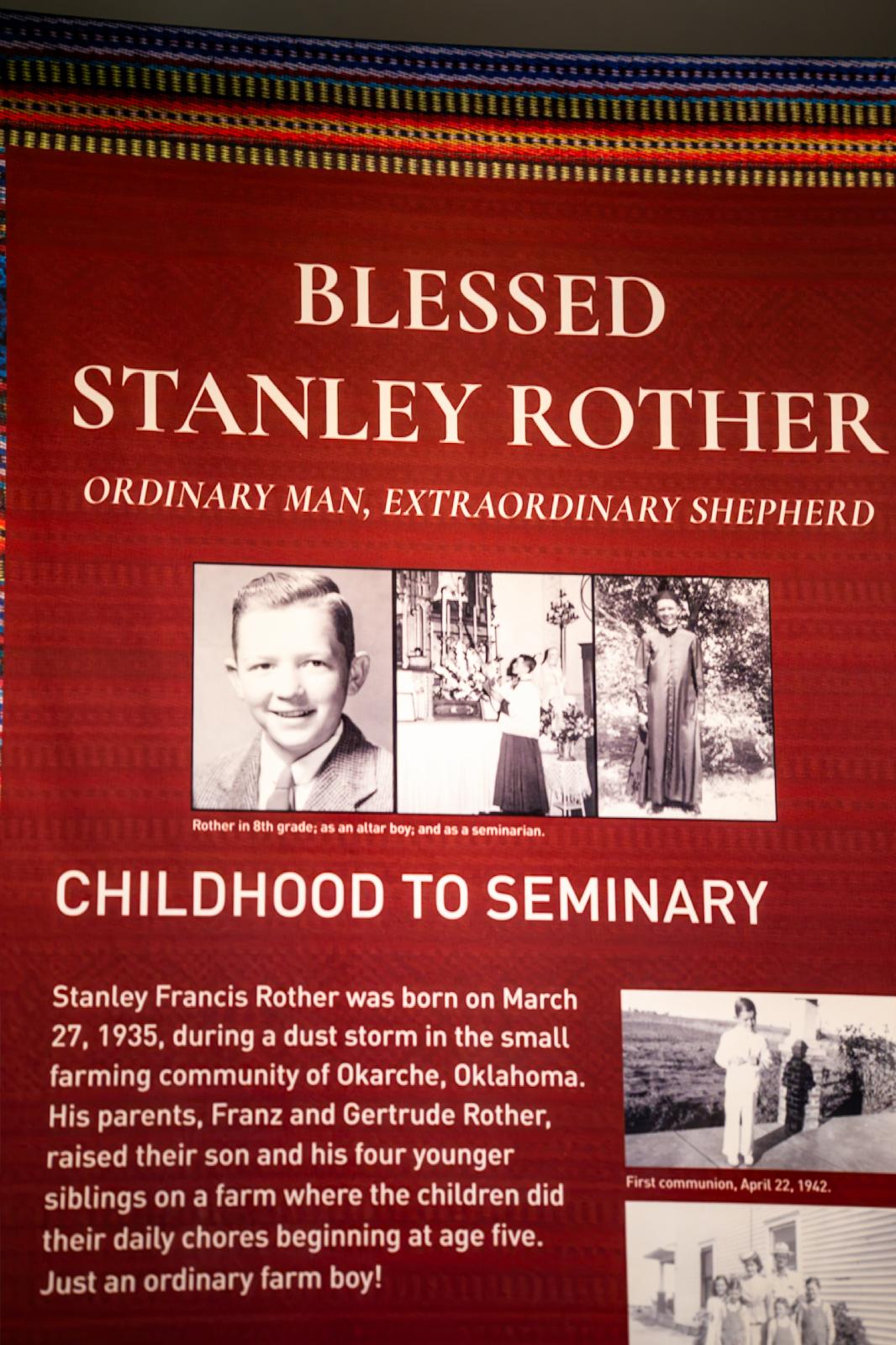
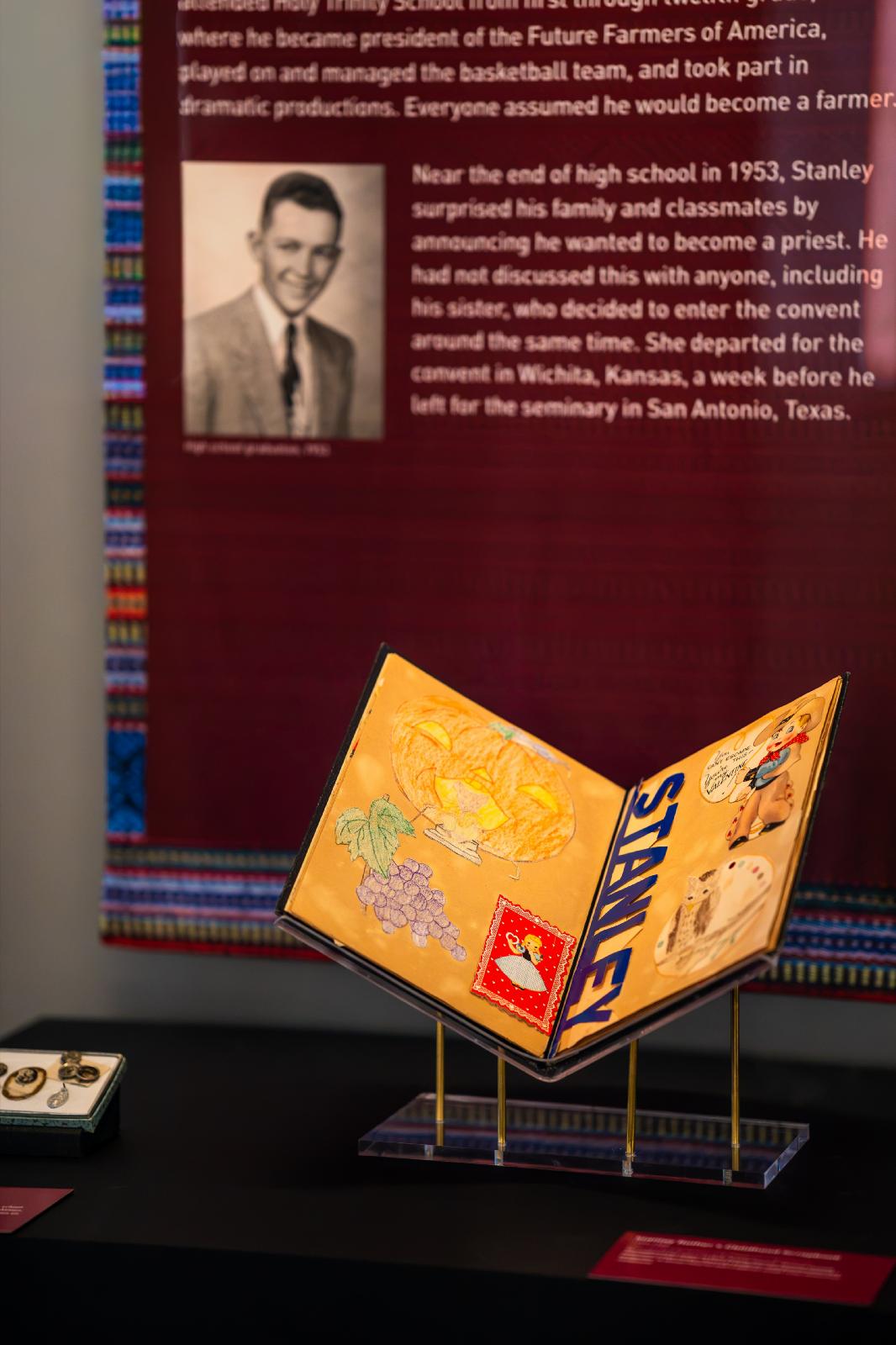
Recognized as the first U.S.-born priest and martyr beatified by the Catholic Church, he is now the subject of a new exhibit — “Blessed Stanley Rother: Ordinary Man, Extraordinary Shepherd” — at the Museum of the Bible in Washington. It opened Oct. 17 and runs through Oct. 1, 2027.
At an opening reception on Nov. 1 — All Saints’ Day and the International Day of Prayer for Persecuted Christians — speakers invited an audience of around 75 guests to befriend “the shepherd who didn’t run” as an intercessor and contemporary witness to the often-perilous ministry of evangelization and solidarity.
Archbishop Paul S. Coakley of Oklahoma City, who is president of the U.S. Conference of Catholic Bishops, told guests he’s often asked “what’s it going to take” for Blessed Stanley Rother to become St. Stanley Rother.
“And I always respond the same way,” said Archbishop Coakley. “I shake my head and I say, ‘Man — it’s gonna take a miracle.'”
The audience’s wave of laughter indicated their appreciation of the quip; to become a saint, in general two verified miracles are required.
Father Rother beatified after Pope Francis recognized him as martyr
However — under canon law — when the Church formally declares a candidate a martyr, the requirement for a posthumous miracle is waived for beatification. On Dec. 1, 2016, Pope Francis officially recognized Father Rother was killed “in odium fidei” — Latin for “in hatred of the faith.” Less than a year later, on Sept. 23, 2017, he was beatified at an Oklahoma City Mass attended by 20,000.
“Nothing short of a miracle will suffice — in order for Blessed Stanley Rother to become Saint Stanley Rother, he needs a miracle,” continued Archbishop Coakley. “So that’s why I never turn down opportunities such as this to introduce him to new audiences, or to tell his story.”
Blessed Rother was born in Okarche, Oklahoma, the eldest of five children in a devout Catholic farming family. He developed a deep faith at an early age, entered Assumption Seminary in San Antonio after high school, and completed his studies at Mount St. Mary’s Seminary in Emmitsburg, Maryland.
Ordained a priest for what was then the Diocese of Oklahoma City-Tulsa in 1963, he served in Oklahoma parishes before requesting an assignment to the diocesan-run mission in Guatemala, where he pastored the Indigenous Tz’utujil Mayan people, celebrating Mass, helping with agricultural and community needs, and translating the New Testament into their language. The Guatemalan civil war created a dangerous environment for clergy, and Father Rother’s name eventually appeared on a death list. While he briefly returned to Oklahoma, he ultimately went back to Guatemala in time to celebrate Holy Week — and was martyred.
Knowing martyred priest could lead more to seek his intercession
“The more people know about him, and find in him an attractive, credible witness,” Archbishop Coakley concluded, “the more people will come to him to seek his intercession, and pray for their needs, and give him the opportunity to intercede on their behalf.”
Blessed Rother’s martyrdom is hardly a tragic tale from the distant past; indeed, it remains current in a world where practicing the faith can literally be deadly.
Aid to the Church in Need — an international papal charity supporting persecuted and suffering Christian communities worldwide — reported Oct. 27 that conditions for Christians worsened in almost 56% of 18 countries examined over the past two years, and none recorded an overall improvement.
Brian Hyland, a senior curator at the Museum of the Bible, explained to the audience how the exhibit came to be installed at the 430,000-square-foot facility housing thousands of objects ranging over 4,000 years of biblical history.
While the Museum of the Bible is nonsectarian, it was established and largely funded by Steve Green, the evangelical Christian CEO of the Hobby Lobby arts and crafts chain and the museum board’s chairman. The majority of the board are evangelical Christians as well.
Museum’s tradition is ‘telling personal stories’
“We’ve had a tradition here at the museum, for the last six years, of telling personal stories — but the way in which we’ve told these personal stories is to have them in a gallery,” Hyland said.
The “personal story” exhibits, Hyland shared, have featured U.S. preacher Rev. Billy Graham, British author C.S. Lewis and Chinese church leader Watchman Nee, among others.
“Almost all of these stories have something to do with evangelization — something to do with spreading the word of God,” Hyland continued. Blessed Stanley Rother, he said, is “a native son of Oklahoma; he’s a Bible translator, he helped translate the New Testament into Tz’utujil; and he is a martyr and a missionary. Perfect story.”
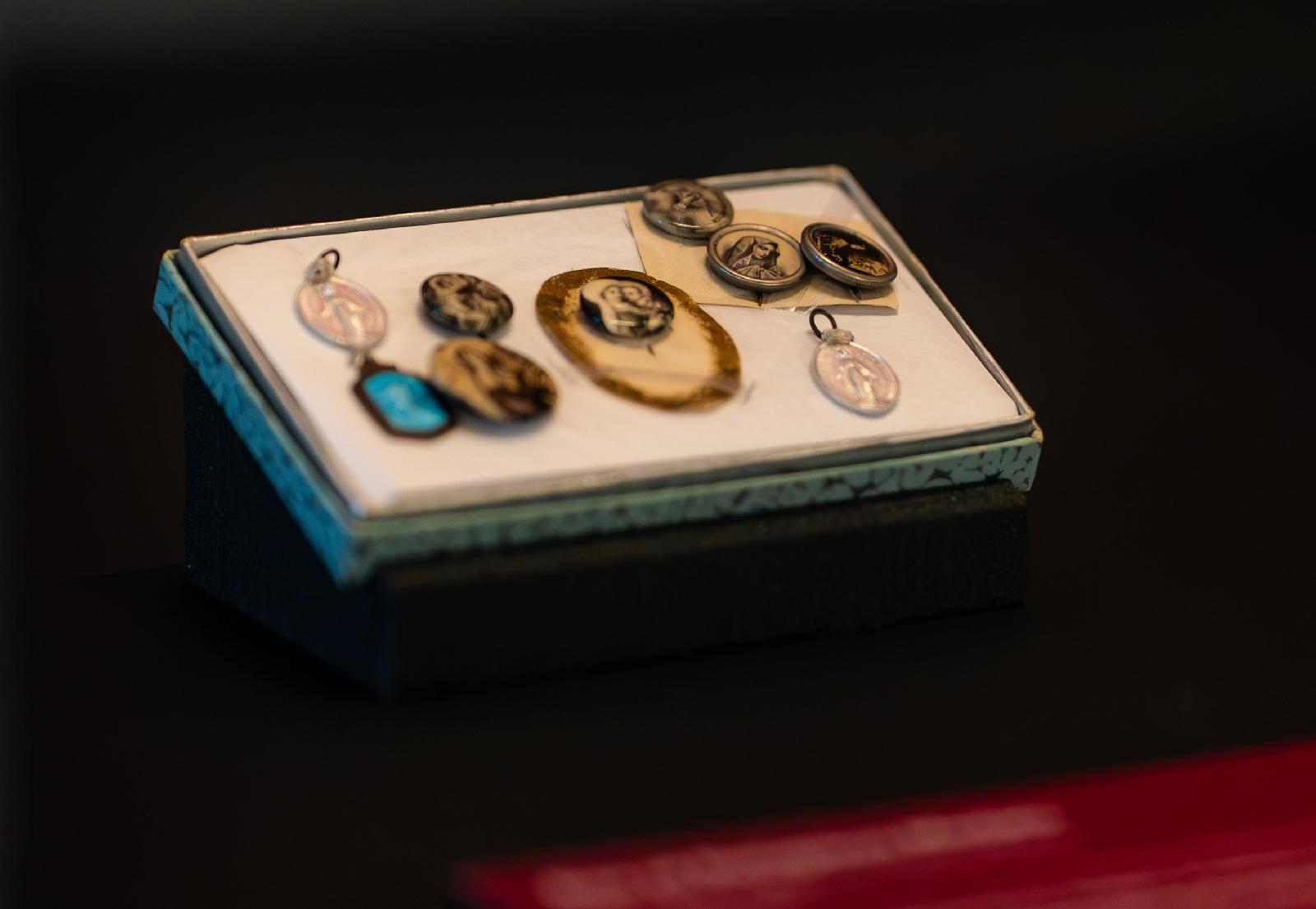
The small, four-case exhibit — which includes personal items — is fortuitously situated across from the illumiNations exhibit, where visitors can see the progress of current and ongoing Bible translations.
Sue Rother Bond, Blessed Rother’s first cousin once removed, and author/illustrator of a children’s book, “Blessed Stanley Rother: An Extraordinary Ordinary Life” (Bonds Between Us Publishing), told the audience she wasn’t certain Blessed Rother “would like all of this — he was a very humble man.”
Oklahoma City shrine dedicated to slain priest opened in 2023
The construction of the 53-acre, $50 million Blessed Stanley Rother Shrine in Oklahoma City followed his 2017 beatification and opened in 2023.
“But what I do know is, that if his story helped people with enthusiasm about their faith, and their enthusiasm about God — he would like that,” said Rother Bond, who also tours a Blessed Stanley Rother puppet show for children.
The afternoon concluded with a presentation from Gary Gasse, co-founder and chief creative officer of Coronation Media, which, in conjunction with EWTN Studios, will in summer 2027 release a full-length Blessed Rother movie, “The Shepherd.” A brief trailer screening revealed intense pacing and high production values.
In an interview prior to the reception, Archbishop Coakley told OSV News that Blessed Rother’s life holds a message for all believers facing conflict.
“Like the Good Shepherd himself, he didn’t respond to violence with violence. Stanley faced violent oppression in Guatemala — his parishioners were kidnapped, disappeared and murdered. And his response was always to teach the Gospel,” the archbishop said.
“There were a lot of people in Latin America at that time turning to violent resistance to oppressive regimes. That was not Father Rother’s path; he never resorted to violence,” Archbishop Coakley continued. “He preached reconciliation; peace; forgiveness. That’s one way I think we can resist attempts at polarization — and not being drawn into that kind of dynamic that’s so evident in our moment in history as well.”
Kimberley Heatherington is an OSV News correspondent. She writes from Virginia.