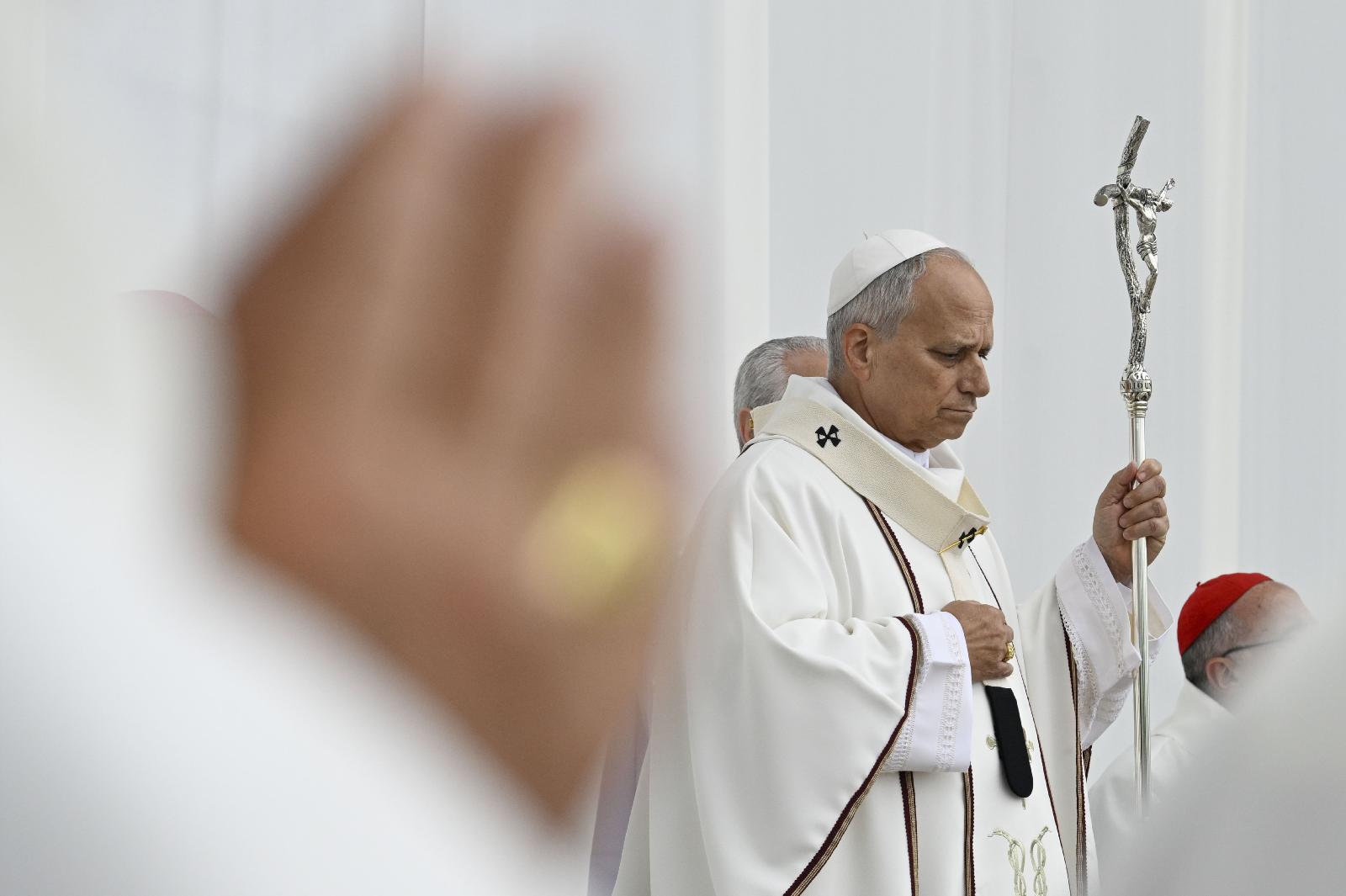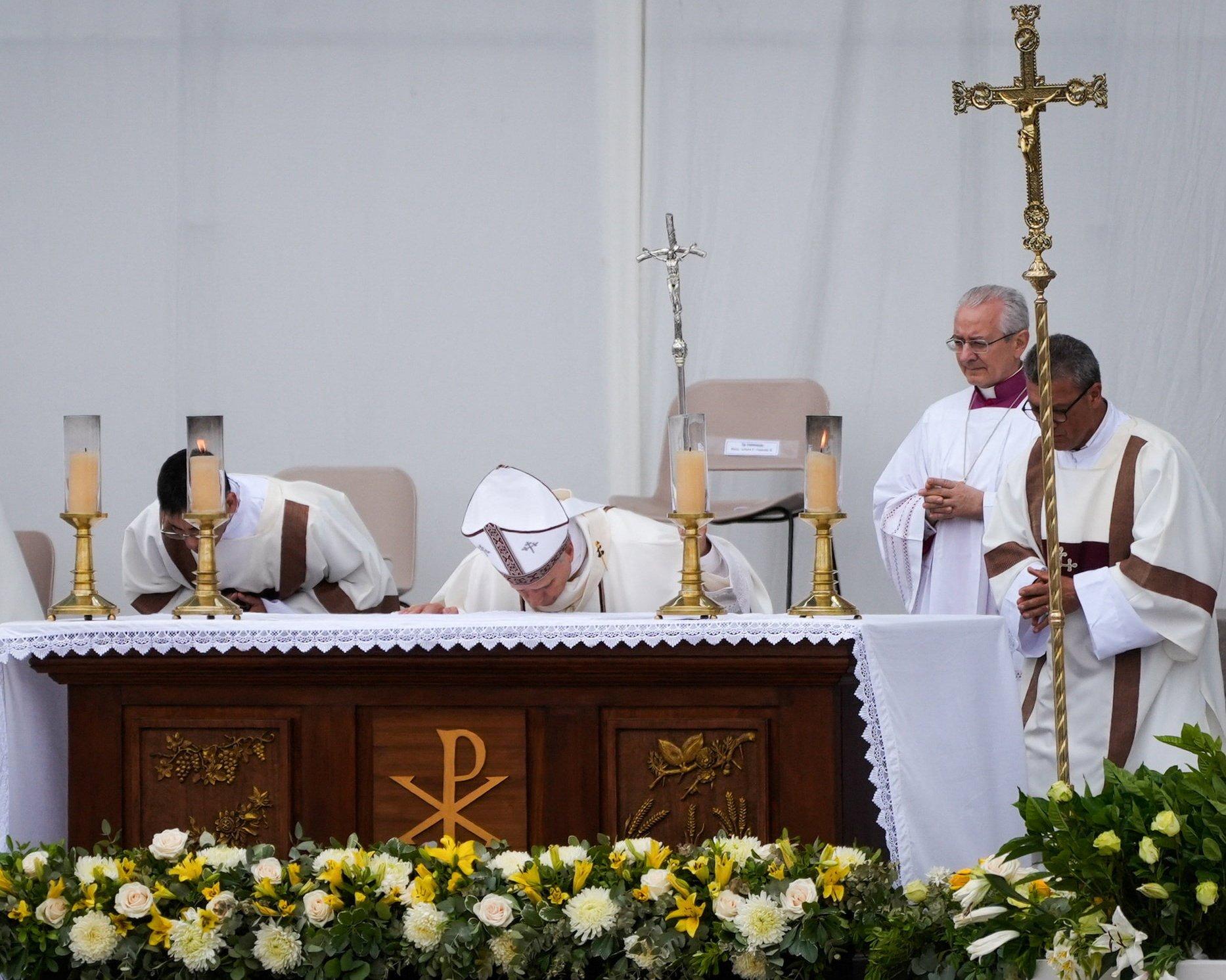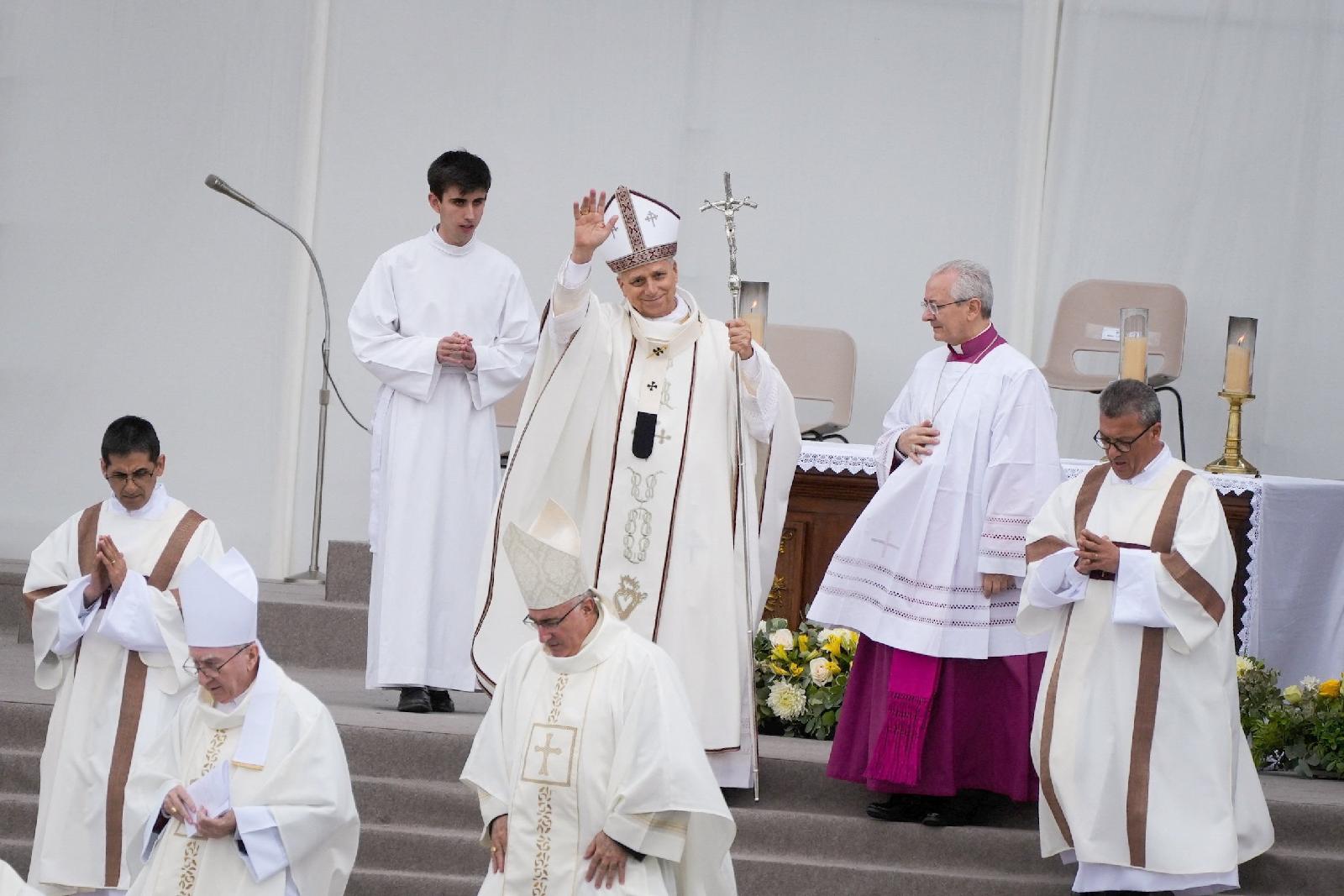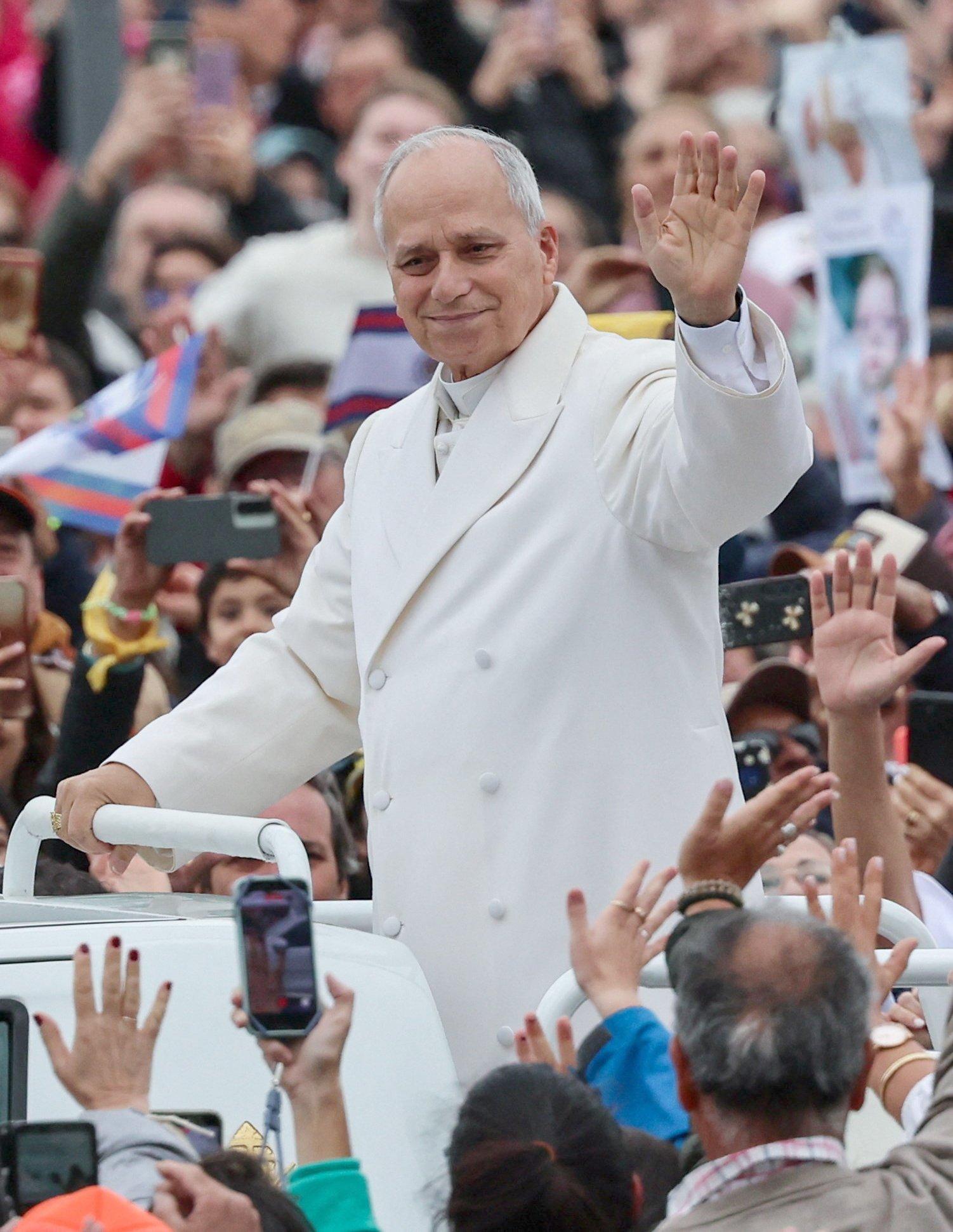
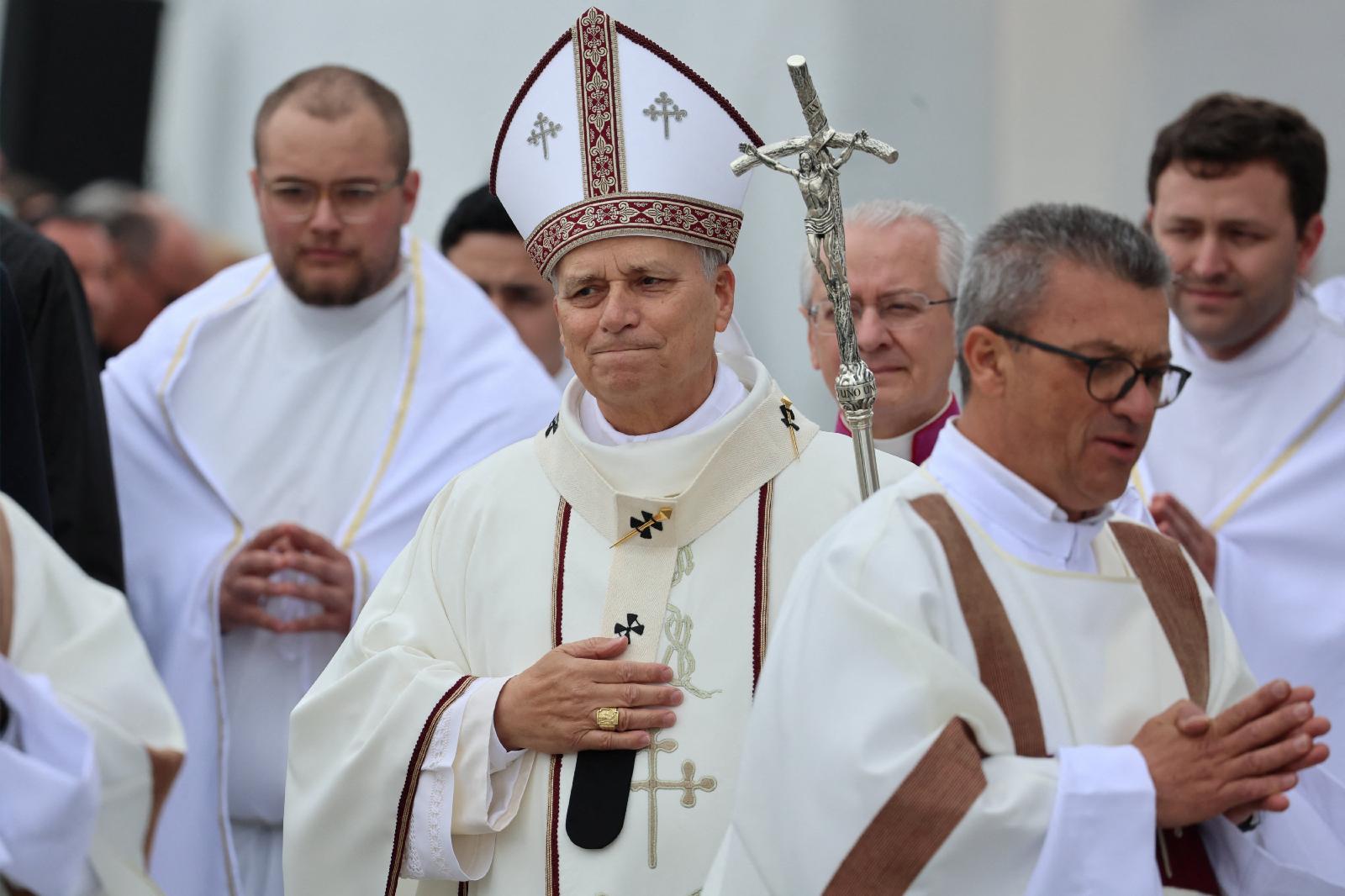
PAYSANDÚ, Uruguay (OSV News) — Pope Leo XIV recalled Uruguay’s first bishop who “bore faithful witness to the faith” and renewed evangelization in the South American country, where Catholics today are a minority and almost half the population professes no faith at all.
The pope, celebrating Mass in the city of Paysandú, across the Uruguay River from Argentina, urged Uruguayans to draw inspiration from the example of Blessed Jacinto Vera — remembered as the “gaucho bishop” — who crisscrossed the country in the late 1800s on horseback and “bore faithful witness to the faith he proclaimed through generous charity and total dedication to the apostolic mission.”
“Faith,” Pope Leo said, “has been part of the life of the Uruguayan people since their earliest days, and it must be passed on to future generations with creative courage.” Pope Leo added, “I encourage you to carry forward the mission of evangelization with enthusiasm. Be bridges, so that many may encounter Jesus. Be a fraternal community that comes together and shares life, projects, dreams and hopes, especially with those most in need.”
Uruguay – a country where secularism is the norm
The Mass celebrated in Paysandú was the first in Pope Leo’s 12-day apostolic visit to South America — the longest trip of his papacy with stops in Uruguay, Argentina and Peru. It also marked his first visit to the Americas as pope and a homecoming, as he served twice as an Augustinian missionary in Peru and later became bishop of Chiclayo.
Pope Leo touched down in Montevideo, the Uruguayan capital, on Nov. 6. He was greeted by President Yamandú Orsi, who invited three former presidents to the welcoming ceremony — a gesture of unity often missing in the messy politics of Latin America and a sign of consensus in Uruguayan society.
The pope’s opening message, however, showed the challenges for Catholics in raising their voice in Uruguay’s public life, where clergy say secularism is the norm and the Church hasn’t exercised much influence.
“It brings us visibility, the very fact that the pope is coming here,” Bishop Heriberto Bodeant of Canelones told OSV News on the eve of the papal visit. “The Church certainly has its place here, given the presence of a Catholic population, but the pope’s visit helps to bring it into sharper focus.”
Standing alongside Orsi, whose Broad Front party has advanced legislation on decriminalizing abortion and introducing euthanasia, Pope Leo defended life from conception to natural death in an address to the country’s leaders, civil society and the diplomatic core.
“The unborn already belong to the human family and to the future of their people,” he said. “Their absolute dependence on their mother does not diminish the dignity to which they are entitled or the protection they deserve.”
Papal Mass attended by 40,000 in Paysandú
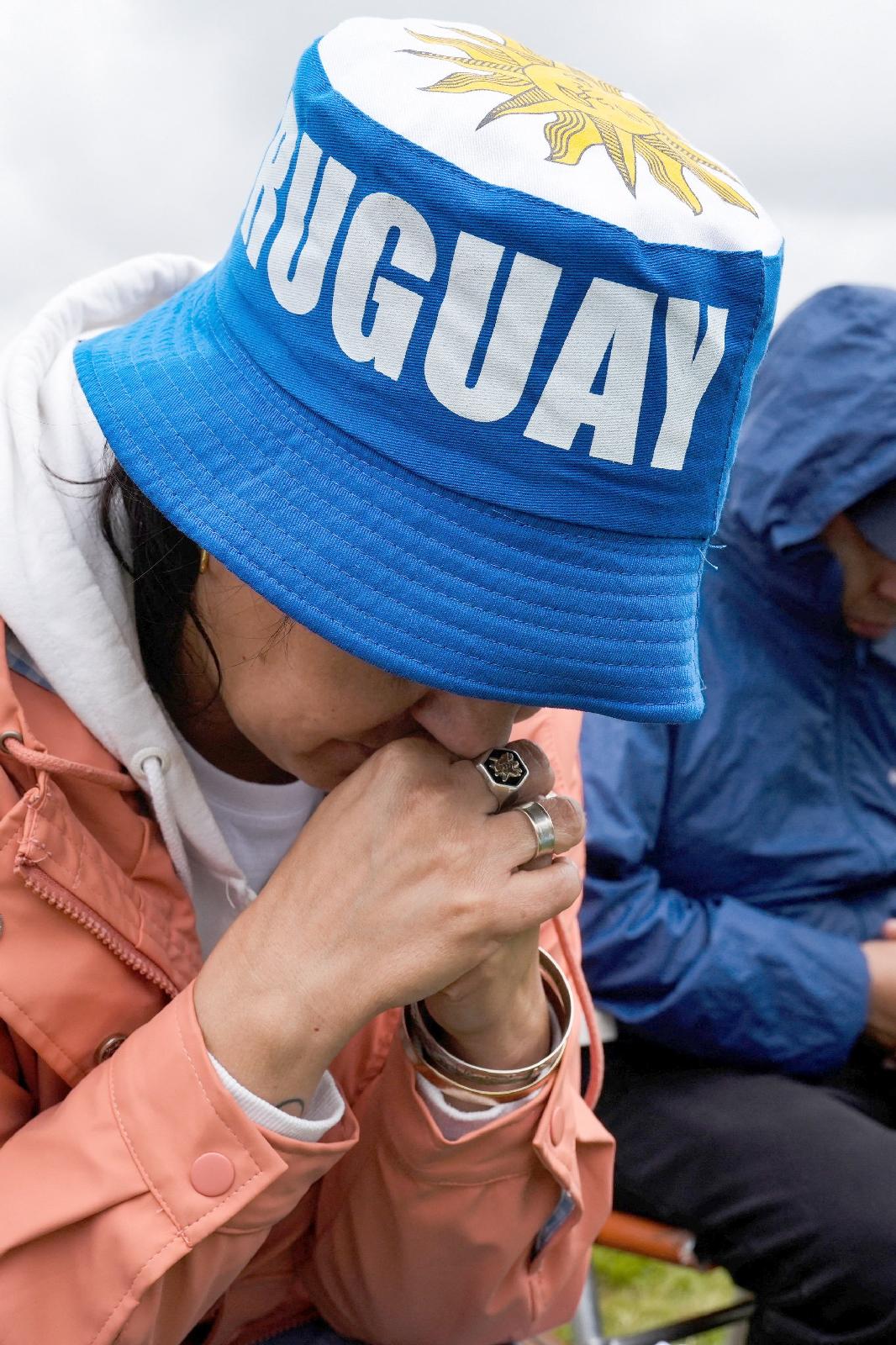
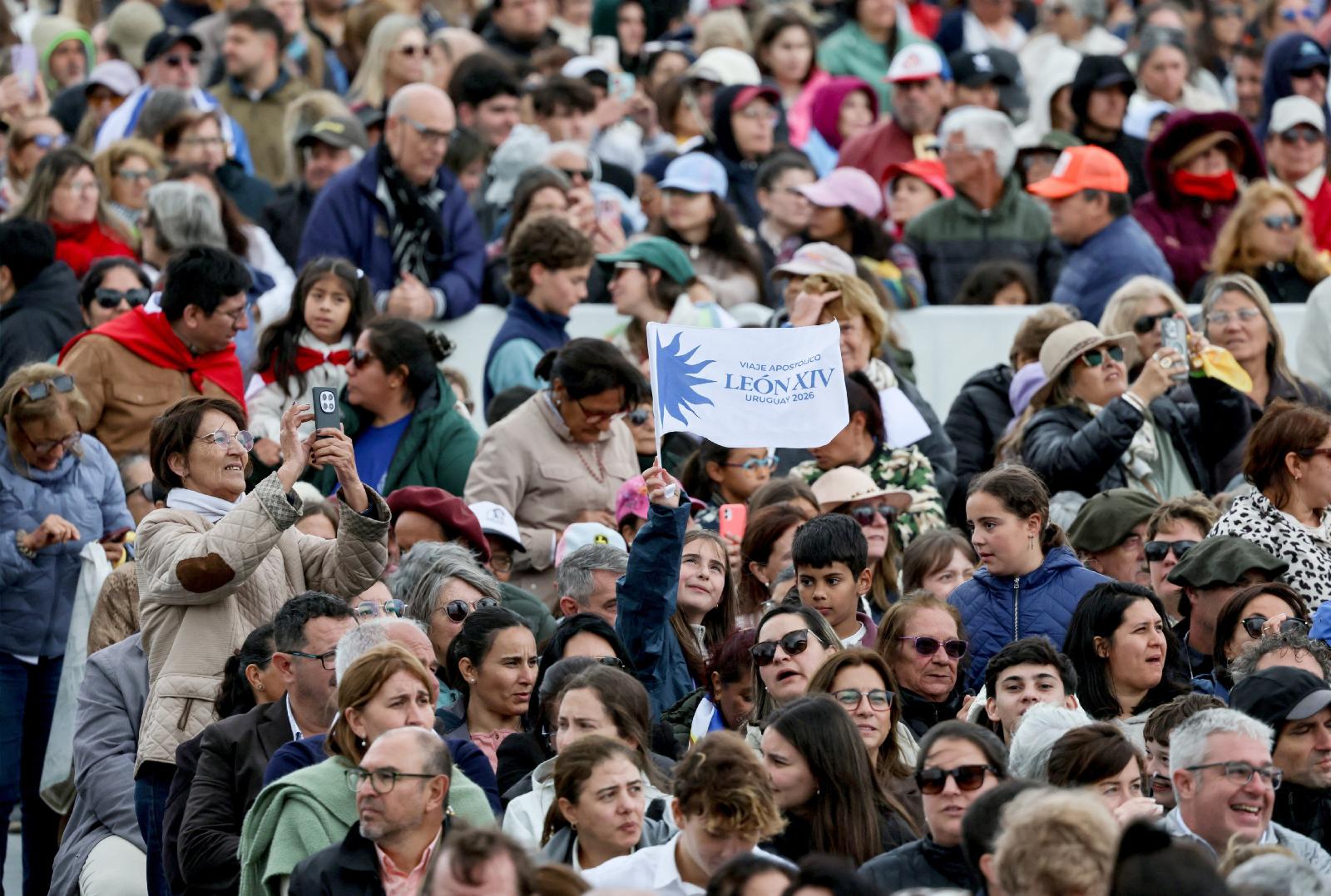
In Paysandú, the Vatican Press Office estimated 40,000 people attended the Mass with Pope Leo in a public park — with many traveling from neighboring Argentina and Brazil for the event.
The pope focused on evangelization, drawing on nearby landmarks, geography and customs to illustrate his message. He pointed to the nearby bridge crossing the mighty Uruguay River, saying, “This is the vocation to which we are all called: to build bridges, strengthen bonds, unite, communicate and share the joy of faith, as Blessed Jacinto Vera did, ‘whether the time is favorable or unfavorable.'”
Pope Leo mentioned the local palm groves, saying, “This tree can withstand strong winds, has deep roots, rises straight toward the sky in search of light, and produces the sweet yatay fruit. This is a beautiful image of our origin and the destiny to which we are called: to take root in Christ.”
He continued, “At the same time, we observe that palm trees in this region do not stand alone, but form groves; there are many of them, yet they are neither alone nor far apart. Likewise, the Church is a community of brothers and sisters that sinks its roots and draws from a common spring: the word of God, the sacraments, prayer and charitable works.”
The example addressed what Uruguayan priests describe as a challenge: having Catholics participate more in parish life.
Papal reflection on mate cheers up the crowd
The pope offered a third item to illustrate his point, and one that sent the crowd to cheerful applause: mate, a caffeinated infusion so popular in Uruguay that many people entered Mass toting mugs with metal straws, bags of mate and thermoses of hot water.
“Mate is a sign of familiarity, friendship and encounter,” Pope Leo said. “It teaches us to share and to be together, strengthening the bonds that unite us as brothers and sisters. It is a sign of welcome, integration and shared values.”
“Mate has even reached Rome,” Pope Leo said amid cheerful applause during homily.
“Today it is our turn to continue the legacy left to us by these sowers of the Gospel,” Pope Leo said, celebrating the legacy of the “gaucho bishop” Blessed Vera. “Many men and women, like Bishop Jacinto Vera … sowed the seeds of the Gospel in the hearts of the Uruguayan people. Those seeds remain alive in the community, but it is essential to continue providing the necessary conditions for them to grow and reach their full potential.”
Catholics in Uruguay comprise about 33% of the population, according to a 2024 Latinobarómetro survey, while nearly 52% of Uruguayans claimed no religious affiliation in the country of over 3.3 million people.
Challenges for Catholics in the country
Catholics attending the Mass describe challenges living their faith in a country where they often “go against the current” and religion isn’t spoken much — if at all in public — according to Bishop Bodeant.
“We are Catholic. My children go to public school, where there’s nothing (religious). Afterward, they attend catechism classes at the parish,” said María Elena Ramos, 44, a mother of eight children attending the Mass in Paysandú.
“It means being part of a minority. … It’s a country where religion is something very intimate, very personal, not so public,” she added, while expressing dismay that conservative politicians don’t always defend life so vigorously. “(People) don’t say, ‘I’m against abortion, I’m against
euthanasia.’ … It’s not politically correct.”
“Many people say they are Catholic, but … many of them don’t practice. The percentage is very low,” said Salesian Father Néstor Castell.
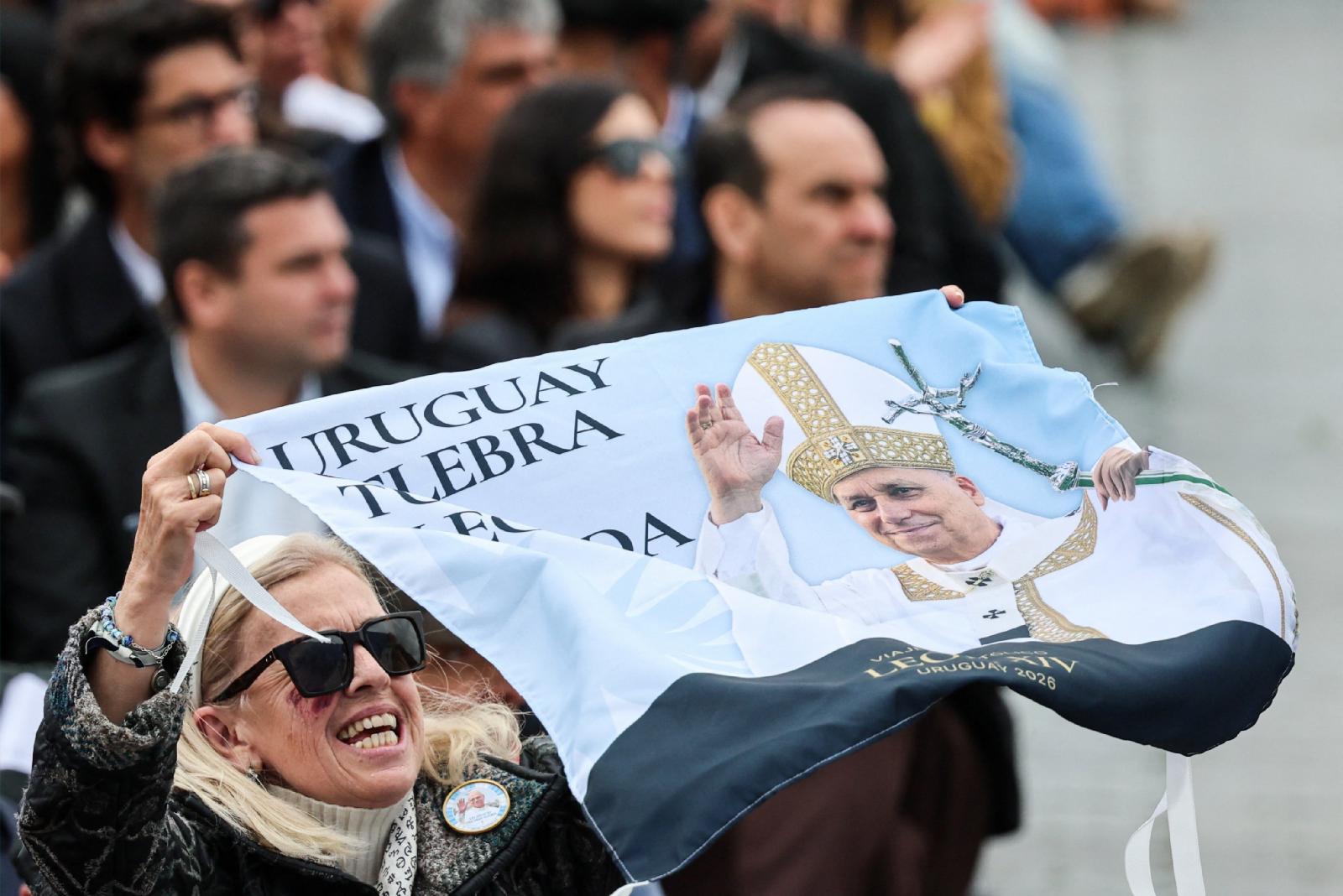
Despite the difficulties, there was excitement among the attendees for the pope’s visit.
“For me it’s a blessing to receive the pope,” said Pía Lombardo, who came to the Mass with an elderly friend, María Piñero, who had left Catholicism for a protestant church.
– – –
David Agren writes for OSV News from Paysandú, Uruguay.