(OSV News) — An Illinois diocese has done away with eulogies during funeral Masses and also visitation of the deceased in the church immediately before the Mass.
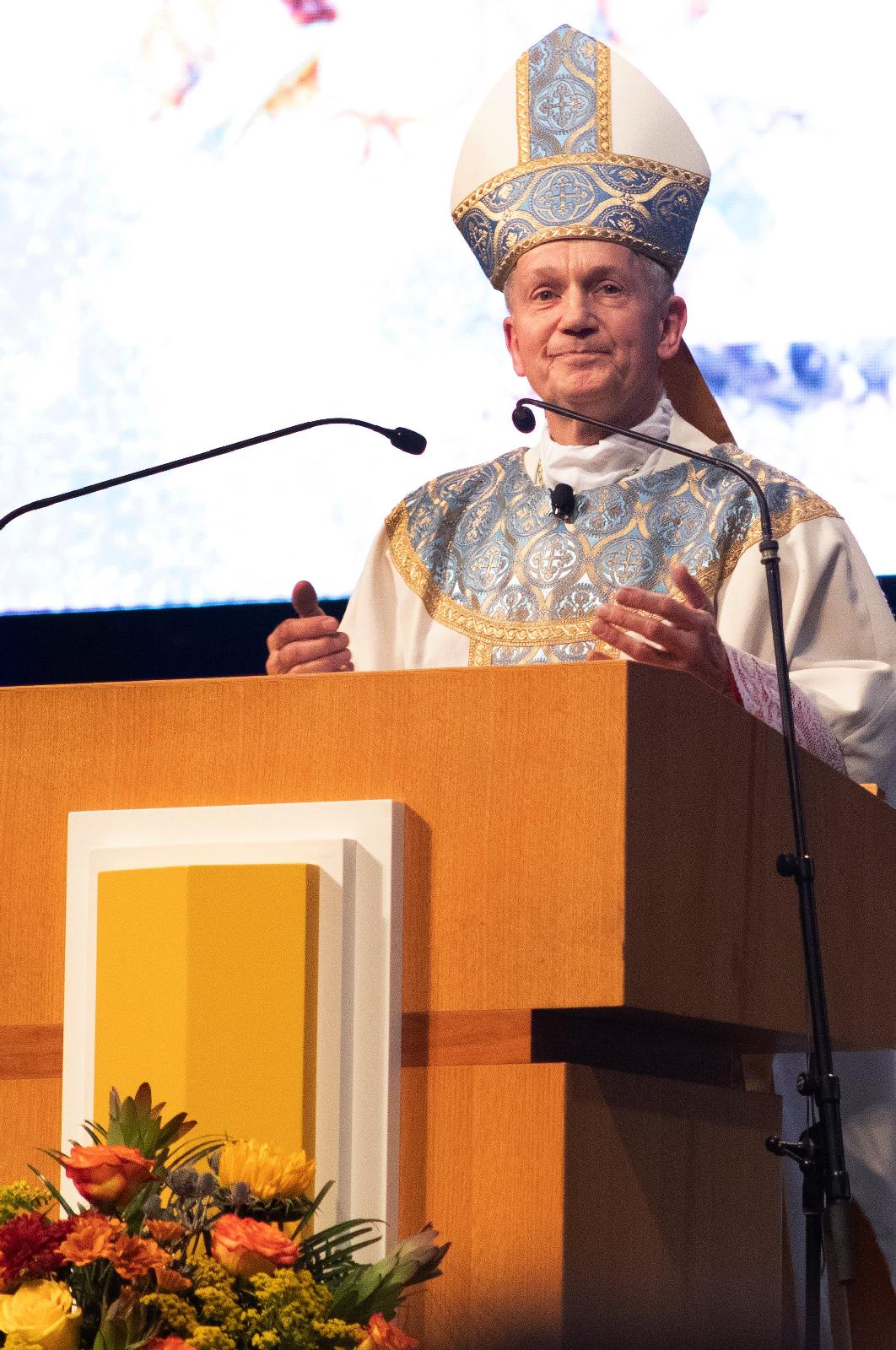
Bishop Thomas J. Paprocki of Springfield announced in a video and statement both dated July 1 that the practice of visitation (also known as a wake) in the church just before the liturgy is an anomaly “that has emerged over the past few years,” and that within the funeral rites of the Catholic Church it is called a vigil for the deceased for a reason.
“The vigil by definition is the night before,” said Bishop Paprocki. “So the vigil prayers will be prayed then by the priest or deacon even if there is no public visitation.”
He also encouraged family members to join the priest or deacon in these individual prayers, calling it “fitting.”
Bishop Paprocki, a canon lawyer, said “this does not mean” family and friends are precluded from gathering together and having prayers at the funeral home ahead of the funeral Mass. He said the Church has a brief prayer service in the Order of Christian Funerals, which can be offered by a lay person in lieu of a priest or deacon, that takes place during the “transfer of the body to the church, or to the place of committal.”
The bishop said starting July 1 visitation in the church preceding the liturgy would not be permitted. He also said on that day forward, eulogies would not be part of the funeral rites.
Words of remembrance versus eulogies
Bishop Paprocki said eulogies are “another problematic area in the funeral Mass.” He said the Order of Christians Funerals does not permit a eulogy, but it does allow for a remembrance of the person who died, and he explained the difference between the two practices.
“To speak in remembrance of the deceased is to speak about the faith life of the one who died and to give praise to God. The eulogy makes the person being praised the main focus of attention. The homily and the words of remembrance have God as the primary focus,” he explained.
The words of remembrance are one way that people can learn of how the deceased person being remembered practiced their faith, he said, and so give hope for heaven to those left behind.
“Unfortunately, too often people speaking at the end of a funeral Mass say things that are very inappropriate,” he said. Furthermore, “even when spoken appropriately,” words of remembrance also can become difficult for grieving loved ones to get through.
The diocese has put in place a procedure for the words of remembrance to be submitted to the pastor of the parish where the funeral will take place at least three days in advance. They are to be read by the priest or deacon either during the “three stations” of the Church’s Order of Christian Funerals: the visitation, the funeral Mass or liturgy, or the rite of committal at the cemetery. These words could also be given by laity at gatherings outside of the three stations.
Ohio diocese set similar policy
Starting Dec. 1, 2025, parishes in the Diocese of Youngstown, Ohio, also stopped holding visitation in church ahead of the funeral Mass as part of a broader effort by Bishop David J. Bonnar of Youngstown to establish a uniform policy for such visitations throughout the diocese. The bishop said the change was one that “would best reflect Church teaching and give both due respect to our church buildings and the deceased as well.”
Simone Orendain is an OSV News correspondent. She writes from Chicago.