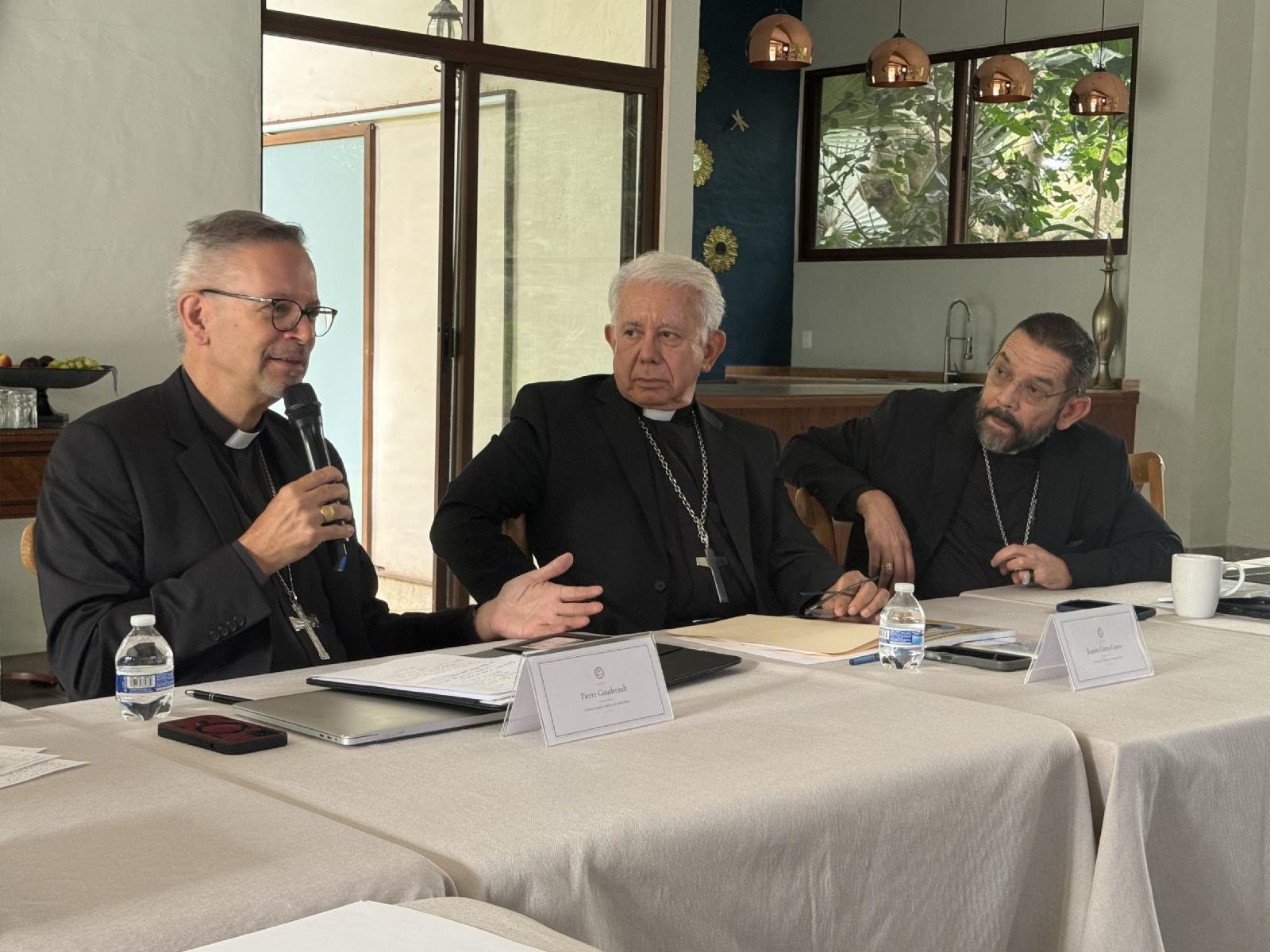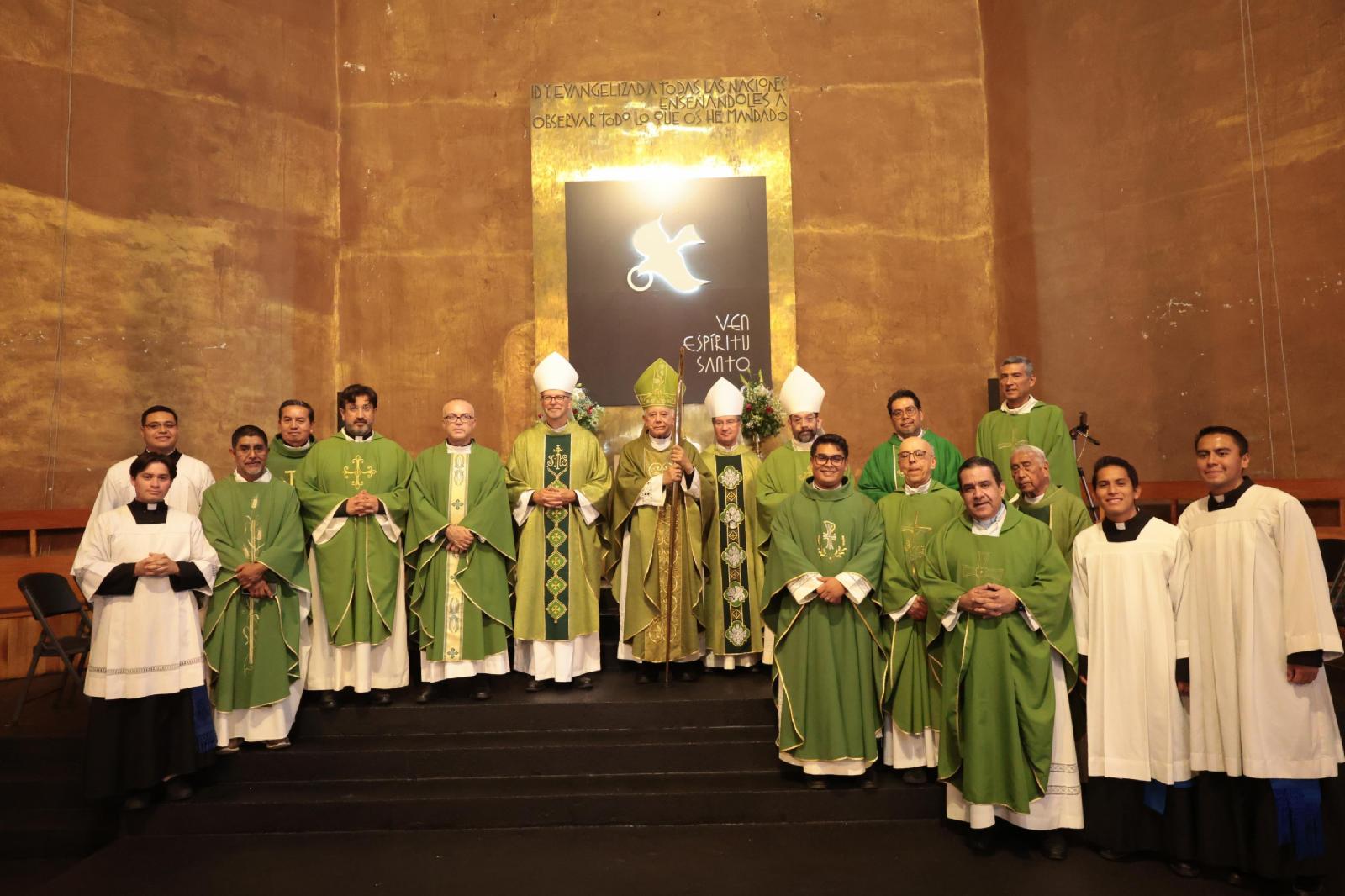
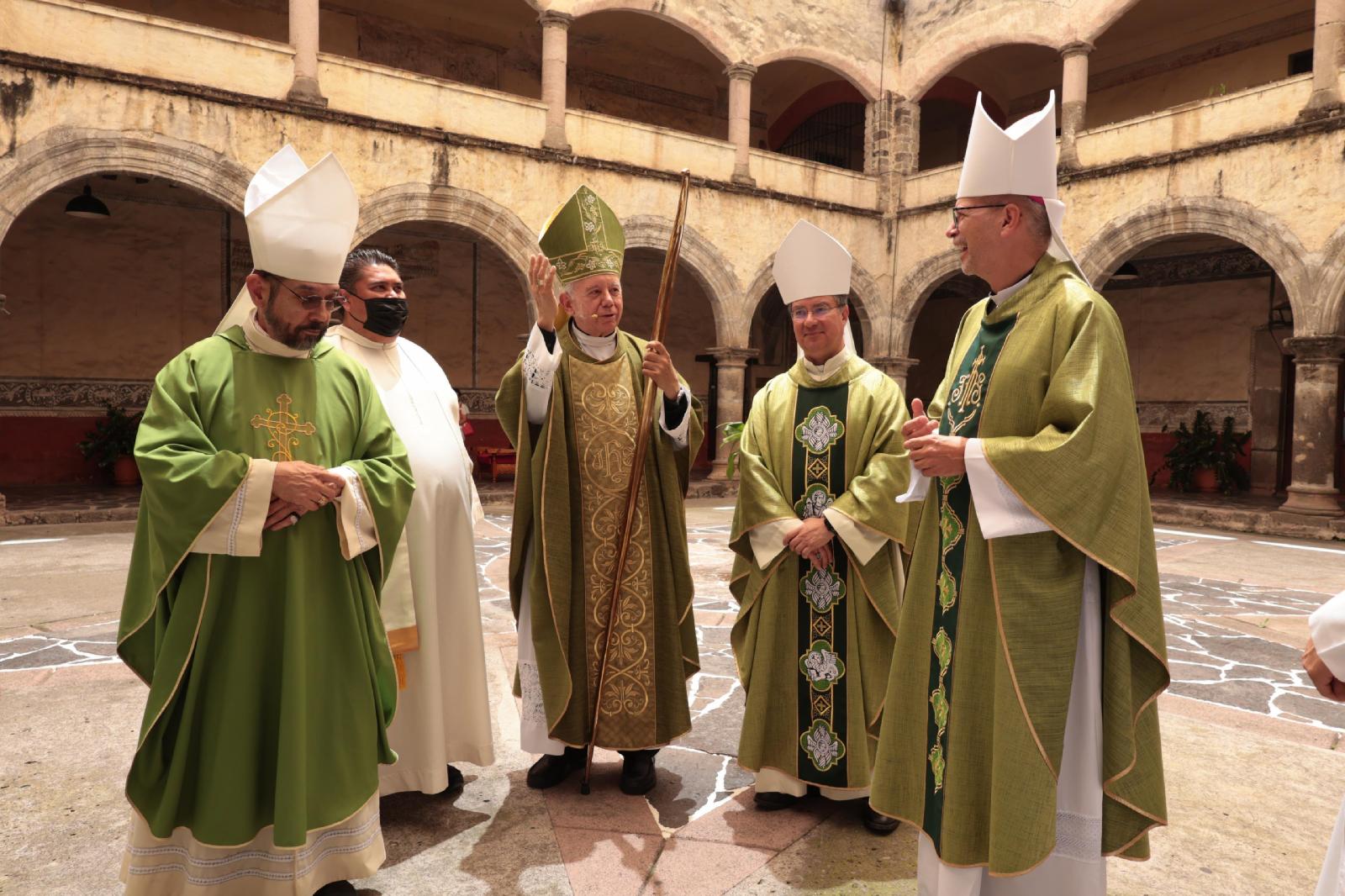
(OSV News) — In a spirit of prayer and dialogue, bishops representing the conferences of Mexico, the United States and Canada met in Cuernavaca, Mexico, to discern ways to strengthen collaboration across North America.
According to a joint statement about the Aug. 30-Sept. 4 meeting, the bishops reflected on shared challenges facing the Church, including migration, evangelization, human dignity in the age of artificial intelligence, and pastoral cooperation among the three countries.
“Millions of Catholics from the three countries are part of one same Church and share one same faith,” the bishops said in the statement. And although the three nations have diverse histories and realities, borders between nations “need not become borders between hearts.”
The meeting was attended by Bishop Ramón Castro Castro of Cuernavaca, president of the Mexican Bishops’ Conference; Bishop Daniel E. Flores of Brownsville, Texas, vice president of the U.S. Conference of Catholic Bishops; and Bishop Pierre Goudreault of Sainte-Anne-de-la-Pocatière in Québec, president of the Canadian Conference of Catholic Bishops. Also present were Bishop Óscar Cantú of San José, California, chairman of the USCCB Subcommittee on Hispanic/Latino Affairs, and Bishop Eugenio Lira Rugarcía of Matamoros-Reynosa, who heads the Mexico bishops’ human mobility ministry.
Migration focus
Migration emerged as a central topic. The bishops agreed that migration is a common challenge for Mexico, the United States and Canada. They discussed migrants’ experiences in countries of origin, transit and destination, while reaffirming the Church’s commitment to human dignity and support for vulnerable people.
According to the joint statement, leaders of the Church in the United States shared their experience of supporting migrants, especially along the southern border, with the bishops reaffirming the Church’s commitment to human dignity, justice and care for the most vulnerable.
They also highlighted U.S. initiatives including the “You Are Not Alone” campaign, launched in response to fears among immigrant communities. The initiative offers support to families who face deportation threats, lack legal protection, or encounter difficulties accessing healthcare, schools and parish life.
Mexico’s Church leaders also presented an overview of the country’s social and ecclesial challenges, which they see as marked by inequality, violence and migration. They also highlighted the deep-rooted tradition of faith and popular religiosity.
Canada’s Church leaders highlighted the challenges of a diverse and secularized society, where migration represents a source of renewal for Catholic communities. The joint statement included among their priorities synodality, ecumenical dialogue, artificial intelligence, reconciliation with Indigenous peoples, and strengthening pastoral care for migrants through its new National Service for Human Mobility initiative.
Humanity amid tech advances
The bishops also stressed the need to keep human dignity at the center of technological development, which, they said, “is authentic only when it serves the person,” noting “responsibility for artificial intelligence cannot be delegated — we cannot leave in the hands of an algorithm the decisions that affect our dignity.”
They also identified future collaboration efforts, including priest exchanges and evangelization missions. Bishop Flores told OSV News the fraternal gatherings should continue because they demonstrate “the unity of the Church, which transcends political structures or countries.”
“These are moments of profound communion and a testimony to what it means to be a baptized member of the Church. We are in communion and we cannot forget one another,” he added. “The people of God remain a united people through faith, hope and charity.”
Our Lady of Guadalupe’s intercession
The meeting concluded with a pilgrimage to the Basilica of Our Lady of Guadalupe in Mexico City, where the bishops of North America renewed their commitment to walk together in faith and solidarity.
According to the joint statement, they entrusted to her there “the hopes and needs of their peoples, especially of families, young people, migrants, the poor and all those who need to experience the closeness and mercy of God.”
Marietha Góngora V. is an OSV News correspondent. She writes from Washington.