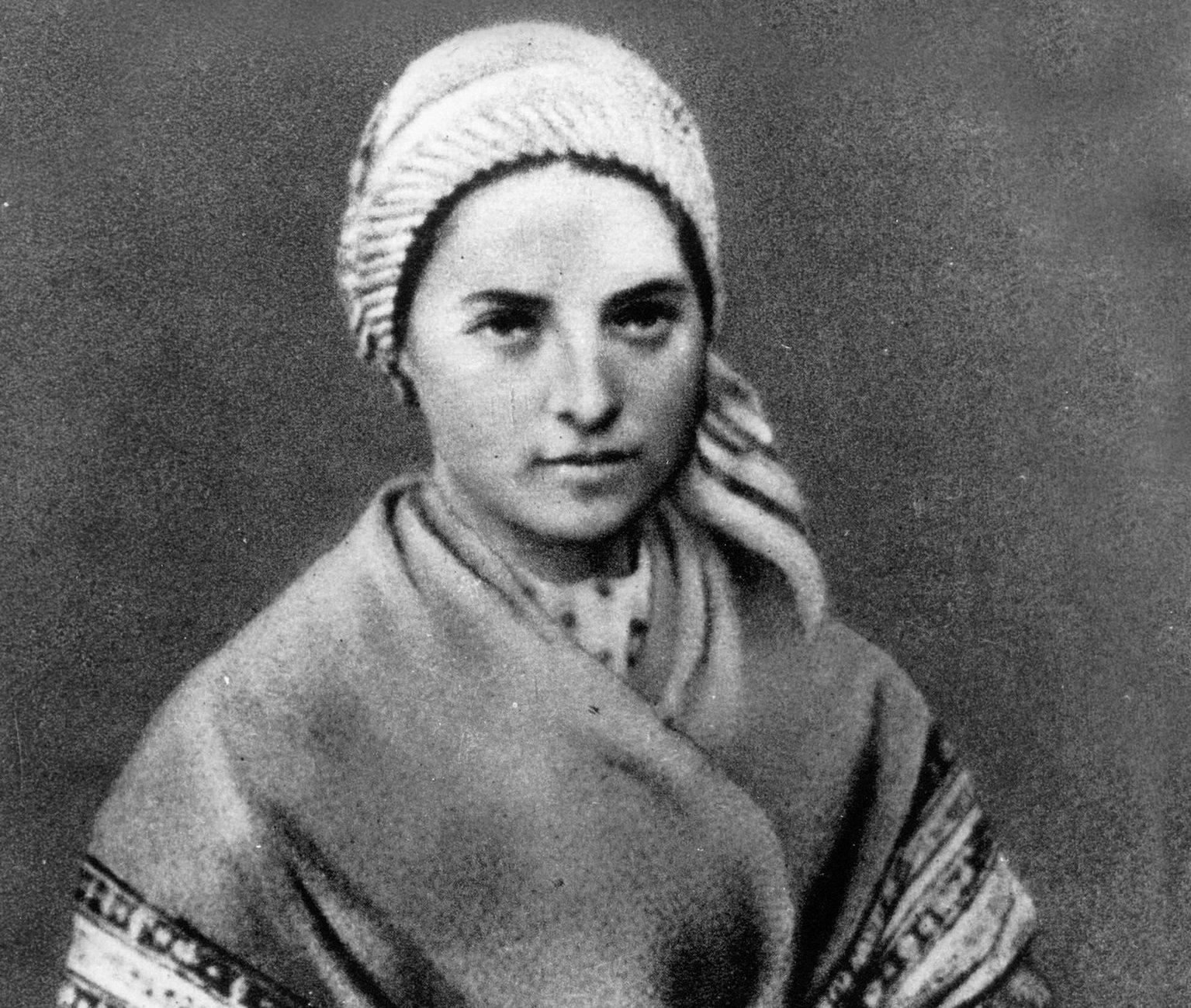
(OSV News) — St. Bernadette Soubirous is usually depicted in statues around the world as the confounded peasant girl on her knees at the grotto in rural France. Without a doubt, those apparitions at Lourdes forever changed the life of the 14-year-old girl.
In his homily at Mass Sept. 27 at the Prairie of the Sanctuary of Our Lady of Lourdes during his four-day apostolic visit to France, Pope Leo XIV drew attention to the messages for the world Mary shared with St. Bernadette over the course of 18 apparitions in 1858. He recalled the Blessed Mother saying to the young girl, “I do not promise to make you happy in this world but in the next,” because, Pope Leo said, “while happiness in this world is fleeting and relative, and sadly sometimes out of reach for some, true happiness is promised to everyone in hope, and this is what we should seek above all else, in all our efforts and choices.”
Chosen by God to receive the message of Mary at the grotto, we see growth in St. Bernadette’s holiness with the stamina and bravery with which she endured the barrage of questioning and harsh treatment tied to the investigations following the apparitions. But, interestingly, St. Bernadette was canonized in 1933 not because of what happened at Lourdes but for the same reason as all saints who have been so honored: a holy life of heroic virtue.
St. Bernadette’s ‘hidden years’
In the aftermath of the apparitions, St. Bernadette wanted a simpler life in which she could shed the unwanted fame that came along with those apparitions. She entered the convent of the Sisters of Charity at Nevers, France — where she’d spend the last 15 years of her life.
Those hidden years of prayer and contemplation in the convent don’t come to mind typically when thinking of St. Bernadette. But, in fact, those years in the convent were when her holiness blossomed and her life of heroic virtue grew intensely.
St. Bernadette’s entire life was marked by humility and a spirit of dying to self. She never wanted to be considered great because of her visions. Nor did she believe she deserved special treatment. Desiring only to lead others to Christ, her life echoes the words of St. John the Baptist, “He must increase; I must decrease” (Jn 3:30).
This is clearly seen in the difficulties associated with the notoriety and fame of a visionary that caused her suffering. St. Bernadette always sought ways to deflect the attention. Once, she cleverly tricked a visitor inquiring to catch a glimpse of the famous visionary, saying, “Just watch that doorway and presently you will see her go through,” before slipping through that convent door.
Prayer amid suffering
St. Bernadette was well-acquainted with sickness and suffering. Impoverished and asthmatic as a child, she learned at the grotto that happiness in life would be unattainable. Her adulthood was spent in serious pain from apparent bone cancer, and the convent didn’t make life easier. Harsh treatment by the other nuns added to her sorrow.
As she grew more ill and her condition weakened, eventually bedridden or in a wheelchair, she continued her work and life of prayer. But the excruciating pain must have been compounded one day as a superior visited, saying, “What are you doing in bed, you lazy little thing?”
Without resentment, St. Bernadette only expressed her faith in God’s saving plan for her.
Holiness amid menial tasks
St. Bernadette’s sympathetic disposition earned her appointment as assistant in the convent infirmary, where she brought tenderness and comfort to the sick sisters. She didn’t bring attention to herself, even as she was suffering from a debilitating disease. Ever ready to serve, she was reassigned to sacristy work, where gifts in needlepoint were used to design and embroider vestments, gilding these items with beauty to draw more attention to the Lord.
A life of menial tasks was where St. Bernadette offered her life to God.
Writhing in pain on her deathbed, St. Bernadette clung to her crucifix, crying out, “All this is good for heaven!” In 1879, St. Bernadette’s final words turned to the one who visited her in Lourdes some 20 years before, “Blessed Mary, Mother of God, pray for me! A poor sinner, a poor sinner ….” Stopping there, she said nothing more. She was 35.
As news of her death spread, crowds in the streets near the convent shouted, “The saint is dead! The saint is dead!” Her feast day is April 16.
Michael R. Heinlein is author of “Glorifying Christ: The Life of Cardinal Francis E. George, O.M.I.” and a promised member of the Association of Pauline Cooperators.