SAN FRANCISCO (OSV News) — “Finally, when all God’s mysteries had been accomplished in him, his holy soul was freed from his body and assumed into the abyss of God’s glory, and Francis fell asleep in God.” (St. Bonaventure)
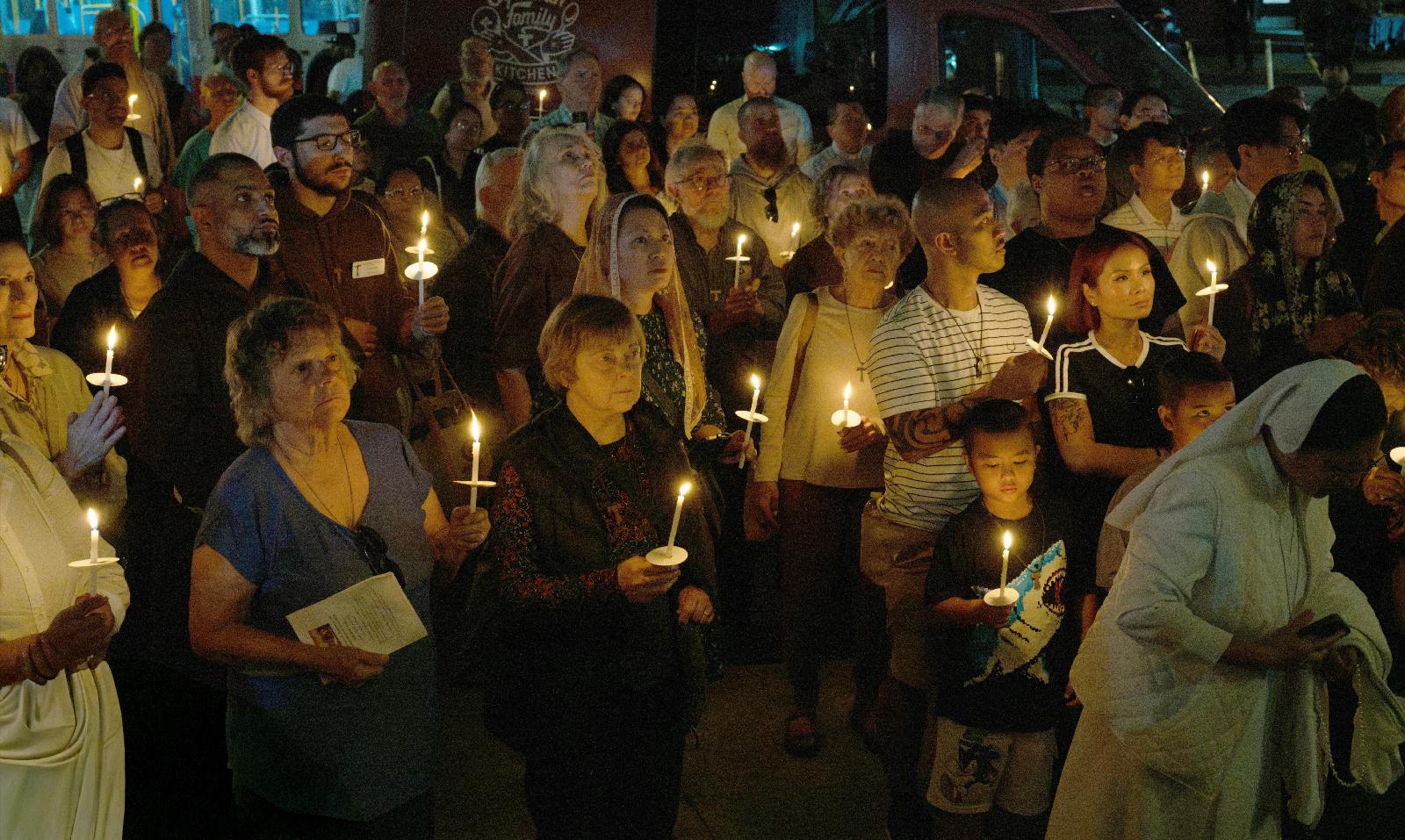
Eight hundred years later, Catholics gathered at the National Shrine of St. Francis of Assisi in San Francisco Oct. 3 to commemorate the Transitus, St. Francis’ passing from earthly life to eternal glory.
Capuchin Franciscans and Franciscan Friars of the Renewal joined Dominican friars, Salesian sisters, sisters of the Fraternité Notre Dame and lay faithful who had traveled from as far as San Diego to attend the historic service.
The Transitus is composed of seven readings and hymns covering the life of St. Francis of Assisi, each containing pieces of what shaped Francis’ spirituality and recounting his final hours on earth.
In the dimly lit church, a Franciscan habit lay on a makeshift bier, with the Easter candle behind it symbolizing Christ’s resurrection from the dead.
‘Sweetness of soul and body’
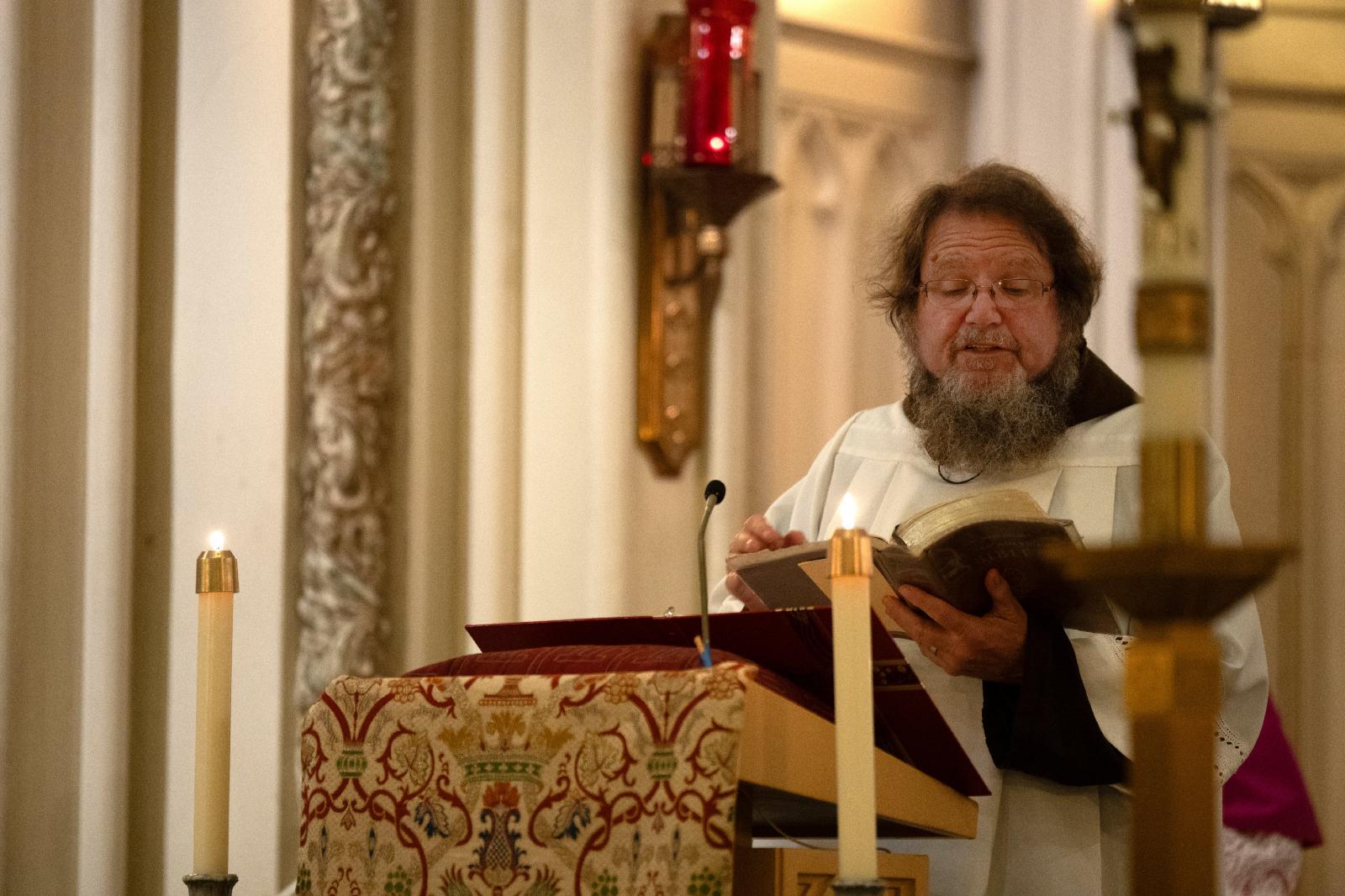
In his homily, Capuchin Franciscan Father Bobby Barbato, rector of the National Shrine of St. Francis of Assisi, reflected on St. Francis’ conversion and the moment his encounter with a leper transformed what had once been bitter to him into “sweetness of soul and body.”
For the first 24 years of his life, Father Barbato said, Francis had heard the words of the Gospel, and may even have admired them, but had not seriously considered putting them into practice.
His encounter with the leper changed that.
Francis spent the rest of his life seeking to live the Gospel, Father Barbato said, not simply by imitating Christ outwardly, but by taking on Christ’s way of seeing the world.
“Francis said, ‘Don’t look at me. Look through me at Jesus,'” he said.
While many strive to follow St. Francis, Father Barbato reminded those present that God has a call for each person.
‘Become saints God has called us to be’
“We are not supposed to become St. Francis of Assisi. We are not supposed to become St. Peter. We’re not supposed to become any of the saints,” he said. “We’re supposed to become the saints that God has called us to be.”
Among the final acts recounted during the Transitus was St. Francis’ blessing of the city of Assisi.
St. Francis was living in the bishop’s house in the city proper, but wanted to die at the little chapel he helped rebuild and the Franciscan motherhouse: St. Mary of the Angels Porziuncola chapel.
As his brothers carried him down the mountain, he asked them to stop so he could bless the city one last time.
Eight hundred years later, as part of the Transitus service, Archbishop Salvatore J. Cordileone blessed the city of San Francisco.
“Today, O Lord, we ask You to bless this city of San Francisco, which bears the name of Your servant Francis.”
The archbishop prayed that San Francisco would be a place “where strangers may find welcome, where the poor may find compassion, where families may find peace, and where every human person may be recognized as created in Your image and likeness.”
Natural beauty surrounding San Francisco
He also recalled the natural beauty surrounding San Francisco, asking that St. Francis’ example teach those who live there “praise You for Brother Sun and Sister Moon, for the earth, the sea, the wind, and every creature, and to care faithfully for all that You have entrusted to us.”
“May the faith that took root in Assisi continue to bear fruit in San Francisco,” said Archbishop Cordileone. “May our churches remain places of prayer and holiness. May Your people remain faithful to the Gospel. May those who serve the Church do so with humility. May the poor, the forgotten, and the vulnerable always find a place among us.”
Following the blessing, there was a solemn procession around the block on Vallejo Street with hymns sung to Our Lady.
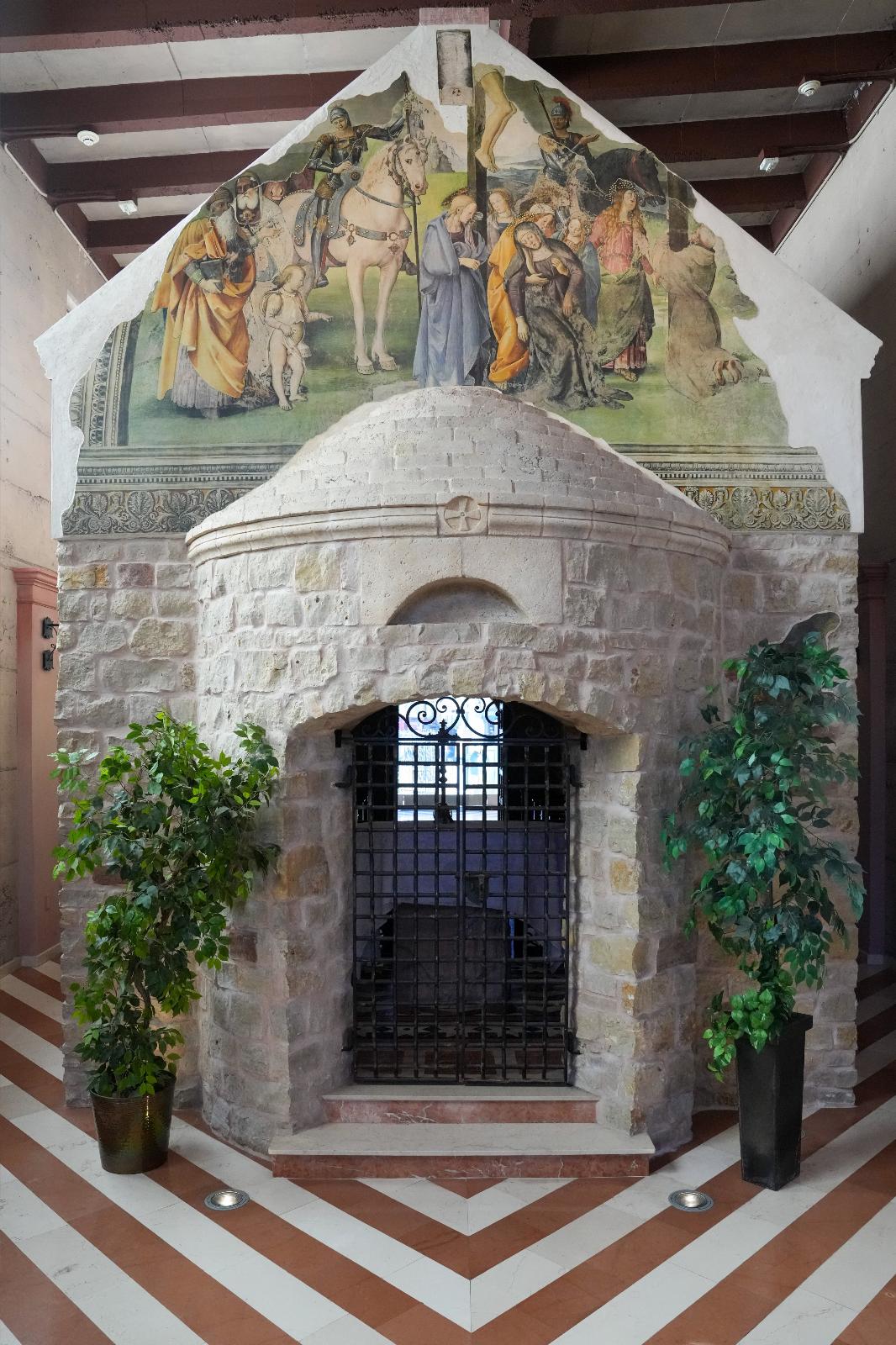
The bier was then brought into the Porziuncola Nuova, a replica of the Porziuncola in Assisi, where the faithful venerated relics of St. Francis.
The Porziuncola held particular significance for St. Francis. It was one of the churches he rebuilt after hearing Christ’s call to “rebuild my Church” and became the center of the early Franciscan movement.
Franciscan mission celebrates its 250th anniversary
The 800th anniversary of St. Francis’ death also comes during another significant anniversary for the Catholic Church in San Francisco. Misión San Francisco de Asís, the historic Franciscan mission that gave the city its name, is celebrating its 250th anniversary.
For Matthew Goudeau, a Knight of St. Francis of Assisi, the convergence of the two anniversaries is an opportunity to celebrate the saint whose name the city and mission bear.
“What draws me to St. Francis is that he was deeply Catholic, deeply humble, and deeply in love with Christ,” Goudeau told Catholic San Francisco, the archdiocesan news outlet. “His reverence for the Eucharist and his care for the poor came from that love. That’s the Francis who inspires me, and that’s why I’m a Knight of St. Francis.”
He added, “This Jubilee Year marks 800 years since his death. Here in San Francisco, Misión San Francisco de Asís, the city’s historic Franciscan mission, is also turning 250. So we’ve got two good reasons to celebrate him. I love the city of San Francisco, and I hope I can bring a little of St. Francis’s humility, joy, and love to the way I serve this city that bears his name.”
Mary Powers is the assistant director of communications for the Archdiocese of San Francisco and a writer for Catholic San Francisco. This story was originally published by Catholic San Francisco and distributed through a partnership with OSV News.