(OSV News) — In St. Clare’s day, society was shifting, there was greater disparity between rich and poor, migration was on the rise, and urban centers were booming. The world around her looked quite chaotic and seemed to have lost its way, particularly where Christianity was concerned.
Clare (1193-1253) found her way, however, when she first encountered St. Francis of Assisi, a holy man who preached a way of life so contrary to the world that it was surely the way to bring true joy to the human heart. Having resisted marriage for years, despite much family pressure, Clare was drawn to the Gospel’s simplicity when, at age 18, she first heard it preached by Francis. Like him, she wanted to transform the world, and he had convinced her it was through total abandonment to Christ through poverty.
As the Church marks her feast day Aug. 11, St. Clare offers to people today a life worthy of reflection — especially in this Jubilee Year of St. Francis, which commemorates the 800th anniversary of the friar’s death.
Sts. Clare and Francis mutually inspired each other. Francis was the visionary, and Clare was a loyal disciple in whom he found a kindred spirit. Together they adopted a revolutionary way of life set to transform the Church and the world.
After their initial encounter, Clare and Francis met for secret conversations. They discussed what ailed society and the Church, and what it would take to break free from worldly desires consuming them. They had a shared disdain for wealth, power and honor; a matching love of radical poverty; and a total love of God above all.
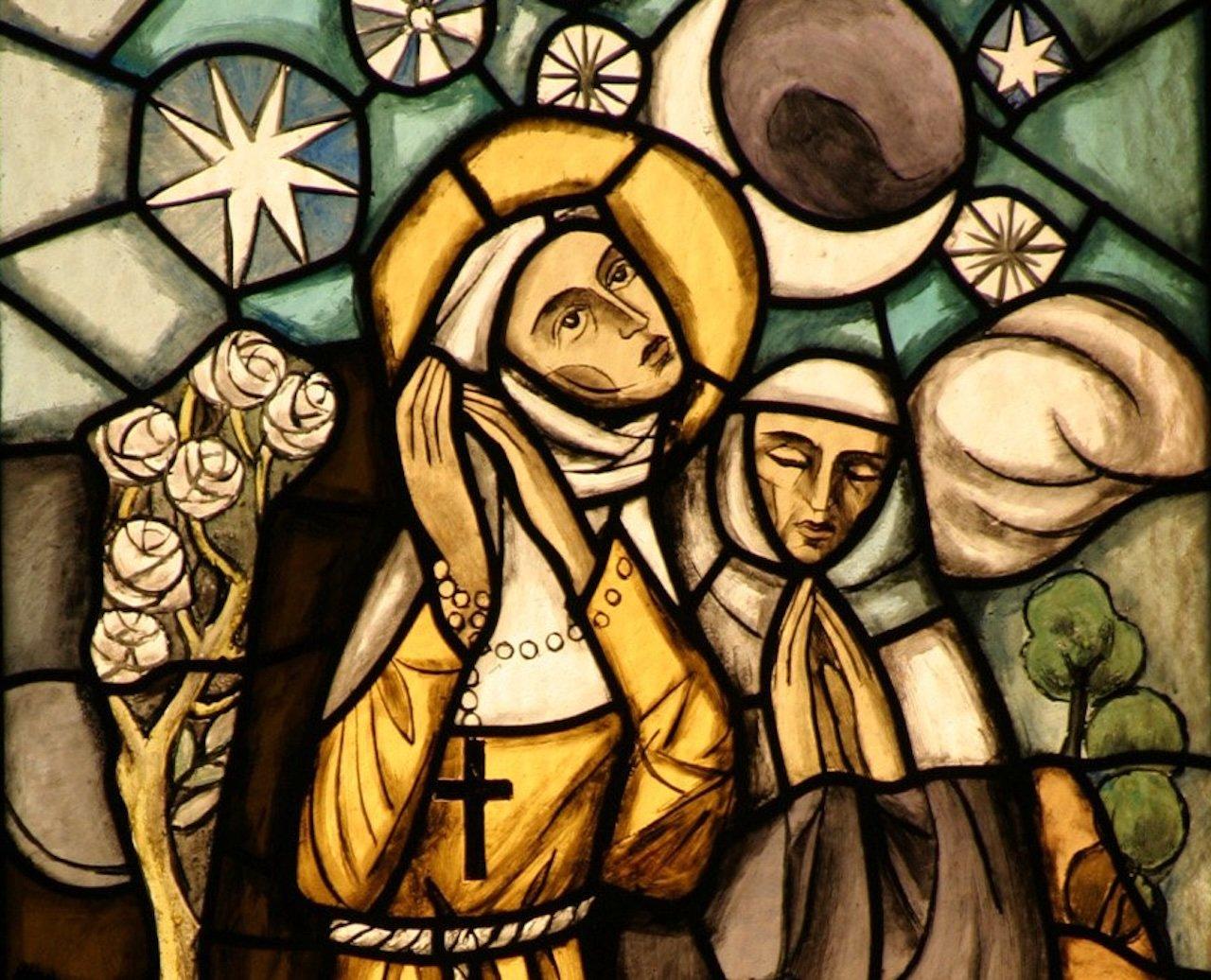
Clare entered religious life at the conclusion of a lengthy discernment. In March 1212, she ran out at night to Francis’ Portiuncula and renounced her finery, cut off her hair and took on the habit of penitence. She found fulfillment and peace in Francis’ way.
Attempts by family and friends to take her away from her vocation were reprised when her sister, Catarina (later St. Agnes of Assisi), joined her in the Franciscan life. Eventually, Francis drew up a rule for them and set Clare as superior. She was named abbess against her wishes.
Among the many other women who came to join the Order of Poor Ladies was their mother. Within a few years, convents of Clare’s nuns were established all over Europe. Eventually Clare wrote a new rule, the first woman to do so for a community of other women. It is said she never left her convent after 1215.
Clare’s nuns adopted an austere and severely penitential way of life: extreme fasting, bare feet and the ground for a bed. They only spoke when required by charity so their minds maintained focus on things above. In an age when many within the Church were concerned with amassing property and fortune, the Franciscan way refused to even own property and to survive on the generosity of benefactors.
A woman of independence and authority, Clare was known to have sharp disagreements with various popes who tried to weaken the strictness of her rule by imposing another. Nonetheless, intent on radical poverty, when once offered a dispensation from it by the pope, she responded, “I need absolution from my sins, but not from having to follow Christ.”
Their rejection of worldly values was quite countercultural for the age, and it brought much mockery and ridicule. But Clare and her nuns offered the chaotic world — so similar to ours today — another way: the way of peace through sacrifice.
Abandoning her life to God’s will meant exercising leadership through service to the other sisters. “Do what you want with me,” she said, “I am yours because my will is no longer my own. I have given it to God.” In this way she found true peace and joy.
St. Clare bore a life of sickness patiently and lovingly, dying in 1253.
Michael R. Heinlein is author of “Glorifying Christ: The Life of Cardinal Francis E. George, O.M.I.” and a promised member of the Association of Pauline Cooperators.