(OSV News) — During the coronavirus pandemic, laptops allowed Holy Family School in Dale City, Virginia, to continue educating children even when distance or illness got in the way.
But as the years went by, the educators began to see the drawbacks of the 1:1 device program.
“Kids would gravitate toward using the Chromebook more as a tool for entertainment and distraction than for work,” said Jay Jesse, assistant principal.
Last year, the parochial school stopped providing digital devices to students, instead offering occasional computer time through shared computer carts. “We’ve found kids have actually learned more, they are retaining more,” he said. “I think we learn better from human beings than we do from machines.”
Apart from classical or Montessori schools, technology use, including 1:1 device programs, is commonplace in U.S. Catholic schools. But as more and more studies come out showing the harms of heavy tech use in the classroom and beyond, some schools are starting to pull back.
Effects of excessive screen time in children
Laptops haven’t raised test scores, but they can do significant damage to a child’s well-being, said Dan Guernsey, a professor of education at Ave Maria University in Florida.
The U.S. Surgeon General reported this year that excessive screen time is linked to poor educational and health outcomes in school-aged children. “In classroom settings, multitasking with digital media interfered with attention and concentration and negatively affected grades, test scores, recall, and reading,” the report noted. Research also predicts that by 2050 almost 40% of children will be myopic, or nearsighted, due to screen-based activities.
Pope Leo XIV warns about the overuse of technology in schools in his recent papal encyclical, “Magnifica Humanitas.” Technology provides lots of information quickly, but true education requires not only information but the exercise of research, reflection and discernment, he writes. “Education … is a long journey requiring patience,” the encyclical notes. “Schools are not called to follow the pace of the digital world, but to offer that which the digital sphere by itself cannot provide, namely a shared time for learning and developing trustworthy relationships.”
This summer, the Erie Catholic School System announced that students in kindergarten through fifth grade will no longer participate in the 1:1 take-home Chromebook program. Instead, students in the five Pennsylvania schools will have access to technology through shared classroom technology carts and dedicated technology instruction.
“While schools across the country continue reevaluating the role of technology in elementary education, the Erie Catholic School System is proud to be among the early adopters in our region taking intentional steps to reduce negative impacts of technology use for our youngest learners,” said Travis Washko, the school system’s president, in a June 20 press release.
“Technology remains an important tool in education, and our students will continue developing the digital literacy skills necessary for future success,” added John Schroeck, the system’s vice president of educational technology, in the same press release. “But students benefit most from hands-on learning, direct interaction with teachers and classmates, creativity, movement, discussion, and opportunities to focus without constant screen engagement.”
A greater focus on the fundamentals
When the educational technology boom first started a dozen or so years ago, Marian High School in Mishawaka, Indiana, decided to take a more measured approach to tech and eschew a 1:1 device policy, said Mark Kirzeder, a science teacher and IT director who then served as principal.
At the time, some parents wanted to see more technology integrated into the curriculum. But now, parents express a desire for fewer devices and a greater focus on the fundamentals.
“What once was maybe a marketing difficulty for us has actually become a marketing cornerstone,” said Kirzeder. “Our enrollment has grown over the past five years from 720 to 840 (students). So I would say based on what I’m seeing in the community, this is what many parents want.”
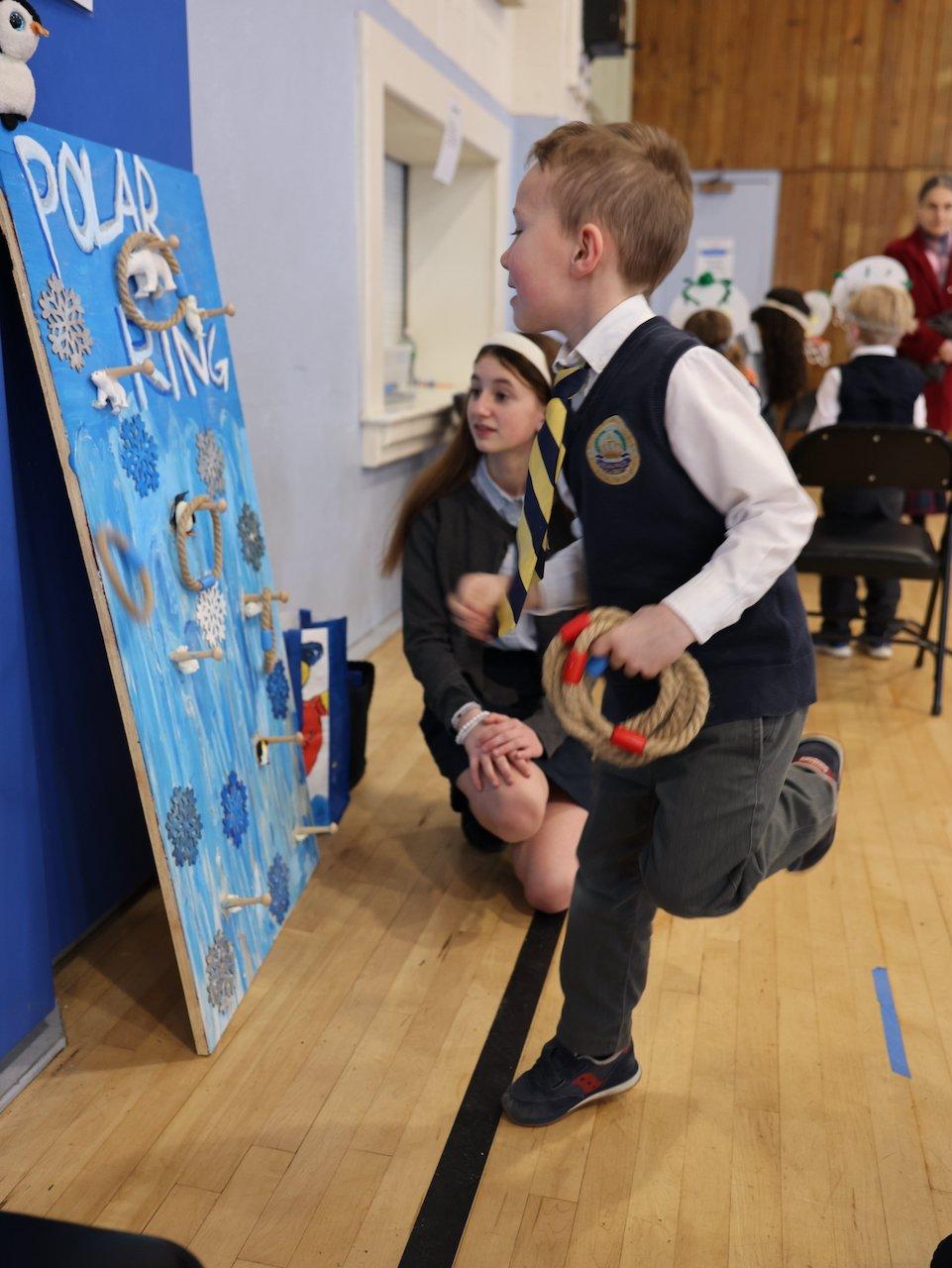
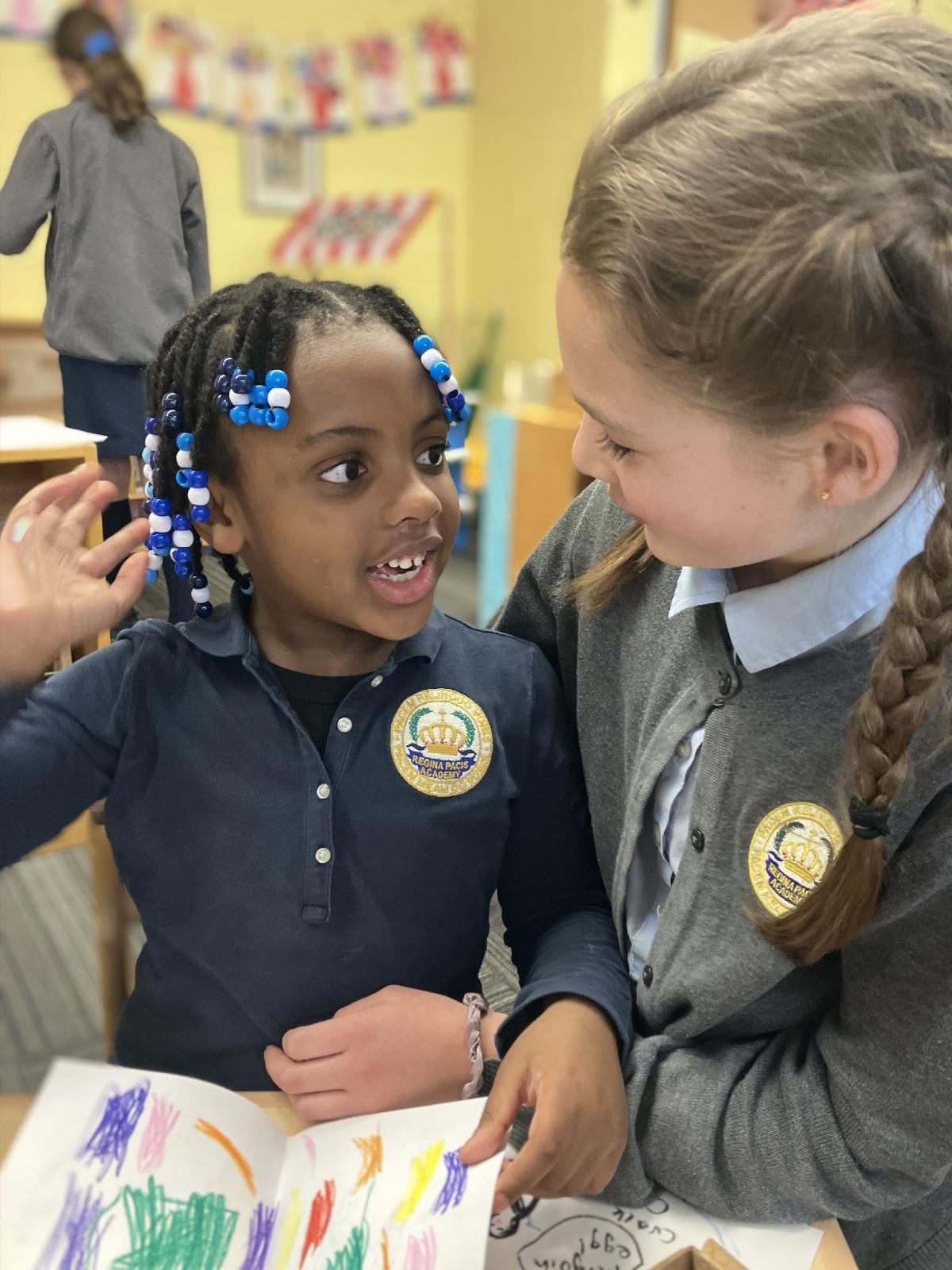
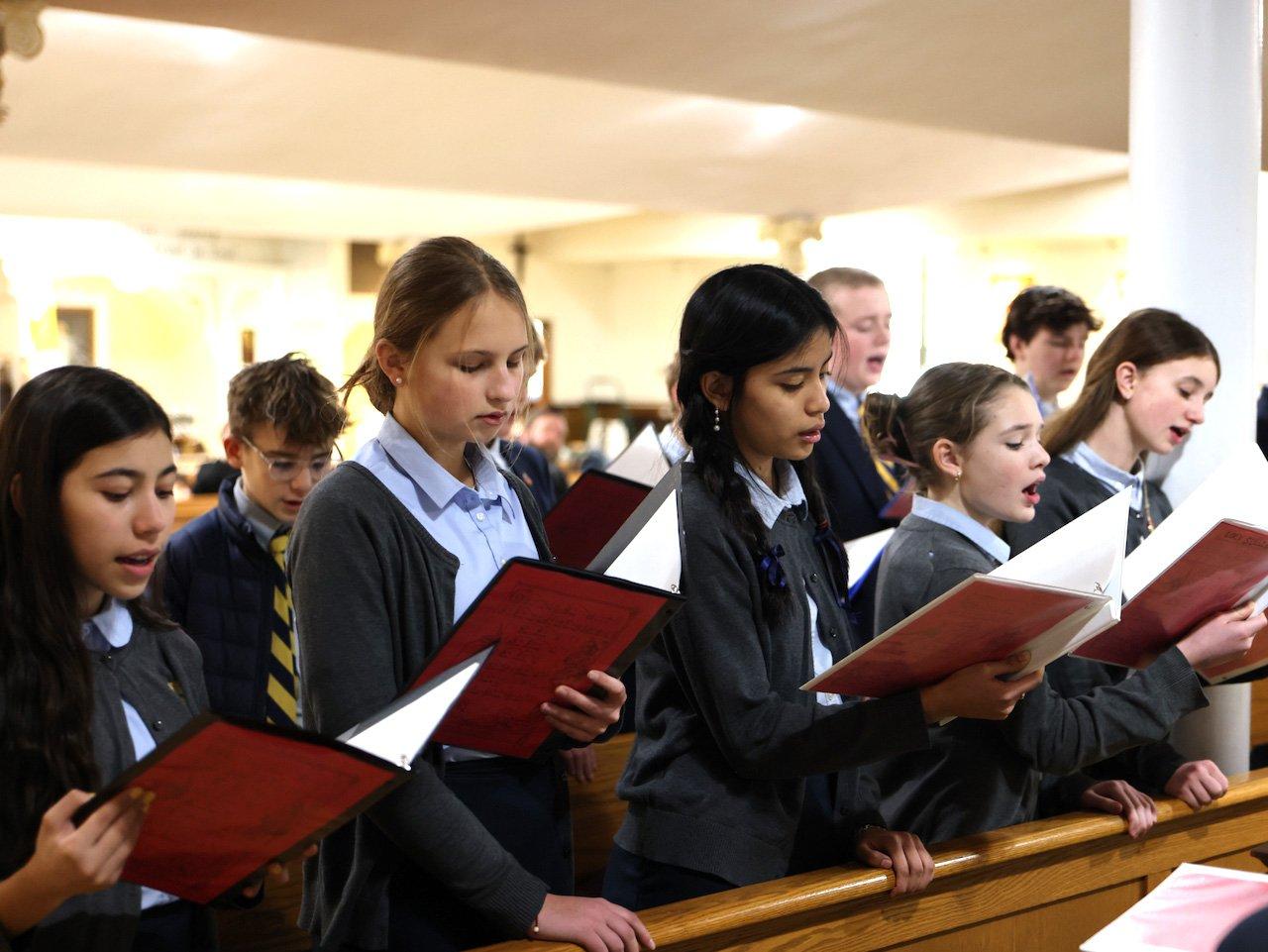
Regina Pacis Academy, a preschool-to-eighth-grade independent Catholic school in Norwalk, Connecticut, was founded as a tech-free classical school. Instead of smartboards, devices and a computer lab, the academy has chalkboards, textbooks and a well-stocked library, said Kimberly Quatela, its principal.
“Our founders understood that paper and pencils, good books, well-formed teachers and great discussion are what have been proven to strengthen memory and build deep comprehension,” she said.
In the age of artificial intelligence, teachers never have to wonder if their students have copied and pasted an answer from ChatGPT, she said. All their work is handwritten.
Quatela chuckled when asked if she thought her students would fall behind their peers in this technological age. “Whether it’s typing or writing an email, kids pick those skills up very quickly,” she said.
But after years in a no-tech environment, Regina Pacis students have acquired a skill that’s more difficult to come by: a firm foundation in interpersonal skills. To Quatela, that’s more valuable by far.
“They can look someone in the eye, articulate their views, and engage in dialogue and debate,” she said. “Nothing can replace human interaction. Nothing can replace the relationship.”
Zoey Maraist writes for OSV News from Virginia.