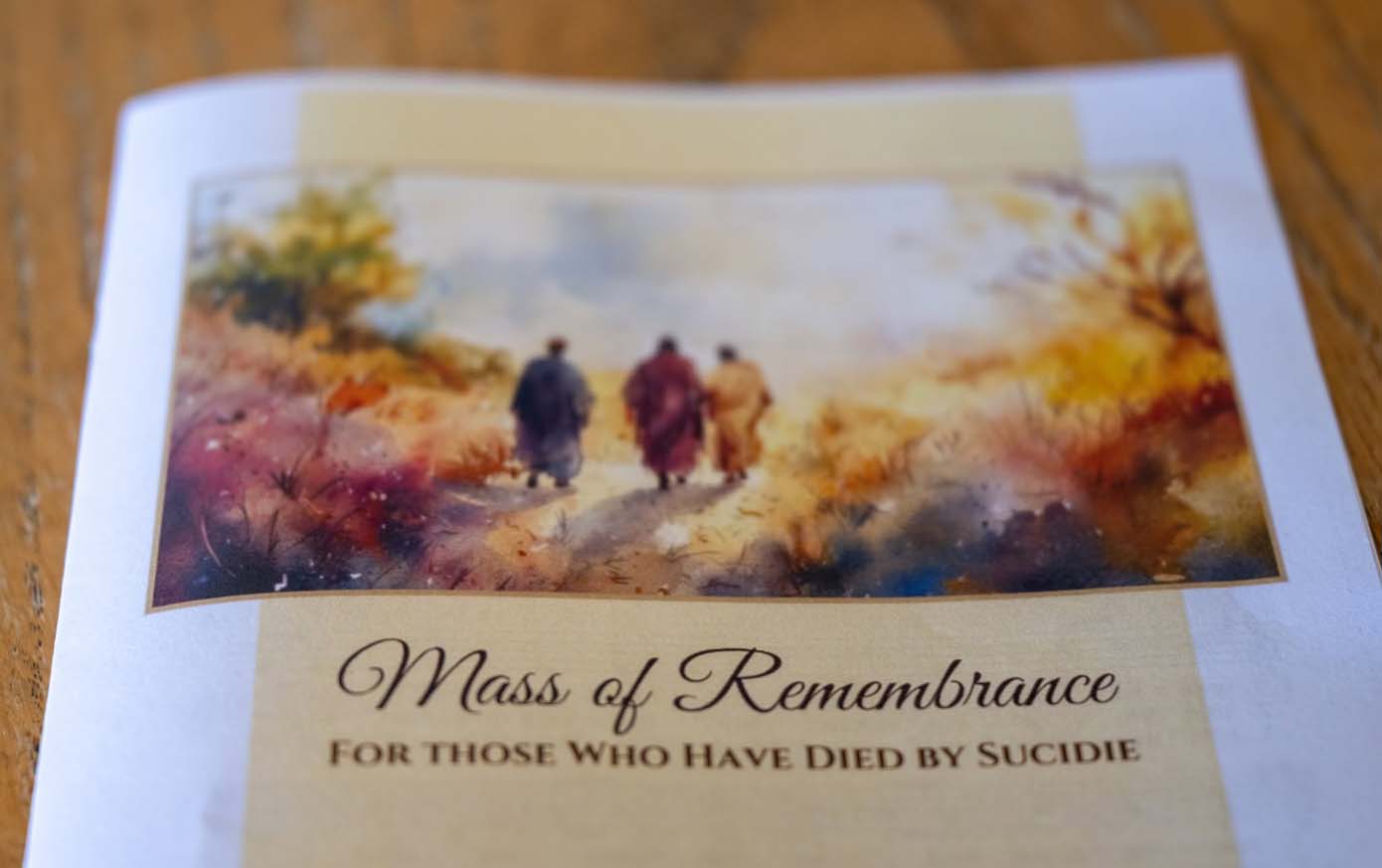
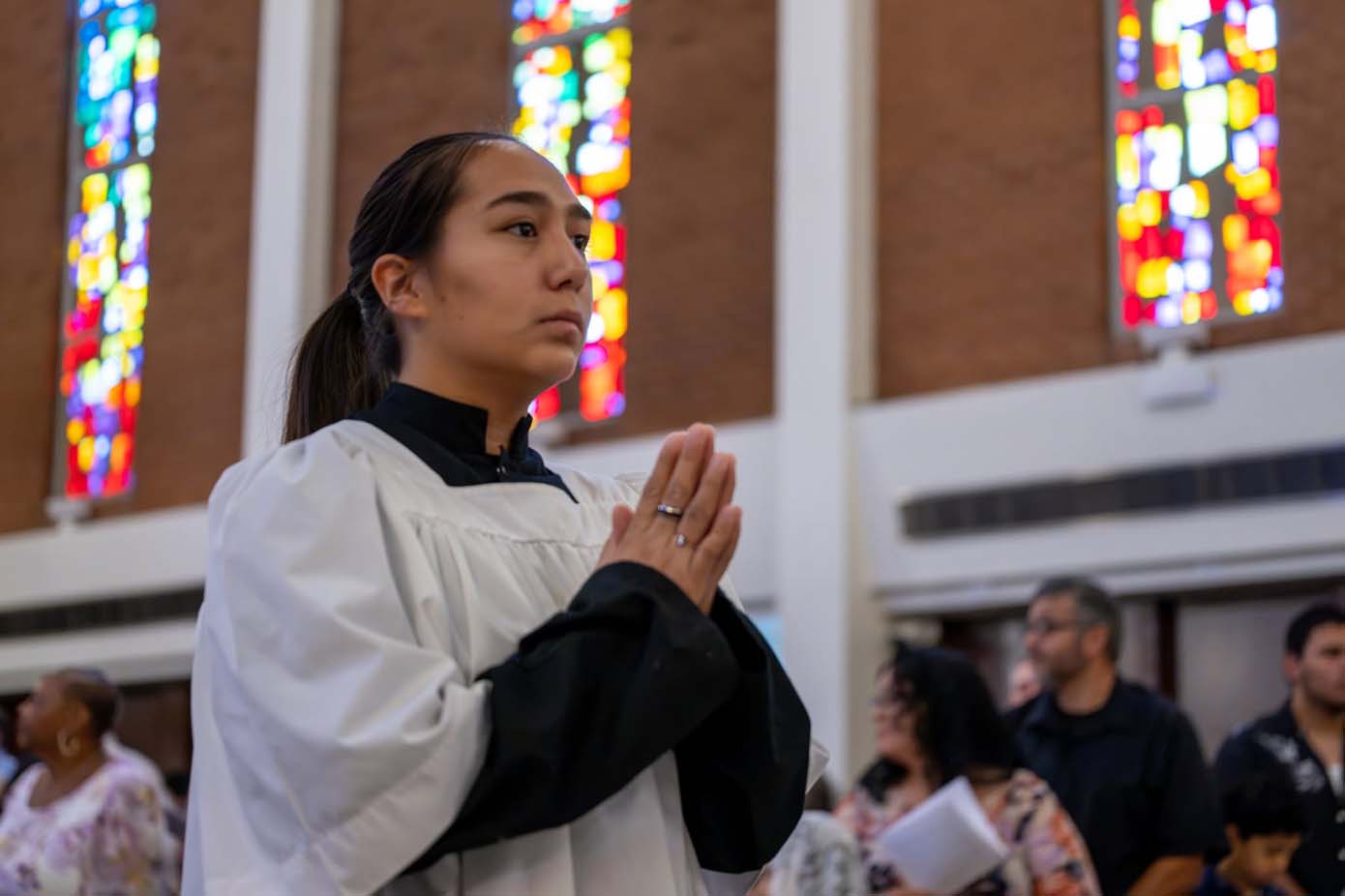
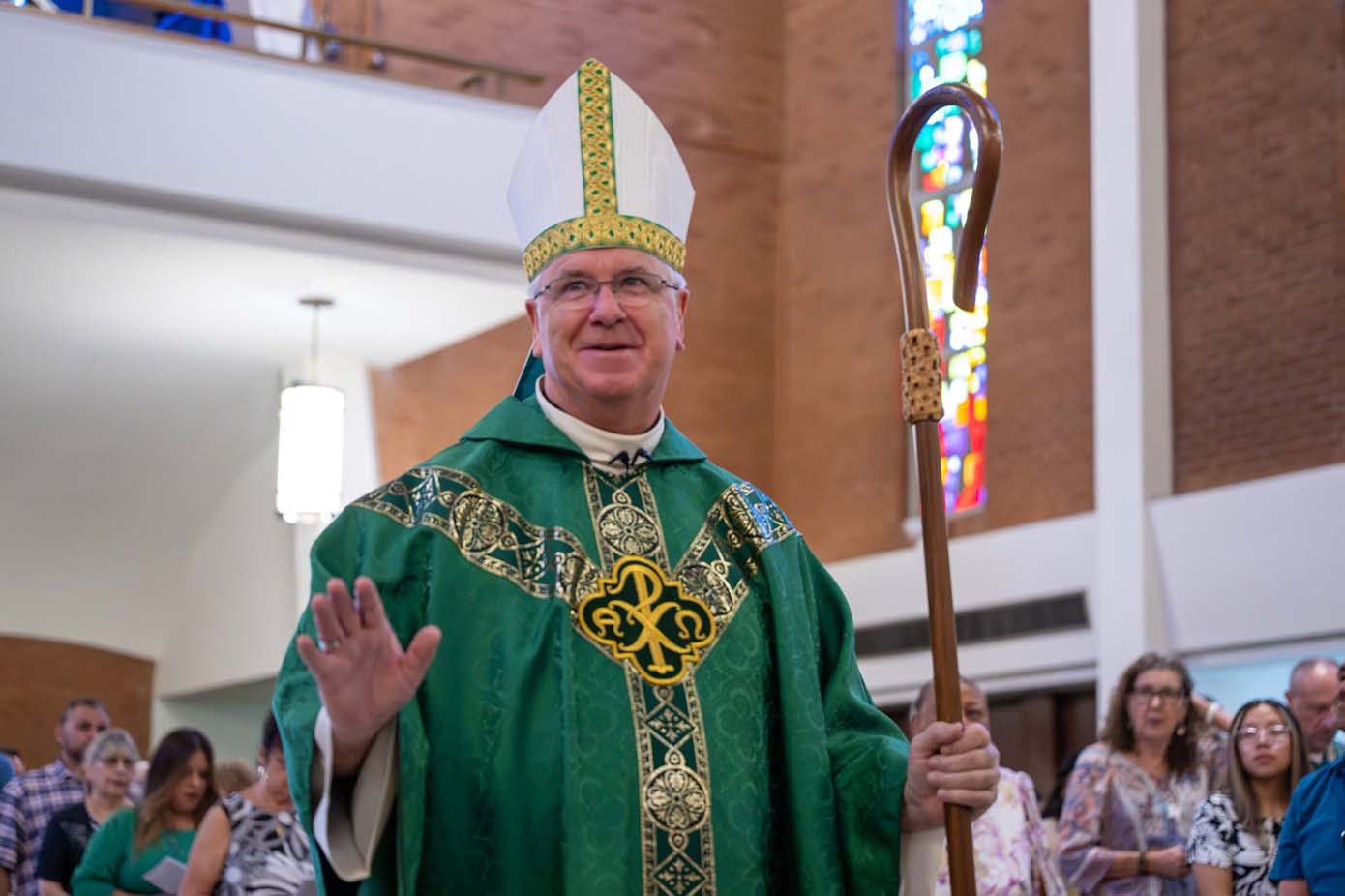
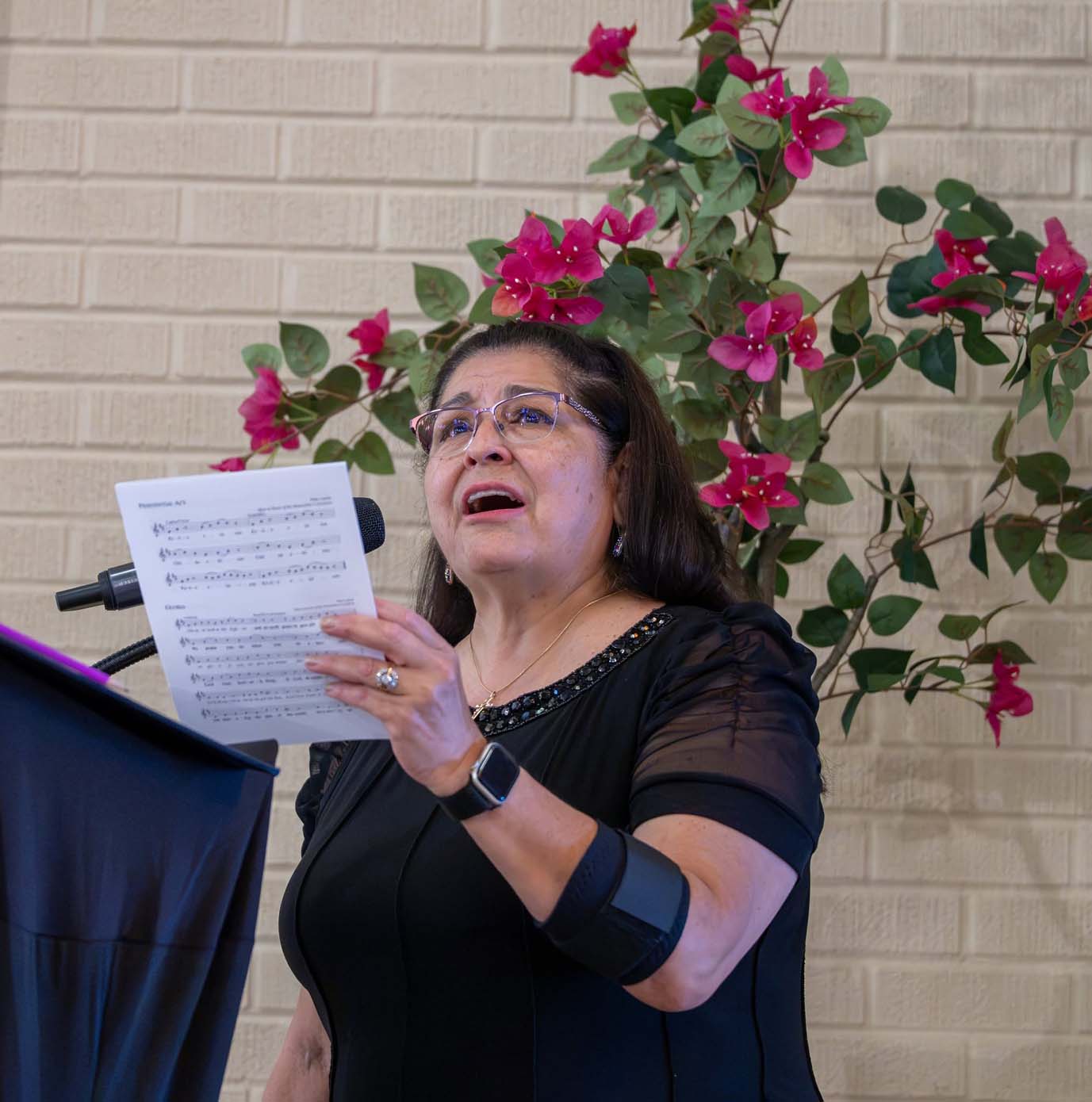
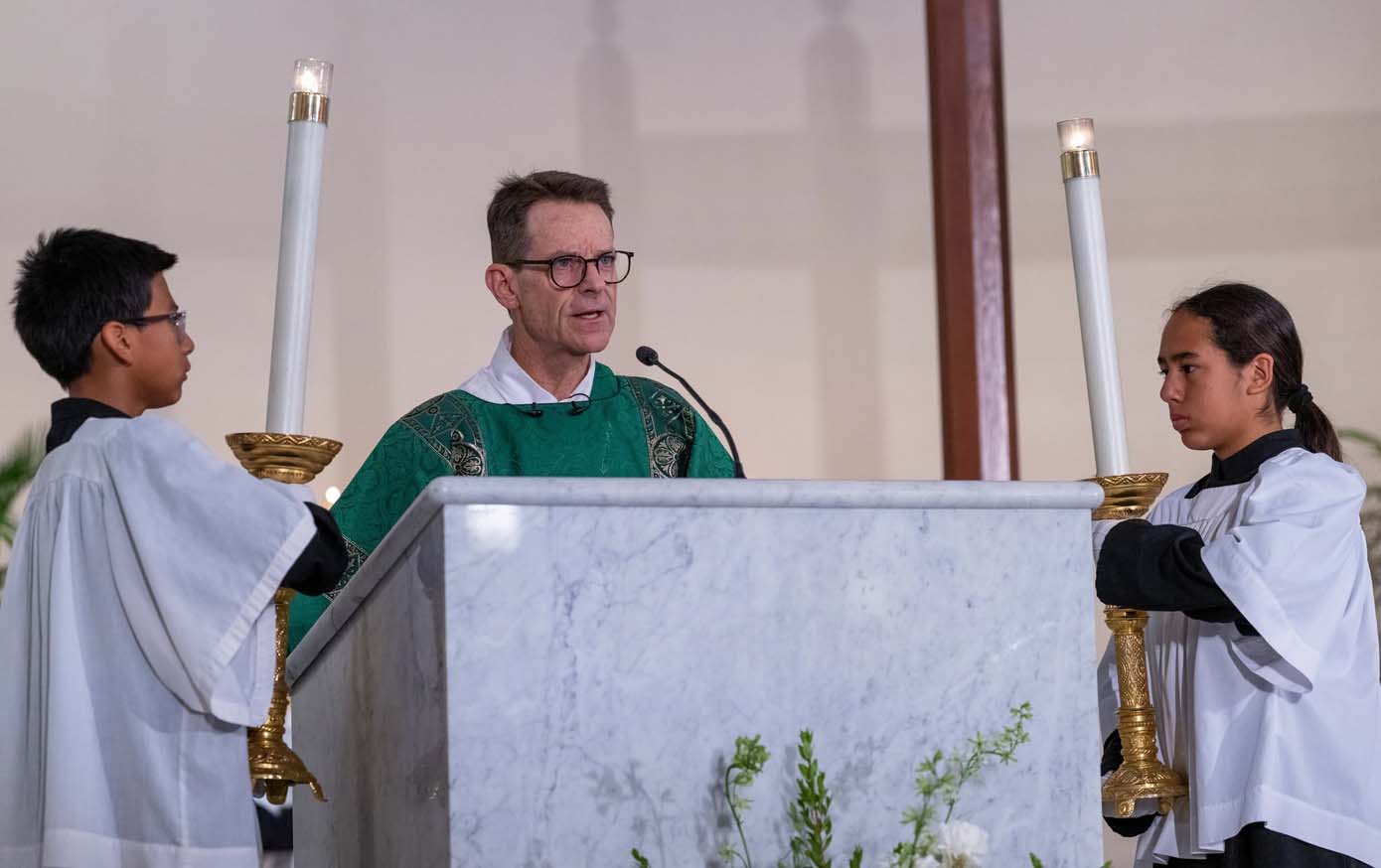
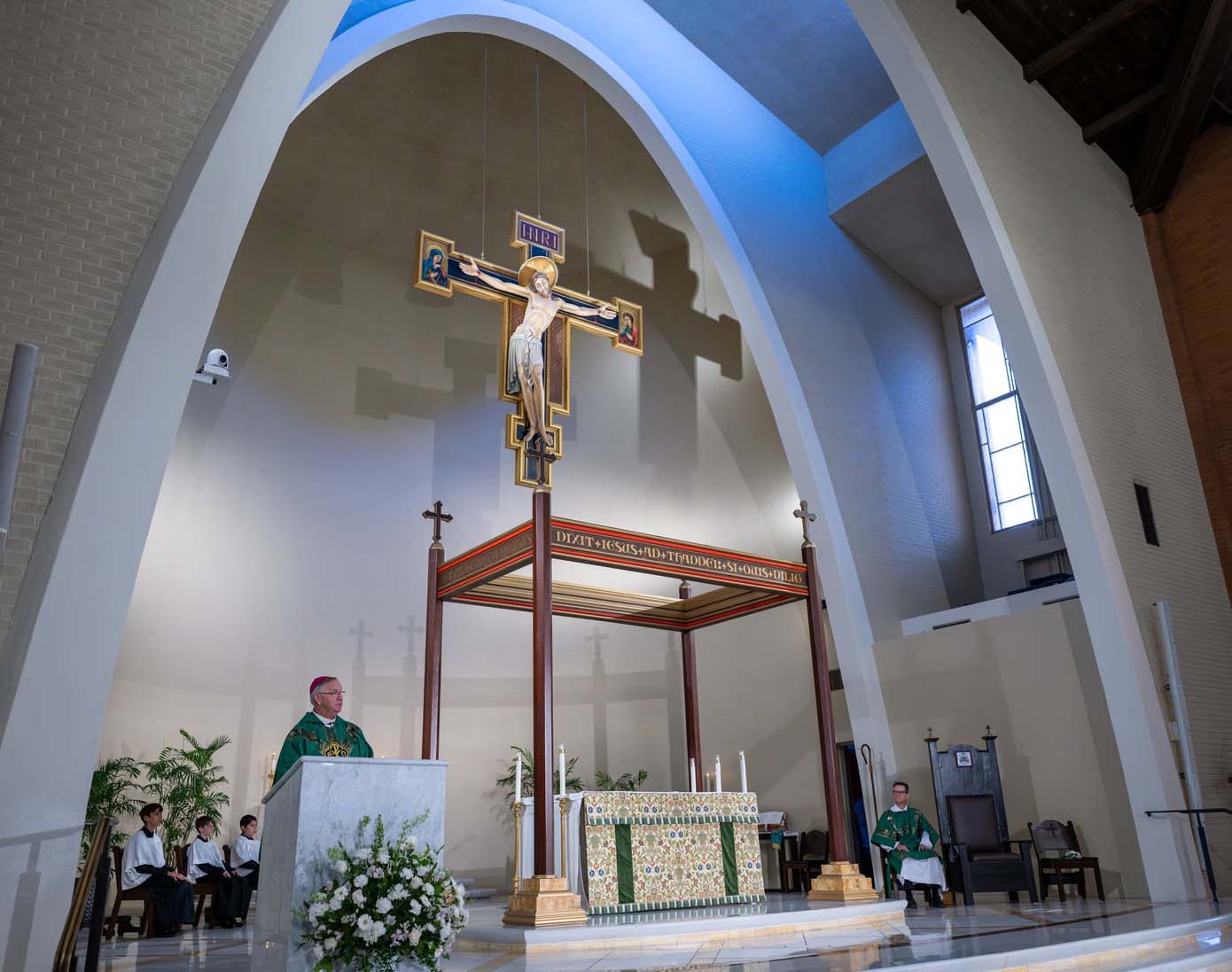
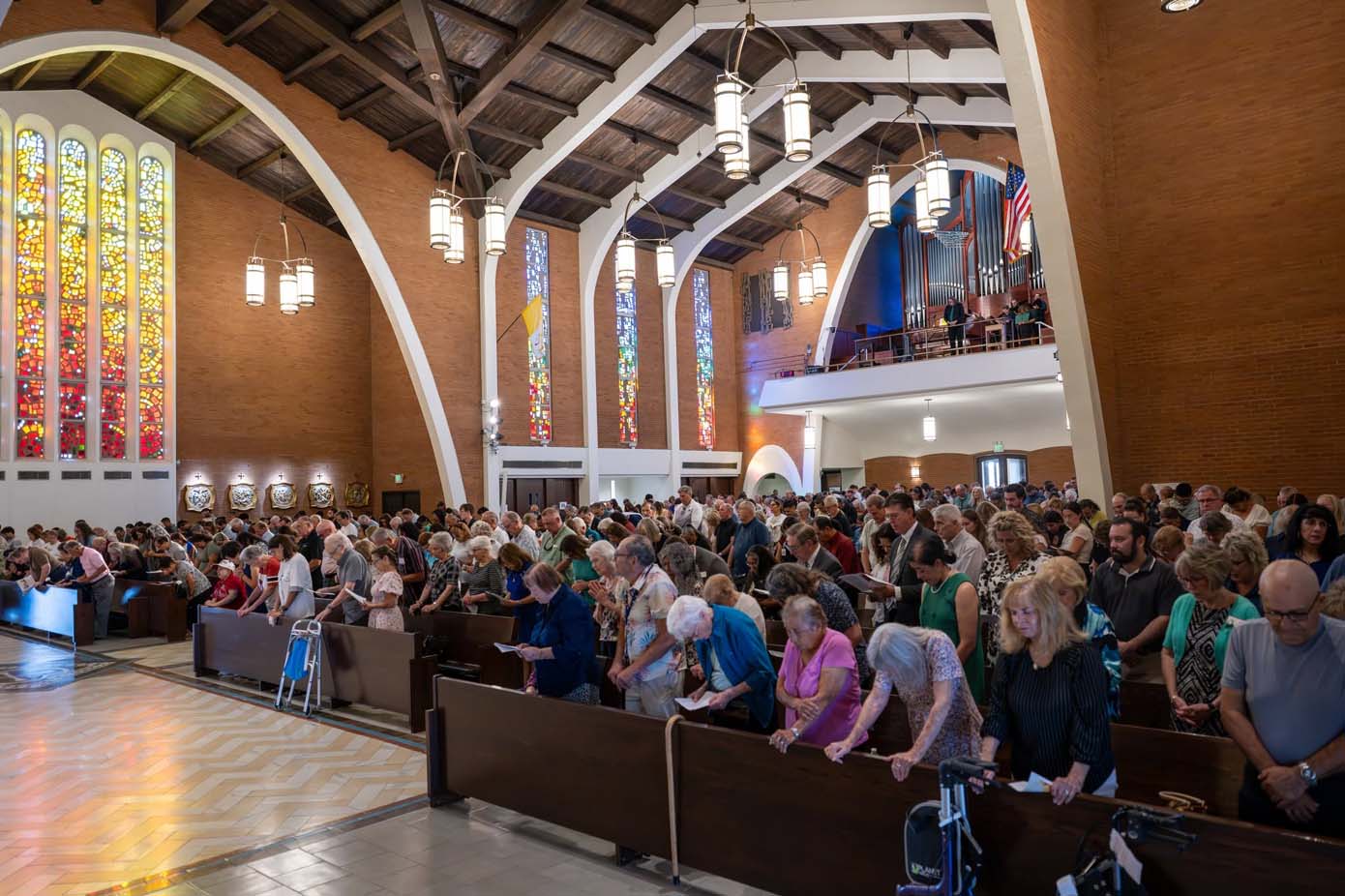
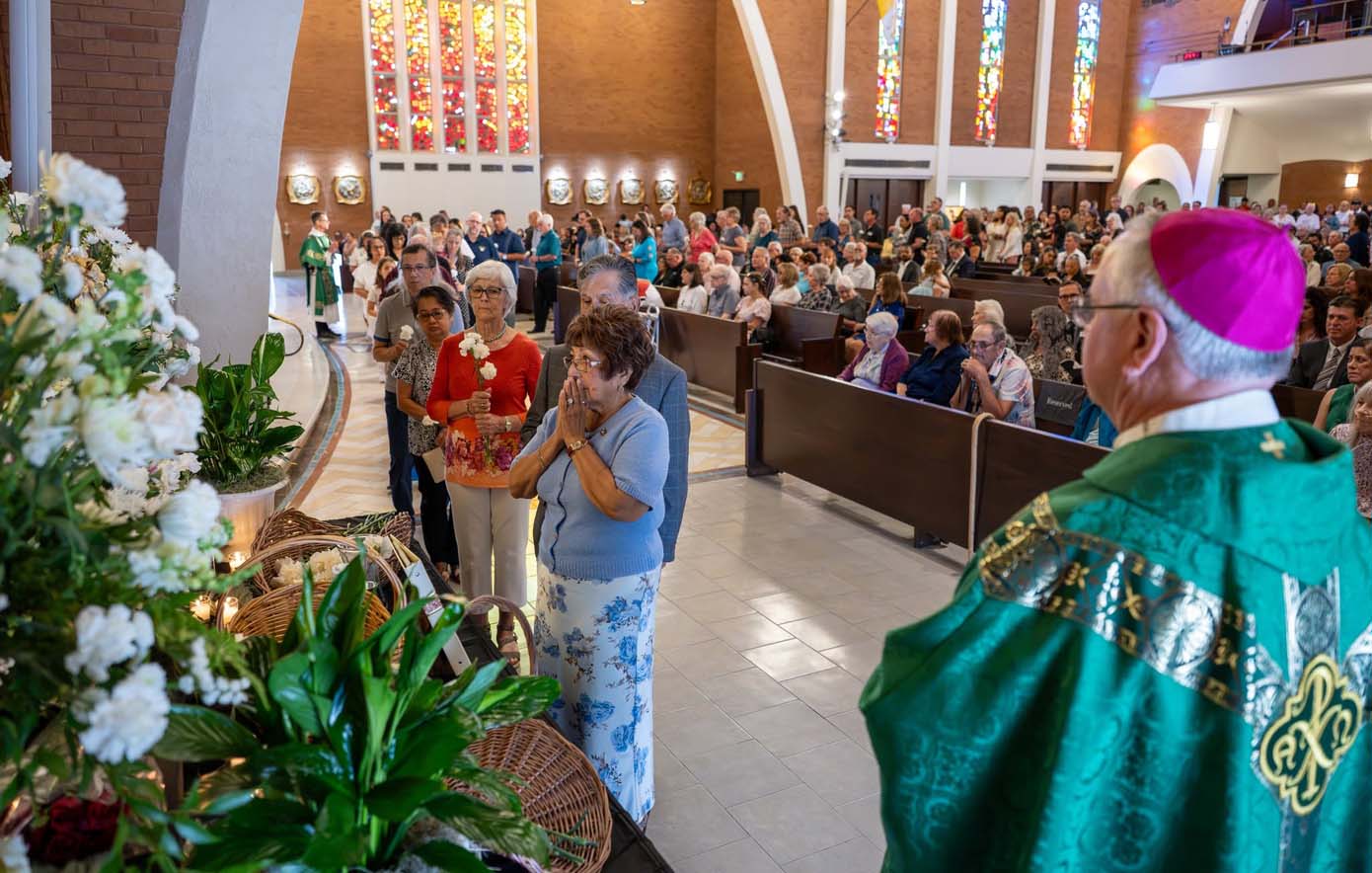
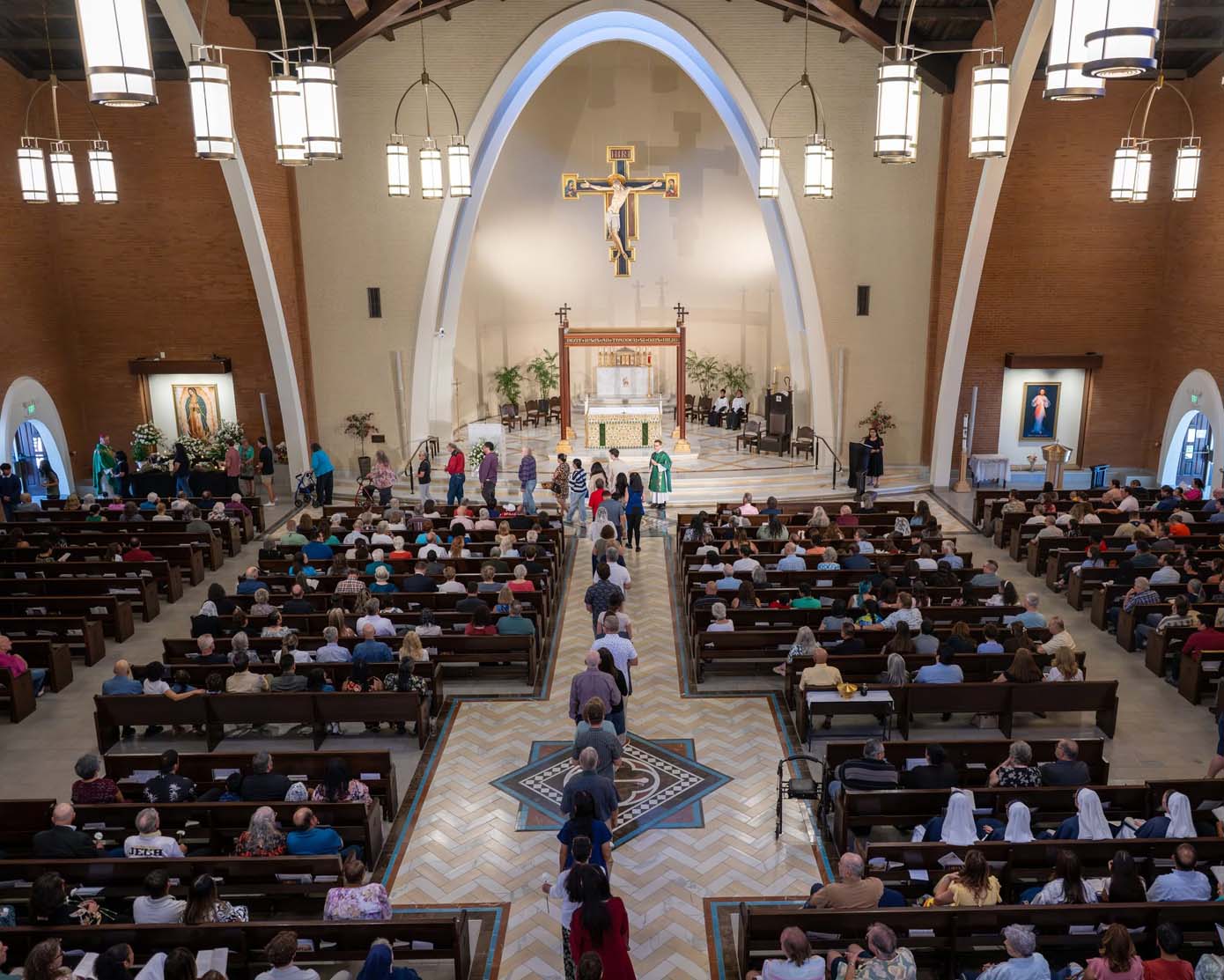
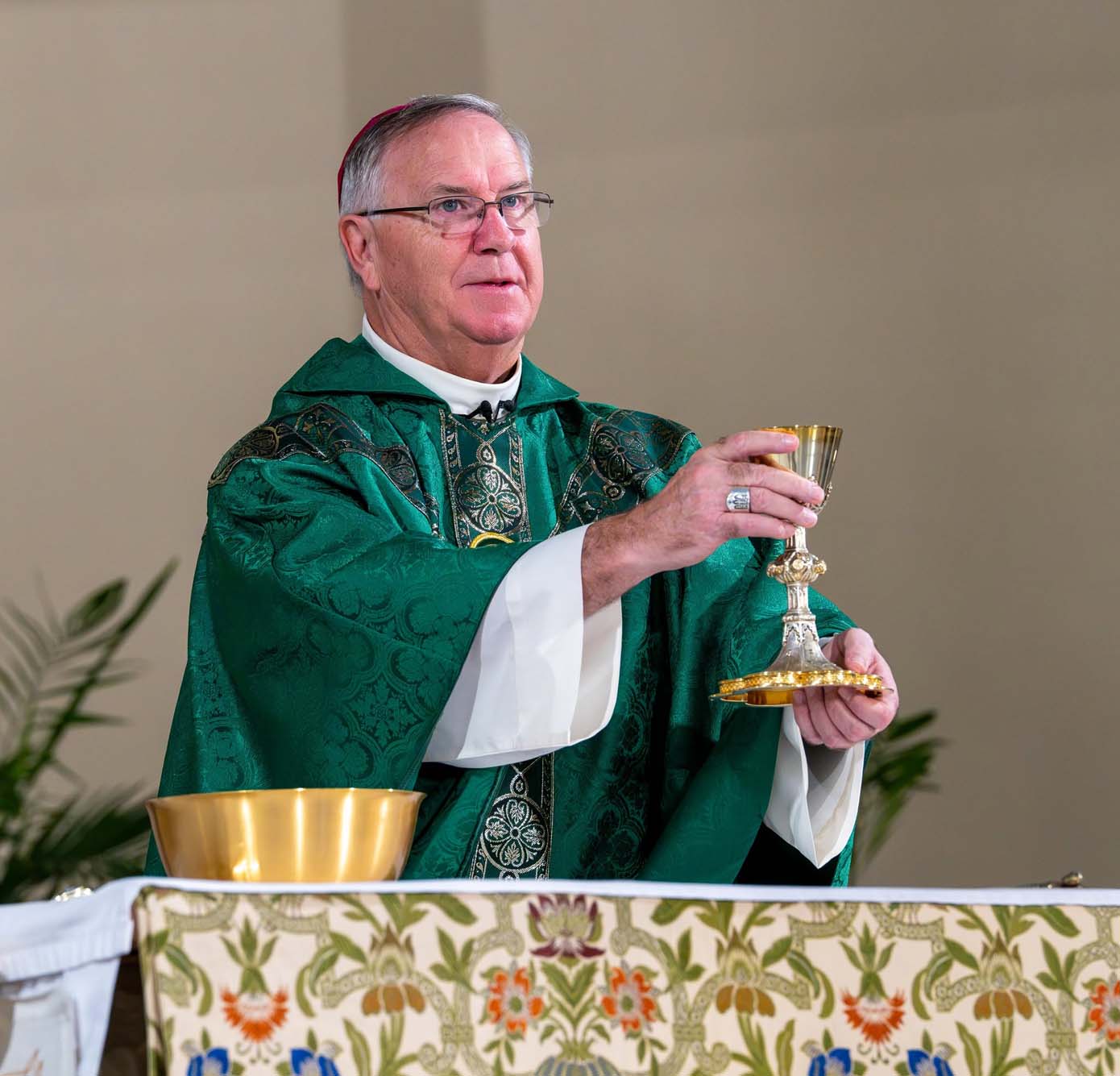
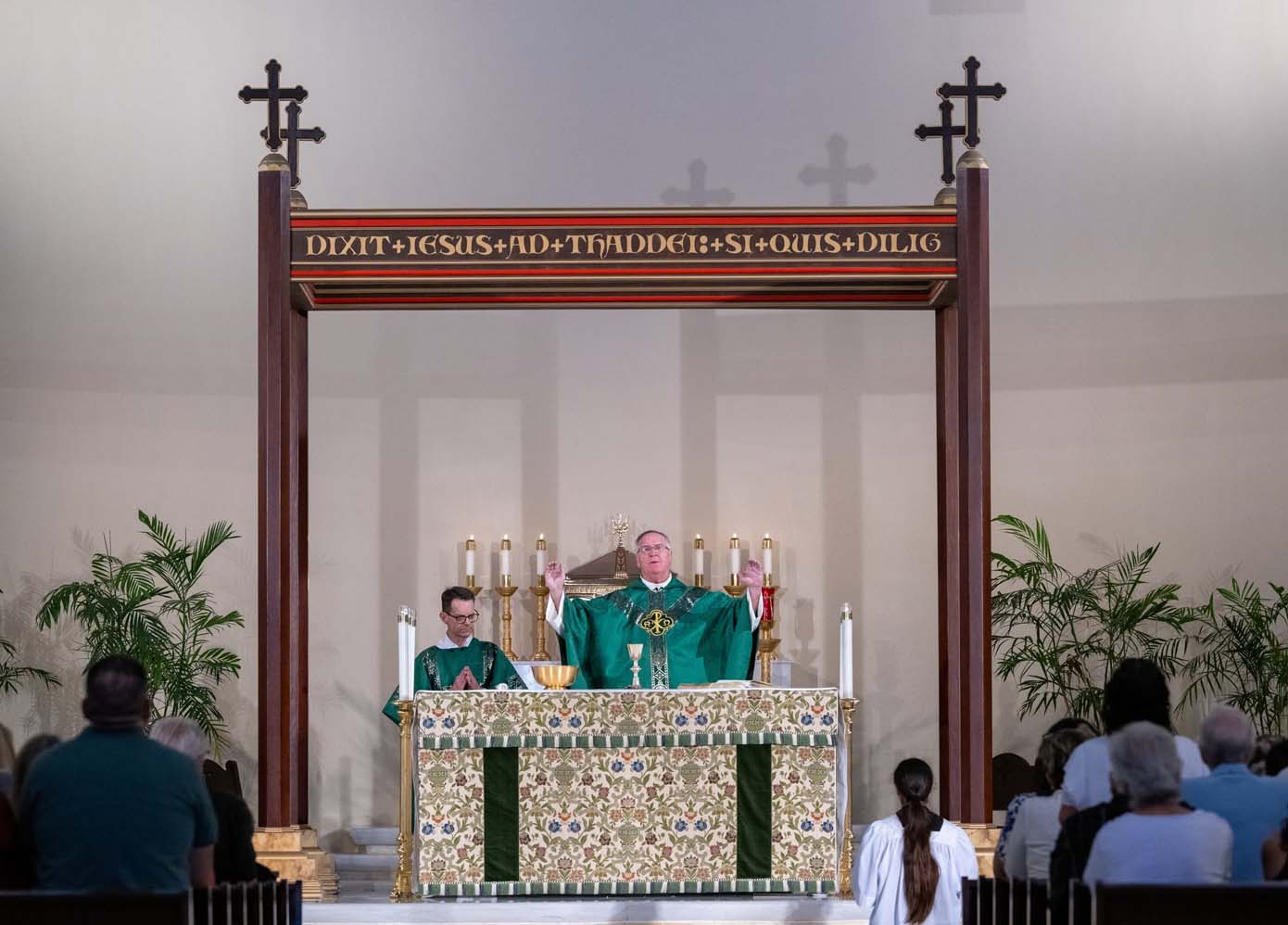
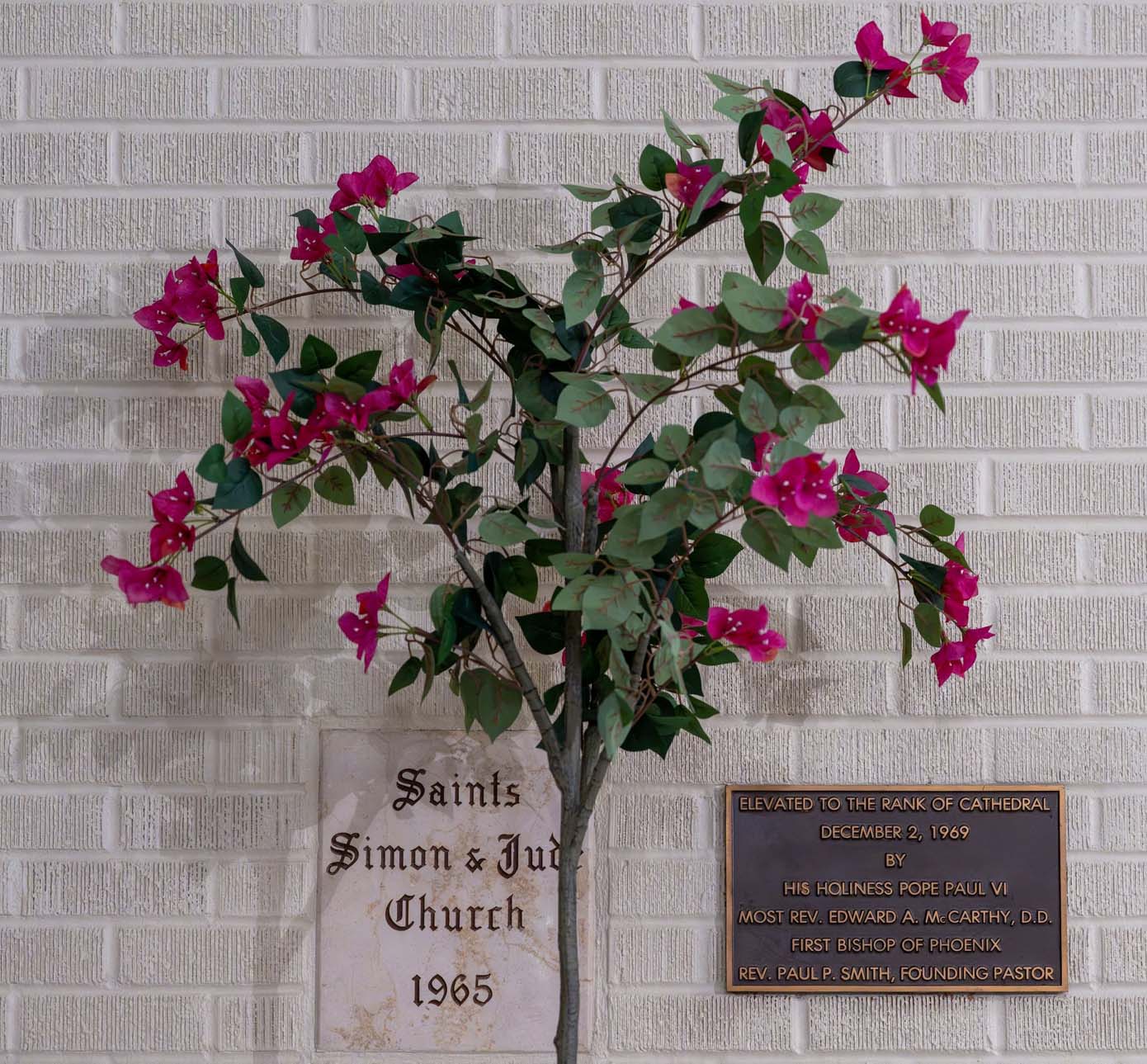
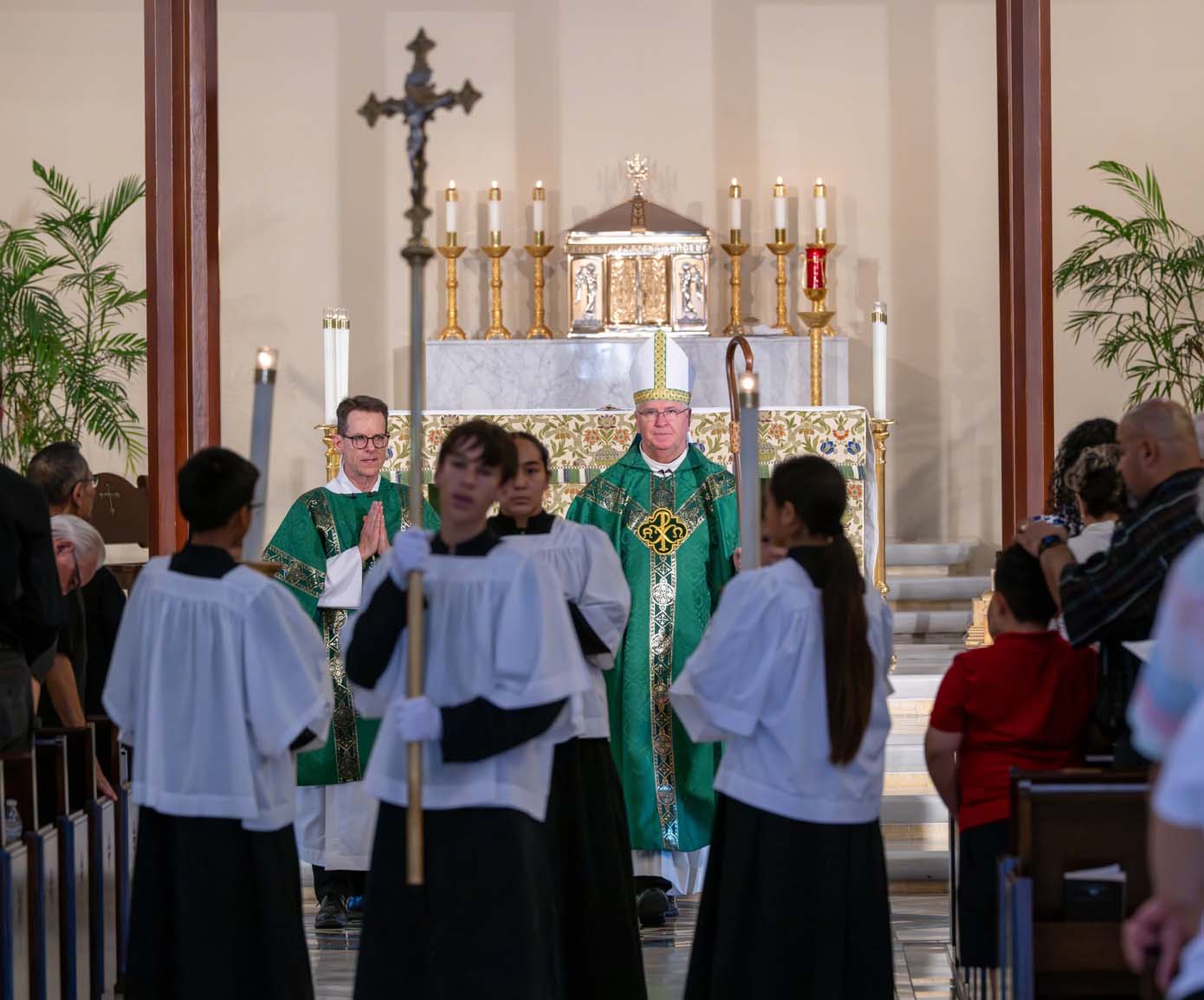
More than 1,000 worshippers gathered inside Ss. Simon and Jude Cathedral in Phoenix as the diocese celebrated its fifth annual Mass of Remembrance for those who have died by suicide on Sunday (Sept. 13).
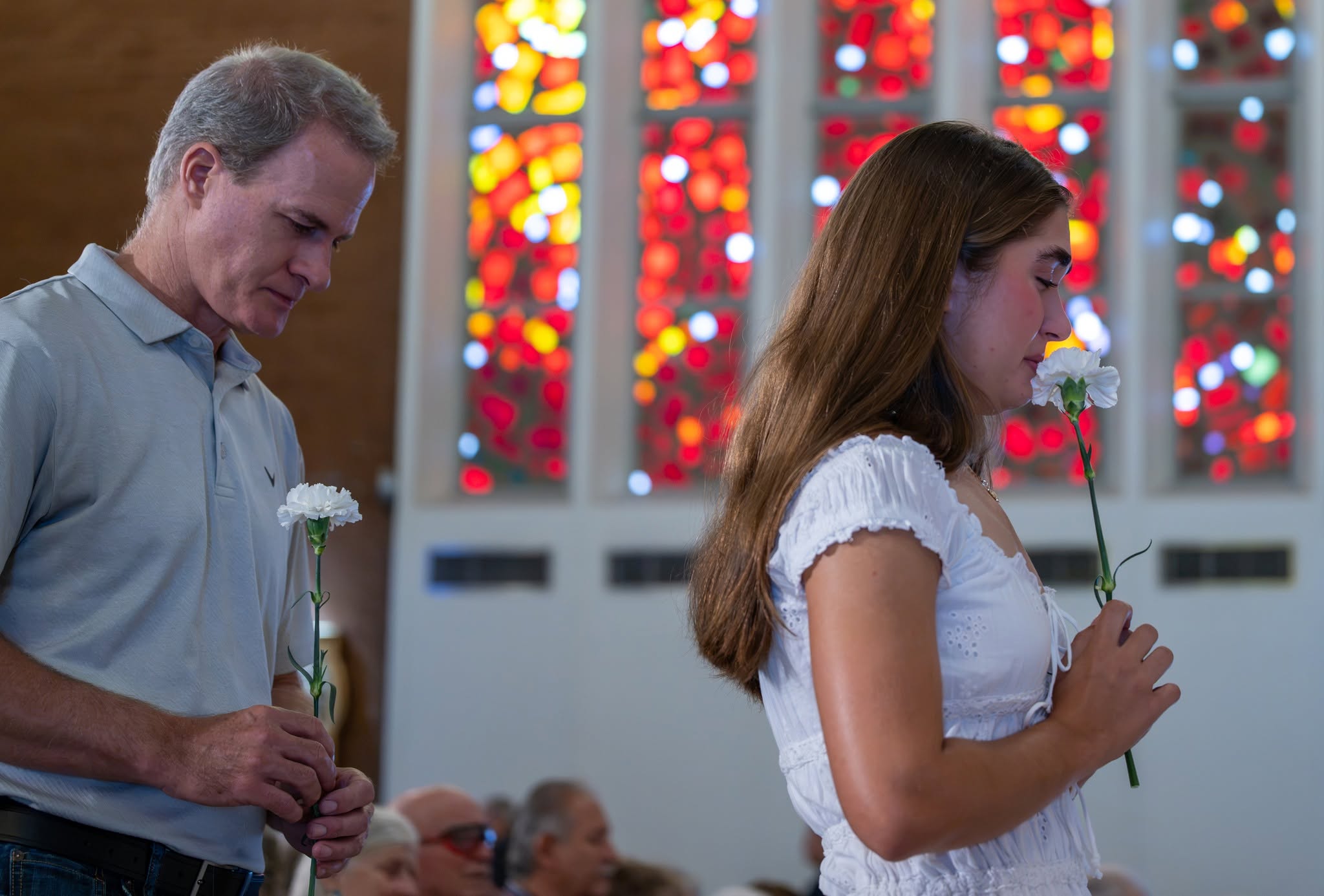
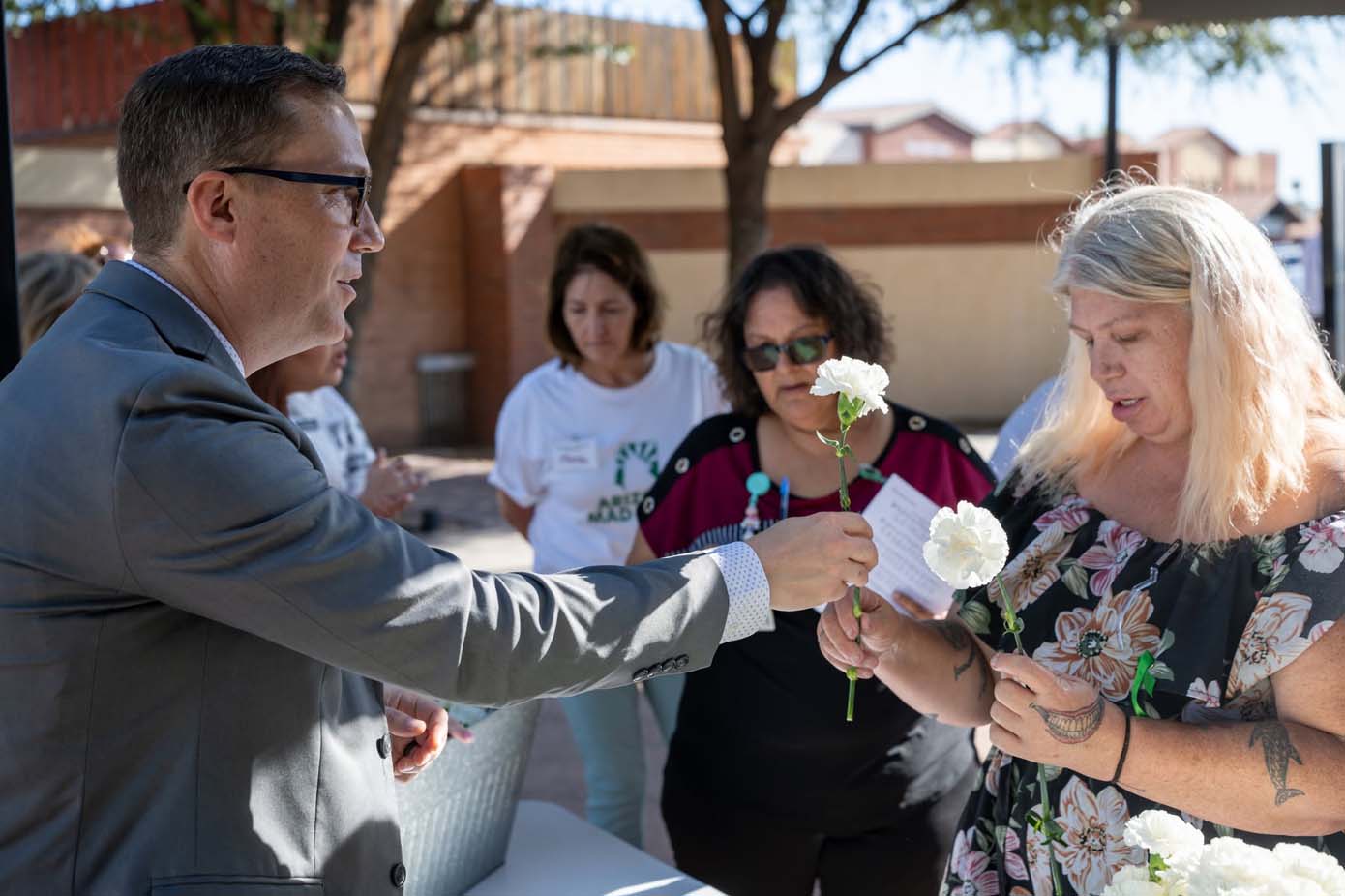
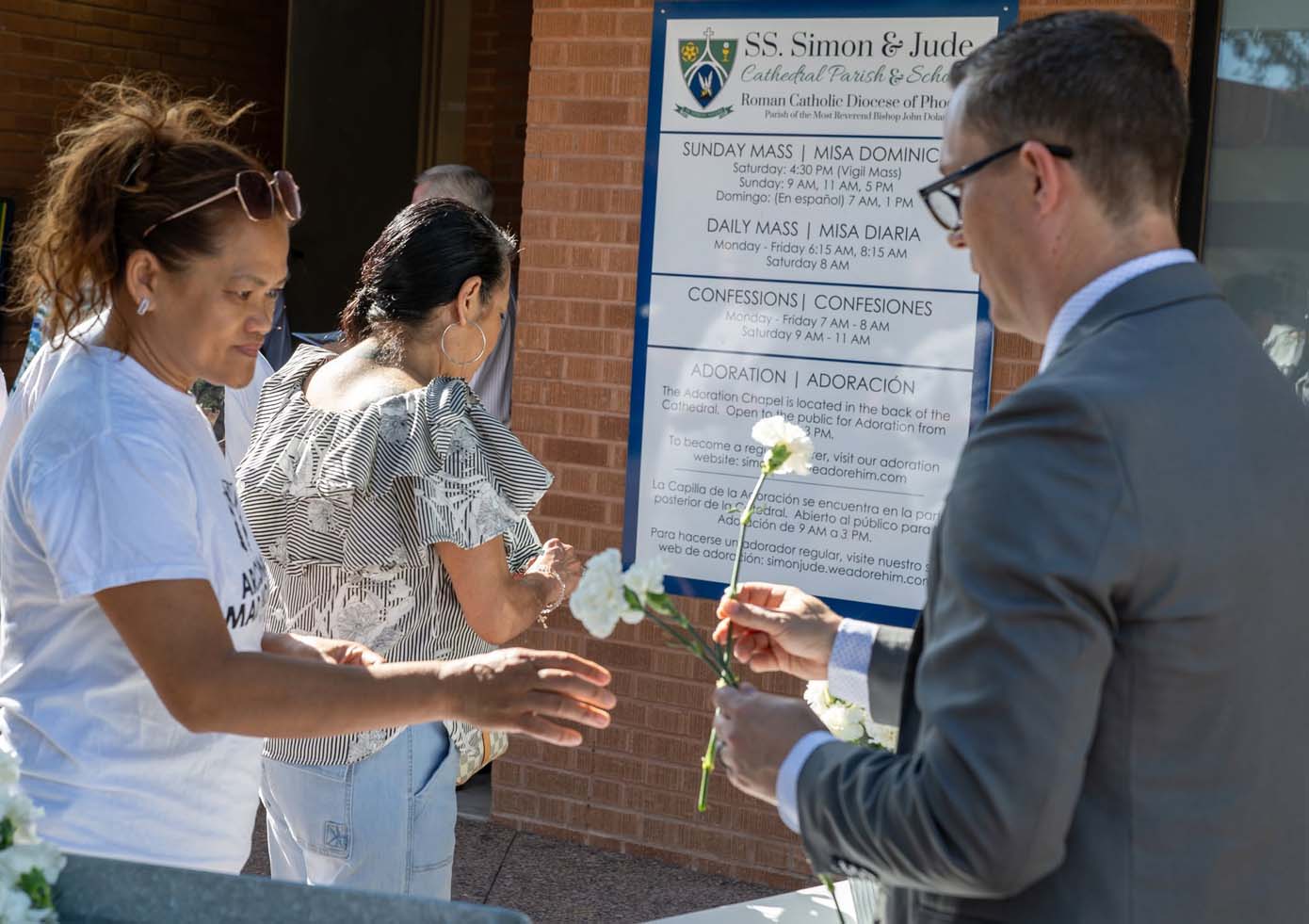
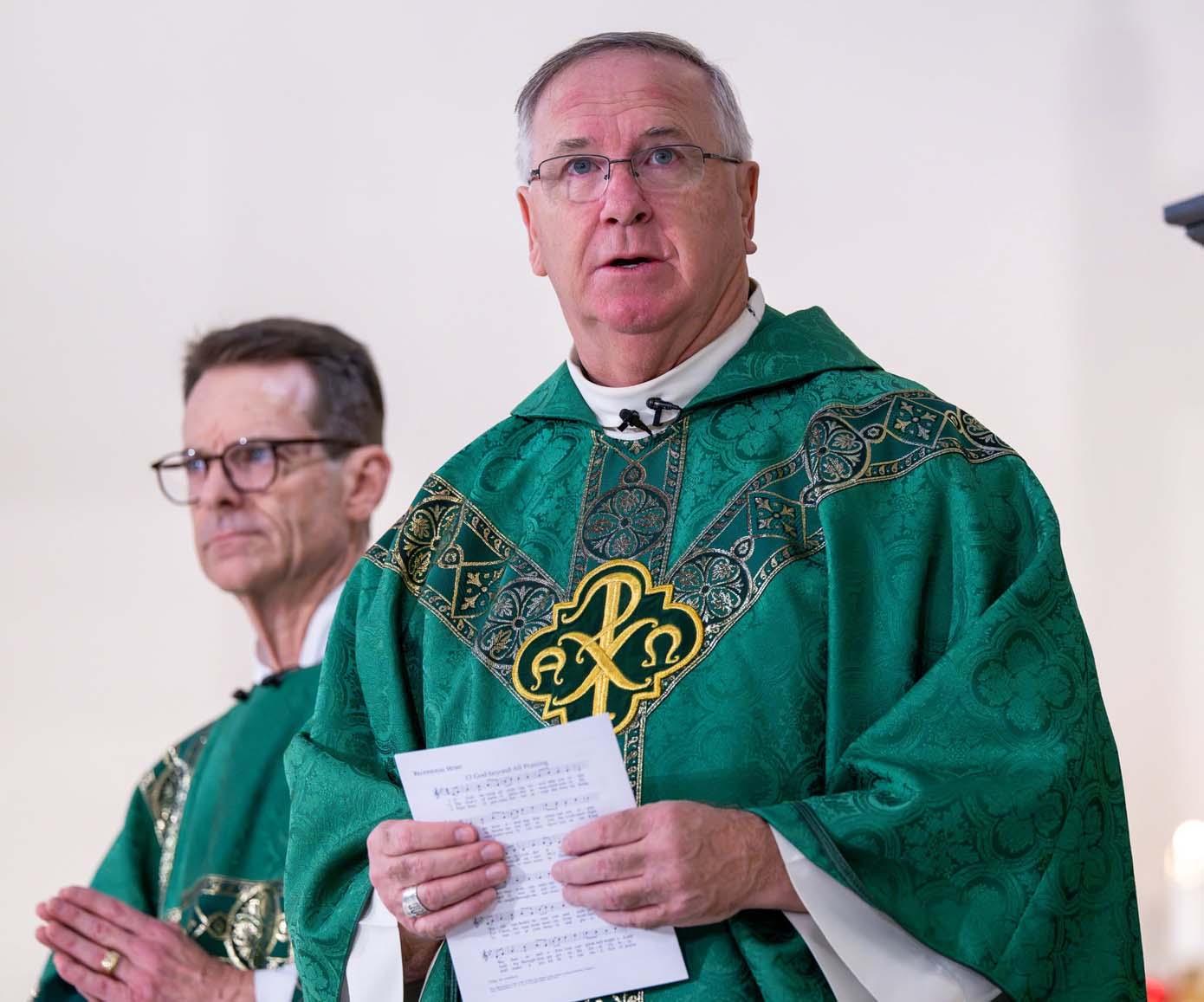
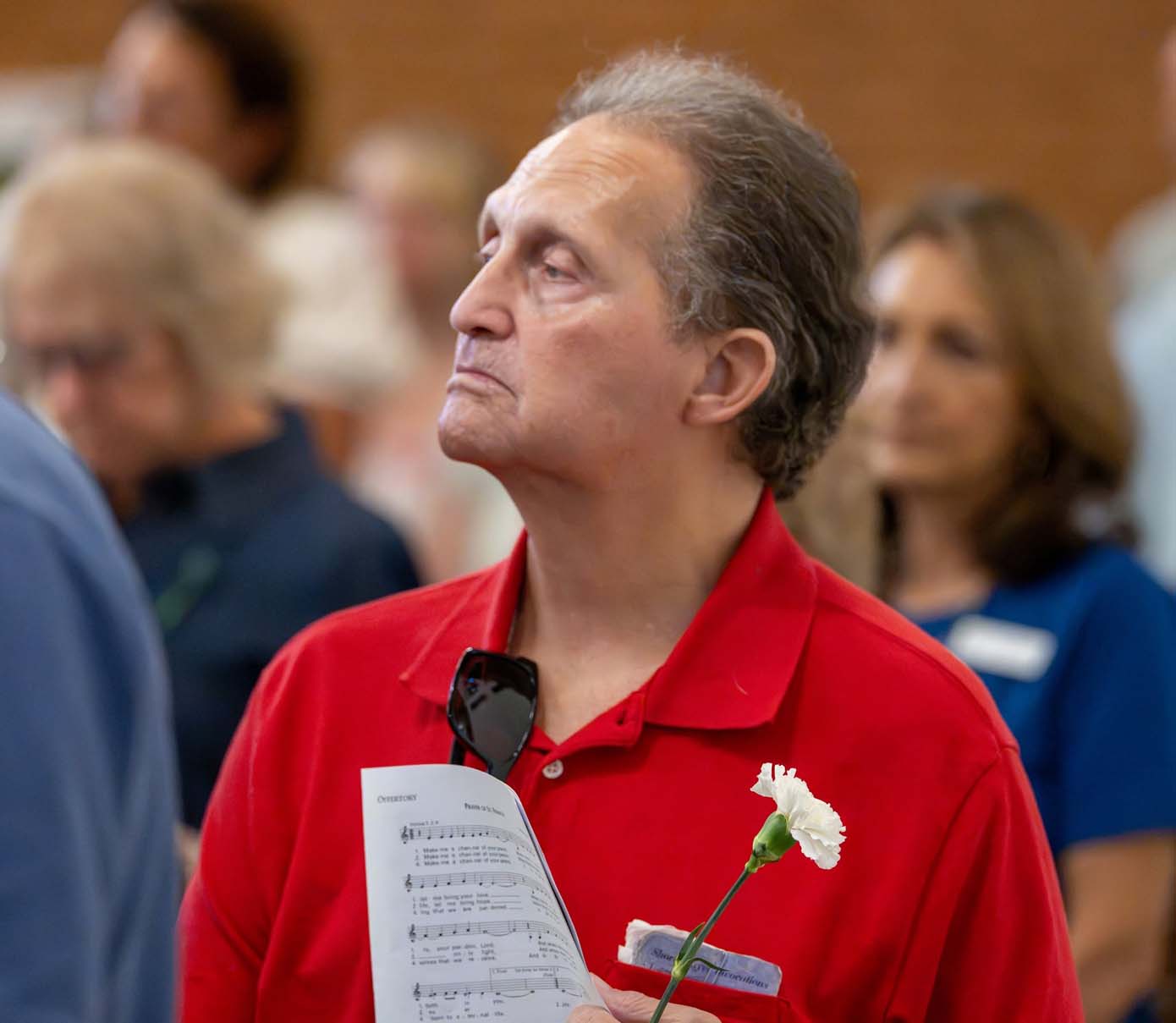
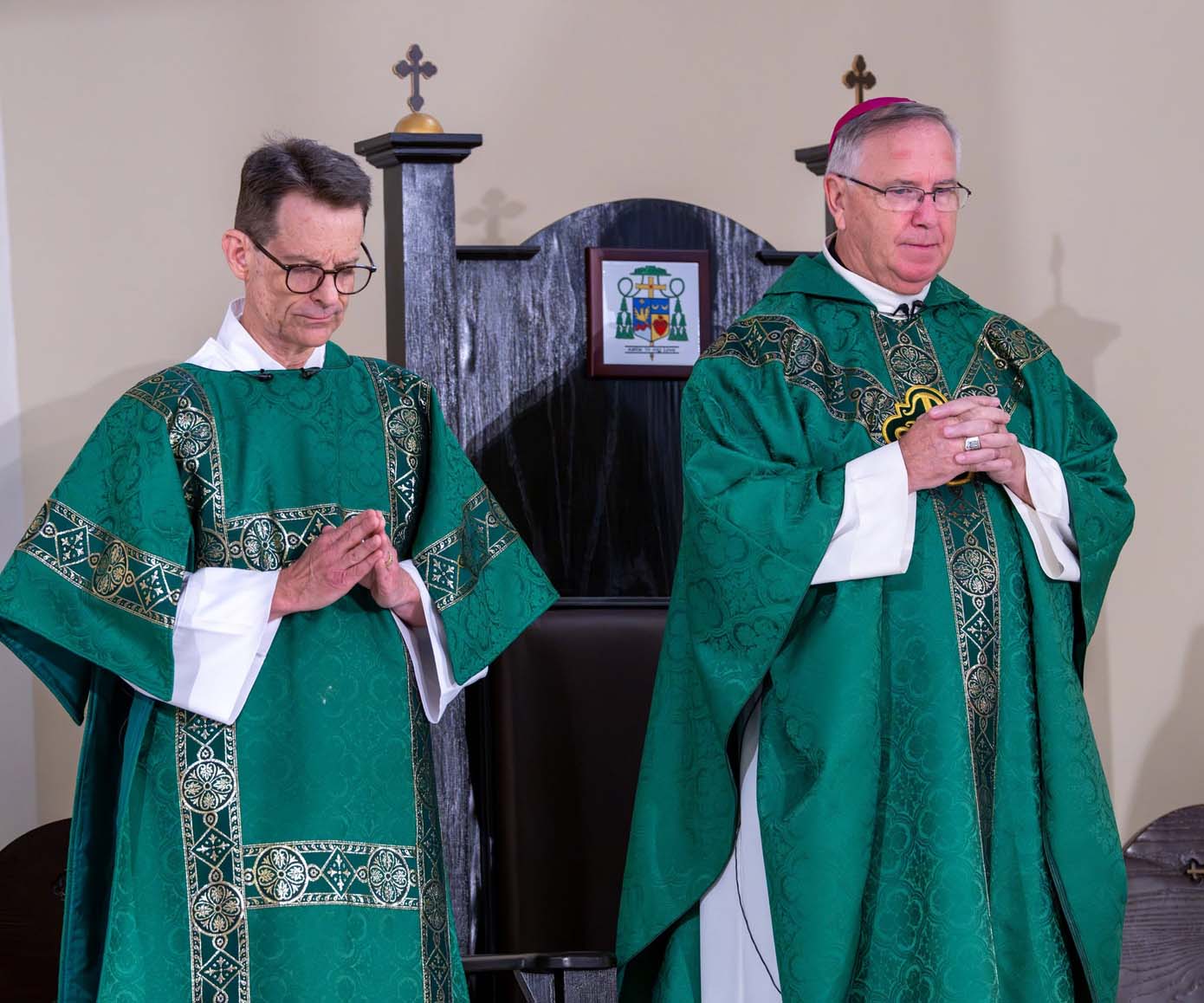
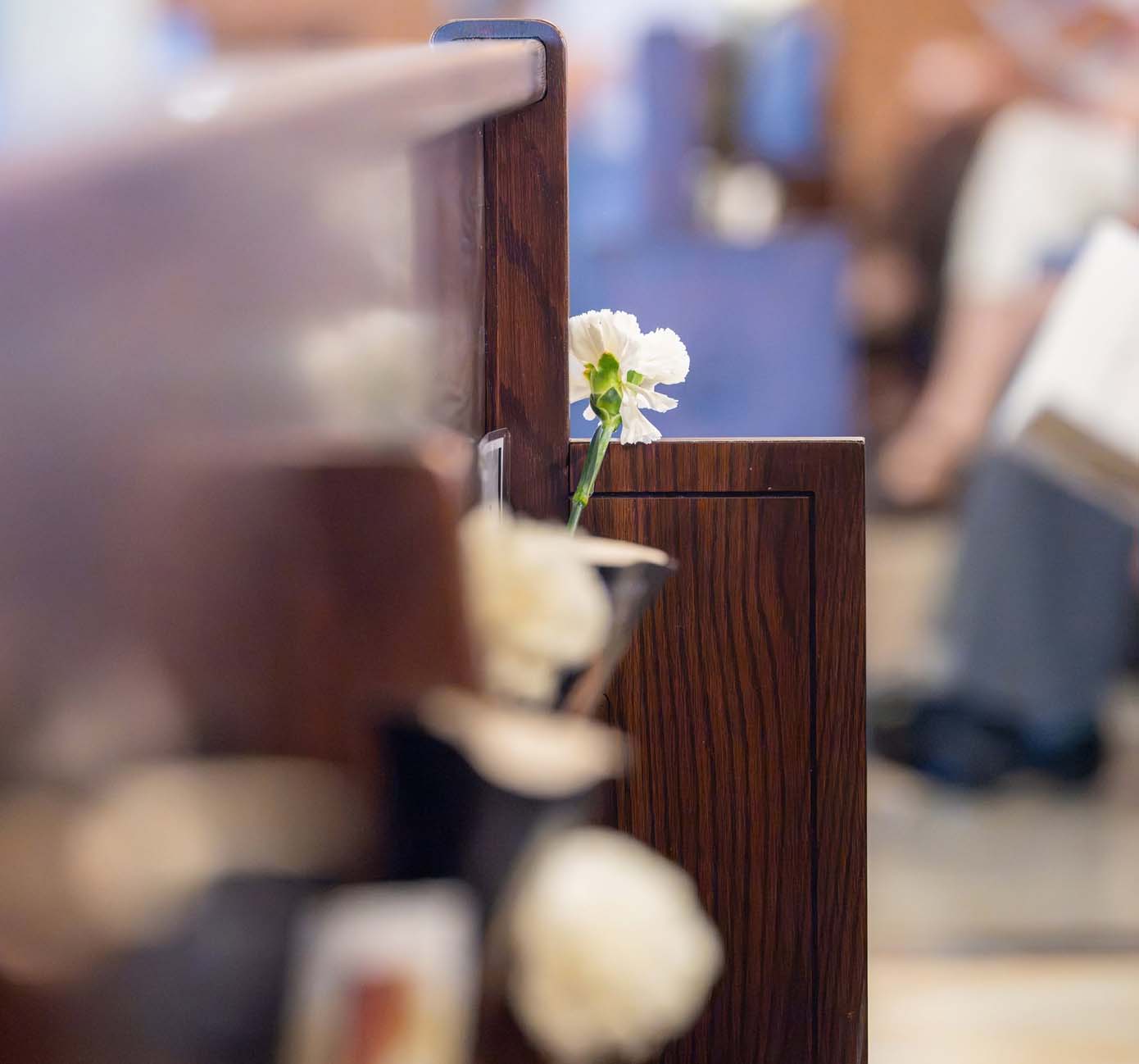
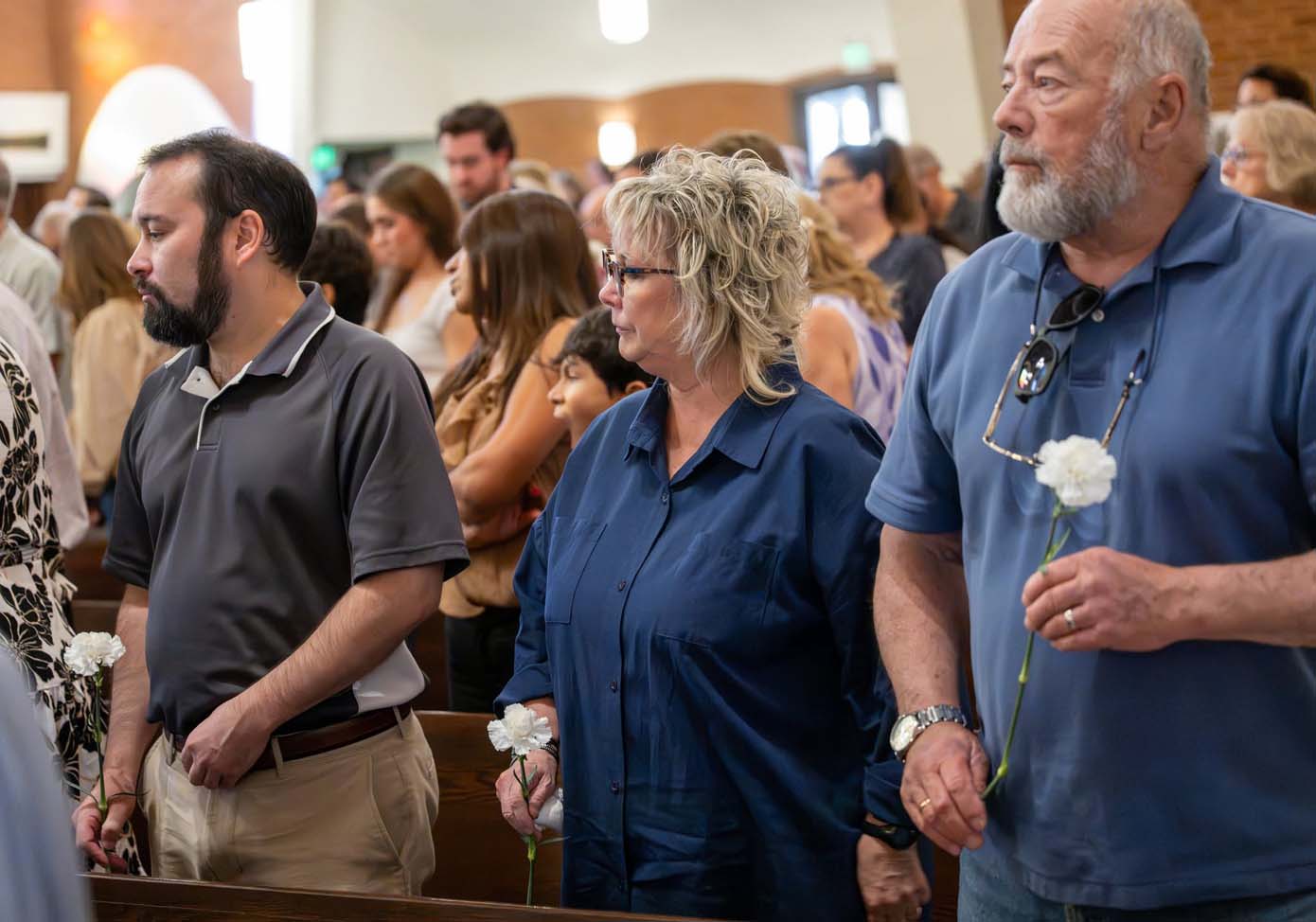
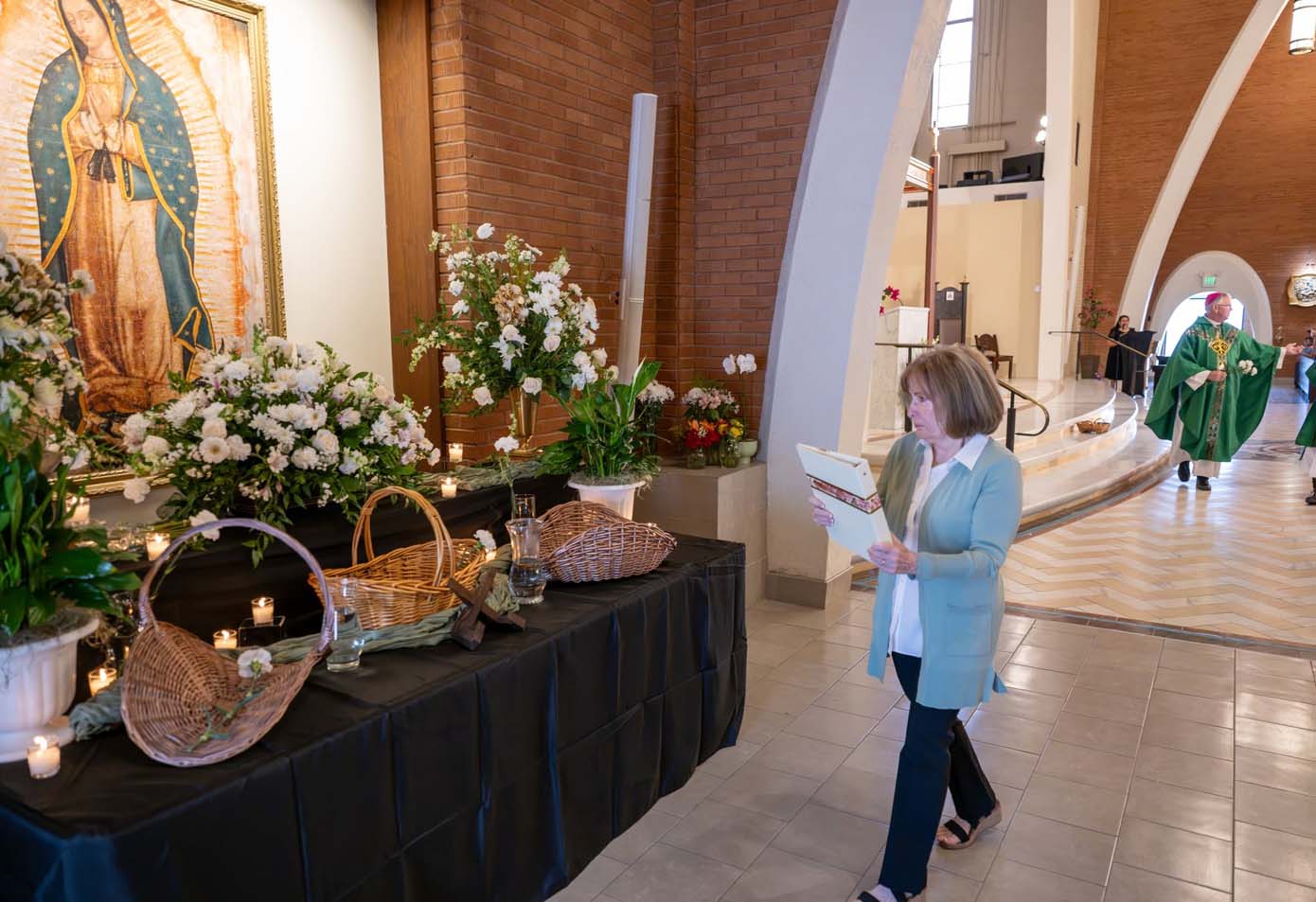
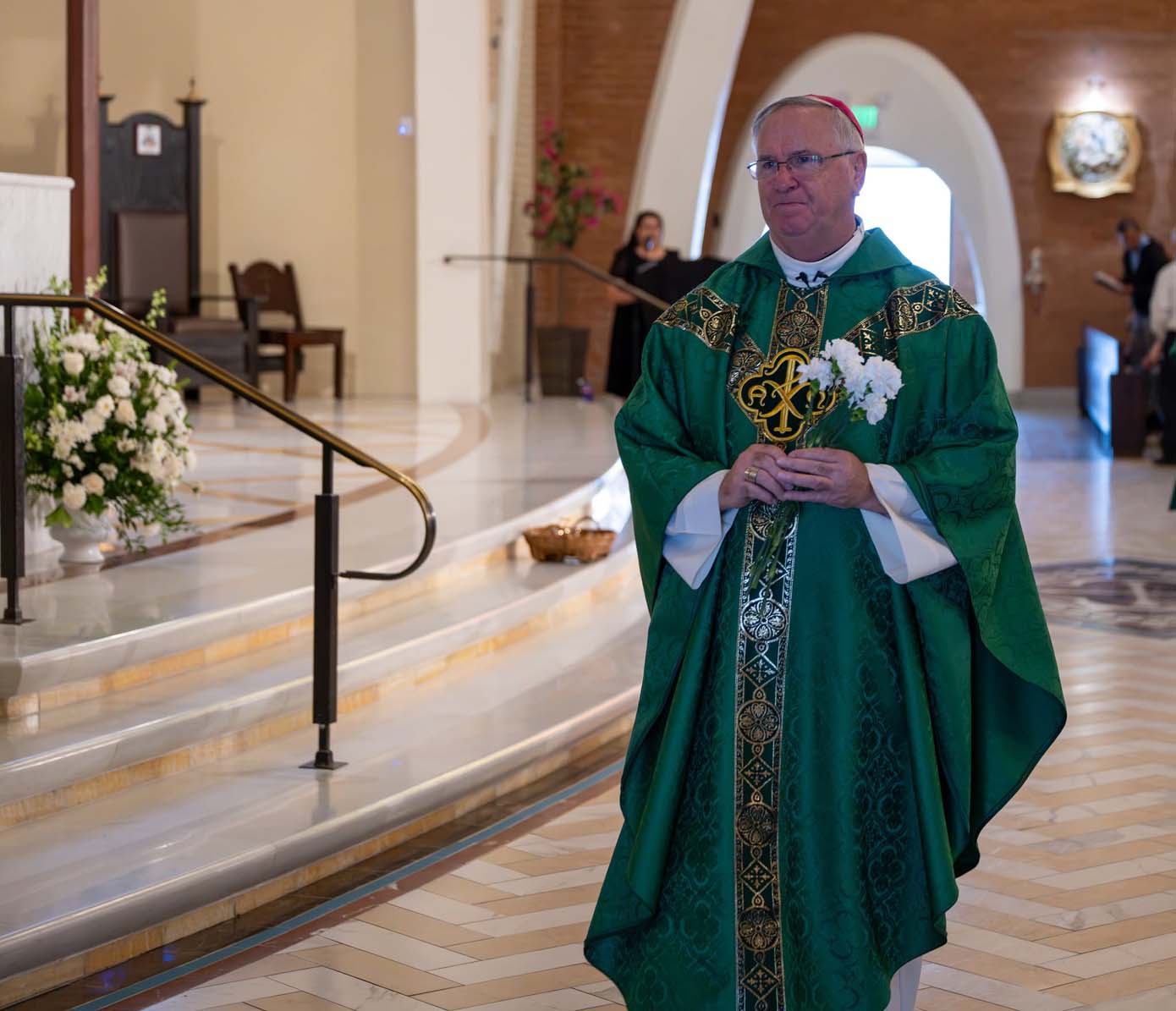
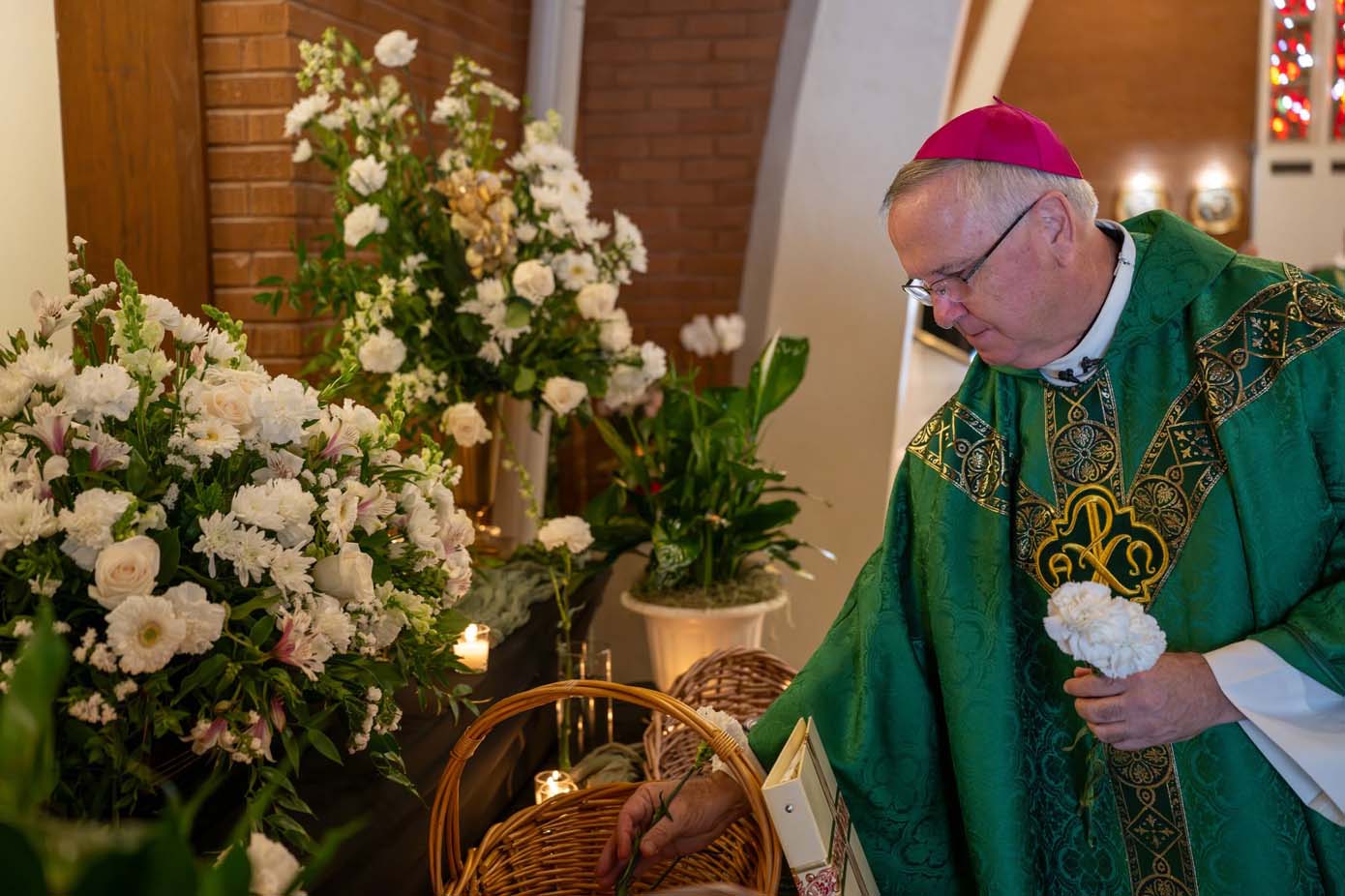
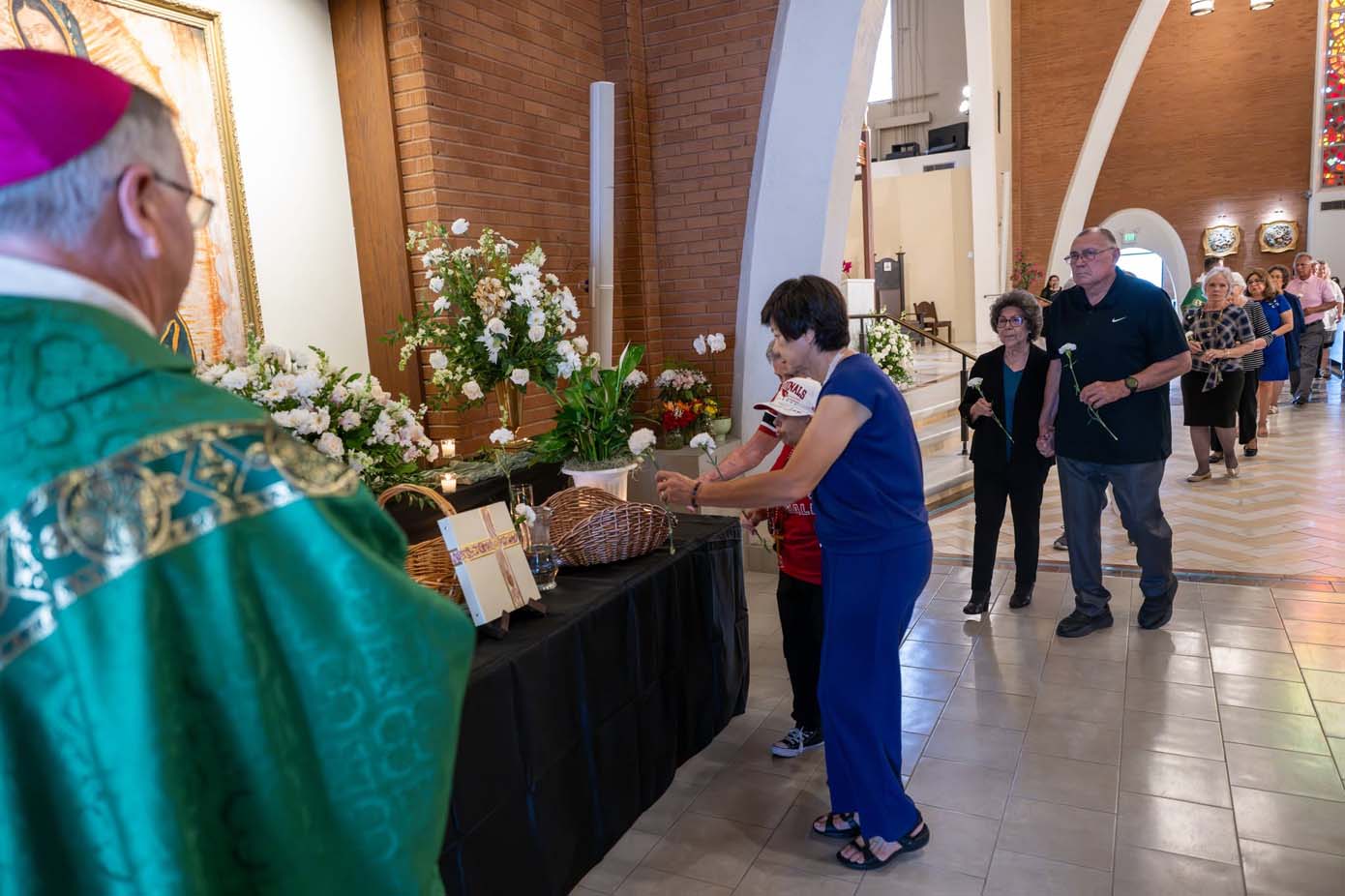
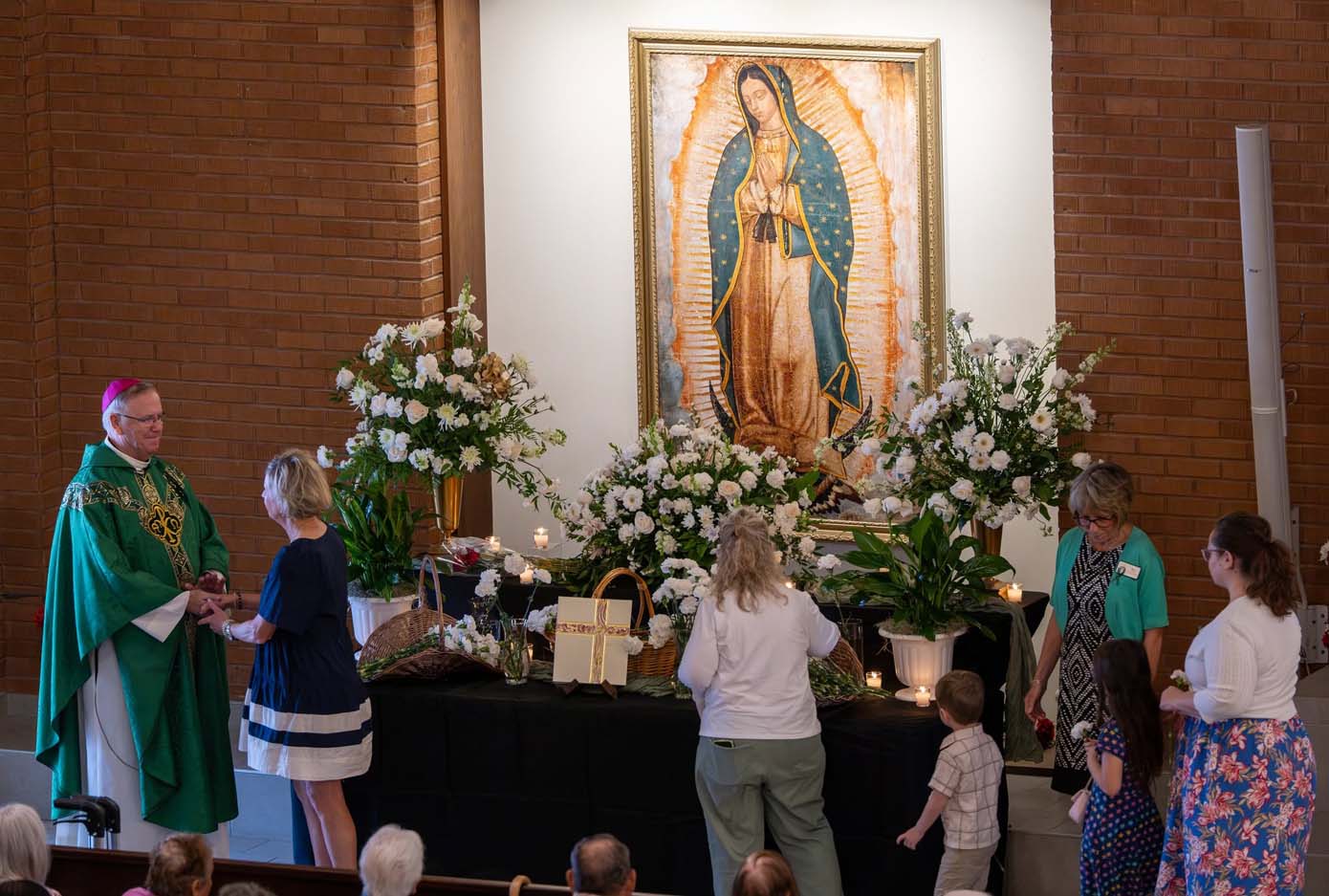
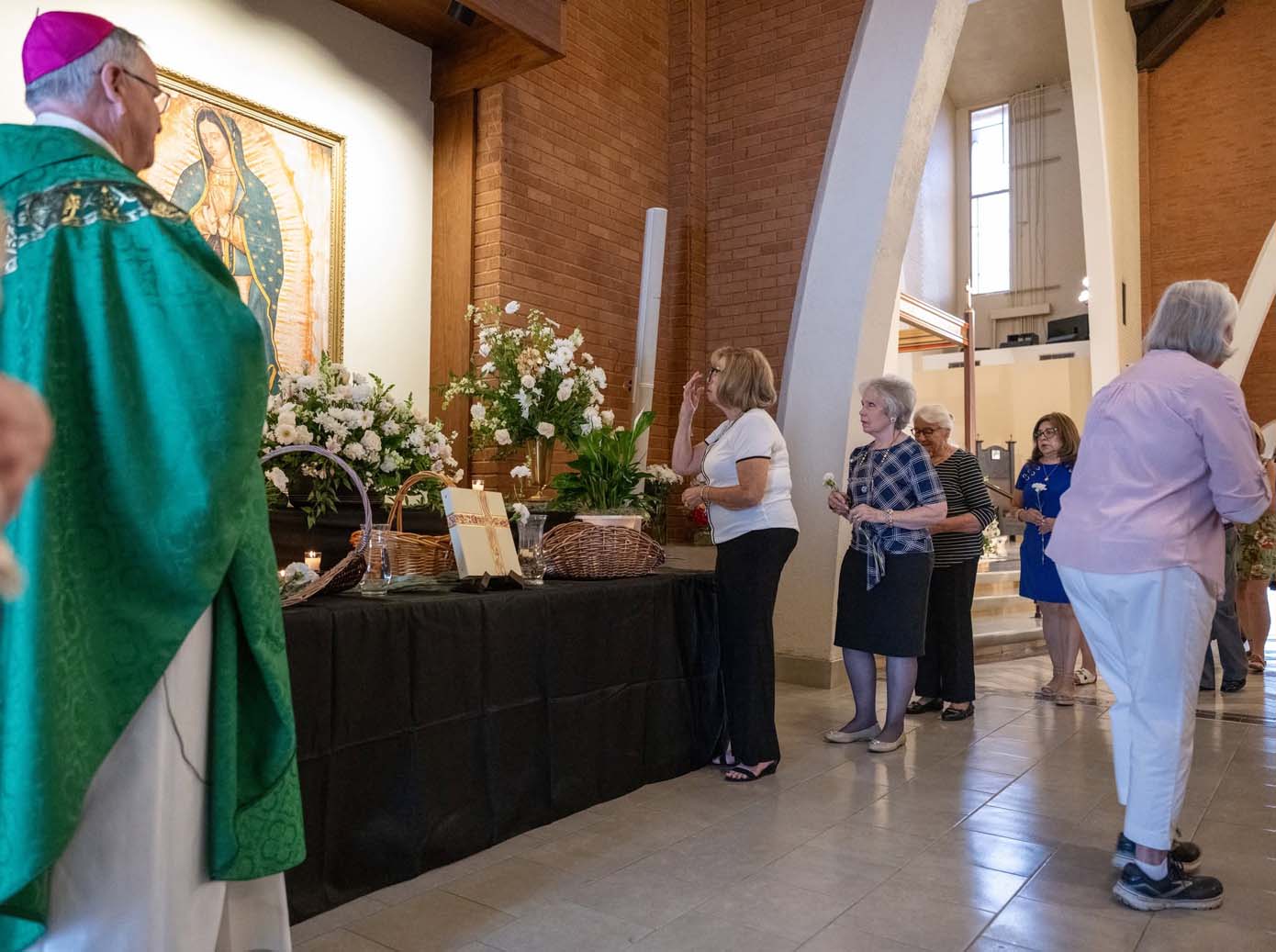
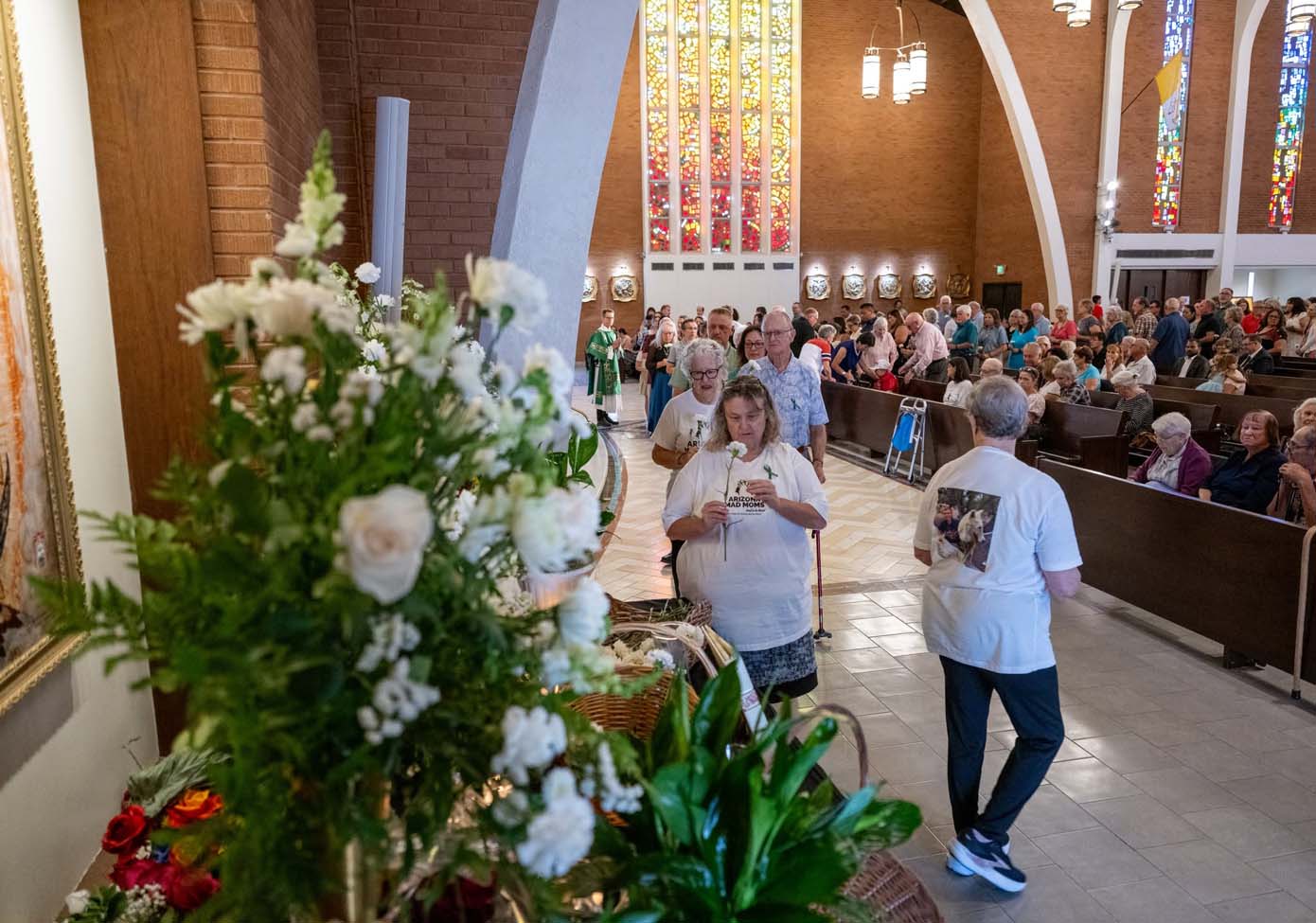
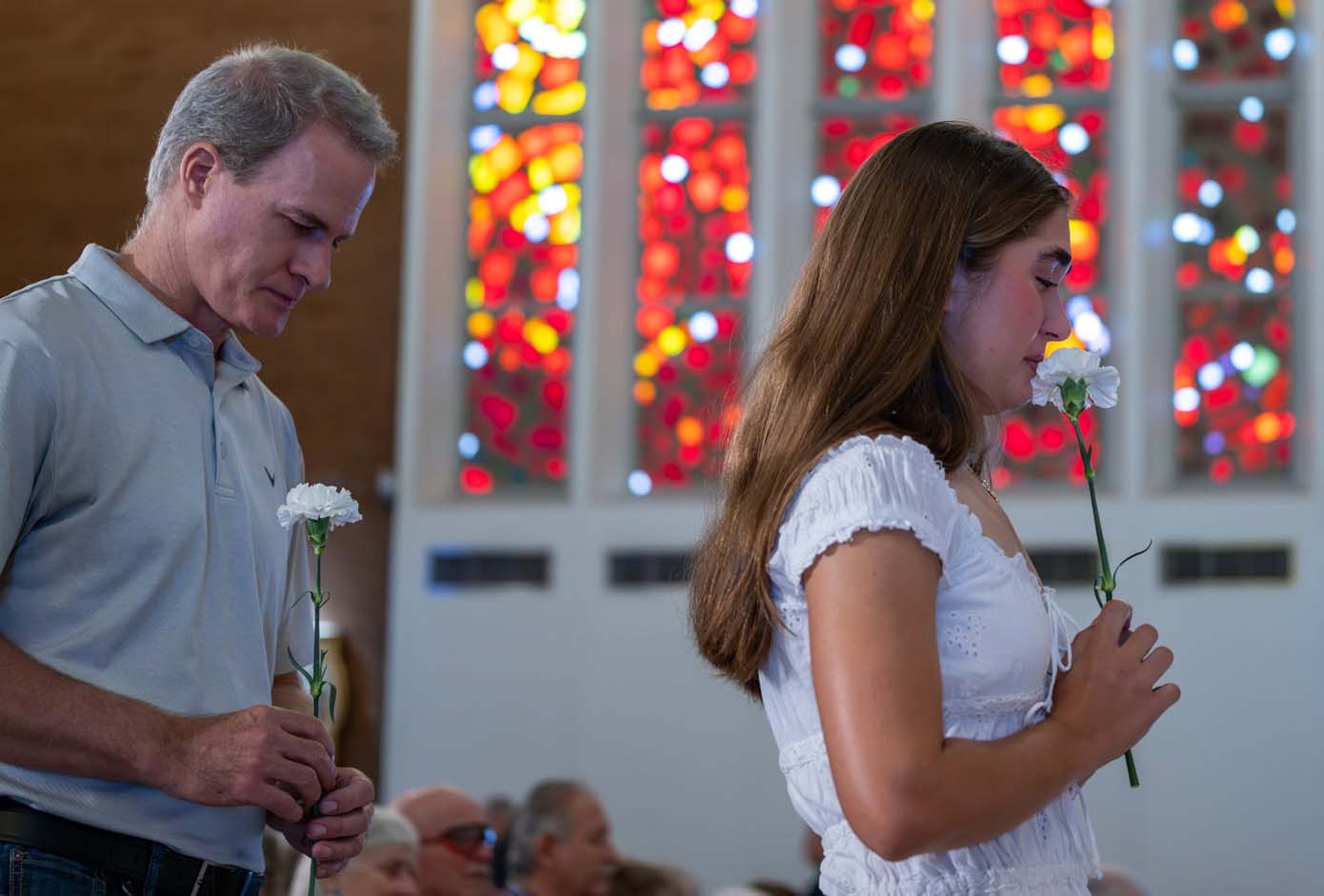
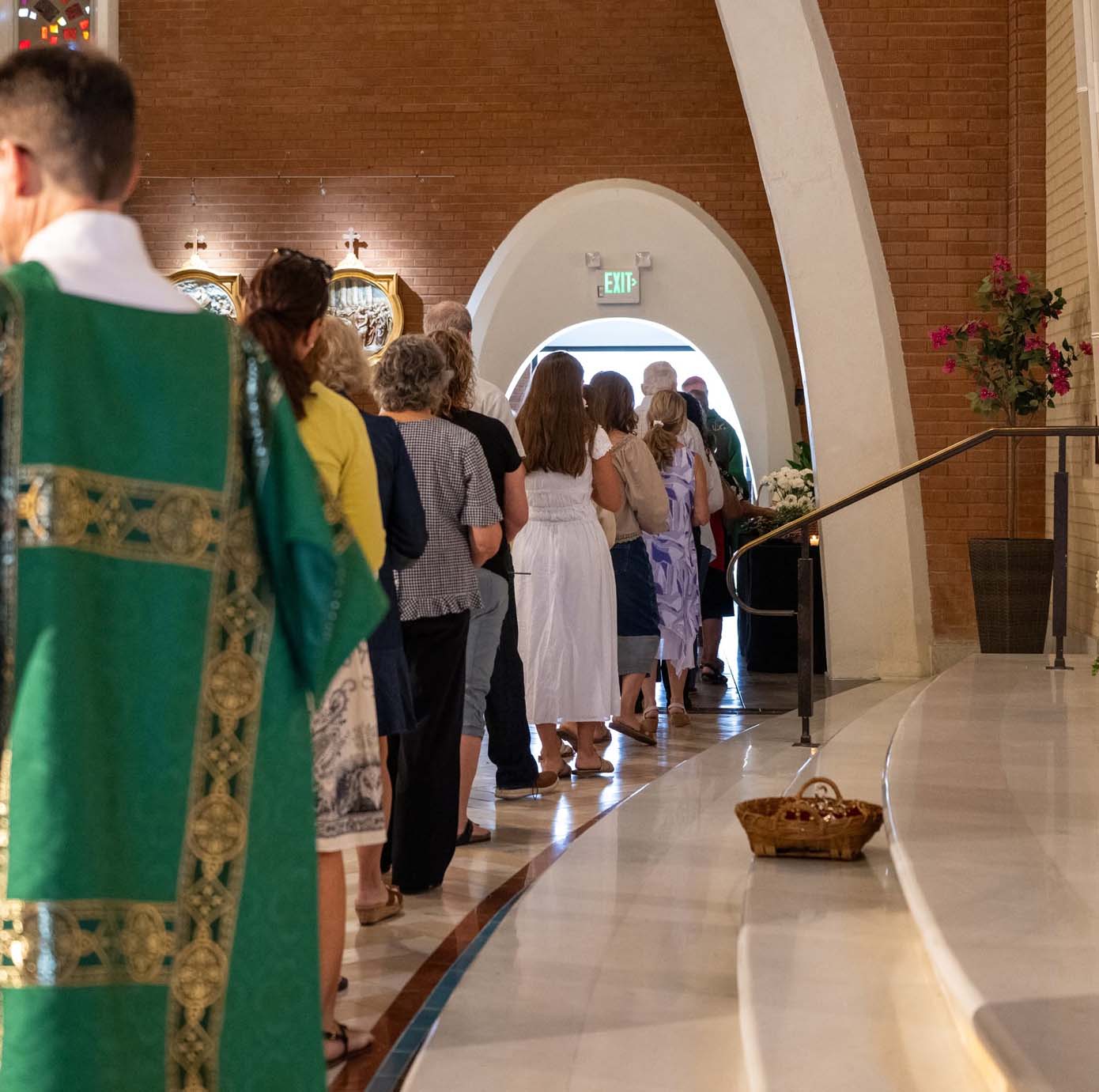
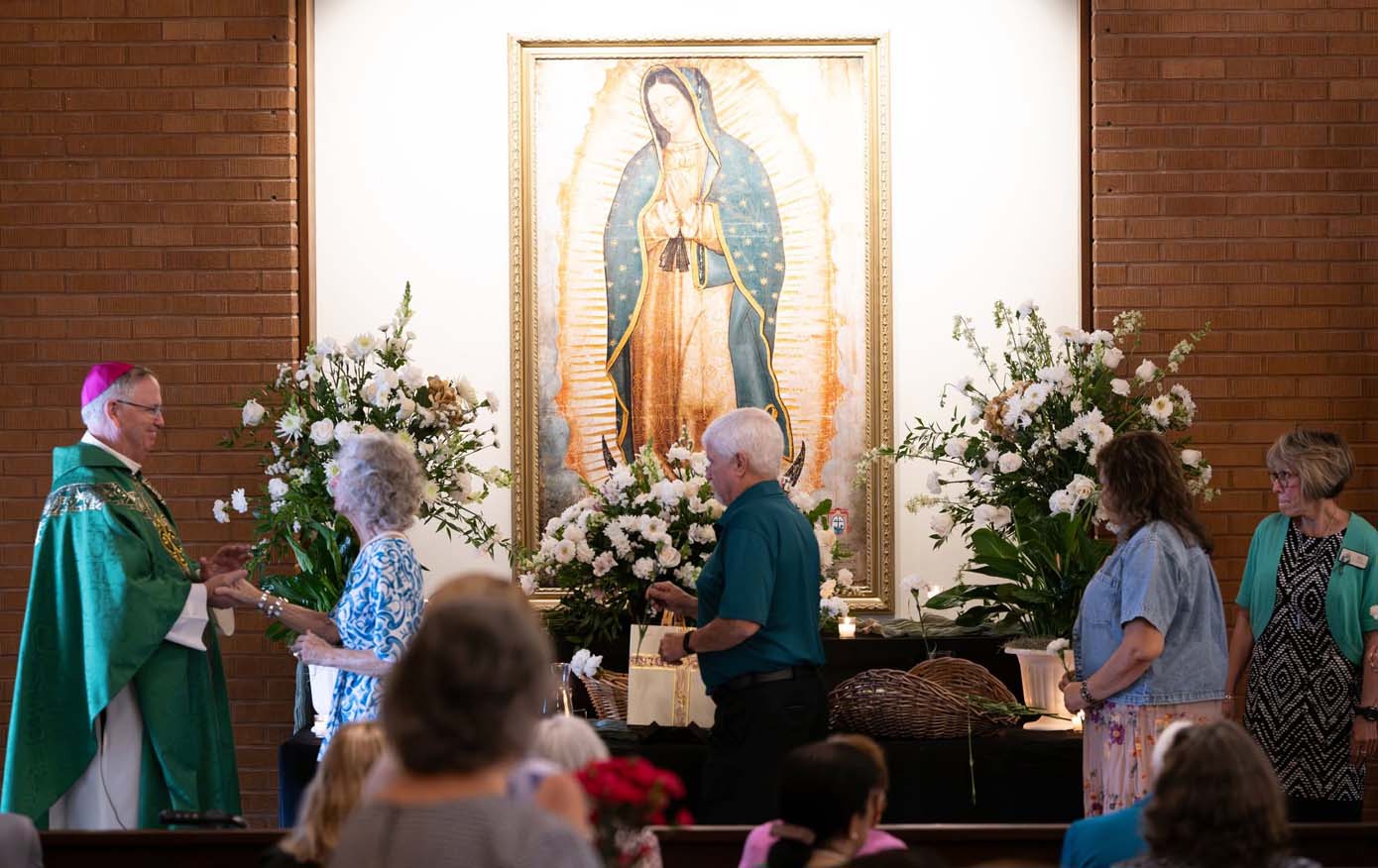
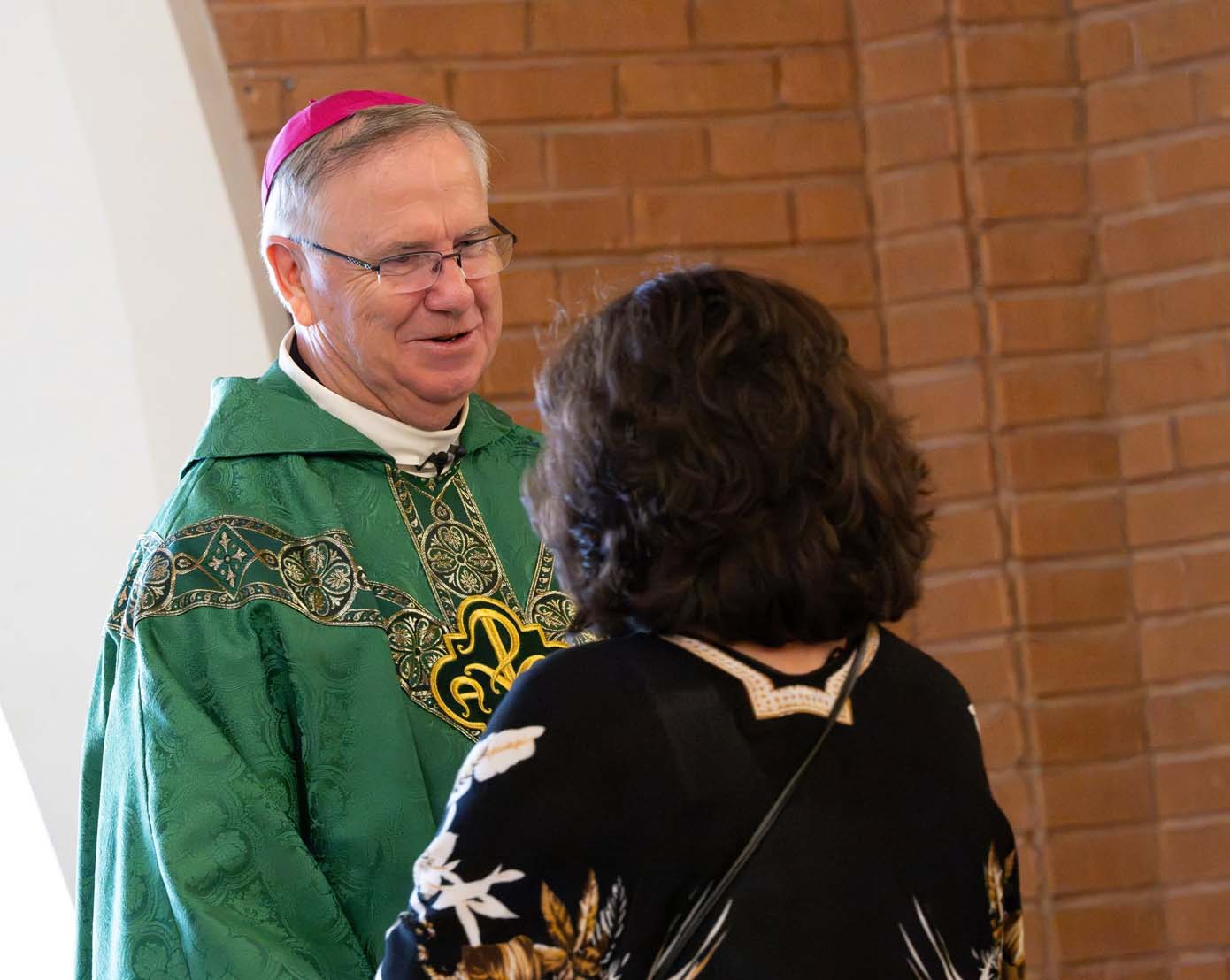
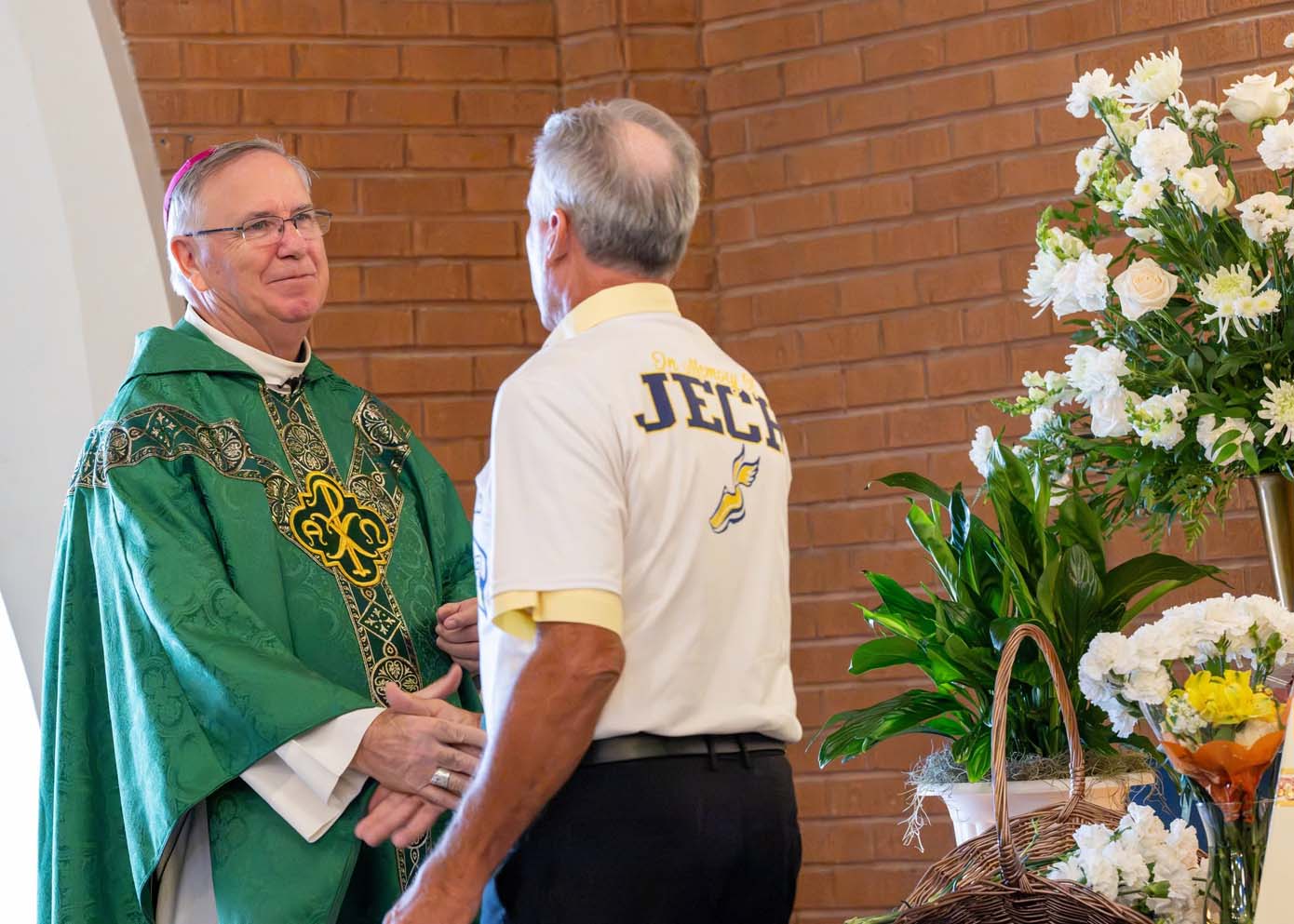
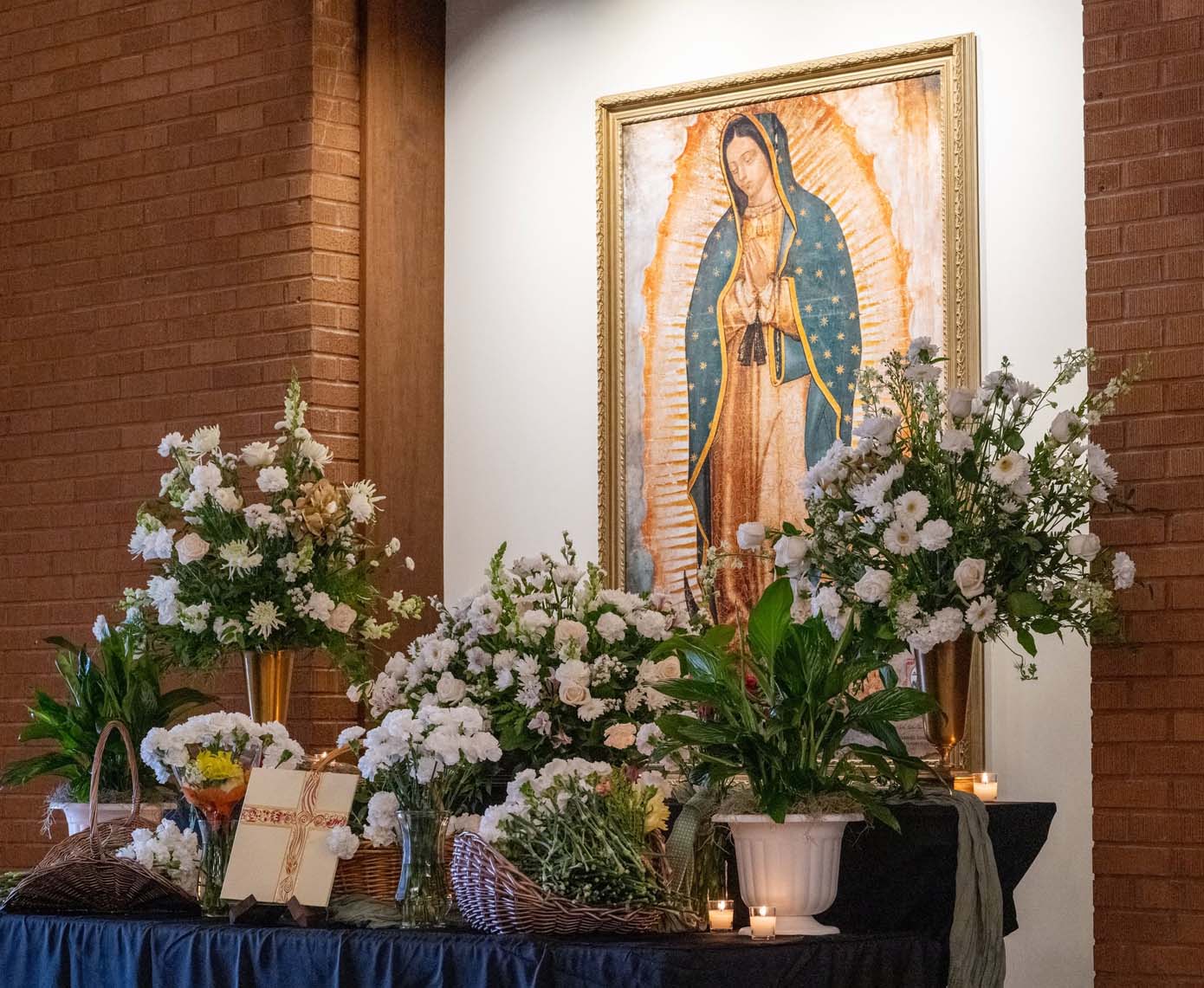
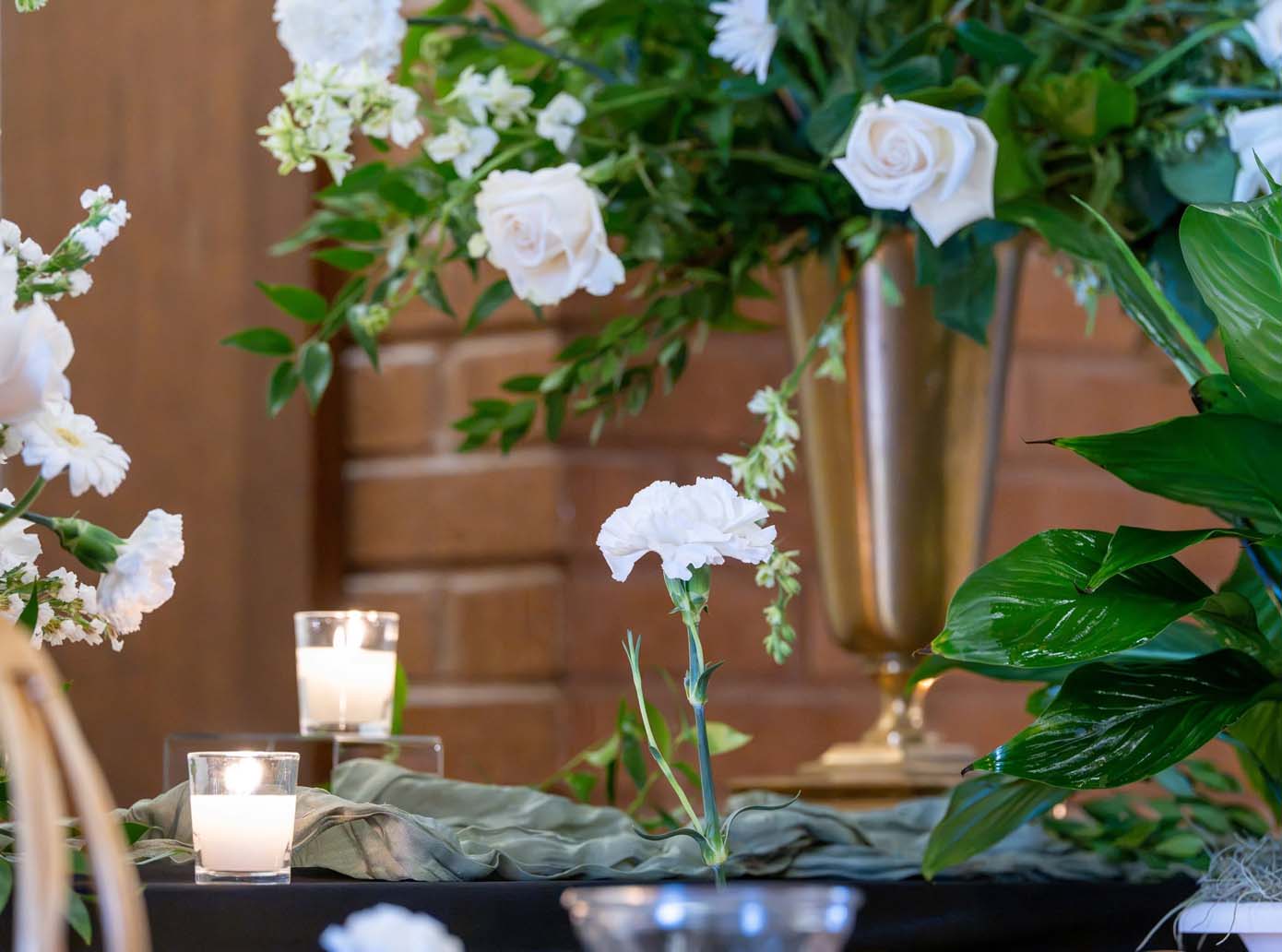
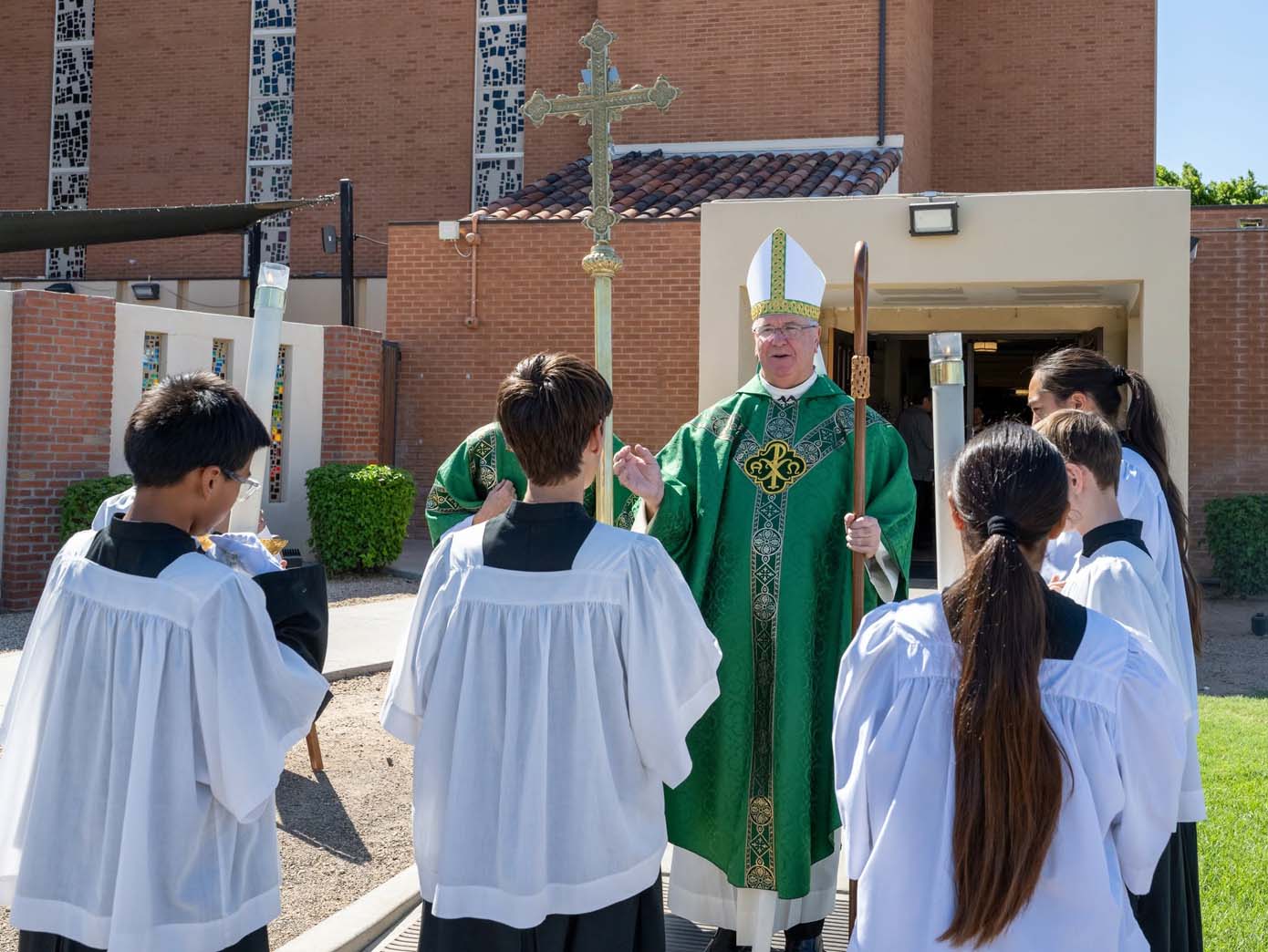
Led by Bishop John Dolan, survivors of suicide loss placed carnations at the side altar to Our Lady of Guadalupe, the diocese’s patroness, after a stirring reminder by the bishop that they are not alone in their grief.
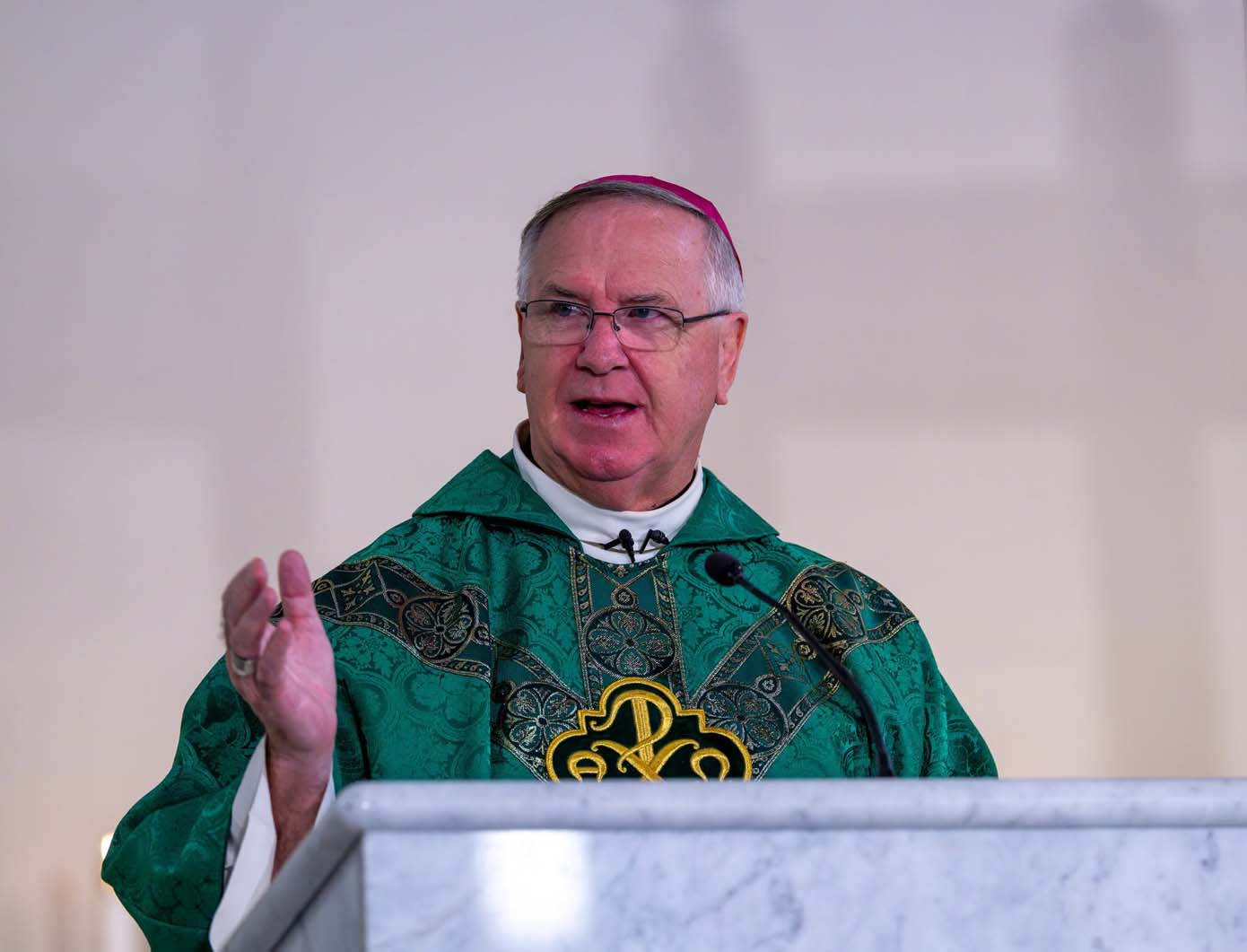
Having lost three siblings, a brother-in-law and a nephew to suicide, Bishop Dolan told worshippers while their grief may never subside, the pain can be lessened by entrusting their friends and loved ones to God’s mercy.
“They were sons and daughters, brothers and sisters, husbands and wives, parents and friends; real people in our real lives. They laughed, they struggled, they hoped and they loved and were loved. Before all of that and beneath all of that, they belonged to God.
“Even with everything [that] faith, medicine, psychology and human love can offer, there remain places within another human being that we simply cannot reach.
“But there is no place where the arms of the Good Shepherd cannot reach.”
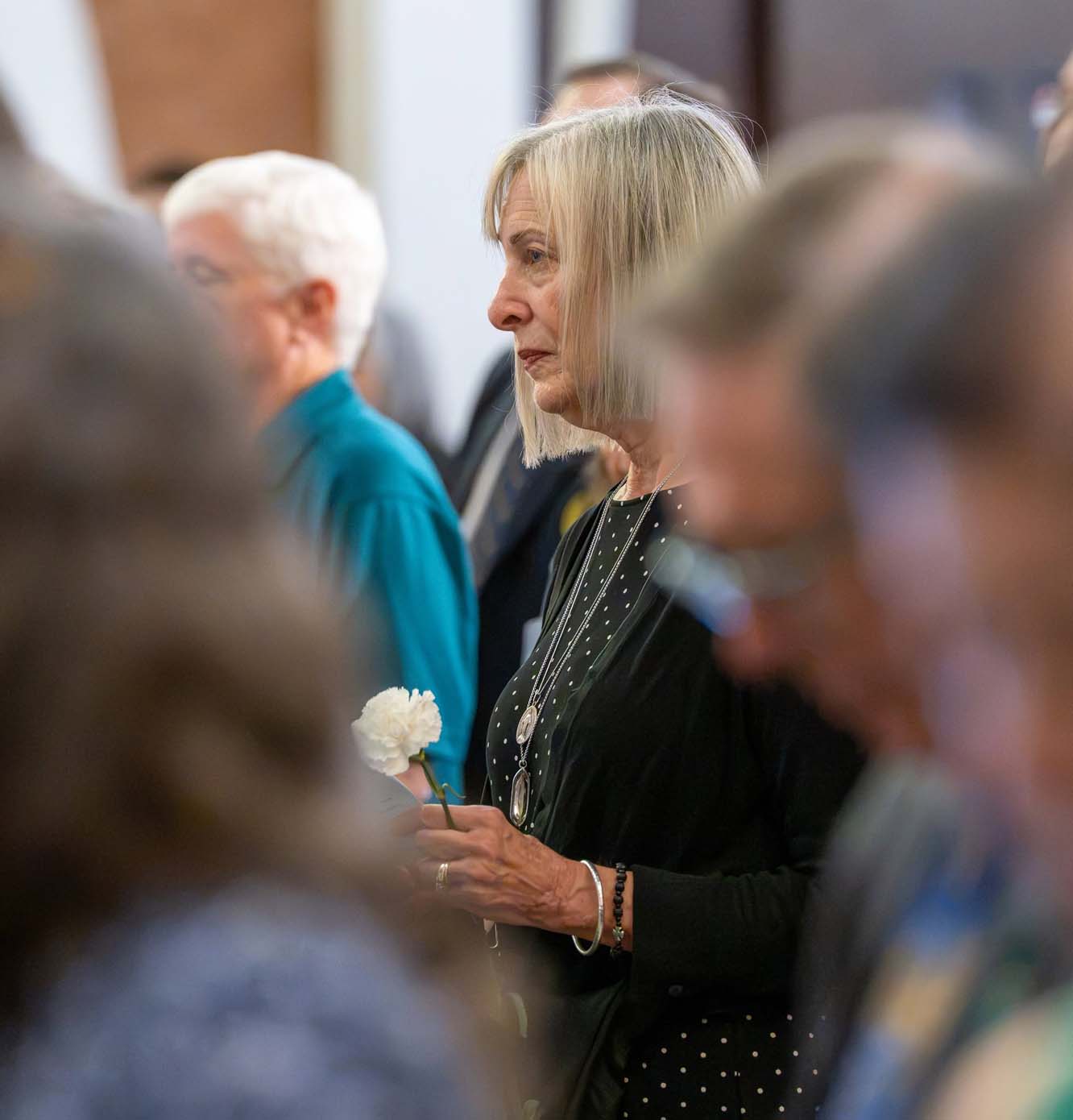
The procession of survivors with carnations has been a staple of the Mass since it was established in 2022.
As the line moved slowly down the cathedral’s main aisle and up to the side altar, the names of more than 800 individuals who have died by suicide were scrolled across the screen during the livestream on the Diocese of Phoenix’s YouTube and Facebook channels and television broadcast locally on CW7.
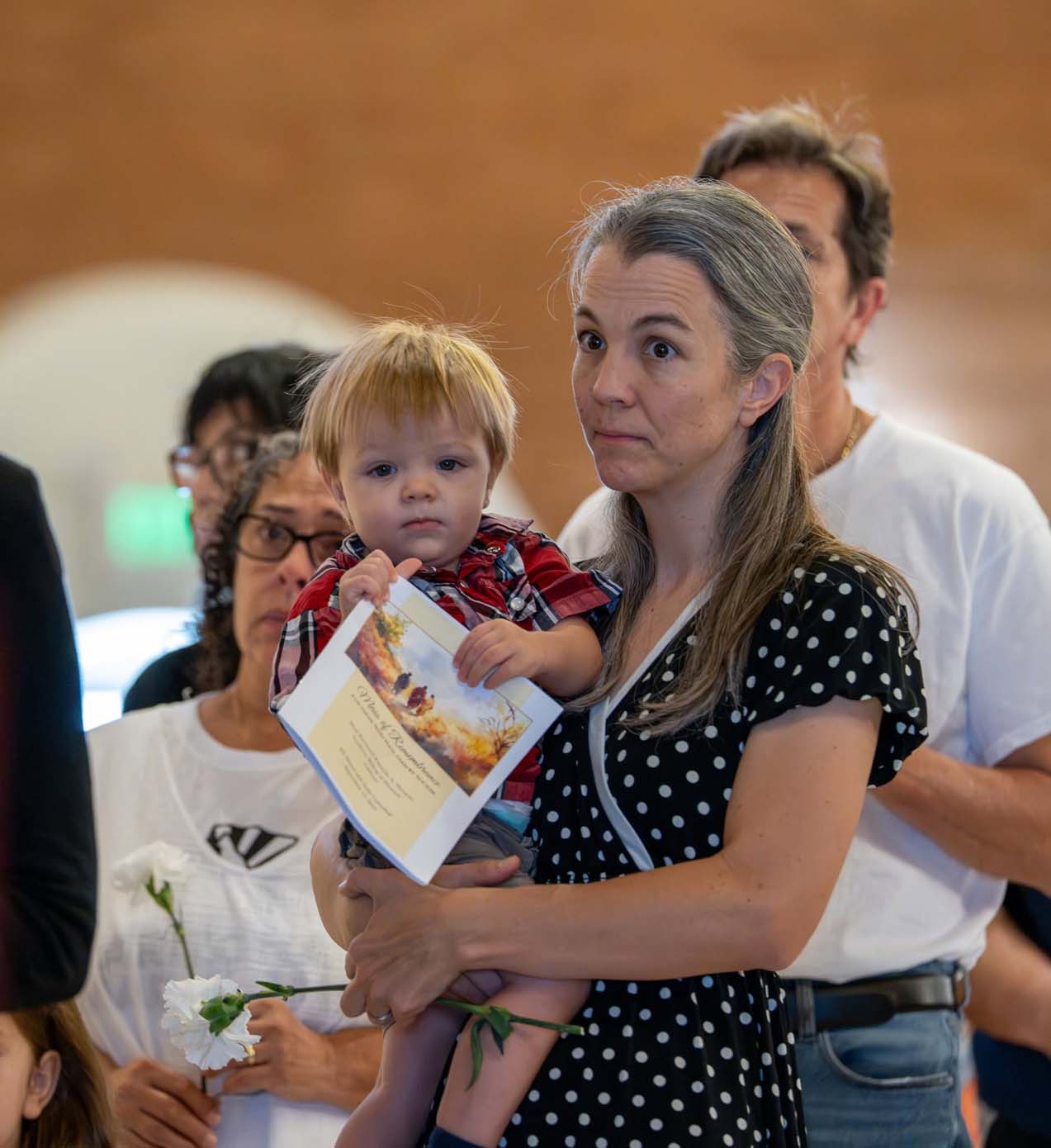
Many survivors thanked the bishop as they walked by. A number had tears on their faces. A few wept quietly.
The bishop encouraged those presenting carnations to the Blessed Mother.
“When we place a flower, perhaps that gesture can be a prayer [such as] ‘Mary, I have carried him or her for a long time. Help me entrust the one I love to your Son.’”
Accompaniment in grief
Organized by the diocesan Office of Mental Health Ministry, the Mass of Remembrance was established by Bishop Dolan as a sign of accompaniment to survivors of suicide loss.
Mental Health Ministry Director Mary Permoda said grieving families supported by hundreds of fellow Catholics they’ve never met can be therapeutic.
“You can’t walk [the loss of a loved one] alone. Where do you find [this] kind of community? You can’t put a price tag on that,” Permoda said.
This year, there was a noticeable rise in first-time worshippers.
“People are feeling more comfortable opening up and sharing,” Permoda explained.” People shouldn’t have to hide [this]. We need to acknowledge [it] and let God heal.”
Patty Romero of St. Bridget Parish in Mesa, Ariz., was among the first-time participants.
“I have been watching this [in previous years] on TV. I had been wanting to come, and I was finally able to do so,” she said.
After losing a brother in 2001 and an uncle in 2002, Romero said the Mass has made her feel supported in her grief.
“My kids loved [my brother]. He was their favorite uncle,” she said.
Bill Davidson of St. Juan Diego Church in Chandler, Ariz., was also attending his first Mass of Remembrance.
Davidson lost a grandson in July of this year.
“I came to remember him. He was a wonderful young man. I had no idea he was in such a [difficult] state. I saw him just a few days before his passing,” he said.
For others, the Mass was not new.
Patricia Bauer of Oracle, Ariz., just north of Tucson, has attended all five remembrance Masses.
Patricia said that in October 2005, when the family lived in Flagstaff, her son was a 19-year-old University of Arizona sophomore and bandmember. He died by suicide two months into the semester.
“He had told us he was having issues,” she recalled. “We set him up with a psychologist. He started to jog. He said he was doing better. Even the counselor had no clue this was going to happen.”
Patricia’s sister, Jeanne Bauer, who attends All Saints Neuman Center in Tempe, Ariz., and was also at Sunday’s Mass supporting her sibling, remembered her nephew as a talented musician and a “gentle soul.”
She said suicide is not a “taboo” subject.
“This is something very real. It needs to be acknowledged to work through the pain and to actually be OK to remember [him].”
She found the camaraderie of survivors reassuring.
“People here care, we know that,” Jeanne explained. “When I look across the [church], I know they know what we’re feeling. There are a lot of mothers [here] who know exactly what [Patricia] is going through. Today is a day we can all relax and know people aren’t uncomfortable with the topic.”
A beacon of hope
The Office of Mental Health Ministry was the first step in a diocesan-wide initiative four years ago to address mental health from a Catholic perspective. Its threefold mission is to accompany the affected, educate the public and advocate through networks and policymaking. It seeks to do this “in a Catholic, sustainable, ethical and meaningful way.”
Not a clinical resource or substitute for treatment from a qualified professional, the office is an avenue for literacy in mental health to curb the stigma. Its personnel do not treat or diagnose, but rather create a safe place to share and seek help. The office has worked to replicate its pastoral environment at the parish level through spaces known as The Well, where those struggling and their families can meet and share their experiences and Catholic faith with others while growing closer to God.
The office also is expanding its pilot program serving Catholic schools. Using interns vetted and working through Catholic Charities, as well as licensed counselors, the program is now in 10 schools and will be adding two more shortly. The Office of Mental Health Ministry has also expanded outreach in prisons.
Mental health ministry is crucial now more than ever as suicide is prevalent across the country.
The U.S. Centers for Disease Control’s National Center for Health Statistics states suicide was responsible for 48,824 deaths across the United States in 2024. In Arizona, the CDC reported nearly 19 of every 100,000 Arizonans took his or her life.
During September, which is National Suicide Prevention Month, organizations such as the American Foundation for Suicide Prevention (AFSP) promote discussion to raise awareness and remind the public of resources. These include the national 988 Suicide & Crisis Lifeline. A free and confidential emotional support to those in suicidal crisis or emotional distress, (988) is available 24 hours a day, 7 days a week.
Amid suffering, the Catholic Church remains a beacon of hope.
“We should not despair of the eternal salvation of persons who have taken their own lives,” states the Catechism of the Catholic Church, 2283. “By ways known to him alone, God can provide the opportunity for salutary repentance. The Church prays for persons who have taken their own lives.”
For more information on the Office of Mental Health Ministry, visit dphx.org/mentalhealth
MASS OF REMEMBRANCE PHOTO GALLERY
Bishop Dolan’s Homily: