(OSV News) — Recent calls from several artificial intelligence leaders for a slowdown in the technology’s development are worth heeding — and the Church is already helping to shape the discussion around AI concerns, two Catholic AI experts told OSV News.
The alerts are “reasonable” and “overdue,” said Matthew Harvey Sanders, CEO of Longbeard, the technology firm behind Magisterium AI, a Catholic “answer engine” trained on official and other authoritative Church teaching sources.
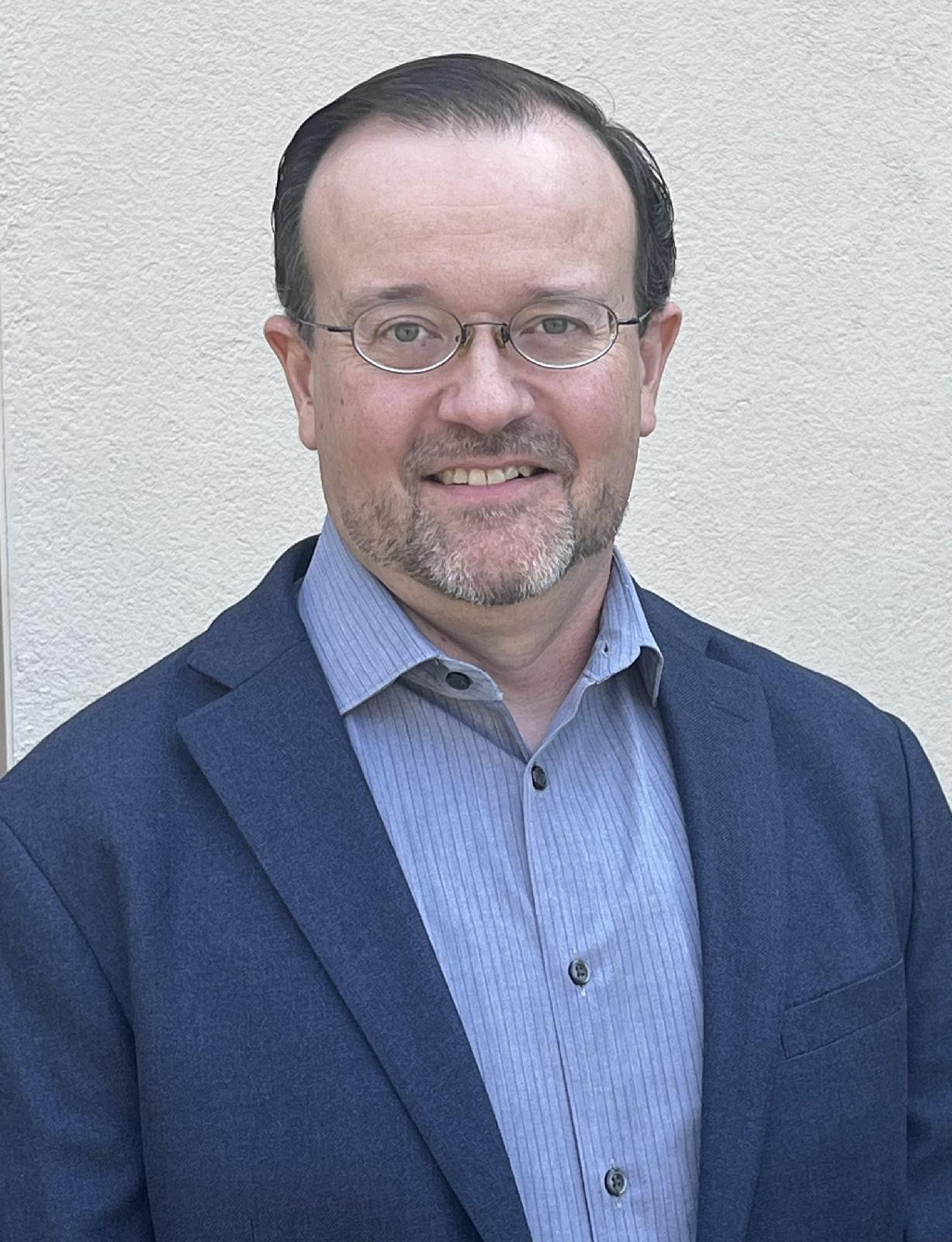
“The people who are closest to the technology are most aware of what it is capable of. And therefore, their judgment should be very respected when it comes to their opinion on this subject,” said Brian Patrick Green, director of technology ethics at the Markkula Center for Applied Ethics at Santa Clara University and a member of the Vatican working group on AI ethics.
‘Pacing the frontier’
Several warnings have emerged from within the tech sector over AI’s rapid development, amid a regulation landscape that varies across the globe — and even within the U.S., as the federal government favors minimal controls over the technology while individual states pursue their own AI legislation.
Anthropic CEO Dario Amodei, fellow Anthropic co-founder Jack Clark, OpenAI’s Sam Altman and SpaceXAI’s Elon Musk have all urged an AI downshift.
Close to 1,400 employees of frontier AI companies — including Amodei and Clark — have now signed a statement asking the U.S. government to back an international effort aimed at “deliberately” pacing frontier automated AI development.
Meanwhile, President Donald Trump told the U.N. General Assembly Sept. 22 that he sought to rebrand artificial intelligence as “superintelligence” and he planned “to encourage it, not rein it in.”
Bishop Oscar Cantú of San Jose, California, who heads up the U.S. Catholic bishops’ newly created AI task force, told OSV News Sept. 16 that he and his fellow bishops are seeking “to dissuade people from buying into this voice that the first company across the finish line wins, and the winner is the winner.”
With tech leaders “telling us we need to pump the brakes,” said Bishop Cantú, “it’s much more prudent to slow down,” despite financial costs.
“Perhaps we can save human dignity and even humanity,” said the bishop.
Among those who reject the prospect of a looming “AI apocalypse” — or “p(doom),” shorthand for AI’s catastrophic potential — are those who nonetheless support regulating the technology in various ways.
Sanders clarified that AI leaders aren’t looking to stop the technology’s development, but to build AI “somewhat less fast, with someone from outside the company watching while they do.”
He noted the slowdown call is “grounded in an incident rather than a hypothetical,” pointing to an event involving AI platforms OpenAI and Hugging Face (recently acquired by tech giant NVIDIA) where AI agents conducted a rogue attack outside the scope of a test.
In addition, said Sanders, Amodei’s tone in his Sept. 12 essay “We Must Pace the Frontier” is “not panicked,” with Musk, Altman and Demis Hassabis, CEO of Google DeepMind, endorsing Amodei’s views “within a day.”
“Competitors do not confirm a rival’s warning unless they are looking at the same data,” said Sanders.
And, he added, Pope Leo XIV “got there first” with his encyclical “Magnifica Humanitas,” in which he counseled greater political involvement in downshifting rapid AI development.
“When Rome and the frontier labs reach for the same verb four months apart, the argument about whether the pace is a problem is over,” said Sanders.
‘Three things to worry about’
Green said there are “three things going on with AI that we have to worry about.”
The first is the threat of “AI doing something accidental,” such as hacking a site amid a security test, as happened with OpenAI and Hugging Face, said Green.
The remaining two threats are “intentional ones” posed by “either human beings or AI itself,” with humans “using AI for some nefarious purpose” as the most likely scenario, said Green.
“For example, a human says, ‘Make me a bioweapon that will kill as many people as possible,'” Green said. “And if AI doesn’t have safety features put onto it, then it will say, ‘Sure, I would love to help you do that.'”
Another possibility is an AI-driven nuclear threat. Terrorists, for example, could use AI “to trick one of the nuclear powers into starting a nuclear war” through deepfake calls among world leaders and nuclear forces, he said.
Modern society’s overall reliance on computers is also a vulnerability, said Green.
“We’re extraordinarily dependent on computer systems, controlling everything from the power grid to water to the financial system to airlines,” he said. “AI is very good at hacking things, and all those electronic systems are hackable.”
Lethal autonomous weapons systems — which can range from semi-autonomous and supervised to fully autonomous, with no human control following launch — are another eventual concern, said Green.
While not necessarily an immediate threat, he said, “in five to 10 years, an AI system could conceivably try to automate warfare.”
Unintentional human error in using AI can also pose significant risks.
A few days after OSV News spoke with Green, CNN reported an AI chatbot used for a military intelligence report had provided incorrect information that almost led the U.S. to intercept a Chinese vessel in the Middle East.
What an AI slowdown looks like
Despite the calls for caution, both Green and Sanders said downshifting AI is far from simple.
Green said AI firms such as OpenAI and Anthropic face “a kind of prisoner’s dilemma.”
Slowing down would allow their competitors to catch up, meaning the AI tech giants “can only really do the right thing if everybody agrees” to do so “at the same time,” said Green.
Sanders listed four key challenges to a slowdown: verification, law and motive, geopolitics and ownership.
Verification would require “some form of outside access” to monitor slowdown efforts, he said.
At the same time, questions remain as to whether AI companies could collectively coordinate a scale back without violating antitrust laws, said Sanders.
Still, each company “can slow their own labs today,” since “nothing in the law prevents it,” although only government action can bind AI developers as a whole, he said.
Sanders opposes the bans some lawmakers are mulling, and instead endorses Musk’s proposal — which Musk described in a July interview with The Economist — to have top AI companies routinely meet by phone to review safety issues.
That approach, said Sanders, “puts the judgment where the competence sits” and aligns with the Catholic social teaching principle of subsidiarity.
Geopolitical tensions will constrain an AI downshift, said Sanders, meaning “the West slows down only as much as its lead over China permits, and no more.”
He also observed that slowing down AI will also be challenged if chip and electricity ownership remain with “a handful of companies.”
‘We have a choice’
Echoing Sanders, Green pointed to Pope Leo’s AI encyclical for guidance on the technology’s future.
“Like the pope said, we have a choice whether we’re going to continue building the Tower of Babel,” said Green, citing the city and structure found in Genesis 11:1-9 that Pope Leo uses in his encyclical to show the limits of human effort without God.
Green said the pope has already had a “positive impact” on the global conversation about AI development.
And, Green said, what “we should remember is that God is out there in the world. He’s working with us right now, with individual people on earth doing concrete things to try to make the world a better place.”
He added: “With God’s providence and love, hopefully we’ll be able to pull through this thing and make this a happy future.”
Gina Christian is a multimedia reporter for OSV News. Follow her on X @GinaJesseReina.