PEORIA, Ill. (OSV News) — Just days after the official portrait of Blessed Fulton J. Sheen was unveiled at the Mass of his beatification Sept. 24, another image — an icon — was introduced and enthroned as a witness to the archbishop’s biritual status and affinity for the people of the Eastern Catholic churches.
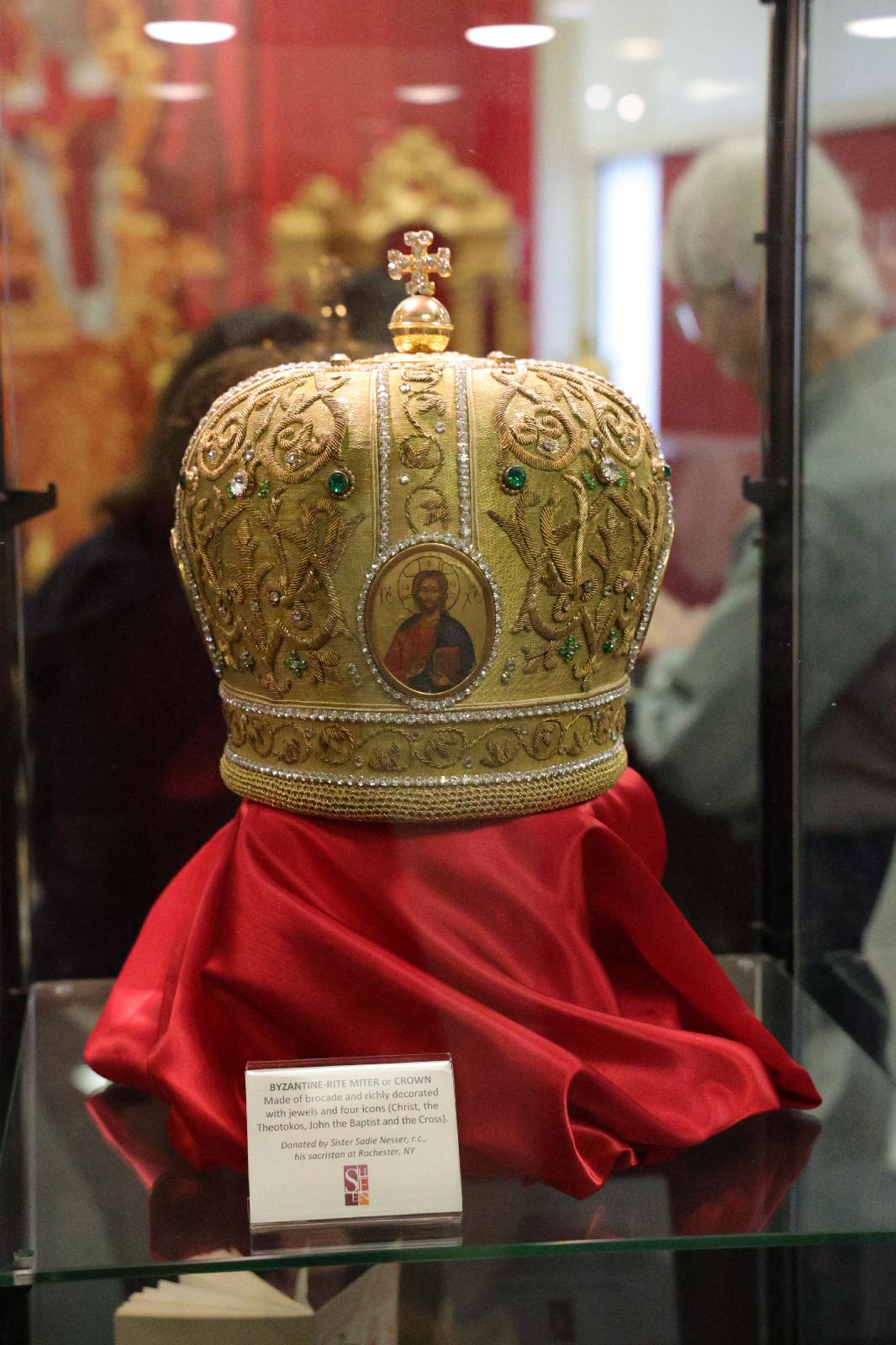
The icon features both a bishop’s miter, used in the Roman Church, and an episcopal crown, used by bishops of the Catholic Church’s Byzantine rite. Like the image from a few days earlier, the icon features Archbishop Sheen holding a piece of chalk. On the icon, he’s written on a chalkboard, “In these troubled times, we must become saints.”
“We might ask ourselves, ‘What would the blessed archbishop think today about our turbulent times?’ But that’s not the right way to ask the question,” said Bishop Robert M. Pipta of the Ruthenian Eparchy of Parma in Ohio. “He is thinking with us, he’s feeling with us, he’s praying with us, he’s crying with us. He recognizes better than we do the turbulence of our times, and he continues to call us to the same, to embrace the fullness of our baptismal vocation and to be holy; indeed, to be saints.”
Byzantine rite connection
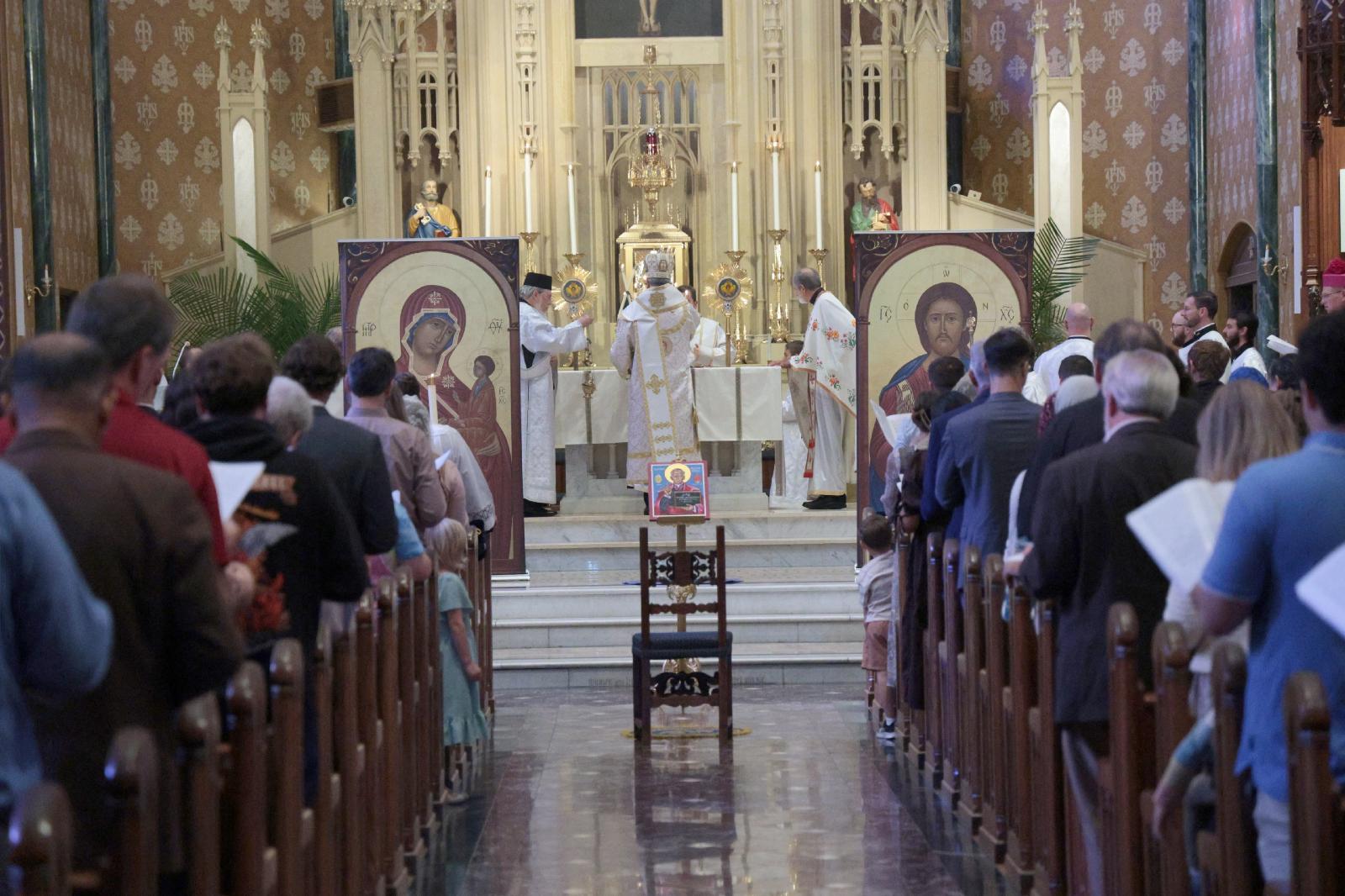
Following seven Masses of thanksgiving for Archbishop Sheen’s beatification celebrated at the Cathedral of St. Mary of the Immaculate Conception in Peoria Sept. 25 and 26, Bishop Pipta celebrated the Sept. 26 Divine Liturgy there.
“All of the care, the mission work that the blessed archbishop did, he still now through heavenly intercession does the same,” Bishop Pipta said. “He still cares, he still prays, he still mourns at times seeing the struggles and suffering and oppression in our world, and he still wants the mission so very dear to him to be carried out in our world today through each and every one of us.”
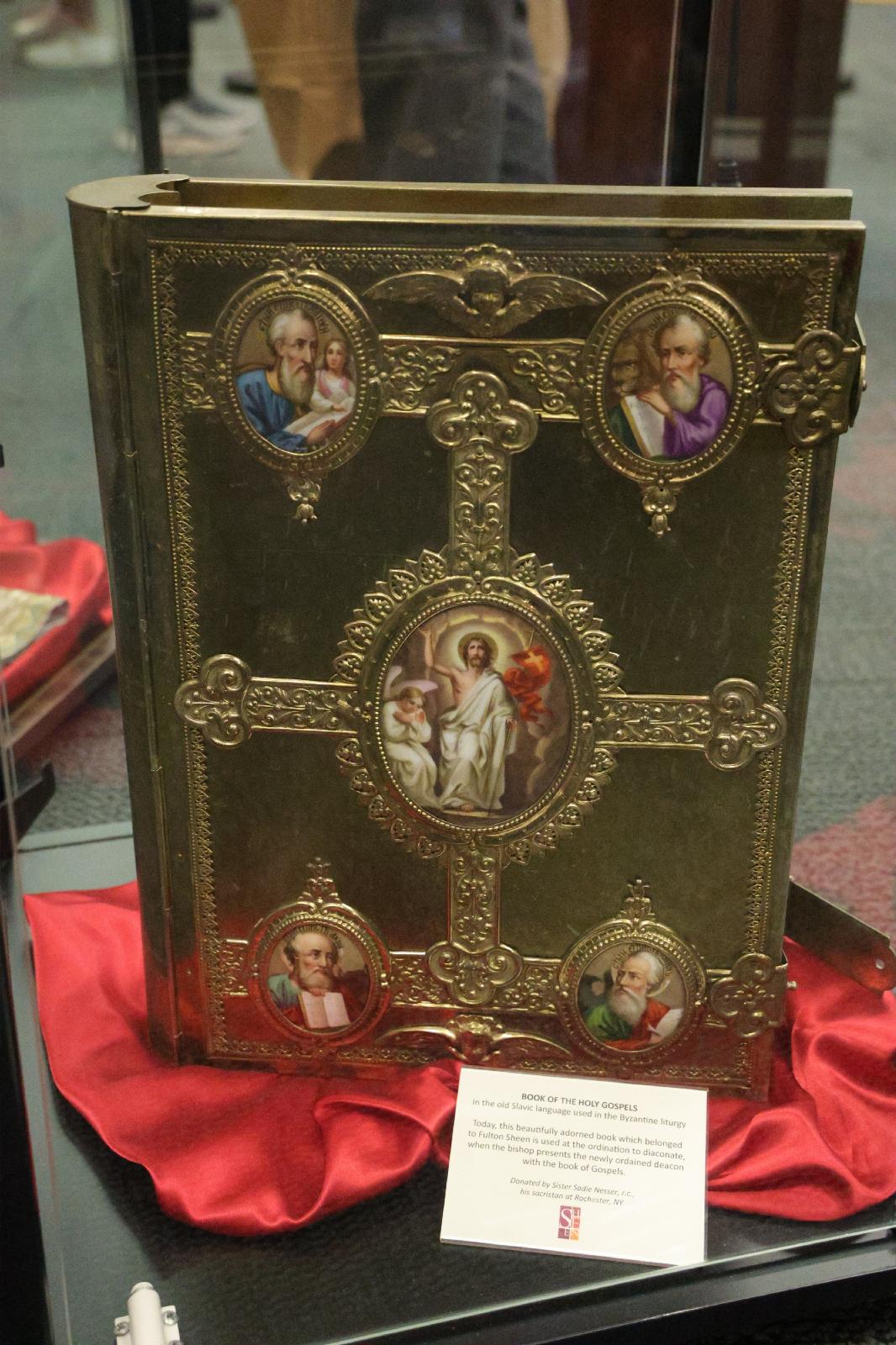
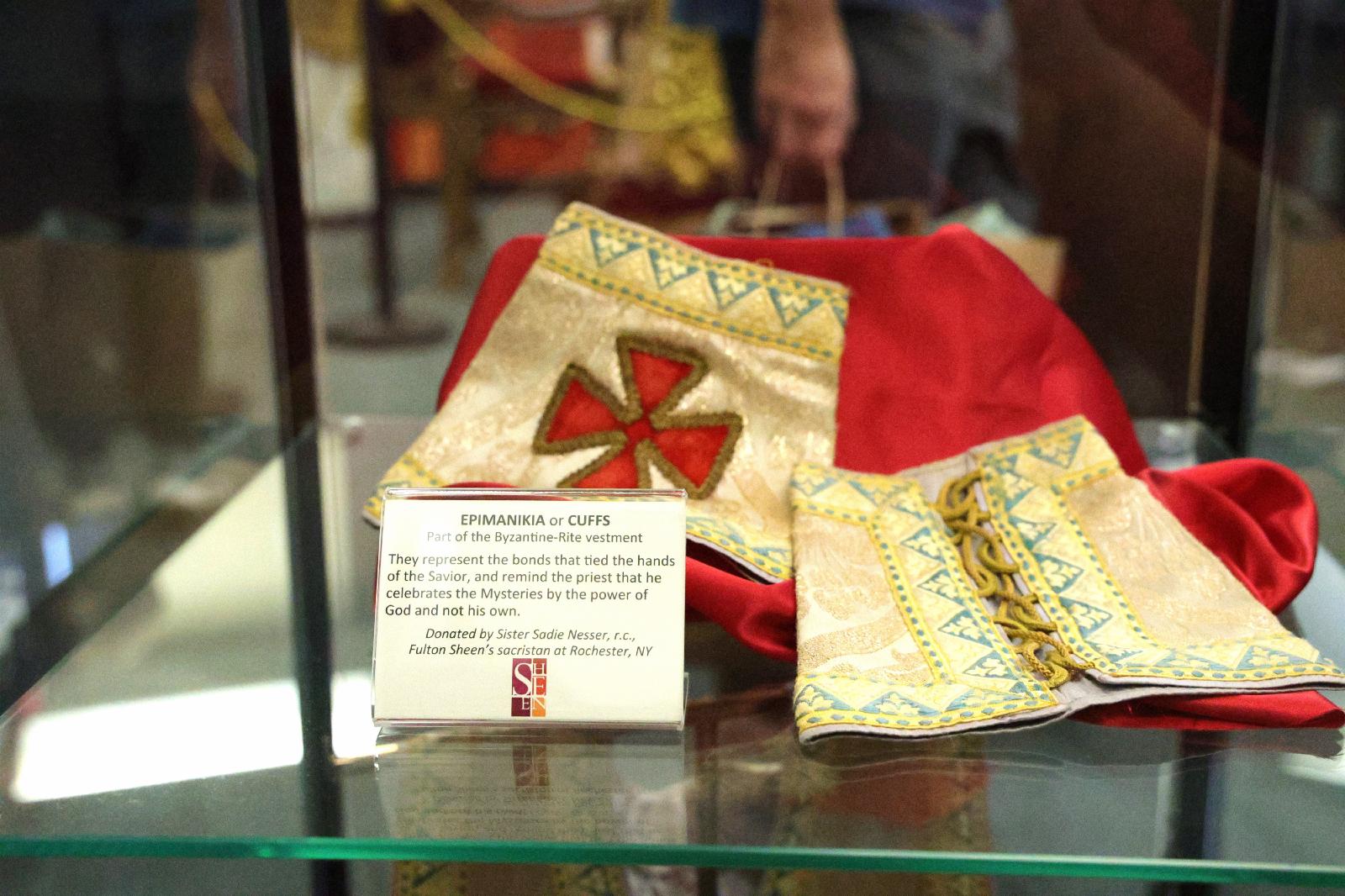
Archbishop Sheen’s connection to the Byzantine rite came out of a desire to be in solidarity with Christians being oppressed in communist nations. He first celebrated the Divine Liturgy during a pilgrimage in honor of Our Lady in Uniontown, Pennsylvania, Sept. 3, 1955. He had arranged for the liturgy to be recorded and broadcast behind the Iron Curtain by Radio Free Europe.
“We don’t hate you. We don’t want to destroy you. We are praying for your freedom,” Archbishop Sheen declared in a homily.
Called to be present in world
This was one of the first times that the Divine Liturgy had been celebrated in English rather than Church Slavonic. This impacted Eastern Catholics in the United States, as well, Bishop Pipta said.
“If we did not develop our use of the English, the vernacular, in our liturgical services in America, we ourselves would not be able to fulfill the call of Blessed Archbishop Fulton to be that Christian presence in the world today,” he said.
To celebrate the Divine Liturgy in another rite, Archbishop Sheen needed permission from the Holy Father, which he received from Pope Pius XII.
Father Thomas Loya, who concelebrated the liturgy, wrote the icon — in the Byzantine tradition, icons are “written,” not painted. The process included a lot of prayer and research, he said.
“I incorporated the chalkboard because that’s what he was famous for on the TV, and I grew up watching it as a boy,” he said, adding that he felt Archbishop Sheen’s intercession during the week. “I feel him very, very profoundly.”
‘He knew the human person’
Father Loya is pastor of Annunciation of the Mother of God Byzantine Parish in Homer Glen, Illinois, just outside of Chicago, and holds several administrative positions with the Eparchy of Parma. As a Ruthenian Catholic growing up in the United States, he had always felt a connection with Archbishop Sheen, he said.
“He was always an ever-present figure in our church because my church was the one that was being persecuted under communism,” Father Loya said. “That’s why he aligned himself with us, that’s why he became one of us biritually.”
Father Loya said that he has relied on many of Archbishop Sheen’s homilies, presentations and writings to help him grow as a priest, adding that he still keeps some of the archbishop’s books on his bedside table.
“He kind of stayed with me through his writings, through his talks — television, radio, everything. So he’s always been with me. Still is,” Father Loya said. “All his techniques, the way he spoke, the way he communicated, the words he used, it was a real art. But it came from his understanding of the human person. He knew the human person, and it’s because he knew God so well.”
Ryan Harty, a pilgrim from St. Athanasius Byzantine Parish in Indianapolis who attended the Divine Liturgy, once lived in Peoria and had become familiar with Archbishop Sheen’s story.
“To speak fearlessly even to our own government or to Eastern Communist governments and to people living behind the Iron Curtain, that took courage,” Harty told OSV News. “To have any Latin rite bishop take that sort of interest and solidarity about the Eastern Church, that’s a special connection.”
Tony Gutiérrez writes for OSV News from Texas.