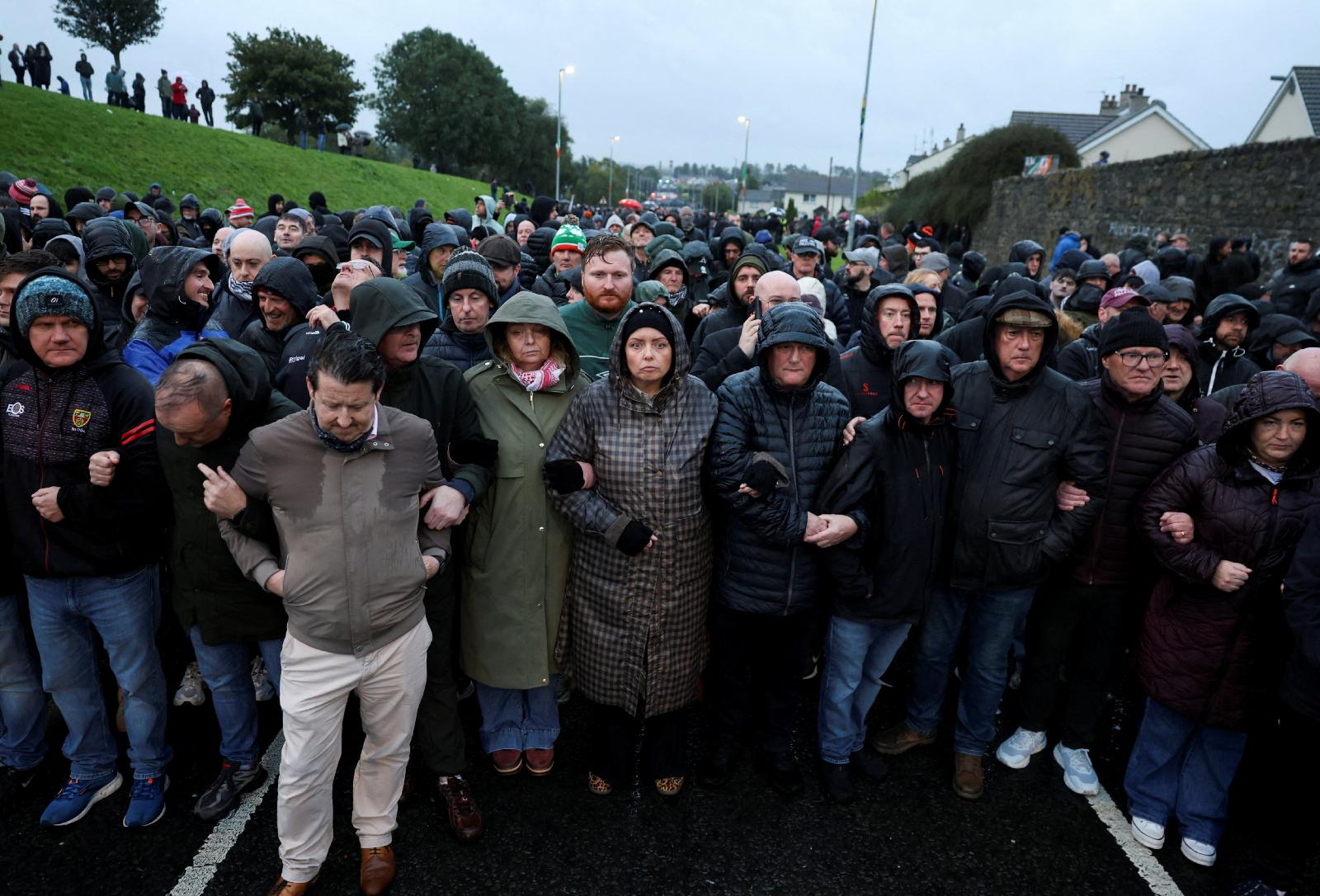
(OSV News) — The primate of all Ireland, Archbishop Eamon Martin, and his Anglican counterpart Archbishop John McDowell have called for the “urgent creation” of a “reconciling initiative” as Northern Ireland faces a crisis threatening to revive sectarian unrest in the region.
The archbishops urged all parties to “use peaceful and democratic processes” to find a solution, as a stand-off developed over a controversial march by the Protestant Orange Order that was set to pass through a Catholic community Sept. 27.
Archbishop Martin and Archbishop McDowell of the Church of Ireland warned that “too much is at stake,” saying in an ecumenical statement released Sept. 27 that they could not “think of any time in the last 30 years” when the Christian commandment to love God and neighbor “needs to be more urgently heard.”
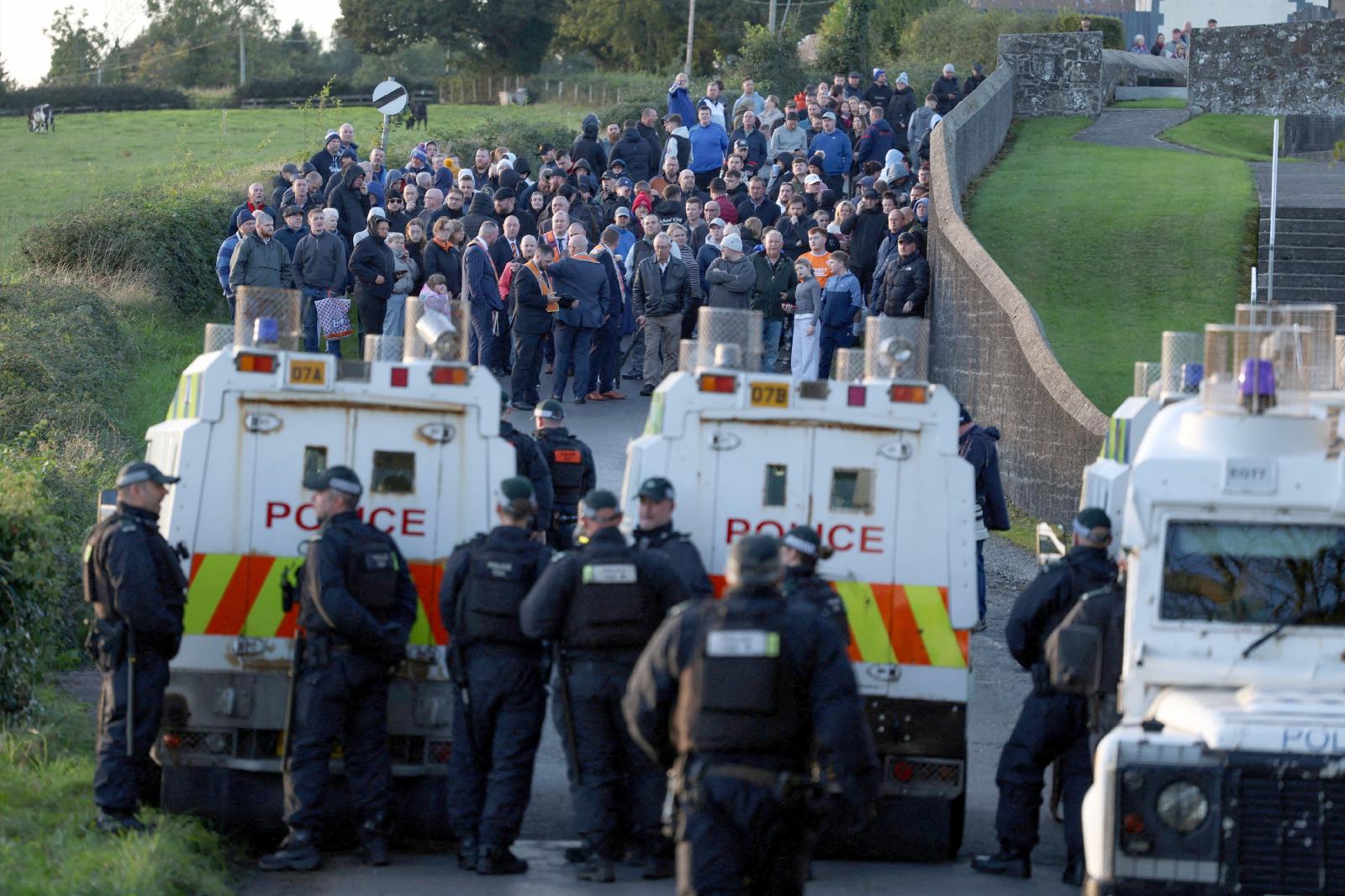
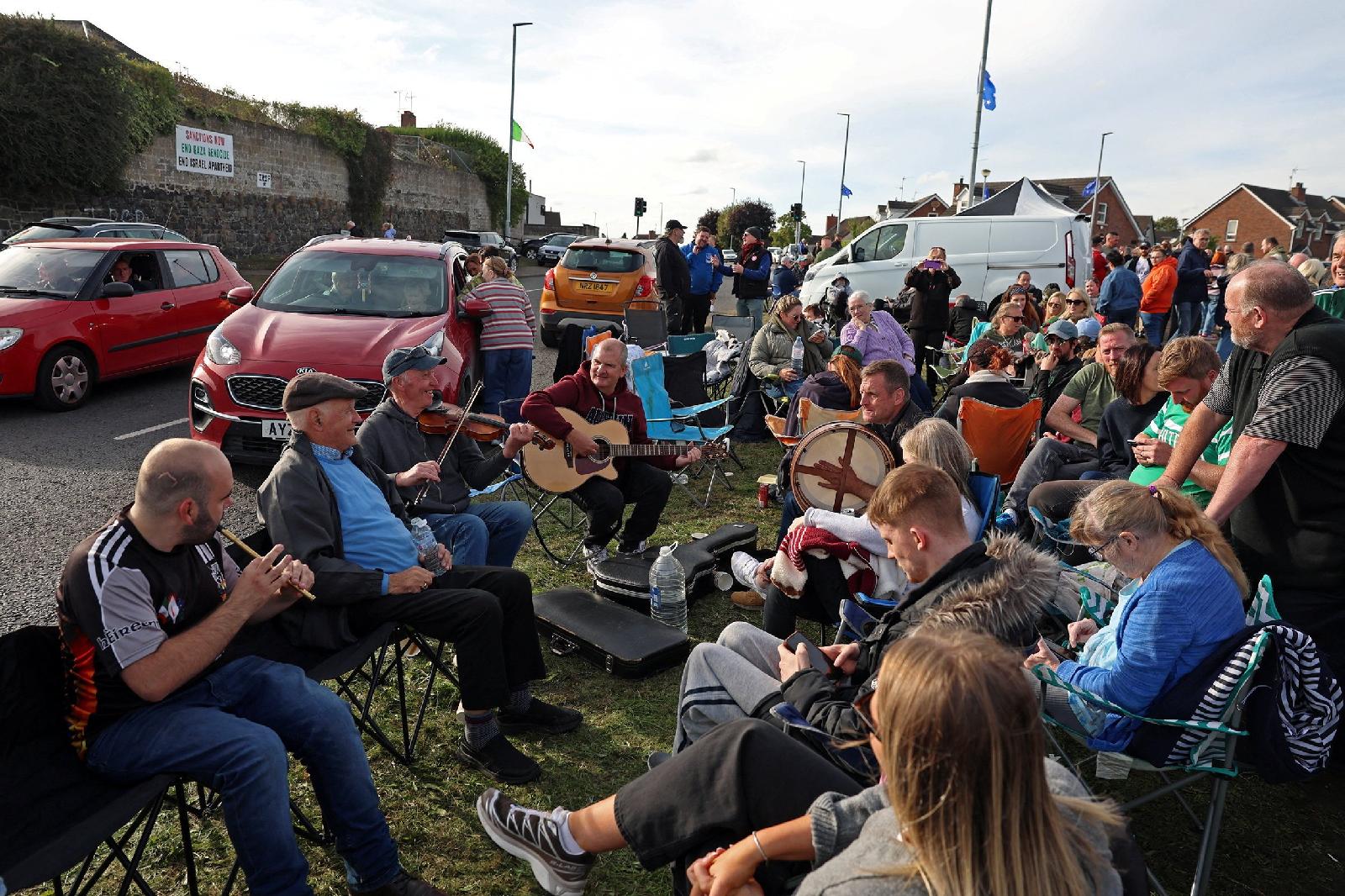
Their plea came as members of the Orange Order and thousands of protesters faced off over Garvaghy Road in Portadown, County Armagh, in tense scenes that began on the morning of Sept. 27 as thousands of protesters gathered to oppose the march.
Garvaghy Road is a main thoroughfare in majority-Protestant Portadown but is also widely used to describe the Catholic community living along and around it.
Orange Order members continued to attempt march
The protesters dispersed that same Sunday night, while members of the Orange Order continued to attempt the march until the early hours of Monday morning, Sept. 28.
Michelle O’Neill, the first Catholic to hold the position of first minister of Northern Ireland, joined the protest, prompting unionist politicians to accuse her of “breaking the law.”
British Prime Minister Andy Burnham urged calm on all sides, while Irish Taoiseach Micheál Martin echoed the archbishops’ call for dialogue.
On Sept. 30, it was announced that Northern Ireland Secretary Chris Bryant had put forward a proposal to both parties, but while a Garvaghy representative said they were satisfied with it, the Orange Order has rejected the proposal.
No one wants to go back to the divisions of the past and the “trauma” experienced at Garvaghy Road, Archbishop Martin said. He warned that what happened over the last number of days threatens to undermine decades of work to improve relations between nationalists and unionists following the signing of the Good Friday Agreement in 1998.
Order sworn to maintain Protestant Ascendancy
The Orange Order, founded in Ireland’s northern province of Ulster in 1795 as a fraternity sworn to maintain the Protestant Ascendancy, was set to conduct its first march through the Catholic- and nationalist-majority area for the first time since 1997.
The Parades Commission permitted the march with a decision delivered Sept. 25, but there followed a series of rulings and appeals that were finally decided by an “unprecedented” sitting of the High Court at 2.15am on Sunday morning.
The largely Catholic Garvaghy Road was a flashpoint for violence during a period of bloody sectarian violence in the North known as the Troubles, which lasted for 30 years and saw more than 3,500 people killed until the signing of the 1998 peace agreement.
The Troubles stemmed from tensions over the unfair treatment of the minority Catholic population after Northern Ireland was formed from the six northeastern counties on the island of Ireland, remaining part of Britain when the 26 southern counties won independence from British rule in 1921.
The town of Portadown is majority Protestant, but Garvaghy Road strongly opposes the parades by the Orange Order, which Catholics in the North view as a sectarian and anti-Catholic force.
Clashes related march frequently led to violence in past
Clashes related to the march frequently led to violence, with a 1995 stand-off resulting in the deaths of several people.
In 1997, the local Catholic parish was forced to celebrate Mass in front of British army lines after locals were blocked from entering their local church.
However, the march was banned in 1998 by the Parades Commission, which was established to settle disputes over the hundreds of marches that take place in the North every year.
Every July, thousands of Orangemen parade across the region to commemorate the victory of the Protestant Prince William of Orange’s over the Catholic King James II in 1690.
Catholics in the North associate the marches with sectarian violence and oppression, seeing them as an attempt to instill fear in their communities.
The Garvaghy parade dispute in 1998 was linked to a deadly sectarian arson attack carried out by the Ulster Volunteer Force, a militant loyalist organization that favored the North remaining part of the United Kingdom, leaving three Catholic schoolboys dead after their home was bombed in the early hours of July 12.
Repeated requests for permission to march down Garvaghy Road
The Orange Order has repeatedly requested permission to march down Garvaghy Road ever since, arguing that an effective ban on doing so infringed their rights, but the Parades Commission continued to deny their request.
In 2022, the Garvaghy Road Resident Coalition outlined the trauma from past unrest that it said remains alive in the local community.
The coalition told the Parades Commission that any initiatives to facilitate an Orange Order march on Garvaghy Road would “bring to the fore issues, anxieties and fears, which residents consider should remain in the past and which could have wider ramifications.”
At the time, the commission concluded a restriction on the route remained “necessary, proportionate and fair.”
The commission rejected the Orange Order’s application to march down Garvaghy Road earlier this year, but the ruling was overturned over the summer after it was found the commission had not followed correct procedures.
The Protestant organization resubmitted its application, this time significantly reducing the size and scope of the proposed march.
The commission received advice from the Police Service of Northern Ireland suggesting that they did not expect disorder or violence from a scaled-down march.
Decision made to allow small parade under strict conditions
The commission said it gave that assessment “significant weight” and ultimately concluded that allowing a very small parade under strict conditions was the best way to balance the rights of marchers and of residents.
While Unionist politicians, who believe the North should remain part of the United Kingdom, welcomed the decision, residents’ groups warned that allowing the Orange Order down Garvaghy Road could risk “unraveling” accommodations reached elsewhere.
Archbishop Martin released a statement on Sept. 26, expressing his “shock and disappointment” at the legal developments paving the way for the march.
He said his first thoughts were with those “for whom the situation brings back deeply traumatic and painful memories.”
The leader of the Church in Ireland appealed for prayers in the parishes across the diocese of Armagh and urged the use of “solely lawful and democratic processes to resolve this deeply complex and emotive situation.”
Breandán Mac Cionnaith of the Garvaghy Road Residents’ Coalition, as well as Unionist and Nationalist politicians and representatives, met with Bryant, the Northern Ireland secretary, and Police Service of Northern Ireland Chief Constable Jon Boutcher Sept. 28.
Bryant said on Monday evening that a solution to the Drumcree stand-off remained “a bit far away,” following “very positive” meetings with all sides involved. Further meetings are scheduled between Bryant and the relevant parties.
Ruadhan Jones writes for OSV News from Dublin.