(OSV News) — The Synod on Synodality — a three-year (2021-2024), world-and-Church-wide process of listening and dialogue initiated by Pope Francis — is marking two years since its conclusion.
But — as its coordinators quickly qualify — the synodal process, backed by Pope Leo XIV, isn’t over yet.
So where does it stand?
“We have to implement the outcomes, and we have to celebrate them as well — so that’s the phase we’re in,” Auxiliary Bishop Juan Miguel Betancourt of Hartford, Connecticut, told OSV News. He is chair of the Synod Implementation and Evaluation Task Force at the U.S. Conference of Catholic Bishops.
For those who haven’t followed along, here’s a quick review (by the Leadership Roundtable, a nonprofit promoting transparent and accountable leadership in the Church): “Pope Francis wants to hear from the whole Church about what is happening in local parishes. He and the bishops would like to know what individuals think we should all be doing to help make our parishes better. The way he has proposed doing this is a synodal process.”
Diocesan consultations, listening sessions, discernment processes
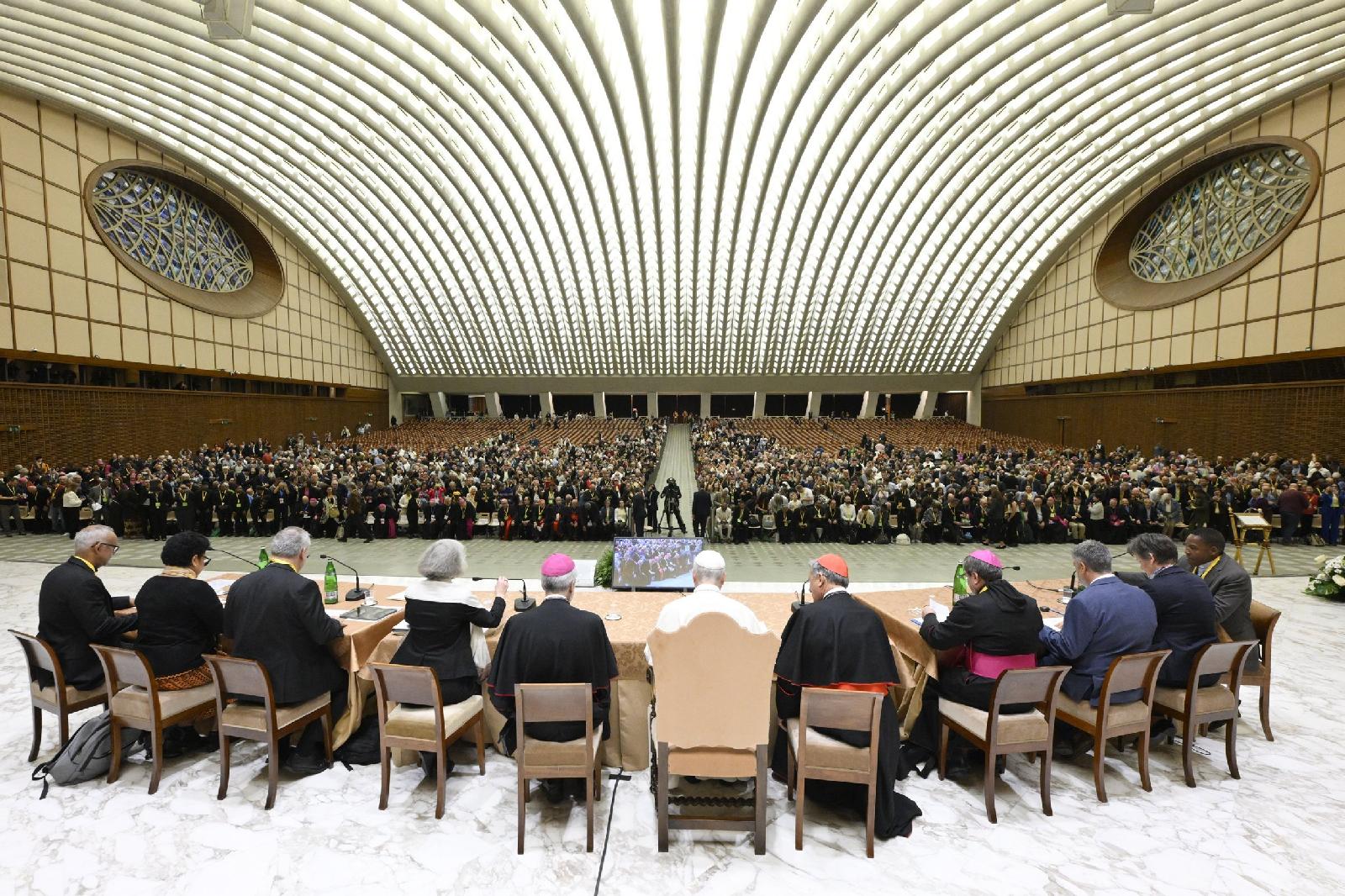
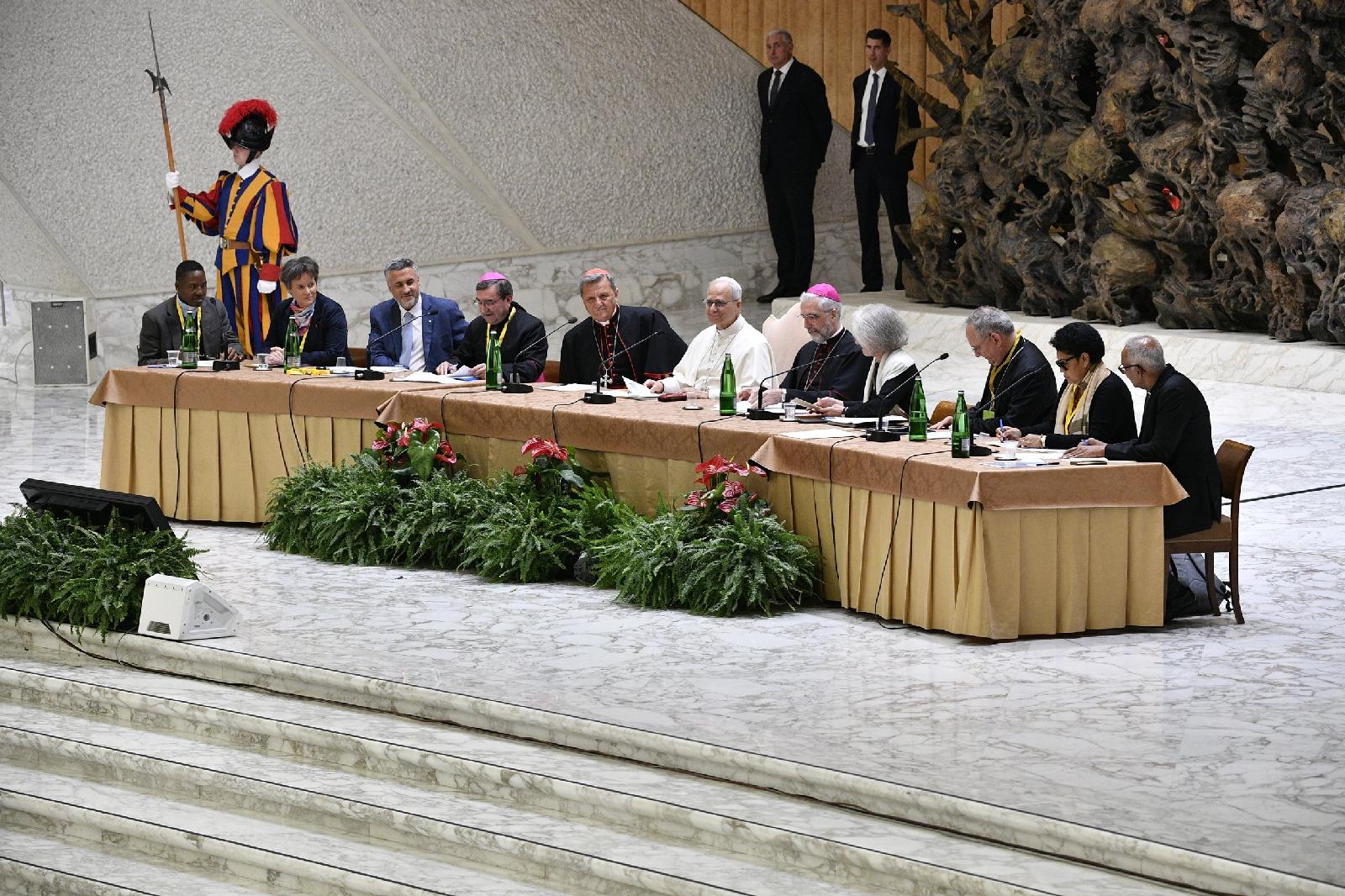
Worldwide diocesan consultations, listening sessions and discernment processes with clergy, religious and laity followed; these were synthesized to identify common themes, after which synod delegates convened in Rome to discuss findings.
The process culminated with a final document.
“In 2028, the whole Church will celebrate the signs of emergence of the changes and developments on synodality — from the diocesan Church, then the national, then continental, and then the world Church. This is what we’re going to do,” Bishop Betancourt explained.
“But it’s just celebrating what is emerging, not really what is being finished — because that’s not going to happen,” he stressed. “We cannot refer to this synod as something that is finished, and we’re done with it.”
The vision of synodality — a Greek word for “walking together” meant to embrace both lay and clerical accompaniment, shared responsibility for mission, joint dialogue and discernment — is intended as a “way of being Church” versus an event or program, or even a multi-year progression of the same.
Synodality ‘is a way of living’
“Synodality is a spiritual journey — more than a structure; more than a way of governing or doing things; it is a way of living,” said Bishop Betancourt.
“So now, Pope Leo is looking into how things are going; coming along,” the bishop continued. “He acknowledges that in some parts of the world synodality is kicking in (in) a way that is really good … almost everybody’s on board … (but) there’s other places that they’re still in the early stages of formation, figuring out what synodality is — and then trying just to get on board with it.”
That “getting on board” has not been universal.
Various prelates and ecclesial commentators have criticized the process, lamenting an “undefined synodality” and a “democracy of the baptized,” while others objected to the apparent dilution of clerical leadership and the specter of endless rounds of consultation.
“There’s a spectrum of where dioceses are, but we knew this was going to happen — that’s just the reality of adopting anything that’s new or different,” commented Julia McStravog, associate director of planning and synodality in the USCCB’s Office of the General Secretary.
‘Subtle ways in which they’re approaching their work’
“But I can tell you, having accompanied the dioceses starting in 2021 … there has been a lot of what may not feel like big ‘in your face’ changes,” she said, “but these subtle ways in which they’re approaching their work that does emphasize the spiritual and pastoral aspects Bishop Betancourt talked about.”
“So across the dioceses,” McStravog continued, “you see pastoral councils are being formed in different ways. You see parish councils are being formed in different ways. The bishops are leading and interacting with and consulting with their councils in new ways, and they’re using synodal methodologies and synodal techniques in order to make really big decisions in the dioceses.”
“The bishops,” she added, “are really adopting the style and mode to engage in a consultative process with the people that they shepherd.”
McStravog admitted it’s a work in progress.
“It’s not perfect and it’s not everyone — it’s not 100% of people 100% of the time,” she reflected. “But again, from the outset, this is a journey. And it’s going to take a long time to spiritually form a billion Catholics throughout the world.”
More position titles include ‘synodality’
McStravog further notes her own title now includes “synodality” — and that diocesan positions are cropping up with the same.
The shift has been from planning to proactivity — taking the next steps from discussing synodality to actually implementing and integrating it.
“I have seen it in conversation with the brother bishops,” shared Bishop Betancourt. “When this happened, it caught us — let’s say — kind of by surprise.”
But then, he said, “we started doing things.”
And for those who might still hesitate, Bishop Betancourt offers clarity: “Synodality is not about change — it’s about mission and evangelization.”
“Pope Leo already says that resistance is part of the change; it’s part of the process,” the bishop noted. “But what he wants for all of us, specifically, is that we adjust … He actually wants — and this is something that he mentioned during the summer, in our meeting with him in Rome — to preserve that communion; that we have to adjust; that we have to be patient.”
U.S. bishops now engage in fraternal dialogue at plenaries
The synod’s final document — officially part of Pope Francis’ magisterium — made no formal changes to Church governance, but at their twice-annual plenary sessions, in June and November, McStravog said, the U.S. bishops now engage in fraternal dialogue.
“Yes, we’re encouraging and helping the bishops in their dioceses,” she noted, “but as a body, they, too, are practicing consultation and doing deep listening and synodal work together.”
Diocesan assemblies are scheduled for spring 2027.
“The reflection at every level — diocese, national, continental, worldwide — would be, what signs of synodality are emerging in our local churches?” Bishop Betancourt explained. “What can we share that is happening in our own local churches? And then, how can we celebrate that, and keep that journey going?”
“I think,” he continued, “that the Holy Father appreciates the work of synodality that has happened already in the United States. … All these things that we have done — even if many of us haven’t been aware that we were doing synodality.”
Mission for U.S. Church at this stage of synodality
And the mission for the U.S. Church now, at this stage of synodality?
“How can we bring Jesus?” declared Bishop Betancourt.
“It’s the call to the new evangelization that Saint John Paul II asked us to do, but now it’s in a more concrete way, in the journey of synodality. How are we, with synodality, going to bring Jesus from the parishes to the world?”
And that mission is not just for the ordained.
“It’s the process of conversion of each one of us — as missionary disciples,” Bishop Betancourt emphasized. “Having that strong relationship with Jesus, deepening our relationship with Jesus — and then going out, beginning with our parishes, and then to the rest of the world.”
“We do what we can, right?” he reflected. “This is a slow process. This is a journey — but we will get there.”
Kimberley Heatherington is an OSV News correspondent. She writes from Virginia.