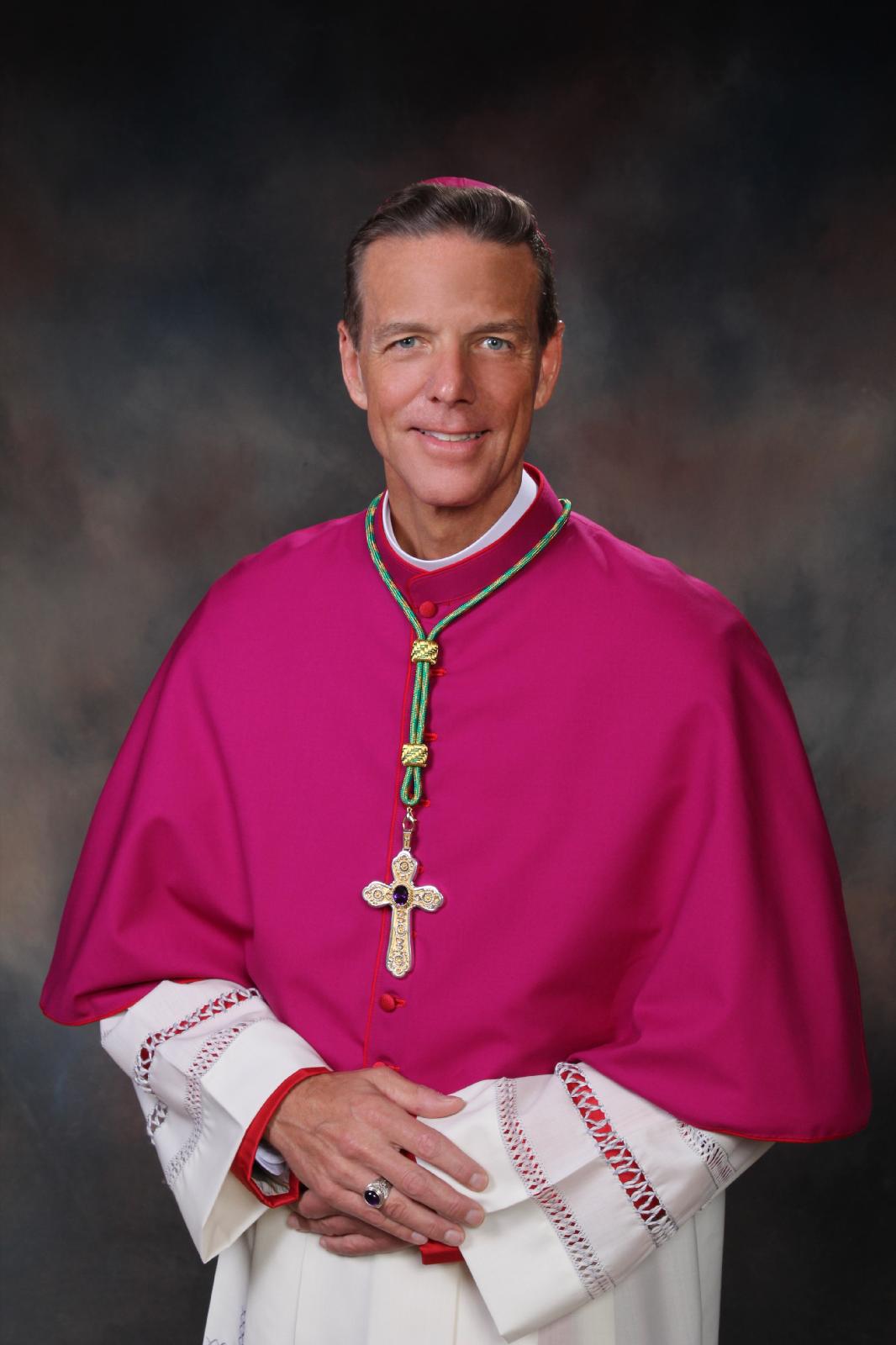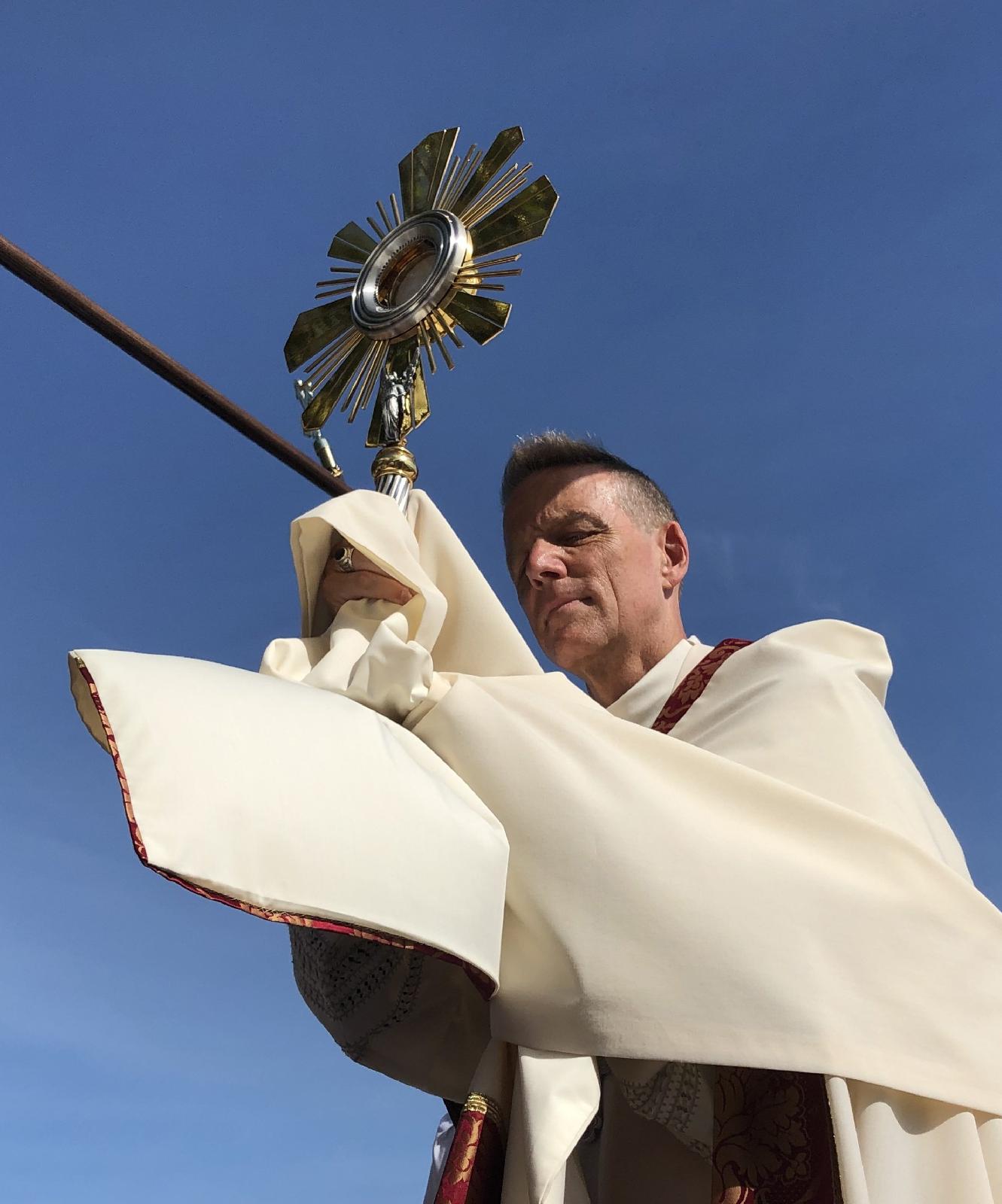
(OSV News) — What would you give your life for? This is the question and challenge that Bishop Stephen D. Parkes of the Diocese of Savannah has been putting before young people receiving the sacrament of confirmation as his Georgia diocese prepares for the historic beatification of five Franciscan missionaries who laid down their lives for their Catholic faith on that same soil over 400 years ago.
“This has relevance for today,” he told OSV News in a recent interview, “because in our world today, there’s just so much happening and so much going on. And we hear all these divergent opinions and you think, ‘Well, what do I believe? What do I feel so strongly about that I’m going to shed my blood for it?'”
“We know many are suffering; they’re just struggling today and trying to find their place and wondering how their gifts and talents are going to serve the world,” he said, “And when we embrace something and we feel strongly about it, well, we stand up for it.”
Ministry of the Georgia Martyrs
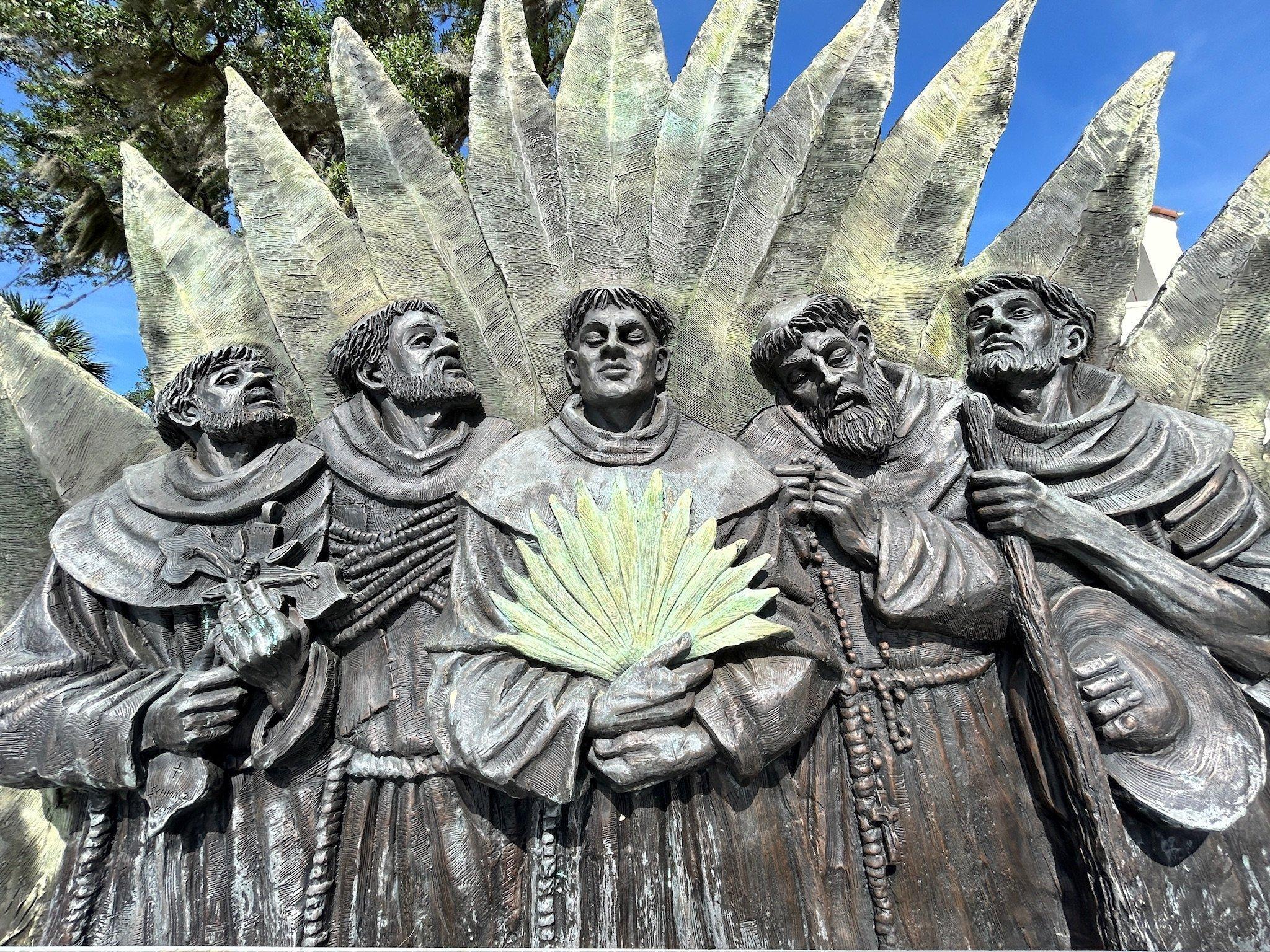
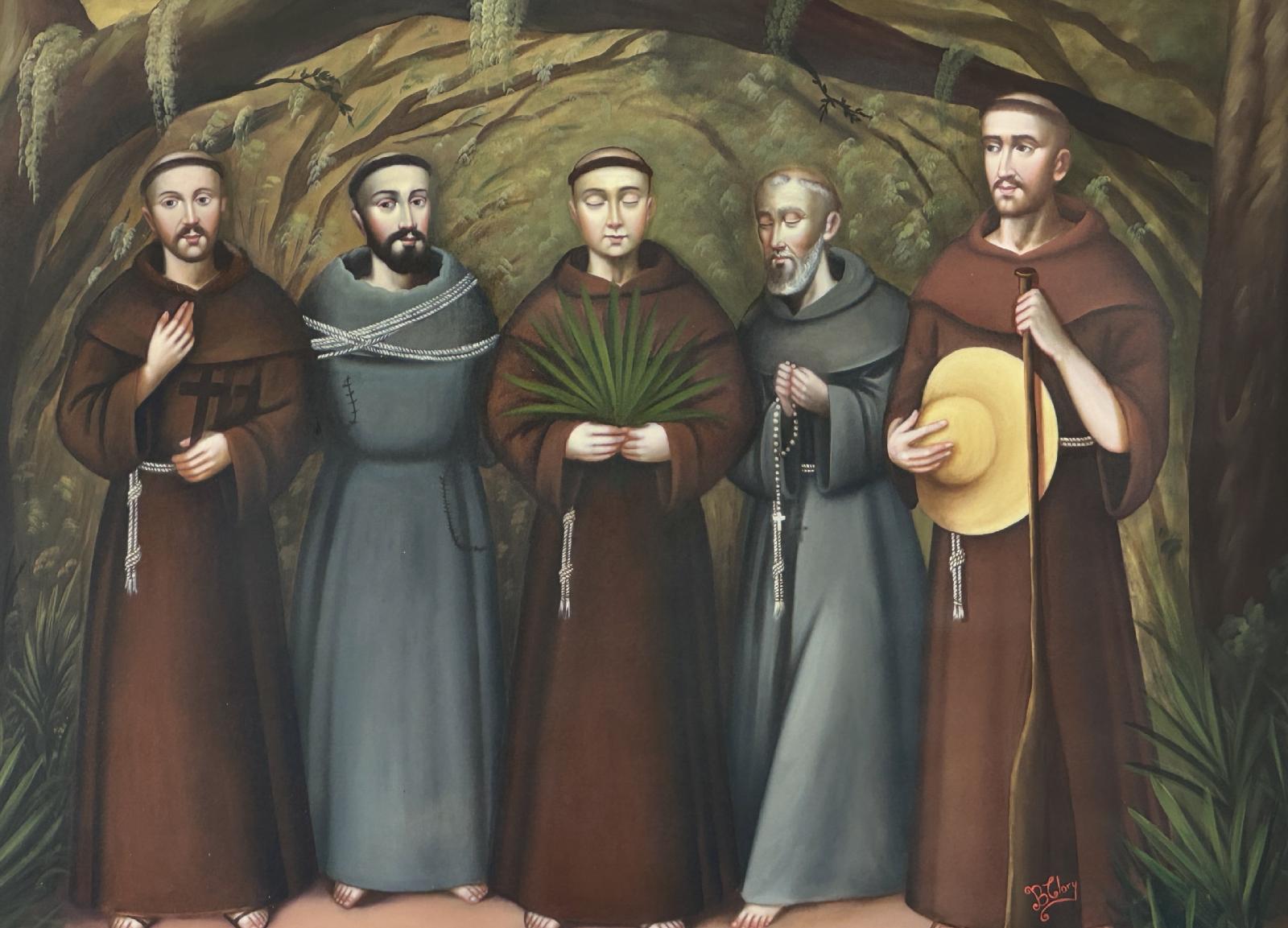
The Georgia Martyrs, five Franciscans from Spain who were martyred in 1597 ministering to the Guale people, without any Spanish military presence, were Friars Pedro de Corpa, Blas Rodríguez, Miguel de Añon, Antonio de Badajóz and Francisco de Veráscola.
“The native peoples adopted them, welcomed them into their culture, and the Franciscans were good at evangelization. So, the five of them, they settled into various missions and they ended up becoming a part of the everyday life of the people,” he noted. “That in and of itself was remarkable.”
Their martyrdom came after Father Pedro de Corpa stood by the Church’s teaching that marriage is between one man and one woman when the soon-to-be chief Juanillo wanted to take a second wife. Juanillo had Father Pedro killed and started an attack on the other Franciscans serving in different missions who were hunted down and killed.
Bishop Parkes observed the distinct personalities of each of the Georgia Martyrs.
“They came from different places in Spain and then they were known for certain things. Blas was a calm and devout pastor,” he said, “Miguel was a gentle musician. Antonio was a gifted communicator and Francisco, he was called the Cantabrian Giant. He was an athlete. Apparently, he was well known to the young people … around St. Simon’s Island, where he ministered. He was a wrestler and he really worked with all the young people. He was very good at connecting with them.”
“Each one would have suffered individually,” he emphasized, “and they would have made that decision to say, ‘I am going to give my life for this.’ And that’s a huge decision.”
“This was almost 200 years before our country was even officially founded,” he added, “it’s very interesting to note that the faith was a part of life in such a way that it made its way to these shores.”
‘History is so important’
Bishop Parkes first heard of the Georgia Martyrs when he became bishop of the Diocese of Savannah in 2020.
“Immediately upon my arrival,” he said, “I noticed pictures of these five men around in almost every place that I went; but also, people were very excited to tell me (about them), which says something about the devotional life of the people in the local area. That’s been an important part, I believe, of their cause.”
“To get to know them, to spread the word, history is so important,” he added, “especially in our faith, as we well know, we celebrate history. We learn from history. And I notice in Georgia, there’s a great love for history.”
The beatification is the first ever in the state of Georgia and the Southeast United States and the sixth beatification to take place on U.S. soil.
History of the Georgia Martyrs cause
Bishop Parkes noted the Georgia Martyrs’ cause was brought forward in the 1950s by the Order of Friars Minor, the Franciscans, and in 1984, the late Bishop Raymond W. Lessard officially opened it on behalf of the diocese.
Regarding why the beatification was moving forward now all these years later, he said such things take time: both as people become familiar with the story, but also as their story is appreciated more.
“We don’t really know; there’s mystery in it,” he said. “I’ve asked that question, ‘Why is it that it’s happening during my time as bishop?’ And there’s mystery in that. And I say, ‘Well, God has a plan somewhere along the line and I’m very grateful for that because it’s a big opportunity for us to promote our Catholic faith.'”
Bishop Parkes said he hopes the beatification might result in a veneration of the Georgia martyrs by married and engaged couples within the diocese.
“Wouldn’t it be beautiful if every household, every marriage that’s being prepared, every couple preparing for marriage knows the story; that they look to the martyrs for their intercession, to these new blesseds — as of Oct. 31 — for their intercession for loyalty, faithfulness, fidelity in their marriage?”
“What a beautiful witness,” he said. “Maybe they’ll have pictures of them in their home, and that would be something that, again, would be part of our local Catholic culture.”
‘The story of the martyrs is different’
Bishop Parkes said that he attended the beatification of Blessed Fulton J. Sheen in September, calling the experience “beautiful” to be able to “learn more about Fulton Sheen,” who was a “great communicator and touched millions and millions of lives.”
“The story of the martyrs is different,” he said. “It’s kind of delving into our history, our heart, realizing that from hundreds of years ago that holy people walked here in our soil and what they went through for our faith to be here today.”
“We wonder, we struggle with things in our faith or promoting the faith,” he said, “and resistance. What did they face back then? They lost their lives for it, because there was a lack of understanding or an openness about it.”
Bishop Parkes was able to visit St. Catherines Island, the only site of martyrdom that has been identified with certainty where Father Miguel de Añon and Brother Antonio de Badajoz lost their lives. The mission on St. Catherines, rediscovered in the 1980s, is located on the privately owned island, and is closed to the general public.
“They were able to recreate what that Guale village looked like, even to the point where we actually have a place there through the generosity of the St. Catherines Island Foundation, we are able to have an outdoor chapel there,” he said, adding that the diocese planted a group of palm trees on the outline of the chapel.
“I believe 430 of the natives are buried there,” he said. “I went there on All Souls’ Day, my very first visit, and it was just a beautiful experience, connecting with the history.”
Halloween beatification date ‘no coincidence’
Bishop Parkes said the beatification taking place on Oct. 31, Halloween, was no coincidence.
“We had to submit a number of dates to the dicastery, and then it would be approved by the Holy Father,” he explained. “This was our first choice.”
“Halloween has taken a dark turn in these last decades,” he said, “and there’s a lot of nonsense that goes along with it. And I think this is a reminder of what it really is, and that is All Hallows’ Eve and the next day is All Saints’ Day. So we will be having a Mass of Thanksgiving at the Cathedral Basilica of St. John the Baptist on All Saints’ Day, where we will recognize obviously all of the saints, but recognize these new blesseds.”
He said, “It’s a great connection, I think, to make, that we should live liturgically. And this is an opportunity for us to live the liturgical life of the Church within our secular calendar.”
He said that having the beatification on a Saturday would also help those traveling from all over the state to attend as the diocese is over 37,000 square miles.
Thousands expected to attend beatification
The diocese is expecting over 8,000 people to be in attendance for the beatification and have already had to expand the event to a larger venue.
“I feel as though we’ve put into place and planned all of the tools that are needed for a milestone, memorable, spiritually fulfilling celebration,” Bishop Parkes said. “We’ll let the Holy Spirit take it from there.”
Lauretta Brown is culture editor for OSV News. Follow her on X @LaurettaBrown6.