
Parish, chancery life now fading memory as Fr. Diskin retires

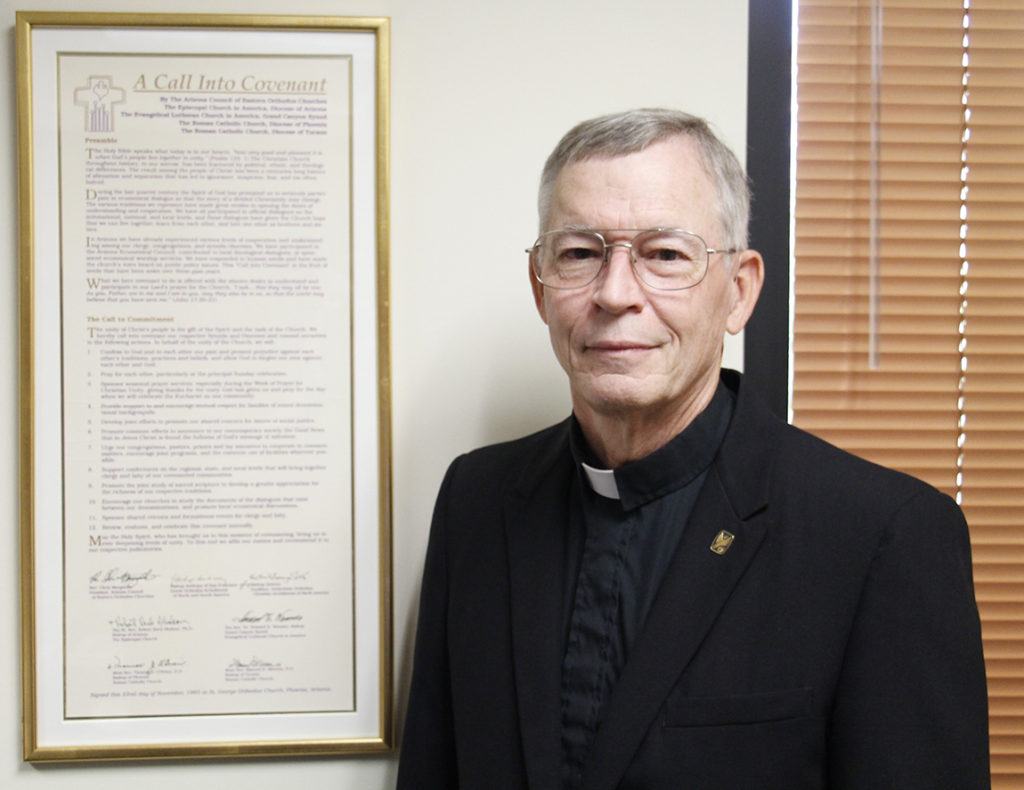
Fr. Michael Diskin retired as vice chancellor for the Diocese of Phoenix Sept. 30, a role he held for 28 years. He also served as diocesan director of ecumenism and religious affairs and poses in his office alongside "A Call into Covenant," a 1993 document honoring the unity of Christ's people among Christian faith congregations in Arizona. (Ambria Hammel/CATHOLIC SUN)
Fr. Michael Diskin retired as vice chancellor for the Diocese of Phoenix Sept. 30, a role he held for 28 years. He also served as diocesan director of ecumenism and religious affairs and poses in his office alongside “A Call into Covenant,” a 1993 document honoring the unity of Christ’s people among Christian faith congregations in Arizona. (Ambria Hammel/CATHOLIC SUN)

The last hard-sided briefcase has likely left the Diocesan Pastoral Center.

“It was his signature item,” Maria Chavira, chancellor, said of her assistant counterpart. It was a role Fr. Michael Diskin held for 28 years until his retirement Sept. 28. Fr. Diskin spent more than a decade prior serving at eight diocesan parishes plus one in his home state of New York since his ordination in 1977.

Most, if not all briefcases coming into the DPC these days, have been replaced with softer-sided computer bags and tablet covers.

Fr. Diskin was computer savvy too, but accomplished vital ministry via phone and face-to-face conversations, whether it was a quip with staff or conversation with laity.

“Fr. Diskin had many priestly gifts but the ones I remember are his ability to listen and respond pastorally to individuals who were experiencing dissatisfaction with the Church. Fr. Diskin had a unique way of putting things into perspective and offering people possible solutions to the issues they were struggling with,” Chavira said.

One struggle the priest himself personally couldn’t get through was his quest to have a “fro yo” machine installed in the cafeteria. Fr. Diskin said at his retirement celebration he would happily come back to bless it should one get installed.
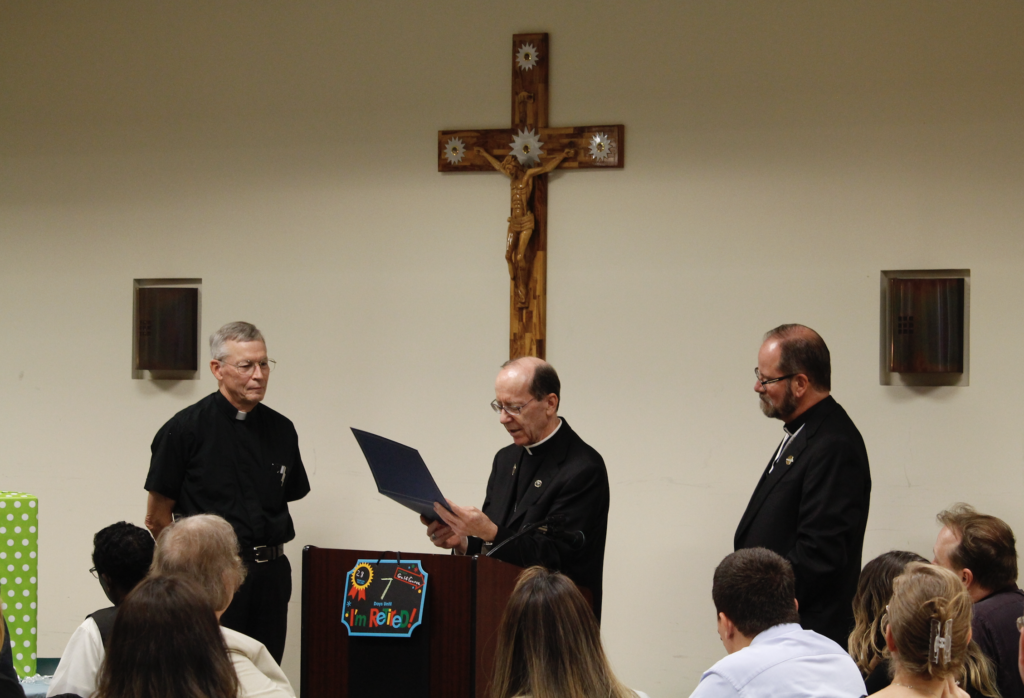
Bishop Thomas J. Olmsted reads a certificate of appreciation for Fr. Michael Diskin’s 28 years of service at the Diocesan Pastoral Center and 41 years of priesthood during a Sept. 19 retirement celebration. (Ambria Hammel/CATHOLIC SUN)

Interfaith networking

Most of Fr. Diskin’s work in the chancery also included double duty as diocesan director of ecumenism and religious affairs. He was appointed as the Catholic representative with the Arizona Faith Network, though it went by another name until 2015. Fr. Diskin served as president of its board of directors and other positions. The Festival of Faith at Bank One Ballpark in 2000 was among its fruits. Some 35,000 people attended a four-hour celebration.

“The most significant change is when the Arizona Ecumenical Council ultimately went through the process of making a decision that in today’s environment, we don’t just need to be ecumenical, but interreligious,” Fr. Diskin said.

Interreligious coverage in The Catholic Sun

Its focus on common social justice issues helped raise Arizona’s minimum wage and Fr. Diskin was specifically involved with an effort to change city bus schedules to help the working poor.

“His great heart was for continuing doing some service in the community with justice issues,” said the Rev. Larry Fultz, executive director of Arizona Interfaith Movement — another local interreligious organization.

“I know he’s going to be missed by the Church. I know he’ll be deeply missed by the faith community, not just the Catholic community, but the faith in general,” Fultz said.

Auxiliary Bishop Eduardo A. Nevares, who served with Fr. Diskin in interfaith efforts, agreed. “Your spirit, your generosity, your kindness, your sense of service have been very admirable over the years,” he said at a retirement celebration.

Serving Catholics worldwide
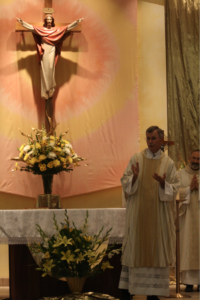
Fr. Michael Diskin addresses St. Louis the King parishioners during the parish’s 50th anniversary celebration in this 2012 file photo. (Catholic Sun file photo)

That sense of service also meant wearing a third hat as short-term canonical administrator of St. Bernard of Clairvaux and seven years as pastor of St. Louis the King in Glendale.

“In parish ministry, you have direct interaction with members of the faithful. You share their pain and disappointment and their joy in significant life moments,” Fr. Diskin said.

Early into priesthood, he initiated fellowship efforts among freshmen priests. Fr. Diskin rounded up clergy who had been ordained five years or less for social gatherings, whether it was basketball, dinner theater or a trip to Lake Havasu City.

“He loves the Church. He humbly handles the Church behind the scenes,” Bishop Thomas J. Olmsted said.

Fr. Diskin established such modus operandi long before ordination and seminary. He was a daily Massgoer for most of college and supported three ministries in an Army base chapel in Germany. It was bedside reading there from St. Paul that served as his decision point for discerning priesthood.

The Lord first spoke to his heart around age 10 or 11 though upon discovery of a side altar at his home parish honoring the Blessed Mother.

“There was something that took place that stimulated being open to priesthood,” Fr. Diskin recalled, while in his final days at the Diocesan Pastoral Center. The rest is history that has a new chapter waiting to be written.
Nuevo sitio web invita a pensamientos sobre crisis

FIDELITY.DPHX.ORG

El Obispo Thomas J. Olmsted y la Diócesis de Phoenix lanzaron un nuevo sitio web este mes para ayudar a los Católicos locales a compartir sus pensamientos acerca de los escándalos que rodean a la Iglesia qué impacto han tenido en su fe.

El nuevo sitio web — fidelity.dphx.org — viene de los talones a las alegaciones contra el Arzobispo Theodore E. McCarrick y los presuntos encubrimientos expuestos por un informe del Gran Jurado de Pennsylvania sobre las diócesis en ese estado.

El sitio web incluye un video del Obispo Olmsted diciendo a los Católicos: “por favor, sepan que no están solos. Comparto su dolor y su enojo”. Él llama a los fieles a mantener sus ojos “fijos en Jesús, nuestro Salvador y Señor”.

El sitio web cuenta con un cuestionario para los Católicos en la diócesis que les pide que completen con respecto a los escándalos y cómo les ha afectado. También hay preguntas que piden retroalimentación sobre qué tan bien la diócesis de Phoenix y el “liderazgo en Roma está respondiendo a la situación actual de la Iglesia”.

En el video, el Obispo Olmsted declara que va a utilizar las respuestas al cuestionario en su discernimiento y compartirlas con sus obispos hermanos.

“Sus respuestas honestas son alentadas”, dice el Obispo Olmsted en el video.

Fidelity.dphx.org también incluye una lista de preguntas frecuentes con respuestas llenas de información sobre temas tan espinosos como si los fondos de la Campaña de Caridad y Desarrollo o la campaña “Together Let Us Go Forth ~ Juntos Sigamos Adelante” se utilizan en pagos del pleito del clero — víctimas del abuso del sexo-no son. “El Obispo Olmsted ha hecho todo lo posible para asegurar que los fondos recaudados serán utilizados exclusivamente para los componentes del caso de la campaña”, dice el sitio web, refiriéndose a la campaña Juntos Sigamos Adelante.

Dado que algunas de las denuncias en el escándalo de abuso en el implican conducta en el seminario, el nuevo sitio web aborda la rendición de cuentas durante la formación sacerdotal. Los problemas que se desarrollaron en los seminarios durante los últimos 30 años pueden remontarse a la revolución sexual, a una Iglesia complaciente, a una mala selección de candidatos y a una confusión teológica, afirma el sitio web. Hoy en día, los hombres pasan por un minucioso proceso de discernimiento y aplicación antes de comenzar la formación. Los años de seminario están estructurados para equilibrar la formación humana, espiritual e intelectual de los hombres.

Los que visiten fidelity.dphx.org también encontrarán información sobre la oración y la curación. Se alienta a los Católicos a crecer en su fidelidad a Cristo a través del aumento de la oración y el ayuno. Se enumeran las fechas para las próximas Misas de sanación, así como pautas sobre el ayuno y un llamado para rezar el Rosario diariamente durante el mes Mariano de octubre.

New website invites feedback on current crisis

FIDELITY.DPHX.ORG

Bishop Thomas J. Olmsted and the Diocese of Phoenix launched a new website this month to help local Catholics share their thoughts about the scandals surrounding the Church and what they think its impact has been on their faith.

The new website — fidelity.dphx.org — comes on the heels of allegations against Archbishop Theodore E. McCarrick and the alleged cover-ups exposed by a Pennsylvania Grand Jury report regarding dioceses in that state.

The website includes a video of Bishop Olmsted telling Catholics, “Please know that you are not alone. I share in your sorrow and anger.” He calls on viewers to keep their eyes “fixed on Jesus, our Savior and Lord.”

The website features a questionnaire Catholics in the diocese are asked to complete regarding the scandals and how it has affected them. There are also questions that ask for feedback on how well the Diocese of Phoenix and the “leadership in Rome is responding to the current Church situation.”

EN ESPAÑOL: Nuevo sitio web invita a pensamientos sobre crisis

In the video, Bishop Olmsted states he will be using responses to the questionnaire in his discernment and sharing them with his brother bishops.

“Your honest responses are encouraged,” Bishop Olmsted says in the video.

Fidelity.dphx.org also features a list of frequently asked questions with information-packed responses on such thorny issues as whether funds from the Charity and Development Appeal or the “Together Let Us Go Forth ~ Juntos Sigamos Adelante” Campaign are used in lawsuit payouts to clergy-sex abuse victims — they are not. “Bishop Olmsted has gone to great lengths to ensure that the funds raised will be used exclusively for the campaign case components,” the website states, referring to the Together campaign.

Since some of the abuse allegations in the scandal involve conduct at seminary, the new website addresses accountability during priestly formation. The problems that developed at seminaries during the last 30 years can be traced to the sexual revolution, a complacent Church, poor screening of candidates and theological confusion, the website states. Today, men go through a thorough discernment and application process prior to beginning formation. The seminary years are structured to balance men’s human, spiritual and intellectual formation.

Those who visit fidelity.dphx.org will also encounter information about prayer and healing. Catholics are encouraged to grow in their fidelity to Christ through increased prayer and fasting. Dates for upcoming Healing Masses are listed as well as guidelines on fasting and a call to pray the Rosary daily during the Marian month of October.

Pilgrimage to Italy, St. Paul VI’s birthplace, brings ‘Humanae Vitae’ home

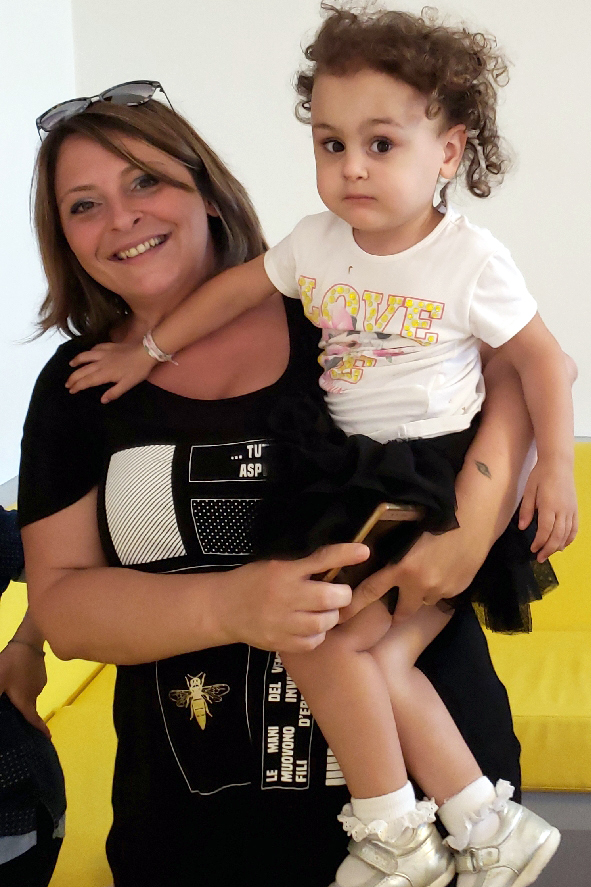
Vanna Pironato holds her 3-year-old daughter Amanda Paola Tagliaferri, the “miracle baby” whose life in the womb was protected through the intercession of soon-to-be St. Paul VI. (Courtesy of Cindy Leonard)

This summer I was blessed with being a part of the USCCB’s delegation at the five-day “‘Humanae Vitae’ Congresso Internazionale — The Fecundity of a Letter From the Future” which was organized for the 50th anniversary of Pope St. Paul VI’s prophetic document, in Brescia, Italy.

The last day of the congress was held in Concesio, Italy, the birthplace of Giovanni Battista Montini — who later became Pope Paul VI. There we heard from the Italian family about the last miracle accepted in Pope Paul’s cause for sainthood and got to meet Amanda Tagliaferri, the smiling toddler whose life was miraculously saved in the womb through his intercession. Her mother, Vanna Pironato, was advised to have an abortion because of a premature break of amniochorial membranes, leading to a loss of amniotic fluid. She and her husband prayed daily for Paul VI’s intercession through a difficult pregnancy, and Amanda was born Christmas Eve, 2014. This led to his canonization Oct. 14.

We also toured the family house and saw the actual bed in which St. Paul VI was born. In that room, our little group of USCCB representatives prayed to Paul VI and asked him to bless Pope Francis, especially to help him continue the legacy of life and love he gave to the world 50 years ago in his prophetic encyclical, “Humanae Vitae.”

The new saint’s encyclical invited faithful Catholics to develop family planning methods in conformity to Church teaching, leading to the development of Natural Family Planning.

Approximately 200 participants attended the congress that included talks reflecting on the themes of the 1968 encyclical with various speakers. Most were Catholic, but two couples from mixed marriages represented NFP use as an integral part of their faith: one as a Hindu and another as a Muslim. All shared honestly about the impact of integrating “Humanae Vitae” into their own marriages.

Cindy Leonard is the coordinator for the Diocese of Phoenix Office of Natural Family Planning.

We also presented our experiences in diocesan NFP ministry over the past 40 years, sharing how NFP ministry developed in the U.S., with the majority of early diocesan NFP leaders focusing on the science and methodology above Church teaching, reasoning that couples would welcome safe, natural and effective methods of family planning that were also moral.

Over the years, however, this approach proved to be inadequate. We’ve learned the importance of beginning with NFP education with Christian anthropology and the nature of marriage. When the faithful are provided with an opportunity to learn and reflect on God’s gifts of human sexuality, the nature of marriage, conjugal love and responsible parenthood, as well as the gift of human fertility and the value of children and family life, then the methods of NFP can be seen as a “skill set” which can help them remain faithful to their marital vows, be open to life and live God’s plan for married love and life. Many couples who come to us are un-churched and participating in the program opens the door for them to trust the faith in all of its dimensions.

Thanks to Bishop Thomas J. Olmsted’s new policy on marriage preparation eight years ago, we’ve been able to provide a thorough Christian foundation for NFP, and it’s made all the difference in couples joyfully accepting the challenges of living the NFP lifestyle in their marriages.

DIOCESE OF PHOENIX SHEPHERD SERIES

On Dec. 1 we will end the 2018 Shepherd Series with a practical afternoon meant as a renewal and refreshment for NFP couples. I hope many couples will come to renew their love and understanding of NFP; joining me, Fr. Charlie Goraieb, Steve and Becky Greene and our NFP-only medical providers. We’ll also provide workshops for NFP use while breastfeeding, infertility support and practicing NFP during peri-menopause.

Registration links for this event and the Oct. 20 White Mass, hosted for all levels of medical providers and their spouses, can be found at dphx.org/shepherd-series. This year’s White Mass will feature keynote speaker Fr. Peter Short, the vicar general of the Diocese of Gallup who will present on the relationship between Pope St. Paul VI’s “Humanae Vitae” and Pope St. John Paul II’s Theology of the Body.

Campaña fortifica instalaciones y comunidad de Santa Margarita

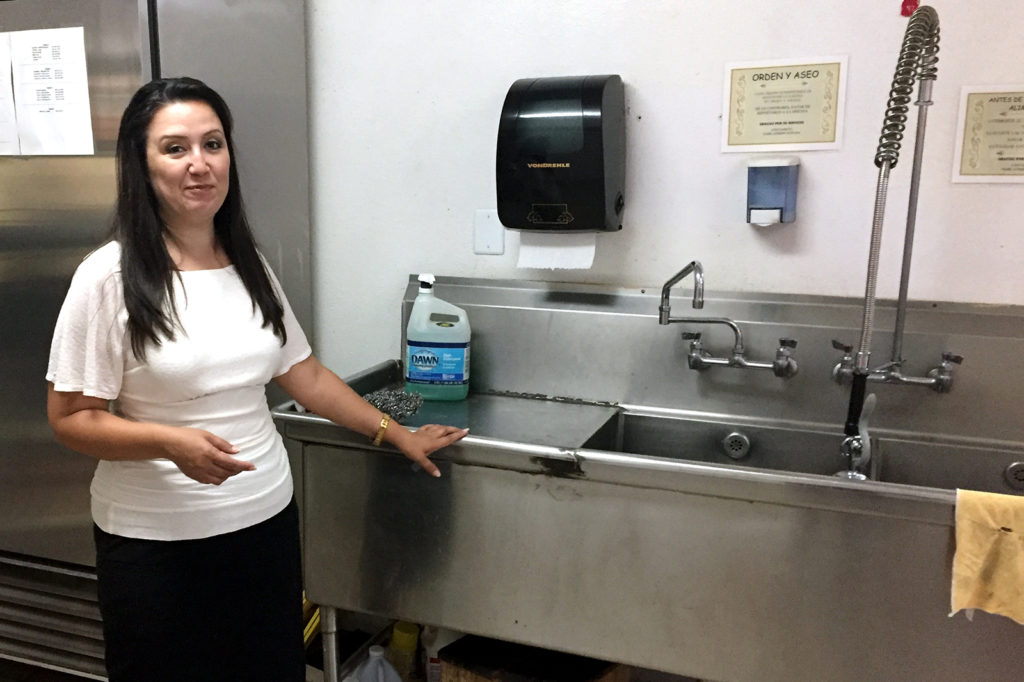
Maria Avalos, office manager at St. Margaret, helps prepare the menudo breakfast on Sundays in a kitchen in need of remodeling. (Joyce Coronel/CATHOLIC SUN) María Avalos, manager de la oficina de Santa Margarita, ayuda a preparar el menudo para desayunos los domingos, en unca cocina que necesita remodelación. (Joyce Coronel/CATHOLIC SUN)
María Avalos, manager de la oficina de Santa Margarita, ayuda a preparar el menudo para desayunos los domingos, en una cocina que necesita remodelación. (Joyce Coronel/CATHOLIC SUN)
MÁS INFORMACIÓN

Escondida en Tempe, la Parroquia Santa Margarita María Alacoque pasó 14 años sin un párroco. En estos días, la iglesia floreciente es el hogar de aproximadamente 2,500 familias que adoran al Señor principalmente en español. Ahora, tienen un líder y los desafió a salir en la fe.

Por los Números
2,678

Número total de familias

125

Número total de voluntarios parroquiales

63

Número total de la primeras comuniones en 2018

1972

Año que la parroquia fue establecida

7

Número total de voluntarios sirviendo en clases de educación as noches de los viernes

29

Número total de lectores

El P. Jesús Alfredo Quezada ha sido el administrador parroquial durante los últimos cuatro años. “Está muy involucrado con la parroquia”, dijo Martha Gámez, de la Oficina de Promoción de la Misión para la Diócesis de Phoenix. “Él tiene una clase cada semana y trae un altavoz cada semana también”.

Cuando ya era hora de que Santa Margarita participara en la campaña “Together Let Us Go Forth ~ Juntos Sigamos Adelante”, el P. Quezada estaba un poco preocupado, dijo Gámez. ¿Cómo podría una parroquia tan humilde cumplir su meta cuando parecía tan alta?

“Creo que todos subestimamos el sentido de comunidad que existe allí”, dijo Gámez. “Había un sentido de comunidad allí antes, pero esta campaña realmente los reunió para apoyar a la parroquia y a la Diócesis de Phoenix”.

Cuando los feligreses descubrieron que parte del dinero que recaudarían estaba destinado a quedarse en Santa Margarita, se vendieron en la idea. El salón de la parroquia y la cocina no están al tanto del código y necesitan remodelaciones.

“Una de las cosas que realmente resonó en ellos fue el hecho de que estamos construyendo algo para las generaciones futuras”, subrayó Gámez. “Realmente se concentraron en ese tema específico”.

El salón está ocupado siete días a la semana con clases de catecismo, un grupo de Cursillo, formación, un grupo de oración y cuidado infantil para parejas casadas que se reúnen en la iglesia los lunes. También hay una clase que se reúne los viernes para aquellos que no han terminado la escuela primaria o secundaria. Los feligreses están enseñando y con la ayuda del Consulado Mexicano, los participantes están recibiendo crédito por el curso. Los domingos por la mañana, las familias se reúnen en el vestíbulo para un desayuno comunitario de menudo, burritos, tacos y otras comidas mexicanas.

Parroquia Santa Margarita María Alacoque
2435 E. McArthur Dr., Tempe
El misión de la parroquia es edificar el Cuerpo de Cristo realzando la vida espiritual, por medio de la adoración, educación y el servicio.
Misa Dominical (en español):
  • 6 p.m. (sábado)
  • 8 a.m.
  • 10 a.m.
  • 12 p.m. (ingles)
  • 5 p.m.
Horarios de confesión
  • 7 p.m., jueves
  • 7 p.m., sábado
  • 5 p.m., domingo (durante la Misa)
(480) 967 0379

MÁS INFORMACIÓN

“La cocina no está al día”, dijo Gámez. “No hay capucha ni sistema de rociadores, esa es una de las razones por las que no pudieron estar asegurados. El piso necesita algunas reparaciones también.

El P. Quezada oró para que los feligreses respondieran bien y lo hicieron. En su fase introductoria — con una presentación a algunos de los donantes más grandes de la iglesia, 70 por ciento de la meta fue satisfecha. El primer fin de semana la campaña sobrepasó a la comunidad parroquial más amplia, estaban en el 178 por ciento de la meta.

“Tenemos parroquias que después de seis meses sólo pueden llegar al 25 por ciento”, dijo Gámez.

El P. Quezada dijo que la campaña está ayudando a la parroquia a crecer porque está ayudando a la gente a darse cuenta de que son parte de una Iglesia más amplia. “Estamos creciendo en solidaridad”, manifestó.

Más allá de eso, señaló, la campaña ayuda a la gente a poner en práctica el mandamiento de Jesús de amar. “El amor no es sólo algo que se habla, el amor se pone en práctica y esta campaña es el fruto del amor. Así que, cuando participamos en esta campaña, estamos expresando amor por Dios y por nuestros vecinos. No sabemos a quién estamos ayudando — no los hemos conocido — pero conocemos a Dios”.

Campaign fortifies St. Margaret’s facilities, parish community

Maria Avalos, office manager at St. Margaret, helps prepare the menudo breakfast on Sundays in a kitchen in need of remodeling. (Joyce Coronel/CATHOLIC SUN) María Avalos, manager de la oficina de Santa Margarita, ayuda a preparar el menudo para desayunos los domingos, en unca cocina que necesita remodelación. (Joyce Coronel/CATHOLIC SUN)
Maria Avalos, office manager at St. Margaret, helps prepare the menudo breakfast on Sundays in a kitchen in need of remodeling. (Joyce Coronel/CATHOLIC SUN)
MORE INFORMATION

Tucked away in Tempe, St. Margaret Mary Alacoque Parish spent 14 years without a pastor. These days, the burgeoning church is home to roughly 2,500 families who worship the Lord mostly in Spanish. Now, they have a leader and he’s challenged them to step out in faith.

By the Numbers
2,678

Total number of families

125

Total number of parish volunteers

63

Total number of First Communions in 2018

1972

Year parish was established

7

Total number of volunteers serving in Friday education classes

29

Total number of lectors

Fr. Jesús Alfredo Quezada has been the parochial administrator for the last four years. “He’s very involved with the parish,” said Martha Gamez of the Mission Advancement Office for the Phoenix Diocese. “He has a class every week and brings a speaker every week as well.”

When it was time for St. Margaret to participate in the “Together Let us Go Forth ~ Juntos Sigamos Adelante” campaign, Fr. Quezada was a bit worried, Gamez said. How could such a humble parish meet its goal when it seemed so high?

“I think we all underestimated the sense of community that exists there,” Gamez said. “There was a sense of community there before but this campaign really brought them together to support the parish and the Diocese of Phoenix.”

When parishioners discovered that part of the money they would raise was destined to stay at St. Margaret’s, they were sold on the idea. The parish hall and kitchen are not up to code and in need of remodeling.

“One of the things that really resonated with them was the fact that we are building something for future generations,” Gamez said. “They really came together on that specific topic.”

The hall is busy seven days a week with catechism classes, a Cursillo group, formation, a prayer group and childcare for married couples who meet in the church on Mondays.

EN ESPAÑOL: Campaña fortifica instalaciones y comunidad de Santa Margarita

St. Margaret Mary Alacoque Parish
2435 E. McArthur Dr., Tempe
The mission of the parish is to build the Body of Christ by enhancing the spiritual life through worship, education and service.
Sunday Mass Times (in Spanish, unless otherwise indicated):
  • 6 p.m. (Saturday)
  • 8 a.m.
  • 10 a.m.
  • 12 p.m. (English)
  • 5 p.m.
Confession Times
  • 7 p.m., Thursday
  • 7 p.m., Saturday
  • 5 p.m., Sunday (during Mass)
(480) 967 0379​

MORE INFORMATION

There’s also a class that meets on Fridays for those who haven’t finished elementary school or junior high. Parishioners are teaching and with help from the Mexican Consulate, participants are receiving credit for the course. On Sunday mornings, families gather in the hall for a community breakfast of menudo, burritos, tacos and other Mexican fare.

“The kitchen is not up to date,” Gamez said. “There’s no hood or sprinkler system — that’s one of the reasons they could not get insured. The floor needs some repairs as well.”

Fr. Quezada prayed that parishioners would respond well and they did. In its introductory phase — with a presentation to some of the church’s larger donors, 70 percent of the goal was met. The first weekend the campaign hit the wider parish community, they were at 178 percent of the goal.

“We have parishes that after six months can only get to 25 percent,” Gamez said.

Fr. Quezada said the campaign is helping the parish to grow because it’s helping people to realize they are part of a wider Church. “We are growing in solidarity,” Fr. Quezada said.

Beyond that, he said, the campaign helps people put into practice Jesus’ command to love. “Love isn’t just something that’s spoken — love is put into practice and this campaign is the fruit of love. So, when we participate in this campaign, we are expressing love for God and for our neighbors. We don’t know who we are helping — we haven’t met them — but we know God.”

‘Watering down’ Church teaching won’t attract young people, cardinal says

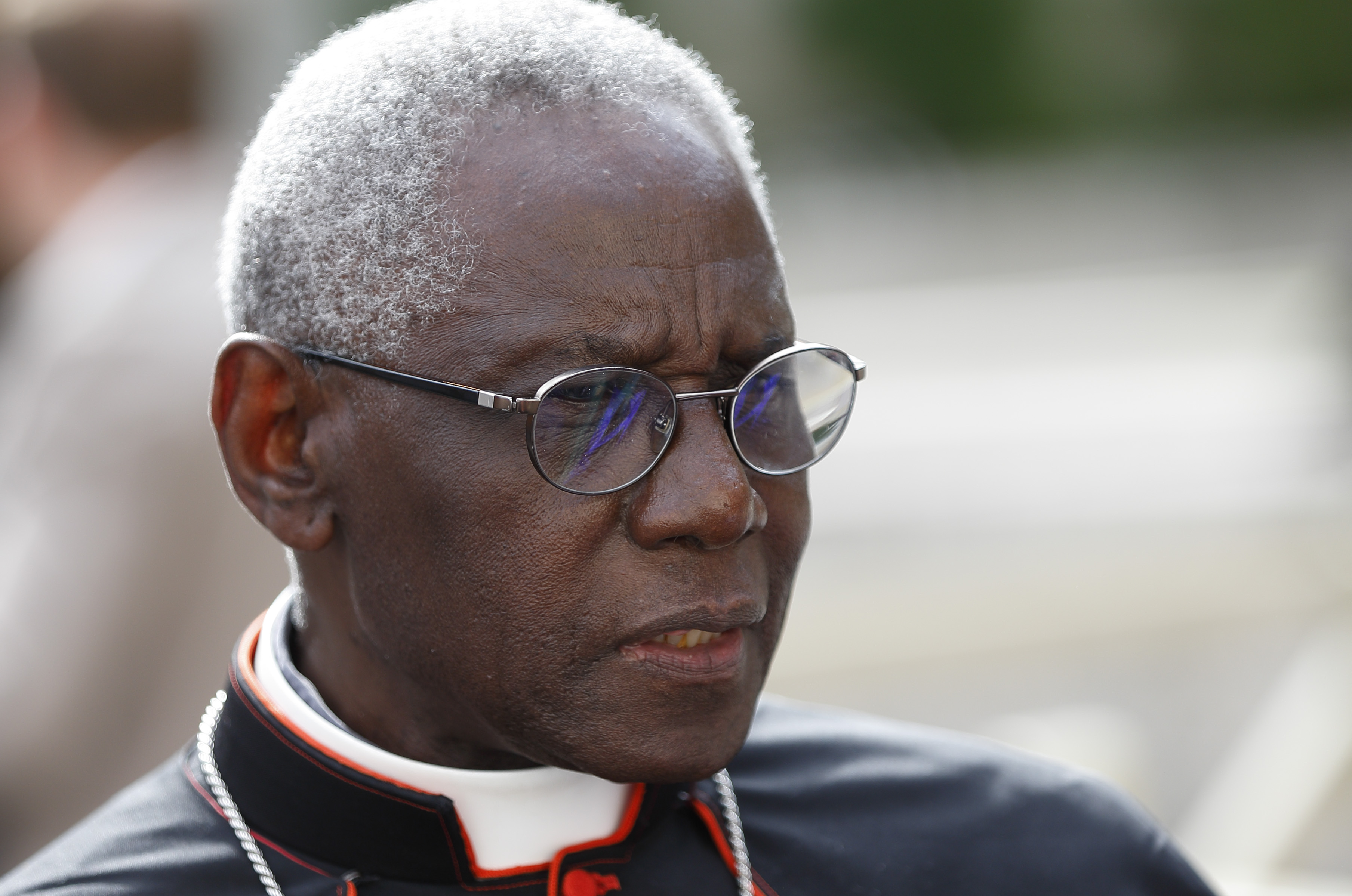
Cardinal Robert Sarah, prefect of the Congregation for Divine Worship and the Sacraments, is pictured after a session of the Synod of Bishops on young people, the faith and vocational discernment at the Vatican Oct. 16. Cardinal Sarah told the synod that just because some young people disagree with Catholic morality does not mean the church's teachings are unclear or should change. (Paul Haring/CNS) See SYNOD-SARAH-MORALITY Oct. 16, 2018.
Cardinal Robert Sarah, prefect of the Congregation for Divine Worship and the Sacraments, is pictured after a session of the Synod of Bishops on young people, the faith and vocational discernment at the Vatican Oct. 16. Cardinal Sarah told the synod that just because some young people disagree with Catholic morality does not mean the church’s teachings are unclear or should change. (Paul Haring/CNS)

By Cindy Wooden
Catholic News Service

VATICAN CITY (CNS) — Just because some young people disagree with Catholic moral teaching, including in the area of sexuality, does not mean the Church’s teachings are unclear or should change, Cardinal Robert Sarah told the Synod of Bishops.

The Church and its pastors should “courageously propose the Christian ideal corresponding to Catholic moral doctrine and not water it down, hiding the truth to attract young people to the bosom of the Church,” the cardinal told the synod Oct. 16.

Cardinal Sarah, prefect of the Congregation for Divine Worship and the Sacraments, noted how in preparation for the synod, some young people asked the Church to be clear in presenting its teaching on “some questions that are particularly close to their hearts: freedom across the board and not only in sexual relations, nondiscrimination based on sexual orientation, equality between men and women, including in the Church, etc.”

Others, however, “demand not only a discussion that is open and without prejudice, but also a radical change, a real and true U-turn by the Church in its teaching in these areas,” he said.

The Church’s teaching may not be shared by everyone, the cardinal said, but no one can say that it is not clear. However, there may be “a lack of clarity on the part of some pastors in explaining the doctrine” and that requires “a profound examination of conscience.”

Cardinal Sarah pointed to the Gospel story of the rich young man who asked Jesus what he must do to obtain eternal life; Jesus told him to sell all he had and follow Him.

“Jesus did not lower the requirements of His call” and neither should the Church, the cardinal said.

In fact, he said, one characteristic of young people is their idealism and lofty goals, not only regarding their professional and personal ambitions, but also in the areas of “justice, transparency in the fight against corruption (and) in respect for human dignity.”

“Undervaluing the healthy idealism of the young” is a serious error and sign of a lack of respect, he said. It also “closes the door to a real process of growth, maturation and holiness.”

On the other hand, the cardinal said, “by respecting and promoting the idealism of young people, they can become the most precious resource for a society that wants to grow and improve.”

Feast of St. Margaret Mary Alacoque

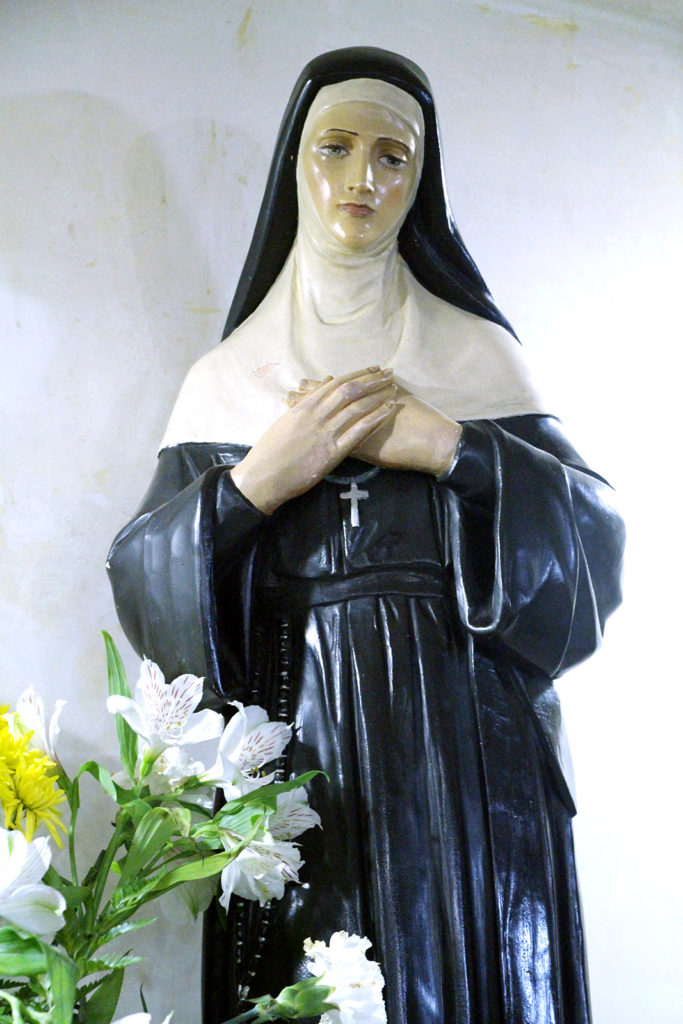
This statue of St. Margaret Mary Alaquoce can be found at the parish bearing her name in Tempe. (Ambria Hammel/CATHOLIC SUN)

Oct. 16

This French saint, who increased devotion to the Sacred Heart of Jesus, spent her life in Burgundy. A pious child, Margaret was bedridden from ages 9 to 15 with a rheumatic illness.

She gradually understood a call to religious life and already had a mature prayer life when she entered a Visitation convent near Lyon in 1671. Between 1673 and 1675, she received four visions of Christ’s heart in flames, burning with love for humanity, with instructions to promote a special feast and First Friday devotions.

Margaret, aided by a Jesuit priest, overcame disbelief and jealousy within her own convent and saw the feast celebrated there and in other French Visitation convents in her lifetime. She was canonized in 1920.

She is the patroness of St. Margaret Mary Parish in Bullhead City and St. Margaret Maria Alacoque Parish in Tempe.

El Salvador celebrates its first saint, whose legacy continues

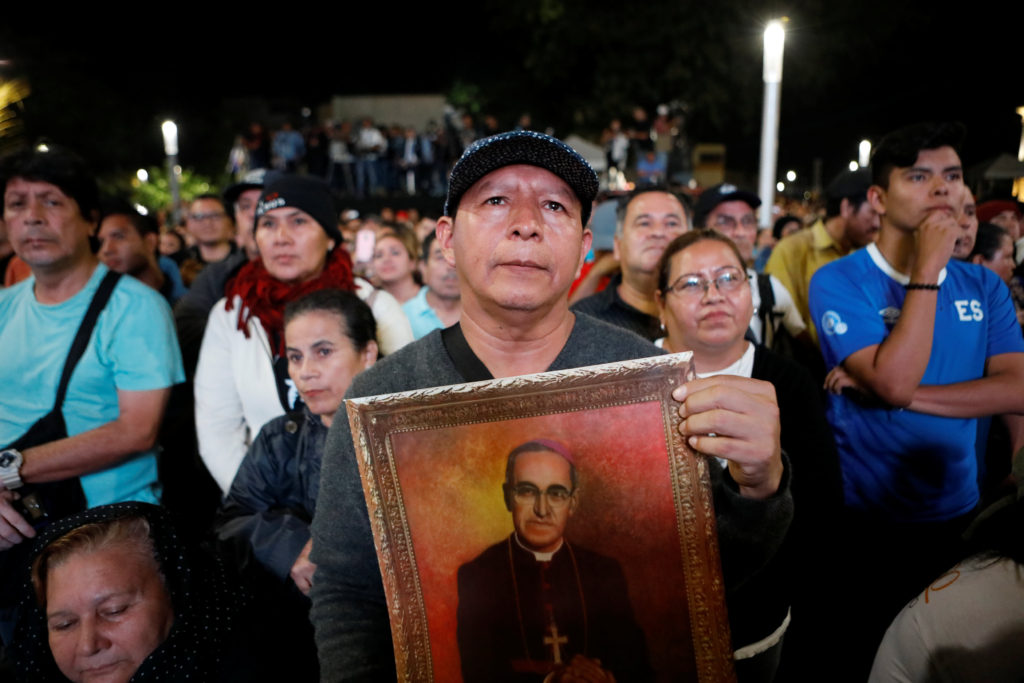
People attend a ceremony at Gerardo Barrios Square in San Salvador, El Salvador, in this Oct. 14, 2018 file photo, as Pope Francis celebrates the canonization Mass for St. Oscar Romero and six other new saints in St. Peter's Square at the Vatican. (Jose Cabezas/CNS, via Reuters) See ROMERO-SALVADOR Oct. 14, 2018.
People attend a ceremony at Gerardo Barrios Square in San Salvador, El Salvador, Oct. 14, as Pope Francis celebrates the canonization Mass for St. Oscar Romero and six other new saints in St. Peter’s Square at the Vatican. (Jose Cabezas/CNS, via Reuters)

By David Agren
Catholic News Service

SAN SALVADOR, El Salvador (CNS) — Near the end of his homily at a Mass just prior to St. Oscar Romero’s canonization, Jesuit Father Jose Maria Tojeira yelled to the crowd outside the Metropolitan Cathedral: “¡Viva Monsenor Romero! (Long live Archishop Romero!)”

The overflow crowed lustily yelled back, “¡Que Viva! (Long live!)”

“We’re not venerating a body,” Fr. Tojeira said, “rather someone who is alive, together with God and in the hearts of all Christians that want to continue with the reality of the Gospel.”

During the Oct. 14 Mass at the Vatican — very early morning in El Salvador — Salvadorans gathered in the square outside Holy Savior Cathedral to watch the ceremony on big screens; others watched in their parishes.

St. Romero was shot dead while celebrating Mass March 24, 1980. His legacy of showing a preference for the poor and promoting peace lives on in his native El Salvador, where, even in death, he plays an outsized role in the country’s public life and occupies a special place in its collective consciousness — for devotees and detractors alike.

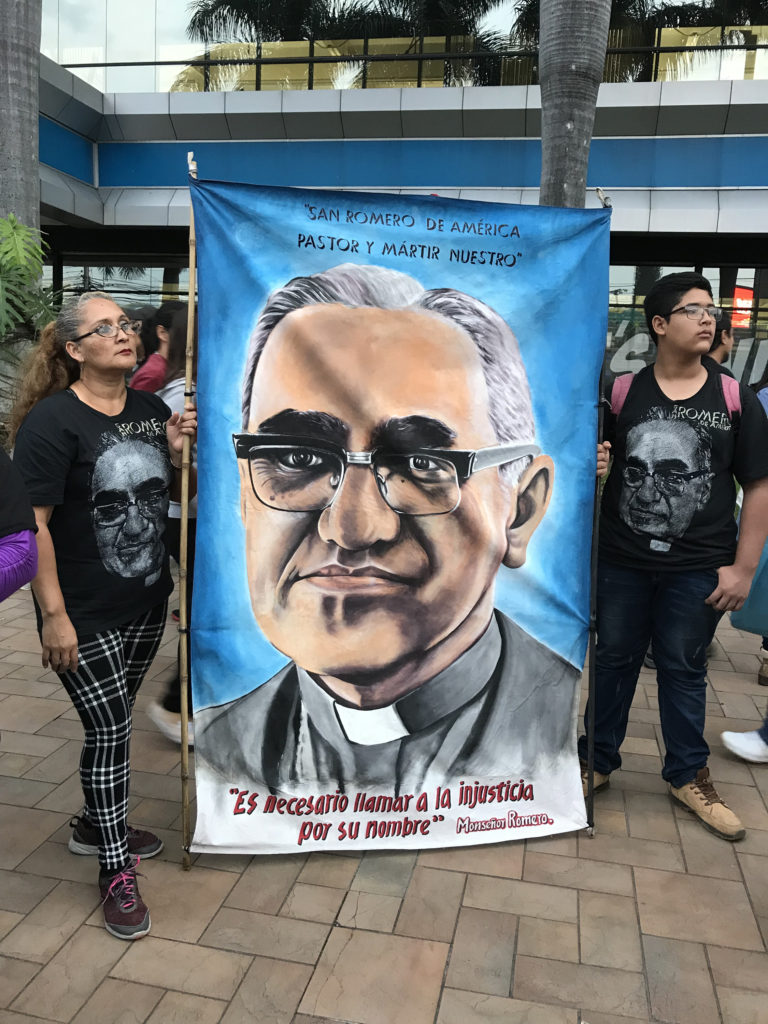
A woman and young man hold a banner of St. Oscar Romero Oct. 13 in San Salvador, El Salvador. Pope Francis celebrated the canonization Mass for St. Oscar Romero and six other new saints in St. Peter’s Square Oct. 14 at the Vatican. (David Agren/CNS)

He becomes El Salvador’s first saint. But his current role in the country transcends religion. He also has assumed the status of national hero, whose words — spoken in homilies — sound prophetic and seem apt almost four decades after his death.

“He still is the most venerated and respected leader of the last 100 years, certainly the last 50 years,” said Rick Jones, youth and migration adviser for Catholic Relief Services in El Salvador.

“He’s still the sign post of what people are looking for in terms of some voice that talks about reconciliation, justice and hope for nonviolent transformation.”

St. Romero’s slaying came as the country was on the cusp of civil war, which roared through the 1980s. His canonization comes as the country convulses with violence, much of it attributed to gangs preying on populations living in barrios under their control.

As archbishop of San Salvador, the national capital, St. Romero accompanied the poor at a time when some two-thirds of the population lived in poverty. He also voiced people’s demands for better wages and criticisms of the “oligarchy” — as the elites were caustically called — at a time when his critics considered such talk “communist.” He also called for a suspension of U.S. military assistance.

The poverty and inequality St. Romero spoke out against are still rife in 2018. Many Salvadorans also still flee the country to escape the violence and indignities, causing his words to resonate with younger generations and even some evangelicals and atheists.

“What he said is still valid. His words still carry enormous weight,” said Douglas Martinez, a vendor in San Salvador. “He was practically a prophet on this earth.”

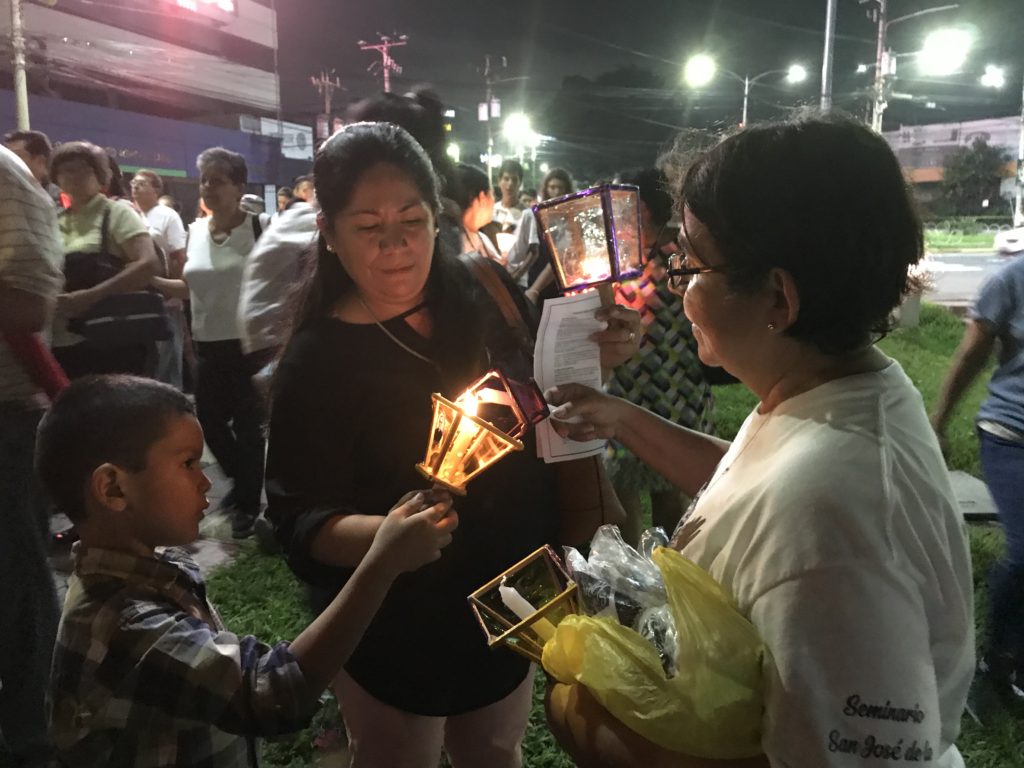
Parishioners from the San Jose de la Montana church in San Salvador, El Salvador, light candles during an Oct. 14 vigil ahead the canonization of St. Oscar Romero. Pope Francis celebrated the canonization Mass for St. Oscar Romero and six other new saints in St. Peter’s Square Oct. 14 at the Vatican. (David Agren/CNS)

Canonization was never certain for St. Romero, though some in the country have long considered him a saint.

“For me and for many people in the country — a good number of people with a social commitment — Bishop Romero has been a saint since his martyrdom, and now it’s going to be the formal act,” said Gabina Dubon, coordinator of the transformational social ministry in Caritas El Salvador.

“In that time there was no freedom of expression. He became a voice for those without a voice, a defender of life, dignity, solidarity and the common good.”

St. Romero served only three years as archbishop of San Salvador, yet he left a legacy via his homilies, which were broadcast across the country.

Participants in a procession to the cathedral carried signs with quotes culled from those homilies. “There’s no more diabolical sin than taking bread from the hungry,” read one sign. “It’s necessary to call injustice by its name,” read another.

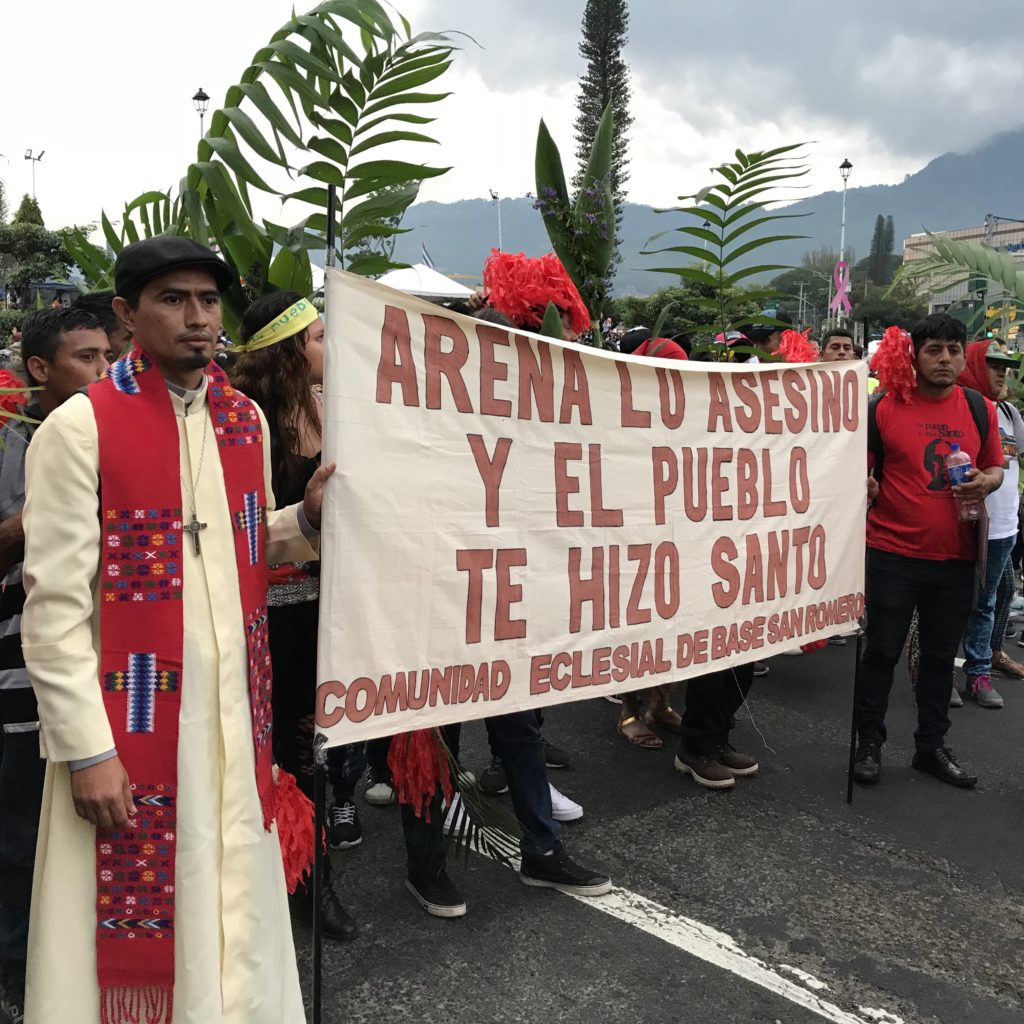
The celebrations carried political overtones for some. A U.N. truth commission named Roberto d’Aubuisson, an ex-army officer and founder of the conservative ARENA alliance, as the intellectual author of the murder. He died of cancer in 1992.

Fr. Neftali Ruiz carried a banner castigating ARENA, but saying of Romero, “The people made him a saint.”

Fr. Ruiz stood outside the same cathedral where tens of thousands of Salvadorans mourned St. Romero at his funeral. Snipers opened fire on the funeral, killing at least 40 people.

Father Neftali Ruiz holds a banner accusing the conservative ARENA alliance of being behind the murder of St. Oscar Romero. Pope Francis celebrated the canonization Mass for St. Oscar Romero and six other new saints in St. Peter’s Square Oct. 14 at the Vatican. (David Agren/CNS)

Only one Salvadoran bishop attended the funeral: Archbishop Arturo Rivera Damas, who was named St. Romero’s successor in San Salvador.

“He always defended Romero,” Fr. Tojeira said of Archbishop Rivera, “but speaking in confidence … he would say, ‘A bishop like Romero arrives every 500 years.’”

The St. Romero canonization showed how time had changed in the country and Church though, in an interview, Fr. Tojeira quipped of St. Romero’s critics, “They used to say ‘communist.’ They now have a little more civilized discourse but continue being similar.”

Celebrations of the canonization occurred in dioceses across El Salvador — even in San Vicente, where priests would bless army helicopters during the civil war. Fr. Ruiz recalled being expelled from the minor seminary there in 2000 for refusing to stop displaying an image of St. Romero.

Today, images of St. Romero grace everything from postage stamps to murals to the walls of the presidential palace to political ads, as the ruling party attempts to capitalize on his popularity and incorruptible reputation.

That politicians try to appropriate St. Romero’s image bothers some devotees as crime, corruption and poverty persist at alarmingly high levels. St. Romero also criticized both sides of the political spectrum.

“(Politicians) don’t practice what he preached,” said Elsy Cornejo, who was selling CDs of St. Romero’s homilies. “He spoke of peace and accompanying the poor.”

With the murder rate in El Salvador ranking among the highest in the world and gangs preying on poor barrio dwellers with crimes such as extortion and the forced recruitment of teenagers, Cornejo added, “We’re also practicing very little of what he preached.”

Church observers expressed hope St. Romero’s canonization could bring unity to a country with polarized politics and offer a possibility of improvement.

“He presents a figure for reconciliation,” Jones said, “and a different way to move forward other than … just the left or the right.”

La fe proclamada y vivida

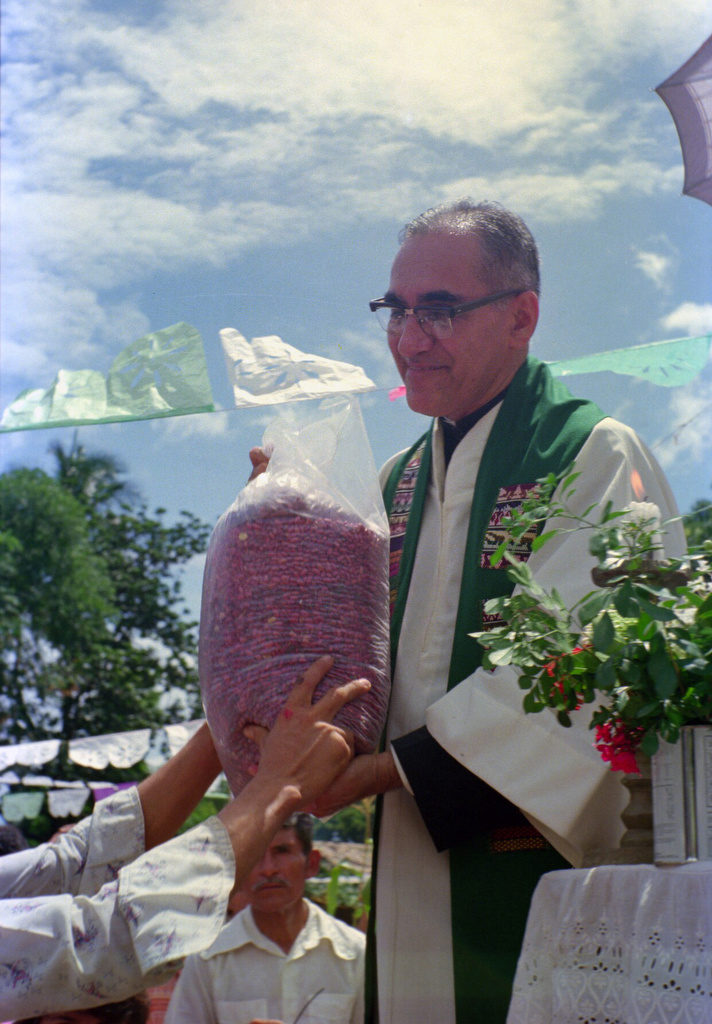
Archbishop Oscar Romero receives a sack of beans from parishioners following Mass outside of the church in San Antonio Los Ranchos in Chalatenango, El Salvador, in 1979. The Mass was held outdoors for fear of possible violence by the Salvadoran military. Before arriving at the church, the archbishop's delegation was detained by armed military for about 20 minutes. (Octavio Duran/CNS) See ROMERO-DURAN Jan. 14, 2015.
El Arzobispo Óscar Romero recibe una bolsa de frijoles desde fieles después de una Misa afuera de la Parroquia San Antonio Los Ranchos en Chalatenango, El Salvador, en 1979. El arzobispo salvadoreño fue martirizado el 24 de marzo y canonizado como santo por el Papa Francisco el 14 de octubre. (Octavio Duran/CNS)

Cualquier peregrino que llegue ante de la Basílica de San Pedro en Roma inmediatamente siente una sensación de alegría y majestad, ante las inmensas proporciones y calidad excepcional del arte y la arquitectura. Pero el punto central de la Basílica es el Altar de la Confesión, construida sobre la tumba de San Pedro. A lo largo de los siglos, millones de peregrinos se han arrodillado ante la tumba del Apóstol para profesar su fe como Pedro lo hizo por el derramamiento de su sangre en la Colina Vaticana durante la persecución del Emperador Nerón. Allí en el Altar de la Confesión, como muchas generaciones de cristianos, recitamos con fe el Credo de los Apóstoles: “Creo en Dios, Padre Todopoderoso …

La fe escrita en la sangre de los mártires

“Credo” — creo — es la palabra con la cual cada cristiano comienza su profesión de fe. Lo escuchamos a menudo; la mayoría de nosotros lo sabemos de memoria. Cuando recitamos el Credo cada domingo, profesamos y hacemos lo nuestro la fe una, santa, católica y apostólica en que los cristianos de todas las edades han creído. A través del Credo estamos vinculados espiritualmente con una sola línea ininterrumpida que se extiende desde Jesús y los Apóstoles todo el camino hacia adelante a la Iglesia en nuestros días. Es la fe que viene a nosotros a través de dos mil años de fidelidad por parte de Dios y se ha formado por estudios humanos, debates intensos, oración prolongada e incluso violenta persecución y martirio.

El Reverendísimo Thomas J. Olmsted es le obispo de la Diócesis de Phoenix. Fue instalado como el cuatro obispo de Phoenix el 20 de diciembre de 2003, y es el líder espiritual de los 1,1 millones católicos en la diócesis.

La fe que profesamos en el Credo es una preciada herencia de que multitudes de mártires a través de las edades estaban dispuestos a sufrir tortura extrema y la muerte en lugar de negar su fe en el Señor. Para estos cristianos, era un asunto de enormes consecuencias. Profesar su fe en Cristo crucificado fue aceptar también las heridas que Él llevaba en Su cuerpo, es decir, compartir Su muerte humillante en la esperanza de compartir también en Su Resurrección gloriosa. Cada profesión era también una promesa de vivir por la enseñanza de Jesús, día a día, sabiendo que tal fidelidad los separaría del mundo. Habiendo recibido el don de conocer y experimentar a Cristo a través de la fe, los mártires fueron convencidos por Su verdad y sobre todo por Su amor; ellos sabían que no podían permanecer en silencio. Martirio es la más alta forma de profesar la fe. Como el Catecismo proclama (2473), “El martirio es el supremo testimonio de la verdad de la fe; designa un testimonio que llega hasta la muerte. El mártir da testimonio de Cristo, muerto y resucitado, al cual está unido por la caridad. Da testimonio de la verdad de la fe y de la doctrina cristiana”.

Sinopsis del Plan amoroso de Dios

La profesión de fe fue tan preciada a los mártires cristianos que optaron por no considerar su bienestar o su propia supervivencia a ser de mayor valor. Para ellos, el Credo no era simplemente una lista de cosas que se supone debemos creer. Es una sinopsis de la historia redentora que narra cómo el plan amoroso de Dios para la humanidad desde la creación a la redención ha sido cumplido y cómo se llega a su consumación definitiva. Por su estructura el Credo nos obliga a ver la fe como parte de un cuadro más grande, parte de los grandes propósitos de Dios.

El Credo nos recuerda quiénes somos como cristianos y lo que defendemos. Además, la experiencia de los mártires, su acto supremo de testimonio de la fe, no es sólo una característica de la Iglesia primitiva pero marca cada período de la historia de la Iglesia, incluyendo nuestro propio. En el último siglo y medio, tal vez incluso más que en los primeros siglos del cristianismo, en todos los continentes, incontables cristianos han demostrado su amor por Cristo al aguantar Númerosas formas de persecución.

Profesar la fe a toda costa

Como los primeros cristianos, nuestros tiempos actuales se caracterizan por una agresiva negación de Dios en el que se reemplazó por riquezas, poder y placeres de este mundo. El mundo prefiere que vivamos por sus estándares más bien que el Evangelio de Jesús. Donde Cristo elogia la mansedumbre y la humildad, el mundo menosprecia la debilidad y ensalza a los poderosos. Donde Cristo anima a luto y dolor por el pecado, el mundo permite pasar el placer y la vanidad. Donde Cristo promete bendiciones a quienes buscan justicia y derecho, el mundo ofrece gratificación en la indulgencia del pecado. Donde Cristo nos invita a perdonar y mostrar misericordia, el mundo busca venganza y retribución. Donde Cristo bendice a los puros de corazón, el mundo se burla de la castidad y pone el hedonismo sexual como un dios falso. En definitiva, el mundo no simplemente rechaza el Evangelio de Cristo, se opone agresivamente a los que no aceptan su secularismo. Por lo tanto, cualquier persona sincera y totalmente comprometida a Cristo encuentra innumerables obstáculos en el camino y enfrenta dificultades constantes que exigen virtudes heróicas para resistir. Estos desafíos nos tientan a ceder, cambiar nuestro estilo de vida y hacer concesiones. Como Jesús nos prometió desde el inicio, la fidelidad a Él supone la Cruz.

Claramente, profesando nuestra fe en Cristo y Su Cuerpo la Iglesia no es sólo una breve ceremonia en el momento del bautismo o en la Misa del domingo. No es algo que hacemos sólo en un servicio litúrgico y luego rápidamente olvidarse de ella. ¡No, de ninguna manera! Profesar el Credo ante el pueblo de Dios es una de las muchas maneras en que defendamos nuestra fe. Se extiende a todas las instancias de nuestra vida; está involucrado todo nuestro ser. Creemos con nuestro corazón, confesar con nuestros labios y luego vivir con integridad el gran don de la fe en Dios uno y trino. En otras palabras, adherirse completamente al Credo resulta en un proceso continuo de transformación y conversión permanente, que cambia y nos renueva en la imagen de Cristo. Nos esforzamos para poner en la mente y el corazón a Cristo en temporada y fuera de temporada.

A pesar de los muchos obstáculos que enfrentamos hoy en profesar y vivir nuestra fe, nunca hay que olvidar dos verdades importantes: En primer lugar, Jesús es el Señor de todo, porque Dios “puso todas las cosas bajo Sus pies y lo constituyó, por encima de todo” (Ef 1:22); y en segundo lugar, Dios es fiel y estará siempre con nosotros, hasta el final de los tiempos (cf. Mt 28:18ff).