

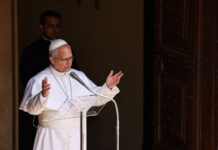
Pope Leo XIV in Castel Gandolfo: God’s kingdom grows in the ‘little things of...
CASTEL GANDOLFO, Italy, (OSV News) -- Catholics from every inhabited continent gathered in Castel Gandolfo July 19 as Pope Leo XIV led the Angelus prayer from the papal summer palace in the small Italian hill town, where the pope reflected on how the kingdom of God grows through "the little things of daily life."
For many in the crowd that stretched from the town square in front of the palace down its main street, it was their first glimpse of the American-born pope.
"It's our first time outside Brazil. So it's all amazing," Vínicius Marques Diniz, 22, who traveled from Campo Grande, Brazil, with his family, told OSV News. "I'm very happy with this new pope."
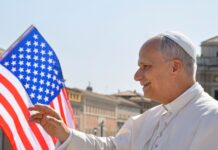
Pope Leo XIV’s letter marking the 250th anniversary of the founding of the United...
Pope Leo XIV's letter marking the 250th anniversary of the founding of the United States of America
I extend my heartfelt congratulations to all Americans on the occasion of the 250th anniversary of the signing of the Declaration of Independence. This semiquincentennial marks that defining moment in the history of the United States of America, July 4, 1776, that gave enduring voice to the ideals of liberty, equality, the pursuit of happiness, justice and democratic self-government.
For two and a half centuries, generations of Americans have worked together to carry these principles forward — through sacrifice, service, innovation and civic participation. This anniversary stands as an invitation not only to celebrate the nation’s remarkable journey, but also to reflect upon the responsibilities that the sons and daughters of this country bear to one another, and to the generations who will inherit the nation that is being shaped today.
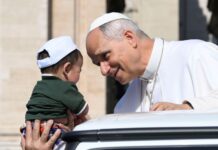
Eucharist transforms believers into Christ’s body and counters division, pope says
VATICAN CITY (CNS) -- Participation in the Eucharist transforms believers into the Body of Christ and offers a remedy to the divisions affecting families and communities, Pope Leo XIV said during his weekly general audience June 24. In his final general audience until Aug. 5, Pope Leo also encouraged young people to use the downtime of summer vacation to attend Mass, go to confession frequently, reflect on Scripture, go on spiritual retreats and pilgrimages and spend time with loved ones.
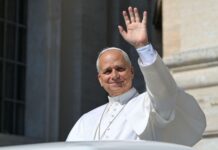
Pope reflects on Spain trip, says migration concerns call for Christians to reread the...
VATICAN CITY (CNS) -- Reflecting on his weeklong trip to Spain, Pope Leo XIV said one of his clearest impressions came from the Canary Islands, where migration revealed both the challenges facing Europe and what he described as a Christian path toward a "civilization of love." Speaking at his weekly general audience June 17, the pope said the archipelago's role as a gateway for thousands of migrants from Africa offered a "comprehensive insight" into a complex issue that also challenges Christians to reread the Gospel in today's world.
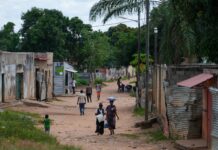
Pope Leo XIV address for World Day of the Poor
1. The Lord is a refuge for the poor (cf. Ps 14:6). The words of the Psalmist point the way forward as we prepare for the 10th World Day of the Poor. Once again, we must return to the Word of God to reaffirm the importance of the poor in the life of the Church. The words of the Psalm serve as a standard for Christian living because they reveal the face of God and acknowledge human poverty. Indeed, at a dramatic moment in history — the destruction of the Temple in Jerusalem — the people felt deprived of God’s presence and experienced unprecedented material and moral misery.
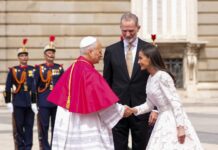
Secret to building peace lies in recognizing dignity of every person, pope tells lawmakers
MADRID (CNS) -- In a highly anticipated and historic speech to Spain's parliament, Pope Leo XIV urged modern-day leaders to be guided by ancient and Catholic principles that gave birth to universal human rights based on the inalienable dignity of the human person. While Church and state legitimately remain separate, many virtues and aims of good governance and just laws are rooted in values profoundly marked and inspired by the Christian tradition, he told hundreds of lawmakers and leaders of judiciary branches June 6 in Spain's Congress of Deputies.
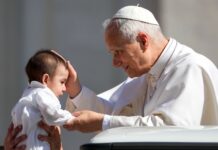
The liturgy sustains the faithful, renewing them in their faith, mission, pope says
VATICAN CITY (CNS) -- Christ is present in the liturgy -- in the word that is proclaimed, in the sacraments, in the ministers, in the community and most of all in the Eucharist, Pope Leo XIV said. "Let us allow ourselves to be shaped from within by the rites, symbols, gestures and above all by the living presence of Christ in the liturgy," he said during his general audience talk in St. Peter's Square May 20. Before the pope began his catechesis, he welcomed Armenian Apostolic Catholicos Aram I of Cilicia, who sat next to him during the audience.
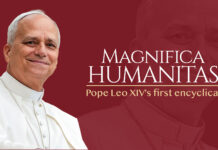
Pope Leo XIV’s first encyclical, Magnifica Humanitas
Pope Leo XIV shared his first encyclical on May 15, 2026, entitled Magnifica Humanitas (The Magnificence of the Human Person).
Bishop Peter Dai Bui helps us understand how this letter fits into the writings of previous popes — Pope Leo XIII, Pope St. John XXIII, Pope St. Paul VI and Pope St. John Paul II — each of whom responded to the challenges of his times with one or more encyclicals.
Today, Pope Leo XIV does the same for us.

Pope explains concerns about AI
VATICAN CITY (CNS) -- Pope Leo XIV said a proposal to create an AI-version of him so people could have a virtual audience with the pope pretty much horrified him.
"If there's anybody who should not be represented by an avatar, I would say the pope is high on the list," he said in an interview with Elise Allen, a journalist and author.
Catholic Teaching Regarding Nuclear Weapons
I write to you as a pastor and as a fellow disciple of Jesus Christ, one who shares your concern for the moral challenges of our time. As Archbishop of Santa Fe, I have prayed deeply about the continued existence of nuclear weapons and what our faith requires of us in response. I am convinced that this issue is not peripheral to our Catholic life—it goes to the very heart of who we are as a people committed to the Gospel of peace. The Church teaches, and has always taught, that every human person is created in the image and likeness of God (cf. Catechism of the Catholic Church [CCC], 1700). From this foundational truth flows the absolute dignity of human life. Nuclear weapons, by their very nature, stand in direct contradiction to this dignity. Their destructive force is indiscriminate, incapable of distinguishing between combatant and noncombatant. As the Catechism reminds us, “every act of war directed to the indiscriminate destruction of whole cities… is a crime against God and man” (CCC, 2314). Nuclear weapons represent the extreme embodiment of this moral disorder.
