
Faith proclaimed and lived

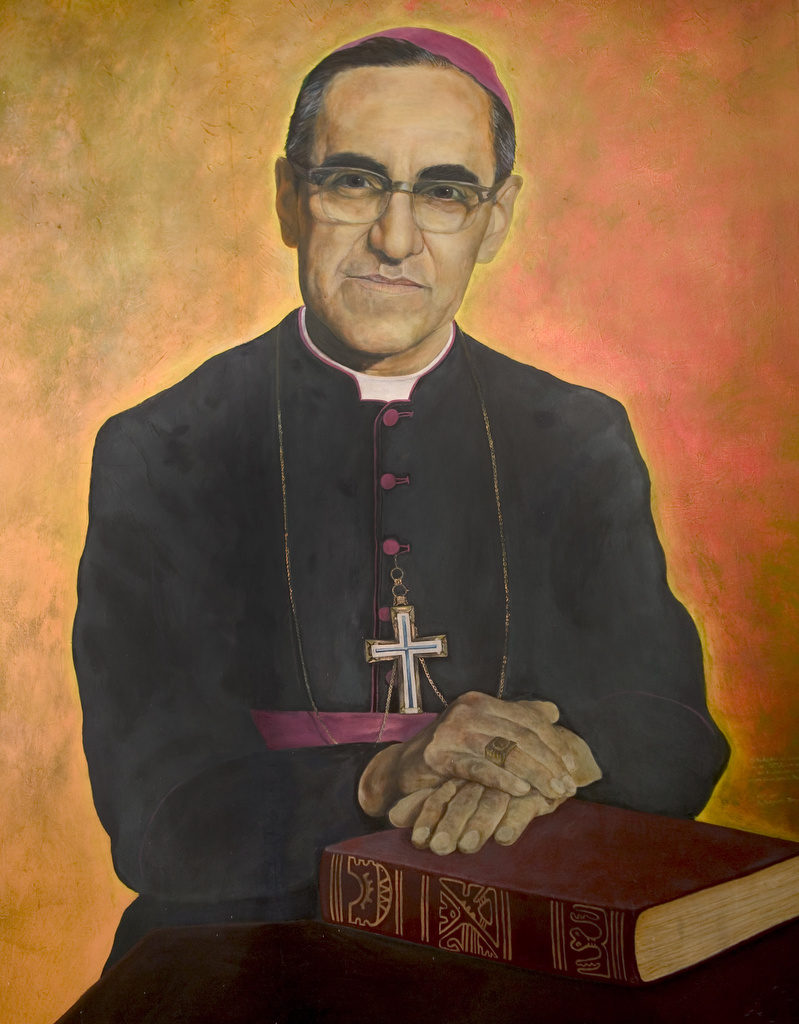
This painting of Salvadoran Archbishop Oscar Romero is located in the lower level of the Cathedral of San Salvador. (CNS photo/Octavio Duran) See VATICAN LETTER Feb. 5, 2015, ROMERO-BEATIFICATION Feb. 4, 2015, and POPE-ROMERO Feb. 3, 2015.
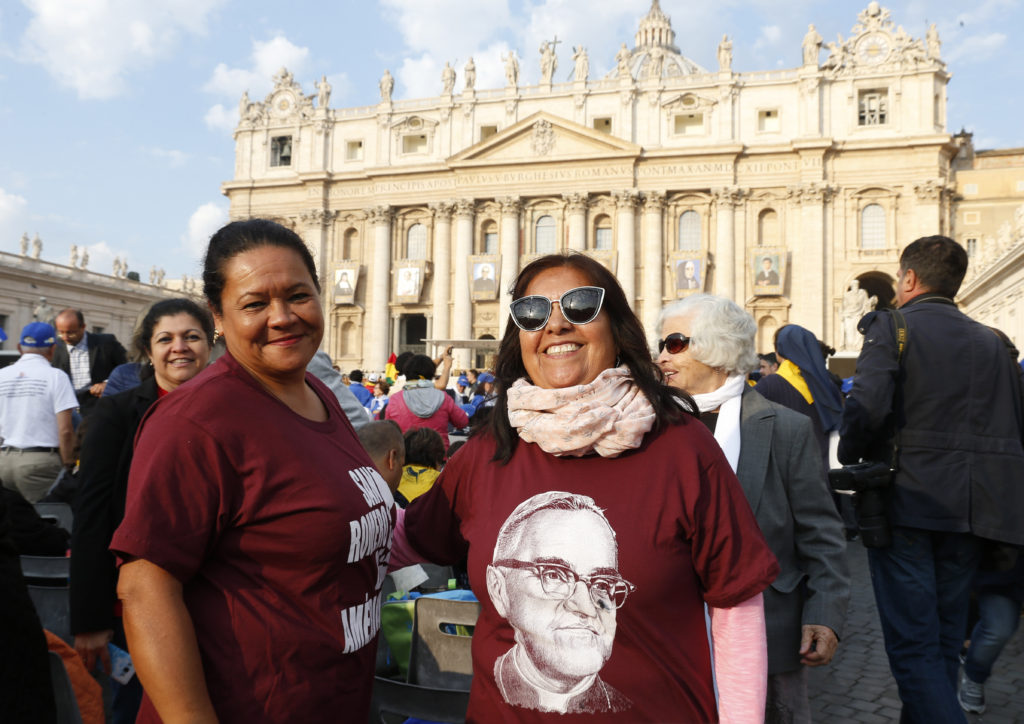
This painting of St. Oscar Romero is located in the lower level of the Cathedral of San Salvador. The Salvadoran archbishop was martyred March 14, 1980, and canonized by Pope Francis Oct. 14. (Octavio Duran/CNS)

Any pilgrim arriving before St. Peter’s Basilica in Rome immediately feels a sense of joy and majesty, before the immense proportions and exceptional quality of the art and architecture. But the focal point of the whole Basilica is the Altar of Confession, built over the tomb of St. Peter. Throughout the centuries, millions of pilgrims have knelt before the Apostle’s tomb to profess their faith just as Peter did his by the shedding of his blood on Vatican Hill during the persecution of the Emperor Nero. There at the Altar of Confession, like many generations of Christians before us, we prayerfully recite the Apostles’ Creed: “I believe in one God, the Father Almighty …

Faith written in the Blood of Martyrs

“Credo” — I believe — is the word with which every Christian begins his or her profession of faith. We hear it often; most of us know it by heart. When we recite the Creed each Sunday, we solemnly profess and make our own the one, holy, Catholic and Apostolic faith which Christians of all ages have believed. Through the Creed we are spiritually linked in a single unbroken line that stretches from Jesus and the Apostles all the way forward to the Church in our day. It is the faith that has come to us through two thousand years of fidelity on God’s part, and been shaped by human study, intense debates, prolonged prayer and even violent persecution and martyrdom.
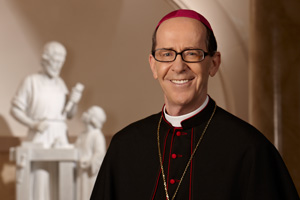
The Most Rev. Thomas J. Olmsted is the bishop of the Diocese of Phoenix. He was installed as the fourth bishop of Phoenix on Dec. 20, 2003, and is the spiritual leader of the diocese’s 1.1 million Catholics.

The faith that we profess in the Creed is such a precious heritage that multitudes of martyrs down through the ages were willing to suffer extreme torture and death rather than deny their belief in the Lord. For these Christians, it was a matter of enormous consequences. To profess their faith in Christ Crucified was to accept also the wounds that He bore in His body, that is, to share in His humiliating death in the hope of a share also in His glorious Resurrection. Every profession was also a pledge to live by Jesus’ teaching, day by day, knowing such fidelity would separate them from the world. Having received the gift of knowing and experiencing Christ through faith, the martyrs were won over by His truth and above all by His love; they knew they could not remain silent. Martyrdom is the highest form of professing one’s faith. As the Catechism proclaims (2473), “martyrdom is the supreme witness given to the truth of the faith: it means bearing witness even unto death. The martyr bears witness to Christ who died and rose, to whom he is united by charity. He bears witness to the truth of the faith and of Christian doctrine.”

EN ESPAÑOL: La fe proclamada y vivida

Synopsis of God’s Loving Plan

The profession of faith was so precious to Christian martyrs that they chose not to consider their own well-being or their own survival to be of greater value. For them, the Creed was not simply a checklist of things that we’re supposed to believe. It is a synopsis of all redemptive history that narrates how God’s loving plan for humanity from creation to redemption has been fulfilled and how it will arrive at its definitive consummation. By its structure the Creed compels us to see our faith as part of a bigger picture, part of God’s grand purposes.

The Creed reminds us of who we are as Christians and what we stand for. Furthermore, the experience of the martyrs, their supreme act of witness to the faith, is not only a characteristic of the early Church but marks every period of the Church’s history, including our own. In the past century and a half, perhaps even more than in the first centuries of Christianity, on every continent, countless Christians have shown their love for Christ by enduring Numerous forms of persecution.

Professing the Faith at all costs

Like the first Christians, our present times are characterized by an aggressive denial of God wherein He is replaced by the riches, power and pleasures of this world. The world prefers that we live by its standards rather than the Gospel of Jesus. Where Christ praises gentleness and humility, the world belittles weakness and extols the powerful. Where Christ encourages mourning and sorrow for sin, the world indulges in passing pleasure and vanity. Where Christ promises blessings to those who seek justice and right, the world offers gratification in the indulgence of sin. Where Christ invites us to forgive and show mercy, the world seeks vengeance and retribution. Where Christ blesses the pure of heart, the world mocks the chaste and puts up sexual hedonism as a false god. In short, not only does the world reject Christ’s Gospel, it aggressively opposes those who do not accept its secularism. Therefore, anyone sincerely and fully committed to Christ finds countless obstacles in the way and faces constant difficulties that demand heroic virtue to resist. Such challenges tempt us to give in, to change our lifestyle and make compromises. As Jesus promised us from the start, fidelity to Him entails the cross.

Clearly, professing our faith in Christ and His Body the Church is not just a brief ceremony at the time of Baptism or at Sunday Mass. It is not something we do only in a liturgical service and then promptly forget about it. No, not at all! Professing the Creed before God’s people is just one of the many ways in which we stand up for our faith. It extends to every instance of our life; our whole being is involved. We believe with our heart, confess with our lips and then live with integrity the great gift of faith in the Triune God. In other words, full adherence to the Creed brings about a continual process of transformation and ongoing conversion, one that changes and renews us in the image of Christ. We strive to put on the mind and heart of Christ in season and out of season.

In spite of the many obstacles that we face today in professing and living our faith, two important truths must never be forgotten: first, Jesus is the Lord of all, for God has “put all things beneath his feet and gave Him as head over all things” (Eph 1:22); and second, God is faithful and always with us, until the end of time (Cf. Mt 28:18ff).

Saints risk all for love of Jesus, pope says at canonization Mass

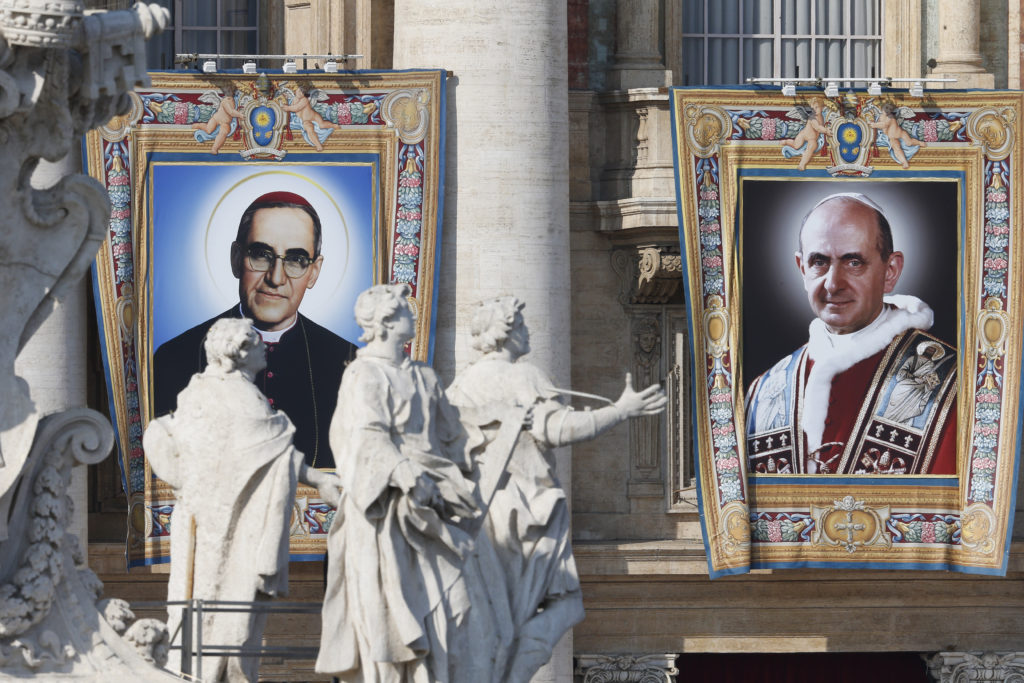
The banners of new saints Oscar Romero and Paul VI hang from the facade of St. Peter's Basilica as Pope Francis celebrates the canonization Mass for seven new saints in St. Peter's Square at the Vatican Oct. 14. (Paul Haring/CNS) See CANONIZATION-ROMERO and CANONIZATION-PILGRIMS Oct. 14, 2018.

By Cindy Wooden
Catholic News Service

VATICAN CITY (CNS) — Carrying Pope Paul VI’s pastoral staff and wearing the blood-stained belt of Archbishop Oscar Romero of San Salvador, Pope Francis formally recognized them, and five others, as saints of the Catholic Church.

Thousands of pilgrims from the new saints’ home countries — Italy, El Salvador, Spain and Germany — were joined by tens of thousands of others Oct. 14 in St. Peter’s Square to celebrate the universal recognition of the holiness of men and women they already knew were saints.

Carolina Escamilla, who traveled from San Salvador for canonization, said she was “super happy” to be in Rome. “I don’t think there are words to describe all that we feel after such a long-awaited and long-desired moment like the ‘official’ canonization, because Archbishop Romero was already a saint when he was alive.”

Each of the new saints lived lives marked by pain and criticism — including from within the Church — but all of them dedicated themselves with passionate love to following Jesus and caring for the weak and the poor, Pope Francis said in his homily.

The new saints are: Paul VI, who led the last sessions of the Second Vatican Council and its initial implementation and faced much criticism after his promulgation of “Humanae Vitae” reaffirming the Church’s teaching that artificial contraceptive use was intrinsically evil; Romero, who defended the poor, called for justice and was assassinated in 1980; Vincenzo Romano, an Italian priest who died in 1831; Nazaria Ignacia March Mesa, a Spanish nun who ministered in Mexico and Bolivia and died in 1943; Catherine Kasper, the 19th-century German founder of a religious order; Francesco Spinelli, a 19th-century priest and founder of a religious order; and Nunzio Sulprizio, a layman who died in Naples in 1836 at the age of 19.

The banners of new saints Oscar Romero and Paul VI hang from the facade of St. Peter’s Basilica as Pope Francis celebrates the canonization Mass for seven new saints in St. Peter’s Square at the Vatican Oct. 14. (Paul Haring/CNS)

“All these saints, in different contexts,” put the Gospel “into practice in their lives, without lukewarmness, without calculation, with the passion to risk everything and to leave it all behind,” Pope Francis said in his homily.

The pope, who has spoken often about being personally inspired by both St. Paul VI and St. Oscar Romero, prayed that every Christian would follow the new saints’ examples by shunning an attachment to money, wealth and power, and instead following Jesus and sharing His love with others.

And he prayed the new saints would inspire the whole Church to set aside “structures that are no longer adequate for proclaiming the Gospel, those weights that slow down our mission, the strings that tie us to the world.”

Among those in St. Peter’s Square for the Mass was Rossi Bonilla, a Salvadoran now living in Barcelona. “I’m really emotional, also because I did my Communion with Archbishop Romero when I was eight years old,” she told Catholic News Service.

“He was so important for the neediest; he was really with the people and kept strong when the repression started,” Bonilla said. “The struggle continues for the people, and so here we are!”

Claudia Lombardi, 24, came to the canonization from Brescia, Italy — St. Paul VI’s hometown. Her local saint, she said, “brought great fresh air” to the Church with the Second Vatican Council and “has something to say to us today,” particularly with his 1968 encyclical “Humanae Vitae” on human life and married love, especially its teaching about “the conception of life, the protection of life always.”

Women wait for the start of the canonization Mass for seven new saints celebrated by Pope Francis in St. Peter’s Square at the Vatican Oct. 14. Among the new saints are St. Paul VI and St. Oscar Romero.(Paul Haring/CNS)

In his homily, Pope Francis said that “Jesus is radical.”

“He gives all and He asks all; He gives a love that is total and asks for an undivided heart,” the pope said. “Even today He gives Himself to us as the living bread; can we give Him crumbs in exchange?”

Jesus, he said, “is not content with a ‘percentage of love.’ We cannot love him 20 or 50 or 60 percent. It is either all or nothing” because “our heart is like a magnet — it lets itself be attracted by love, but it can cling to one master only and it must choose: either it will love God or it will love the world’s treasure; either it will live for love or it will live for itself.”

“A leap forward in love,” he said, is what would enable individual Christians and the whole Church to escape “complacency and self-indulgence.”

Without passionate love, he said, “we find joy in some fleeting pleasure, we close ourselves off in useless gossip, we settle into the monotony of a Christian life without momentum where a little narcissism covers over the sadness of remaining unfulfilled.”

The day’s Gospel reading recounted the story of the rich young man who said he followed all the commandments and precepts of Jewish law, but he asks Jesus what more he must do to have eternal life.

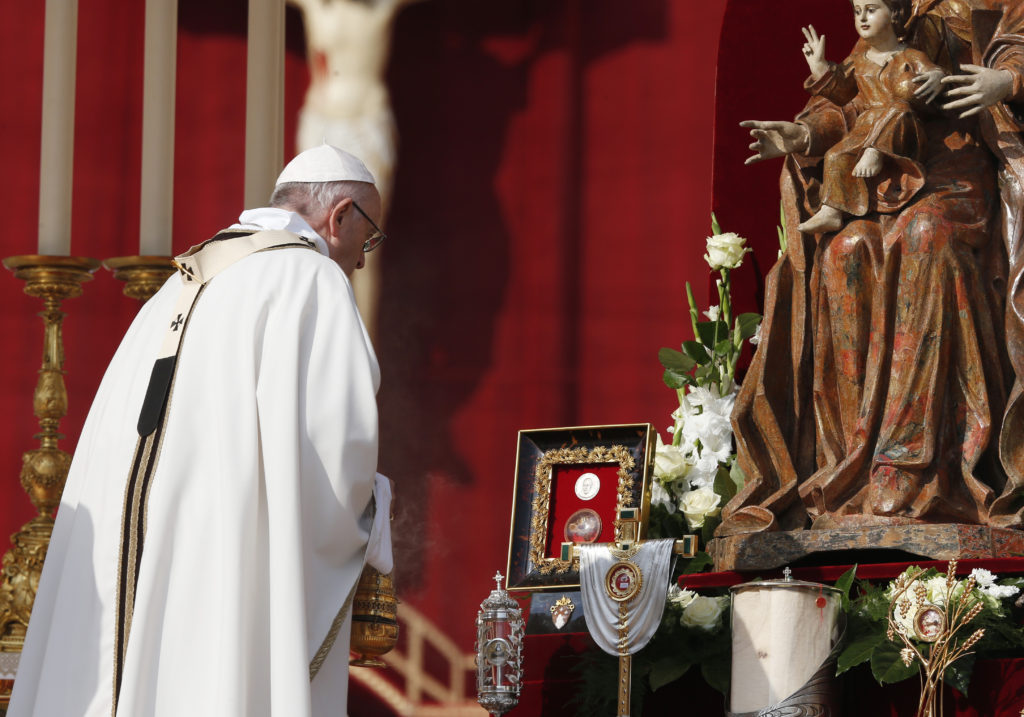
Pope Francis uses incense to venerate relics as he celebrates the canonization Mass for seven new saints in St. Peter’s Square at the Vatican Oct. 14. Among the new saints are St. Paul VI and St. Oscar Romero. (Paul Haring/CNS)

“Jesus’ answer catches him off guard,” the pope said. “The Lord looks upon him and loves him. Jesus changes the perspective from commandments observed in order to obtain a reward, to a free and total love.”

In effect, he said, Jesus is telling the young man that not doing evil is not enough, nor is it enough to give a little charity or say a few prayers. Following Jesus means giving him absolute first place in one’s life. “He asks you to leave behind what weighs down your heart, to empty yourself of goods in order to make room for Him, the only good.”

“Do we content ourselves with a few commandments or do we follow Jesus as lovers, really prepared to leave behind something for Him?” the pope asked people gathered in St. Peter’s Square, including the 267 members of the Synod of Bishops and the 34 young people who are observers at the gathering.

“A heart unburdened by possessions, that freely loves the Lord, always spreads joy, that joy for which there is so much need today,” Pope Francis said. “Today Jesus invites us to return to the source of joy, which is the encounter with Him, the courageous choice to risk everything to follow Him, the satisfaction of leaving something behind in order to embrace His way.”


Contributing to this story were Carol Glatz, Junno Arocho Esteves and Melissa Vida.

How Paul VI influenced one young man who now leads his home diocese

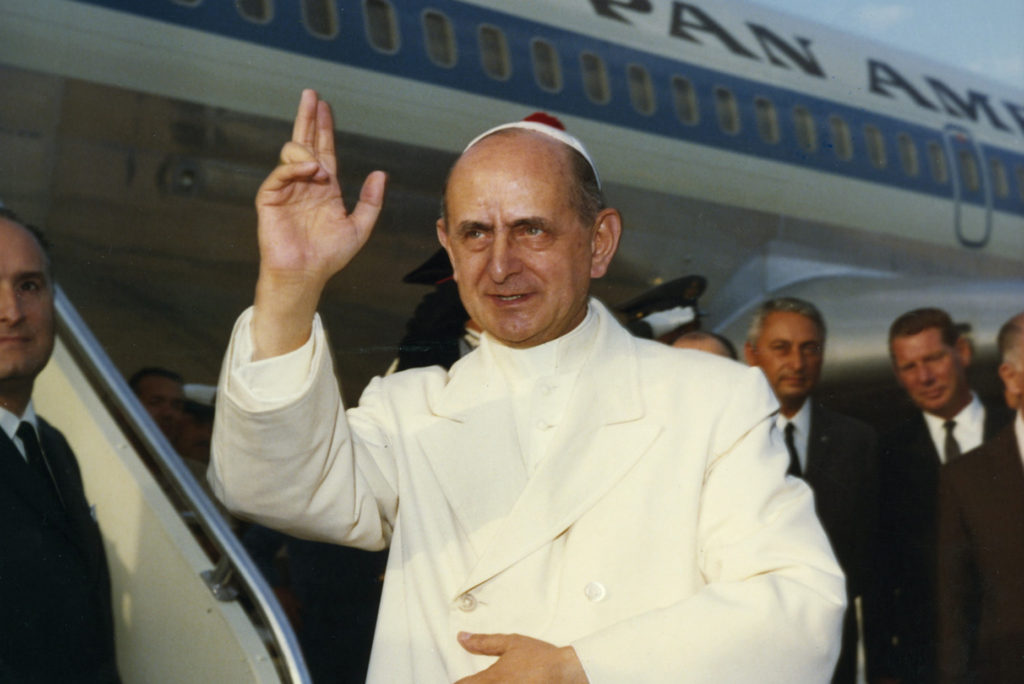
Pope Paul VI offers a blessing at Rome's Leonardo da Vinci airport before boarding a flight to Istanbul, Turkey, in 1967. Pope Paul, who led the church from 1963 until his death in 1978, may be beatified in October, an Italian Catholic magazine reported. (CNS file photo) (April 24, 2014) See BLESSED PAULVI April 24, 2014.
Pope Paul VI offers a blessing at Rome’s Leonardo da Vinci airport before boarding a flight to Istanbul, Turkey, in 1967. Pope Paul, who led the church from 1963 until his death in 1978, may be beatified in October, an Italian Catholic magazine reported. (CNS file photo)

By Carol Glatz
Catholic News Service

VATICAN CITY (CNS) — His voice, his outstretched hands, his boarding an airplane to meet the world — those are some of the most striking things about Blessed Paul VI that moved and inspired a young man discerning the priesthood.

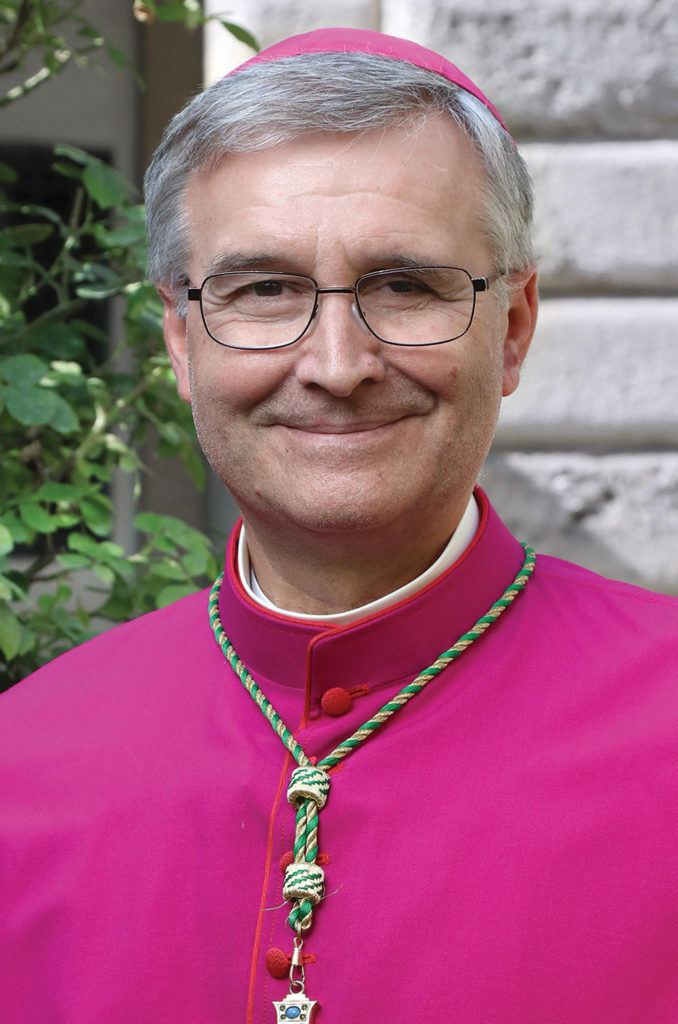
Bishop Pierantonio Tremolada of Brescia, Italy, is pictured in his official photo. (CNS, courtesy of the Diocese of Brescia)

“I still remember his voice when we would hear him on television,” Bishop Pierantonio Tremolada of Brescia told Catholic News Service by telephone Oct. 8.

“It was such a unique voice, very heartfelt, authoritative, the voice of a good man,” said the 62-year-old bishop who grew up and was ordained in Milan — the archdiocese Pope Paul led before he was elected pope in 1963. Once again crossing the pope’s path, Bishop Tremolada has — since 2017 — been leading the Diocese of Brescia where the pope was born.

The bishop will be among those concelebrating the Mass and attending the canonization of Blessed Paul and six other men and women in Rome Oct. 14. More than 5,000 Catholics from Brescia signed up to travel with the bishop for the ceremony.

The saint-to-be is a particularly suited example for young people, Bishop Tremolada said from his office in Brescia, because he exemplified a youthful optimism, hope, curiosity and openness to the world and the future.

“He offers us an example with his esteem, his love for the world,” the bishop said. That love was especially evident at the Second Vatican Council and in its pastoral constitution, “Gaudium et Spes (Joy and Hope),” revealing a Church eager to engage with everyone and share the good news.

The document “explains Paul VI’s approach very well — not to run away, not be defensive, but wanting to know and dialogue with the world, offering it the Gospel for the good of the world,” the bishop said.

This desire to contribute and speak sincerely with others “is very much in line with young people,” he said.

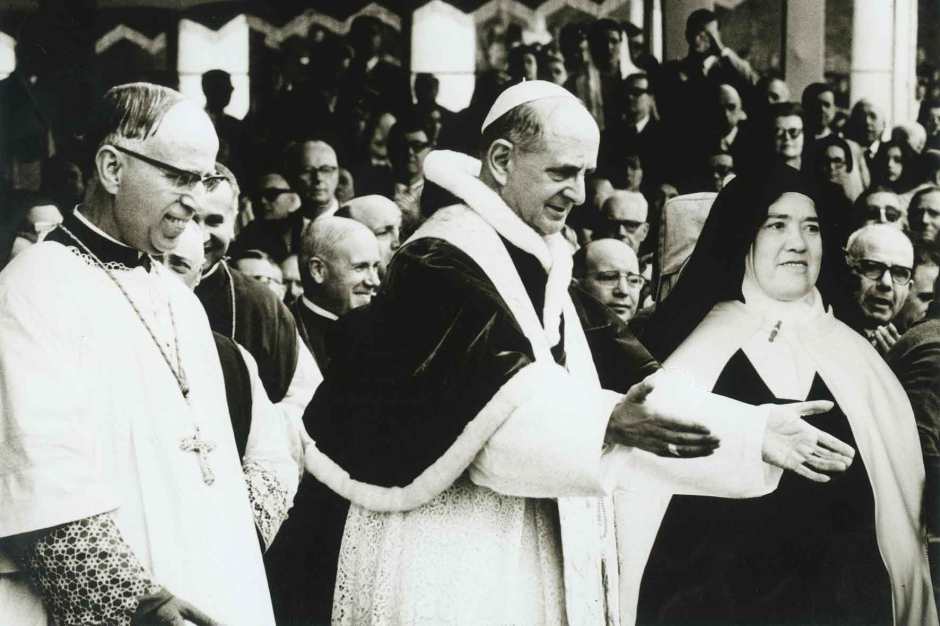
Pope Paul VI is pictured next to Carmelite Sister Lucia dos Santos, one of the three Fatima visionaries, during a visit to the Marian shrine in Fatima, Portugal, May 13, 1967. Blessed Paul, who led the Catholic Church from 1963-1978, will be declared a saint Oct. 14. (CNS, courtesy of the Diocese of Brescia)

The pope’s love for the world was rooted in Christ, “being in communion with Him, the conviction He is the savior,” which is still “very timely” today in reaching out and responding to young people, he said.

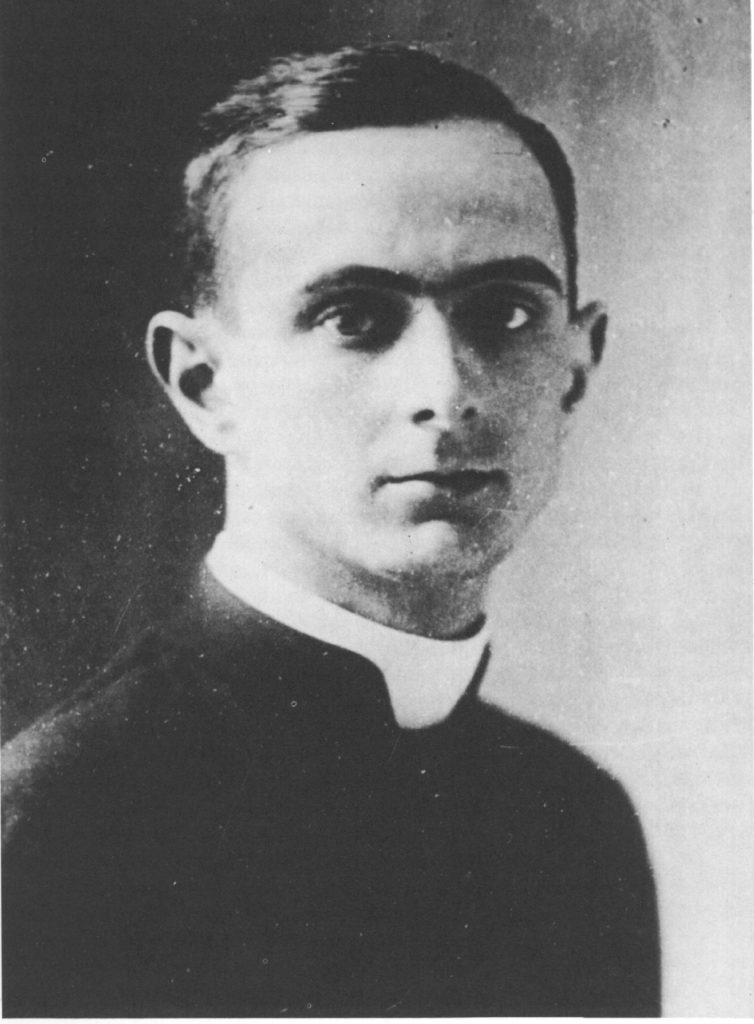
Father Giovanni Battista Montini, who became Pope Paul VI, is pictured after celebrating his first Mass in 1920. Blessed Paul, who led the Catholic Church from 1963-1978, will be declared a saint Oct. 14. (CNS, courtesy of the Diocese of Brescia)

When asked what it was about the pope that struck or impressed him most as a young person growing up, Bishop Tremolada said it was his voice and the way he spoke “with words that were not his, but were important” and aimed at everyone.

“It was a voice that proposed, not imposed, meek but authoritative,” he said.

He said, “What also struck me very much were the images of him getting on an airplane,” something that had never been seen before — not only because he was the first pope to use an airplane in 1964, but he was the first pope since 1812 to venture outside Italy.

“And his hands. The way he reached out toward people” is another image that still remains with him, he said.

“Now as a bishop, the things I would like to emulate about him are his ability to dialogue,” his ability to “read” and understand the world, his great humility and the reserved, inner strength that inspired him to offer “the gift of the Gospel,” he said.

Pope accepts Cardinal Wuerl’s resignation

Cardinal Donald W. Wuerl of Washington talks with Pope Francis at Andrews Air Force Base in Maryland near Washington Sept. 22, 2015. Cardinal Wuerl announced Sept. 11 that he will meet soon with the pope to discuss the resignation he submitted three years ago when he turned 75. (CNS photo/Paul Haring)

VATICAN CITY (CNS) — Pope Francis has accepted the resignation of Cardinal Donald W. Wuerl as archbishop of Washington but did not name a successor.

When the pope’s decision was announced Oct. 12, the Archdiocese of Washington released a letter from Pope Francis to the cardinal, making clear his support for Cardinal Wuerl’s ministry and leadership, but also praising the cardinal for putting the good of the church first.

“You have sufficient elements to ‘justify’ your actions and distinguish between what it means to cover up crimes or not to deal with problems, and to commit some mistakes,” the pope wrote. “However, your nobility has led you not to choose this way of defense. Of this, I am proud and thank you.”

The archdiocese also announced the pope has named Cardinal Wuerl as apostolic administrator to oversee the archdiocese until a successor is named.

Cardinal Wuerl had been facing pressure to resign after an Aug. 14 grand jury report detailing sexual abuse claims in six Pennsylvania dioceses painted a mixed picture of how he handled some of the cases when he was bishop in Pittsburgh from 1988 until 2006.

The 77-year-old cardinal, the sixth archbishop of Washington, had submitted his resignation, as is mandatory, to the pope when he turned 75, but it had not been accepted until now.

After his resignation was announced Oct. 12, Cardinal Wuerl said in a statement: “Once again for any past errors in judgment, I apologize and ask for pardon. My resignation is one way to express my great and abiding love for you the people of the church of Washington.”

The cardinal also thanked Pope Francis for what he had expressed in his letter, saying, “I am profoundly grateful for his devoted commitment to the well-being of the archdiocese of Washington and also deeply touched by his gracious words of understanding.”

In early September, Cardinal Wuerl told priests of the archdiocese that he would meet with Pope Francis and ask him to accept his resignation “so that this archdiocesan church we all love can move forward” and can experience “a new beginning.”

The Vatican announcement that the pope accepted his resignation came more than two months after the announcement that Pope Francis accepted the resignation of retired Washington Archbishop Theodore E. McCarrick from the College of Cardinals. Archbishop McCarrick faces credible allegations of sexual abuse, including two that involved minors; Pope Francis ordered him to maintain “a life of prayer and penance” while awaiting a trial or other canonical process on the charges.

Cardinal Wuerl has said until the Archdiocese of New York began investigating the claims that Archbishop McCarrick abused a minor, he was never informed of such accusations or even the rumors of Archbishop McCarrick’s sexual harassment of seminarians.

In a letter Aug. 30 to the priests of the archdiocese, Cardinal Wuerl apologized for not being as close to his priests as he could or should have been in the wake of all the abuse-related scandals.

Cardinal Wuerl asked the priests “for prayers for me, for forgiveness for my errors in judgment, for my inadequacies and also for your acceptance of my contrition for any suffering I have caused, as well as the grace to find, with you, ways of healing, ways of offering fruitful guidance in this darkness.”

“Would you please,” he told the priests, “let the faithful you serve know of my love, my commitment to do whatever is necessary to right what is wrong and my sincere solidarity with you and them.”

Cardinal Wuerl has been archbishop of Washington for the past 12 years. He earlier served as an auxiliary bishop of Seattle from 1986 until 1988, when he was named bishop of Pittsburgh, where he served for 18 years.

The Archdiocese of Washington is home to more than 655,000 Catholics, 139 parishes and 93 Catholic schools, located in the District of Columbia and in the five surrounding Maryland counties of Calvert, Charles, Montgomery, Prince George’s and St. Mary’s.

– – –

Contributing to this story was Cindy Wooden in Rome and Mark Zimmermann in Washington.

Feast of St. John XXIII

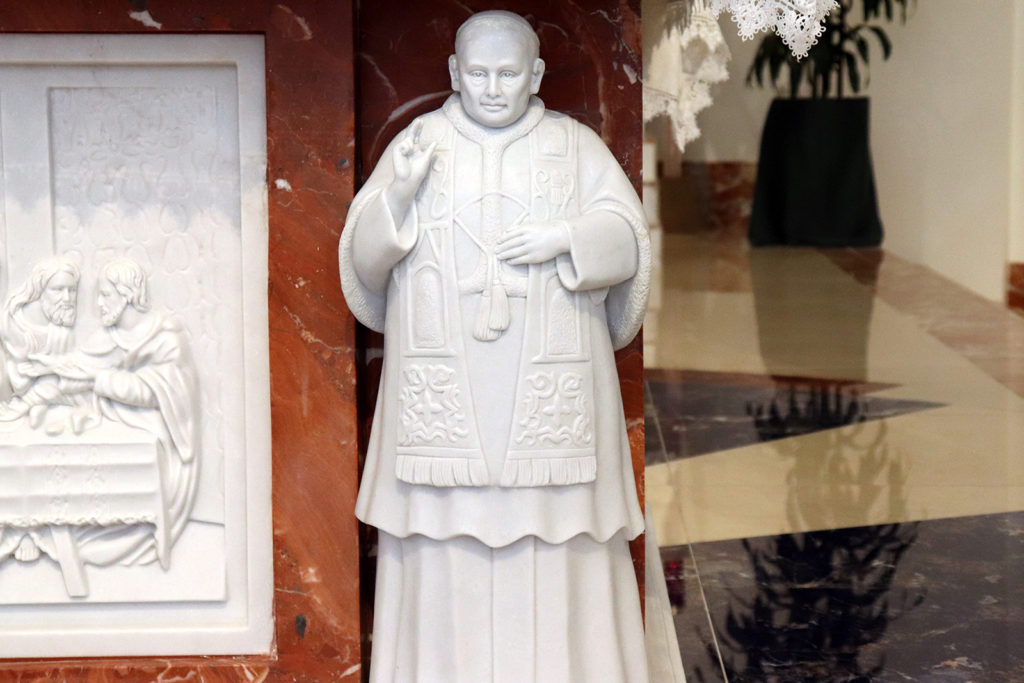
This carving of Pope St. John XXIII is found on the right side of the altar at St. Bernadette Parish in Scottsdale. The parish is attached to the school that bears his name. (Tony Gutiérrez/CATHOLIC SUN)

Oct. 11

Ordained a priest in Italy in 1904, Angelo Roncalli was a medic and chaplain in World War I. He served as a Vatican diplomat in Bulgaria, Turkey and France before being named a cardinal and patriarch of Venice in 1953.

Elected pope in 1958, he convened the Second Vatican Council and issued the famous encyclical “Pacem in Terris” just months before his death from stomach cancer. In the book “Last Words,” Pope John is quoted as saying to family members by his deathbed, “Do you remember how I never thought of anything else in life but being a priest?”

He is the patron of St. John XXIII School in Scottsdale.

‘Humanae Vitae’ a gift from Blessed Paul VI, says visiting bishop

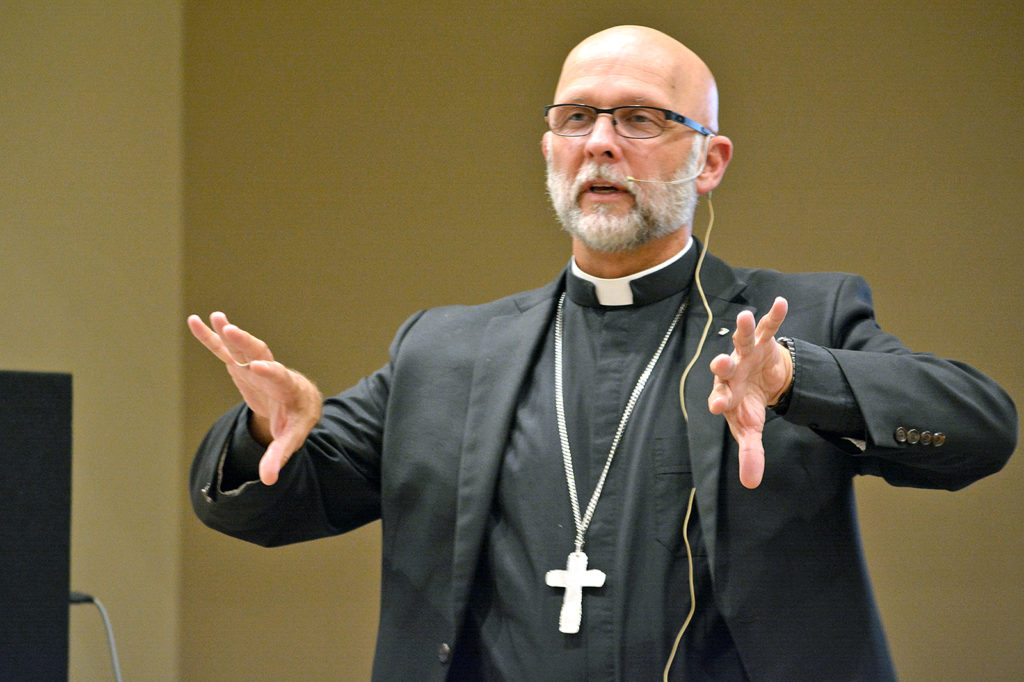
Bishop James S. Wall of the Diocese of Gallup, speaks on “The Wisdom of Pope Paul VI” at San Francisco de Asís Parish in Flagstaff Sept. 15. The presentation was a part of the Shepherd Series presented by the Office of Natural Family Planning to recognize the 50th anniversary of “Humanae Vitae.” (Lisa M. Dahm/CATHOLIC SUN)

READ “HUMANAE VITAE (OF HUMAN LIFE)” BY BLESSED PAUL VI

FLAGSTAFF — Pope Paul VI gave to the world a beautiful gift in 1968, “and the gift he gave us was ‘Humane Vitae,’” said Bishop James S. Wall of Gallup, New Mexico, during a Sept. 15 presentation of “The Wisdom of Pope Paul VI” at San Francisco de Asís.

The evening was part of the Shepherd Series sponsored by the Diocese of Phoenix Office of Natural Family Planning in celebration of the 50th anniversary of Pope Paul VI’s encyclical “Humanae Vitae (On Human Life).” The series — which has been hosted in different parishes in the diocese throughout the year — also featured Cardinal Francis Arinze, prefect emeritus of the Congregation for Divine Worship and the Discipline of the Sacraments, and Archbishop Samuel J. Aquila of Denver. Bishop Wall was originally ordained to the priesthood for the Diocese of Phoenix in 1998 before becoming bishop of Gallup — a diocese that covers the majority of the Navajo reservation in northeast Arizona and northwest New Mexico — in 2009.

“The encyclical itself is a letter addressed from the Holy Father to all the members of the Church, but when he speaks of all the members of the Church, in a sense, he is speaking to all the people of the world,” Bishop Wall told the audience.

In 1957, the federal Food and Drug Administration approved the use of the pill for menstrual disorders, the bishop said, and in the 1960s, the FDA the approved it as a contraceptive. In 1966, at the height of the “sexual revolution,” a 72-person international commission produced a report for the pope that recommended declaring the use of artificial contraceptives as moral. A small group that included the future Pope St. John Paul II produced a minority report against it. Someone leaked the majority report results, and many people believed the pope would condone artificial contraception. Instead of acquiescing, Pope Paul VI released “Humane Vitae.”

“There was such a rebellion from it,” Bishop Wall said. “Even the people in the Church were drinking the Kool Aid of the times and they were rebelling against it, too.”

Bishop Wall said that through the prophetic document, Pope Paul VI gave four warnings of what would happen if the Church were to choose to accept contraception: a lowering of moral standards, an increase in infidelity, an increase in the objectification of women and a coercive use of reproductive technology by governments.

He said Pope Francis calls the coercion “new colonization,” where wealthy countries tie foreign aid to poorer countries with contingencies that they must accept things like artificial contraceptives, sterilization and abortifacients.

Bishop Wall said there are positives if couples choose Natural Family Planning. Since it is God’s plan for marriage, it helps couples stay together, but it isn’t easy and takes self-discipline. Though the national divorce rate is 50 percent even among Catholic couples, the rate drops to about 2 to 4 percent for those who practice NFP.

“Whoever really loves his partner loves not only for what he receives but loves that partner for that partner’s own sake — content to enrich the other with the gift of self,” Bishop Wall said, quoting from “Humanae Vitae.”

“What they are doing is pledging to one another that they are going to love and honor each other just as Christ has loved them,” Bishop Wall said.

The bishop recalled a seminary professor who referred to the Church as the “Old Lady” who “got it right” with “Humanae Vitae.

“And even with all these pressures that were mounting upon the Church in the 1960s, she didn’t budge because she was pursuing that which was true,” Bishop Wall said. “And that which was true was to remain faithful to what God’s plan for marital love is — the unitive and procreative aspect of always being open and husbands and wives always pouring out their lives for the sake of the other.”

From Ohio to Kenya, Glenmary brother trots globe in search of vocations

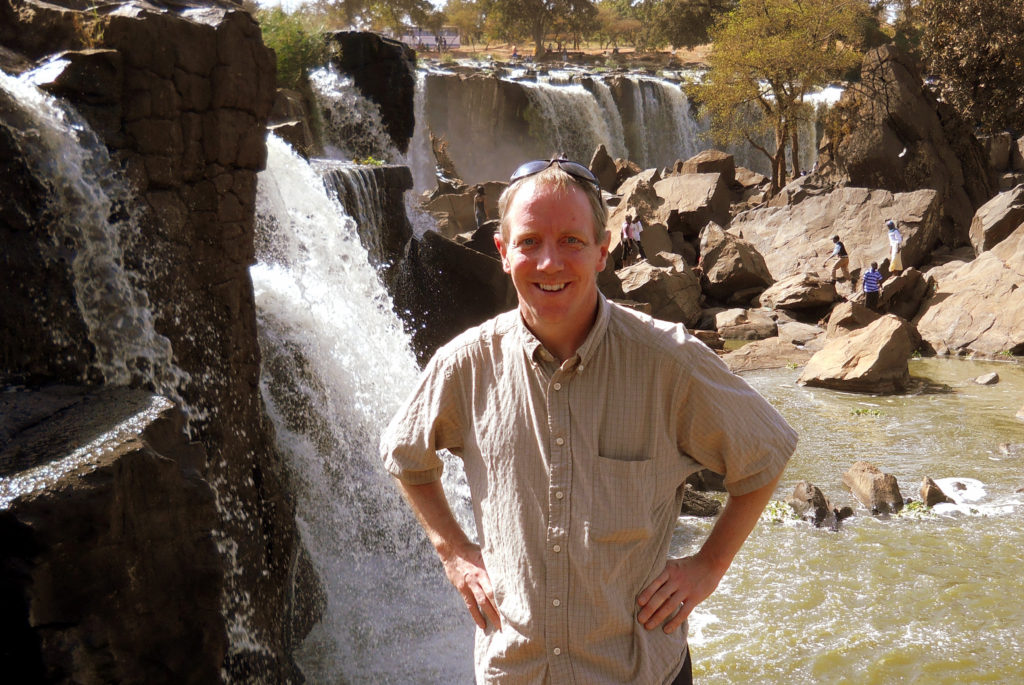
Br. David Henley, a native of Columbus, Ohio, poses in front of a waterfall in 2012 in Kenya. Brother Henley, serves the U.S.-based Glenmary Home Missioners, but travels the world in search of vocation prospects. (CNS, courtesy of Glenmary Home Missioners) See GLENMARY-VOCATIONS-HENLEY Oct. 9, 2018.
Brother David Henley, a native of Columbus, Ohio, poses in front of a waterfall in 2012 in Kenya. Brother Henley, serves the U.S.-based Glenmary Home Missioners, but travels the world in search of vocation prospects. (CNS, courtesy of Glenmary Home Missioners)
Glenmary Home Missioners

Glenmary Home Missioners, founded in 1939, is a Catholic society of priests and brothers who, along with coworkers, are dedicated to establishing a Catholic presence in rural areas and small towns of the United States where the Catholic Church is not yet effectively present.
MORE INFORMATION

By John Stegeman
Catholic News Service

CINCINNATI (CNS) — God’s ability to call vocations isn’t limited by geography, and so a vocation director must go wherever the Holy Spirit leads.

For Br. David Henley, a member of the Glenmary Home Missioners, it’s led all around the world.

The Columbus, Ohio, native professed his first oath with Cincinnati-based Glenmary in 2003. Knowing Glenmary’s mission is to bring the Catholic Church to small towns and rural counties of Appalachia and the South, he figured his days of traveling were limited.

With an increase of Hispanic immigrants in Glenmary’s missions, Br. David quickly found himself in Mexico to learn the language. Since becoming vocation director in 2010, he has visited 39 states, Mexico again, Kenya and Uganda, all in search of vocation prospects.

“When I joined Glenmary, I thought I would have to give up traveling, but God obviously had a different plan,” Br. David told Glenmary Challenge magazine. “I have realized my love to travel to new places and to meet new people has served Glenmary well. Guys are not lined up outside our door to sign up, so we have to go to where they are to meet them.”

“Glenmary has seen a surge in vocation prospects contacting us from different parts the world,” he added. “It is exciting that men from places that were once served by missionaries are feeling inspired to serve as missionaries themselves.”

The international surge is real. Glenmary has three fully professed members from Kenya, two of whom made their final oath this year. Of the 10 men in Glenmary’s formation program, one is from Ohio, the rest come from abroad. In all, six countries are represented in the group.

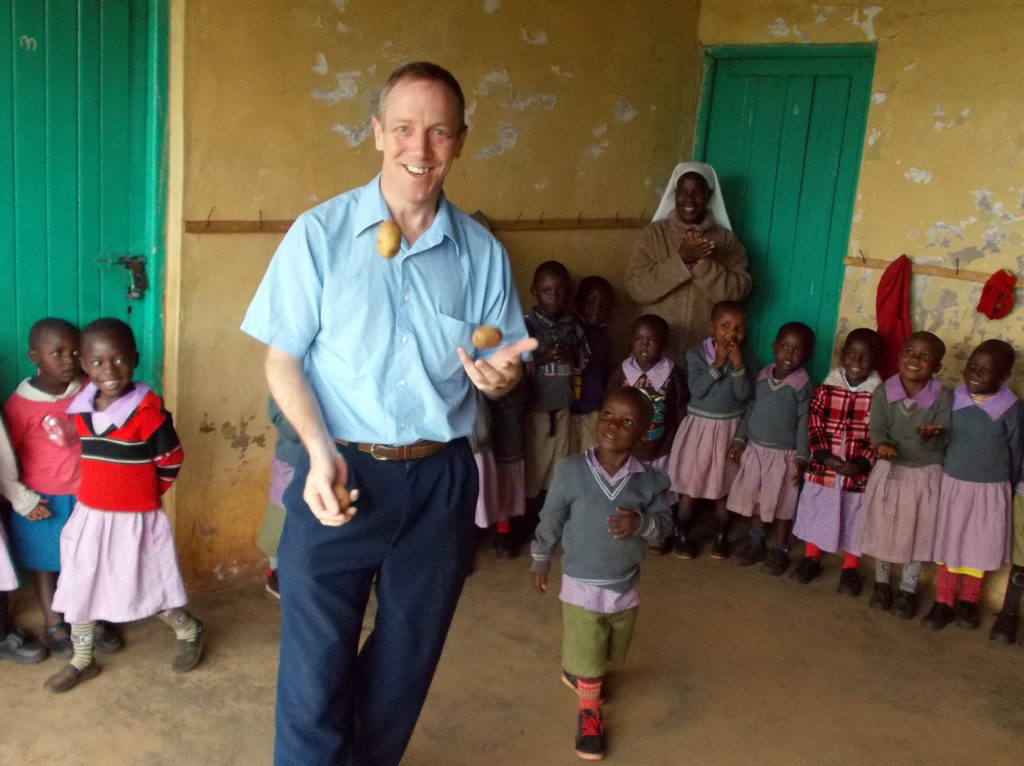
Brother David Henley, a former circus performer turned vocation director, juggles for children in Kenya. The Columbus, Ohio, native has visited 39 states and three countries in search of vocations for Glenmary Home Missioners. (CNS, courtesy of Glenmary Home Missioners)

Despite the international flavor, Br. David’s Glenmary vocation department spends most of its time seeking vocations in the United States. Br. David and vocation counselor Wilmar Zabala spend their days hosting “Come and See” events that take potential recruits to the missions, traveling to youth conferences, speaking at schools or otherwise reaching out, helping young men to hear God’s call in their lives.

“Looking for vocation prospects has meant road trips across the USA, vocation events in different states and even traveling to other countries,” Br. David said. “By joining Glenmary, I have gotten to see rural USA, which is so different from where I grew up in Columbus.

“I think my love for the people that I met on home mission trips helped to inspire me to become a Glenmary brother,” he added. “I was responding to God’s call, but I felt confirmed in my call to Glenmary because of my love for the mountains of Appalachia. Now as vocation director, getting to meet people all over the U.S. and in other countries when I make vocation visits has been a bonus.”

Glenmary is a religious society of priests, brothers and lay co-workers dedicated to serving parts of small town and rural America that lack a formal Catholic presence.

Its founder, Fr. William Howard Bishop, was known for saying that people in what he termed “No Priest-Land, USA” were as entitled to missionaries as any overseas mission territory. He knew God would raise up men to answer this missionary challenge. Br. David said that’s the reason behind all his travels.

“The notion that home mission communities are entitled to a Catholic presence,” he said, “is precisely why Glenmary remains open to vocations from wherever the Spirit calls them.”


John Stegeman is editor of GLENMARY CHALLENGE, quarterly magazine of the Glenmary Home Missioners.

Church must answer abuse survivors’ thirst for justice, archbishop says

By Carol Glatz
Catholic News Service

VATICAN CITY (CNS) — Responding to clerical sexual abuse demands truth and justice, not just admitting a sin was committed, said Archbishop Charles J. Scicluna of Malta.

When he speaks with survivors, “I find a great thirst and a great hunger for justice, which I share,” he told reporters at a synod briefing Oct. 8.

A longtime abuse investigator — in the past for the Congregation for the Doctrine of the Faith and more recently at the request of Pope Francis — the archbishop was attending the Oct. 3-28 Synod of Bishops on young people as archbishop of Malta.

As an abuse investigator, he said his role is to help the Church understand what the truth is and to help bring justice.

“What pains me is the fact that sometimes justice takes an amount of time that is a bit excessive. And this is a problem that very much pains Pope Francis,” he said, referring to how slow the process is.

When he speaks with a person who has experienced abuse, “there is little to say. I prefer to cry with them as has happened to me many times.”

But the initial mourning and silence are followed by “an enormous thirst for truth and justice, which is not incompatible with mercy because we all need mercy,” he said, but not a “hollow mercy” that does not respect the truth.

As the head of an archdiocese, he said his role as bishop demands he be a father to both an accused priest-perpetrator and a victim. “This is a tragic rift, a split for a bishop,” he said.

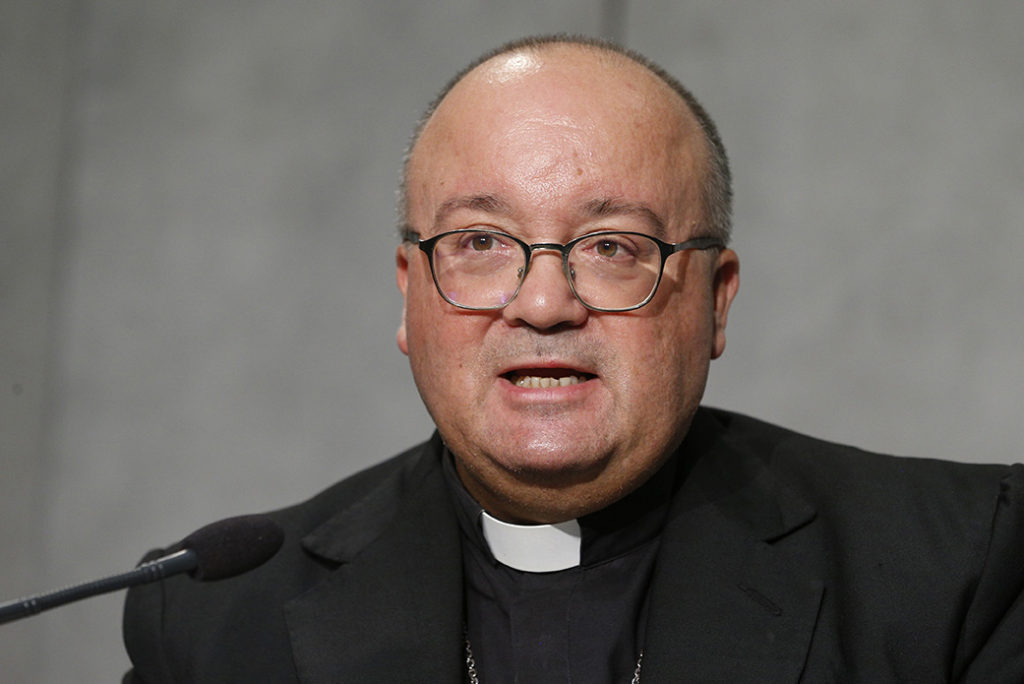
Archbishop Charles Scicluna of Malta speaks at a news conference to discuss the Synod of Bishops on young people, the faith and vocational discernment at the Vatican Oct. 8. (Paul Haring/CNS)

But “finding the truth is essential,” he said, which is why he turns to the help and advice of lay experts to lead the investigation and offer their suggestions to avoid letting his own subjective feelings skew the process and let him “serve the truth” and his people.

When asked whether the need for greater accountability of bishops was being discussed at the synod, Archbishop Scicluna said he was not aware of any direct discussion happening on the topic, but that accountability would be a topic at the world meeting on abuse prevention the pope called for Feb. 21-24.

“We know there is a great expectation for more accountability,” he said. “Now how is that going to develop? I think we need to trust Pope Francis to develop a system whereby there is more accountability.”

What has been getting mentioned in every working group at the synod, he said, is the general problem of abuse and the need for safeguarding. Because of this ample concern, the final synod document “will have to find probably more space” dedicated to these issues than the one paragraph item (66) that was dedicated to abuse in the synod’s working document.

If a “good representation of the 260 bishops from all over the world” attending the synod tell Pope Francis they have the same desire “to go from beautiful words to action, he is obviously empowered to do what he really wants for the Church and that is to make the Church a safer place and to get different cultures and different conferences of bishops to implement what is now policy in the Church,” he said, referring to a 2011 circular letter asking every bishops’ conference in the world to develop guidelines for review.

“Now from the documents we need to go to the grass roots, to empower people to disclose abuse, but also to raise the threshold of accountability” so that it includes bishops, said Archbishop Scicluna, who is also president of a board of review handling abuse cases within the Congregation for the Doctrine of the Faith.

“We bishops realize that we are accountable not only to God but also to our people,” he said, and accountable not only for what they do, but what they fail to do when it comes to “stewardship” and protection.

Speaking through a translator, Auxiliary Bishop Emmanuel Gobilliard of Lyon, France, told reporters, “It is better for the sin to be revealed rather than remaining hidden” because it not only helps victims by recognizing what has happened, it can lead to accountability and reform.

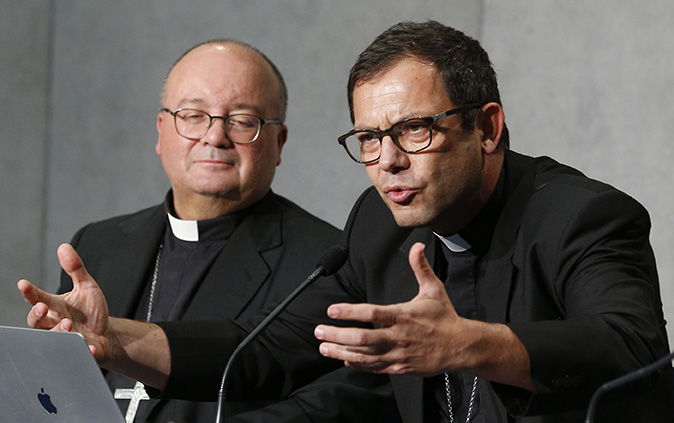
Auxiliary Bishop Emmanuel Gobillliard of Lyon, France, speaks at a news conference to discuss the Synod of Bishops on young people, the faith and vocational discernment at the Vatican Oct. 8. At left is Archbishop Charles Scicluna of Malta. (Paul Haring/CNS)

Young people want the Church to be safe, he said, and it is important to them that the priests and workers who are accompanying them are also being accompanied in their life and supported with ongoing formation.

Bishop Gobilliard spoke to the synod about the importance of open discussion about human sexuality and the need for sexual education, including for seminarians because young people “expect a true answer” about the body.

Sexual education is important because of “the beauty of sexuality that God gave us,” he told reporters, and the scandals of abuse should not push people to be silent about sexuality. “It is something that is beautiful that should not be idealized nor rejected,” he said.

Archbishop Scicluna said the crisis caused by ongoing revelations and allegations “is a very important moment” for everyone in the Church because “it is going to make us really, really humble. There is no other way to humility except through humiliation and it is a big humiliation and it is going to make us humble, I hope.”

In response to those who have left the Church because they see the hypocrisy of how “you say one thing and you do the opposite. Shame on you,” the archbishop said, “I think I need to say, ‘Yes, you’re right, shame on us.’”

“I think there is no other way to the heart of a human being who has been scandalized than true humility and penance and also silence,” he added.

However, Archbishop Scicluna said he sees with his own eyes many holy priests doing good work and performing “miracles” every day as they help people change their lives by bringing them closer to Christ.

“This does not get the headlines” while the scandals or accusations do, he said, saying, “A tree that falls creates more sound than a forest that is growing.”

Church must answer abuse survivors’ thirst for justice, archbishop says

Historic day for Byzantine Catholics as Phoenix Eparchy’s cathedral marks 50 years

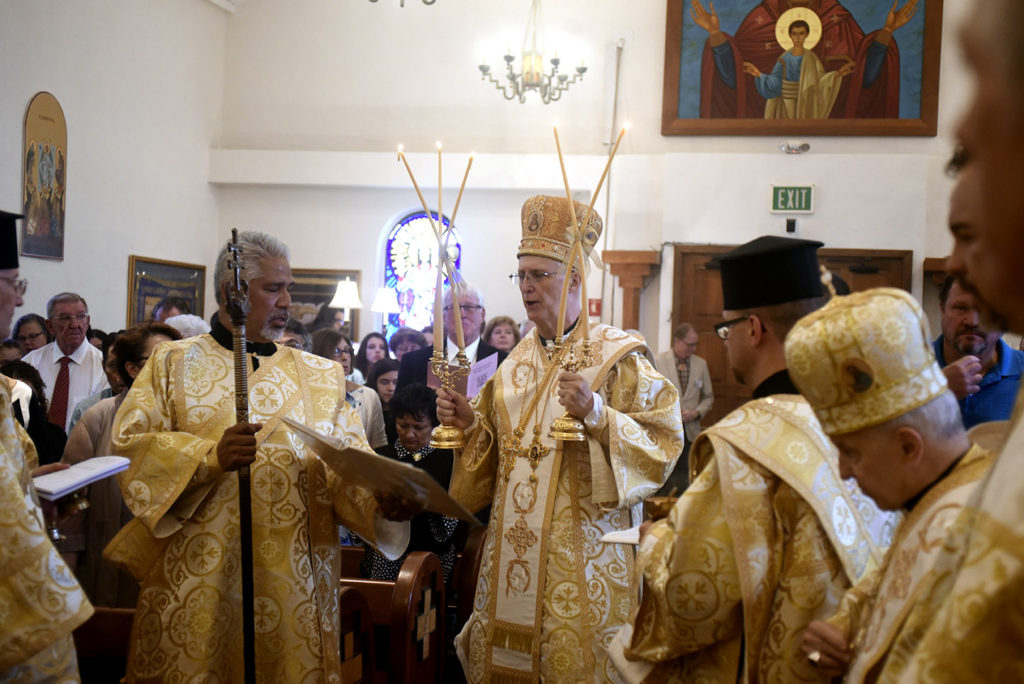
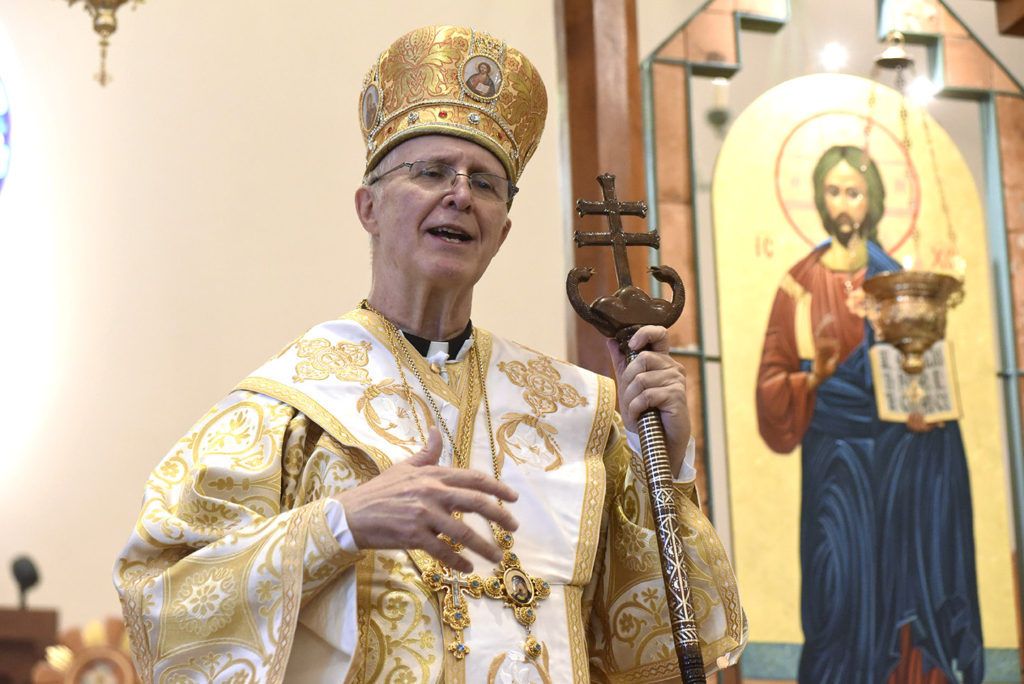
Bishop John S. Pazak, CSsR, of the Byzantine Eparchy of Phoenix, leads hundreds of parishioners in the opening prayer for the Sept. 30 Divine Liturgy celebrating St. Stephen Byzantine Cathedral’s 50th anniversary as a parish community. (Jesús Valencia/CATHOLIC SUN)
St. Stephen Byzantine Catholic Cathedral

8141 N. 16th St., Phoenix
(602) 943-5379

MORE INFORMATION

St. Stephen Byzantine Catholic Cathedral, the cathedral for the Phoenix-based Holy Protection of Mary Byzantine Catholic Eparchy, celebrated 50 years of serving the faithful with a Hierarchical Divine Liturgy Sept. 30.

The liturgy, how Eastern Catholics refer to the Mass, marked the cathedral’s jubilee.

“It’s a feast day to remember,” said the eparchy’s Bishop John S. Pazak, CSsR, during his homily before over 250 worshippers who filled the cathedral to overflowing. “As we recollect, we’re all part of what God has blessed in this community in Phoenix.”

The occasion also reinforced the faith bond between the eparchy, which serves 13 western U.S. states, and the diocese, which is home to 1.8 million Roman-Rite Catholics. The Eparchy, whose members practice the Byzantine Rite, one of the Church’s Eastern Rites, has a population in the thousands. Joining the celebration were Bishop Thomas J. Olmsted and Auxiliary Bishop Eduardo A. Nevares.

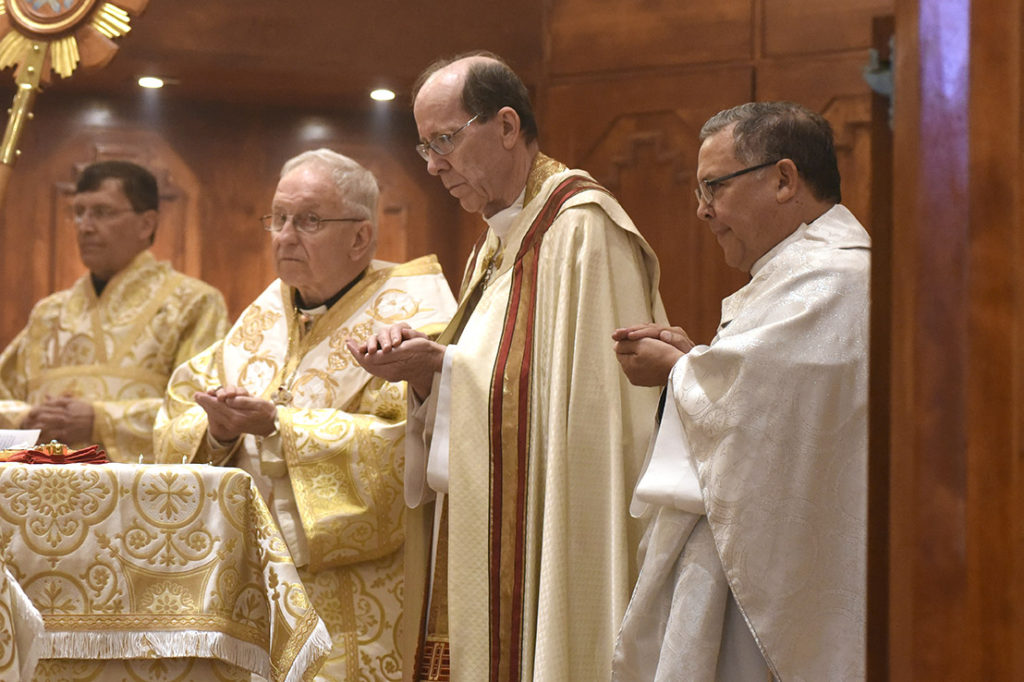
Bishop Thomas J. Olmsted (center) and Auxiliary Bishop Eduardo A. Nevares (right) of the Diocese of Phoenix join Byzantine Catholic clergy — including Bishop Emeritus Gerald N. Dino of the Byzantine Eparchy of Phoenix (left) — in concelebrating the Eucharist during the Sept. 30 Divine Liturgy celebrating St. Stephen Byzantine Cathedral’s 50th anniversary as a parish community. (Jesús Valencia/CATHOLIC SUN)

“St. John Paul II said the Church breathes with two lungs: Eastern and Western,” noted Bishop Olmsted, who was appointed Aug. 1 by Pope Francis as Apostolic Administrator Sede Plena of the Eparchy. “To have an eparchy in Phoenix, as well as the diocese in the Latin Rite [shows] we’re breathing with both lungs. It shows a fuller Church that’s alive with the Holy Spirit — the breath of God.”

Originally based out of Van Nuys, California, the eparchy moved its pastoral offices to Phoenix after a 1994 earthquake damaged its cathedral — St. Mary. The jurisdiction’s name was changed by the Vatican at the request of then-Bishop Gerald N. Dino in 2010, elevating the parish to the status of cathedral.

“It’s growing nicely. It’s gratifying,” said Dino, now the eparchy’s bishop emeritus.

Bishop John S. Pazak, CSsR, of the Byzantine Eparchy of Phoenix, preaches the homily at the Sept. 30 Divine Liturgy celebrating St. Stephen Byzantine Cathedral’s 50th anniversary as a parish community. (Jesús Valencia/CATHOLIC SUN)

While young families and immigrants from the Middle East, notably Iraq, are helping fuel the cathedral’s current growth, a core of established members has sustained St. Stephen.

Thomas and Jennifer Hetrick of Phoenix, members for about a decade, embrace the sense of family as well as the worship style, which is highlighted by chanting the liturgy without musical instruments.

“Everyone gets involved. Even visitors can pick up the rhythms. It doesn’t take much if you come several times. It is a lot more like a prayer. It reminds me of all the heritage back East and you think more about what you are doing,” said Jennifer, who is originally from West Virginia, a state that is among many where the Byzantine heritage is more prevalent due to stronger ties with Eastern Europe.

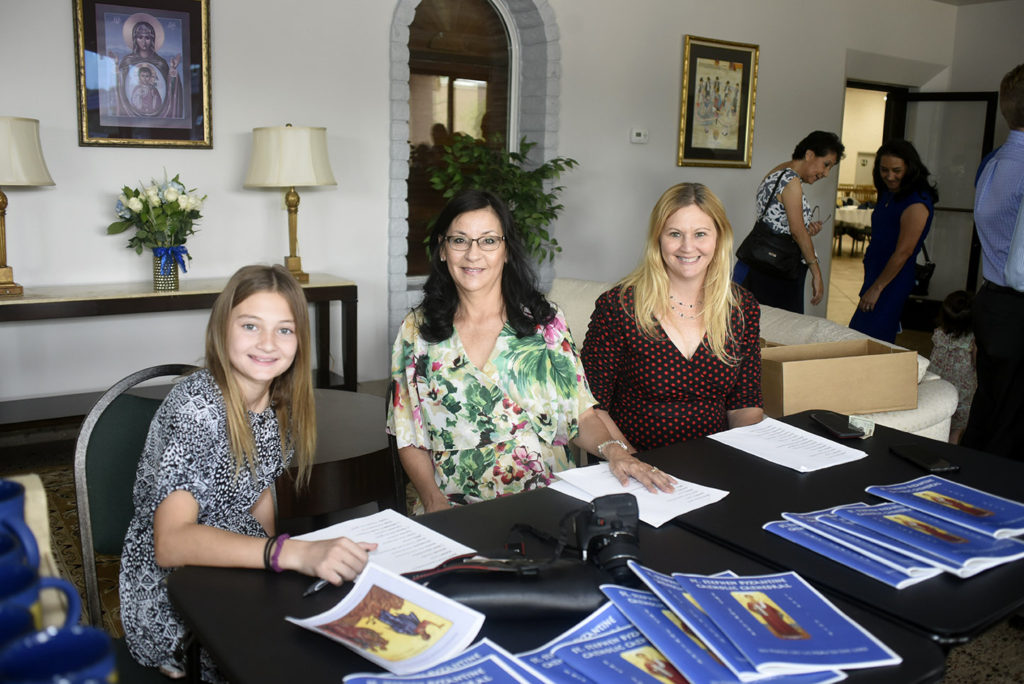
Volunteers welcome parishioners at a reception following the Sept. 30 Divine Liturgy celebrating St. Stephen Byzantine Cathedral’s 50th anniversary as a parish community. (Jesús Valencia/CATHOLIC SUN)

The liturgical tradition also appeals to Chester and Dolores Sugent, parishioners for more than 20 years who moved here from central Pennsylvania. But Dolores cited other factors, too.

“It’s the fellowship, fun and camaraderie; the support. It’s very important. It’s God house and it is important to feel at home in God’s house,” she said.

Fr. Diodoro Mendoza, rector of St. Stephen and chancellor of the eparchy noted the celebration was also a time to “… look ahead at the mountains we still must climb and to continue working in the vineyard of the Lord to proclaim the message of salvation to those around us. Today, we pay homage to the founding fathers and to every single person who has been part of this spiritual journey.”

“God has blessed us, and we want to share those blessings…and bring about the transformation of the world. That’s what Stephen was all about,” said Bishop Pazak after the liturgy, referring to the cathedral’s patron and namesake — St. Stephen, the first martyr. “He paid the ultimate price of laying down his life for Christ. As we celebrate the parish feast, it is a good chance to renew ourselves and allow Stephen to show us the way to be better followers of Christ.”


Crisis points to need for repentance, conversion, courageous witness

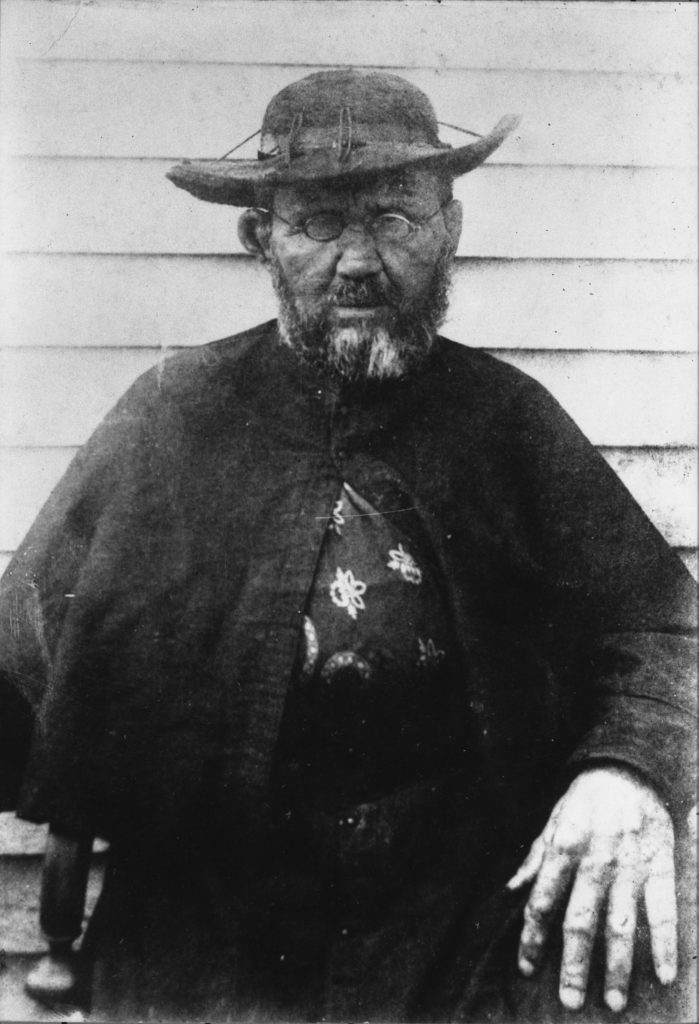
This photo of Fr. Damien, from the Hawai’i State Archives in Honolulu, Hawai’i, was taken in 1888, the year before his death, by William Brigham outside St. Philomena Church. Brigham had come to Molokai as a companion of leprosy specialist Dr. Prince A. Morrow. The photo was among several used by artist Marisol Escobar in sculpting the statue of St. Damien that now stands at the Hawai’i State Capitol and in the U.S. Capitol’s Statuary Hall. This particular likeness was preferred for the sculpture because of the details in scarring on the face, the strongest indicator of leprosy. (Public Domain/WIKIMEDIA COMMONS)

Tumultuous. That’s the word that comes to mind when I ponder the unfolding crisis in the Catholic Church. Like many of you, I’ve been reading about the scandals, the cover-ups, the accusations and the sharp divisions among the hierarchy.

None of this turmoil should surprise us, really. In its 2,000-year history, the Church has weathered many a crisis, and yet Christ’s promise that the gates of hell would not prevail against the Church are as true today as they were when He uttered them to St. Peter so long ago.

What I’m hearing from others — and frankly feeling myself — is anger and sadness that this nightmare we thought had been taken care of has actually continued to fester at the highest levels of the Church.

As a lifelong Catholic, I was raised with the unspoken understanding that you didn’t ever question a priest’s or a prelate’s intentions or integrity. Those days are over. And really, that’s a good thing. Our faith has never been in men who, like the rest of us, are human. Our faith is in Jesus Christ who conquered sin and death and who promised never to abandon us.

Joyce Coronel is a regular contributor to The Catholic Sun and author of “Cry of Ninevah.” Opinions expressed are the writers’ and not necessarily the views of The Catholic Sun or the Diocese of Phoenix.

In the midst of all this upheaval, we must give thanks. Thanks that dark deeds are being exposed to the light, thanks that victims are coming forward to tell their stories, thanks that priests are recounting what they experienced in a formation poisoned by sin.

At the same time, we should focus on the fact that we’ve been blessed in our time and through the centuries with heroic priests, bishops and popes, men who call us to holiness by their preaching and their lives, men who refuse to be silent about sin and who point us to repentance and conversion of heart.

Office of Child and Youth Protection

The Diocese of Phoenix encourages anyone who has been a victim of child sexual abuse or knows of any abuse by any employee or volunteer of the Roman Catholic Church to come forward by reporting to law enforcement, the Department of Child Safety and the Office of Child and Youth Protection.

FILE A REPORT

MORE INFORMATION


Safe Environment Training

The mission of the Safe Environment Training Office is to prevent sexual, physical or emotional abuse and/or neglect of children and young people through continued education, building awareness, and maintaining a commitment to keeping all children and young people safe.

MORE INFORMATION

St. Damien of Molokai was one such priest. In 1873, while serving in Hawai’i, he volunteered to serve an ostracized colony of lepers where an atmosphere of immorality, drunkenness and lawlessness prevailed. At the time, it was erroneously believed that leprosy (now known as Hansen’s Disease) was highly contagious. Fr. Damien was warned not to touch anyone, yet, as depicted quite movingly in the biographical movie “Molokai: The Story of Father Damien,” he embraced and cared for the poor and suffering, tending to their maggot-infested wounds, hearing their confessions, praying over them and leading them to Christ.

“I make myself a leper with the lepers to gain all to Jesus Christ.” Those were his words. “The Eucharist,” he said, “is the Bread that gives strength … He gives Himself every day so that our hearts as burning coals may set afire the hearts of the faithful.”

After 11 years serving the lepers of Molokai, Fr. Damien contracted the disease himself but refused to leave the colony for treatment. His personal holiness, his willingness to suffer in union with Christ, his fierce courage to spread the Gospel — that is what we need from our clergy today. That is the greatness priests — and frankly all baptized Christians — are called to. We are the heirs of courageous martyrs and saints who risked everything to follow Jesus, who did not conform to a sinful world but were transformed by God. The widespread, genuine conversion of heart that is needed in our time will not take place through adherence to political correctness and the refusal to name and expose evil. It will only happen when each of us truly repents, submits completely to Christ and follows Him humbly along the narrow way.

“Let your light shine before men.” How beautifully St. Damien followed the words of Jesus, spreading the light of salvation and still inspiring us today with his generous spirit. May each of us embrace that call in these dark days, striving for holiness, proclaiming the Gospel and serving the poor and the least among us. Let repentance, conversion and healing begin today with you and with me. Through the intercession of St. Damien, may the Lord purify our Church and embolden us to be true followers of Christ.