
Abortifacients and agendas

Dr. Jim Asher is a graduate of Marquette University and Des Moines University. He earned a master’s degree in bioethics from Midwestern University. He and his wife of 50 years, Rose Neidhoefer of Milwaukee, have seven children and 14 grandchildren. He is a retired family physician. He is a parishioner at Ss. Simon and Jude Cathedral, an officer in the Catholic Physician’s Guild, and a member of the Knights of Columbus. Opinions expressed are the writers’ and not necessarily the views of The Catholic Sun or the Diocese of Phoenix.

How many legs does a dog have if you call the tail a leg? Four. Calling a tail a leg doesn’t make it a leg. — Abraham Lincoln

Faced with harsh reality or pleasant illusion, many if not most of us, opt for the latter. Part of the illusion, however, has to be that what is proposed is good, ethical, and that it’s possible to attain – so what if truthfully, it’s an impossibility. You know, like calling a dog’s tail a leg.
Dr. Jim Asher is a graduate of Marquette University and Des Moines University. He earned a master’s degree in bioethics from Midwestern University. He and his wife of 50 years, Rose Neidhoefer of Milwaukee, have seven children and 14 grandchildren. He is a retired family physician. He is a parishioner at Ss. Simon and Jude Cathedral, an officer in the Catholic Physician’s Guild, and a member of the Knights of Columbus. Opinions expressed are the writers' and not necessarily the views of The Catholic Sun or the Diocese of Phoenix.
Dr. Jim Asher is a graduate of Marquette University and Des Moines University. He earned a master’s degree in bioethics from Midwestern University. He and his wife of 50 years, Rose Neidhoefer of Milwaukee, have seven children and 14 grandchildren. He is a retired family physician. He is a parishioner at Ss. Simon and Jude Cathedral, an officer in the Catholic Physician’s Guild, and a member of the Knights of Columbus.
Opinions expressed are the writers’ and not necessarily the views of The Catholic Sun or the Diocese of Phoenix.

So consider abortion. Even little kids by now, know full well it’s wrong and is the taking of a human life. But what are your options if you really, in the worst way, don’t want a pregnancy and you also don’t want an abortion? In many instances, an illusion will do nicely.

Some definitions

The onset of pregnancy is a process that can begin after sexual intercourse, within a woman’s body. Left undisturbed and assuming normal development, it starts with a single cell and will result in a fully developed baby in about nine months.

The discoveries in embryology, that pregnancy came about from the combination of sperm and egg, began in the 1660’s, with actual observation of the phenomena in frog eggs and sperm in 1853.

This combining of the human egg from the mother’s ovary, and a single sperm from the father, occurs in the fallopian tube. The one-celled baby, called a zygote, just now formed, has all the incipient physical characteristics it will ever have — sex, coloration, stature, intellectual capacity, weaknesses, and appearance. All are determined in this single, teensy, momentous, event. By the end of the second day this zygote-baby has grown into two cells. By about the eighth day it has grown into a 200 — 300 celled blastocyst or embryo, and has reached the uterus where implantation occurs.

And all of this information is totally ho-hum to any embryologist or other person with a modicum of biological training.

Hope and change

Yet, remarkably, in 1965, five years after the introduction of the birth control pill and six after the re-introduction of the intrauterine device or IUD, the American College of Obstetricians and Gynecologists cast aside some 300 years of scientific work in embryology. They did this to proffer the illusion that pregnancy does not occur when the sperm and egg combine. No, they redefined conception and therefore pregnancy, to be… implantation.

Why? Well, if we indulge in the reality that presence of a zygote, or a blastocyst – embryo defines pregnancy, then we’re saying conception has occurred. Ooh. Bad. What to call anything that stops the pregnancy? To call it by its true name – abortifacient – would to some, sound unethical and disturb too many consciences. So an illusion was desperately needed.

Abortifacients

Abortifacient means something that interrupts a pregnancy, for example by preventing implantation, which is how the birth control pill or similar hormonal delivery methods, the IUD, the “morning after pill” and low dose RU-486 work at least some of the time. Asserting that pregnancy doesn’t start until implantation means these agents can be called “contraceptives” and ignores their true abortifacient potential.

The federal government, reacting to conscience objections of some practitioners also adopted this illusion in 2008, but at least at that time they allowed individual consciences to dictate what was an abortifacient.

So who’s been fooled, and who else is doing the fooling? Well, for one, Planned Parenthood. In their Guttmacher Institute literature, they would have you believe that not only the utterly unassailable Federal Government, but the vast majority of obstetrician-gynecologists believe the illusion.

The implication being, I suppose, if you don’t believe, well you’re really out of step with people who are way smarter and probably better looking than you.

So who claims to believe it?

A poll was taken in November 2011 by Reuters US of more than 1,000 obstetrician gynecologists to see what they believed. Pregnancy begins when the egg and sperm combine, said some 57 percent. Only 28 percent claimed pregnancy began with implantation. Peculiarly and oh please, 15 percent of these highly trained clinicians said they were unsure.

Pregnancy onset would seem intuitively obvious to a freshman high school biology student. Truth is often like that. It takes really intelligent, agenda driven people to come up with these and other such completely irrational illusions and euphemisms. See John 8:32 about truth making you free.

Benedicamus Domino.

Mary’s impact on full display [VIDEO]

The exhibit, “Picturing Mary: Woman, Mother, Idea,” celebrates Mary through beautiful art that visually captures her significance in the Catholic faith.

Priest sees Ferguson as ground zero where change can be made in society

Parishioners from 10 churches in Ferguson, Mo., walk to City Hall Nov. 2. Former Ferguson mayor Brian Fletcher, a parishioner at Blessed Teresa of Calcutta, said his "heart is broken" over the destruction caused by rioters in the St. Louis suburb. (CNS photo/Lisa Johnston, St. Louis Review)

ST. LOUIS (CNS) — The destruction throughout Ferguson left Blessed Teresa of Calcutta parishioner and former mayor Brian Fletcher speechless.

“My heart is broken,” he wrote in an email. “Words can’t describe the near destruction of our beloved city of Ferguson.”

Hours after the Nov. 24 announcement that a grand jury wouldn’t indict Police Officer Darren Wilson in the shooting death of Michael Brown, vandals hijacked protests and violence exploded in Ferguson, overwhelming law enforcement and firefighters.

Businesses near three major intersections were looted and burned. Windows were broken at businesses near the Ferguson police department.

Firefighters arrived to fight the fires but took gunfire and withdrew for their safety. In all, 21 businesses were destroyed by fire.

Father Robert “Rosy” Rosebrough walked through the area Nov. 25, the day after the violence, and quietly blessed businesses and employees, who are now out of work. Among the discussions in the aftermath of Brown’s death, lack of economic opportunity in poor communities has been at the forefront, yet the robbing, looting and arson eliminated the source of employment and economic opportunity for many.

“My heart was very saddened and disappointed with the violence, looting and destruction of property,” Father Rosy wrote in a reflection on the Blessed Teresa website. “Many people will have no income for months. The effects of hatred, violence and hopelessness have a tremendously rippling impact upon the lives of many people.”

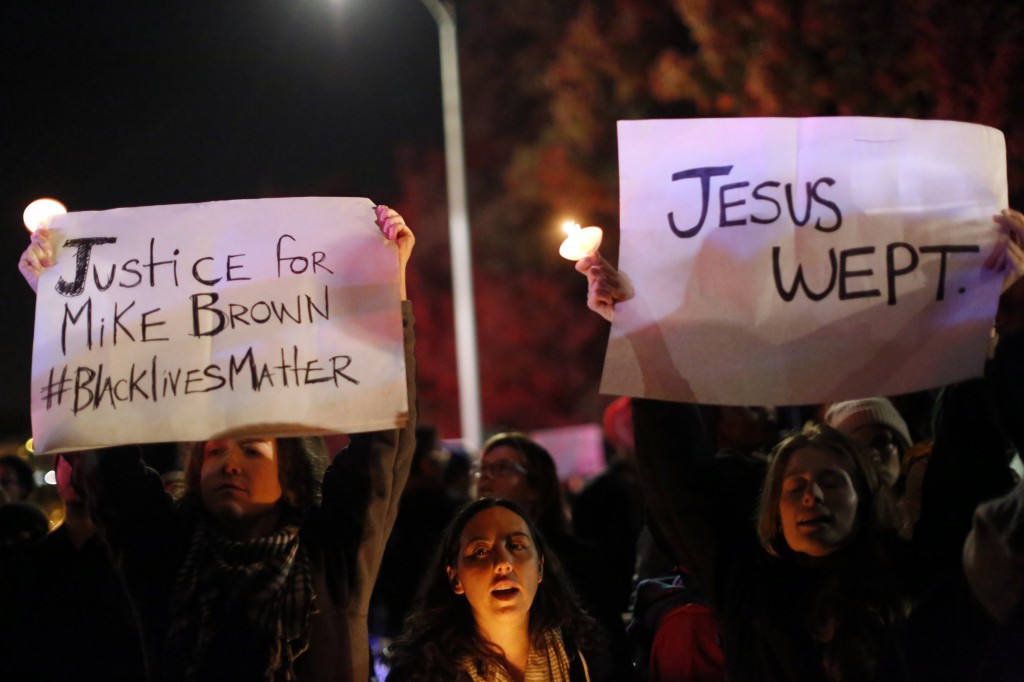
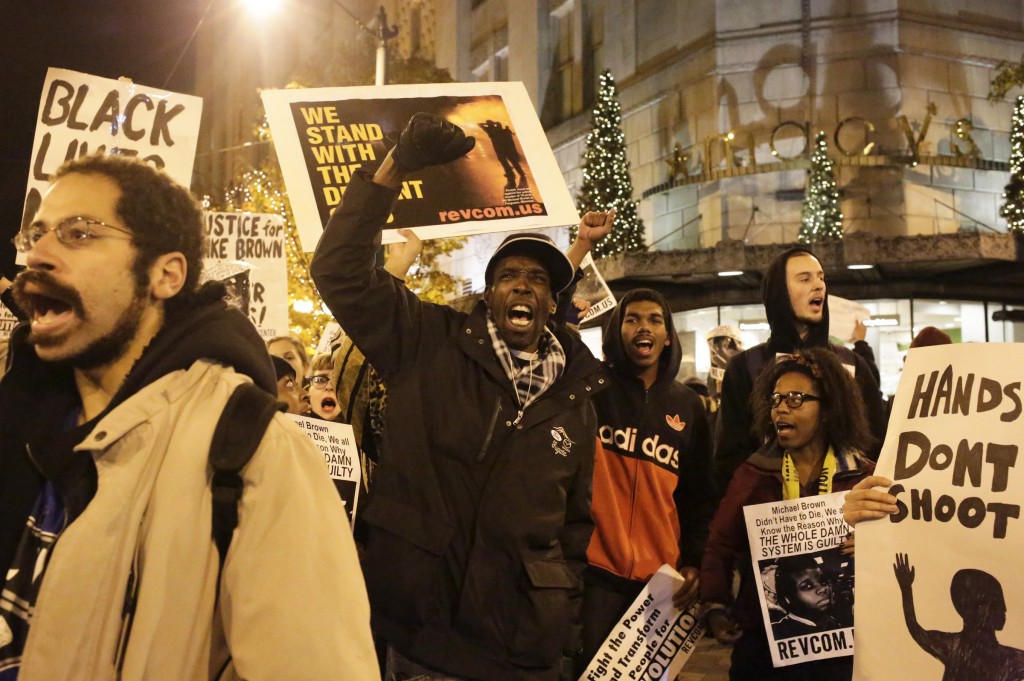
Demonstrators hold signs during a Nov. 24 Oakland, Calif., demonstration following the decision by a Missouri grand jury not to indict a white Ferguson police officer in the Aug. 9 fatal shooting of unarmed black teenager Michael Brown in the St. Louis suburb. (CNS photo/Stephen Lam, Reuters)

Father Rosy drew strength from St. Catherine of Alexandria, a fourth-century martyr whose feast day was Nov. 25.

“What struck me … was that no matter where St. Catherine was, free or in prison, she was going to be true to herself and her mission, like a piston of a motor that continually revolves, again, again and, again,” he stated. “As a rhythm ingrained in her very being, she would always offer the gift of hope and tell others of the abundant life the Jesus Christ is offering to all of humankind.”

He offered hope, something devoid of many among the protesters upset by the fatal shooting of 18-year-old Brown, an African-American, and the grand jury decision not to indict Wilson, who is white.

Protests are ongoing in Ferguson and around the country. On Dec. 1, workers and high school and college students in several cities walked off the job and away from classes to protest.

“When you are filled with hopelessness, there is no room in (your) heart to think about the consequences of (your) actions. It is in this world of brokenness that Jesus Christ came in Bethlehem 2,000 years ago.”

A news panelist “commented that many young African-American men are overwhelmed with a sense of hopelessness and have no regard for their own life or for anyone’s property,” Father Rosy wrote on his parish website. “When you are filled with hopelessness, there is no room in (your) heart to think about the consequences of (your) actions. It is in this world of brokenness that Jesus Christ came in Bethlehem 2,000 years ago.”

Father Rosy has called Ferguson the “New Bethlehem,” ground zero where change can be made in society by “leaning in,” as he said, and truly listening to the words others are saying.

“When we listen to the stories of others, when we hear their pains and frustrations and they hear ours, we discover that we are brothers and sisters,” he concluded.

There are good people in Ferguson, whether at Blessed Teresa, nearby Our Lady of Guadalupe Parish, or just people willing to help out. Pro Football Hall of Famer Aeneas Williams, the former Ram who remained in St. Louis after retirement and became a pastor, was among those helping to clean up businesses Nov. 25.

Like Father Rosy, Sister Cathy Doherty, a School Sister of Notre Dame and pastoral associate at Our Lady of Guadalupe, walked around Ferguson in the aftermath of the violence and observed “lots of good people helping everyone.”

Though heartbroken now, Fletcher has hope that Ferguson will rebound from this, just as it did in recent years with massive destruction by tornadoes.

“I believe God only gives us what we can handle,” stated Fletcher, chairman of the “I Love Ferguson” committee. “From the ashes, we will rise a better and stronger Ferguson. God Bless Ferguson. … Let’s show the world the power of peace and unity.”

— By Dave Luecking, Catholic News Service. Luecking writes for the St. Louis Review, newspaper of the St. Louis Archdiocese.

Hong Kong cardinal surrenders to police to help end street protests

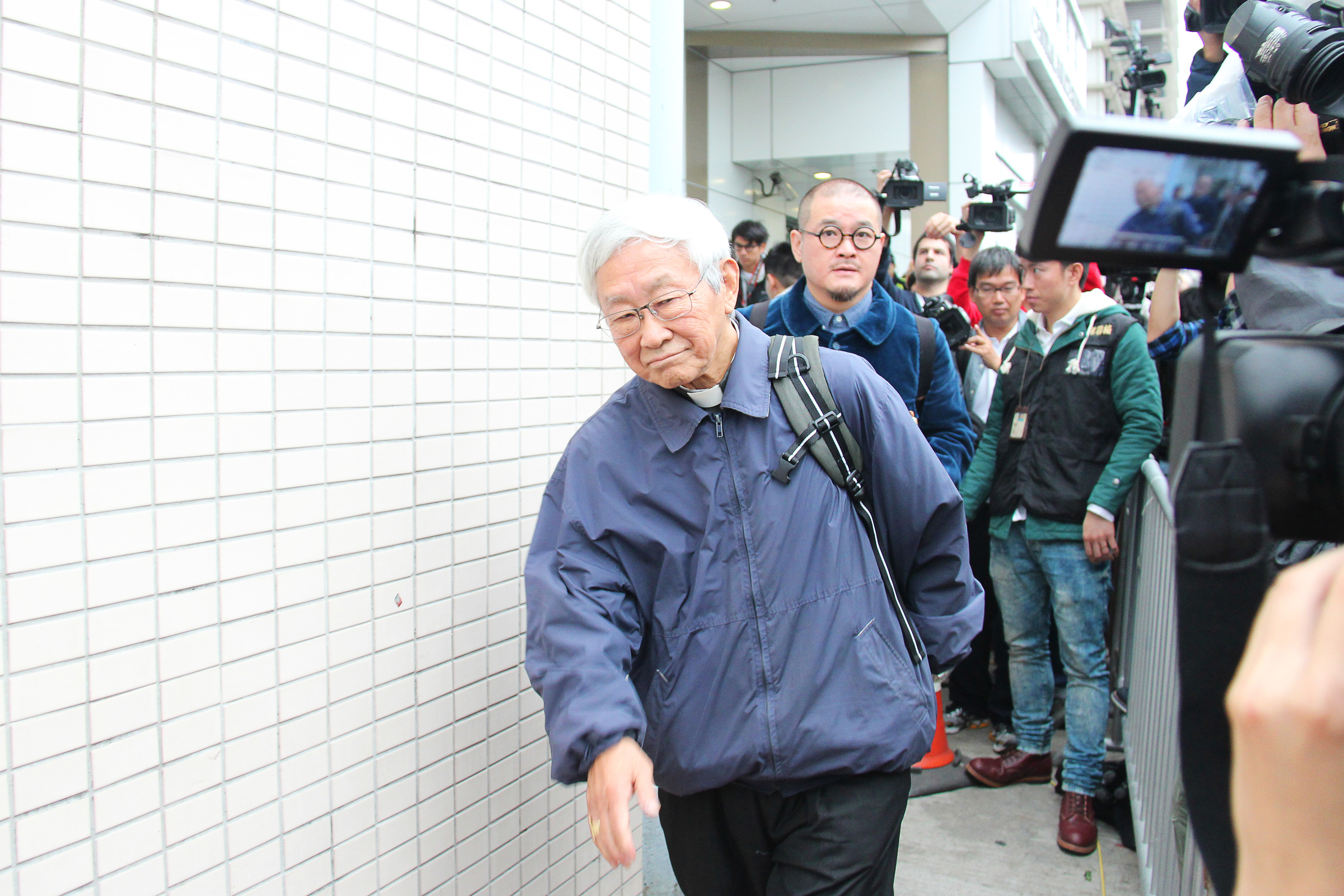
Cardinal Joseph Zen Ze-kiun, retired bishop of Hong Kong, leaves the police station after surrendering to police Dec. 3. Cardinal Zen asked faithful to pray for the democracy in the city after he stayed at the police station for an hour, documenting his involvement in the Occupy Central movement. (CNS photo/Francis Wong)
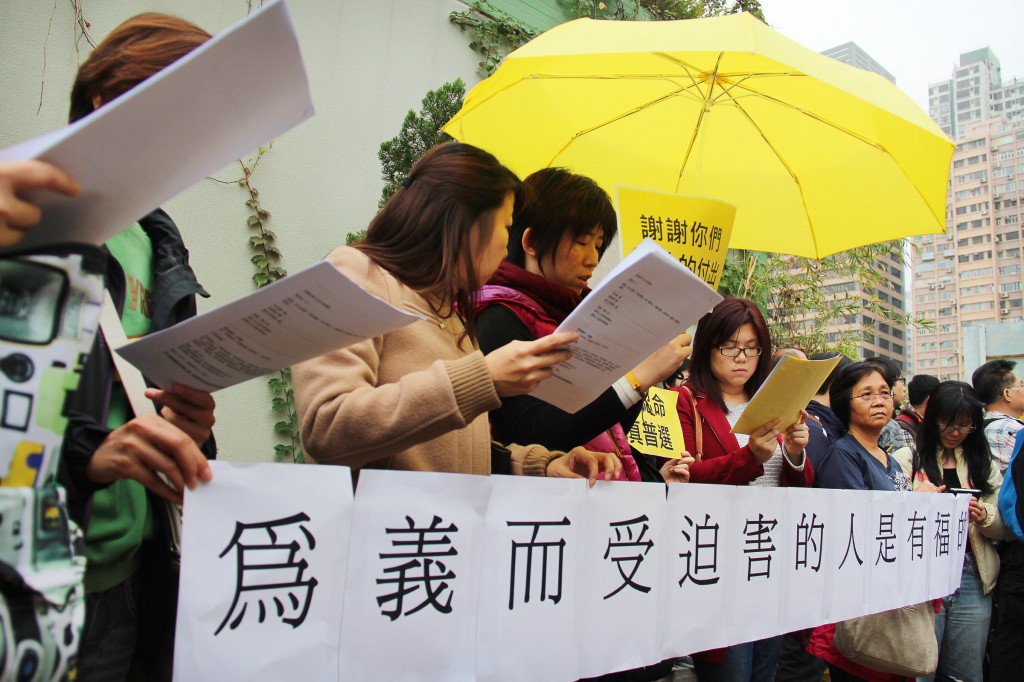
Hong Kong residents hold a banner that reads "Blessed are those who are persecuted for righteousnessÕ sake." The Occupy Central movement was initiated as an effort to force the Hong Kong and Chinese governments to allow true democracy in the city. (CNS photo/Francis Wong)
Hong Kong residents hold a banner that reads “Blessed are those who are persecuted for righteousness’ sake.” The Occupy Central movement was initiated as an effort to force the Hong Kong and Chinese governments to allow true democracy in the city. (CNS photo/Francis Wong)

HONG KONG (CNS) — Cardinal Joseph Zen Ze-kiun, retired bishop of Hong Kong, joined the civil disobedience movement organizers who surrendered to police Dec. 3, with a hope to end the present occupation campaign that has lasted more than two months.

Cardinal Zen remained at the police station for an hour. As he left, he asked people to pray for democracy in the city.

The Occupy Central movement, a civil disobedience campaign to block roads in central business area, was initiated by Benny Tai Yiu-ting, an associate professor of law at the University of Hong Kong, and the Rev Chu Yiu-ming, a Baptist pastor, in an effort to force the Hong Kong and Chinese governments to allow true democracy in the city. The protesters feel government authorities have handpicked candidates for the 2017 election of Hong Kong’s chief executive.

Cardinal Joseph Zen Ze-kiun, retired bishop of Hong Kong, leaves the police station after surrendering to police Dec. 3. Cardinal Zen asked faithful to pray for the democracy in the city after he stayed at the police station for an hour, documenting his involvement in the Occupy Central movement. (CNS photo/Francis Wong)

Cardinal Zen had said on his blog in late November that struggling for democracy may be a long road, but a “miracle may take place, like David hurls a stone to hit down Goliath. And no one would expect that the Berlin Wall fell down all of a sudden 25 years ago.”

The cardinal, 82, is a supporter to the Occupy Central movement. Last June, he launched a walking campaign, walking 52 miles over seven days in different areas in Hong Kong, to ask more people to join an unofficial referendum on democratic reforms.

Benny Tai also turned himself in to police Dec. 3. He told reporters after he left the police station that it was time to promote civic education in different platforms, instead of continuing the occupation, as insisted on by the student group.

Recently, protesters and the police had clashed violently. Many academics said police used excessive force to clear the roads.

By Francis Wong, Catholic News Service.

Every Catholic is called to evangelize, counter lukewarm faith, speaker says

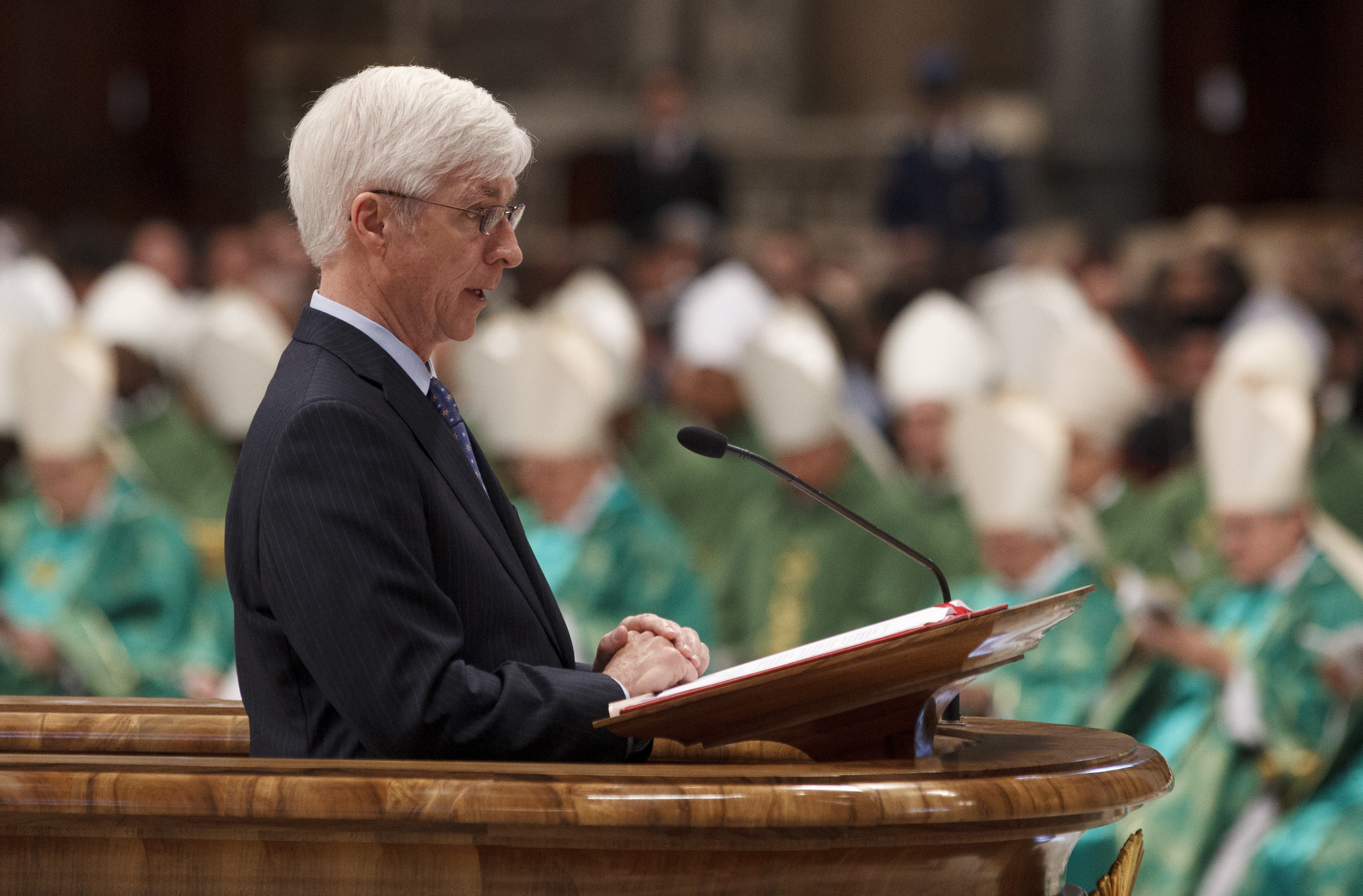
Ralph Martin, a professor at Sacred Heart Seminary in Detroit, reads the first reading as Pope Benedict XVI celebrates the closing Mass of the Synod of Bishops on the new evangelization in St. Peter's Basilica at the Vatican Oct. 28. (CNS photo/Paul Haring)
Ralph Martin, a professor at Sacred Heart Seminary in Detroit, read the first reading as Pope Benedict XVI celebrated the closing Mass of the Synod of Bishops on the new evangelization in St. Peter’s Basilica at the Vatican Oct. 28, 2012. (CNS photo/Paul Haring)

SIOUX CITY, Iowa (CNS) — Ralph Martin, a leader in the Catholic renewal ministries movement, told an audience at an evangelization summit in Sioux City that he sees a danger in lukewarm faith and a de-Christianized spirit in society today.

Cardinal Donald W. Wuerl of Washington warned at the last synod, he said, “that our society was being engulfed by a tsunami of secularism. We have to recover our confidence in the truth of our faith.”

Martin, who is president of Renewal Ministries in Ann Arbor, Michigan, was in the Sioux Diocese recently to address a convocation of priests, a retreat for diocesan staff and a summit on the new evangelization.

For each audience he asked and answered the question, “What’s new with the new evangelization?”

Addressing the “new” part of evangelization necessitated an explanation of evangelization first, he told the crowd at St. Michael Church in Sioux City, where one day of the summit was held.

“St. John Paul II provided us with a definition,” he said. “That is: ‘the proclamation of the word of God has Christian conversion as its aim; a complete and sincere adherence to Christ and his Gospel through faith.'”

St. John Paul sensed the moment had come to embrace a new evangelization and had specific ideas on what would make it “new,” explained Martin, the author of “The Urgency of the New Evangelization: Answering the Call.”

“(The pope) first asked who it would be directed to,” he said. “Traditionally ‘primary evangelization’ is directed to those who have never heard the Gospel message. However, this new evangelization needed to be directed to those who have a Christian background, but are not living as disciples of Jesus Christ.”

Martin was an official expert at the October 2012 world Synod of Bishops on the new evangelization. He is director of graduate programs in the new evangelization at Sacred Heart Major Seminary in Detroit and has been a leader in charismatic renewal since the 1970s.

In his presentation at St. Michael, he asked, “Who implements this new evangelization?”

“Previously, we thought priests and nuns and people who work full time for the Catholic Church,” he said. “But Pope John Paul said, in referencing Vatican II documents, every single person is called to evangelize and they are empowered to do so when they are baptized.”

Martin believes most Catholics have a foggy idea of what their Catholic mission should be.

“There are three fields of lay participation in the mission of the Church,” he said, referring to the Second Vatican Council’s Decree on the Apostolate of Laity People. “1) the mission of evangelization and sanctification; 2) the mission of renewing the temporal order; 3) the mission of mercy and charity.”

Martin added a fourth: A willingness to talk about Jesus.

“If you don’t have the fourth element,” he paused. “It’s core to the others, but it makes us squirm.”

Martin praised Pope Francis who has kicked evangelization up a notch.

“We don’t all have to be preachers, but we have to be able to be informal preachers,” he said. “Bring Jesus, bring prayer, bring your faith into conversations.”

— By Joanne Fox, Catholic News Service. 


Police officer leans on Catholic faith during Ferguson crisis

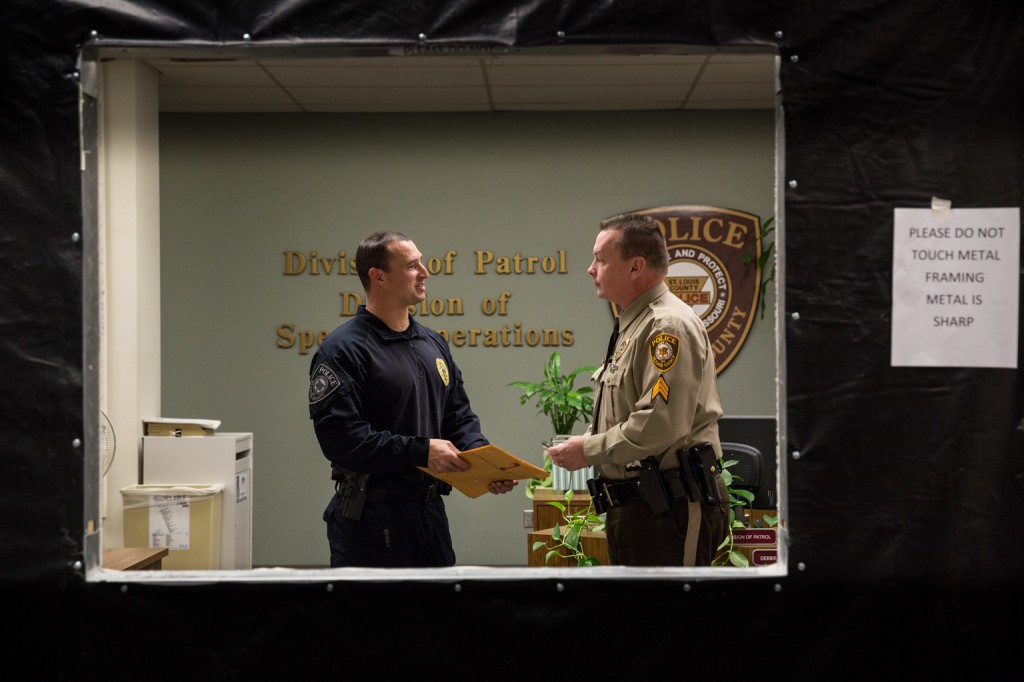
Sgt. John Wall poses outside of the St. Louis County Police Department in Clayton, Mo., Nov. 21. Wall has relied on his Catholic faith during the ongoing crisis in Ferguson, Mo., which began with the fatal shooting of a black teen by a white police officer Aug. 9. The St. Louis County prosecutor announced Nov. 24 a grand jury determined there was not enough evidence to indict Ferguson Police Officer Darren Wilson in the shooting death of Michael Brown. (CNS photo/Lisa Johnston, St. Louis)

ST. LOUIS (CNS) — Among the iconic images of the 9/11 tragedy, photographs of policemen and firefighters stand out: The first responders were entering the doomed World Trade Center as most everyone else was filing out.

They embraced the danger of the moment, most going ultimately to their death, because the job requires it. First-responders sign up for this risk; they accept it as part of their service.

Similarly, in the situation that has become known as simply “Ferguson,” Sgt. John Wall of the St. Louis County Police Department knew in the second week of August that the time had come to stand up and be counted. Peaceful protests after the Aug. 9 shooting death of Michael Brown by a police officer during a confrontation had devolved into rioting and looting.

A QuikTrip near the shooting site had been looted and burned. Police had lobbed tear gas and shot rubber bullets to disperse crowds, presumably while real bullets flew in their direction. The situation was fraught with danger.

But did Wall think twice about going into it? Nope.

“I volunteered,” he said, on a recent morning at a coffee shop.

Sgt. Matt Pleviak talks with Sgt. John Wall Nov. 21 at the St. Louis County Police Department in Clayton, Mo. Wall has relied on his Catholic faith during the ongoing crisis in Ferguson, Mo., which began with the fatal shooting of a black teen by a white police officer Aug. 9. The St. Louis County prosecutor announced Nov. 24 a grand jury determined there was not enough evidence to indict Ferguson Police Officer Darren Wilson in the shooting death of Michael Brown. (CNS photo/Lisa Johnston, St. Louis)

“I volunteered; it was kind of ‘all hands on deck,’ so everybody had to work it at some time,” he explained, matter-of-factly. He added, “I was fortunate enough to work it the entire time.”

Wall, a 50-year-old married father of a teenager, not only volunteered for duty, willfully taking the risk, but counted himself as fortunate for being there.

This from a man who in 12-hour shifts on his two weeks of voluntary duty was spit on, was hit by rocks, bricks and bottles of urine, and was berated — with protesters calling him every name in the book.

“In those two weeks, I was called more things than in the 25 years I’ve been in this business,” said Wall, who became a police officer in 1989 and joined the county force in 1998. “I’ve worked narcotics, I’ve worked homicide and I’ve never been talked to like that. Ever.”

In those moments, his Catholic faith guided Wall, particularly the part about loving thy neighbor.

“Faith comes into every aspect of this job. You have to forgive.”

“Faith comes into every aspect of this job,” said Wall, who became a Catholic in 1991. “You have to forgive. I can’t personally hold a grudge against any of these people; they were not screaming at me as an individual. I understand, and most of us understand, they’re looking at a uniform and not a face. They don’t know me and everything that I stand for.

“You have to have forgiveness in your own heart,” he told the St. Louis Review, the archdiocesan newspaper, in an interview some days before the grand jury handed down its decision that there would be no indictment of the police officer who killed.

When Ferguson Police Officer Darren Wilson, who is white, fatally shot 18-year-old Brown, an African-American, racial unrest in the St. Louis suburb led to protests. Some demonstrators looted and burned local businesses.

When it was announced that after three months of looking at the evidence and hearing more than 70 hours of testimony, the grand jury declined to indict Wilson, violent protests followed. Protests have continued in Ferguson and across the country.

From the beginning, Wall and fellow officers have leaned on the pastoral care of county police chaplains. Chaplains started each shift with a prayer before the officer’s role call and briefing at the police command center. Catholic priests served among chaplains of many religions.

“No one went to church for two weeks either; you’re working the whole time. So, it was very helpful to have the chaplains there,” Wall said.

The prospect of having Mass or other religious services at the command post was out of the question. Work consumed the officers, for one, and it wasn’t safe anyway. Bomb threats prompted Gov. Jay Nixon to call out the National Guard to protect the command center and make it a safe haven for officers.

Demonstrators march through the Seattle streets Nov. 24 following a decision by a Missouri grand jury not to indict a white Ferguson police officer in the Aug. 9 fatal shooting of unarmed black teenager Michael Brown in the St. Louis suburb. (CNS photo/Jason Redmond, Reuters)

The scene of the unrest on the quarter-mile stretch of West Florissant in Ferguson was unsafe. A native of St. Louis, Wall describes the venom directed at him and other officers in Ferguson as “unbelievable,” particularly since he knew, or at least recognized, some of the people hurling insults.

“The people we took it from were … people I had good relations with,” he said, adding that he gave those people the benefit of the doubt. “There were people that just got caught up in the heat of the moment.”

The protesters “came from all walks of life — young, old, ministers,” Wall said, noting that one woman among the latter “really laid into me, saying things like how we mistreat people, how we beat people, how we should be ashamed of ourselves, and all the people that I’ve killed. I was just looking at her. I haven’t killed anybody. I haven’t fired my gun in 25 years as a police officer. Been shot at, though.”

“You just have to gut through it.”

It’s a tough time for the men and women in uniform and their families, but Wall’s attitude is to grin-and-bear it. “You just have to gut through it.”

For all of the bad Wall has experienced in Ferguson, he also has experienced much good, starting with people closest to him — “family members, friends and people of the parish.”

People also have come up to him while he’s in uniform and thanked him for being a police officer.

In the meantime, Wall’s wife and daughter worry about his safety in Ferguson.

“My family has worried way more than I’d like them to,” Wall said, adding, “I know how to take care of myself and take care of my people. They don’t need to worry about me.”

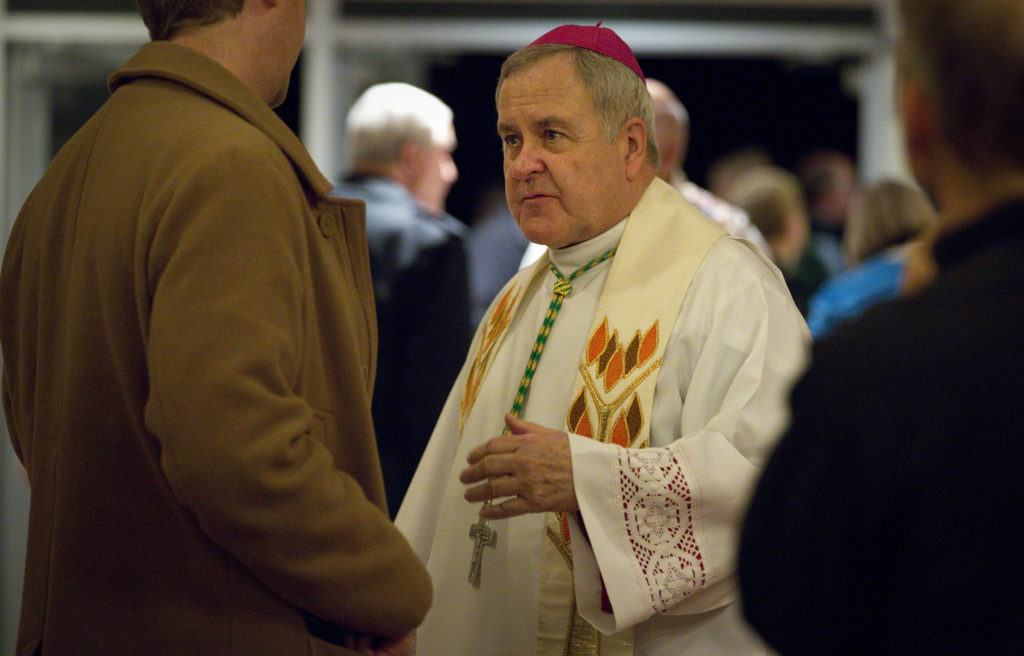
St. Louis Archbishop Robert J. Carlson greets parishioners of Blessed Teresa of Calcutta Church in Ferguson, Mo., Nov. 24 following a prayer service. The service was held as violence began to erupt in the town following the announcement that a St. Louis County grand jury determined there was not enough evidence to indict Ferguson, Mo., Police Officer Darren Wilson in the Aug. 9 shooting death of Michael Brown. (CNS photo/Lisa Johnston, St. Louis Review)

Thoughts of his wife and daughter are with Wall at all times; he has only to look at the two rings he wears on the little finger of his right hand. From his wife, he has a ring with crosses. From his daughter, he has a rosary ring. He also carries a rosary in his duty bag, hands out St. Michael the Archangel prayer cards and wears a St. Michael pendant that his wife gave him 24 years ago. St. Michael is the patron saint for policemen, and even non-Catholic officers wear the medals and carry the prayer cards in their pockets.

“Almost every policeman will have a religious trinket of some kind,” Wall said. “Faith is huge in the police department, and in the military, too. It’s a big presence.

“Like a minister, a policeman is there for good.”

— By Dave Luecking, Catholic News Service. Luecking writes for the St. Louis Review, newspaper of the St. Louis Archdiocese.

Pope Francis witnesses Christianity on the margins in Turkey

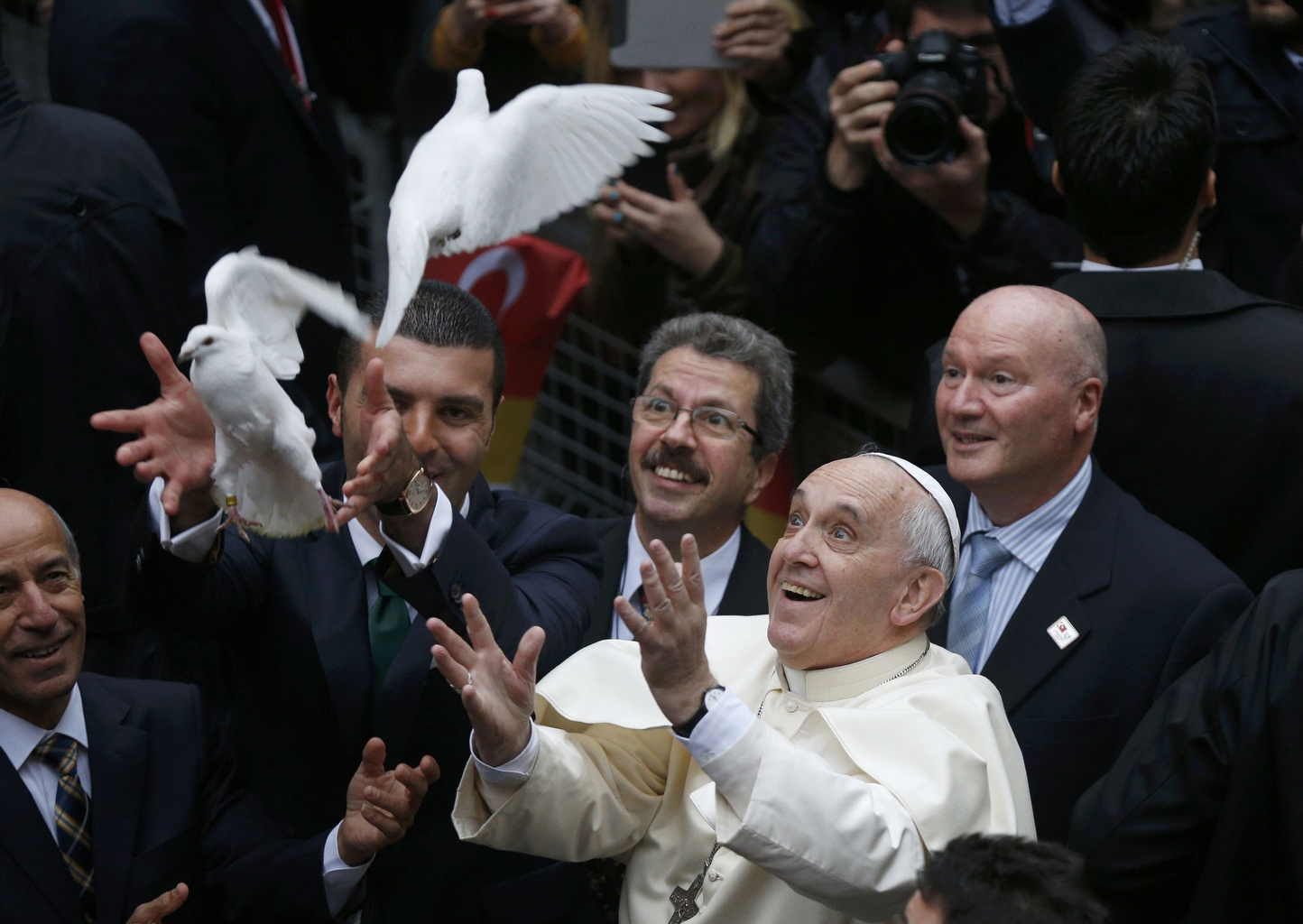
Pope Francis releases doves prior to celebrating Mass at the Cathedral of the Holy Spirit in Istanbul Nov. 29. (CNS photo/Stoyan Nenov, Reuters)

VATICAN CITY (CNS) — Ankara and Istanbul were gray and cold, at least compared to Rome, during Pope Francis’ Nov. 28-30 visit to Turkey. And the general reception, outside of the pope’s official meetings, was hardly warmer. There were none of the enthusiastic crowds that usually greet him on his trips, no masses waving signs of welcome along his motorcade route or behind police barriers at the stops.

Pope Francis, who seems to thrive on contact with the public, especially with the young, the aged and the infirm, seemed dispirited by the lack of it this time. Despite his relatively light schedule — six speeches over three days, compared to 14 during his three-day visit to the Holy Land in May — he looked attentive but increasingly weary at his public appearances.

There was an obvious reason, unrelated to the pope himself, for the general indifference to his presence. An observer did not need to know that Turkey is 99.8 percent Muslim to see that both cities he visited are dotted with the domes and minarets of countless mosques, miniature versions of the great monuments, Hagia Sofia and the Blue Mosque, that he toured in Istanbul.

Even a brief experience of Christianity’s marginality in that part of world makes it easier to understand why Ecumenical Patriarch Bartholomew of Constantinople, whom Pope Francis traveled to Turkey principally to see, is the papacy’s best friend in the Orthodox Church and an eager participant in ecumenical dialogue.

Although Patriarch Bartholomew is traditionally considered first among equals by Orthodox bishops, his Greek Orthodox flock in Turkey is estimated at no more than 4,000 people, fewer than in many American Catholic parishes. Turkish authorities have kept his church’s only seminary closed for more than 40 years. Just across the border, in Syria and Iraq, Christian minorities are being slaughtered or driven from their homes by militants of the Islamic State.

Under such circumstances, it is no wonder that Patriarch Bartholomew would tell Pope Francis Nov. 30: “We no longer have the luxury of isolated action. The modern persecutors of Christians do not ask which church their victims belong to. The unity that concerns us is regrettably already occurring in certain regions of the world through the blood of martyrdom.”

In other words, necessity is the mother not only of invention but ecumenism, which also makes it easier to understand why Patriarch Kirill of Moscow, who leads tens of millions of Russian Orthodox and is closely allied with his nation’s government, can maintain his predecessors’ stance of refusing even to meet with the bishop of Rome.

Rome obviously is a far less lonely place than Istanbul to be a Christian. But Pope Francis follows St. John Paul II and Pope Benedict XVI in recognizing that the West is, increasingly, Christian only in name. His Nov. 25 visit to the European institutions in Strasbourg, France, where he arrived to find the streets practically empty, was a recent reminder of that reality in the church’s traditional heartland.

The impressions of Christian culture that the Muslim world encounters through globalization are not the work of missionaries. Leaving Turkey’s Presidency of Religious Affairs in Ankara after the pope’s visit there Nov. 28, reporters passed a luxury shopping mall decorated with lighted Christmas trees (reminding an American present that it was Black Friday in the U.S.).

In response to the secularism of Europe and other wealthy societies, Pope Francis has taken a different tack than his two immediate predecessors. The current pope denounces a “throwaway” culture of abortion, euthanasia, unemployment, economic inequality and environmental pollution. But he rarely speaks of secularism, and his teaching focuses less on the failings of contemporary society and more on the church’s own shortcomings as impediments to evangelization.

Whatever the advantages of this pastoral strategy, Pope Francis clearly does not expect short-term results in Europe, which he described to the politicians in Strasbourg as a “grandmother, no longer fertile and vibrant” but “elderly and haggard.”

To see the church’s future now, the pope must look elsewhere, such as the Philippines, where in 1995 St. John Paul celebrated a single Mass in Manila with a congregation of more than 5 million.

Pope Francis travels there in January.

— By Francis X. Rocca, Catholic News Service. 

Cyber Monday, #GivingTuesday for Catholics

Image from Catholic Charities of Tulsa website.

Scouring the Internet looking for deals on gifts (for yourself or others)? Here are some places to save:

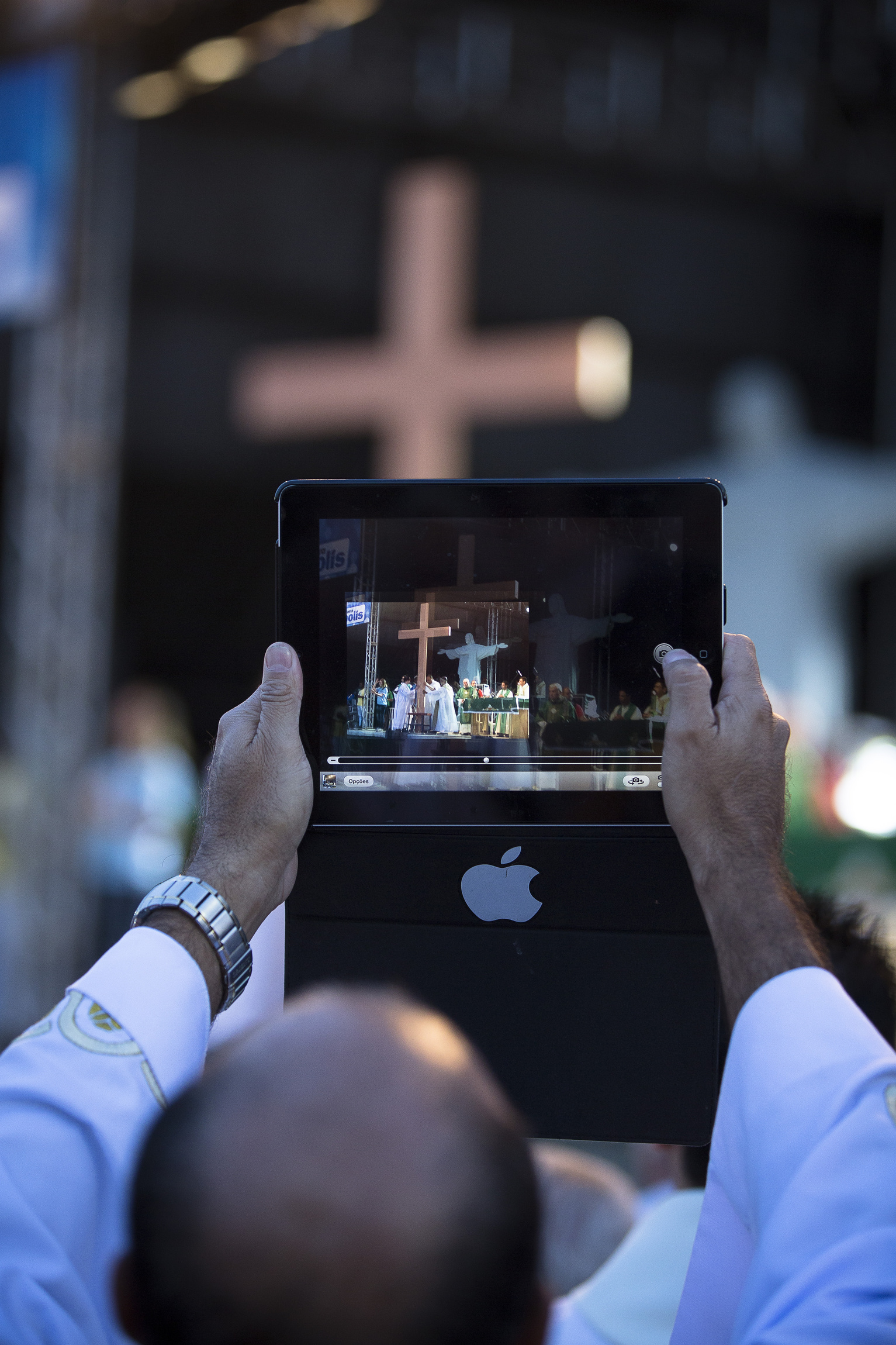
  • A priest records a video using his iPad during a Mass at the close of World Youth Day 2013's missionary week in Nilopolis, Brazil. (CNS photo/Tyler Orsburn)
    A priest records a video using his iPad during a Mass at the close of World Youth Day 2013’s missionary week in Nilopolis, Brazil. Catholics using their IOS devices or traditional computers on Cyber Monday can find some great deals that also strengthen their faith. (CNS photo/Tyler Orsburn)

    Catholic Family Gifts — Medals, devotionals, inspirational, home and more. Use code: SAVE. If you sign up for regular emails, you may be able to save an additional 10%. Joining that list also enters you into a drawing to win a children’s nativity set. Liking the store’s Facebook page grants you a second entry.

  • Catholic saint medals — The home page doesn’t mention it, but using code: SAVE works on this site too. Shipping is always free to U.S. addresses.
  • Life TeenFree shipping on all orders today. Plus, the global Catholic outreach is celebrating 12 Days of Advent with a free gift automatically added to your cart, while supplies last, each day.
  • Our Sunday VisitorSave over 50% on two popular daily devotionals featuring the wisdom of Pope Francis (through Dec. 5). More shopping.
  • Shop with @amazonsmile — A growing number of Catholic parishes and apostolates have joined the movement to allow Amazon to donate .5% of your eligible, everyday purchases to your designated charity.
  • Word on Fire15% off everything in the store. Ends Tuesday at midnight. No code needed.
  • Dennis Uniform — Has your child outgrown his/her school uniform or does it no longer look fresh? Save 20% on online purchases today only. Free shipping on orders over $85.


While you’re online, consider some of these gift giving ideas. No Cyber Monday sale per se, but you might score brownie points with the recipient:


Don’t forget #GivingTuesday is tomorrow! Check out what organizations such as Busted Halo, Catholic Mom, Catholic Relief Services and the U.S. Bishops have to say about it. There are a plethora of options not covered here, but this official Giving Tuesday video will stimulate the conversation in your mind of how and what to give.

‘The planet is sad’: Marchers pray for success of U.N. climate summit

Christiana Figueres, the U.N.'s top climate official, holds a candle at an interfaith vigil in Lima, Peru, Nov. 30, the eve of the global climate summit . (CNS photo/Barbara Fraser)

LIMA, Peru (CNS) — Dwarfed by the grown-ups holding banners and signs around her, Ruby Arizabal clutched a doll in one hand and a candle in the other.

“I’ve come here,” she told Catholic News Service, “because the planet is sad.”

The 6-year-old was one of the youngest participants in an interfaith candlelight march and prayer vigil on the eve of the U.N. climate summit, which will run from Dec. 1 to 12 in this city of 9 million people that sprawls across Peru’s coastal desert.

The summit is seen as a crucial last step on the road to a new international treaty to curb emission of greenhouse gases, which a new U.N. study says could push global temperatures to dangerous levels by the end of this century.

“We don’t just want promises — we want them to be put into action,” Elias Szczytnicki, general secretary of the Latin American and Caribbean Council of Religious Leaders of the World Conference of Religions for Peace, told the marchers.

Development that ignores environmental impacts “will have very significant consequences for future generations,” he said.

The vigil came at the end of a series of nine monthly interfaith days of fasting for the climate, said Laura Vargas, former executive secretary of the Peruvian bishops’ social action commission and one of the organizers of the fasts.

“We want to pray and to show publicly that religious communities are aware of what is happening and are committed to the idea that we must reduce emissions and we must pressure our leaders,” Vargas told CNS.

“Underlying all religious traditions are two basic principles,” she said. “The first is caring for others and the second is stewardship of nature.”

Besides the climate fast, vigil-goers said they had participated in other activities to raise environmental awareness in their communities.

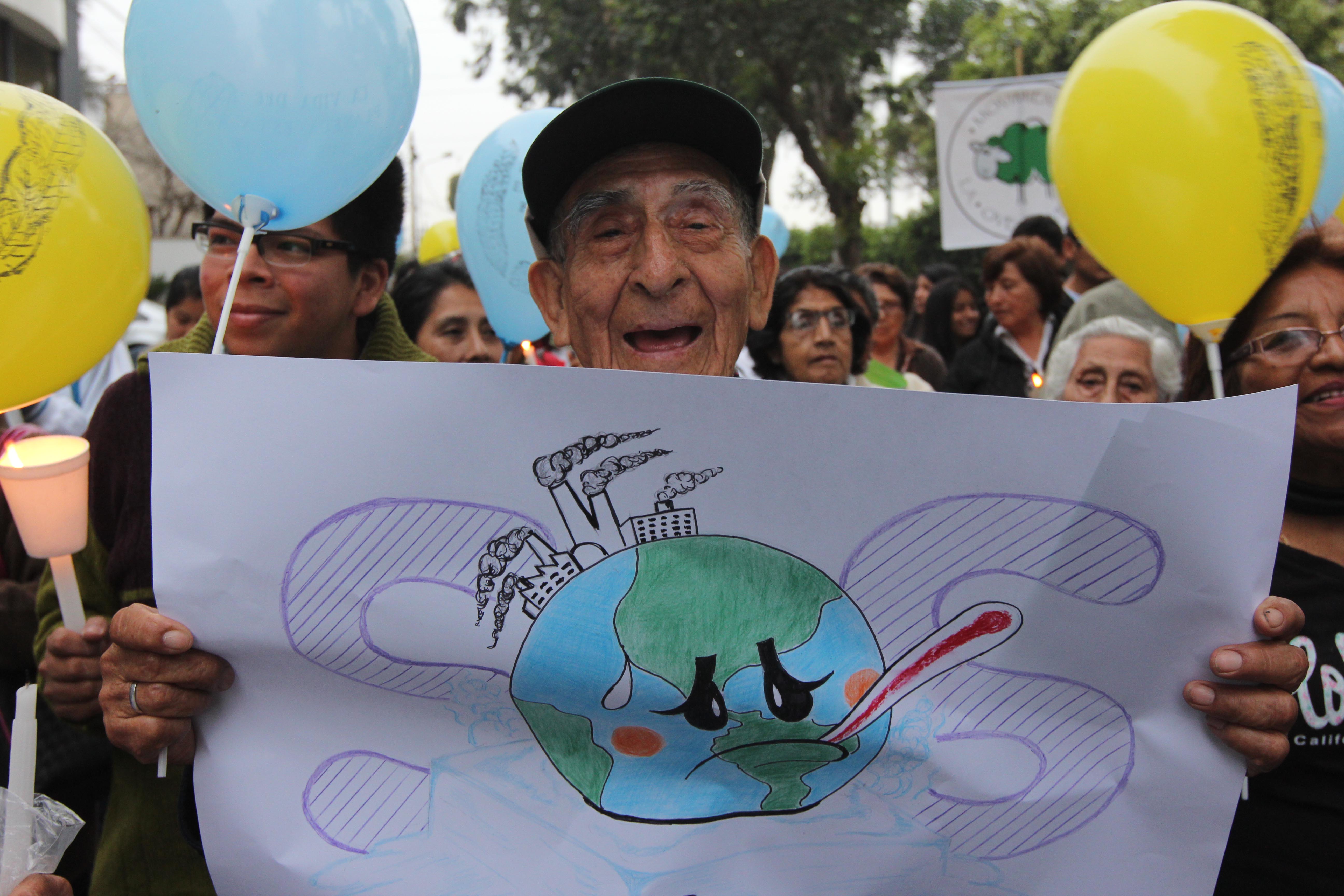
Valerio Mendoza, 83, held a poster proclaiming “SOS,” with a polluted Earth as the “O.”

Valerio Mendoza, 83, joins a Nov. 30 vigil for climate change on the eve of the U.N. climate summit in Lima, Peru. (CNS photo/Barbara Fraser)

“We’re not behaving well toward the planet,” said Mendoza, one of more than 50 parishioners from Lima’s Santa Cruz Parish who have been studying about the stewardship of creation and spearheading campaigns to clean up their neighborhoods and promote recycling.

During the 12-day summit, negotiators will try to finish drafting an agreement to reduce greenhouse gas emissions and help countries adapt to climate change. The final version, to be approved in December 2015 in Paris, would take effect in 2020.

Past climate summits have bogged down in differences between industrialized and developing countries. Some observers are more optimistic this year, after the United States and China, the world’s two largest greenhouse gas emitters, jointly announced emissions-reduction targets, and more countries made pledges to the U.N.’s Green Climate Fund.

Nevertheless, scientists with the Inter-Governmental Panel on Climate Change say bigger steps are needed to keep global temperatures from rising past the point at which irreversible changes are likely to occur.

While the largest emissions in industrialized countries come from energy and transportation, deforestation is the main culprit in Amazonian countries, including summit host Peru.

Environmentalists have criticized Peru for promoting production of oil — a major source of greenhouse gases — to help boost its economy. The country also made international headlines recently when four Ashaninka Indians were murdered on the border with Brazil, allegedly by illegal loggers.

Peruvian Environment Minister Manuel Pulgar-Vidal has said he hopes the summit will raise Peruvians’ awareness of climate issues and lead to a greater push for climate-friendly energy and land-use policies.

In his remarks at the vigil, Szczytnicki urged the Peruvian government to “adopt a clear (climate) policy and not hide behind the argument of economic growth as an excuse for relaxing environmental standards.”

He also called on the summit participants to adopt a “fair and equitable agreement” and “guarantee effective national policies to move to low-carbon economies and reduce emissions.”

Religious groups must become “green congregations” and educate the faithful about “the urgent obligation to address climate change,” he said.

Speakers at the vigil called on all men and women of good will, believers or not, to make personal decisions that are environmentally sound and that reduce their “carbon footprint,” which measures the use of fossil fuels.

“When people begin to feel that the Earth is not something to be bought and sold, but is part of us, that if you abuse it, you are harming yourself, it creates a holistic relationship,” Vargas said.

As candlelight flickered across the park just blocks from Peru’s army headquarters, where the climate summit opened Dec. 1, Szczytnicki thanked the vigil-goers for bringing “the light of hope” to the negotiations.

“In this,” he said, “lies the future of the world.”

—By Barbara J. Fraser, Catholic News Service.

Catholic store, kiosk ready for Christmas shoppers

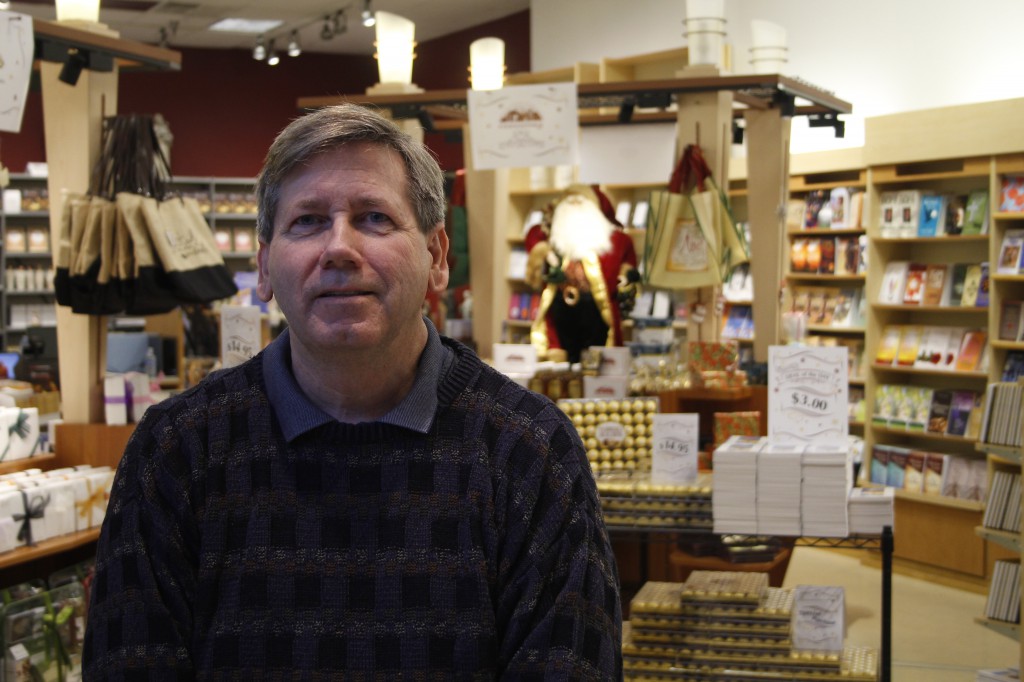
Vesuvius Press in located near Dillard's at Paradise Valley Mall in Phoenix. (Ambria Hammel/CATHOLIC SUN)
Jeff Campbell, president and chief executive officer of Vesuvius Press, hopes his new store fills a void of Catholic gift shops in the area and becomes a long-term tenant at Paradise Valley Mall. (Ambria Hammel/CATHOLIC SUN) Jeff Campbell, president and chief executive officer of Vesuvius Press, hopes his new store fills a void of Catholic gift shops in the area and becomes a long-term tenant at Paradise Valley Mall. (Ambria Hammel/CATHOLIC SUN)
Jeff Campbell, president and chief executive officer of Vesuvius Press, hopes his new store fills a void of Catholic gift shops in the area and becomes a long-term tenant at Paradise Valley Mall. (Ambria Hammel/CATHOLIC SUN)

Black Friday and the traditional Christmas shopping season doesn’t have to be a secular, commercial affair.

Shoppers at Paradise Valley Mall can find Christmas gifts straight from Bethlehem at a temporary kiosk plus Catholic books, coffee and other gift items at a new store that the owner hopes becomes permanent.

Vesuvius Press opened a 2,200-square-foot retail storefront on All Saints Day near Dillard’s in the mall. Santa and his elves conveniently sit steps away from the Catholic-owned store.

Jeff Campbell, president and chief executive officer, said the lease is good through the end of February 2015, but hopes to remain at the mall if customer demand allows it.

“Vote with your wallets and your prayers,” Campbell quipped.

Vesuvius Press began as Tau Publishing in 2002, but took a broader focus earlier this year to allow for Catholic material that wasn’t specifically Franciscan. The store carries a variety of books for children, teenagers and adults. Some are made in-house. Others were bought from publishers and now have another avenue to reach customers.

Deep discounts plus seasonal items including Nativity sets, Advent wreaths and statues lure customers in. They might get a sample of chocolate made by Our Lady of Mississippi Abbey before they leave, even if they didn’t buy anything. Vesuvius Press sells their chocolates plus Mystic Monk coffee.

Lori McChesney and a fellow shopper poked their heads in Nov. 21 even though they weren’t Catholic.

“We were curious about the store. It’s very unique,” McChesney said.

Campbell chose Paradise Valley mall for Vesuvius Press because the area lacks a nearby Catholic store. Some parishes have gift shops, but their hours are very limited, he said. Hours at Vesuvius Press mirror those at the mall.

Campbell offered free book promotions with 15-20 surrounding parishes — with 10 percent returning to the parish — and similar discounts to some Catholic apostolates. The free book promotion extends to Catholic Sun readers who mention this article.

Near the other side of Paradise Valley Mall by American Eagle Outfitters sits a kiosk with additional Catholic gifts. Khaled Hannoona is the artist and agent at the Bethlehem Gift Shop. Many of his wood-carved crosses have soil, stone, frankincense and olive leaves from the Holy Land embedded in them. The kiosk also carries wood-carved scenes such as the Nativity and the Last Supper. Shoppers at Metrocenter Mall and Arizona Mills Mall in Tempe will find a similar kiosk.

Both Hannoona and Campbell said business has been decent, but expect it to steadily increase as Christmas draws near.
[quote_box_right]

Related article

Chapel in Syracuse mall is oasis of serenity
[/quote_box_right]
The concept of a Catholic store within a shopping mall may be new to Arizona, but it has become a mainstay at The Franciscan Place. It’s a chapel and gift shop inside Destiny USA, a shopping mall in Syracuse, N.Y. Besides gift items, Mass is offered there on weekdays with confession available every day but Sunday.