Homeless, job-seeking clients staying in shelters, friend’s couches or elsewhere can connect themselves to vital resources such as Internet-ready computers, a clothing closet and a job developer aboard St. Joseph the Worker’s Mobile Success Unit (courtesy photo)
Recreational vehicles on Valley roadways do far more than transport a vacationing couple or family these days. They provide all kinds of hope.
With a little retrofitting, they allow pregnant women to see their unborn child, budding musicians to receive private lessons, and more recently, connect homeless individuals with the vital resources they need to secure suitable employment.
St. Joseph the Worker’s Mobile Success Unit has brought a transportable computer lab, job data bank, clothing closet, hygiene supplies and other materials to job seeking clients at shelters for the last 60 days. Specific mobile outreach numbers were not available, but fiscal data shows the need for satellite outreach.
Serious job searchers without resources such as internet access or funds for a bus pass to get to the interview, can visit St. Joseph the Worker’s Mobile Success Unit for assistance. Click photo to access the schedule. (courtesy photo)
St. Joseph the Worker staff has been offering a growing number of satellite locations — with the mobile unit and, before that, solely via borrowed space — for nearly 18 months. The organization helped 2,458 individuals get back to work, averaging nearly 200 every month during the 2013-14 fiscal year. That far outperforms the 925 jobs clients secured in the previous fiscal year.
It’s a simple outreach that has made a huge impact.
Ryan spent countless hours walking the neighborhood, applying for work at each location he passed. But without transportation — a typical barrier for full-time job-seekers — he was limited in his job search to his immediate area.
When Ryan met with a Job Developer on St. Joseph the Worker’s Mobile Success Unit, he shared how difficult it has been for him to secure employment in his area. The Job Developer reviewed Ryan’s background and experience, his résumé, and his preferred work field.
Ryan was a great candidate for a job opening at one of St. Joseph the Worker’s employer partners located in Ryan’s own neighborhood. To apply, however, he would have to travel to the main office on the other side of the valley.
St. Joseph the Worker gave Ryan a daily bus pass and the contact information for the employer. Moments later, he stepped out of the renovated RV full of excitement. He finally had a solid employment lead in his area and the transportation needed to turn in his application and interview for the position.
[quote_box_right]Satellite locations include every Tue./Thu. at Paz de Cristo in Mesa and select Tuesdays at St. Anne’s Friends of the Needy in Gilbert[/quote_box_right]St. Joseph the Worker helps people like Ryan every day. With 22 satellite locations plus the mobile unit, the agency is on track for continued growth. The organization itself is even hiring. They need a part-time driver for the mobile unit.
The number of satellite locations can easily climb. Some agencies wanted to partner with St. Joseph the Worker in the past, but did not have the space to accommodate a staff person armed with a couple of laptops for job searches. The Mobile Success Unit gives St. Joseph the Worker the ability to “pack up” its office and literally take its show on the road.
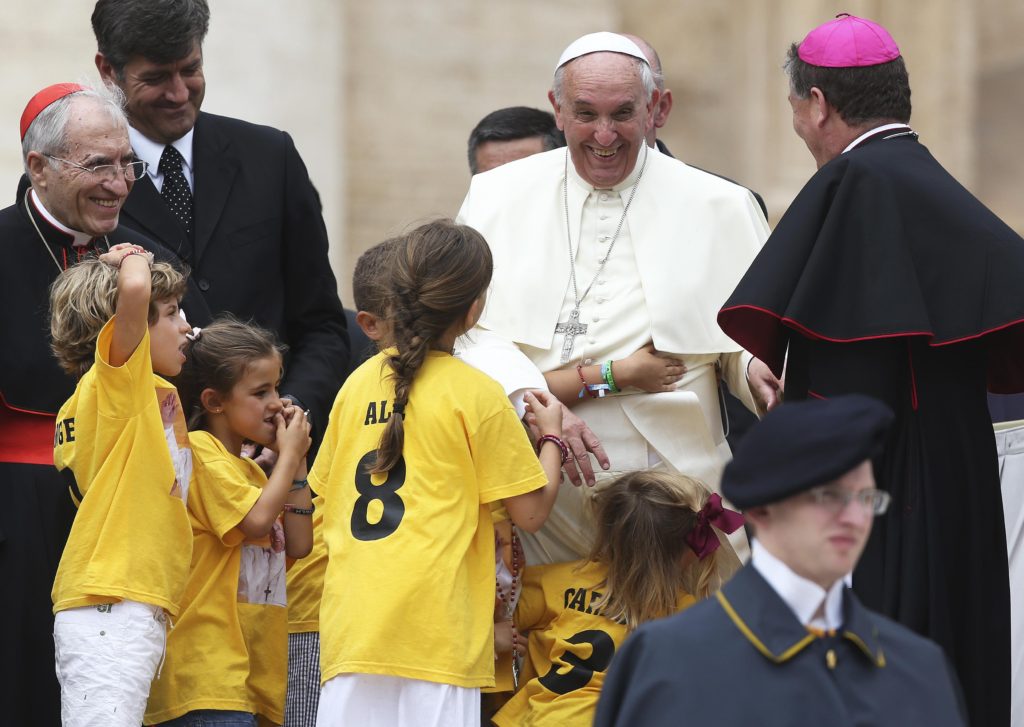
Pope Francis smiles as he meets children during his June 25 general audience in St. Peter's Square at the Vatican. (CNS photo/Alessandro Bianchi, Reuters)
Pope Francis smiles as he meets children during his June 25 general audience in St. Peter’s Square at the Vatican. (CNS photo/Alessandro Bianchi, Reuters)
VATICAN CITY (CNS) — Slowing down, being generous and fighting for peace are part of Pope Francis’ secret recipe for happiness.
In an interview published in part in the Argentine weekly “Viva” July 27, the pope listed his Top 10 tips for bringing greater joy to one’s life:
1. “Live and let live.” Everyone should be guided by this principle, he said, which has a similar expression in Rome with the saying, “Move forward and let others do the same.”
2. “Be giving of yourself to others.” People need to be open and generous toward others, he said, because “if you withdraw into yourself, you run the risk of becoming egocentric. And stagnant water becomes putrid.”
3. “Proceed calmly” in life. The pope, who used to teach high school literature, used an image from an Argentine novel by Ricardo Guiraldes, in which the protagonist — gaucho Don Segundo Sombra — looks back on how he lived his life.
“He says that in his youth he was a stream full of rocks that he carried with him; as an adult, a rushing river; and in old age, he was still moving, but slowly, like a pool” of water, the pope said. He said he likes this latter image of a pool of water — to have “the ability to move with kindness and humility, a calmness in life.”
[quote_box_center]
Families must also turn off the TV when they sit down to eat because, even though television is useful for keeping up with the news, having it on during mealtime “doesn’t let you communicate” with each other.
[/quote_box_center]
4. “A healthy sense of leisure.” The pleasures of art, literature and playing together with children have been lost, he said.
“Consumerism has brought us anxiety” and stress, causing people to lose a “healthy culture of leisure.” Their time is “swallowed up” so people can’t share it with anyone.
Even though many parents work long hours, they must set aside time to play with their children; work schedules make it “complicated, but you must do it,” he said.
Families must also turn off the TV when they sit down to eat because, even though television is useful for keeping up with the news, having it on during mealtime “doesn’t let you communicate” with each other, the pope said.
5. Sundays should be holidays. Workers should have Sundays off because “Sunday is for family,” he said.
6. Find innovative ways to create dignified jobs for young people. “We need to be creative with young people. If they have no opportunities they will get into drugs” and be more vulnerable to suicide, he said.
“It’s not enough to give them food,” he said. “Dignity is given to you when you can bring food home” from one’s own labor.
7. Respect and take care of nature. Environmental degradation “is one of the biggest challenges we have,” he said. “I think a question that we’re not asking ourselves is: ‘Isn’t humanity committing suicide with this indiscriminate and tyrannical use of nature?'”
8. Stop being negative. “Needing to talk badly about others indicates low self-esteem. That means, ‘I feel so low that instead of picking myself up I have to cut others down,'” the pope said. “Letting go of negative things quickly is healthy.”
Pope Francis kisses a child during his June 25 general audience in St. Peter’s Square at the Vatican. (CNS photo/Alessandro Bianchi, Reuters)
9. Don’t proselytize; respect others’ beliefs. “We can inspire others through witness so that one grows together in communicating. But the worst thing of all is religious proselytism, which paralyzes: ‘I am talking with you in order to persuade you,’ No. Each person dialogues, starting with his and her own identity. The church grows by attraction, not proselytizing,” the pope said.
10. Work for peace. “We are living in a time of many wars,” he said, and “the call for peace must be shouted. Peace sometimes gives the impression of being quiet, but it is never quiet, peace is always proactive” and dynamic.
Pope Francis also talked about the importance of helping immigrants, praising Sweden’s generosity in opening its doors to so many people, while noting anti-immigration policies show the rest of Europe “is afraid.”
He also fondly recalled the woman who helped his mother with the housework when he was growing up in Buenos Aires.
Concepcion Maria Minuto was a Sicilian immigrant, a widow and mother of two boys, who went three times a week to help the pope’s mother do laundry, since in those days it was all done by hand.
He said this hard-working, dignified woman made a big impression on the 10-year-old future pope, as she would talk to him about World War II in Italy and how they farmed in Sicily.
“She was as clever as a fox, she had every penny accounted for, she wouldn’t be cheated. She had many great qualities,” he said.
Even though his family lost touch with her when they moved, the then-Jesuit Father Jorge Bergoglio later sought her out and visited her for the last 10 years of her life.
“A few days before she died, she took this small medal out of her pocket, gave it to me and said: ‘I want you to have it!’ So every night, when I take it off and kiss it, and every morning when I put it back on, this woman comes to my mind.”
“She died happy, with a smile on her face and with the dignity of someone who worked. For that reason I am very sympathetic toward housecleaners and domestic workers, whose rights, all of them, should be recognized” and protected, he said. “They must never be exploited or mistreated.”
Pope Francis’ concern was underlined in his @Pontifex Twitter feed just a few days later, July 29, with the message: “May we be always more grateful for the help of domestic workers and caregivers; theirs is a precious service.”
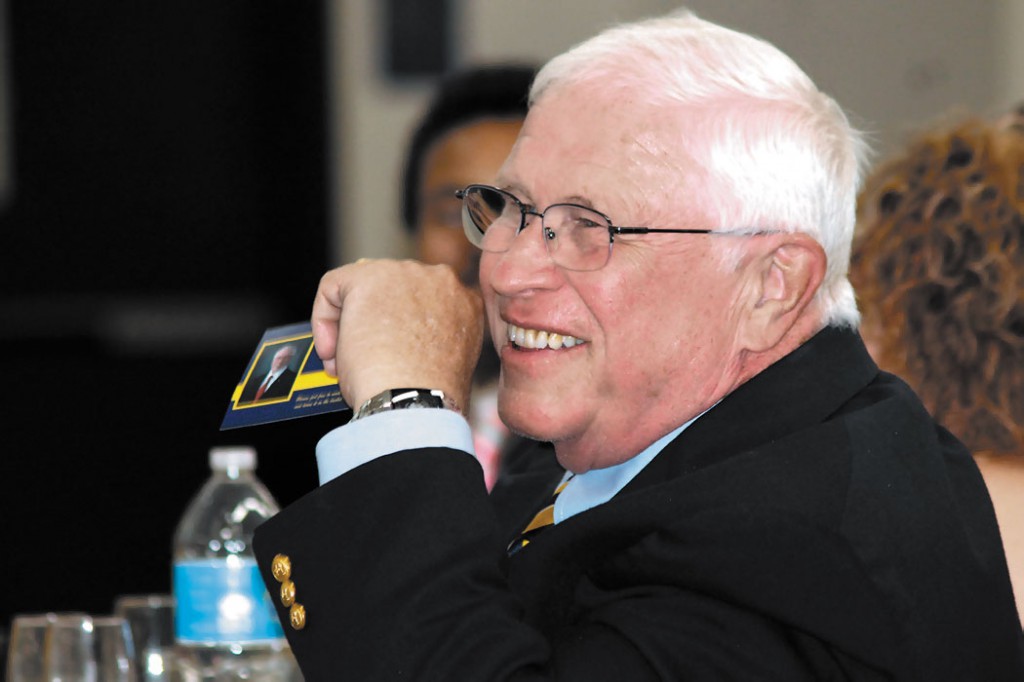
Gary Brown’s nearly 25 years of service at the helm of Catholic Cemeteries and Mortuaries has ended, but not before friends, family, clergy and colleagues bid him farewell at a Mass and dinner June 20. (Joyce Coronel/CATHOLIC SUN)
Gary Brown’s nearly 25 years of service at the helm of Catholic Cemeteries and Mortuaries has ended, but not before friends, family, clergy and colleagues bid him farewell at a Mass and dinner June 20. (Joyce Coronel/CATHOLIC SUN)
[dropcap]F[/dropcap]or nearly 25 years, Gary Brown cared for families during their time of greatest sorrow: the loss of a loved one. Brown’s devotion to carrying out the corporal work of mercy of burying the dead was evident in his leadership of Catholic Cemeteries and Mortuaries for the Diocese of Phoenix. He recently ended his tenure as president and chief executive.
“It’s time to move on and let others come in and get a fresh look at things,” he said. “I loved this job and working with the Church. There have been a lot of great memories and relationships.”[quote_box_right]
Catholic Cemeteries and Mortuaries
(602) 267-1329 catholiccemeteriesphx.comcathcemeteries@dopccm.org [/quote_box_right] Family, friends, co-workers, religious and priests joined Brown June 20 for Mass and a reception on the grounds of Xavier College Preparatory. He was toasted for his leadership and roasted for his propensity to lose personal effects and unabashedly promote Catholic Cemeteries and Mortuaries during every waking hour, but those gathered for the celebration agreed Brown was a special gift to the apostolate.
“We have been richly blessed by the ministry of Gary,” said Fr. Michael Diskin, assistant chancellor for the diocese. “Remembering the ministry of the Church through the corporal works of mercy, he touched lives through his efforts.”
Brown mused it was the dry riverbeds, scorpions and snakes that lured him to the Valley of the Sun from his birth state of Michigan. When the Navy veteran and his family did arrive, his budding career began in 1990 when the field was in its infancy. Throughout his tenure he opened two additional cemeteries for a total of six located throughout Central and Northern Arizona, built two mortuaries, added an additional four mausoleums for a total of six, grew the staff from 30 to 100, developed an additional 50 acres and identified another 161 acres for future use. He also grew the operation budget from $900,000 to $12 million.[quote_box_left]
Catholic Cemeteries are sacred places
As an extension of the Church community, Diocese of Phoenix Catholic Cemeteries and Mortuaries strives to acquaint all in the diocese with the purpose of its mission and its ministry toward the Corporal Work of mercy, “to care for the dead.” As a not-for-profit organization, its primary focus is service.
Christian Care for the Dead
The bodies of the dead must be treated with respect and charity, in faith and hope of the Resurrection. The burial of the dead is a corporal work of mercy; it honors the children of God, who are temples of the Holy Spirit. (Catechism of the Catholic Church, #2300) [/quote_box_left]
Brown, 68, served the bereaved with compassion, love and deep-seated faith.
“His entire career was involved in ministry with people of all ages,” said Msgr. Richard Moyer, who worked with Brown for 14 years on various projects. “He knew more about cemeteries and mortuaries than I did. He was up-to-date in the industry, a step ahead in developing his ministry and compassionate,” he said.
He related how Brown would reduce or waive fees when people didn’t have the means to bury their loved one.
“He always found a way to help,” Msgr. Moyer said.
Brown, who has two grown children with his wife, Deborah, and four grandchildren, has a bachelor’s degree in psychology and a master’s degree in counseling from Eastern Michigan University. He has a master’s degree in business administration from Saginaw Valley State University.
In addition to his involvement in professional organizations, he also volunteers for a variety of public, private and government organizations. Brown is a member of the International Life Teen board of directors, a member of the East Valley Chapter of Serra Club International and a member of the Equestrian Order of the Holy Sepulchre with a rank of commander with star.
Brown is also an artist and his influence and flair for design can be felt throughout the cemeteries, most notably in St. Theresa’s Shrine, St. Peter’s statue, and statues honoring the Holy Spirit, the Fallen Christ, Our Lady of Guadalupe and St. Juan Diego. As the recipient of the Cemeterian of the Year award from the Arizona Funeral, Cemetery and Cremation Association, Brown embraced his life vocation honoring the dead.
“It’s a great industry,” he said. “I didn’t build these cemeteries — it was never me.”
Immigrant families and immigration reform activists hold signs of protest during a July 7 news conference in Washington near the White House organizaed by Casa de Maryland and other pro-immigration reform groups. Several speakers at the event urged the Obama administration to provide relief for all children and their families who have crossed the U.S. border illegally to flee violence in Central America. (CNS photo/Chaz Muth)
Immigrant families and immigration reform activists hold signs of protest during a July 7 news conference in Washington near the White House organizaed by Casa de Maryland and other pro-immigration reform groups. Several speakers at the event urged the Obama administration to provide relief for all children and their families who have crossed the U.S. border illegally to flee violence in Central America. (CNS photo/Chaz Muth)
WASHINGTON (CNS) — To end the U.S.-Mexico border crisis, the United States must address the flow of illegal drugs and arms and the harmful economic policies forcing children and families to leave Central America for the U.S., said the chairman of the U.S. bishops’ Committee on International Justice and Peace.
Bishop Richard E. Pates of Des Moines, Iowa, made the comments in a July 24 letter to U.S. Secretary of State John Kerry, following a trip he and other bishops and Church leaders made to Honduras, Guatemala and El Salvador.
In a separate statement, Seattle Auxiliary Bishop Eusebio L. Elizondo, who heads the U.S. bishops’ migration committee, urged President Barack Obama and the presidents of the three Central American countries that Bishop Pates visited to protect and care for children and families fleeing violence in the region.
Bishop Elizondo’s letter was issued a day before a July 25 meeting in Washington of Obama and Presidents Otto Perez Molina of Guatemala, Salvador Sanchez Ceren of El Salvador and Juan Orlando Hernandez of Honduras.
“The leaders should focus upon the protection of these children and families, as they are charged with as the heads of their nations,” the bishop said. “Instead of cooperating on intercepting them and sending them back to dangerous situations, they should work together to protect them from those dangers, including providing them asylum in neighboring countries and in the United States.”
The Pew Research Center estimates that more than 57,500 unaccompanied children and youths crossed the U.S.-Mexico border illegally in the nine months between Oct. 1, 2013, and June 30, 2014, an increase from 38,700 youths in fiscal year 2013. Its July 22 report shows that children 12 and older are the fastest growing group of unaccompanied minors crossing the border.
National Catholic leaders have called for a compassionate response to the youths who have crossed the border, many of whom are fleeing drug-related violence.
In his letter to Kerry, Bishop Pates said the U.S. cannot separate the humanitarian crisis of many thousands of unaccompanied minors journeying to the U.S. border from several root causes in Latin America, many of which he said are generated by U.S. policies.
“The crisis on our borders will not be minimally resolved until drugs and arms flows, harmful trade provisions, and other critical economic policies that contribute to violence are addressed and rectified,” Bishop Pates wrote.
Church leaders and U.S. diplomats in each country his delegation visited, he said, agreed that long-term resolutions would only come from investment in education and jobs.
Bishop Pates said he frequently heard that the Central American Free Trade Agreement, known as CAFTA, “and similar trade policies, had devastated small agricultural producers and businesses in the region, while depressing labor conditions and wages.”
With regard to the drugs and violence that often drive people to leave their home countries, Bishop Pates said the U.S. must recognize its “own complicity in this crisis, and support more effective programs that reduce drug usage here at home.”
“Similarly, the regulation of gun exports, coupled with criminal justice reforms that foster rehabilitation rather than retribution,” he said, “need to be implemented by our states and our federal government.”
He pointed to another factor he said is making life intolerable for many in Central America — destructive environmental impact and public health consequences of U.S. and Canadian mining companies in Latin America.
Bishop Pates said the U.S. and Canadian governments need to hold companies with operations in the region to the same standards of protecting human life and the environment as they require in their own countries.
In his statement, Bishop Elizondo echoed Bishop Pates’ remarks about the need for a strategy to address “over the long term … the violence and lack of opportunity in the countries of Central America. Specific attention should be paid to helping at-risk youth remain safe and access opportunity at home.”
Bishop Elizondo also reaffirmed the U.S. Conference of Catholic Bishops opposition to proposals to amend current law to speed the deportations of the children without giving them the benefit of an immigration hearing.
Congress was scheduled to consider supplemental appropriations legislation the last week of July to fund the care of children and families arriving at the border.
“We oppose linking changes to the law — changes which could send children back to harm — to the funding bill, which is needed to humanely respond to this situation,” Bishop Elizondo said. “Families, as well, should receive a fair hearing of their asylum claims.”
In the Diocese of Syracuse, New York, in an open letter to the community at large, Bishop Robert J. Cunningham said the diocese “stands at the ready” to help temporarily house migrant children from Central America who are awaiting deportation hearings.
He said he is aware that the issue has been the subject of intense debate, and will continue to be in the future, but in the interim he said the church has an obligation to help.
“In the midst of this debate that will continue over the course of months, one fact remains,” Bishop Cunningham wrote. “We must care for the children. Whether we agree with the method or the circumstance, the fact is that there are 52,000-plus children who are in our country who are in need right now.”
The U.S. Department of Health and Human services is considering former convents and the former Maria Regina College owned by the Sisters of St. Francis on Syracuse’s North Side as a potential site for temporary housing.
The Maryland Catholic Conference said in a July 23 statement: “As our national and local governments continue to grapple with this difficult situation, we are hopeful that partisan differences will not stand in the way of finding a just and humane response to this urgent need.”
“We pray that our country will be able to look back proudly at how we answered this call, and ask God to touch the hearts and minds of the people of Maryland and throughout America with compassion and generosity,” it said. “Most importantly, we entrust these children to God’s providence, for we know ‘You do see, for you behold misery and sorrow, taking them in your hands. On you the unfortunate man depends; of the fatherless you are the helper’ (Psalm 10).”
Arkansas Bishop Anthony B. Taylor of Little Rock in a July 25 statement said that until the federal government will allow local families to take in unaccompanied minors and mothers coming across the border, Catholics could still help in various ways.
First he said people of faith can “examine our own hearts: How do we see the people who are like refugees at our border? Do we see them as objects who threaten our lifestyle or can we see them as children without any hope, as parents who just want the best for their families, as people who are so desperate for a safe place to live that they risk walking a thousand miles just to find it. What does love demand of us?”
He urged Catholics to keep them in their prayers, be the “voice of the voiceless,” and provide donations of needed money and supplies.
“How hard it must be for parents to reach,” Bishop Taylor continued, “the point of realizing that the only chance their children have for escaping violence and possible death is to put money in their hands and send them north, even at the cost of possibly never seeing them again but also with the hope that our hearts might be moved to help their children have a chance for a better life. Hence this is a human crisis for us as well – ‘crisis’ in the sense of a time of decision in which we reveal who we really are before God.”
Archbishop Gustavo Garcia-Siller of San Antonio said July 21 that the Catholic Church would only support amendments to the 2008 anti-trafficking law at the center of the crisis “that would truly ensure due process, justice, and humane treatment of these children. Merely sending them back to the violent context from which they have fled is a shameful action.”
“These immigrants are people like ourselves, not mere problems or statistics or irritants. They are our sisters and brothers. Let us embrace them with traditional American compassion,” he said.
World War I photo negatives displayed June 25 at the exhibition "The Front Line" at the DOX Centre for Contemporary Art in Prague, Czech Republic, show Austro-Hungarian foot soldiers. Germany's Catholic bishops have urged efforts to overcome "destructive self-interest" on the 100th anniversary of World War I, while recognizing the shared guilt of churches for the conflict, which left 16 million dead. (CNS photo/Filip Singer, EPA)
VATICAN CITY (CNS) — It’s time to stop war, fighting and conflicts, which do nothing but kill and maim, leaving children unexploded ordnance for toys and lives without happiness, Pope Francis said.
“Never war! Never war! I think most of all about children, whose hopes for a dignified life, a future are dashed, dead children, wounded children, mutilated children, orphans, children who have the leftovers of war for toys, children who don’t know how to smile. Stop it, please! I beg you with all my heart! It’s time to stop!”
The pope made his appeal after praying the noon Angelus with people gathered in St. Peter’s Square July 27.
The pope’s plea came as he recalled the 100th anniversary of the start of the First World War, which, with more than 37 million causalities, was one of the deadliest conflicts in history.
World War I photo negatives displayed June 25 at the exhibition “The Front Line” at the DOX Centre for Contemporary Art in Prague, Czech Republic, show Austro-Hungarian foot soldiers. Germany’s Catholic bishops have urged efforts to overcome “destructive self-interest” on the 100th anniversary of World War I, while recognizing the shared guilt of churches for the conflict, which left 16 million dead. (CNS photo/Filip Singer, EPA)
Beginning July 28, 1914, the “Great War” left “millions of victims and immense destruction,” Pope Francis said.
The reigning pontiff at the time, Pope Benedict XV called it a “useless massacre,” which ended after four years in a fragile peace, Pope Francis said.
He said July 28 would be “a day of mourning” and a chance for people to remember the lessons of history.
“I hope people will not repeat the mistakes of the past,” he said, and will uphold “the rationale of peace through patient and courageous dialogue.”
Highlighting the crises in the Middle East, Iraq and Ukraine, the pope called for continued prayers so that the leaders and the people there would have the wisdom and will needed to choose peace with determination and face problems with “the tenacity of dialogue and negotiations.”
“Let’s remember that everything is lost with war and nothing is lost with peace,” he said.
He urged that all decisions be based on respect for others and the common good — not personal interests.
Navajo Vince Redhouse plays a native flute July 24 during the annual gathering of the Tekakwitha Conference in Fargo, N.D. The gathering of Native American Catholics, held July 23-27, marked its 75th anniversary. (CNS photo/Nancy Wiechec)
Members of the Tekakwitha Conference gather for a sunrise service July 24 during the organization’s 75th annual meeting in Fargo, N.D. The Native American Catholic conference, held from July 23-27, drew 750 people from 35 states and Canada representing 1 35 indigenous tribes. (CNS photo/Nancy Wiechec)
FARGO, N.D. (CNS) — On the 75th anniversary of the Tekakwitha Conference, Native American Catholics came together again to review the past, plan for the future and recharge their faith.
More than 750 people from 35 states and representing 135 tribes gathered under the theme “To walk humbly,” a nod to namesake St. Kateri Tekakwitha, the gentle Mohawk-Algonquin woman canonized two years ago.
Gathering in “talking circles” on the conference’s first full day July 24, groups of them agreed that young people were their top concern.
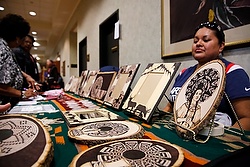
Native American artwork, including images of St. Kateri, are displayed for sale July 24 at the annual Tekakwitha Conference gathering in Fargo, N.D. The gathering of Native American Catholics, held July 23-27, marked its 75th anniversary. (CNS photo/Nancy Wiechec)
“Our youth are losing their cultural and religious connections,” said a woman speaking on behalf of her small group. “And we’re not encouraging them enough to go to catechism and to go to Mass.”
Some of the other issues people brought to the floor included expanding evangelization and inculturation efforts and a need for more Native American priests, women religious and lay leaders. One group mentioned a desire for “spiritual healing centers” to help people overcome drug and alcohol addiction problems.
The talking circles were facilitated by Fr. Henry Sands of the Ojibwe, Ottawa and Potawatomi tribes. A priest of the Detroit Archdiocese, he heads the Native American efforts of the Secretariat of Cultural Diversity in the Church for the U.S. Conference of Catholic Bishops. He told the groups that he would share their concerns with the bishops of the United States.
Young people were not only on the minds of conference-goers, but they took part in the meeting activities, including leading some Native American rituals.
At a sunrise prayer service, a young man conducted the smudging — the Indian purification ritual using the smoke of burning cedar, sage and sweet grass.
Carmelita Sharpback of Winnebago, Nebraska, swaddled her 8-week-old daughter, Willow Rain, as she walked in the event’s evening parade of nations with other tribe members.
Crow Creek Sioux Jaime Berens of Charter Oak, Iowa, was attending the Tekakwitha Conference for the first time with her 9-year-old daughter, Saige.
“I hope to learn more about St. Kateri and more about my faith,” she told Catholic News Service. “I also want to help raise my daughter the best way I can in the Catholic faith.”
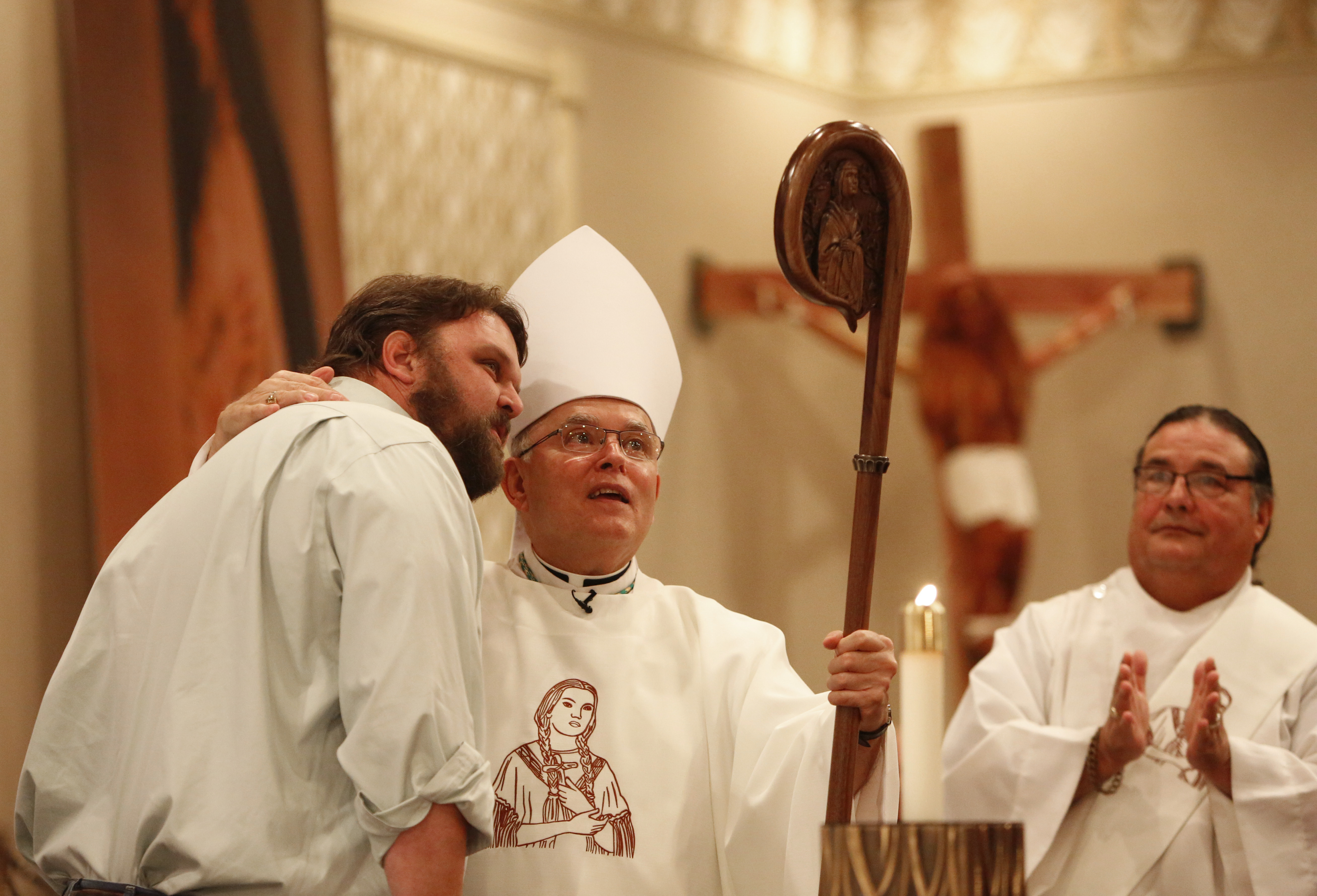
During the opening Mass, Archbishop Charles J. Chaput of Philadelphia called his fellow Native Americans to continuing Christian conversion.
Archbishop Charles J. Chaput of Philadelphia receives a hand-carved crosier July 24 from artist Mark McAllister during the annual Tekakwitha Conference in Fargo, N.D. The staff features a likeness of St. Kateri Tekakwitha. (CNS photo/Nancy Wiechec)
“When we ask forgiveness, that means we can change and start over. And nothing is better than starting over,” he said. “It gives us new energy.”
The archbishop, who is a member of the Prairie Band Potawatomi tribe, said true happiness is found in one’s relationship with God, and pointed to St. Kateri as one who listened to the word of God “not just with her ears, but with her heart.”
He said he hoped the Tekakwitha Conference would be a source of ongoing conversion for native people. “That we might listen, love and be saved.”
Before his homily Archbishop Chaput also announced some news — that Pope Francis has accepted his invitation to attend the World Meeting of Families in Philadelphia in September 2015.
Fawn Antone, 32, of the Tohono O’odham Nation in Pisineno, Arizona, was attending the Tekakwitha Conference with several family members. She said she rarely misses the annual meeting.
“I come here to recharge my religious battery,” she said. “You feel a lot of joy when you come here because everyone who comes here comes in the name of Kateri.”
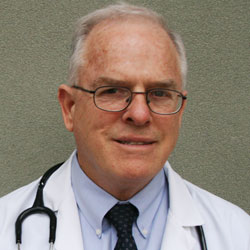
Dr. Jim Asher is a graduate of Marquette University and Des Moines University. He earned a master’s degree in bioethics from Midwestern University. He and his wife of 50 years, Rose Neidhoefer of Milwaukee, have seven children and 14 grandchildren. He is a retired family physician. He is a parishioner at Ss. Simon and Jude Cathedral, an officer in the Catholic Physician’s Guild, and a member of the Knights of Columbus.
Opinions expressed are the writers’ and not necessarily the views of The Catholic Sun or the Diocese of Phoenix.
Dr. Jim Asher is a graduate of Marquette University and Des Moines University. He earned a master’s degree in bioethics from Midwestern University. He and his wife of 48 years, Rose Neidhoefer of Milwaukee, have seven children and 13 grandchildren. He is a retired family physician. He is a parishioner at Ss. Simon and Jude Cathedral, an officer in the Catholic Physician’s Guild, and a member of the Knights of Columbus. Opinions expressed are the writers’ and not necessarily the views of The Catholic Sun or the Diocese of Phoenix.
Browning Montana on the eastern edge of Glacier National Park is in the middle of the Blackfeet Reservation. I was there in May, again as a guest of the annual men’s Cursillo. Last year, I tried to be an active participant. It didn’t work very well. For one thing, they were a tough crowd when it came to my jokes.
But not just for jokes. Someone told me, “For white people, spirituality is 90 percent in the head and 10 percent in the heart. For us Indians, it’s the other way around.” So I went back to Browning again this year, to be still and learn more about the heart.
Indian hearts
Much in native spirituality easily integrates with orthodox Christianity. But there are important cultural differences between wider American Catholicism, and Catholic life on the reservation.
Alcohol is a problem everywhere for Native Americans. But when a group of men gathered to share a bottle on the steps of Little Flower Church Saturday afternoon – they first made the sign of the cross before sitting down. And teen pregnancy is everywhere, but there is very little demand for abortion. Every child is a welcome member of the tribe, no matter how clouded his or her origins.
You want to make a pillowcase that has Our Lady of Guadalupe? The Browning Fabric Shop has a nice selection of bolts with Our Lady and other religious themes.
Some people living dissolute lives suddenly find themselves in real trouble, yet they all know right where to find Fr. Ed Kohler, who has lovingly served and identified with them for some 30 years.
Then there is the Cursillo movement.
Native American spirituality
Becoming Catholic for many Indians of the Northwest was more of an educational and growth process out of their native beliefs and traditions than conversion away from them. Those who actually led them to the faith in the 19th century included traveling Mohawks, whose ancestors had tortured and killed the North American Jesuit martyrs some 200 years earlier.
The North American Martyrs were eight Jesuit missionaries commissioned to work among the Huron Native Americans during the mid-17th century.
More recently, the Cursillo movement has been an extremely powerful force encouraging Indians to return to the faith. Adaptations in Browning have included “Search,” a shorter high school program. And for those who have completed an adult Cursillo, there is a “Step 2” program.
Step 2 is for anyone who has been affected by drugs or alcohol. As family physician and tribal member Dr. Mary DesRosier explained, that really means every single person on the reservation.
In spite of social problems, Catholicism is strong among Blackfeet Indians who have now traveled all over the Northwest introducing the Cursillo movement to other reservations. In solidarity with all American Indians, they stand by, merely awaiting an invitation.
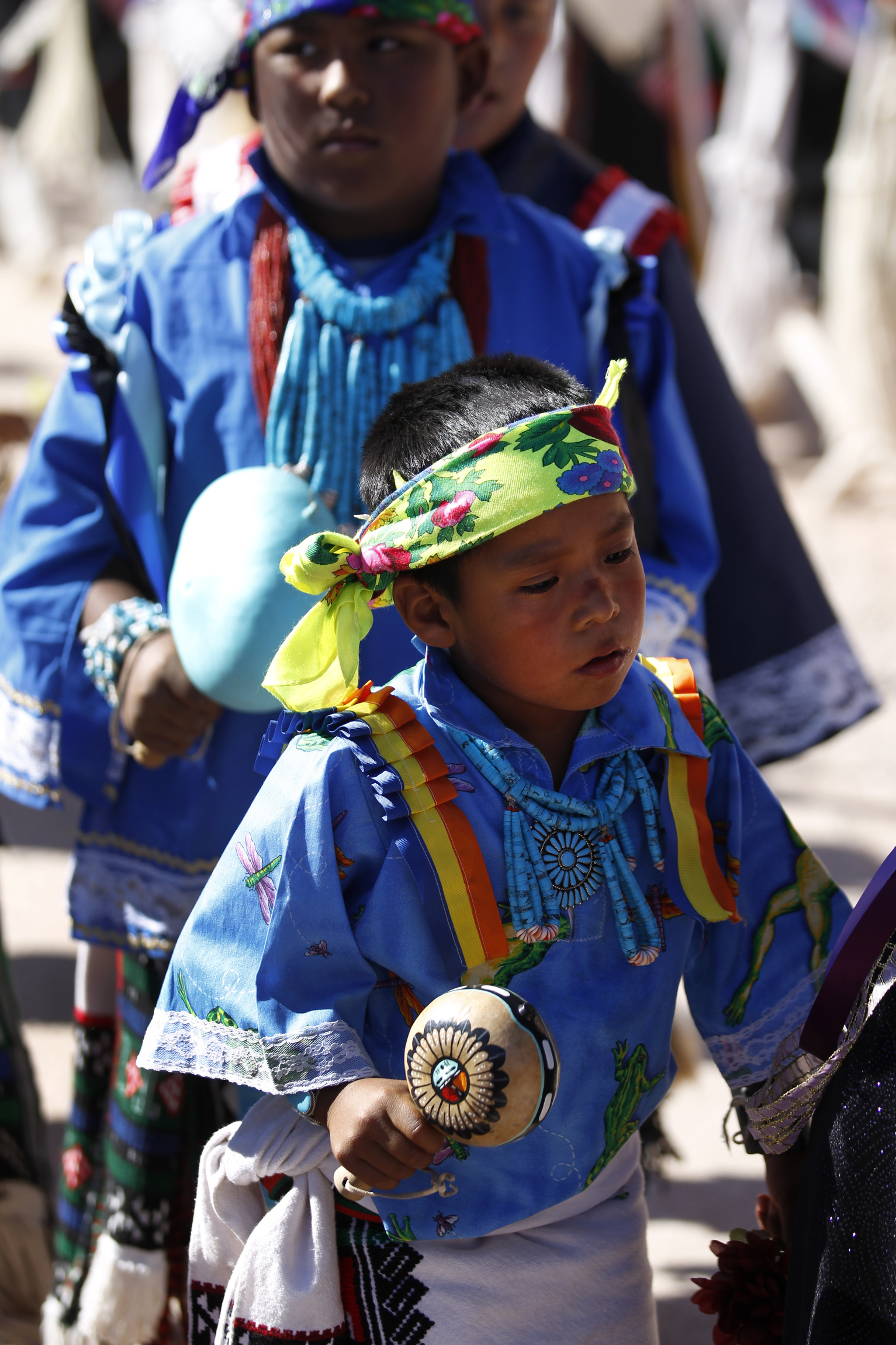
Young Native Americans take part in a festival near the Old Zuni Mission Church on the Zuni Pueblo Indian reservation in New Mexico Oct. 22. (CNS photo/Bob Roller)
The reservation influences spirituality
On the “Rez,” you have to respect your elders – technically anyone older than you. If your grandma tells you to go to the Cursillo, there’s a good chance you’ll do it – provided it’s being held on the reservation. Otherwise, not. It seems the influence of elders wanes, as in broader American culture, once you’re off tribal lands.
Having worked in the Indian Health Service for many years, I find it a rich experience to be involved in their Cursillo movement. And though more than welcome as a participant – they called me “brother” in Browning – I believe it is best for me and other non-Indians to take a more passive role.
Native Americans present their own deep and ancient spirituality, with legitimate historical traditions of their own. They are quite capable and desirous of following the Magisterium, but cooperatively, and in a way that best makes the most sense to them. In their heart-to-heart spirituality they have a deep awareness of how to best evangelize their own people. And for us non-Indians, they have much to teach us. Benedicamus Domino.
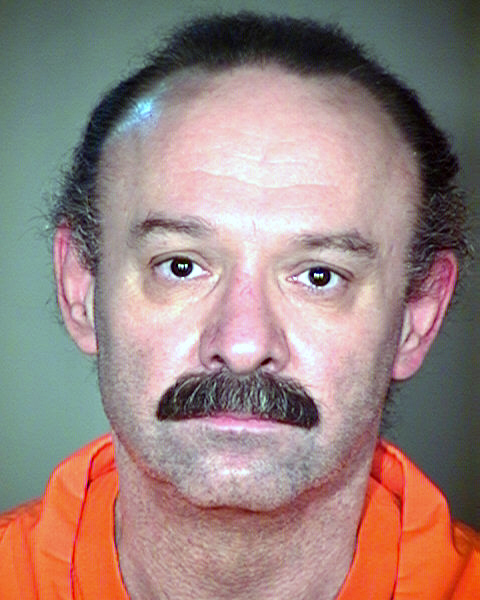
Arizona death-row inmate Joseph Rudolph Wood is pictured in this undated Arizona Department of Corrections handout. Wood, sentenced to death for the 1989 killing of his ex-girlfriend and her father, was executed July 23 by lethal injection in Florence, Ariz., but the process was considered excessively long and he was pronounced dead one hour and 57 minutes after his execution began. Wood had filed appeals asking for detailed information about the drugs used in his execution after problems arose over drugs used in two executions in the U.S. earlier this year. (CNS photo/EPA)
Arizona death-row inmate Joseph Rudolph Wood is pictured in this undated Arizona Department of Corrections handout. Wood, sentenced to death for the 1989 killing of his ex-girlfriend and her father, was executed July 23 by lethal injection in Florence, Ariz., but the process was considered excessively long and he was pronounced dead one hour and 57 minutes after his execution began. Wood had filed appeals asking for detailed information about the drugs used in his execution after problems arose over drugs used in two executions in the U.S. earlier this year. (CNS photo/EPA)
WASHINGTON (CNS) — People don’t seem to count gains and setbacks on the death penalty issue with quite the same intensity as they do with other issues. Even so, slowly but surely, gains are being made — and more gains than setbacks.
Even the setbacks can, ironically, be counted as gains.
One notable case in point is the July 23 execution of Joseph Wood in Arizona. Wood’s attorneys had briefly won a temporary blockage of his execution by demanding to know what kinds of drugs were planned for use by the state in the death chamber.
The state successfully challenged the stay and Wood, convicted of two 1989 murders, was executed according to schedule, but hardly according to plan.
After the drug cocktail was injected in him, it took an hour and 57 minutes for Wood to die. Although a relative of one of the victims witnessing the execution said Wood was snoring, others witnessing the scene said Wood was gasping. Wood’s lawyers tried, albeit without success, to get the Supreme Court to order the state to halt the execution process as it was taking place, calling it cruel and unusual punishment. Arizona ultimately called for a review of the process.
The Wood case echoed that of an Oklahoma death-row prisoner, Clayton Lockett, who writhed in agony for 40 minutes before being unhooked from the drug dispenser in the death chamber. Lockett soon died of apparent heart failure. The incident prompted Oklahoma officials to review its execution procedures. Oklahoma recently moved ahead of Virginia, taking second place in a list of the states with the most executions; Texas is still in first place. Arizona has said it also will review its procedures.
Death penalty opponents have already made headway with physicians, almost all of whom now will refuse to assist at an execution. Opponents’ next step is getting pharmacists and pharmaceutical companies to stop supplying the drugs used in lethal injections, saying drugs should be used for healing, not for killing.
States have fought efforts like those made by Wood’s attorneys to keep the drugs and their sources secret, claiming suppliers will be harassed and intimidated.
Even so, the initial Arizona ruling “was full of nuance — getting in to the moral aspect of it,” said Karen Clifton, executive director of the Catholic Mobilizing Network Against the Death Penalty. “The practice is just cruel and unusual. … It goes against our Constitution as cruel and unusual punishment. I hope there is another judge in another state that has a conscience and will make similar ruling on it.”
Richard Dieter, executive director of the Death Penalty Information Center, noted the “slow erosion of support” for capital punishment in public-opinion polls.
A Gallup poll question registered 80 percent support for capital punishment in 1994. “That has dropped to 60 percent very recently — the same Gallup poll, the same question,” Dieter said.
He also cited an ABC News-Washington Post poll showing more respondents choosing life without parole over the death penalty for convicted murderers when given the choice.
Catholics “used to be right up there” with the rest of the country in their support for capital punishment, Dieter said. Now, “they are more opposed to the death penalty than the average among voters. In some polls, they appear to be against the death penalty,” he added.
One long-held argument for capital punishment was that “it’s an essential part of the criminal system,” Dieter told Catholic News Service. It’s ceased being part of that, if it ever was. … It’s a marker rather than an essential element that people feel in some personal way. And courts are a little reluctant to get too far ahead, lest they do wrong in reading the public opinion.”
The Catholic Church has taught clearly that while the death penalty might be allowed if it were the only way to protect society against an aggressor, those cases, according to the Catechism of the Catholic Church, are “very rare if practically nonexistent.”
One big test of public opinion is likely to come in 2016, when Californians will vote on a referendum, the Death Penalty Reform and Savings Act, that could abolish the death penalty in the nation’s most populous state.
The last execution in California was in 2006. Later that year, a federal judge imposed a moratorium on executions in California, which has continued to this day. A 2011 study said the state had spent $4 billion trying capital cases. On July 16, another federal judge declared the state’s death penalty unconstitutional, saying it was arbitrary and plagued with delay.
A 2012 referendum that would have abolished capital punishment in the Golden State was rejected by a 52 percent to 48 percent margin.
California falls into a significant group of states with a death penalty still on the books, but with no executions in recent years. A half-dozen states have only executed prisoners who said they wanted to be put to death for their crimes. In other states, governors or courts have imposed moratoriums on capital punishment.
“The judges are now starting to look at the states that now have moratoriums as repeal states,” said Clifton of the Catholic Mobilizing Network. Eighteen states have banned capital punishment, she added, but “the numbers are far greater … when you factor in all these states have a moratorium.”
Another point that could give pause to advocates on either side of the issue is the revelation in 2012 that a FBI forensics lab committed errors in hair matches in cases throughout the 1980s and 1990s. On July 22, a District of Columbia man was freed after 26 years in prison for a 1982 murder because of the FBI lab’s errors.
While D.C. has no death penalty, other states do. “We can’t say anymore that we’ve never sent an innocent person to their death,” Clifton told CNS. “No one can.”
Some ideas of what to watch this weekend, largely courtesy of Catholic News Service:
Life on the Rock — Hosts Fr. Mark and Doug interview “FourEver,” a musical band featuring a Catholic mom and her four daughters. Details.
Can’t wait? EWTN posted the episode on its YouTube Channel. Cue up the 10:35 mark to get straight to the interview. Airs 5 p.m. July 25 on EWTN andvia alivestream onlinewith replays through Tuesday.
[quote_box_right]RELATED: Gilbert-area youth prepare for ‘el camino’[/quote_box_right]El Camino, The Way of St. James — Young American men between the ages of 17-22 make a pilgrimage on the historic route in Spain known as the Way of St. James. The men explain their decision in taking part and the crosses to bear along the way. Airs 2:30 July 25 on EWTN and via alivestream online.
[quote_box_right]RELATED: More on the saint and Scottsdale parish bearing his name[/quote_box_right]Founders of Church Orders: St. Bernard of Clairvaux — The story of St. Bernard, who sought admission into the newly founded Cistercian order, which he reformed to such an extent that he is considered as one of its founders. he was also known in history to have preached the Second Crusade. Airs 3:30 p.m. July 25 on EWTN andvia alivestream online.
Catholics Matter — Find bonus segments featuring Catholics doing worthwhile things and Catholic organizations around the Diocese of Phoenix following the live broadcast of the Sunday liturgy.
Airs 10:15-ish a.m. July 27 on AZTV 7/Cable 13 in Arizona and online. Or view archived episodes. Check out the latest installment:
“Mother Dolores Hart: From Hollywood to Holy Vows” — A three-part biography of screen star-turned-nun (and, subsequently, prioress) Mother Dolores Hart (TV-G, general audience). Airs 6:30-8 p.m. July 26 on EWTN andvia alivestream online.
“Knights of Peter Claver and Ladies Auxiliary Solemn Opening Convention Mass of Thanksgiving” — The opening Mass for the 99th Annual National Convention of the Knights of Peter Claver and the 84th Annual National Convention of the Knights of Peter Claver Ladies Auxiliary. 12:30-2:30 p.m. July 27 on EWTN andvia alivestream online.
OTHER PROGRAMMING NOTED BY CATHOLIC NEWS SERVICE:
“The Nun’s Story” — (1959). Sent by her religious community to be a nurse in the Belgian Congo, a young nun (Audrey Hepburn) resists her feelings of love for the doctor (Peter Finch) with whom she works, returns to Belgium and, after struggling with the routine of convent life, leaves for the world beyond the wall.
Sensitively directed by Fred Zinnemann, the fact-based story focuses on the interior conflict between the nun’s idealism and her growing sense of her own needs as an individual. Convincing portrayal of religious life as a vocation requiring more than good intentions. The Catholic News Service classification of the theatrical version was A-II (adults and adolescents). Not rated by the Motion Picture Association of America. Airs 12:15-3 p.m. July 26 on TCM.
“In Concert: J. S. Bach” — Ullrich Bohme performs on the new Bach organ of St. Thomas Church in Leipzig, Germany. This historical model corresponds to the organ on which Bach himself played for 27 years (TV-G, general audience). Airs 10:30-11:30 a.m. July 27 on EWTN and via alivestream online.
“Wild Strawberries” — (1957). During the day on which he is to be awarded an honorary degree from a nearby university, a 78-year-old retired scholar (Victor Sjostrom in a masterful performance) is visited with dreams and reveries about his past life, especially his failures and disappointments in personal relationships.
Swedish director Ingmar Bergman brilliantly develops the man’s interior journey from pangs of regret and anxiety to a refreshing sense of peace and reconciliation summed up in blissful images of his happy youth. One of the great films about aging that touches universal chords in all viewers.
The Catholic News Service classification of the theatrical version was A-III, adults. Not rated by the Motion Picture Association of America. Airs 7-8:45 p.m. July 28 on TCM.
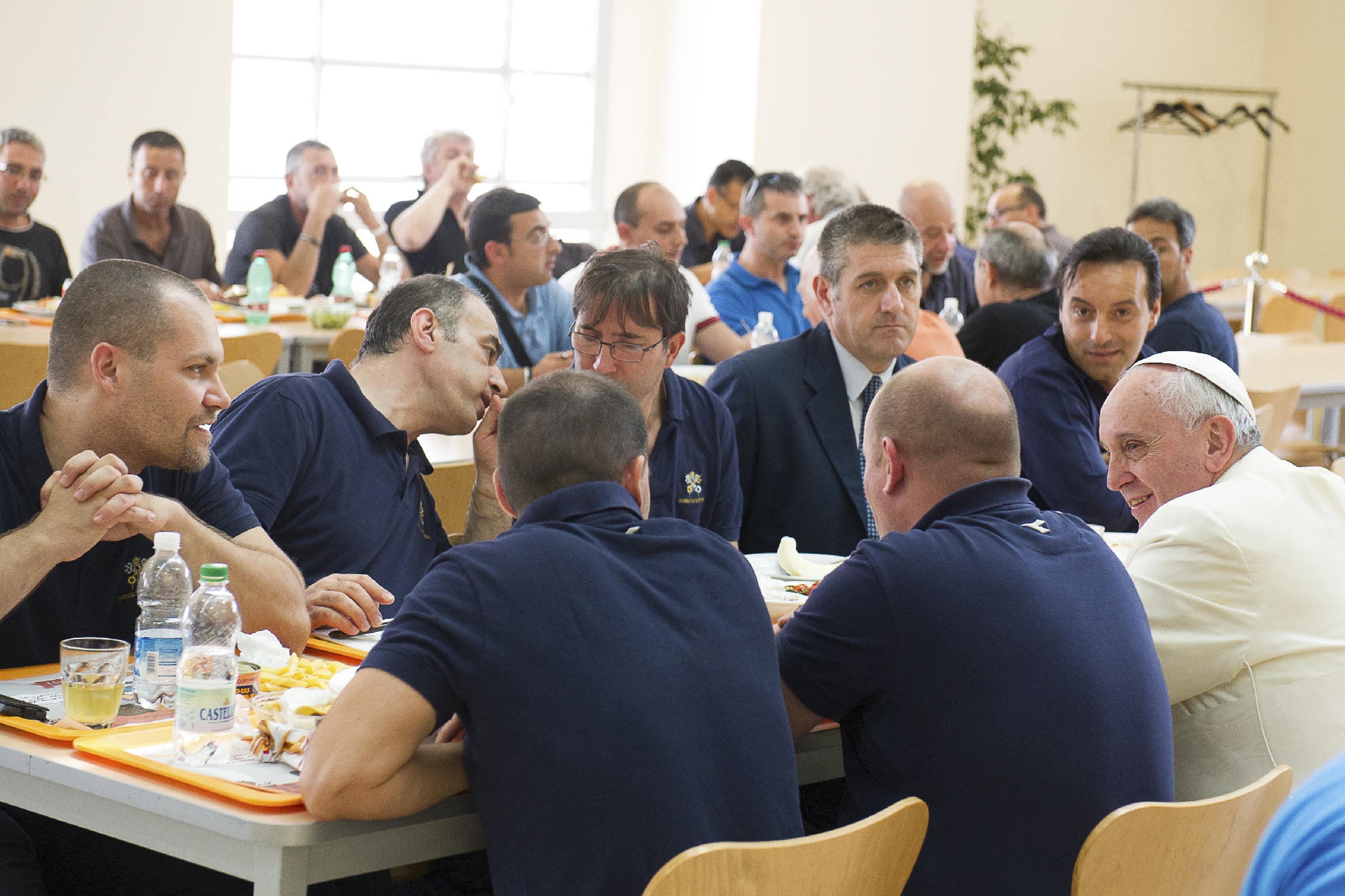
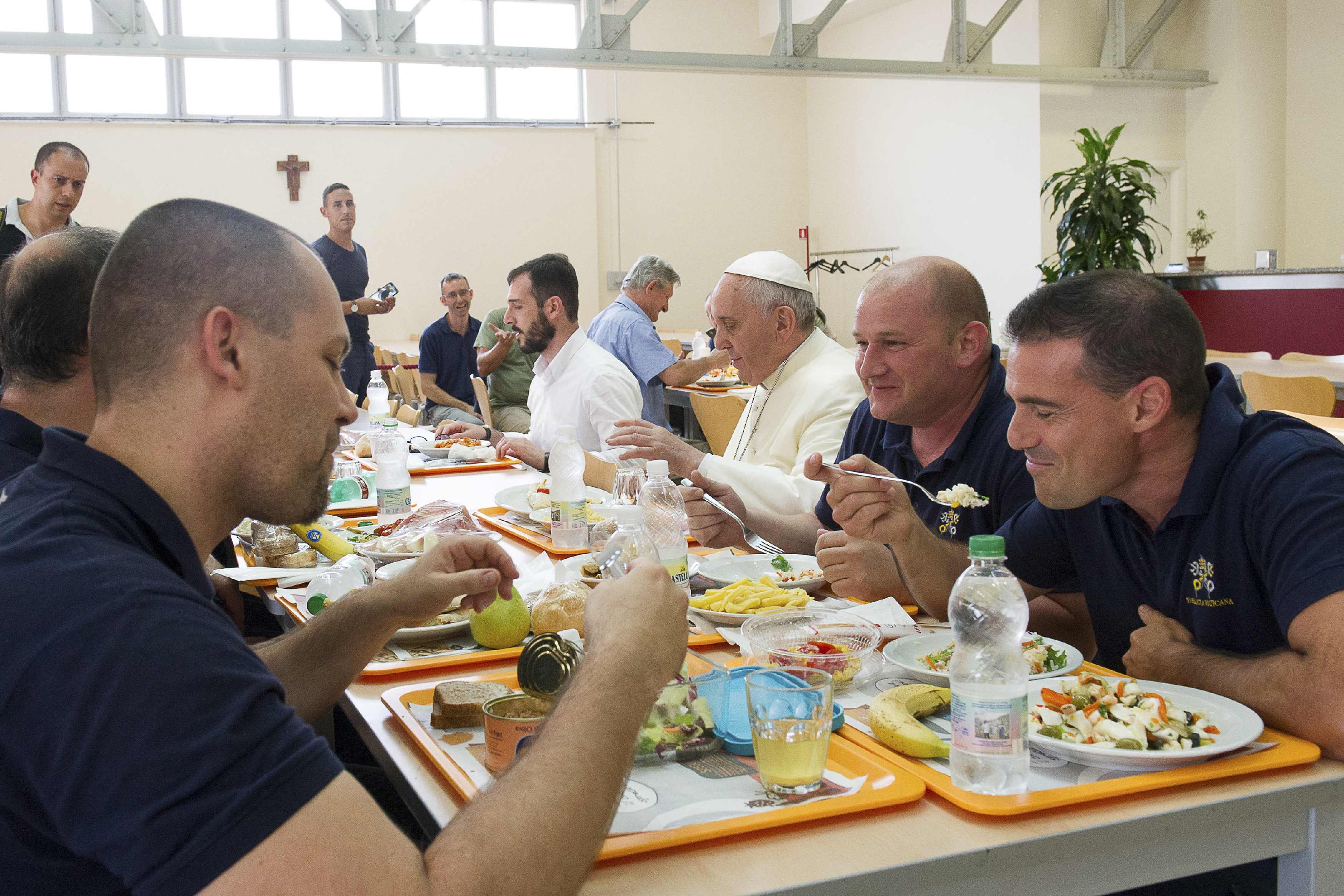
Pope Francis eats with Vatican workers during a surprise visit to the Vatican cafeteria July 25. (CNS photo/L'Osservatore Romano via Reuters)
Pope Francis talks with Vatican workers during a surprise visit to the Vatican cafeteria July 25. (CNS photo/L’Osservatore Romano via Reuters)
VATICAN CITY (CNS) — Taking the chef completely by surprise, Pope Francis unexpectedly showed up to eat with the Vatican’s blue collar workers at their cafeteria in the tiny city-state’s “industrial park.”
“He showed up, got his tray, silverware, he stood in line and we served him,” the cafeteria’s chef, Franco Paini, told Vatican Radio July 25.
He acted “normally, like the humblest of the workers,” Paini said, his voice still trembling from the thrill. “Please forgive me, I’m still excited, you know?”
Wearing his white cassock and zucchetto, the pope grabbed an orange plastic tray and chose what he wanted from the array of prepared foods.
He got a plate of pasta without sauce; a portion of cod; a whole wheat roll; some “au gratin” vegetables; a few French fries; an apple; and a bottle of spring water — but not the fizzy, bubbly kind, witnesses reported.
“I didn’t have the courage to give him the bill,” said Claudia Di Giacomo, who was sitting behind the cash register.
Paini said the pope made everyone feel at ease. “We introduced ourselves, he asked how we were, what it was like working there, he paid us compliments; it was really nice.”
The cafeteria in the Vatican’s “industrial area” serves employees who work as technicians, electricians, plumbers, metalworkers, craftsmen, but also employees of the Vatican newspaper, L’Osservatore Romano.
Pope Francis talks with Vatican workers during a surprise visit to the Vatican cafeteria July 25. (CNS photo/L’Osservatore Romano via Reuters)Pope Francis eats with Vatican workers during a surprise visit to the Vatican cafeteria July 25. (CNS photo/L’Osservatore Romano via Reuters)
The pope sat down to eat at a table with workers from the Vatican pharmacy’s warehouse. Wearing dark blue uniform polo shirts, the men spoke to the pope about their jobs and the pope talked about his Italian heritage.
Table talk also included soccer and the economy, the Vatican newspaper reported.
The whole time the pope was eating and chatting, people were taking the inevitable selfie with their cameras, cellphones and iPads.
“Pope Francis wasn’t bothered a bit” by the constant clicking, “and continued to smile and eat, carrying out the conversation” with his tablemates, the paper said.
The pope didn’t stay for the full lunch hour, heading for the door after about 40 minutes. But he gave all the workers there his blessing and posed for a group photograph before he left in his assistant’s car to drive back to his residence at the Domus Sanctae Marthae.
Paini said the surprise visit was “totally a bolt out of the blue. Who’d have thought! The pope coming to eat with us? Hah! We were all caught off guard, but it was one of the best things that could happen to you.”