
Loreto sisters celebrate 60 years of mission across Arizona

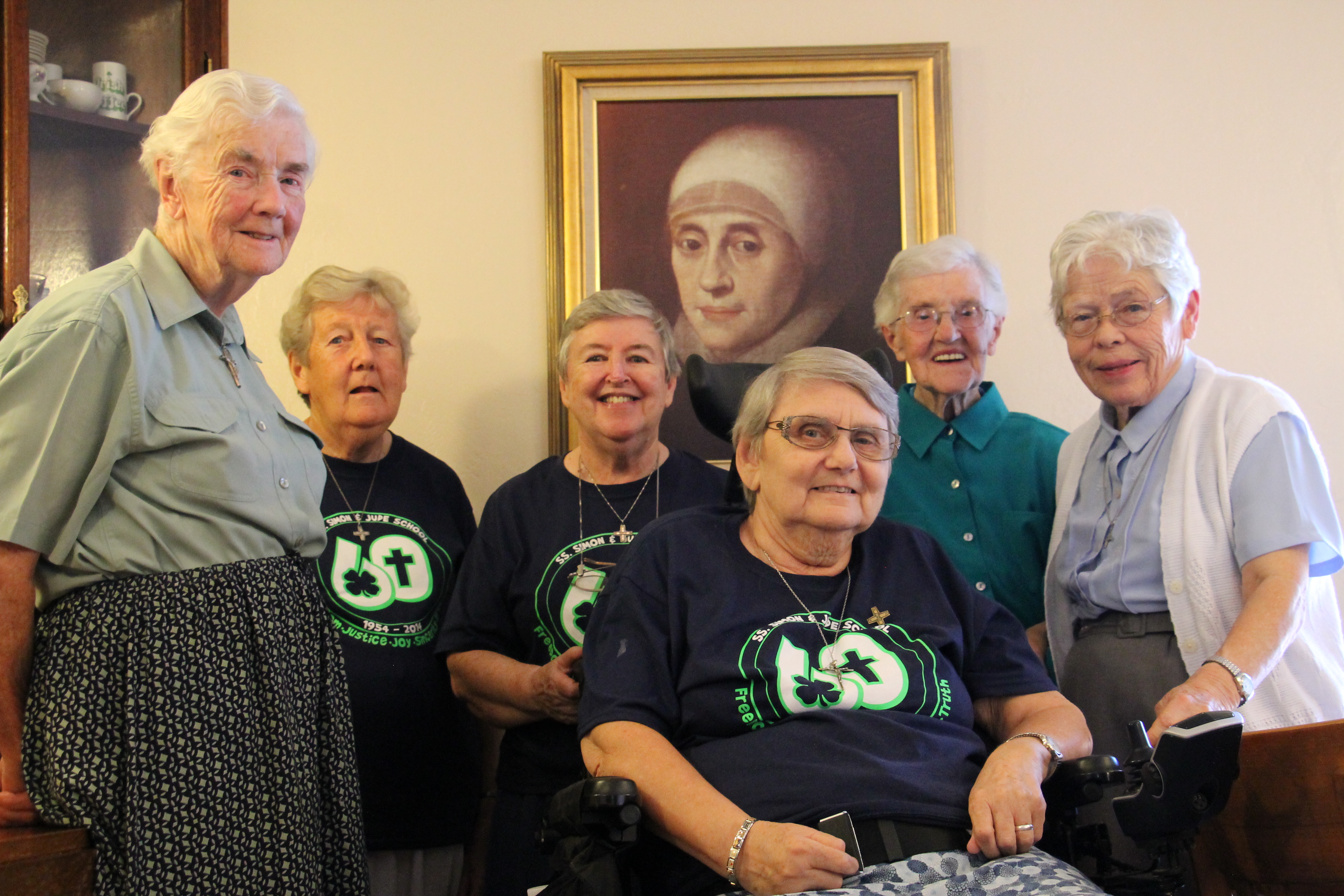
Loreto sisters, including Sisters Augustine Dempsey, Mary Roche, Christine Gilsenan, Gabrielle Marry, Teresita Ryan and Elizabeth Carey pictured Oct. 1, have met a variety of pastoral needs in the Diocese of Phoenix for 60 years. (Ambria Hammel/Catholic Sun)

The Loreto Sisters who serve in Phoenix, Prescott and Flagstaff eagerly reminisce about the mission they have been on during the 60 years since leaving the Emerald Isle.

They’ve adjusted to so much: desert weather, diocesan boundaries for Tucson and Phoenix, American citizenship, their “Suns’ Nuns” moniker and ministries outside of classroom teaching to meet pastoral needs. They’ve kept up with changes in technology along the way: Sr. Gabrielle Marry tucks her iPad somewhere in a wheelchair’s pouch.

One thing they’re still not accustomed to: talking about themselves. They spoke of their work in terms of “we,” not “I,” and prompted each other to share anecdotes, accomplishments or other memories when The Catholic Sun visited the Loreto convent in Phoenix Oct. 1.

“Sr. Gabby, even in her [wheel]chair, goes to Chris Ridge,” Sr. Christine Gilsenan said.

That’s a nearby continuing care community for senior residents. The sisters bring Communion and pray with them.

“When we say ‘I’m from SSJ,’ they light up,” Sr. Gabby said.

[quote_box_right]

About the Loreto Sisters

From Ss. Simon and Jude Cathedral

From Ss. Simon and Jude School[/quote_box_right]Ministry to the sick and homebound began post Vatican II. Fr. Paul Smith recruited five Loreto Sisters from Ireland solely to establish and run a Catholic elementary school.

Today, Arizonans will find Loreto sisters handling marriage preparation, healing ministry, social justice education and carrying out works of mercy. Sr. Elizabeth Carey and Sr. Augustine Dempsey share responsibility with others Valleywide who help with burials of the unclaimed dead several times a year at the White Tanks Cemetery.

[quote_box_right]

Burying the indigent

About the program

A reporter’s perspective (Cronkite Zine)[/quote_box_right]“They began offering prayers of support. Those people would have nobody who would claim their bodies,” Sr. Elizabeth said. She noted the presence of prisoners — the sheriff’s chain gang — who help with the burial.

Sr. Maria Sheerin regularly reaches out to inmates through prison ministry. Wherever they are, the sisters have devoted their lives to ensuring people know Christ’s love and their love for them.

“They’re determined. They have this very positive, can-do attitude,” said Mary Jo Wahlers, development director at Ss. Simon and Jude and an alumni parent.

“They’re not complacent. It’s ‘What can we do to make sure these kindergarteners are prepared for adult life?’ They’re visionaries,” said Diane Stein, an alumni who now works at the school. She also knows firsthand their strengths at identifying a person’s gifts and furthering their development.

[quote_box_right]

Mary Ward Associates

Be sure to read about the Loreto Sisters’ third order for laity. Sr. Gabrielle Marry and Mary Novotny, both of Phoenix, offer perspectives.[/quote_box_right]The sisters also led a group of adults in a session on Ignatian spiritual exercises 15 years ago. From that, several established the Mary Ward Associates, a lay order affiliated with the community.

“They’re just amazing role models. They say they’re praying for you and every time you walk away from them you’re on cloud nine,” Wahlers said.

Many who have encountered them over the years credit that feeling to the Loreto sisters’ core values of freedom, justice, joy, sincerity and truth. The Ignatian spiritual tradition and Mary Ward inspired the religious community.

[quote_box_right]

Sr. Raphael’s 40th anniversary

[/quote_box_right]“We have been very blessed with very dedicated lay teachers over the years who are continuing that legacy,” said Sr. Raphael Quinn, who is in her 42nd year as principal.

Lay teachers largely staff Ss. Simon and Jude today. Only Sr. Christine, who teaches music to the younger ones, conducts regular classes, but students know all of the sisters. Each class adopts one every year to pray for and engage. Her photo adorns the classroom.

The sisters also welcome classes into their convent chapel. It’s the perfect size for class retreats.

“The little ones have a certain excitement. They think it’s just heaven to pray in there,” Sr. Gabby said.
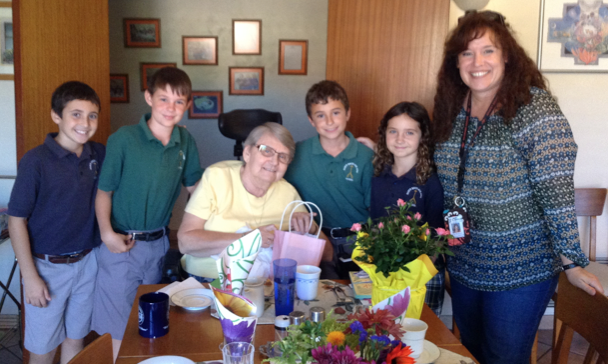
A few fourth-graders from Ss. Simon and Jude surprised Sr. Gabrielle Marry during breakfast at the convent Sept. 29 in honor of her 60th anniversary of perpetual vows as a Loreto Sister.(courtesy photo)
A few fourth-graders from Ss. Simon and Jude surprised Sr. Gabrielle Marry during breakfast at the convent Sept. 29 in honor of the feast of the archangels, including St. Gabriel, the Loreto sister’s namesake. (courtesy photo)

Several fourth-graders stopped by Sept. 29, the feast of the archangels, and surprised Sr. Gabby with cards to recognize her feast day. That day also marked a major milestone for Sr. Christine: the 60th anniversary of perpetual vows.

[quote_box_right]

Hear more from the Loreto Sisters

Tune in to their interview on The Bishop’s Hour 11 a.m. Nov. 3 or look for the archived show online.[/quote_box_right]She was a senior in high school in Ireland when she joined fellow students praying that the Loreto sisters would accept the invitation to go to Arizona. Sr. Christine recalled the words of encouragement following the prayer, “And any of you young ladies who are thinking of religious life, I hope you remember the Loreto.”

Sr. Christine never mentioned it to her parents or the sisters, but knew she would spend the rest of her life in Arizona.

Legion of Mary: Decades of devotion to the Blessed Mother

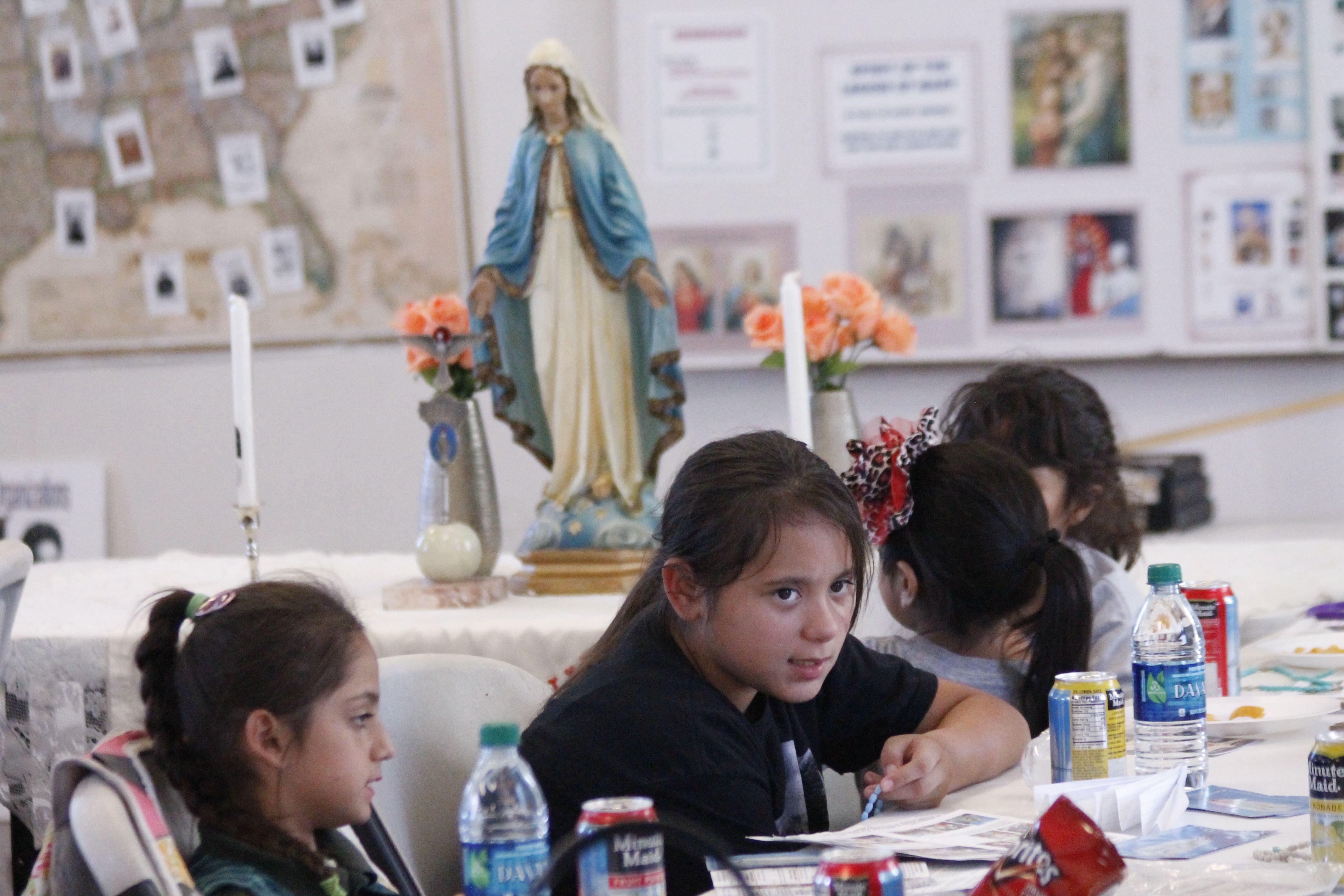
Members of the Junior Legion of Mary at St. Agnes School, pictured here Oct. 2, participate in service projects and promise to do their chores without complaining. They meet after school on Thursdays to pray the rosary. (Joyce Coronel/Catholic Sun)

During October, Catholics celebrate the Feast of the Holy Rosary and ponder the 20 mysteries that highlight pivotal moments in the lives of Jesus Christ and the Virgin Mary.

Twenty-seven years ago, Carla Wrublik’s mother invited her to join the Legion of Mary, an organization devoted to helping its members grow in holiness through prayer — especially the rosary — and service. The parish unit of the Legion of Mary is known as a praesidium, and there are 38 in the Diocese of Phoenix.

At first, Wrublik resisted involvement in the organization.

“I was praying for spiritual direction in my life, but I was playing games,” Wrublik said. She was hoping the Legion would change their meeting date to accommodate her work schedule. They didn’t.

“I went ahead and at that first meeting, I could see it was for me,” Wrublik said. Today, she is involved in the work of nine praesidiums, serving as an officer in some.

Members of the Legion of Mary commit to praying a special set of prayers daily. They also meet once a week to pray the rosary and are committed to performing an act of service weekly. From visiting the sick and imprisoned to feeding the hungry and sharing the Gospel message, Legion members serve others in the Phoenix Diocese and around the world.

[quote_box_right]

The Legion of Mary

A lay Catholic organization whose members serve the Church on a voluntary basis in almost every country.
Info: legionofmary.ie[/quote_box_right]

There’s also a Junior Legion for students under 18 years of age.

“Forty-three kids showed up at St. Agnes School,” Wrublik said of the organization’s weekly afterschool meeting. “And we had 42 at Our Lady of Perpetual Help, Glendale, and 49 at Ss. Simon and Jude Cathedral School.”

Fernanda Gutierrez, 13, belongs to the Junior Legion at St. Agnes. The eighth-grader said her grandmother belonged to the Legion in Mexico. “I like being with kids and praying. With the Legion, I can make it fun for them to learn about God and prayer,” Gutierrez said.

Fr. Hans Ruygt, pastor of St. Clare Parish in Surprise, joined the Legion of Mary when he was a teenager.

“My vocation was strongly supported at a very early age through the Legion of Mary at my parish in Napa, Calif.,” Fr. Ruygt said. There’s a Junior Legion at St. Clare that he said supplements the parish’s religious education program. Members regularly visit a nursing home. They’re also helping to spread the Gospel by distributing Catholic materials.

“It’s an educational process and evangelization and fostering a good strong devotion to our Blessed Mother,” Fr. Ruygt said.

The rosary, he added, has long been an important part of Catholic tradition.

“It draws us close to Our Lady and she always draws us closer to her Son,” Fr. Ruygt said. “It gives us an opportunity to reflect on scriptural events in the life of Jesus and Mary.”

Wrublik recalls going door-to-door in the neighborhood surrounding St. Clare Parish and inviting residents to church. In 10 months, they encountered more than 100 fallen-away Catholics.

“It’s amazing, the graces that come,” Wrublik said. “One lady let us know she had been away from the Church — people sometimes open up.”

Pope: Evolution, Big Bang do not push aside God, who set it in motion

The South Pole Telescope and the Background Imaging of Cosmic Extragalactic Polarization experiment, or Biceps2, at Amundsen-Scott South Pole Station are seen against the night sky in this National Science Foundation picture from 2008. Researchers used the equipment to detect ripples in the space-time fabric that echo the massive expansion of the universe that took place just after the Big Bang. Pope Francis Oct. 28 told the Pontifical Academy of Sciences that the Big Bang theory and evolution do not eliminate the existence of God, who remains the one who set all of creation into motion. (CNS photo/Keith Vanderlinde/National Science Foundation via Reuters)

VATICAN CITY (CNS) — The Big Bang theory and evolution do not eliminate the existence of God, who remains the one who set all of creation into motion, Pope Francis told his own science academy.

And God’s existence does not contradict the discoveries of science, he told members of the Pontifical Academy of Sciences Oct. 27.

“When we read the account of creation in Genesis, we risk thinking that God was a magician, complete with a magic wand, able to do everything. But it is not like that,” he said. “He created living beings and he let them develop according to the internal laws that he gave each one, so that they would develop and reach their full potential.”

God gave creation full autonomy while also guaranteeing his constant presence in nature and people’s lives, he said.

The beginning of the world is not a result of “chaos,” he said, but comes directly from “a supreme principle that creates out of love.”

“The Big Bang, which today is held as the beginning of the world, does not contradict the intervention of the divine creator, but requires it,” he said. “Evolution in nature is not at odds with the notion of creation because evolution presupposes the creation of beings that evolve.”

Members of the academy, many of them renowned scientists and philosophers, were meeting at the Vatican Oct. 24-28 to discuss “Evolving Concepts of Nature.”

Science, philosophy and religion have all contributed to how people see the world, how it began and what it all means, said the introduction to the academy’s program.

Despite many scientific advances, many mysteries remain, said Rafael Vicuna, professor of molecular genetics and molecular biology at the Pontifical Catholic University of Chile. While Charles Darwin shed light on the origin of species, one of the most perplexing questions is the actual origin of life, Vicuna said.

How is it that inert, inanimate matter turned into something living, and how is it that the first living single-celled organisms were still so amazingly complex, he asked in his talk Oct. 27.

Chemistry, biology and genetics have been able to identify the tiniest components and basic building blocks of living organisms, but there is something more than just what they are made out of that makes them “living,” he said in an interview with the Catholic newspaper, Avvenire.

“I can know perfectly what a cell is made up of, but how it works deep down, what really is the dynamism that makes it move — that is, life — I don’t know,” Vicuna said. “A refrigerator and a car are complex structures that move, but only with an immense amount of energy from the outside. Life, in its deepest essence, remains something that escapes us.”

In his talk to academy members, Vicuna said the laws of chemistry and physics “do not suffice to grasp the whole of life … that life is more than molecules.”

Another mystery is how everything in the universe, from the smallest atomic particles to every galaxy, is spinning and orbiting, another academy member said.

“The Big Bang, which today is held as the beginning of the world, does not contradict the intervention of the divine creator, but requires it.”

Rudolf Muradyan, a quantum and mathematical physicist who also works in cosmology, said in his talk that spin “is the most important problem in our universe. It is the only thing that prevents the universe from totally collapsing.”

Without bodies rotating on an axis or orbiting each other, everything would fall: all the stars would become one giant black hole, the earth would crash into the sun and the moon would collide into the earth, he said.

He said the problem with the Big Bang theory is it explains linear motion, with everything moving outward and expanding from one common point as a result of the “bang,” but it does not account for the rotation of celestial objects, and theories that the universe was “born spinning.”

Philosophy and religion have to be careful to not make the mistake of trying to solve the mysteries in nature by making God “responsible for a natural process that escapes scientific explanation,” Vicuna said.

An example of this, he said, can be found in the intelligent design movement, which accepts that life has evolved over eons but asserts that it is so complex that its development must have been guided by a supreme being or intelligent agent.

Not only are intelligent-design proponents “denying nature’s autonomy, but they are also revealing some degree of ingenuousness, because science has already provided explanations for the development” of structures they had considered to be too complex to occur naturally, he said.

However, there is an argument for the “apparent design, order and purpose observed in nature,” he said, which is not to be confused with intelligent design and the “God of the gaps.”

Pierre Lena, a French Catholic astrophysicist, told the assembly that there are laws at work in the entire universe that are “eternal, creative, uniform in space and time and stable” enough to be fairly predictable.

“But these laws have a mystery. Why are they there? We can’t touch them, but they act. They are not God,” he said, but they are a sign of the “supranatural existence of something.”

He told Catholic News Service that scientists can observe laws working exactly the same way over time and space. This “strange property” means scientists can figure out what most likely happened one billion years ago, as well as “in a remote galaxy and here in this room with the same accuracy.”

“If the laws were changing, science would not be possible,” Lena said.

Early philosophers like Plato, St. Thomas Aquinas and St. Augustine all felt nature’s wonder and beauty reflected the beauty and perfection of their maker, Vicuna said.

However, “the existence of a divine creator of life and the universe” comes from personal belief and conviction, not scientific proof; science cannot empirically prove or disprove a God that transcends the natural sciences, he said.

— By Carol Glatz, Catholic News Service.

Pope says official exorcists show Church’s love for the suffering

Father Jose Antonio Fortea gives a talk about exorcism and pastoral care during a 2012 workshop at Assumption Catholic Church in Jacksonville, Fla. Father Fortea, a priest of the Diocese of Alcala de Henares, Spain, is an exorcist. Pope Francis said the church's official exorcists show the church's love for the suffering. (CNS photo/Don Burk)
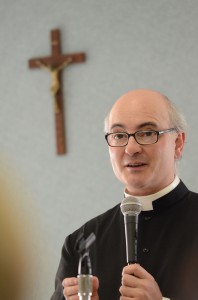
Father Jose Antonio Fortea gives a talk about exorcism and pastoral care during a 2012 workshop at Assumption Catholic Church in Jacksonville, Fla. Father Fortea, a priest of the Diocese of Alcala de Henares, Spain, is an exorcist. Pope Francis said the Church’s official exorcists show the Church’s love for the suffering. (CNS photo/Don Burk)

VATICAN CITY (CNS) — Exorcists, assigned to that ministry by their bishops, demonstrate the love and care of the Church for “those who suffer because of the work of the devil,” Pope Francis said in a message to the International Association of Exorcists.

The organization, which was recognized by the Congregation for Clergy in June, brought some 300 exorcists to Rome for a convention focused particularly on the impact of the occult and Satanism on modern men and women.

In an Oct. 27 interview with Vatican Radio, Dr. Valter Cascioli, a psychiatrist and spokesman for the group, said the number of people who turn to the occult or are fascinated by Satanic cults and rituals “is constantly increasing and this worries us” because it appears to coincide with “an extraordinary increase in demonic activity.”

Cascioli said too many people today undervalue temptation, “ordinary demonic activity,” which leaves them unprepared to fight off greater attacks by the devil.

In societies marked by “rushing, superficiality, exaggerated individualism and secularization,” he said, “the battle against evil and the devil increasingly is becoming an emergency.”

Where faith is weak, he said, “the enemy of God” finds easy prey.

Father Gabriele Nanni, exorcist for the Diocese of Teramo, Italy, gives a presentation during a 2011 course on exorcism and Satanism at the Legionaries of Christ's Pontifical Regina Apostolorum University in Rome. Pope Francis said the church's official exorcists show the church's love for the suffering. (CNS photo/Paul Haring)
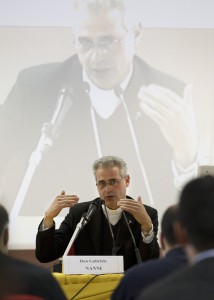
Father Gabriele Nanni, exorcist for the Diocese of Teramo, Italy, gives a presentation during a 2011 course on exorcism and Satanism at the Legionaries of Christ’s Pontifical Regina Apostolorum University in Rome. Pope Francis said the church’s official exorcists show the church’s love for the suffering. (CNS photo/Paul Haring)

The exorcists’ association, Cascioli said, sees the impact of the devil’s wiles on families as well as individuals. “We know that the one who divides — the devil — not only separates us from God, but separates persons and families.”

— By Cindy Wooden, Catholic News Service.

Salvadoran youths find music provides path to escape cycle of violence

SAN SALVADOR, El Salvador (CNS) — Eleven-year-old Jamin Diaz is finding that music and his participation in a symphony orchestra are giving him the chance to steer clear of violence that plagues his country.

Jamin is one of 240 students in the orchestra whose members come from poor families and public schools marked by gang feuds.

“Instead of walking down the wrong path, being in the orchestra teaches us about symphonic music, culture and, most importantly, about not to waste our childhood,” Jamin told Catholic News Service.

Jamin plays clarinet in the orchestra and is in the seventh grade at Monsenor Basilio Plantier Primary School, in the crime-ridden barrio of San Esteban.

El Salvador ranks among the most violent countries in Latin America, with a rate of 41 murders per 100,000 inhabitants, according to the 2013 Global Study on Homicide published by the U.N. Office on Drugs and Crime. Many murders in El Salvador are attributed to the country’s two main gangs, the Mara Salvatrucha and Barrio 18, whose members often lurk in schools looking for new members.

The symphony orchestra is a project launched in 2011 by Salesian Father Jose Maria Moratalla Escudero, president of the Education and Work Foundation.

Members of the youth symphony orchestra walk into the place where they rehearse, at Polígono Industrial Don Bosco, located in a crime-ridden area of San Salvador, El Salvador. (CNS photo/Edgardo Ayala)

Fr. Moratalla, known as Fr. Pepe, has supported young people in the program since 1992. They also are part of Poligono Industrial Don Bosco, a technical school where young people learn practical skills for employment in various industries.

The World Bank donated $1 million to start the project. Immediately $300,000 was invested in high-quality musical instruments, including a grand piano, a luxury in El Salvador.

“We must strive for excellence, without quality there is no orchestra. … Our instruments and our students’ training must be as good as any other top music school in the world,” Fr. Moratalla told Catholic News Service.

The students participating in the orchestra as well as 250 others chosen for a choir were selected from more than 40 San Salvador schools. Fr. Moratalla said the music program gives children from poor families the opportunity to escape the cycle of violence and build a more hopeful future.

“It has been fantastic to drive this effort as a means of preventing violence,” he said.

Alejandro Lopez, 18, who plays trumpet in the orchestra and is a student at Mercedes Quinteros School in the La Rabida neighborhood north of San Salvador, understands the importance of ending violence.

“My school is in a violent and complicated area, as are many others in the country, and many of my friends are involved in gang activities,” he said. “But music for me has given me the chance to try to be a good man.”

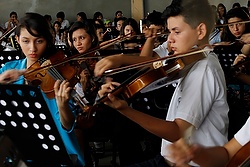
Members of the youth symphony orchestra rehearse at Polígono Industrial Don Bosco, located in a crime-ridden area of San Salvador, El Salvador. (CNS photo/Edgardo Ayala)

During a rehearsal in the heart of Comunidad Iberia, a tough barrio controlled by gangs where the orchestras is headquartered, Lopez began playing “Carmina Burana” by the German composer Carl Orff and moved on to “Ritual Fire Dance” by Spanish composer Manuel de Falla.

“Musically, the orchestra has made great strides. We are playing a standard repertoire for the level we have,” said Diego Hernandez, the 25-year-old music teacher.

Hernandez joined the project as a music instructor candidate and took lessons via Skype with teachers from conservatories in Spain. The Spaniards also traveled to El Salvador for a week to evaluate the candidates.

“I think projects like this can influence the reality of the country. A more educated person, one who can think, who can feel the spirit of art, is hardly going to try to harm someone else,” Hernandez said.

Fr. Moratalla said the program guarantees jobs, “so that youth and children will not need to make the trip to the American dream.”

In the 1980s, thousands of Salvadorans fled to the United States because of a civil war that left 70,000 people dead by the time it ended in 1992. Today, the exodus continues.

The U.S. Department of Homeland Security reported Oct. 9 that more than 16,400 unaccompanied Salvadoran children were apprehended at the border with Mexico during the fiscal year ending Sept. 30. The figure represents a 174 percent increase over same period a year earlier.

Salesian Father Jose Maria Moratalla Escudero interacts with a member of the youth orchestra he founded in a crime-ridden area of San Salvador, El Salvador. (CNS photo/Edgardo Ayala)

“We are trying to ensure that these young people don’t have to migrate and, instead, get a decent work in El Salvador,” Fr. Moratalla said.

He said the phenomenon of migration is complex and that the orchestra project, while ambitious, cannot address a nationwide problem.

Fr. Moratalla hopes to expand the program to include academies in ballet, theater, fine arts and other areas of music. He is seeking funding to complete the long-term project.

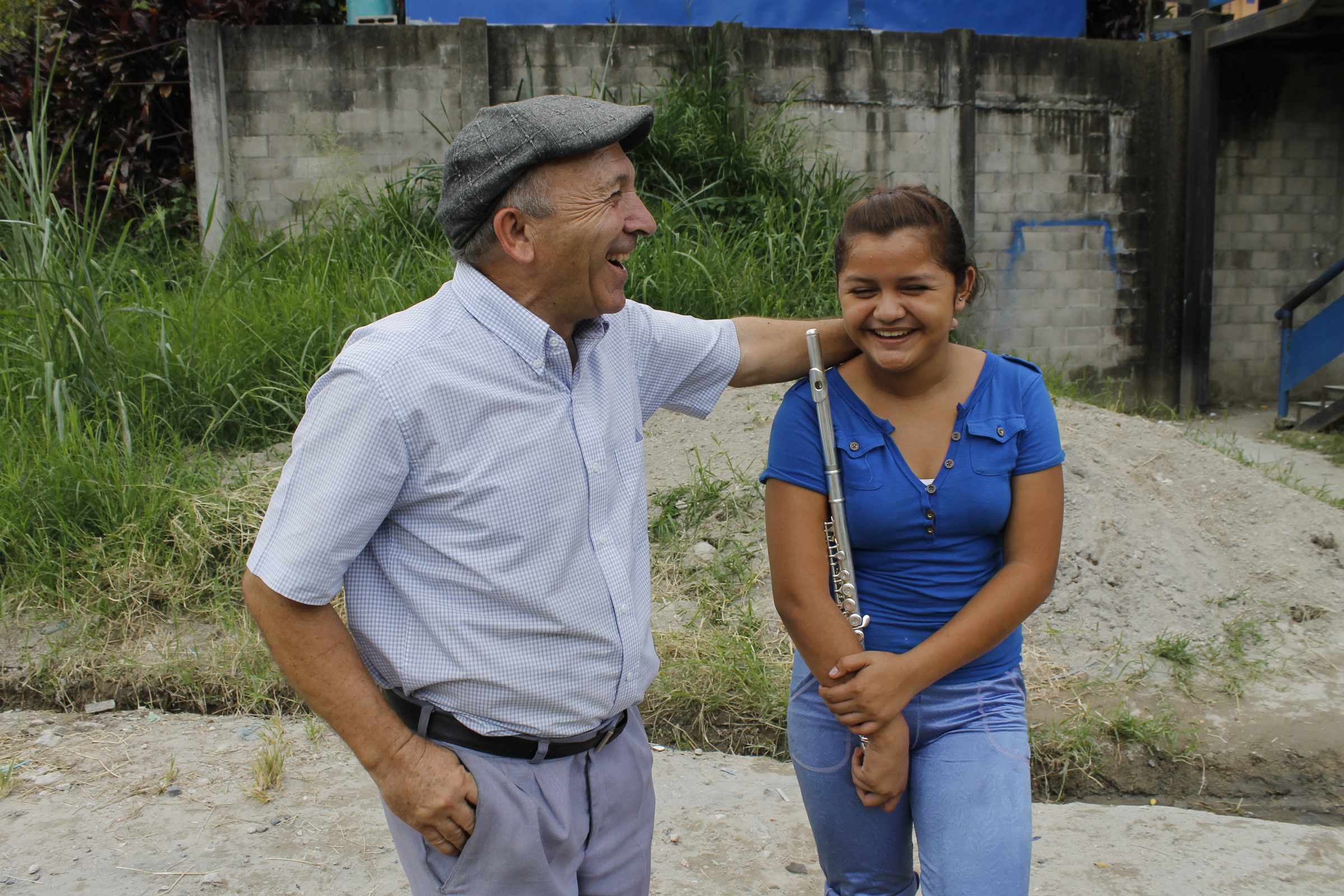
“It’s a worthwhile project for children and young people of this country,” he said, adding that they were looking for “someone who believes in them in this country.”

By Edgardo Ayala, Catholic News Service.

Cardinal Pell calls for ‘no doctrinal back-flips’ at next family synod

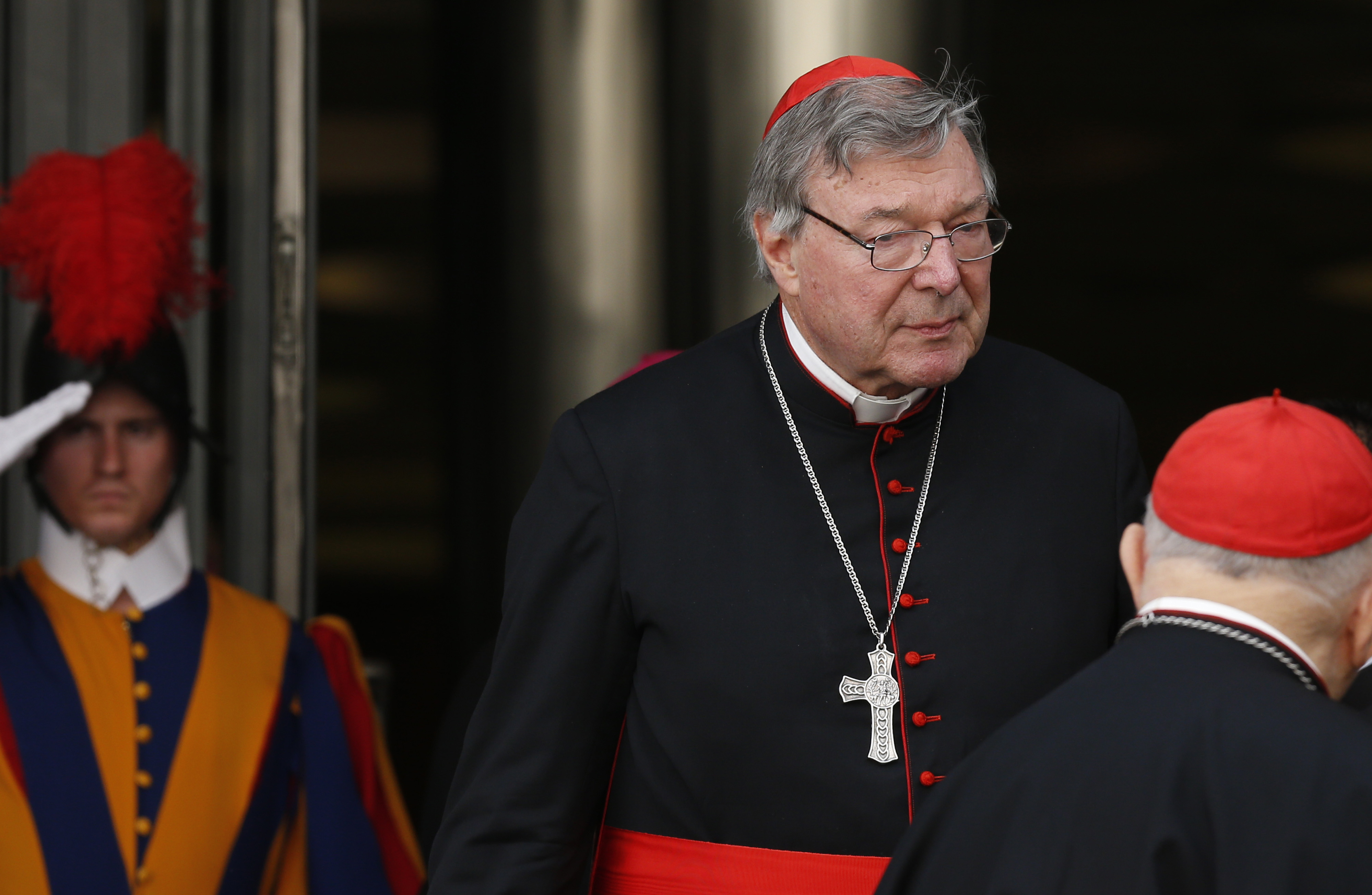
Australian Cardinal George Pell, prefect of the Vatican Secretariat for the Economy, leaves the morning session of the extraordinary Synod of Bishops on the family at the Vatican Oct. 16. In an Oct. 16 interview with Catholic News Service, Cardinal Pell said the synod's midterm report did not accurately represent the views of the synod fathers. (Paul Haring/CNS) See SYNOD-PELL Oct. 16, 2014.
Australian Cardinal George Pell, prefect of the Vatican Secretariat for the Economy, leaves the morning session of the extraordinary Synod of Bishops on the family at the Vatican Oct. 16. In an Oct. 16 interview with Catholic News Service, Cardinal Pell said the synod's midterm report did not accurately represent the views of the synod fathers. (CNS photo/Paul Haring) See SYNOD-PELL Oct. 16, 2014.
Australian Cardinal George Pell, prefect of the Vatican Secretariat for the Economy, leaves the morning session of the extraordinary Synod of Bishops on the family at the Vatican Oct. 16. In an Oct. 16 interview with Catholic News Service, Cardinal Pell said the synod’s midterm report did not accurately represent the views of the synod fathers. (CNS photo/Paul Haring) 

ROME (CNS) – Looking ahead to the October 2015 world Synod of Bishops on the family, Cardinal George Pell said the task for Catholics “over the next 12 months” is to explain “the necessity of conversion, the nature of the Mass,” and “the purity of heart the Scriptures require of us to receive holy Communion.”

The cardinal’s comments came days after the conclusion of the 2014 extraordinary synod on the family, which debated making it easier for divorced and civilly remarried Catholics to receive Communion.

“We will be counterproductive if we have anger or hate in our hearts, if we lapse into sterile polemics against a surprisingly small number of Catholic opponents,” the cardinal wrote.

Cardinal Pell’s remarks came in a homily he had prepared for a celebration of Mass in the extraordinary form Oct. 24 at Rome’s Church of the Most Holy Trinity of the Pilgrims.

The cardinal was unable to celebrate the liturgy, part of the Populus Summorum Pontificum pilgrimage to Rome for devotees of the traditional Latin Mass, on account of bronchitis. In an additional prepared text, he assured those present that his sickness was the only reason he was unable to attend.

In the cardinal’s absence, his personal secretary Fr. Mark Withoos celebrated the Mass and read the homily.

The “college of bishops and all synods work by consensus,” Cardinal Pell wrote. Before next October, Catholics have to work to build a consensus “out of the present divisions,” he wrote.

“Pastoral practice and teachings can only be change by consensus,” he wrote.

“Doctrine does develop, we understand truth more deeply, but there are no doctrinal back-flips in Catholic history,” the cardinal wrote. “The apostolic tradition announced first by Christ and founded in the Scriptures is the touchstone for truth and genuine pastoral practice.”

“We, and especially you young people, must live this in love, giving reason for your hope,” he wrote. “This is a unique opportunity, which we must seize in God’s name.”

Cardinal Pell also wrote about the importance of the papacy in defending and developing doctrine.

“The role of the successor of St. Peter has always been vital to Christian and Catholic life, especially as the touchstone of doctrinal fidelity and as a resolver of disputes, pastoral as well as doctrinal,” the cardinal wrote.

“The church is not built on the rock of Peter’s faith,” he wrote, “but on Peter himself, despite his faults and failings.”

“Pope Francis is the 266th pope and history has seen 37 false or antipopes,” he wrote.

“The story of the popes is stranger than fiction,” the cardinal wrote, and today “we have one of the more unusual popes in history, enjoying almost unprecedented popularity. He is doing a marvelous job backing the financial reforms,” he wrote

Cardinal Pell concluded his written remarks with a prayer “I was taught as a child: May the Lord preserve the Holy Father, Pope Francis, and give him life. Keep him safe on earth and deliver him not up into the hands of his enemies.”

– By Robert Duncan, Catholic News Service. 

R U texting in church? Put the phone down!

This photo illustration shows someone using a cellphone inside a Catholic chapel in Washington Oct. 27. With cellphones everywhere -- at family meals, in the classroom and at sporting events -- it is no surprise they are at church, too. (CNS photo/Tyler Orsburn)

ALBANY, N.Y. (CNS) — Entire families navigate their smartphones while sharing meals at restaurants. Students text in class. Parents take phone calls at their children’s sporting events and plays.

It’s no surprise that cellphones affect even church.

It has become common for parishes to place blurbs in their bulletins about silencing cellphones and for lectors to make announcements about it before liturgies, reminding parishioners they’re in a place of worship.

In some places, Massgoers heed the notices — with a few exceptions for people who work in emergency fields or don’t understand how to silence their phones. At other parishes, ringtones, texting or even taking calls during liturgies can distract the presider and the people in the pews.

Dorothy Sokol, parish life director at Our Lady of Grace Parish in Ballston Lake, notices phones ringing and worshippers texting at Mass, despite signs in two different places and announcements cautioning against it. She said some people don’t know they’re offending people, but she’s distracted by it, especially when parents let toddlers play electronic games on their phones.

Some parishioners use a tablet or smartphone to follow along with the readings for Mass, and “there’s a place” for that, she said.

As for texting, “people have to be conscious that they’re in church to pray with a community and to try, if possible, to put the distractions away,” Sokol told The Evangelist, Albany’s diocesan newspaper.

She’s not sure how to handle teenagers she’s seen texting repeatedly.

“What do you say?” she wondered. “Do you give the teenager grief when the parents are sitting right next to them and not saying anything? The last thing I want is for them to stop coming. You have to figure out what’s best. Unfortunately, asking, ‘What would Jesus do?’ isn’t a good question” — the Son of God never had a cellphone.

Father Richard Carlino, pastor of St. John the Evangelist and St. Anthony parishes in Schenectady, calls himself a “strong endorser of silencing the cellphones.” People cooperate for the most part, but some don’t hear the announcements at the start of each Mass.

“It throws my whole concentration off” when a phone rings during Mass, Father Carlino said. But “I don’t think they do it maliciously.”

In recent months, he’s also had to talk to parishioners about texting — which he considers less distracting than a ringing phone, but “still a distraction from what they’re supposed to be doing in church. Their mind is not on the Lord. There are exceptions, but the exceptions should be few.”

On the other hand, “I’m happy they’re there, even if they’re doing stuff they shouldn’t be.”

“I’ve watched people walk into telephone poles while they’re texting.”

Father Thomas Holmes, pastor of St. Henry Parish in Averill Park and St. Mary Parish in Nassau, gets so frustrated by poor technology etiquette at Mass that he joked about installing an electric dog fence around the churches — or at least a signal scrambler.

“Almost every weekend, somebody’s cellphone goes off during Mass, oftentimes during the consecration,” he said. “I often laugh, and it’s a sarcastic laugh. I’ve said a couple of times, ‘You’ve got to be kidding me.’ I think they should be embarrassed.”

There’s a sign on the door of St. Henry’s asking those who enter to turn their phones off. Father Holmes was puzzled and disappointed when he noticed someone had crossed out the words.

“It’s disheartening,” he said. “There’s no reason for anybody to have their cellphone on in church.”

He has spotted teenagers and young adults texting at Mass, but hasn’t confronted anyone. Texting only distracts him if he notices it, but he still wishes it didn’t happen at all in church.

“I’ve watched people walk into telephone poles while they’re texting, so it doesn’t surprise me” that it’s hard to turn off the technology, he said. “People are attached. I’ve had parents tell me that their kids text each other while they’re sitting next to each other on the couch.

“Overall, I think people should have a little more sense when it comes to their cell phones. They forget why they’re (at church). It’s only an hour of their life.”

Andrea Freeman, office manager at St. Matthew’s in Voorheesville, saw someone texting at a wake, but said otherwise it doesn’t happen there often.

At Christ Our Light Parish in Loudonville, phones generally aren’t a problem, though a ringer did interrupt Deacon Dick Thiesen, the parish life director, once as he proclaimed the Gospel. He’s also seen parents texting during their children’s confirmations.

— By Angela Cave, Catholic News Service. Cave is a staff writer at The Evangelist, newspaper of the Diocese of Albany.

Book explores complex balance between charitable acts, religious values

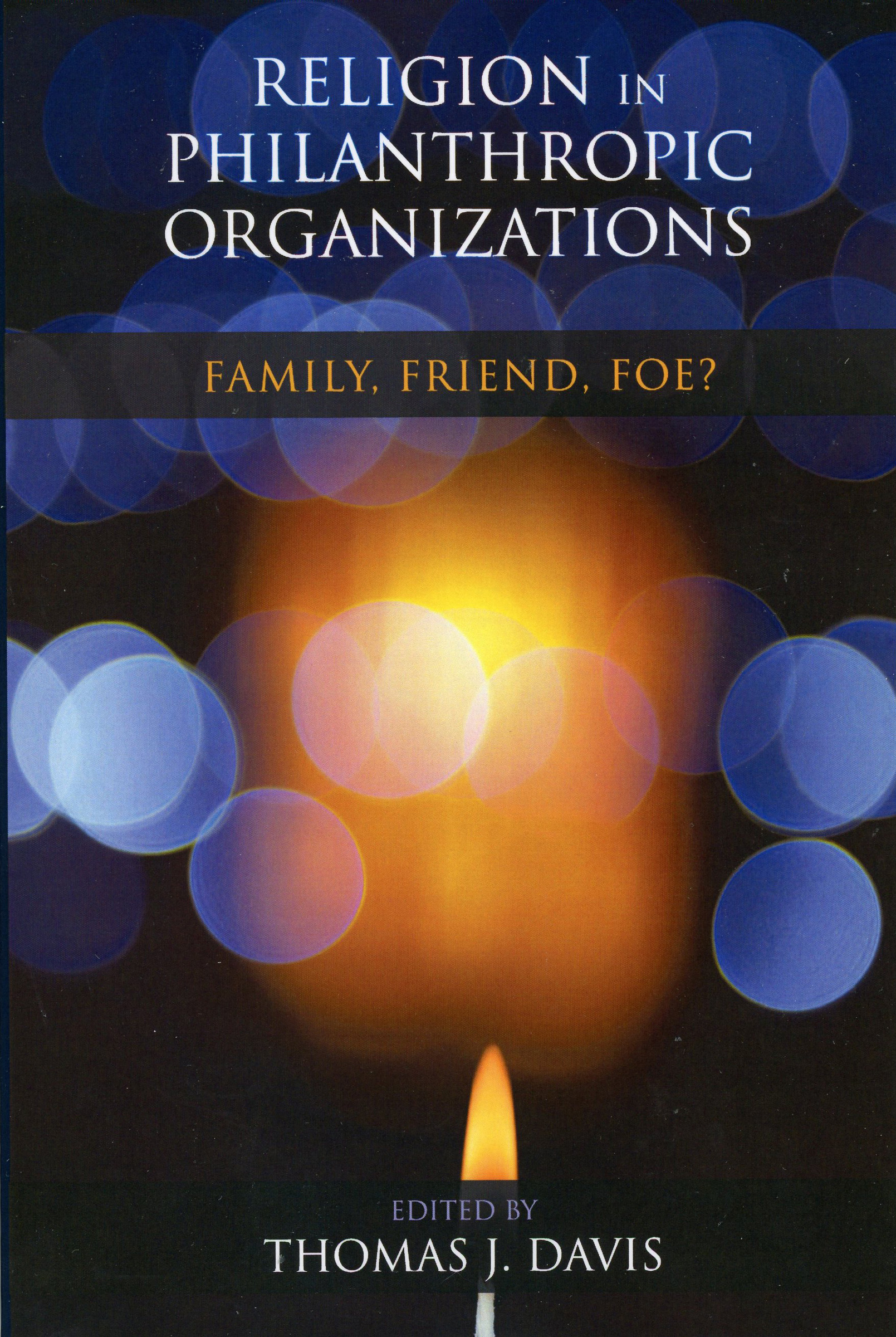
This is the cover of "Religion in Philanthropic Organizations: Family Friend, Foe?" edited by Thomas J. Davis. The book is reviewed by David Gibson. (CNS)

The work of religious philanthropic organizations came into clear view during the summer of 2014 when two Christian mission groups serving people in need around the world arranged to fly two of their medical missionaries suffering from the Ebola virus out of Liberia to a hospital in Atlanta, where they were treated successfully.

One group was Samaritan’s Purse, a well-funded evangelical Christian organization dedicated both to “helping those in need and proclaiming the hope of the Gospel.” The other group, officially called SIM, is an international Christian mission organization with similar goals. SIM stands for Serving in Mission.

This is the cover of "Religion in Philanthropic Organizations: Family Friend, Foe?" edited by Thomas J. Davis. The book is reviewed by David Gibson. (CNS)
This is the cover of “Religion in Philanthropic Organizations: Family Friend, Foe?” edited by Thomas J. Davis. The book is reviewed by David Gibson. (CNS)

Samaritan’s Purse today is headed by Franklin Graham, son of famed evangelist the Rev. Billy Graham. The chapter in “Religion in Philanthropic Organizations” telling of the organization’s earlier evolution under the evangelist Bob Pierce, who died in 1978, makes for compelling reading and casts light on precisely the issues the book highlights.

Over the course of his life, Pierce grew increasingly wary of the effects of accepting government funds in religious philanthropic organizations. He feared, too, that “professionalization” in the provision of social services would get elevated “over prayer” and compromise his organization’s Christian mission and identity.

There is a close relationship between charitable action and philanthropy on the part of religious organizations, according to Thomas J. Davis, the book’s editor. But the philanthropy his book focuses upon aims principally at alleviating society’s ills and making the world a better place. This might be done through caring for the sick, feeding and educating the poor, disaster relief, counseling families that suffer or aid for immigrants.
[quote_box_right]

‘Religion in Philanthropic Organizations: Family, Friend, Foe?’

edited by Thomas J. Davis. Indiana University Press (Bloomington, Indiana, 2013). 227 pp., $25.[/quote_box_right]How does a religious philanthropic organization “navigate the demands of governmental regulations when that organization is the recipient of federal dollars?” That important question, posed by Davis, is asked again and again in one form or another as the book’s chapters unfold. Its 10 contributing writers explore issues of philanthropy from Christian, Jewish and Islamic perspectives.

Sheila S. Kennedy insists in a chapter titled “Religious Philanthropies and Government Social Programs” that “there is no constitutional reason that congregations cannot partner with government” in the U.S. “The issue is how such partnerships are conducted.” Kennedy is professor of law and public policy at Indiana University-Purdue University Indianapolis.

Still, she advises religious congregations that their primary mission is ministry. “Before a congregation contracts to provide social services, it needs to consider whether the contract will divert attention and resources from that primary mission. A corollary question is whether contracting with government will mute the congregation’s prophetic voice” — mute its willingness to criticize government positions on specific issues, for example.

Issues related to government financial aid and the apprehensions of some that it will corrupt a religious body’s mission represent one central area of concern in this book. It also calls attention to the divisions within individual religious bodies over the value and purpose of their social-services work.

These concerns may be particularly evident in contemporary times when the expectation looms large that social-services work will be conducted not only with good intentions, but professionally and competently.

How is a religious body’s identity and purpose maintained in the conduct of social services work? Will those whose poverty is addressed by a church ever discover what the religious group believes or what convictions prompt it to serve others in need?

In other words, will actions truly speak louder than words in religiously sponsored social-services work? A fear that words of faith will not be heard much, if at all, has divided religious congregations over many decades, the book shows.

Within religious bodies, some resist social-services endeavors, considering them a distraction from the mission to call people to conversion. Others consider these endeavors basic to the practice of their faith.

One big challenge, then, when it comes to religion and philanthropy is to balance confidence in God with confidence in professionalism. Jesuit Father Fred Kammer, in an excellent chapter on Catholic Charities, appears to believe it is possible to achieve this balance. Father Kammer is a past president of Catholic Charities USA.

“In the view of Catholic Charities leaders, agencies not only can but also should be both mission-driven and competent,” Fr. Kammer writes. He speaks, moreover, of “the complex and generally positive relationship of Catholic Charities” with the U.S. government and “various state and local governments.”

I found it notable that in discussing “the tensions of philanthropy and Catholic identity,” Fr. Kammer took care to provide a list of “10 ways that Catholic Charities ministry is Catholic.”

For example, he said, “Catholic Charities recognizes that some services require attention” not only to the physical and mental needs of those they serve, but to their spiritual needs as well.

Also, he said, “Catholic Charities promotes the sanctity of human life and the dignity of the human person,” it “is authorized to exercise its ministry by the diocesan bishop,” and its “ministry has been an integral part of the Catholic Church for 2,000 years.”

Reviewed by David Gibson Catholic News Service. Gibson was the founding editor of Origins, Catholic News Service’s documentary service. He retired in 2007 after holding that post for 36 years.

Priest says taking ‘selfies,’ posting them a way to connect to students

Father Jason Blahnik, director of the Catholic Campus Ministry at the University of Wisconsin-Oshkosh, takes a selfie with students at the Newman Center on campus Oct. 14. Father Blahnik said he's always looking for new ways to engage young people and attract them to his Catholic ministry. (CNS photo/ Jeannette Merten, The Compass)
Fr. Jason Blahnik, director of the Catholic Campus Ministry at the University of Wisconsin-Oshkosh, takes a selfie with students at the Newman Center on campus Oct. 14. Father Blahnik said he’s always looking for new ways to engage young people and attract them to his Catholic ministry. (CNS photo/ Jeannette Merten, The Compass)

OSHKOSH, Wis. (CNS) — As the Catholic Campus Ministry director at the Newman Center on the University of Wisconsin-Oshkosh campus, Fr. Jason Blahnik is always looking for new ways to engage young people and attract them to his Catholic ministry.

This summer, he discovered a new one.

While walking alongside the Fox River on a hot day, he was struck by the humor of a sign warning, “Danger, thin ice.” He thought, “I bet people would get a good laugh out of this.” He took a “selfie” — a photo of himself — with the sign and posted it on his Facebook page.

The selfie prompted the amused response he had hoped for from students who were not on campus for the summer. He then started posting selfies of himself standing near university landmarks that the absent students would recognize.

“With the students gone, this was a way to connect them with UW-Oshkosh and the Catholic ministry even if they weren’t there,” Fr. Blahnik told The Compass, newspaper of the Green Bay Diocese. “Kids do a lot of selfies and snapshots. It’s me putting a foot into their world. It endears them a little bit more to the ministry.”

He said that now that school is back in session, students are taking selfies of themselves at the Newman Center and are posting them as well.

“It’s a chance to communicate with them in a little bit different way than normal,” said Fr. Blahnik, who was ordained in 2009. His “selfies” posted on Facebook can be viewed via the link bit.ly/jason_selfies.

And how is it going over with the students? Fr. Blahnik obligingly asked for a nearby student’s opinion and got an enthusiastic response. “They think I’m the best, apparently,” he reported wryly.

In the back of his mind, Fr. Blahnik’s current approach was influenced by the popular selfies being taken by Pope Francis. “If the boss is doing it, I guess it’s OK,” Fr. Blahnik said.

In the university student union, campus organizations can set up information tables, and Fr. Blahnik plans to sponsor a table once a month with a cardboard cutout of Pope Francis that students can pose beside for selfies.

“We may need to create an album on Facebook just for those photos,” Fr. Blahnik said. “The aim of the tables is to be a voice if somebody has questions about the Catholic faith. It gives the students a chance to see the church is present on campus. Sometimes we need those reminders. It encourages them to think about religion. Sometimes we put that on the back burner when we’re busy.”

He said a hospitality committee of students will be present at the tables as well as at offerings at the Newman Center. “Regardless of who the person is, they will be feeling welcome, worshipping Christ, loving Christ and being loved by Christ,” he said.

Fr. Blahnik said he wants to reach out to young people on a personal level and to have fun. He is offering such activities as carving pumpkins, doing arts and crafts, playing Catholic charades, knitting baby caps for charities or just dancing around to music.

He said his foray into selfies is a way to show that he is willing to go to the young people’s level in a good way.

“There’s some authenticity there,” he said. “It’s an opportunity to connect with the culture of young people now, and they appreciate that. It shows that Christ can enter even into something like this.

“Some people think that if we’re having fun, we’re sinning. That’s not the case. It’s fun to be Catholic,” he explained. “There’s a joy to it, living and loving people. It’s a great life. There are so many ways of following Jesus in a good way. I want them to have fun.”

By Jaye Alderson, Catholic News Service. Alderson writes from The Compass, newspaper of the Diocese of Green Bay.

‘Without God, you can do nothing,’ says Scottish singer Susan Boyle

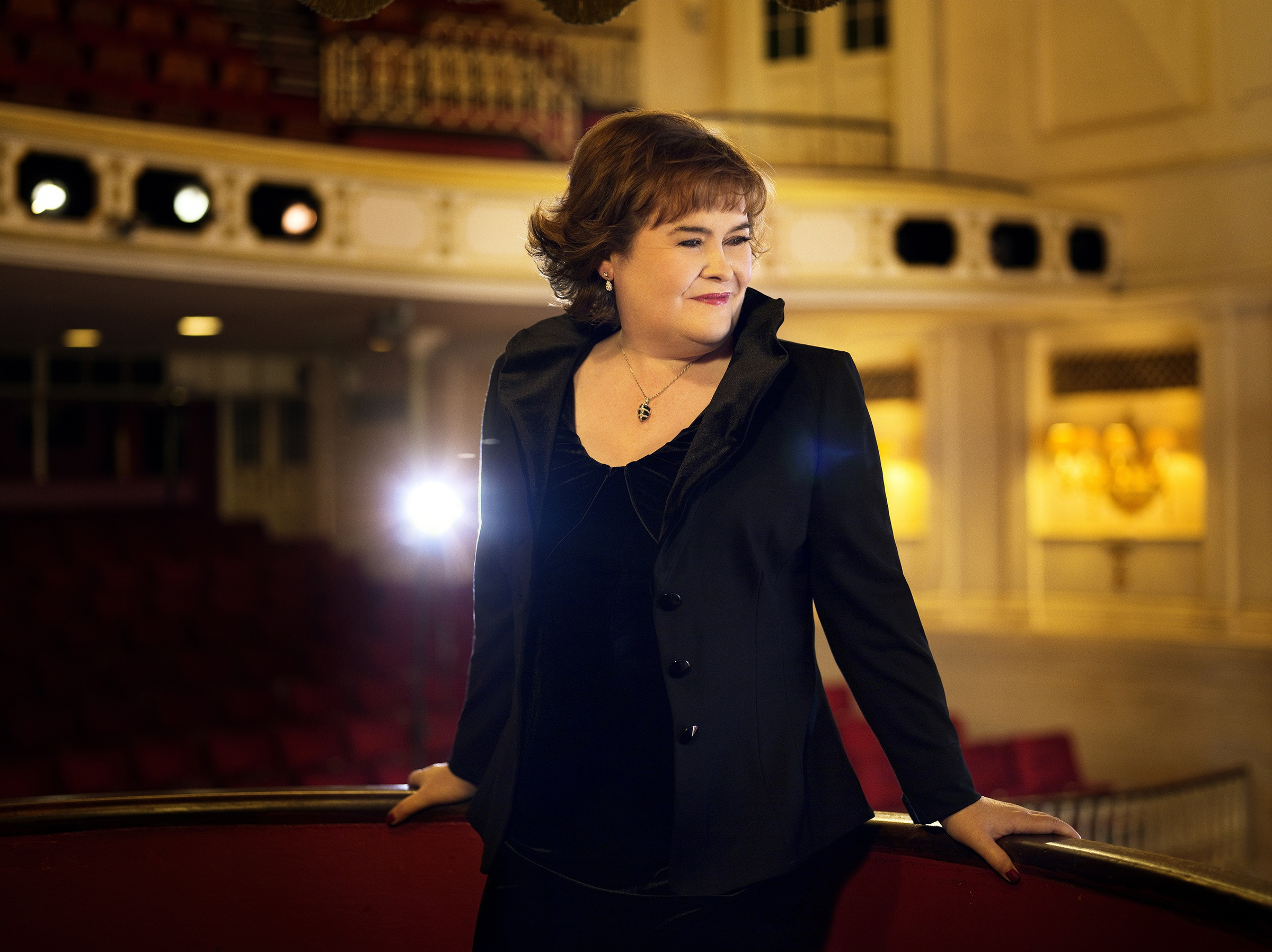
Scottish singer Susan Boyle poses for a photo Aug. 31. In 2009 Boyle, a Catholic, came in second place on "Britain's Got Talent" and has since released six albums. The singer, who launched her first U.S. tour in October, says that "without God, you can do nothing." (CNS photo/Jason Bell)
Scottish singer Susan Boyle poses for a photo Aug. 31. In 2009 Boyle, a Catholic, came in second place on “Britain’s Got Talent” and has since released six albums. The singer, who launched her first U.S. tour in October, says that “without God, you can do nothing.” (CNS photo/Jason Bell)

ORANGE, Calif. (CNS) — If you think singing in front of Simon Cowell would be terrifying — well, you’re not far wrong.

“It was a bit frightening,” admitted Susan Boyle, whose awe-inspiring audition for “Britain’s Got Talent” — for which Cowell was one of the judges — aired on television, and exploded onto the Internet, in April 2009.

“I was a bit nervous,” she recalled in an interview with OCCatholicNews.com, the online publication of the Orange Diocese.

Those nerves didn’t come across during her performance of “I Dreamed a Dream” from “Les Miserables,” which stunned the judges.

“What’s the dream?” Cowell asked before Boyle began to sing.

“I’m trying to be a professional singer,” she answered simply. “I’ve never been given a chance before, but here’s hoping it will change.”

Change it did. Boyle, a Catholic from Scotland, came in second in the competition, and released her first album that November, just six months after she first appeared on television. It was the best-selling debut album of all time, entering the Billboard 200 at No. 1.

Boyle’s sixth album, appropriately titled “Hope,” was just released.

“It’s an inspirational album full of inspirational songs,” she said. Among them are “Oh Happy Day” and “Impossible Dream,” as well as covers of songs by Pink Floyd and U2.

With a concert Oct. 8 in San Diego, Boyle launched her first tour of the United States. She had a number of concerts elsewhere in California. She also planned to perform in Arizona, Texas, Missouri, Kentucky, Georgia, the Carolinas and Florida, where her final concert on the tour was scheduled for Nov. 6.

She said she was excited to visit many new places, and also to travel on a tour bus, something she hasn’t done before.

The things she has done, especially in these past five years, are mind-boggling. She sang at the 2010 papal Mass in Glasgow, Scotland, and at Queen Elizabeth’s diamond jubilee celebration in 2012. “To sing in front of people like that is very nerve-wracking,” she said, though she admitted that she often feels nervous before a performance.

“I love being on stage; on stage is where my home is,” she said, but “I’d be telling lies if I said I didn’t get nervous.”

The youngest of nine children raised in a strong Catholic home, Boyle says she never lost hope that she would be able to realize her dream of a singing career. “I felt that one day, it was going to happen for me,” she said.

St. Cecilia, the patron saint of music, is her patroness, though she also has a great fondness for St. Andrew, the patron of Scotland, and Mary. She often accompanied her mother on pilgrimages to Our Lady of Knock in Ireland, and turned to Mary when her own mother died.

“At times of great stress — when my mother died — I turn to Mary for support,” said Boyle, whose middle name is Magdalane. “I do have a special relationship with Mary, Mother of God, because she’s our spiritual mother.”

But it was a long road. Though she sang with the choir at Our Lady of Lourdes, the parish she belongs to at home in Blackburn, Scotland, she also went on auditions and even saved up money to record a three-track demo.

She continues to dream — of a long career doing what she loves, and inspiring other people to persist in pursuing their dreams. “If I can do it, so can they do it,” she explained.

“Without God, you can do nothing. The kind of gift he’s given me, I have to use for the benefit of others.”

— By Elisabeth Deffner, Catholic News Service.