


See how parishioners in Idaho Catholic churches mark All Souls’ Day Nov. 2 with the Day of the Dead tradition.
See how parishioners in Idaho Catholic churches mark All Souls’ Day Nov. 2 with the Day of the Dead tradition.

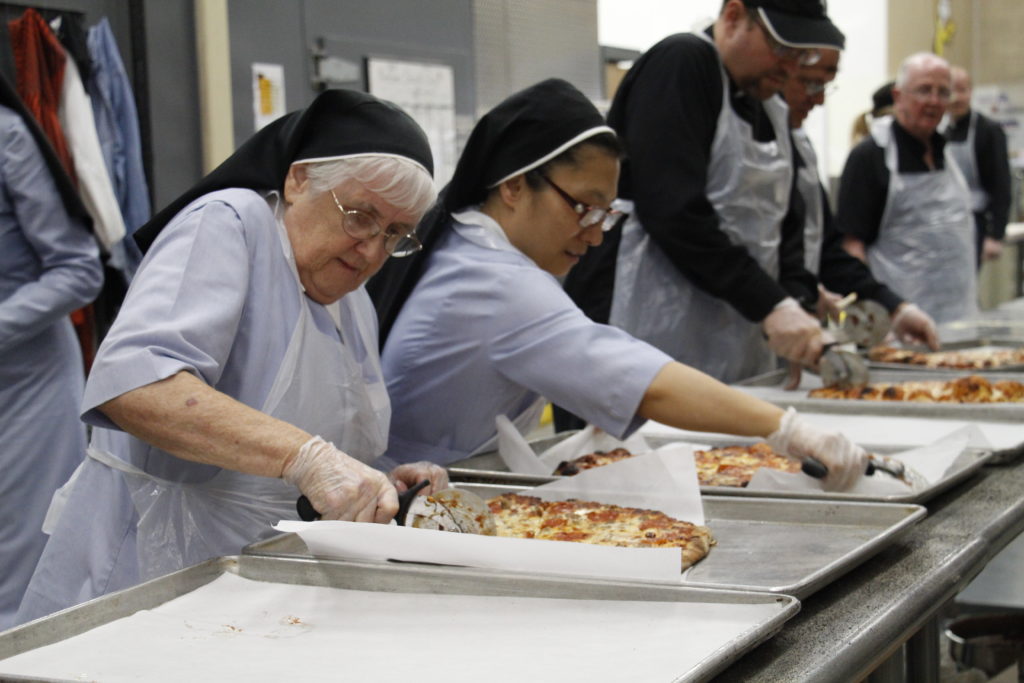
We’re amid National Vocations Awareness Week. A dozen or so priests and women religious silently kicked it off a bit early on St. Vincent de Paul’s main campus Oct. 30.
“Silently kicked if off” is not only an understatement, but a reflection of the innate humility that lies within so many of the priests and women religious serving the Diocese of Phoenix. Many of them had already put in an honest day’s — and week’s — work, but opted to spend their Friday night serving even more.
Their task: make the regular pizza night in the Family Dining Room at St. Vincent de Paul a reality.
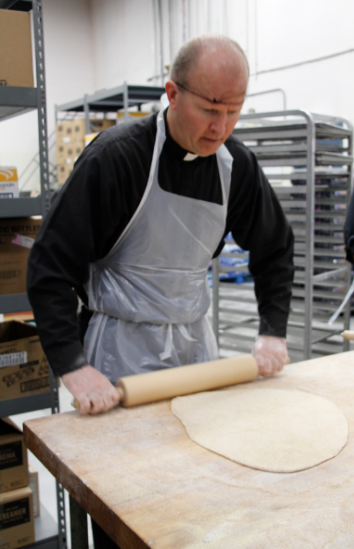
A good handful of active priests plus Fr. Richard Felt, who is retired, joined some sisters from the Parish Visitors of Mary Immaculate community in preparing and rolling out the pizza dough. They transferred it to a large wooden baking paddle and delivered it to a series of long tables where more priests and sisters stood in waiting.

The next group of priests and sisters — including retired Msgr. Tom Hever — covered the dough in marinara sauce, added cheese and any other toppings needed. Some worked alone. Others in pairs. The final pizza of the night was a team effort to create a meat-lovers version.
St. Vincent de Paul’s chef transferred them into and out of the oven. The priests and sisters filled up the warming trays. Their efficiency was so good and volume of help so great that one of the chefs said they finished a good 30 minutes earlier than average. It may have helped slightly that two priests had already staffed a previous shift to ensure fresh pizzas could be delivered to its other dining rooms.
I walked in partway through the process and began to take a few pictures. As many times as I’ve interviewed and photographed men and women in discernment, vowed religious and ordained priests over the years, never have I had so many kind, but serious requests to re-direct my lens elsewhere.
There were also friendly monetary bribes and motions to double or triple previous offers. I don’t know if it was the hairnet, the humility or a combination of the two. I largely heeded their request while refusing the bribe.
So far, I’ve only run across one photo documenting their effort. I kept running into a videographer though, so expect some video to surface at some point.
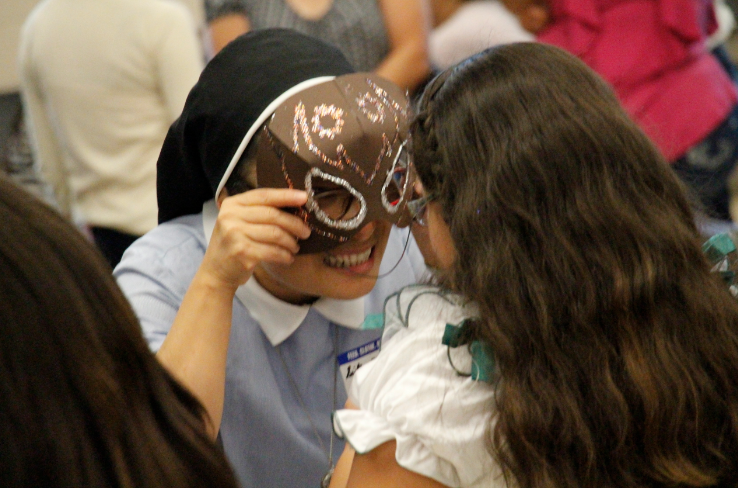
Some of the priests wanted to also make sure I mention one of the post-kitchen jobs a sister had: restroom attendant. Guests are temporarily using the restrooms in the kitchen while the stalls in the client area are under renovation. To ensure no young child got lost and to ensure guests weren’t lingering around an industrial kitchen, one of the sisters wrote down first names of each person as they entered the restroom and checked it off upon their safe return.
[quote_box_center]
Heading to Mass during National Vocations Awareness Week? Key in on these homily notes.
Prayers for vocations in English and Español
Are you being called to the priesthood or religious life?
Religious orders for men and women
Overcoming fear of the priesthood
Social media: #ThinkingPriesthood, #YCL15
[/quote_box_center]
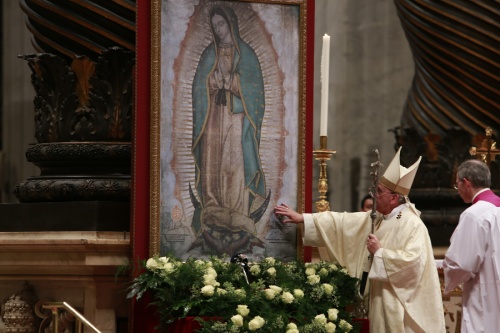
MEXICO CITY (CNA/EWTN News) — Pope Francis will visit Mexico City in February 2016, Cardinal Norberto Rivera Carrerra announced on Sunday.
“I have a piece of news that everyone already knows: the Holy Father comes to visit us, and he comes on the afternoon of Feb. 12. So from that day we will receive him with much love,” the cardinal said.
The cardinal made the announcement during Sunday Mass at Mexico City’s Cathedral of the Assumption of the Most Blessed Virgin Mary in to Heaven Nov. 1, Televisa reports. He suggested that the date of the Pope’s arrival in Mexico was “very close” to Feb. 12.
The Vatican has not yet made an official announcement of the trip.
On Oct. 6 Fr. Ciro Benedettini, the vice director of the Holy See Press Office told CNA that the Pope was seriously considering a trip to Mexico next year. He said that if the trip takes place, an agenda is expected to be released in November.
Mexico would be Pope Francis’ fourth trip to the Americas. He visited Brazil for World Youth Day in August 2013. In July of 2014 he traveled to Ecuador, Bolivia and Paraguay. He visited the United States and Cuba Sept. 19-27.
The Pope has indicated he wanted to spend a full week there, especially to visit the famous Shrine of Our Lady of Guadalupe. In March he told the Mexican media group Televisa he had wanted to enter the U.S. from the country’s Mexican border as a symbolic gesture. However, he decided that would be too short a visit for Mexico.
“So I promise a trip to Mexico as it deserves, and not to hurry and pass through,” the Pope told Televisa in March.

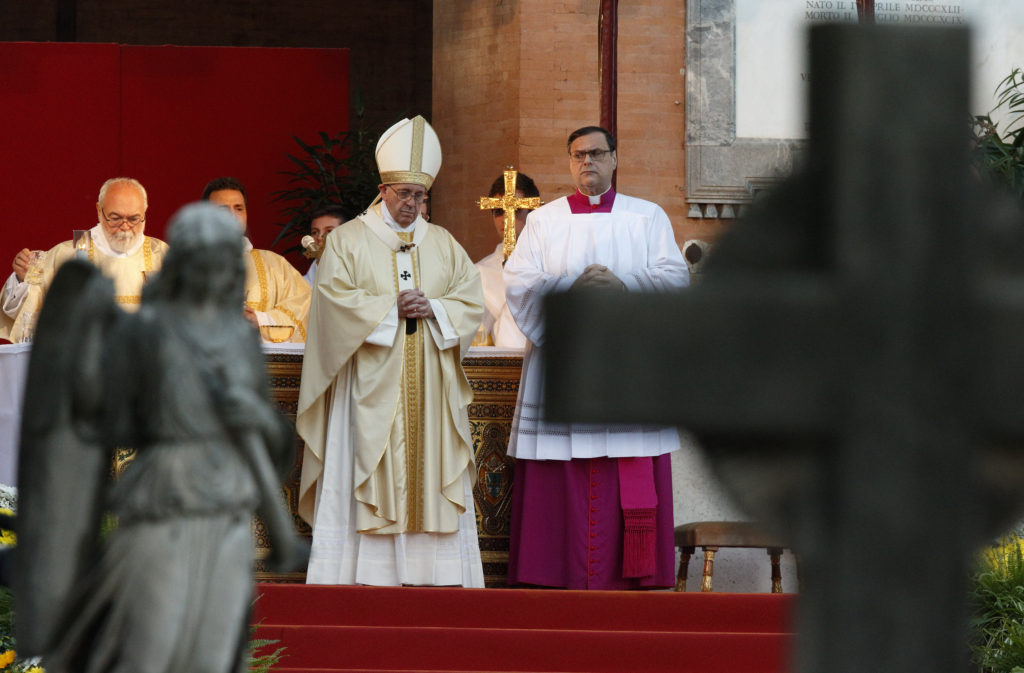
ROME (CNS) — While the Beatitudes can seem counterintuitive, Jesus knew that the poor in spirit, those who mourn or are persecuted and those who work for peace and justice are those who are open to experiencing God’s love and mercy, Pope Francis said.
Celebrating an evening Mass Nov. 1, All Saints Day, amid the tombs of Rome’s Verano cemetery, Pope Francis assured people that the saints would intercede for them and for their beloved departed.
Hundreds of people went to the cemetery to prepare their loved ones’ graves for the Nov. 2 feast of All Souls. As Pope Francis processed to the temporary altar, he also stopped to lay a white rose on a grave.
The day’s Gospel reading was St. Matthew’s version of the Beatitudes, which the pope said was the path Jesus taught as the road to heaven.
“It’s a journey difficult to understand because it goes against the tide, but the Lord tells us that whoever takes this path is happy, (or) sooner or later will become happy,” the pope said.
Those who are “poor in spirit,” the pope said, are happy because heaven is their only treasure; heaven awaits them.
Those who mourn are blessed because without ever having experienced “sadness, anguish, pain, one will never know the power of consolation,” the pope said. But those who know how to weep for themselves and for others will experience the caress of “the tender hand of God.”
“How many times,” the pope asked, “are we impatient, nervous, always ready to complain” and to criticize others as if “we were the bosses of the world when in reality we are all children of God?”
Jesus showed his followers that meekness is the path to eternal happiness, the pope said. Although the son of God, he experienced exile as a child in Egypt, he was slandered, falsely accused and condemned. But “he took it all with meekness. He bore it out of love for us, even to the cross.”
Those who hunger and thirst for justice, the pope said, “will be satisfied because they are ready to welcome the greater justice, which is what only God can give.”
The merciful are blessed because they have experienced the truth that everyone is in need of forgiveness and mercy, the pope said. “They don’t judge everything and everyone, but try to put themselves in the other’s shoes.”
Mass always begins with asking God’s forgiveness and mercy; it is a time when “we recognize ourselves for what we are, sinners. It’s not just a saying, a formality,” he said. “And if we learn how to give others the forgiveness that we ask for ourselves, we will be blessed.”
The Beatitudes say that peacemakers will be blessed and that is something often visible in the here and now, he said. “Look at the faces of those who go around sowing discord; are they happy? Those who always look for opportunities to trick others, to take advantage of others, are they happy? No, they cannot be happy.”
But those who patiently try each day to promote peace and reconciliation, even through small gestures at home and at work, “are blessed because they are true children of our heavenly Father, who always and only sows peace.”
As dusk approached, Pope Francis asked the thousands of people gathered in the cemetery to pray with him for “the grace to be simple and humble people, the grace to know to weep, the grace to be meek, the grace to work for justice and peace and, especially, the grace to let ourselves be forgiven by God in order to become instruments of his mercy.”
Earlier in the day, the pope recited the Angelus with visitors gathered in St. Peter’s Square, focusing on the call to be saints that all Christians receive at baptism.
The saints officially recognized by the church and the saints “next door” are models to imitate and are those who give people encouragement, he said.
At baptism, the pope said, “we received the ‘seal’ of our heavenly Father and we became his children. To put it simply, we have God’s last name,” and a vocation to holiness.
The saints — formally recognized by the church or known only to their families and friends — are those who have kept that seal intact and behaved as children of God, he said.
“To imitate their gestures of love and mercy is a bit like continuing their presence in the world,” he said. “These evangelical gestures are the only ones that resist the destruction of death. An act of tenderness, generous help, time spent listening, a visit, a nice word, a smile — these can seem insignificant, but in the eyes of God they are eternal because love and compassion are stronger than death.”

SAO PAULO (CNS) — Although some may say it was by chance, Brazilian Father Elmiran Ferreira Santos believes that God’s hands were leading him when he arrived late one afternoon at his Our Lady of Aparecida Parish and found, waiting for him, a grief-stricken parishioner, whose husband had been diagnosed with several brain tumors.
“The husband’s condition had deteriorated and he had been placed in the ICU,” Fr. Santos told Catholic News Service.
“The wife just didn’t know who to turn to,” he added. Fr. Santos said he asked the woman to sit and pray with him to Blessed Teresa of Kolkata, founder of the Missionaries of Charity.
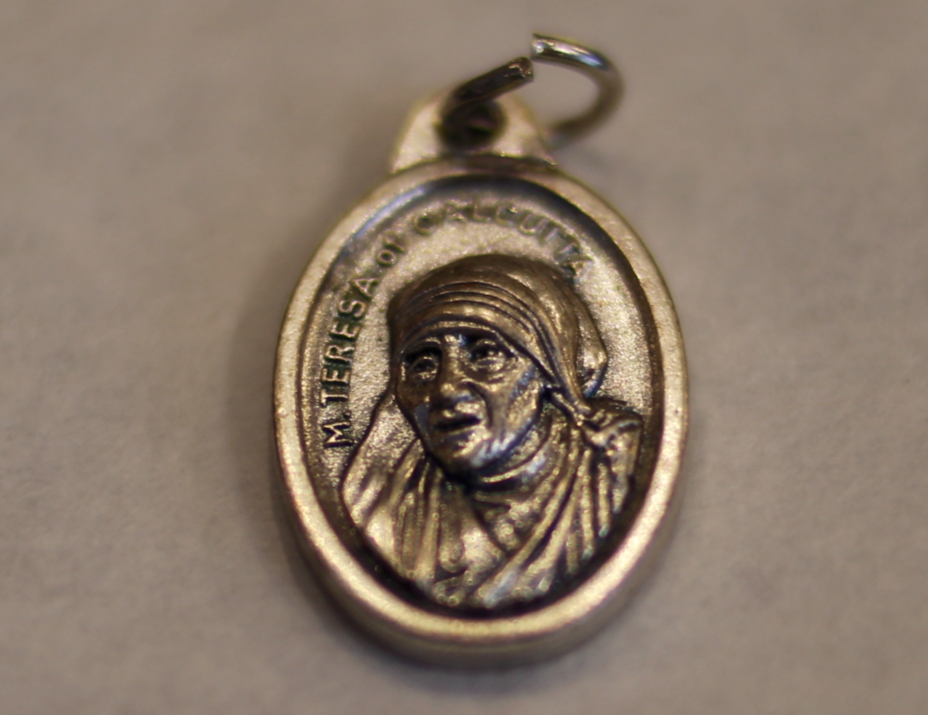
“I had just returned from a Mass with the nuns at the Missionaries of Charity and even had a little medal that was given to me by the sisters in my pocket,” said the priest, who added he gave the medal to the patient’s wife and asked her and her family to pray to Blessed Teresa even more fervently in the days to come.
Fr. Santos said that, with the grace of God and the prayers to Mother Teresa, the patient improved, was taken out of the intensive care unit and, in a period of two days, was given a clean bill of health and discharged.
“When a complete recovery of his health was seen and the doctors could not explain how, I understood that Blessed Mother Teresa had helped,” said Fr. Santos. He said he reported the occurrence to the sisters, who in turn told their superior. The priest also said the doctor who took care of the patient was the doctor on call for Pope Francis during his visit to Brazil in 2013 for World Youth Day, and that the doctor had spoken to the pope about the patient.
The word about the patient’s recovery soon spread throughout the parishes, the diocese and beyond Fr. Caetano Rizzi, the judicial vicar who oversaw the case at the Santos Diocese, said the entire diocesan process occurred very quickly.
He said he received a telephone call in mid-June 2015 from a friend in Rome telling him that the Vatican was looking at a possible miracle attributed to Mother Teresa and that two Vatican representatives would be flying to Brazil in a week’s time to look at the evidence. The vicar said that, a week later, Vatican representatives were there to hear testimony from witnesses, medical experts and theologians. There were four sessions per day during four days. On June 26, the process ended, and the representatives returned to Rome with all the evidence gathered by the Santos Diocese.
After a diocesan investigation into a potential miracle yields positive results, the case goes to the Congregation for Saints’ Causes. A panel of physicians is convoked by the congregation to study whether the healing is authentic and lasting, and that there is no natural, medical explanation for it. With the doctors’ approval, the files are passed on to a panel of theologians.
The theologians study the events — especially the prayers — surrounding the alleged miracle and give their opinion on whether the healing can be attributed to the intercession of a particular sainthood candidate.
If the theologians give a positive opinion, the cardinals who are members of the congregation vote on whether to recommend that the pope recognize the healing as a miracle and set a canonization date.
Fr. Santos says that the experience reinforced his belief of just how merciful God is and “confirmed the Gospel, which states that we are all called upon to be saints.”
In 2000 Josephine Bakhita was declared a saint; one miracle attributed to her intercession involved a Catholic in the Santos Diocese.

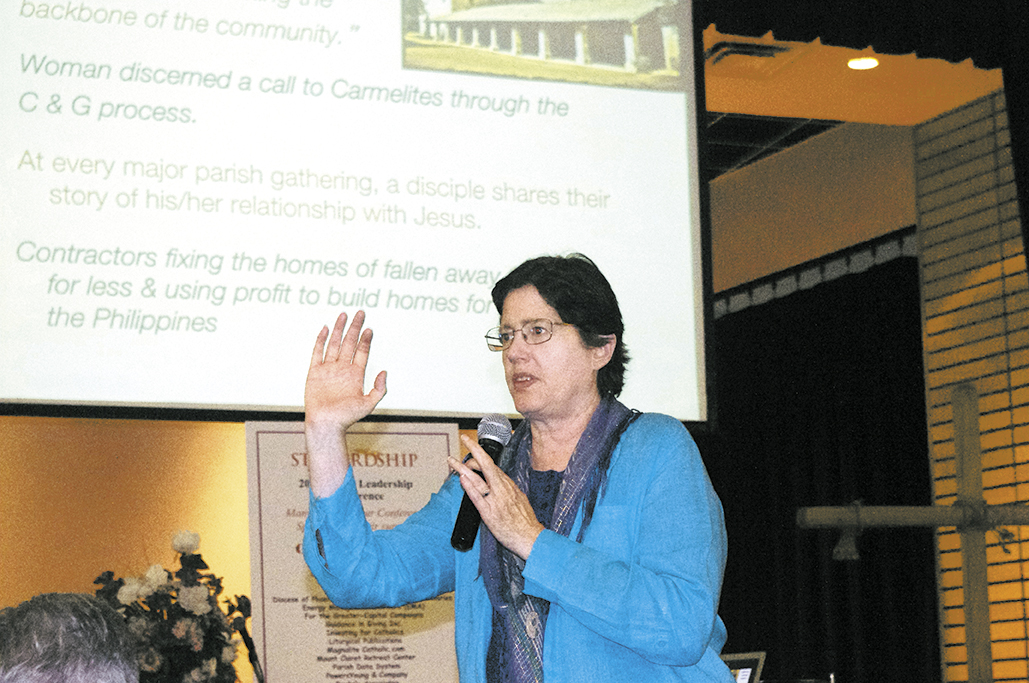
Sherry Weddell stood before a hall packed with 500 local Catholic leaders and issued a challenge.
“What if you set out to double the number of intentional disciples in five years? What if you set out to make your parish a center of evangelization and discipleship?” Weddell queried the group.
Author of “Forming Intentional Disciples,” Weddell travels the country with a message that begins with a jolt of stark reality: only 30 percent of Americans who were raised Catholic still practice the faith.
Furthermore, 10 percent of Americans are former Catholics and only 60 percent of Catholics believe in a personal God. Weddell, a convert to Catholicism, has set out to help the Church make a sizeable dent in those numbers. Her two-day conference, sponsored by the Office of Stewardship and held at St. Paul Parish, drew participants from throughout the diocese.
Transforming a parish into a center of evangelization, she said, begins with leaders breaking a code of silence. Catholics are reluctant to speak about a having a personal relationship with their savior, Jesus Christ, she noted. Many of those who leave the Church and become Evangelicals say they never encountered Christ in their former Church. Although that’s a frustrating message for Catholic leaders to hear, it’s crucial to understand.
“No one should ever again come up to me at one of these events and say, ‘I’m not sure what you mean about a relationship with God.’ That should be impossible in a Catholic community,” Weddell s.
Huge numbers of Catholics who are active in their communities don’t even know a personal relationship with God is possible, Weddell said. Even though Catholic theology, liturgy, spirituality and practice assumes Christ is at the center, she said, “It’s not visible and compelling for the ordinary person. They don’t know it.”
To the extent that Catholics speak about the Church — and not Christ — they are communicating an institutional message and not a personal faith, Weddell said. The current pope, however, has communicated a different message.
“I think one of the things that’s so compelling about Pope Francis is he does not radiate institution. He radiates a living relationship and that’s incredibly compelling to 21st-century people,” she said.
Catholic leaders who want to revitalize their communities need to ask people about their lived relationship with God and then listen carefully. Rather than accepting mere labels such as “Catholic” or “atheist,” it’s important to ask the person to elaborate and find out what they really mean. People may move closer to a relationship with God just by opening up and telling their story — after trust has been established.
The next step Weddell advises is that leaders have to be able to tell their own story of a personal relationship with God. It doesn’t have to include Bible quotes or high drama, “just tell it very simply in your own words. ‘This is what God did for me.’ And it’s stunning the number of people who are dying to know that it’s possible that there’s a loving God who can intervene in my life. All you’re saying is. ‘I know it’s true because I’ve lived it.’ That’s witness,” Weddell said.
Throughout the two-day conference that attracted catechists, parish council members and adult faith formation coordinators and other leaders, Weddell encouraged participants to reenergize their communities through calling people to become what she calls “intentional disciples.” What’s happening in parishes — RCIA, Eucharistic Adoration, the training of lectors and altar servers — needs to be seen as part of the mission of evangelization, and all of the efforts need to be girded with intercessory prayer. The work of the parish needs to be seen not just as maintenance, but as a dynamic mission of evangelization.
Donna Macia, who trains catechists at Our Lady of Guadalupe Parish in Queen Creek, said Weddell’s message was powerful.
“I think it’s amazing that all the parish leaders get to hear that the most important thing is evangelism, Macia said. “Now we can go home on fire to remember to speak to those people who can be evangelized. I think I’m going to remember that in every training session.”
Araceli Duarte of St. Louis the King Parish in Glendale was excited about the future. “We are taking back the plan how we’re going to do this over there,” Duarte said. “We’re thinking of starting with retreats where we can have opportunities for people to become disciples.” The parish is already doing so with the Hispanic community, she said. Now the challenge is to reach out to the growing non-Hispanic members of the parish.
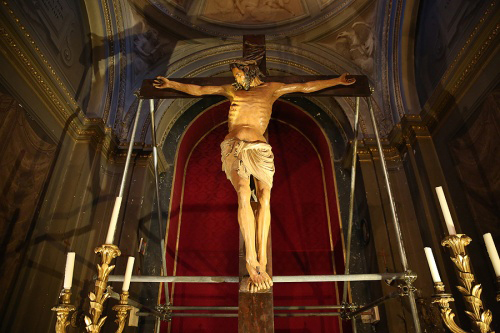
ST. LOUIS, Mo. (CNA/EWTN News) — A television show’s promise of a live exorcism rite is more dangerous than it thinks, the Archdiocese of St. Louis warned on Thursday.
“Any attempt to use the solemn Rite of Exorcism as entertainment exposes all participants to the danger of future hidden satanic attack,” said Bishop Robert Hermann, an auxiliary bishop emeritus of St. Louis, Oct. 29. “We cannot play games with Satan and expect to win.”
Bishop Hermann said no exorcism can take place without the authority of the local Catholic ordinary. St. Louis’ Archbishop Robert Carlson has not granted permission to any priests or bishops for the event.
The purported exorcism will take place on the St. Louis-area house of a boy known as Roland Doe. Jesuit priests from St. Louis University helped the boy and performed exorcisms on him at several locations, including the house, in 1949. Reports of the boy’s exorcism inspired William Peter Blatty’s novel “The Exorcist,” the basis of the 1973 horror movie.
The cable network Destination America said it would air the live exorcism Oct. 30, the day before Halloween. James Long, a bishop in the United States Old Catholic Church (a schismatic church that is not in communion with Rome), is scheduled to perform the minor exorcism. He has appeared on other television shows about supernatural activities, and is a former Roman Catholic seminarian.
The cable network, which is owned by Discovery Communications, described Bishop Long as “qualified and trained.”
The television show also plans to have a psychic medium and a Tennessee-based team of reputed ghost hunters. Also participating in the show is a woman who is a grand-niece of one of the priests who conducted the original exorcism.
The St. Louis archdiocese said it was not involved in the “dangerous endeavor.”
“Anyone involved in this production who claims to be a member of the Catholic clergy is not affiliated with the Archdiocese of St. Louis nor are they operating under the authority of the Vatican,” the archdiocese clarified.
The archdiocese said any purported exorcism for entertainment purposes by spiritualists, paranormal investigators, or a non-Catholic clerics “trivializes this ancient rite of the Roman Catholic Church and the very real danger of evil.”
The St. Louis archdiocese told CNA Oct. 30 it was not making any other comment on the case.
St. Louis-area Catholic priest Fr. John Mayo voiced concern about the rise in shows about spirits and occult practices.
[quote_box_right]
Other Church news regarding exorcism:
Wanted: More exorcists to meet demands in Philippines (Catholic News Service)
What does the Philippine church look for in a potential exorcist? (Catholic Philly)
Quick lessons from the Catechism: Exorcisms (Phoenix-area Catholic blogger)
Archived article — part 1 and part 2 — on an exorcism docudrama
More stories on exorcism from The Catholic Sun
[/quote_box_right]
“A spiritual world exists, with good and evil sides to it,” he said, warning against practices that are “entryways for spirits.”
“Demonic possession is indeed quite rare, but it does happen. In this case, the Church still conducts exorcisms,” he said in one of his regular columns published in the St. Louis Review, the archdiocese’s newspaper, Oct. 21.
Fr. Mayo said that in exorcism inquiries, the Church aims to make a diligent investigation of the person involved, including a psychological examination. If the local bishop approves an exorcism, he will ask the Church to accompany the priest involved in it with prayers and good works.
Fr. Mayo encouraged any Catholic who has taken part in activities that opens him or her to evil to go to confession “as soon as possible.” He said that if a person’s home appears to have unusual supernatural occurrences, they can ask a local priest to bless the home.

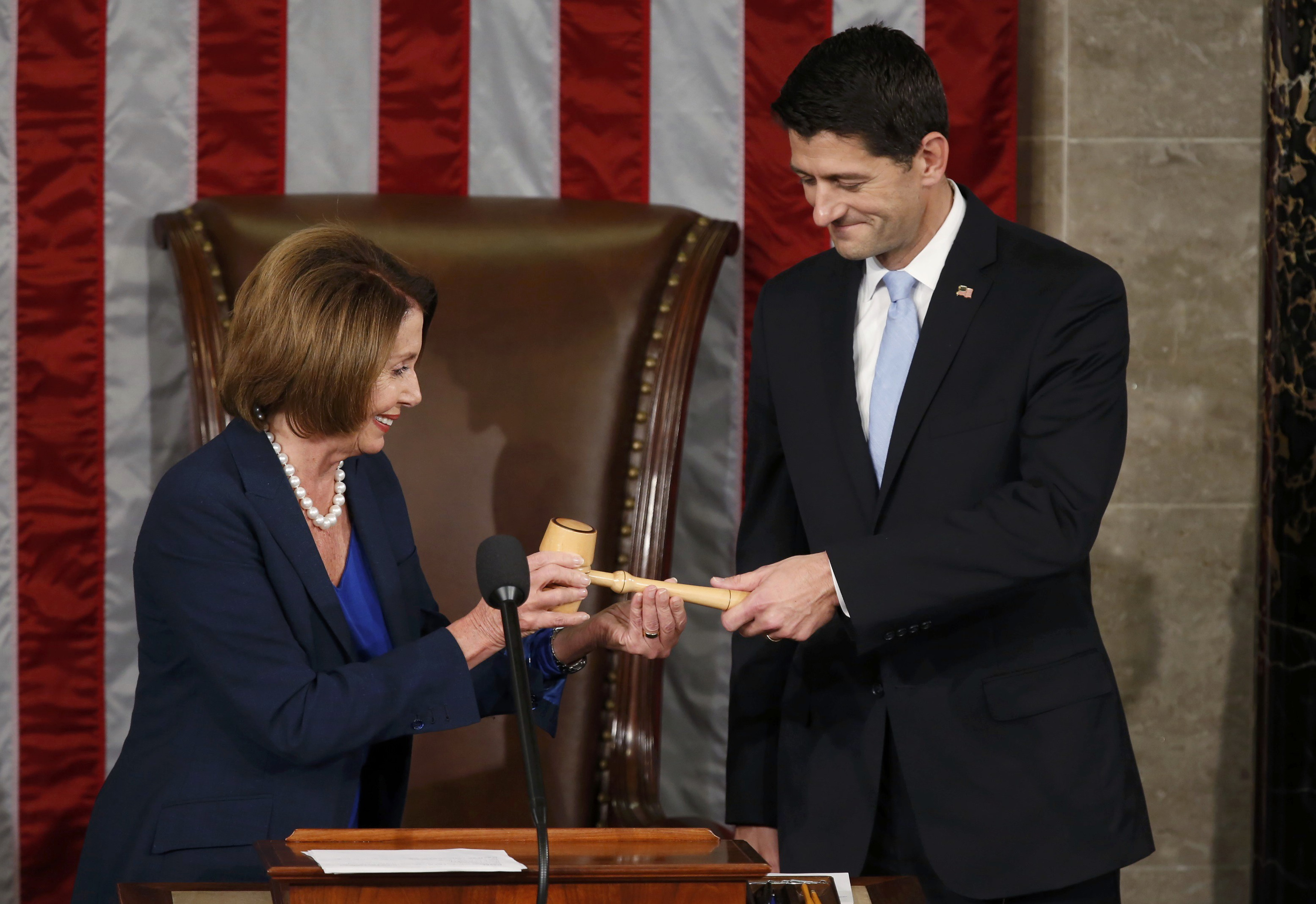
WASHINGTON (CNS) — With his election as speaker of the House of Representatives, Rep. Paul Ryan may have taken the most difficult job in American politics.
The Wisconsin Republican is faced with keeping his party’s conference unified as he takes a position that places him third in line for the presidency. He has vowed to change business-as-usual in the House by building broad consensus for legislation and pledged to eschew last-minute, closed-door deals.
In accepting the position after his election Oct. 29, Ryan said he wanted to get the House working again for the American people who work hard every day but continue to slip backward economically and see little hope from their elected representatives because they see “chaos” in the House.
“Let’s be frank. The House is broken. We’re not solving problems. We’re adding to them, and I’m not interested in laying blame. We are not settling scores. We are wiping the slate clean,” he said from the speaker’s podium.
Ryan’s leadership skills will be tested as he faces the prospect of having to corral the House Freedom Caucus, a group of about 40 ultraconservative representatives who loathe any compromise with Democrats and President Barack Obama.
Observers from Catholic agencies who have worked with the former House budget committee chairman call him intelligent and ready for the task. They credit his two-plus decades of experience on Capitol Hill and his expertise in how the government works, including the budget process. They said he appears to want to solve the problems facing the country, especially the needs of 46.5 million Americans living in poverty.
“Regardless of what position he’s in, we want to continue to work with him because he’s a policymaker who cares about this (poverty) issue,” said Brian Corbin, senior vice president for membership relations at Catholic Charities USA.
Bill O’Keefe, vice president for government relations and advocacy at Catholic Relief Services, said the agency also is looking forward to working with Ryan in his new position “to make sure that critical poverty-focused programs are not sacrificed in the battles in Washington.”
While Ryan is not one to wear his Catholic faith on his sleeve, several observers noted that he understands Catholic social teaching and comprehends the guiding principles of subsidiarity and solidarity.
“You can use the language of the Church and immediately engage in conversation with him,” said Jayd Henricks, executive director of the Office of Government Relations of the U.S. Conference of Catholic Bishops.
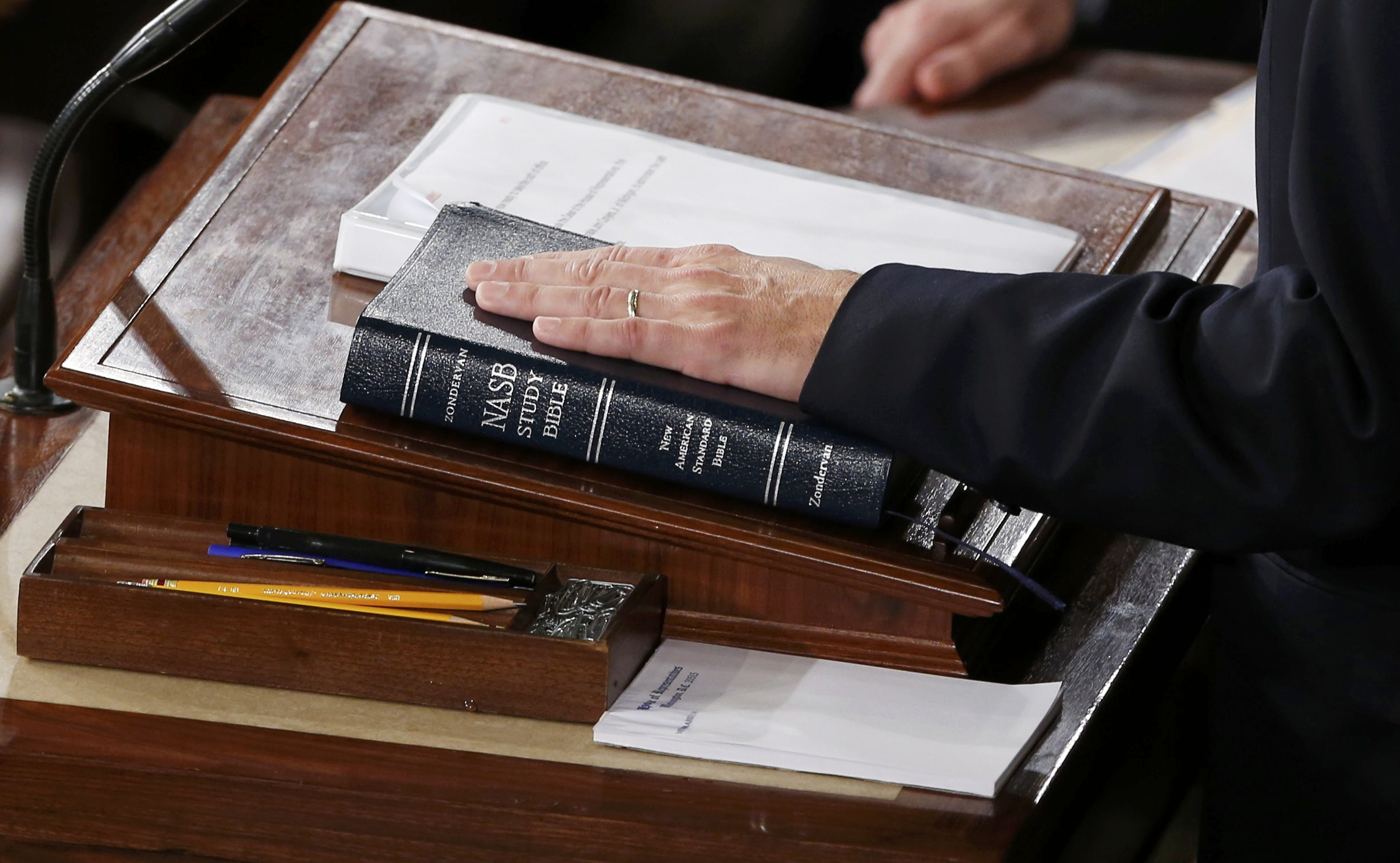
Ryan also is said to have cemented his relationship with the some members of the U.S. Church hierarchy and counts as close advisers Cardinal Timothy M. Dolan of New York, who is former archbishop of Milwaukee, and Bishop Robert C. Morlino of Madison, Wisconsin, 40 miles northwest of his home parish of St. John Vianney in Janesville.
Catholic observers also credit Ryan, a nine-term veteran of the House, for his pro-life votes on abortion and his support for the U.S. Church’s stance on religious liberty.
Catholic Charities maintains what Corbin described as a good working relationship with Ryan. In March 2014, Ryan visited a Catholic Charities program in Racine, Wisconsin, in his district, where he met clients who had been teamed with a case manager and learned how they were on the way to self-sufficiency. He later convened a House budget committee hearing on alternatives to addressing poverty and invited a Catholic Charities director from Fort Worth, Texas, to testify.
Later that summer, he highlighted case management services in his proposal to tackle poverty, which he called Expanding Opportunity in America. It encompassed a series of measures he believes will reduce poverty. At the time he said it was meant to jump-start a nationwide discussion on poverty, which has yet to occur.
While not an ideal proposal in the minds of some advocates for the country’s poor, observers said it shows that Ryan is willing to adapt his thinking when he encounters new information.
Corbin said Catholic Charities continues to advocate for funding intensive case management in the campaign to end poverty. Corbin told Catholic News Service that Ryan maintained in meetings with agency officials that “government is the rearguard and social service agencies are the vanguard” when it comes to serving poor and struggling people.
“He really wants to talk about poverty and different solutions,” Corbin explained. “That’s really good to have someone at the policy level who wants to spend the time to see what really works.”
While Ryan’s interest in poverty has been lauded, it also has raised some concerns among advocates because his budget proposals have called for deep cuts in vital social services, including those aiding poor people, children and the elderly.
In the past, two committees of the U.S. Conference of Catholic Bishops went on the record expressing concern for deep spending cuts in programs such as the Supplement Nutrition Assistance Program, housing subsidies, Medicaid and Medicare in letters to Congress. The concern ran so deep that in 2011, the USCCB convened the Circle of Protection, an umbrella organization of faith-based allies vowing to protect funding for social services and international developmental aid.
Still, Henricks told CNS he has found Ryan willing to think in new ways to approach the country’s problems.
“While at times we may have challenged the priorities he and the Republican conference may have identified, I will say he (is) … still trying to think creatively about how to address poverty. We may not have always been on the same page (on the budget), but I would say he has a real desire to address poverty in a real way,” Henricks said.
“A fair characterization of Ryan is that he’s willing, he welcomes thinking outside the box,” Henricks continued. “He’s not somebody who is just tied to current structures. … That’s one of the reasons he’s an attractive pick for speaker because regardless of where you are politically he is one who is willing to entertain many new ideas.”
There have been more vocal challengers to Ryan’s policies. Sr. Simone Campbell, executive director of Network, the Catholic social justice lobby, has publicly sparred with the congressman on a host of issues.
While crediting Ryan for holding the hearing on poverty, Sr. Simone, a member of the Sisters of Social Service, said the new speaker has spoken of the social services safety net as a “hammock.”
“We’re trying to get him to see it’s not a hammock and that people are working hard,” she told CNS.
She also expects that Ryan will be confronted by “individualists” in the Republican conference who want to greatly reduce the role of government no matter the social cost.
With a budget deal now passed and the debt ceiling raised until March 2017, Ryan is starting with a clean slate primarily because of the work of Rep. John Boehner, R-Ohio, the outgoing speaker.
Whether Ryan will be as influential on key pieces of legislation as he was as chairman of the House Committee on the Budget and then this year as he began to rewrite tax policy as chairman of the Committee on Ways and Means is not likely to be seen between now and the 2016 election. The same holds for immigration reform — a major goal of the U.S. bishops — as Ryan is reported to have agreed not to bring any bill on the issue to a vote as long as Obama is in office.
But if Ryan can change the tone coming from the Republican-controlled House, it may signal to voters that more can be accomplished beginning in 2017 no matter who wins the coveted White House.
By Dennis Sadowski, Catholic News Service. Follow Sadowski on Twitter: @DennisSadowski.

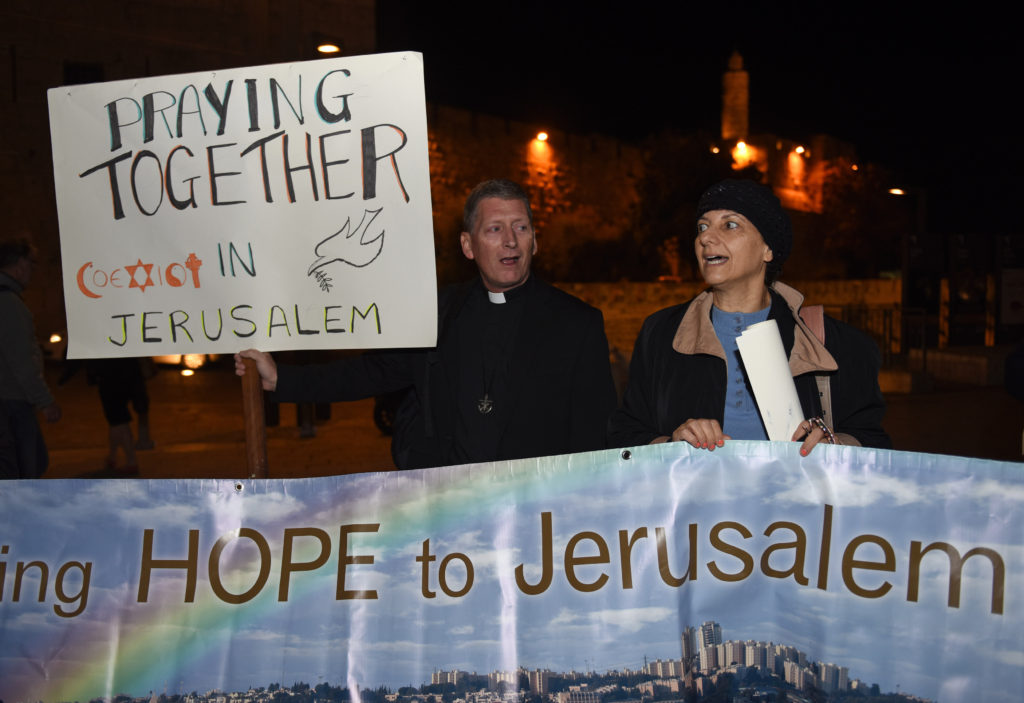
JERUSALEM (CNS) — As dusk fell over the Old City Oct. 29, a group of 60 Christians and Jews and one Muslim gathered at the entrance of the Jaffa Gate for what they hope will become a monthly event of public prayer for peace.
“We hope that by joining together in prayer to God and asking God to change the hearts of people, this may be a way to break through the political impasse,” said Holy Cross Father Russ McDougall, rector of the Tantur Ecumenical Institute, a Catholic institute in Jerusalem that focuses on interfaith relations and study. “We seem to have reached a dead end on the political front. This is kind of ‘storming the gates of heaven’ to ask God to help us to find a solution.”
The effort is the most recent among few prayer initiatives giving people of different faiths the opportunity to offer their own prayers for peace in Jerusalem.
Fr. McDougall together with Peta Jones Pellach, an Orthodox Jewish woman who is director of educational activities at the Elijah Interfaith Institute, initiated the idea of a monthly parallel prayer service following a reunion of Abrahamic faiths at Tantur over the summer.
“I do believe all our prayers are headed in the same direction and can be a really powerful force coming together. I don’t see it as just symbolic. I believe in the power of prayer,” Pellach said.
The Rev. Kristen Brown, a United Methodist Church minister, said prayer can make a difference, especially during a time of rising tensions among Israelis and Palestinians.
“Now is as crucial a time as any for people to come together to pray for peace with justice for all humanity,” she said.
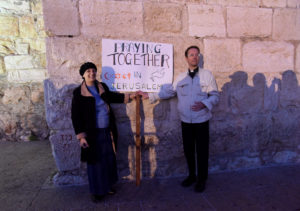
Though no one involved in the parallel prayer were native to the Holy Land — most were ex-patriates from English speaking countries — Pellach said she was not discouraged.
“People from all parts of the world can come here,” she said.
Abdullah Mohammed, the lone Muslim who joined the service with his prayer mat from his community in the desert skirting Jerusalem, said he came because he believed all were the children of Abraham. He said he did not know why other Muslims did not attend.
Moments later, however, Mohammed was not present as the Christian and Jewish groups gathered for their parallel prayers, which allowed each group to pray according to their own faith.
It might be too delicate a time for Muslims to be seen praying together especially with Jews, Father McDougall suggested.
“Some may just be afraid with the atmosphere in the Old City,” he said, adding that perhaps if a prayer is held in a less public spot such as the Tantur institute in the future, it will be easier to gather Muslim participation.
As she passed the group and noticed their sign, Nili Shafai, 58, a Jewish visitor from Los Angeles, stepped away from her guide and thanked the group for their prayers.
“We love this,” she said. “This is Jerusalem. I pray for the day when everyone will come here in peace and love and prayer.”


BEIJING (CNS) — China’s Communist Party leaders announced they would change the nation’s one-child policy, which most strictly applied to Han Chinese living in urban areas of the country.
The Oct. 29 announcement was contained in a Xinhua news agency report on the Communist Party’s Central Committee in Beijing. It said China would allow all couples to have two children, but did not provide additional details.
The Chinese government imposed its one-child policy in 1979 to curb the growth of the population that, at that time, was reaching 972 million people. The policy most strictly applied to Han Chinese, but not to ethnic minorities around China. Han families in rural areas could apply to have a second child if the first child was a girl. In areas where the policy was enforced, parents could lose their jobs for having more than one child. Sometimes the second or third child was penalized and could not be registered, so he or she could not go to school.
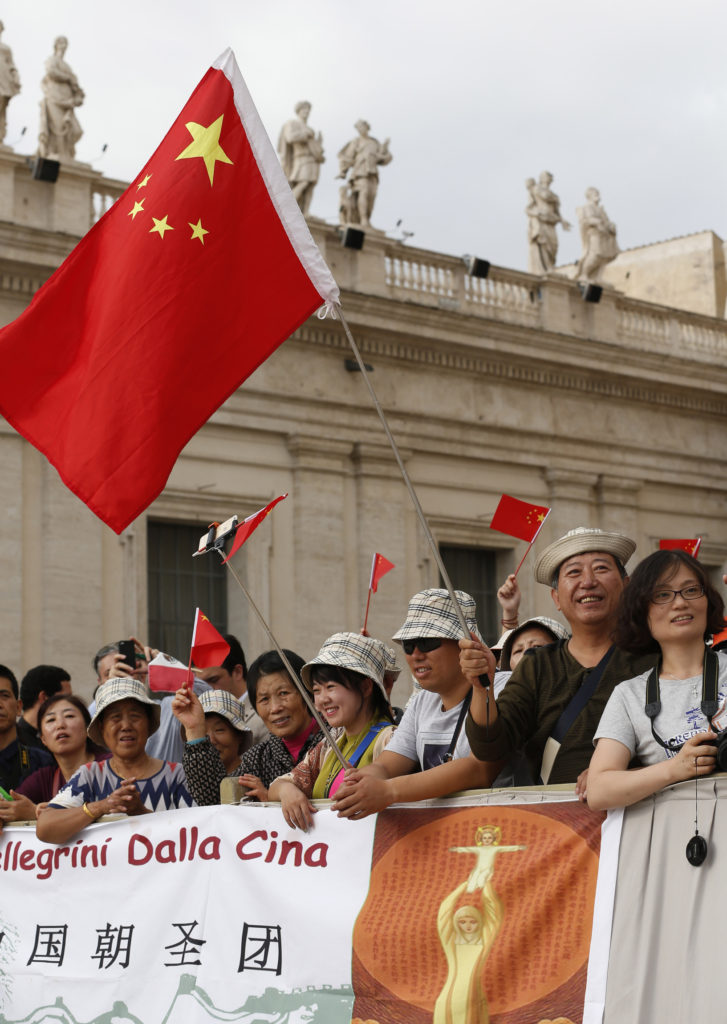
The one-child policy often was enforced at the provincial level, and enforcement varied; some provinces relaxed the restrictions. In a 2007 interview with Catholic News Service, Jean-Paul Wiest, research director of The Beijing Center for Chinese Studies, said some provinces provided that if each spouse was a single child, the couple could have two children. How much the policy was followed also depended on local officials, Wiest said. For instance, in some strong Christian areas, the village’s chief official might be Catholic, so the policy might not be enforced.
In October 2012, state media reported the Chinese government think tank China Development Research Foundation had proposed replacing the one-child policy with a nationwide two-child policy by 2015. It prompted more questions on the role of demographics in economic development and reform and how to proceed with the policy restricting the number of children couples could have.
A Chinese government census report released in April 2011 recorded a mainland Chinese population of 1.34 billion people. In 2013, there were reportedly 200 million senior citizens and a labor force that had shrunk by 3.5 million in 2012, even though the one-child policy had been relaxed slightly through the years.
A 2011 report on China’s aging population by Maryknoll Father Michael Sloboda for the Hong Kong Diocese’s Holy Spirit Study Centre referred to the “4-2-1” problem in which the policy leaves four grandparents and two parents looking to one child for support.
[quote_box_right]
LifeNews.com reacts to ‘two-child’ policy
[/quote_box_right]”Since that young adult will also be concerned about finding a spouse and starting a family, the financial and emotional demands will be intense,” Fr. Sloboda wrote.
In 2013, some young Chinese adults born under the nation’s one-child policy told CNS they were planning their families based on personal experience. Many cited issues such as loneliness growing up and pressure as an adult to take care of elders as reasons to have more than one child. Others recalled families with multiple children separated by economic pressures, such as the woman who, at age 9, began living with her teacher while her parents left to find work. She was separated from her brother, who was left with a different teacher.
Some Chinese church officials also said that the policy, with its decrease in population, had resulted in a decline in vocations.
