


A Pennsylvania priest has merged his faith and love of Lego to build a unique ministry worthy of a major metropolitan museum.
A Pennsylvania priest has merged his faith and love of Lego to build a unique ministry worthy of a major metropolitan museum.

[quote_box_center]EDITOR’S NOTE: This is the second of three articles about talks presented at the Day of Understanding sponsored by the diocesan offices of Family Catechesis and of Marriage and Respect Life Oct. 21. [/quote_box_center]
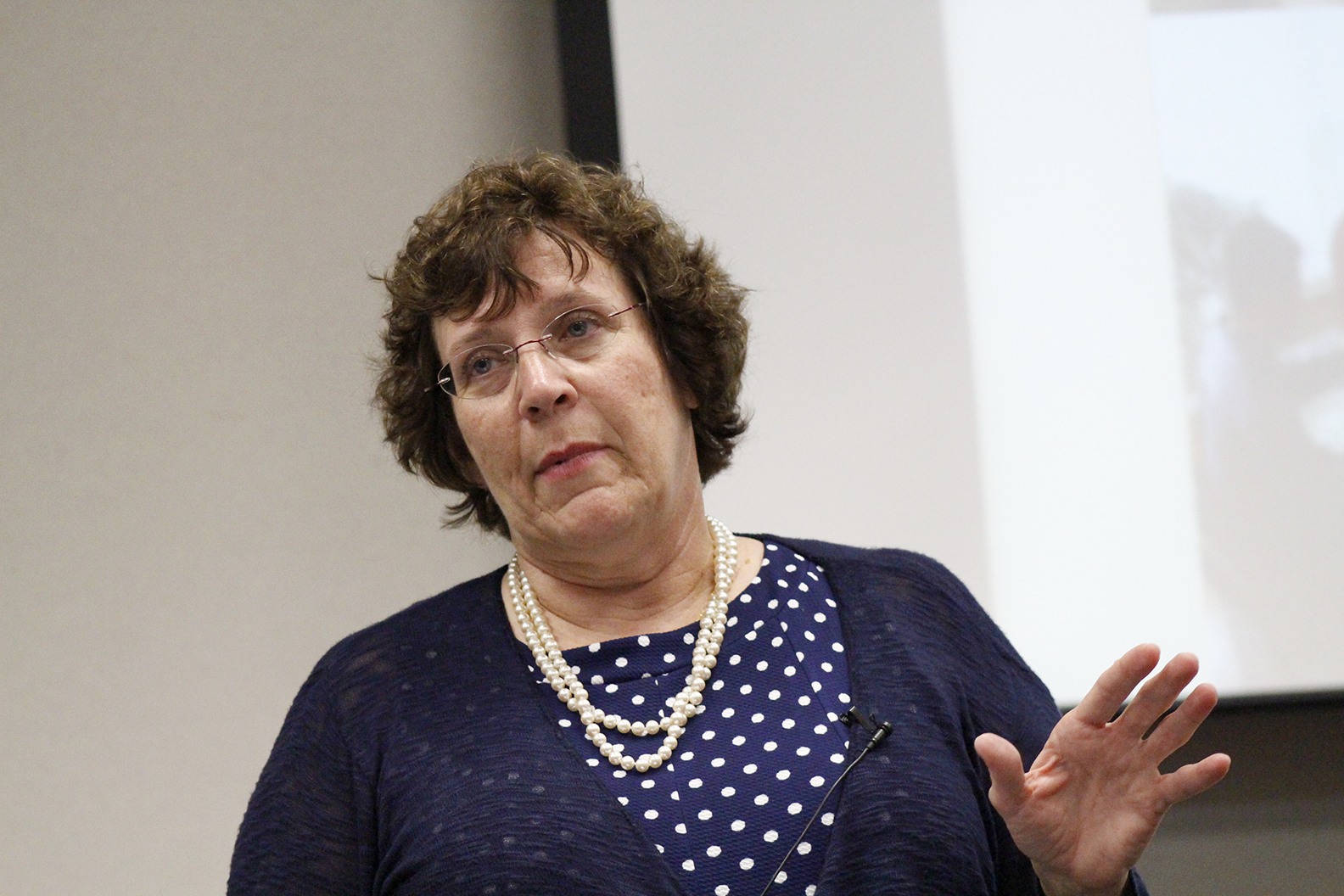
Rilene Simpson spoke at length about a topic that’s often hushed in Catholic circles: exploring the gay identity.
What’s more, some 120 priests, deacons, women religious and other lay parish leaders packed into a conference room at the Diocesan Pastoral Center Oct. 21 to hear it. Simpson was once in a long-term lesbian partnership as an atheist and has since converted to Catholicism and a life of celibacy, a story she shared in the documentary, “Desire of the Everlasting Hills.” She intertwined her testimony with a series of headline stories pertaining to gender identity.
It was all part of a “Day of Understanding” surrounding the Church’s perspective of love, marriage and homosexuality plus the problems that arise when feelings and human minds supersede. Simpson was the middle of a trio of guest speakers on the issue and the only one to offer a female perspective.
There isn’t any physical evidence to indicate a person’s sexual orientation, Simpson said. It’s based solely on self-identification, which relies on feelings. The problem is, feelings are transient. They change with the circumstances and times, she said.
It’s often brought on when there’s a disorientation or a disconnectedness with someone of a particular gender. Adults are hinting to youth and even children who say they don’t like the opposite gender — when it’s an appropriate age to have such feelings — that they might be gay.
Simpson read portions of a recent email from a parent concerned about a book that a school librarian recommended for a fifth-grader. Its title bore the first name of the 8-year-old character. Problem was, the character “felt” like a girl and was referred to as “she” throughout.
“The emphasis on feelings is at the cost of reality or truth,” Simpson said.
That truth is that a person’s self-worth and self-esteem is entitled by God, she continued. It’s there from the moment of conception.
“The highest form of respect you can afford a person is the Truth, spoken in love and charity,” she said. Simpson found the truth in the Catholic Church.
“The problem with the truth is, it’s very rich, very deep. It’s very full. It takes a lifetime to contemplate it,” she said. “So the truth about human dignity is complex, but it can’t be reduced to a bumper sticker, equal sign or rainbow.”
Paul Darrow, whose story was also featured in a documentary about being gay and leaving — then returning to — the Church, agreed. He recently told Catholic News Agency that it’s too easy to downplay the truth of the human body. Things like birth control, abortion and accepting those in personal circles living a gay but not chaste lifestyle are about human desire.
“But the value of life, and the purpose of a man and a woman, the purpose of marriage, the purpose of the Temple of the Holy Spirit being our body, those things aren’t changing,” Darrow said.
That hasn’t stopped people from trying. Simpson briefly brought up Bruce Jenner’s name. She was adamant, that due to different brain structure, anatomy and God-given purpose, he couldn’t possibly know what it feels like to be a woman.
Later that day, headlines speculated that Glamour magazine named him as “Woman of the Year.” The following day, a local television station profiled three “transgender men” who finally found a local clinic to tend to their medical needs.
Simpson told The Catholic Sun that a person’s identity is crucial and that a person’s body has incredible significance.
“We need to guard it against the incursions of our culture,” Simpson said. “In ministries, the greatest way we can honor someone that we love is to tell the truth to them in kindness and charity.”

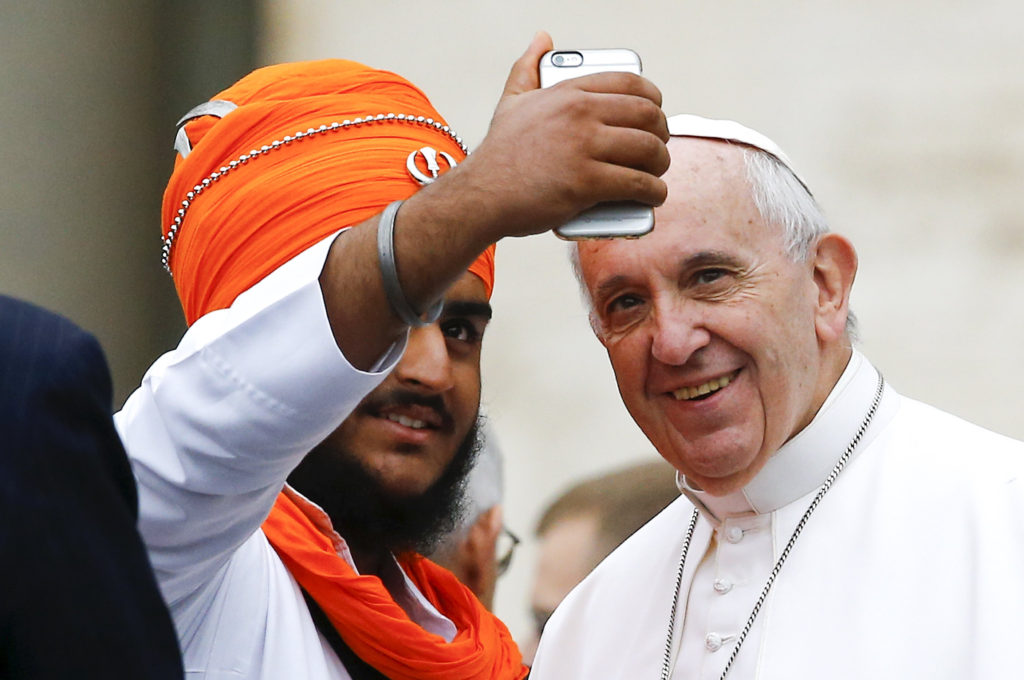
VATICAN CITY (CNS) — The world expects all people of religious faith to work with everyone for a better future, Pope Francis told representatives of major religions.
“We can walk together taking care of each other and of creation” in joint projects that fight poverty, war and corruption and help people live in dignity, he told them during a special general audience dedicated to interreligious dialogue.
The audience in St. Peter’s Square Oct. 28 marked the 50th anniversary of “Nostra Aetate,” the Second Vatican Council’s declaration on relations with other religions; the audience also recalled the historic first World Day of Prayer for Peace in Assisi, Italy, Oct. 27, 1986.
“The flame, lit in Assisi, spread to the whole world and marks a permanent sign of peace,” Pope Francis said in his address.
The rain-soaked square was awash with color as thousands gathered under colorful umbrellas or plastic ponchos. Large groups of people came from other Christian communities and from other world religions and many held aloft olive branches. Representatives of many religious traditions sat in a VIP section near the pope and prayed in silence with him at the end of the audience.
Inviting the thousands gathered in the square to pray according to their own religious tradition, the pope said, “Let us ask the Lord to make us be more like brothers and sisters, and more like servants to our brothers and sisters in need.”
In his written address, the pope said, “The world looks to us believers, it urges us to collaborate with each other and people of goodwill who do not profess any religion, it asks from us effective responses to many issues: peace, hunger, poverty,” the environmental and economic crises, corruption, moral decay and violence — especially that waged in the name of religion.
Religions don’t have a special “recipe” to solve these problems, he said, “but we have a great resource — prayer. Prayer is our treasure,” which believers turn to in order to ask for those gifts people are yearning for.
Concerning the future of interreligious dialogue, he said, “the first thing we have to do is pray. Without the Lord, nothing is possible; with him, everything becomes” possible.
He asked that prayer lead people to follow the will of God, who wants everyone to recognize each other as brothers and sisters and to form a “great human family in a harmony of diversity.”
Unfortunately, much of the violence and terrorism unfolding in the world have made people suspicious or critical of religion, he said.
However, “although no religion is immune from the risk of fundamentalist or extremist deviations,” he said, people must look at the positive aspects of religious beliefs, especially how they are a source of hope for so many.
Pope Francis said respectful dialogue can lead to friendship and concrete initiatives between religious believers in serving the poor, the elderly, the marginalized and immigrants.
In fact, the upcoming Year of Mercy is the perfect occasion to work together on charitable projects, he said.
Charity, “where compassion especially counts, can unite with us many people who do not consider themselves to be believers or who are seeking God and truth,” and with anyone who makes those in need a priority, he said.
The pope also praised the profound improvements in Jewish-Christian relations. He said the past 50 years have seen indifference and conflict turn into collaboration and goodwill, and enemies and strangers have become friends and family.
Mutual understanding, respect and esteem make up the only path for fruitful dialogue, not only with Jews, but with Muslims as well, he said.
“The dialogue we need has to be open and respectful,” he said, and includes respecting people’s right to life, physical integrity and fundamental freedoms like freedom of conscience, thought, expression and religion.”

GALLUP, New Mexico (CNA/EWTN News) — Fr. Matthew Keller has always been kind of a car guy.
“Actually, a lot of a car guy,” he told CNA, laughing.
He went to technical school as a teenager — “vocational school, funny enough” — and has worked on cars with his dad and brother-in-law since he was young.
But when he decided to enter the seminary, he sold his “hot-rod” car, thinking he would have to leave that passion behind him.
Now a priest and the vocations director for the Diocese of Gallup, half of which is in the northeastern part of Arizona, Fr. Keller was looking for a community building project for seminarians when some friends suggested he rediscover his old hobby and restore a car with them.
“The idea sort of got floated around that this would be a fraternity-building, human formation kind of project, and then the idea came to me — I have a marketing background — and I was like wow, this would be a great fundraiser for the vocations office,” he said.
That’s when the idea for the project, “V8s for Vocations” was born. Father and the Gallup seminarians would restore a car together and raffle it off, with all of the money from each $25 ticket going towards the funding of seminarian education in the diocese.
Father started asking around, and within a week, a high school buddy of his had located a car that fit the bill.
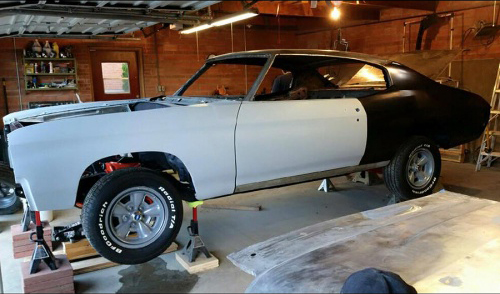
“It was a ‘72 Chevelle, kind of like a muscle car,” Fr. Keller said. “We found a donor right away that bought it, and gave it to us to start working on.”
With the help of donated equipment, the three-car garage at the back of Sacred Heart Cathedral quickly converted into a functioning mechanic’s shop where seminarians and car enthusiasts, Catholics and non-Catholics alike, started popping by to help revamp the Chevelle.
“There’s some men that would come to the garage on the back side of the church that wouldn’t necessarily come through the front doors, and they’re spending hours and hours with these men,” Father said. “And it’s their way of contributing and being a part of something for God.”
“It’s that whole thing that Pope Francis is asking of us — to go to the periphery,” he added.
He’s even been approached for confession in the shop.
“It became this really surprising rallying point for evangelization, and I just didn’t see that coming.”
The project started over a year ago in June 2014, and the crew is starting to feel the pressure of the fast-approaching deadline for the raffle, which is December 12, the feast of Our Lady of Guadalupe.
The date coincides with a lot of important things — this year is the 75th anniversary of the Diocese of Gallup, the 60th anniversary of its Sacred Heart Cathedral, and the day of diaconate ordinations.
One important part of the raffle — the winners will not have to pay the taxes on their new car.
“We raffled a new car at a former parish of mine for World Youth Day, and the people that won it couldn’t afford to keep it because they couldn’t pay the taxes on it,” Fr. Keller said.
“It was really disappointing for me to see that happen, so there’s a way to do it in New Mexico where the person doing the raffle can pay the taxes, so the winners walk away with the prize for $25.”
They’re close to being done with the car and are getting ready to put on the finishing touches: namely, the very fitting black and white paint.
The seminarians also worked hard to make sure that putting the body back on the frame of the car coincided with a vocations retreat at the seminary, so that the visiting young men considering the priesthood would have a chance to work on the car with them.
Working on projects together, like building a car, is something that speaks to young people, Fr. Keller said.
“I think they’re looking to be engaged in a way that helps them to be fully alive,” he said, “and they’re deprived of some of that by a culture that overemphasizes individualism.”
“When they get to be part of something collective, even the retreat itself, a coming together for the purpose of giving God glory and praying for vocations, it awakens something in them that might not be being fed,” he added.
The fundraiser also contained an important personal lesson for Father.
“I went to seminary, thinking those interests were things that I had to put behind me,” he said. “But nevertheless, there was a reason for those interests, and God knew that.
“He knew that years down the road that we’d be using cars to build the kingdom. That was a huge lesson, just for me personally, not to forget that God takes all of our gifts and our talents and our interests and puts them to use.”

Catholic health care professionals not only work to heal mental and physical health, they’re also devoted to the spiritual welfare of their patients.
It’s a message Catholic healthcare workers unite around annually at the White Mass, celebrated in October, near the feast of St. Luke, patron saint of physicians, and named for the color typically worn by healthcare professionals.
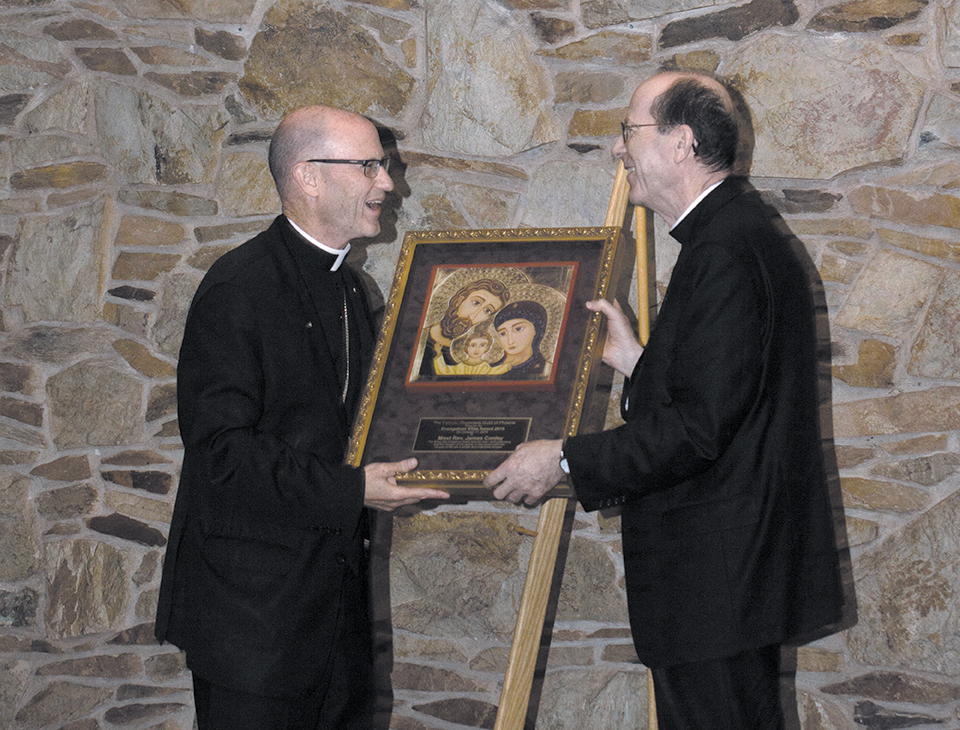
This year, Bishop James D. Conley of Lincoln, Nebraska, episcopal adviser to the Catholic Medical Association, was the invited homilist at the Oct. 17 Mass in Phoenix at the Diocesan Pastoral Center. He also delivered the keynote address at the subsequent banquet. Sponsored by the Catholic Physicians’ Guild of Phoenix, the event is an opportunity to reflect on the care of the sick and the ministry of healing that are integral to Catholicism since its very origin.
“Modern medicine promises to create children for some, while discarding others,” said Bishop Conley said during his homily. In his keynote message, Bishop Conley addressed the medical students and seasoned healthcare professionals, challenging them to help patients understand the meaning and gift of life.
“Pope Francis tells us that we are each called to recognize in the fragile human being, the face of the Lord, who in His human flesh experienced indifference and loneliness to which we often condemn the poorest, be it in developing countries, [or] be it in well-off societies,” he said. “Every unborn child, condemned unjustly to being aborted, has the face of the Lord, who before being born, and then when He was just born, experienced the rejection of the world.”
We must do more than condemn poor practices, explained Bishop Conley, adding that Catholic health care professionals are called to make changes and help patients understand the meaning and the gift of life.
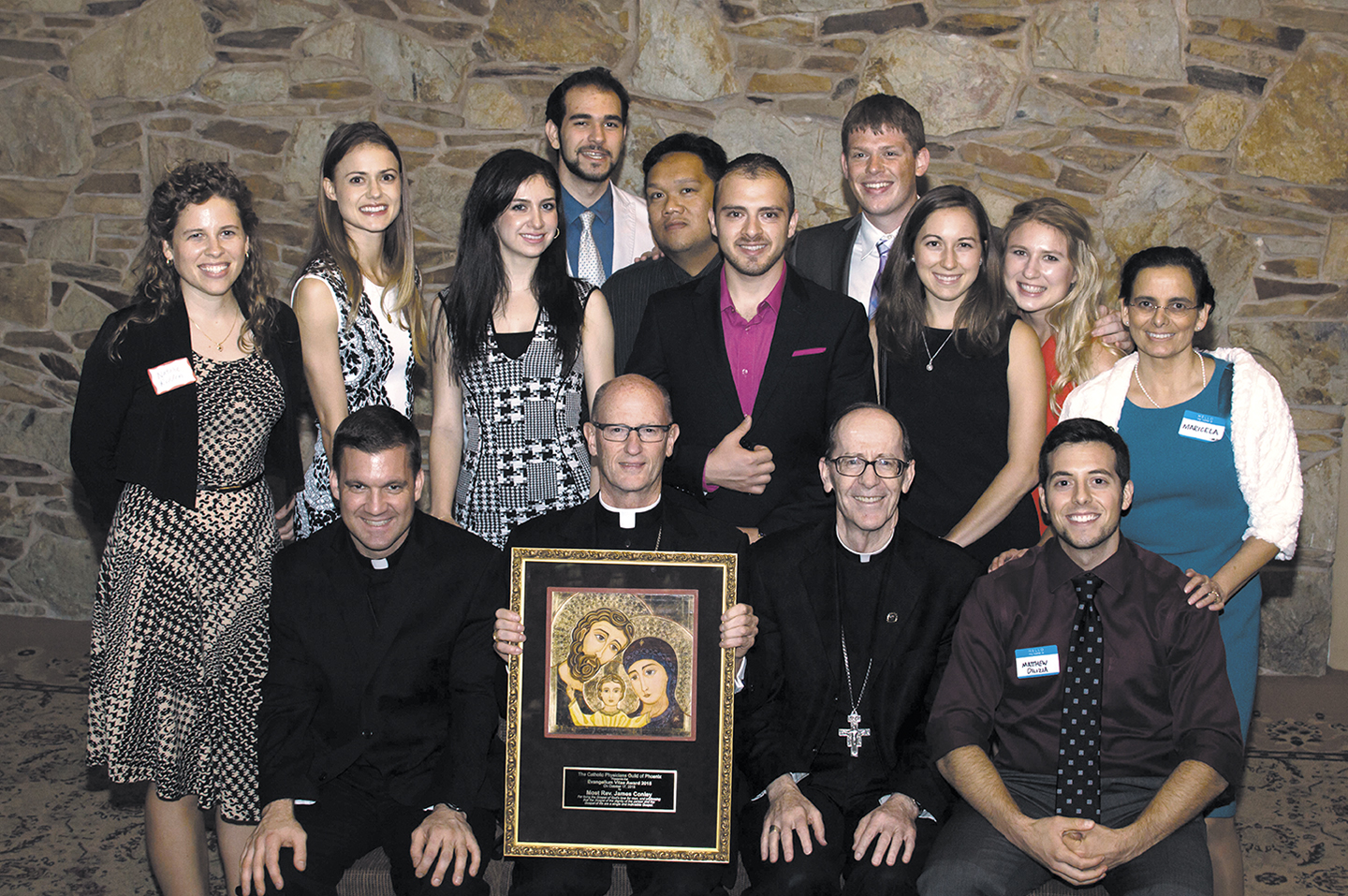
“Thirty-six years ago, Blessed Mother Teresa received the Nobel Peace Prize, but she was not an activist or a politician, but an Albanian woman in a blue sari who responded to the call of Jesus Christ,” he said. “Mother Teresa said that the greatest destroyer of peace today is abortion. A direct killing. If a mother can kill her own child, what is left for me to kill you, or you to kill me?”
Abortion is the most tragic action in the world today, more accessible than before, and now, chemical abortion destroys in the first days of life, explained Bishop Conley.
“She was right and I believe that one day we will wake up and wonder what we are doing and how did we get here. We are called to be a burning light of peace. So, how can you as medical professionals fulfill that noble calling to be a burning light of peace?”
Bishop Conley offered suggestions to healthcare workers to bring that peace to their patients. Maintaining a life of prayer, private confession, the Mass and the Sacraments, as well as attending to the spiritual life of their patients and colleagues will make a difference in forming an honorable practice.
“Practice and witness to the sanctity of human life in the world and propagate the culture of life yourself,” he said. “Commit to the New Evangelization. The Lord counts on you to spread the Gospel of Life to patients and colleagues in the world and to be a good witness of charity.”
Belinda McNerney, who owns Ave Maria Pharmacy based out of Prescott with her husband Paul, said that she appreciated Bishop Conley’s words of encouragement.
“We really like this bishop and we appreciate all that he said to stand up for life,” she said. “His words are powerful.”

[quote_box_center]EDITOR’S NOTE: This is the first of three articles about talks presented at the Day of Understanding sponsored by the diocesan offices of Family Catechesis and of Marriage and Respect Life Oct. 21. [/quote_box_center]
Charitably defending a stance on a hot-button issue is not always easy. That’s even more true when it comes to homosexuality.
Some 120 Catholic priests, deacons, religious and lay leaders left a “Day of Understanding” seminar at the Diocesan Pastoral Center Oct. 21 with practical tips for sharing the truth about love, marriage and homosexuality.
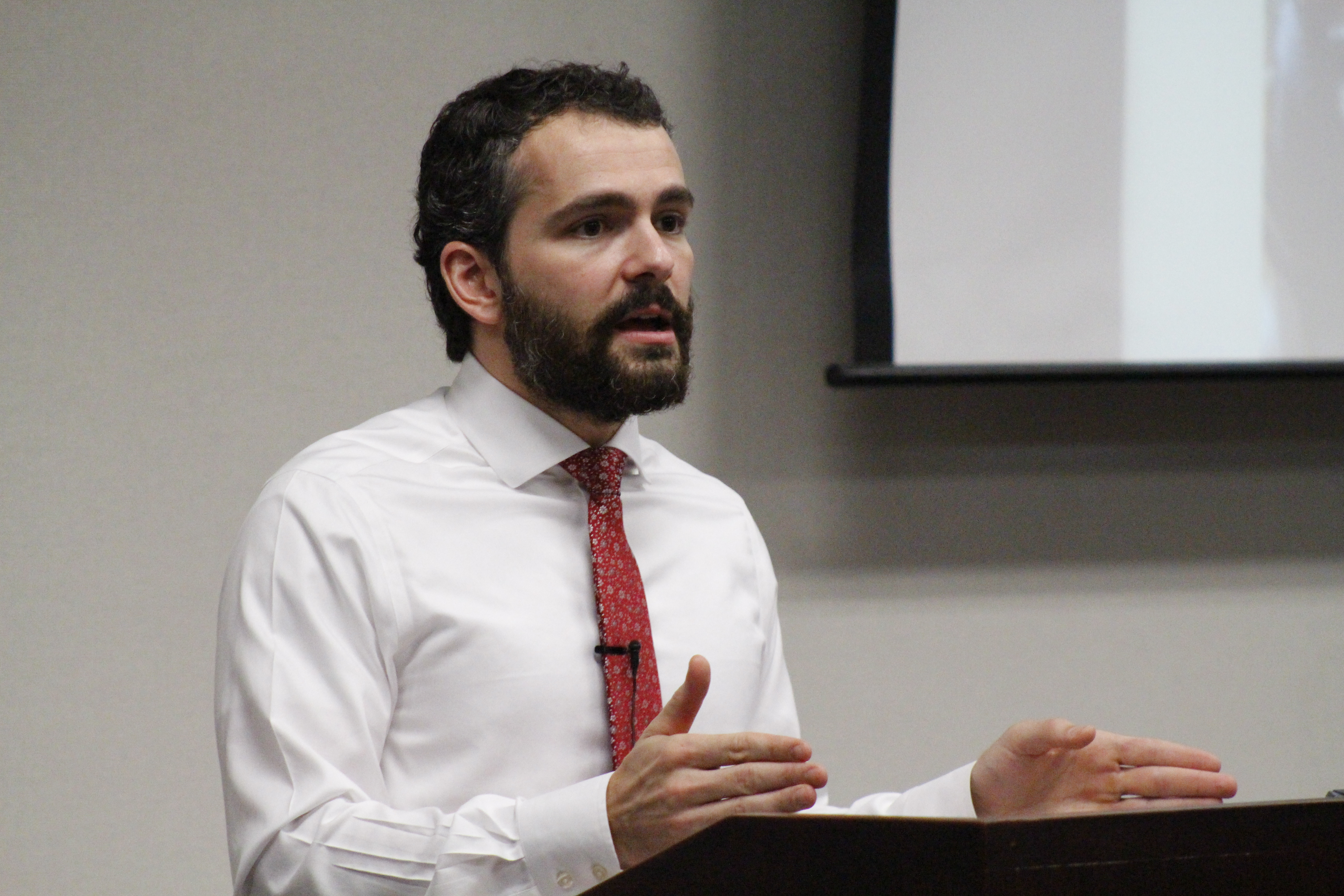
They heard from a trio of speakers addressing different facets of the issue including twice from Dr. Ryan T. Anderson, a senior research fellow in American Principles and Public Policy with expertise in bioethics and natural law theory with the Heritage Foundation. He underscored the importance of responding to the sexual revolution.
“More children are having ideas of sexuality shaped by Hollywood than churches and Bibles,” Anderson said.
He advised not focusing on same-sex issues, but on marriage. There’s a sore need for richer understanding that God made mankind in His image/likeness, that they were created male and female and made for each other, Anderson said.
At the same time, Catholics can’t ignore the same-sex issue either. Those with same-sex attraction are welcome in the Church — the Catholic apostolate Courage has a chapter in Phoenix and Tempe — and deserve to be welcomed into the family, but ministry can’t simply be outsourced, Anderson said.
“Every Thanksgiving, everyone needs someone to share that table with,” Anderson said. He added that there’s no clear road forward, but offered some ideas.
His talk on how to move Catholic leaders forward in the discussion of homosexuality largely drew from his recent book “Truth Overruled: The Future of Marriage and Religious Freedom.”
Anderson said it’s important to be able to make the philosophical argument for marriage. He advised being prepared to give 30-second responses to common statements or questions from a biblical, theological and secular standpoint.
The co-author of “What is Marriage? Man and Woman: A Defense,” whose words were also cited in the dissenting opinion in this year’s Supreme Court case involving sate marriage laws, equipped the crowd with some social science arguments supporting the benefits of marriage as God created it.
Anderson first pointed out the fallacies in the 49 studies of same-sex couples cited by the American Psychological Association. Of the eight studies on same-sex parenting that did use a large, representative sample, Anderson said all of them concluded that children are better off with a married mother and father.
For example, Anderson said when biological fathers are present, it delays the onset of puberty in children by up to a year. Having a non-biologically related man in the house accelerates it. Living out the truth provides a vital witness, he said, that’s the Church’s best apologetic.
[quote_box_right]
“Your Sacrament is Showing” episode of “Take 2” EWTN Radio show
[/quote_box_right]
“It’s the lives of the saints that win arguments,” Anderson said. “It’s the beauty of holiness that attracts.”
Mike Phelan, director of the diocesan Office of Marriage and Respect Life, which co-hosted the “Day of Understanding,” agreed.
“The Church hates no one — she seeks only to bring mercy and truth, which go hand-in-hand,” Phelan told The Catholic Sun.
He said all three presenters offered the truth in love “and since courage is contagious, we now have more courage to engage and answer questions when they arise about how the Church views those who experience same-sex attraction, the question of ‘gay identity’ and how to explain the meaning of marriage after the Supreme Court decision on marriage last June.”

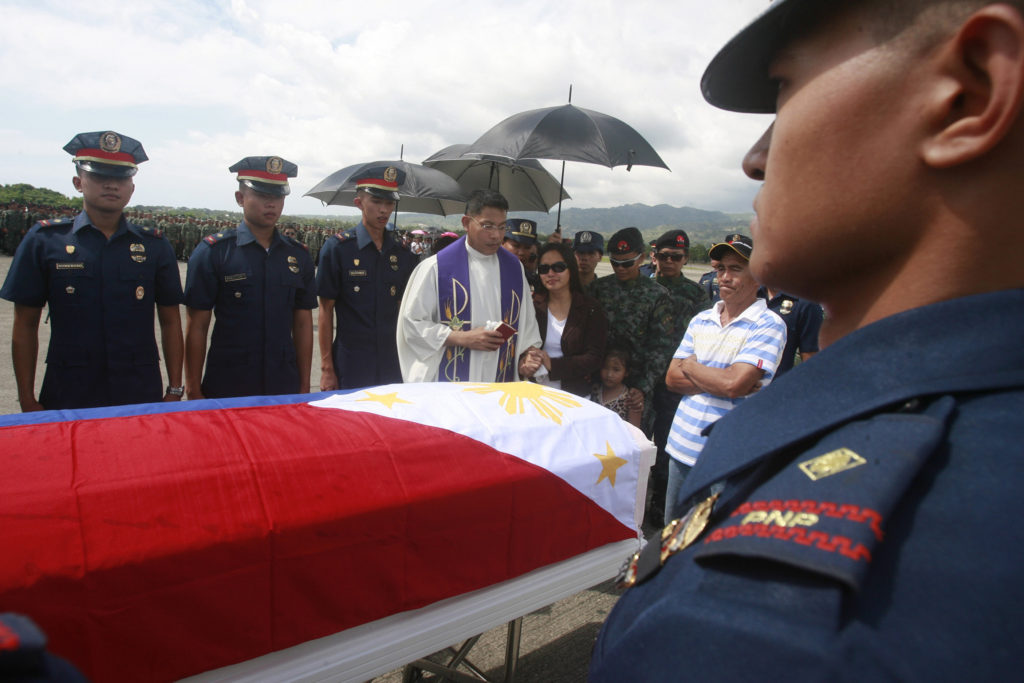
VATICAN CITY (CNS) — As more members of the armed forces endure both physical and emotional scars from conflicts raging around the world, Pope Francis called on military chaplains to tend to their wounds with the healing balm of the sacraments.
“At this time, in which we are living a ‘third world war fought in pieces,’ you are called to nourish the spiritual and ethical dimensions of members of the military and their families, which will help them to face the difficulties and the often lacerating questions inherent in this unique service to their homeland and to humanity,” the pope said Oct. 27.
Military chaplains and some heads of military dioceses — including Archbishop Timothy P. Broglio of the United States — were in Rome for a course on chaplains and international humanitarian law, which was sponsored by the Pontifical Council for Justice and Peace and the Pontifical Council for Interreligious Dialogue.
[quote_box_right]
Veterans retreat and Mass Nov. 7-8
Healing of Memories for Veterans. Related story.
Veterans Picnic Nov. 8 at Franciscan Renewal Center. RSVP.
Military chaplain shortage addressed
[/quote_box_right]
War disfigures the bond between nations, the pope said, leaving “an indelible mark” in soldiers and anyone who witnesses the atrocities of conflict. Members of the military and their families “require specific pastoral care, a solicitude that will make them feel the maternal closeness of the church.”
“The role of the military chaplain is to accompany and support them in their journey, being for all of them a consoling and fraternal presence,” he said. “You can pour on the wounds of these persons the balm of the word of God, which relieves pain and infuses hope; and you can offer them the grace of the Eucharist and of reconciliation, which nourishes and regenerates the afflicted soul.”
Regarding the conference’s emphasis on humanitarian law, the pope stressed that the law needs to be further developed to address “the new reality of war,” which uses deadlier instruments to “inflict atrocious and useless suffering on combatants and particularly grave damage to the natural and cultural environment.”
Most of all, though, Pope Francis said, Christians are called to work toward ending war and to building bridges that unite rather than walls that separate.
An essential task for chaplains is to pray, the pope said. “Without prayer one cannot do all that humanity, the church and God ask of you at this time. Ask your chaplains, ask yourselves: ‘How much time during the day do I dedicate to prayer?’ The answer will do everyone good.”

VATICAN CITY (CNS) — Australian Cardinal George Pell said the final report of the Synod of Bishops on the family did not create an opening for the divorced and civilly remarried to receive Communion.
“The text has certainly been significantly misunderstood,” Cardinal Pell, prefect of the Vatican Secretariat for the Economy, told Catholic News Service Oct. 25.
“There is no reference in paragraph 85 or anywhere in the document to Communion for the divorced and civilly remarried; that is fundamental,” he said.
But other synod members said the text represented an opening to discernment, on a case-by-case basis, of the possibility of eventual absolution and Communion for some divorced and civilly remarried Catholics.
Cardinal Andre Vingt-Trois of Paris said the document is firm in saying “there can be no general rule that applies equally” to all the divorced and remarried without considering their personal situations.
In response to such interpretations of the final report, Cardinal Pell said that “the discernment that is encouraged in paragraph 85 in these particular matters has to be based on the full teaching of Pope John Paul II” and the teaching of the Church in general.
Cardinal Pell said the document’s mention of the “internal forum,” which involves the primacy of one’s conscience before God in determining if access to the sacraments is possible, “cannot be used to deny objective truth.”
Asked why the document does not clearly say that the door is closed to Communion for the divorced and civilly remarried, Cardinal Pell replied: “I think that is a good question, and I think that the document does say that,” however not explicitly.
The ban on Communion for civilly remarried Catholics, he said, “is implicit, really present in the document, but not spelled out as much as some of the Fathers would like.”
The paragraphs in the synod’s final report that deal with the question of pastoral care for civilly remarried Catholics received the largest number of “no” votes, but still gained the necessary two-thirds majority.
Cardinal Pell said the Synod Fathers could have achieved “an even deeper consensus with a bit more clarity.”
The synod members themselves recognize the document is being read differently, said Archbishop Laurent Ulrich of Lille, France. Although no paragraphs were struck down in the final vote, “points of resistance remain,” he said.
Cardinal Vincent Nichols of Westminster, England, told reporters Oct. 25 that the steps outlined in the text for “this pathway of discernment” are meant to ensure that a pastor avoids “the temptation of slapping on a quick plaster” while pain and resentment are “festering away,” according to a report on the Catholic Voices website.
“This pathway of discernment is to help them look through all those things with the eyes of faith and the eyes of God’s mercy,” Cardinal Nichols said. And the discernment called for means individual situations are not “prejudged or pre-empted.”
The Synod of Bishops is not a decision-making body; its deliberations and final report are meant to provide Pope Francis with reflections and advice. It was not immediately known whether Pope Francis would issue a postsynodal apostolic exhortation, as his predecessors often did.
Asked whether the pope will settle the issue of Communion and provide a definitive interpretation to the document, Cardinal Pell responded, “Whether he will or he won’t depends, I suppose, on how he sees this document; whether it is clear enough, whether it expresses adequately the mind of the Church.”
“We don’t want it to be in the situation of some of the other Christian Churches where one or two issues were fought about publicly for years and years and years,” Cardinal Pell said.
— By Robert Duncan and Cindy Wooden, Catholic News Service.

VATICAN CITY (CNS) — While they did not grab headlines, the elderly and people with disabilities, openness to life and the plight of migrants and refugees were also on the agenda of the Synod of Bishops on the family.
The synod’s final report, which was approved Oct. 24, addressed the pastoral needs of those who are often cast aside to the margins of society, those who are often neglected and abandoned in a world that places profit over value.
Affirming the Church’s teaching on the “sacred and inviolable character of human life,” the synod members not only denounced the tragedy of abortion, they also expressed their closeness to young mothers, abandoned children and those suffering the consequences of abortion.
The report also denounced euthanasia, saying that society is called to “care for the elderly, protect people with disabilities, assist the terminally ill, comfort the dying, and firmly reject the death penalty.”
One of the most important tasks of Christian families, the report said, is to “safeguard the bond between generations for the transmission of the faith.”
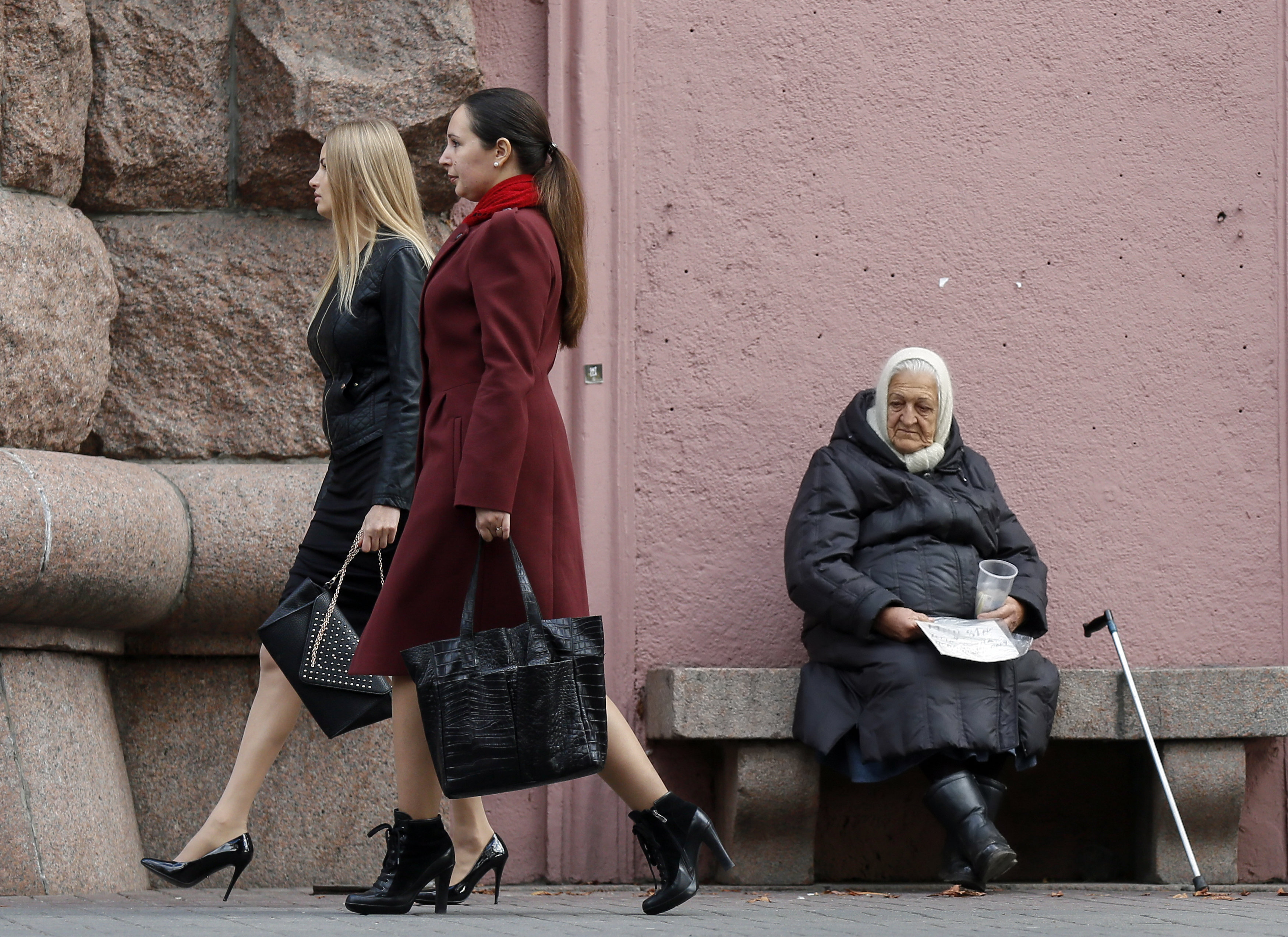
While birth rates are dwindling in Western countries, the report noted, the number of elderly people continue to rise and they are often “perceived as a burden” in increasingly industrialized societies. The Synod Fathers also praised the role of grandparents, whose presence within the family deserved “special attention” and are crucial in passing on the faith to future generations.
In the eyes of synod members, the situation of men, women and children scattered and divided due to war, persecution and poverty was another of the most heart-breaking situations affecting families.
Forced migration, which “traumatizes people and destabilizes the family,” requires a two-fold pastoral ministry not only for migrants, but also for the families they have left behind, the report said.
“Humanity’s history is a history of migrants: this truth is inscribed in the lives of people and of families,” the report said. “Our faith also stresses this: We are all pilgrims.”
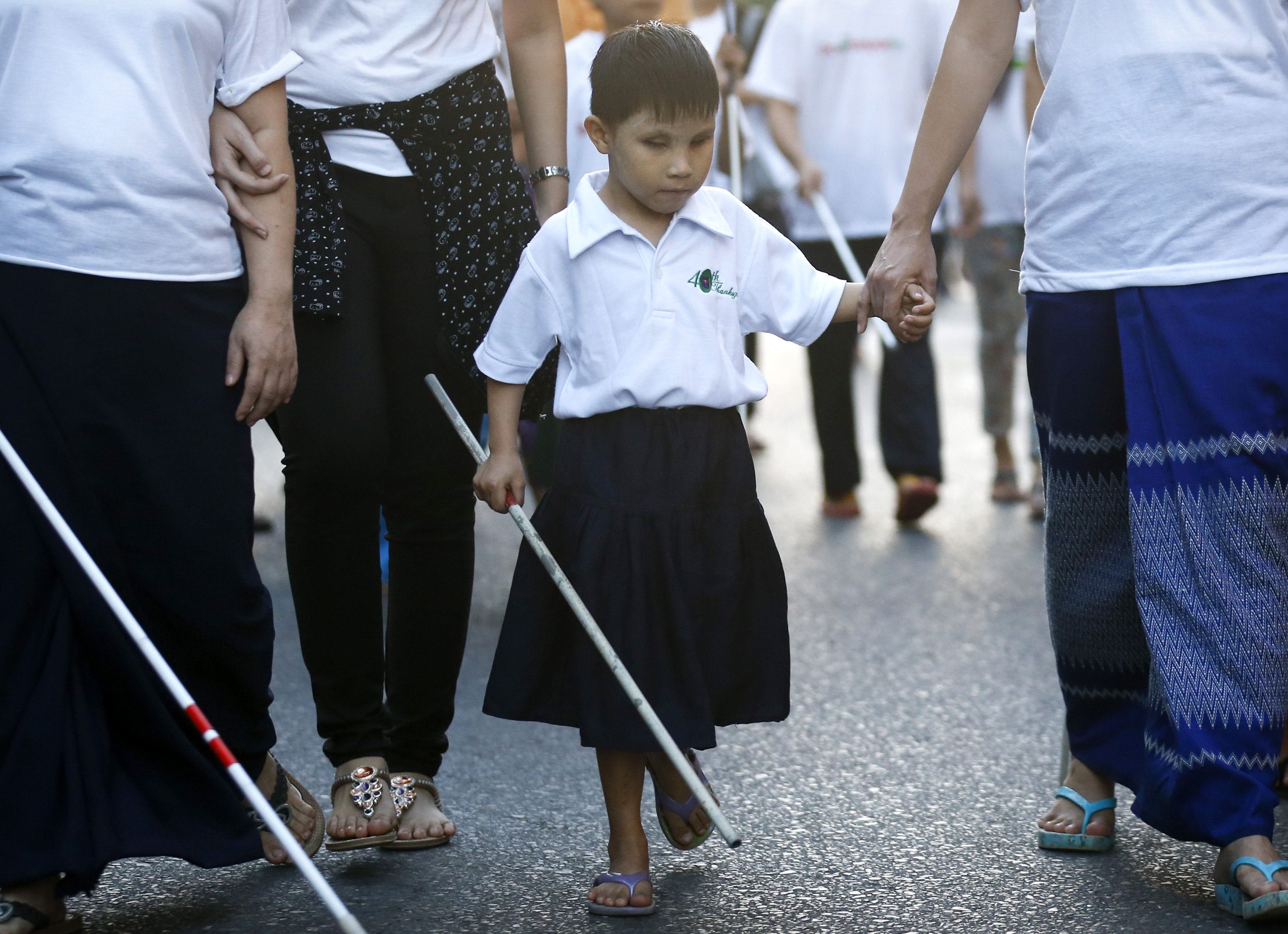
The value of families who endure the difficulties of lovingly caring for members who have disabilities or special needs also was emphasized. Those families, the report said, “give the Church and society a precious witness of faithfulness to the gift of life.”
“The family that accepts with the eyes of faith the presence of people with disabilities can recognize and guarantee the quality and value of every life, with its needs, its rights and its opportunities,” the report said.
Archbishop Joseph E. Kurtz of Louisville, Kentucky, president of the U.S. Conference of Catholic Bishops, described the synod’s response to families of people with special needs as “among the most poetic areas” of the report.
It’s a particularly moving point for Archbishop Kurtz, whose older brother Georgie was born with Down syndrome.
“I don’t want to minimize the heroic nature of what people are going through, especially as they receive a child with special needs, but the gift is just extraordinary,” Archbishop Kurtz told journalists Oct. 25. This gift, he noted, was not only for his family, but for his neighborhood, parish and town.
Following the death of their parents, Georgie lived with his younger brother in two rectories and a bishop’s house until his death in 2002. Archbishop Kurtz said that Georgie’s presence “changed the nature of those rectories.”
“They became a home,” the archbishop said. “I never anticipated that.”
— By Junno Arocho Esteves, Catholic News Service.

VATICAN CITY (CNS) — As disciples, Christians are called to imitate Jesus’ heart and lead others directly to him, without lecturing them, Pope Francis said.
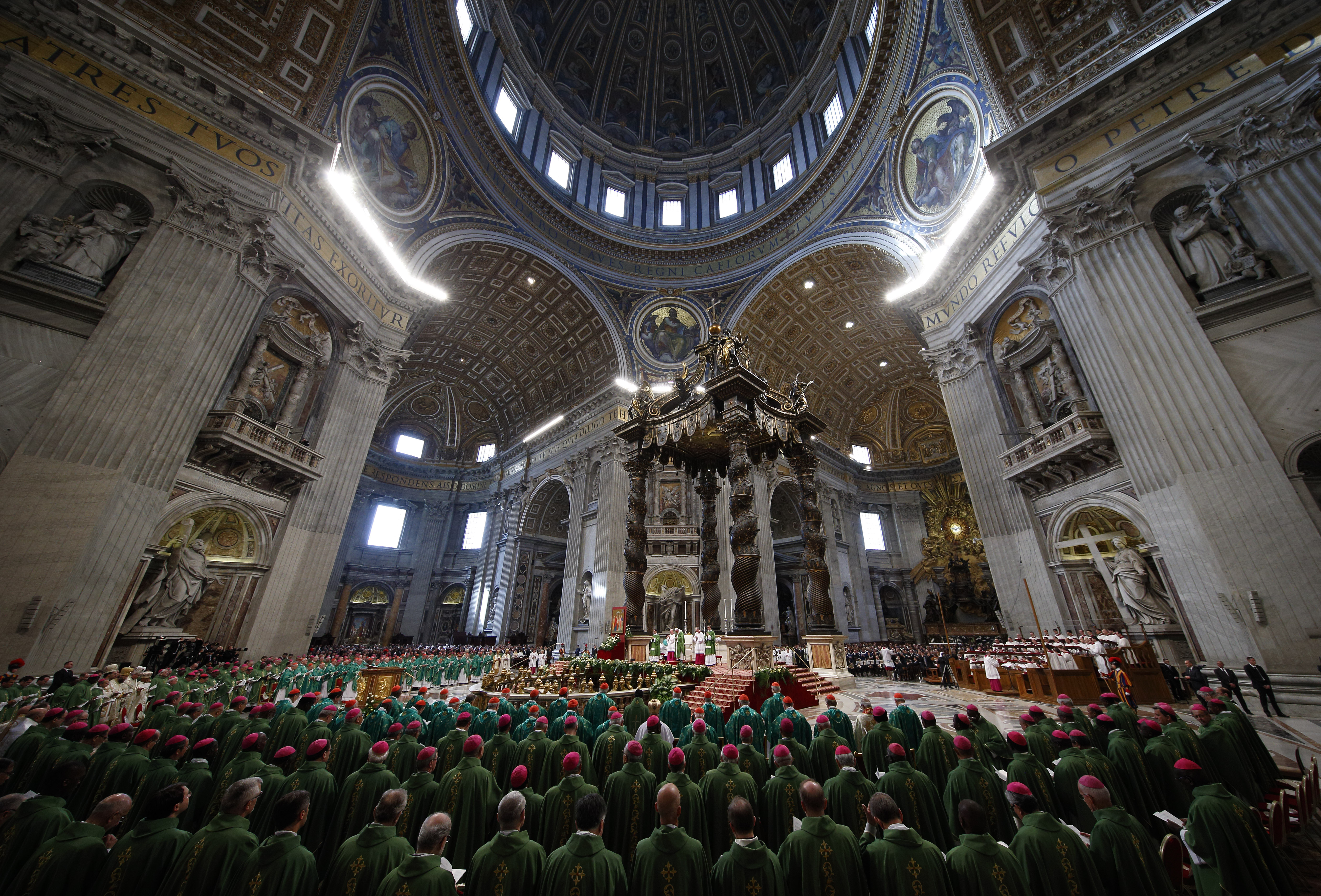
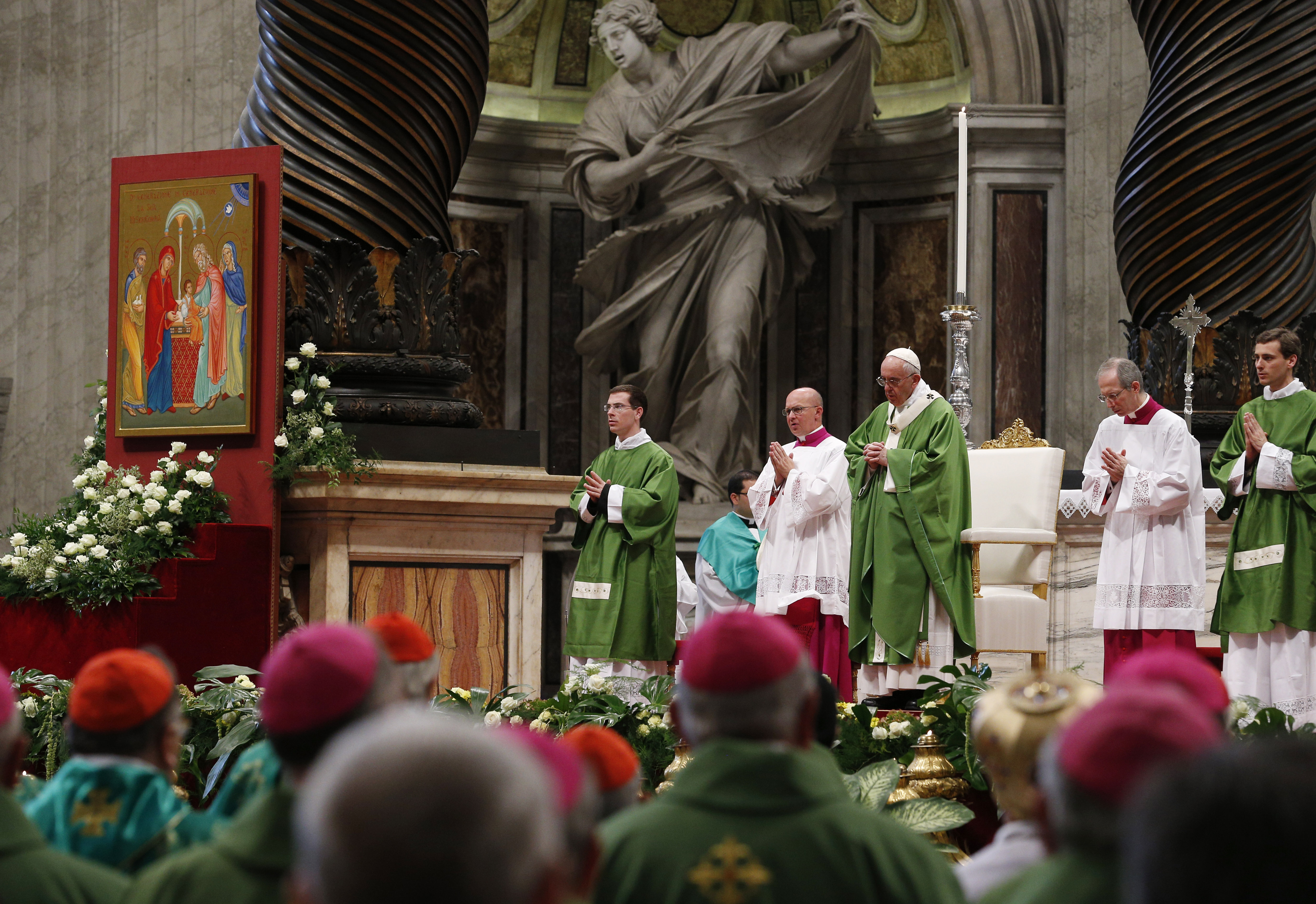
Thousands gathered in St. Peter’s Basilica Oct. 25 for the closing Mass of the Synod of Bishops. The Mass concluded three weeks of intense discussion and debate on pastoral responses to the challenges facing families in the modern world.
Reflecting on the day’s Gospel reading, which recalled Jesus’ healing of Bartimaeus, a blind beggar from Jericho, Pope Francis said Christ is not content with giving the poor man alms, but preferred to “personally encounter him.”
Jesus asking the beggar what he wanted may seem like a senseless question, the pope said, but it shows that Jesus “wants to hear our needs” and “talk with each of us about our lives, our real situations.”
When Jesus’ disciples address Bartimaeus, they use two expressions: “take heart” and “rise,” the pope said.
“His disciples do nothing other than repeat Jesus’ encouraging and liberating words, leading him directly to Jesus, without lecturing him,” he said. “Jesus’ disciples are called to this, even today, especially today: to bring people into contact with the compassionate mercy that saves.”
In moments of suffering and conflict, he said, the only response is to make Jesus’ words “our own” and most importantly, to “imitate His heart.” Today, the pope said, “is a time of mercy.”
However, Pope Francis also warned that the Gospel shows two temptations that face those who follow Jesus when confronted with people who are suffering. The first is the temptation of falling into a “spirituality of illusion,” shown in the indifference of those who ignored Bartimaeus’ cry, “going on as if nothing were happening.”
“If Bartimaeus was blind, they were deaf: his problem was not their problem,” the pope said. “This can be a danger for us: in the face of constant problems, it is better to move on, instead of letting ourselves be bothered.”
This “spirituality of illusion,” he said, makes one capable of developing worldviews without accepting “what the Lord places before our eyes.”
“A faith that does not know how to root itself in the life of the people remains arid and creates other deserts rather than oases,” he said.
The second temptation the pope warned against was of falling into a “scheduled faith” where “everyone must respect our rhythm and every problem is a bother.” The pope said that like those who lost patience with the blind man and rebuked him for crying out to Jesus, there is the risk of excluding “whoever bothers us or is not of our stature.”
“Jesus, on the other hand, wants to include above all those kept on the fringes who are crying out to him,” he said. “They, like Bartimaeus, have faith, because awareness of the need for salvation is the best way of encountering Jesus.”
Pope Francis thanked the synod participants for walking together on a path in search of ways “which the Gospel indicates for our times so that we can proclaim the mystery of family love.”
“Never allowing ourselves to be tarnished by pessimism or sin, let us seek and look upon the glory of God, which shines forth in men and women,” the pope said.
— By Junno Arocho Esteves, Catholic News Service.
