
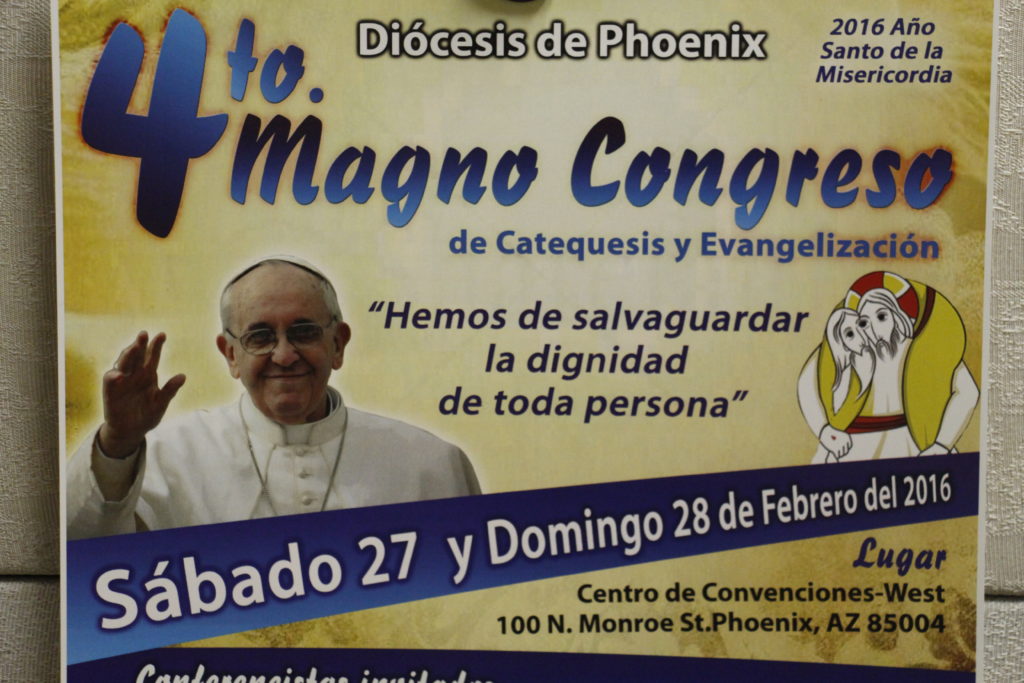
‘Congreso’ ofrecerá inspiración, dirección y educación a catequistas

El cuarto Magno Congreso incluye dos dias de extensa formacion y crecimiento.

La Diócesis Católica de Phoenix, a través de la Oficina de Apoyo al Liderazgo Hispano, llevará a cabo su Cuarto Congreso de Evangelización y Catequesis, totalmente en español.

De acuerdo a información dada a conocer por Carmen Portela, directora de dicha oficina diocesana, el evento tendrá lugar los días sábado 27 y domingo 28 de febrero; ambos días de 8:00 de la mañana a 5:30 de la tarde, en el Centro de Convenciones de Phoenix-West, localizado en 100 N. de la calle 3, en el centro de esta capital arizonense.

Destacó que “el Congreso es el evento diocesano anual para catequistas y agentes de evangelización, que proporciona la formación y recursos necesarios para los líderes y voluntarios en general”.

Portela indicó que se espera la participación de 800 catequistas y evangelizadores de casi todas las parroquias de la diócesis, quienes obtendrán créditos de recertificación por ambos días.

[quote_box_left]

IV Magno Congreso
de Catequesis y Evangelización

Fecha: Sábado 27 y domingo 28 de febrero

Lugar: Centro de Convenciones
West 100 N. Third St.

Horario: 8 a.m.–5:30 p.m.

Costo: $35 por los dos días, no incluye alimentos.

Informes: (602) 354-2120
o
catequesiseventos.org

[/quote_box_left]

Entre los conferencistas, comentó, estará el doctor Hoffman Ospino, un prominente profesor del Boston College, autor del libro “El rostro cambiante de la Iglesia”, donde aborda el tema de la gran influencia de los hispanos en el futuro de la Iglesia Católica de los Estados Unidos.

Dijo que también estará el Padre Ernesto María Caro, Vicario Judicial de la Arquidiócesis de Monterrey, Nuevo León, México, quien es reconocido por sus programas en línea sobre catequesis y evangelización.

Otro que vendrá, procedente de la Ciudad de México, es el Padre Octavio Díaz, un reconocido autor de varios libros de catequesis y miembro de los Apóstoles de la Palabra.

Y se tendrá, además, la participación de los queridos sacerdotes Padre Andrés Arango, de la Parroquia San Gregorio, de Phoenix; y el Padre Sergio Fita, de la Parroquia Santa Ana, de Gilbert.

Carmen Portela enfatizó: “Este Congreso es para todos, pero están invitados a él especialmente los catequistas, evangelizadores y voluntarios; será una gran oportunidad para que se actualicen y se pongan al día sobre la situación y las necesidades de aquellos a los que sirven no sólo a nivel diócesis, sino a través del país”.

Agregó: “El Congreso les dará las herramientas y los recursos que necesitan para hacer mejor su labor; asimismo, en él alimentarán y nutrirán su espíritu, ya que ambos días habrán confesiones, Misa y exposición del Santísimo”.

Por último, en nombre de los señores Obispos Thomas J. Olmsted y Eduardo Nevares, la directora de la Oficina de Apoyo al Liderazgo Hispano de la Diócesis de Phoenix, reiteró la invitación a asistir al Congreso a todos los catequistas y evangelizadores de las diferentes parroquias.

Por Leo Hernández, The Catholic Sun.

Men in the Breach: Adrián Inclán embraces role motivating fellow Hispanic youth

Adrian Inclan, seen here outside a local Adoration chapel, is a Benedictine University at Mesa student who talks to young people about real love and the virtue of chastity. (Photo courtesy of Erika Inclán)

[dropcap]W[/dropcap]hen Bishop Thomas J. Olmsted issued his call for authentic masculinity, 20-year-old Adrián Inclán knew he needed to answer.

Inclán is one of the leaders of the Cristeros, a Hispanic youth group at St. Anne Parish in Gilbert, and has helped plan the annual diocesan Youth Catholic Congreso. He also has been active as a speaker who advises young people throughout the Valley to practice abstinence until marriage.

In response to Bishop Thomas J. Olmsted’s Apostolic Exhortation, “Into the Breach,” every month The Catholic Sun will feature one of these “Men in the Breach” who’ve answered the bishop’s call to authentic Catholic masculinity.

Bishop Olmsted, in his exhortation to Catholic men, “Into the Breach,” said, “Men, do not hesitate to engage in the battle that is raging around you, the battle that is wounding our children and families, the battle that is distorting the dignity of both women and men.”

“If you read the exhortation, you can see how the Holy Spirit worked through the bishop to write this. It’s put in perfect terms. It’s all truth,” said Inclán.

As a teenager who was active at St. Anne’s, he received a call from a group in Phoenix that wanted him to talk about abstinence. So, “I went to their parish, their youth group. I gave a testimony, or small talk. That opened doors for me.”

He enjoyed the experience. So did the young people who listened. Soon, he started getting more requests to speak.

“I felt a certain call. Something was pushing me to continue. I kept doing that.”

Inclán pointed to his parents, Julio and Erika, who migrated from Hermosillo, Sonora when he was eight years old, as excellent role models. They had been married in a civil ceremony in Mexico, but — after arriving in Arizona — decided to marry in the Church. In preparation, they learned much more about their faith. Inclán came along for the ride.

“My family was devoted in the Hispanic way: Mass and the Rosary. We went to Mass; it was more just tradition. I wasn’t taught about what masculinity is through Jesus Christ.

“When we got here, we started learning more about our faith as a family. That is when we began going to Mass more devotedly.”

Inclán is now studying psychology at Benedictine University at Mesa. He also works part time, but still makes time for prayer, Mass, and to help lead the Cristeros. He said he is blessed to be bilingual, but he generally speaks English, even when speaking to Hispanic young people, because he feels his impact is greater.

His basic message: “What I like to stress is if we want authentic love…if we need help with it because we can’t do it alone, there’s no one better to go [to] than the author of love, Jesus, who gave His life for us. That’s how we are called to love, especially as men, to do the bigger things, to always look for the better in others.

“If you want to learn how to do carpentry, you don’t go to Starbucks … you go to the carpenter because he’s the expert,” he said. “If you want to learn how to love, you go to Jesus.”

Inclán said he couldn’t have had a better male role model than his father, though Julio attributes his son’s maturity and leadership less to himself and more to “God’s grace.”

Julio and his wife became Natural Family Planning instructors and said that Inclán often joined them at conferences.

“Ever since he was about 10, he heard about Natural Family Planning, and how our bodies work,” Julio said.

Carmen Portela, director of the diocese’s Office of Hispanic Parish Leadership Support, recalls Inclán and Julio speaking on chastity at the Congreso Amor, Vida y Familia in 2013 to a crowd of about 1,000 young people at the Phoenix Convention Center.

“He did a very good job of explaining to the teens … who were very attentive,” she said. “He takes his work very seriously.”

Inclán is the youngest man featured in the diocese’s much-praised “Call to Battle” video that supplemented “Into the Breach.”

“I didn’t know I was the youngest person (involved) until I saw the video. I felt blessed to be part of that project. I also felt a huge responsibility, having seen how big the video is getting, how many people have seen it.”

Regardless of whether he’s called to the priesthood, religious life or family life, Inclán hopes to continue to serve Christ and His Church in whatever capacity he’s called.

“I like leading others to Christ … I definitely want to continue. It’s my motivation. It’s what keeps me flowing through my faith.”

By Mike Tulumello, The Catholic Sun.

What’s missing from our political discourse is love

[quote_box_center]

Love is patient, love is kind. It does not envy, it does not boast, it is not proud. It does not dishonor others, it is not self-seeking, it is not easily angered, it keeps no record of wrongs. Love does not delight in evil but rejoices with the truth. It always protects, always trusts, always hopes, always perseveres.

— 1 Cor 13:4-7

[/quote_box_center]

[dropcap type=”3″]O[/dropcap]K, so you are asking what on earth does love have to do with politics. And that’s probably because those two words — love and politics — don’t seem to belong together nowadays. Or do they?

Well the answer has as much to do with what’s wrong with our political system and our culture as it does with what’s right. OK, let me explain before I start sounding like a politician with vague answers and obfuscating language.

Chris Benguhe is a columnist for The Catholic Sun. Opinions expressed are the writers’ and not necessarily the views of The Catholic Sun or the Diocese of Phoenix.
We don’t think of politics being a field where love rears its lovely head nowadays because so many of our politicians over the last couple of decades have become dividers using the language of hate, fear, envy or anger to gain support.

But though that may have worked politically in the short term, it has not resulted in the kind of mandate for our leaders that we would like. We live in a politically divided country on many fronts. But it’s our leaders who are to blame for creating that division.

Therein lies the true problem, but also the beautiful opportunity for a blessed solution.

Stay with me here, and try not to dismiss what I say next as pie in the sky thinking because I am about to make a pretty bold request, but if you think about it, it’s also logical, practical and possible.

What if we decided to elect a leader based on the tenets of love as espoused in the Bible? Wasn’t Christ such a leader? And wouldn’t we trust Christ to lead us?

Oh gosh now I am just being crazy, right? But wait, think about it, and take a good hard look at the words that I started this column out with. To synopsize the biblical quote above, and condense it into the preferred qualities one might come up with, consider the possibility of a “patient, kind leader who does not boast, is not proud, does not dishonor others, is not self-seeking, or easily angered. But one who is also always protecting, hoping and always perseveres.”

I don’t know about you, but that sounds like a pretty solid character.

Now I have never told anyone who to vote for in this column, and I am not going to start now. Heck, I don’t even know who I am going to vote for yet. But as the political horse race kicks into gear over the next nine months, there is one thing that I am going to tell you and something I want you to do.

That is that love is powerful, people will die for love, people will live for it, and people’s lives are changed by it. They will endure far greater challenges for it, and they will enjoy far greater prosperity and jubilation because of it than any material good, any power, or selfish pleasure, and entitlement or privilege. And in the end, it is the one thing that we all want.

But sometimes we can get led astray and away from that desire to love and be loved by those false prophets in the world that try to convince that there is something greater in anger, in greed, in envy of others who may have more than we do, or in the selfish desire to possess money, or to defeat others so to make ourselves better.

But none of that will ever make us as happy not only as individuals but as a culture and a nation. All I ask is that you think about that when you decide who to vote for.

And if I have written this column effectively, hopefully you already are.

Año de la Vida Consagrada concluye con llamado a ‘ser la luz de Cristo’

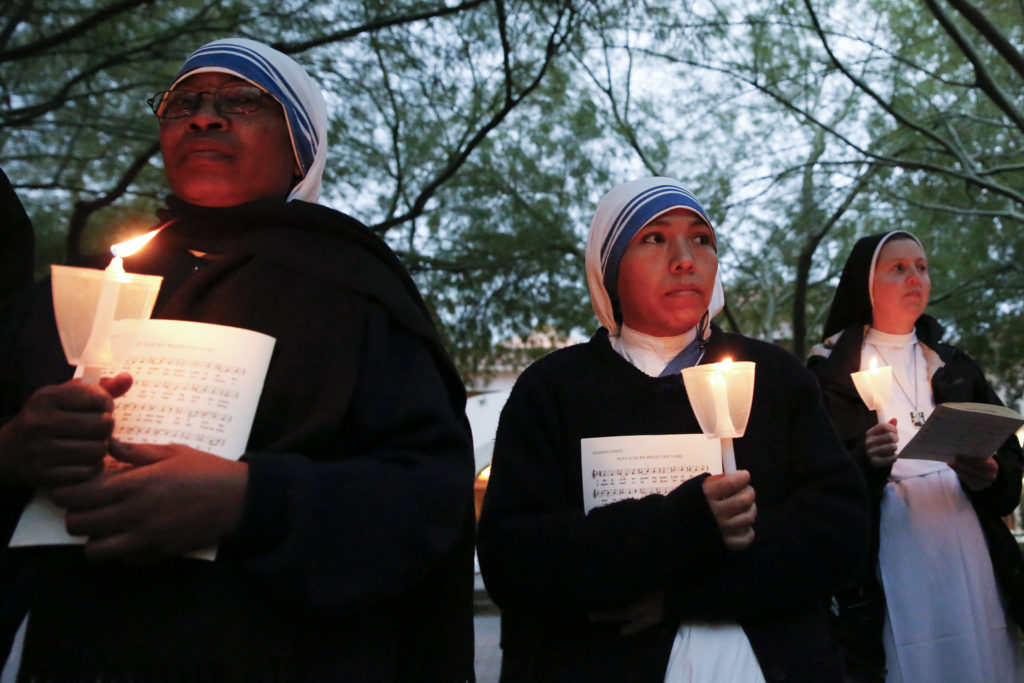
Hermanas religiosas de las Misioneras de la Caridad realizan una vigilia afuera de la Basílica de Santa María antes de una procesión y Misa que marcaron el fin del Año de la Vida Consagrada el 1 de febrero. (Nancy Wiechec/CATHOLIC SUN)

[quote_box_center]Artículo en inglés   *   Article in English[/quote_box_center]

Con una Misa que empezó con una procesión candelabra desde el patio al este de la Basílica de Santa María, el Año de la Vida Consagrada concluyó en la Diócesis de Phoenix el 1 de febrero.

Hombres y mujeres consagrados a lo largo de la diócesis se reunieron para celebrar la ocasión con una Misa de vigilia de la Presentación del Señor, la fiesta del 2 de febrero que también significa la conclusión del Año de la Vida Consagrada en toda la Iglesia.

Las festividades comenzaron bajo la sombra de los árboles de mesquite. Con sus velas, un grupo de monjas jóvenes de la Sociedad de Nuestra Señora de la Santísima Trinidad hablaron del año y lo que significó para ellas.

El Año de la Vida Consagrada fue “una celebración de lo que Dios nos ha llamado a ser”, dijo la Hna. Maria Mater Dei Fritz, SOLT, maestra de tercer grado en la escuela Santísima Trinidad y quien ha sido hermana religiosa por cinco años. Una cosa que ella siempre recordará del año fue el día de vocaciones que las hermanas SOLT hicieron. “Hablamos con ellas sobre la vida religiosa e hicimos un proyecto de servicio para las misiones”, dijo la Hna. Maria Mater Dei. Han tenido una serie de muchachas pidiendo información, dijo, incluyendo algunas de sus alumnas.

La Hna. Mary Joy Bernklaut, SOLT se unió a ellas en el 2008 y profesó votos en el 2011. “Para mí, ha sido un tiempo para enfocarme en el regalo que la vida consagrada es para la Iglesia entera y también reflejar en el regalo que es para mí personalmente”, dijo ella. Elegir la vida religiosa fue el resultado de “una profunda convicción de que Cristo me estaba llamando a esto y que yo encontraría mi felicidad siguiendo su plan para mí”.

El Obispo Auxiliar Eduardo A. Nevares, quien fue miembro de los Misioneros de Nuestra Señora de La Salette por 25 años, dio la homilía en la Misa bilingüe que tomó lugar el 1 de febrero.

“Han pasado 40 días desde que celebramos la Navidad cuando nos regocijamos que Cristo, la Palabra hecha carne, ha venido a ser la luz para nuestro mundo”, dijo el Obispo Nevares. “Tomamos las velas bendecidas para recordarnos que cada uno de nosotros hemos sido iluminados por Cristo Jesús en nuestro bautismo y para recordarnos que Jesús debe ser nuestra luz de cada día”.

Una manera en que la luz de Cristo es compartida en el mundo hoy día, dijo el obispo, es el testimonio de los hombres y mujeres religiosos. “Ellos han encontrado al Señor en una forma profunda y personal y han llegado a conocer el amor con que Jesucristo murió en la Cruz por la salvación del mundo”, dijo el Obispo Nevares. “Tienen una llamada especial de Dios Todopoderoso a responder generosamente, para responder totalmente”.

Más de 20 comunidades religiosas sirven en la Diócesis de Phoenix, dijo él, trayendo “la luz de Cristo a tantos que están en gran necesidad de la misericordia de Dios”.

El Obispo Thomas J. Olmsted, quien celebró la Misa, señaló que las mujeres y los hombres religiosos fueron los encargados de evangelizar a Arizona en sus primeros años y hoy son “un vital testimonio al Evangelio por su persona misma”.

“Damos gracias a Dios por el regalo de la vida consagrada y por el año que se celebró y por la manera en que ustedes nos ayudan a llevar adelante la misión de la Iglesia aquí en la Diócesis de Phoenix”, dijo el Obispo Olmsted.

También agradeció a los miembros de varias organizaciones laicas que asistieron a la Misa y que apoyan las vocaciones religiosas, como el Club Serra, los Caballeros de Colón, los Caballeros y Damas de Malta y la Orden Ecuestre del Santo Sepulcro.

La Hna. Anthony Mary Diago, RSM, directora diocesana de la Oficina de la Vida Consagrada, dijo que el Año de la Vida Consagrada fue un momento para dar gracias por el regalo de la vida religiosa. Mientras ella y docenas de otros procesaron por el patio antes de la Misa, dijo que pensó sobre la llamada de mujeres y hombres religiosos de “manifestar el amor de Dios a todo el mundo. Qué hermosa vocación es reflejar la luz de Cristo y llevar a la gente a Dios”.

Parado a las afueras de las puertas de la basílica, el Hno. Scott Slattum, OFM, quien ha sido un Franciscano por siete años y profesará sus votos perpetuos este verano, reflexionó sobre lo que el Año de la Vida Consagrada significó para él.

La celebración durante todo el año fue un recordatorio, dijo, a “tratar de vivir más fielmente, a preocuparse más por los pobres, los marginados, las personas que están sufriendo … y recordar que es con ellos con quien estoy llamado a estar — con el Pueblo de Dios y vivir de una manera más auténtica”.

Counsel the doubtful: Juan Carlos Gonzalez helps addicts, homeless

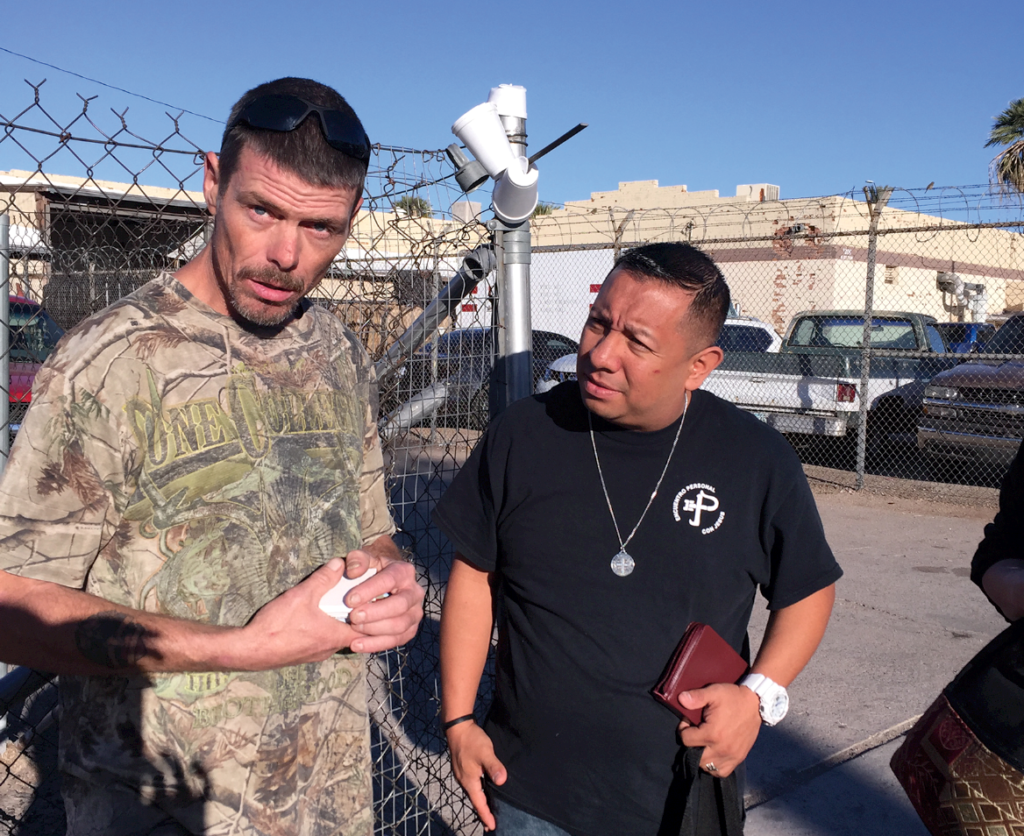
Juan Carlos Gonzalez, a St. Mark parishioner, found mercy through the Personal Encounter with Jesus retreat and now shares the message with addicts and the homeless in downtown Phoenix. (Joyce Coronel/CATHOLIC SUN)


In recognition of the Jubilee Year of Mercy declared by Pope Francis, every month The Catholic Sun will feature a “Missionary of Mercy” who ­exemplifies one of the corporal or spiritual works of mercy. In recognition of the Jubilee Year of Mercy declared by Pope Francis, every month The Catholic Sun will feature a “Missionary of Mercy” who ­exemplifies one of the corporal or spiritual works of mercy.

Practical ways to counsel the doubtful
  • Be a good listener
  • Pray with and for the person, that the Holy Spirit would lead, guide and illumine their path
  • Remind the person to trust in God who loves us and will never abandon us

Juan Carlos Gonzalez was in a tough spot: his marriage was falling apart and he and his wife were on the brink of divorce. That’s when the mercy of God broke through.

It began with the Eucharist. “When the deacon came out with the Blessed Sacrament exposed, that’s when I asked the Lord, that if He would save my family I would dedicate the rest of my life to Him. And He saved my marriage,” Gonzalez said.

At the time, he and his wife had been living at a breakneck pace, working two or three jobs in order to afford the nicer things in life. What they didn’t know was that their 16-year-old son was struggling with addiction.

“When I found out I really got scared,” Gonzalez said. He heard about a ministry that helps people who suffer from addiction and he and his son attended one of the group’s retreats.

“On that retreat I found the mercy of God. I saw the mistakes that I was doing as a father — giving everything to my son, the best phones, the best everything,” Gonzalez said. “I found out I was not doing what I was supposed to be doing, like teaching the faith, teaching what really matters.”

Vowing that he didn’t want to see other families hurt the same way, he decided to do something about it. Today, he leads the ministry where he found healing. Known as Encuentro Personal con Jesús — Spanish for Personal Encounter with Jesus — it’s a ministry that has grown by leaps and bounds. People come from as far away as Florida to take part in the four-day retreat experience that takes place six times a year at Mount Claret Retreat Center.

That’s because friends, family and neighbors notice the transformation in the lives of the people who attend. “They saw this kid was on drugs a couple months ago and now he’s dedicated his life to God and they ask, ‘How did you do that?’” Gonzalez said. “People don’t know the need that is out there.”

One of the things he’s discovered is that about 70 percent of those who attend have not completed their sacraments. Gonzalez and the team get to work to help with that and so far, about 15 couples have had their marriage blessed by the Church.

Juan Carlos Gonzalez (Joyce Coronel/CATHOLIC SUN)
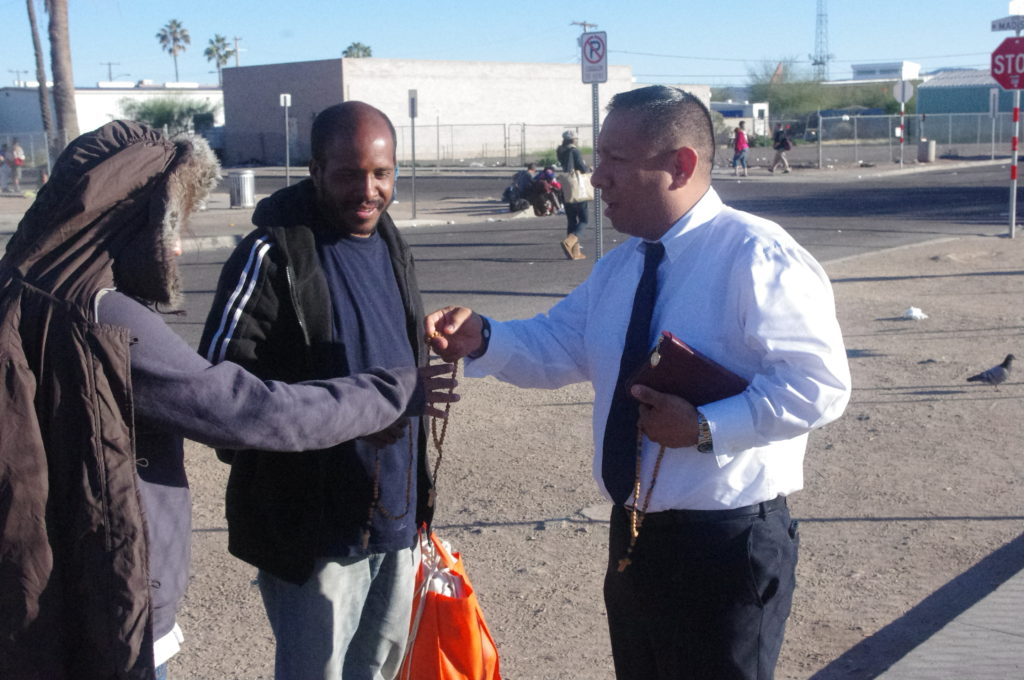
Juan Carlos Gonzalez routinely hands out blessed rosaries to people he encounters on the streets. He “feeds” those often living in doubt with hope via the word of God. (Joyce Coronel/CATHOLIC SUN)

Twice a month, Encuentro Personal con Jesús takes its work to the streets, setting up tables at Madison and Third Avenues in downtown Phoenix where many area homeless congregate. The group brings food, rosaries and Bibles to give away, but they share what is needed most, Gonzalez said: hope.

“It’s not about feeding them food — it’s about feeding them the word of hope, the word of God,” Gonzalez said. The army of 150 volunteers continues to grow and share because it’s a way to show God how thankful they are to have broken the chain of addiction in their own lives and in their families.

“Jesus is never going to ask us how many cars we have at home or what the square footage of our house is. Jesus is going to ask us what we did for the person next to us,” Gonzalez said. His phone rings constantly as people reach out to him for help. These days, he’s ditched the fancy house and cars and is in formation for the permanent diaconate. He now owns a cleaning business, something Gonzalez said allows him the flexibility to be there for people when they need prayer and support.

“They just need a hopeful word to trust in the Lord. That’s what our main focus is,” Gonzalez said.

CDA supports domestic violence victims, others in crisis

[quote_box_right]

Charity and Development Appeal (CDA)

cda logo_grayBG

The CDA supports more than 70 charitable organizations connected to the Diocese of Phoenix.

Info: dphx.org/cda

Donate online

[/quote_box_right]

Support of the annual Charity and Development Appeal changes lives — forever.

Donations metaphorically grow hands and feet to serve those in need or crisis, like residents of the CDA-funded, My Sister’s Place, a Catholic Charities domestic violence shelter.

One mother, “Suzie,” and her two children arrived at the shelter to escape drugs, alcohol and abuse.

The 38-year-old said the last straw came when a gun was held to her head after trying to help her mother, who is also in an abusive relationship.

“It’s a cycle I’ve seen all my life with my mom — a vicious cycle — and I’m trying to break it,” she said. “I’ve never been in a shelter before, and it was a really scary thing, but they are helping me because I don’t have to go back to my boyfriend or mom. I can do what I need to with the resources they give me.”

Last year Catholic Charities received $780,000 in grant money to support its mission of helping the vulnerable residents in Arizona through programs like MSP.

“All the money we get from the CDA goes directly into services for the women, children and men who are victims of abuse,” said Sheryl Christianson, senior programs manager of MSP. “There are things not budgeted that need to be covered, and any extra money helps keep the shelter open and running.”

The emergency shelter, founded in 1985, has a total of 30 beds for men, women and children. The maximum length of stay is 120 days, and residents currently average a stay of 48 days.

Supporting the annual Charity and Development Appeal is an opportunity for Catholics to respond to the Jubilee Year of Mercy.
The annual diocesan appeal supports community and charitable organizations that assist needy individuals and families — reaching beyond any one parish.

“During this Year of Mercy, we are called to remember and participate in spiritual and corporal works of mercy. The Charity and Development Appeal (CDA) supports the many works of mercy across our diocese,” said Carrie Aranda, CDA director.

“A gift to the CDA provides food and drink to those who are hungry and thirsty, instruction for children and seminarians and welcome and comfort to the sick and the stranger. We are called to be instruments of God’s mercy, and a gift to the CDA is one of the ways that we can answer that call.”

Since its inception more than 40 years ago, the appeal supports spiritual, charitable and educational organizations which numbers more than 70.

Throughout the four Arizona counties within the diocese — Mohave, Maricopa, Coconino and Yavapai — works of mercy are exemplified through the organizations that strengthen families, promote life and assist in a crisis.

Dawn Curtis is “Suzie’s” case manager at MSP, and does goal and safety planning with her and other clients.

She also counsels them about a continuum of care through the Pathways Program once they leave the shelter.

“As an active Catholic, I do believe in what the CDA stands for,” Curtis said. “Working for an agency that is a recipient of CDA funding, it does make a difference.”

[quote_box_center]

Related

Fleeing violence to find safety (Catholic Charities)

Ruby thrives at My Sisters’ Place (Catholic Charities)

Man escapes domestic violence (Catholic Charities)

Woman earns ‘In the Trenches’ award for domestic violence efforts across borders (The Georgia Bulletin)

Homily (Archdiocese of Chicago)

[/quote_box_center]

Jesus calls us to be disciples, not hitmen, pope tells youth

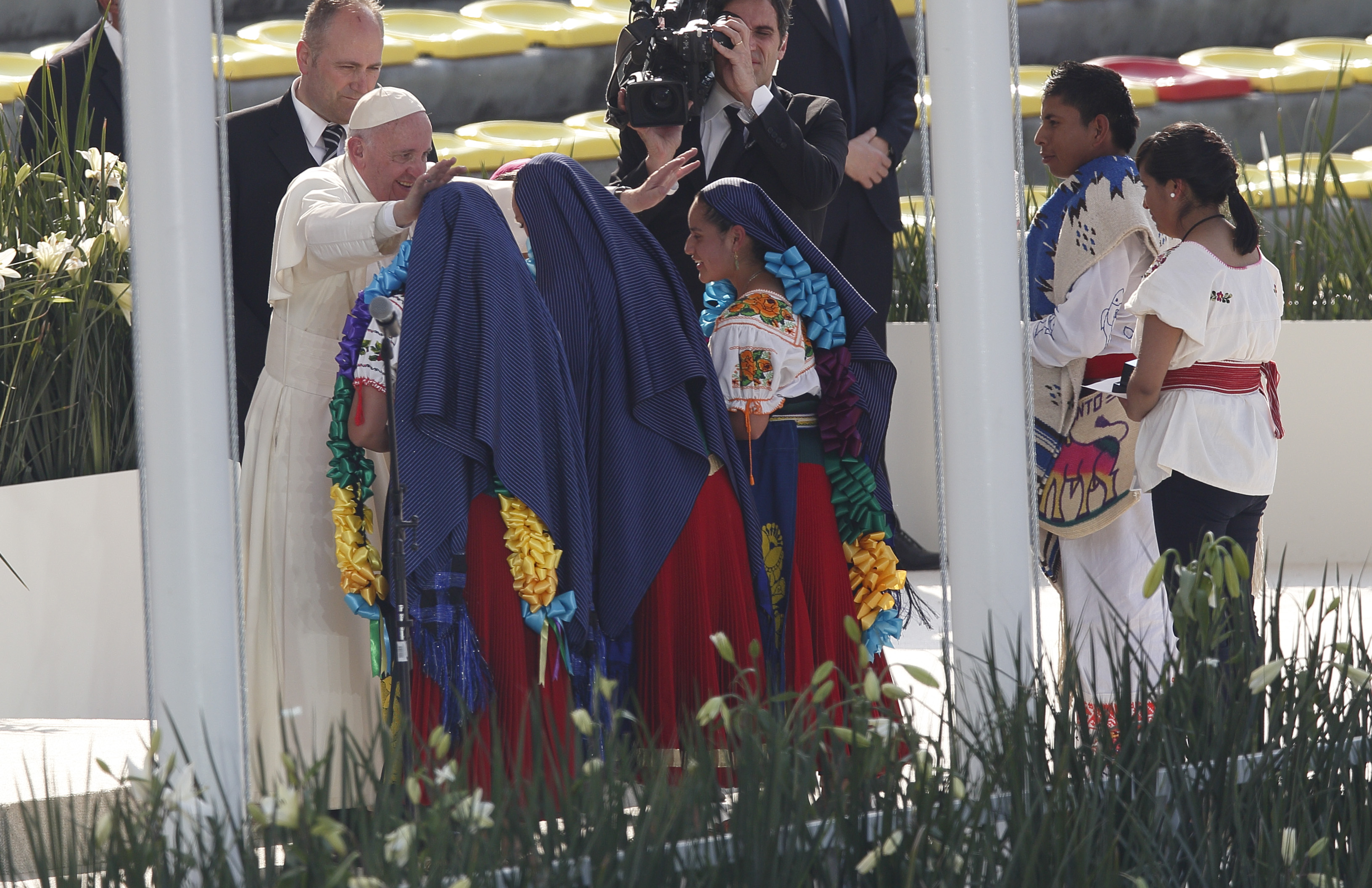
Pope Francis greets girls in traditional dress during a meeting with young people at the Jose Maria Morelos Pavon Stadium in Morelia, Mexico, Feb. 16. (CNS photo/Paul Haring)

MORELIA, Mexico (CNS) — Jesus never sends anyone out as a hitman, dealing in death, but calls Christians to be his disciples and friends, Pope Francis told Mexico’s youth.

“Today the Lord continues to call you, he continues to draw you to him, just as he did with the Indian, Juan Diego,” to whom Our Lady of Guadalupe appeared, he told tens of thousands of young people at Morelia’s José María Pavón Stadium Feb. 16.

Dozens of young people carried flags representing every diocese of Mexico present in the packed stadium or watching on big screens set up in a field outside. The pope not only greeted those present in Morelia but also thousands of Mexican youths following the event live from Guadalajara.

Echoing his words to government authorities earlier in the week, the pope reminded the youths that they are the wealth of Mexico and of the Church.

“A mountain can have rich minerals that will serve humanity’s progress; that is its wealth. But it only turns into wealth when the miners who take out the minerals work on it. You are the wealth, and you must be transformed into hope,” the pope said, in one of several departures from his prepared speech.

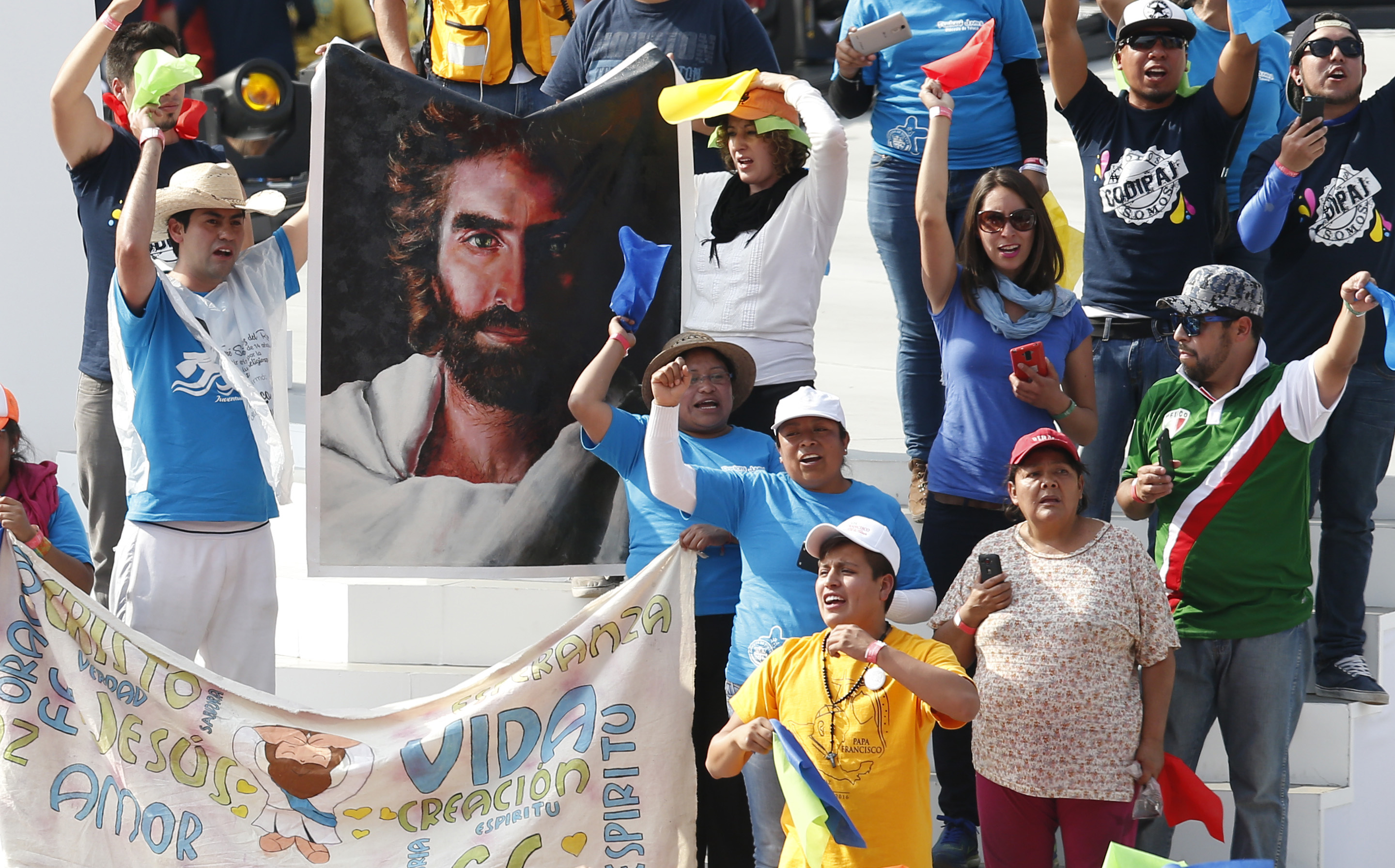
Young people hold a banner of Jesus as Pope Francis meets with youths at the Jose Maria Morelos Pavon Stadium in Morelia, Mexico, Feb. 16. (CNS photo/Paul Haring)

However, Pope Francis recognized the difficulties of recognizing one’s value when material wealth, fashion and prestige become symbols of one’s worth.

“The biggest threat is when a person feels that they must have money to buy everything, including the love of others. The biggest threat is to believe that by having a big car you will be happy,” he said

The pope said belief in Jesus is a sure source of hope and can help youths fight back against the influence of drug dealers “or others who do nothing but sow destruction and death.”

“It is Jesus Christ who refutes all attempts to render you useless or to be mere mercenaries of other people’s ambitions,” he said.

Jesus is the one word of hope that can help young people live fully and do their best for their friends, neighborhoods and communities, he said. While faith may not give them “the latest car model” or “pockets filled with money,” it brings the experience of being loved, embraced and accompanied, which “no one can take away.”

Young people attend a meeting with Pope Francis at the Jose Maria Morelos Pavon Stadium in Morelia, Mexico, Feb. 16. (CNS photo/Paul Haring)

Departing yet again from his speech, the pope recalled a song often sung by mountain climbers.

“While they climb, they sing: ‘In the art of ascending, the victory isn’t in not falling, but in not remaining fallen,’” he said.

The young can be certain that Jesus will always stretch out a hand to help them up, he said. Sometimes He “sends you a brother or sister to speak to you and help you. Don’t hide your hand when you’ve fallen. Don’t tell Him: ‘Don’t look at me because I’m all dirty, don’t look at me because I have no hope.’ Just reach out your hand and hold onto His.”

In turn, a young Christian must “stretch out your hand” to help others in Jesus’ name, particularly with “listening-therapy.”

“Let them speak, let them talk. And little by little, they’ll start stretching out their hand and you will help them in Jesus’ name. But if you go in one shot and start preaching — and hitting them over and over — you leave the poor guy worse than he was before,” he said.

Pope Francis urged young Mexicans to remember: “You are the wealth of this country, and when you doubt this, look to Jesus, who destroys all efforts to make you useless or mere instruments of other people’s ambitions.”

― By Junno Arocho Esteves, Catholic News Service.

Devil wants Church resigned to violence; resist him, pope says

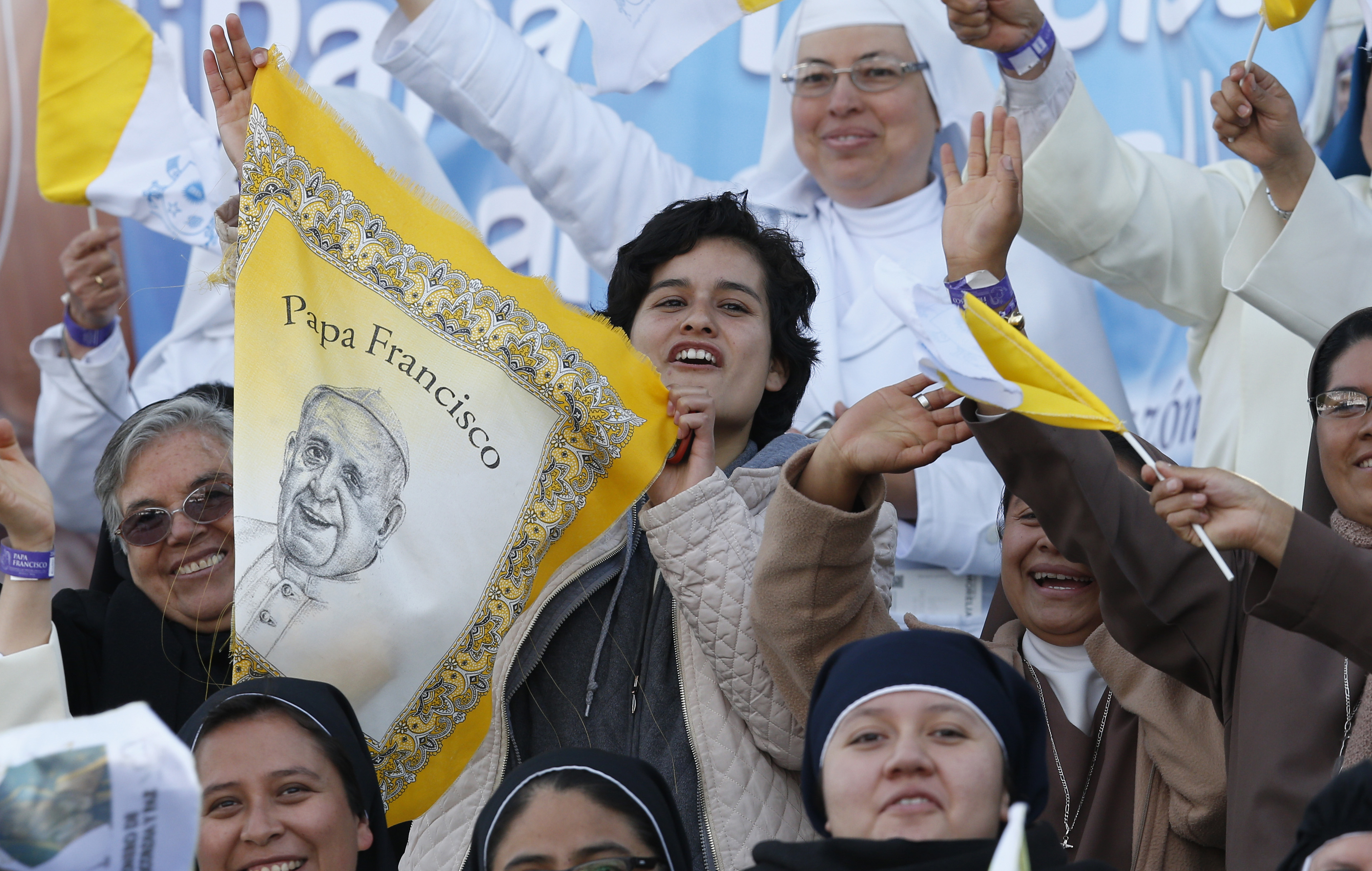
People cheer before Pope Francis' arrival to celebrate Mass with priests and religious at a stadium in Morelia, Mexico, Feb. 16. (CNS photo/Paul Haring)
People cheer before Pope Francis’ arrival to celebrate Mass with priests and religious at a stadium in Morelia, Mexico, Feb. 16. (CNS photo/Paul Haring)

MORELIA, Mexico (CNS) — The devil loves Christians — especially priests and nuns — who are resigned to the violence and corruption around them, Pope Francis said.

Celebrating Mass Feb. 16 at a stadium in Morelia, Pope Francis repeated his frequent call to priests, religious and seminarians to get out of their churches and convents and take God’s mercy and offer of salvation to the world.

But in Morelia, the geographic center of Mexico and capital of Michoacan state — a stronghold of the Knights Templar drug cartel — the pope was not talking just about traditional evangelization.

The pope’s message was an encouragement to those priests and religious who literally risk their lives standing up to the drug lords and urging their faithful to do the same.

Mexico’s Catholic Multimedia Center reported in early February that 40 priests in Mexico have been murdered or simply disappeared in the past 10 years. Many of the cases are clearly linked to the priests’ denunciation of the drug trade.

Pope Francis told an estimated 20,000 Church workers gathered in the stadium that the Christian faith is not a matter for the intellect alone or something that occupies a few hours each day or each week. It is about one’s life.

Jesus, he said, did not simply teach his disciples, he brought them into his life, showing them who he was and how they were to live by keeping them with him as he ate, slept, cured, preached and prayed.

“He invited them to share his life,” the pope said, and when he prayed and referred to God as “Father,” it was not simply a word, but contained “a sense of life, of experience, of authenticity.”

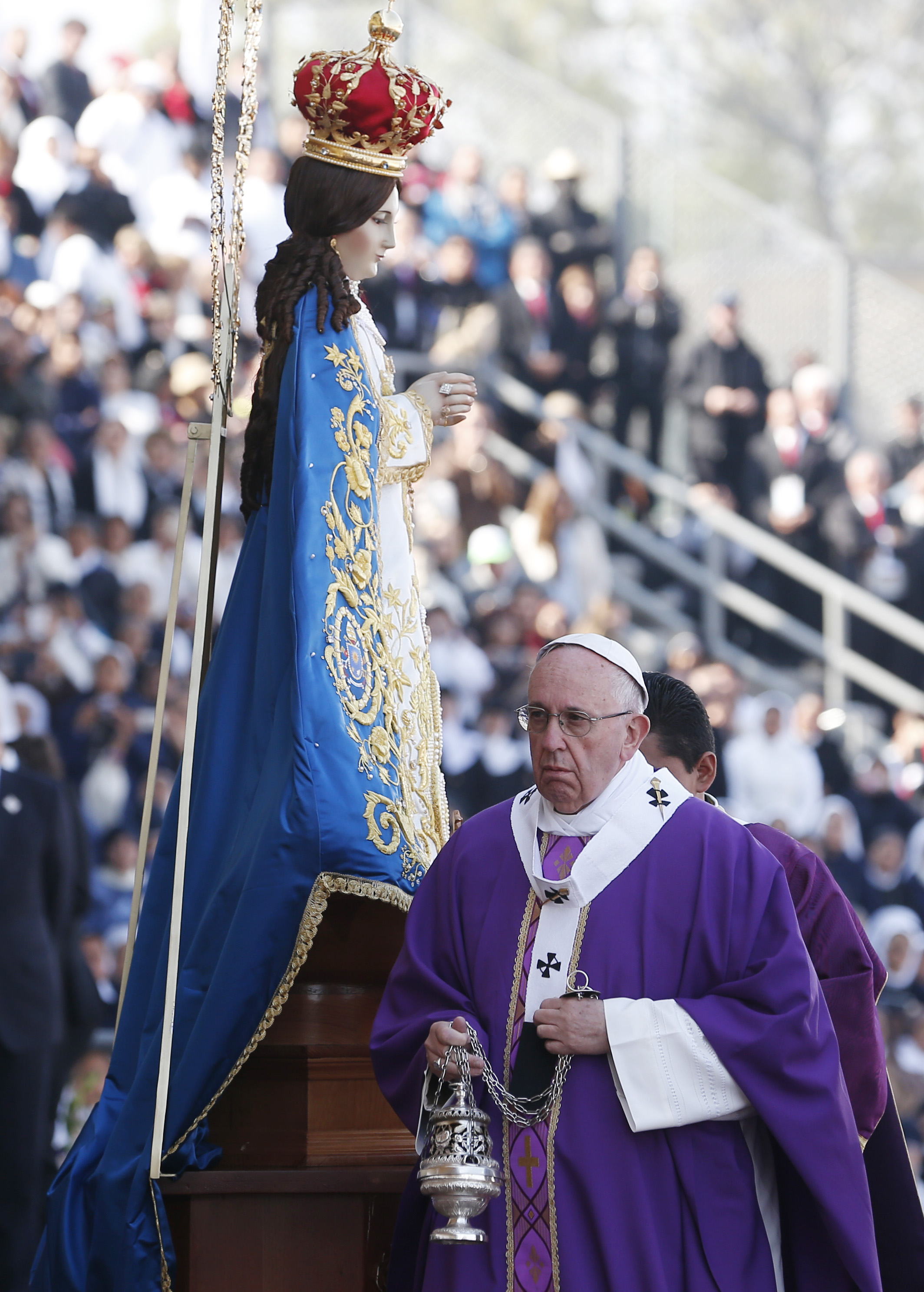
Pope Francis uses incense as he venerates a statue of Mary during Mass with priests and religious at a stadium in Morelia, Mexico, Feb. 16. (CNS photo/Paul Haring)

All Christians, but especially those charged with the pastoral care of others, also must share Jesus’ life with them.

“Woe to us if we are not witnesses to what we have seen and heard. Woe to us,” he said.

“We are not and do not want to be ‘administrators of the divine,’” he said. “We are not and do not want to be God’s employees, for we are invited to share in his life.”

In his Lenten reflection, Pope Francis asked the priests and religious to think about the temptations they face in their lives.

“What temptation can come to us from places often dominated by violence, corruption, drug trafficking, disregard for human dignity and indifference in the face of suffering and vulnerability?” he asked.

The big temptation, he said, is resignation.

In the face of overwhelming violence and death, the pope said, “the devil can overcome us with one of his favorite weapons: resignation. A resignation that paralyzes us and prevents us not only from walking, but also from making the journey.”

The devil wants to sow a resignation “which not only terrifies us, but which also entrenches us in our ‘sacristies’ and false securities,” he said. Such an attitude “not only hinders our looking to the future, but also thwarts our desire to take risks and to change.”

Some of the prayers at the Mass were offered in Purepecha, and Pope Francis called for special care of the Purepecha indigenous people. As a model of one who resisted the temptation of resignation, he offered Bishop Vasco Vázquez de Quiroga, the first bishop of Michoacan. Ministering in the mid-1500s, the Spaniard was shocked by how the Purepecha were treated, enslaved and impoverished.

Bishop Vázquez did not fall prey to resignation, but was inspired to act “in the midst of so much paralyzing injustice. The pain and suffering of his brothers and sisters became his prayer, and his prayer led to his response.”

The Purepechas referred to him as “Tata Vasco,” which means “father, dad, daddy,” the pope said. It is the same kind of language Jesus used when referring to God.

Pope Francis ended his homily with a prayer: “Father, dad, daddy, lead us not into the temptation of resignation ….” He also told the priests and religious that the pastoral staff and chalice he was using at the Mass belonged to Bishop Vázquez.

The pope’s somber homily was a contrast with the atmosphere of fiesta that preceded his arrival. Filling the stands and the field of the sports stadium, the priests and religious sang with gusto and chanted papal cheers while jumping up and down or doing the wave.

Pope Francis was welcomed to Morelia with the largest crowds of his Mexico trip, which began Feb. 12. Thousands of people — standing five and six deep — lined miles of roadway leading to the stadium.

― By Cindy Wooden, Catholic News Service. Contributing to this story was Junno Arocho Esteves.

Lent should be lived ‘more intensely’ in Year of Mercy

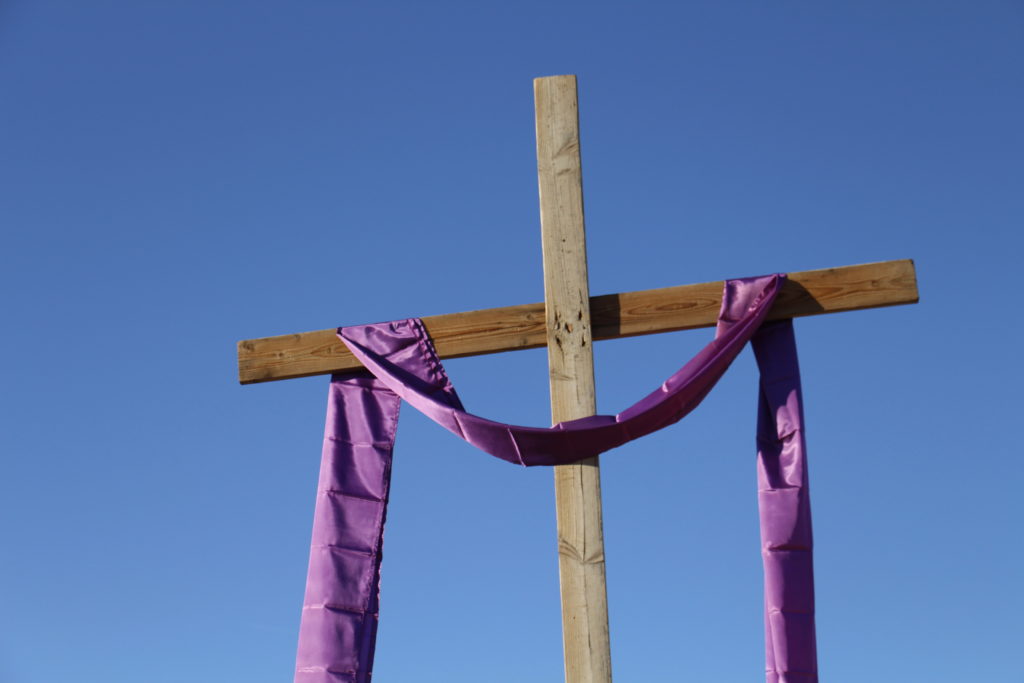
A purple cloth drapes a wooden cross outside of St. Louis the King Parish in Glendale Feb. 10, signaling the observance of the Lenten season . (Ambria Hammel/CATHOLIC SUN)
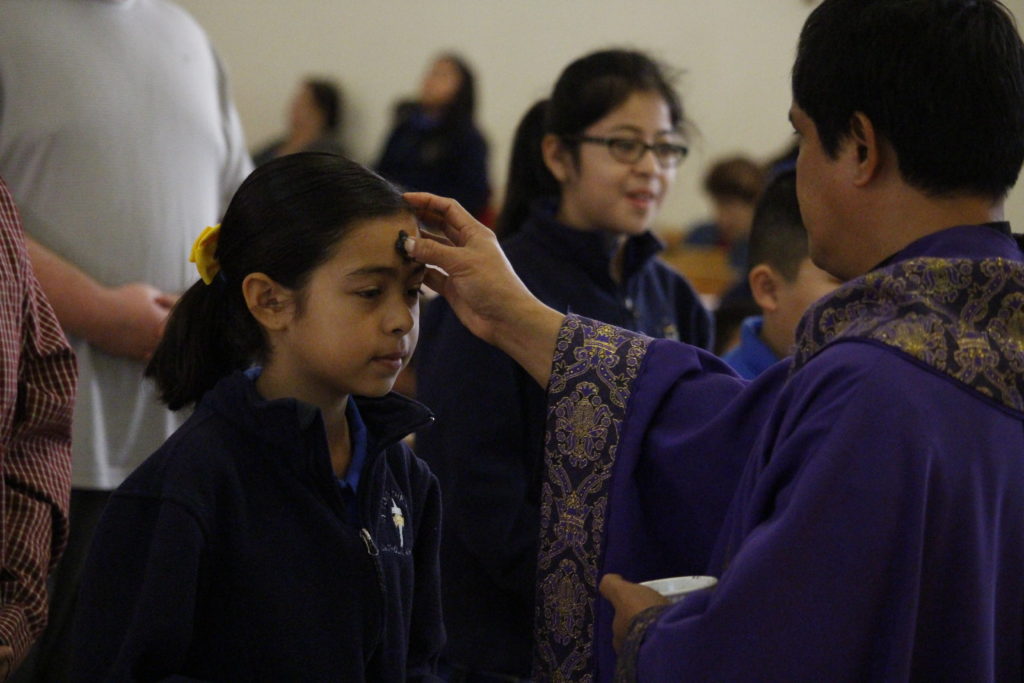
Fr. Joal Bernales marks a St. Louis the King student with ashes on her forehead Feb. 10. (Ambria Hammel/CATHOLIC SUN)
Fr. Joal Bernales marks the sign of the cross with ashes on the forehead a St. Louis the King student Feb. 10. (Ambria Hammel/CATHOLIC SUN)

The humble gesture of being signed with a cross of ashes is a public expression of penance and opens the season of Lent.

“We begin with Ash Wednesday, remembering we are dust and to dust we shall return,” said Fr. Don Kline, pastor of St. Joan of Arc Parish. “It’s a reminder of own humanity, frailty and dependence on God for our very life.”

Lent exists for the sake of Easter; a 40-day pilgrimage where the faithful remember, celebrate and participate in Christ’s life, death and triumphant resurrection.

“We look to Easter as the pinnacle of our liturgical year because it’s when our salvation was granted through His resurrection,” Fr. Kline said.

[quote_box_right]

Lent

Phoenix’s @40DaysOfMerccy

Fun Lenten visual

U.S. Bishops’ 40 Days of Mercy

Corporal and spiritual works of mercy

[/quote_box_right]

Particularly in the Year of Mercy, Pope Francis has called all Catholics, in a special way, to a deepening of their Lenten practices; he called for active listening to the Word of God and practicing acts of mercy.

In paragraph 17 of the papal bull, “Misericordiae Vultus,” the pope wrote: “The season of Lent during this Jubilee Year should also be lived more intensely as a privileged moment to celebrate and experience God’s mercy.”

Throughout the document the Holy Father urges the faithful to be a sign of Christ’s forgiveness and love to others.

“In this Jubilee Year, may the Church echo the word of God that resounds strong and clear as a message and a sign of pardon, strength, aid, and love. May she never tire of extending mercy, and be ever patient in offering compassion and comfort.”

Because Lent is a penitential time to prepare the heart to receive God’s graces, for many people it becomes authentic through personal sacrifices.

“You can ask yourself, ‘What is the goal of Lent and how am I going to get there?’ but the more important question would be ‘What is God asking me to do to get there?’” said Fr. Zygmunt Mazanowski, parochial vicar of St. John the Baptist Parish in Laveen and St. Peter Parish in Bapchule and their respective missions on the Native American reservations.

Traditionally, this is answered through the Lenten disciplines of prayer, fasting and almsgiving, which are opportunities to grow spiritually toward God and others.

A purple cloth drapes a wooden cross outside of St. Louis the King Parish in Glendale Feb. 10, signaling the observance of the Lenten season . (Ambria Hammel/CATHOLIC SUN)

Since the days of the early Church, Friday has been a traditional day of fasting because it is the day of the Lord’s death.

[quote_box_right]

Resources from the U.S. Bishops

Lent: 40 Days of Mercy

Fasting and abstinence

Prayer

Almsgiving

[/quote_box_right]

The regulations on fast and abstinence are:

Fasting: On Ash Wednesday and Good Friday, those who are 18 but not yet 59 are allowed only one full meal. Two smaller meals are allowed as needed, but eating solid foods between meals is not permitted.

Abstinence from meat: Those who are 14 years of age and older are to abstain from meat on Ash Wednesday and all the Fridays of Lent.

The Church calls upon each person to do some fasting during Lent, adapted to each person. Anyone with health reasons who can’t fast can “fast” from something else, such as television or other forms of entertainment.

Fr. Kline offers ways to make Lent more personal, saying it’s more about the experience and less about the expectations.

Prayer: Go for a spiritual tune up and try different personal devotions; go to Stations of the Cross, try attending one Mass during the week, learn the Rosary, go to Adoration, get to know the diocese and visit a different church or make a personal “desert day” of prayer and separate yourself.

Fasting: Serve simple meals, skip snacks. Fasting is meant to create a spiritual hunger. When there is “physical deprivation” from things like food, it creates a longing not just for food but the realization of the provider of all food and, hopefully, a spiritual longing that only He can fulfill.

Almsgiving: Give food, money or clothing to someone else. “Everything I have received is a gift and as I receive I’m called to give,” Fr. Kline said. “It’s recognizing the abundance God has given to us. We’re all needy. We’re all beggars, but we don’t all recognize everything comes from God. He gives us all we need.”

Fr. Kline said these three pillars of Lent come directly from Scripture and it’s really about a relationship with Jesus.

“These are just words unless they are put into action and they are not suggestions, they are opportunities to grow in relationship with our Lord,” he said.