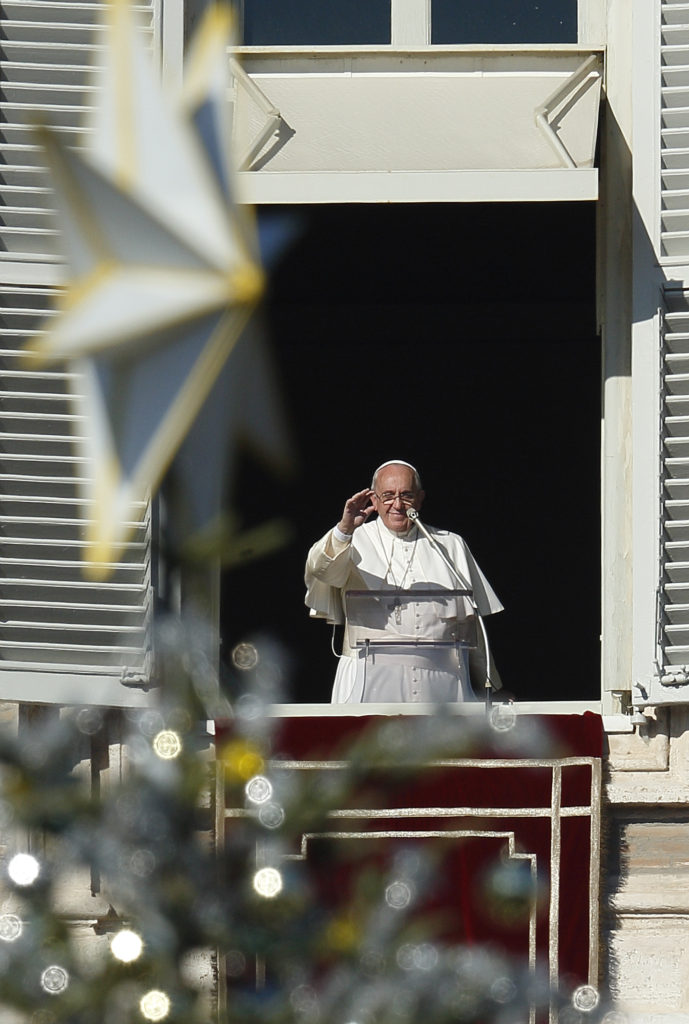
Decorations on the Christmas tree in St. Peter's Square glisten as Pope Francis leads the Angelus from the window of his studio overlooking the square at the Vatican Dec. 21. (CNS photo/Paul Haring)
The Christmas tree decorates St. Peter’s Square as Pope Francis leads the Angelus from the window of his studio overlooking the square at the Vatican Dec. 21. (CNS photo/Paul Haring)
VATICAN CITY (CNS) — God is knocking to come into people’s lives, so be attentive, humble and courageous to let him in, Pope Francis said.
“When we feel in our heart: ‘I want to be good, to be better … I feel sorry for what I’ve done …’ This is Christ who is knocking,” he said before praying the Angelus with those gathered in St. Peter’s Square Dec. 21.
On the fourth Sunday of Advent, Pope Francis talked about Mary showing the way to be ready, humble, generous and courageous when God calls people in their lives.
Christmas is a time when Jesus returns again, “to knock once more on the heart of every Christian: He comes and knocks,” the pope said.
“Each one of us is called to answer, like Mary, with a personal and sincere ‘yes,’ putting oneself fully at God’s disposal, mercy and love.
“How many times Jesus comes by in our lives, and how many times he sends us an angel and how many times we don’t realize it because we are too occupied, too wrapped up in our thoughts, our affairs and even — in this period, in getting ready for Christmas — and we do not realize that it is him who comes by and knocks on the door of our heart, asking to be welcomed inside,” the pope said.
When people feel the desire to be better, nicer and closer to God and to others, “if you feel this, stop. It’s the Lord who is there.
“Go pray and perhaps go to confession to clean up a bit, this is good for you,” the pope said, but no matter what, do not miss the chance to open one’s heart up to God.
“The precious gift of Christmas is peace, and Christ is our true peace. And Christ knocks on our hearts to give us peace, peace in our souls. Let us open the doors to Christ.”
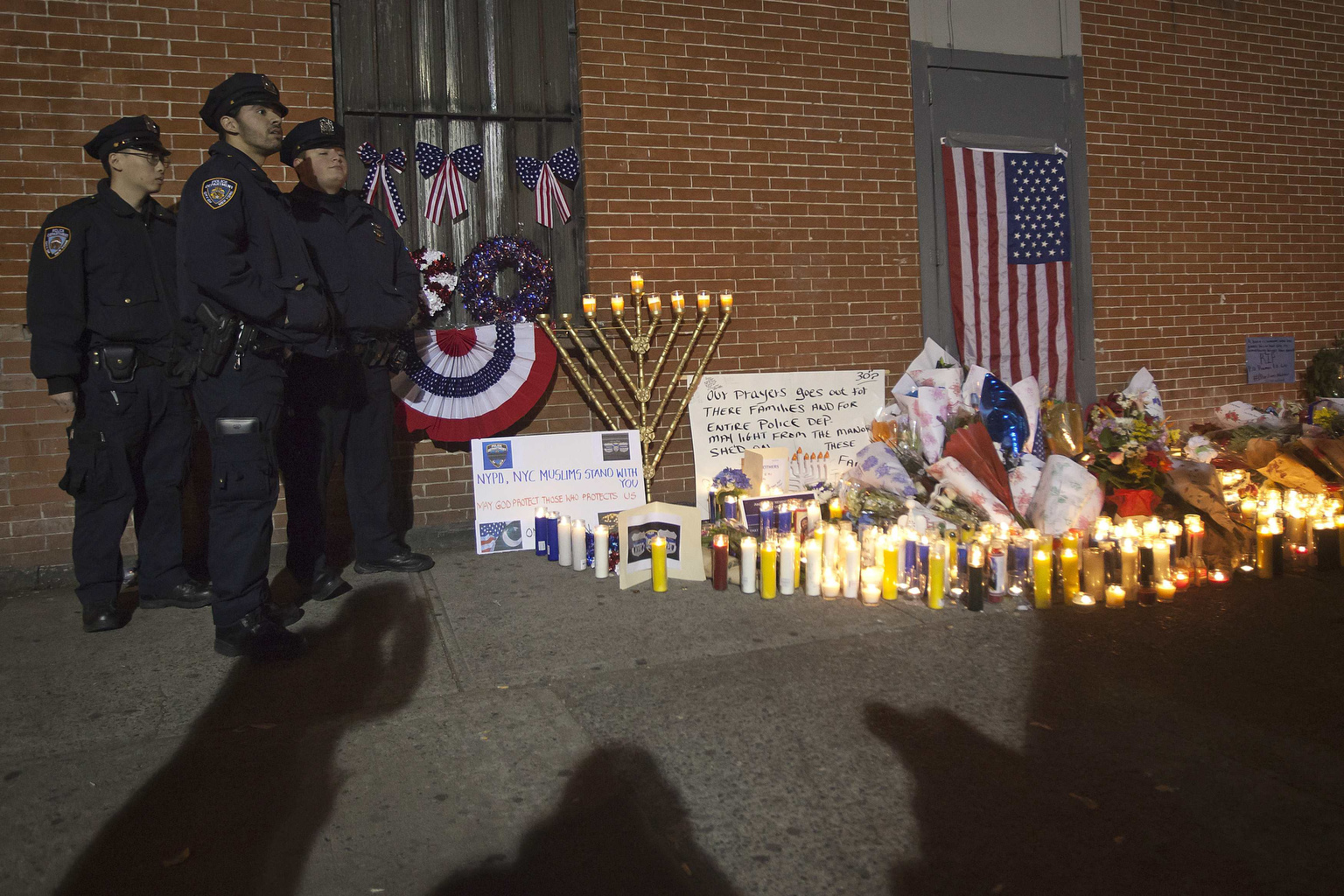
Police officers stand solemnly by a makeshift memorial solemn during a late night vigil Dec. 22 at the site where two police officers were shot in the head in the Brooklyn borough of New York. An armed man walked up to two New York Police Department officers sitting inside a patrol car and opened fire Dec. 20, shooting both of them fatally before running into a nearby subway station and committing suicide, police said. (CNS photo/Carlo Allegri, Reuters)
Police officers stand solemnly by a makeshift memorial solemn during a late night vigil Dec. 22 at the site where two police officers were shot in the head in the Brooklyn borough of New York. An armed man walked up to two New York Police Department officers sitting inside a patrol car and opened fire Dec. 20, shooting both of them fatally before running into a nearby subway station and committing suicide, police said. (CNS photo/Carlo Allegri, Reuters)
NEW YORK (CNS) — New York Cardinal Timothy M. Dolan joined in mourning what he called the “brutal and irrational execution of two young, promising and devoted police officers” fatally shot Dec. 20 as they sat in their New York Police Department cruiser on a Brooklyn street.
“God’s holy word, which we just heard, and the sermon that follows, are supposed to be good news. Some days that’s tough to give, this good news, and this is one of them,” the cardinal said in his homily during Mass Dec. 21 at St. Patrick’s Cathedral.
According to police, officers Rafael Ramos and Wenjian Liu were ambushed as they sat in their marked police car in the Bedford-Stuyvesant section of Brooklyn.
“We tear up thinking about their heartbroken families; as we are in solidarity with our police officers who experience a ‘death in the family’; as we worry about a city tempted to tension and division,” the cardinal said. “‘Good news’ might seem distant, difficult, even indiscrete, as we anticipate the joy of Christmas four days away, and feel more like we’re near Good Friday.”
A gunman opened fire on Ramos and Liu, shooting both fatally in the head. The suspected shooter, identified as Ismaaiyl Brinsley, then fled to the subway where, police say, he committed suicide. An AP story said Ramos and Liu were part of a special detail assigned to help reduce crime in that part of Brooklyn.
Ramos, who recently turned 40, was married and the father of two sons, a 13-year-old and a college student. He joined the New York Police Department in 2012, after working for several years as a school resource officer. Liu, 32, had been on the New York police force for seven years and had gotten married just two months before being killed.
“Never is the hope of the good news of God’s promise and fulfillment erased for a believer, and the more it is tested the stronger it gets,” Cardinal Dolan said.
He called it providential that Dec. 21, the fourth Sunday of Advent, was “the darkest day of the year, the day of least light as the sun is at its lowest point.”
“Anthropologists tell us that our ancestors millennia ago were gripped with fear and anxiety on this day, wondering if the sun, the light, would reverse its descent and start back up into the sky, if the days would gradually get longer and the light more obvious,” Cardinal Dolan said.
“Year after year, they would hold their breath with fear, only to discover that, yes, tomorrow, the sun would be reborn, and start upward,” he said.
It is “no surprise that the Church would place the birth of the Son … right at the rebirth of the sun … and we have Christmas,” he continued.
People sing as they take part in a prayer vigil Dec. 22 at the site where two police officers were shot in the head in the Brooklyn borough of New York. An armed man walked up to two New York Police Department officers sitting inside a patrol car and opened fire Dec. 20, shooting both of them fatally before running into a nearby subway station and committing suicide, police said. (CNS photo/Carlo Allegri, Reuters)
“At the darkest time of the night, near the darkest day of the year, Jesus the light of the world, was born in Bethlehem,” Cardinal Dolan said. “He will teach us gently and manifest radiantly in his own birth, life, death and resurrection that light trumps darkness, hope beats despair, grace wins over sin, love defeats hate, life conquers death.
“When we’re tempted to question that as stupid and silly, he whispers, ‘Be not afraid: Fear is useless! What is needed is trust!'”
around 4:15 p.m., he learned “the chilling news” about the murder of Ramos and Liu from the police officers at the church.
He noted that St. Simon is right across from Precinct 46 headquarters, so he asked the officers to take him over there.
“I was able to spend time with 30 or so of them, meeting them, embracing them, trying to console them, praying with and for them. As you observed so well yesterday, Mayor (Bill) de Blasio, it was for them, a ‘death in the family,'” the cardinal said.
De Blasio and his wife, Chirlane McCray, were sitting in the front pew at St. Patrick’s Cathedral, as were Police Commissioner Bill Bratton and Chief of Police James O’Neill.
“Today I had to say bye to my father. He was there for me every day of my life, he was the best father I could ask for.”
Later at the St. Simon as he celebrated Mass, Cardinal Dolan said, he “saw out of the corner of my eye, in a chapel off the side of the main altar, hidden from public view, two policemen, on their knees, hats on the floor, heads bowed, hands folded, before the Blessed Sacrament. I silently prayed that they heard those words deep down, “Be not afraid! I am with you!”
Cardinal Dolan then asked Bratton and O’Neill if they would “tell your officers that God’s people gathered at St. Patrick’s this morning thundered with prayers for and with them, and that we love them, we mourn with them, we need them, we respect them, we are proud of them, we thank them!”
“I’ve learned in my six years here that, yes, New York, this huge, throbbing metropolis, can indeed be a place of hurt, darkness, fear and fracture, that our celebrated grit and in-your-face realism can at times turn brash,” Cardinal Dolan said. “But I’ve also learned that New York can also be that “Little Town of Bethlehem,” from which comes, not darkness, division and death, but light, unity and life. That’s New York! That’s Bethlehem! That’s Christmas!”
In a post on his Facebook page, Ramos’ 13-year-old son, Jaden, wrote: “Today I had to say bye to my father. He was there for me every day of my life, he was the best father I could ask for. It’s horrible that someone gets shot dead just for being a police officer. Everyone says they hate cops but they are the people that they call for help. I will always love you and I will never forget you. RIP Dad.”
Mr. Robert Curtis, a life-professed Lay Dominican, teaches composition at the University of Phoenix and creative writing at Rio Salado College.
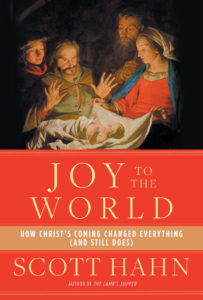
His book explores the value and meaning of the Nativity. The first thing he makes clear, and it is important for us all to consider in light of the New Evangelization, is that the Nativity is not a matter of folklore or fable but occurs solidly in the course of history, actual history of a man born in Israel who claimed to be the Son of God.
Hahn begins with the Gospels of Matthew and Luke which both render a history of the events. Matthew establishes genealogical ties to the entire history of Israel and Luke establishes the clearest and most accurate record of those events.
Matthew’s genealogy manifests a kinship in which Christ’s Nativity belongs to all of Israel and its history and a fulfillment of the words of the different prophets calling the exiled Jews back to prepare for the coming of the Chosen One — in Greek, Christos, the Christ.
Luke deals with the genealogy much later in his narrative and pointedly works backward from Jesus to Adam, while Matthew works from Abraham to Jesus. The difference in Luke is understandable in terms of his intent — to establish Jesus as Savior of the whole world and not just the Messiah of Israel.
Hahn swings his attention toward the Virgin Mary, “the cause of our joy.” He details the significance of Mary in our physical world as inspiration for great cathedrals, the Sistine Chapel, and the greatest works of art from people like Bach and Michelangelo.
Hahn details the presence and purpose of Joseph, the “Holy Knight.” Joseph’s significance cannot be understated even though there is no recorded word of his anywhere in Scripture. His significance to Jesus is as an earthbound father who teaches his son the ways of the chosen people.
Hahn next waltzes through harking of angels, the little town of Bethlehem, the Magi, and
shepherds.
According to Hahn, angels are witnesses, created before the light. They are given free will as a precursor to our own and foreknowledge — as many saints and theologians have suggested — of the Incarnation. The angels’ choices, thus, become the dichotomy of heaven and hell, good versus evil, and the Christmas story is made central to the economy of salvation before it even happens in time and space.
Bethlehem, the birthplace of Jesus, is the center of what Hahn refers to as Davidic messianism, and therefore Christ’s validation as the Messiah, stems first not from what He says or does, but where He is from.
The Magi’s place in the Christmas story is an extreme counterpoint — something we never even think of — and it raises the story to an incredible place. The Magi were from Persia, a place loathed by both Jews and the Roman Empire; they were astronomers who measured the movement of stars and planets and claimed that the knowledge portended great events. Their beliefs were revolting to the Jews, and gravely disrespectful to the monotheistic worldview; so that when the three showed up bearing small earthly gifts as homage to the “newborn king of the Jews,” their real gift is the incredibility of their claim — the newborn king of the Jews!
Of course, the homage was sincere and set off a wave of infanticide perpetrated by Herod, but it served as one more example of how God used the inexplicable to tell the Christmas story.
And shepherds? Shepherds had no wealth or power; they owned no land and, by all accounts, shared that uniquely pungent fragrance with sheep. Yet, as with King David, who was also a shepherd, these shepherds came to pay homage and foretell the future reign of Christ as the shepherd of the people of God.
Hahn finishes by covering the Presentation, what he calls the “Flight into Joy,” as one can imagine escaping certain death at the hands of Herod a flight into joy, Holy trinities, heaven, and the Holy Family, sweeping the whole thing together into joy for the entire world. His premise is that the Christmas story has changed everything and that its eternal dynamics changes everything every single day. Who can argue against that?
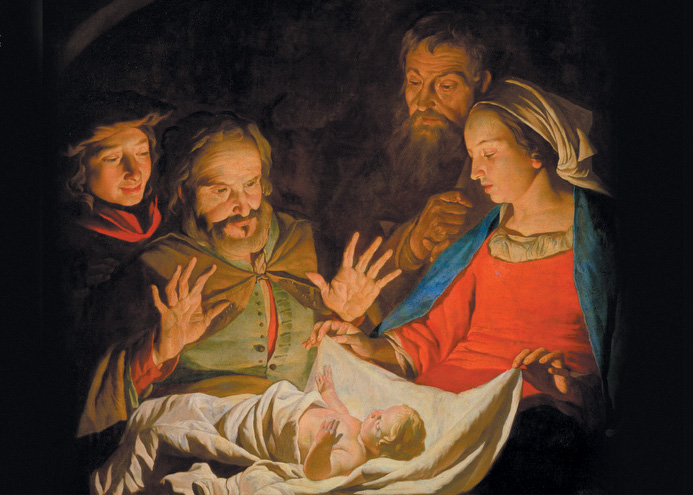
This book is so “Christmas-y” that it is jacketed in red with a wonderfully classical painting of the Nativity on the front, light streaming Rembrandt style from the Child and more gifts inside than any of us will ever receive in our lifetimes.
Should you read this book? Do it now and see what happens when Christmas Day finally arrives.
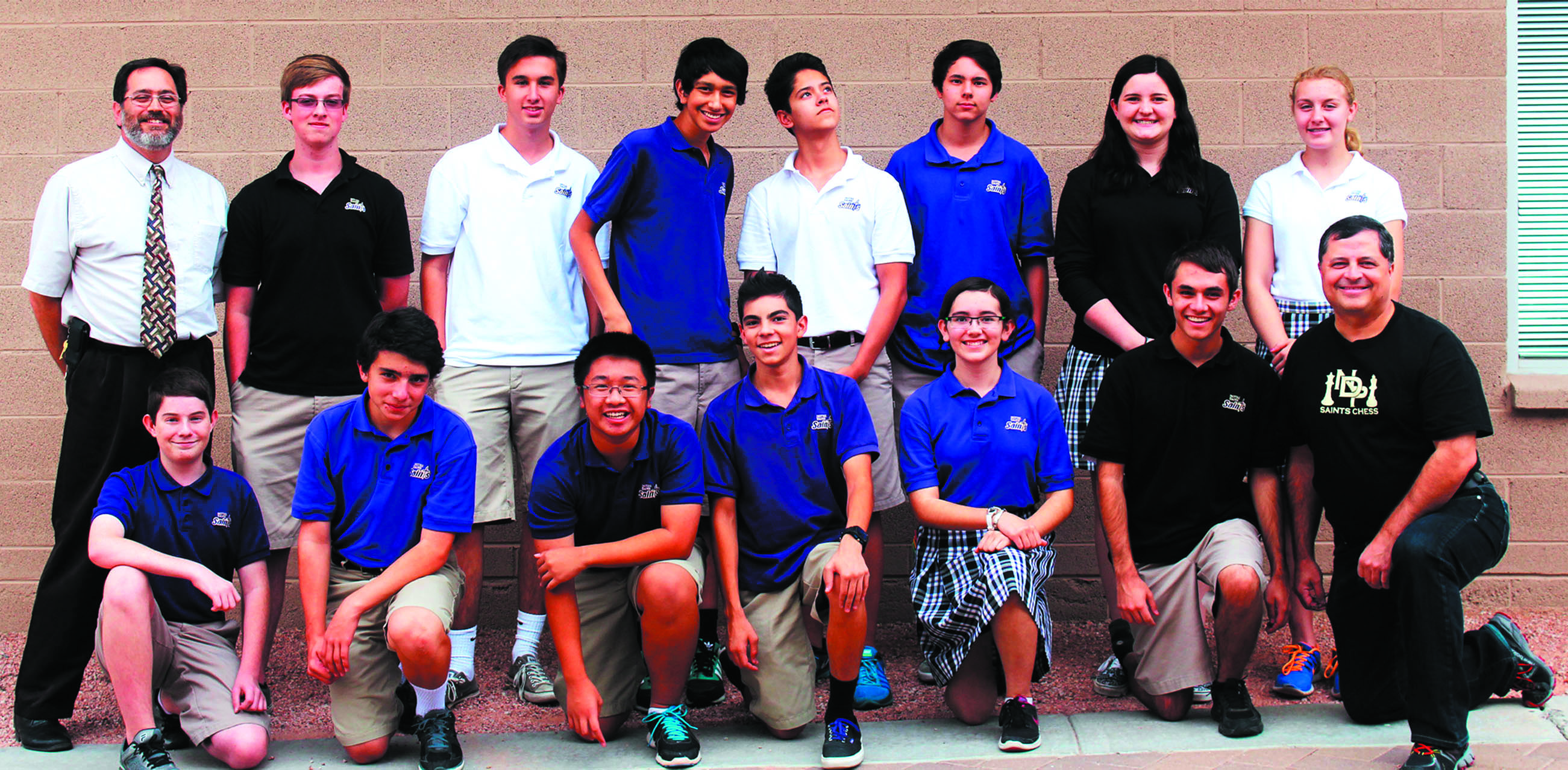
Members of the Notre Dame Preparatory chess club, from top left: Deacon Carmene Carbone, Adam Katafiasz, Brett Barr, Surrein Maniraju, Etienne Ruiz, Ian Freeman, Kylie Best and Katie Olson. Bottom row: Bradley Alpaugh, Logan LaRue, Jesse Nguyen, Nick Rodriguez, Hanna Marshall, Nick DesMarais, Rich DesMarais.
Members of the Notre Dame Preparatory chess club, from top left: Deacon Carmene Carbone, Adam Katafiasz, Brett Barr, Surrein Maniraju, Etienne Ruiz, Ian Freeman, Kylie Best and Katie Olson. Bottom row: Bradley Alpaugh, Logan LaRue, Jesse Nguyen, Nick Rodriguez, Hannah Marshall, Nick DesMarais, Rich DesMarais.
SCOTTSDALE — If you step on Notre Dame Preparatory’s campus every Tuesday and Thursday, you might see a few bishops roaming about. Kings and queens too.
That’s because the school’s 7-year-old chess team is growing in size and strength. It began with two players, one of whom went on to play for the Arizona Scorpions, an online interstate team.
The Saints quickly averaged seven players, but doubled this year. They joined with personal and competitive interests. Roughly half had ever played before and even more had never competed.
“Many kids first start because they want to get better and beat a parent or godparent,” said Rich DesMarais, one of the coaches. “Once they get going and taste some success at tournaments, they really begin to enjoy that feeling of accomplishment and start asking more for us to review their games and to understand concepts.”
He coaches alongside Deacon Carmene Carbone, who once coached chess at Bourgade Catholic High School. The deacon credits pop culture for reigniting interest in chess. The opportunity to earn a varsity letter attracts some too.
DesMarais said the players find that their screen time with the computer or tablet is greater when their parents see they’re playing chess.
“Most of the best players practice this way and get to the point that they are Masters at a much younger age than when I was a kid,” DesMarais said.
His son, Nick, is fast approaching that designation. The Notre Dame senior is near the upper end of the “Expert” rating by the U.S. Chess Federation. Nick went undefeated, beating out 63 players at the Arizona Interscholastic Association’s individual state chess championship in Yuma Nov. 22. He has placed in AIA’s top 10 all four years at Notre Dame.
Other Saints fared well during the individual tournament. Four placed in the top 20 heading into the final game.
Notre Dame, whose motto is, “Our bishops are moved by Saints,” finished 11th in the team tournament. That’s up two notches from its rookie year.
“Our primary strength was depth of team. Also, there is a high level of dependence on each other as a team, which is unusual in this game that is typically one on one,” DeMarais said.
Players are fielded five at a time with the highest-ranked on each team playing each other and on down the line. DeMarais said Adam Katafiasz, a senior on second board, played strong and Jesse Nguyen, a sophomore on fifth board, won all five of his games.
The Saints emerged well in the alternate competition too with sophomore Etienne Ruiz finishing in fourth place.
Pope Francis greets people during an audience to give Christmas greetings to Vatican employees in Paul VI hall at the Vatican Dec. 22. (CNS photo/Paul Haring)
VATICAN CITY (CNS) — Christmas is the time to heal wounds and fix whatever defects still linger in one’s life and heart, Pope Francis told Vatican employees.
And leading by example, the pope asked everyone for their forgiveness — for any errors or shortcomings he and his “colleagues” may be guilty of and “also for some scandals that cause so much harm. Forgive me.”
The pope’s comments came during a special audience in the Vatican’s Paul VI hall Dec. 22. It was the first time the pope invited everyone who works at the Vatican, along with their family members and loved ones, to receive the pope’s pre-Christmas greetings. In the past, popes have held smaller annual gatherings with certain groups, like the Vatican police force, for a moment of reflection and thanks.
The pope continued to follow tradition with a pre-Christmas meeting earlier in the day with members of the Roman Curia — the church’s central administrative offices — as well as cardinals living in Rome and members of the papal household.
However, Pope Francis said he wanted to show his thanks and appreciation for all those who serve the church behind the scenes at the Vatican.
“The family is a treasure, children are a treasure.”
“I did not want to spend my second Christmas in Rome” without meeting the people whose hard work and dedication often go unnoticed, those who are “ironically defined as ‘the unknown, the invisible,'” like the gardeners, doormen and maintenance staff.
He told the employees that he had spoken with their bosses about the importance of all the many and different members living as one harmonious body united in Christ.
Everyone has a different and yet essential role to play, and sometimes “those parts of the body that seem the weakest are the most important,” he said.
While the pope had warned the heads of the Roman Curia against 15 “illnesses” to avoid in their work as leaders within the church, the pope talked to employees about the importance of care, by underlining the connection between the word “curia” and the Italian word, “curare,” meaning “to take care of” and “to heal.”
He asked that they use the Christmas season as an occasion “to heal every wound and to take care of every shortcoming.”
The first thing to take care of is one’s spiritual life — one’s relationship with God — because that is “the backbone of everything we do and everything we are.”
Pope Francis greets people during an audience to give Christmas greetings to Vatican employees in Paul VI hall at the Vatican Dec. 22. (CNS photo/Paul Haring)
“Christians who do not nourish themselves with prayer, the sacraments and the Word of God inevitably shrivel up and run dry,” he said.
Employees must take care of their families, he said. Their focus should not just be to provide an income, but to give all family members “time, attention and love.”
“The family is a treasure, children are a treasure,” he said.
He told everyone to ask themselves “Do I have time to play with my children or am I always busy and I have no time for them?” Playing with one’s kids is so important and “it’s so wonderful. It is sowing the seeds of the future,” he said.
Among the other things the pope listed that people must take the time to do in their lives:
Take care of your relationships with others, transforming one’s faith into good works through one’s actions and words, especially toward the elderly, the homeless, the sick, the hungry and “the foreigner, because this is what we will be judged for.”
Watch your mouth, “purifying” one’s vocabulary of “offensive words, vulgarity and worldly decadence.”
“Heal the wounds of the heart” by forgiving people who have wronged you and repairing the wrongs “we have caused others.”
Be mindful of doing a good job by working “with enthusiasm, humility, competence and passion with a spirit that knows how to thank the Lord.”
Heal oneself of “envy, lust, hatred and negative feelings that devour our inner peace and turn us into people who are destroyed and who destroy.”
Pray to God for “the wisdom to bite your tongue in time, to not say insulting things that then leave a bitter taste in your mouth.”
Take care of letting go of all “rancor that leads us to revenge and from laziness” that causes a sort of “euthanasia” of one’s very being.
Stop pointing fingers, which only fuels pride and stop “complaining continuously, which leads us to desperation.”
Pope Francis said he understood why it was so easy to speak poorly of others, especially when it is done as a way “to defend yourself. I understand these situations. But it ends up very badly. In the end we are all destroyed, right? And this is not needed.”
He asked that everyone work hard to make sure Christmas “never be a holiday of commercial consumerism, of appearances or useless gifts or of unnecessary waste.”
The holy season of Christmas must be a time of joy in “welcoming the Lord in the creche and the heart.”
“Let’s imagine how much our world would change if each one of us began right here and now and seriously took care of ourselves and generously took care of our relationship with God and our neighbor.”
He asked that people look at others, especially those most in need, with God’s eyes — with “eyes of goodness and tenderness, the way God looks at us; he is waiting for us and he forgives us.”
Often people are afraid of humility and tenderness, the pope said, but it is humility that “we find our strength, our treasure.”
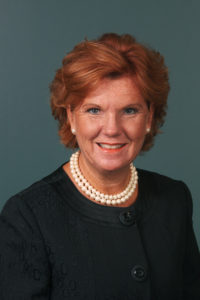
Donna Marino has been selected as the new president and CEO of Catholic Education Arizona, Arizona’s largest provider of scholarships to low-income families attending private schools.
Donna Marino has been selected as the new president and CEO of Catholic Education Arizona.
Alan Sears, board chairman of Catholic Education Arizona, announced the decision Dec. 19. Marino starts Jan. 2.
“I am pleased that Donna will be joining Catholic Education Arizona and I look forward to working alongside her,” Sears said.
Marino, who led the Catholic Community Foundation from 2007 to 2013, most recently served as Chief Administrative Officer for Childhelp, a national child welfare/behavioral health organization dedicated to the prevention, intervention and treatment of child abuse. A lifelong Catholic, Marino comes with a strong background in philanthropic leadership.
“I am honored and privileged to join Catholic Education Arizona at this point in its history. Their success is providing much-needed financial support to students in our Catholic schools is well known,” Marino said. “Working with our pastors, principals, our distinguished board of directors and our dedicated staff, it is my hope that we can increase the money available so that all families seeking a Catholic school education for their children are funded.”
Since its inception in 1998, individual and corporate contributions to Catholic Education Arizona have helped increase scholarship funding for Catholic schools, beginning with students from families with the greatest financial need. In 2014, a record $17.4 million in contributions were made to assist nearly 50 percent of Catholic school students.
MaryBeth Mueller, superintendent of Catholic Schools, emphasized the key role played by Catholic Education Arizona.
Arizona’s largest provider of scholarships to low-income families attending private schools.
Info: (602) 218-6542
[/quote_box_right]
“Catholic Education Arizona is vital for the formation of students who will be disciples in this world, loving God and neighbor,” Mueller said. “Donna will be instrumental in the continued development of this important organization.”
Some 14,000 students attend Catholic schools in the Diocese of Phoenix. Many are from families who cannot afford to pay the full cost of tuition. That’s where Catholic Education Arizona steps in to help fill the gap between what families can pay and what the schools need to educate students. Since Catholic Education Arizona began, over $126 million in tuition support has been awarded through over 87,000 scholarships to lower-income families with qualified financial need.
“Donna’s proven leadership within the Catholic community is a great gift to the work of Catholic Education Arizona,” said Auxiliary Bishop Eduardo A. Nevares, board member of the tuition organization. “I pray for her continued success in our efforts to provide our students an education rooted in faith, for the sake of these precious souls of God.”
Marino, who as president and CEO of the Catholic Community Foundation led the philanthropic efforts for what is the ninth largest Catholic foundation in the United States, will now lead an organization that serves 39 Catholic schools.
“I am grateful to Bishop Olmsted and Bishop Nevares and look forward to returning to service for the Diocese of Phoenix,” Marino said.
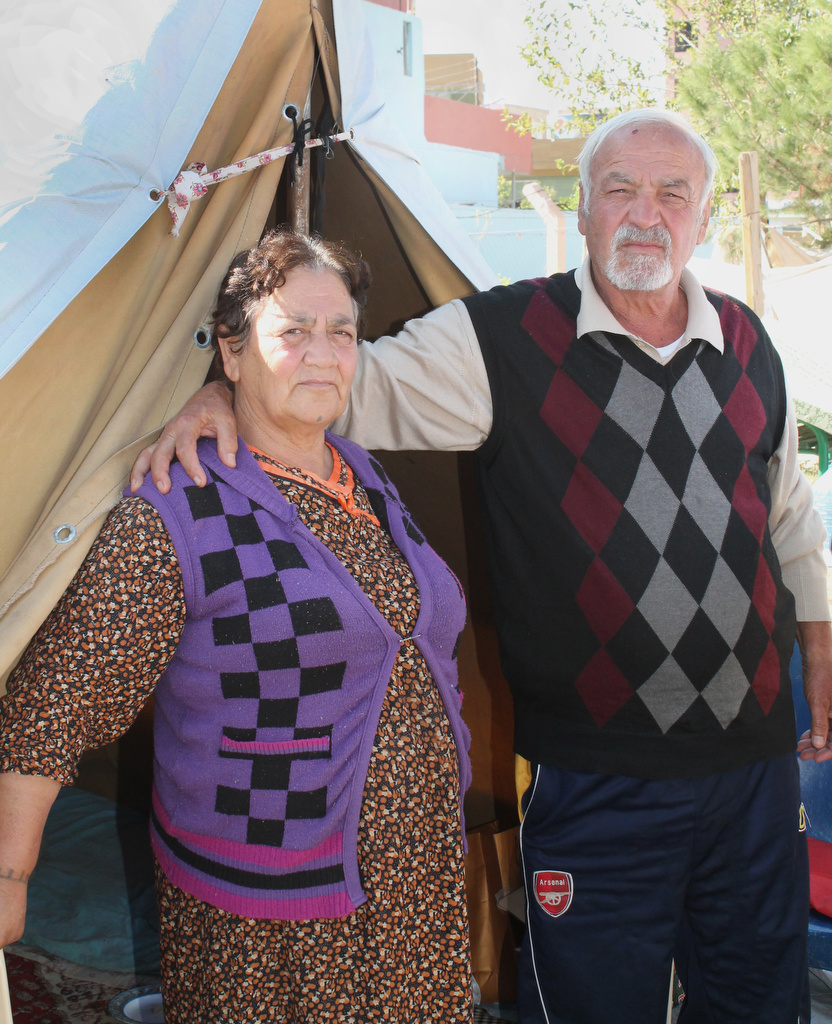
Catholics who fled Islamic State militant attacks on their home in Iraq in August, Abu and Um Sabah, pose outside their tent Oct. 26 in a park in Ainkawa, Iraq. One of their sons, Saleh, has traveled to Jordan with his family in the hope of moving elsewhere in the West far from Iraq's continuing violence. (CNS photo/Dale Gavlak)
Catholics who fled Islamic State militant attacks on their home in Iraq in August, Abu and Um Sabah, pose outside their tent Oct. 26 in a park in Ainkawa, Iraq. One of their sons, Saleh, has traveled to Jordan with his family in the hope of moving elsewhere in the West far from Iraq’s continuing violence. (CNS photo/Dale Gavlak)
BEIRUT (CNS) — Christ is being “reborn again in the lowly stable” this Christmas because of the remarkable faith of Iraqi Christians who were driven out of their homes, said Australian bishops who visited refugees in Lebanon and the displaced in Irbil, Iraq.
The Dec. 15-19 mission of the seven bishops was aimed at offering spiritual support, humanitarian aid and hope to Christians exiled from their homes in Mosul and the Ninevah Plain after they refused to convert to Islam.
Some 120,000 Christians were displaced in the incursions last summer by Islamic State militants. Nuns and clergy, including bishops, are among the displaced in Irbil, the capital of the Kurdistan region of Iraq.
During the Dec. 17-19 visit to Iraq, the bishops met families still camped in tents on church grounds, in half-finished buildings or in pre-fabricated huts in Irbil as well as in some surrounding villages.
“So many of the people we met said, ‘We lost our homes, our lands, our jobs, all our possessions — everything — but we will not lose our faith,” Archbishop Julian Porteous of Hobart told Catholic News Service in Beirut Dec. 19. “You can feel the faith.”
An elderly woman told the bishops that when she was threatened by the Islamic militants and ordered to convert to Islam, she defiantly responded: “I am a Christian. I will not convert. You can kill me if you want.”
“We saw extraordinary courage and depth of commitment to the Christian faith,” Archbishop Porteous said. “It is quite remarkable.”
So many people in Irbil are very desperate to leave, fearing that the Islamic State will make further incursions into Iraq, Archbishop Porteous said. Every week, about 100 people leave Irbil, going mostly to Jordan, Turkey and Lebanon, typically with the ultimate desire to be resettled in a Western country.
The Australian visit followed the designation of Dec. 7 as a day of solidarity and prayer for persecuted Christians in the Middle East by the Australian Catholic Bishops’ Conference and the Conference of Bishops and Representatives of the Middle Eastern Apostolic Churches in Australia and New Zealand. The delegation said a special collection that day will help 1,000 families each month until Easter 2015.
The funding “is just a drop in the ocean, but still it is a drop nonetheless,” said Archbishop Christopher Prowse of Canberra.
The displaced are now coping with a difficult situation because it is very cold, the bishops said. Temperatures will soon be dropping below freezing.
[quote_center]“I am a Christian. I will not convert. You can kill me if you want.”[/quote_center]
Despite their suffering, the joy of Christmas was evident, deepened by a faith ignited by the persecution. One of the displaced bishops blessed a beautiful manger, and hundreds of people who attended the ceremony clapped and cheered. A children’s choir, organized by a priest, was rehearsing carols, including “Joy to the World” and “Silent Night” for a Christmas concert.
“We were touched by the gospel of faith in these plains amid outright persecution,” Archbishop Prowse said.
Reflecting on “the horrific stories” the people shared with the bishops, he said the atrocities need to be “condemned outright” and told throughout the world.
“We will tell their story of Christ being crucified again and being reborn again in the lowly stable,” he said.
In addition to Archbishops Porteous and Prowse, the delegation included bishops of various rites from Sydney; most of their jurisdictions include much of Australia and sometimes New Zealand: Melkite Bishop Robert Rabbat; Chaldean Bishop Djibrail Kassab; Maronite Bishop Antoine Tarabay; Coptic Orthodox Bishop Daniel; and Archbishop Danil Bolis of the Ancient Church of the East.
About 10 percent of Christians in Australia are from the Eastern churches.
In Lebanon, Dec. 15-17, the delegation met with Church leaders, including patriarchs of the Maronite, Syriac and Melkite Catholic Churches, who told the bishops that the Western world has largely ignored the plight of Middle East Christians.
Maronite Archbishop Paul Matar of Beirut, who hosted delegation members when they returned to Lebanon Dec. 19 before their departure to Australia hours later, called for more such Church delegations from other parts of the world to also raise funds and visit the displaced.
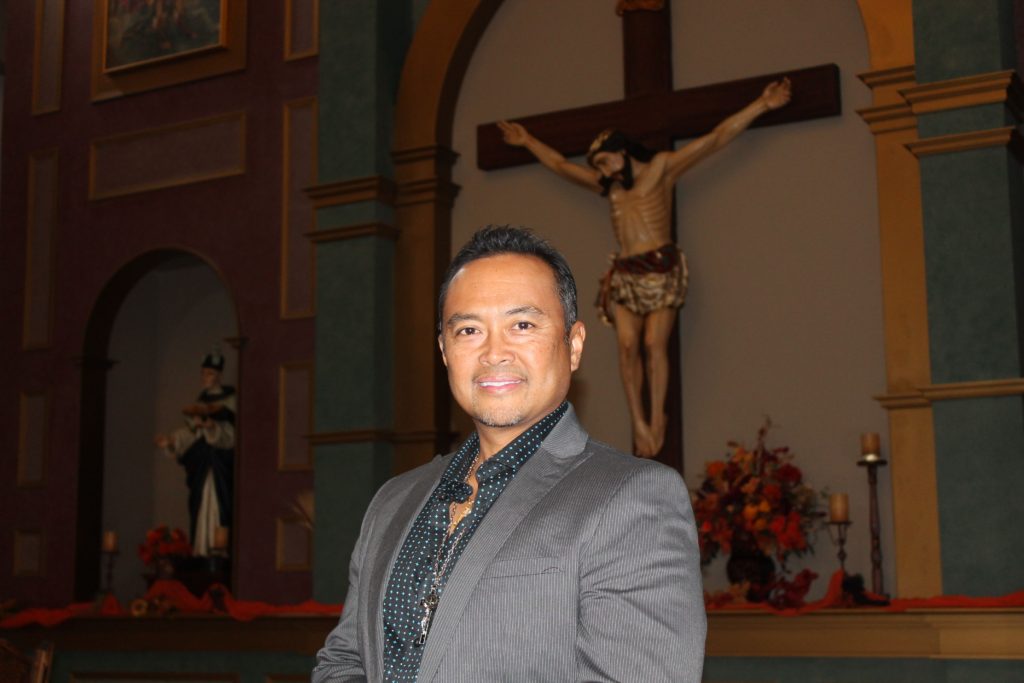
[dropcap type=”4″]S[/dropcap]ix years ago, Bernie Capulong thought he had it all. A stunningly successful businessman who owned five homes, he traveled the world, drove a Porsche and counted Donatello Versace and the Nordstrom heirs among his dining companions. Then came the crash of 2008. It was after he lost his job and almost everything else that God showed him life isn’t about money.[quote_box_right]
Apostolates: healing and deliverance ministry; music leader; core team for charismatic prayer group; Extraordinary Minister; Catholic Renewal Ministries
Hometown: San Fernando, Philippines
[/quote_box_right]
“God actually took everything I thought was important, which was money, and brought me down to humility,” Capulong said.
Prior to 2008, he admits he was a nominal Catholic. When his family managed to show up at church, they were generally late.
“During the homily, I’d always whisper to my wife, ‘What are we eating for lunch?’ After we got Communion, we’d rush out and high-five each other because we beat the traffic. It was horrible,” Capulong said of his barely lukewarm days.
And then he was out of work for 18 months. After getting the kids off to school — his wife had to return to work after a 10-year hiatus — he was plagued by self-doubt.
“That’s when you feel the attacks of the enemy. That’s when he’s telling you how worthless you are,” Capulong said. He began sitting in church, talking to God.
“I said, ‘Lord, I am so embarrassed to come to You because when things were good, I never acknowledged You,’” Capulong said as he wiped away tears. “‘And now, I come to You at my worst time.’ I said ‘when — not if, but when — You get me out of this mess, I’ll never forget You and I’ll proclaim Your name.’”
And that’s exactly what Capulong has been doing ever since. He rediscovered his faith through the charismatic prayer group at St. Thomas Aquinas Parish. God, he says, continually brings him men who are facing the same challenges he once encountered.
He spoke of a neighbor who’d lost his job and home and was renting the house across the street from him. Capulong, a daily Mass, daily rosary guy, would see the man picking up his newspaper at the curb each day as he backed out of the driveway to go to church.
“Every day I would pull up beside him, roll down my window and say, ‘You know where I’m going — you can come with me.’ And every day he’d say, ‘No, I don’t do that. My wife does that.’”
After about a year, the man’s wife was ready to leave him. Capulong asked if he could speak with him first. After he and a friend shared what God had done in their lives, the man broke down in tears and agreed to be prayed over. Today, he’s an active member of the prayer group at St. Thomas Aquinas.
Before he rediscovered his faith, Capulong said he and his wife were on the verge of divorce and that they argued a lot about money. A renewed faith in God and practicing Natural Family Planning has brought them closer and healed their marriage. Capulong’s passion for telling others about Christ continues to grow. Men who have fallen from the heights of material success and are now down on their luck seem to keep finding him.
“They are lost — they don’t know what to do,” Capulong said. “God teaches me to guide them to Christ. It’s not me. It’s the Holy Spirit — He just brings them to me.”
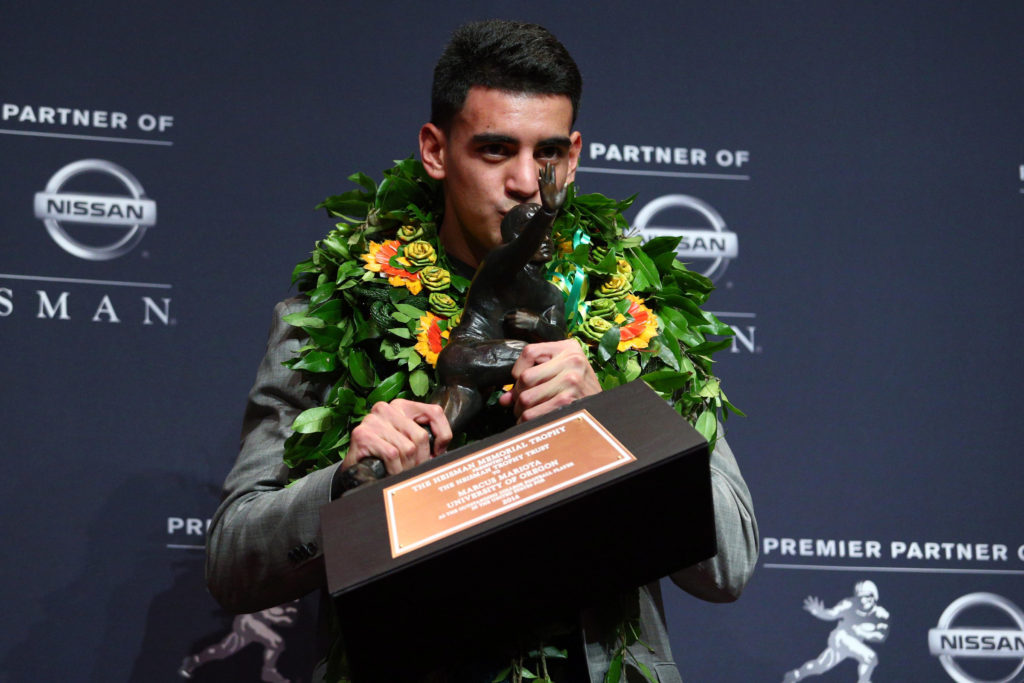
Oregon Ducks quarterback Marcus Mariota answers questions during a Dec. 13 news conference at the New York Marriott Marquis after winning the Heisman Trophy. Mariota is not Catholic but he regularly attends team Masses and graduated from an all-boys Catholic high school in Honolulu. (CNS photo/Brad Penner, USA Today Sports via Reuters)
Oregon Ducks quarterback Marcus Mariota kisses the Heisman Trophy during a Dec. 13 news conference at the New York Marriott Marquis after he was named the recipient of the trophy. Mariota is not Catholic but he regularly attends team Masses and graduated from an all-boys Catholic high school in Honolulu. (CNS photo/Brad Penner, USA Today Sports via Reuters)
PORTLAND, Ore. (CNS) — The winner of college football’s 2014 Heisman Trophy attended the same all-boys Catholic high school as St. Damien of Molokai.
Marcus Mariota, the University of Oregon’s dual threat quarterback, is a 2011 graduate of historic St. Louis High in Honolulu. Though he and his family are not Catholic, Mariota attended Mass at St. Louis and also is a regular at the Ducks’ weekly team Masses and shows up at campus ministry liturgies on occasion.
“He is a great kid,” said Dominican Father Peter Do, pastor at St. Thomas More Newman Center in Eugene. “He is very humble.”
“When things start to get rough, you find comfort in your faith,” he said. “Knowing that no matter what, you can dust yourself off and be OK. And you know you do it for (God’s) glory. You do it for your teammates, your family, but also for his glory and to represent his name.”
Mariota told the publication that his faith is “the steadying force that’s pushed me, along with my family, my friends and my teammates.”
He spoke of a responsibility to represent God and his family “in the right light.” You do that through God’s power he said, but also by maintaining fellowship with other believers who become your family away from home.”
In a state without a professional sports team, Mariota has become a universal hero in Hawaii, not just because of his play, but because of the way he lives his life.
Mariota is of Samoan and German descent. At St. Louis School, founded in 1846, he was a star in both track and football. But he also was known as a good person. A school photographer once caught him helping a younger student learn how to tie a necktie.
“What an outstanding young man,” said Alvin Katahara, chief marketing officer for St. Louis School, which has 600 students in grades 6 through 12. “We are just so proud of him. Everyone knows about his outstanding achievements in football. On top of that, he is just such a wonderful role model for the kids here and all the kids in the state.”
A crowd in the St. Louis gym watched the Heisman award announcement Dec. 13 on a big screen. When their local boy was called forward during the event at the New York Marriott Marquis, the group went berserk.
The day after winning, Mariota showed his true colors in New York, visiting with sick children and laying a wreath at the 9/11 memorial.
One story circulates around the Ducks’ team. A teammate once had car trouble a few hours south of Eugene. Mariota drove the whole distance, helped get the vehicle going and then refused payment for gas.
— By Ed Langlois, Catholic News Service. Langlois is a staff writer at the Catholic Sentinel, newspaper of the Archdiocese of Portland.
The Christmas tree and Nativity scene decorate St. Peter's Square at the Vatican after a lighting ceremony Dec. 19. New LED lighting was also unveiled on the facade and dome of the basilica during the ceremony. (CNS photo/Paul Haring)
VATICAN CITY (CNS) — God did not come to the world with arrogance to impose his might; he offered his powerful love through a fragile child, Pope Francis said.
The Christmas tree and Nativity scene decorate St. Peter’s Square at the Vatican after a lighting ceremony Dec. 19. New LED lighting was also unveiled on the facade and dome of the basilica during the ceremony. (CNS photo/Paul Haring)
The Christmas tree and Nativity scene are reminders of this mystery of the Incarnation and they both carry “a message of light, hope and love,” he said Dec. 19, meeting the people who donated the centerpieces of the Vatican Christmas decorations.
The Italian city of Verona donated the Nativity scene, and the southern Italian city of Catanzaro donated the 82-foot white spruce tree, which both adorn St. Peter’s Square. The tree was lit and the scene officially unveiled during an early evening ceremony in the square Dec. 19.
Earlier in the day, the pope thanked the delegates for their generosity and highlighted the importance of the Christmas creche and tree for Christians, as they are a sign of how “God made man to save us and the light that Jesus brought to the world with his birth.”
But the Nativity scene and Christmas tree touch the hearts of everyone, “even those who do not believe because they speak of fraternity, intimacy and friendship, calling all people of our time to rediscover the beauty of simplicity, sharing and solidarity,” he said.
“They are an invitation to unity, harmony and peace; an invitation to make room — in our personal and social life — for God, who did not come with arrogance to impose his might, but offers us his omnipotent love through the fragile person of a child,” he said.
“Let us follow him, the true light, in order to not lose our way and to reflect, in turn, light and warmth upon those who are going through difficult and dark times,” he said.
A choir from Serrastretta near Catanzaro and the band of the Vatican gendarme corps were to provide traditional Christmas music, both sacred and popular, during the lighting ceremony.
After the Christmas lighting, Vatican officials were scheduled to flip the switch for the new 315-bulb LED lighting on the facade and dome of St. Peter’s Basilica. The Vatican said the new bulbs should save about 70 percent on the basilica’s lighting bill. A similar system, also set for its first illumination Dec. 19, was installed at Rome’s Basilica of St. Mary Major.