When a woman becomes a mother her world changes forever.
Yet, within the walls of homes and hospitals, countless women experience a devastating end to their pregnancy long before their child is born. Statistics suggest that nearly 46-percent of women will suffer miscarriage or stillbirth at some point in their childbearing years.
For Catholic women in particular, miscarriage can compound the grief experienced and even test their faith, suggests Jocelyn Abyad, founder of We Carry You Still, a nonprofit outreach program that serves women and men coping with child loss, both during pregnancy and for babies that are born alive, but pass soon after.
In 2020 and 2021, Abyad lost three babies to miscarriage, two during the first trimester and one at 15 weeks.
“It turned my world upside down,” said Abyad. “I was in a dark place. I didn’t question if God existed, but I did question if He was good.”
Abyad felt alone and uncertain about how to navigate not just the practicalities of pregnancy loss but the emotional and spiritual suffering.
“My losses changed my whole worldview of birth and babies, and who I was as a woman,” Abyad continued. “On top of that, it brought to light the lack of resources available to women who experience this loss, especially as it pertains to Church teaching.”
Questions about caskets and burials can be daunting, and because decisions must often be made quickly, many women struggle to cope with logistics, as well as the hormonal, emotional and psychological effects that can unfold.
“This is one of the main reasons to talk about it,” said Abyad. “At a practical level, miscarriage can be an experience of trauma, and it can simultaneously be redemptive suffering. When we properly prepare a woman for what is to come, we empower her.”
Abyad found guidance and healing through a Protestant ministry during her losses. However, she longed for spiritual support that included Catholic principles, such as the sacramental foundations of the faith and the Church’s understanding of the communion of saints. When she found none, she was inspired to start a ministry of her own.
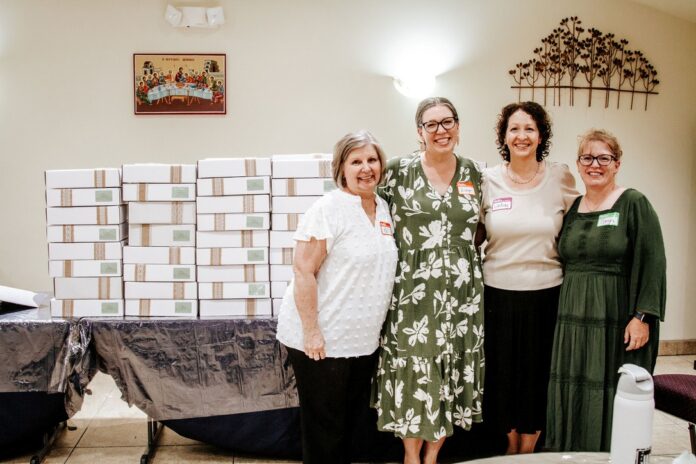
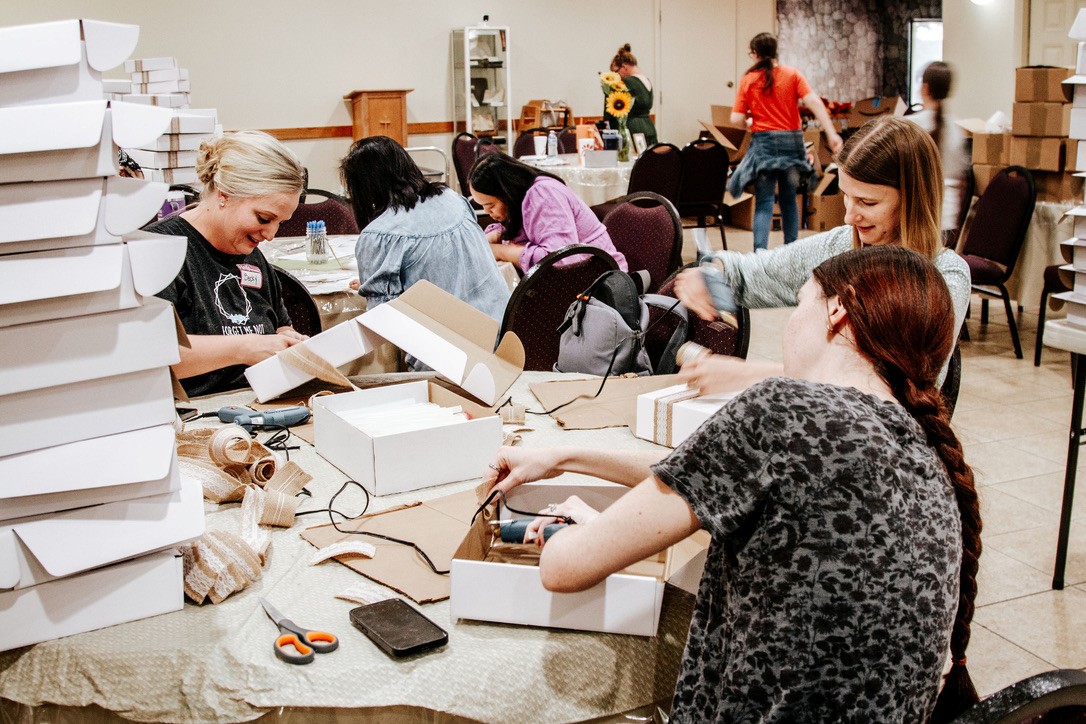
 In 2024, Abyad founded We Carry You Still. Central to the organization’s mission is its annual healing retreat. This year’s retreat is on Nov. 15 at St. John of the Desert Melkite Catholic Church in Phoenix, and registration is currently open. In addition, the ministry delivers free memory boxes, which are packed by volunteers twice a year. They include informational materials, spiritual reflections and keepsakes. The ministry website also provides information on early miscarriage at home, late miscarriage and stillbirth, burial options and resources for emotional support.
 Stephanie Luke, a volunteer with We Carry You Still, believes that during such a time of suffering, the program’s outreach meets a very basic human need: accompaniment.
“I was invited by Jocelyn to a box-packing event,” said Luke. “I wasn’t really connected to the charity before that, but after I had converted to Catholicism, I was drawn to it as a way of honoring my first baby I lost early in pregnancy.”
Luke was encouraged to name her miscarried baby, which she says aided her healing.
“I lost Jess early on before many would consider it significant … But a Catholic friend affirmed that the baby existed and was a real person. I felt guilty that I hadn’t given him or her a name. What I was carrying was guilt for having moved on so fast.”
Luke’s connection to Abyad’s ministry took on a deeper significance earlier this year when her fifth baby, Rosemary, was diagnosed with a condition called Turner syndrome while in utero, which caused grave complications with her heart and other organs. While the chromosomal abnormality is serious, some babies survive until birth and beyond. The family fervently prayed for that outcome, but Rosemary passed away around 24 weeks.
“It was important that Rosemary’s remains be treated with dignity,” Luke said. “I didn’t want her being treated like medical waste. I created a birth plan with Jocelyn’s help. After she was delivered, I held her. We took pictures. It was comforting to know where those resources were when I needed them.”
 While her grief is still fresh, Luke credits Abyad and We Carry You Still for walking with her through this suffering.
“She just checks in on me. She prepared me. The memorial boxes gently remind us to put God at the center of grief. That’s really important. You can invite God into those wounds. It’s a process.”
Abyad agrees.
“We are going to meet our children again someday. That is something that the world can’t offer … A Catholic ministry in this space is so powerful because we have the promise of the resurrection.”
Abyad says the name of the ministry speaks for itself.
“We honor the fact that as mothers, we will always carry our babies we’ve lost, but the ministry is here to carry these mothers … to walk with someone who is grieving is very human. That’s what it’s all about.”