
Ecumenical group says HHS mandate will create ‘immense injustice’

Cheryl Roggensack, a member of Holy Family Catholic Church in Brentwood, Tenn., says the Pledge of Allegiance during the"Stand Up for Religious Freedom" rally on the steps of the Tennessee State Capitol in Nashville March 23. Behind her are members of th e Dominican Sister of St. Cecelia based in Nashville. About 500 people attended the event, which was one of 143 similar rallies held across the nation in response to the federal contraceptive mandate. (CNS photo/Rick Musacchio, Tennessee Register)

PITTSBURGH (CNS) — The Christian Associates of Southwest Pennsylvania, one of the largest regional ecumenical agencies in the United States, urged the Obama administration to broaden the religious exemption in the federal government’s mandate requiring that most health plans cover the cost of contraception, sterilization and some drugs that can induce abortion.

As it stands now, religious employers who are morally opposed to such coverage maybe be forced to shut down various ministries, including outreach to the poor, which would result in an “immense injustice” to those in need, the organization said in a statement.

It said the mandate violates the Constitution’s guarantee of religious freedom and also called “health care for all” a “moral imperative.”

The statement, released April 13 at a news conference at the organization’s headquarters in Pittsburgh, was signed by the leaders of several church bodies, including the Catholic Church.

“Our deep concern over this mandate does not arise from the varying convictions we have on the moral content of this mandate, but from our common commitment to the right of religious freedom that all people of faith expect to enjoy in this country,” the statement said.

“The Constitution of the United States guarantees every religious institution and its affiliated bodies the inalienable right to define its own identity and ministries and to practice its own beliefs, not just its freedom of worship,” it added.

The signatories included Bishops David A. Zubik and Lawrence E. Brandt, who head, respectively the Latin-rite dioceses of Pittsburgh and Greensburg and Father Eugene Yackanich, interim administrator of the Byzantine Archeparchy of Pittsburgh. (Archbishop William C. Skurla was to be enthroned as head of the archeparchy April 18.)

“Many religious institutions are now placed in the untenable position of (a) violating their consciences, (b) ceasing health insurance and paying ruinous fines, or (c) withdrawing entirely from providing the social services to the wider community that have long been a social justice hallmark of their ministry,” the statement said.

“Creating gaping holes in the public welfare safety net is in and of itself an immense injustice.”

The statement concluded by calling on the Obama administration to alter the contraceptive mandate by broadening “within it so that both the constitutional right to the free exercise of religion for all and the moral imperative of health care, likewise for all, in this country may not be impaired.”

Other signatories included Archbishop Robert Duncan of the Anglican Diocese of Pittsburgh and chair of the Christian Associates, and representatives of the Presbyterian Church, the Episcopal Diocese of Pittsburgh, the Disciples of Christ, the African Methodist Episcopal Church, the Evangelical Lutheran Church, the United Church of Christ, the Baptist Church and the Orthodox Church in America.

Founded in 1970, the Christian Associates organization includes 26 church bodies (Catholic, Anglican, Orthodox and Protestant) representing 2,000 local congregations and 1 million Christians in southwestern Pennsylvania.

‘Sun’ headlines 25 years ago: April

To contact diocesan archives for copies of old articles or photos: (602) 354-2475 or online: https://www.diocesephoenix.org/archives.php

Here is what made headlines in The Catholic Sun in 1987:

  • Ukrainian tradition of egg art began in pre-Christian times
    A local Catholic shared the tradition of adding artistic designs, not just color to the egg shell. Wheat was an important agricultural staple and a symbol of fertility. It also represents the bread of live. An article from Canadian Catholic News further discusses the symbolism and legends.
    A Wisconsin parish recently held a workshop on the art. Browse some Ukrainian designs.


  • St. Luke’s comes inside for Easter
    An article reported that St. Luke Parish (7th Avenue south of Loop 101) was scheduled to hold its first Easter Mass in its own worship space. Previous Easter liturgies were in a vacant field. Parishioners had met in a public school for two years for regular Sunday Masses with daily services held in a garage.


  • Dining room needs food for 2,000 Easter meals
    St. Vincent de Paul was averaging 800-1,000 meals daily back then and projected double that for Easter Sunday. André Hous, which also serves the homeless nearby, recently reported that meal service is up from 555 meals per night in 2011 to 600 in 2012.


  • Encyclical dedicated to the Blessed Virgin
    Released on feast of the Annunciation in preparation for special Marian Year that began the following June. Full text.


  • Family unites in Flagstaff church
    It’s a detailed history, but to say the Church of the Nativity in Flagstaff was the family’s home parish was an understatement. The parents were married there (after the soon-to-be husband’s conversion). The priest who built the church instructed him. It was also the site of baptism/confirmation for each of their nine children and, in 1967, the site of a Franciscan priest ordination for the eldest son. Twenty years later, he returned to offer Mass with his dad, who served for the first time as a permanent deacon. The wife/mom was a eucharistic minister.


  • Plus Papal preparation headlines for his September visit:
    • Bishop pleased with trip to Rome (the meeting briefed the pope for his U.S. visit)
    • Basilica painting project begins (part of a $300,000 exterior renovation)
    • Indians to be briefed on pope visit
    • Papal Mass chorale expanded to include 500 (up from 150)

Practical Points for Singing the Mass

Singing the Mass — Part Four

In the first three parts of this series we have explored the meaning of sacred music, the Church’s role in preserving and fostering it, and its role in evangelizing culture. Now, in this fourth and final part of the series, we discuss practical ways to deepen our use of sacred music for greater participation by all the faithful.

EN ESPAÑOL: Puntos prácticos para cantar la Misa


What to sing at Mass

The Most Rev. Thomas J. Olmsted is the bishop of the Diocese of Phoenix. He was installed as the fourth bishop of Phoenix on Dec. 20, 2003, and is the spiritual leader of the diocese’s 1.1 million Catholics.

The General Instruction of the Roman Missal (GIRM) describes the importance of singing in the sacred liturgy and offers practical considerations. In article 40 we learn that “in the choosing of the parts [of the Mass] actually to be sung, preference is to be given to those that are of greater importance and especially to those which are to be sung by the Priest or the Deacon or a reader, with the people replying, or by the Priest and people together.”

But how are we to know what parts of the liturgy are of greater or lesser importance? Musicam Sacram, cited in the GIRM, provides a useful instruction on just this question, dividing into three degrees the parts to be sung in the Mass to help “the faithful toward an ever greater participation in the singing” (cf. MS 28-31).

The first degree consists essentially of the Order of the Mass (the chants sung in dialogue between the priest or the deacon and the people). The second degree consists essentially of the Ordinary of the Mass (Kyrie, Gloria, Credo, Sanctus, and Agnus Dei). The third degree consists essentially of the Proper of the Mass (the chants sung at the Entrance, Offertory and Communion processions, and the Responsorial Psalm and Alleluia with its verse before the Gospel).

The Order of the Mass

The Order of the Mass is the fundamental and primary song of the liturgy. It forms the part of the Mass that is of the greatest importance, and therefore it should be sung ideally before any of the other parts of the Mass are sung. When the Order of the Mass is sung, the liturgy becomes most true to itself, and all else in the liturgy becomes more properly ordered. The Order of the Mass is set to be sung in our new English edition of the Roman Missal. I strongly urge all priests and deacons to learn these chants and to encourage and inspire the faithful to join in their singing with love and devotion.

The Ordinary of the Mass

The Ordinary of the Mass, comprising the chants of the second degree, is also of its nature meant to be sung. The Ordinary of the Mass consists of two penitential litanies, two hymns of praise, and the Church’s great profession of faith, which are fixed within the Order of the Mass and, depending on the demands of the liturgy or season, form a part of the unchanging structure of the Mass.

While the Kyrie, Gloria, Credo (Creed), Sanctus and Agnus Dei may be sung to a variety of musical settings, the Church’s great sacred music tradition has handed down to us an inestimable treasure of chants for the Mass Ordinary. The recent English edition of the Roman Missal itself has given us a “standard” musical setting of the Ordinary in the form of simple English and Latin chants, including musical settings of the Creed. While the Ordinary of the Mass may be sung in the vernacular, the Second Vatican Council mandated that “steps should be taken so that the faithful may also be able to say or to sing together in Latin those parts of the Ordinary of the Mass which pertain to them” (Sacrosanctum Concilium 54).

The Proper of the Mass

The Proper of the Mass, comprising the chants of the third degree, form an integral, yet often overlooked part of the sung liturgy. The Proper of the Mass consists of three processional chants and two chants between the Lectionary readings. These parts of the Mass, contained in the Roman Missal and Graduale Romanum, are unlike the Order of the Mass and the Ordinary of the Mass in that they are not fixed and unchanging from day to day, but change according to the liturgical calendar, and therefore are “proper” to particular liturgical celebrations.

Here we find the Entrance Antiphon, Responsorial Psalm (or Gradual), the Alleluia and its Verse, the Offertory Antiphon, and the Communion Antiphon. While the Proper of the Mass is subordinated in degree of importance to the Order of the Mass and the Ordinary of the Mass, the texts of the Mass Proper form perhaps one of the most immense and deeply rich treasure troves in the sacred music tradition. Because these texts change from day to day, they were historically sung by the schola cantorum, and, because of their demands, are sometimes replaced today by other seasonal or suitable options.

The texts of the Proper of the Mass, especially the Entrance, Offertory and Communion chants, are comprised of scriptural antiphons and verses from a psalm or canticle. This is the form of the texts given in the Roman Missal, the Graduale Romanum, and the Graduale Simplex, the Church’s primary sources for the Proper of the Mass. The GIRM also allows for the possibility of singing chants from “another collection of Psalms and antiphons, approved by the Conference of Bishops or the Diocesan Bishop” during the three Mass processions, and, lastly, allows for the singing of “another liturgical chant that is suited to the sacred action, the day, or the time of year, similarly approved by the Conference of Bishops or the Diocesan Bishop” (Cf. GIRM 48, 87).

The texts of the Proper of the Mass, while of lesser importance than the texts of the Order of the Mass and the Ordinary of the Mass, form a substantial and constitutive element of the liturgy, and I encourage a recovery of their use today. We are blessed to have in our day a kind of reawakening to their value. In addition, many new resources are becoming available that make their singing achievable in parish life. I strongly encourage parishes to take up the task of singing the antiphons and psalmody contained within the liturgical books, and to rediscover the immense spiritual riches contained within the Proper of the Mass.

I offer my heartfelt thanks to all pastors, priests, deacons, religious, and lay faithful who enthusiastically study, encourage, and seek new ways to implement sacred music in the life of the Church. This is an ongoing task, an essential part of authentic liturgical renewal since the Second Vatican Council, and a sure means of drawing many souls to the beauty of Christ, who invites us into His unending song of love to the Father.

Puntos prácticos para cantar la Misa

Cantar la Misa — cuarta parte

En las tres primeras partes de esta serie hemos explorado el significado de la música sagrada, el papel de la Iglesia en preservar y fomentarla, y su papel en evangelizar la cultura. Ahora, en esta cuarta y última parte de la serie, hablamos de modos prácticos para profundizar nuestro uso de la música sagrada para una mayor participación de todos los fieles.

Que cantar en la Misa

El Reverendísimo Thomas J. Olmsted es le obispo de la Diócesis de Phoenix. Fue instalado como el cuatro obispo de Phoenix el 20 de diciembre de 2003, y es el líder espiritual de los 1,1 millones católicos en la diócesis.

La Instrucción General del Misal Romano describe la importancia del cantar en la sagrada liturgia y ofrece consideraciones prácticas. En el artículo 40 nos informa que “al determinar las partes que en efecto se van a cantar, prefiéranse aquellas que son más importantes, y en especial, aquellas en las cuales el pueblo responde al canto del sacerdote, del diácono o del lector, y aquellas en las que el sacerdote y el pueblo cantan al unísono”.

Pero ¿cómo vamos a saber qué partes de la liturgia de mayor o menor importancia? Musicam Sacram, citado en la GIRM, proporciona una instrucción útil a esta pregunta, dividiendo en tres grados las piezas para ser cantado en la Misa para ayudar a “los fieles hacia una participación cada vez mayor en el canto” (cf. MS 28-31).

La primera medida consiste esencialmente en el Orden de la Misa (los cantos cantado en el diálogo entre el sacerdote o el diácono y el pueblo). El segundo grado consiste esencialmente en el Ordinario de la Misa (Kyrie, Gloria, Credo, Sanctus y Agnus Dei). El tercer grado consiste esencialmente en el Propio de la Misa (los cantos cantado a la entrada, y las procesiones del Ofertorio y la Comunión, y el Salmo y Aleluya con su verso antes del Evangelio).

El Orden de la Misa

El orden de la Misa es la canción fundamental y principal de la liturgia. Forma parte de la Misa, que es de la mayor importancia, y por lo tanto debe ser cantado idealmente antes de cualquiera de las otras partes de la Misa se cantan. Cuando el orden de la Santa Misa es cantado, la liturgia se vuelve más fiel a sí misma, y todo lo demás en la liturgia se vuelve más bien ordenado. El orden de la Misa se estableció para ser cantado en nuestra nueva edición en inglés del Misal Romano. Ruego encarecidamente a todos los sacerdotes y diáconos para aprender estos cánticos y para alentar y ayudar a los fieles a participar en su canto con amor y devoción.

El Ordinario de la Misa

El Ordinario de la Misa, comprendiendo los cánticos del segundo grado, también es de su naturaleza destinado a ser cantado. El Ordinario de la Misa consiste de dos letanías penitenciales, dos himnos de la alabanza, y la gran profesión de la Iglesia de la fe, que son fijados dentro del Orden de la Misa y, según las demandas de la liturgia o temporada, forman una parte de la estructura incambiable de la Misa.

Aunque el Kyrie, la Gloria, el Credo, el Sanctus y el Agnus Dei pueden ser cantados a una variedad de ajustes musicales, la gran tradición de música sagrada de la Iglesia ha pasado a nosotros un tesoro inestimable de cánticos para la Misa Ordinaria. La edición reciente en inglés del Misal Romano sí mismo nos ha dado un ajuste musical “estándar” del Ordinario en la forma de cánticos en inglés y latín simples, incluso ajustes musicales del Credo. Aunque el Ordinario de la Misa puede ser cantado en la lengua vernácula, el Segundo Concilio Vaticano encomendó esto “anda debería ser tomado de modo que los fieles también puedan ser capaces de decir o cantar juntos en latín aquellas partes del Ordinario de la Misa que pertenecen a ellos” (Sacrosanctum Concilium 54).

El Propio de la Misa

El Propio de la Misa, que comprende los cantos del tercer grado, forma parte integral, pero sin embargo, una parte de la liturgia cantada menudo pasado por alto. El Propio de la Misa consiste de tres cánticos procesionales y dos cantos entre las lecturas del Leccionario. Estas partes de la Misa, que figuran en la edición del Misal Romano y Graduale Romanum, a diferencia del Orden de la Misa y el Ordinario de la Misa en que éstas no son fijadas e inmutables de un día para otro, pero que cambian según el calendario litúrgico, y por lo tanto son “propio” de celebraciones litúrgicas particulares.

Aquí encontramos la Antífona de Entrada, el Salmo Responsorial (o Gradual), el “Aleluya” y su verso, la Antífona del Ofertorio, y la Antífona de la Comunión. Aunque del Propio de la Misa es subordinado en el grado de importancia para el Orden de la Misa y el Ordinario de la Misa, los textos del Propio de la Misa forman quizás uno de los más grandes y profundamente ricos tesoros escondidos en la tradición de la música sagrada. Debido a que estos textos cambian de un día a día, fueron históricamente cantados por la schola cantorum, y, debido a sus demandas, se sustituyen a veces hoy por otra temporada o opciones adecuadas.

Los textos del Propio de la Misa, sobre todo los cánticos de la Entrada, el Ofertorio y la Comunión, consisten de antífonas bíblicas y versos de un salmo o cántico. Esta es la forma de los textos dados en el Misal romano, el Graduale Romanum, y el Graduale Simplex, las fuentes primarias de la Iglesia para el Propio de la Misa. El GIRM también tiene la posibilidad en cuenta de cantar cánticos de “otra colección de Salmos y antífonas, aprobadas por la Conferencia de Obispos o el Obispo Diocesano” durante las tres procesiones de Misa, y, finalmente, tiene el canto en cuenta de “otro cántico litúrgico que conviene a la acción sagrada, el día, o la época del año, de manera similar aprobada por la Conferencia de Obispos o el Obispo Diocesano” (Cf. Instrucción General 48, 87).

Los textos del Propio de la Misa, aunque son de menor importancia que los textos del Orden de la Misa y el Ordinario de la Misa, forman una sustancial y elemento constitutivo de la liturgia, y animo una recuperación de las que hoy se utilizan. Tenemos la bendición en nuestros días una especie de despertar a su valor. Además, muchos de los nuevos recursos disponibles que hacen que su canto realizable en la vida parroquial. Ruego encarecidamente a las parroquias a asumir la tarea de cantar las antífonas y a la salmodia contenidos dentro de los libros litúrgicos, y para volver a descubrir las inmensas riquezas espirituales contenidas dentro del Propio de la Misa.

Ofrezco mi más sincero agradecimiento a todos los párrocos, sacerdotes, diáconos, religiosos y laicos fieles que con entusiasmo estudian, fomentan y buscar nuevas formas de implementar la música sagrada en la vida de la Iglesia. Esta es una tarea constante, una parte esencial de la auténtica renovación litúrgica desde el Segundo Concilio Vaticano y un medio seguro de atraer a muchas almas a la belleza de Cristo, que nos invita en su interminable canción de amor al Padre.

El papel de la Música Sagrada en la Evangelización

Cantar la Misa — tercera parte

En la primera parte de esta serie sobre la música sagrada, describí el significado de la música sagrada, y la diferencia entre la música de la liturgia sagrada de la Iglesia y la “música religiosa”. En la segunda parte, se exploró desde una perspectiva histórica, el papel de la Iglesia de preservar y fomentar la música sagrada auténtica para una participación más fructífera en los Misterios Sagrados. En esta tercera parte, examinaremos el papel de la música sagrada al evangelizar la cultura.

Evangelización y Enculturación

El Reverendísimo Thomas J. Olmsted es le obispo de la Diócesis de Phoenix. Fue instalado como el cuatro obispo de Phoenix el 20 de diciembre de 2003, y es el líder espiritual de los 1,1 millones católicos en la diócesis.

La evangelización, la proclamación de la Buena Nueva de Jesucristo, está estrechamente vinculada a lo que la Iglesia llama enculturación. La enculturación es un proceso por el cual “la Iglesia encarna el Evangelio en las diversas culturas y al mismo tiempo, introduce a los pueblos conjuntamente con sus culturas a su propia comunidad”. Este proceso lleva a cabo “una íntima transformación de los auténticos valores culturales” (Redemtoris Missio, 52).

Vemos aquí un doble movimiento — la interacción de dos misterios profundos de fe: la Encarnación (caracterizada por un movimiento y proclamación hacia la tierra) y el Misterio Pascual (caracterizado por un movimiento y transformación hacia el cielo). Este doble movimiento es toda la obra de Cristo: Como el Verbo Eterno entra a nuestra historia, llega a ser carne en la Encarnación; y luego sufre, se muere y sube al Cielo, para atraer todas las personas a sí mismo.

Como Cristo y en Cristo, la Iglesia entra en una auténtica cultura humana dondequiera la encuentra. Proclama la Buena Nueva de Jesúcristo a una cultura específica; y luego, lo que es bueno en la cultura, purifica y transforma y lleva a su propia vida comunitaria en sus diversos “ritos” eclesiales (en nuestro caso, el rito romano).

La Música y La Enculturación

La distinción entre la música religiosa y la música litúrgica (véase la primera parte de esta serie) encarna este doble movimiento: la música religiosa es, podríamos decir, la expresión terrenal de fe de una cultura en Cristo; la música litúrgica es la expresión sacramental de Cristo y la verdadera naturaleza de la Iglesia. La primera tiende a ser algo particular, individual, temporal y profano; la segunda tiende a ser algo universal, comunal, eterno y sagrado. La música religiosa viene de corazones humanos que anhelan a Dios; la música litúrgica viene del corazón de Cristo, el corazón de la Iglesia, que anhela por nosotros.

Porque la música religiosa está marcada por lo particular y lo profano, es especialmente útil para la evangelización. Tal como el ejemplo de San Francisco Javier quien se puso las prendas de seda de la nobleza japonesa durante su trabajo misionero en Japón, la música religiosa “viste la ropa” de quienes pretende evangelizar; se convierte en familiar, adoptando gran parte de las formas culturales haciéndolo — siempre que sea posible — con una mínima alteración. En la música religiosa la Iglesia aprende a cantar en muchas voces, a través de las melodías familiares y de los ritmos de varias culturas.

Pero en la liturgia sagrada, entramos en el recinto no de la cultura del hombre sino de los tribunales celestiales de Cristo, la cultura de la Iglesia, la fiesta de bodas del Cordero: nuevas prendas festivas se requieren para esta fiesta (cf. Mt 22:1-14). En la música litúrgica, los pueblos envueltos en la liturgia sagrada aprenden a cantar, en una sola voz, a través de la melodía a menudo desconocida y el ritmo de la música sagrada de la Iglesia. Esta unidad es ejemplificada (para nosotros los Católicos de Rito Romano) principalmente en el Canto Gregoriano y la Polifonía, las “prendas” musicales de los textos de la sagrada liturgia.

El genio del Rito Romano

La nueva traducción al inglés de la Misa nos ha recordado fuertemente que la liturgia auténtica viene a nosotros a través de la unidad y la integridad del Rito Romano (Liturgiam Authenticam, 4). La liturgia del Rito Romano es un “ejemplo precioso y un instrumento de enculturación verdadero” debido a su capacidad asombrosa de “asimilar dentro de sí los textos hablados y cantados(ibíd, 5). La inculturación, en el sentido litúrgico (y musical), finalmente se trata de la asimilación de pueblos, culturas, y hasta de las formas musicales en la forma ya dada del Rito Romano.

Unos podrían preguntar: ¿No debería la mención de la palabra asimilación hacernos reflexionar, o hasta ponernos algo nerviosos? ¿Si nos sometemos a esta asimilación — con todas nuestras preferencias musicales, gustos, y diferencias culturales — a las fuentes musicales concretas de la liturgia de la Iglesia (es decir, el mismo Misal Romano, Graduale Romanum, Graduale Simplex, traducciones vernáculas y demás adaptaciones, etc.), no nos perderemos completamente a nosotros mismos, nuestra individualidad y creatividad? ¿No hay un peligro de que la Iglesia se convierta en algo impertinente y por lo tanto impotente en sus expresiones litúrgicas, un mero museo de “la vieja” música?

Para responder a estas preocupaciones, podríamos extender la enseñanza de la Iglesia acerca de la nueva traducción, al uso de la música litúrgica:

De modo que la liturgia de la Iglesia no debe ser ajena a ningún país, personas o individuos y al mismo tiempo debe trascender la particularidad de raza y nación. Debe ser capaz de expresarse a sí misma en cada cultura humana, y al mismo tiempo manteniendo su identidad a través de la fidelidad a la tradición la cual procede del Señor” (Liturgiam Authenticam, 4).

En otras palabras, la Iglesia, aunque presente en muchas culturas, tiene su propia cultura auténtica porque posee una liturgia auténtica… ambas provenientes de Cristo. La unidad y la integridad del Rito Romano se encuentra encarnado en el rito de los textos sagrados y las formas musicales, como una viña se expresa en sus ramas. El crecimiento requiere la poda y la nutrición, sin ignorar el haber empezado de la nada.

La sagrada liturgia — y la música sagrada — no agota toda la obra de la Iglesia, ni siquiera la labor de la Iglesia en su misión evangelizadora. La música religiosa (fuera de los límites de la liturgia) es absolutamente necesaria para la pre-evangelización y la evangelización. Pero esto no es suficiente. Debe llevar a una música litúrgica auténtica, unida a la música del Rito Romano. La música litúrgica del Rito Romano da testimonio sin par a la asimilación del poder de Cristo, y a su poder de envolver, purificar, transformar y unir la cultura humana junto a la cultura de la Iglesia.

Finalmente, es precisamente este poder de asimilar la belleza del cielo — y no de nuestros propios esfuerzos o preferencias — que trae consigo el verdadero fin de la evangelización: reconciliar todas las cosas de Dios en Cristo (Col 1:20).

En la cuarta y última parte de esta serie, consideraremos formas prácticas en las que podemos profundizar nuestra experiencia de la música sagrada en la liturgia y en nuestras vidas.

Sacred music’s role in evangelization

Singing the Mass — Part Three

In the first part of this series on sacred music, I described the meaning of sacred music, and the difference between the music of the Church’s sacred liturgy and “religious music” (Dec. 15, 2011). The second part explored, from a historical perspective, the Church’s role in preserving and fostering authentic sacred music for more fruitful participation in the Sacred Mysteries (Jan. 19). In this third part, we now look at the role of sacred music in evangelizing culture.

EN ESPAÑOL: El papel de la Música Sagrada en la Evangelización

Evangelization and inculturation

The Most Rev. Thomas J. Olmsted is the bishop of the Diocese of Phoenix. He was installed as the fourth bishop of Phoenix on Dec. 20, 2003, and is the spiritual leader of the diocese’s 1.1 million Catholics.

Evangelization, the proclamation of the good news of Jesus Christ, is closely linked to what the Church calls inculturation. Inculturation is the process by which “the Church makes the Gospel incarnate in different cultures and at the same time introduces peoples, together with their cultures, into her own community.” This process brings about “an intimate transformation of the authentic cultural values” (Redemptoris Missio, 52).

We see here a double movement — the interplay of two profound mysteries of faith: the Incarnation (characterized by an earth-ward movement and proclamation) and the Paschal Mystery (characterized by a heaven-ward movement and transformation). This double movement is all the work of Christ: As the Eternal Word He enters our history, becoming flesh in the Incarnation; and then He suffers, dies, rises, and ascends into Heaven, to draw all people to Himself.

Like Christ and in Him, the Church engages authentic human culture wherever she finds it. She proclaims the good news of Jesus Christ to a specific culture; and then whatever is good in the culture she purifies and transforms, drawing it into her own communal life in her various ecclesial “rites” (in our case, the Roman Rite).

Music and inculturation

The distinction between religious music and liturgical music (cf. part one of this series) embodies this double movement: religious music is, we might say, the earthly expression of a given culture’s faith in Christ; liturgical music is the sacramental expression of Christ and the true nature of the Church. The former tends to be particular, individual, temporal and profane; the latter tends to be universal, communal, eternal and sacred. Religious music comes from human hearts yearning for God; liturgical music comes from Christ’s heart, the heart of the Church, longing for us.

Because religious music is marked by the particular and profane, it is especially useful for evangelization. Like St. Francis Xavier donning the silk garments of Japanese nobility in his missionary work in Japan, religious music “wears the clothes” of those it seeks to evangelize; it becomes familiar, taking in much of the cultural forms, and where possible doing this with minimal alteration. In religious music, the Church learns to sing, in many voices, through the familiar melodies and rhythms of various cultures.

But in the sacred liturgy, we enter the precincts not of man’s culture but the heavenly courts of Christ, the culture of the Church, the wedding feast of the Lamb: and new festive garments are required for this feast (cf. Mt 22:1-14). In liturgical music, the peoples drawn into the sacred liturgy learn to sing, in one voice, through the often unfamiliar melody and rhythm of the Church’s sacred music. This oneness is exemplified (for us Roman Rite Catholics) primarily in Gregorian Chant and Polyphony, the musical “garments” of the texts of the sacred liturgy.

The genius of the Roman Rite

The new English translation of the Mass has powerfully reminded us that authentic liturgy comes to us through the unity and integrity of the Roman Rite (Liturgiam Authenticam, 4). The liturgy of the Roman Rite is a “precious example and an instrument of true inculturation” because of its amazing ability of “assimilating into itself spoken and sung texts” (Ibid, 5). Inculturation, in the liturgical (and musical) sense, is finally about the assimilation of peoples, cultures, and even musical forms into the already given form of the Roman Rite.

Some might ask: should not the mention of the word assimilation give us pause, or even make us somewhat nervous? If we submit ourselves to this assimilation — with all our musical preferences, tastes, and cultural differences — to the concrete musical sources of the Church’s liturgy (i.e., the Roman Missal itself, Graduale Romanum, Graduale Simplex, vernacular translations and adaptations thereof, etc.), will we not entirely lose ourselves, our individuality and creativity? Is there not a danger of the Church becoming irrelevant and therefore powerless in her liturgical expressions, a mere museum of “old” music?

To answer these concerns, we could extend the Church’s teaching on the new translation to the use of liturgical music:

So the liturgy of the Church must not be foreign to any country, people or individual, and at the same time it should transcend the particularity of race and nation. It must be capable of expressing itself in every human culture, all the while maintaining its identity through fidelity to the tradition which comes to it from the Lord” (Liturgiam Authenticam, 4).

In other words, the Church, though existing in many cultures, has her own authentic culture because she has authentic liturgy … both which come to her from Christ. The unity and integrity of the Roman Rite is embodied in the Rite’s sacred texts and musical forms, as a vine is expressed in its branches. Growth requires pruning and nourishing, but never ignoring or starting from scratch.

The sacred liturgy — and sacred music — does not exhaust the entire work of the Church, not even of the Church’s work of evangelization. Religious music (outside the sphere of the liturgy) is absolutely necessary for pre-evangelization and evangelization. But it is not enough. It must lead to authentic liturgical music, concretely embodied in the music of the Roman Rite. The liturgical music of the Roman Rite bears unparalleled witness to the assimilating power of Christ, and His power to engage, purify, transform, and assimilate human culture into the culture of the Church.

In the end, it is precisely this assimilating power of heaven’s beauty — and not our own efforts or preferences — that brings about the true end of evangelization: to reconcile all things to God in Christ (Col 1:20).

In the fourth and final part in this series, we will consider practical ways in which we can deepen our experience of sacred music in the liturgy and in our lives.

Obama’s revised HHS mandate won’t solve problems, USCCB president says

ROME (CNS) — Cardinal-designate Timothy M. Dolan of New York said Feb. 13 that President Barack Obama’s revision to the contraceptive mandate in the health reform law did nothing to change the U.S. bishops’ opposition to what they regard as an unconstitutional infringement on religious liberty.

“We bishops are pastors, we’re not politicians, and you can’t compromise on principle,” said Cardinal-designate Dolan, president of the U.S. Conference of Catholic Bishops. “And the goal posts haven’t moved and I don’t think there’s a 50-yard line compromise here,” he added.

“We’re in the business of reconciliation, so it’s not that we hold fast, that we’re stubborn ideologues, no. But we don’t see much sign of any compromise,” he said.

“What (Obama) offered was next to nothing. There’s no change, for instance, in these terribly restrictive mandates and this grossly restrictive definition of what constitutes a religious entity,” he said. “The principle wasn’t touched at all.”

Announced Feb. 10, Obama’s revision of the Department of Health and Human Services’ contraceptive mandate left intact the restrictive definition of a religious entity and would shift the costs of contraceptives from the policyholders to the insurers, thus failing to ensure that Catholic individuals and institutions would not have to pay for services that they consider immoral, Cardinal-designate Dolan said.

For one thing, the cardinal-designate said, many dioceses and Catholic institutions are self-insuring. Moreover, Catholics with policies in the compliant insurance companies would be subsidizing others’ contraception coverage. He also objected that individual Catholic employers would not enjoy exemption under Obama’s proposal.

“My brother-in-law, who’s a committed Catholic, runs a butcher shop. Is he going to have to pay for services that he as a convinced Catholic considers to be morally objectionable?” he asked.

Cardinal-designate Dolan said he emailed Sister Carol Keehan, a Daughter of Charity who heads the Catholic Health Association, on Feb. 10 to tell her that he was “disappointed that she had acted unilaterally, not in concert with the bishops.”

“She’s in a bind,” the cardinal-designate said of Sister Carol. “When she’s talking to (HHS Secretary Kathleen) Sebelius and the president of the United States, in some ways, these are people who are signing the checks for a good chunk of stuff that goes on in Catholic hospitals. It’s tough for her to stand firm. Understandably, she’s trying to make sure that anything possible, any compromise possible, that would allow the magnificent work of Catholic health care to continue, she’s probably going to be innately more open to than we would.”

In a Feb. 10 statement, Sister Carol praised what she called “a resolution … that protects the religious liberty and conscience rights of Catholic institutions.”

Cardinal-designate Dolan said Obama called him the morning of his announcement to tell him about the proposal.

“What we’re probably going to have to do now is be more vigorous than ever in judicial and legislative remedies, because apparently we’re not getting much consolation from the executive branch of the government,” he said.

The cardinal-designate said the bishops are “very, very enthusiastic” about the Respect for Rights of Conscience Act, introduced by Rep. Jeff Fortenberry, R-Neb. The cardinal said the legislation would produce an “ironclad law simply saying that no administrative decrees of the federal government can ever violate the conscience of a religious believer individually or religious institutions.”

“It’s a shame, you’d think that’s so clear in the Constitution that that wouldn’t have to be legislatively guaranteed, but we now know that it’s not,” he added.

In a phone interview with Catholic News Service in Washington, Bishop William E. Lori of Bridgeport, Conn., chairman of the bishops’ Ad Hoc Committee for Religious Liberty, echoed what Cardinal-designate Dolan said about the need for legislative action to enact a religious right to conscience protection into federal law.

“Our religious freedom is too precious to be protected only be regulations,” Bishop Lori said. “It needs legislative protection. More legislators, I think, are looking at it. There’s more bipartisan support for it. There should be a lot pressure exerted on Congress to pass it and for the president to sign it.”

In Rome Cardinal-designate Dolan said that some “very prominent attorneys,” some of them non-Catholic and even nonreligious, had already volunteered to represent the bishops.

“We’ve got people who aren’t Catholic, who may not even be religious, who have said, ‘We want to help you on this one.’ We’ve got very prominent attorneys who are very interested in religious freedom who say, ‘Count on us to take these things as high as you can.’ And we’re going to.”

He said the bishops draw hope for that fight from the Supreme Court’s recent unanimous ruling in Hosanna-Tabor v. EEOC, a case regarding the ministerial exception.

“You’d think that (the Obama administration) would be able to read the tea leaves, that these things are going to be overthrown,” the cardinal-designate said.

Bishop Lori told CNS that only after the original rule regarding contraception and sterilization coverage was revised and ready to be announced Feb. 10 did the White House contact Cardinal-designate Dolan and the USCCB.

The bishop suggested that Obama administration officials would have better understood the concerns religious organizations have about the rule had they tried to talk with the Catholic bishops, evangelicals and Orthodox church leaders who objected to the measure.

“That certainly did not happen,” he said.

Such a meeting would have allowed the bishops “to bring it home that our ministries of charity, health care and education flow from what we believe and how we worship and how we are to live.”

An administration official told Catholic News Service in an email Feb. 13 that the White House planned to convene a series of meetings “with faith-based organizations, insurers and other interested parties to develop policies that respect religious liberty and ensure access to preventive services for women enrolled in self-insured group health plans sponsored by religious organizations.”

— Francis X. Rocca, CNS

– – –

Contributing to this story was Dennis Sadowski in Washington.

A short history of liturgical music

Singing the Mass — Part Two

In the first part of this series on sacred music, I described the meaning of sacred music, the music of the Church’s sacred liturgy, as distinct from “religious music.” In this second installment, I shall explore, from a historical perspective, the Church’s role in guiding and promoting authentic sacred music for more fruitful participation in the Sacred Mysteries by the clergy and lay faithful alike.

The Second Vatican Council proclaimed that “the musical tradition of the universal Church is a treasure of inestimable value, greater even than that of any other art” (Sacrosanctum Concilium, 112). This led the Council fathers to decree that “the treasure of sacred music is to be preserved and fostered with great care” (Ibid, 114).

EN ESPAÑOL: Una corta historia de la música litúrgica

Sacred music in Judaism before Christ

The Most Rev. Thomas J. Olmsted is the bishop of the Diocese of Phoenix. He was installed as the fourth bishop of Phoenix on Dec. 20, 2003, and is the spiritual leader of the diocese’s 1.1 million Catholics.

The dual task of preserving and fostering sacred music remains a crucial one for the Church today. But to understand what the Council is asking of us, we must not only know what sacred music is in general (as we explored in the previous installment in this series) but also how the Church has carried out this endeavor in history.

The Church inherited the Psalms of the Old Testament as her basic prayer and hymn book for worship. With these sacred texts she also adopted the mode of singing that had been established during the development of the psalms: a way of articulated singing with a strong reference to a text, with or without instrumental accompaniment, which German historian Martin Hengel has called “sprechgesung,” “sung-speech.”

This choice in Israel’s history signaled a concrete decision for a specific way of singing, which was a rejection of the frenzied and intoxicating music of the neighboring and threatening pagan cults. This way of singing the Psalms, traditionally viewed as established by King David (cf. 2 Sam. 6:5), disrupted only by the Babylonian exile, remained in use at the coming of Christ. Sung with respect to and during sacrifice in the Temple in Jerusalem, the early Jewish Christians assumed this tradition into the sacrifice of the eucharistic liturgy.

Sacred music in the early Church

After Pentecost, the first centuries of the Church’s life were marked by the encounter of what was a Jewish-Semitic reality with the Greek-Roman world. A dramatic struggle ensued between, on one hand, openness to new cultural forms and, on the other, what was irrevocably part of Christian faith.

For the first time, the Church had to preserve her sacred music, and then foster it. Although early Greek-style songs quickly became part of the Church’s life (e.g., the prologue of John and the Philippians hymn, 2:5-11), this new music was so tightly linked to dangerous gnostic beliefs that the Church decided to prohibit its use. This temporary pruning of the Church’s sacred music to the traditional form of the Psalms led to previously unimaginable creativity: Gregorian chant — for the first millennium — and then, gradually, polyphony and hymns arose.

In preserving the forms which embodied her true identity, the Church made it possible for wonderful growth to be fostered, such that centuries after that original restriction, the Second Vatican Council boldly proclaimed that her treasury of sacred music is of more value than any other of her artistic contributions.

Preserving, fostering through the centuries

In this remarkable process in which the Church navigated her encounter with Greek culture and then other cultures, we see the same basic pattern that Vatican II decreed for sacred music: she first preserves, then she fosters. The early Church had to first preserve the basic form of Christian faith which constituted her very identity — an identity which was inseparable from specific cultural (i.e., Jewish) artistic forms (i.e., the music of the Psalms). Thus she was able to foster new forms of sacred music which, organically and gradually springing from older forms, authentically expressed Christian faith in new cultural forms.

St. Gregory the Great (the saint from whom “Gregorian chant” takes its name) collected and systematized the Church’s chant tradition in the 6th century and it spread and developed in the West throughout the first millennium. Gregorian chant was sometimes enhanced by the organ in the eighth or ninth centuries and with a single or with multiple vocal harmonies (e.g. polyphony) beginning in the 10th century. The development of polyphony carried on throughout the beginning of the second millennium, producing music of a highly sophisticated and ornate style.

The fathers of the Council of Trent recognized that some musical forms were becoming detached from their origins and so forbade anything “lascivious or impure.” The result was a continued affirmation of the value of Gregorian chant and a refinement of the polyphonic style so as to preserve the integrity of the liturgical text and to achieve a greater sobriety of musical style. Throughout the period that followed, the Church continued to preserve her great tradition while always fostering new and authentic forms of sacred music. This ongoing activity of the Church continues today.

The task for today

On June 24, 2006, Pope Benedict XVI attended a concert of sacred music, after which he said:

An authentic renewal of sacred music can only happen in the wake of the great tradition of the past, of Gregorian chant and sacred polyphony. For this reason, in the field of music as well as in the areas of other art forms, the Ecclesial Community has always encouraged and supported people in search of new forms of expression without denying the past, the history of the human spirit which is also a history of its dialogue with God.”

The authentic renewal of sacred music is not a question of merely copying the past, but even less is it one of ignoring it. Rather, it is one of preserving the past and fostering new forms grown organically from it. This is a truly great and essential task, entrusted in a particular way to pastors and sacred artists.

Preserving the old forms, fostering new growth: this is how a gardener cares for a plant, how Christ tends our souls, how the Church’s sacred music — carefully preserved — is able to surprise us and more importantly glorify God with new and delightful growth.

Next time, in part three of this series, we shall look at the essential role that sacred music plays in the Church’s mission of evangelizing culture.

Una corta historia de la música litúrgica

Cantar la Misa — segunda parte

En la primera parte de esta serie sobre la música sagrada, describí el significado de la música sagrada, la música de la sagrada liturgia de la Iglesia, y como esta es distinta de la música religiosa. En esta segunda instalación, examinaré desde un punto de vista histórico, el papel de la Iglesia en dirigir y promover la música sagrada auténtica para una participación más fructuosa en los Sagrados Misterios por el clero y el laicado por igual.

El Segundo Concilio Vaticano proclamó que “la tradición musical de la Iglesia universal constituye un tesoro de valor inestimable, que sobresale entre las demás expresiones artísticas” (Sancrosanctum Concilium, 112). Esto llevó a los padres del Concilio a decretar que “consérvese y cultívese con sumo cuidado el tesoro de la música sacra” (ibíd, 114).

La música sagrada en el Judaísmo antes de Cristo

El Reverendísimo Thomas J. Olmsted es le obispo de la Diócesis de Phoenix. Fue instalado como el cuatro obispo de Phoenix el 20 de diciembre de 2003, y es el líder espiritual de los 1,1 millones católicos en la diócesis.

La doble tarea de preservar y fomentar la música sagrada sigue siendo una cuestión decisiva para la Iglesia de hoy. Pero para entender lo que el Concilio está pidiendo de nosotros, no solo debemos saber lo que es la música sagrada por lo general (como examinemos en una instalación previa de esta serie) sino también como la Iglesia ha llevado a cabo este esfuerzo a través de la historia.

La Iglesia heredó los Salmos del Antiguo Testamento como su libro básico de oraciones y himnos. Con estos sagrados textos, también adoptó el modo de canto que había sido establecido durante el desarrollo de los salmos: una forma del canto articulado con una referencia fuerte a un texto, con o sin acompañimiento instrumental , lo que el historiador alemán Martin Hengel ha llamado “sprechgesun”, es decir, “discurso cantado”.

Esta opción en la historia de Israel señaló una decisión concreta para uno modo específico de cantar, lo que era un rechazo de la música frenético y embriagadora de los cultos vecindarios y amenazadores. Este modo de cantar los Salmos, tradicionalmente vistos como establecidos por el Rey David (cf. 2 Samuel 6:5), interrumpido solo por el exilio babilónico, permaneció en uso al tiempo del venido de Cristo. Cantados con respeto a y durante el sacrificio en el Templo en Jerusalén, los primeros Cristianos judíos asumieron esta tradición al sacrificio de la liturgia eucarística.

La música sagrada en la Iglesia primitiva

Después del Pentecostés, los primeros siglos de la vida de la Iglesia fueron marcados por el encuentro de lo que era una realidad Judía y semítica con el mundo griego-romano. Una lucha dramática siguió entre, por una parte, la apertura a nuevas formas culturales, y por otra parte, lo que fue irrevocablemente parte de la fe Cristiana.

Por primera vez, la Iglesia tuvo que preservar su música sagrada, y luego fomentarla. Aunque las canciones de estilo griego primitivo rápidamente se hicieron parte de la vida de la Iglesia (e.g., el prologo de Juan y el himno de los Filipenses, 2:5-11), esta nueva música fue tan fuertemente relacionada con creencias gnósticas peligrosas que la Iglesia decidió prohibir su uso. Esta eliminación temporal de la música sagrada a la forma tradicional de los Salmos dio lugar a la creatividad inimaginable: el canto gregoriano — para el primer milenio — y luego, gradualmente, polifonía y himnos surgieron.

En la conservación de las formas que encarnaron su identidad verdadera, la Iglesia hizo posible que crecimiento maravilloso fue criado, tal que siglos después de esa restricción original, el Segundo Concilio Vaticano vigorosamente proclamó que su tesorería de la música sagrada es de más valor que cualquier otra que tenga sus contribuciones artísticas.

Preservar y fomentar a través de los siglos

En este proceso notable en el que la Iglesia navegó su encuentro con la cultura griega y luego otras culturas, vemos el mismo patrón básico que el Segundo Concilio Vaticano decretó para la música sagrada: ella primero preserva, y luego fomenta. La Iglesia primitiva tenía que primero preservar la forma básica de fe cristiana que constituyó su propia identidad — una identidad que fue inseparable de culturas específicas (es decir, judíos) y formas artísticas (es decir, la música de los Salmos). Así pudo fomentar nuevas formas de música sagrada que, surgiendo gradualmente y orgánicamente de formas más viejas, expresaron la fe cristiana auténticamente en nuevas formas culturales.

San Gregorio Magno (el santo de quien “canto gregoriano” toma su nombre) reunió y sistematizó la tradición del canto de la Iglesia en el siglo VI y esto se extendió y desarrolló en el Oeste a través del primer milenio. El canto gregoriano fue aumentado a veces por el órgano en el siglo VIII o IX y con un solo o con armonías vocales múltiples (por ejemplo polifonía) empezando en el siglo X. El desarrollo de polifonía continuó a través del principio del segundo milenio, produciendo música de un estilo sumamente sofisticado y recargado.

Los padres del Concilio de Trent reconocieron que algunas formas musicales llegaban a ser separadas de sus orígenes y por eso prohibieron cualquier cosa “lasciva o impura”. El resultado fue una afirmación continuada del valor de canto gregoriano y un refinamiento del estilo polifónico para preservar la integridad del texto litúrgico y para lograr una sobriedad más grande de estilo musical. A través del período que siguió, la Iglesia continuó preservar su gran tradición al siempre fomentar formas nuevas y auténticas de la música sagrada. Esta actividad de la Iglesia en curso continúa hoy.

La tarea para hoy

En el 24 de junio de 2006, el Papa Benedicto XVI asistió un concierto de música sagrada, después de que dijo: “Una renovación auténtica de la música sagrada sólo puede suceder tras la gran tradición del pasado, del canto gregoriano y polifonía sagrada. Por esta razón, en el campo de música así como en las áreas de otros medios de expresión artística, la Comunidad de Eclesial siempre ha favorecido y ha apoyado a personas en busca de nuevas formas de expresión sin negar el pasado, la historia del espíritu humano que es también una historia de su diálogo con Dios”.

La renovación auténtica de la música sagrada no es una cuestión de solamente copiar el pasado, pero aún menos es una de ignorarlo. Más bien, es una de preservar el pasado y fomentar nuevas formas crecidas orgánicamente de ello. Esto es una tarea verdaderamente gran y esencial, confiada en una manera particular a párrocos y artistas sagrados.

Preservar las viejas formas, fomentar nuevo crecimiento: esto es como un jardinero cuida una planta, cómo Cristo tiende nuestras almas, cómo la música sagrada de la Iglesia — cuidadosamente conservado —t es capaz de sorprendernos y más importante, glorificar a Dios con crecimiento nuevo y maravilloso.

La próxima vez, en la tercera parte de esta serie, examinaremos el papel esencial que la música sagrada tiene en la misión de la Iglesia de evangelizar la cultura.

CATHOLICS MATTER | Javier Bravo: Teacher mixes faith, learning

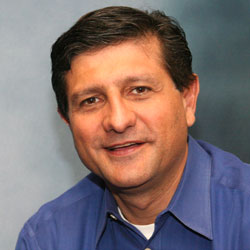
Javier Bravo, a teacher at Bourgade Catholic High School, shares his faith journey. (Joyce Coronel/CATHOLIC SUN).

Javier Bravo grew up in Yuma in a devout Catholic family, the youngest of seven children born to parents who immigrated from Mexico.

He spent six years in the seminary for the Diocese of Tucson, but then felt God leading him in a different direction. Bravo taught Spanish at Yuma Catholic High School, simultaneously earning a master’s degree in curriculum and instruction.

Still unsure of his vocation, he entered the novitiate with the Discalced Carmelite Friars in San Jose, Calif.

“I grew in knowledge of the Church’s spirituality and traditions, and the Carmelite tradition,” Bravo said. “It was wonderful formation, but I definitely wanted to return to active ministry.”

Four years ago, Bravo married. He’s spent the last three years teaching second- and third-year Spanish at Bourgade Catholic High School. Last September, Bravo earned a second master’s degree in educational administration.

Bravo’s classroom philosophy is straightforward: Keep careful track of students, and take time to work with those who might be struggling. “There’s no reason they should fail,” Bravo said. “Different things work with different students.”

He’s always looking for innovative ways to help kids learn Spanish. Currently, Bravo is using an approach that combines reading, vocabulary and storytelling. Students in his classes speak Spanish about 80 percent of the time.

Bravo said he appreciates the atmosphere of faith and community that he finds at Bourgade, but he also has a genuine love for students and helping them see God at work in their lives.

“When you take your simple, everyday calculus homework assignment and realize that in doing that there’s a great opportunity for holiness — that is something we can only understand through the Catholic scope of how we live our faith,” Bravo said.

Faith in a nutshell:

A weeklong silent retreat at the Carmelite monastery happened to coincide with a benefactor donating all the labor and materials for a complete — and very noisy — repaving of the premises. “I remember the novice master said, ‘This is where you have to learn holy flexibility.’ And that has always stuck with me.”

What he loves about being Catholic:

“One of the best things that I like about our Catholic faith is it really gives a meaning to everything that we do. Everything we do can have such a spiritual dimension. Even the smallest thing can have a big effect spiritually on who we are as people.”

Parish:

Ss. Simon and Jude Cathedral

Apostolates:

He’s been an extraordinary minister of the Eucharist, a lector, a RCIA teacher and a youth minister; a faculty member at Yuma Catholic, 2001-2008; a former seminarian

Quotable:

“You have to be flexible…we have to teach the kids who are in front of us. That’s very much the way I look at it. Sometimes it means redoing the whole thing and when the end of the day comes, my lesson plan was totally different.”

Take away:

“Catholic education is something that should be very vital to us as a Catholic community. It’s not an addendum — it really should be a natural flow…”