A Swiss Guard recruit takes his oath during the swearing-in ceremony for 26 new recruits in Paul VI hall at the Vatican May 6. New recruits are sworn in during a colorful ceremony at the Vatican every May 6 to commemorate the day 150 Swiss Guards died saving Pope Clement VIIas life during the sack of Rome on that date in 1527. (CNS photo/Paul Haring)
VATICAN CITY (CNS) — In an effort to boost recruitments through more modern methods of outreach, the Pontifical Swiss Guard has opened a page on Facebook.
Facebook.com/gsp1506 was launched May 4 “to open a window” and better inform young people about the “Guardia Svizzera Pontificia,” said the guard’s commander, Col. Daniel Anrig.
“We want to improve communication with young people who otherwise might not have an opportunity to find out what the Pontifical Swiss Guard really is,” he told journalists May 5, the day before 26 new guards were sworn in to service.
Currently, applications to serve are open only to Swiss male citizens who served in the Swiss Army and are Catholic, under 30 years of age, stand at least 5 feet 8 inches tall and boast an “irreproachable reputation.”
The colonel said he would love to allow female recruits, but such a move could be considered only “when the circumstances change,” specifically having more than one barracks to house the soldiers.
Guard officials have lamented a slump in applications over the years and have been looking to improve outreach, Col. Anrig said.
A former guard, Bernhard Messmer, has been hired to work on recruitment projects; he will be aided by nine other former guards who each will be in charge of a different region in Switzerland so the people “can be closer to the guards,” said the colonel.
The guard also has a video feed on YouTube at “The Corps of the Pontifical Swiss Guard.”
During an audience May 7 with Swiss Guards, new recruits and their families and friends, Pope Benedict XVI thanked the men for their service to protecting the pontiff and guarding the apostolic palace.
He said he “fervently appreciated” that young men today still choose to sacrifice a few years of their lives in complete service and dedication to the successor of Peter.
The hard work, long hours and “peculiar service” of the guard, he said, mean the soldiers have to possess unique characteristics, such as having a solid Catholic faith, loyalty and love toward the church and Jesus, “diligence and perseverance in small and big daily tasks, courage and humility, altruism and availability” to serve.
New soldiers are sworn in during a colorful ceremony at the Vatican every May 6 to commemorate the day that 150 Swiss Guards died saving Pope Clement VII’s life during the sack of Rome on that date in 1527.
Since its founding in 1506, the corps — currently numbering 110 guardsmen — performs honorary and ceremonial duties, as well as guarding the life of the pope and keeping watch over the papal palace.
Though they sport Medieval-era weaponry with their halberds and armor during colorful ceremonies, the guards are trained in the latest defense techniques, which range from the Monadnock Defensive Tactics System for controlling aggressors to martial arts and modern firearm use.
Guards who continue their service after two years qualify to train to become certified Swiss federal security experts.
Catholic actor Eduardo Verastegui portrays Anacleto Gonzalez Flores in a scene from the movie "For Greater Glory." (CNS photo/ARC Entertainment)
WASHINGTON (CNS) — One might think actor Eduardo Verastegui would have fond memories of his first English-language movie, 2003’s “Chasing Papi,” because it gave him a chance to share the screen with Sofia Vergara, who has since become a breakout star thanks to her role in the ABC comedy “Modern Family.”
But Verastegui’s most cherished memories come not from the film, but from the fact that he had to learn English to make the movie. That led him to an English teacher who challenged him in more ways than learning English pronunciation and syntax.
“Her name was Jasmine,” Verastegui, a Catholic, told Catholic News Service during a May 4 interview in Washington to promote a new movie, “For Greater Glory.” “She really started questioning the important things.”
During his six months of tutoring, he said, Jasmine would ask him such questions as “What is the purpose of life? How are you using your talents? Are you trying to elevate human dignity, or are you not? Who do you live for? Who do you die for?”
From all of this, Verastegui said, “I realized I was not happy. Something inside was missing. I don’t know what.”
In time, he came to believe that he should use his talents only in life-affirming screen projects. Out went the “telenovelas” the Mexican-born actor cut his teeth on. In came Metanoia Films, which Verastegui created to bring his new vision to life. The first fruit was “Bella,” which found him starring and producing, in a tale about a young man’s efforts to convince a single pregnant woman to not go through with a planned abortion.
It later led to “Little Boy,” which started three years ago and is only now in post-production. Verastegui plays a priest in the film, but is also its producer and executive producer. The movie deals with a boy’s wish to have his father come back safely from World War II, so he engages in the corporal works of mercy in hopes of hastening the war’s end. It originally had a budget of $59 million, Verastegui said, but by filming in Mexico he was able to slash it to $25 million.
“You just can’t decide, ‘I’m going to make a movie,’ and tomorrow you start making the movie,” Verastegui told CNS.
Regarding “For Greater Glory,” he said he was intrigued about it but was first embarrassed. “It was an American person asking me about Mexican history, my own history. I was 30 years old. … It was embarrassing to me” to not know. There was no mention at home, at school or elsewhere about the Cristero War of the 1920s in which Catholics took up arms to contest the Mexican government’s systematic repression of religion, he said.
Verastegui said he wanted to tackle the story in a movie, but “I was a first-time producer. I was not ready to do the film.” About three years ago, he heard from Pablo Jose Barroso, the producer of “For Greater Glory,” saying he had a script and wanted Verastegui in the film.
But Verastegui was busy with “Little Boy,” and could not commit to a heavy filming schedule. Barroso offered him the part of Anacleto Gonzalez Flores, a lawyer and journalist. Verastegui took it, saying he was proud to portray the “Gandhi of Mexico” in the movie. He went to Mexico and filmed all his scenes in 10 days.
Gonzalez, who was well known in Mexico for his philosophy of nonviolent resistance, was tortured and murdered by army soldiers in April 1927 in Guadalajara. He was beatified in 2005.
In his review of “For Greater Glory,” CNS’ John Mulderig called it a “powerful historical drama” that “packs an emotional wallop. In fact, moviegoers of a more sensitive disposition will be unlikely to escape without tears.”
The movie was classified A-III — adults — by CNS for “considerable action violence with some gore, the torture of a child and at least one mildly vulgar term.”
The National Catholic Education Association is continuing its relationship with a coalition of public and private organizations and professional athletes to assist high school students and their families with free and very reduced pricing for SAT and ACT prep programs.
“The relationship with the eKnowledge Sponsorship Alliance has greatly benefited our students with high quality and very low price SAT and ACT prep and I encourage each school to distribute this information to parents, students and educators,” said Phil Robey, NCEA Executive Director of Secondary Schools.
The coalition of organizations includes a broad spectrum of groups like: the Boys Scouts of America, The Fraternal Order of Police, National Federation of High Schools, Big Brothers and Big Sisters, the National Association of Gifted Children to name a few.
Beginning in 2005, eKnowledge formed the Sponsorship Alliance Partnerships, today the Alliance has grown to over 70 caring athletes from the NFL and MLB, as well as corporations, foundations, and not-for-profit organizations. With the support of its sponsorship alliance, eKnowledge will donate $200 SAT and ACT College Test Prep programs to all NCEA high school students.
The US Military has strongly supported the coalition over the past six years, including direct partnership with: The Department of Defense, USO, Military.com, Department of Defense Education Association, and DANTES.
The twenty plus professional athlete partners include some very big names from the NFL and MLB: Chipper Jones (MLB Atlanta Braves), Kevin Youkilis (MLB Boston Red Sox), AJ Hawk (NFL Green Bay Packers, Barry Cofield (NFL NY Giants), and Paul Posluszny (NFL Buffalo Bills)
About the PowerPrep Program: The donated $200 PowerPrep™ Programs contain 170 video lessons, hundreds of practice questions with detailed explanations, 18 quizzes and over 40 hours of class work and 3,000 files of test prep material. Students select the training they need and can study at their own pace. In addition to the donated DVDs, eKnowledge is also discounting premium programs and books 50 – 90% off of the retail price. There is a fee of $17.55 for materials, shipping, and customer support for the standard programs.
May 4-6. Find daily events on our Sunbeams page.According to local Catholics, it’s a good weekend for golf and other benefits, whether it’s a family whose dad suffered a paralyzing stroke or a hair cut for kids with leukemia. It’s also the fifth week of Easter. Don’t forget Mass.
Golf benefits — Choose the charity or location that works best for you. If registration has lapsed, most will have other on-site activities to support.
Family fundraiser — 10 a.m.-10:30 p.m. May 5 at Carl’s Jr., 3380 N. Hayden Road (south of Osborn) in Scottsdale. Includes raffle for Legoland tickets, face painting, activities and entertainment. 25 percent of sales will benefit a St. Maria Goretti family (The dad suffered a stroke). Must show related article or event flyer. See Event Facebook page.
Cuts for the Kids — May 5 at Cutting Edge Style Academy in Peoria. St. Jerome School organized a cut-a-thon benefiting the Childhood Leukemia Foundation’s Hugs-U-Wear program. Clients with at least 10 inches of hair to be cut off and donate qualify for a free haircut. Appointments recommended. Event flyer.
Open house — 10 a.m.-1 p.m. May 6 at Our Lady of Mount Carmel School in Tempe (Rural south of Broadway). Info. Several Catholic schools are still accepting applications for the 2012-13 school year. Find a school nearest you or a parent’s work site.
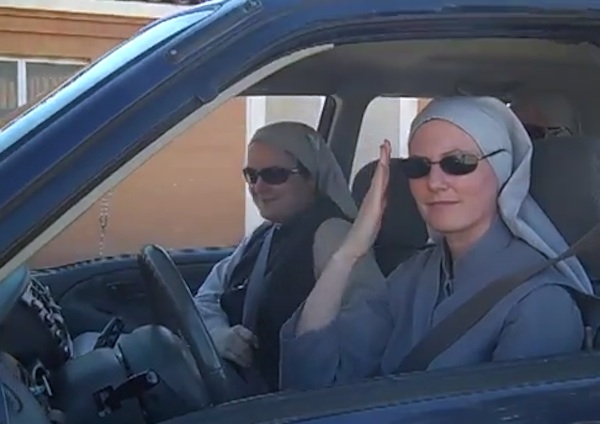
SOLT sisters at Most Holy Trinity are among the many people who show ways to be SunWise in this video contest. Still image from video.
Watch and share this video now through Sunday. Two 13-year-olds made it. At least one is a Most Holy Trinity parishioner. If a combined score of video views and creativity puts them at the top, they win $1,000.
It seems they have the creativity part well executed. Most professionals don’t capture the variety of settings and people that they did. Check it out:
Local Catholics may also recognize some familiar faces. It features the SOLT sisters at Most Holy Trinity and St. Joan of Arc preschoolers.
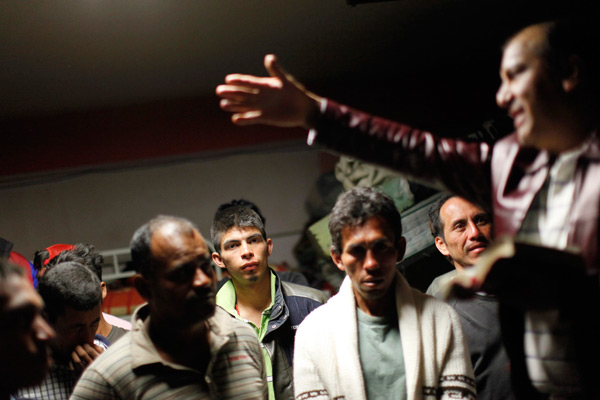
Men listen to an evangelical preacher during Christmas Eve at a migrants' shelter in Tultitlan, on the outskirts of Mexico City, last year. Relatively obscure decades ago, evangelicals, including Pentecostals, Baptists and others, now count roughly 97.5 million followers in Latin America and the Caribbean. (CNS photo/Claudia Daut, Reuters)
The World Church of the Power of God opened an L-shaped, one-story, corrugated metal megachurch on the outskirts of Sao Paulo on New Year’s Day, expecting around 100,000 people to attend.
Few were prepared for the more than 2 million people who actually showed up. The crowd clogged the highway between the city and international airport, causing a six-hour traffic jam. Hundreds of passengers ditched their taxis and cars and walked miles to catch their flights.
“Nobody expected that,” said the Rev. Luiz Medeiros, a senior pastor at the neo-Pentecostal church. “It shows how attracted people are to joining the church.”
The church has the capacity to hold 150,000 people, making it one of the largest religious gathering places in South America. Preachers regularly draw 30,000 people, Rev. Medeiros said.
What makes the church’s popularity remarkable is that it has swelled to such numbers 14 years after its establishment, and it did so in the world’s most-Catholic country, Brazil, which the Vatican says has 163 million Catholics.
Evangelical churches like the World Church Power of God have made inroads in Latin America and the Caribbean, long a Catholic stronghold.
Relatively obscure decades ago, evangelicals — including Pentecostals, Baptists and others — now count roughly 97.5 million followers in the region, according to data provided by a coalition of evangelical churches. The Pew Forum on Religion and Public Life’s 2011 report on Christianity around the world does not differentiate between mainline and evangelical Protestants, but found 94 million Protestants in Latin America and the Caribbean.
The growth of the evangelical movement in Latin America has come as the number of Catholics has fallen. While about 432 million people — 74 percent of Latin Americans — identify themselves as Catholic, countries that have long been church strongholds are seeing numbers decline.
“Clearly, the phenomenon of the growth of these sects is affecting us,” said Bishop Hector Lopez Hurtado of Girardot, Colombia. “In the last several years, you’ve seen it spread to all parts of Latin America.”
The growth of the movement has caused consternation within CELAM, the Latin American bishops’ council. A 2006 publication looking at the issue called the “new religious movements … one of the problems of greatest concern to those engaged in the process of evangelization in the Catholic Church.”
In Mexico, the world’s second-most-Catholic country, 96 percent of the population identified themselves as Catholic in 1970. Last year, the number had fallen to 82.7 percent.
Mexico’s southern neighbor, Guatemala, was 90 percent Catholic as of the mid-1950s. Today, it’s closer to 50 percent. More than one in three are evangelical Christians.
Well-financed churches in the U.S., where one in four adults are evangelicals, initially pushed Latin America’s evangelical movement. Today, however, Latin Americans raise money to build churches, and local ministers have risen to celebrity status.
The movement’s growth has left a trail of skyline-changing megachurches and humble prayer halls scarcely bigger than living rooms in Latin American cities and the countryside.
In the capital of predominantly Catholic Dominican Republic, Jose Marti attends a raucous service twice a week in a small church that sits atop a grocery store parking garage off a busy highway.
“I was raised Catholic and some of my family is still Catholic,” said Marti, 38. “I just don’t feel like the Catholic Church has kept up with the times. It is not exciting, like here.”
Inside, a set of drums sat on a small platform and upholstered bench seats lined the hall.
Evangelical “churches adopt less-rigid rules than the Catholic Church … they adapt to the customs and values seen today in our society, such as the importance of financial prosperity, importance of entrepreneurship to reach this prosperity, importance of discipline,” said Christina Vital, an anthropologist at the Institute of Studies of Religion in Rio de Janeiro. “There are today dance parties which are supported by evangelical churches and even held inside these churches.”
For Marti, the difference is simple: “I come here and I enjoy it,” he said. “I feel like I have my own relationship with Jesus.”
His sentiment touches a central theme in explaining the evangelical growth. Rather than having a priest interpret Scripture for them, evangelical Christians take an active role in forming their relationship with Jesus.
“They are able to meet in small groups with their neighbors and a pastor who is from the area and knows them,” said Maarit Forde, a professor at the University of the West Indies in Trinidad who studies the spread of evangelical Protestantism in the Caribbean. “That allows them to focus on some of the issues that are pressing for them, like poverty or domestic violence.”
More recently, evangelical groups have successfully employed the Internet to attract followers, said Fernando Altemeyer, professor of theology at the Catholic University of Sao Paulo.
“They adapted much faster (than the Catholic Church) to the new technologies, and were quickly on Twitter, Facebook, blogs and such,” he said.
That tactic has helped evangelical churches reach young Brazilians and swell the church ranks.
In the past decade, the Catholic Church lost 6 million followers in Brazil. Those Catholics did not all flock to the evangelical churches, however; the number of agnostics has grown, Altemeyer said.
Brazil is an example of the changes in the religious makeup of Latin America and of how the Catholic Church is adapting.
Pentecostal groups first arrived in the country in the early 1900s, but the movement surged in the 1970s. It was helped by an urbanization that sent poor Brazilians into cities to look for better jobs. They settled in the outskirts of large cities, where Pentecostal and neo-Pentecostal churches had taken hold.
Today, roughly 40 million Brazilians identify themselves as evangelicals. That number is expected to grow to more than 109 million by 2020, according to the Servindo aos Pastores e Lideres, an evangelical group linked to One Challenge International, a missionary organization.
In Sao Paulo, the Universal Church of the Kingdom of God is building a 10,000-seat replica of Solomon’s Temple for a reported $200 million. In Recife, new churches will have the capacity for up to 35,000 people.
In Sao Paulo, Catholics will open their own megachurch big enough for 100,000 people. The Mother of God Sanctuary will be a venue for a Father Marcelo Rossi, who sings, dances, appears in movies and fills soccer stadiums with his masses. Proceeds from his best-selling books are paying for most of the church’s construction.
The Catholic Church has focused on Latin America’s youth and on creating dialogue between Catholics and evangelical movements, said Father Jose Gregorio Melo Sanchez, director of CELAM’s Department of Ecclesial Communion and Dialogue.
“It’s important to remember that the church isn’t a reactionary church,” Father Melo said. “The approach in this case is to focus on pastoral lines and on interreligious dialogue.”
— By Ezra Fieser and Lise Alves, Catholic News Service
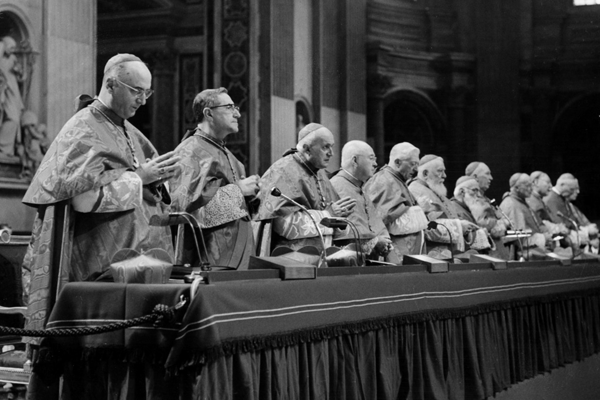
The presidents of the Second Vatican Council are pictured during a council meeting inside St. Peter's Basilica in this undated file photo. (CNS file photo)
ROME (CNS) — The Second Vatican Council’s teaching, particularly on Judaism and other religions, is rooted in traditional Christian theology and the Bible, and the Catholic Church should not offer concessions to those who do not accept its teaching, said an Israeli-born Franciscan who serves as a judge on a top Vatican court.
Msgr. David Jaeger, a judge at the Roman Rota, defined as worrying a tendency, “here and there in Catholicism, to look leniently upon stray groups that are marginal but well-publicized who denounce the doctrine of the council, including the declaration ‘Nostra Aetate'” on the relationship of the church to non-Christian religions.
Msgr. Jaeger, who grew up in a Jewish family, spoke about “Nostra Aetate” during a conference on the Second Vatican Council at Rome’s Opus Dei-run Holy Cross University May 3-4.
“While often presented as if it were absolutely new,” he said, the teaching of “Nostra Aetate” “perfectly corresponds to the most ancient intuitions of Christian theology” when it affirms “there can be, and in particular cases, are elements of truth and holiness” in other religions, he said. In addition, the document emphasized that Judaism has a special status, which “already was extensively explained by St. Paul, particularly in the Epistle to the Romans.”
The council’s document explained the church’s “doctrine on Judaism, the only religion which, while not knowing Christ, has its origins in biblical revelation, which is why the church does not regard it simply as a ‘non-Christian religion,’ but ascribes to it a unique status,” Msgr. Jaeger said.
While recognizing the unique and special relationship between God and the Jewish people, he said, the council did not say say that Judaism was a “parallel path to salvation” and it did not deny that somehow, in the end, all salvation would be accomplished through Christ.
Obviously motivated by the horrors of the Holocaust, but also by centuries of injustices and persecution of Jews “by those who called themselves Christians and believed they therefore could justify their brutality, the declaration took care to severely condemn such conduct and to highlight the complete illegitimacy of supporting it with any reference to Christianity,” he said.
“The proof of Nostra Aetate’s effectiveness is that it seems strange to have to say it today,” the monsignor said.
However, he said, “One must take this occasion to express the deep hope that leniency will be denied” to anyone who does not accept the council’s teaching and “that there will be no being content with fake, quasi-adhesions accompanied by evident verbal and mental reservations to the teaching of the Second Vatican Council in general and to ‘Nostra Aetate’ in particular.”
“In fact,” he said, “the extreme gravity of the counter-witness of those who have, for centuries, abused the name of Christ and the term Christian to persecute and oppress the Jews must never be forgotten or underestimated in any way.”
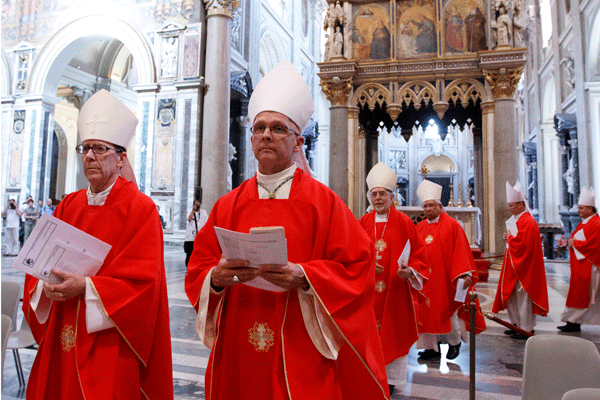
Bishop Thomas J. Olmsted of Phoenix and Bishop James S. Wall of Gallup, N.M., arrive in procession with other bishops from Arizona, Colorado, New Mexico and Wyoming to concelebrate Mass at the Basilica of St. John Lateran in Rome May 3. The bishops were making their "ad limina" visits to the Vatican to report on the status of their dioceses. (CNS photo/Paul Haring)
ROME (CNS) — Celebrating Mass in Pope Benedict XVI’s cathedral, Rome’s Basilica of St. John Lateran, a group of U.S. bishops prayed for the pope and reflected on what they need to do to respond to his call for a new evangelization.
Bishop Michael J. Sheridan of Colorado Springs was the homilist and principal celebrant of an evening Mass May 3 during the “ad limina” visit of bishops from Colorado, Arizona, New Mexico and Wyoming.
On the eve of the bishops’ meeting with Pope Benedict, Bishop Sheridan led his fellow bishops in a reflection on the pope’s insistence that strengthening the faith of Catholics, reviving the faith of those who have fallen away and sharing the Gospel with others means they must preach that Jesus is the son of God and continues to live in the church and the Eucharist.
The bishop said Pope Benedict has noted how “Jesus is often reduced to the status of a wise man and his divinity is diminished, if not denied outright.” That type of attitude sets aside the radical novelty of Christianity and its message that God entered human history to save humanity, he said.
The pope “warned us of preaching a Jesus who was not alive in our midst, entering into some sort of nostalgia in which we lift up Jesus the wise man who lived long ago, but doesn’t seem to have any reality now — it’s his memory that we exalt,” the bishop said.
“Our proclamation must be the proclamation of the living Jesus; the one who died — yes — for our sins, but who was raised, who lives now never to die again, who is in our midst,” he said.
“Let’s pray today that the Lord will fire us up with his Holy Spirit so that we may join in this new evangelization in the most effective way,” Bishop Sheridan said.
The bishops’ visits are formally called “ad limina apostolorum,” which means “to the thresholds of the apostles” Peter and Paul, who were martyred in Rome. As well as concelebrating Masses at Rome’s four major basilicas, the bishops meet with Pope Benedict to report on the state of their dioceses, and with Vatican officials to discuss issues of common concern.
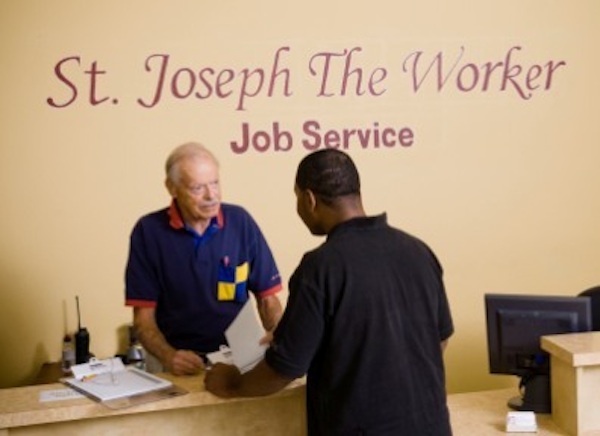
St. Joseph the Worker staff and volunteers work year-round to help homeless clients secure employment. Photo courtesy of St. Joseph the Worker
Being a job seeker is stressful enough without the added weight of being a home-seeker too.
The challenging, but all-too-common duo makes up the bulk of St. Joseph the Worker’s clients. The nonprofit, located on Phoenix’s Human Services Campus, provides basic job services and employment resources for 1,500 client contacts per month. At least 75 men and women visit the office daily to create resumes, prepare for interviews in the clothing closet or secure bus passes for an interview or the job itself.
“We average a person getting employed every day,” said Brent Downs, St. Joseph the Worker’s executive director.
Lately, clients, who are hired on their own merit, have been doing better than that with 422 of them gaining employment last year. Roughly 35 percent had benefits.
Whether they’re employed or still looking, this week marks a special time of all clients.
St. Joseph the Worker kicked off its annual “hydrate the homeless” water drive May 1, a date that lined up with the feast of its patron saint. Tomorrow, the agency’s job developers will honor four of St. Joseph the Worker’s stand out clients and one corporation during its annual feast day celebration at the Diocesan Pastoral Center.
“We have a fantastic support network,” said Molly Pino, development specialist for St. Joseph the Worker.
Volunteers spent 2,200 hours last year helping clients write resumes, learn interview skills and other administrative tasks. Pino said they’re viewed more as staff than volunteers.
She credited Scottsdale Healthcare, who will be recognized as Corporation of the Year, for recently expanding a benefit hike — the agency’s primary fundraiser — to a second location and taking care of logistics. More than 1,100 hikers joined the annual Hike for the Homeless in both Goodyear and Fountain Hills in March.
The hikes raised more than $65,000. That’s roughly the amount St. Joseph the Worker spends on bus fare annually to get clients to interviews and to work before those first paychecks arrive.
The privately-funded organization also provides employed clients with gift cards to area eateries for lunch. It could be their only food source when long bus rides to and from the homeless shelter have clients returning to nearby shelters after dinner hours.
“It’s those simple little things that we don’t think twice about,” said Downs, executive director.
He said it’s easy for homeless individuals to become the “invisible population” and knows all-too-well the importance of having a practice and moral support network for them. He once spent a month on the streets eating out of dumpsters and selling the quality food he salvaged. Downs ultimately hit rock bottom and reached out to family who helped him,.
“A lot of people don’t have that option,” Downs said.
Like Lisa — clients are known publicly by first name only. None of the interviews she had lined up before moving to Arizona panned out. She ultimately received an offer from a local gym to be a fitness instructor. St. Joseph the Worker’s resources helped her fill out and send initial paperwork, select clothes for orientation and funds to buy quality footwear.
Things don’t always work out the way they’re planned though and when they don’t, their personal job developer and the rest of St. Joseph the Worker’s staff is there for moral support and strategy. Four clients lost their job in March as a direct result of several Valley Metro bus drivers going on strike. One client was due to start a new job the same day bus drivers temporarily halted theirs.
All have since found other jobs and credit the job coaching and motivation that are a constant at St. Joseph the Worker.
“We want to be that support system for the clients,” Downs said.
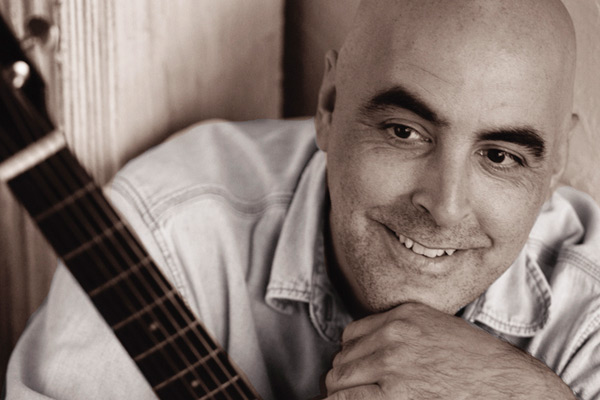
World-renowned Catholic composer and musician Michael John Poirier will head back out on the road with his wife and three children this summer to continue his life’s work of evangelization through music.
For the last year and a half, Michael and his wife, Mary, have lived in south Scottsdale with their three children, renting a home. Most of their marriage and family life, however, has been out on the open road in their motor home.
For 18 years, the Poirier family has toured the country, visiting almost all 50 states, so that Michael can share his gift of music with the faithful. Mary has home-schooled the children, though they did attend Ville de Marie Academy during the last two school years.
“We want to give the whole world a prayer break,” Michael said of his musical outreach, Holy Family Apostolate. It’s a prayer break that’s also available via the Internet at prayerbreaks.org, where listeners can hear the psalm from the Mass of the day chanted by Michael.
On board their motor home, the Poiriers will carry the Divine Mercy image as well as a relic image of Our Lady of Guadalupe, signed by Cardinal Norberto Rivera Carrera, the archbishop of Mexico City.
Though they don’t perform with their dad, the Poirier kids—Joseph, 16, John Paul, 12 and Therese, 6 — love to sing and are used to the troubadour lifestyle. They’re anxious to reconnect with friends they’ve made along the way at parishes across the country.
“They are excited about going back on tour,” Mary said. “We want to focus more on doing things together to help families pray.”
The family visits parishes and schools where Michael teaches the faithful through songs and stories. He also leads them in adoration of the Blessed Sacrament. The Poiriers often revisit the same areas around the country and Mary said they are encouraged by the feedback they receive.
“What is really cool is that when we make our rounds, people tell us what has happened since we saw them last,” Mary said. Oftentimes, it’s how God put their marriage back together or answered a prayer.
“God gives us the stories to encourage us,” Mary said. It’s moments like those that keep the Poiriers focused on serving God and relying on Him completely.
Mary, who said she comes from a business-oriented background that fostered a go-getter approach to life, said living month-to-month and embracing utter dependence on God has been a radical change for her.
“It’s really been a huge transformation for me,” Mary said. “Sometimes it’s so hard but God shows us every month that He provides — it’s amazing how He comes through.”
Michael recently decided he would no longer sell his CDs after Masses or require a stipend. Instead, he hopes fans will become subscribers to his website, PrayerBreaks.org. For $9.95 a month, subscribers support his work and gain multiple privileges, among them, the opportunity to download and keep five different songs every month.
Subscribers will automatically have their seat reserved at a May 21 farewell concert that will feature Michael’s meditative, soulful music as well as that of well-known Catholic musician Danielle Rose. Tickets for the concert will also be available for purchase at the door.
Money raised at the May 21 concert at Xavier College Preparatory will support the work of Holy Family Apostolate, but some of the funds will be set aside to help children in need.
“A portion of the proceeds will go to China Little Flower Orphanage,” Michael said. “It’s a ministry that has a U.S. anchor but they provide care for orphans in China.”
– – –
May 21 concert at 7 p.m. at the Virginia G. Piper Center for Performing Arts at Xavier College Preparatory, 4710 N. 5th Street