María and Mauricio Avalos are members of the campaign cabinet for St. Margaret Parish in Tempe. María is a staff member at the parish, while Mauricio plays guitar and sings at the 10 a.m. Mass. Both prepare menudo for a weekly Sunday-morning breakfast. (Courtesy of María Avalos)
María and Mauricio Avalos are members of the campaign cabinet for St. Margaret Parish in Tempe. María is a staff member at the parish, while Mauricio plays guitar and sings at the 10 a.m. Mass. Both prepare menudo for a weekly Sunday-morning breakfast. (Courtesy of María Avalos)MORE INFORMATION
Names: María and Mauricio Avalos
Parish: St. Margaret Mary Alacoque, Tempe
Roles with the campaign: Parish cabinet members
How did you get involved in the campaign?
María: We moved to Arizona in 2003 so as soon as we got here, we started searching for a parish. When we went to St. Margaret’s it just felt like a church in Mexico. It felt like home. Martha [Gamez, parish campaign manager] explained that by helping the campaign, we were also going to help the church. It really motivated us.
We know the CDA is already helping other programs and we were like, “These projects are huge.” That’s why we went ahead and started making plans to help the campaign.
What does this campaign mean?
María: For us, meeting every weekend there at the hall to have breakfast as family members, it just helps us in a way to grow spiritually. More than anything, it will help us to grow in our faith.
As parishioners, how does this campaign speak to evangelization and discipleship?
Mauricio: What Fr. [Alfredo Quezada] said regarding the campaign is that some of it will go to the bishop, but some will go to the parish of St. Margaret. That really motivated people, the possibility of improving the structure of the parish, the hall and the kitchen, to improve it so everything would be up to code.
María: The hall is something that benefits all of us because we have retreats, we have catechism classes for young people and children and RCIA for adults. The hall is busy every single night. It gets a lot of use.
The Diocese of Phoenix encourages anyone who has been a victim of child sexual abuse or knows of any abuse by any employee or volunteer of the Roman Catholic Church to come forward by reporting to law enforcement, the Department of Child Safety and the Office of Child and Youth Protection.
The mission of the Safe Environment Training Office is to prevent sexual, physical or emotional abuse and/or neglect of children and young people through continued education, building awareness, and maintaining a commitment to keeping all children and young people safe.
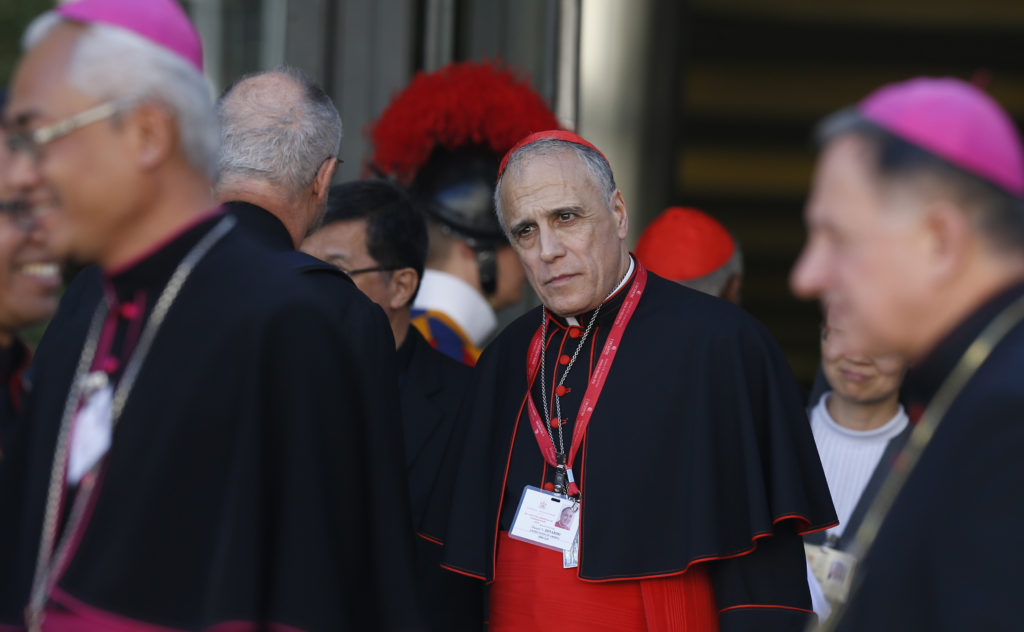
VATICAN CITY (CNS) — While the clerical sexual abuse crisis did not dominate discussions at the Synod of Bishops, Cardinal Daniel N. DiNardo of Galveston-Houston said it was discussed, and everyone in the room clearly believed the crisis has to be dealt with.
Cardinal DiNardo, president of the U.S. Conference of Catholic Bishops, spoke to Catholic News Service Oct. 22 as the synod was winding down and preparations for the U.S. bishops’ November general meeting moved into high gear.
The agenda for the November meeting will include multiple items for dealing with the abuse crisis and, particularly, the issue of bishops’ behavior and accountability, Cardinal DiNardo said.
One suggestion the bishops will examine, he said, is to draw up “a code of conduct for bishops,” similar to those that most dioceses have for priests and for lay employees. Another would be to establish a “third-party reporting system” that would allow someone with an abuse complaint against a bishop to report him to someone not connected with his diocese or the bishops’ conference.
“All of these involve issues that we are going to have to discern,” the cardinal said. “We want to do something that will help intensify our commitment to change.”
For any real change to take place, he said, the bishops must collaborate with each other and with lay experts.
Cardinal DiNardo said the bishops would begin their meeting Nov. 12 with some introductory business, but then would go directly into a day of prayer and fasting focused on the abuse crisis.
Many of the items that the bishops were due to consider at the November meeting, he said, will be postponed to devote more time to considering concrete steps to take in response to the abuse crisis. However, he said, they will vote on the proposed statement, “Open Wide Our Hearts: The Enduring Call to Love — A Pastoral Letter Against Racism.”
Cardinal Daniel N. DiNardo of Galveston-Houston, president of the U.S. Conference of Catholic Bishops, leaves a session of the Synod of Bishops on young people, the faith and vocational discernment at the Vatican Oct. 18. (Paul Haring/CNS)
Cardinal DiNardo is a veteran of the Synod of Bishops. The gathering Oct. 3-28 on young people, the faith and vocational discernment was his third synod.
“One of the best parts of this synod is obvious: the young people,” he said. The 34 synod observers under the age of 30 “are lively, they applaud sometimes. They take a great interest in the speakers. They have been a very, very important part of the language groups,” where synod members, observers and experts make recommendations for the gathering’s final document.
The young adults are serious about the Church “listening to them, the Church being attentive to them,” he said. “They also are not opposed to the Church’s teaching necessarily at all. They want to be heard and listened to, but they also want to draw on the vast beauty and tradition of the Church and do some listening of their own.”
In his speech to the synod, Cardinal DiNardo asked that the final synod document include a reference to how following Jesus includes a willingness to embrace his life-giving cross.
Young people are not afraid of a challenge, the cardinal said. “They may not always ‘get’ things of the Church, but they know who Jesus is and Jesus is not mediocre; He doesn’t want you and me to be mediocre. He wants us to follow Him to the cross and only then to glory.”
Cardinal DiNardo said he was struck at the synod by the variety of young people and especially the variety of their experiences, including experiences of being persecuted for their Christian faith or the challenges of being part of a Christian minority.
“Young people are much more serious than I think we give them credit for,” he said. And, hearing a young person’s story of faith probably is the most effective way to evangelize other young people.
As for the Catholic Church’s outreach to young people struggling with Church teaching on sexuality or who are homosexual, Cardinal DiNardo said it is not a marginal issue in the lives of young people and it was not a marginal issue at the synod.
“A lot of us wanted to mention it and say, ‘Yes, it’s a real issue; we have to accompany people,’” he said, “but we can’t forget the words of the Lord, ‘Follow me,’ and that requires sometimes for all of us a conversion of hearts.”
Ss. Simon and Jude Cathedral, 6351 N. 27th Ave., Phoenix
The Saint Pio Foundation is bringing six relics of the 20th-century saint across the country in commemoration of the 50th anniversary of his death. The tour also includes a morning and afternoon talk in English, which are repeated in Spanish.
Nancy Rossiello recalls her days as a girl in San Giovanni Rotundo, the small southern Italian town and home to the monastery where St. Pio of Pietrelcina, OFM Cap., served God. Although she didn’t grasp it initially, she would be touched by the life of the man known as Padre Pio, his deep devotion to prayer and his extraordinary spiritual gifts, knowledge and healing abilities.
“I saw Padre Pio as a young girl, but now that I am grown up I see the things he has done.”
She recalls visiting San Giovanni in 2002, 38 years after Padre Pio’s death, when she spoke with a monk there about starting a Padre Pio prayer group in Arizona and was encouraged to do so.
“He asked if the relics could be sent to Arizona. Six to seven months later, we received the first (one).
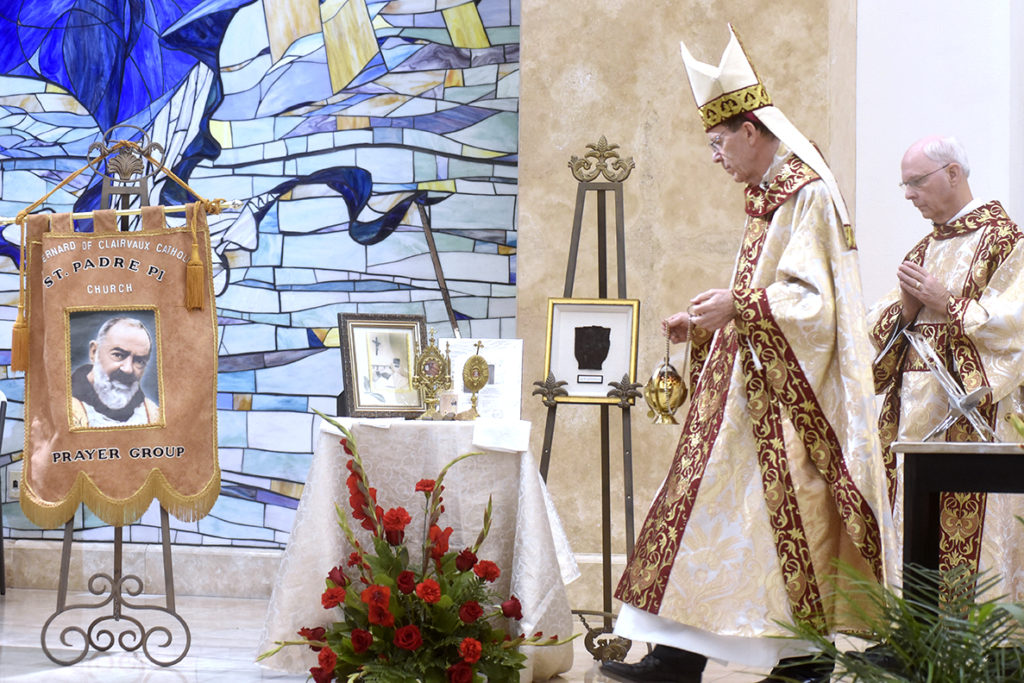
Today, Nancy leads a group of 100-150 praying for the sick and those with problems in Padre Pio’s name. That glove worn by Padre Pio sits in a permanent spot at Rossiello’s home parish, St. Bernard of Clairvaux in Scottsdale, along with a band used to absorb the blood of the saint, who also had the gift of stigmata, or experiencing the wounds of Christ during His Crucifixion.
Bishop Thomas J. Olmsted incenses the relics of St. Padre Pio of Pietrelcina during a Mass in which they were installed at St. Bernard of Clairvaux Parish in Scottsdale Sept. 16. Multiple parishes in the diocese have hosted the 20th-century saint’s relics for veneration. A set of relics will be at Ss. Simon and Jude Cathedral Oct. 30. (Jesús Valencia/CATHOLIC SUN)
The Sept. 16 blessing and dedication at St. Bernard of Clairvaux is just one of several events involving relics of both Padre Pio as well as St. John Paul II making their way through the Valley this fall, half a century after Pio’s death.
“These relics are significant. They help us as symbols of a way of life of the saints that is a witness of Christ. They help us see Jesus is among us,” said Br. Mauricio Torres of the Lay Association Totus Tuus before about 300 worshippers who came to venerate the relics during a visit to Our Lady of the Valley Parish in north Phoenix Oct. 8. A gathering of nearly 350 did the same the following night during a Mass and Holy Hour at St. Joan of Arc Parish in Phoenix, and at Santa Teresita Parish in El Mirage the previous Friday.
One by one, members of the congregation waited their turn in line, then stood in silence as they invoked the saints and their intercession for a few moments, often bowing their heads before the snip of blood-stained cloth from Padre Pio, preserved in a small sealed glass holder, and a similar piece of preserved cloth with the dried residue of a small amount of blood from samples taken from St. John Paul II at the hospital before he died.
“I’m going through cancer. God answers our prayers. That’s why I came,” said OLV parishioner Jean Michaels.
This slideshow requires JavaScript.
“I have two daughters. One is getting married in December and the other next year. I prayed for their sacramental marriages. My prayer is to keep my family holy,” said Kimberly Bramer, a parishioner from Our Lady of Perpetual Help in Glendale.
While the relics were making one of their final stops in the Valley at OLV, a second set, including a lock of St. Pio’s hair, his mantle and a handkerchief soaked with his sweat hours before he died, were on their way to Ss. Simon and Jude Cathedral where they would be available for public veneration Oct. 30. The cathedral stop is part of a nationwide tour sponsored by the Saint Pio Foundation, a not-for-profit organization that promotes awareness of St. Pio and his mission.
“It is an opportunity as Catholics to draw near to holiness and realize that can be us, especially with two contemporary saints,” said Our Lady of the Valley Pastor and Holy Cross Father Edward J. Kaminski. “To realize people walking among us have achieved what we all ask for — to be the best reflection of Christ for others we can be.”
Leah Johnson, the parish’s youth and young adult coordinator, said the relics’ visits were an especially important opportunity for youth.
“Too often with the saints, we strive for the same type of faith and we see them as something above us and something we can’t accomplish on Earth,” Johnson said. “To be able to touch [them] and be so close, that elevates their thought, that enhances their goal of what a disciple is — which is living Christ in one’s life.”
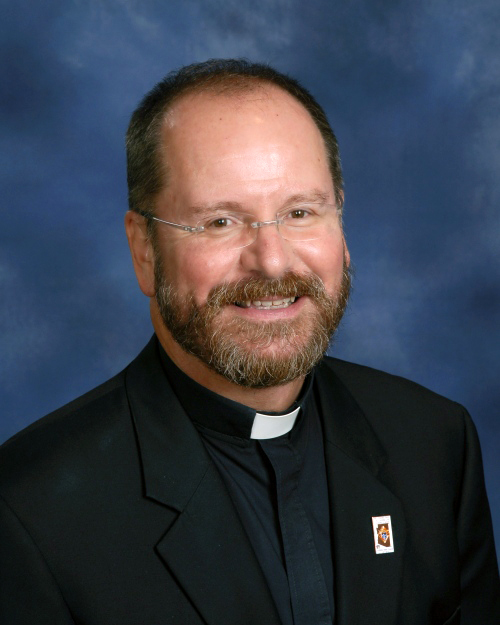
Fr. Fred Adamson is the vicar general and moderator of the curia for the Diocese of Phoenix.
When we hear the word “stewardship,” our mind can easily think of time, talent and treasure — which are true and important. However, after watching this campaign unfold over the past year since its official launch and quickly approaching two years since the pilot phase began, I have seen a new form of stewardship — a stewardship of relationships.
This campaign invites all of us to ask the questions: “Am I a good steward of the relationships in my life?” and “Do I recognize that every person placed in my path is a gift from God to help me grow in holiness?”
The “Together Let Us Go Forth ~ Juntos Sigamos Adelante” Campaign encourages us to strengthen all of our relationships. First, understanding and caring for our relationship with God — Father, Son and Holy Spirit. Then it extends to our family that God has given us — spouses, children, siblings, parents, etc. Finally, it extends to the communities we are part of — Church, work, social, friendships, etc.
Taking care of these relationships in a conscious and holy way are essential for us following Jesus. So, this campaign allows us to strengthen our relationship with Jesus and the people of God — it’s an opportunity to be good stewards. It’s about the education and faith of our young people, caring for the poor and homeless, and helping college students grow deeper in their faith in an environment that is often faithless.
Stewardship of relationship means recognizing the gift of the other person — their human dignity and potential to be saints. This campaign is about people — caring for one another as God calls us to do. Together Let Us go Forth ~ Juntos Sigamos Adelante!
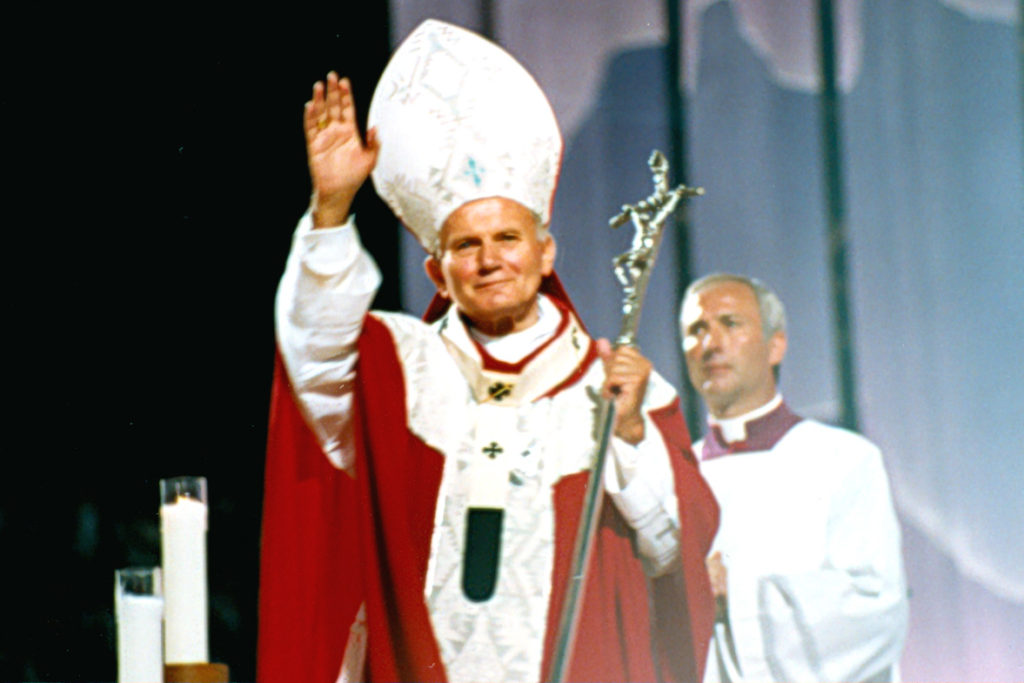
Pope St. John Paul II waves to the faithful attending his historic Mass at Arizona State University’s Sun Devil Stadium during his apostolic visit to Phoenix Sept. 14, 1987. (CATHOLIC SUN file photo)
Pope St. John Paul II waves to the faithful attending his historic Mass at Arizona State University’s Sun Devil Stadium during his apostolic visit to Phoenix Sept. 14, 1987. (CATHOLIC SUN file photo)
Oct. 22
When Pope St. John Paul II died, crowds in St. Peter’s Square chanted “santo subito (sainthood now).” The Vatican heard, and the sainthood cause for the jet-setting pontiff who helped bring down European communism was put on the fast track; he was beatified in 2011.
Born in Wadowice, Poland May 18, 1920, Karol Wojtyła was an actor shaped by World War II. He attended an underground seminary during the Nazi occupation of Poland and was ordained Nov. 1, 1946.
As archbishop of Krakow, Cardinal Karol Wojtyła, led the Church in Poland during Communist rule. In 1979 he was the first non-Italian pope in 455 years.
In his 26-year pontificate, he evangelized on trips to 129 countries — including a historic visit to Phoenix Sept. 14, 1987.
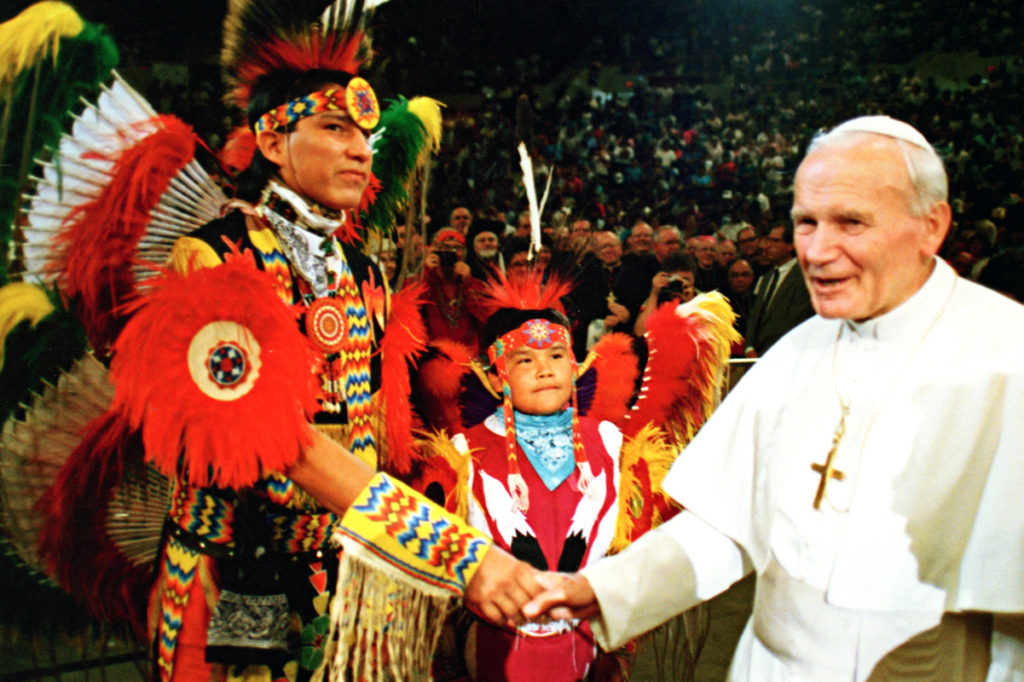
Pope St. John Paul II greets a Native American dancer during his address to 16,000 Native Americans at Veterans’ Memorial Coliseum during his apostolic visit to Phoenix Sept. 14, 1987. (CATHOLIC SUN file photo)
“By a happy act of providence, my visit to Arizona coincides with the 75th anniversary of Arizona’s statehood. On this happy occasion, I offer to all of you my best wishes and congratulations,” the pontiff said from the plaza at St. Mary’s Basilica during his apostolic visit to Arizona.
“Like all of America’s Southwest, Arizona faces challenges of amazing growth. I am told that the motto of your state is ‘Ditat Desu,’ ‘God enriches,’” he added. “And indeed, you have all around you ample proof of this enrichment: in the majesty and beauty of your landscape and especially in the diversity and giftedness of your people. Your state and the ever-growing number of its citizens have been greatly blessed and enriched by God. In the past 40 years, in particular, you have experienced remarkable progress and development. And this brings with it increased obligations and responsibilities.”
He upheld traditional Church doctrine against dissent, developing what is now known as the “Theology of the Body,” connected with the world’s youth and named more than 450 new saints. He also modeled Christian values by forgiving his would-be assassin and living an increasingly frail old age in public. He died April 2, 2005.
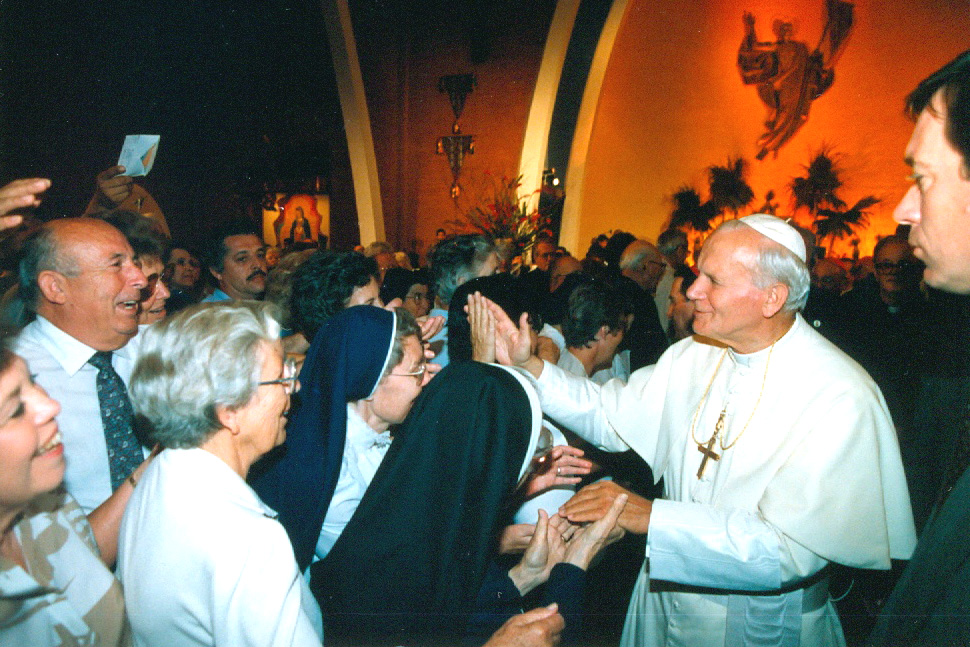
Pope St. John Paul II greets religious at Ss. Simon and Jude Cathedral during his address to clergy, laity, religious and ecumenical leaders as a part of his apostolic visit to Phoenix Sept. 14, 1987. (CATHOLIC SUN file photo)
In early 2006 it was reported that Sr. Marie Simon-Pierre, French nun and member of the Congregation of Little Sisters of Catholic Maternity Wards, experienced a complete healing from Parkinson’s Disease after praying for the intercession of Pope John Paul II, leading to his 2011 beatification.
In 2011, the healing of Costa Rican woman Floribeth Mora of an otherwise terminal brain aneurysm was determined to be directly attributable to the intercession of John Paul II, leading to his canonization in 2014.
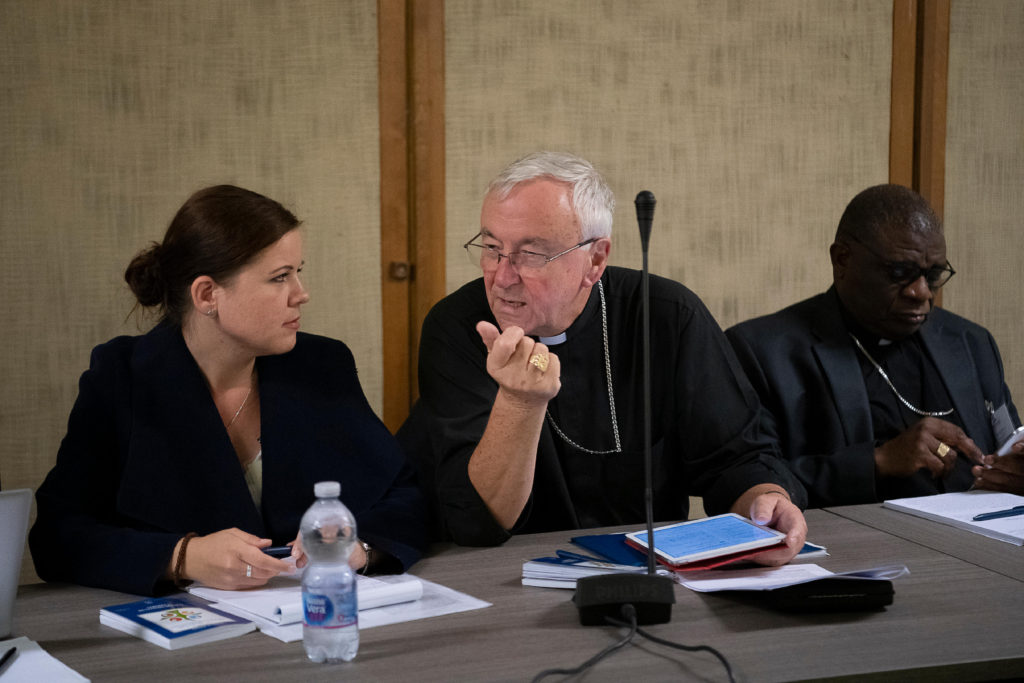
Cardinal Vincent Nichols of Westminster, England, speaks during a working group at the Synod of Bishops on young people, the faith and vocational discernment at the Vatican Oct. 10. (CNS, via Vatican Media) See SYNOD-GROUP-VOCATIONS Oct. 16, 2018.
Cardinal Vincent Nichols of Westminster, England, speaks during a working group at the Synod of Bishops on young people, the faith and vocational discernment at the Vatican Oct. 10. (CNS, via Vatican Media)
By Cindy Wooden Catholic News Service
VATICAN CITY (CNS) — No one is excluded from the love of God or from being welcomed into the Catholic Church, but God’s love and the Church’s welcome also come with a call to conversion, said the English-language groups at the Synod of Bishops.
Young people need to know “the Church’s beautiful, yet challenging, vision, teaching and anthropology of the body, sexuality, love and life, marriage and chastity,” said the English-A group.
“At the same time, we restate the Church’s opposition to discrimination against any person or group, and her insistence that God loves every young person, and so does the Church,” the group said in its report.
The reports, published by the Vatican Oct. 20, were the result of reflections in the small groups — divided by language — on the final chapter of the synod working document, which dealt with “pastoral and missionary conversion.”
Most of the 14 working groups called for further local and national dialogue with young people on what they need from the Catholic Church and what they can offer the Church. Most also called for a greater involvement of women in the life of the Church, including in the training of priests, and many acknowledged how the sexual abuse scandal undermines the Church’s credibility.
None of the synod groups in any language used the term “LGBT,” but many of them did refer to a need to help young people who struggle with Church teaching on sexuality or, more explicitly, those who experience “same-sex attraction.”
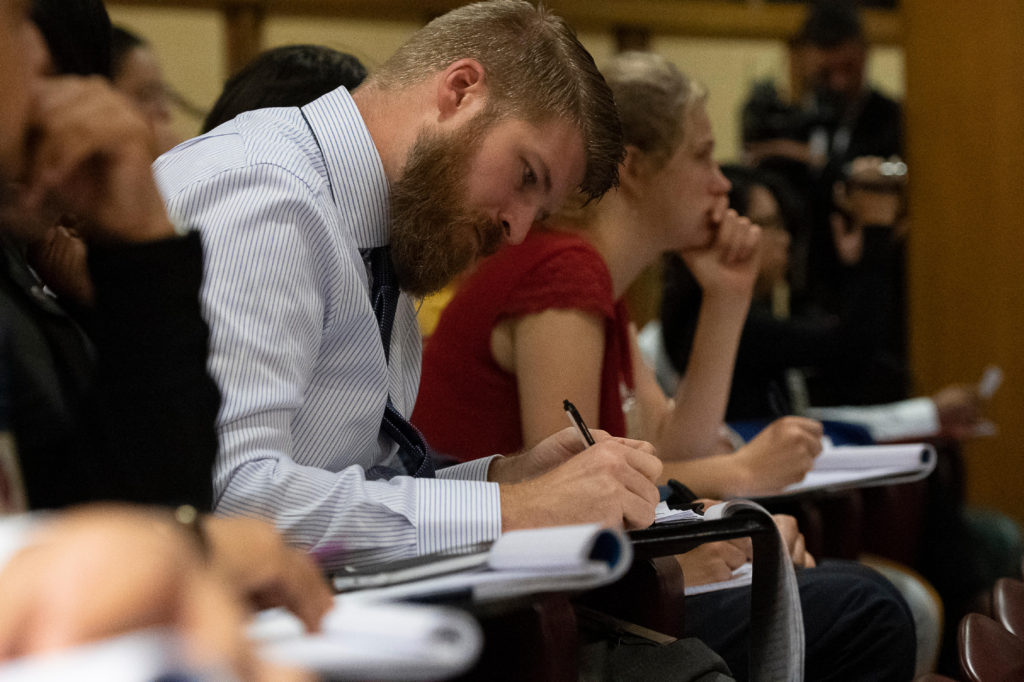
Jonathan Lewis, a synod observer from the Archdiocese of Washington, takes notes during a session of the Synod of Bishops on young people, the faith and vocational discernment at the Vatican Oct. 16. (CNS, via Vatican Media)
The English-B group said that it “discussed the issue of Catholics who experience same-sex attraction or gender dysphoria,” which refers to believing one’s biological sex does not correspond to his or her true identity.
The group asked that the synod’s final document include “a separate section for this issue and that the main objective of this be the pastoral accompaniment of these people which follows the lines of the relevant section of the Catechism of the Catholic Church.” The catechism teaches that homosexual activity is sinful, but that homosexual people must be respected and welcomed.
The English-D group said it, too, “spent a good deal of time reflecting on the motif of the Church’s stance of welcome and inclusivity. We fully and enthusiastically acknowledge that the Church of Jesus Christ reaches out in love to absolutely everyone.”
“No one, on account of gender, lifestyle or sexual orientation, should ever be made to feel unloved, uncared for,” the group said. “However, as St. Thomas Aquinas specifies, love means ‘willing the good of the other.’ And this is why authentic love by no means excludes the call to conversion, to change of life.”
The group also echoed a sentiment shared by other groups that through the synod, the speeches and the contributions of the young adults present “it became eminently clear that young people crave holiness of life and desire practical training that will help them walk the path of sanctity.”
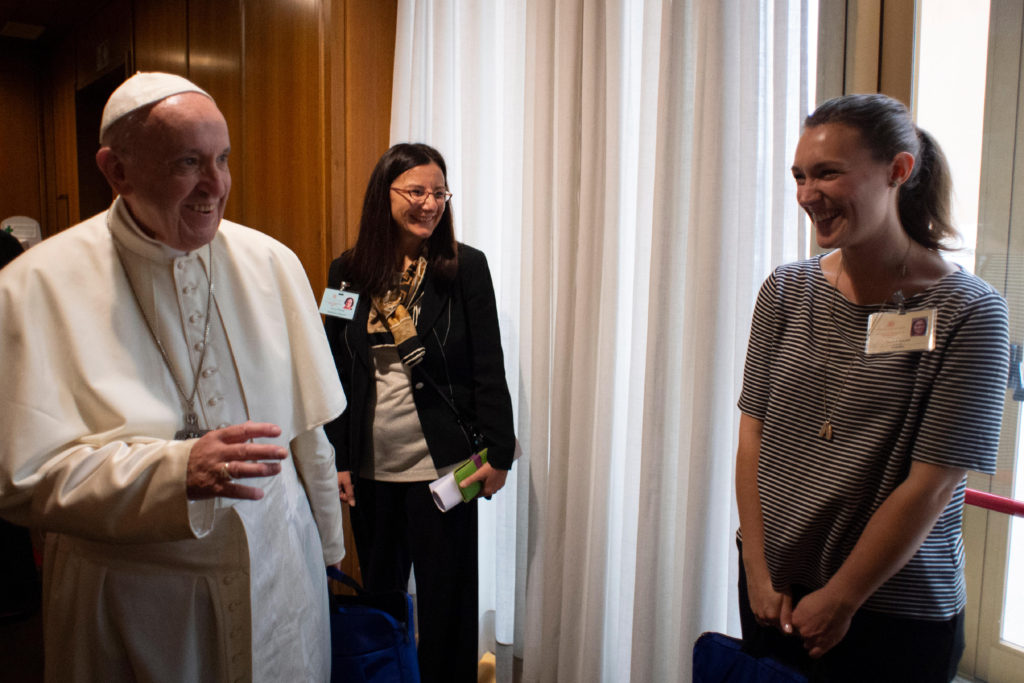
Pope Francis greets Emilie Callan, right, a synod delegate from Canada, during a session of the Synod of Bishops on young people, the faith and vocational discernment at the Vatican Oct. 11. (CNS, via Vatican Media)
The French-B group asked for a special section in the synod’s final document on “the gift of the body (and) the grace of affectivity and sexuality.”
The section should explain Church teaching clearly and in a way young people understand “to avoid confusion,” the group said. But “we believe it is important to deepen a reflection on pastoral outreach and the mission of the Church regarding certain categories before introducing them into the document.”
The Spanish-B group, led by Cardinal Luis Ladaria, prefect of the Congregation for the Doctrine of the Faith, also called on the Vatican — probably his office — to prepare a document in which “the subject of sexuality is approached in a systematic and clear way, with anthropological arguments, accessible to all young people, that shows that the virtue of chastity is a joyful affirmation that creates the conditions for human and divine love.”
“We must adopt a welcoming and cordial attitude to promote the integration and accompaniment of all people, including those of different sexual orientations, so that they may grow in faith and in their relationship with God, who is love and the source of truth and mercy,” the group said.
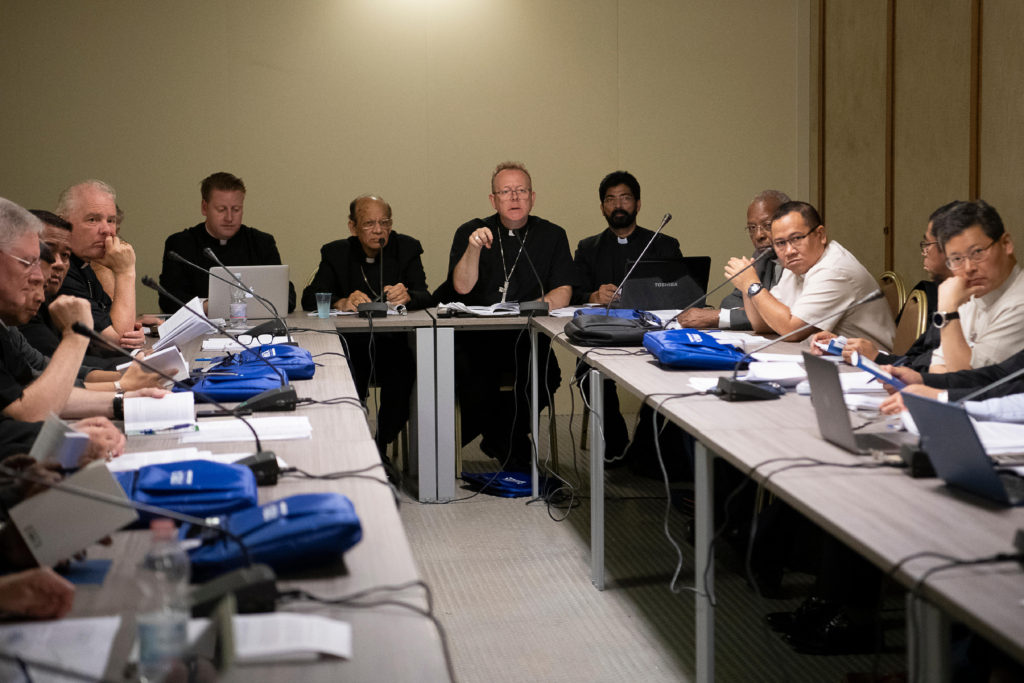
Archbishop Eamon Martin of Armagh, Northern Ireland, center, gestures during a working group at the Synod of Bishops on young people, the faith and vocational discernment at the Vatican Oct. 10. Seated next to Archbishop Martin is Cardinal Oswald Gracias of Mumbai, India. (CNS, via Vatican Media)
The French-A group said Church leaders must remember that “the life of a young person 16 to 30 years old is not linear. It is marked by successes, failures, decisive and happy stages like passing an exam, getting one’s first job, entering a relationship or creating a family. It is important to allow young people to live these moments spiritually, discerning in the Holy Spirit the path God is opening before them.”
The English-C group, like many others, noted that while the synod can provide general suggestions for listening to young people and involving them in the life of the Church, individual parishes and dioceses will need to find specific ways to put those suggestions into practice.
“We suggest that episcopal conferences be strongly invited to take up the results of the synod and engage in a similar process of reflection in their own milieus, even including non-bishops in the deliberations, as this synod has done,” the group said.
The Spanish-A group asked that Pope Francis, in celebrating the closing Mass for the synod Oct. 28, make a formal gesture to symbolize he is sending all the synod participants back to their home countries to put into practice what they heard at the assembly.
Contributing to this story was Junno Arocho Esteves.
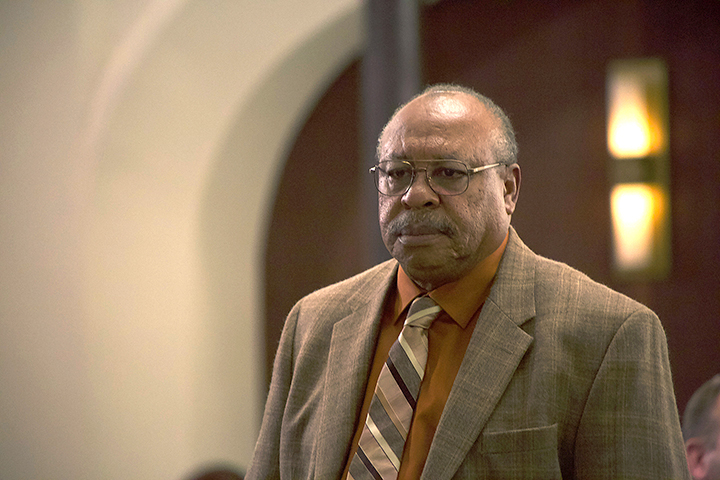
Earl Billings stars in a scene from the movie "Gosnell: The Trial of America's Biggest Serial Killer." The Catholic News Service classification is A-III -- adults. The Motion Picture Association of America rating is PG-13 -- parents strongly cautioned. Some material may be inappropriate for children under 13. (CNS photo/Hat Tip Films LLC) See MOVIE-REVIEW-GOSNELL Oct. 16, 2018.
By John Mulderig Catholic News Service
NEW YORK (CNS) — “Gosnell: The Trial of America’s Biggest Serial Killer” (GVN) is a powerful dramatization of the Philadelphia police investigation and state prosecution that finally ended the infamous, decades-long career of abortionist Kermit Gosnell.
As proven in the procedure of the title, Gosnell, besides legally slaughtering the unborn, frequently perpetrated infanticide and endangered his adult clients with filthy conditions.
As it follows the work of police detective James Wood (Dean Cain) and assistant district attorney Alexis “Lexy” McGuire (Sarah Jane Morris), the film effectively indicts not only Gosnell himself — played here by Earl Billings — but the political bias of officials who shielded and enabled him. In a similar vein, it should be noted that, rather than being backed by anyone in Hollywood, the movie itself had to be financed via crowdfunding.
Gosnell’s long-overdue downfall begins when he’s fingered for selling painkiller prescriptions to addicts. The FBI and Drug Enforcement Administration are determined to restrict their investigation to the drug transactions, assuming whatever else goes on in Gosnell’s facility comes under the sacrosanct heading of “reproductive rights.”
But Wood doggedly insists on pursuing evidence that an immigrant woman died there due to Gosnell’s flagrant disregard for medical regulations. Accompanying the feds on their raid of the place, he discovers a house of horrors, with whole fetal bodies and various tiny body parts squirreled away in cabinets and a refrigerator.
Some of the corpses recovered are shown to have been born alive and then murdered. So, with the reluctant support of her boss, Dan Molinari (Michael Beach), McGuire brings her case to court.
Earl Billings stars in a scene from the movie “Gosnell: The Trial of America’s Biggest Serial Killer.” (CNS photo/Hat Tip Films LLC)
Screenwriters Phelim McAleer, Ann McElhinney and Andrew Klavan, adapting McAleer and McElhinney’s 2017 best-seller, “Gosnell: The Untold Story of America’s Most Prolific Serial Killer,” keep the focus on the deceptively avuncular, weirdly unflappable physician’s breaches of current statutes. They obviously do so in the hope of winning over independent minded moviegoers.
Thus, as directed by Nick Searcy, who also plays Gosnell’s hard-driving defense attorney, Mike Cohan, the script mostly leaves it to viewers to recognize the wholly arbitrary distinction between extinguishing life within the womb and doing so, perhaps only moments later, outside it. A significant exception comes via the testimony of Dr. North (Janine Turner), a law-abiding peer of Gosnell’s.
Brought in by the prosecution to show how far Gosnell has transgressed accepted norms, even in an industry devoted to death, North is then cross-examined by Cohan. Cohan, for his own reasons, takes North through the details of her work in a way that reveals what pro-life journalist Nat Hentoff, using a phrase of novelist William Burroughs’, used to call “the naked lunch at the end of the fork,” the stark reality of what every abortion involves.
Well-written and acted, with touches of humor thrown in to relieve the grim subject matter, “Gosnell” gets its point across more easily than a documentary might. Some parents, moreover, may see in this sobering and informative movie too good an opportunity for reinforcing pro-life values in older teens to let the relatively few objectionable elements it includes stand in the way.
The film contains mature themes, images of body parts and medical gore, a couple of mild oaths and about a half-dozen crude terms. The Catholic News Service classification is A-III — adults. The Motion Picture Association of America rating is PG-13 — parents strongly cautioned. Some material may be inappropriate for children under 13.
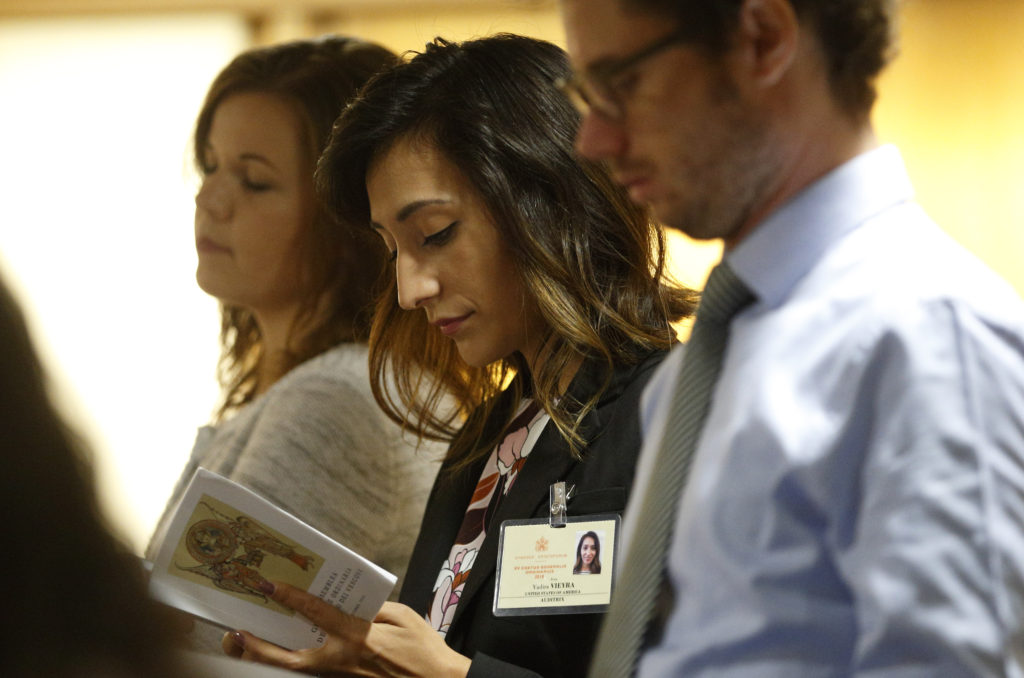
Yadira Vieyra, center, a synod delegate who works with migrant families in Chicago, attends a session of the Synod of Bishops on young people, the faith and vocational discernment at the Vatican Oct. 11. In an address to the synod Oct. 16, Polish Archbishop Grzegorz Rys of Lodz said that many young Catholics have not encountered Jesus as their Lord and savior.(Paul Haring/CNS) See SYNOD-CUPICH Oct. 11, 2018, SYNOD-KOCHEROLS Oct. 11, 2018 and SYNOD-BRIEFING-OCT11 Oct. 11, 2018.
Yadira Vieyra, center, a synod delegate who works with migrant families in Chicago, attends a session of the Synod of Bishops on young people, the faith and vocational discernment at the Vatican Oct. 11. In an address to the synod Oct. 16, Polish Archbishop Grzegorz Rys of Lodz said that many young Catholics have not encountered Jesus as their Lord and savior.(Paul Haring/CNS)
By Anne Condodina Catholic News Service
VATICAN CITY (CNS) — While young Catholics know God’s name, many of them have not encountered Jesus as their Lord and savior, said Polish Archbishop Grzegorz Rys of Lodz.
“It is not their fault, it is our fault surely: the God they know is just a name, a word, a catechetical definition, an abstract — but not a person — living and important enough to ask Him questions!” Archbishop Rys told the Synod of Bishops Oct. 16.
The archbishop focused his speech on the importance of “kerygma,” the Greek term for the initial proclamation of salvation in Christ and call to conversion.
“It is fundamental,” Archbishop Rys said. “It is the reason for our existence as the Church.”
At a retreat last Lent in his diocese, he said, he realized that young people do not experience “kerygma” or fully understand the importance of a personal relationship with the Lord. The telltale sign, he said, came when the 7,000 young people, aged 16 to 19, were asked what question they would like to ask God.
“More than 2,000 of them responded: ‘I have no question for God!’” the archbishop said.
“We know it is not that they have no important questions; but they do not address them to God or to us,” he said.
The diocese also asked 19-year-olds about the most important values in their life; 4,000 of them responded, placing family, health and friendship at the top of their lists in that order. Faith came in 13th, he said. While 50 percent of them said they go to church at least several times a year, receive Communion and go to confession, only 20 percent said faith is where they seek the important values in their life.
The results are “the fruit of 12 years of catechesis without the experience of kerygma,” said Archbishop Rys.
Yes, going to church is important, he said, but why and with what message?
At the synod “we have spoken so much about listening to young people, and it is surely the right thing to do,” he said. But without the “kerygma” they cannot even begin to ask the important questions.
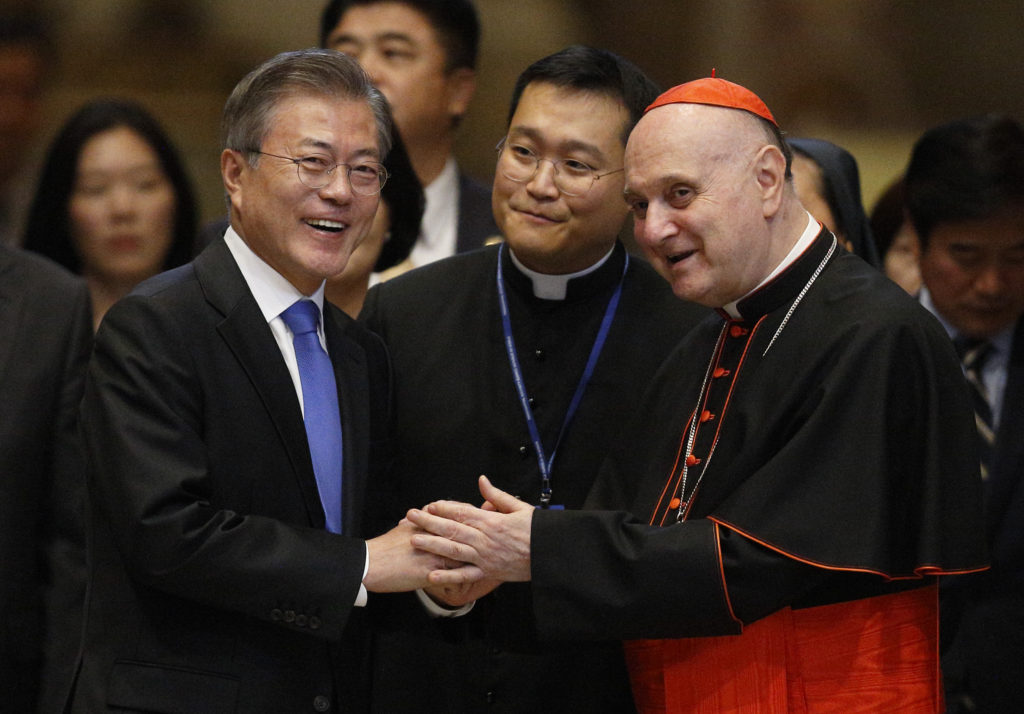
South Korean President Moon Jae-in greets Cardinal Angelo Comastri, archpriest of St. Peter's Basilica, before a Mass for peace for the Korean peninsula in St. Peter's Basilica at the Vatican Oct. 17. The Mass was celebrated by Cardinal Pietro Parolin, Vatican secretary of state. (Paul Haring/CNS) See VATICAN-KOREA Oct. 18, 2018.
South Korean President Moon Jae-in greets Cardinal Angelo Comastri, archpriest of St. Peter’s Basilica, before a Mass for peace for the Korean peninsula in St. Peter’s Basilica at the Vatican Oct. 17. The Mass was celebrated by Cardinal Pietro Parolin, Vatican secretary of state. (Paul Haring/CNS)
By Junno Arocho Esteves Catholic News Service
VATICAN CITY (CNS) — Pope Francis, at a meeting with South Korean President Moon Jae-in, said he is willing to visit North Korea.
North Korean leader Kim Jong-un had asked Moon to tell the pope of the invitation. According to Yonhap, the Korean news agency, Moon’s press secretary told reporters the pope said he would accept “if an (official) invitation arrives and I can go.’”
Meeting the South Korean president Oct. 18, the pope praised Moon’s efforts to promote peace in the Korean peninsula.
“Move forward without stopping. Do not be afraid,” the pope told Moon according to Yonhap.
In a statement released after the meeting, the Vatican said Pope Francis and Moon discussed the Church’s role in promoting “dialogue and reconciliation between Koreans.”
“Strong appreciation was expressed for the common commitment to fostering all useful initiatives to overcome the tensions that still exist in the Korean Peninsula, in order to usher in a new season of peace and development,” the Vatican said.
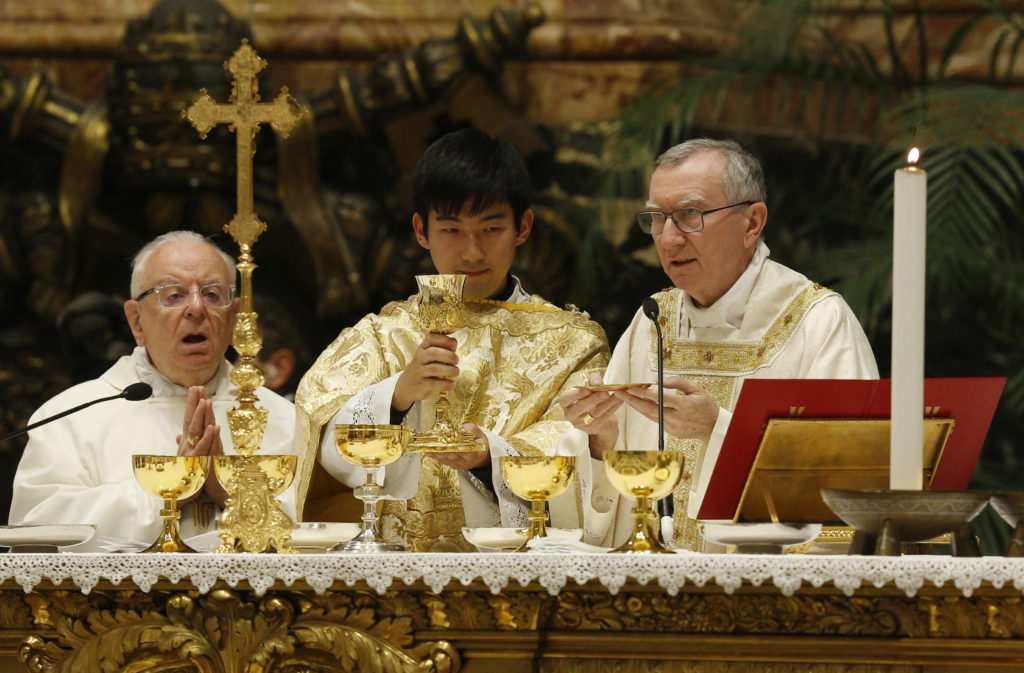
Cardinal Pietro Parolin, Vatican secretary of state, holds the Eucharist as he celebrates a Mass for peace for the Korean peninsula in St. Peter’s Basilica at the Vatican Oct. 17. The Mass was attended by South Korean President Moon Jae-in. (Paul Haring/CNS)
Greeting Moon at the entrance to the library of the Apostolic Palace, the pope said, “Welcome! It is nice to see you.”
“I come here as the (South) Korean head of state but I am also Catholic and my baptismal name is Timothy. And for me it is an honor to meet you,” Moon replied.
The South Korean leader also thanked the pope for taking time to meet him despite his busy schedule during the Synod of Bishops.
According to the Vatican press pool, Pope Francis and Moon spoke privately for more than 30 minutes, assisted by a translator, Korean Fr. Han Hyun-taek.
After their private meeting, Moon presented the pope with a Korean artist’s sculpture of Christ’s face adorned with a crown of thorns. The thorns, Moon explained, “are the sufferings of the Korean people.”
Among the gifts the pope gave Moon was a split medallion held together by an olive tree which he said was “a symbol of peace in the Korean Peninsula.”
Before departing, Moon thanked the pope again for welcoming him and said, “You are not only the head of the Catholic Church, but also a teacher for humanity.”
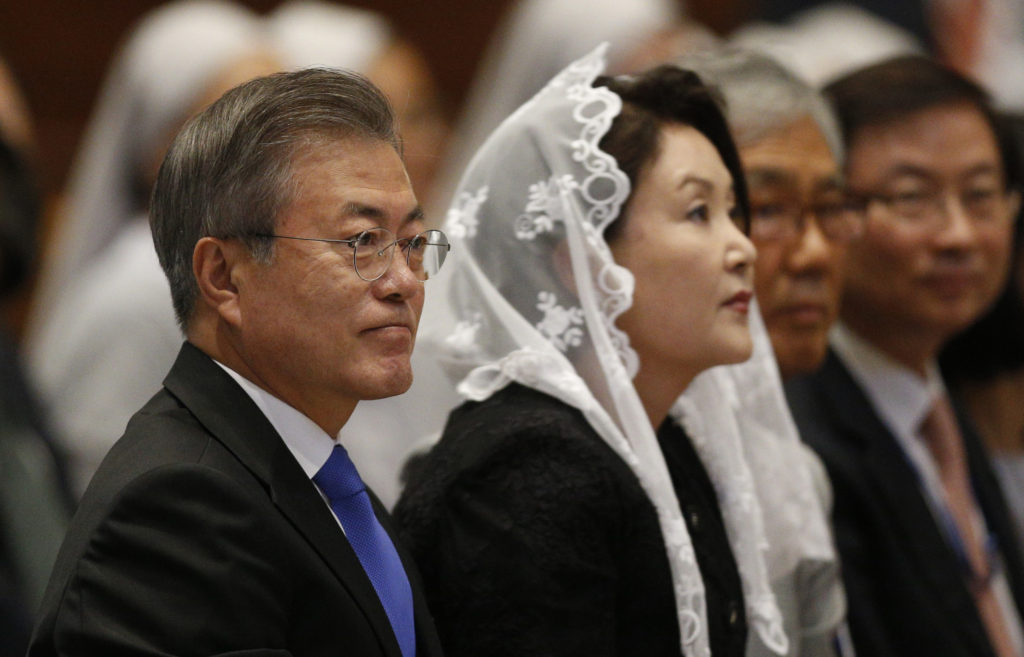
South Korean President Moon Jae-in, left, attends a Mass for peace for the Korean peninsula in St. Peter’s Basilica at the Vatican Oct. 17. The Mass was celebrated by Cardinal Pietro Parolin, Vatican secretary of state. (Paul Haring/CNS)
“I wish you well in your work for peace,” the pope replied.
The evening before his meeting with the pope, President Moon attended a Mass for Peace in the Korean Peninsula presided by Cardinal Pietro Parolin, Vatican secretary of state.
Addressing those present after the Mass, President Moon said the historic signing of the Pyongyang Joint Declaration between North and South Korea as well as their commitment to ending the decades-long military confrontation were “blazing the trail for a noble endeavor that will secure the future of peace for the Korean Peninsula and the whole world.”
“Right now, on the Korean Peninsula, historic and heartwarming changes are taking place,” he said.
President Moon also thanked Pope Francis for blessing “our journey toward peace” and walking “together with us through his prayers.”
“Our prayers today will turn into reality for sure,” he added. “We will achieve peace and overcome division without fail.”
In his homily during the Mass in St. Peter’s Basilica, Cardinal Parolin said that the peace offered by Christ to his disciples after his resurrection is the same peace offered to the hearts of men and women “who search for true life and full joy.”
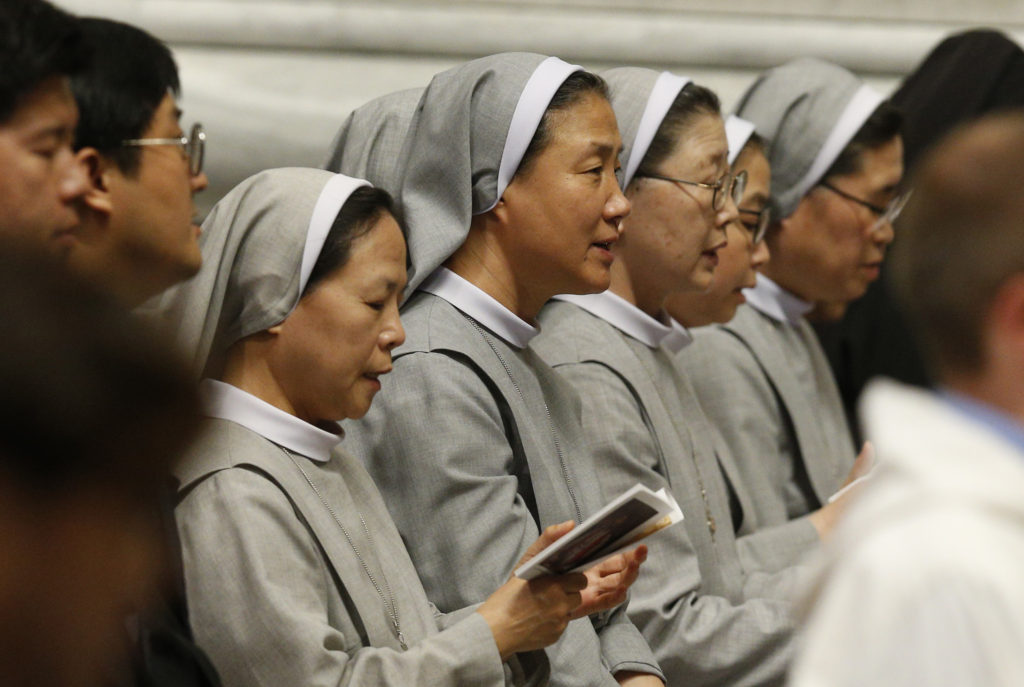
Nuns attend a Mass for peace for the Korean peninsula in St. Peter’s Basilica at the Vatican Oct. 17. The Mass was celebrated by Cardinal Pietro Parolin, Vatican secretary of state, and attended by South Korean President Moon Jae-in. (Paul Haring/CNS)
The first reading from the Book of Deuteronomy — in which God promises the people of Israel that although they are “dispersed to the farthest corner of the heavens, even from there will the Lord, your God, gather you” — reflects the prospects of peace between North and South Korea, he said.
“The wisdom of Scripture makes us understand that only those who have experienced the inscrutable mystery of the apparent absence of God in the face of suffering, oppression and hatred can fully understand what it means to hear the word peace resound again,” the cardinal said.
The Vatican secretary of state said that although peace is built daily through a serious commitment to justice and solidarity as well as the protection of human rights and dignity, it is first and foremost a gift from God that “is not an abstract and distant idea but an experience lived concretely in the daily journey of life.”
The peace that God offers, he added, “is not the fruit of a simple compromise” but involves “all the dimensions of life, even the mysterious ones of the cross and the inevitable sufferings of our earthly pilgrimage.”
“Christian faith,” Cardinal Parolin said, “teaches us that ‘peace without the cross is not the peace of Jesus.’”
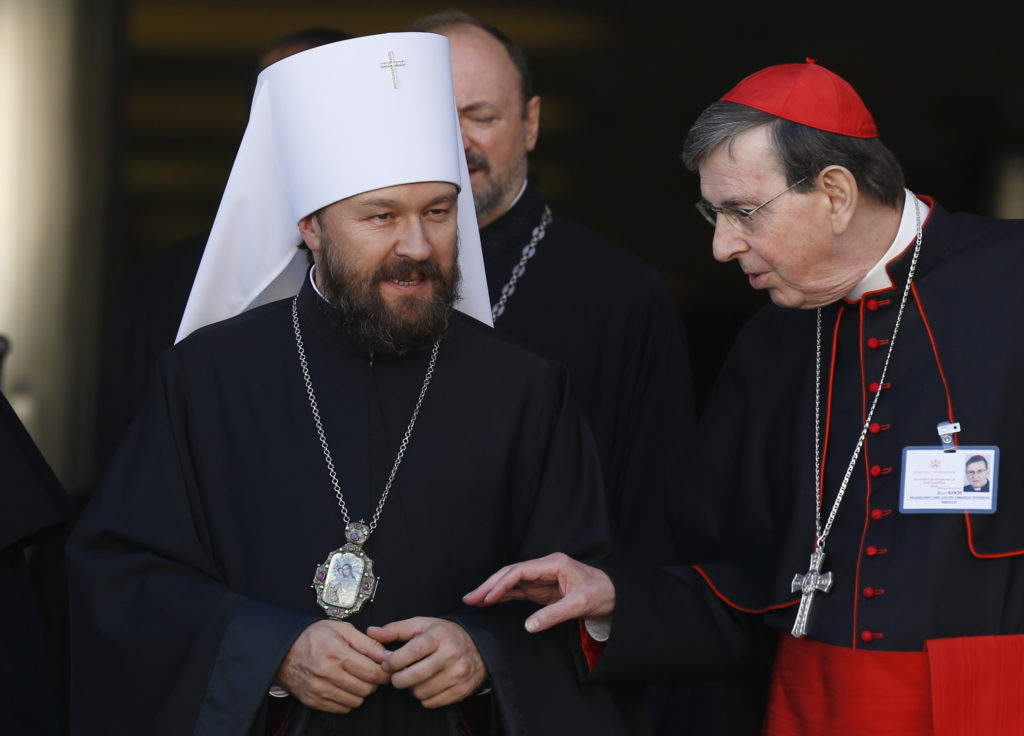
Metropolitan Hilarion of Volokolamsk, head of external relations for the Russian Orthodox Church, and Cardinal Kurt Koch, president of the Pontifical Council for Promoting Christian Unity, leave a session of the Synod of Bishops on young people, the faith and vocational discernment at the Vatican Oct. 18. (Paul Haring/CNS) See SYNOD-POLITICS, SYNOD-HILARION, SYNOD-POLAND and VATICAN-LETTER-VOCATION-DISCERNMENT Oct. 18, 2018.
Metropolitan Hilarion of Volokolamsk, head of external relations for the Russian Orthodox Church, and Cardinal Kurt Koch, president of the Pontifical Council for Promoting Christian Unity, leave a session of the Synod of Bishops on young people, the faith and vocational discernment at the Vatican Oct. 18. (Paul Haring/CNS)
By Cindy Wooden Catholic News Service
VATICAN CITY (CNS) — Firm in their faith in Jesus and working together, Orthodox and Catholic young people can resist forces trying to remove all traces of faith from society and even could reverse that trend, Russian Orthodox Metropolitan Hilarion of Volokolamsk told the Synod of Bishops.
Speaking to the synod Oct. 18 as one of the “fraternal delegates” or ecumenical observers at the gathering, Metropolitan Hilarion said that, since the fall of communism, young people have been returning to the Orthodox Church in Russia.
And, he said, “the upbringing of youth in the Christian spirit is a project that we, the Orthodox, are willing to implement together with the Catholics.”
Since 2015, the Moscow Patriarchate and the Vatican have cooperated to promote exchange programs for their seminarians and young clergy. The Orthodox visit the Vatican and the Catholics spend time in Russia, which “helps us to overcome misconceptions, enriches us spiritually and lays the foundation for cooperation between our Churches.”
At a time when young people are bombarded by conflicting information about what they should want and what they should strive for, Christian leaders must help young people learn the art of discernment, he said.
“The contemporary mission of the Church,” Metropolitan Hilarion said, is “to teach the younger generation to distinguish good from evil, truth from falsehood, the genuine and truly valuable from that which is instant, transient and superficial.”
Young people need the moral values the Church teaches, and they need prayer, liturgy and the sacraments, he said. But “the most important and necessary thing that we can offer all generations is Christ crucified and risen.”
“A cultural, psychological and spiritual abyss separates the contemporary young people from Christ, from his spiritual and moral teaching,” Metropolitan Hilarion said. “Our task is to help young people to overcome this abyss, to feel that they need Christ and that he can transform their life and fill it with content, meaning and inspiration.”




 The Diocese of Phoenix encourages anyone who has been a victim of child sexual abuse or knows of any abuse by any employee or volunteer of the Roman Catholic Church to come forward by reporting to law enforcement, the Department of Child Safety and the Office of Child and Youth Protection.