
Be lifeline of hope for youth alienated from Church, pope tells synod

VATICAN CITY (CNS) — Setting the stage for a monthlong gathering of bishops, Pope Francis urged synod fathers not to be crushed by “prophets of doom,” but to be the signs of hope and joy for which today’s young people yearn.

“Anointed by hope, let us begin a new ecclesial meeting,” he said in his homily at Mass Oct. 3, opening the Synod of Bishops, which was to meet until Oct. 28 to discuss “young people, the faith and vocational discernment.”

The synod comes just a week and a half after the National V Encuentro, which also focused on engaging youth and young adults in the Church.

Filled with hope and faith, he said, the synod members can “broaden our horizons, expand our hearts and transform those frames of mind that today paralyze, separate and alienate us from young people, leaving them exposed to stormy seas, orphans without a faith community that should sustain them, orphans devoid of a sense of direction and meaning in life.”
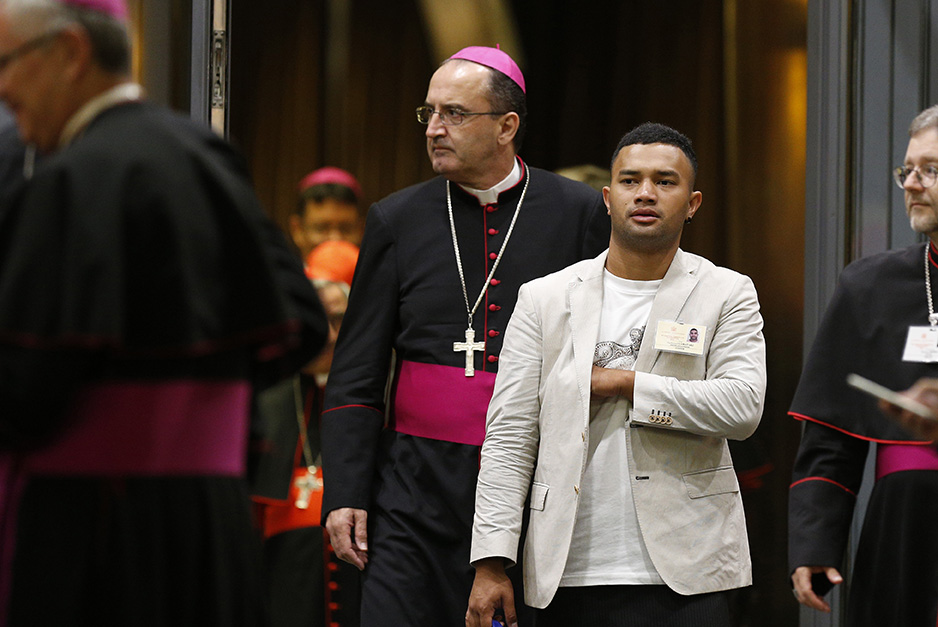
A young adult delegate and bishops leave the opening session of the Synod of Bishops on young people, the faith and vocational discernment at the Vatican Oct 3. (Paul Haring/CNS)

Among the hundreds of synod participants and thousands of guests celebrating Mass in St. Peter’s Square were two bishops from mainland China, the first from the communist country to attend a synod. With his voice shaking, the pope offered them “our warm welcome: the communion of the entire episcopate with the Successor of Peter is yet more visible thanks to their presence.”

Standing in front of St. Peter’s Basilica, which was decorated with a tapestry depicting St. Michael the Archangel battling the devil and one of St. Joseph holding the baby Jesus, Pope Francis told synod participants that young people want help in facing today’s challenges and need their commitment “to work against whatever prevents their lives from growing in a dignified way.”

“They ask us and demand of us a creative dedication, a dynamism which is intelligent, enthusiastic and full of hope,” he said. “They ask us not to leave them alone in the hands of so many peddlers of death who oppress their lives and darken their vision.”

He reminded the bishops that when most of them were young, Blessed Paul VI called on them during the Second Vatican Council to lead the way in renewing the world through Christ.
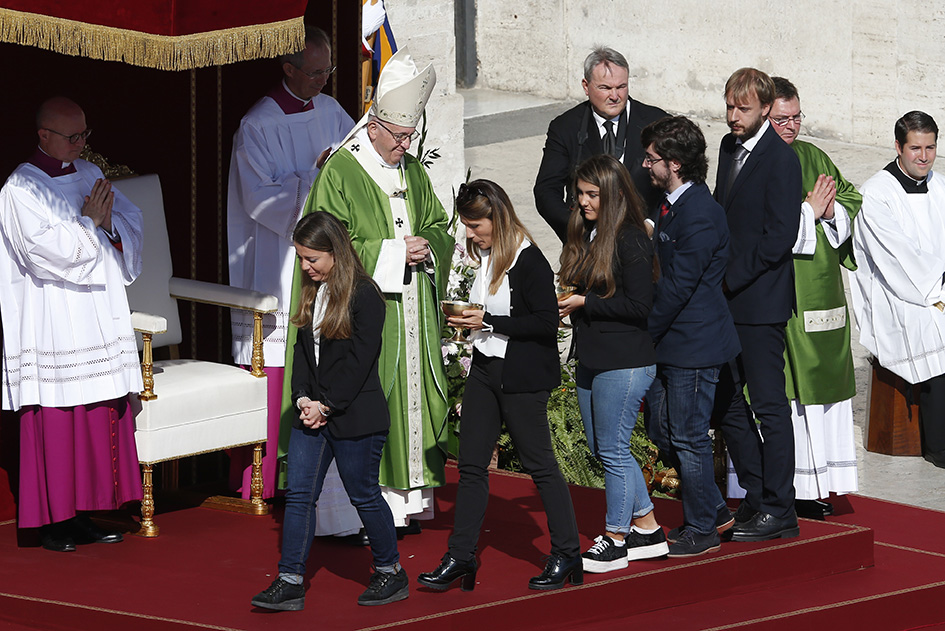
Young people walk away after presenting offertory gifts to Pope Francis during the opening Mass of the Synod of Bishops on young people, the faith and vocational discernment at the Vatican Oct 3. (Paul Haring/CNS)

Quoting the soon-to-be saint’s message to young people in 1965, the pope recalled how the Church was depending on them — as young people of the day and the future of the Church — to “express your faith in life” and faith in “a good and just God.”

The late pope, he said, called on them to be open to the world, listen to and serve their brothers and sisters, “fight against all egoism. Refuse to give free course to the instincts of violence and hatred which beget wars and all their train of miseries. Be generous, pure, respectful and sincere, and build in enthusiasm a better world than your elders had.”

The memory of Blessed Paul’s appeal and of the bishops’ own youthful faith and passion for Christ must be rekindled “and renew in us the capacity to dream and to hope,” Pope Francis said. “For we know that our young people will be capable of prophecy and vision to the extent that we, who are already adult or elderly, can dream and thus be infectious in sharing those dreams and hopes that we carry in our hearts.”

May this memory never be “extinguished or crushed by the prophets of doom and misfortune, by our own shortcomings, mistakes and sins,” he added.
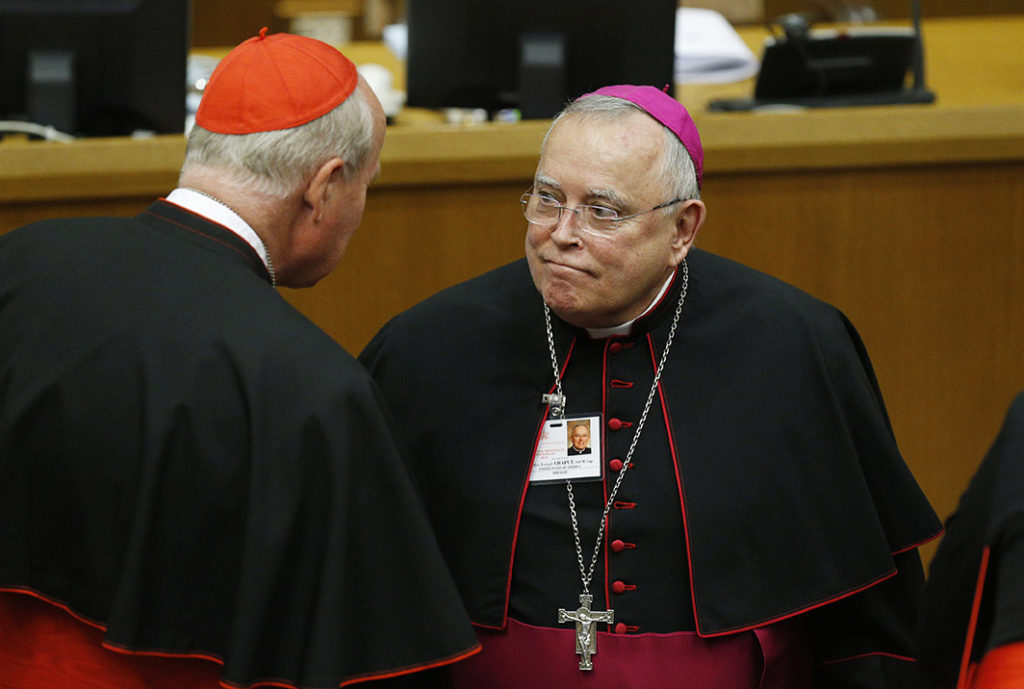
Archbishop Charles J. Chaput of Philadelphia talks with Cardinal Christoph Schonborn of Vienna, Austria, before the opening session of the Synod of Bishops on young people, the faith and vocational discernment at the Vatican Oct 3. (Paul Haring/CNS)

The pope asked synod members to participate in the upcoming discussions with an “attitude of docile listening to the voice of the Spirit” and to each other “to discern together what the Lord is asking of His Church.”

“This demands that we be really careful against succumbing to a self-preservation and self-centeredness which gives importance to what is secondary, yet makes secondary what is important,” the pope said.

With love for the Gospel and the faithful, synod members must aim to follow God’s will and “an even greater good that will benefit all of us. Without this disposition, all of our efforts will be in vain.”

“The gift of that ability to listen, sincerely and prayerfully, as free as possible from prejudice and conditioning, will help us to be part of those situations which the people of God experience,” he said.
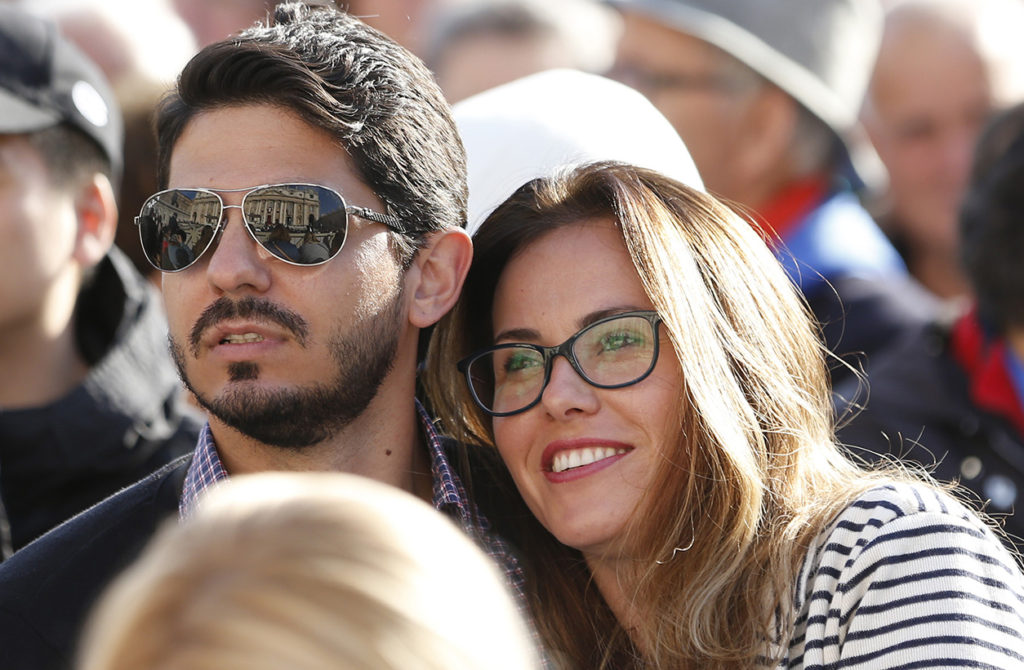
A couple waits for the start of Pope Francis’ celebration of the opening Mass of the Synod of Bishops on young people, the faith and vocational discernment at the Vatican Oct 3. (Paul Haring/CNS)

Listening to God and listening to the people reflecting on what they hear God calling them to is the approach the synod should take, the pope said, because it will protect “us from the temptation of falling into moralistic or elitist postures, and it protects us from the lure of abstract ideologies that never touch the realities of our people.”

Among the prayers of the faithful was, in Chinese, the prayer that the spirit of wisdom and discernment help the pope and bishops “seek the truth with an open heart and in all things be obedient” to God’s will.

At the end of Mass, the pope walked along the rows, greeting and speaking briefly one-by-one with the bishops and special delegates attending the synod. He also greeted the faithful and visitors in the square from his popemobile as the bells of the basilica rang.

Among those in St. Peter’s Square was Dcn. Javier Ayala of Santiago, Chile, a member of the Legionaries of Christ, studying in Rome.

He told Catholic News Service it was now “time for the bishops to reflect on these conclusions and to find the best way to reach out to young people.”
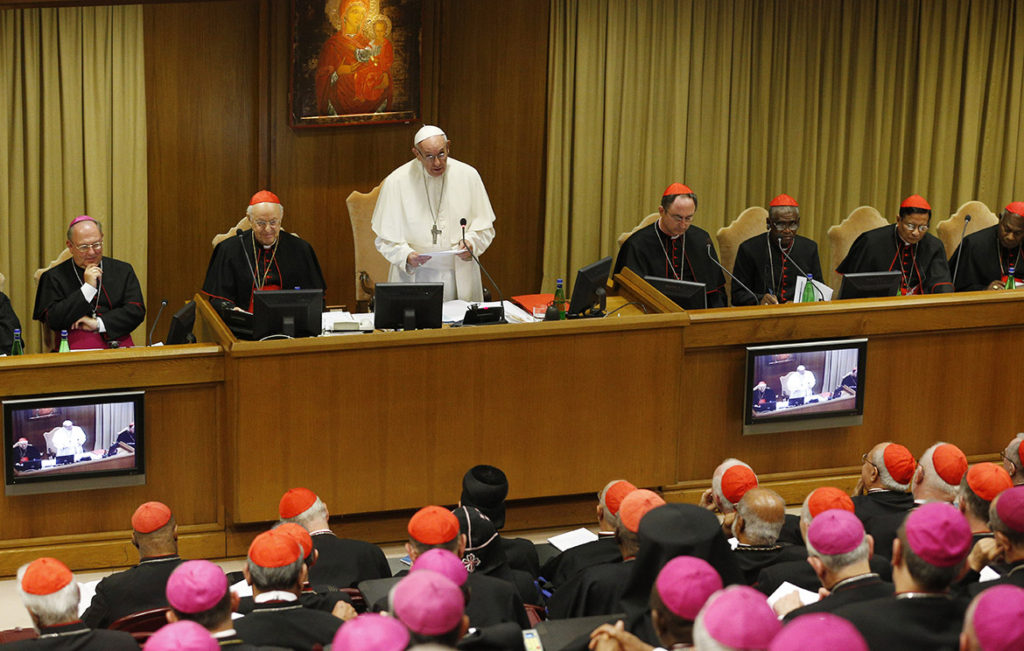
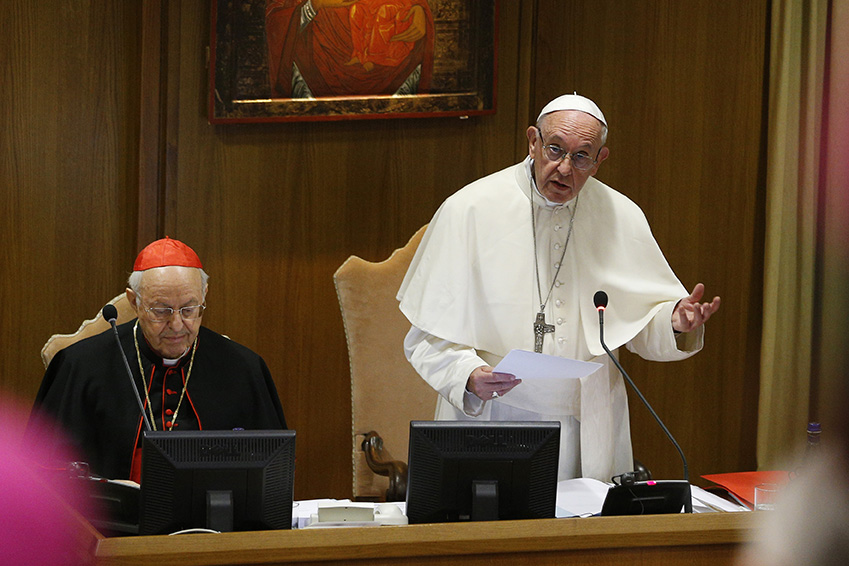
Pope Francis addresses the opening session of the Synod of Bishops on young people, the faith and vocational discernment at the Vatican Oct 3. (Paul Haring/CNS)

Dcn. Ayala, who is to be ordained a priest in Rome next year, assisted in the presynod process of collecting thousands of responses to a questionnaire and feedback via social media from young people; he also took part in a presynod meeting of young people in Rome in March.

“The Church is a mother and she knows that there are many young people outside and wants to call them; she wants to invite them because (the Church) isn’t just another institution. She wants to lead them to Jesus Christ who is the way, the truth and the life,” he said.

Many young people, he told CNS, said they need to be accompanied and need witnesses who are “happy, humble and close.”

“We shouldn’t expect precise solutions from the synod nor calculations,” he said. The point of the synod is “to keep reflecting on the best pastoral ways to reach young people. I don’t think this is an ending point, but rather a starting point that is part of the new evangelization of the Church.”
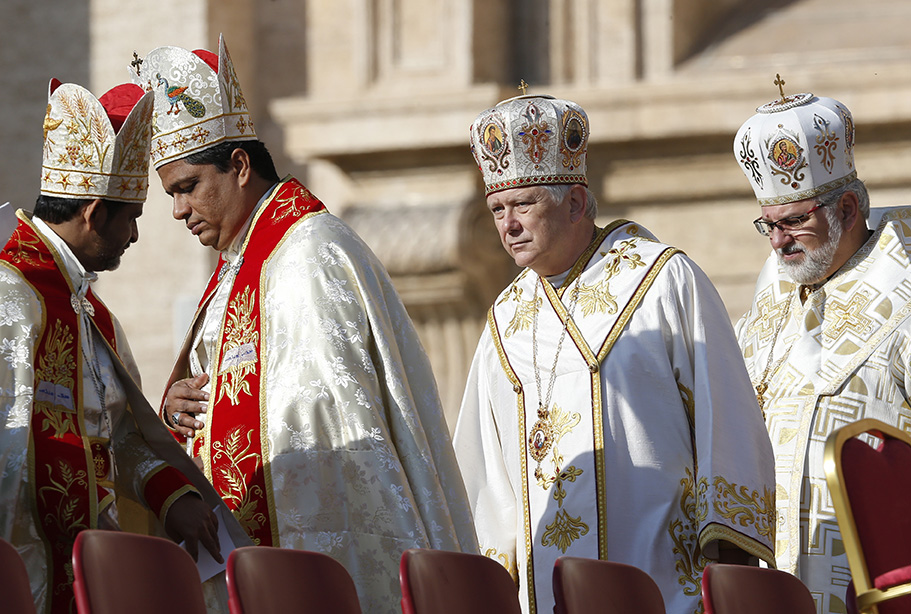
Byzantine Catholic Archbishop William C. Skurla of Pittsburgh and former bishop of the Byzantine Eparchy of Phoenix (center), Ukrainian Catholic Bishop Bryan Bayda of Saskatoon, Saskatchewan (right) and other prelates arrive for Pope Francis’ celebration of the opening Mass of the Synod of Bishops on young people, the faith and vocational discernment at the Vatican Oct 3. (Paul Haring/CNS)

Pope asks bishops, young people to drop their prejudices as synod begins

At the synod’s first working session, Pope Francis asked bishops to be bold, honest, open-minded, charitable and, especially, prayerful. While many young people think no older person has anything useful to teach them for living today, the pope said, the age of the bishops, combined with clericalism, can lead “us to believe that we belong to a group that has all the answers and no longer needs to listen or learn anything.”

“Clericalism is a perversion and is the root of many evils in the Church,” Pope Francis said. “We must humbly ask forgiveness for this and above all create the conditions so that it is not repeated.”

The pope formally welcomed 267 bishops and priests as voting members of the synod, eight fraternal delegates from other Christian churches and another 72 young adults, members of religious orders and lay men and women observers and experts at the synod, which will meet through Oct. 28.

He also thanked the thousands of young people who responded to a Vatican questionnaire, participated in a presynod meeting in March or spoke to their bishops about their concerns. With the gift of their time and energy, he said, they “wagered that it is worth the effort to feel part of the Church or to enter into dialogue with her.”

They showed that, at least on some level, they believe the Church can be a mother, teacher, home and family to them, he said. And they are asserting that “despite human weaknesses and difficulties,” they believe the Church is “capable of radiating and conveying Christ’s timeless message.”
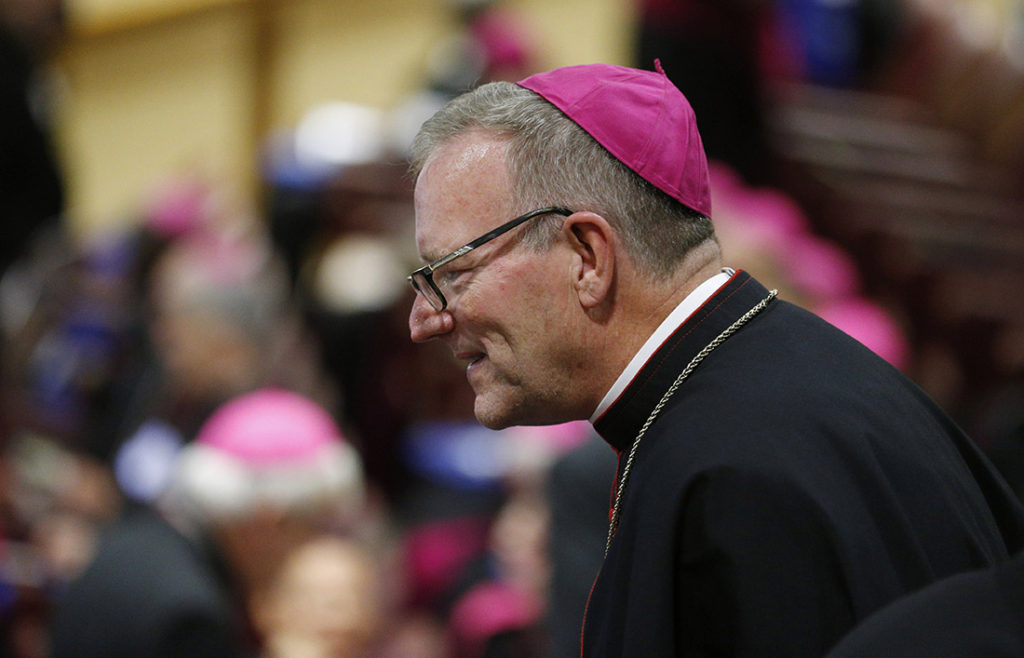
Los Angeles Auxiliary Bishop Robert E. Barron is seen during the opening session of the Synod of Bishops on young people, the faith and vocational discernment at the Vatican Oct 3. (Paul Haring/CNS)

“Our responsibility here at the synod,” the pope said, “is not to undermine them, but rather to show that they are right to wager: It truly is worth the effort, it is not a waste of time!”

Pope Francis began the synod with an invitation that every participant “speak with courage and frankness” because “only dialogue can help us grow.”

But he also asked participants to be on guard against “useless chatter, rumors, conjectures or prejudices” and to be humble enough to listen to others.

Many of the synod participants arrived in Rome with the text of the three-minute speech they intended to give, but the pope asked them “to feel free to consider what you have prepared as a provisional draft open to any additions and changes that the synod journey may suggest to each of you.”

A willingness to “change our convictions and positions,” he said, is “a sign of great human and spiritual maturity.”

The synod is designed to be an “exercise in discernment,” the pope told them. “Discernment is not an advertising slogan, it is not an organizational technique or a fad of this pontificate, but an interior attitude rooted in an act of faith.”
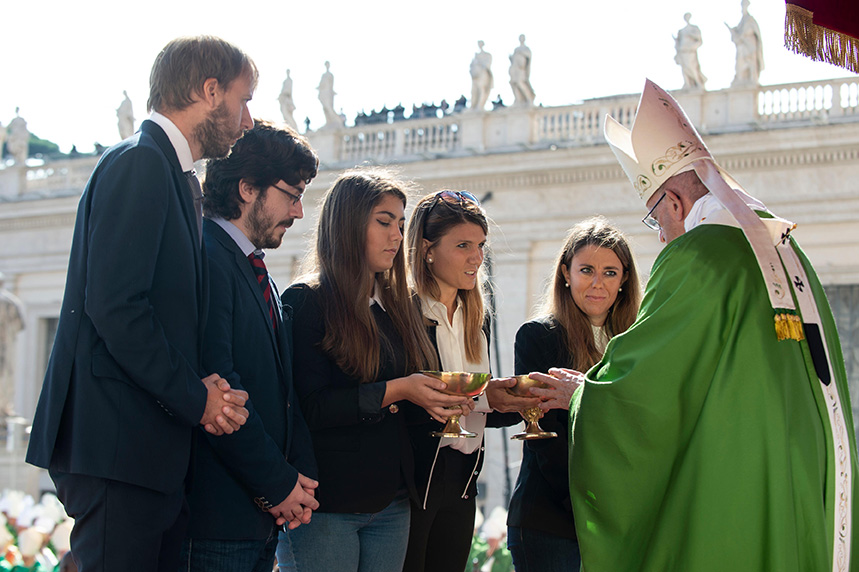
Pope Francis accepts offertory gifts as he celebrates the opening Mass of the Synod of Bishops on young people, the faith and vocational discernment at the Vatican Oct 3. (CNS, via Vatican Media)

Discernment “is based on the conviction that God is at work in world history, in life’s events, in the people I meet and who speak to me,” he said. It requires listening and prayer, which is why the pope has added a rule that after every five speeches there will be a three-minute pause for silent reflection and prayer.

Listening to the Spirit, listening to God in prayer and listening to the hopes and dreams of young people are part of the Church’s mission, the pope said. The preparatory process for the synod “highlighted a Church that needs to listen, including to those young people who often do not feel understood by the Church” or feel they “are not accepted for who they really are, and are sometimes even rejected.”

Listening to each other, especially young people and bishops listening to each other, he said, is the only way the synod can come to any helpful suggestions for leading more young people to the faith or for strengthening the faith of young people involved in Church life.

“Adults should overcome the temptation to underestimate the abilities of young people and (should) not judge them negatively,” he said. “I once read that the first mention of this fact dates back to 3000 B.C. and was discovered on a clay pot in ancient Babylon, where it is written that young people are immoral and incapable of saving their people’s culture.”
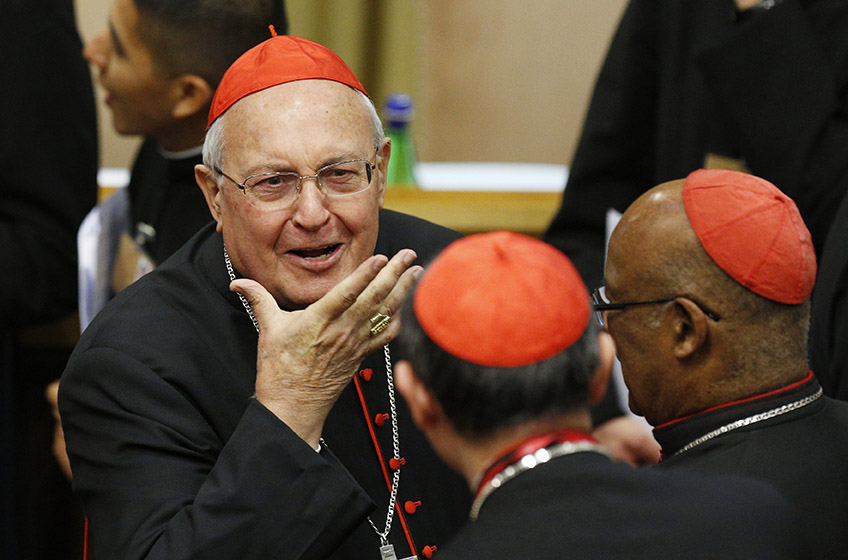
Cardinal Leonardo Sandri, prefect of the Congregation for Eastern Churches, talks with Cardinal Luis Antonio Tagle of Manila, Philippines, before the opening session of the Synod of Bishops on young people, the faith and vocational discernment at the Vatican Oct 3. Also pictured is Cardinal Wilfrid Napier of Durban, South Africa, right. (Paul Haring/CNS)

Young people, too, he said, must “overcome the temptation to ignore adults and to consider the elderly ‘archaic, outdated and boring,’ forgetting that it is foolish always to start from scratch as if life began only with each of them.”

Pope Francis, who was asked by some bishops to postpone the synod because of the clerical sexual abuse scandal, said he knows the present moment is “laden with struggles, problems, burdens. But our faith tells us that it is also the ‘kairos’ (opportune moment) in which the Lord comes to meet us in order to love us and call us to the fullness of life.”

The goal of the synod, Pope Francis said, is not to prepare a document — synod documents, he said, generally are “only read by a few and criticized by many” — but to identify “concrete pastoral proposals” that would help all Church members reach out to, walk with and support the faith of young people.

In other words, he said, the goal is “to plant dreams, draw forth prophecies and visions, allow hope to flourish, inspire trust, bind up wounds, weave together relationships, awaken a dawn of hope, learn from one another and create a bright resourcefulness that will enlighten minds, warm hearts, give strength to our hands and inspire in young people — all young people, with no one excluded — a vision of the future filled with the joy of the Gospel.”


Contributing to this story was Carol Glatz, Junno Arocho Esteves and  Cindy Wooden at the Vatican.

Poll: Pope’s favorability numbers down, and worse for handling of abuse

Pope Francis addresses the opening session of the Synod of Bishops on young people, the faith and vocational discernment at the Vatican Oct 3. In an Oct. 2 Pew Research Center poll, U.S. Catholics by a 2-to-1 margin feel Pope Francis is doing a fair or poor job on the clergy sex abuse issue. (Paul Haring/CNS) See POPE-SYNOD-BEGINS Oct. 3, 2018.
Pope Francis addresses the opening session of the Synod of Bishops on young people, the faith and vocational discernment at the Vatican Oct 3. In an Oct. 2 Pew Research Center poll, U.S. Catholics by a 2-to-1 margin feel Pope Francis is doing a fair or poor job on the clergy sex abuse issue. (Paul Haring/CNS)
The full Pew Survey on the pope’s favorability ratings among U.S. Catholics can be found here.
Office of Child and Youth Protection

The Diocese of Phoenix encourages anyone who has been a victim of child sexual abuse or knows of any abuse by any employee or volunteer of the Roman Catholic Church to come forward by reporting to law enforcement, the Department of Child Safety and the Office of Child and Youth Protection.
FILE A REPORT

MORE INFORMATION


Safe Environment Training

The mission of the Safe Environment Training Office is to prevent sexual, physical or emotional abuse and/or neglect of children and young people through continued education, building awareness, and maintaining a commitment to keeping all children and young people safe.

MORE INFORMATION

By Mark Pattison
Catholic News Service

WASHINGTON (CNS) — With Pope Francis midway into the sixth year of his pontificate, the percentage of U.S. Catholics who view him favorably, while still strong, is noticeably down.

And, compared to a January poll by the Pew Research Center that showed Catholics being evenly split on how well Pope Francis has handled the issue of clergy sex abuse, numbers in the new poll, released Oct. 2, show that twice as many Catholics feel he is doing only a fair or poor job on the issue than say he is doing a good or excellent job.

The overall favorability number for the pope is 72 percent, split between 42 percent of Catholics who see him “mostly favorable” and 30 percent who view him “very favorable.” The latter number down a third from the last Pew poll last January, when Pope Francis had been at 84 percent favorability. The 72 percent figure is lower than Pew’s favorability findings for Pope Benedict XVI except for its first poll asking the question shortly after Pope Benedict assumed the papacy in 2005.

Pope Francis’ lowest favorability numbers are among Catholic men, at 66 percent, and Catholic Republicans or those who lean Republican, at 61 percent. They are highest among Catholic Democrats or those who lean Democratic, at 83 percent, and Catholic women, at 77 percent. The percentage of Catholics overall who view him unfavorably, though, more than doubled, from 9 percent to 20 percent.

“The new study also shows that U.S. Catholics’ views of Pope Francis are increasingly polarized along political lines,” said the Pew report on its poll. “For instance, in 2014, there was virtually no difference in views of Pope Francis” between Democrats and Republicans, with the latter giving him a 90 percent favorable rating and Democrats giving him an 87 percent mark.

The pope’s favorability numbers also suffered among white evangelical Protestants, from 52 percent in January to 32 percent in September; white mainline Protestants, from 67 percent to 48 percent; and religiously unaffiliated adults, from 58 percent to 53 percent. Still, 51 percent of all Americans view him favorably.

Sixty-two percent of Catholics believe Pope Francis is doing only a fair or poor job handling the abuse crisis, compared to 46 percent in January. Those who believe he is doing an excellent or good job shrunk from 45 percent in January to 31 percent in September.

The drop is most pronounced among men and Catholics ages 18-49, with both groups registering under 30 percent in the latest poll who say he is doing a good or excellent job, although the numbers among those who attend Mass at least weekly nosedived from 71 percent to 34 percent.

In other areas of Church life, Catholics gave Pope Francis higher marks, although those numbers also declined.

In terms of standing up for traditional morals, 56 percent said the pope was doing an excellent or good job, down from 81 percent in the first Pew poll assessing Catholic opinion of Pope Francis in 2014, while those who say he is doing only a fair or poor job more than doubled from 15 percent to 36 percent.

When it comes to spreading the Catholic faith, Pope Francis dipped from 81 percent in 2014 to 56 percent in September among those saying he is doing a good or excellent job, while those who say he is doing only fair or poor climbed from 14 percent to 27 percent.

On the issue of appointing new bishops and cardinals, Pope Francis dropped from 58 percent in the “good/excellent” category in January to 43 percent in that category in September, while those who say he is doing only a fair or poor job rose from 24 percent to 39 percent.

The poll was taken in the wake of allegations by Archbishop Carlo Maria Viganò, the former papal nuncio to the United States, that Pope Francis knew about restrictions having been placed on the ministry of then-Cardinal Theodore E. McCarrick over allegations of sexual misconduct yet did nothing about them. Archbishop Viganò has demanded that the pope resign in the wake of his charges.

The results were based on phone interviews conducted Sept. 18-24 of 1,754 Americans, including 336 Catholics. The margin of error for all poll respondents is 2.7 percentage points, and 6.2 percentage points for Catholics, while the margin of error is larger for subgroups within the Catholic sample, peaking at 10.2 percent for Catholics ages 18-49 and those who attend Mass at least weekly.

Love can make darkness of euthanasia disappear, pope says

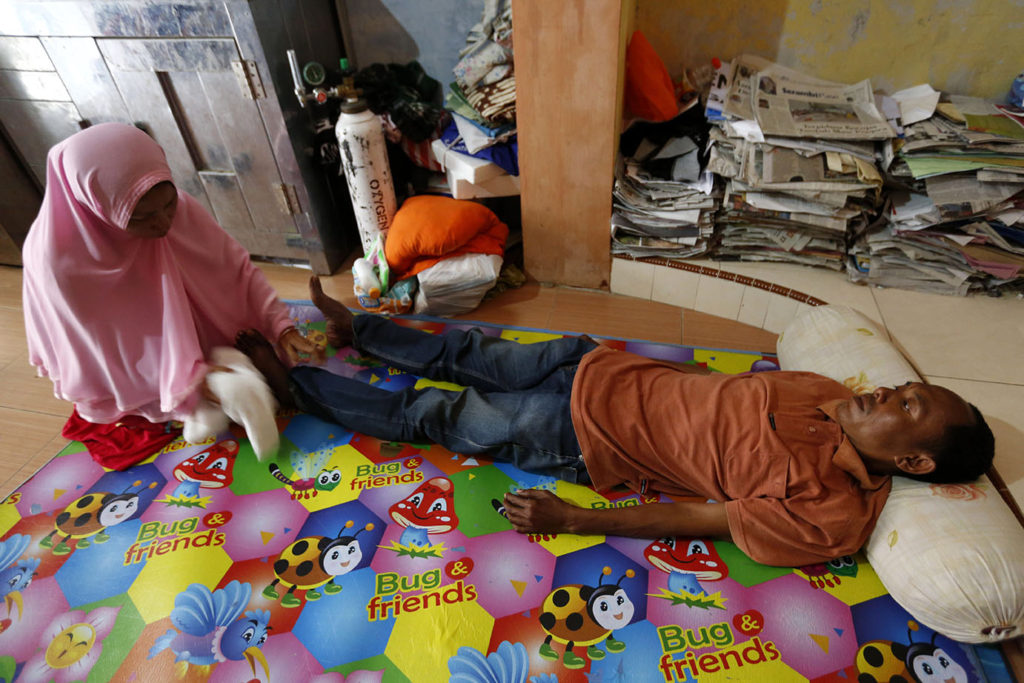
A terminally ill man in Banda Aceh, Indonesia, is seen with his wife May 4, 2017. He asked the Indonesian court to grant him legal permission for euthanasia. (Hotli Simanjuntak/CNS, via EPA)

By Junno Arocho Esteves
Catholic News Service

VATICAN CITY (CNS) — Caring for the sick, especially those near death, cannot be reduced simply to giving them medicine, but must include providing healing and comfort that gives their lives value and meaning, Pope Francis said.

“Serene and participatory human accompaniment” of terminally ill patients is crucial at a time when there is a “nearly universal” push for legalizing euthanasia, the pope said Oct. 1.

“Especially in those difficult circumstances, if the person feels loved, respected and accepted, the negative shadow of euthanasia disappears or is made almost nonexistent because the value of his or her being is measured by the ability of giving and receiving love and not by his or her productivity,” he told participants in a five-day conference on ethical health care at the Vatican.

The Oct. 1-5 conference was sponsored by the Pontifical Academy for Life and led by Auxiliary Bishop Alberto Bochatey of La Plata, Argentina, and the Health Consensus Foundation, an Argentina-based organization comprised of local and international health care providers, according to the conference website.

The meeting, it said, focused on helping health care managers develop a “concept of bioethics in decision-making.”

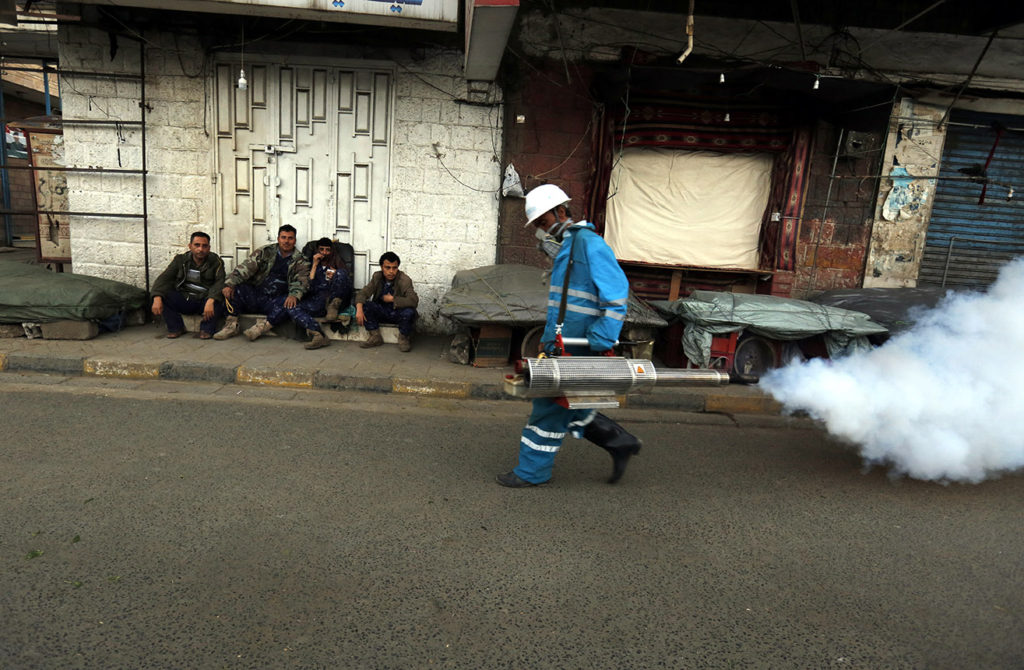
A Yemeni health worker fumigates a neighborhood June 7 amid fears of a cholera outbreak in Sanaa, Yemen. (Yahya Arhab/CNS, via EPA)

In his address, the pope told participants that health care, especially in Latin America, is in turmoil due to the economic crisis facing several countries, causing difficulties in developing new treatments and providing adequate access to therapies and medicine.

Although doctors and health care providers may agree that miracles aren’t feasible when it comes to health care, the pope said that the true miracle is “finding a brother in the sick, in the abandoned person in front of us.”

“We are called to recognize in those who are on the receiving end the immense value of their dignity as a human being, as a child of God,” he said. “It isn’t something that can, on its own, undo all the knots that objectively exist in systems, but it will create in us the disposition to untie them in the measure of our possibilities and, additionally, make way for a change of mentality within us and society.”

The primary inspiration for people working in the field of health care, the pope added, should be the “search for the common good” which isn’t an abstract ideal but “a concrete person, with a face, that suffers many times.”

Pope Francis also encouraged them to “be brave and generous” when caring for their patients, “especially the poorest, who will know how to appreciate your efforts and initiatives.”

“We must continue to fight to keep this link of profound humanity intact,” the pope said, “because no health care institution can replace the human heart or human compassion.”

Retired Tucson bishop named apostolic administrator of New Mexico diocese

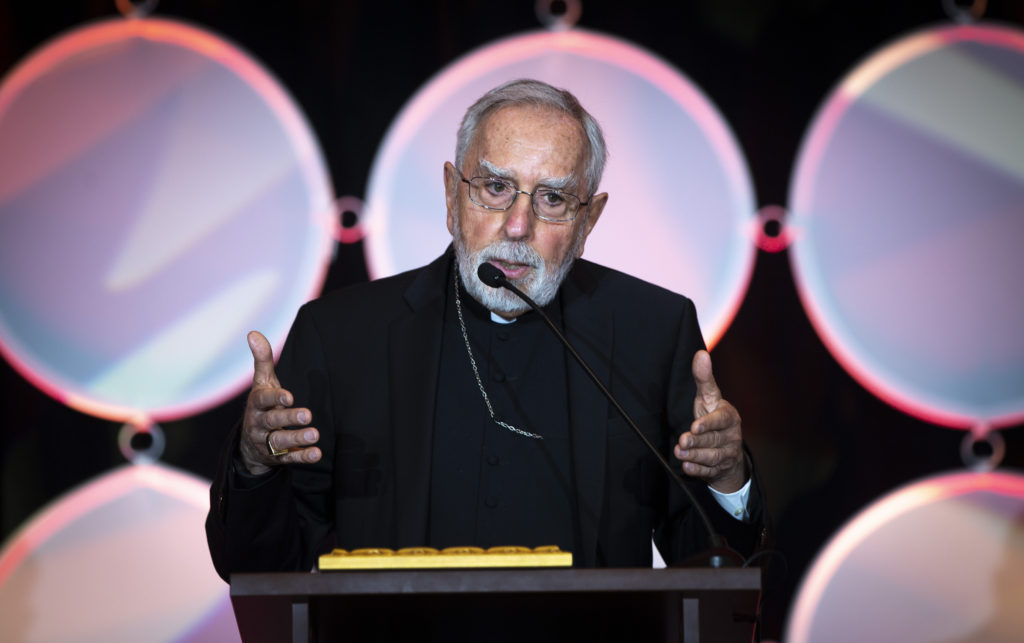
Retired Bishop Gerald F. Kicanas of Tucson addresses the Catholic Media Conference in Green Bay, Wis., June 14 as he accepts the Bishop John England Award. The Catholic Press Association gives the England award each year to honor a publisher of a Catholic publication who used the Catholic press to defend the rights of religion and individuals in a free society. (Chaz Muth/CNS) See CMC-ENGLAND-AWARD June 14, 2018.
Retired Bishop Gerald F. Kicanas of Tucson addresses the Catholic Media Conference in Green Bay, Wis., June 14 as he accepts the Bishop John England Award. Bishop Kicanas was named the apostolic administrator of the Diocese of Las Cruces, New Mexico Sept. 28 to serve until a bishop can be named. (Chaz Muth/CNS)

TUCSON, Ariz. (CNS) — Retired Bishop Gerald F. Kicanas of Tucson has been named apostolic administrator of the Diocese of Las Cruces, New Mexico.

The Las Cruces Diocese announced Sept. 28 that Pope Francis appointed Bishop Kicanas to the post.

On July 11, Pope Francis named Bishop Oscar Cantú of Las Cruces to be coadjutor bishop of the Diocese of San Jose, California. He remained head of the New Mexico Diocese until Sept. 28 when he was welcomed to the San Jose Diocese with a special Mass.

As apostolic administrator, Bishop Kicanas will have oversight powers of a local bishop until a new bishop is named.

“I have had the joy of visiting the Diocese of Las Cruces on a number of occasions,” Bishop Kicanas said in a statement. “I admire the clergy, religious and parishioners of the diocese and have been impressed by their commitment to the pastoral mission to this local Church.”

“I hope to do what I can to support the Church until a new bishop is appointed,” he added. “Please keep me in your prayers.”

Bishop Kicanas, now 77, retired in October 2017. His successor, Bishop Edward J. Weisenburger, was installed as the eighth bishop of Tucson that November.

“It is a great tribute to Bishop Kicanas’ many gifts and talents that the Holy Father has appointed him to care for the faithful in Las Cruces during this time of transition,” said Bishop Weisenburger. He called on priests, deacons, religious and all diocesan employees and volunteers to join him in congratulating and praying for the bishop in this new position.

Bishop Kicanas currently serves as the chairman of the board for the National Catholic Educational Association and vice chancellor for Chicago-based Catholic Extension, a national organization that raises and distributes funds to support the ministry of U.S. mission dioceses, like Las Cruces and Tucson.

The 10-county New Mexico diocese was founded in 1982. It serves about 234,550 Catholics through 47 parishes, 44 missions and six Catholic schools.

Bishop Cantú, 51, had headed the Diocese of Las Cruces since February 2013. He was an auxiliary bishop of San Antonio for five years. The San Jose Diocese is headed by Bishop Patrick J. McGrath, who turned 73 June 11 and has headed the diocese since 1999.

A coadjutor automatically becomes the head of the diocese upon the death or retirement of its bishop.

Networks, not division: Pope chooses 2019 Communications Day theme

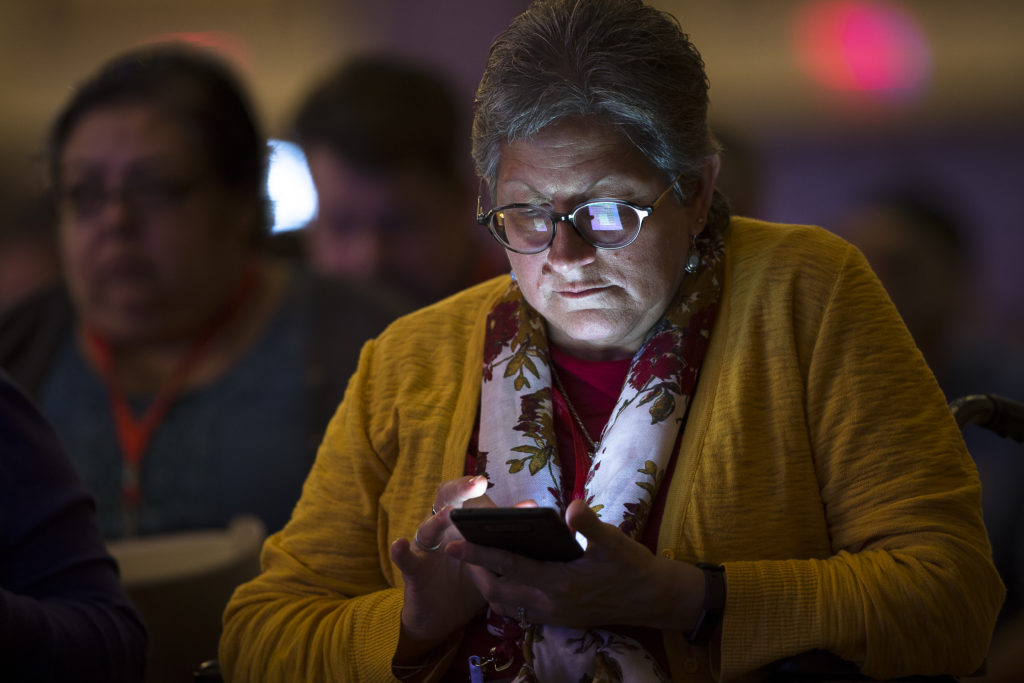
A delegate at the Fifth National Encuentro in Grapevine, Texas, checks the internet Sept. 21. Paolo Ruffini, the new prefect of the Dicastery for Communication said Sept. 29 that Christians must do more to make sure the media, especially social networks, are places of dialogue and respect for others, rather than instruments for highlighting differences and increasing divisions. (Tyler Orsburn/CNS)

By Cindy Wooden
Catholic News Service

VATICAN CITY (CNS) — Christians must do more to make sure the media, especially social networks, are places of dialogue and respect for others, rather than instruments for highlighting differences and increasing divisions, said the prefect of the Vatican communications office.

“The risk in our time is that of forming tribes instead of communities — tribes based on the exclusion of the other,” said Paolo Ruffini, the new prefect of the Dicastery for Communication.

Ruffini spoke to Vatican News Sept. 29, the same day the Vatican released the theme Pope Francis chose for World Communication Day 2019: “We are members one of another: From network community to human communities.”

The theme is a call for “reflection on the current state and nature of relationships on the internet, starting from the idea of community as a network between people in their wholeness,” the Vatican said. “The metaphor of the web as a community of solidarity implies the construction of an ‘us’ based on listening to the other, on dialogue and consequently on the responsible use of language.”

The Vatican and many dioceses mark World Communication Day on the Sunday before Pentecost; in 2019 that will be June 2. Pope Francis usually issues a message on the theme, which the Vatican publishes Jan. 24, the feast of St. Francis de Sales, patron saint of journalists.

Social media can nourish “true, beautiful, solid relationships,” Ruffini told Vatican News, but it also can “feed hatred and a friend or enemy mechanism. When this happens, there is no real relationship.”

Pope Francis, he said, wants people to use social media as a network, not a web, “not something that traps you, but something that frees you and that you make an instrument of freedom.”

Feast of St. Thérèse of Lisieux

This statue of St. Thérèse of Lisieux is found at St. Theresa Parish in Phoenix. (Gina Keating/CATHOLIC SUN)
This mural of St. Thérèse of Lisieux is found at St. Theresa Parish in Phoenix. (Gina Keating/CATHOLIC SUN)
This statue of St. Thérèse of Lisieux is found at St. Theresa Parish in Phoenix. (Gina Keating/CATHOLIC SUN)

Oct. 1

Left motherless at 4, she followed two older sisters into the Carmelites, entering at 15 as Sister Thérèse of the Infant Jesus. Poor health made her dream of missionary work impossible. In 1896 she contracted tuberculosis and died after months of suffering.

Posthumous publication of her autobiography, “The Story of a Soul,” prompted popular devotion. The “Little Flower” is remembered for her “little way” of seeking perfection in the ordinary with a simple but total trust in God.

She is the patroness of St. Theresa Parish and School in Phoenix and Santa Teresita Parish in El Mirage.

Feast of St. Michael the Archangel

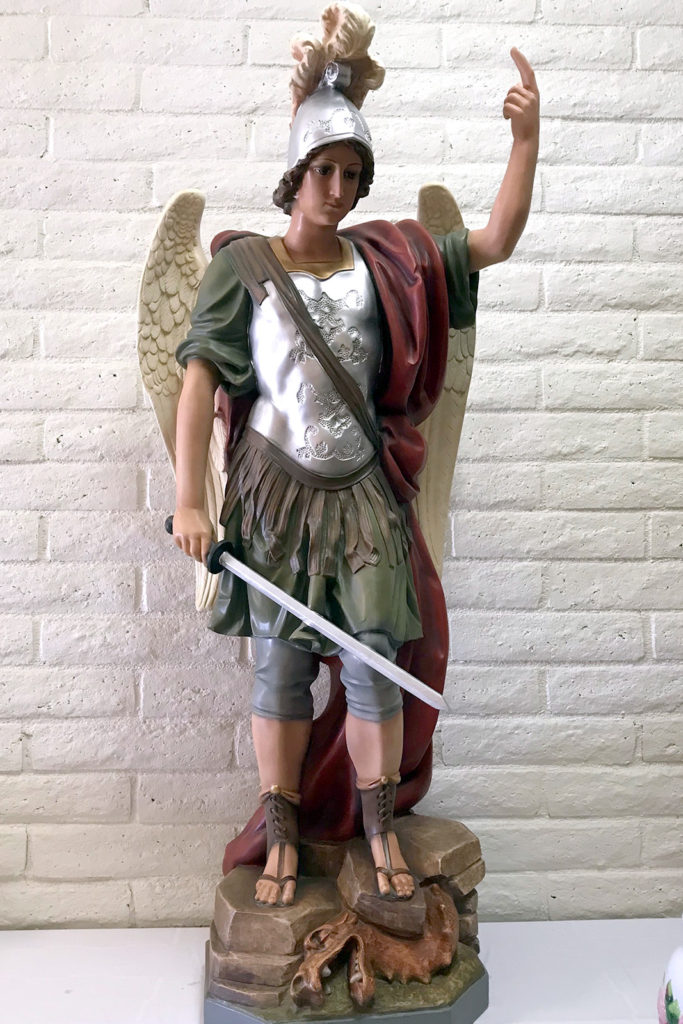
This statue of St. Michael the Archangel is found at St. Michael Parish in Gila Bend. (Courtesy of Fr. Joy Vargas)
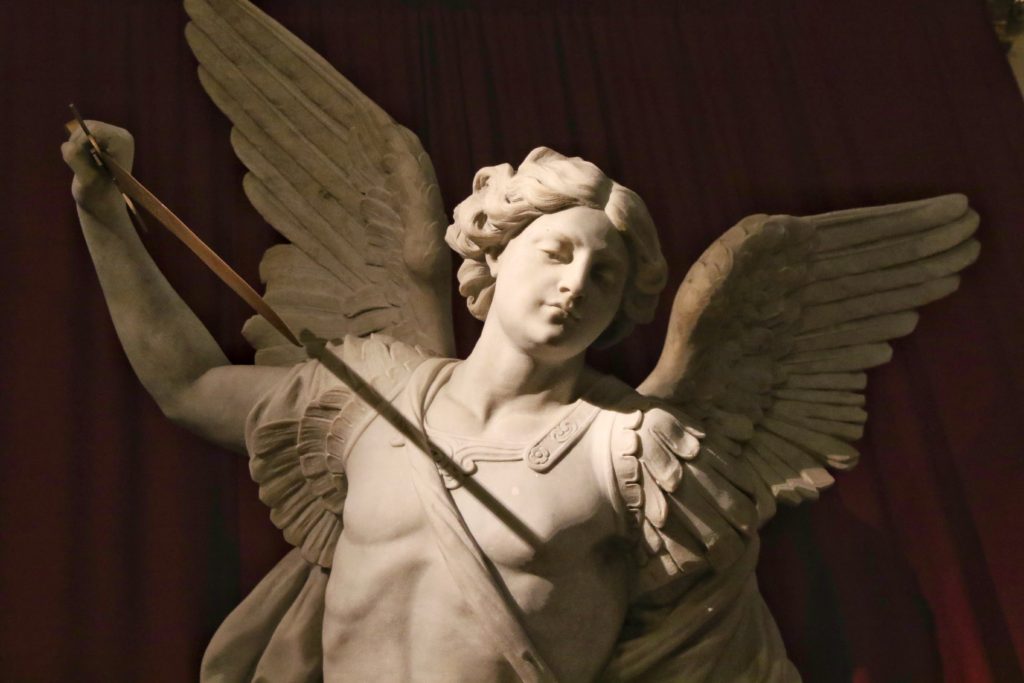
A statue of St. Michael the Archangel is seen at the Church of St. Michael in New York City Oct. 26. (Gregory A. Shemitz/CNS)
This statue of St. Michael the Archangel is found at St. Michael Parish in Gila Bend. (Courtesy of Fr. Joy Vargas)

Sept. 29

(CNA) — St. Michael, one of the three archangels — the only angels named in the Bible, is the “Prince of the Heavenly Host,” the leader of all the angels. His name is Hebrew for “Who is like God?” and was the battle cry of the good angels against Lucifer and his followers when they rebelled against God. He is mentioned four times in the Bible, in Daniel 10 and 12, in the letter of Jude and in Revelation.

Michael, whose forces cast down Lucifer and the evil spirits into hell, is invoked for protection against Satan and all evil. Pope Leo XIII, in 1899, having had a prophetic vision of the evil that would be inflicted upon the Church and the world in the 20th century, instituted a prayer asking for St. Michael’s protection to be said at the end of every Mass.

Prayer to St. Michael the Archangel

St. Michael the Archangel, defend us in battle,
be our protection against the wickedness and snares of the devil;
may God rebuke him, we humbly pray;
and do thou, O Prince of the heavenly host,
by the power of God,
cast into hell Satan and all the evil spirits
who prowl through the world seeking the ruin of souls.
Amen.

Christian tradition recognizes four offices of St. Michael:

  • to fight against Satan;
  • to rescue the souls of the faithful from the power of the enemy, especially at the hour of death;
  • to be the champion of God’s people; and
  • to call away from earth and bring men’s souls to judgment.

St. Michael is patron of the sick, radiologists, mariners, soldiers and first responders. He is also the patron of St. Michael the Archangel Parish in Gila Bend.

Toronto Cardinal calls vocation directors to become fire

SCOTTSDALE — If there was one thing the nation’s vocation directors and personnel — with some arriving by passport — expected to receive from a gathering of peers in Arizona, it was a reminder of heat.

They got it in outdoor temperatures, although a few double-digit days crept in during their institute followed by a convention Sept. 14-21 at the Hyatt Regency Scottsdale. They got it in prayerful energy and fellowship among vocations workers who often fly rather solo.

One of the conference’s key speakers also delivered the heat four-fold. In his keynote address, “On Becoming Fire,” on the first full day of the 55th annual conference Sept. 18 Cardinal Thomas Collins of Toronto proposed four facets on the theme of fire to, as the priest for the last 45 years put it, “focus our thoughts, move our will and guide us in our actions.”

There’s the fire of Pentecostal zeal, of sacrificial love and of purification. All work together to create hearts “set on the fiery, dazzling beauty of our true home, the heavenly Jerusalem,” the cardinal said.

There’s also the fire of majesty and mystery where every vocation begins, he said. The cardinal was sure to emphasize that a vocation is not a career, “but a personal call to the service of the Lord God and of His people. It is sublime and it is divine.”

Vocation directors and workers catch that fire alive in others and certainly tend to it among prospective seminarians. They do so as “unworthy servants and messengers of the living God,” he said, cautioning the vocation directors against viewing their role as branch managers with the bishop as CEO.

A vocation ministry “must be founded on a profound awe of the privilege of being called to serve the Lord God as priests,” the cardinal said. In his talk that spellbound a ballroom for a solid 45 minutes and in a brief Q-and-A that followed, Tornoto’s Archbishop of 11 years stressed Eucharistic adoration as the primary way to cultivate a sense of mystery and wonder.

“People can’t understand it — just being there,” Cardinal Collins said. He noted how sitting still in silence is countercultural. Yet, it can be fruitful. “All Jesus ever told us about vocations was to pray to the Lord of the harvest to send laborers into the harvest.”

Of course, answer to that prayer is often a very gradual process. Children might feel nudges about their vocation, but don’t get too serious about it until high school or college when they’re more ready to live outside of the domestic church.

Some dioceses have found that spiritual and social activities within that time gap helps foster an openness to hearing God’s call to a religious vocation. Fr. Michael Isenberg, vocation director in the Diocese of Arlington, Virginia, pointed to Quo Vadis” events as fruitful for helping young men in his area discern “Where are you going?” They feature regular events and a summer camp at the seminary for high-schoolers centered around faith and sports.

That diocese’s bishop, who was once a referee and an umpire, oversees the games. Fr. Isenberg said it helps remind youth that seminarians are normal men from backgrounds just like theirs.

This slideshow requires JavaScript.

Rhonda Gruenewald, president and founder of Vocation Ministry, details 67 multi-faceted and multi-tiered vocation activities — broken up in terms of planning time and budget needed, if any — in her book, “Hundredfold: A Guide to Parish Vocation Ministry.”

“It’s everything practical that I wanted to know when I was first starting,” said Gruenewald, who has spoken about Vocation Ministry in 34 dioceses in three years.

Her home parish now offers a regular “Deacon Sunday” and a “Let the Children Come to Me” event. The latter invites children ages four through fourth grade and their families to Eucharistic Adoration that also features simple songs and a small talk. Some 250 people attend.

Leticia Ramirez, a Vocation Ministry presenter, keeps her vocation events simple too. She connects with other ministries to give them an age-appropriate element to focus on vocations. Parishioners might find her sharing vocation-themed prayer cards during the parish’s donut time.

There’s also a Mass kit at the parish complete with a child-sized chalice and vestment. One family at a time can take it home for the child to play with. Children know parts of the Mass as a result.

“It’s creating a culture of awareness about vocation and that it starts in the family,” Ramirez told The Catholic Sun. “We have to do the groundwork in our homes and in our families to hear God’s call.”

Ramirez is from the Archdiocese of Galveston-Houston which saw 10 new seminarians this year. Six were from her parish, which also has two women discerning religious life including one just about to enter. Those numbers aren’t one-time flukes. It has seen close to 20 religious vocations in the last decade.

Cardinal Collins said in closing remarks, “We are called not just to do the minimum, or to shine by our own light, or to advance within the earthly structures of the Church; we are called to become fire.”

Loyola Academy director showcased as chamber’s ‘Best in Class’ [VIDEO]

Chamber Business News profiles Kendra Krause, director of Loyola Academy. The tuition-free middle school on Brophy College Preparatory’s campus helps its academically-capable boys catch up a bit on skills to better poise them for success at Brophy.

An excerpt from the related CBN article:

For Nelson Martinez De Los Santos who was part of the founding class of sixth-graders, it was an opportunity of a lifetime.

Now a freshman at College of the Holy Cross in Boston, Martinez De Los Santos said he spent 40 minutes each day commuting to Loyola. The 10-hour school day and 11-month school year propels students forward academically and socially. Once they complete middle school, the boys earn a full-ride scholarship to Brophy, which is about $15,000 annually.

“I still remember like it was yesterday,” said De Los Santos. “It’s just a unique experience. It’s a paradise, they really take care of you there. It’s like a family.”

Fifth-grade students qualify to attend Loyola based on recommendations, academic potential and financial need. Beyond tuition, Loyola provides students with uniforms, technology, transportation, meals and support for families.

Former nuncio claims Vatican official has evidence of cover-up

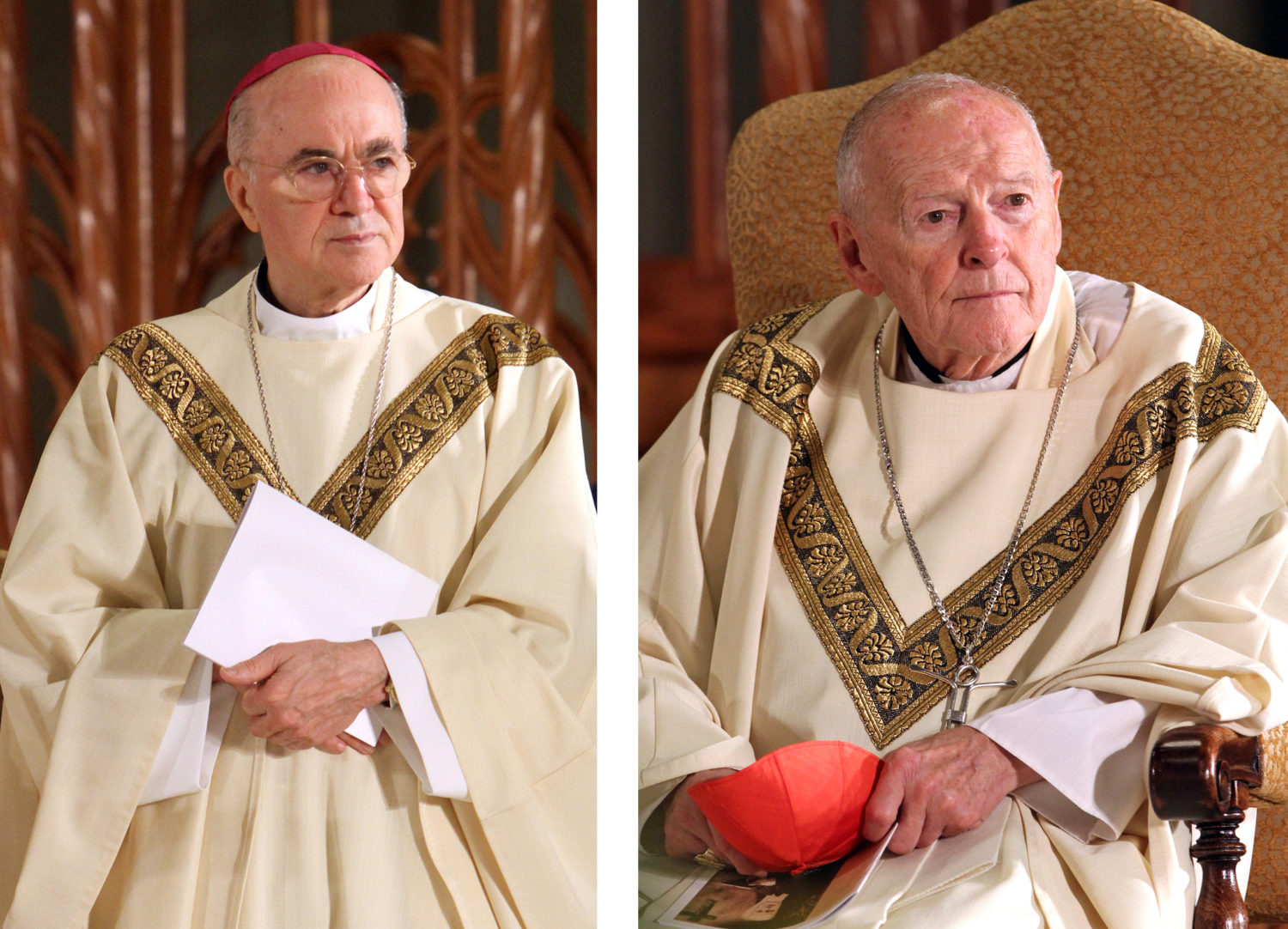
Archbishop Carlo Maria Vigano, then nuncio to the United States, and then-Cardinal Theodore E. McCarrick of Washington, are seen in a combination photo during the beatification Mass of Blessed Miriam Teresa Demjanovich at the Cathedral Basilica of the Sacred Heart in Newark, N.J., Oct. 4, 2014. (CNS photo/Gregory A. Shemitz)

VATICAN CITY (CNS) — Archbishop Carlo Maria Vigano, the former nuncio to the United States who accused Pope Francis and church officials of failing to act on accusations of sexual abuse, urged a top Vatican official to release documents that would prove his allegations.

In a four-page letter released by LifeSiteNews Sept. 27, Archbishop Vigano called on Canadian Cardinal Marc Ouellet, prefect of the Congregation for Bishops, to release information about alleged private sanctions imposed by now-retired Pope Benedict XVI on then-Cardinal Theodore E. McCarrick.

“Your Eminence, before I left for Washington, you were the one who told me of Pope Benedict’s sanctions on McCarrick. You have at your complete disposal key documents incriminating McCarrick and many in the curia for their cover-ups. Your Eminence, I urge you to bear witness to the truth,” the former nuncio wrote.

He also called on leaders of the U.S. bishops’ conference, who had a private meeting with Pope Francis Sept. 13, to say if the pope refused “to carry out a Vatican investigation into McCarrick’s crimes and those responsible for covering them up.”

Archbishop Vigano, who has been in hiding after publishing Aug. 25 his “testimony” against Pope Francis, also defended his decision to write the document and to reveal in it alleged facts that were “covered by the pontifical secret that I had promised to observe.”

Pontifical secrets, he said, are meant “to protect the church from her enemies, not to cover up and become complicit in crimes committed by some of her members.”

“I was a witness, not by my choice, of shocking facts and, as the Catechism of the Catholic Church states, the seal of secrecy is not binding when very grave harm can be avoided only by divulging the truth,” Archbishop Vigano wrote. “Only the seal of confession could have justified my silence.”

In the new letter, Archbishop Vigano continued his accusations about homosexual clergy having great influence in the Vatican and with Pope Francis. And he expressed disappointment at how, in his view, Cardinal Ouellet had given up his defense of Catholic orthodoxy.

“At the beginning of Pope Francis’ pontificate, he had maintained his dignity, as he had shown with courage when he was Archbishop of Quebec,” Archbishop Vigano wrote. “Later, however, when his work as prefect of the Congregation for Bishops was being undermined because recommendations for episcopal appointments were being passed directly to Pope Francis by two homosexual ‘friends’ of his dicastery, bypassing the cardinal, he gave up.”

As of early Sept. 28, neither Pope Francis nor current Vatican officials had commented on the accusations in Archbishop Vigano’s original document; instead, Pope Francis told journalists Aug. 26 to “read it yourselves carefully and make your own judgment.”

“I will not say a single word on this. I believe the memo speaks for itself and you are capable enough as journalists to draw your own conclusions,” the pope had told reporters traveling back to Rome with him from Dublin.

In the weeks that followed, preaching on the day’s Mass readings, the pope delivered several homilies in which he noted Jesus’ humility and silence when unjustly insulted and accused.

“In difficult moments, the moments in which the devil is unleashed — where the shepherd is accused especially by the Great Accuser through many powerful people — the shepherd suffers, offers his life and prays,” the pope said in his homily Sept. 18 during morning Mass in the Domus Sanctae Marthae.

Archbishop Vigano said the homilies contradicted Pope Francis’ initial response to remain silent, and he accused the pope of putting “in place a subtle slander against me” during the celebration of the Eucharist “where he runs no risk of being challenged by journalists.”

“When he did speak to journalists, he asked them to exercise their professional maturity and draw their own conclusions. But how can journalists discover and know the truth if those directly involved with a matter refuse to answer any questions or to release any documents?” Archbishop Vigano asked.

Members of Pope Francis’ international Council of Cardinals had confirmed in a Sept. 10 statement that “the Holy See is formulating possible and necessary clarifications” in response to the former nuncio’s allegations against the pope.

— By Junno Arocho Esteves, Catholic News Service