
Enjoying ‘paczki’ on Fat Tuesday prepares soul for the ‘sacrifices of Lent’

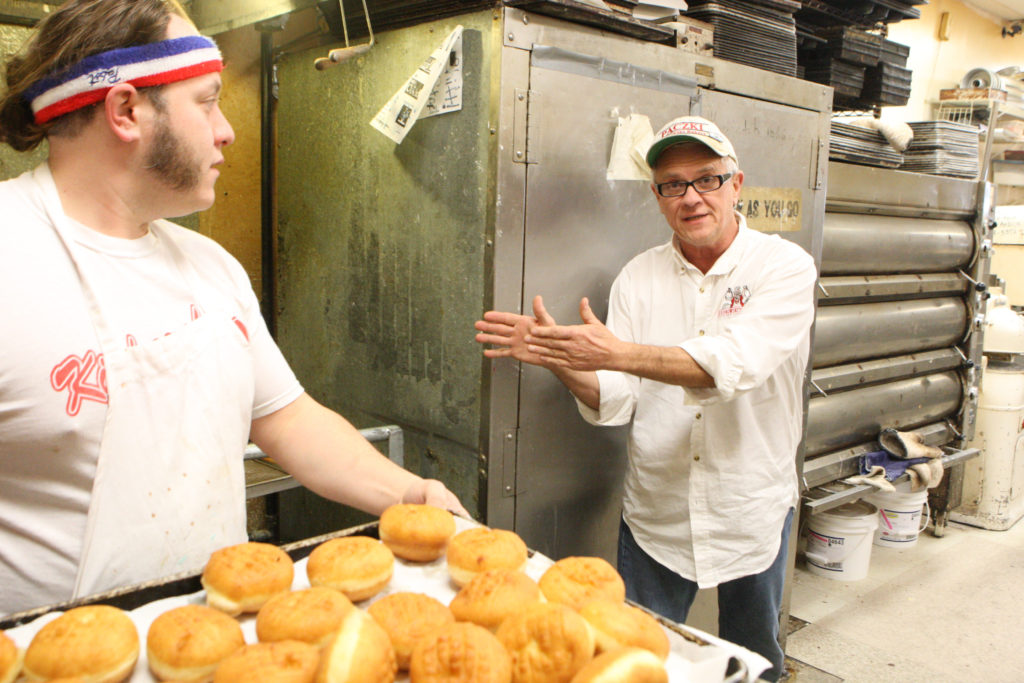
Tim Kiedrowski, center, owner of Kiedrowski's Simply Delicious Bakery, with sons, Tim, left, and Michael, are shown Jan. 18 with a rack of Polish-style doughnuts, known as "paczki." The doughnuts are a tradition in the days before Lent. (CNS photo/Dennis Sadowski)
Tim Kiedrowski, owner of Kiedrowski's Simply Delicious Bakery, explains the process of making Polish-style doughnuts, known as "paczki," Jan. 18 as his son Michael moves a rack of the treats for cooling. The doughnuts are a tradition in the days before Lent. (CNS photo/Dennis Sadowski)
Tim Kiedrowski, owner of Kiedrowski’s Simply Delicious Bakery, explains the process of making Polish-style doughnuts, known as “paczki,” Jan. 18 as his son Michael moves a rack of the treats for cooling. The doughnuts are a tradition in the days before Lent. (CNS photo/Dennis Sadowski)

AMHERST, Ohio (CNS) — The foot-tapping melodies of Polish-style polka music that greets patrons as they enter the Kiedrowski family’s bake shop says that old-world hospitality is at hand.

The upbeat music, owner Tim Kiedrowski says, is meant to evoke the memories of traditional food, family customs and church life.

And in the days before Lent, there’s nothing more traditional at Kiedrowski’s Simply Delicious Bakery than delectable paczki — pronounced poonch-key in Polish — deep-fried sugary doughnuts that taste like what Mom and Grandma used to make.

Tim and his wife, Terri, both 60, said the doughnuts served up in the days before Lent, like the sweet treats and breads prepared in their bakery throughout the year, are based on family recipes handed down from generation to generation.

It’s the tradition of the not-so-fancy paczki of which the Kiedrowskis have raised the profile in ethnic-rich enclaves 30 miles west of Cleveland while helping Polish-Americans keep in touch with their roots.

Tim recalled coming home from St. Stanislaus School in Lorain, not far from the bake shop, and seeing his mother standing by the stove frying airy paczki. He would help by sugaring the doughnuts in a bag.
Polish-style doughnuts, known as "paczki," are seen in a bowl Jan. 18 at Kiedrowski's Simply Delicious Bakery in Amherst, Ohio, before being covered with powdered sugar. The doughnuts are a tradition in the days before Lent. (CNS photo/Dennis Sadowski)
Polish-style doughnuts, known as “paczki,” are seen in a bowl Jan. 18 at Kiedrowski’s Simply Delicious Bakery in Amherst, Ohio, before being covered with powdered sugar. The doughnuts are a tradition in the days before Lent. (CNS photo/Dennis Sadowski)

There is no official history of paczki other than one rooted in the deep Catholic faith of Poles. In the days before the Lenten fast, peasant Poles wanted to use all of the fats, sugars and dairy products on hand. While many Catholics might celebrate Fat Tuesday and Mardi Gras revelers party for several days, Poles traditionally started the pre-Lenten feast six days before Ash Wednesday.

“In old time Poland, the rich folks would celebrate on Thursday (before Ash Wednesday) and have the meat, the fish and the good wine,” Tim said, seated at a work table where plump mounds of paczki dough were rising. “But all the peasants, the poor, would have whatever they could, pickled herring, fats, dairy. Everything was to eat has much as you can to help you face the sacrifices of the Lenten season.

“We always heard (in our family and church) about the 40 days and 40 nights that Christ was in the desert. That was the time that we sacrifice, that we should be able to do Lent if Christ could do 40 days and 40 nights.”

Terri, who grew up in a German Catholic family, said such customs keep families together.

“That’s the basis of family life, your religious beliefs,” she told Catholic News Service. “That’s how we grew up. That’s what we know. That’s how we keep it going so we don’t get lost in just another day, just another holiday.”

For the Kiedrowski family in Lorain, an industrial city that rapidly grew in the early 20th century with an influx of European immigrants — thousands of Poles among them — Lent meant no sweets, mostly bland food, no meat on Wednesdays (in addition to fasting every Friday) and plenty of prayer, highlighted by weekly attendance at the Stations of the Cross at their parish, St. Stanislaus.

The focus on paczki at the family-run bakery came on a whim.
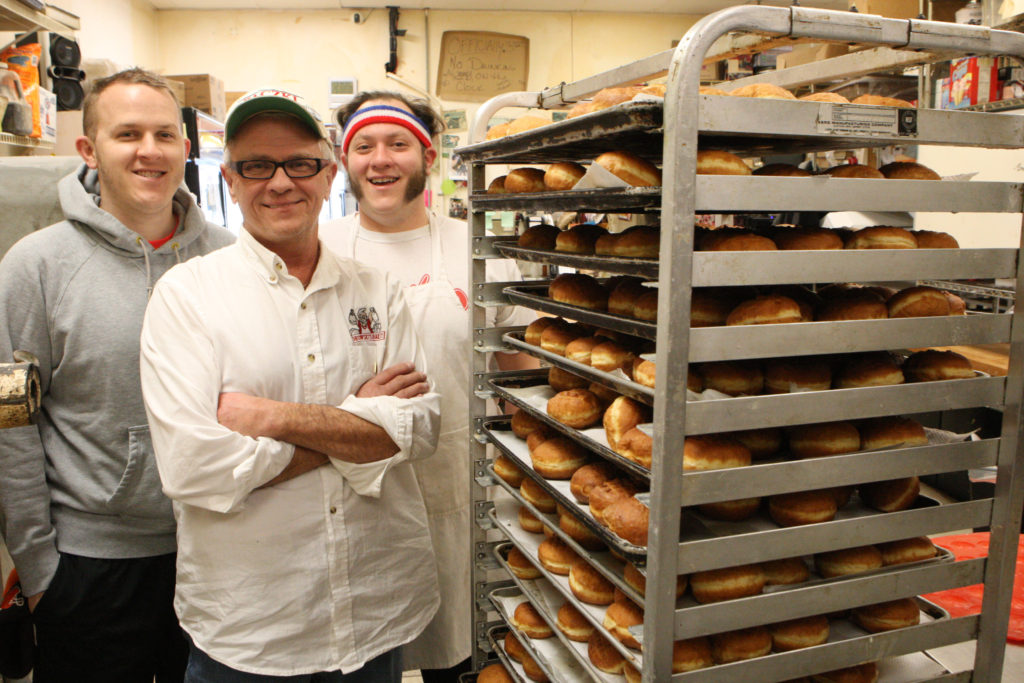
Tim Kiedrowski, center, owner of Kiedrowski's Simply Delicious Bakery, with sons, Tim, left, and Michael, are shown Jan. 18 with a rack of Polish-style doughnuts, known as "paczki." The doughnuts are a tradition in the days before Lent. (CNS photo/Dennis Sadowski)
Tim Kiedrowski, center, owner of Kiedrowski’s Simply Delicious Bakery, with sons, Tim, left, and Michael, are shown Jan. 18 with a rack of Polish-style doughnuts, known as “paczki.” The doughnuts are a tradition in the days before Lent. (CNS photo/Dennis Sadowski)

The couple officially took ownership of Simply Delicious Bakery in downtown Amherst in November 1984 after negotiating a deal when the original vendors declared bankruptcy. Tim, with some baking experience after high school, had been working at the bakery after being laid off from his job at a Lorain steel mill. Terri’s work as a nurse was taxing because of the long hours she put in to support a growing family.

Before long, the couple realized they had to make the bakery stand out and they turned to paczki, a favorite treat that recalled Polish heritage.

“I grew up in a very strong Polish household,” Tim said. “So I wanted to incorporate a lot of my mom’s and Grandma Kiedrowski’s recipes.

They declared the days before Lent in 1985 as “paczki time” and came up with the slogan, “Taste the memory in every bite.” The couple hoped to sell 25 dozen sugar-shrouded doughnuts.

“We sold the first 25 dozen within the first three hours. We advertised we were going to have Grandma Kiedrowski’s Polish paczki, which led me to believe that there was a lot of interest in memories,” Tim recalled.

With that success, a year later the Kiedrowskis expanded their line to include paczki filled with lekvar, or cooked prune. A few years later they added apricot and poppy seed fillings after hiring a Polish-born woman to work in the shop and she told them of some of the types available in her homeland.

Seeking to bring new twists to their line of ethnic goodies a few years later, Tim was looking through his mother’s recipes when he came across one for rose petal jelly. He wanted to try it in paczki. Sales “skyrocketed” after the flavor was introduced in 2003.

In 2015, the bakery produced 85,000 doughnuts out of a small, almost cramped storefront, distributing them as far as Youngstown 90 miles away. These days paczki time starts about three weeks before Lent and ends a few days after Ash Wednesday. On Fat Tuesday, customers line up early as Ed Klimczak, a local polka band leader, greets them with traditional tunes on his accordion and Tim offers shots of Polish vodka to keep folks warm.

The Kiedrowskis also have some fun with the mouthwatering paczki. Since 1998, the bakery has put on the Paczki Ball, at which there is the “unveiling of the paczki.” Traditional Polish foods such as stuffed cabbage and noodles, pierogi, and sausage and sauerkraut are served, and Klimczak’s band provides the music for dancing. It has sold out 19 years running.

[quote_box_right]

Related

Parish continues tradition of blessing baskets for Easter dinner

[/quote_box_right]

Tim and Terri are passing on the ethnic and religious customs to their four sons, two of whom, Michael, 33, and Tim, 31, returned to work in the bakery after starting careers after college graduation.

“The kids love tradition,” Terri said. “They say, ‘We have to do it this way.’ It’s getting lost with a lot of families, particularly when they are moving away from religion and what we know. It’s such a big melting pot in the United States (that) it gets difficult to keep that together.

“In our little corner of the world in northeast Ohio and Kiedrowski’s bakery, we try to keep those old memories going.”

By Dennis Sadowski, Catholic News Service.

St. Francis Xavier parishioners see ‘Master’s Plan’ come to life

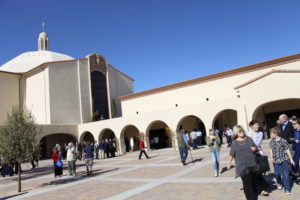
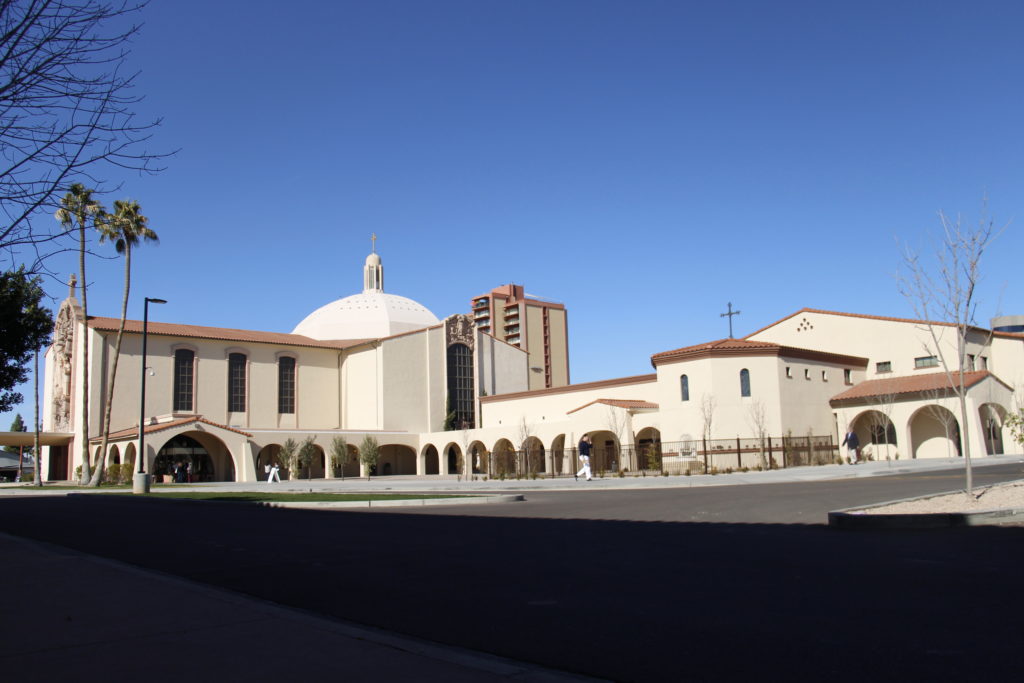
The new exterior of St. Francis Xavier Parish now includes a parish hall plus education and outreach center. (Ambria Hammel/CATHOLIC SUN)

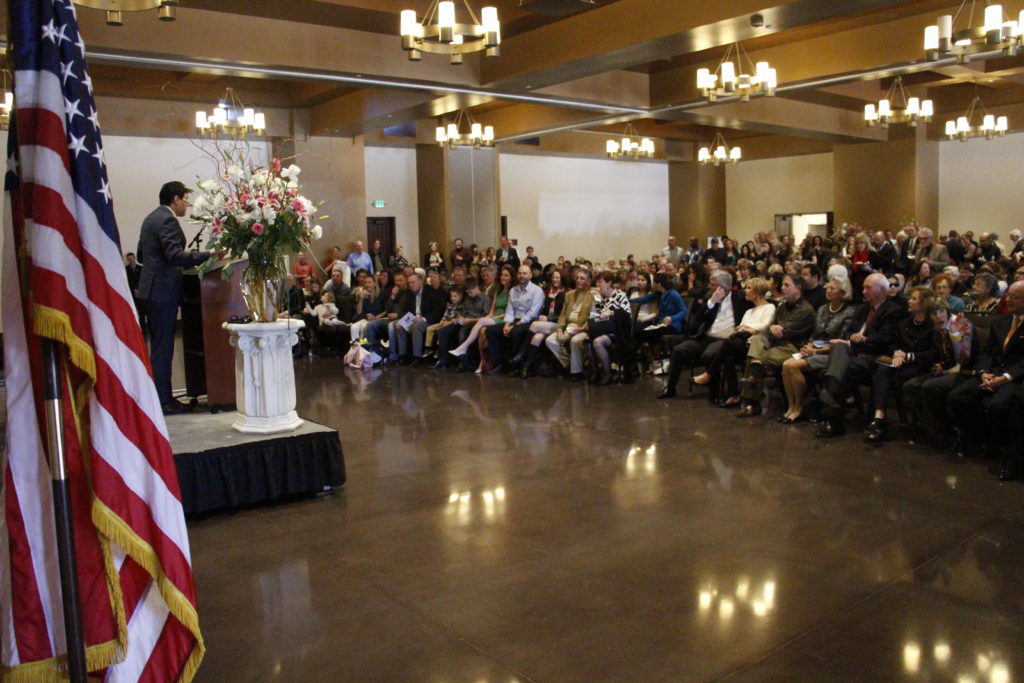
It is finished. Three words sum up a decade of planning, fundraising and building at St. Francis Xavier Parish. The result is an almost wholly new parish — and most certainly school — campus that held its fourth and final dedication Jan. 24.

Bishop Thomas J. Olmsted blessed the new parish center between the final English Mass of the morning and the parish’s only Spanish liturgy. Parishioners from both Masses joined him.

So did roughly a dozen clergy, largely current leadership and other Jesuit priests who served at St. Francis Xavier over the years. All were eager to see “The Master’s Plan” fully realized. Fruits of the final $9 million capital campaign resulted in St. Francis Xavier’s first parish hall in the current church’s more than 55-year history.

CHannel 12's James Quiñones emceed the formal program Jan. 24. It included a blessing of the space, historic video presentation and short remarks. (Ambria Hammel/CATHOLIC SUN)
CHannel 12’s James Quiñones emceed the formal program Jan. 24. It included a blessing of the space, historic video presentation and short remarks. (Ambria Hammel/CATHOLIC SUN)

Project completion opened a new chapter of parish life. Up to 600 people comfortably gathered in the mission-style hall. Sets of pocket sliding doors allowed a small crowd gathered in the courtyard to also remain a part of festivities.

Parish leaders said the new covered walkway and open gathering space at St. Francis Xavier expands its hospitality options for formal and informal gatherings. (Ambria Hammel/CATHOLIC SUN)

Parish leaders envision the space to become a natural option for on-site wedding receptions, family funeral visitations and other life celebrations. One woman’s husband was looking forward to using a new 50-seat chapel east of the hall for his funeral. They were long-time parishioners, but he passed away three months before its completion.

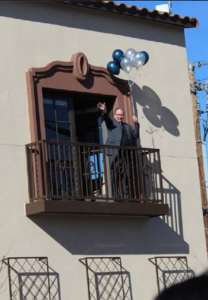
Jesuit Father Dan Sullivan, pastor of St. Francis Xavier Parish and School, greets students from his office balcony Jan. 21 while holding birthday balloons. (photo from school Facebook page)

St. Francis Xavier’s expanded parish grounds also includes an outdoor prayer garden, administrative offices and meeting space on the upper level — with Jesuit Father Dan Sullivan having a private balcony that overlooks the parking lot and school — plus a lower level maintenance shop underground and three classrooms ready to welcome Catechesis of the Good Shepherd students in August. Parish leadership decided to let students finish out the spring semester at the school.

Kim Cavnar, principal of St. Francis Xavier, looks forward to using the hall for student retreats. She once had to borrow space at neighboring Brophy College Preparatory and had to schedule them during one of Brophy’s school holidays.

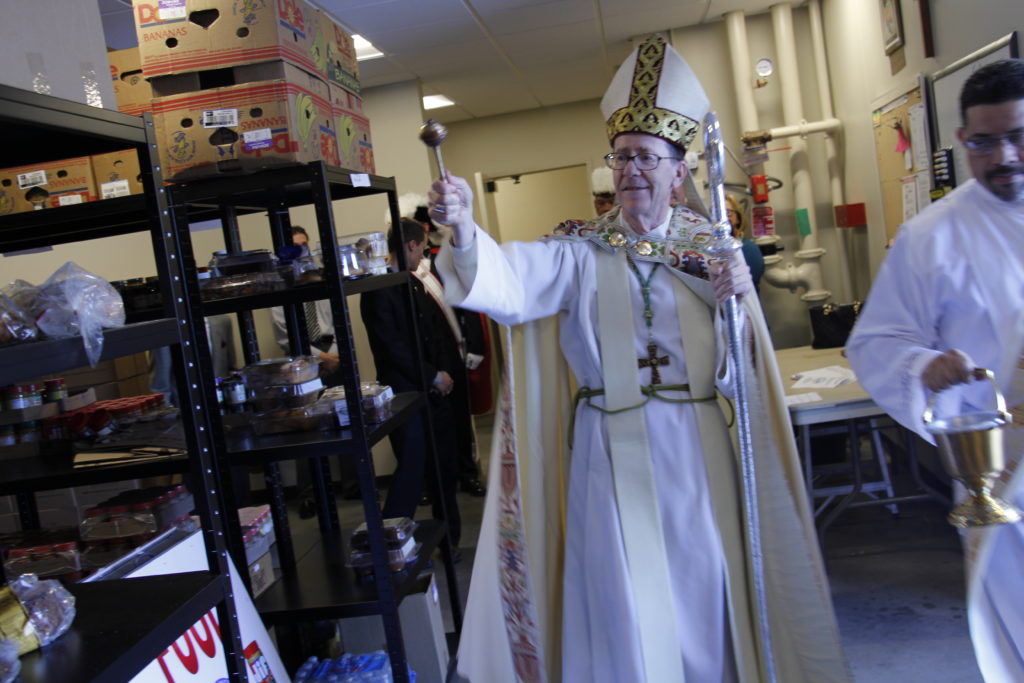
The 34,000-square-foot parish center also greatly expanded St. Francis Xavier’s pantry and storage space for St. Vincent de Paul outreach. Conference activity that serves an average of 70-80 clients each week — some 6,000 food boxes last year — now operates beside the hall’s full-service kitchen with an overflow storage space on the lower level. Vincentians have turned away pallets of food in the past due to lack of available space.

Bishop Thomas J. Olmsted blesses the expanded food pantry for St. Vincent de Paul outreach at St. Francis Xavier Jan. 24. (Ambria Hammel/CATHOLIC SUN)

The parish center finally centralized program activity that once shared space with the school. St. Francis Xavier offers more than 170 religious and educational programs to parishioners, students, area residents and the community at large. Architects somehow found room to add another 70 parking spaces to allow for increased interest in Ignatian and Jesuit spirituality programs, spiritual director training and Kino Border Initiative efforts.

“We are committing to have this facility be the focus and beginning of an Ignatian/Jesuit resource center that will realize an expansion of Jesuit influence in the center of the city of Phoenix and across Arizona,” Fr. Sullivan said.

Bishop Olmsted acknowledged the work, sacrifice and prayer that parishioners poured into parish expansion.

“It will be a center for parish activities. A place where we will come to know one another and give our witness to our faith in Christ,” the bishop said.

Jesuit Father Michael Weiler, Jesuit provincial for California, agreed.

“This hall and building are tools and instruments to be used to introduce the love of the Lord as you know it,” Fr. Weiler said. He also noted Fr. Sullivan’s leadership throughout the campaign.

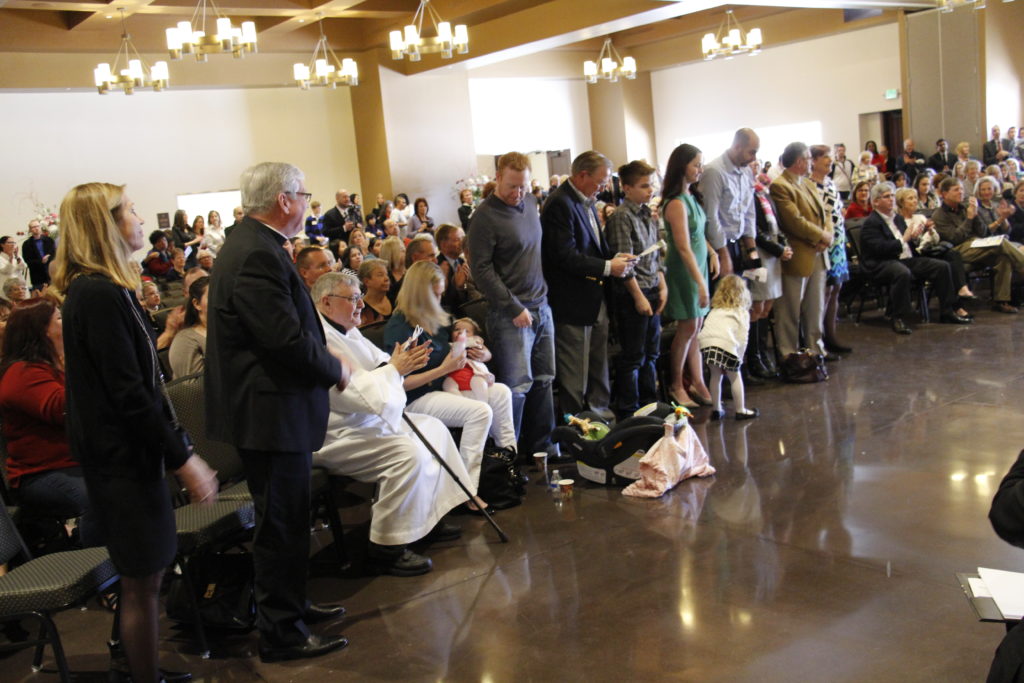
The crowd applauds the financial support of the Anderson Family Foundation during the blessing of St. Francis Xavier Parish hall Jan. 24. (Ambria Hammel/CATHOLIC SUN)

Fr. Sullivan credited the moral support of various committees including the building, finance and vision and development committees. It was a long process, but their efforts made it far less burdensome, he said.

The pastor also acknowledged Joe Anderson and the Anderson Family Foundation for keeping the project on schedule. Time again, the family with four generations connected to St. Francis Xavier Parish and School offered donations and matching grants. Joe’s dad, Novian, was once an usher. Martha, his mom was a daily Massgoer. He roughly calculated the thousands of Masses they attended.

“This building was named after my mom and dad because this was their second home,” Anderson said, fighting back tears. Now it can be for generations of Catholics to come, too.

Mercy, mission go together, pope says

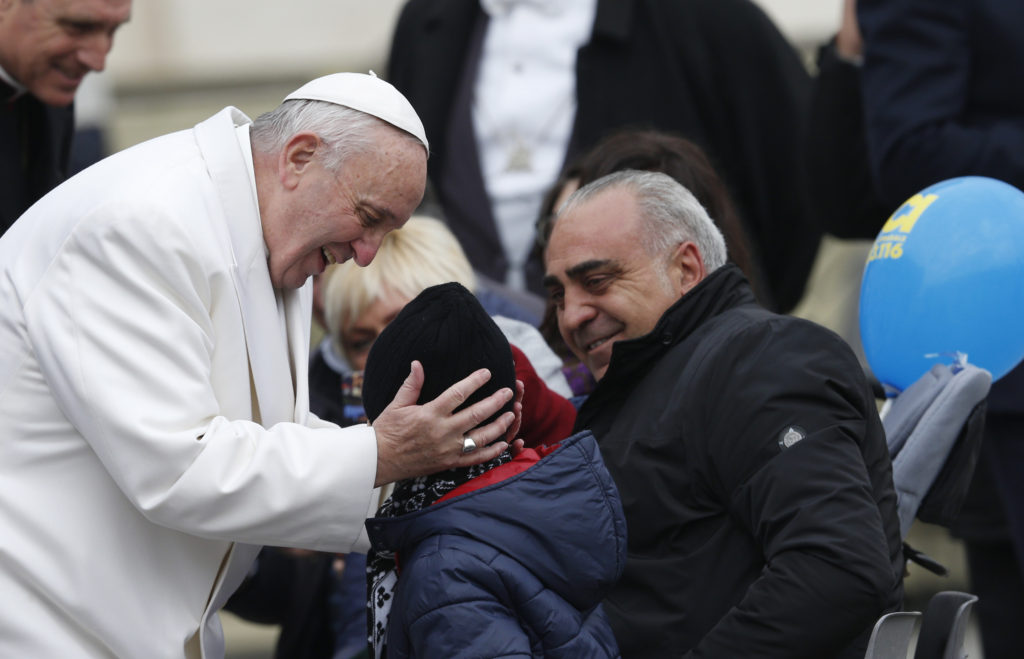
Pope Francis greets a child while meeting the disabled during a special audience for the Holy Year of Mercy in St. Peter's Square at the Vatican Jan. 30. (CNS photo/Paul Haring)
Pope Francis greets a child while meeting the disabled during a special audience for the Holy Year of Mercy in St. Peter’s Square at the Vatican Jan. 30. (CNS photo/Paul Haring)

VATICAN CITY (CNS) — Mercy and mission have a close relationship that calls all Christians to be missionaries who share the joy of the Gospel without trying to force others to believe, Pope Francis said.

The joy that comes from conveying God’s love and mercy is “the concrete sign that we have met Jesus,” the pope said during his first jubilee audience Jan. 30. However, he added, “this does not mean proselytizing. This is making a gift: ‘I am giving you what gives me joy.'”

An estimated 30,000 people gathered in St. Peter’s Square for the jubilee audience, an event that will be held one Saturday each month throughout the Holy Year of Mercy.

In his talk, the pope said the Holy Year is a reminder for Christians to never tire of feeling the need for God’s forgiveness “so that when we are weak his closeness makes us strong and allows us to live our faith with greater joy.”

Christians are called to be missionaries of the Gospel like the first disciples, feeling the need to share the good news they have received. “We feel within us that we cannot hold back the joy that has been given to us and we want to spread it,” the pope said. “The joy that arises is what pushes us to communicate it.”

Pope Francis greets the crowd as he leaves a special audience for the Holy Year of Mercy in St. Peter's Square at the Vatican Jan. 30. (CNS photo/Paul Haring)
Pope Francis greets the crowd as he leaves a special audience for the Holy Year of Mercy in St. Peter’s Square at the Vatican Jan. 30. (CNS photo/Paul Haring)

The experience of the first disciples called by Jesus, he said, is an experience of love that “transforms us and compels us” to share its strength with others.

“In some way, we can say that from the day of our baptism each one of us was given an additional name to what our moms and dads had given us and this name is ‘Christopher,’ which means ‘Christ-bearer.’ Every Christian is a bearer of Christ,” he said.

God’s mercy is not just a “private consolation” but a catalyst that transforms Christians into “missionaries of mercy” to those in need. The pope called on the faithful to take their calling seriously and to live their lives as believers “because only then can the Gospel touch the hearts of all people and open them to the grace of love.”

Before concluding the jubilee audience, Pope Francis led the crowd in praying for a woman named Elvira who, along with her husband, worked at the Domus Sanctae Marthae, the pope’s residence. The long-time employee passed away Jan. 29 after a long period of sickness, the pope said.

Saying his residence is like a family, the pope told the crowd that he was sad at her passing.

“I invite you today to do two works of mercy: to pray for the deceased and console the afflicted,” he said. “I invite you to pray a Hail Mary for Elvira’s eternal peace and eternal joy, and pray that the Lord may console her husband and her children.”

By Junno Arocho Esteves, Catholic News Service.

Visita del Papa Francisco a México tiene significado especial para los católicos de Arizona

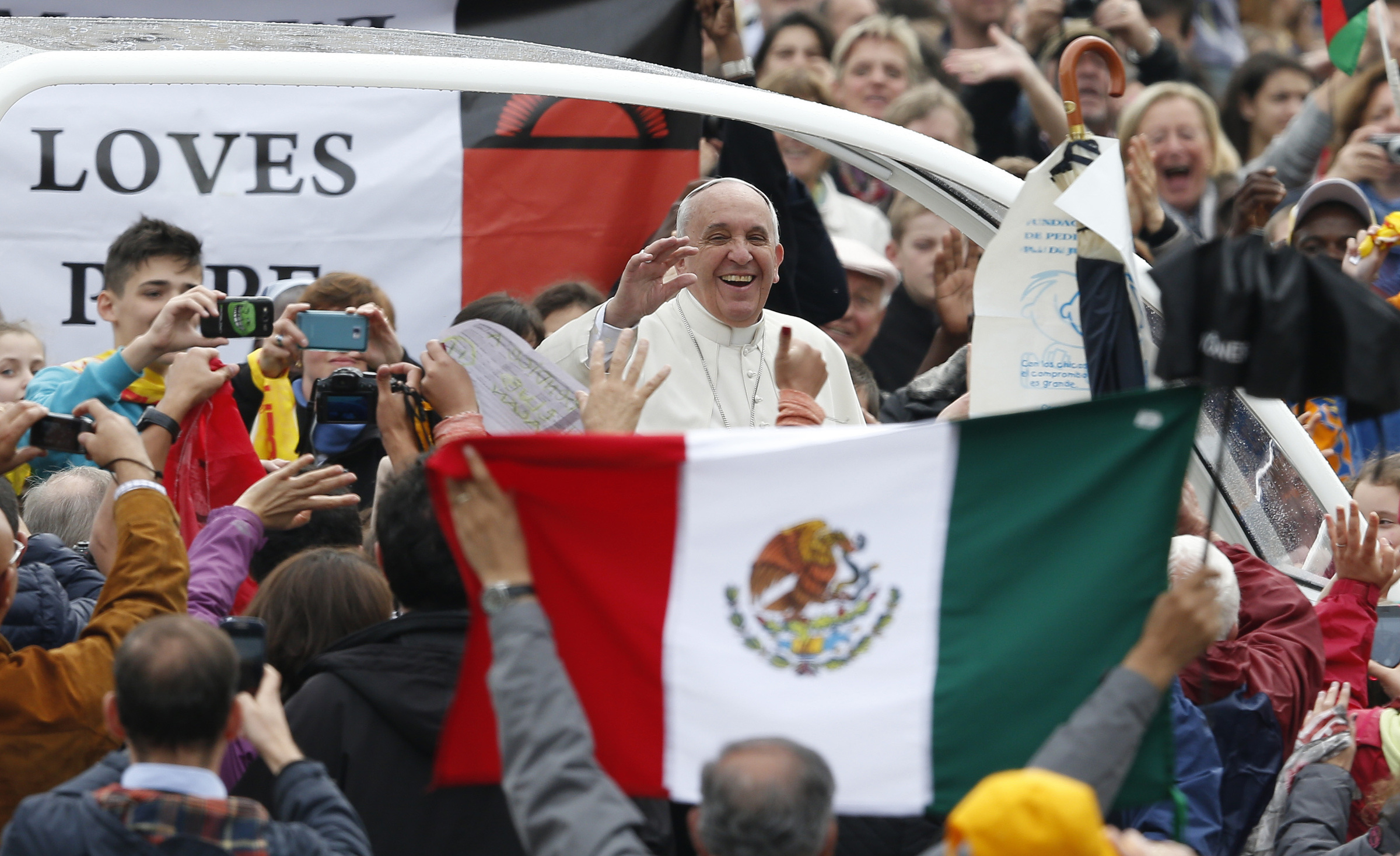
Pope Francis passes Mexico's flag as he arrives to lead his general audience in St. Peter's Square at the Vatican April 23. (CNS photo/Paul Haring) (April 23, 2014) See POPE-AUDIENCE April 23, 2014.
El Papa Francisco pasa frente a una bandera de México cuando llega a la Plaza de San Pedro en el Vaticano para conducir su audiencia general en esta foto de 2014. (Paul Haring/CNS)

La importancia de la visita planeada del Papa Francisco a México, del 12 al 17 de febrero, no está desapercibida para los fieles de la Diócesis de Phoenix.

“Aunque México tiene su propio y único patrimonio y cultura, podemos estar seguros de que la mayor parte de lo que el Papa Francisco diga y haga allá tendrá gran relevancia para nosotros en Arizona”, dijo el Obispo Thomas J. Olmsted. “Espero su visita pastoral a nuestros vecinos del sur y rezo por un viaje seguro y fructífero para el Papa Francisco”.

Muchos católicos todavía tienen fuertes lazos con México, y varias de las paradas programadas en el itinerario del Santo Padre están físicamente más cerca a Arizona que las ciudades mayores en la costa del Este que donde estuvo durante su visita apostólica a los Estados Unidos en septiembre del año pasado. Varios grupos de peregrinación de la diócesis están aprovechándose de esta proximidad geográfica, incluyendo un grupo de las parroquias Imaculado Corazón de María y San Antonio.

“Es una bendición muy especial para nosotros”, dijo Paula Zazueta, quien está coordinando un autobús lleno de peregrinos de las dos parroquias.

Zazueta, una feligrés de la parroquia de San Antonio, viajó con un grupo de peregrinos en 2012 cuando el Papa Benedicto XVI visitó el país vecino. Cuando se enteró de la visita del Papa Francisco, le dijo a su párroco que la parroquia debería organizar a un grupo para ir a verlo, y como resultado, él le encargó la tarea.

El Padre Alexis Moronta, IVE (Instituto del Verbo Encarnado), vicario de las dos parroquias, servirá como capellán del grupo que estará viajando por autobús a la Ciudad de México y Puebla del 10 al 18 de febrero. El grupo espera obtener entradas para asistir a las Misas papales en la Basílica de Nuestra Señora de Guadalupe y el estadio en Ecatepec, Estado de México.

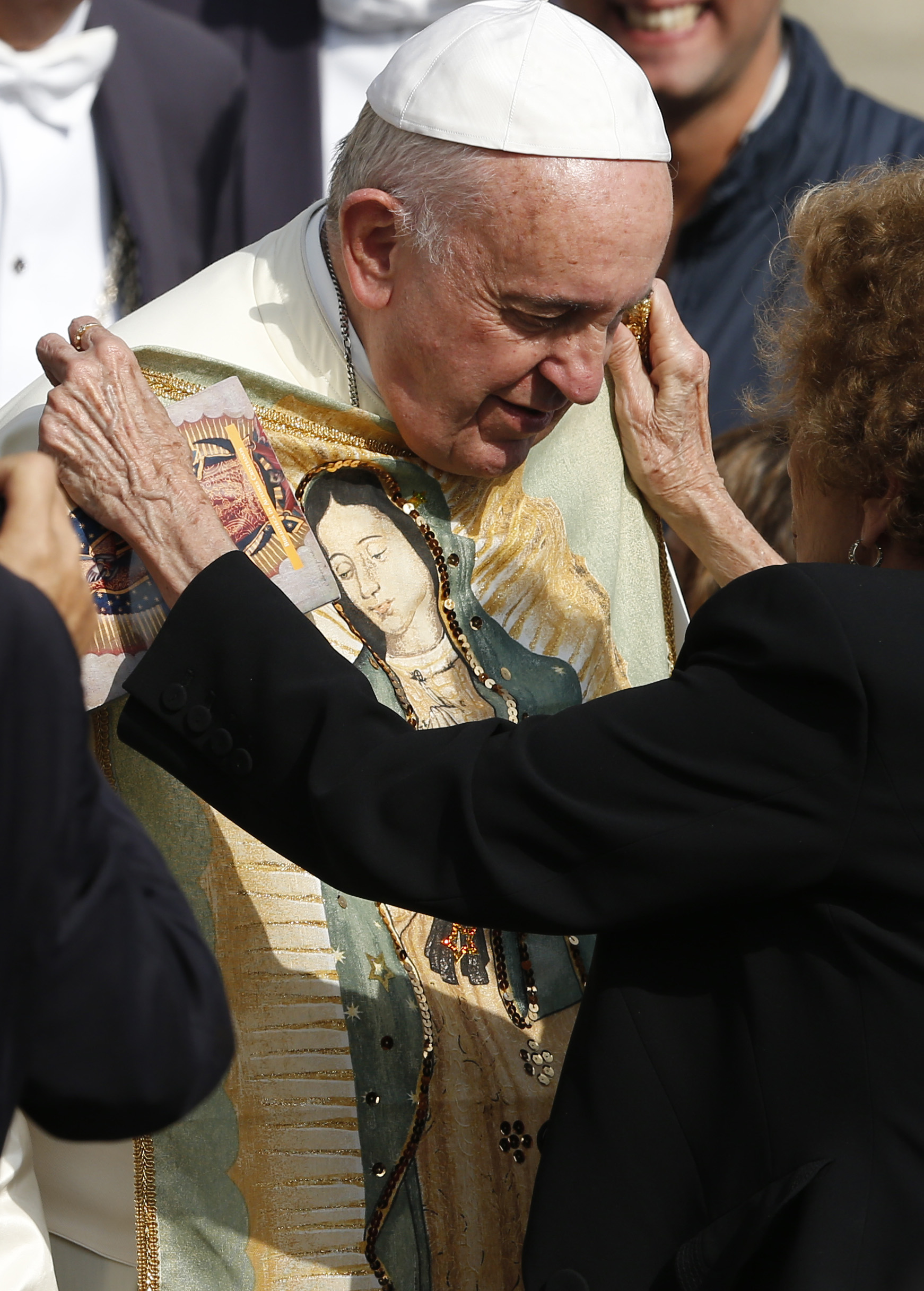
A woman places an image of Our Lady of Guadalupe on Pope Francis during his Oct. 8, 2014 general audience in St. Peter's Square at the Vatican. (Paul Haring/CNS photo)
Una mujer pone un imagen de Nuestra Señora de Guadalupe al Papa Francisco, durante una de sus audiencias generales en la Plaza de San Pedro en el Vaticano, en esta foto de octubre del 2014. (Paul Haring/CNS)

“Dondequiera que va [el Papa Francisco] es para fortalecer y consolidar nuestra fe”, dijo el P. Moronta. “Tener esas dos imágenes, la Virgen de Guadalupe y el Papa unificándonos para profesar nuestra fe … es muy gratificante espirtualmente poder ir con un grupo de personas que saben lo que es la peregrinación. Una peregrinación es un tiempo de oración, un tiempo de sacrificio, pero es también un tiempo de alegría”.

Carmen Portela, directora de la Oficina de Apoyo al Liderazgo Hispano para la diócesis, dijo que la visita del Papa a México también tiene importancia para los católicos que no son de ascendencia mexicana.

“Para los católicos que vivimos aquí en el Suroeste, seamos mexicanos o no seamos mexicanos, va a ser un gran regalo que el Papa venga y visite tierra mexicana,” dijo Portela.

“No tienes que ser mexicano para ser guadalupano … Sabemos que el Papa va a pisar la tierra donde la Santísima Virgen manifestó su milagro guadalupano. Va a inflamar la fe de muchos, incluyendo la de quienes vivimos aquí y tendremos la oportunidad para participar directa o indirectamente”.

Otras paradas en el itinerario del Papa Francisco incluyen Morelia, en México Central; Tuxtla Gutiérrez, en Chiapas, el hogar de muchos indígenas pobres de México; y Ciudad Juárez, Chihuahua, que ha sido azotada por la violencia relacionada con drogas y una tasa alta de homicidios, y que está localizada en la frontera entre los Estados Unidos y México, frente a El Paso.

“Cada ciudad escogida para su visita tiene un significado”, dijo Cristofer Pereyra, director de la Oficina de Misiones Hispanas para la diócesis. “Él siempre empieza con los pobres y los más necesitados; aquellos que necesitan una palabra de esperanza. Yo creo que por eso ha escogido esas ciudades”.

El P. Moronta destacó que la visita del Papa a México toma lugar durante el Año de la Misericordia y que el sitio web oficial para la visita da la bienvenida al Papa Francisco como un “misionero de la misericordia y paz”.

“Quiero decir que la misericordia se aplica a las personas que son parias, los humildes, los olvidados”, dijo. “México por lo general ha estado pasando por un montón de confusión … Él sabe representar a Cristo en los lugares que visita, yendo a las personas que son los pobres a quienes Jesús predicó la Buena Nueva [y] no es tan sólo la pobreza material, es una pobreza espiritual que está en nuestra sociedad”.

Cuando el Santo Padre esté en Juárez, celebrará la Misa en la frontera. Había planificado originalmente ir a México antes de su visita a los Estados Unidos y cruzar la frontera, para mostrar su solidaridad con los migrantes, pero cambió sus planes para poder tener más tiempo en México.

“El Santo Padre viene a México para expresar su solidaridad con cada sector de la gente amada de ese país con todas sus alegrías y esperanzas, tanto como sus dificultades y dolores”, dijo el Obispo Olmsted. “Su visita a Juárez, en la frontera con los Estados Unidos, manifestará de una manera fuerte su preocupación profunda por el bienestar de los refugiados e inmigrantes de todas partes. Sin duda, él levantará su dignidad y les asegurará del amor de Dios”.

Pope’s visit to Mexico has special significance to Arizona Catholics

Pope Francis passes Mexico's flag as he arrives to lead his general audience in St. Peter's Square at the Vatican April 23. (CNS photo/Paul Haring) (April 23, 2014) See POPE-AUDIENCE April 23, 2014.
Pope Francis passes Mexico’s flag as he arrives to lead his general audience in St. Peter’s Square at the Vatican in this April 23, 2014 photo. (Paul Haring/CNS photo)

The significance of Pope Francis’ planned apostolic visit to Mexico Feb. 12-17 is not lost on the faithful in the Diocese of Phoenix.

“While Mexico has its own unique heritage and culture, we can be sure that much of what Pope Francis says and does there will have great relevance for us in Arizona,” said Bishop Thomas J. Olmsted. “I look forward to his pastoral visit to our neighbors to the south, and pray for a safe and fruitful pastoral journey by Pope Francis.”

Many local Catholics still have close ties to Mexico, and several of the scheduled stops on the Holy Father’s itinerary are physically closer to Arizona than the major cities on the East Coast he visited during his apostolic visit to the United States in September of last year. Several pilgrimage groups from the diocese are taking advantage of this geographic proximity, including a group from Immaculate Heart of Mary and St. Anthony parishes.

“It’s a very special blessing for us,” said Paula Zazueta, who is coordinating a busload of pilgrims from the two parishes.

Zazueta, a parishioner from St. Anthony, had traveled with a group of pilgrims to Mexico in 2012 when Pope Benedict XVI visited the country. When she heard of Pope Francis’ visit, she told her pastor that the parish should organize a group to see him, and he responded by charging her with the task.

Fr. Alexi Moronta, IVE, parochial vicar at the two parishes, will serve as the chaplain for the group, which is traveling by bus to Mexico City and Puebla Feb. 10-18. The group hopes to get tickets to attend the papal Masses at the Basilica of Our Lady of Guadalupe and at the stadium in Ecatepec.

En Español: Visita del Papa Francisco a México tiene significado especial para los católicos de Arizona

A woman places an image of Our Lady of Guadalupe on Pope Francis during his Oct. 8, 2014 general audience in St. Peter's Square at the Vatican. (Paul Haring/CNS photo)
A woman places an image of Our Lady of Guadalupe on Pope Francis during his Oct. 8, 2014 general audience in St. Peter’s Square at the Vatican. (Paul Haring/CNS photo)

“Everywhere [Pope Francis] goes is to fortify and strengthen our faith,” said Fr. Moronta. “Having those two images, the Virgin of Guadalupe and the pope uniting us together to profess our faith …, it’s very fulfilling spiritually to be able to go together with a group of people who know what a pilgrimage is. A pilgrimage is a time of prayer, a time of sacrifice, but it’s also a great time of joy.”

Carmen Portela, director of the Office of Hispanic Parish Leadership Support for the diocese, said that the pope’s visit to Mexico has significance even for those Catholics who are not of Mexican descent.

“For those of us Catholics that live here in the Southwest, it’s a great gift for the pope to come and visit Mexican soil,” said Portela. “You don’t have to be Mexican to be Guadalupano. We know that the pope will stand on the dirt where the holy Virgin of Guadalupe manifested her miracle, and that will warm the faith of many, including those of us who live here and who also have the opportunity to participate directly or indirectly.”

Other stops on Pope Francis’ itinerary include Morelia in Central Mexico, Tuxtla Gutiérrez in Chiapas, home to many indigenous poor in Mexico, and Cuidad Juárez, which has been plagued by drug-related violence and a high murder rate, located along the U.S.-Mexico border across from El Paso.

“Every city he’s picked has been meaningful,” said Cristofer Pereyra, director of the Hispanic Mission Office for the diocese. “He always starts with the poor and needy and those who need a word of hope, and I think that’s why he’s chosen all of those cities.”

Fr. Moronta noted that the pope’s visit to Mexico happens during the Year of Mercy, and that the official website for the visit welcomes Pope Francis as a “missionary of mercy and peace.”

“I mean mercy is applied to those people who are the outcasts, the lowly, the forgotten,” he said. “Mexico in general has been going through a lot of turmoil. … He knows to represent Christ in the places he visits, going to those people that are the poor to whom Jesus came to preach the good news, [and] it’s not just material poverty, it’s a spiritual poverty that is in our society.”

While the Holy Father is in Juárez, he will celebrate Mass along the border. He had originally planned to come to Mexico prior to his visit to the U.S. and cross the border, to show his solidarity with migrants, but changed his plans so he could have more time to spend in Mexico.

“The Holy Father comes to Mexico to express his solidarity with every sector of the beloved people of that country with all their joys and hopes, as well as their hardships and sorrows,” said Bishop Olmsted. “His visit to Juárez, on the border with the United States, will manifest in a strong way his deep concern for the wellbeing of refugees and immigrants everywhere. Without a doubt, he will lift up their dignity and assure them of God’s love.”

NDP reaches ‘Gold Level’ in CRS Global High School program

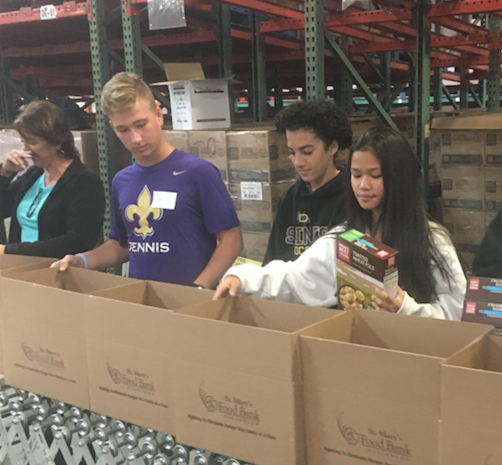
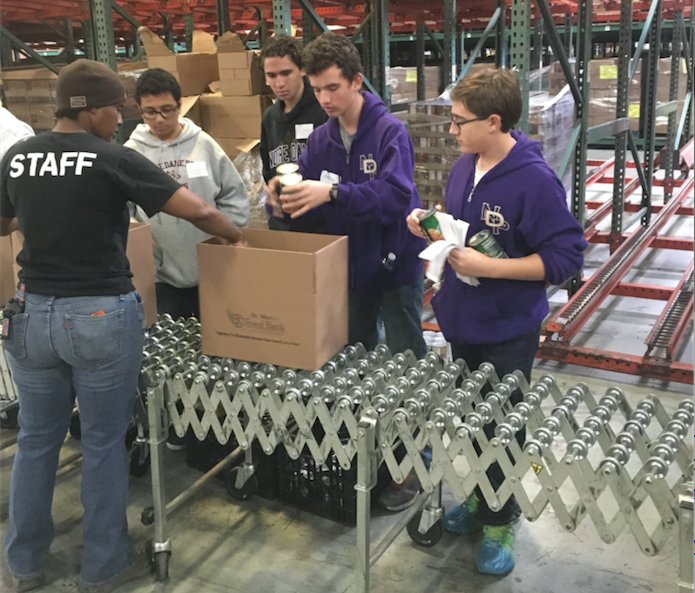
Freshmen at Notre Dame Preparatory load boxes with food for distribution at St. Mary's Food Bank in Phoenix. This is part of the school's Freshman Plunge program where freshmen students are introduced to a life of service to others. (courtesy photo)
Freshmen at Notre Dame Preparatory load boxes with food for distribution at St. Mary’s Food Bank in Phoenix. This is part of the school’s Freshman Plunge program where freshmen students are introduced to a life of service to others. (courtesy photo)

A school known for its purple and gold now has an extra “gold” distinction.

Scottsdale’s Notre Dame Preparatory was recognized as a Gold Level Catholic Relief Services Global High School in the first official round of the program since its launch late last spring. The program helps students embrace Catholic social teaching and compassion for the poor worldwide.

“Notre Dame Preparatory has a history of dedication to both the local and global poor and vulnerable,” said Kristin Witte, Ph.D., coordinator of CRS Catholic Educational Engagement. “The school has developed a deeply-rooted Christian service program that helps to form young people committed to lives of faith and justice.”

Schools with a “gold level” distinction must complete an annual survey, participate in the CRS Rice Bowl program, hold two related school-wide events and participate in one additional Core Program. Notre Dame’s events included a Eucharistic procession and adoration, a school-wide recitation of the Rosary on Veteran’s Day and monthly service projects to help non-profit organizations in the greater Phoenix area.

Freshmen at Notre Dame Preparatory load boxes with food for distribution at St. Mary's Food Bank in Phoenix. This is part of the school's Freshman Plunge program where freshmen students are introduced to a life of service to others. (courtesy photo)
Freshmen at Notre Dame Preparatory load boxes with food for distribution at St. Mary’s Food Bank in Phoenix. This is part of the school’s Freshman Plunge program where freshmen students are introduced to a life of service to others. (courtesy photo)

These activities help students live their faith in a supportive environment, said Leslie Gjerstad, NDP’s director of Christian Service Learning and theology teacher. She said the school’s service learning program has helped students to be aware of the world around them and helps them discover themselves and their God-given purpose.

NDP will hold a Food Fast on Ash Wednesday to fulfill its “Core Program” requirement. Students will continue the school’s tradition on that day of eating small, simple meals to unite their hearts with those who hunger.

NDP offers students chances to go beyond what is required of Gold Level schools by organizing trips to serve the poor locally, nationally and abroad. This summer groups of NDP students will travel to Lima, Peru, Gallup, New Mexico and Yakima, Washington to work in orphanages, schools, homes and food banks.

“Our world hungers for strong young leaders who are well versed in global issues and will strive to protect the human dignity of every member of the global human family from conception to natural death,” Witte said.

Catholic Relief Services recognizes the vital role Catholic secondary schools play in the Church’s mission of evangelization and catechesis in the United States.

“Being a Gold Level CRS school really means that we are maintaining our Catholic identity in all we do,” Gjerstad said. “It is nice to be recognized for that.”

Lourdes Catholic High School in Nogales was among 14 campuses in the four-year-long pilot program for CRS’ high school initiative. Those schools now serve as “Platinum Level” models and resources for Catholic schools in their region.

Lent: A time to live mercy [VIDEO]

The U.S. Bishops’ Department of Justice, Peace and Human Development shared this CRS Rice Bowl video along with a short reflection on the sixth Station of the Cross when Veronica wipes Jesus’ face. It’s in that simple encounter that she reaches out to the suffering.

Here’s an excerpt:

[quote_box_center]So often, we are tempted to feel this way as we look out at our world so full of tragedy. We think, our little gesture won’t amount to anything—a few dollars here, some time spent there. What difference will that make? At those moments, we should remind ourselves of Veronica. Veronica was quite literally present to the suffering Christ. She reached out to him, and he reached back. That’s what we’re called to do. We should never underestimate the value of simply being present, of reaching out in mercy and love to another human being, someone made in the image and likeness of God. And we must allow those whom we serve to reach back, to touch our hearts and our lives. As we are the hands of Christ, so, too, are those whom we serve.[/quote_box_center]

[quote_box_center]

Lenten resources

For families

For parishes

For educators including youth and young adult ministry

Papal message

U.S. bishops

Samples of Lenten calendars

[/quote_box_center]

More than 1,000 missionaries of mercy will serve during jubilee

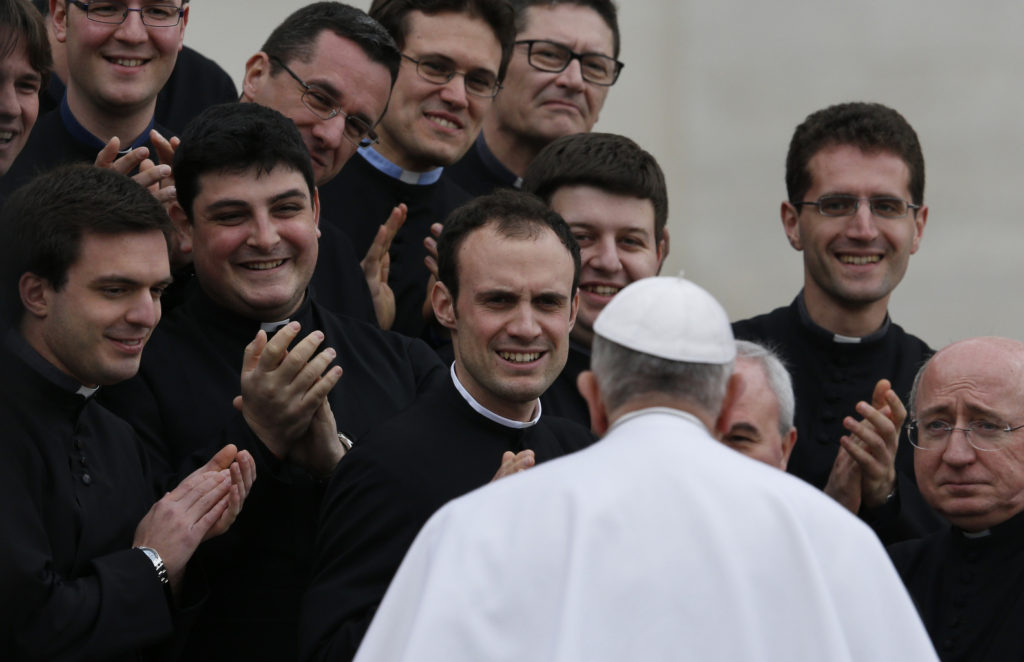
Pope Francis greets clergy during his general audience in St. Peter's Square at the Vatican March 4, 2015. (CNS photo/Paul Haring)
Pope Francis greets clergy during his general audience in St. Peter’s Square at the Vatican March 4, 2015. (CNS photo/Paul Haring)

VATICAN CITY (CNS) — More than 1,000 “missionaries of mercy” from all over the world will receive a special mandate from Pope Francis to preach and teach about God’s mercy, said Archbishop Rino Fisichella.

About 700 of the missionaries who were chosen by Pope Francis will be in Rome to receive their special mandate in person during an Ash Wednesday ceremony in St. Peter’s Basilica Feb. 10, said the president of the Pontifical Council for Promoting New Evangelization, the office organizing events for the Year of Mercy.

For the holy year, which runs until Nov. 20, Pope Francis said he would designate “missionaries of mercy” to be unique signs of God’s mercy. He is also giving them special authority to pardon sins that carry penalties that only the Holy See can lift.

During a news conference at the Vatican Jan. 29, Archbishop Fisichella said there had been a huge response from priests and religious men who — with permission from their bishops or superiors — requested to serve as these special missionaries.

The original plan was to have just 800 missionaries, however, the number of requests was so great, 1071 men ended up being chosen, Archbishop Fisichella said. The missionaries will serve in their own dioceses, but they may be invited by other bishops to visit other dioceses as well.

The pontifical council will send out to all the world’s bishops a list of the names and personal contact information of all the missionaries appointed by the pope, the archbishop said.

It will then be up to an individual bishop to reach out to a missionary on the list to invite him to his diocese, as well as cover expenses and provide what may be needed for his stay, the archbishop said.

Missionaries were chosen from all over the world, he said, including China, United Arab Emirates and East Timor. There were to be 125 missionaries from the United States and 10 missionaries from Canada, the council said.

“It is only the pope who nominates these missionaries, not the bishops, and it is he who entrusts them with the mandate to announce the beauty of the mercy of God while being humble and wise confessors who possess a great capacity to forgive those who approach the confessional,” the archbishop said.

Those who wanted to serve as special missionaries, but were not chosen, are encouraged to “work as witnesses of mercy in their own daily missions, in the parishes, institutes, and other communities where they offer their service with love,” the council said on its website, www.im.va.

The appointed missionaries were invited to Rome for a special meeting with the pope Feb. 9. They were to receive their papal mandate the next day during a ceremony in St. Peter’s Square in the presence of the relics of Sts. Padre Pio and Leopold Mandic — both Capuchin priests who spent 14 hours or more a day hearing people’s confessions.

It will be the first time their relics come to Rome, Archbishop Fisichella said. The relics were to be brought to St. Peter’s Basilica by procession Feb. 5 and remain in the central nave in front the Altar of the Confession until Feb. 11.

The pope requested their relics be exposed for veneration in the basilica, according to jubilee organizers, to be a sign for the missionaries of how God welcomes those who seek forgiveness.

By Carol Glatz, Catholic News Service.

Related

Missionaries of mercy prepare to be sent forth (Our Sunday Visitor)

Deadlines loom for two kid-friendly contests

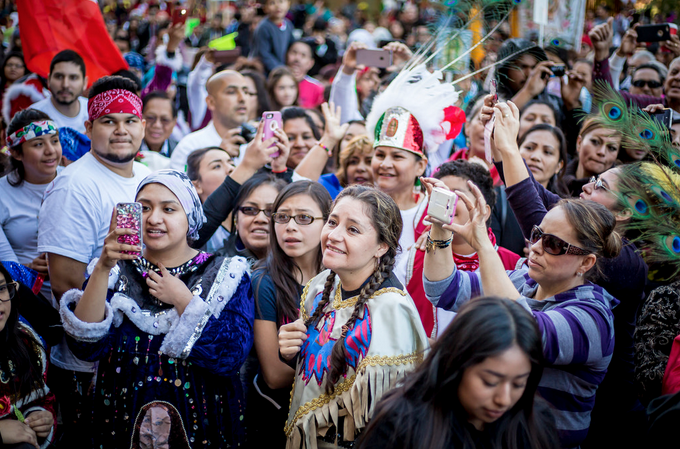
Catholics take pictures during a 2015 "Honor Your Mother" celebration in the Diocese of Phoenix. "Who is my mother? Who are (Catholic Sun file photo)
Catholics take pictures during a 2015 “Honor Your Mother” celebration in the Diocese of Phoenix. “Who is my mother? Who are my brothers and sisters?” is the theme of an art, poetry and prose contest for grades K-12. (Catholic Sun file photo)

It the kids would welcome a creative challenge, consider discussing a pair of art and writing contests with them.

Entries for the “Try Prayer! It Works!” contest open to students in kindergarten through high school must be postmarked by Feb. 1. The national competition, sponsored by Family Rosary, attracts more than 1,000 finalist entries from approximately 22,000 contestants.
[quote_box_right]

Prayer contest

Info and application

[/quote_box_right]

Children and teens from Catholic schools, parishes, home schooling, and other Catholic organizations use their talent to convey their beliefs. This year’s theme, “Who is my mother? Who are my brothers and sisters?” focuses on doing God’s will, based on Matthew 12:46-59. Entries can be art, poetry or prose.

“It’s our hope that all the children that participate in the ‘Try Prayer’ contest this year will come to a deeper understanding of the importance of spending time listening to God’s will for them,” said Fr. Hugh Cleary, C.S.C., national director of Family Rosary. “It’s so difficult for children today as they have so many distractions in their lives with all the media that surrounds them. Through the creation of their entry, we pray they will learn to spend time each day in prayer to learn of God’s desires for them.”

The “Try Prayer! It Works!” contest asks entrants to use creativity to depict their faith. The first place winner in each category and the sponsor will each receive $100.

[quote_box_right]

History Essay contest

Topic requirements for different depending on the grade level. See contest rules and guidelines for more information.

[/quote_box_right]

Students wanting a longer challenge can submit an entry to Catholic Textbook’s History Essay Contest. Young writers in grades 5-12 have until March 23 to reflect on a Catholic of historical significance and describe how this person influenced the times in which he or she lived. Although saints are a possible choice, the contest challenge is much wider and includes any Catholic historical figure.

Nearly 2,000 students entered last year. Winners in six separate divisions will receive a cash prize ranging from $100 to $200 each plus have their essay published online and on Facebook. Delaney McCartney, a homeschooled teen from Gilbert, was among last year’s winners.

A $400 Gift Certificate for the company’s textbooks will be awarded to the Catholic school(s) attended by each of the three Catholic school student winners. The homeschool(s) of the three Catholic homeschool student winners will each receive a free textbook of their choice from among Catholic Textbook Project history textbooks.

‘Simple, not silly’: Children’s questions become book by Pope Francis

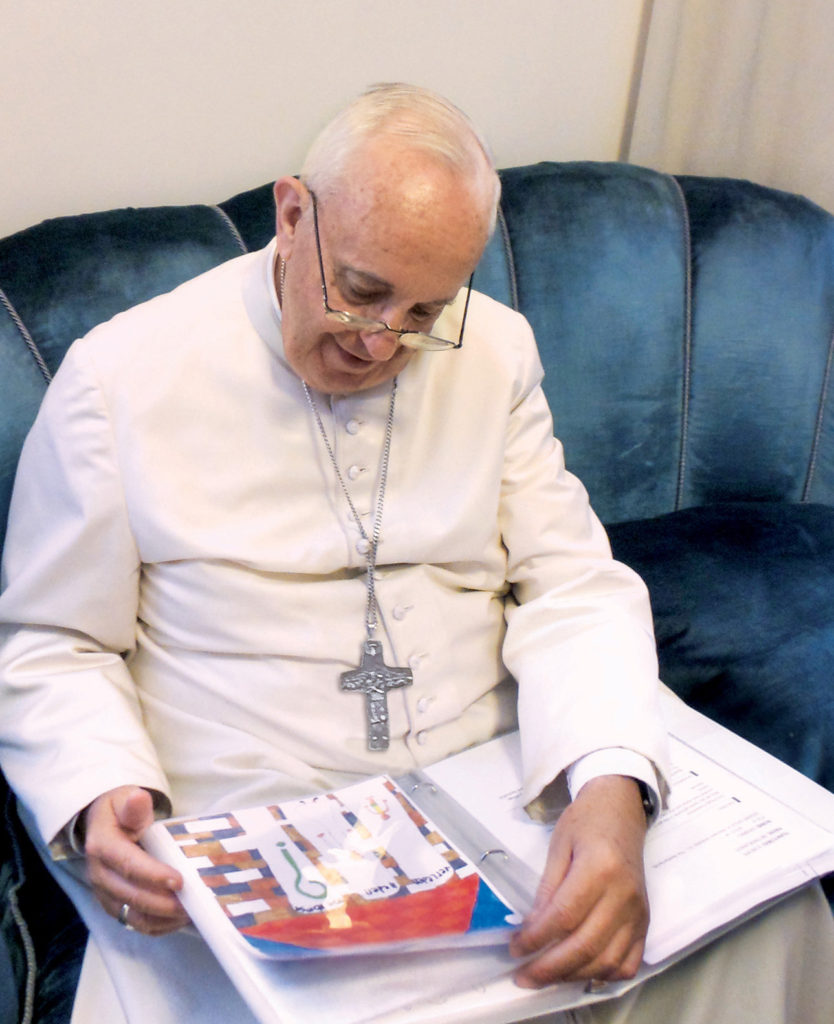
Pope Francis is seen reading letters from children in 2015. The letter will be published March 1 in the book "Dear Pope Francis." (CNS photo/courtesy Antonio Spadaro)
Pope Francis is seen reading letters from children in 2015. The letter will be published March 1 in the book “Dear Pope Francis.” (CNS photo/courtesy Antonio Spadaro)

VATICAN CITY (CNS) — Children may say the darnedest things, but when it comes to questions about faith they can make even the most learned parents and priests pause.

“These are tough,” Pope Francis said when presented with questions from 30 children from around the world.

Jesuit Father Antonio Spadaro, who went through the questions with the pope, said half the time he personally was stumped when thinking about how he would have responded. But the pope wasn’t.

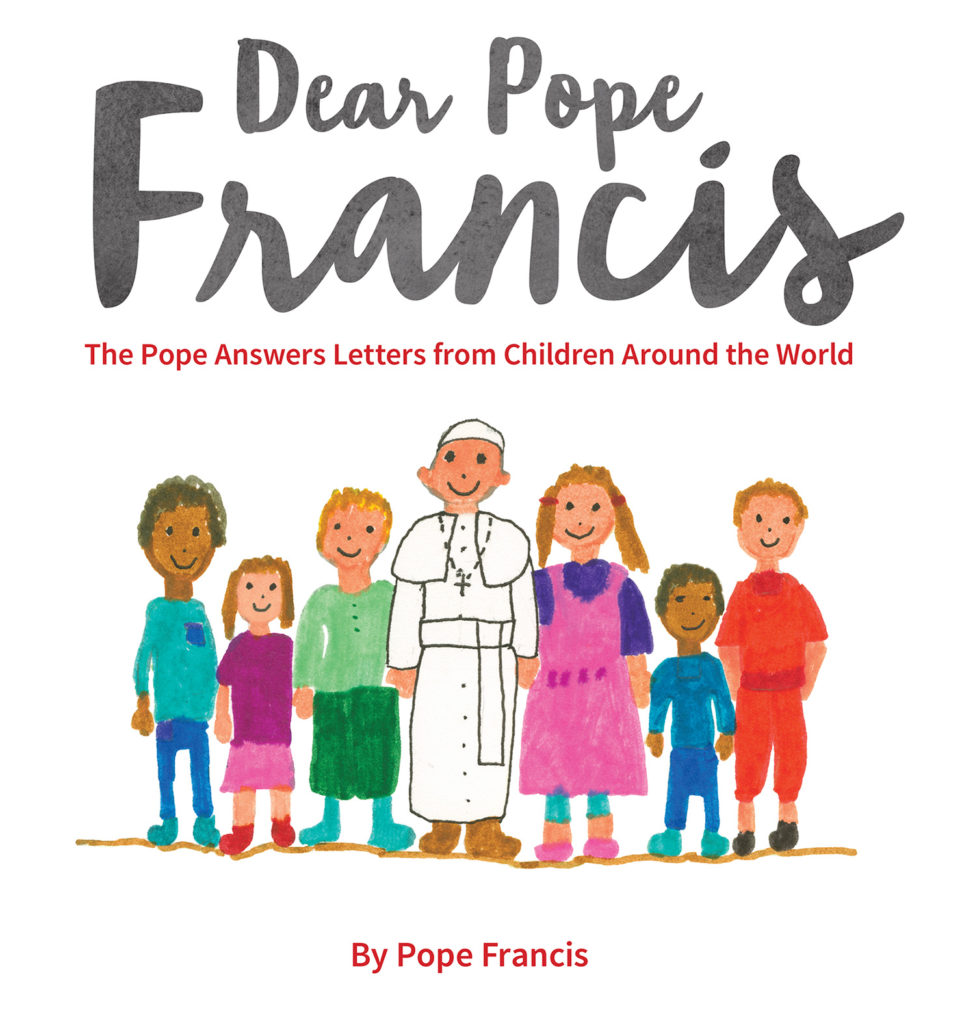
The questions, illustrated with the drawings of the children aged 6-13, and the pope’s answers will be published March 1 as the book “Dear Pope Francis.”

“What did God do before the world was made?” one child asked. “Do bad people have a guardian angel, too?” asked another.

In the book, coordinated and published by the U.S.-based Loyola Press, Pope Francis responds to those and 28 other queries; some of the questions are theological, others are practical and a few are about the pope personally, including what he wanted to be when he grew up.

To the question about what God was doing before creation, the heart of the pope’s answer is, “Think of it this way: Before creating anything, God loved. That’s what God was doing: God was loving.”

Questions about Jesus, war and peace and about heaven also are included, though Fr. Spadaro was keeping those exact questions and answers under wraps during a late January interview.

Some of the personal questions made Pope Francis laugh and the pope’s answers to those questions made Fr. Spadaro laugh, the Jesuit said. The pope admits in the book that when he was small he wanted to be a butcher because the butcher his grandmother bought meat from had an apron with a big pocket that seemed to be full of money.

The children’s questions are “simple, but not silly,” said Fr. Spadaro, who discussed them with Pope Francis and recorded his answers.

Fr. Spadaro heads La Civilta Cattolica, a Jesuit journal filled with articles on philosophy, theology, literary criticism and political theory. He has never worked with young children and said he was in awe of how the pope handled the questions — taking them seriously and responding to them honestly and clearly.

Some of the pope’s answers, he said, are “inspired.”

“This is important,” Fr. Spadaro said. “It says a lot about the magisterium of Pope Francis; he knows his ministry can reach children.”

At the request of Loyola Press, Fr. Spadaro asked Pope Francis last May if he would be willing to do the book. The Jesuit publishing house had asked Fr. Spadaro to approach the pope since he had conducted the first big interview with Pope Francis in 2013.

“The pope said yes immediately and with enthusiasm,” Fr. Spadaro said.

Loyola Press then reached out to dozens of Jesuits and collaborators around the globe, asking them to solicit questions and drawings from children. Sometimes Loyola had to ship off crayons, markers and paper because the children had none.

In the end, 259 children in 26 countries submitted questions. The big batch of letters are in 14 languages and come from children in wealthy cities, poor rural areas and even refugee centers.

Choosing which letters the pope would answer in the book was done with input from the children, parents, grandparents, teachers and Jesuits, Fr. Spadaro said. But he went into the reserve pile and pulled out a few more as well.

In August, Fr. Spadaro read the letters out loud to the pope in Italian, but the pope also scrutinized the drawings, the Jesuit said. He commented on the scenes and colors and often had a good laugh over the way the kids drew the pope.

This is the cover of "Dear Pope Francis," which includes drawings by children ages 6-13. The book will be published March 1. (CNS photo/courtesy Loyola Press)
This is the cover of “Dear Pope Francis,” which includes drawings by children ages 6-13. The book will be published March 1. (CNS photo/courtesy Loyola Press)

For the answers, “I was not just taking dictation,” Fr. Spadaro said. The pope enjoys a conversation; for the book, that meant the pope would sometimes discuss the questions and potential answers with the Jesuit scribe and, often, would return to add something to an answer after they had already moved on to other letters.

“He’s a volcano,” Fr. Spadaro said.

The pope would look off into space as if picturing the children and responding to them in person, usually in Spanish, but sometimes in Italian, the Jesuit said.

The questions stayed with the pope, who later referred to some of them in speeches and homilies, he said. The most noticeable example was the question from 8-year-old Ryan in Canada about what God was doing before creation.

In the pope’s unscripted talk at the Festival of Families in Philadelphia in September, Pope Francis told the crowd, “A young person once asked me — you know how young people ask hard questions! — ‘Father, what did God do before he created the world?'”

“Believe me, I had a hard time answering that one,” the pope admitted in Philadelphia. “I told him what I am going to tell you now. Before he created the world, God loved, because God is love.”

Although it might not be “theologically precise,” the pope said that night, God’s love was so great that “he had to go out from himself, in order to have someone to love outside of himself. So God created the world. …  But the most beautiful thing God made — so the Bible tells us — was the family.”

Pope Francis will have a chance to meet nine or 10 of the children in late February when he has promised a private audience for some of the people who took part in the project.

By Cindy Wooden, Catholic News Service.