
Foot-washing ritual not limited to men, Vatican says in new decree

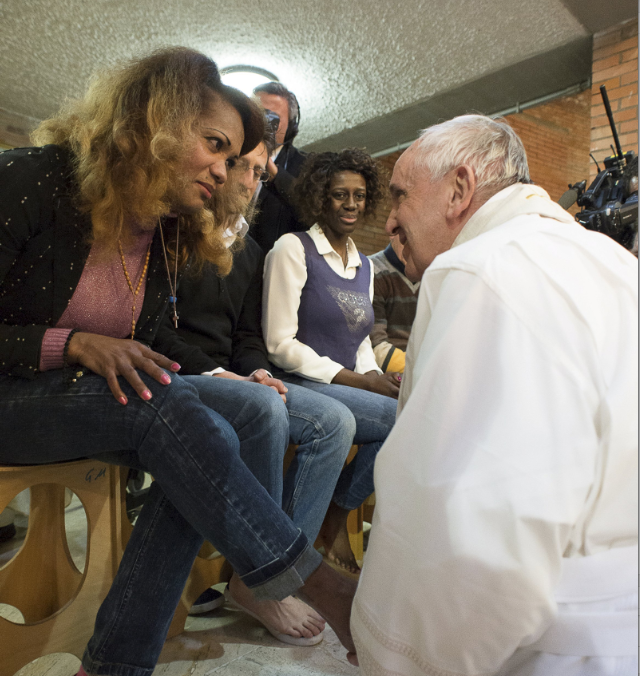
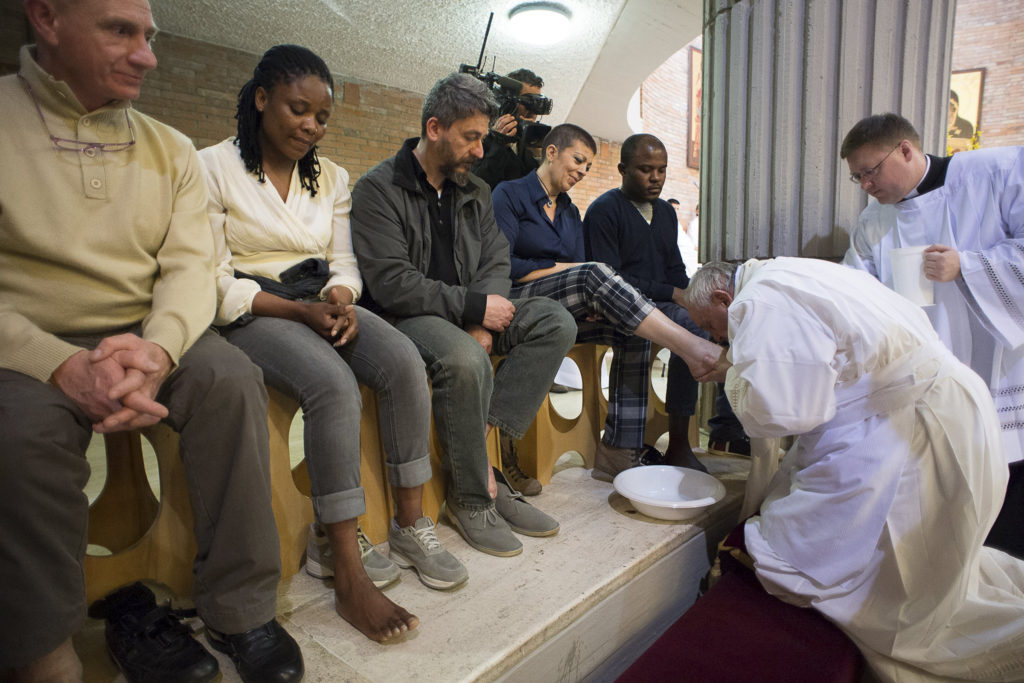
Pope Francis kisses the foot of a female inmate during the Holy Thursday Mass at Rebibbia prison in Rome in this April 2, 2015, file photo. Following a request by Pope Francis, the Vatican issued a decree Jan. 21 specifying that the Holy Thursday foot-washing ritual can include women. (CNS photo/Reuters via L'Osservatore Romano)
Pope Francis kisses the foot of a female inmate during the Holy Thursday Mass at Rebibbia prison in Rome in this April 2, 2015, file photo. Following a request by Pope Francis, the Vatican issued a decree Jan. 21 specifying that the Holy Thursday foot-washing ritual can include women. (CNS photo/Reuters via L’Osservatore Romano)

VATICAN CITY (CNS) — Following a request by Pope Francis, the Vatican issued a decree specifying that the Holy Thursday foot-washing ritual can include “all members of the people of God,” including women — a practice already observed by the pope and many priests around the world.

In a letter dated December 2014 and addressed to Cardinal Robert Sarah, the head of the Congregation for Divine Worship and the Sacraments, the pope said the rubric of the Roman Missal, which mentions only men as participants in the foot-washing rite, should be changed so that priests can choose from all members of the church.

The pope said the change would help express the full meaning of Jesus’ gesture at the Last Supper, his “giving himself ‘to the end’ for the salvation of the world” and his endless charity. However, the pope insisted those chosen be given “an adequate explanation of the meaning of the rite itself.”

The pope’s letter and the congregation’s decree were released by the Vatican Jan. 21.
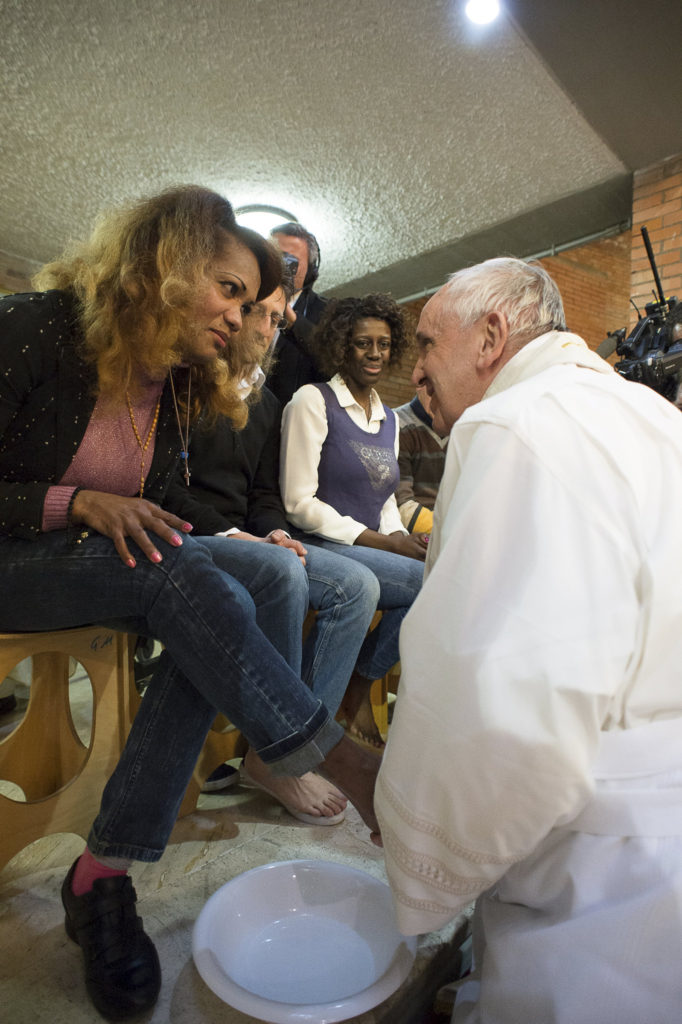
Pope Francis washes the foot of a female inmate during the Holy Thursday Mass at Rebibbia prison in Rome in this April 2, 2015, file photo. Following a request by Pope Francis, the Vatican issued a decree Jan. 21 specifying that the Holy Thursday foot-washing ritual can include women. (CNS photo/Reuters via L'Osservatore Romano)
Pope Francis washes the foot of a female inmate during the Holy Thursday Mass at Rebibbia prison in Rome in this April 2, 2015, file photo. Following a request by Pope Francis, the Vatican issued a decree Jan. 21 specifying that the Holy Thursday foot-washing ritual can include women. (CNS photo/Reuters via L’Osservatore Romano)

The decree, issued by Cardinal Sarah and dated Jan. 6, states that pastors can choose “a small group of the faithful to represent the variety and the unity of each part of the people of God. Such small groups can be made up of men and women, and it is appropriate that they consist of people young and old, healthy and sick, clerics, consecrated men and women and laity.”

Jesuit Father Federico Lombardi, Vatican spokesman, told journalists that although traditionally 12 men were selected to represent the 12 apostles, the meaning of the rite signifies Jesus’ unconditional love. With the pope’s decree, he said, the pope wished “this dimension of the gesture of Christ’s love for all” be the focus rather than just a portrayal of the biblical scene during the Last Supper.

Archbishop Arthur Roche, secretary of the Congregation for Divine Worship and the Sacraments, explained the history of the foot-washing rite in an article published in the Vatican newspaper Jan. 21.

He said the rite has endured various changes and modifications throughout the church’s history. For example, the “mandatum” from 1600 said the custom was for bishops to wash, dry and kiss “the feet of ‘thirteen’ poor people after having dressed them, fed them and given them a charitable donation.”

Changes made by Pope Pius XII were reformed again in 1970, further simplifying the rite and omitting the requirement that the number participating be 12. The significance of the current modifications, the archbishop added, “does not now relate so much to the exterior imitation of what Jesus did, but rather the meaning of what he accomplished, which has a universal importance.”

“The washing of feet is not obligatory” during the Holy Thursday Mass of the Lord’s Supper, Archbishop Roche said. “It is for pastors to evaluate its desirability, according to the pastoral considerations and circumstances which exist, in such a way that it does not become something automatic or artificial, deprived of meaning and reduced to a staged event.”

In 1987, the then-Committee on the Liturgy of the U.S. bishops’ conference explained, “The element of humble service has accentuated the celebration of the foot washing rite in the United States over the last decade or more. In this regard, it has become customary in many places to invite both men and women to be participants in this rite in recognition of the service that should be given by all the faithful to the church and to the world. Thus, in the United States, a variation in the rite developed in which not only charity is signified but also humble service.”

By Junno Arocho Esteves, Catholic News Service.

Tucson’s Vatican astronomers bring expertise to Phoenix skies

The Vatican Advanced Technology Telescope (VATT) is located on Mt. Graham, Arizona. (Photo courtesy of Katie Bannan Steinke, Vatican Observatory Foundation)

[quote_box_right]

‘Water in the Universe: From Icy Moons to Astrobiology’

When: 9 a.m. – 12 p.m., Saturday, Jan. 23

Where: Mount Claret Retreat Center, 4633 N. 54th St.

Cost: Free

Register online or contact Katie Steinke by e-mail or at (805) 901-6591.

For more information on the realationship between the Catholic Church and science visit vofoundation.org/blog.

[/quote_box_right]

The Catholic Church has pondered the handiwork of God’s creation through the lens of a telescope for centuries.

Pope Gregory XIII’s involvement to reform the Julian calendar in the 1500s prefigured the Vatican Observatory, one of the oldest astronomical institutions in the world. It was founded by Pope Leo XIII in 1891 with the goal to show the world that the Church supports good science.

What may be a surprise is, the Vatican has an observatory in Tucson where Jesuit priests, also astrophysicists, study the universe. As urban light pollution began to cloud the views of astronomers at Castel Gandolfo, a town in the Alban Hills outside of Rome, a new division of the observatory was established in 1980 on Mt. Graham in southeastern Arizona.

University of Arizona graduate Jesuit Brother Guy Consolmagno is the director of the Vatican Observatory and president of the Vatican Observatory Foundation. It’s a misconception to think the integration of faith and science is at odds; the Bible tells us who made the universe and science tells us how He did it, he said.

“If God created the universe, as we believe, then learning about how the universe was created and what it contains is a way of getting closer to that Creator,” said Br. Guy. “It’s not enough that the Church supports our science. We also have to be able to show it to the world.”

Recognized internationally as an epicenter for astronomy, the Tucson location is called the Vatican Observatory Research Group, which is hosted by the university’s Steward Observatory.

The Vatican Observatory built the Vatican Advanced Technology Telescope (VATT), which was dedicated in 1993 by Pope St. John Paul II.

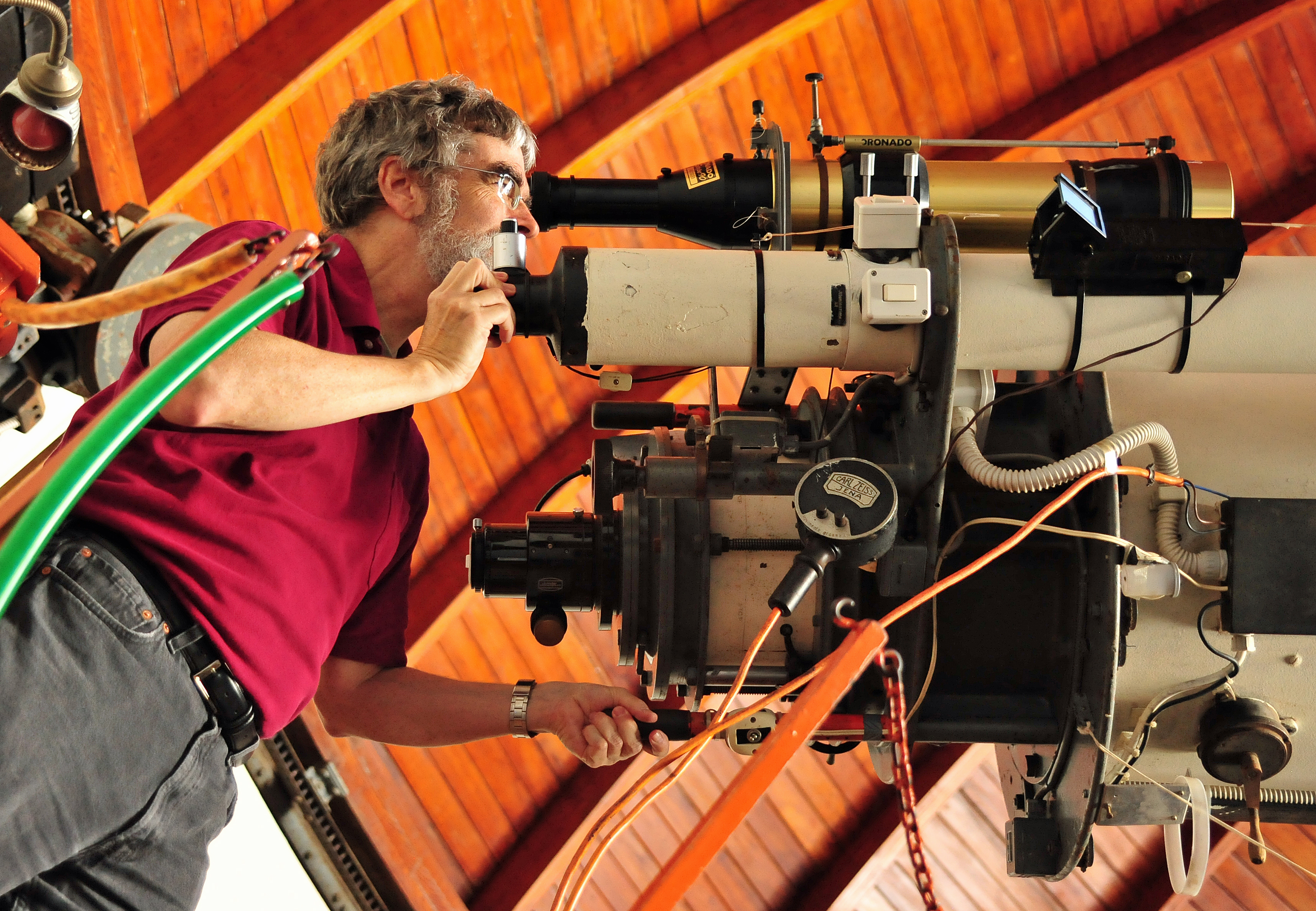
Jesuit Brother Guy Consolmagno, directory of the Vatican Observatory, looks through one of the telescopes at Castel Gandolfo. (Photo courtesy of Katie Bannan Steinke, Vatican Observatory Foundation)

The VATT uses some of the most advanced and innovative optics, electronics and mechanics available — helping to keep the Vatican in the forefront of astronomy.

“We are free to explore the universe, wherever our curiosity and interests lead us,” said Br. Guy. “Our job is not just to answer questions, but also to provoke new questions. The more you learn, the more you realize how much you still need to learn.”

The Holy See finances the observatory, however, the VATT is funded by private, philanthropic support through the Vatican Observatory Foundation.

According to Katie Bannan Steinke, development director of the foundation, the nonprofit was established in 1987 to support all fundraising and educational efforts.

“The foundation gathers donations to maintain the telescopes, roads, the building and we do a lot of outreach programs,” Steinke said.

Good science is the heart of their work.

This past year, contributions to the foundation funded the day-to-day operating expenses of the VATT, which allowed Vatican astronomers to study star clusters, near Earth objects, Trojan asteroids, exoplanets and a survey of stars that look like the sun when it was young.

In addition, every year 25 parish educators are picked from the U.S., Canada and Mexico to spend a week at the Redemptorist Renewal Center outside of Tucson for lectures, workshops, trips and discussion on astronomy and relating it to a parish setting.

The foundation is collaborating with the Catholic Community Foundation to host a faith and science seminar titled, “Water in the Universe: From Icy Moons to Astrobiology,” Jan. 23, 9 a.m. to noon, Mount Claret Retreat Center in Phoenix. The morning is free, but participants need to register online at vofoundation.org or contact Steinke at (805) 901-6591.

The seminar precedes the invitation-only dinner and awards program at 6 p.m., with a keynote address by Dr. Jim Bell, Mars expert and professor at Arizona State University.

Br. Guy, the Detroit native who earned his Ph.D. in Planetary Science from the University of Arizona, and entered the Society of Jesus in 1989, says the most common question he gets about the Church having telescopes is, “Why?”

“And my answer is why don’t other churches support telescopes? Studying God’s creation is a great way of getting to know the Creator, in a close and intimate way. It also reminds us that the universe has bigger questions than, “What’s for lunch?”

Rev. King recalled as a man of the beatitudes during annual liturgy

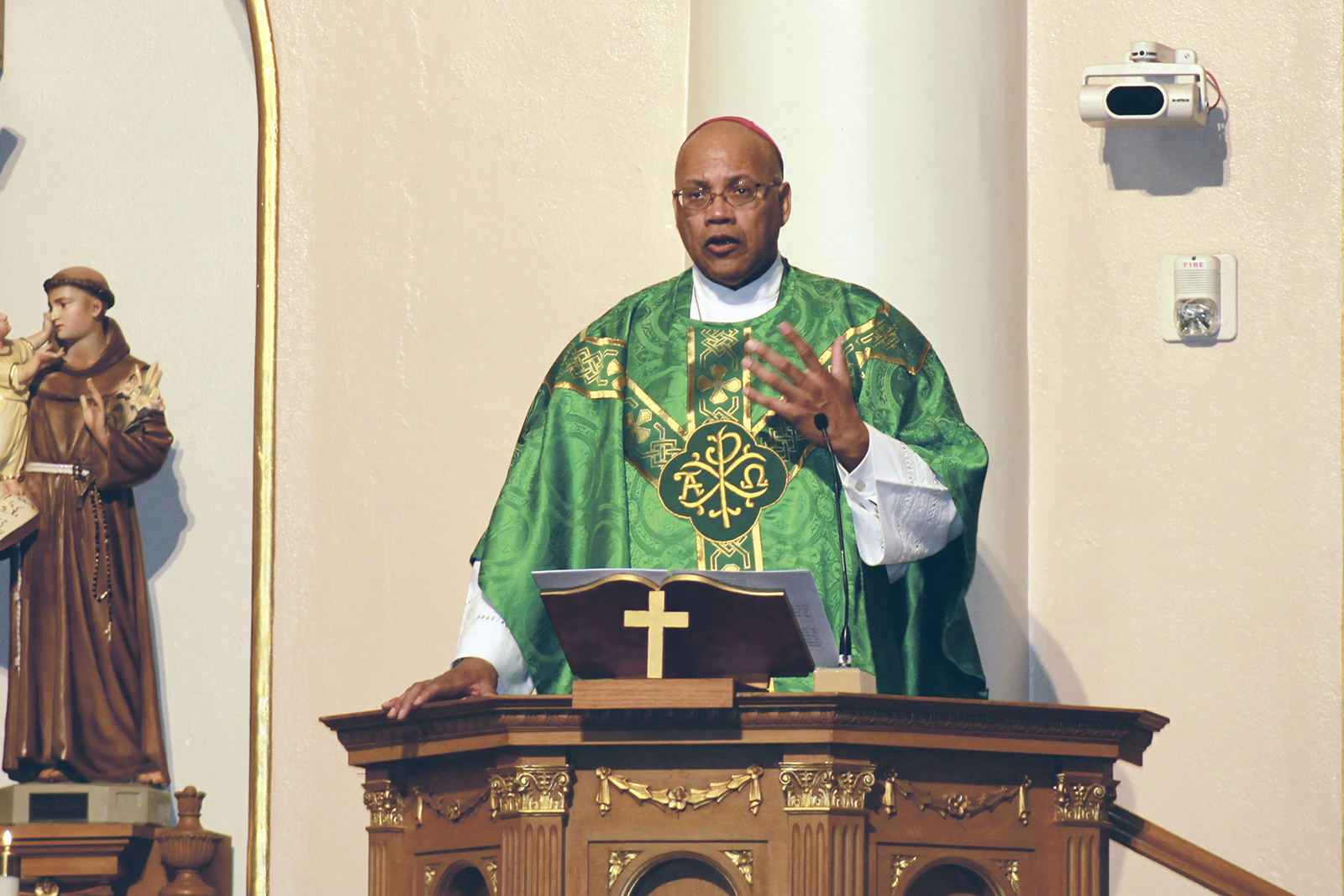
Washington Auxiliary Bishop Martin D. Holley gives the homily during the Diocese of Phoenix's Martin Luther King Mass celebrated at St. Mary's Basilica in Phoenix Jan. 18, national holiday named for the slain civil rights leader. Bishop Holley said Rev. King was a "man of the beatitudes" who provides an example to all. (CNS photo/Tony Gutierrez, Catholic Sun)
Washington Auxiliary Bishop Martin D. Holley gives the homily during the Diocese of Phoenix’s Martin Luther King Mass celebrated at St. Mary’s Basilica in Phoenix Jan. 18, national holiday named for the slain civil rights leader. Bishop Holley said Rev. King was a “man of the beatitudes” who provides an example to all. (CNS photo/Tony Gutierrez, Catholic Sun)

Martin Luther King, Jr., provides us with an example of living the Beatitudes, said Washington Auxiliary Bishop Martin D. Holley, the guest homilist at this year’s Martin Luther King Mass for the Diocese of Phoenix, celebrated at St. Mary’s Basilica Jan. 18.

Bishop Thomas J. Olmsted celebrated the annual liturgy, which is organized by the diocese’s Office of Black Catholic Ministry to honor the legacy of the slain Civil Rights leader who led the fight for equal rights in the 1950s and ‘60s. A Baptist minister, King relied on Christian principles to guide his nonviolent movement.

King followed the way of Jesus Christ, Bishop Holley said, “through the sacrifice of his own life, by preaching the truth and promoting the virtues of faith, hope and love, along with God’s mercy, justice and peace, through nonviolent means to help obtain equal rights, and respect for the dignity of every human being from conception to natural death.”

The Beatitudes, found in the gospel reading from Matthew, teach the faithful how to be followers of Christ, the bishop said. They are “stepping-stones” on the way to the Kingdom of God, but we can’t live them without the grace of the Holy Spirit, he added.

“Today, as we join our country in the national holiday, celebrating the birthday of Rev. Dr. Martin Luther King, Jr., we are called to remember how he entered into his own passion and was challenged,” said Bishop Holley. “We remember how he strove to the best of his human/spiritual ability to do God’s will and to live out the Beatitudes.”

The bishop pointed out King lived at a time when Black Americans in many parts of the U.S. couldn’t vote, didn’t have access to quality education, couldn’t run for or hold public office, couldn’t serve on juries, and couldn’t use the same public bathrooms and drinking fountains as whites.

“But because Rev. Dr. Martin Luther King’s willingness to undergo his own personal passion, as we all either do, or will do one day; he strove to the best of his human ability to, ‘do whatever Jesus told him to do.’”

Bishop Holley then went on to quote excerpts from King’s sermons and writings.

“‘Now the judgment of God is upon us, and we must either learn to live together as brothers (sisters) or we are all going to perish together as fools,’” said Bishop Holley quoting King’s “A Christmas sermon on peace.”

In order to have true peace, he said, peace can’t be seen as some far-off goal, but a way to live now.

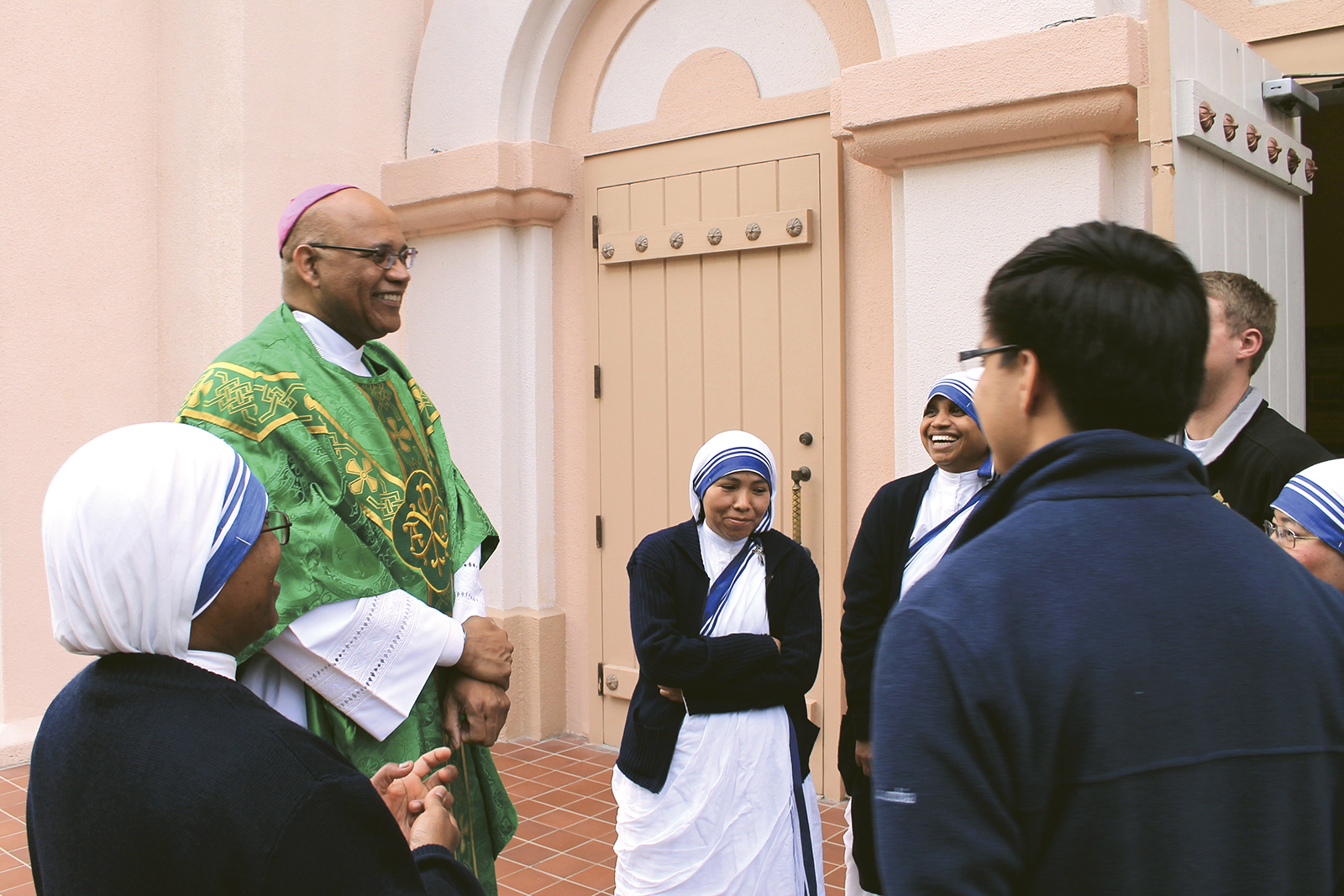
Outside St. Mary's Basilica in Phoenix Jan. 18, Washington Auxiliary Bishop Martin D. Holley greets members of the Missionaries of Charity who serve in the Diocese of Phoenix and two seminarians from the Archdiocese of the Military Services. Bishop Holley was the guest homilist for the diocese's Martin Luther King Mass, celebrated on the national holiday named for the slain civil rights leader. (CNS photo/Tony Gutierrez, Catholic Sun)
Outside St. Mary’s Basilica in Phoenix Jan. 18, Washington Auxiliary Bishop Martin D. Holley greets members of the Missionaries of Charity who serve in the Diocese of Phoenix and two seminarians from the Archdiocese of the Military Services. Bishop Holley was the guest homilist for the diocese’s Martin Luther King Mass, celebrated on the national holiday named for the slain civil rights leader. (CNS photo/Tony Gutierrez, Catholic Sun)

“‘Man is a child of God, made in His image and likeness; therefore must be respected as such. Until men and women see this everywhere, until nations see this everywhere, we will be fighting wars,’” the bishop continued quoting. “‘We are all one in Christ Jesus. And when we truly believe in the sacredness of human personality, we won’t exploit people, we won’t trample over people with the iron feet of oppression; we won’t kill anybody.’”

Noting the Jubilee Year of Mercy, Bishop Holley said that Pope Francis also reminds Catholics to live out the Beatitudes. There is a close connection between poverty and evangelization.

“‘No one can be excluded from the mercy of God; everyone knows the way to access it and the Church is the house that welcomes all and refuses no one,’” Bishop Holley said quoting Pope Francis. “‘I am convinced that the whole Church will find in this Jubilee the joy needed to rediscover and make fruitful the mercy of God, with which all of us are called to give consolation to every man and woman of our time.’”

Robert L. Watson, who recently relocated to the Valley, attended the Mass and said he thought the homily gave Catholics something to think about in their daily lives. Referring to Martin Luther King’s legacy, he said it was his message, not the person, that was important.

“It’s a message of unity, prayer, brotherhood, respect for each other and Jesus Himself,” he said.

Kit Marshall, director of the Office of Black Catholic Ministry, recalled being in the Army during the Civil Rights movement, and going to a restaurant with his buddies outside of Fort Benning, Georgia. The men in uniform were never waited on and soon learned why when the manager pointed at Marshall and said, “We can’t let him come in.”

“Half of us went back to the main base,” he said.

Though there’s still work to be done today, Marshall said, the legacy of Martin Luther King is that African-Americans like him were able to compete in corporate America and open discrimination like he faced has dwindled significantly.

Marshall said he hopes those that attended the liturgy would be inspired to do more with the Church and to help people.

RELATED

Black Catholics mark Dr. King holiday with praise, rallying cry for justice (Catholic Philly)

PHOTOS: Praising the Lord in remembrance of Dr. King (Catholic Philly)

Alegría que da la esperanza: San Juan Bosco

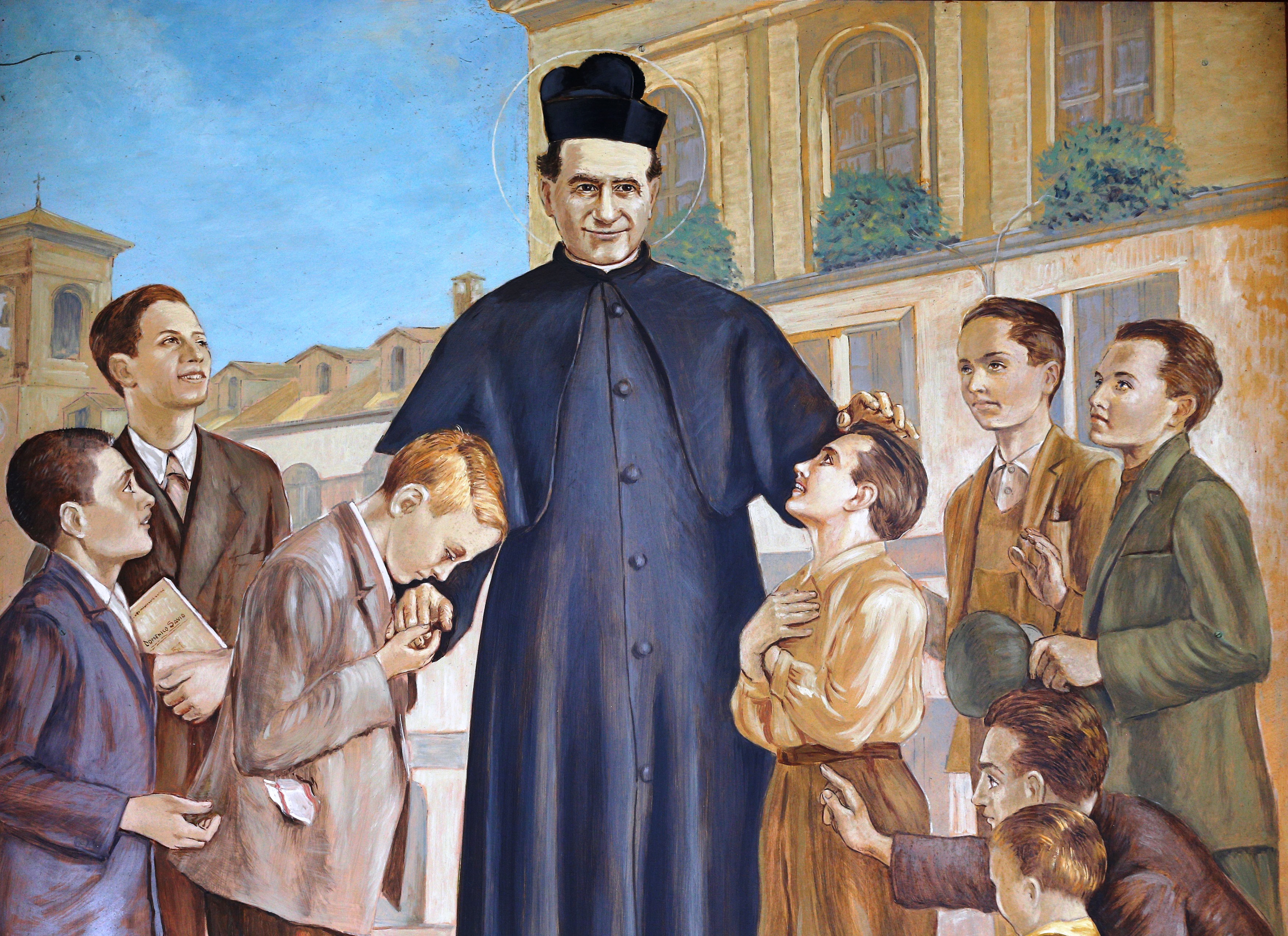
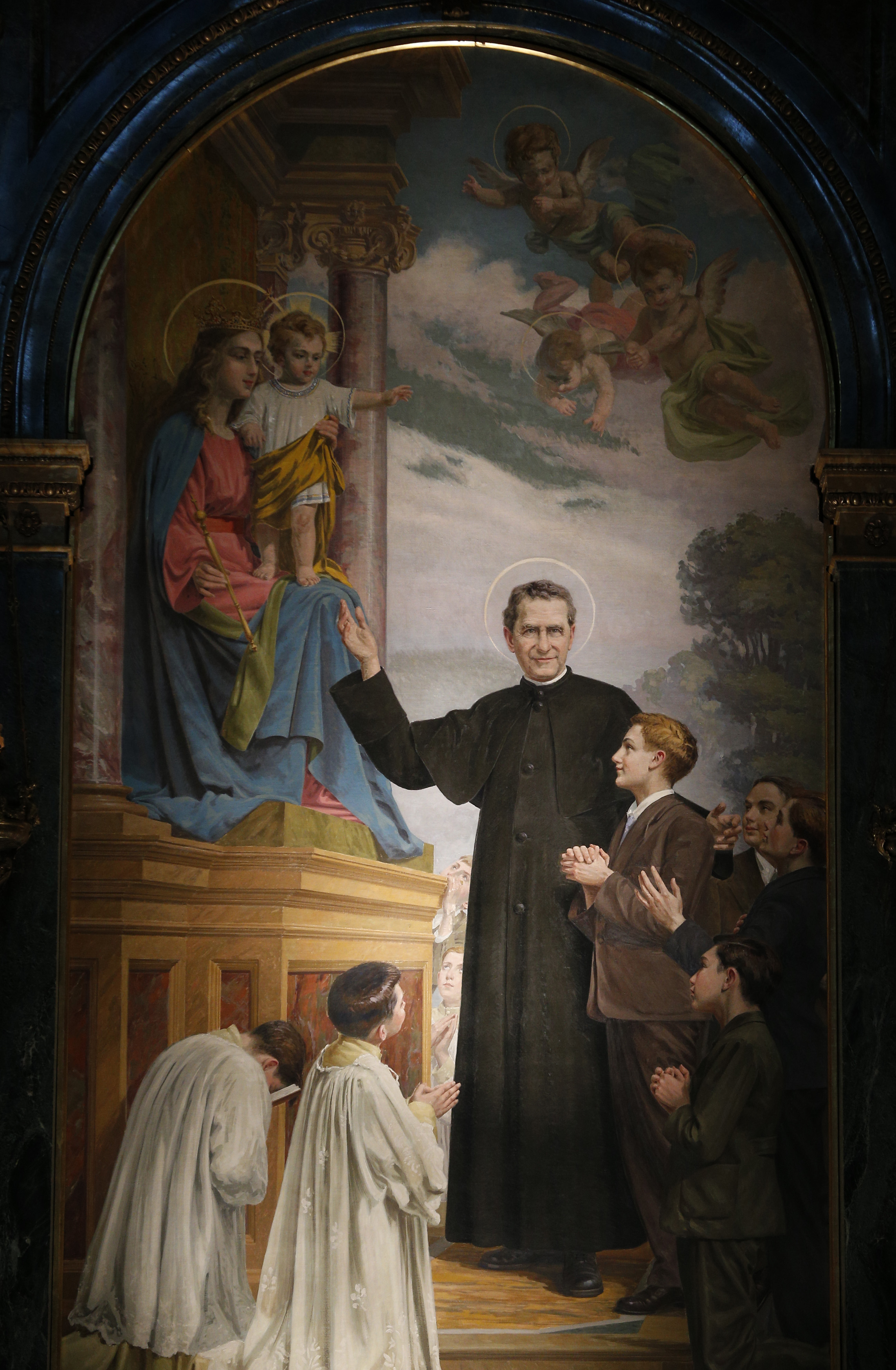
An mural showing St. John Bosco and boys is seen in a courtyard of the Sanctuary of Our Lady of Help of Christians in Turin, Italy. The sanctuary was the site of St. Bosco's home for poor and abandoned boys. (Paul Haring/CNS)
Un mural que muestra a San Juan Bosco en el Santuario de Nuestra Señora Auxilio de los Cristianos en Turin, Italia. (Paul Haring/CNS)

[dropcap]E[/dropcap]l Papa Francisco dice que conocemos a Jesús mejor a través de Sus heridas, las heridas encontradas en Sus hermanos y hermanas en necesidad; y servimos a Jesús mejor al ser un canal de Su gozo y misericordia. Sin duda esto era cierto para el Santo que la Iglesia honra el 31 de enero, San Juan Bosco.

El Reverendísimo Thomas J. Olmsted es le obispo de la Diócesis de Phoenix. Fue instalado como el cuatro obispo de Phoenix el 20 de diciembre de 2003, y es el lider espiritual de los 1,1 millones católicos en la diócesis.

En su Exhortación Apostólica, la Alegría del Evangelio, el Santo Padre escribe (5): “Nuestra alegría cristiana bebe de la fuente de su corazón rebosante. Él promete a los discípulos: ‘Estaréis tristes, pero vuestra tristeza se convertirá en alegría’ (Juan 16:20).

La paradoja de la alegría cristiana es que aumenta en la medida en que compartimos en los dolores y las dificultades de los demás, por amor a Jesús. Juan Bosco lo hizo con notable éxito, inicialmente al aprender del ejemplo de su madre, quien quedó viuda sólo dos años después del nacimiento de Juan. Estaba convencida que sus tres hijos: Juan, su hermano mayor José y su hermanastro Antonio — necesitaban más que una madre que trabajaba duro. Necesitaban a una madre que estaba alegre al trabajar, alegre mientras los cuidaba y enfrentaba las dificultades de la vida.

Nació en Castelnuovo d‘Asti, Italia, el 16 de agosto de 1815 y debido a la inspiración de su madre, a una edad joven, Juan entretuvo a los niños pobres de su barrio al aprender de un viajero cómo hacer malabares, trucos de magia, caminar la cuerda floja y otras cosas imaginativas y divertidas. Sus actuaciones no fueron gratis, sin embargo. Los espectadores tenían que recitar el Rosario juntos y escuchar un pequeño sermoncito.

Sin un padre que pagara por su educación, este futuro Santo trabajó para un sastre, un zapatero, un herrero y un número de otros artesanos. Con la ayuda de su alegre disposición, él hizo amigos con una gran variedad de personas, especialmente entre aquellos que eran pobres como su propia familia. También aprendió que el trabajo duro realizado con alegría, tras el ejemplo de su madre, le preparó para tener éxito en sus estudios del seminario. Después de superar lo que parecieron obstáculos insuperables, Juan fue ordenado al sacerdocio en la ciudad italiana de Turín el 5 de junio de 1841. Pronto después de eso, él descubrió, en los barrios recientemente germinados de la ciudad, las heridas y las injusticias creadas por proyectos iniciales de la Revolución Industrial. Allí aprendió sobre talleres clandestinos con equipo peligroso, salarios de hambre, mano de obra infantil y otras prácticas humanamente degradantes.

An mural showing St. John Bosco is seen in the Sanctuary of Our Lady of Help of Christians in Turin, Italy. (Paul Haring/CNS)
El Santuario de Nuestra Señora Auxilio de los Cristianos en Turin, donde está este mural, fue el sitio del inicio de San Bosco para los niños pobres y abandonados. (Paul Haring/CNS)

Con compasión en su corazón y una sonrisa en su rostro, el joven Padre Bosco soñaba con formas innovadoras para llegar a los jóvenes de los barrios de Turín. Ya que la mayoría de las fábricas cerraban los domingos, decidió enseñar a los jóvenes a hacer el día del Señor uno de diversión, descanso y oración. Reuniéndose en un lote vacío de la ciudad, una capilla del cementerio sin usar, o cualquier espacio que pudiera encontrar, escuchaba confesiones, celebraba la Misa y luego llevaba a un gran número de jóvenes que venían a él a caminatas por el campo, o a juegos y concursos organizados. De ese modo construyó amistades, transmitió las verdades de la fe, restaurando en cada joven un sentido de su dignidad y haciendo atractivo para ellos la alegría y la misericordia del Señor.

A través del Padre Bosco, los jóvenes descubrieron la verdad que el Papa Francisco mencionó cuando llamó por el Año Jubilar de la Misericordia: “La misericordia es un manantial de alegría, serenidad y paz”. Pocos años después de que el Padre Bosco empezó su apostolado del domingo entre los niños de los barrios de Turín, comenzó un orfanato; luego unos años después, una escuela de comercio; y poco después una red de escuelas y dos institutos religiosos (uno para hombres y otro para mujeres) para ampliar sobre el trabajo que el Señor le había motivado a empezar cuando él descubrió y respondió con caridad a las heridas y las injusticias de los pobres.

La razón por la que Santos cambian las vidas de las personas y transforman la cultura, dice el Papa Francisco, es que, en lugar de retirarse de los barrios y de los pobres en los márgenes de la sociedad, entran en las profundidades de la misericordia compartiendo los sufrimientos y dolores que encuentran allí. Esto es lo que el Señor nos invita a tí y a mí a hacer durante el Año Jubilar de la Misericordia. Inspirados por los hombres y mujeres como San Juan Bosco, podemos empezar al ser atentos a las necesidades de los demás y responder a ellos en forma agradable y atractiva. El Señor quiere llamar a otros a Él por medio de la alegría que Él pone en nuestros corazones y en los corazones de todos los que se convierten en Sus discípulos.

Joy that gives hope: St. John Bosco

An mural showing St. John Bosco and boys is seen in a courtyard of the Sanctuary of Our Lady of Help of Christians in Turin, Italy. The sanctuary was the site of St. Bosco's home for poor and abandoned boys. (Paul Haring/CNS)
An mural showing St. John Bosco and boys is seen in a courtyard of the Sanctuary of Our Lady of Help of Christians in Turin, Italy. The sanctuary was the site of St. Bosco’s home for poor and abandoned boys. (Paul Haring/CNS)

[dropcap]P[/dropcap]ope Francis says that we get to know Jesus best through His wounds, the wounds found in His brothers and sisters in need; and we serve Jesus best by being a channel of His joy and mercy. This certainly was true for the saint whom the Church honors on Jan. 31, St. John Bosco.

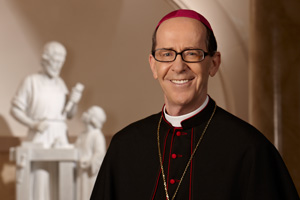
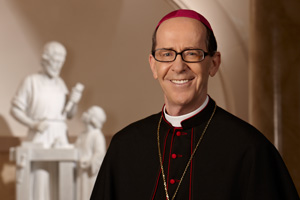
The Most Rev. Thomas J. Olmsted is the bishop of the Diocese of Phoenix. He was installed as the fourth bishop of Phoenix on Dec. 20, 2003, and is the spiritual leader of the diocese's 1.1 million Catholics.
The Most Rev. Thomas J. Olmsted is the bishop of the Diocese of Phoenix. He was installed as the fourth bishop of Phoenix on Dec. 20, 2003, and is the spiritual leader of the diocese’s 1.1 million Catholics.

In his Apostolic Exhortation, “The Joy of the Gospel,” the Holy Father writes (5), “Our Christian joy drinks of Jesus’ brimming heart. He promises his disciples: ‘You will be sorrowful, but your sorrow will turn into joy’ (Jn 16:20).”

The paradox of Christian joy is that it increases to the degree that we share in the sorrows and trials of others, out of love for Jesus. John Bosco did this with remarkable success, learning initially from the shining example of his mother, who was widowed only two years after John’s birth. She was convinced that her three sons — John, his older brother Joseph and their step-brother Anthony — needed more than a mother who worked hard. They needed a mother who was joyful as she worked, joyful as she cared for them and faced the hardships of life.

Born in Castelnuovo d’Asti, Italy, on Aug. 16, 1815, and due to the inspiration of his mother, at an early age, John entertained the other poor children of his neighborhood by learning from a traveler how to juggle, perform magic tricks, walk a tight rope, and do other imaginative, funny things. His performances were not free, however. The spectators had to recite the rosary together and listen to his little sermon.

Without a father to pay for his education, this future saint worked for a tailor, a shoemaker, a blacksmith and a number of other craftsmen. With the help of his sunny disposition, he made friends with a wide variety of people, especially among those who were poor like his own family. He also learned that hard work done with gladness, after the example of his mother, prepared him to succeed in his seminary studies. After overcoming what seemed insurmountable obstacles, John was ordained a priest in the Italian city of Turin on June 5, 1841. Soon thereafter, he discovered, in its recently sprouted slums of the city, the wounds and injustices created by initial projects of the Industrial Revolution. There he learned about sweatshops with dangerous equipment, starvation wages, child labor and other humanly degrading practices.

An mural showing St. John Bosco is seen in the Sanctuary of Our Lady of Help of Christians in Turin, Italy. (Paul Haring/CNS)

With compassion in his heart and a smile on his face, the young Father Bosco dreamed up innovative ways to reach the young men from the slums of Turin. Since most factories were closed on Sunday, he decided to teach the young men how to make the Lord’s Day one of fun, rest and prayer. Gathering in an empty city lot, an unused chapel in a cemetery, or whatever space could be found, he heard confessions, celebrated Mass and then led the ever-increasing numbers who came to him on hikes in the country, or in organized games and competitions, thereby building friendships, handing on truths of the faith, restoring to each youngster a sense of his dignity and making attractive to them the joy and mercy of the Lord.

Through Father Bosco, young people discovered the truth that Pope Francis mentioned when calling for the Jubilee Year of Mercy: “Mercy is a wellspring of joy, serenity and peace.” Only a few years after Father Bosco began his Sunday apostolate among the slum kids of Turin, he started an orphanage; then a few years later, a trade school; and then a whole network of schools and even two religious institutes (one for men and one for women) to expand on the work the Lord had moved him to begin when he discovered and responded with charity to the wounds and injustices of the poor.

The reason that saints change peoples’ lives and transform culture, says Pope Francis, is that, instead of withdrawing from the slums and from the poor on the margins of society, they enter into the depths of mercy by sharing in the suffering and sorrows they find there. This is what the Lord is inviting you and me to do during the Jubilee Year of Mercy. Inspired by men and women like St. John Bosco, we can begin by being attentive to the needs of others and by responding to them in ways that are winsome and attractive. The Lord wants to draw others to Him by means of the joy He places in our hearts and in the hearts of all who become His disciples.

A letter to my former pro-choice self on the 43rd anniversary of Roe v. Wade

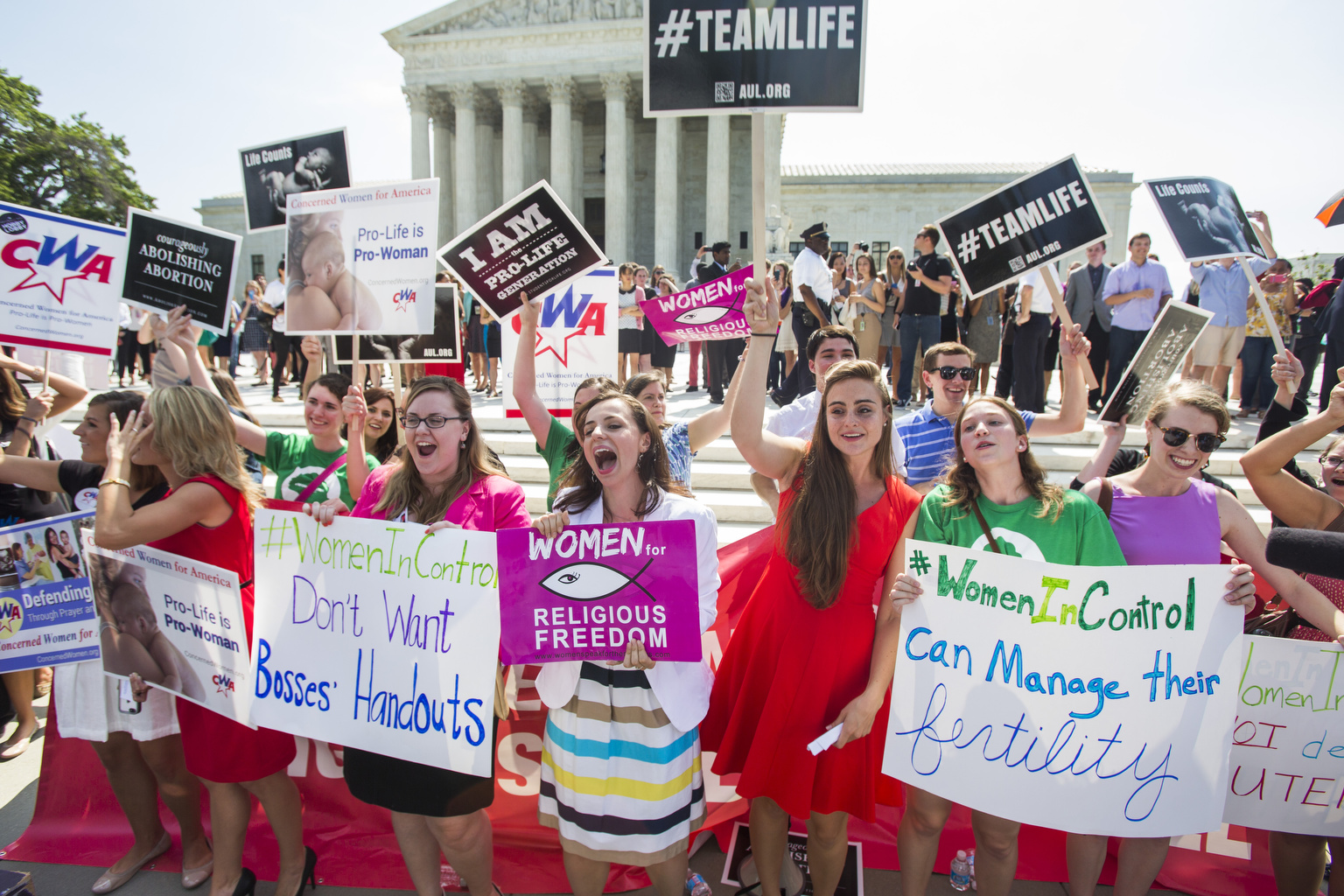
Pro-life supporters cheer during a 2014 rally outside the U.S. Supreme Court in Washington. People must work together to protect life, Pope Francis said on Mother's Day, the day Italy celebrates its annual March For Life. (CNS photo/Jim Lo Scalzo, EPA) See POPE-LIFE May 11, 2015.
Pro-life supporters cheer during a 2014 rally outside the U.S. Supreme Court in Washington. People must work together to protect life, Pope Francis said on Mother’s Day, the day Italy celebrates its annual March For Life. (CNS photo/Jim Lo Scalzo, EPA)
Becky Greene is a homeschooling mother of five, writer, speaker, and co-host with her husband Steve of the radio show The Catholic Conversation with the Cradle and the Convert, heard locally every Tuesday on Immaculate Heart Radio AM 1310 at 11 a.m. and 8 p.m.

Dear Becky,

I’m writing to share something that will astonish you. You won’t believe me now — much you will have to dissect, argue with, and hear again. You’ll bark at me, roll your eyes, snicker. You’ll probably storm off.

But I’m telling you, there’s a thin line that separates us. We both want what’s best for women. That’s why I come to you in love to tell you your pro-choice position is … wrong.

Your stance isn’t tolerant or pro-woman. It’s indefensible.

Please don’t cap your ears. If you do, you’re no better than those who turned a blind eye to slavery and Nazi genocide. Being pro-choice is not just personal opinion — it’s a surrender to the heinous side of a moral absolute that jeopardizes your soul.

No, I’m not some religious zealot brainwashed by nonsensical mythology. I’m not imposing my views. I’m a voice never represented in secular media.

Yes, I’ve researched, and science backs my argument. You won’t believe the lies you’ve been fed or how closely you’ll be touched by abortion. You’ll be awestruck by the far-reaching impact the conception of a single new life has on the universe.

So, please, stop talking over me and parroting the soundbites uttered by politicians and celebrities; stop clinging to your political platform, and just listen. You’re a truth seeker, and you’ll find there are compelling reasons to consider the pro-life position.

Can I begin?

I know it annoys you when people say abortion is murder. But frankly, it’s the truth. Life begins at conception when sperm and egg meet to form a completely unique, human life. Given proper nutrition, the proper environment, and proper time, that life will thrive and the “pregnancy” will end on its own in the form of childbirth. To terminate purposely doesn’t just end a condition, it kills a life.

And killing innocent human life is murder.

Sure your body’s involved, but it’s not just your body. The child isn’t an assailant or harmful pathogen. The womb is the natural home of every human for the first nine months of existence. Can we issue a death sentence simply because a person is weak, vulnerable, and dependent? Aren’t those reasons to, in fact protect someone even more? Child sacrifice is abhorrent in modern-day culture, and children are even taken away from parents who put their own wants ahead of their children’s needs.

So why does this norm not translate to protection of children in utero?

Saying it’s just an embryo or fetus doesn’t disqualify it from the human community any more than saying it’s just a toddler or teenager does. Fetus means “little one,” and it’s simply a phase of development. We’re all at a phase of development. So suggesting that abortion merely removes a clump of cells isn’t just scientifically inaccurate, it justifies someone else eliminating you for the same reason.

You despise the pressure on women to be a certain look or size. But you’re placing that same expectation on a fetus to be something he or she isn’t yet. If you support equality, then how can you conclude the unborn aren’t equal?

The child isn’t an assailant or harmful pathogen. The womb is the natural home of every human for the first nine months of existence. Can we issue a death sentence simply because a person is weak, vulnerable, and dependent? Aren’t those reasons to, in fact protect someone even more?

Oh, it’s just not a person by law? Should the state define the value of personhood?

That’s what Hitler did.

   And the Dred Scott decision did.

      And the Rwandan government did.

         That’s what Roe v. Wade did.

You’ll be shocked to learn the Supreme Court legalized abortion through all nine months; that the rhetoric touted by pro-choice activists echoes the verbiage used in segregation laws and Nazi propaganda.

Can you see the hypocrisy of those who proclaim protection for children from sexual predators and gun violence in one breath while ardently defending a woman’s right to kill her child in the next? How can something worth nothing become priceless because it travels six inches down the birth canal?

Women by law have free license to kill someone they would otherwise protect with prenatal vitamins, nutrition, and regular doctor appointments if they “wanted” that child.

Don’t you find that curious?

You will.

You’ll learn the first feminists condemned the idea that women would emerge from male domination only to turn on their own offspring. And you’ll realize that modern-day “feminists” think “reproductive rights” are about anything but actual reproduction or real human rights.

You’ll start to see that abortion truly is what American suffragist Alice Paul called the “ultimate exploitation of women.”

Rape you ask? Despicable crime yes, but no more the fault of the child conceived through the brutal act than that of the woman. Besides, you’ll learn that less than 1 percent of abortions are performed on rape victims — the majority of women just use it as back-up birth control.

And this makes you uncomfortable as you question why women don’t just exercise self-control and demand more respect from men.

That’s when the light will go on.

You’ll conclude that abortion actually gives men the right to disregard the dignity of women; that it is neither female empowerment nor liberation, but a Trojan Horse in the women’s movement that has spawned more sexual abuse and feminine degradation.

You’ll notice that abortion proponents use insults and profanity to attack defenders of life; that the true intolerance comes not from the right but from the left, which thinks women are insecure bullies whose strength and independence derives from the selfish option to discard the vulnerable.

You’ll be ashamed you once supported this evil.

You’ll get angry that you know people who still espouse this mentality. And you’ll doubt their so-called empathy for others. After all, if you don’t value life at all stages you can’t be trusted to value life at any stage.

You’ll fume over their hypocrisy and want nothing to do with them. You’ll condemn their hardened hearts and arrogance, and want to abandon them as lost causes.

And then you will remember… you were once them.

Relics of Lebanese saint draw faithful to Maronite church

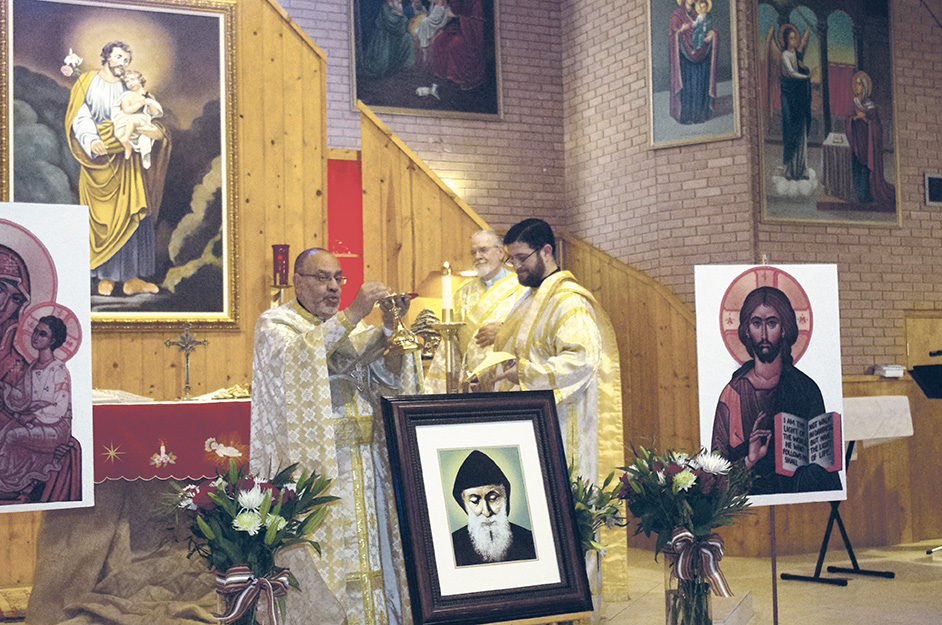
Fr. Peter Boutros, pastor of St. John of the Desert Melkite Catholic Church, celebrates the morning liturgy at St. Joseph Maronite Catholic Church before the relics of St. Charbel on Saturday, Jan. 16. (Joyce Coronel/CATHOLIC SUN)

St. Charbel, a humble Lebanese monk from the 19th century, has been credited with thousands of miracles since his death in 1898. Catholics from throughout the Valley descended on St. Joseph Maronite Catholic Church to venerate this saint’s relics Jan. 15-17.

St. Joseph pastor Fr. Wissam Akiki welcomed Bishop Elias Zaidan of the Maronite Eparchy of Our Lady of Lebanon, headquartered in Los Angeles, for a three-day celebration. The relics were on display at the church as part of the 50th anniversary of the saint’s beatification.

St. Charbel was born Youssef Makhlouf in Lebanon and became a monk, taking the name of the martyr, Charbel. The last 23 years of his life were led in total silence and austere penance in a hermitage where he slept on the hard ground. He died on Christmas Eve 1898. Pope Paul VI beatified him in 1965 and canonized him a saint 12 years later.

Faithful from across the Valley and beyond filled in the pews and stood in line at St. Joseph, waiting to venerate the saint’s relics. Standing outside in the brisk morning air Jan. 16, many stopped to examine the table heaped with books, medals and images of St. Charbel. A mixture of Arabic, English and Spanish could be heard as the crowd perused the religious goods and fancied the array of pastries nearby.

Among the 13 separate liturgies celebrated during the three-day extravaganza at St. Joseph were two Masses in Spanish. The largest shrine outside St. Charbel’s tomb in Lebanon is the Basilica of Our lady of Guanajuato in Guanajuato, Mexico, where Lebanese immigrants introduced devotion to him in the early 1900s. Crosier Father Bob Rossi celebrated Mass in Spanish Jan. 15 at St. Joseph.

“I’m very happy to do it because I am close to the Maronite community and know that St. Charbel is at the heart of their spirituality,” Fr. Rossi said. “He has inspired many Hispanic people so he’s an important saint for the Universal Church but especially with Lebanese Catholics.”

Fr. Rossi said that he was amazed to see a statue of St. Charbel at the cathedral in Mexico City when he traveled there. He agreed that devotion to the saint is popular among Hispanics.

“I think it’s because of the numerous miracles that he’s known for,” Fr. Rossi said. “I think the Hispanic community is drawn to that kind of spiritual power.” Indeed, miracles attributed to the saint’s intercession are recorded across the Middle East as well as South America, Australia, Russia, Europe and in the U.S.

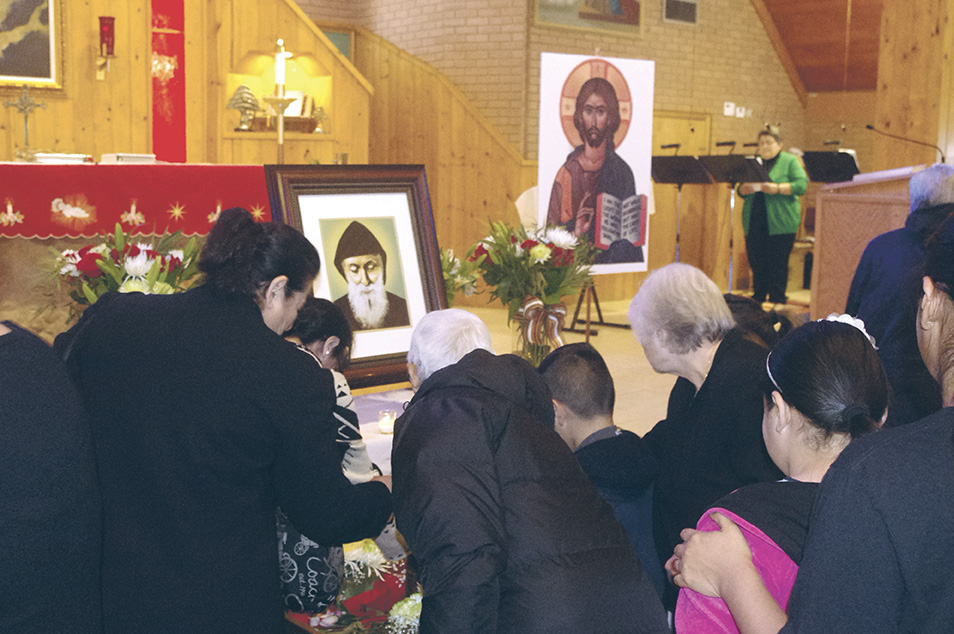
Faithful Catholics venerate the relics of St. Charbel, a 19th-century Lebanese monk who’s been credited with thousands of miracles since his death. His relics were displayed at St. Joseph Maronite Catholic Church Jan. 15-17 as part of a nationwide tour commemorating the 50th anniversary of his beatification. (Joyce Coronel/CATHOLIC SUN)

Joseph Chemary, an usher at St. Joseph, said he’s called on the intercession of the saint many times, most notably for his children.

“My son, he had asthma. No more asthma,” Chemary said. “My son, he used to do drugs big time. No more drugs. Thank God. It is great — more than great. I believe he is the most powerful saint we ever had.” His daughter, Chemary added, passed her nursing board exams with the help of St. Charbel’s intercession.

Huda Chaer, another parishioner at St. Joseph, said she’d suffered from ulcerative colitis for 18 years. She said her prayers were answered when she asked for St. Charbel’s assistance.

“I’ve been very sick. I went through a lot last year and I had a blessing from St. Charbel. Thank God, I am up on my feet again,” Chaer said.

Peter Weingarten of Our Lady of Perpetual Help Parish in Scottsdale was on hand Jan. 15 to venerate the relics too. He remembers when the relics of St. Thérèse of Lisieux came to Phoenix years ago.

“It’s not often you get these relics coming around. It’s once in a lifetime — it’s historic. More Catholics should be out here right now,” Weingarten said.

Fr. Akiki emphasized that while the relics of the humble saint of Lebanon drew many to the church, God is the one to be worshipped.

“The Eucharist is very important. Why are we celebrating Divine Liturgy every two hours? It’s all about Christ, our life,” Fr. Akiki said.

Fr. Peter Boutros, pastor of St. John of the Desert Melkite Catholic Church, offered the morning liturgy Jan. 16. The Mass featured the reading in which Christ asks Peter three times, “Do you love Me?” Fr. Boutros zeroed in on that message in his homily.

“That question is asked to each and every one of us and to every Christian on the face of the earth,” Fr. Boutros said. “We cannot just say yes and go our separate ways. We have to say yes by action, by feeding each other, taking care of each other, by loving each other.”

‘A Call to Battle’ video supplement to ‘Into the Breach’ goes viral

What does it mean to be a man? How can Christian men support each other? How can Catholic men witness to authentic masculinity in today’s society?

[quote_box_right]

Into the Breach

Read in browser in English and Español

Download PDF in English and Español

Listen to the audio version

[/quote_box_right]

Leaders of several men’s ministries addressed these and other questions in “A Call to Battle — a short film on ‘Society’s crisis in masculinity,’” a 10-minute video that at press time has received more than 112,000 views on You Tube. The video is a supplement to “Into the Breach,” Bishop Thomas J. Olmsted’s apostolic exhortation to Catholic men.

“I think our society today is one that is built around individualism and isolation, which leaves the heart empty,” said Bishop Olmsted in the video. “And so we need bands of brothers. We need really good friends.”

Fr. Paul Sullivan, diocesan director of Vocations, said there was a need to have a video to accompany the bishop’s document because this is one of the primary ways people communicate today.

“I think the hope was to convey some of the themes of Bishop’s prophetic document,” said Fr. Sullivan, whom Bishop Olmsted has also designated as chaplain for men.

Mike Phelan, diocesan director of Marriage and Respect Life, said that releasing “A Call to Battle” is the next step in continuing the men’s movement that started with the publication of “Into the Breach” in September of last year.

“The ‘A Call to Battle’ video is a little more in-depth on what the real crisis in masculinity consists of: disconnection; lack of relationships;  loneliness; not fulfilling roles; struggles with pornography; and all kinds of other time-wasting, soul-wasting activities and so the video hits this head-on … and it’s a next step in energizing this movement that our bishop is calling for,” said Phelan.

John-Andrew O’Rourke, who was hired by the diocese to produce the film, said he was “blown away” by “Into the Breach.”

“I’m very passionate about the role of men in society,” O’Rourke said. “To have the opportunity to call men to action was really exciting to me.”

O’Rourke, a practicing Catholic who founded and owns Blackstone Films, said he remembered as his sister read the document out loud while he was driving, he’d tell her to highlight sections so he could reference them when asking questions of the men featured in the video.

“A Call to Battle” features not only Bishop Olmsted and several priests, but also quite a few laymen. To O’Rourke, having these lay voices was important.

“The same ideas, values, and ‘battle plan,’ it’s not just coming from a bishop who has it ‘all together,’” he said. “It’s coming from everywhere in the Church. … There are people around you who you can relate to, so you can realize these standards are achievable.”

Since its release, the video has been shared across the globe.

“I was at home in New York when they released it, and my sister got it from someone else and she was like ‘Wow, that’s you in there,’” said Fr. Sullivan, who added he’d also received a message from somebody working for the Archdiocese of Sydney, Australia who said it had an impact there.

Phelan said that he’s received a lot of feedback concerning the video, the document and the overall men’s movement, including unofficial translations of “Into the Breach” in French, German and Portuguese.

“It’s been fun to watch how it’s going national and international, and how social media really has changed our ability to get news out,” he said.

U-Mary students to join a million faithful in nation’s March for Life

There’s a storm brewing in Washington D.C. Some are forecasting about a million anti-abortion protestors at the March For Life 2016 Rally Jan. 22.

That would be a record number of attendees — that keeps getting larger every year. Blowing into the nation’s capital from the west will be over 60 pro-life pilgrims from the University of Mary in Bismarck, ND, along with hundreds more area Catholic high school students. The two-bus caravan is amid a 26-hour journey to D.C.

Follow the #MarchforLife

“Our number of students making this trip is growing every year and we anticipate it growing for years to come,” said Kerry Bender, organizer of the trip and director of the Christian Leadership Center and chaplain at U-Mary. “We have Catholic students and Protestant students, so it will be a very uplifting and rewarding ride. We will get to know each other, pray and also learn pro-life chants and cheers along the way.”

They’ll have a veteran “March for Lifer” leading those chants and cheers. Anne Dziak, a senior and accounting major from Chicago, has been to D.C. for the life rally 10 times. This will be her second as a Mary student. Dziak, her sister and their friend started the pro-life group at their parish back home when she was 16 years old.

“We wanted to get young adults involved and have them be aware of what it meant to be pro-life and understand all life issues,” remarked Dziak, who transferred to Mary from a community college because of its Catholic identity and affordability. “We started this monster in Chicago. The group grew to 200 members then to over 800 and is now called The Crusaders for Life in Chicago. Without life there is no other issue to care about. If we can’t protect those who are unborn how are we going to protect those who are born? March For Life provides a good witness for what we believe in and allows us to rally with likeminded people.”

The University of Mary convoy has a full schedule planned for its D.C. trip. Students will attend the Life Is Very Good Conference and Mass presided by their own Catholic leadership: Bishop John T. Folda of the Fargo Diocese and U-Mary President Msgr. James Shea. After the rally, it’s tradition for students and Shea to all gather at Bullfeathers restaurant for lunch just a few blocks from the Supreme Court.

“The students look forward to the lunch with Monsignor every year,” Bender added. “The University of Mary is already unique because our students interact freely with our president regularly on campus and when he says Mass. But with this march there is a unity and it demonstrates to the students that this is a commitment by the whole university. It’s also an opportunity to participate in America’s political process that is a huge deal — along with voting. Our students will come back and share their experiences with others.”

“Pro-Life and Pro-Woman Go Hand in Hand” is the theme for this year’s March For Life Rally. The event’s list of guest speakers can be found on the March For Life 2016 Rally website along with the schedule.

March for Life photo archive (including in the deep snow)

Events are rain, snow or shine. Literally speaking, there is also a real winter storm brewing. CNN and other media outlets are forecasting rain and two to three feet of snow for Washington D.C. starting Friday and ending on Saturday. According to Pastor Bender, that could alter some of their post March For Life Plans on Saturday, but Friday’s plans will go on.

“Come hell, high water — or snow, we will march,” said Bender.

“We can handle anything, we’re from North Dakota,” emphatically stated Dziak, the newly transplanted North Dakotan.

2016 #AZLifeRally [VIDEO]

Join Arizonans of all nationalities and faith backgrounds Jan. 22 for the Arizona for Life March and Rally in downtown Phoenix. The event celebrates and advocates for the beauty and dignity of every human life.

The family-friendly event begins with a 10:30 a.m. pre-gathering at Cesar Chavez Memorial Plaza (2nd Avenue and Washington Street) featuring live music, entertainment and food vendors. The march begins at 11:30 a.m. and ends at Wesley Bolin Memorial Park (17th Avenue and Washington Street) where inspiring speakers, including international speaker and abortion survivor Gianna Jessen, will address the crowd.