
‘Choose Life’ plates spread pro-life message, support programs

Messages on a license plate have the power to transform lives. No one knows this better than Christine Accurso, executive director of First Way Pregnancy Center in Phoenix.

“I know of a few women who were literally at an intersection, getting ready to pull into an abortion clinic, and the license plate in front of them said ‘Choose Life,’” Accurso said. “That provided all the determination and inspiration in the world for them to, as one woman told me, see God’s face, be able to turn away from abortion and seek help by talking to family and friends. Just that little, tiny sign on the license plate.”
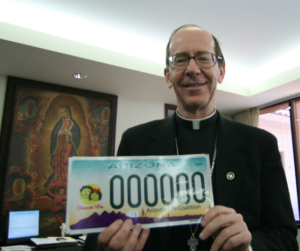
Bishop Thomas J. Olmsted holds a mock-up of the “Choose Life” Arizona license plate in this file photo. His car has displayed a similar plate since 2009 when the design became available through Arizona’s Motor Vehicle Division. Proceeds from the specialty plate fee support local pro-life programs. (File Photo/CATHOLIC SUN)

Arizona drivers continue to have the option of purchasing a specialty plate that bears the phrase, “Choose Life” prior to the plate number. Facial drawings of a boy and girl sit above the phrase. Drivers — including Bishop Thomas J. Olmsted — have ordered the specialty plate since the design became available in 2009.

The “Choose Life” plates offer a message of hope and provide gateways for dialogue concerning the pro-life mission, said Benta Clark, president of Arizona Life Coalition. The funds acquired by purchasing these plates help pro-life organizations in the area that do not receive federal grants or government funding, Clark said.

“This is a way that people can literally take their faith and their belief in the value of life, and put it towards something that is a day-to-day action. It’s making a daily action, like driving down the street, a way that you can advocate for life,” she said.

When drivers purchase a “Choose Life” license plate, $17 of the $25 application fee goes to Arizona Life Coalition. Funds in turn, through a grant process, provide direct assistance to women seeking abortion alternatives.

First Way Pregnancy Center is one of several organizations that have received grants. Funds have ensured a bilingual peer counselor is available during office hours the past two years.

A “Choose Life” license plate sale also assists First Way with the cost of providing services such as pregnancy tests, ultrasounds, options counseling, education classes for both men and women, as well as material support.
[quote_box_left]

Order a “Choose Life” license plate

[/quote_box_left]
The idea of creating “Choose Life” license plates originated in Florida but has since spread to Arizona and 28 additional states. It’s one of 49 specialty plates available in the Grand Canyon State.

“There were very strong leaders, lawyers, executive directors of many organizations, including the Center for Arizona Policy, that helped to get the plates on the ground in Arizona,” Clark said. “It was definitely a worthwhile effort.”

Purchasing a plate helps all who are engaged in pro-life efforts to speak with one voice, she added. “I truly believe that we will see the end of abortion and other social issues when people are unified together, when we put aside our organizational differences and work as one body.”

Some are even putting aside their political stance. Accurso can think of some people “who are not completely pro-life” that support First Way.

“What they love about us is the fact that we are there to fully support a woman in her choice, educate her, accompany her on this journey and help her even after the baby is born.

Everyone thinks we are in such camps, pro-life or pro-choice,” Accurso said, “but if a woman wants to try to keep her baby, I don’t know anyone who wouldn’t want to help her.”
Teaching on theology of the body unifies Christians, American says in U.K.

MANCHESTER, England (CNS) — St. John Paul II’s theology of the body is bringing Christians together in closer unity, said the U.S. founder of the Cor Project, which promotes the teaching.

Christopher West said the lessons of the Polish pope were providing answers to “larger and larger numbers” of Catholics, Anglicans and other Christians concerned about a growing crisis of “gender confusion” in the West.

The theology of the body refers to a body of teaching given in weekly lectures by St John Paul between Sept. 5, 1979 and Nov. 28, 1984, which were published together under the title “The Theology of the Body: Human Love in the Divine Plan.”

The pope proclaimed human bodies to be vehicles of union and communion among people and with God, and said that the best reflection of divine love was the love between a husband and wife.

[quote_box_right]

Week of Prayer for Christian Unity

Arizona resources

Vatican resources

[/quote_box_right]In a telephone interview with Catholic News Service Jan. 16 — the eve of the Week of Prayer for Christian Unity — West said he was confident that the theology of the body was now “crossing denominational lines and is changing lives around the world.”

The theology, he said, offered a prophetic response to the rise of a new gender ideology in which individuals asserted a right to choose a gender, often of their own creation, instead of accepting gender as biologically determined.

He cited one social media outlet that invited new members to “customize” their gender in the face of a proliferating range of ideas about what it could be.

“When you fill out your personal profile, you will have ‘male, female and customize,'” West explained. “About a year ago, they had about 50 options and there were complaints that that wasn’t enough.”

West, a Philadelphia-based expert on the theology of the body and president of the Cor Project, said, however, that increasingly “men and women are looking at the gender confusion and gender chaos in the world and are saying, ‘How did this happen, where did we get off track and how do we address this in a compelling, compassionate and merciful way?'”

People asking such questions are finding answers in St. John Paul II’s response, he said.

“This is a fulfillment, I am certain, of what John Paul II intended,” he added. “He planted the seed … and he knew it would grow beyond denominational lines, and that is what we are seeing now.”

The remarks of West, a father of five, came after a week in London in which he addressed Catholics at a theology of the body symposium in St. Patrick Church in Soho, and then also spoke to Anglicans and other Christians at an event called “Our Bodies Proclaim the Gospel” at the Emmanuel Center in Westminster.

West told CNS that a clearer understanding of church teaching on marriage ultimately would help to serve the cause of the unity of all Christians.

“Satan always attacks the truth about marriage because this is how he sows the seeds of division in the whole body of Christ and in the whole world,” he said.

“When we are confused about the meaning of our sexuality, we are confused about who Christ is and who the church is,” West said.

“This need to reclaim the authentic meaning of the body and sexuality and gender and family is not a footnote in the Christian life. What is at stake is nothing short of our understanding of the eternal plan of God for human existence and human destiny,” he continued.

He added, “John Paul II, in his bold evangelical way, is saying there is power in the words of Jesus to heal us of our confusion and restore in us the true meaning of who we really are as men and women created in the image of God.”

By Simon Caldwell, Catholic News Service.

Doritos Ultrasound [VIDEO]

Related article: Funny Doritos commercial shows unborn baby bonding with dad on ultrasound (LifeNews)

Related article: Arizona for Life rally to unite people of all faiths behind pro-life cause. Event info.

Tucson March for Life photos

Denver March for Life photos (including these 123 of seminarians from the Diocese of Phoenix)

Nine Days for Life continues through Jan. 24.

Profile of a refugee: Former Colombian journalist, now deacon in Canada

Dcn. Arismendy Lozada, who came to Canada in 2003 as a refugee from Colombia, is pictured Jan. 7 at the Saint-Mathieu rectory in Quebec City. (CNS photo/Philippe Vaillancourt, Presence)

QUEBEC CITY (CNS) — A well-known personality in Colombia, he fled to Canada to stay alive. Uprooted, new to the French language, he lived in precariousness in Quebec City, drawing strength to live from his family and his faith. Now he is in charge of the Latino community of the Archdiocese of Quebec.

Here is the exceptional story of a refugee.

Dcn. Arismendy Lozada, who came to Canada in 2003 as a refugee from Colombia, is pictured Jan. 7 at the Saint-Mathieu rectory in Quebec City. (CNS photo/Philippe Vaillancourt, Presence)

Deacon Arismendy Lozada glanced at his cellphone. News alerts flashed on his screen, alternating among soccer, religion and politics. From his office in Saint-Mathieu’s rectory in the Sainte-Foy borough of Quebec City, he still follows the feats of Bogota’s Santafecito soccer club. However, the ever-present news about Canada’s plan to welcome 25,000 Syrian refugees made him pensive.

“We come with a luggage full of dreams. When the plane touches down, everything is wonderful,” he said, thinking about refugees now arriving on Canadian soil. He knows what he is talking about: In order to stay alive, he fled Colombia in 2003 and ended up in Canada.

If he could speak with every single Syrian refugee, he would say: “Stay hopeful, stay faithful.”

Born in the 1960s in the Colombian department of Caqueta, he grew up to become a respected journalist, writing and doing some radio and television. Known for his social sensitivity, he was elected journalist-of-the-year by his association in 1989.

But his life took an unexpected turn when, hospitalized, a blood transfusion left him with hepatitis C. Cirrhosis almost killed him.

“When we face death, we start to question ourselves,” he said.

“I was Catholic, like everybody. I went to church sometimes. Back then, I had a radio station in the small town where I was born. The priest came to me one day and asked if I could do a live one-hour transmission of the Mass. I thought to myself that it would make me lose money, but I said ‘yes’ so he would leave me be,” he recalled. “But after my illness, I started my quest: Who am I? Where I am? Why I am here? And one day, I wondered what God wanted with me. …”

These questions led him on a process where he went from being a “mundane” Catholic to an “engaged” Catholic — to the point where he would enter the seminary and, ironically, see the same priest he thought so bothersome become his spiritual director. After a year and meeting the woman he would marry in 2000, he agreed with his bishop to become a permanent deacon.

Because of his fame and his reputation for social involvement, he was asked to become a peace councilor for the talks between the government and the Revolutionary Armed Forces of Colombia, or FARC. This commitment would eventually force him to flee to Canada.

“I was receiving threats from the FARC and the paramilitary. I always asked them to stop human rights violations: Human life is the most important, whatever the context. But one day, I was told: ‘You, you’re a military objective.'”

Dcn. Arismendy Lozada, who came to Canada in 2003 as a refugee from Colombia, is pictured Jan. 7 at the Saint-Mathieu rectory in Quebec City. (CNS photo/Philippe Vaillancourt, Presence)

The threats became more insistent.

“A man came to see me in my office. We were talking, and he put a gun on the table. He said: ‘You have 72 hours to leave this country. If we find you after that, you’re a dead man,'” said Dcn. Lozada.

Forced to flee to Canada with his wife and daughter, he went to Quebec City, where the exhilaration of the first days quickly faded as a new harsh reality set in: cultural shock, learning French and financial difficulties. He received student loans to learn social service in college, but since it was not enough money to support his family, he had to find a job. After being turned down many times, he ended up cleaning buildings.

“I have to confess: The first night I went cleaning, I found bathrooms that were in really, really, bad shape. I cried. I said: ‘Lord, what I am doing here?’ But after a second and a third night, I started thanking the Lord: ‘Thank you, because of this I will have money to feed my family.’ We did not want to leech off the system. As a family, we had a dream, and because of that, we wanted to find a job.”

The year he left Colombia was the year he was supposed to be ordained a deacon. He had all his papers, and a meeting with Cardinal Marc Ouellet of Quebec would put him back on track.

“When I met with Cardinal Ouellet, I was expecting a cold man. But he took me in his arms and said: ‘Welcome home.’ This made a difference for me,” Dcn. Lozada recounted.

Cardinal Ouellet — who lived for a while in Colombia — made him a pastoral agent and asked him to take charge of the Latino community of Quebec City, a role he still plays. Among the 6,000 members of this community, fewer than 300 usually attend Sunday Mass in Spanish.

“Our goal is integration, not to have a ministry among ourselves and become a ghetto. We call it a ‘passage’ ministry.”

He said some moments are harder than others. In August, a Colombian couple from his community, Julian Esteban Muneton Vasquez, 29, and his 8-month pregnant wife, Ingrid Zamorano, 30, died in a car accident when hit by a drunk driver. Dcn. Lozada knew the couple well.

“Julian and Ingrid came to the Spanish Mass,” he said. “They were an example of integration. One year after their arrival, they both had a job. Last September, they were supposed to start university. I blessed her womb during Mass.”

Life must go on, he said, just like for all the refugees, including Muslims, now coming to Canada.

“When we have love, it rejects fear. This is what we must have: Love for our neighbor. To offer a welcome that will make a difference. It is up to every one of us to do our part.”

“Our Muslim brothers and sisters have values,” he said. “They live their faith in a way, and we live our faith our way. But it’s the same faith. And when we have faith, we have values. Our Muslim brothers have a lot of values.”

“Canada is a welcoming land of peace that has a priceless treasure: its values.”

By Philippe Vaillancourt, Catholic News Service.

Abortion number, rate both down, says ‘State of Abortion’ report

Demonstrators hold signs during a May 14, 2015 pro-life protest on Parliament Hill in Ottawa, Ontario. (CNS photo/Chris Wattie, Reuters)

WASHINGTON (CNS) — Both the number of abortions and the rate of abortion is dropping, according to figures released in the third annual “State of Abortion in America” report issued by the National Right to Life Committee.

The number of abortions, which had peaked at about 1.6 million in 1989, is now down to 1 million, according to federal Centers for Disease Control and Prevention statistics quoted in the report, which was issued Jan. 14.

The abortion rate for all women of child-bearing age is now down to 210 abortions per 1,000 live births.

Pro-life supporters recite the rosary with Bishop David L. Ricken of Green Bay, Wis., during a prayer service in late August 2015 outside of a Planned Parenthood facility in Grand Chute, Wis. The abortion facility announced in early October that it was suspending abortion services for six months. (CNS photo/Sam Lucero, The Compass)

The number of abortions performed at Planned Parenthood clinics, though, is up 250 percent in the same time period, according to Carol Tobias, NRLC president. The rate, Tobias added, has remained “relatively steady the last three years,” although the numbers have dropped for other services Planned Parenthood provides at its clinics.

Tobias characterized Planned Parenthood’s revenues as “steady abortion income and a cool half-billion in income from state and federal governments.”

One of NRLC’s priorities is government defunding of Planned Parenthood. President Barack Obama vetoed a bill that would have eliminated Planned Parenthood’s eligibility to receive federal grants.

“This is the first time now that the Congress has actually approved legislation to defund Planned Parenthood,” said Douglas Johnson, NRLC’s legislative director. “The procedural pathway has been set. The only thing lacking now is a pro-life president.”

Johnson said the current Congress is “a pro-life Congress.” He cited 10 House roll-call votes and four Senate roll-call votes, all of which had garnered a majority of pro-life votes. He added none of the Senate votes met the threshold to override a presidential veto of the defunding measure.

That would apply to a scheduled Jan. 26 vote in the House to override Obama’s veto. “That veto is going to be sustained,” Johnson predicted.

The “State of Abortion” report noted that for 2012, the last year for which statistics are available, “more than one in five … abortions performed at eight weeks gestation or earlier were listed as ‘medical’ abortions by the CDC.” “Medical,” the report added, “is code for chemical,” frequently “morning-after” drugs.

In the 36 states that report the marital status of women undergoing abortions, “married women accounted for just 14.7 percent of abortions,” the report said, “with 85.3 percent of aborting women being unmarried.”

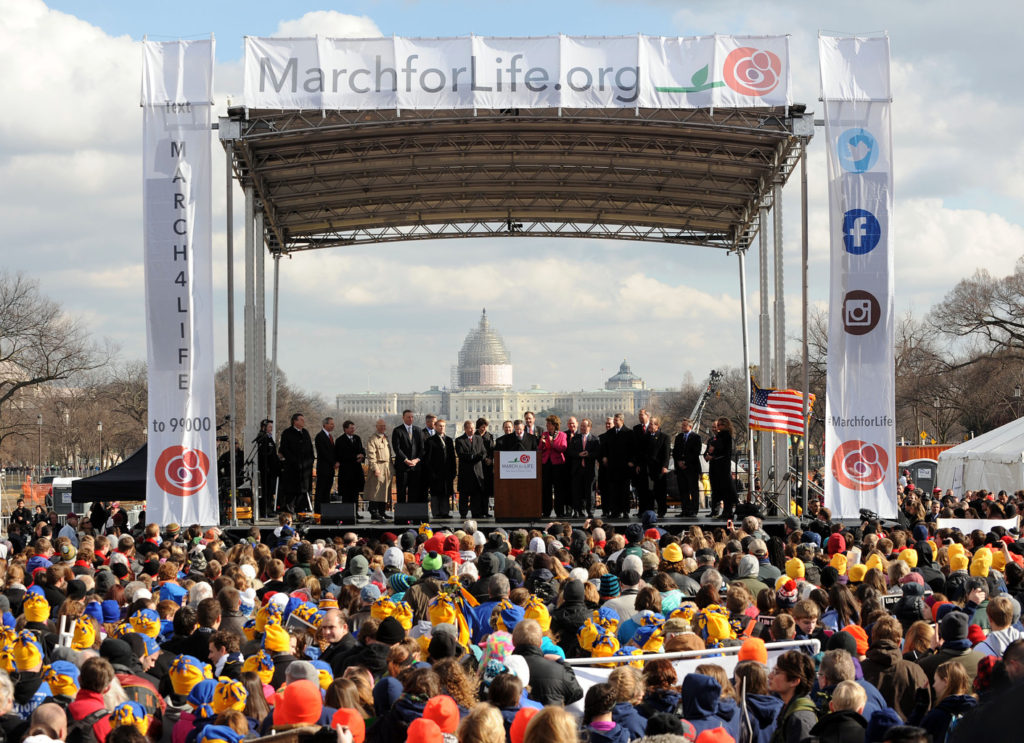
A group of Capitol Hill lawmakers addresses crowds of supporters during the March for Life rally on the National Mall in Washington Jan. 22, 2015. Tens of thousands took part in the annual event, which marked the 42nd anniversary of the Supreme Court's Roe v. Wade decision that legalized abortion across the nation. (CNS photo/Leslie E. Kossoff)
A group of Capitol Hill lawmakers addresses crowds of supporters during the March for Life rally on the National Mall in Washington Jan. 22, 2015. Tens of thousands took part in the annual event, which marked the 42nd anniversary of the Supreme Court’s Roe v. Wade decision that legalized abortion across the nation. (CNS photo/Leslie E. Kossoff)

One exception to the 2012 statistical overview is the number of women dying from a legal abortion, the last year for which statistics are available is 2011. That year, two women died, compared to 10 in 2010. Since the 1973 Supreme Court decisions permitting abortion virtually on demand, 424 women have died in abortions, according to “The State of Abortion.”

The biggest toll, though, Tobias said, is the number of babies aborted, which she put at 58 million since the joint Roe v. Wade and Doe v. Bolton rulings. In addition to the unborn children, Tobias cited “the lasting impact the abortion had on the mothers of these children.”

Even with lower rates, about 1 million abortions are still performed annually in the United States, Tobias said. That reflects a 4.2 percent drop from year-before levels.

“We know ultimately we will be successful,” she said. “The immutable truth: Killing unborn children is wrong.”

By Mark Pattison, Catholic News Service.

[quote_box_center]

RELATED

Catholics urged to use social media, novena to share pro-life message

Nine days for life

Look for results of The Marist Poll regarding Americans’ attitudes on abortion Jan. 19

[/quote_box_center]

Fleeting decision for NDP junior ends with near pageant win

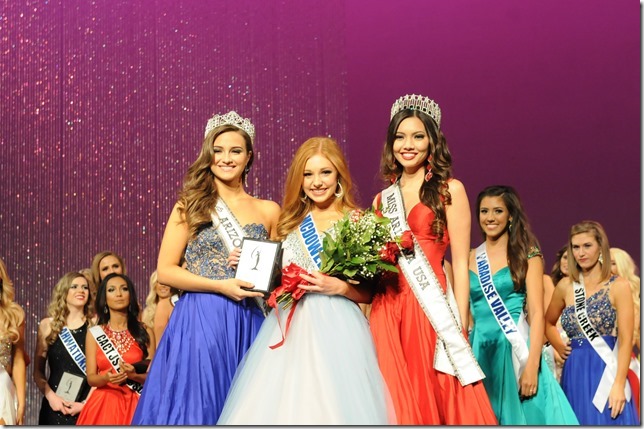
Maddie Schwister, center, poses with Neda Danilovic, 2015 Miss Arizona Teen USA, left and Maureen Montagne, 2015 Miss Arizona USA. (photo courtesy of Schwister family)

She didn’t get the crown, but a Notre Dame Preparatory junior certainly clothed herself “with strength and dignity,” as the Psalm goes.

Madeline Schwister was the only contestant in the top five finishers for the 2016 Miss Arizona Teen USA pageant to do her own hair and make-up.

“Most girls hired people to do it for them,” she said.

Entering the pageant to begin with was Schwister’s idea, somewhat of a fleeting decision. She simply wanted to try something “new and different.”

“I always loved watching the Miss Teen USA pageant on TV and thought it would be something fun to try,” said Schwister, who had no coaching or previous pageant experience. At the ripe old age of 17, she is considered old for a first-timer.

From filling out the application, to working out, eating right and getting ready for competition, the teen did everything herself. Her trial run was a success.

Schwister, a St. Patrick parishioner and member of the school’s undefeated JV soccer team, surprised herself and her parents by finishing as third runner-up in the 20016 pageant held in November of 2015. “We were so proud of her and were really surprised to see that she has this special talent,” said Suzanna Schwister, Madeline’s mom.

The younger Schwister credits her theology teachers Fr. Ron Hurl, TOR, and Br. Richard Fornwalt at NDP for helping her to improve her public speaking ability. “In class we learned to express our opinions about God and share them with people having different opinions than our own,” Schwister said.

Although she didn’t win a scholarship, Schwister did gain confidence and made several friends through the pageant process. She plans to compete again in the 2017 miss Arizona Teen USA pageant, which despite its title, will be held later this year.

Schwister is the third NDP student to place in the top three in the Miss Arizona Teen USA Pageant. Emerald Zellers won the title in 2006 and her sister, Alexa Zellers, won in 2012.

Pope makes ‘mercy Friday’ visit to elderly, infirm

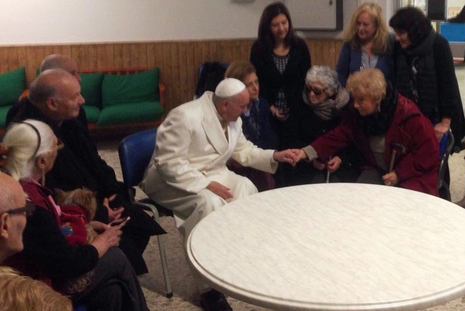
Pope Francis visited a reitrement home in a Roman urban periphery as part of his monthly #MercyFriday commitment. (photo via @Jubilee.va)

ROME (CNS) — As part of his personal observance of the Year of Mercy, Pope Francis made an unannounced, “private” visit to a retirement home and to a group home for people in a persistent vegetative state, the Vatican said.

The visits to the 33 residents of the Bruno Buozzi Retirement Home and the six residents of Casa Iride Jan. 15 were announced with the hashtag #MercyFriday by the pontifical commission organizing the Year of Mercy.

The Vatican previously announced that one Friday each month during the Holy Year, Pope Francis would personally and privately perform a work of mercy. The series ended up beginning very publicly Dec. 18 when he visited and celebrated Mass at a shelter run by the Rome diocesan Caritas.

For the January visit, journalists were not invited or even informed. Even the residents of the two facilities were not told in advance, said a statement issued by the Vatican press office once the pope had returned to the Vatican.

Pope Francis was accompanied by Archbishop Rino Fisichella, who is in charge of the jubilee organizing committee; the archbishop’s office tweeted several photos of the pope’s visit.

The Vatican described the atmosphere at the retirement home as one of “great surprise and joy” as the pope greeted each resident and stopped to speak to them, one by one.

Both the retirement home and the Casa Iride are located in one of the poorer neighborhoods on the outskirts of Rome. The Vatican said Casa Iride is not a hospital or clinic, but is a family-style structure where residents can be cared for by their own family members with the support of the staff.

In choosing the two homes, the Vatican statement said, “Pope Francis wanted to highlight — in opposition to the ‘throwaway culture’ — the great importance and preciousness of the elderly and grandparents as well as the value and dignity of life in every situation.”

By Cindy Wooden, Catholic News Service.

Catholics find faith-filled Greek Life opportunities at local universities

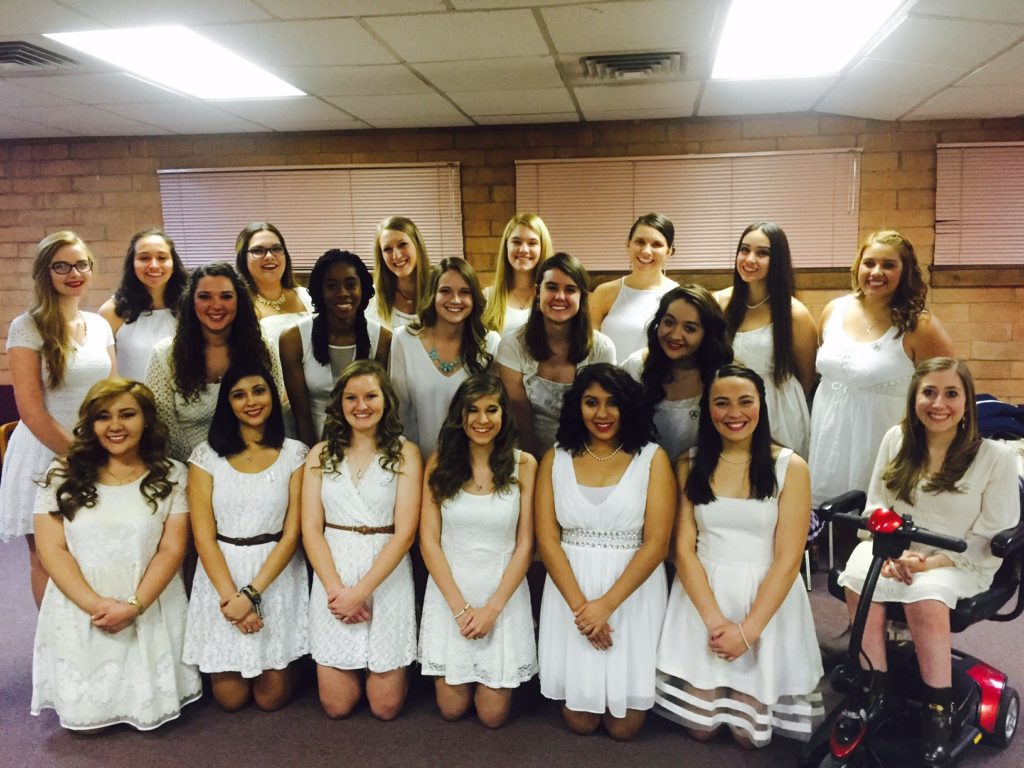
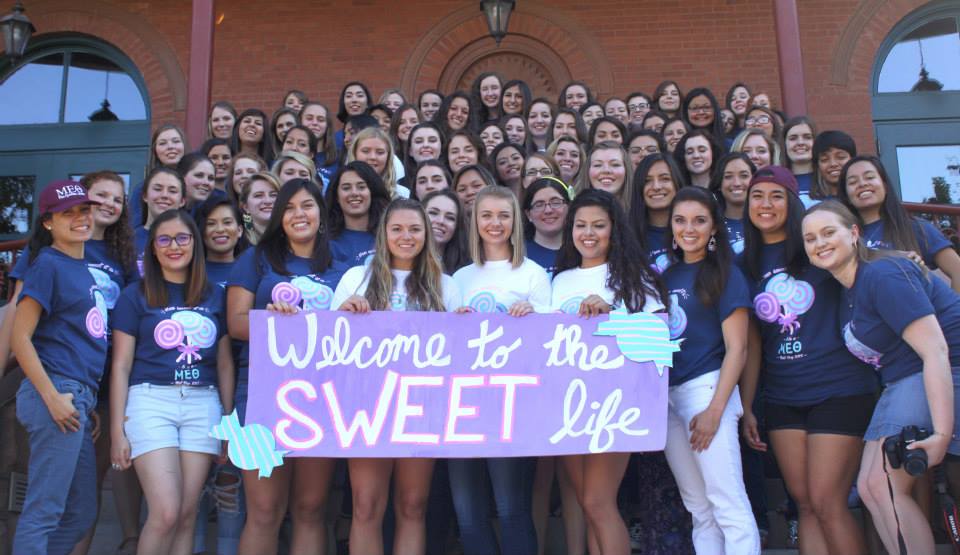
Membership in Mu Epsilon Theta, a Catholic sorority at Arizona State University in Tempe, continues to grow. (courtesy photo)

NAU-MuEp_courtesy

Greek life on a college campus doesn’t have to conjure up images of hazings gone wrong, underage drinking or other wild party scenes.

It can also be associated with brotherhood and sisterhood rooted in Catholicism. Especially if you’re a student at Arizona State University in Tempe, Northern Arizona University in Flagstaff or any other college campus across the nation that has one of 44 Catholic fraternity chapters or a handful sorority chapters.

Mu Epsilon Theta chartered its latest chapter at NAU Dec. 5 with 20 young women. Katie Bandy, who was a charter member of the Gamma chapter at ASU nearly three years ago, was key to launching the NAU chapter.

[quote_box_right]

Connect with Catholics on campus

CatholicJacks.org

ASUCatholic.org

MuEpsilonTheta.org at ASU

PhiKaps.org at ASU

[/quote_box_right]

She’s now a missionary in Lumberjack land through the Fellowship of Catholic University Students at the Holy Trinity Newman Center. As such, Bandy noted a lack of consistency in women’s fellowship despite a myriad of activities and ways to get involved.

She realized evangelizing via Greek life might be the answer. Members would stay connected once discovering the opportunity for true sisterhood.

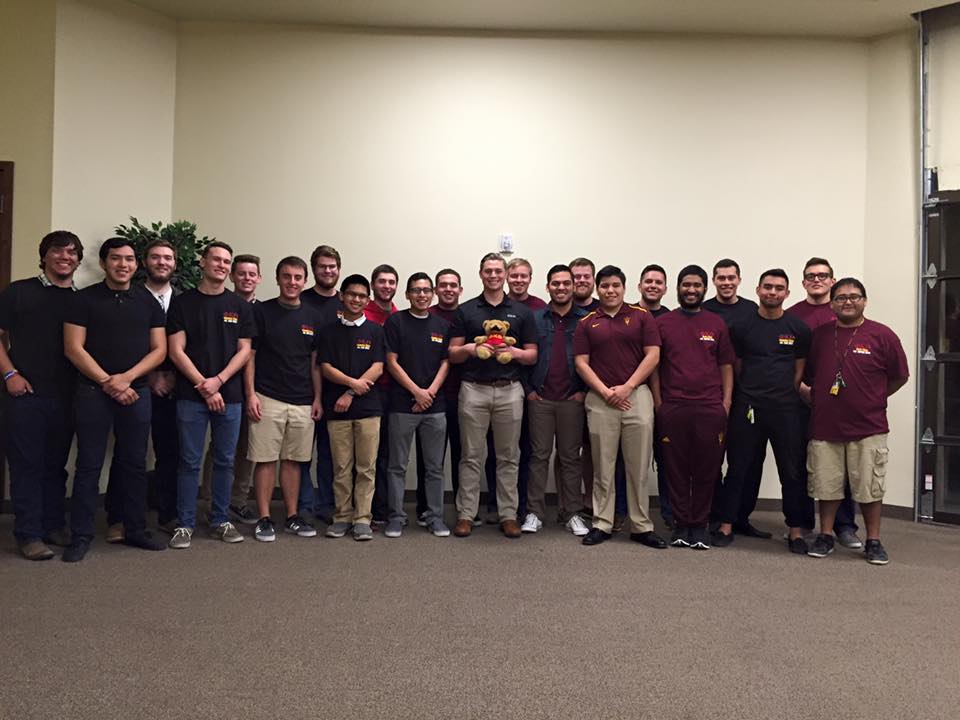
The desire for a faith-based brotherhood impelled a core group of Catholic men at ASU to launch Phi Kappa Theta in the fall of 2014. The Alpha Zeta Colony, as it’s known, hopes to have a strong enough financial and membership base to officially charter a chapter sometime in 2016. Membership stands at 25 now and is one of four colonies of the Catholic fraternity nationwide.

The men of the Alpha Colony of Phi Kappa Theta at Arizona State University in Tempe (courtesy photo)

“Fraternities in their most simplistic sense are awesome things,” said Zach Blomberg, president of the colony at ASU. They get like-minded people together “and they drive each other to improve as men and be the best selves they can be.”

“It has strengthened my resolve to be a good Catholic. College is one of the hardest times to live out your faith. … It’s all on you,” especially the motivation to even get to Mass, Blomberg said.

The fraternity’s pillars of formation — spiritual, fraternal, social, leadership and intellectual — keep the men on track and allow them to challenge and encourage one another. Newman Center activities and retreats support spiritual formation. They attend national Phi Kappa Theta leadership gatherings, support local charities and even log a minimum number of study hours at the library each semester.

The women of Mu Epsilon Theta operate under a similar mindset. Activities fall under the pillars of sisterhood, spirituality or service and they’re not opposed to teaming up with the fraternity for the latter. Last spring’s “Mystery Newman” pageant, for example, was a big hit and raised money for the local affiliate of the Children’s Miracle Network.

Membership in Mu Epsilon Theta, a Catholic sorority at Arizona State University in Tempe, continues to grow. (courtesy photo)

DeAnna Alvarez, a charter member of the Catholic sorority at ASU who also now serves on the national board of directors, said MuEp clarifies how to live as Catholic women. There’s “a lot of happy breakups,” Alvarez said, referring to a trend she’s noticed among some new members who start off in unhealthy relationships. After being involved for a semester and growing deeper in their faith, they’d realized they deserved far better.

ASU’s sorority now has more than 70 current members plus alumni. “It feels like a sea of women,” the ASU senior said.

The same could be said nationally. Interest for new charters is quite steady and the universities are seeing the sorority as something positive, Alvarez said. MuEp is constantly fundraising, launching new chapters and growing a foundation to support such costs.

Kimberly Shaffer, a 20-year-old business economics student and member of the Newman Center’s Rite of Christian Initiation for Adults program in Flagstaff, joined because she knew there’d always be a group of women around to remind her to place her heart in God, not worldly desires.

Amanda Garcia, 19, said hours after initiation night that she already saw a difference in her life during the pledge process.

“I love the fact that I have this wonderful and beautiful group of girls supporting me by my side,” Garcia said.

Blomberg applauded the mentorship ASU’s MuEp members have given ASU’s Catholic fraternity and are open to helping establish Phi Kappa Theta on other Arizona university campuses.

Stephen Lee, director of membership growth for the fraternity at the national level, said groups are well organized, have a strong moral foundation and are driven in identity and purpose. He will be among members in the Diocese of Phoenix this summer for its biennial Quo Vadis conference allowing current members and alumni to plan Phi Kappa Theta’s long-term future.

“Phi Kappa Theta actively develops men to be effective leaders who passionately serve society, fraternity and God,” Lee said. “And it’s a wonderful opportunity for men to better themselves while serving others.”

Teens learn how to step ‘into the breach’ at diocese’s first young men’s conference

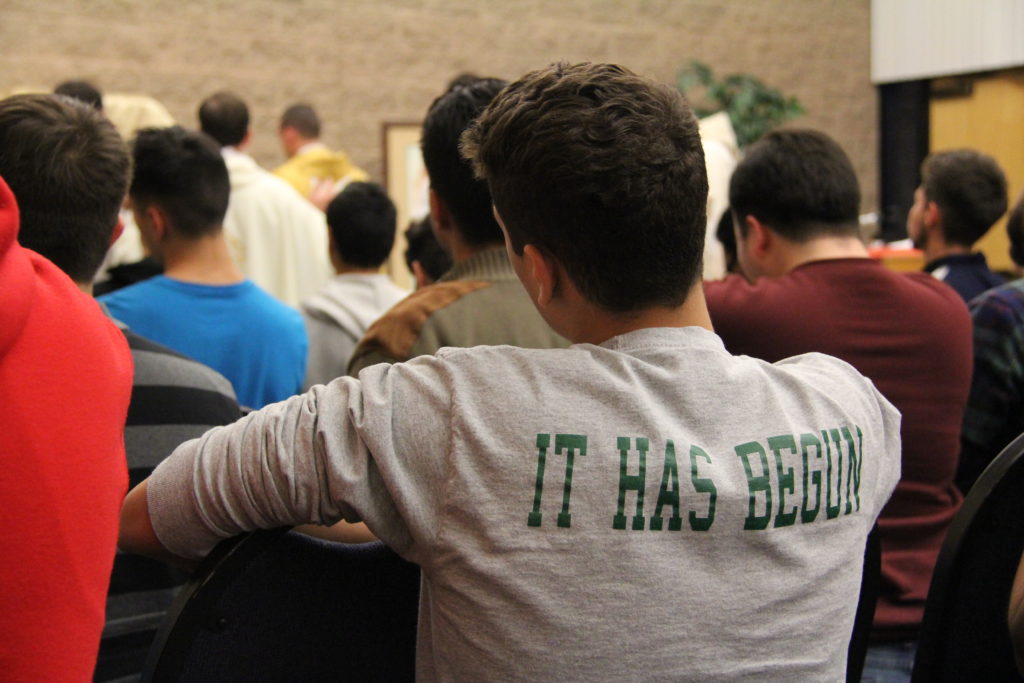
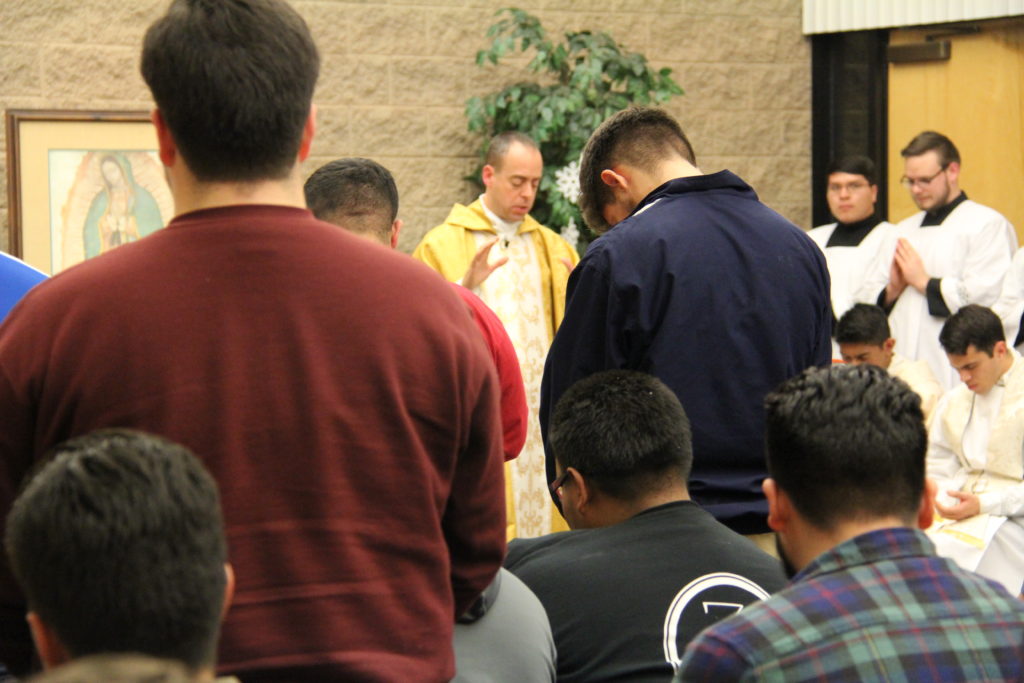
More than 200 Catholics kneel in prayer during the first Young Men's Conference Jan. 2 at St. Paul Parish (NAME/CATHOLIC SUN)

More than 200 Catholics kneel in prayer during the first Young Men's Conference Jan. 2 at St. Paul Parish (NAME/Catholic Sun)

More than 200 Catholics kneel in prayer during the first Young Men’s Conference Jan. 2 at St. Paul Parish. (Justin Bell/CATHOLIC SUN)

Organizers of the “Into the Breach — Young Men’s Conference” did not know how many young men would actually show up to the event held at St. Paul Parish in north Phoenix on Jan. 2 — only about 60 had registered online. They were pleased when over 200 attended the daylong conference, learning and growing in their faith.

The conference and its theme was held in conjunction with Bishop Thomas J. Olmsted’s Apostolic Exhortation to Catholic Men, also called “Into the Breach,” where the bishop addresses his sons and brothers in Christ in a letter.

He begins the letter in what he describes as a “clarion call and clear charge.”

“Men, do not hesitate to engage in the battle that is raging around you, the battle that is wounding our children and families, the battle that is distorting the dignity of both women and men,” wrote Bishop Olmsted. “This battle is often hidden, but the battle is real. It is primarily spiritual, but it is progressively killing the remaining Christian ethos in our society and culture, and even in our own homes.”

The “Into the Breach” movement will also feature a Men’s conference Feb. 6 in Phoenix.

(NAME/CATHOLIC SUN)
Youth minister Chris Martinez answers a question during a vibrant Q-and-A session during the Jan. 2 Young Men’s Conference. Martinez was part of a five-member panel that included (from left) diocesan Marriage and Respect Life director Mike Phelan, Fr. John Parks, chaplain at Notre Dame High School, seminarian Deacon Dan Conneally and former NFL player Chris Horn. (Justin Bell/CATHOLIC SUN)

The young men’s gathering featured mostly high-school-aged men who listened to speakers, played games of dodgeball and tug-of-war, prayed in Eucharistic Adoration and attended a vigil Mass. Many of the participants waited patiently in a long line to go to Confession, administered by a platoon of priests. They also listened to and engaged with a panel of speakers during a vibrant question and answer segment.

Fr. Fernando Camou — who at age 25 is the youngest priest in the Diocese of Phoenix — led a Gospel-inspired meditation, kneeling in front of the Blessed Sacrament with young men behind him in the make-shift chapel, while others lined up for confession outside.

The young priest bookended this segment with a “prayer to take authority,” a formal prayer.

“It’s a way that — in the name of Jesus — we, as baptized Christians, can bind and cast out demons,” said Fr. Camou.

They “aren’t always, you know, big scary demons that possess people physically and make you drop on the floor, foaming at the mouth,” he said. “Many of these demons, in fact, most the ones we experience are those of confusion, of despair, of shame, of fear.”

He reiterated the need for the baptized to take authority in the name of Jesus to “pronounce, command those demons to leave us, bind them by his precious blood, by his power — bind them and cast them out.”

Chris Horn, (CATHOLIC SUN)
Chris Horn, a former Arena Football League and NFL player, shared a time when he stepped into the breach and what happened next. (Justin Bell/CATHOLIC SUN)

Not every talk was on the serious side. Chris Horn, a former Arena Football League and NFL player, used humorous anecdotes of his playing days and times when he felt he was called to step into the breach to drive home messages of courage, trust and love.

Once, while at dinner with his coach friends, Horn returned from the restroom to find a weird and tense atmosphere at the table. The men already knew about Horn’s strong faith and witness to Christ, and were hesitant to tell them of the group’s desire to go to a strip club that evening. Eventually one of the men did.

Horn made eye contact with everyone there and told them, “Hell no. … I made a public vow to my wife and anyone that’s married here did too, to their wife.”

Horn said that the conversation changed to French fries, evoking laughter from the attendees.

“But what happened was nobody went to the strip club. Charge into the breach,” said Horn.

His story showed that often it takes one person to carry the flag for Christ and others who are silent will follow the lead.

At the Mass celebrating the Epiphany of Our Lord, diocesan Vocations Director Fr. Paul Sullivan asked men who were thinking about a possible call to the priesthood or religious life to stand up and then prayed over them. He did the same for men thinking they were called to marriage.

Fr. Paul Sullivan, director of vocations for the Diocese of Phoenix, prays over young men who said they felt called to a religious vocation during a young men's conference Jan. 2. (CATHOLIC SUN)
Fr. Paul Sullivan, director of vocations for the Diocese of Phoenix, prays over young men who said they felt called to a religious vocation during a young men’s conference Jan. 2. (Justin Bell/CATHOLIC SUN)

Afterward, Fr. Sullivan told The Catholic Sun that he prayed that “the young men would know they have a mission and that they would boldly start to prepare themselves for that — by seeking holiness, by staying among brothers in the faith and inspiring others to do the same thing.”

Austin Dang, a senior at McClintock High School, attended the conference and said, “I think the conference was good for men, to help men know what true masculinity is. True masculinity is centered in Christ, is focused on Christ.”

Dang plans to attend Arizona State University to graduate with a degree in accounting. After that, “we’ll see where God takes me.” He also told of his thoughts about the priesthood and had a request.

“For everyone that’s reading this, if you can say a quick Hail Mary for me, I’d be really grateful,” said Dang.

World Peace Day concert at Vatican features Scottsdale youth

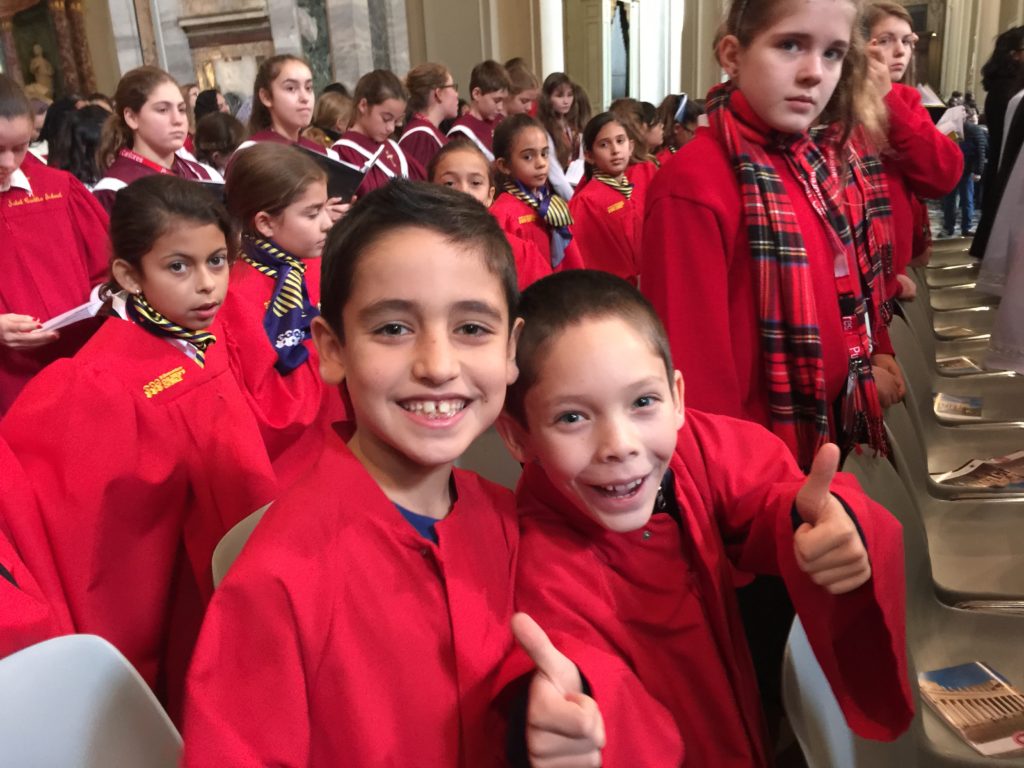
Jacob Shamoun and Alex Coppo were among 47 youth from St. Bernard of Clairvaux who sang for Pope Francis at the Vatican Jan. 1. (photo courtesy of Kent Campbell)

Sixth-grader, John Ross of Mountainside Middle School was captivated by the Colosseum in Rome, still imagining the gladiators who once fought there. He was impressed that it was still standing 2,000 years later.

A favorite moment for John’s older brother, James, an eighth-grader at Mountainside was the unexpected private tour of the Sistine Chapel.

“They explained to us why all those pictures are painted on the walls and ceiling,” he said. “They even let us take pictures, which you normally can’t do.”

And while a picture is worth a thousand words, the boys, alongside fellow singers from St. Bernard of Clairvaux’s youth choirs at the Scottsdale parish — cherubs, choristers and teen schola — said no words would suffice in describing their recent performance for Pope Francis, even though they sang in three languages.

Sam Barrett, a junior at Notre Dame Preparatory in Scottsdale, said the experience was unreal.

“I couldn’t believe it at the time, and I still haven’t processed it,” he said. “Knowing what he does for the world, it was great to be able to sing for him.”

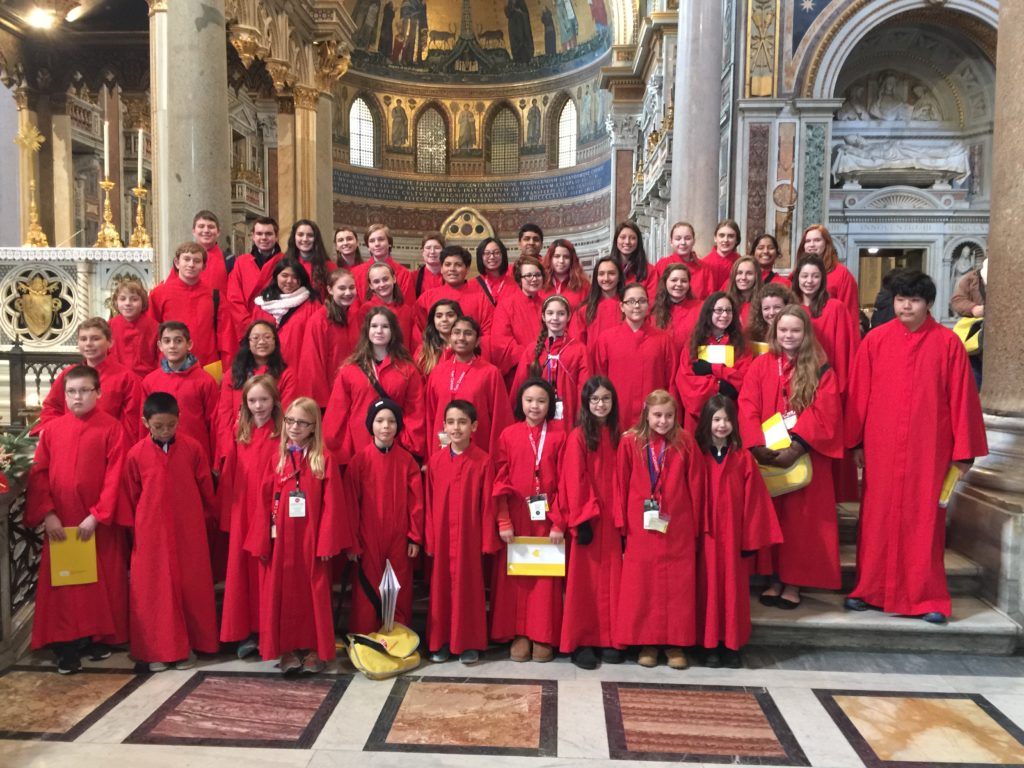
The three combined youth choirs — 46 voices strong — stand inside St. Peter's Basilica in Rome Jan. 1. The group traveled from St. Bernard of Clairvaux in Scottsdale. (courtesy photo)
The three combined youth choirs — 46 voices strong — stand inside St. Peter’s Basilica in Rome Jan. 1. The group traveled from St. Bernard of Clairvaux in Scottsdale. (courtesy photo)

Homeschooled senior, Rebecca Martin agreed, adding that the entire experience was quite interesting.

“I also was able to talk with kids from choirs in other countries. It was really cool that we were able to meet them and they liked talking with kids from America,” she explained. “I also liked St. Peter’s Basilica because it’s so big. It’s really humbling to realize you’re just one piece in a great big worldwide church.”

The local chorus of 47 students, from fourth through 12th grades, joined a throng of more than 4,000 singers from all over the world, including more than 1,000 from the United States. The choirs participated in five concerts during the 40th International Congress of Pueri Cantores, an international Catholic student choral organization Dec. 26-Jan. 2. The combined international choirs performed Jan. 1 during the World Day of Peace Mass at St. Peter’s Basilica.

Singing for the Pope — a mere 5 feet away — was a once-in-a lifetime experience, even for choir director Kent Campbell, a convert to Catholicism.

“I didn’t plan on becoming Catholic, but if anyone had told me I would be preparing Latin music for a Mass for the pope in Rome, I would have thought you were crazy,” laughed Campbell. “It was a great experience and I think the best was when we met with Pope Francis after singing the Christmas concert. He entertained questions from four of the children in attendance. One girl asked how he liked the choir and if he can sing. He explained that though he enjoys music and enjoyed listening to the opera as a child, he really can’t sing well and sounds like a donkey! He kept repeating ‘Canta e cammina,’ which means ‘Sing and Walk,’ a quote from St. Augustine.”

The opportunity to perform for the Holy Father took two years of planning. Campbell began as the St. Bernard choir director in 2008 and had hoped to bring the students to Rome in 2010, as the Congress is held in Rome every five years.

Kent Campbell stands around his three youth choirs inside St. Peter's Basilica in Rome Jan. 1. The group traveled from St. Bernard of Clairvaux in Scottsdale. (courtesy photo)
Kent Campbell stands around his three youth choirs inside St. Peter’s Basilica in Rome Jan. 1. The group traveled from St. Bernard of Clairvaux in Scottsdale. (courtesy photo)

“We didn’t have that many people in the Pueri Cantores then and the economy was bad, so we decided to put it on hold,” he explained. “Then, we thought, let’s do this in 2015, so I had a travel agent come out here two years ago and we had a great response and more students decided to join the choir.”

In August, Campbell received the special music booklets that the students would need to learn before the congress.

“We were all really excited; there was 90 pages of music and very little of it was in English,” he said. “Most was in Latin and Italian and a lot of it was difficult for them to learn. But, with a lot of extra practices, the students did very well.”

The group of 135 students, family and friends filled two and a half busses, visiting sites such as the Colosseum, Roman Forum, Pantheon as well as some tasty Italian restaurants.

“It was really a great experience for the kids and the ability to see beyond our little area in Arizona, get out of the country, hear different languages and experience other cultures,” said Campbell. “We prayed for peace with Pope Francis and that was a very important thing the students were doing and I know that God heard their prayers.”