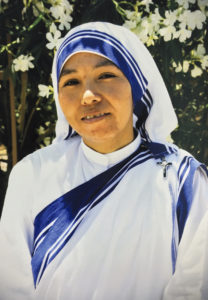
La Hna. Rebeca José Muga de las Misioneras de la Caridad. (Foto cortesía de las Misioneras de la Caridad)
[dropcap type=”3″]L[/dropcap]a Hermana Rebeca José, quien es miembro de las Misioneras de la Caridad, nos habla un poco sobre ella y su vocación; e invita a las jóvenes a escuchar y seguir el llamado del Señor a la vida religiosa si lo sienten o lo han sentido alguna vez.
La Hna. Rebeca José Muga de las Misioneras de la Caridad. (Foto cortesía de las Misioneras de la Caridad)
The Catholic Sun: Háblenos de usted y su familia.
Hermana Rebeca José Muga, MC: Mi nombre de pila es Rebeca Muga y adopté el nombre “Rebeca José” en honor de San José el día de mi profesión. Nací en La Paz, Bolivia. … Soy la menor de 9 hermanos y tengo una hermana que también es religiosa con las Misioneras de la Caridad.
Sun: Cuéntenos un breve relato sobre su vocación.
Hna. Rebeca José: Fui educada en una escuela católica y recuerdo que desde los 8 años tenía deseos de servir al Señor. Siendo adolescente conocí a las Misioneras de la Caridad, me gustó que eran bien alegres. Las visité e hice un voluntariado con ellas. A los 17 años tomé la decisión de ser religiosa y a los 19 (en 2005) ingresé al convento. El 24 de mayo del 2008 hice mis votos temporales y el 24 de mayo del 2014 mis votos perpertuos.
[quote_box_left]
Misioneras de la Caridad
Fundada: Calcuta, India, el 7 de octubre, 1950
Fundador: La Beata Madre Teresa de Calcuta
Carisma: El servicio a los más pobres entre los pobres
Otras estadísticas: 4,500 misioneras sirviendo en 133 países
[/quote_box_left]
Sun: ¿En qué lugares ha realizado su apostolado y qué labores ha desempeñado?.
Hna. Rebeca José: En El Bronx, Nueva York por un año en un shelter para desamparados; en Washington, 4 años, en un shelter para mujeres embarazadas solas; y desde junio del 2014 llegué a Phoenix, a un shelter para mujeres vulnerables que está en la 17 avenida y Buckeye, a un lado de la iglesia Nuestra Señora de Fátima.
En todos esos lugares mis tareas son la catequesis para las mujeres y sus niños; asimismo, preparo con mis compañeras diariamente la comida para esas mujeres. Actualmente preparamos y servimos comida a 25 personas, tanto mujeres como menores.
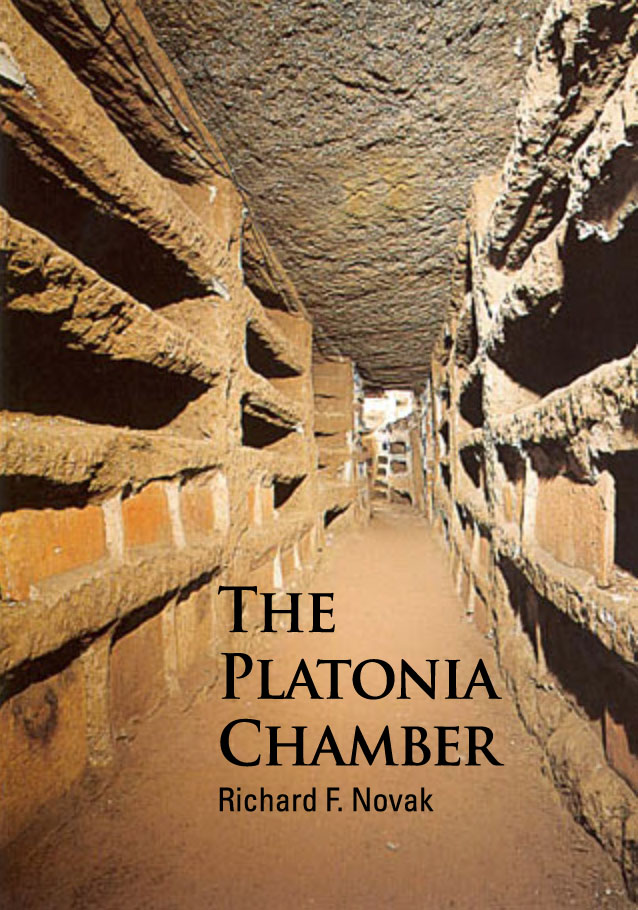
[dropcap]A[/dropcap]s a book critic, novelist, and a professor of English and Creative Writing, I am always looking for Catholic novels to read and review. Richard Novak’s new novel, The Platonia Chamber fits that bill; not only that, but the subject of the novel is of great personal delight — St. Laurentius or St. Lawrence, deacon to the 24th Bishop of Rome, Sixtus II.
In my youth, that is to say, in days when I was younger than I am now and less enlightened, members of St. Timothy’s Catholic Community, of which I was a member, used to hold an informal St. Lawrence Memorial Barbeque and Limbo Challenge. For those of you who know what happened to St. Lawrence, whose feast day is Aug. 10, try not to cringe; this was all done to honor his courage and inspire those in attendance.
For those of you who do not know what happened to St. Lawrence, let me explain. St. Lawrence was a deacon at the time of the great Christian persecution in Rome under the Emperor Valerianus circa 258 A.D. He was captured, tortured, and told to turn over the supposed riches of the Church. Given three days, he returned with the poor and presented them as the riches. He was executed on a gridiron and, according to the ancient martyrology told the Emperor, who was in attendance, “turn me over, for I am done.”
You can all see where this courageous humor, in the face of death, might inspire a memorial barbeque or two.
The story of Laurentius takes place in August in ancient Rome. We immediately understand that worshipping the Christian faith is both dangerous and deadly and we catch a glimpse of what it means to be a Christian in places like Syria and Iraq where ISIS is set to destroy all Christians.
Laurentius’ job is to care for the poor and the sick. He does this with alms, particularly from the wealthiest families in Rome. During the persecution, many of those families were captured and executed by the Prefect Saecularis — do note the name — on personal orders from the emperor. The problem with Christianity was that it did not fit in with the current political environment in Rome; in fact, it was seen as a threat. Perhaps we can see hints of the same problem in our postmodern, progressive society?
Mr. Robert Curtis, a life-professed Lay Dominican, teaches composition at the University of Phoenix and creative writing at Rio Salado College.
The environment was so dangerous that Sixtus II must be moved every couple of days among the poorest neighborhoods in the city. A new catacomb was being finished during this time and Sixtus II wanted the relic remains of St. Peter and St. Paul moved from their old burial places to this new, safer, catacomb.
We all know, however, that safety in such a dangerous time is relative. One minute they could be entertaining guests, the next minute swept up by the prefect and his guard. Social and economic status knew no mitigating treatment; everyone was tortured and killed.
A centurion of the guard, Octavius, discovered that an assembly (Mass) was to be held at the catacomb and he set a deadly trap. He captured all of the deacons, Sixtus II (whom he beheads) and rounded up the rich and poor believers alike.
The scene with Laurentius on the gridiron was not quite as inspiring as the story in the martyrology but nonetheless tells us of the danger that the early Christians faced and the courage with which they faced it.
The novel is nicely written, flows well, despite some rough use of Latin terms in parentheses that distract at the beginning, and gives us brief characterizations.
If you are interested in what the folks who live in Syria and Iraq face every day, this book will help you get there.
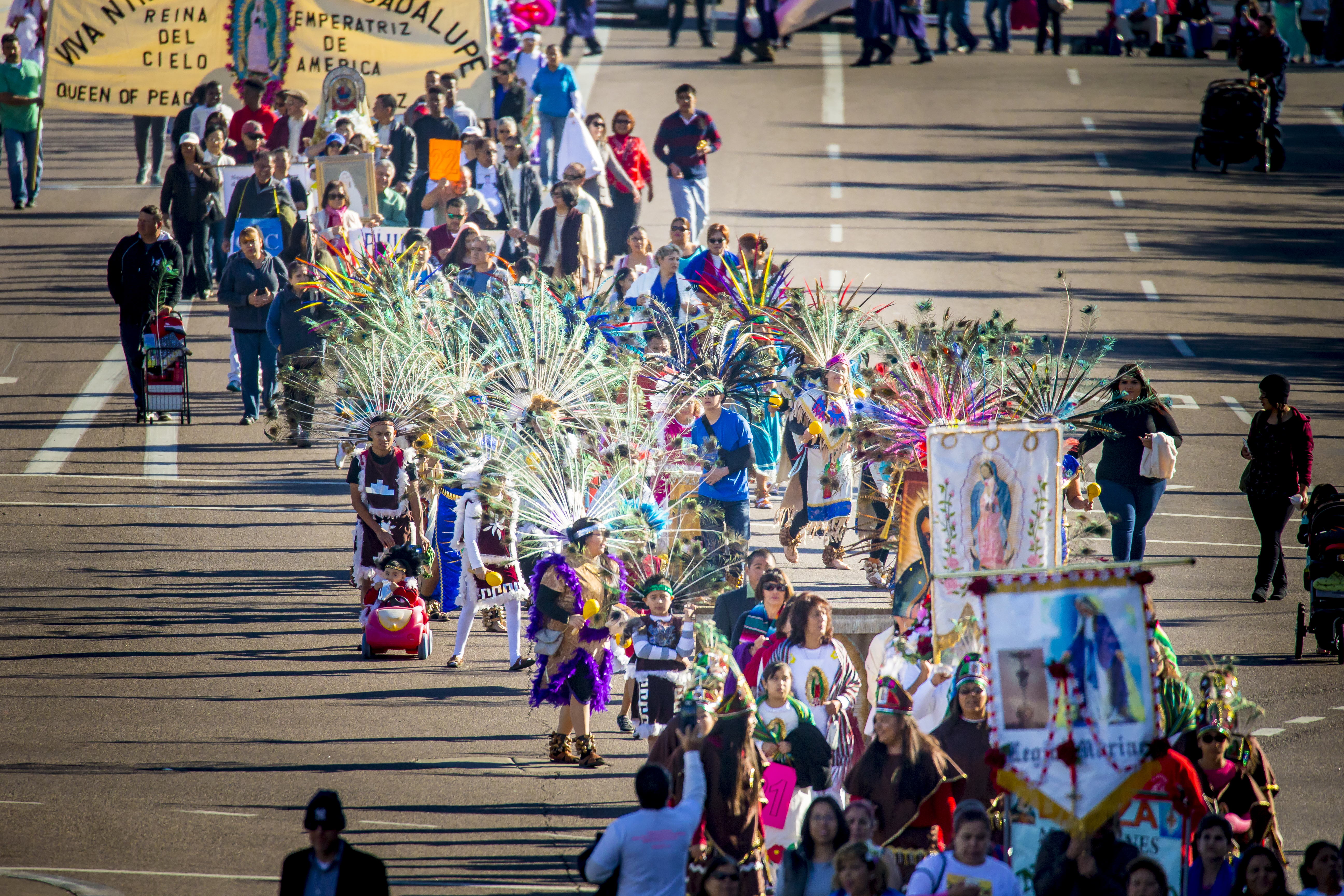
Miles de los fieles participaron en la celebración de “Honra Tu Madre” el 5 de diciembre. (Billy Hardiman/CATHOLIC SUN)
Miles de los fieles participaron en la celebración de “Honra Tu Madre” el 5 de diciembre. (Billy Hardiman/CATHOLIC SUN)
[dropcap]L[/dropcap]as calles del centro de Phoenix se transformaron el 5 de diciembre al 4,000 personas demostrar su amor y devoción a Nuestra Señora de Guadalupe. Vestidos de coloridos trajes y adornados con plumas, joyas y perlas, los participantes desfilaron a lo largo de la Calle Jefferson cerca a la Parroquia de Inmaculado Corazón de María.
El espectáculo de ‘Honra a tu Madre,’ ahora en su décimo año, estaba en marcha. Coloridas carrozas con imágenes de la Virgen de Guadalupe, y matachines tradicionales deleitaron a la multitud que estaba a lo largo de la Calle Monroe, justo en frente de la Basílica de Santa María. Gritos de “¡Viva la Virgen de Guadalupe!” sonaron al mismo tiempo que algunos espectadores alzaban a sus bebés y tomaban fotos y videos con sus teléfonos celulares.
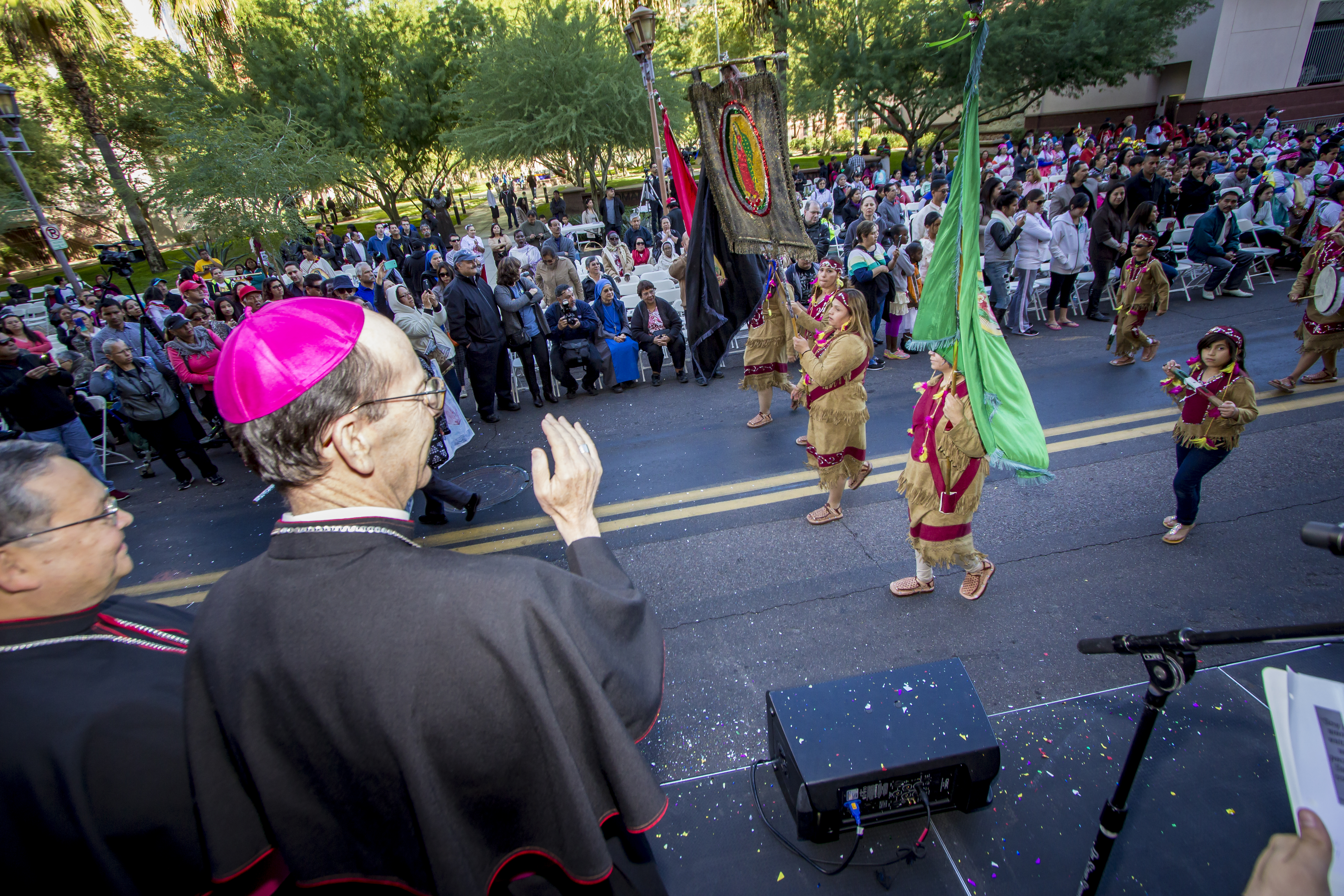
De pie en una plataforma levantada frente a los jardínes diocesano cerca de la basílica, el Obispo Thomas J. Olmsted y el Obispo Auxiliar Eduardo A. Nevares de la Diócesis de Phoenix sonrieron y ofrecieron sus bendiciones a los bailarines que giraban, arremolinaban, golpeaban tambores al pasar ante la tarima. Un grupo incluyó tocadores de trompeta, trombón y tuba. Otros llevaban máscaras multicolores, y bailaban mientras iban por la Calle Monroe, algunos quemando incienso.
Más de 70 parroquias y organizaciones participaron en la celebración alegre. Fue una audaz celebración de la Virgen simple cuyas apariciones a San Juan Diego hace casi 500 años condujeron a las conversiones masivas en una tierra donde el sacrificio humano ritual era la orden del día.
“Ella los convirtió”, dijo Ignacio Rodríguez, director asociado de Ministerios Étnicos para la diócesis. “La necesitamos hoy más que nunca. Es genial ver a ancianos aquí, ver a niños pequeños aquí, a todo el mundo realmente encontrando una manera de decir que sí”.
Rodríguez estuvo de acuerdo de que el evento fue una audaz demostración de cariño por la Virgen María. “Creo que es como ella vino al mundo. Actuó con valentía, aunque ella era muy humilde en su aspecto, pero lo que ella trajo fue un mensaje muy audaz”.
Tomasa Nava, una de los matachines de la Parroquia Reina de la Paz cayó de rodillas sobre el pavimento de la Calle Monroe durante la oración Eucarística de la Misa al aire libre masivas que tomó lugar después de la procesión. Ella asistió al evento el año pasado, pero había estado teniendo problemas de corazón y no podía bailar. Este año, cumplió una promesa a nuestra Señora de Guadalupe.
El Obispo Thomas J. Olmsted ofrece su bendición a los bailadores en la procesión de “Honra tu Madre”. (Billy Hardiman/CATHOLIC SUN)
“Tuve un año muy dificil y le prometí que si yo salía de todo eso iba a venir a danzarle”, dijo Nava. “Es algo muy grande porque es una nueva oportunidad de vida que me está dando Dios, que me ayudó en los momentos más dificiles”.
El P. Andrés Arango, párroco de la Parroquia de San Gregorio, predicó la homilía en la Misa bilingüe.
“Hoy es un día cuando estamos cambiando la historia de este lugar”, dijo el P. Arango. “Hemos hecho a las calles un lugar santo … es un lugar donde toman lugar muchas actividades pero ahora es un lugar de Dios debido a su presencia”.
El P. Arango habló de haberle hecho la segunda a otro sacerdote en una parroquia en Colorado para celebrar una boda. Aunque la novia, invitados, música y comida estaban listos, una poderosa tormenta impidió la llegada del novio. Decidieron seguir adelante con la fiesta de todos modos, y el P. Arangro extrajo de la experiencia una lección para los fieles sobre el Adviento y la Navidad.
“Podemos tener alegría, música, canciones, bailes, celebraciones, pero corremos el riesgo de olvidar la presencia esencial de Dios, de estar enfocados en el Señor”, dijo el P. Arango. “El Espíritu de Dios es central y esencial para nuestras vidas. Todo lo demás pasa. … Esta es una celebración hermosa, pero no te pierdas lo más importante: Dios y tener un corazón puro.
Verónica Pérez, maestra en la escuela de Santa Inés y quien participa activamente en el movimiento pro-vida, dijo que está dedicada a Nuestra Señora de Guadalupe.
“Apareció en México, el país donde nací. En ningún otro país americano reveló su imagen”, dijo Pérez. “La Virgen da un mensaje de amor a la vida”.
Aunque la mayoría de las personas que asistieron ‘Honra a Tu Madre’ fueron hispanas, provenientes tanto de México, como de América Central y del Sur, habían muchos no hispanos que también participaron. Un grupo de 10 católicos Eritreos ataviados en sus tradicionales vestidos de blanco se sentó cerca de la tarima.
Angelica Lascola, de Indonesia, dijo que era importante para ella estar en la celebración en honor a nuestra Señora de Guadalupe.
“Este momento es realmente un momento de fe para expresar que realmente creemos y confíamos en Nuestra Madre María, que siempre ora y nos protege”, dijo Lascola. “Es una fuerza tener una especial devoción a Nuestra Madre María”.
The Pope World Prayer Network (Apostleship of Prayer) assists in the dissemination of monthly intentions of the Holy Father related to the challenges facing humanity.
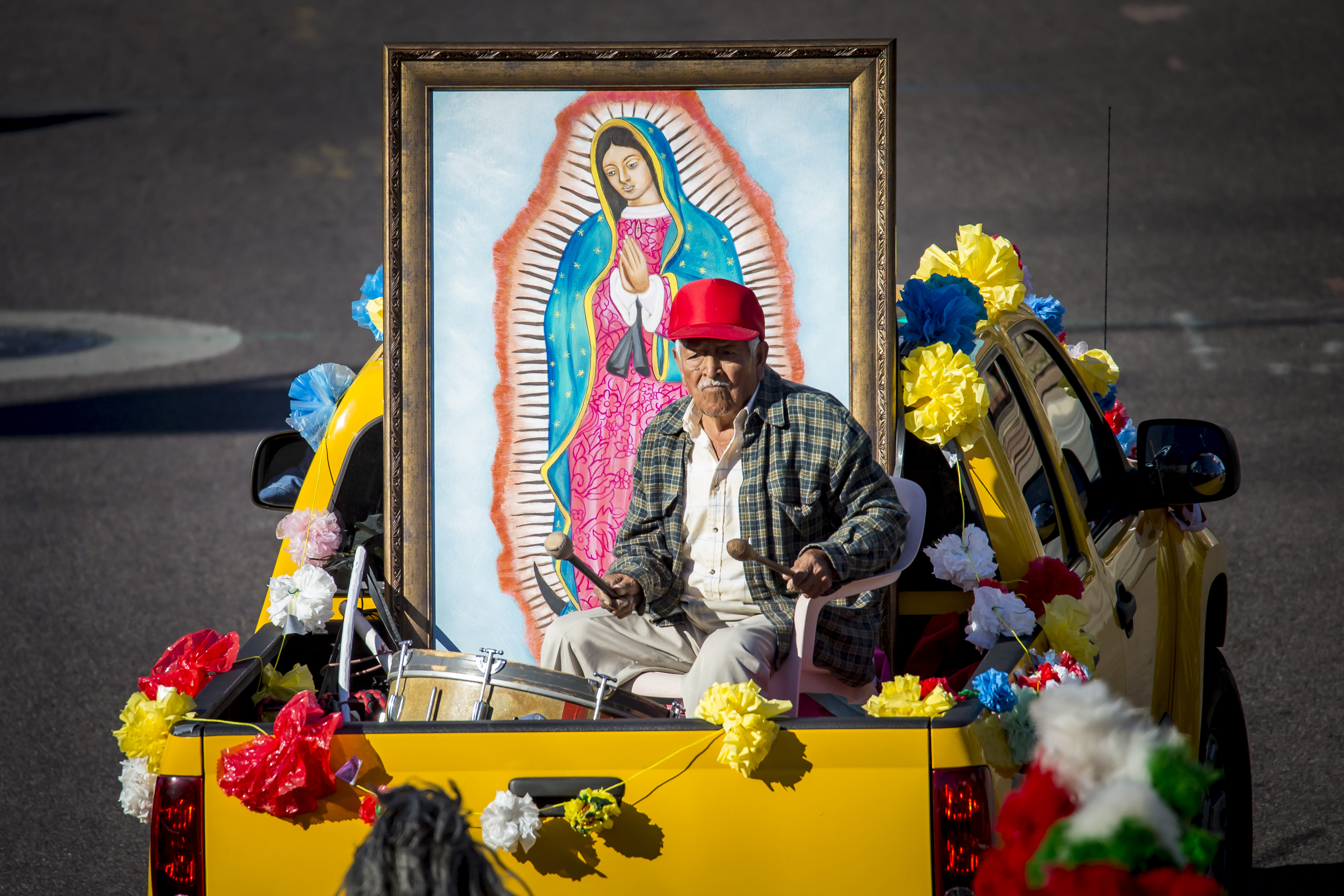
Lusianito Gutiérrez toca el tambor en la procesión de ‘Honra tu Madre’ — un celebración diocesana para Nuestra Señora de Guadalupe. (Billy Hardiman/CATHOLIC SUN)
Lusianito Gutiérrez toca el tambor en la procesión de ‘Honra tu Madre’ — un celebración diocesana para Nuestra Señora de Guadalupe. (Billy Hardiman/CATHOLIC SUN)
Más que cualquier otro Santo, la Madre de Dios ha ayudado a personas a descubrir la misericordia de Dios. De hecho, es a través de María que la misericordia entró en la historia de la humanidad en la persona misma de su amado hijo, Jesús.
Madre de Misericordia
Desde el primer momento de su existencia, ella estuvo envuelta en misericordia; Dios le preservó de la carga del pecado desde el vientre de su madre. Cuando María visitó a su prima Isabel, alabó a Dios en un hermoso cántico, el Magnificat, que exalta la misericordia de Dios. Ella dijo, “… el Poderoso ha hecho obras grandes por mí … y su misericordia llega a sus fieles de generación en generación. … Auxilia a Israel, su siervo, acordándose de su misericordia — como lo había prometido a nuestros padres — en favor de Abraham y su descendencia por siempre” (Lucas 1:46-55).
De una manera muy superior a la de cualquier otra persona humana, María recibió la misericordia y se convirtió en un instrumento de la misericordia de Dios. Porque acompañó a Jesús en el camino al Calvario y se quedó en solidaridad con su sacrificio en la Cruz, ella, de una manera singular, ha experimentado las profundidades de la misericordia de Dios. Fue al pie de la Cruz donde Jesús nos confió a su madre y la confió a nosotros para ser nuestra madre desde ese momento en adelante.
De este misterio, San Juan Pablo II escribió: “Nadie ha experimentado, como la Madre del Crucificado el misterio de la cruz, el pasmoso encuentro de la trascendente justicia divina con el amor: el ‘beso’ dado por la misericordia a la justicia”. Podemos ver por qué la Iglesia la llama la Madre de la Misericordia.
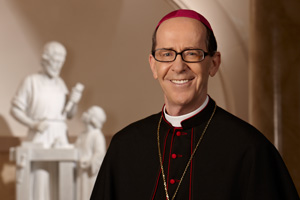
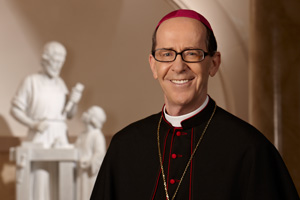
El Reverendísimo Thomas J. Olmsted es le obispo de la Diócesis de Phoenix. Fue instalado como el cuatro obispo de Phoenix el 20 de diciembre de 2003, y es el lider espiritual de los 1,1 millones católicos en la diócesis.
Nuestra Señora de Guadalupe
Porque María compartió tan íntimamente en la misión misericordiosa de su Hijo, Él le concedió el privilegio de llevar este maravilloso misterio a personas de todas las edades y cada lugar. Como el Segundo Concilio Vaticano dijo de ella, “Con su amor materno cuida a los hermanos de su Hijo, que todavía peregrinan y se hallan en peligros y ansiedad hasta que sean conducidos a la patria bienaventurada”. Ella ha hecho esto en Lourdes y Loreto, en Fátima y Czestochowa y en América en el lugar hoy conocido como el Santuario de Nuestra Señora de Guadalupe.
El Papa Francisco ha dedicado el Jubileo de la Misericordia a la Virgen de Guadalupe. Para entender por qué el Santo Padre ha hecho esto, sólo necesitamos leer lo que dijo sobre la Patrona de las Américas, en la vigilia de su fiesta en 2013 AD, “Cuando ella se le apareció a San Juan Diego, su rostro era el de una mujer mestiza y su ropa estaba llena de símbolos de la cultura indígena. Siguiendo el ejemplo de Jesús, María se encuentra junto a sus hijos e hijas, como una madre solícita acompaña su viaje, compartiendo las alegrías y esperanzas, tristezas y angustias del pueblo de Dios”.
A través de la intercesión y protección de Nuestra Señora de Guadalupe, muchos seguidores de su Hijo han vivido las obras de misericordia espirituales y corporales en América desde su aparición en 1531 AD. Por esta razón, dice el Papa Francisco, América se ha convertido en un continente “donde diferentes pueblos pueden vivir juntos, una tierra capaz de respetar la vida humana en todas sus fases, desde el vientre hasta la vejez, capaz de dar la bienvenida a los inmigrantes, así como también a los pobres y marginados de todas las edades”.
San Juan Diego
En el año 2002 el Papa San Juan Pablo II canonizó a Juan Diego, el hombre indio a quien se le apareció Nuestra Señora de Guadalupe y a quien decidió ayudar para llevar la Buena Nueva de Jesús a las tribus de muchos y variados pueblos de América; para demostrar cómo la fe en Cristo trae personas a ser amados hijos e hijas del Padre, sin necesidad de renunciar a su identidad indígena.
María tiene un papel único en ayudarnos a descubrir la paternidad amorosa de Dios y hacer propias las palabras de Jesús, “Te alabo, Padre, Señor del cielo y de la tierra, por haber ocultado estas cosas a los sabios y a los prudentes y haberlas revelado a los pequeños” (Mateo 11:25).
Antes de la aparición de nuestra Señora de Guadalupe en México, los esfuerzos humanos para evangelizar a los indígenas de América habían fallado miserablemente. Muchos de los que vinieron de Europa, hace 500 años, hicieron parecer al cristianismo como una religión de los Conquistadores, una religión carente de compasión y apuntada a la dominación a través de poder militar. Pero Nuestra Señora de Guadalupe cambió todo eso. Ella demostró ser no sólo la Madre de Dios, sino también Madre de Su pueblo. A través de su elección de Juan Diego para ser su mensajero, ella superó la falibilidad de los esfuerzos humanos, incluso el escándalo de agresión injusta por un ejército conquistador de los cristianos bautizados. Ella demostró ser verdaderamente la Madre de la Misericordia.
Al comenzar el Jubileo de la Misericordia, el Señor nos llama nuevamente para ser discípulos misioneros de Jesús y servidores de Su misericordia. Él nos promete bendiciones abundantes al pasar por las puertas del Jubileo para acercarse al trono de la gracia, es decir, acercarse a la Cruz de Cristo como la Madre de la Misericordia lo hizo. “Vayamos, entonces, confiadamente al trono de la gracia, a fin de obtener misericordia y alcanzar la gracia de un auxilio oportuno” (Hebreos 4:16). Abrazemos esta obra de fe con confianza, sabiendo que Nuestra Señora de Guadalupe nos ayuda con su intercesión y su gentil atención.
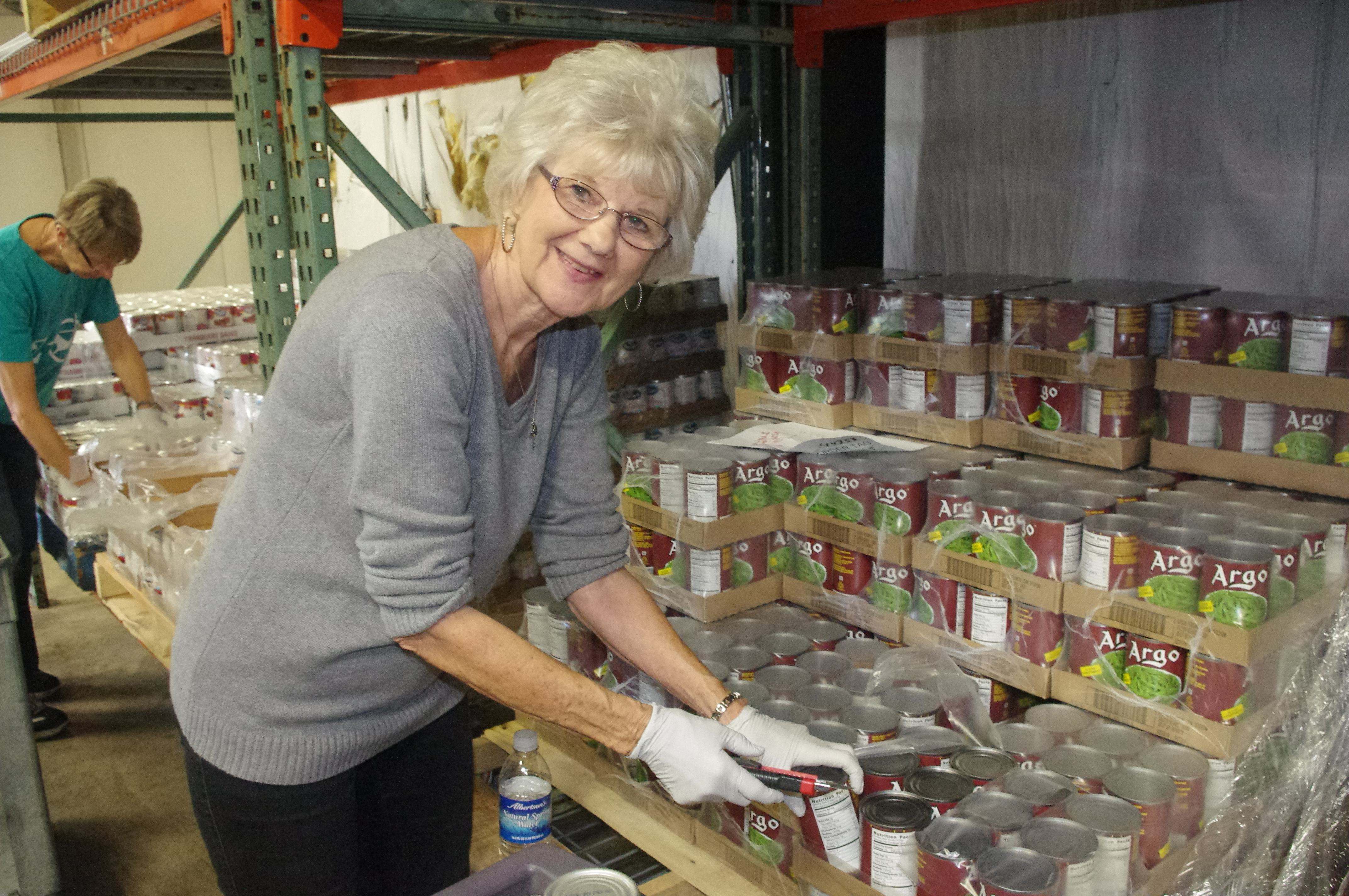
Carolee O’Meara has been volunteering weekly at Paz de Cristo in Mesa for the last 26 years and said God’s mercy has given her peace in her life and a desire to help others. (Joyce Coronel/CATHOLIC SUN)
Carolee O’Meara has been volunteering weekly at Paz de Cristo in Mesa for the last 26 years and said God’s mercy has given her peace in her life and a desire to help others. (Joyce Coronel/CATHOLIC SUN)
In recognition of the Jubilee Year of Mercy declared by Pope Francis, every month The Catholic Sun will feature a “Missionary of Mercy” who exemplifies one of the corporal or spiritual works of mercy.
Practical ways to Feed the Hungry
See to the proper nutrition of your loved ones
Support and volunteer for food pantries, soup kitchens, and agencies that feed the hungry
Make a few sandwiches to hand out as you walk through areas where you might encounter people in need
Carolee O’Meara knows what it’s like to be poor. She also knows how it feels to receive mercy.
“I’ve always had a heart for the poor,” O’Meara said as she deftly stashed cans of vegetables in food boxes at Paz de Cristo in Mesa. “Being raised in a home where there was poverty and where God was just there all the time leading me, even without the parental guidance, God was just always merciful to keep me close to Him.”
Every Tuesday since 1989, O’Meara attends morning Mass and then heads over to Paz de Cristo, a soup kitchen and resource center for the homeless and poor. The center gives out some 1,300 food boxes monthly and serves a hot meal seven nights a week. Once O’Meara arrives, she and other volunteers load up cardboard boxes to be given to the poor each week. The boxes include cans of beans and fruits and other staples like rice, meat and bread.
“When I was young the welfare lady would come and bring us food,” O’Meara said recalling her childhood. “We were on that type of welfare to the point where one year when I was probably in fifth or sixth grade, the only thing we got for Christmas was a box of food from my uncle.”
Later on, O’Meara married and had children. When her husband left her, she again faced poverty.
“I had four kids at home and I had to apply for food stamps, so I had to humble myself,” O’Meara said. “So I understand how some people might feel a little intimidated. It’s a situation where you have to humble yourself or totally go without.”
It was in the depths of that difficulty that O’Meara experienced mercy and longed to share it with others.
“When I was left alone … you feel like a failure, and you think, ‘I wish I would have done something different so I wouldn’t be in this situation,’ and yet it was at that time that God’s mercy poured out on me and gave me such a peace,” O’Meara said. “One time when my ex-husband came to see the kids he looked at me and shook his head and said, ‘I don’t understand how you can be so peaceful.’ And it was just because of God’s mercy. He flooded me with a holy peace and the reassurance that He’d take care of me. And He did.”
Years later, as her ex-husband lay dying, he asked her forgiveness. That act, she said, was a gift of God’s mercy too.
“God’s mercy helped him to not only ask for my forgiveness, but I was able to ask for his at the very last moment. I just knew that was the Lord clearing the path for him and for me.”
On the fourth Saturday of the month, O’Meara helps distribute the food boxes to the hundreds of poor families, senior citizens and local homeless who file into Paz de Cristo. Packing and distributing the food is physically demanding and she’s on her feet constantly. So where does she find the energy to return again and again over the last 26 years?
“I don’t get discouraged,” O’Meara said. “It’s just such a joy to come here and it’s the joy that keeps me going. Years ago the Lord gave me a Scripture verse, ‘I have the strength for all things.’ And I stand on that always. He’s my strength.”
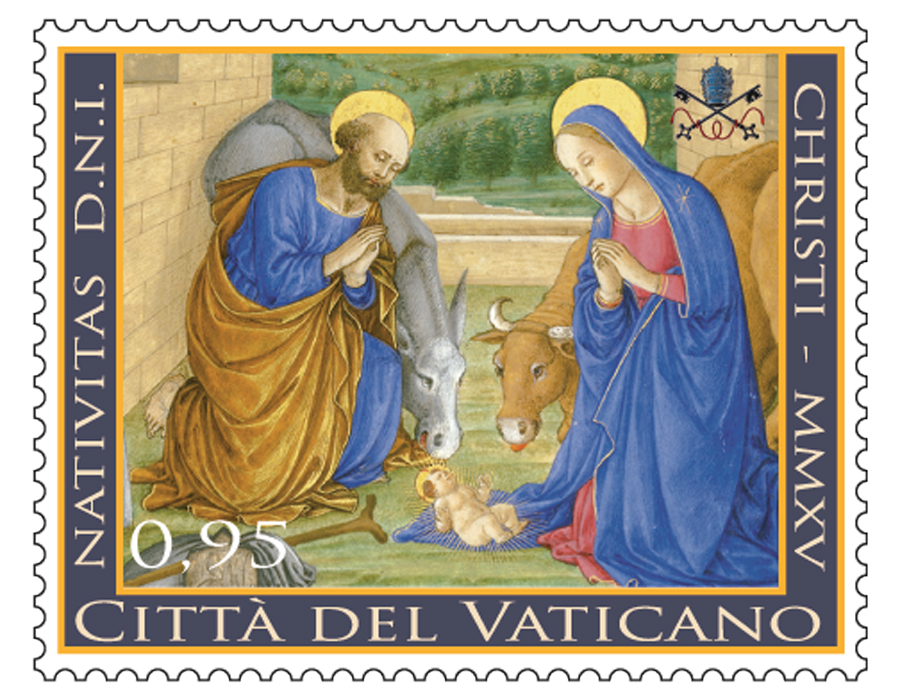
The Vatican's 2015 Christmas stamps feature a manuscript illumination of the Holy Family by an unknown artist from the 15th century. The image is from the Codices Urbinates Latini 239 (1477-1478) at the Vatican Library. (CNS photo/courtesy Vatican Philatelic and Numismatic Office)
The Vatican’s 2015 Christmas stamps feature a manuscript illumination of the Holy Family by an unknown artist from the 15th century. The image is from the Codices Urbinates Latini 239 (1477-1478) at the Vatican Library. (CNS photo/courtesy Vatican Philatelic and Numismatic Office)
[quote_center]
“You are beautiful in every way, my friend, there is no flaw in you!”
— Song of Songs 4:7
[/quote_center]
[dropcap]I[/dropcap]t’s that time of the year when everything from serious sermons to sappy jewelry commercials and everything in between turn their attentions to taking care of others. And that’s a good thing, although we should probably be thinking about that all year.
But I want to switch things up a little and talk about the importance of YOU. Yup, I am actually going to write a Christmas column about how you need to take care of yourself this holiday season.
OK, let me explain. I am not talking about going out and buying yourself a cartload of gifts and eating all your favorite foods until you explode in a giant ball of self-satiation — but actually kind of the opposite. I want to take a little time this holiday season to consider how important you are to the Lord, to the world and to all those in your world that you will probably be buying gifts and treats for. And to remember that you don’t have to be perfect to realize that value.
Because sometimes worrying too much about being perfect can make us look past our greatest strengths and assets and leave us so angry with ourselves that we stop taking care of ourselves. And the next thing you know, we can’t help anybody else either.
I bring this up at the holiday season for a couple of reasons. First of all it’s a time of the year when many of us come face to face with friends and relatives that we may not have seen in a while. And suddenly we feel a rush of responsibility to force a year full of love into a short season.
Well back to what I said at the beginning of the column, maybe it’s better to try doing that a little at a time throughout the year. But let’s not think about the past right now. Let’s focus on the present, and the fact that all you really need to do this season to show your love is — to show your love.
You don’t have to buy the perfect present for every single person you know. A gift is always a nice gesture. But remember it is the thought that counts, and the perfect thought is simply to let someone know you love them.
And you don’t need to suddenly be a superhuman host that creates the ultimate holiday experience for everyone you know. Parties and festivities in which we welcome others into our homes and our hearts are lovely opportunities to share our earnest and sincere love with others; don’t let the need to please and impress get in the way of that.
It’s also not necessary for you to solve all of the world’s problems during the holiday season. Sometimes our desire to help the hungry, the poor and the disadvantaged as well as those in our own families can become overwhelming around this time. It’s valuable that we are thinking about them and doing what we can. We don’t need to save the world, just try to make it a little better by being your loving self.
Finally you don’t need to completely fix everything that you think is wrong with you in time for some kind of incredible New Year’s Resolution. First of all remember that you are not broken. We all have struggles, challenges and issues we need to deal with every day. Deal with them confidently knowing that God loves you and created you the way you are for a reason, and that reason can only work if you love and respect His creation — that’s YOU.
What you do need to do at this time of year especially is to open your heart to the Lord and let him work his miracle within the miracle that is you. You are beautiful and created in the image of the Lord. So love yourself, and let that love spill out to all you meet.
And be open to how the Lord wants to continue to work on the masterpiece that is you. Be open to His will for you and his way. He has a plan and YOU are a big part of it.
Believe in the Lord this holiday season and believe in YOU, because He believed in you enough to create you. And that’s a pretty big deal. Merry Christmas!
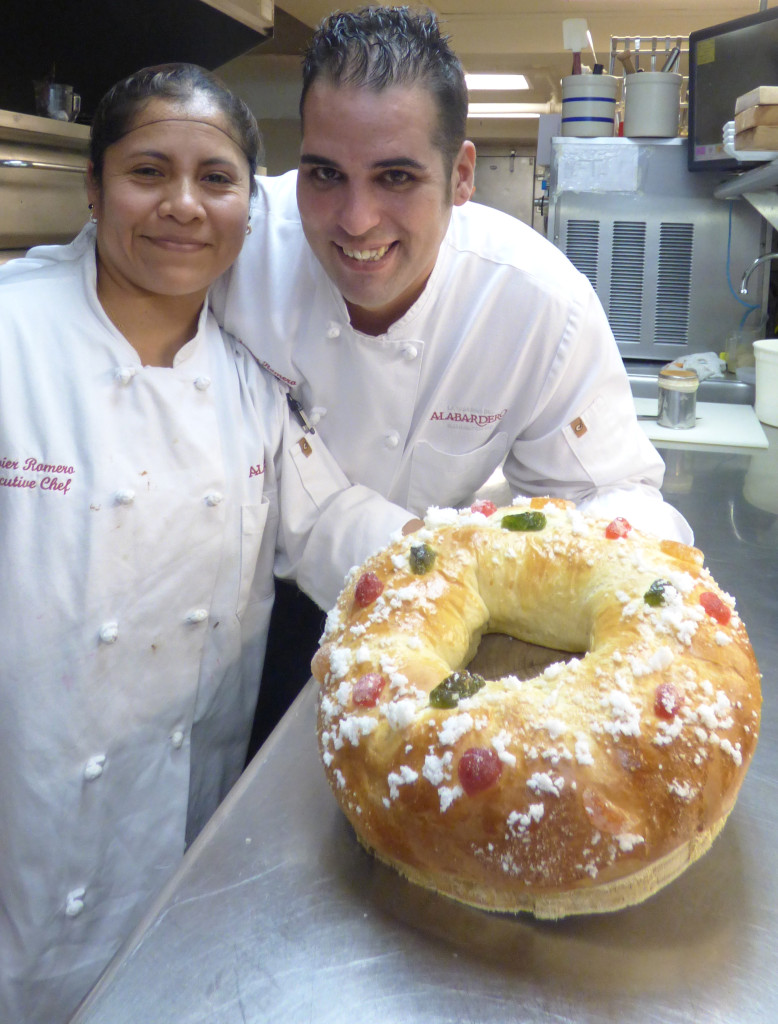
Margarita Castillo, chief pastry chef at Washington's Taberna del Alabardero, and Javier Romero, executive chef, display a finished roscon de reyes, a cake traditionally savored during the Epiphany in Mexico and Spain. The cake is similar to the king cake, but is starting to appear more often in January at the tables of immigrants living in the U.S. (CNS photo/Rhina Guidos)
Margarita Castillo, chief pastry chef at Washington’s Taberna del Alabardero, and Javier Romero, executive chef, display a finished roscon de reyes, a cake traditionally savored during the Epiphany in Mexico and Spain. The cake is similar to the king cake, but is starting to appear more often in January at the tables of immigrants living in the U.S. (CNS photo/Rhina Guidos)
WASHINGTON (CNS) — The fragrance of the cake is like no other.
For Spaniards and some Latin Americans who grew up with it, the aromatic smell of the roscon de reyes is one of the most treasured of childhood food memories surrounding the Epiphany. The roscon de reyes cake makes its appearance on the tables of Spain and Mexico each Jan. 6, but it is popping up regularly these days at the homes of immigrants who now call the United States home.
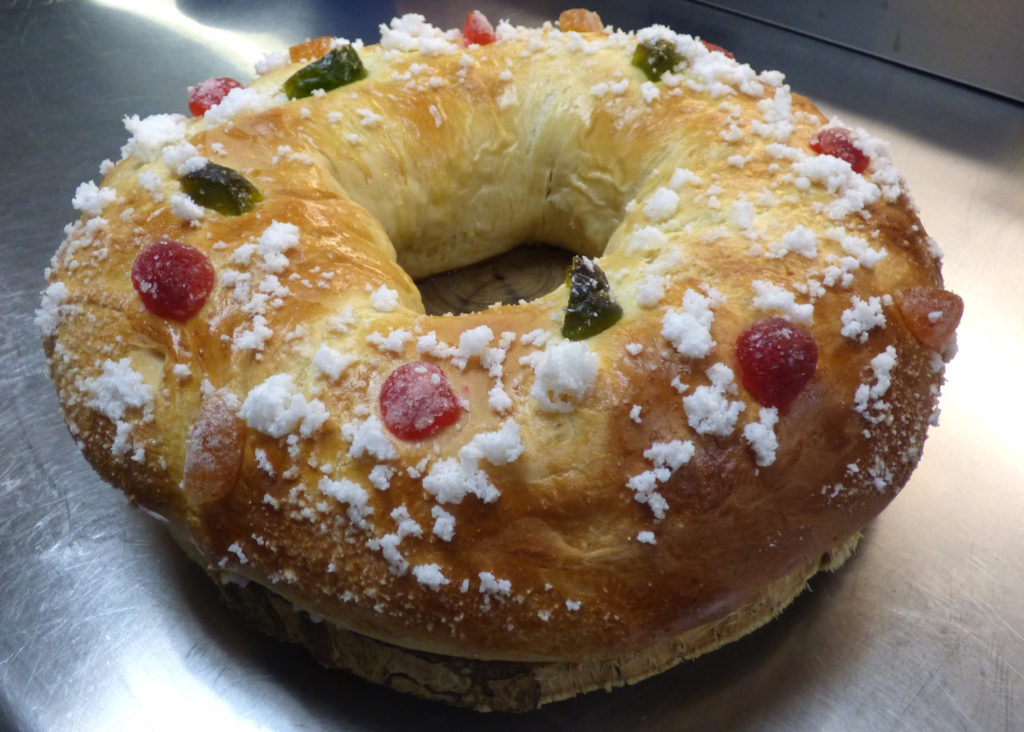
The cake has simple ingredients for the most part. The dough is a mix of flour, eggs, yeast and milk, allowed to rise in the shape of a ring, leading to the name rosca or roscon, which in Spanish describes an oval shape. Popular versions are decorated with candied fruits and sugar and glazed with an egg yolk to provide a shine. Some are cut in half and stuffed with chocolate or cream.
The roscon, also called a rosca de reyes, has a unique aroma well-known throughout Spain, and which likely comes from the orange flower blossom water used to prepare the dough, said Javier Romero, executive chef of Washington’s Taberna del Alabardero. These days, thanks to chefs such as Romero, you don’t have to travel far for the experience.
Romero has introduced the ring-shaped delicacy — baked exclusively during the first week of January — at the upscale Spanish restaurant where he works. By and large, those who drop by to pick up the cake at the restaurant are Spaniards or Latin Americans, said Javier Perez, the restaurant’s general manager. Romero began introducing the roscon little by little, making a few by hand when he first arrived at the restaurant about six years ago. But each year, demand has risen. However, Romero said he likes to make just a few cakes.
“I’d rather have them be the best roscones in town,” he said. And they certainly are. It’s hard to concentrate with the mesmerizing and fragrant smell of the cake in the room.
Though the roscon de reyes does not yet appear in supermarket shelves in the U.S., specialty bakeries and some Spanish restaurants that cater to immigrants turn out thousands of these cakes in early January. Depending on the custom of the country — or the baker — the cake will have a legume, a toy, a plastic baby Jesus inside, or all of the above.
A finished roscon de reyes, a cake traditionally savored during the Epiphany in Mexico and Spain, is pictured at Washington’s Taberna del Alabardero Dec. 18. The cake is similar to the king cake, but is starting to appear more often in January at the tables of immigrants living in the U.S. (CNS photo/Rhina Guidos)
Capuchin Franciscan Father Urbano Vasquez, a Washington priest originally from Mexico, said the cake always had spiritual symbolism for him, even as a child: Jesus in the form of bread and sharing that bread with others, as well as its ring shape hinting at God’s eternal love. He keeps the culinary tradition alive and always orders his roscon de reyes cake from a Mexican bakery in Riverdale, Maryland, to share with others, especially with those who aren’t aware of the custom.
The cake evokes memories of gathering with family in his hometown of Puebla, Mexico, a city known for its gastronomic scene. As a priest, he loves that the cake is laden with profound spiritual symbols and can be used to catechize.
You could argue that its ring shape also is a symbol of the crowns that the Three Kings, or Magi, wore when they visited the baby Jesus, he said, and “the fruit, in its multiple colors, are symbols of the jewels they brought, signifying peace, love and happiness.”
Chef Romero, also adhering to the custom of making the cakes available to mark the Epiphany, makes 50 to 55 cakes each January. Because of the process he uses to make them, it takes two days to produce in the middle of an already busy schedule at the restaurant. The dough must ferment at a particular temperature, rest overnight, and be just right before candied fruits and sugar are applied. Only then are they ready for the oven.
“I like to pamper them,” he said.
He enjoys keeping alive the custom he grew up with and recalls memories of his grandparents in his hometown of Aranjuez, near Madrid, taking him to pick up the roscon at the local bakery.
“For me, it signals the end of Christmas,” he said. And there’s no better gift than to watch someone walk out the door, happy with a cake that took days to produce.”As a chef, it’s about the sense of smell, and that smell that comes out of (it), there isn’t a similar one in the world … it takes a lot, a lot of pampering,” he said.
“I know we’re far but I want the public to feel as if they’re eating (in Spain) … when I see (the cakes) in their boxes, with names on them and ready to be picked up, I feel as if I’m in Spain. And I like contributing to that knowledge that others have of our culture.”
If you weren’t able to taste the roscon in January, there’s still time to taste its culinary cousin. In the U.S., the cake has morphed into the blue, yellow and green cake abundant in places such as New Orleans and nearby southern cities and towns around Mardi Gras.
Anne Byrn, author of “American Cake,” said the cake “was originally a French, Spanish and Basque cake, and it came to New Orleans with the Basque settlers in 1718. In its most original form, it is a brioche dough (yeast) with a cinnamon and sugar filling, left to rise in a ring, then slit at intervals, and baked. Originally, it didn’t have a glaze, but some Vietnamese bakeries today in New Orleans bake this cake and glaze it. Often, the glaze is colored Mardi Gras colors.”
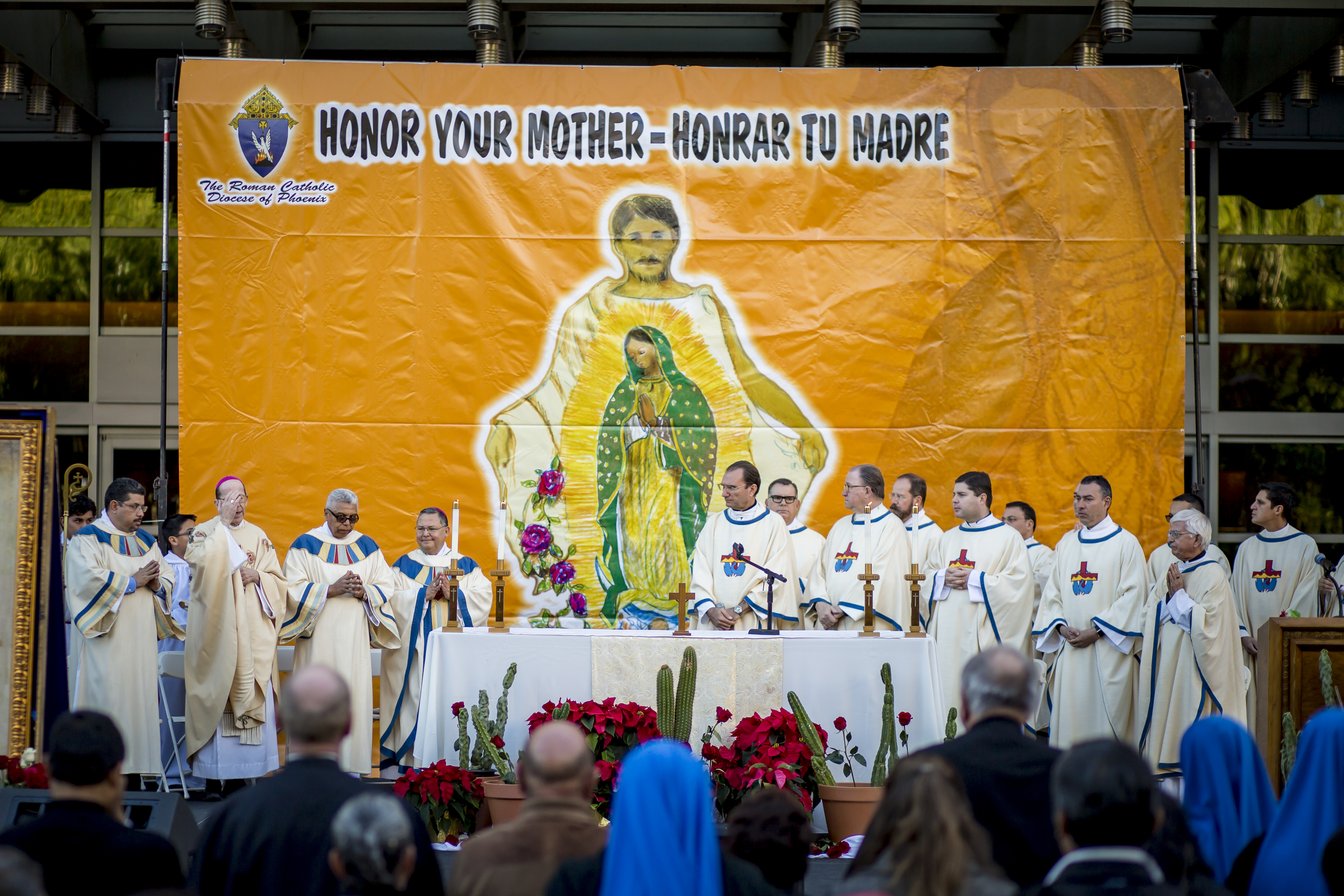
The annual the Honor Your Mother celebration parade and mass in Downtown Phoenix on Saturday, December 5, 2015.
The annual the Honor Your Mother celebration parade and mass in Downtown Phoenix on Saturday, December 5, 2015.
More than any other saint, the Mother of God has helped people to discover God’s mercy. In fact, it is through Mary that mercy entered into human history in the very person of her beloved son, Jesus.
Mother of Mercy
From the first moment of her existence, she was enfolded in mercy; God preserved her from the burden of sin from her mother’s womb. When Mary visited her cousin Elizabeth, she praised God in a beautiful canticle, the Magnificat, which exalts the mercy of God. She said, “…the Almighty…has mercy on those who fear Him in every generation…He has come to the help of His servant Israel for He has remembered His promise of mercy, the promise He made to our fathers, to Abraham and his children forever” (Luke 1:46-55).
In a way far exceeding that of any other human person, Mary both received and became an instrument of God’s mercy. Because she accompanied Jesus along the way to Calvary and stood in solidarity with His Sacrifice on the Cross, she in a singular way experienced the depths of God’s mercy. It was at the foot of the Cross where Jesus entrusted us to His mother and entrusted her to us to be our mother from that moment forward.
Of this mystery, St. John Paul II wrote, “No one has experienced, to the same degree as the Mother of the crucified One, the mystery of the cross, the overwhelming encounter of divine transcendent justice with love: that ‘kiss’ given by mercy to justice.” We can see why the Church calls her the Mother of Mercy.
The Most Rev. Thomas J. Olmsted is the bishop of the Diocese of Phoenix. He was installed as the fourth bishop of Phoenix on Dec. 20, 2003, and is the spiritual leader of the diocese’s 1.1 million Catholics.
Our Lady of Guadalupe
Because Mary shared so intimately in the merciful mission of her Son, He granted her the privilege of bringing this wondrous mystery close to people of every age and place. As the Second Vatican Council said of her, “By her maternal charity, she takes care of the brothers and sisters of her Son who still journey on earth surrounded by dangers and difficulties, until they are led into their blessed home.” She has done this at Lourdes and Loreto, at Fatima and Czestochowa, and in America at the place known today as the Shrine of Our Lady of Guadalupe.
Pope Francis has dedicated the Jubilee Year of Mercy to Our Lady of Guadalupe. To understand why the Holy Father has done this, we need only read what he said about the Patroness of the Americas on the vigil of her feast in AD 2013, “When she appeared to St. Juan Diego, her face was that of a mestizo woman and her clothes were full of symbols of the indigenous culture. Following the example of Jesus, Mary stands next to her sons and daughters, as a caring mother accompanies their journey, sharing the joys and hopes, the sorrows and anxieties of the people of God.”
Through the intercession and protection of Our Lady of Guadalupe, many followers of her Son have lived the spiritual and corporal works of mercy in America since her appearance in AD 1531. For this reason, says Pope Francis, America has become a continent “where different peoples can live together, a land capable of respecting human life in all its phases, from the womb to old age, able to welcome immigrants as well as the poor and marginalized of all ages.”
St. Juan Diego
In AD 2002, Pope St. John Paul II canonized Juan Diego, the Indian man to whom Our Lady of Guadalupe appeared and whom she chose to assist her in bringing the Good News of Jesus to the many tribes and varied peoples of America; to show how faith in Christ brings people to become beloved sons and daughters of the Father, without requiring them to surrender their indigenous identity.
Mary has a unique role in aiding us to discover the loving Fatherhood of God and to make our own the words of Jesus, “I bless you, Father, Lord of heaven and earth, for although you have hidden these things from the wise and the learned you have revealed them to mere children” (Mt 11:25).
Prior to the appearance of Our Lady of Guadalupe in Mexico, human efforts to evangelize the native peoples of America had miserably failed. Many who came from Europe, 500 years ago, made Christianity look like a religion of Conquistadores, a religion lacking in compassion and aimed at domination through military power. But Our Lady of Guadalupe changed all that. She showed herself to be not only the Mother of God but also the Mother of His people. Through her choice of Juan Diego to be her messenger, she overcame the fallibility of human efforts, even the scandal of unjust aggression by a conquering army made up of baptized Christians. She showed herself to be truly the Mother of Mercy.
As we begin the Jubilee Year of Mercy, the Lord is calling us anew to be missionary disciples of Jesus and servants of His mercy. He promises us abundant blessings as we pass through the Jubilee Doors to approach the throne of grace, i.e. to approach the Cross of Christ as the Mother of Mercy did. “Let us then with confidence draw near to the throne of grace, that we may receive mercy and find grace to help in time of need” (Hebrews 4:16). Let us embrace this work of faith with confidence, knowing that Our Lady of Guadalupe will aid us with her intercession and gentle care.
The Roman Catholic Diocese of Phoenix released for the first time ever in its history a documentary-style short film that seeks to create awareness of a crisis in masculinity found in today’s society.
The short film, titled “A Call to Battle,” is available for viewing in English with Spanish subtitles at https://www.IntoTheBreach.net.