
Bishop John Dolan sat down with Fr. John Muir, vicar general and vice-moderator of the Curia, to share his heart on year two of TILMA, the bishop’s seven-year pastoral plan on evangelization. Below are some highlights from the interview, edited for length and clarity.
–
Bishop Dolan: It’s always good to see you, Fr. John.
Fr. John: Good to see you, too. I’m looking forward to diving into TILMA. For those who might not know, what is a pastoral plan and why should Catholics be excited about it?
Bishop Dolan: A pastoral plan is a way to look at the future. Where are we going? We want to make sure we’re not just managing, but we’re actually progressing. We’re evangelizing and carrying on the mission of the Church, and we can’t do that in stagnation. So, in essence, what we were doing over the course of last year during the Jubilee Year of Hope was really setting out a plan to focus on evangelization. We brought a council together of laypeople, priests, deacons, religious, and discerned where we’re going.
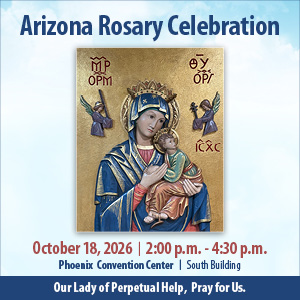
It was pretty clear there was a consensus that we needed to look way ahead to 2031 — the wonderful 500th anniversary of the apparitions of the patroness of our diocese, Our Lady of Guadalupe — and to celebrate that event. But then it was discerned that we should not just have a one-and-done event. We wanted to make sure that we were focused on a culture of evangelization.
Fr. John: This second year of your pastoral plan is called El Camino Real. Why is it called that and what are you hoping for this year specifically?
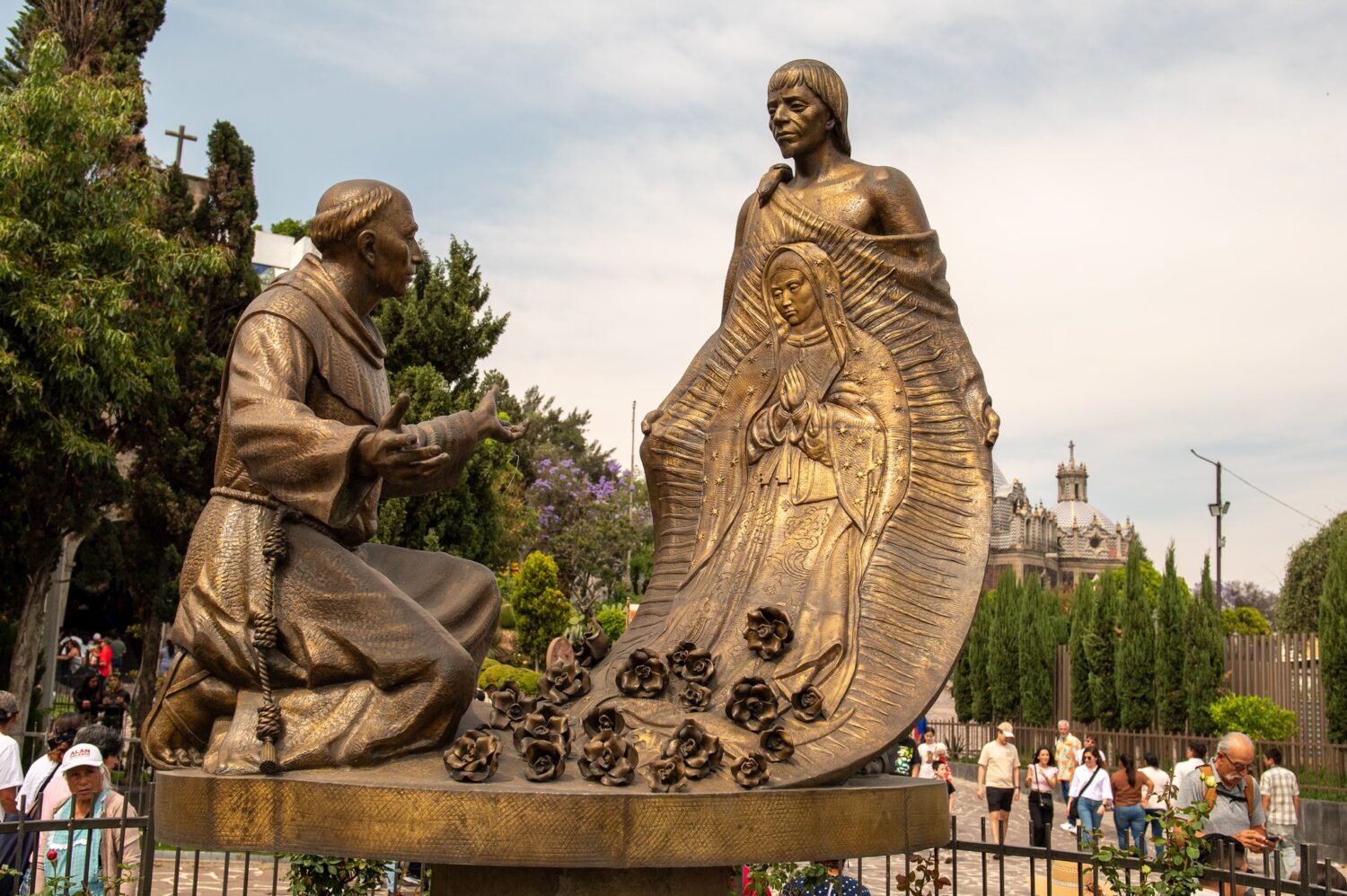
Bishop Dolan: This is an opportunity for us to look to the various apparitions of Our Lady of Guadalupe to Juan Diego, which took place in 1531 over a few days’ time. But we’re extending and delving into the apparitions over several years, and then we’ll have a big celebration of Our Lady of Guadalupe in 2031. Each year we’re going to focus on the five primary apparitions of Our Lady of Guadalupe that took place on Tepeyac Hill, and each year has a particular theme.
In 2026, with the first apparition, we’re going to be focusing on Juan Diego, who was on his way to Mass and catechism class. We decided to call it El Camino Real, which is translated in two ways: one is “The Royal Way” and the other is “The Way of Truth” or “The Real Way.” Christ is the Way, the Truth and the Life. That’s going to be the primary agenda for us: to remember that Christ is center in all of this.
And in order for us to celebrate the fullness of Christ, we need to examine our sacramental life in our Church. So that’s what we’re going to be doing over the course of this year, we’re going to be focusing on each of our sacraments and just discern, are we really making the most of the sacraments for the benefit of all God’s children?
I think the primary thing I want people to know is that they have true accessibility to the sacraments, and I believe that we need to kind of take our foot off the brake when it comes to those sacraments. A lot of times people feel a little bit of shock when they come in, say, for marriage or for baptism. Not only the financial piece, but also some of the time expectations and so on. Some people feel as though they’re constrained, and they may just not respond and go a different direction. And that’s not a good thing. We want to try to fix that.
The way we do that, I think, is to get a general sense from the people of God. So, this year we are going to hold a synod, walking together, listening, assessing and then creating a plan on how to address the sacraments within the Diocese of Phoenix. [We’re going to try to get as many people as possible to listen to.] It’s going to be about encountering people and their experiences, the joys as well as the frustrations, when it comes to sacraments in the life of the Church.
The synod is going to be a big piece of the puzzle. Another big piece, I would say, is the model we have been gaining from our fully local Nazareth Seminary program. We’re moving away from the old style of simply information and the idea that if you have enough information then you’re a good enough disciple or good enough priest. It’s not just about sending a person to theology. We want to make sure there’s a wider formation and from there, a transformation.
I think that’s the beauty of El Camino Real and that first apparition. Juan Diego, going to Mass and catechesis, was transformed while he was already on the way and he encountered Mary, our beloved mother.
Fr. John: You’ve also spoken about the phrase, “every baptized person taking ownership.” What role does that play?
Bishop Dolan: In Matthew 28, Jesus says, “go therefore and make disciples of all nations, baptizing them in the name of the Father and of the Son and of the Holy Spirit, teaching them.” We’re called to take ownership of that evangelization. We’re wanting individuals, parishes and the whole diocese to re-imagine how we can not just increase numbers, but engage people and welcome them to the wonderful Gospel of Jesus Christ, which is ultimately the primary goal of this whole process.
Fr. John: Your pastoral plan is focused on learning from our Latino brothers and sisters. What can we learn about evangelization from this rich culture and history?
Bishop Dolan: I think it’s a very important part of who we are here in the Diocese of Phoenix. We have multi generations of Latinos coming with great traditions, absolutely rich in their family life. All of these wonderful things that, in fact, are being lost in our society. That sense of family life, that sense of communal life are being lost as we’re looking at our cell phones and we’re losing touch with each other. We’re social creatures and when we lose sight of that, we’re going to lose sight of a big piece of the Gospel. It’s about communion, it’s not about individualism. I think the Latino community is going to be able to guide us.
Fr. John: What would you say to people who are hearing about the pastoral plan for the first time and are wondering if going to Mass and being involved in ministries is enough?
Bishop Dolan: It’s a very different game today. So many generations have walked away from the Gospel. It’s not just some people are walking away, but now generations within a family structure. Multiple generations have no clue about God or about Jesus. So, we have to get back to God 101, and in order for us to make that happen we have to really roll up our sleeves and evangelize.
–