

What is Scandal? Part Two: Major Causes of Scandal in our day

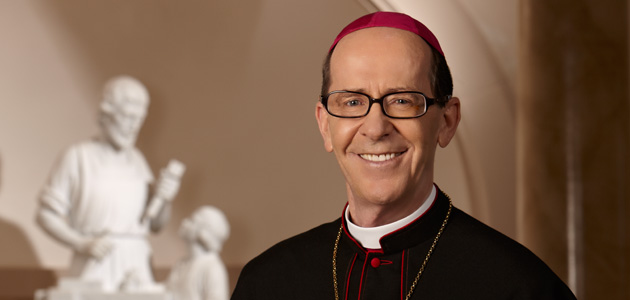
The Most Rev. Thomas J. Olmsted is the bishop of the Diocese of Phoenix. He was installed as the fourth bishop of Phoenix on Dec. 20, 2003, and is the spiritual leader of the diocese's 1.1 million Catholics.
The Most Rev. Thomas J. Olmsted is the bishop of the Diocese of Phoenix. He was installed as the fourth bishop of Phoenix on Dec. 20, 2003, and is the spiritual leader of the diocese’s 1.1 million Catholics.

In the previous edition of The Catholic Sun, we spoke about the “scandal” of the Cross of Christ, which is not a real scandal at all but rather “the power of God and the wisdom of God” (Cf. 1 Cor 1:7ff). Now, let us turn to true scandals that seriously impede others from doing what is right and achieving their eternal destiny in heaven.

The Split between faith and life

A fundamental moral defect of our time, writes Pope Benedict XVI in Caritas in Veritate (#75), is “a conscience that can no longer distinguish what is human.” When we cannot perceive the difference between the rights of human persons and the rights of animals or when we do not recognize the equal dignity of every human person from the moment of conception until natural death, then we have lost our moral compass, and the door to horrifying human atrocities is opened. Then, people attempt to justify such evil acts as racism and ethnic cleansing, abortion and euthanasia.

How does this moral defect come about? Certainly it is linked to a crisis of faith, where faith in God is lost altogether, or where faith is divorced from daily life. The divorce between faith and life is one of the “scandals” specifically mentioned by the Second Vatican Council. In the Constitution on the Church in the Contemporary World (Gaudium et spes, #43), we read, “One of the gravest errors of our time is the dichotomy between the faith which many profess and the practice of their daily lives. As far back as the Old Testament the prophets vehemently denounced this scandal, and in the New Testament Christ Himself with greater force threatened it with severe punishment. Let there, then, be no such pernicious opposition between professional and social activity on the one hand and religious life on the other.

Silence about Scandal

A failure to call evil by its name inevitably leads to more evil acts in the future. Evil acts, in themselves, are the greatest source of scandal. When the perpetrators are not called to account, then they are emboldened to do even worse deeds.

The Prefect of the Church’s Supreme Tribunal of the Apostolic Signatura, Archbishop Raymond L. Burke, in a talk delivered last September, argued that this failure to name scandal for what it is has had particularly harmful effects on society today: “In our time, there is a great hesitation to speak about scandal, as if, in some way, it is only a phenomenon among persons of small or unenlightened mind, and, therefore, a tool of such persons to condemn others rashly and wrongly. Certainly, there is such a thing as pharisaical scandal, that is, a malicious interpretation of the morally good or, at least, morally indifferent actions of another…. But there is also true scandal, that is, the leading of others, by our words, actions and failures to act, into confusion and error, and, therefore, into sin…. It is particularly insidious that our society which is so profoundly confused about the most basic goods also believes that scandal is a thing of the past.”

To remain silent about scandalous activity is not an act of charity; for charity is inauthentic if it is not linked with truth. Moreover, as we learned from the earliest pages of the Bible, from the story of Cain and Abel, we “are our brother’s keeper.” Fraternal correction is not an act of presumed superiority. It is an act of fraternal love that desires our brother to see and admit his mistake, to repent and find new life in the rich mercy of God. It is also an act of love for all those who might otherwise be led astray if the scandalous behavior were not publicly confronted.

In this regard, Jesus states quite emphatically (Lk 17:1-3), “Scandals inevitably arise, but woe to him through whom they come. He would be better off thrown into the sea with a millstone around his neck than giving scandal to one of these little ones. Be on your guard. If your brother does wrong, correct him.”

Not all scandal is the same

It is common knowledge that certain persons exercise greater influence than others in society. They may fulfill an office of greater authority, enjoy more popularity or prestige, or be in a position to exercise political, economic or spiritual power or to make decisions that impact a large number of people. The greater their influence the greater their ability to inspire what is right and good but also the greater their ability to give scandal.

Within the family, the example given by parents impacts in countless ways on their children. Parents are the first teachers of their children in the faith; they teach by actions even more than by their words. Their good deeds teach children what is right, while their sinful deeds set an example that leads the children astray.

Within the Church, clergy and religious exercise a major influence on the laity. Those who are holy inspire others in the pursuit of holiness. But the moral failings of religious and clergy cause great harm within the Church and society, and are a cause of much scandal. Sadly, the sexual abuse of children and youth by a small percentage of the clergy has reminded everyone of the devastating results of such scandalous behavior, and the need to decisively address this scandal.

Within society today, politicians, judges and others exercise major influence on key issues such as the dignity of human persons, the protection of marriage, and the exercise of religious freedom. When such public officials claim to be Catholic but fail to fulfill their role in these key issues, and especially when they justify such grievous omissions of responsibility by claiming they cannot “impose their religious views on others,” they give grave scandal. Their words and actions allow such fundamental evils as abortion and embryonic stem cell research to continue to kill thousands of the littlest and most innocent members of the human family. Their false argumentation also gives the mistaken impression that abortion is just a matter of religious opinion rather than a basic human right inscribed in every human heart.

Since some scandals are more grievous than others, remaining silent about the scandal given by those with greater influence in the Church or society has far more toxic effects than silence about other scandals.

In the next part of this series on scandal, we shall look at the roots of scandal, and then we shall consider what is scandal’s opposite: faithful and courageous service of truth.

What is Scandal? Part One: The Mystery of the Cross

The Most Rev. Thomas J. Olmsted is the bishop of the Diocese of Phoenix. He was installed as the fourth bishop of Phoenix on Dec. 20, 2003, and is the spiritual leader of the diocese's 1.1 million Catholics.
The Most Rev. Thomas J. Olmsted is the bishop of the Diocese of Phoenix. He was installed as the fourth bishop of Phoenix on Dec. 20, 2003, and is the spiritual leader of the diocese’s 1.1 million Catholics.

Scandal is not a happy topic. It is fodder for gossip and fuel for rumors. It is a favorite of modern media and a weapon in decadent politics. But scandal, even if enticing to the curious mind, cannot make the heart sing. It weighs down the human spirit. It leads a person towards hell.

Not all that is called “scandal,” however, is indeed so. On the other hand, some things that cause grievous scandals are hailed as “rights,” are approved by many and are even extolled in a dictatorship of relativism.

The Lenten Season, and especially Palm Sunday and Good Friday, provide us rich food for thought on the question of what does and does not constitute scandal in this world burdened by sin. It also shows us how to fight scandal and to be faithful witnesses to Christ and to His holy cross.

The ‘scandal’ of the Cross

St. Paul, with his usual candor, states quite emphatically (1 Cor 1:18-25): “The message of the cross is complete absurdity to those who are headed for ruin, but to us who are experiencing salvation it is the power of God… Yes, Jews demand ‘signs’ and Greeks look for ‘wisdom,’ but we preach Christ crucified — a stumbling block to Jews, and an absurdity to Gentiles; but to those who are called, Jews and Greeks alike, Christ the power of God and the wisdom of God. For God’s folly is wiser than men, and His weakness more powerful than men.”

Personal experience as a teacher of the Gospel of Christ made St. Paul keenly aware that the cross of our Redeemer was a “stumbling block” (skandalonin Greek) for most of his listeners. They were “scandalized” by the horrific suffering and violent death of Jesus of Nazareth, and even more “scandalized” by Jesus’ words (Mk 8:34-35), “If a man wishes to come after me, he must deny his very self, take up his cross, and follow in my steps. Whoever would preserve his life will lose it, but whoever loses his life for my sake and the Gospel’s will preserve it.”

This “scandal” of the Cross seems initially to have caused the great Apostle to the Gentiles to have second thoughts about speaking of the cross of Christ in his efforts of evangelization. However, he came to see that it is an act of charity to throw a stumbling block on the path of any person whose life is headed towards eternal destruction.

The Good News of Christ crucified

Humbled by apparent failure in his preaching efforts in various places before arriving in Corinth, and yet with renewed conviction that the cross and Resurrection of Jesus stand at the heart of the Gospel, St. Paul wrote (1 Cor 2:1-2), “As for myself, brothers, when I came to you I did not come proclaiming God’s testimony with any particular eloquence or ‘wisdom.’ No, I determined that while I was with you I would speak of nothing but Jesus Christ and Him crucified.

It was this pastoral plan of the Teacher of the Gentiles that proved to be the most effective in bringing people to place their trust in God and to believe in the Gospel. Why was this so? What made the message of the Cross, which seemed like a scandalous event to many, such a treasure for those who eventually put their trust in Christ?

It could be that the seeming “scandal” of the cross, when seen in its true glory and wisdom, opened the eyes of new believers to the real “scandals” that abounded all around them and that were not recognized as such until the wisdom of the cross was revealed. After all, the city of Corinth, where St. Paul first focused his evangelizing efforts entirely on the cross, was mired in moral depravity and teeming with pagan cults that exalted scandalous behavior instead of promoting virtue. It was only the message of the cross of Christ that cut through this web of deception and freed people to build their lives on the solid foundation of the truth.

What is scandal?

We read in the Catechism of the Catholic Church(#2284: “Scandal is an attitude or behavior which leads another to do evil. The person who gives scandal becomes his neighbor’s tempter. He damages virtue and integrity; he may even draw his brother into spiritual death. Scandal is a grave offense if by deed or omission another is deliberately led into a grave offense.”

True scandal harms others; it places before them a bad example or deceptive words that lead them to stumble into sin, to choose the path to vice, to avoid the path to virtue. Scandal finds its source in the devil, whom Jesus calls “the father of lies.” No title could be more appropriate for Satan since all his temptations are aimed at deceiving men and women.

On the other hand, Jesus reveals the full truth of God’s love, especially through His cross and Resurrection. The fact that this greatest of truths seems scandalous to those whose hearts are set on this world demonstrates how much harm sin has done to the human mind, and how greatly it has confused the human heart. It is also a startling but crucial reminder of our need as followers of Christ crucified to draw ever nearer to Him and to ask Him to conform our minds and hearts to His.

In the next part of this series, we shall continue this exploration of scandal, looking at major agents of scandal in our present day; then we shall consider key ways to counteract scandal and to invite people to discover the wisdom of the cross.

Questions and Answers: On being dismissed from the clerical state

1. Does dismissal from the clerical state have the same meaning as “laicization”?

Yes. Laicization means that the cleric is “returning to the lay state.” The priest or deacon is no longer bound to the duties and obligations he incurred upon ordination. He no longer has the rights of a cleric in canon (Church) law either. Furthermore, the diocesan bishop and the diocese no longer have the same duties to support the dismissed cleric (provide housing, salary, benefits, health insurance, etc). The term “defrocked,” which is often used by the lay media to indicate dismissal from the clerical state, has no meaning in the Catholic Church or in canon law.

Story: Vatican dismisses Fushek from clerical state following investigation

2. Is dismissal from the clerical state always considered a penalty?

Some clerics request to be returned to the lay state and dispensed from all their rights and obligations as a priest or deacon. This process is termed “voluntary laicization.” In other instances, a cleric can be penalized by being dismissed from the clerical state for serious violations of canon law, usually by committing a delict or crime. Canon law determines what these punishable crimes are, leaving open the possibility that the cleric who is found guilty of such violations can be dismissed. Finally, in other instances, the cleric might be judged unfit for public ministry because of some other circumstance or act.

3. Who decides whether or not a cleric is laicized?

This determination is made by the Holy Father with the help of his congregations, what would be known in the lay world as advisory councils. Depending upon the offense, different congregations handle specific crimes or violations committed by clerics. Ultimately, it is the pope, and him alone, who through an official decree declares a priest to be dismissed from the clerical state or in more commonly used terms, “laicized.” Of course, this is accomplished with the recommendation and participation of the local diocesan bishop.

4. What procedures actually occur once the pope dismisses a priest or deacon from the clerical state?

Ordinarily, there is a meeting with the cleric who is given a copy of the decree from the Holy See, informing him of his dismissal. The decree explains what parish activities or ministries the dismissed cleric is forbidden to participate in. Usually, there is provision in the decree that dispenses the man from the vow of celibacy. This means that the man would be free to enter into marriage validly. Upon acknowledgment of the decree from the Holy Father, the dismissed cleric is asked to sign the document so as to verify his reception of the decree and a copy is mailed to the Vatican to be filed at the Congregation for the Clergy or the appropriate congregation.

5. What effect(s) is there for sacramental celebrations of a dismissed cleric? In other words, is the Mass they celebrate valid? And what about the rest of the sacraments?

A dismissed cleric may legitimately anoint someone or hear the confessions of those who are in danger of death. Not only would these sacraments be valid, but they would be legal as well. Just as a Christian cannot be “re-baptized,” so too is the indelible character upon a priest’s soul permanent and immovable. As the saying goes, “once a priest, always a priest.” However, a priest or deacon can lose the freedom to function and the rights associated with Sacred Orders. Aside from the danger of death scenarios, all priestly functions and ministries are prohibited and a dismissed cleric is absolutely forbidden to function publicly as a minister of the Church. Generally speaking, as far as the other sacraments are concerned, marriages witnessed by a laicized priest or deacon would be “invalid” and not binding, as well as confirmation, confession, and anointing of the sick, outside of a danger of death. Therefore, for all practical purposes, if the person is not in danger of dying, the laicized priest or deacon celebrates nearly all of the sacraments illegally as well as invalidly.

6. Are the Catholic faithful permitted to support dismissed clerics or to attend their services? If not, why not? And what are the ramifications if I do attend prayer services led by dismissed clerics?

The consequences of supporting a dismissed priest or deacon by attending his services or financially funding his ministry are very serious. Catholics must not attend or support in any way services or ministries of laicized priests and deacons. To be authentically Catholic, we cannot support clerics who are not in communion with the hierarchy of the Catholic Church. A person who supports a dismissed cleric by attending his religious services is tantamount to placing oneself in opposition to the legitimate authority of the Catholic Church and the local bishop. In fact, we are obligated to always maintain communion with the Catholic Church. But, communion and unity are impeded when an individual chooses to follow a dismissed cleric against the local bishop’s urging. In effect, one’s communion with the Church is severely compromised such that you could not claim to be in a Catholic in good standing and in full communion with the Catholic Church. By setting aside the warning and recommendation of the bishop, you imply that the bishop’s authority is not binding or does not apply to you. This is not the interior disposition of one who claims to be “in communion” with the Catholic Church.

7. Am I going to “excommunicate” myself by attending services of a laicized priest? Or am I sinning by worshiping at a place led by a laicized priest?

In determining whether people are excommunicated by their involvement in such groups, it can be said that one “may” have excommunicated themselves and be in schism with the Catholic Church if he or she chooses to accept sacraments of a schismatic group. For example, if a Catholic decides to be married by a laicized priest or deacon, take Holy Communion at a Mass celebrated by a dismissed priest, have his or her confession heard by a laicized priest, etc., then by receiving sacraments from such a cleric it would be safe to presume that one has incurred excommunication. One is no longer in communion if a Catholic decided to receive sacraments from a cleric whose ability to minister publicly and whose rights to do so had been removed. Regarding the topic of “sin,” there are other factors that would require attention and consultation with moral theologians as to the person’s culpability and degree of responsibility. Nonetheless, it would be a very serious matter to publicly support and endorse the ministerial activities of a priest or deacon who has been dismissed from the clerical state and who has incurred excommunication.

8. Is the decision to laicize a priest or deacon a permanent act? Is there recourse or room for an appeal of this decision?

Some processes for dismissal from the clerical state, such as the voluntary laicization process, are set out in the Code of Canon Law. Other processes are more “penal” in nature, such as the dismissal from the clerical state of a priest who is found guilty of sexual misconduct with a minor. This latter process is handled exclusively by the Congregation for the Doctrine of the Faith and is a decision by the Holy Father that is not open to appeal. Whether it’s voluntary or not, once the decision is made to dismiss a man from the clerical state, that decision is final and not open to appeal.

9. Do clerics have a right to a canonical advocate or legal representation in Church Law as they go through these processes?

Yes. All clerics are notified of their right to have a canon lawyer represent their concerns and to defend their rights in these proceedings.

10. How do the bishop and diocesan officials collect all the evidence to prove their case and how does the bishop know that he has enough evidence to send to the Vatican for a decision?

The Church has its own procedures, within its own system of canon law. As in any legal system, the Church seeks to render justice by taking action against criminal activity in the Church through specific procedures, evidence gathering, interviewing witnesses, and fact finding. There are experts in canon law who are asked to write their opinion of a case, as to whether the cleric has been found guilty of what he is being accused of, both in light of the law and the facts. The local bishop is also asked to submit his own opinion of the matter. If the bishop believes that the evidence has proven with moral certitude that the cleric is guilty of the crime he is accused of, then the bishop’s votum is prepared and sent along with the entire acts of the case to the Holy See for the pope’s decision.

11. What are some other consequences of being laicized?

Normally, logic would dictate that if a man asked to be dispensed from his obligations to the clerical state, or if a cleric was penalized by dismissal for crimes or negligent behavior, then it would be scandalous and irresponsible for the man to be permitted to teach religion or engage in ministerial functions in the parish or in the diocese.

12. Does the Church no longer care about dismissed clerics? Is there any follow up with these men?

The Church certainly continues to care for the man’s well being and eternal destiny. There can be efforts to assist him with a transition into a new way of life. While the Church would like to assist all such dismissed clerics, it also depends upon their willingness to accept such support.

Q&A: Specifics regarding Fushek’s laicization

A. How does one refer to or address Msgr. Dale Fushek now that he has been dismissed from the clerical state?

He is now addressed as Mr. Fushek because he no longer enjoys the title or rights, duties, and obligations of the clerical state. While always a priest sacramentally as in baptism, he can no longer refer to himself as “Reverend,” “Father,” or “Monsignor.”

B. What impact will this have on his activities and leadership at the Praise and Worship Center?

The hope is that Fushek will cease all public ministries and seek to transition into a new mode of life and work. The Diocese of Phoenix does not hold any ill will toward Fushek. Rather, the Diocese of Phoenix prays for his conversion and personal happiness. It is hoped that the dismissal from the clerical state, while painful and difficult, will play a key role in prompting Fushek to continue his journey with God without being a public minister of the Gospel and the sacraments.

C. What message would the Diocese of Phoenix have for the people who attend and support the Praise and Worship Center?

Bishop Thomas J. Olmsted has a duty to ensure that the Faithful are not misled by false teaching and disobedient or duplicitous clerics. Bishop Olmsted, diocesan officials, and Catholics throughout the diocese would encourage anyone who presently supports Fushek in the Praise and Worship Center to appreciate the great damage such activities can create to the Catholic communion.

D. If the sacraments are offered at the Praise and Worship Center, are they valid Catholic sacraments? And could I receive them?

Every sacramental celebration Fushek attempts is highly illegal in the eyes of the Church. Most of the sacraments would not be valid either, with the exception of anointing someone or hearing the confession of someone in danger of death.

Vatican dismisses Fushek from clerical state following investigation

A former East Valley pastor has been officially dismissed from the priesthood, officials for the Diocese of Phoenix announced Feb. 16.

Dale Fushek was recently notified of his dismissal from the clerical state, a process most often referred to as “laicization.” The Vatican’s Congregation for the Doctrine of the Faith had been investigating the former pastor of St. Timothy Parish in Mesa and one-time vicar general for the diocese for his alleged sexual abuse of minors. The Vatican’s findings in that investigation resulted in his removal from the priesthood.

Questions and Answers: On being dismissed from the clerical state

Pope Benedict XVI ordered the dismissal, according to a diocesan statement. This means Fushek is no longer bound to the duties and obligations he incurred upon ordination to the priesthood in 1978, and he no longer has the rights of a cleric under Church law. As a result, Fushek can no longer refer to himself as “reverend,” “monsignor” and “father.”

Bishop Thomas J. Olmsted received the “Decree of Dismissal” in January from the Vatican congregation, notifying him that the laicization had been imposed on Fushek as a penalty for acts of sexual abuse of minors.

The Congregation for the Doctrine of the Faith addresses “sexual sins” perpetrated by priests and deacons against minors, according to Church law.

Fushek, 57, currently faces charges on several misdemeanor counts of sexual misconduct in San Tan Justice Court. The findings by the Congregation for the Doctrine of the Faith relate to Fushek’s status as a priest only, and have no bearing on any criminal or civil case that he may be involved in.

“The Catholic Church is very concerned about the welfare and spiritual health of the alleged victims of sexual abuse by clergy,” said Fr. Chris Fraser, judicial vicar for the Diocese of Phoenix.

The investigation by the Congregation for the Doctrine of the Faith was initiated a few years ago, according to Fr. Fraser, who is an expert on Church law. The Diocese of Phoenix cooperated with their investigation once the allegations were found to have credibility.

Fushek was made aware of the investigation and of his right to defend himself. He was also invited to have canonical counsel.

Fushek was excommunicated from the Church in 2008 for his continued involvement with a small, Mesa-based faith assembly called the Praise and Worship Center — a censure that carried with it the consequence of being forbidden from receiving the Eucharist, celebrating Mass or participating in other sacraments of the Church. He was also barred from representing himself as a priest. Despite his dismissal from the clerical state, the penalty of excommunication remains in place, according to diocesan officials.

“There is no doubt that the Church has been scandalized by the abuse of minors by Catholic clergy,” Fr. Fraser said. “What makes this case unique is that there is an additional scandal related to the schismatic activities of the Praise and Worship Center. Consequently, those who support and promote Fushek’s public ministry must be mindful of the spiritual danger and grave harm their actions create by supporting and attending his services.”

Fushek gained prominence throughout the 1980s and 1990s for co-founding Life Teen, an international youth ministry program. Bishop Olmsted suspended his faculties in late 2004 after an allegation was made that Fushek engaged in inappropriate behavior in the presence of a minor at the Mesa parish in 1985. Fushek later resigned as the pastor on June 30, 2005.

In the diocese’s statement this week, Bishop Olmsted expressed his concern for Catholics who may be misled or confused by the continuing actions of Fushek, particularly as they relate to the Praise and Worship Center. Diocesan officials reminded Catholics that any ceremonies — baptisms, weddings, confessions, and the anointing of the sick — performed by Fushek or others at the Praise and Worship Center, are not legitimate sacraments for Catholics and would not be recognized by the Catholic Church.

The bishop asked for the diocese’s Catholics to pray for reconciliation and healing in this situation.

Sweat-lodge deaths point out pitfalls of New Age ‘prophets’

Joyce Coronel is a regular contributor to The Catholic Sun and author of “Cry of Ninevah.” Opinions expressed are the writers' and not necessarily the views of The Catholic Sun or the Diocese of Phoenix.

The tragedy that took place in Sedona at the hands of self-help guru James Arthur Ray highlights the peril of following New Age prophets and their gospel of prosperity.

Three people died after taking part in a sweat-lodge ceremony at the conclusion of Ray’s $9,695 “Spiritual Warrior” retreat last month near the picturesque town of Sedona.

Of course, the cynics among us are more likely to think of Ray and self-proclaimed motivational speakers like him in terms of “New Age Profits.” Last year, revenue from Arthur’s company hit $9.4 million. All this for teaching people, basically, that positive thoughts attract positive results.

Joyce Coronel is a regular contributor to The Catholic Sun and author of “Cry of Ninevah.” Opinions expressed are the writers’ and not necessarily the views of The Catholic Sun or the Diocese of Phoenix.

“You really do have the power within you,” his Web site proclaims, “to create the life you desire and deserve.”

And don’t we all desire — indeed, deserve — to be richer, thinner, happier people? Don’t we all want to avoid suffering and be wildly successful?

Not exactly. Not if you’re a follower of Christ anyway.

“Whoever wishes to come after Me must deny himself, take up his cross, and follow Me.” Those are the words of Jesus, recorded in the Gospel according to St. Matthew. And they don’t offer much support to the self-centeredness that characterizes the New Age, self-help movement.

According to these people, you don’t need a savior in Jesus Christ. You can just think of Him as one of many wise teachers. There is no sin, they say, no heaven or hell, no need of redemption.

The truth of the matter is that people everywhere are longing for meaning and fulfillment in their lives, and they’re increasingly looking to people like Ray to help them find it. We are spiritual, no matter how much today’s aggressive atheists insist we are not.

In this era of high unemployment, when people are losing their jobs and homes, it’s no wonder the search for answers seems more desperate than ever.

The most prosperous nation on earth, with the highest standard of living ever achieved, a nation that spends more on cosmetic surgery than the GDP of some developing countries, is full of people who are out of hope. And that’s after we elected a man who promised to restore it.

Catholic ‘secret’ to happiness

Here’s what the Catholic Church teaches: There is hope and its source is found in the triune God, not in worldly success. Hope took on flesh and dwelt among us in the person of Jesus Christ. Those who follow Him are sure to experience the consolation of His love, but they will have a measure of suffering in this life.

It’s a hard message for some and one that makes others uncomfortable. St. Paul put it bluntly: “The message of the cross is foolishness to those who are on the way to ruin, but to us who are being saved, it is the wisdom of God.”

Ray’s contributions to the best-selling book, “The Secret,” in which he and others claim their methods help people attain massive wealth, achieve the impossible and find happiness, have garnered him fawning media attention. Oprah has been one of his biggest promoters.

Consider for a moment a more potent “secret,” one the Catholic Church has always taught, though we don’t hear much of it these days: There is meaning and purpose in suffering, if we are willing to unite it to the Cross of Christ. It’s something St. Thérèse of Lisieux called the “Little Way.”

The pain that we feel at the loss of a loved one, the death of a dream, the betrayal of a friend, even the aches and pains of our bodies, all of it is an opportunity to embrace the cross and love as Jesus loved — humbly and without complaint. There is a deep joy to be found in living this way — a joy the world can never take away.

This is a far cry from the way preached by self-help charlatans who attract many a poorly formed or inactive Catholic. It’s time to fortify our prayer life, grow in the wisdom handed down to us from the Church and recognize the modern-day folly and deceit of the New Age movement. To do otherwise is to risk our own destruction.

The home that love built: Mysterious mansion no match for life beneath tree

Joyce Coronel is a regular contributor to The Catholic Sun and author of “Cry of Ninevah.” Opinions expressed are the writers' and not necessarily the views of The Catholic Sun or the Diocese of Phoenix.

Surrounded by a thick hedge of ornamental orange trees and towering pines, the gabled mansion on Kyrene Road in the East Valley has always been somewhat of a mystery to me.

For years, I’ve driven past the property on my way home, wondering who might live in such an imposing structure and what it must be like inside.

The doors to the place were thrown open Sept. 12 and thousands flocked to the public auction of the home’s contents. The owner of the residence passed away in June and the property has fallen into foreclosure. Asking price for the place? A cool $8.7 million.

Joyce Coronel is a regular contributor to The Catholic Sun and author of “Cry of Ninevah.” Opinions expressed are the writers’ and not necessarily the views of The Catholic Sun or the Diocese of Phoenix.

Although the home was once characterized by a meticulously manicured lawn and lush landscaping, on the day of the auction, dozens of cars were parked in neat rows amid scorched, brown grass.

Inside the 20-room mansion, crystal chandeliers sparkled, and wood floors gleamed while thousands of bidders milled about, admiring the ornately carved furniture, stained-glass windows and exquisite décor.

You can bet your last dollar I was there merely to satisfy my curiosity. Not too many writers boast digs like this, unless their last name happens to be Rowling.

As I strolled the grounds, saddened by the dying trees and parched vegetation, I thought of the words Jesus spoke to His apostles: “In my Father’s house, there are many mansions.”

Who wouldn’t be impressed by the grandeur of this earthly home? And yet, if we take Jesus at His word, that which awaits the faithful in the next life will be far more impressive.

Nevertheless, I’m not so sure our heavenly home will look like the Chandler mansion, at least, not the future home I’m hoping for.

Memories of home

I’m thinking more along the lines of the home where I grew up, on the street just south of Our Lady of Perpetual Help Parish in Scottsdale. The modest houses that lined the area known as Peaceful Valley were home to dozens of kids, most of whom attended the parish school, or had older siblings who did.

We spent our childhood riding bikes, playing hide-and seek and telling scary stories. We sold Easter Seals to all the neighbors, who patiently listened to our sales pitch and agreed to support our efforts. Somewhere in my memory chest lies the green and white plastic figure of Christ I received as an award for my efforts at the tender age of 9.

One of my earliest memories is playing on the swing that hung from the mulberry tree in our backyard. My father took great delight in caring for the grass, trees and flowers that he lovingly planted, a love he passed down to his five children.

In 1993, when my husband and I moved into our new home with two small children and a newborn baby, he gave us sound advice. The best thing to do, he said, was to plant trees right away. The trees would grow night and day and eventually shade the yard.

The three ash trees — one for each child at that point in our family history — are gorgeous reminders of my father’s wisdom. As they have grown strong and tall, so have our children, so has our marriage. They drop every leaf by January each year, a living example of life, death and resurrection — a monument to the reality of God’s faithfulness.

Home, they say, is where the heart is, the place where it feels right to walk around without shoes, the place where we’re loved, and we learn to love. Home is where the memories are, those things that we can’t touch but can never be taken away from us.

The trees are silent witnesses to all of it. They stand, year after year, awaiting our return, calling us to stand in their shade and remember that Christ Himself once hung from a Tree, dying in agony for love of us, so that we might one day share with Him a home beyond our wildest imagination.

The true home every human heart longs for was built by Love itself and is far grander than anything we could ever envision. The Tree points the way there.

Perspectives: A love story worth telling: Lifetime of faithfulness a witness to the world

Joyce Coronel is a regular contributor to The Catholic Sun and author of “Cry of Ninevah.” Opinions expressed are the writers' and not necessarily the views of The Catholic Sun or the Diocese of Phoenix.

When it comes to love stories, people seldom think of a man and woman in their ‘80s. Perhaps if they knew the story of my parents, they would see that love is so much more than a feeling.

Brokenhearted

When my beloved father died Jan. 29, all of us were broken hearted, my mother more than anyone. After all, they had been married nearly 58 years. As a priest reminded me, “That Scripture about the two becoming one flesh — it’s really true.”

The loss of my dad took a huge toll on Mom’s health. And though she developed serious heart and lung trouble, she never stopped joking around with the doctors and nurses. We sometimes wondered if they checked up on her more than other patients because they enjoyed her great sense of humor.

Joyce Coronel is a regular contributor to The Catholic Sun and author of “Cry of Ninevah.” Opinions expressed are the writers’ and not necessarily the views of The Catholic Sun or the Diocese of Phoenix.

Like many elderly people who live alone, Mom didn’t want to leave her longtime home, the place she had shared with my dad for so many years. She wanted nothing to do with assisted living, but we knew she couldn’t live alone anymore.

When my nurse-practitioner sister in Colorado offered to take her for the summer, it seemed like the perfect solution. Mom would benefit from round-the-clock medical attention, but most of all, the loving care of her family.

When we said goodbye on June 27, we both knew it might be for the last time. Her life-threatening conditions meant she didn’t have long to live, a fact she frequently spoke of as if it were the funniest thing in the world.

“Don’t get too attached to me,” she’d tell people, “I won’t be around for long.” And though she kidded about it, we knew she was serious. She just couldn’t go on without Dad and she wanted to be with him more than anything. Her profound Catholic faith told her that she would soon enter into eternal life, where every tear would be wiped away.

She knew what love was because she lived it, thoroughly, completely and faithfully. She often dreamed Dad was still there, only to awaken and realize he was indeed gone.

Welcome home

Mom spent July 15 celebrating her 81st birthday at my sister’s house, enjoying cake and festivities. Judging by the photos taken at the birthday bash, it was a fabulous evening.

Just two days later, I was in my car, backing out of the driveway at 4:30 a.m., having planned a road trip to Colorado. That’s when the phone rang — it was my sister.

“Joyce, I think Mom’s dying. I’ll hold the phone up to her ear so you can talk,” she said.

I told my mom how much I loved her and that I would be there soon. And though she couldn’t speak, I know she heard me. If my love could have carried me to Colorado in that moment, I would’ve been there in a heartbeat.

My sister held her hand and prayed with her, asking her if Dad was in the room.

Struggling to breathe, Mom nodded her head vigorously. “Take his hand, Mom,” she told her. Moments later, she was gone.

When I think about the love of my parents, it’s clear to me that the two really had become one flesh. Until she was reunited with him, Mom’s heart simply could not go on. We believe Dad was there in the room with her, welcoming her home.

In just five months, we’ve lost both parents, but gained immeasurable insight. We marvel at their love for each other and their faith in God. We grieve the loss of two extraordinary human beings who taught us what it means to be faithful, loving adults.

And we know with all our hearts that our parents are praying for us even now, anticipating the day we will all be together again in that place reserved for those who love truly, deeply and tenderly.

Now that’s a real love story.

Media effort draws faithful back to Church: Catholics Come Home goes nationwide

The Catholics Come Home campaign will air nearly 1,000 English and Spanish television commercials on local and cable networks from March 3 through Easter Sunday. The ads, which will feature the above images as well as testimonials, will direct viewers to www.catholicscomehome.org. The ads will remind fallen away Catholics of the good works of the Church.

Maybe TV isn’t so bad after all.

An estimated 92,000 inactive Catholics have come back to the Church in the last year thanks in large part to the groundbreaking Catholics Come Home television advertising campaign.

The promotional spots featured people and locations from around the Phoenix Diocese to promote the Church during prime time television. The cornerstone of the campaign, the Catholics Come Home Web site, addresses often misunderstood aspects of the faith.

“For those who had fallen away from the practice of their faith, it let them know that we want them to come home,” Bishop Thomas J. Olmsted said.

The commercials, which ran this time last year, detail the good works of the Catholic Church throughout history. They also offer real-life testimonials of local fallen away Catholics explaining what turned them away and what drew them back.

“Phoenix was supposed to be this quiet little test,” said former Phoenician Tom Peterson, president and founder of Catholics Come Home based in Georgia. “Word went worldwide as soon as you launched.”

More than half a million different visitors from all 50 states and 80 countries have visited the catholicscomehome.com Web site since the spots first aired.

The response was so positive that other dioceses around the country are looking to Phoenix for ideas on bringing Catholics back to the Church.

The Diocese of Corpus Christi in Texas recently launched different versions of the television spots in English and Spanish. Each parish supplemented the commercials with a brochure for everyone at Ash Wednesday services, answering common faith-related questions and listing Mass times and ministries.

The Catholics Come Home spots will appear in more than a dozen other dioceses around the country later this year and early next. By the time the season of Advent rolls around in 2010, organizers say they’ll go national on major networks.

“Our family is made up of every race,” begins the longest of the spots. “We are young and old, rich and poor, men and women, sinners and saints.”

Welcome home

The two-minute ad highlights the vital part the Catholic Church has played in establishing hospitals, orphanages and schools in addition to its role in science, marriage, family life, sacred Scripture and sacraments.

“If you’ve been away from the Catholic Church, we invite you to take another look,” the announcer says toward the end. “We are Catholic, welcome home.”

Another two-minute ad shows men and women alone watching the best and the worst scenes from their lives play back before them on an old movie reel.

“When our transition into eternity begins, there won’t be a chance for any do-overs,” the narrator says. She continues to say that Catholics can still ask God to help create the ideal ending for their life story so that He might say to them, “well done, my good and faithful servant.”

The final ad that aired — Peterson has dozens more like it ready to go — featured snippets of testimonials why Catholics left the Church and what they found upon their return.

Peterson met with Vatican officials last June to discuss broadening the campaign, which played prominently during last summer’s World Youth Day event in Sydney, Australia.

Peterson — who received the 2009 Evangelization award from Legatus, an international organization for Catholic business leaders — said the Catholics Come Home campaign has “the potential of re-Christianizing our society and even catechizing the world.”

A lot of pro bono production, nearly $1 million from various donors and foundations, and a grant from the Catholic Community Foundation helped put the ads on the air.

Local response

The Diocese of Phoenix has witnessed increased interest in the Church, which leaders are attributing to last year’s campaign.

“It’s exciting to see the fruits that continue to grow from this,” said Ryan Hanning, coordinator of adult evangelization for the diocese. According to Hanning, a number of the faithful have found a renewed passion for the Church, while fallen-away Catholics rejoined parish life.

Hanning worked closely with Peterson on the Catholics Come Home campaign and ensured that parish leaders, especially those in faith formation, were ready to welcome back Catholics and resolve sacramental and doctrinal issues. More than 25 parishes created programs to welcome Catholics back to the Church.

Our Lady of Mount Carmel Parish in Tempe was one of them. It showed a video before Easter Masses and held a six-week program for returning Catholics.

The meetings provided an opportunity for parish leaders to answer their questions and help them brush up on their understanding of the Church, while other parish ministries offered hospitality. More than 20 people joined those meetings with others returning straight to the pews, according to Our Lady of Mount Carmel.

Hanning said Mass numbers have been up across the diocese for the last six months and stories continue to trickle in of individuals and families that returned to the Church, prompted by the Catholics Come Home effort.

“The commercials helped [fallen-away Catholics] realize that they were missing something in their lives,” said Fr. John Bonavitacola, pastor of Our Lady of Mount Carmel. He noticed that Catholics who had grown lax in their faith or who felt hurt by the Church, or who divorced and remarried, returned. Many had their marriage validated in the Church while others joined for the first time.

As an extension of the campaign, a small team of parishioners from St. Anne Parish in Gilbert is going door to door throughout the neighborhood, distributing pamphlets with Mass times and other information. They also take prayer intentions.

“Hardly anybody could refuse that, even if you’re not Catholic,” said Auroa Sarmiento, coordinator of the Rite of Christian Initiation for Adults at St. Anne’s.

Sarmiento said the number of people coming to the parish seeking information about the faith has doubled in the past year, thanks to the campaign. She still gets at least one call a week from a Catholic wanting to return to the Church.

Many priests, answering a survey last year, said more Catholics sought confession because of the Catholics Come Home campaign.

“The Lord created us with a longing for Him,” the bishop said. “Whoever has lost touch with that longing often finds it reawakened through these commercials.”

Six months after the media campaign ended, a comprehensive analysis of its impact revealed a 22 percent increase in Mass attendance at nine sample parishes. Diocesan wide, the average increased Mass attendance — returned Catholics and new converts — was 12 percent. That’s despite a flat population growth in the diocese during that period.

“Wherever they’ve been, they can come back home. It’s a message that resonates,” Hanning said. “I never thought I’d have thousands of Catholics calling and e-mailing me and saying, ‘I’m proud to be Catholic and I want to help others.’”

Catholics coming home: Major media campaign yields success

The Catholics Come Home campaign will air nearly 1,000 English and Spanish television commercials on local and cable networks from March 3 through Easter Sunday. The ads, which will feature the above images as well as testimonials, will direct viewers to www.catholicscomehome.org. The ads will remind fallen away Catholics of the good works of the Church.

Television is often seen as having a negative influence on viewers, but it recently had a positive impact on the lives of local Catholics.

Roughly 6,000 people from Phoenix and northern Arizona responded to the nearly 1,000 Catholics Come Home television spots that aired on local and cable networks throughout the weeks leading up to Easter Sunday.

The series of television spots showed the Church’s rich history, the real testimonies of why Catholics fell away and returned to the faith, and how Catholics continue to contribute to the good of society.

“The results are incredible,” said Tom Peterson, president and founder of Catholics Come Home, a new lay apostolate behind the media campaign. “God has graced us with a means to help thousands find their way home to the Catholic faith.”

Nearly 3.5 million viewers in the diocese — which was a test market for the campaign — saw the ads a dozen or more times. Current Catholics, fallen-away Catholics and non-Catholics responded by logging on to the campaign’s Web site, www.catholicscomehome.org.

“Each one makes us leap for joy,” Peterson said.

Word about the campaign and the site quickly spread through e-mails and Catholic blogs, which brought 54,000 visitors from 70 countries to the Web site.

Though the television campaign concluded in March, the Web site is now a permanent feature that offers an overview of the faith and addresses marriage issues, grieving and reconciliation. Roughly 7,800 Web visitors said they were former Catholics.

More than 5,500 searched information regarding marriage issues — one reason many fell away from the Church. Some 5,000 looked up Mass times.

Although these statistics give a general impression of the campaign’s results, Ryan Hanning, the coordinator of adult evangelization for the diocese who worked closely on the campaign, said most Catholics who have returned are under the radar.

A Flagstaff woman may be one of them. Therese Fronske, a San Francisco de Asís parishioner, encountered a returning Catholic during her rounds as an extraordinary minister of the Eucharist at the Flagstaff Medical Center on Easter Sunday. She stopped to pray for a moment before visiting the next patient.

“At the same moment, an employee came down the corridor and joyfully greeted me saying, ‘Catholics come home — I have come home,’” Fronske said. The employee described her experience and asked to receive Communion.

“It was a very rare and beautiful encounter,” Fronske said. “I’m sure the commercial will have a similar effect on many others who have left the Church. They want to come home, but need the reassurance that they are welcome.”

Hanning said engaging in dialogue with those who have fallen away is the first step in bringing them back. He and other Church leaders responded to questions and testimony from 600 people during the campaign.

“It is difficult to know the direct impact of the commercials and how far-reaching the impact will be for the countless seeds that were planted in the hearts and minds of the millions who saw the ads,” Hanning said.

In a diocesan-wide survey, 27 percent of pastors, deacons and catechetical leaders felt Mass attendance — which usually experiences a bump at Easter time — was above normal.

Fr. Loren Gonzales, pastor at St. Charles Borromeo Parish in Peoria, saw more new faces at Mass, but couldn’t directly tell how much was attributable to the media campaign versus the parish’s other outreach efforts.

Both Fr. Gonzales and Fr. John Coleman, pastor at St. Andrew the Apostle in Chandler, noticed an increase in confessions.

“Several people have come to confession that were away from the Church for 10 or more years — more than usual we think,” Fr. Coleman said.

Angie wrote in to the Web site said she was away from the Church for 35 years and an agnostic for 20 years, but the Catholics Come Home campaign moved her to look up Mass times online.

“I thought it was very forward thinking in the fact that the Catholic Church was willing to place an actual ad that was not preaching anything, not selling anything… just offering a way back for those who might want to think again or look into the Catholic faith.”

Peterson said 33 percent of Web inquiries were from those considering entering the Church. He said he never expected the campaign to help someone say, “Hey, I’m thinking of becoming Catholic. How do I do that?”

Whether the new faces at church are appearing for the first time or returning after years of absence, parish leaders want to help them heal and ensure they keep coming back.

Many parishes already have programs set up for returning Catholics, with 35 percent holding special events this Easter season.

A Phoenix advisory team will look more closely at the campaign’s results April 23-24 to create a national blueprint.

“What greater good is there than to bring a soul to Christ?” Peterson said. “It’s just going to snowball to the rest of the country and the world.”

Catherine E. Hanley in Flagstaff contributed to this story.

Catholics testify on the air; local faces urge a return to the Church

The Catholics Come Home campaign will air nearly 1,000 English and Spanish television commercials on local and cable networks from March 3 through Easter Sunday. The ads, which will feature the above images as well as testimonials, will direct viewers to www.catholicscomehome.org. The ads will remind fallen away Catholics of the good works of the Church.

It’s not every day that television airwaves are used to share the Catholic faith. It’s even more rare for such a message to feature local people and sites.

But, thanks to a new and innovative ad campaign, that’s exactly what will happen during the next three weeks leading up to Easter Sunday.

The “Catholics Come Home” media campaign will air nearly 1,000 commercials on cable and local stations featuring local churchgoers and religious leaders. The ads show viewers the hallmarks of the faith and entice them to return to or join the Church.

“The commercials help remind our world that the Church and its history are integral to our civilization,” said Fr. John Bonavitacola, who is surrounded by busloads of local youth in the closing shot of one of the TV spots. The candlelit crowd is gathered around an altar for Mass at dusk at South Mountain.

“Rather than being a force for ill, the Church has been and is a force for good. It does not hold back the progress of history, but rather has helped move it forward,” the Our Lady of Mount Carmel pastor said.

The ads also draw on the testimony of local Catholics, like Frank Yanez, who share how they drifted away from the Church and the joys they found when they returned.

Search for meaning

“They had it set up just like a movie studio,” Yanez said about the filming this summer at Holy Cross Parish in Mesa.

Yanez, a parishioner at St. Henry in Buckeye, said the experience gave him a true appreciation for the work of video producers. He found himself answering questions like “Why did you leave the Church?” several times so producers could get the take just right.

“It wasn’t like I quit going,” Yanez said. “I was still going to Mass. I was sitting there watching my watch saying, ‘Come on, Father. Hurry up.’”

Mass was no longer meaningful, only habitual, he said.

“I didn’t even have a heart for it. It was an empty act,” Yanez said. That was largely because he carried a sin with him for at least 10 years that he thought God wouldn’t forgive. Yanez describes his feeling of forgiveness in the commercial.

Going to church was also habitual for Dee Tamminen. Attending Mass was more out of what she called “that Catholic obligation” than true desire.

“I might have found a church at Christmas time and gradually quit going,” she said in the commercial.

She was mad at God after losing her dad at a young age. Years later, God let her see her dad in a dream, she said. That helped Tamminen get rid of her anger and through the outreach of her husband — who wasn’t even Catholic at the time — and their local priest, she returned to the Church.

Now that she’s back, Tamminen said she doesn’t feel like she ever left.

Tamminen, director and teacher at St. Anne Little Flower Montessori School in Gilbert, said the camera crew treated her like a star during the filming, ensuring her hair and makeup were perfect.

But it wasn’t just those being interviewed for the testimonials who received star treatment. Religious leaders, parishioners and students who were filmed on location did too.

“I kept sweating and making the makeup people work hard,” Fr. Bonavitacola said. The outdoor Mass he offers in the commercial took several hours to film.

It took the whole day to film the classroom scene at St. Agnes School last fall. Several students and someone the children called their “substitute teacher” — who was really an actor — appear in the commercial for a few seconds.

“The children were great. They were exhausted,” their real teacher, Sylvia Avery, said about her first- and second-graders.

She said the experience helped the students begin to realize that being Catholic means something.

“That identity was very special to them,” Avery said.

That’s what the “Catholics Come Home” campaign is all about: making people feel proud to be Catholic while reaching out to those who have left the Church or have never been a part of it.

“What’s neat is that we get to use modern technology and the power of the media,” Fr. Bonavitacola said of spreading the Gospel.

He just hopes parishioners are welcoming and parishes have programs and processes ready to transition them back when viewers respond to the media campaign by returning to the Church. His parishioners are ready to continue their tradition of welcoming new and returning members.

“We deliver homemade bread to their homes as a way of telling them we are glad they are back,” Fr. Bonavitacola said about his returning parishioners. “I hope to be baking a lot of bread this year.”