
A short history of liturgical music

Singing the Mass — Part Two

In the first part of this series on sacred music, I described the meaning of sacred music, the music of the Church’s sacred liturgy, as distinct from “religious music.” In this second installment, I shall explore, from a historical perspective, the Church’s role in guiding and promoting authentic sacred music for more fruitful participation in the Sacred Mysteries by the clergy and lay faithful alike.

The Second Vatican Council proclaimed that “the musical tradition of the universal Church is a treasure of inestimable value, greater even than that of any other art” (Sacrosanctum Concilium, 112). This led the Council fathers to decree that “the treasure of sacred music is to be preserved and fostered with great care” (Ibid, 114).

EN ESPAÑOL: Una corta historia de la música litúrgica

Sacred music in Judaism before Christ
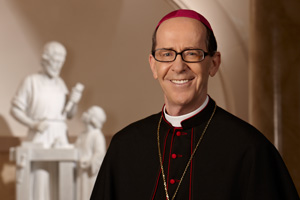
The Most Rev. Thomas J. Olmsted is the bishop of the Diocese of Phoenix. He was installed as the fourth bishop of Phoenix on Dec. 20, 2003, and is the spiritual leader of the diocese’s 1.1 million Catholics.

The dual task of preserving and fostering sacred music remains a crucial one for the Church today. But to understand what the Council is asking of us, we must not only know what sacred music is in general (as we explored in the previous installment in this series) but also how the Church has carried out this endeavor in history.

The Church inherited the Psalms of the Old Testament as her basic prayer and hymn book for worship. With these sacred texts she also adopted the mode of singing that had been established during the development of the psalms: a way of articulated singing with a strong reference to a text, with or without instrumental accompaniment, which German historian Martin Hengel has called “sprechgesung,” “sung-speech.”

This choice in Israel’s history signaled a concrete decision for a specific way of singing, which was a rejection of the frenzied and intoxicating music of the neighboring and threatening pagan cults. This way of singing the Psalms, traditionally viewed as established by King David (cf. 2 Sam. 6:5), disrupted only by the Babylonian exile, remained in use at the coming of Christ. Sung with respect to and during sacrifice in the Temple in Jerusalem, the early Jewish Christians assumed this tradition into the sacrifice of the eucharistic liturgy.

Sacred music in the early Church

After Pentecost, the first centuries of the Church’s life were marked by the encounter of what was a Jewish-Semitic reality with the Greek-Roman world. A dramatic struggle ensued between, on one hand, openness to new cultural forms and, on the other, what was irrevocably part of Christian faith.

For the first time, the Church had to preserve her sacred music, and then foster it. Although early Greek-style songs quickly became part of the Church’s life (e.g., the prologue of John and the Philippians hymn, 2:5-11), this new music was so tightly linked to dangerous gnostic beliefs that the Church decided to prohibit its use. This temporary pruning of the Church’s sacred music to the traditional form of the Psalms led to previously unimaginable creativity: Gregorian chant — for the first millennium — and then, gradually, polyphony and hymns arose.

In preserving the forms which embodied her true identity, the Church made it possible for wonderful growth to be fostered, such that centuries after that original restriction, the Second Vatican Council boldly proclaimed that her treasury of sacred music is of more value than any other of her artistic contributions.

Preserving, fostering through the centuries

In this remarkable process in which the Church navigated her encounter with Greek culture and then other cultures, we see the same basic pattern that Vatican II decreed for sacred music: she first preserves, then she fosters. The early Church had to first preserve the basic form of Christian faith which constituted her very identity — an identity which was inseparable from specific cultural (i.e., Jewish) artistic forms (i.e., the music of the Psalms). Thus she was able to foster new forms of sacred music which, organically and gradually springing from older forms, authentically expressed Christian faith in new cultural forms.

St. Gregory the Great (the saint from whom “Gregorian chant” takes its name) collected and systematized the Church’s chant tradition in the 6th century and it spread and developed in the West throughout the first millennium. Gregorian chant was sometimes enhanced by the organ in the eighth or ninth centuries and with a single or with multiple vocal harmonies (e.g. polyphony) beginning in the 10th century. The development of polyphony carried on throughout the beginning of the second millennium, producing music of a highly sophisticated and ornate style.

The fathers of the Council of Trent recognized that some musical forms were becoming detached from their origins and so forbade anything “lascivious or impure.” The result was a continued affirmation of the value of Gregorian chant and a refinement of the polyphonic style so as to preserve the integrity of the liturgical text and to achieve a greater sobriety of musical style. Throughout the period that followed, the Church continued to preserve her great tradition while always fostering new and authentic forms of sacred music. This ongoing activity of the Church continues today.

The task for today

On June 24, 2006, Pope Benedict XVI attended a concert of sacred music, after which he said:

An authentic renewal of sacred music can only happen in the wake of the great tradition of the past, of Gregorian chant and sacred polyphony. For this reason, in the field of music as well as in the areas of other art forms, the Ecclesial Community has always encouraged and supported people in search of new forms of expression without denying the past, the history of the human spirit which is also a history of its dialogue with God.”

The authentic renewal of sacred music is not a question of merely copying the past, but even less is it one of ignoring it. Rather, it is one of preserving the past and fostering new forms grown organically from it. This is a truly great and essential task, entrusted in a particular way to pastors and sacred artists.

Preserving the old forms, fostering new growth: this is how a gardener cares for a plant, how Christ tends our souls, how the Church’s sacred music — carefully preserved — is able to surprise us and more importantly glorify God with new and delightful growth.

Next time, in part three of this series, we shall look at the essential role that sacred music plays in the Church’s mission of evangelizing culture.
Una corta historia de la música litúrgica

Cantar la Misa — segunda parte

En la primera parte de esta serie sobre la música sagrada, describí el significado de la música sagrada, la música de la sagrada liturgia de la Iglesia, y como esta es distinta de la música religiosa. En esta segunda instalación, examinaré desde un punto de vista histórico, el papel de la Iglesia en dirigir y promover la música sagrada auténtica para una participación más fructuosa en los Sagrados Misterios por el clero y el laicado por igual.

El Segundo Concilio Vaticano proclamó que “la tradición musical de la Iglesia universal constituye un tesoro de valor inestimable, que sobresale entre las demás expresiones artísticas” (Sancrosanctum Concilium, 112). Esto llevó a los padres del Concilio a decretar que “consérvese y cultívese con sumo cuidado el tesoro de la música sacra” (ibíd, 114).

La música sagrada en el Judaísmo antes de Cristo

El Reverendísimo Thomas J. Olmsted es le obispo de la Diócesis de Phoenix. Fue instalado como el cuatro obispo de Phoenix el 20 de diciembre de 2003, y es el líder espiritual de los 1,1 millones católicos en la diócesis.

La doble tarea de preservar y fomentar la música sagrada sigue siendo una cuestión decisiva para la Iglesia de hoy. Pero para entender lo que el Concilio está pidiendo de nosotros, no solo debemos saber lo que es la música sagrada por lo general (como examinemos en una instalación previa de esta serie) sino también como la Iglesia ha llevado a cabo este esfuerzo a través de la historia.

La Iglesia heredó los Salmos del Antiguo Testamento como su libro básico de oraciones y himnos. Con estos sagrados textos, también adoptó el modo de canto que había sido establecido durante el desarrollo de los salmos: una forma del canto articulado con una referencia fuerte a un texto, con o sin acompañimiento instrumental , lo que el historiador alemán Martin Hengel ha llamado “sprechgesun”, es decir, “discurso cantado”.

Esta opción en la historia de Israel señaló una decisión concreta para uno modo específico de cantar, lo que era un rechazo de la música frenético y embriagadora de los cultos vecindarios y amenazadores. Este modo de cantar los Salmos, tradicionalmente vistos como establecidos por el Rey David (cf. 2 Samuel 6:5), interrumpido solo por el exilio babilónico, permaneció en uso al tiempo del venido de Cristo. Cantados con respeto a y durante el sacrificio en el Templo en Jerusalén, los primeros Cristianos judíos asumieron esta tradición al sacrificio de la liturgia eucarística.

La música sagrada en la Iglesia primitiva

Después del Pentecostés, los primeros siglos de la vida de la Iglesia fueron marcados por el encuentro de lo que era una realidad Judía y semítica con el mundo griego-romano. Una lucha dramática siguió entre, por una parte, la apertura a nuevas formas culturales, y por otra parte, lo que fue irrevocablemente parte de la fe Cristiana.

Por primera vez, la Iglesia tuvo que preservar su música sagrada, y luego fomentarla. Aunque las canciones de estilo griego primitivo rápidamente se hicieron parte de la vida de la Iglesia (e.g., el prologo de Juan y el himno de los Filipenses, 2:5-11), esta nueva música fue tan fuertemente relacionada con creencias gnósticas peligrosas que la Iglesia decidió prohibir su uso. Esta eliminación temporal de la música sagrada a la forma tradicional de los Salmos dio lugar a la creatividad inimaginable: el canto gregoriano — para el primer milenio — y luego, gradualmente, polifonía y himnos surgieron.

En la conservación de las formas que encarnaron su identidad verdadera, la Iglesia hizo posible que crecimiento maravilloso fue criado, tal que siglos después de esa restricción original, el Segundo Concilio Vaticano vigorosamente proclamó que su tesorería de la música sagrada es de más valor que cualquier otra que tenga sus contribuciones artísticas.

Preservar y fomentar a través de los siglos

En este proceso notable en el que la Iglesia navegó su encuentro con la cultura griega y luego otras culturas, vemos el mismo patrón básico que el Segundo Concilio Vaticano decretó para la música sagrada: ella primero preserva, y luego fomenta. La Iglesia primitiva tenía que primero preservar la forma básica de fe cristiana que constituyó su propia identidad — una identidad que fue inseparable de culturas específicas (es decir, judíos) y formas artísticas (es decir, la música de los Salmos). Así pudo fomentar nuevas formas de música sagrada que, surgiendo gradualmente y orgánicamente de formas más viejas, expresaron la fe cristiana auténticamente en nuevas formas culturales.

San Gregorio Magno (el santo de quien “canto gregoriano” toma su nombre) reunió y sistematizó la tradición del canto de la Iglesia en el siglo VI y esto se extendió y desarrolló en el Oeste a través del primer milenio. El canto gregoriano fue aumentado a veces por el órgano en el siglo VIII o IX y con un solo o con armonías vocales múltiples (por ejemplo polifonía) empezando en el siglo X. El desarrollo de polifonía continuó a través del principio del segundo milenio, produciendo música de un estilo sumamente sofisticado y recargado.

Los padres del Concilio de Trent reconocieron que algunas formas musicales llegaban a ser separadas de sus orígenes y por eso prohibieron cualquier cosa “lasciva o impura”. El resultado fue una afirmación continuada del valor de canto gregoriano y un refinamiento del estilo polifónico para preservar la integridad del texto litúrgico y para lograr una sobriedad más grande de estilo musical. A través del período que siguió, la Iglesia continuó preservar su gran tradición al siempre fomentar formas nuevas y auténticas de la música sagrada. Esta actividad de la Iglesia en curso continúa hoy.

La tarea para hoy

En el 24 de junio de 2006, el Papa Benedicto XVI asistió un concierto de música sagrada, después de que dijo: “Una renovación auténtica de la música sagrada sólo puede suceder tras la gran tradición del pasado, del canto gregoriano y polifonía sagrada. Por esta razón, en el campo de música así como en las áreas de otros medios de expresión artística, la Comunidad de Eclesial siempre ha favorecido y ha apoyado a personas en busca de nuevas formas de expresión sin negar el pasado, la historia del espíritu humano que es también una historia de su diálogo con Dios”.

La renovación auténtica de la música sagrada no es una cuestión de solamente copiar el pasado, pero aún menos es una de ignorarlo. Más bien, es una de preservar el pasado y fomentar nuevas formas crecidas orgánicamente de ello. Esto es una tarea verdaderamente gran y esencial, confiada en una manera particular a párrocos y artistas sagrados.

Preservar las viejas formas, fomentar nuevo crecimiento: esto es como un jardinero cuida una planta, cómo Cristo tiende nuestras almas, cómo la música sagrada de la Iglesia — cuidadosamente conservado —t es capaz de sorprendernos y más importante, glorificar a Dios con crecimiento nuevo y maravilloso.

La próxima vez, en la tercera parte de esta serie, examinaremos el papel esencial que la música sagrada tiene en la misión de la Iglesia de evangelizar la cultura.

CATHOLICS MATTER | Javier Bravo: Teacher mixes faith, learning

Javier Bravo, a teacher at Bourgade Catholic High School, shares his faith journey. (Joyce Coronel/CATHOLIC SUN).

Javier Bravo grew up in Yuma in a devout Catholic family, the youngest of seven children born to parents who immigrated from Mexico.

He spent six years in the seminary for the Diocese of Tucson, but then felt God leading him in a different direction. Bravo taught Spanish at Yuma Catholic High School, simultaneously earning a master’s degree in curriculum and instruction.

Still unsure of his vocation, he entered the novitiate with the Discalced Carmelite Friars in San Jose, Calif.

“I grew in knowledge of the Church’s spirituality and traditions, and the Carmelite tradition,” Bravo said. “It was wonderful formation, but I definitely wanted to return to active ministry.”

Four years ago, Bravo married. He’s spent the last three years teaching second- and third-year Spanish at Bourgade Catholic High School. Last September, Bravo earned a second master’s degree in educational administration.

Bravo’s classroom philosophy is straightforward: Keep careful track of students, and take time to work with those who might be struggling. “There’s no reason they should fail,” Bravo said. “Different things work with different students.”

He’s always looking for innovative ways to help kids learn Spanish. Currently, Bravo is using an approach that combines reading, vocabulary and storytelling. Students in his classes speak Spanish about 80 percent of the time.

Bravo said he appreciates the atmosphere of faith and community that he finds at Bourgade, but he also has a genuine love for students and helping them see God at work in their lives.

“When you take your simple, everyday calculus homework assignment and realize that in doing that there’s a great opportunity for holiness — that is something we can only understand through the Catholic scope of how we live our faith,” Bravo said.

Faith in a nutshell:

A weeklong silent retreat at the Carmelite monastery happened to coincide with a benefactor donating all the labor and materials for a complete — and very noisy — repaving of the premises. “I remember the novice master said, ‘This is where you have to learn holy flexibility.’ And that has always stuck with me.”

What he loves about being Catholic:

“One of the best things that I like about our Catholic faith is it really gives a meaning to everything that we do. Everything we do can have such a spiritual dimension. Even the smallest thing can have a big effect spiritually on who we are as people.”

Parish:

Ss. Simon and Jude Cathedral

Apostolates:

He’s been an extraordinary minister of the Eucharist, a lector, a RCIA teacher and a youth minister; a faculty member at Yuma Catholic, 2001-2008; a former seminarian

Quotable:

“You have to be flexible…we have to teach the kids who are in front of us. That’s very much the way I look at it. Sometimes it means redoing the whole thing and when the end of the day comes, my lesson plan was totally different.”

Take away:

“Catholic education is something that should be very vital to us as a Catholic community. It’s not an addendum — it really should be a natural flow…”

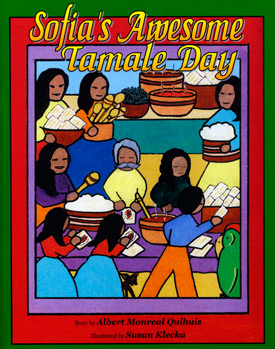
Books: ‘Sofia’s Awesome Tamale Day’

Illustrated book brings Mexican tradition into full color

This time of year is, perhaps, filled with more ritual than any other. Yearly Christmas cards are written, ornaments are picked through and reflected upon, and certain meals are prepared whose seasonal presence remains a constant in the home.

Being of Irish and German extraction, and having as a child one of those annoyingly plain and picky palates, it was years before I sampled what surely is one of the greatest Christmas delicacies — at least in our neck of the woods: The Christmas Tamale.

It took me years to properly appreciate the tastes and textures of Mexican cuisine even though — as is true for any Phoenician — I was rarely far from it. And at every Christmas or Easter party on my cousin and best friend’s other side of the family (which owned and ran Mexican restaurants) there was always a plate piled high with tamales.

I never got an answer apart from a disinterested shrug whenever I asked why tamales were associated with Christmas, and after a few minutes of Googling, I’m still not entirely sure. Local author Albert Monreal Quihuis may have an idea with his new book “Sofia’s Awesome Tamale Day.”

The story, fancifully set in the little town of Santo Poco Loco on the banks of the Que Milagro River, focuses on Sofia and her Abuelita, with whom she lives. Pepe, a talkative parrot, makes a third roommate. It’s nearing Christmas day when Abuelita receives some terrible news: Her sister, who lives in a nearby pueblo, is very ill. Abuelita rushes off to be by her, and delegates the yearly tamale making to Sofia.

“[Sofia] remembered the making of many tamales for Christmases past. There was so much excitement with everyone talking, getting caught up with the latest gossip, sharing stories many times, telling the same stories and laughing all over again,” Quihuis writes.

“The children would be playing games and running all over the place. By the time they were finished, everyone would have plenty of masa all over them — including Pepe, who liked to squish the masa between his toes,” he writes.

Sofia juggles her newfound responsibility well. She draws up a list of ingredients, hies herself to the market and remains enviably equanimous with the talks-too-much parrot. Finally, she extends invitations to various family members to help with the tamale production.

As the book makes clear — and perhaps it’s a clue as to why tamales are made around the times of year when families are drawn together — tamale making is labor intensive. Sofia et al. begin by making a large batch of chili con carne, which is then refrigerated overnight. The next day, Eduardo prepared the masa. It’s ready when a small dollop of it floats to the top of a glass of water.

Others prepare the hojas, or corn husk, that will hold the masa and filling. Finally, everybody begins to put the tamales together in an assembly line. Throughout, Pepe won’t shut up, and even plays a mean trick on one of the twins, whose overwrought reaction is a bit much and almost — almost — has me siding with Pepe. But really, I have no clue how Sofia and Abuelita can live with him.

“Sofia’s Awesome Tamale Day” is beautifully illustrated by Susan Klecka, whose use of bold colors accents the book wonderfully. The book is also printed on high quality paper, which really allows the illustrations to shine.

The book is a great little celebration of those traditions that draw families and friends together over the Advent and Christmas seasons. Be warned, though. It can also be very hunger inducing. Now, who wants to bring some tamales over to my decidedly Anglo house?

“Sofia’s Awesome Tamale Day,” by Albert Monreal Quihuis. Illustrated by Susan Klecka (Winmark communications 2011) $15. Available on the Web at www.winmarkcom.com/sofiastamales.htm.

Media critic Andrew Junker is a regular contributor to The Catholic Sun. Send e-mail to letters@catholicsun.org.

FILMS: ‘The Descendants’

Shailene Woodley and George Clooney in "The Descendants." (CNS/Fox)

A lesson in selfless love

Love takes work — even in paradise. In “The Descendants” (Fox), George Clooney plays Matt King — a wealthy lawyer and landowner, a descendant of Christian missionaries and Hawaiian native royalty. His wife, Elizabeth, is in a coma as a result of a boating accident.

Their marriage and family were in trouble even before the accident. Matt is upset to learn that Elizabeth had been having an affair — and subsequently tries to find his wife’s lover. He is angry, but still cares for his wife and recognizes the role he may have played in her affair.

Shailene Woodley, who plays Alex, Matt’s troubled 17-year-old daughter, provides the most moving moments. She’s angry with her parents for neglecting her. The youngest daughter, the pre-teen Scottie, played by Amara Miller, begins to act out. Their parents’ selfishness is leading to the destruction of the entire family.

It is clear that, as Pope John Paul II warned, the idols of pleasure in the lives of the King family had closed their hearts off to one another. Yet through tragedy, family members look beyond their own needs and learn to love one another.

This culminates when Matt says goodbye to his wife, who is unable to respond in her comatose state. He emotionally tells her, “Goodbye my love, goodbye my friend. My pain. My joy. Goodbye.”

The King family comes to understand that while choosing love is not easy — it is ultimately more fulfilling.

In the film’s other storyline — involving Matt’s decision on selling a large inherited land trust — he chooses what will benefit his descendants. The decision is both selfless and loving — not to mention unpopular with the rest of his extended family.

The King family is back on track and caring for one another, even though it’s not always easy. Love is complicated. It requires forgiveness. But when sought, love fulfills where selfish pursuits cannot.

Media critic Rebecca Bostic is a regular contributor to The Catholic Sun. Send e-mail to letters@catholicsun.org.

Liturgical Music as participation in Christ

Singing the Mass — Part One

St. Augustine recounts in his autobiography “Confessions” an experience he had during the singing of the Mass:

How I wept, deeply moved by your hymns, songs, and the voices that echoed through your Church! What emotion I experienced in them! Those sounds flowed into my ears, distilling the truth in my heart. A feeling of devotion surged within me, and tears streamed down my face — tears that did me good.”

How can we explain this overwhelming and transforming experience that led one of our greatest saints to the Church? Clearly, this was much more than a man simply being moved by a well-performed song. His entire being was penetrated and transformed through music. How can this be?

EN ESPAÑOL: La música litúrgica como participación en Cristo


At Mass, Christ sings to the Father

The Most Rev. Thomas J. Olmsted is the bishop of the Diocese of Phoenix. He was installed as the fourth bishop of Phoenix on Dec. 20, 2003, and is the spiritual leader of the diocese’s 1.1 million Catholics.

The Catechism of the Catholic Church (#1157) makes a direct reference to St. Augustine’s experience when it teaches that the music and song of the liturgy “participate in the purpose of the liturgical words and actions: the glory of God and the sanctification of the faithful.”

The Mass itself is a song; it is meant to be sung. Recall that the Gospels only tell us of one time when Jesus sings: when he institutes the Holy Eucharist (Cf. Mt 26:30; Mk 14:26). We should not be surprised, then, that Christ sings when he institutes the sacramentum caritatis (the Sacrament of love), and that for the vast majority of the past 2,000 years, the various parts of the Mass have been sung by priests and lay faithful. In the 1960s, the Second Vatican Council strongly encouraged a rediscovery of the ancient concept of singing the Mass: “[The musical tradition of the universal Church] forms a necessary or integral part of solemn liturgy” (Sacrosanctum Concilium, 112). The Mass is most itself when it is sung.

This recent rediscovery of “singing the Mass” did not begin with the Second Vatican Council. Following a movement that stretches back at least to Pope Saint Pius X in 1903, Pope Pius XII wrote in 1955, “The dignity and lofty purpose of sacred music consists in the fact that its lovely melodies and splendor beautify and embellish the voices of the priest who offers Mass and of the Christian people who praise the Sovereign God” (Musicae Sacrae, #31).

In the years immediately following the Council, there arose the need to highlight and clarify the Council’s teaching regarding the importance of liturgical prayer in its native sung form. In 1967, The Sacred Congregation for Rites wrote:

Indeed, through this form [sung liturgical prayer], prayer is expressed in a more attractive way, the mystery of the Liturgy, with its hierarchical and community nature, is more openly shown, the unity of hearts is more profoundly achieved by the union of voices, minds are more easily raised to heavenly things by the beauty of the sacred rites, and the whole celebration more clearly prefigures that heavenly Liturgy which is enacted in the holy city of Jerusalem” (Musicam Sacram, #5).

In other words, sung liturgical prayer more effectively reveals the mystery of the Liturgy as well as more easily accomplishes its heavenly purposes. In this way, sung liturgy is a revelation of Christ as well as a vehicle for profound participation in His saving work.

What is Sacred Music?

Sacred music is, in the narrowest sense, that music created to support, elevate, and better express the words and actions of the sacred liturgy. The Council praises it as music “closely connected … with the liturgical action” (Sacrosanctum Concilium, 112), for example, the Order of Mass (dialogues between ministers and people, the unchanging framework of the Mass), the Ordinary of the Mass (Kyrie, Gloria, The Creed, Sanctus and Agnus Dei), and the Proper of the Mass (the priest’s sung prayers, the Responsorial Psalm, Alleluia and Verses, the antiphons and psalms prescribed for the processions).

Sacred music is distinct from the broader category of what we may call “religious” music, that which aids and supports Christian faith but is not primarily a part of the sacred liturgy. “Religious” music includes various devotional music, such as much popular hymnody, “praise and worship” music, as well as a host of other musical forms.

The Council’s enthusiastic rediscovery and promotion of sacred music was not meant to discourage “religious” music but rather to encourage it — assuming the clear distinction and proper relationship between them. Just a few years before the Council, Pope Pius XII wrote:

We must also hold in honor that music which is not primarily a part of the sacred liturgy, but which by its power and purpose greatly aids religion. This music is therefore rightly called religious music … As experience shows, it can exercise great and salutary force and power on the souls of the faithful, both when it is used in churches during non-liturgical services and ceremonies, or when it is used outside churches at various solemnities and celebrations” (Musicae Sacrae, #36).

Participating in the Mystery of Christ

What are the concrete attributes of sacred music? The Catechism (CCC 1157) teaches that sacred music fulfills its task according to three criteria: 1) the beauty expressive of prayer 2) the unanimous participation of the assembly at the designated moments, and 3) the solemn character of the celebration. All three criteria link sacred music intimately to the work of Christ in the liturgy and in our hearts.

  1. The beauty expressive of prayer. As we have seen, sacred music is the Church’s liturgical prayer in sung form. When we hear sacred music, we hear prayer. We hear the liturgy itself. In the Mass, we hear that most beautiful of prayers: Christ’s prayer of self-offering to the Father. Music can express any number of things; but sacred music expresses something utterly unique: the saving and sacrificial prayer of Christ and the Church in the liturgy.
  2. Unanimous participation. As I addressed in previous articles on the new English translation of the Mass, liturgical participation is primarily participation with and in Christ Himself, rooted by the deep interior participation of each person. Sacred music powerfully aids us in this union of the heart and mind with whatever liturgical action is taking place exteriorly. “Unanimous” means “of one mind/soul”; thus sacred music aims to unite us all to the soul of Christ in perfect love for the Father at every step of the Mass.
  3. Solemn character. In the sacred liturgy, Christ our Lord performs the work of our redemption through sacramental signs. The liturgy then is a solemn experience, and therefore sacred music bears this character. Far from meaning cold, unfeeling, or aloof, the solemn character of sacred music refers to its earnest, intense, and festive focus on the great Mystery which it serves: Christ’s redemptive and transformative love for His Church.

In the next part of this series on singing the Mass, I will explore the rich history of sacred music in order to illuminate what the Second Vatican Council meant when it calls us to preserve and foster “the inestimable treasure” of sacred music.

La música litúrgica como participación en Cristo

Cantar la Misa — primera parte

San Agustín recuenta en su autobiografía “Las Confesiones” una experiencia que vivió durante el canto de la Misa:

¡Como lloré, profundamente conmovido por sus himnos y cánticos y las voces que resonaron por su Iglesia! ¡Que emoción sentí en ellos! Esos sonidos entraron en mis oídos, destilando la verdad en mi corazón. Un sentimiento de devoción creció dentro de mí, y lágrimas por mi cara — lágrimas que me hicieron bien”.

¿Cómo podemos explicar esta experiencia abrumadora y transformadora que guió a uno de nuestros más grandes santos a la Iglesia? Claramente, esto era mucho más que un hombre simplemente movido por una canción bien realizada. Todo su ser estaba penetrado y transformado a través de la música. ¿Cómo puede ser esto?

En la Misa, Cristo canta al Padre

El Reverendísimo Thomas J. Olmsted es le obispo de la Diócesis de Phoenix. Fue instalado como el cuatro obispo de Phoenix el 20 de diciembre de 2003, y es el líder espiritual de los 1,1 millones católicos en la diócesis.

El Catecismo de la Iglesia Católica (#1157) hace una referencia directa a la experiencia de San Agustín cuando enseña que la música y el canto de la liturgia “participan en el propósito de las palabras y acciones litúrgicas: la gloria de Dios y la santificación de los fieles”.

La misma misa es una canción; esto se supone para ser cantada. Recuerde que los Evangelios sólo nos hablan de un tiempo cuando Jesús canta: cuando instituye la Santa Eucaristía (Mateo 26:30; Marcos 14:26). No nos debe sorprender, entonces, que Cristo canta cuando instituye el sacramentum caritatis (el sacramento del amor), y que por la gran mayoría de los últimos 2,000 años, las varias partes de la Misa han sido cantadas por los sacerdotes y fieles. En el decenio de 1960, el Segundo Concilio Vaticano favoreció un redescubrimiento del antiguo concepto de cantar la Misa: “[la tradición musical de la Iglesia universal] forma un parte necesaria o esencial de liturgia solemne” (Sacrosanctum Concilium, 112). La Misa es más si misma cuando es cantada.

Este redescubrimiento reciente de “cantar la Misa” no empezó con el Segundo Concilio Vaticano. Después de un movimiento que se remonta al menos al Papa San Pío X en 1903, el Papa Pío XII escribió en 1955, “La dignidad y propósito alto de la música sagrada consiste en el hecho que sus melodías y el esplendor encantadores embellecen las voz del sacerdote que ofrece la Misa y de las personas cristianas que alaban al Dios soberano” (Musicae Sacrae, #31).

En los años inmediatamente después del Concilio, surgió la necesidad de destacar y aclarar la enseñanza del Concilio sobre a la importancia de la oración litúrgica en su forma nativa cantada. En 1967, La Sagrada Congregación de Ritos escribió:

De hecho, por esta forma [oración litúrgica cantada], la oración se expresa en una forma más atractiva, el misterio de la Liturgia, con su naturaleza jerárquica y de comunidad, es más mostrada abiertamente, la unidad de corazones es más profundamente lograda por la unión de voces, las mentes son más fácilmente levantadas a cosas celestiales por la belleza de los ritos sagrados, y toda la celebración más claramente prefigura claramente la liturgia celestial que es promulgada en la ciudad santa de Jerusalén” (Musicam Sacram, #5).

En otras palabras, la oración litúrgica cantada más revela efectivamente el misterio de la liturgia así como más logra fácilmente sus propósitos celestiales. De esta manera, la liturgia cantada es una revelación de Cristo así como un vehículo para la participación profunda en su acción salvífica.

¿Qué es la música sagrada?

La música sagrada es, en el sentido más estrecho, aquella música creada para apoyar, elevar, y expresar mejor las palabras y las acciones de la liturgia sagrada. El Concilio la exalta como música “estrechamente relacionada … con la acción litúrgica” (Sacrosanctum Concilium, 112), por ejemplo, el Orden de la Misa (diálogos entre ministros y la congregación, el marco incambiable de la Misa), el Ordinario de la Misa (Kyrie, Gloria, El Credo, Sanctus y Agnus Dei), y el Propio de la Misa (las oraciones cantadas del sacerdote, el Salmo Responsorio, Aleluya y los Versos, las antífonas y los salmos prescritos para las procesiones).

La música sagrada es distinta de la categoría más amplia de lo que podemos llamar música “religiosa”, lo que ayuda y apoya la fe cristiana pero no es principalmente una parte de la liturgia sagrada. La música “religiosa” incluye diversas prácticas de música devota, tales como el canto popular, música de “alabanza y adoración”, así como una multitud de otras formas musicales.

El redescubrimiento entusiástico del Concilio y su promoción de música sagrada no estaba destinado para desalentar música “religiosa” sino para favorecerla — asumiendo la distinción clara y la relación apropiada entre ellos. Sólo unos años antes del Concilio, Papa Pío XII escribió:

Nosotros también debemos celebrar en honor esa música que no es principalmente una parte de la liturgia sagrada, pero que por su poder y propósito ayuda mucho a la religión. Esta música es por lo tanto correctamente llamada bien música religiosa. Como lo muestra la experiencia, que puede ejercer una gran y saludable fuerza y poder en las almas de los fieles, tanto cuando se usa en iglesias durante las ceremonias y servicios no-litúrgicos, o cuando se usa fuera de las iglesias en varias solemnidades y celebraciones” (Musicae Sacrae, #36).

Participando en el Misterio de Cristo

¿Cuales son las características concretas de la música sagrada? El Catecismo (CCC 1157) nos enseña que la música sagrada cumple su tarea según tres criterios: 1) la belleza expresiva de la oración 2) la participación unánime de la asamblea en los momentos designados, y 3) el carácter solemne de la celebración. Los tres criterios vinculan la música sagrada íntimamente al trabajo de Cristo en la liturgia y en los corazones.

  1. La belleza expresiva de oración. Como hemos visto, música sagrada es la oración litúrgica de la Iglesia en la forma cantada. Cuando escuchamos a la música sagrada, escuchamos oración. Escuchamos la misma liturgia. En la Misa, escuchamos la más hermosa de oraciones: la oración de Cristo de oblación al Padre. La música puede expresar cualquier número de cosas; pero la música sagrada expresa algo totalmente único: la oración salvífica y expiatoria de Cristo y la Iglesia en la liturgia.
  2. Participación unánime. Como ya comenté en artículos anteriores en la nueva traducción al inglés de la Misa, la participación litúrgica es principalmente la participación con y en el mismo Cristo, arraigado por la participación interior profunda de cada persona. La música sagrada poderosamente nos ayuda en esta unión del corazón y la mente con cualquier acción litúrgica que está tomando lugar exteriormente. “Unánime” significa “de una mente/alma”; así la música sagrada apunta a unirnos todos al alma de Cristo en el amor perfecto para el Padre en cada paso de la Misa
  3. Carácter solemne. En la sagrada liturgia, Cristo nuestro Señor realiza el trabajo de nuestra redención por signos sacramentales. La liturgia es, entonces, una experiencia solemne, y por lo tanto la música sagrada tiene este carácter. Lejos de significar el frío, insensible, o distante, el carácter solemne de música sagrada se refiere a su enfoque ferviente, intenso, y festivo en el gran Misterio que sirve: Cristo redentor y el amor redentor y transformador de Cristo para su Iglesia.

En la próxima parte de esta serie sobre cantar la Misa, yo examinaré la historia rica de música sagrada a fin de iluminar lo que el Segundo Concilio Vaticano significó cuando nos llama a preservar y fomentar “el tesoro inestimable” de la música sagrada.

Dwindling crime rate, the economy, and our country’s morality

Every year I try to write at least one article about how things are getting better. And for the last three years one of those things has been the crime rate. It just keeps dropping in America. Across the board, no matter how you slice it, America is safer today than it has been in quite awhile.

Nobody can explain exactly why. But maybe it is that Americans are actually remembering our greatest asset is our fundamental respect for others.

The facts show that violent crime in the United States dropped significantly last year to the lowest rate it has seen in almost 40 years. That followed similar drops in the rate since 2008. This all happened while the country’s unemployment rate skyrocketed, while personal incomes shrunk, and during one of the worst recessions the nation has experienced since the Great Depression.

Murder was down 4.4 percent, rape fell 4.2 percent, aggravated assault was down 3.6 percent and property crimes fell 2.8 percent. The biggest surprise of all: robberies plummeted 9.5 percent, at a time when people need money more than ever.

The odds of being murdered or robbed nowadays are less than half of what they were in the early 1990s, also a time of economic recession and hardship but during which violent crime skyrocketed in the United States.

So the question is, what differentiates now from then?

Some crime experts have surmised that we are getting better at protecting ourselves with all the latest security locks and procedures, and a greater awareness that crime exists and that we need to be on the lookout for suspicious characters and behaviors.

But as long as I have been alive, people have been doing all that; it’s not like we were leaving our doors open back in the 1990s when the crime rate skyrocketed after a recession. So to claim that suddenly over the last four years people started safeguarding seems a little far-fetched.

So what could it be?

Maybe it’s morality? Contrary to popular belief, America might really be getting more moral, or at least more respectful of others.

I don’t have a great deal of proof for this except for maybe a little historical analysis.

Back in the ’90s when we had our last big surge in crime following a period of economic difficulty, President Clinton ran for office and won with one battle cry: the economy. The idea was that all our problems could be solved by the resurgence of economic prosperity. But they weren’t.

Economic prosperity did return in the mid ’90s with the dot-com explosion, the stock market surge and a whole lot of other economic indicators on the rise. But the crime rate didn’t go down.

Maybe it’s because it wasn’t accompanied by any moral component. Almost all of that growth was irresponsible. Dot-coms were starting in every corner of America and promoting themselves as the next big thing so they could raise their valuation, go public, make a gazillion dollars and then reveal they had no real product to sell or service to deliver. When the bubble burst so did the economy.

Then this whole irresponsible bubble economy was repeated with the housing rush a few years ago.

The bottom line was back then we missed the point — prosperity and capitalism cannot and should not be built on selfishness.

And maybe, just maybe, that will lead to a trend — not just of less crime, but of a higher calling in all of us.

Chris Benguhe is a columnist for The Catholic Sun. Visit www.OneMoreDayAlive.com. Follow him on Twitter: @cbenguhe.

‘Tis the season for giving

Michael Thio (middle), the international president general of the Society of St. Vincent de Paul, chats with Steve Zabilski (right), executive director, speak with an employee May 11 at the downtown location. (J.D. Long-Garcia/CATHOLIC SUN).

Charitable, education tax credits due Dec. 31

As the holiday shopping season draws to a close, shoppers might want to keep a couple more things in mind. Don’t worry; they won’t cost a thing.

The Charitable Tax Credit and Private Education Tax Credit give state taxpayers a chance to direct monies directly to local charitable organizations and local Catholic education.

Donors who itemize their deductions and send money directly to a charitable agency — like the Society of St. Vincent de Paul, Foundation for Senior Living or Catholic Charities Community Services — will get that same amount back on their tax return. There’s a maximum of $400 for married couples and $200 for single filers.

Taxpayers can also get back as much as $500 for single or $1,000 for married couples if they direct their money to Catholic Education Arizona.

The deadline is Dec. 31.

Catholic Charities

“We help vulnerable individuals and families access resources that many of us take for granted,” said Laura Toussaint-Newkirk of Catholic Charities Community Services.

The agency touched the lives of more than 94,000 people throughout central and northern Arizona last year. Its array of programs help clients who are living in or vulnerable to poverty access housing, education, livable wages, health benefits and positive role models.

That includes a small business owner in Cottonwood who took a finance and development class through Catholic Charities. She was able to work with the utility company to catch up on bills, repair her credit and plan for the future.

“She needed tools to cope with her financial struggles, many of which were new to her since the economy turned sour,” Toussaint-Newkirk said.

Society of St. Vincent de Paul

The charitable tax credit helps St. Vincent de Paul’s array of clients — whether it’s through the medical or dental clinic, dining rooms or thrift stores.

Cindy Sanchez is in the jobs program. Mock interviews and computer access helped her secure a caregiver position and Sanchez hopes to start nursing classes to better support her two children and niece. The program also helped her secure work attire and gas cards while staff members tend to her morale.

“They were always encouraging, like my cheerleaders every time I’m down,” Sanchez said. It was a message of “God has a vision for everyone. When the time is right, it will happen.”

She doesn’t overlook other goodwill gestures either, noting laundry detergent she receives from St. Vincent de Paul. She also touted the ministry to the homeless. They can take showers, get clothes and meals — 1.2 million were served throughout the Valley last year — all without judgment, she said.

Michael, a former St. Vincent de Paul client, couldn’t agree more. He said staff and volunteers treated him like a human being and knew him by name. A staff member, after nearly a year, asked when he would stop living under a bridge and quit drugs.

With that simple motivation and a network of resources, Michael is now employed full-time, reconciled with his mother after 25 years and in school to become a science teacher.

Carmen Grado Hernandez is also well on her way to success. St. Vincent de Paul’s conferences of charity at the parish level gave some $9.5 million in direct financial aid for rent, utilities, medical care and other necessities this year. For once, her family was not on that list.

“You’re so glad when you can do it on your own,” Hernandez said. She didn’t need one of the 370,000 food boxes that volunteer Vincentians delivered either.

“I think I’d be in a world of hurt if they hadn’t stepped in,” she said.

The volunteer-based agency couldn’t step in for everyone though. Steve Zabilski, executive director of St. Vincent de Paul, said while virtually all of its ministries have seen increased demand, the local conferences felt it the most.

“Some are so overwhelmed with the numbers of individuals and families who are seeking assistance, that it is simply impossible for our volunteer Vincentians to respond to all the requests they receive,” Zabilski said. “We do our very best, but the need has never been greater than it is right now.”

Foundation for Senior Living

Guy Mikkelsen, executive director of the Foundation for Senior Living, agreed. This marks his 44th year in social work and, by far, the toughest.

It’s the perfect storm of factors, including social trends, budget reductions at the state level and impasses at the federal level. The Foundation for Senior Living eliminated 15 positions last year and continued a salary freeze to help make ends meet.

The foundation’s work in real estate development and other diverse revenue sources sustained the organization, which builds affordable senior housing and is heavily involved in home weatherization.

It also renovates multi-family apartment facilities, including one in Prescott that serves families at or below 50 percent of local income. Seniors remain the agency’s focus though.

Roughly half of seniors need help with daily activities, like eating dressing or bathing. The foundation served 29,000 people last year, a population slightly smaller than the town of Queen Creek.

Its services span much of the state, whether it’s home health care, affordable housing, adult day heath services — including a new program in Scottsdale — home improvement or caregiver training.

Catholic Education Arizona

Thanks to the 13,000 individual donors and 32 corporations who took advantage of the private education tax credit last year, 5,000 students across the diocese received a total of $12.5 million in tuition assistance from Catholic Education Arizona.

That included Carmen Grado Hernandez’s children, who transferred to the Catholic school system because they tested above grade average and needed a greater academic challenge. Her son graduated from St. Matthew last year and her daughter, with some scholarship help from Catholic Education Arizona, is in the sixth grade.

Hernandez clearly sees a difference in their education and demeanor. She doesn’t have to push them to do homework like she did with her older children. They’re self-motivated, more respectful and have developed their morals.

“They’re the ones that teach me to understand the Bible,” Hernandez said.

Catholic school graduates are more likely to carry on the faith in their families and in local ministries, according to Paul Mulligan, executive director of Catholic Education Arizona.

“By redirecting tax dollars to help students attend our Catholic schools, donors are paving the way for a child to not just thrive academically, or develop athletically, but to grow spiritually — ultimately, to serve society and transform culture,” Mulligan said. “Catholic schools are uniquely able to develop the whole person.”

They also save the state up to $50 million in public education costs.

The private education tax credit is capped at $1,000 for married couples and $500 for single filers. When combined with the charitable tax credit, that’s a possible total gift — which comes back in full to the donor — of $700 for single filers and $1,400 for married couples.

The agencies cherish smaller amounts just the same. Like what Sanchez said when she got laundry detergent from St. Vincent de Paul, “that little bit helps a lot.”

TV spots for Catholic Church go national: ‘Catholics Come Home’ encourages return to the Church

The Catholics Come Home campaign will air nearly 1,000 English and Spanish television commercials on local and cable networks from March 3 through Easter Sunday. The ads, which will feature the above images as well as testimonials, will direct viewers to www.catholicscomehome.org. The ads will remind fallen away Catholics of the good works of the Church.

The first-ever national awareness campaign inviting Catholics to return to the faith launches Dec. 16 in 10,000 cities across the United States. The prime-time, network television campaign hopes to inspire 1 million Catholics to rejoin their parishes.

The 30-second spot produced by Virtue Media, Inc. was filmed largely in the Diocese of Phoenix but also includes scenes from Rome and around the world. Tom Peterson, president and founder of Virtue Media and Catholics Come Home, Inc., said he and his team, along with thousands of donors, have been praying for a nationwide campaign to take place for years.

“There’s great joy in bringing this message to all 200 dioceses, all the many thousands of parishes and 250 million viewers who will soon see the good news about the history, beauty, spirituality and accomplishments of the Catholic Church that Jesus Himself founded 2,000 years ago,” Peterson said.

Ryan Hanning, coordinator of adult evangelization for the Diocese of Phoenix, first began working with Peterson in 2007 and helped develop the catechetical content of the program. He also worked with parishes in their outreach to fallen-away Catholics.

The 2008 Catholics Come Home Campaign was a “huge success,” Hanning said. Since then, the campaign has run in 30 other dioceses across the country, encouraging 300,000 Catholics to return to the Church. Mass attendance increases 10 percent in areas where the spots have run.

Hanning pointed to statistics from the Pew Forum for Religious and Public Life, 2008, that indicate most people who leave the Catholic Church simply drift away.

“It’s very important to note that 90 percent of Catholics who have left the faith — that’s 29 million inactive Catholics in the United States — have left for non-doctrinal reasons,” Hanning said. “Most of them aren’t angry with the faith. They haven’t left over any particular teaching of the faith — they simply don’t know the faith and haven’t had an opportunity to fall back in love with Christ or experience Christ’s love in the Church.”

Those who have fallen away, Hanning said, “are just waiting to be invited back, yet most active Catholics are afraid of sharing the faith because they have the impression most people have left for good reasons.

“But that’s just simply not the case,” Hanning said. “The vast majority of them have left the faith because they’ve been caught up in a culture that doesn’t respect the role of religion.” The Catholics Come Home campaign not only invites people to return to the Church, it also motivates active Catholics to share the faith.

The Catholics Come Home spots, which will air more than 400 times during a three-week period, will be shown on a broad range of stations during popular programming such as 60 Minutes, Jay Leno, The O’Reilly Factor, major sports and highly rated sitcoms.

“Paul VI said the Church exists to evangelize,” Hanning said. “This commercial campaign is just one way in which we’re able to do that very effectively.”

Viewers from the Diocese of Phoenix may recognize local scenes in the commercial such as Immaculate Heart Parish, St. Mary’s Basilica, St. Francis Xavier Parish, the All Saints Catholic Newman Center, Papago Park and the Phoenix Zoo. Fr. Fred Adamson, vicar general and moderator of the Curia, along with local deacons and members of a youth group, are also featured.

Peterson said the campaign is spreading to other countries such as Australia and Mexico. When the spot first aired in the Archdiocese of Chicago, he said, the impact was felt as far away as Poland.

“Millions of viewers in Poland saw our broadcasts from the Polish channels that were airing in Chicago but that also went worldwide,” Peterson said. “So you can see what started as a prayerful effort of the New Evangelization in the Diocese of Phoenix is going nationwide and has already, to a certain extent, started penetrating the world.”

The spots were also filmed in Spanish and will be aired on Univision. Fr. John Muir, assistant director of the Office of Worship for the Diocese of Phoenix and assistant director at ASU’s Newman Center, appears in the Spanish version.

“It’s an amazing partnership between Phoenix and Catholics Come Home,” Hanning said. “We’re so honored to have been a part of it and participate in it.”