
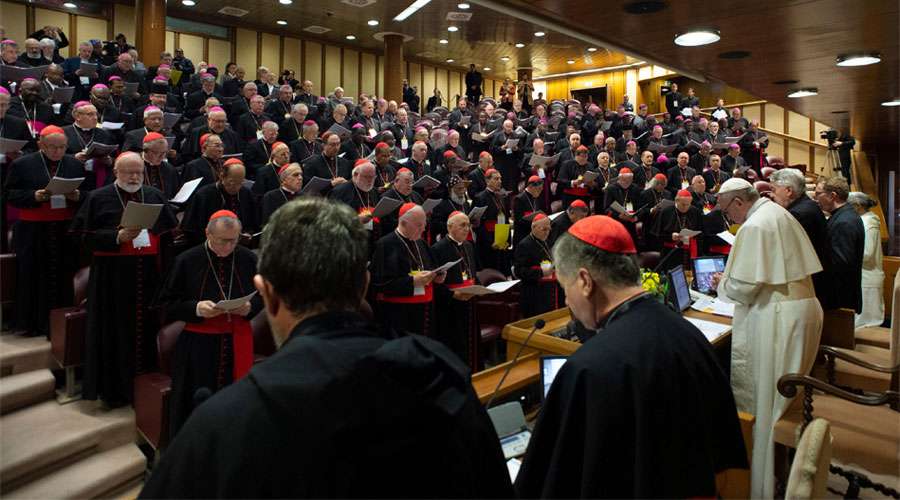
Papa Francisco invita a reflexionar sobre estas 21 medidas para acabar con abusos

El Papa Francisco durante la apertura del Encuentro. (ACI Prensa, vía Vatican Media)

VATICANO (ACI Prensa) — El Papa Francisco entregó una lista de 21 puntos de reflexión, formulados por las distintas Comisiones y Conferencias Episcopales, a los obispos participantes en el Encuentro sobre la Protección de Menores que tiene lugar en el Vaticano.

Durante la sesión inaugural el 21 de febrero, el Papa señaló que estos puntos son “unas líneas orientativas para ayudar a nuestra reflexión”, “son un punto sencillo de partida, que viene de vosotros y vuelve a vosotros, y que no quita la creatividad que debe tener este encuentro”.

En ellos se establecen algunas propuestas, como “elaborar un vademécum” que ayude a guiar los pasos a seguir desde el momento en que aparece una denuncia de abuso; informar a las autoridades civiles y eclesiásticas; o elevar la edad mínima para contraer matrimonio.

Durante un encuentro con los periodistas, el Arzobispo Charles J. Scicluna, de Malta, Secretario adjunto de la Congregación para la Doctrina de la Fe y miembro del Comité Organizativo del Encuentro, señaló que estos 21 puntos cubren todos los aspectos del encuentro: “La buena gobernanza sobre esta cuestión, varias propuestas que van a abordar el tema de la actitud, protocolos al encarar los casos, y también tratar de ver las decisiones importantes”.

“Los 21 puntos se refieren a una forma de compromiso, son una hoja de ruta para nuestro debate, son puntos muy concretos y, por lo tanto, hay que tomarlos en atenta consideración, de forma muy seria. Estos puntos no recibirán una respuesta en tres días, pero darán nuevas políticas. El aspecto más importante es que el Santo Padre no quiere únicamente que se asuman esos puntos, sino que se adquieran medidas concretas. Se trata de una motivación”.

A continuación los 21 puntos entregados por el Papa Francisco:

  1. Elaborar un vademecum práctico en el que se especifiquen los pasos a seguir por la autoridad en todos los momentos clave de la aparición de un caso.
  2. Proveerse de estructuras de escucha, compuestas por personas capacitadas y expertas, donde se realiza un primer discernimiento de los casos de presuntas víctimas.
  3. Establecer criterios para la implicación directa del obispo o del superior religioso.
  4. Implementar procedimientos compartidos para el análisis de las acusaciones, la protección de las víctimas y el derecho de defensa de los acusados.
  5. Informar a las autoridades civiles y a las autoridades eclesiásticas superiores de acuerdo con las normas civiles y canónicas.
  6. Revisar periódicamente los protocolos y normas para salvaguardar un ambiente protegido para los menores en todas las estructuras pastorales; protocolos y normas basados en los principios de la justicia y la caridad, y que deben ser integrados para que la acción de la Iglesia, también en este campo, se ajuste a su misión.
  7. Establecer protocolos específicos para el manejo de las acusaciones contra los obispos.
  8. Acompañar, proteger y atender a las víctimas, ofreciéndoles todo el apoyo necesario para su completa sanación.
  9. Aumentar la conciencia de las causas y consecuencias del abuso sexual a través de iniciativas de formación permanente de obispos, superiores religiosos, clérigos y agentes pastorales.
  10. Preparar caminos para la atención pastoral de las comunidades heridas por los abusos, así como caminos penitenciales y de recuperación para los culpables.
  11. Consolidar la colaboración con todas las personas de buena voluntad y con los medios de comunicación para poder reconocer y discernir los casos verdaderos de los falsos, las acusaciones de las calumnias, evitando rencores e insinuaciones, rumores y difamaciones (cf. Discurso a la Curia Romana, 21 de diciembre de 2018).
  12. Elevar la edad mínima para contraer matrimonio a 16 años.
  13. Establecer disposiciones que regulen y faciliten la participación de expertos laicos en las investigaciones y en los diferentes grados de juicio de los procesos canónicos sobre abuso sexual y/o de poder.
  14. El derecho a la defensa: también es necesario salvaguardar el principio de derecho natural y canónico de la presunción de inocencia hasta que se pruebe la culpabilidad del acusado. Por lo tanto, es necesario evitar la publicación de las listas de los acusados, incluso por parte de las diócesis, antes de la investigación previa y la condena definitiva.
  15. Respetar el principio tradicional de proporcionalidad de la pena con respecto al delito cometido. Dictaminar que los sacerdotes y obispos culpables de abuso sexual de menores abandonen el ministerio público.
  16. Introducir reglas concernientes a los seminaristas y candidatos al sacerdocio o a la vida religiosa. Para esto, introducir programas de formación inicial y permanente para consolidar su madurez humana, espiritual y psicosexual, así como sus relaciones interpersonales y su comportamiento.
  17. Para los candidatos al sacerdocio y a la vida consagrada, se ha de realizar una evaluación psicológica por parte de expertos cualificados y acreditados.
  18. Indicar las normas que rigen el traslado de un seminarista o de un aspirante religioso de un seminario a otro; así como de un sacerdote o religioso de una diócesis o congregación a otra.
  19. Formular códigos de conducta obligatorios para todos los clérigos, religiosos, personal de servicio y voluntarios, con el fin de definir límites apropiados en las relaciones personales. Especificar los requisitos necesarios para el personal y los voluntarios, y verificar sus antecedentes penales.
  20. Ilustrar toda la información y datos sobre los peligros del abuso y sus efectos, sobre cómo reconocer las señales de abuso y cómo denunciar a las sospechas de abuso sexual. Esto debe hacerse en colaboración con los padres, profesores, profesionales y las autoridades civiles.
  21. Donde aún no se ha hecho, es necesario instituir un organismo de fácil acceso para las víctimas que deseen denunciar los delitos. Un organismo que goce de autonomía también con respecto a la autoridad eclesiástica local, y que esté compuesto por personas expertas (clérigos y laicos), que sepan expresar la atención de la Iglesia a aquellos que, en este campo, se consideran ofendidos por actitudes inadecuadas por parte de clérigos.

Bishops must protect their flock from abuse at all costs, archbishop says

Pope Francis leads the opening session of the meeting on the protection of minors in the church at the Vatican Feb. 21, 2019. (CNS photo/Evandro Inetti, pool)

VATICAN CITY (CNS) — Catholics need to know that their leaders “mean business” when it comes to protecting minors from abuse, the Vatican’s top abuse investigator told representatives of the world’s bishops and religious orders.

“They should come to know us as friends of their safety and that of their children and youth. We will engage them with candor and humility. We will protect them at all cost. We will lay down our lives for the flocks entrusted to us,” said Archbishop Charles J. Scicluna of Malta.

The archbishop, who is adjunct secretary of the Congregation for the Doctrine of the Faith and a member of the organizing committee for the Feb. 21-24 Vatican meeting on the protection of minors in the church, spoke on the first day of the proceedings about “taking responsibility for processing cases” of alleged abuse and for preventing abuse.

In the presence of Pope Francis, the archbishop told the almost 190 church leaders that “one of the fundamental tests of our stewardship and, indeed, of our fidelity,” is the way in which bishops and religious superiors exercise their ministry at the service of justice.

“It is our sacred duty to protect our people and to ensure justice when they have been abused,” he said.

Archbishop Scicluna, a canon lawyer who worked at the doctrinal congregation for 10 years dealing with cases of alleged clerical sexual abuse, used his talk to outline what canon law says about how allegations of sexual misconduct should be handled and investigated, and what additional best practices are “advisable.”

Underlining the importance of getting expert advice and maintaining a “collegial” atmosphere throughout the process of abuse investigations, he also called on bishops and religious superiors to remember they are a “shepherd of the Lord’s flock” and need to understand “the deep wounds inflicted on victims of sex abuse by members of the clergy.”

After meeting so many victims around the world, he said he realized that sitting down with a survivor is “sacred ground, where we meet Jesus on the cross.”

“This is a Via Crucis we bishops and other church leaders cannot miss. We need to be Simon of Cyrene helping victims, with whom Jesus identifies himself, carry their heavy cross” with adequate and appropriate care, he said.

In fact, he urged leaders to make up for the gaps or areas not covered by canon law and current procedures by exercising greater pastoral stewardship and recognizing the abuse of children “is also a crime in all civil jurisdictions.”

Archbishop Scicluna said the “stewardship of prevention” also includes helping the pope in the selection of candidates for bishop appointments.

“Many demand that the process be more open to the input of laypeople in the community,” he said. But it is a bishop’s and religious superior’s “sacred duty” to assist the pope as he considers possible leaders.

“It is a grave sin against the integrity of the episcopal ministry to hide or underestimate facts that may indicate deficits in the lifestyle or spiritual fatherhood of priests subject to a pontifical investigation into their suitability for the office of bishop,” he said.

A bishop’s or religious superior’s stewardship also should include preventing “sexual misconduct in general,” in addition to the sexual abuse of minors, he said. This requires screening candidates, being vigilant, being a holy and fatherly role model and providing in-depth and ongoing formation in areas that include understanding “the demands of priestly celibacy and chastity.”

“Prevention is better served when protocols are clear and codes of conduct well known,” Archbishop Scicluna said. “Response to misconduct should be just and even-handed. Outcomes should be clear from the outset.”

He said the “valid and positive” practice in some countries of offering church members specific training in abuse prevention needs to “grow in accessibility” and be spread around the world.

And, he added, a “culture of disclosure” is aided when there is a “ready availability of user-friendly access to reporting mechanisms.”

“The faith community under our care should know that we mean business,” he said.

— Carol Glatz, Catholic News Service

At summit, survivors expose ‘cancer’ of clergy sex abuse

Prelates are seen during the opening session of the meeting on the protection of minors at the Vatican in this screen grab taken from video Feb. 21, 2019. Second from left is Cardinal Daniel N. DiNardo of Galveston-Houston, president of the U.S. Conference of Catholic Bishops. (CNS photo/CTV via Reuters)

VATICAN CITY (CNS) — “Every time I refused to have sex with him, he would beat me,” an abuse survivor from Africa told Pope Francis and bishops attending the Vatican summit on child protection and the abuse crisis.

The meeting began Feb. 21 with the harrowing stories of survivors of sexual abuse, cover-up and rejection by church officials.

The pre-recorded testimonies of five survivors were broadcast in the synod hall; the Vatican did not disclose their names, but only whether they were male or female and their country of origin.

In the first testimony, a man from Chile expressed the pain he felt when, after reporting his abuse to the church, he was treated “as a liar” and told that “I and others were enemies of the church.”

“You are physicians of the soul and yet, with rare exceptions, you have been transformed — in some cases — into murderers of the soul, into murderers of the faith,” he said.

Comparing the abuse crisis to a cancer in the church, the survivor said that “it is not enough to remove the tumor and that’s it,” but there must be measures to “treat the whole cancer.”

He said he prayed that those who “want to continue to cover up” would leave the church, giving greater space “to those who want to a create a new church, a renewed church and a church absolutely free from sexual abuse.”

A woman from Africa recalled the humiliation and suffering she endured when she was sexually and physically abused by a priest beginning when she was 15; he made her pregnant three times and each time forced her to have an abortion.

“At first, I trusted him so much that I did not know he could abuse me. I was afraid of him and every time I refused to have sex with him, he would beat me,” she said. “And since I was completely dependent on him economically, I suffered all the humiliations he inflicted on me.”

“It must be said that priests and religious have a way of helping and at the same time also destroying,” she said. “They have to behave like leaders, wise people.”

Another testimony was offered by a 53-year-old priest from Eastern Europe who, although grateful to God for his vocation, continues to bear not only the wounds of the abuse he suffered as teenager but also the wounds of the rejection he experienced after reporting it to his bishop.

Initially, the bishop did not respond at all, so, the priest said, he reported the abuse to the nuncio.

When he finally did meet the bishop, he recalled, “he attacked me without trying to understand me, and this hurt me.”

“What would I like to say to the bishops?” the priest asked. “That they listen to these people, that they learn to listen to the people who speak. I wanted someone to listen to me, to know who that man is, that priest, and what he does.”

A U.S. survivor told the bishops that what wounded him the most “was the total loss of the innocence of my youth and how that has affected me today.”

“There’s still pain in my family relationships,” he said. “There’s still pain with my siblings. I still carry pain. My parents still carry pain at the dysfunction, the betrayal, the manipulation that this bad man, who was our Catholic priest at the time, wrought upon my family and myself.”

The church, he added, needs leadership, vision and courage from bishops to fight the scourge of abuse and “to work for resolution, and work for healing and work for a better church.”

The final testimony was delivered by man from Asia who said he was “abused over 100 times” and continues to endure “traumas and flashbacks” that have caused him difficulty in living his life and connecting with other people.

Bishops and heads of religious orders, he said, must take concrete action to ensure that clergy members who abused are punished.

“I ask the bishops that they be clear on this matter because this is one of the time bombs occurring in the church in Asia. If they want to save the church, we have to work together and make the perpetrators give themselves up,” he said.

“As Jesus always said, we need to ‘be like children,’ not sexual abusers of children.”

— Junno Arocho Esteves, Catholic News Service

Vatican summit opens with acknowledgment of evil committed

Pope Francis attends the opening session of the meeting on the protection of minors in the church at the Vatican Feb. 21, 2019. (CNS photo/Evandro Inetti, pool)

VATICAN CITY (CNS) — Opening the Vatican summit on child protection and the clerical sexual abuse crisis, Pope Francis said, “The holy people of God are watching and are awaiting from us not simple, predictable condemnations, but concrete and effective measures” to stop abuse.

The summit meeting Feb. 21-24 brought together almost 190 church leaders: the presidents of national bishops’ conferences, the heads of the Eastern Catholic churches, superiors of some men’s and women’s religious orders and top Vatican officials.

In his brief opening remarks, the pope prayed that with “docility” to the Holy Spirit, the bishops at the summit would “listen to the cry of the little ones who ask for justice.”

The pope’s main address to the assembly was scheduled for Feb. 24 after the discussions, a penitential liturgy and a concluding Mass.

Cardinal Luis Antonio Tagle of Manila, Philippines, gave the first formal talk of the gathering, acknowledging how church leaders for so long ignored the suffering of the victims of clerical sexual abuse and covered up the evil crimes of the priest-perpetrators.

Sometimes, he said, bishops were simply afraid to look at the wounds caused by their priests, but he insisted that one cannot profess faith in Christ while ignoring the wounds inflicted on the people Jesus loves.

Using the Gospel stories of Jesus’ post-resurrection appearances to the disciples, especially the story of Jesus inviting St. Thomas to put his hands into the wounds on Jesus’ hands and side, Cardinal Tagle told the bishops, “Those who are sent to proclaim the core of our Christian faith — the dying and rising of Christ — can only do so with authenticity if they are constantly in touch with the wounds of humanity.”

The Christian faith itself and the ability of the Catholic Church to proclaim the Gospel is “what is at stake in this moment of crisis brought about by the abuse of children and our poor handling of these crimes,” the cardinal said.

But, he asked, “how do we as bishops, who have been part of the wounding, now promote healing?”

First, the cardinal said, the bishops must “draw close to their wounds and acknowledge our faults” and then take concrete steps to ensure all children and vulnerable adults are safe in the church’s care.

Justice for the victims is an absolute necessity, he said, but justice by itself “does not heal the broken human heart.”

The church can never ask victims to forgive and move on — “no, far from it,” the cardinal said.

But, knowing that forgiveness often aids healing, he said, church leaders must “continue to walk with those profoundly wounded by abuse, building trust, providing unconditional love and repeatedly asking forgiveness in the full recognition that we do not deserve that forgiveness in the order of justice, but can only receive it when it is bestowed as a gift and grace.”

— Cindy Wooden, Catholic News Service.

Misa especial honra la Vida Consagrada, lanza un esfuerzo de vocación orante

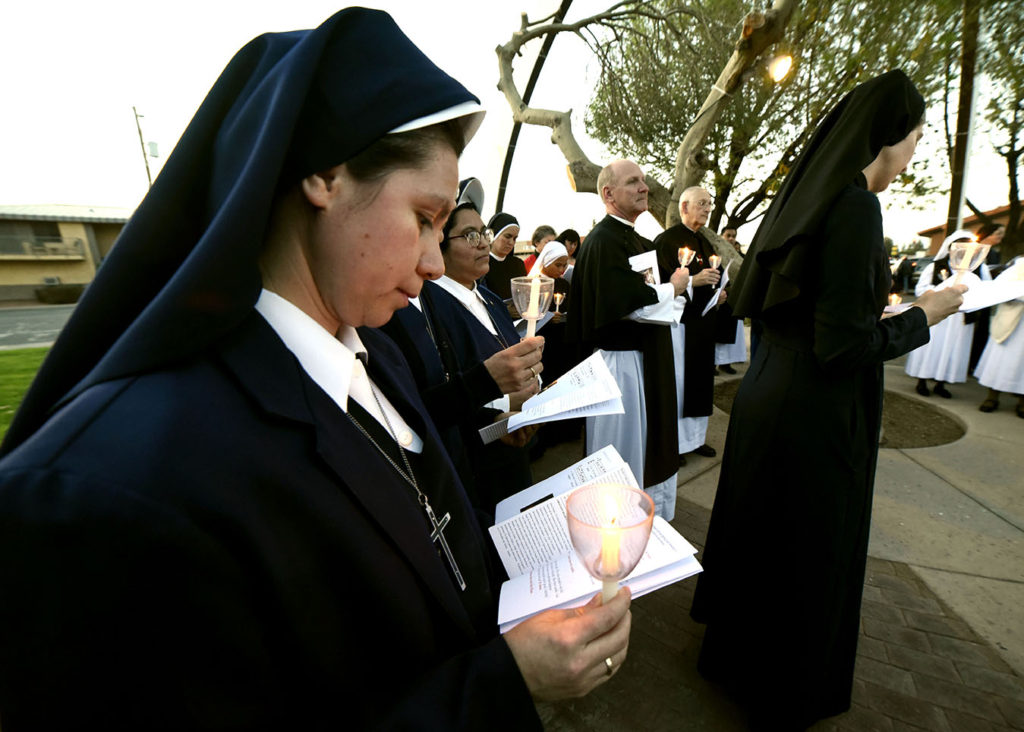
Sr. Cecilia de la Inmaculada Fernandez Villegas, a member of the Eucharistic Franciscan Missionary Sisters of Los Angeles serving at Immaculate Conception Parish in Cottonwood, holds a candle during part of the World Day for Consecrated Life vigil Mass Feb. 1 at Ss. Simon and Jude Cathedral. (Jesús Valencia/CATHOLIC SUN)
La Hna. Cecilia de la Inmaculada Fernández Villegas, una miembro de las Misioneras Eucarísticas Franciscanas de Los Ángeles quien sirven en la Parroquia Inmaculada Concepción en Cottonwood, sostiene una vela inmediatamente antes de la Misa vigilia para la Jornada Mundial de la Vida Consagrada el 1 de febrero en la Catedral SS. Simón y Judas. (Jesús Valencia/CATHOLIC SUN)

A medida que iba anocheciendo, hombres y mujeres religiosos con sus hábitos distintivos se reunían cerca de la imponente cruz frente a la Catedral SS. Simón y Judas. Con velas en alto para una procesión, oraron al unísono junto al Obispo Auxiliar Eduardo A. Nevares para celebrar la fiesta de La Candelaria, la Presentación del Señor y la Purificación de la Santísima Virgen María.

Sociedad de Vocaciones de la Sta. Teresita

Santa Teresita inspira a los fieles que se juntan en oración y sacrificio para hombres y mujeres de la Diócesis de Phoenix siendo formados como sacerdotes y religiosos.

MÁS INFORMACIÓN

La Hna. Anthony Mary Diago, RSM, directora diocesana de la Oficina de la Vida Consagrada, estuvo presente para lanzar la Sociedad de Vocaciones de la Santa Teresita, una iniciativa de oración para apoyar a aquellos en formación para el sacerdocio y la vida religiosa. Quienes asistieron al evento recibieron un folleto bilingüe con una oración por las vocaciones y una invitación a unirse a la sociedad.

“No hay reuniones ni honorarios; el único compromiso es orar cada día por las personas que figuran en las listas y por un aumento de las vocaciones al sacerdocio y la vida religiosa”, dijo la Hna. Anthony Mary.

La membresía en la sociedad es “una manera de invitar a todos en la Diócesis de Phoenix a participar en la familia de la Iglesia”, dijo la Hna. Anthony Mary, particularmente cuando la diócesis celebra su 50 aniversario. Ella planea hacer un póster que incluya los nombres y fotos de todos los hombres y mujeres en formación sacerdotal o religiosa desde la Diócesis de Phoenix.

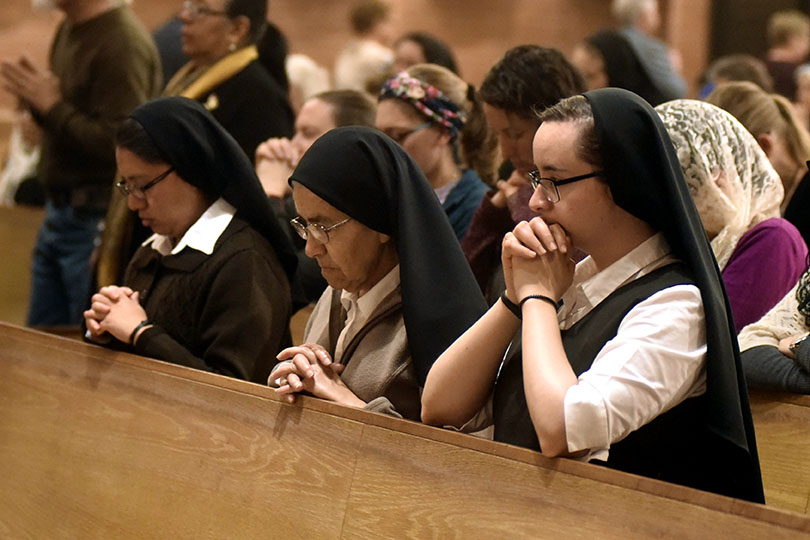
Hermanas religiosas de las Misioneras Carmelitas de Santa Teresa del Niño Jesús asisten a la Misa vigilia para la Jornada Mundial de la Vida Consagrada el 1 de febrero en la Catedral SS. Simón y Judas. (Jesús Valencia/CATHOLIC SUN)

En su homilía bilingüe durante la Misa que siguió a la procesión de la luz de las velas, el Obispo Nevares, quien fue religioso durante 30 años, se centró en los votos de pobreza, castidad y obediencia que hacen los hombres y mujeres religiosos.

“Cuántas vidas han tocado. Cuántas vidas han influenciado. Cuántas vidas han traído a Jesucristo. Cuántas vidas han sido tan enriquecidas debido a su obediencia”, dijo el Obispo Nevares. También señaló la devoción de las hermanas religiosas, hermanos y sacerdotes al Santísimo Sacramento.

“Dios les da a su único Hijo a ustedes religiosos consagrados de una manera profundamente espiritual”, señaló el Obispo Nevares. “Mientras el sacerdote sostiene el Precioso Cuerpo y la Sangre para la Adoración después de la consagración … estoy seguro que cada uno de ustedes mira a la Hostia y dice, ‘Jesús, este es mi Cuerpo y lo doy por ti’”.

La Hna. Margery Therese Harkin, PVMI, cumplirá 42 años de vida religiosa en el Día de San Patricio. La nativa de Irlanda dijo que ver todas las diversas comunidades religiosas representadas en el evento de la Candelaria, le recordó la universalidad de la Iglesia. Ofreció palabras de aliento para cualquiera que pudiera estar considerando una vocación a la vida religiosa.

“Ve a por ella. Inténtalo al menos”, dijo Hna. Margery. “Tienes años de formación antes de los votos finales, así que no es como si fueras allí y va a ser de por vida. 

“Es una vida maravillosa, una vida muy satisfactoria”.

Tolton sainthood cause advances; next step would be ‘venerable’ decree

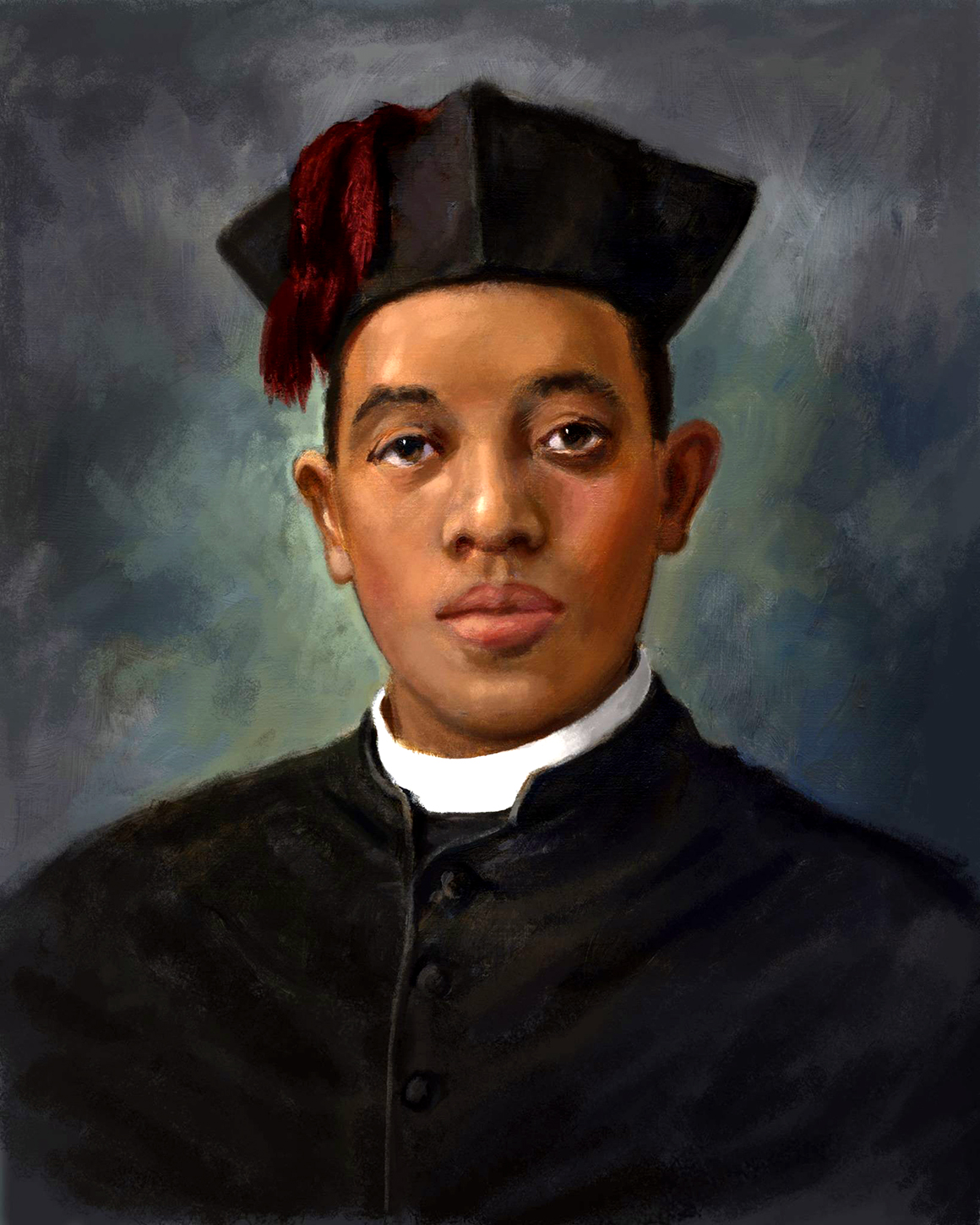
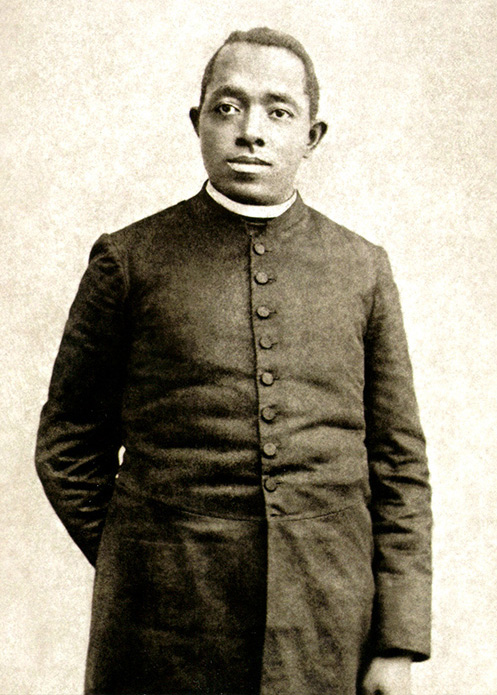
Fr. Augustine Tolton, also known as Augustus, is pictured in an undated photo. Born into slavery in Missouri, he was ordained a priest April 24, 1886, in Rome, and said his first Mass at St. Peter’s Basilica. He served as pastor at St. Joseph Church in Quincy, Ill., and later established St. Monica’s Church in Chicago. A theological commission has unanimously recognized his “vir-tuous and heroic life,” advancing his sainthood cause and moving him one step closer to being de-clared “venerable” by Pope Francis. (CNS, courtesy Archdiocese of Chicago Archives and Rec-ords Center) See TOLTON-CAUSE-VENERABLE Feb. 20, 2019.
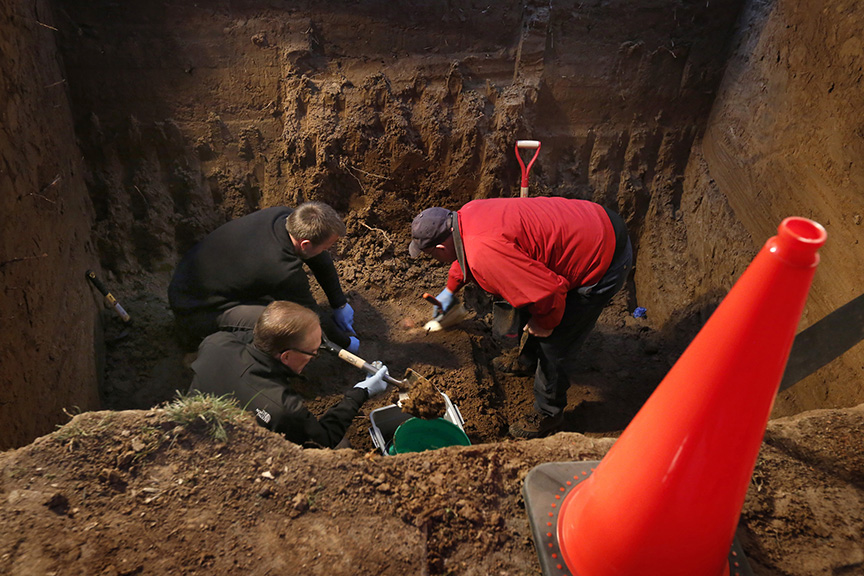
Forensic anthropologist Mark Johnsey, medical examiner Nathaniel Patterson and archae-ologist Dcn. David Keene remove soil from the grave of Fr. Augustus Tolton Dec. 10, 2016, at St. Peter Cemetery in Quincy, Ill. A theological commission has unanimously recognized his “virtuous and heroic life,” advancing his sainthood cause and moving him one step closer to being declared “venerable” by Pope Francis. (Karen Callaway/CNS, via Chicago Catholic)

By Joyce Duriga
Catholic News Service

Servant of God
Fr. Augustus Tolton
(Courtesy of the National Black Catholic Congress)

Born: April 1, 1854
Ordained: April 24, 1886 at St. John Lateran Basilica for the Diocese of Alton (now Springfield)
Assigned to the Archdiocese of Chicago: Dec. 19, 1889
Died: July 9, 1897
Declared Servant of God: Feb. 13, 2012


CAUSE FOR CANONIZATION

ARTICLES FROM
‘CHICAGO CATHOLIC’

‘TOLTON: FROM SLAVE TO PRIEST’ PLAY

CHICAGO (CNS) — The canonization cause for Fr. Augustus Tolton is just one step away from going to Pope Francis for the priest to be declared “venerable.”

On Feb. 5, the feast of St. Agatha, a nine-member Vatican theological commission unanimously voted that Fr. Tolton’s cause be moved forward to the cardinals and archbishops in the Congregation for Saints’ Causes for a final vote to send a decree of the priest’s “heroic virtues” to Pope Francis for his approval.

Upon the promulgation of that decree, Fr. Tolton would receive the title “venerable,” which indicates he lived the theological virtues of faith, hope and charity and the cardinal virtues of prudence, justice, fortitude and temperance at a heroic level.

The next steps would be beatification and canonization. In general, one miracle attributed to the sainthood candidate’s intercession is needed for beatification, and a second such miracle is needed for canonization.

Fr. Tolton, the first recognized African-American to be ordained a Catholic priest for the United States, was born into slavery, ordained in 1886 in Rome because no U.S. seminary would take him and died serving in Chicago in 1897. His story was recently shared with the faithful of the Diocese of Phoenix with several showings of the play “Tolton: From Slave to Priest” throughout the diocese.

Fr. James Healy (1830-1900) is considered by some to be the first black U.S. Catholic priest in the U.S. He was biracial; his father was Irish. Born in Georgia, he was ordained in 1854 in Paris for ministry in the U.S. He later became a bishop, heading the Diocese of Portland, Maine.

If canonized, Fr. Tolton would be the nation’s first African-American saint.

“Fr. Tolton’s story represents the long and rich history of African-American Catholics, who have lived through troubling chapters and setbacks in our American history,” said Chicago Auxiliary Bishop Joseph N. Perry, archdiocesan postulator for the cause.

“Lessons from his early life as a slave and the prejudice he endured in becoming a priest still apply today with our current problems of racial and social injustices and inequities that divide neighborhoods, churches and communities by race, class and ethnicity. His work isn’t done. We will continue to honor his life and legacy of goodness, inclusivity, empathy and resolve in how we treat one another.”

Fr. Augustine Tolton, also known as Augustus, is pictured in an undated photo. Born into slavery in Missouri, he was ordained a priest April 24, 1886, in Rome, and said his first Mass at St. Peter’s Basilica. He served as pastor at St. Joseph Church in Quincy, Ill., and later established St. Monica’s Church in Chicagostep closer to being declared “venerable” by Pope Francis. (CNS, courtesy Archdiocese of Chicago Archives and Records Center)

Bishop Perry said unexplained physical healings have been reported to the cause and are under investigation.

The Archdiocese of Chicago formally opened Fr. Tolton’s cause for canonization in 2010.

Norbertine Father Gerard Jordan holds the canonical title “promoter of the cause” and travels the country sharing the message of Fr. Tolton and the canonization efforts on behalf of Bishop Perry.

He said Fr. Tolton’s story transcends the lines of race, gender and priesthood.

“If we start with the black part, then it’s just a nice Black History Month story. If we start from the priesthood part you only include the ordained,” Fr. Jordan told the Chicago Catholic, the archdiocesan newspaper. “First off, he didn’t start off as a black man or an ordained priest. The first thing that Tolton was was a created child of God. You gotta start there.”

“The first experience Tolton would have recognized, and it would have had a physical and spiritual effect on him, was his Baptism,” Fr. Jordan said. “If we connect with his Baptism, then everybody is included and can relate to his story.”

All the baptized are connected, he said.

“The Baptism of Tolton tells the real story that we’re supposed to be paying attention to and that’s the story of the Gospel of Jesus Christ,” Fr. Jordan said. “Everything that Tolton experienced in life is the Gospel story.”

Fr. Tolton had great love for the Church, the people of God.

“He saw himself connected to the Church who loved him. His mother, Martha Jane, was his physical mother but his spiritual mother was very real to him,” Fr. Jordan said. “He said himself that the Catholic Church was the only thing that would help him to beat the double slavery of his mind and his body.”

In his lifetime, Fr. Tolton also talked about how his mother the Church took him as a poor slave to become fully who he was in the eyes of God.

“Everybody has to realize that the greatest inheritance we will ever receive is our Baptism,” Fr. Jordan said. “It is your decision whether or not you’re going to keep that inheritance and invest in it or whether you’re going to squander it or give it away or abandon it. Tolton never abandoned his inheritance.”

His story begins and ends there, the priest said.

“Once people relate to Tolton’s Baptism they will find pieces of their life that they can relate too.”


Joyce Duriga is editor of Chicago Catholic, newspaper of the Archdiocese of Chicago.

Conference challenges men to be ‘New Knights’ in spiritual warfare

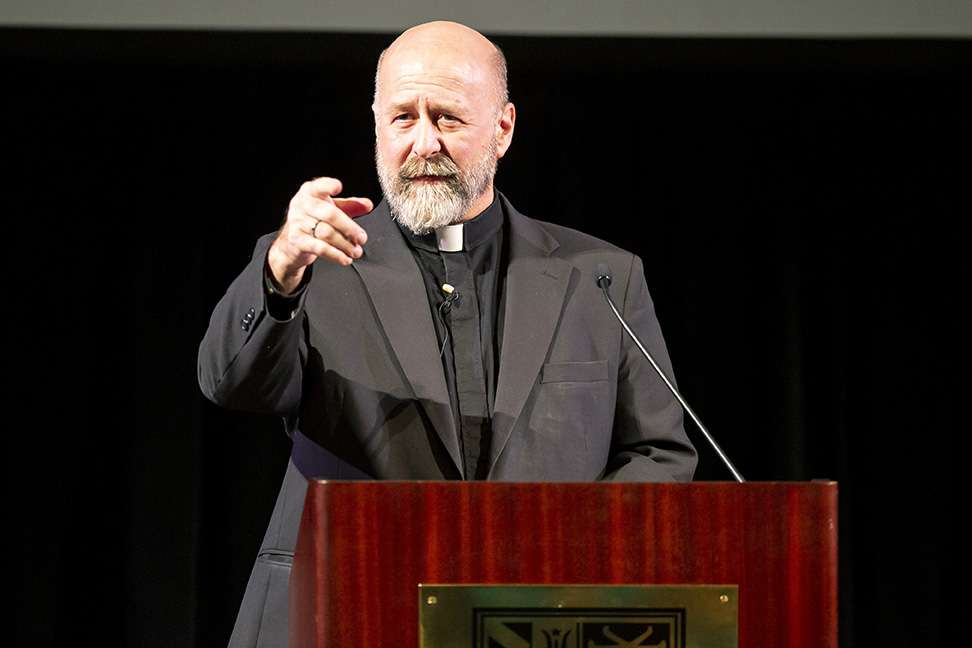
Renowned author and blogger Fr. Dwight Longenecker, a married former Anglican priest who serves as a pastor in South Carolina, exhorts men attending the Catholic Men’s Conference Feb. 2 at Xavier College Preparatory that true masculinity is found in unity with Christ and the cross. (Billy Hardiman/CATHOLIC SUN)

Men’s strength comes from moral integrity, exhorted speakers at the Diocese of Phoenix’s 12th annual Catholic Men’s Conference at Xavier College Preparatory Feb. 2.

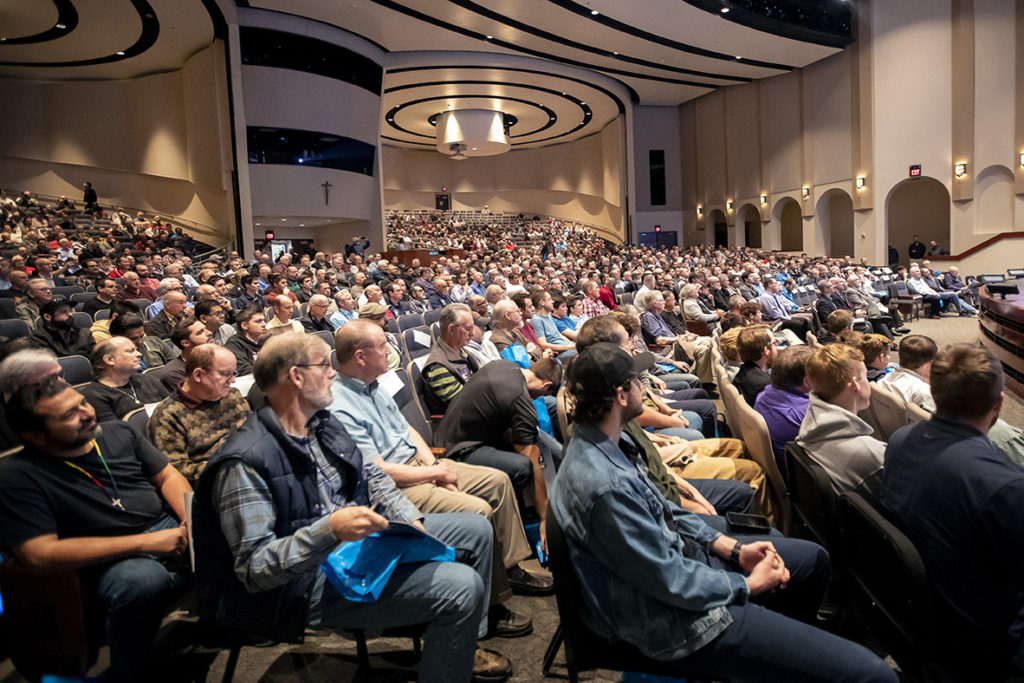
The more than 1,200 men attending the daylong gathering — named “The New Knighthood” — were urged to be actively engaged in the battle for spiritual purity amid a culture that increasingly discourages them from being godly male role models.

More than one speaker emphasized the importance of male leadership.

Fr. Dwight Longenecker, pastor of Our Lady of the Rosary Church in Greenville, South Carolina, and the event’s keynote speaker, said the task of fulfilling that role begins with understanding the redemptive death and resurrection of Jesus in breaking the bonds of a human heart that — because of Adam’s choice of Original Sin in the Garden of Eden — has a natural tendency away from God.

Fr. Longenecker, a renowned author and blogger, is a married former Anglican priest who was ordained to the Catholic priesthood through the Pastoral Provision in 2006.

“We were enslaved by the great slave master who first tempted our parents in the Garden. In a world where everyone is blaming everyone else, Jesus says, ‘Blame me.’ As we meditate on the Cross, participate in the Eucharistic Adoration, enter into the sacramental unity with Christ and His Cross, we find our true humanity and our true masculinity,” Fr. Longenecker said.

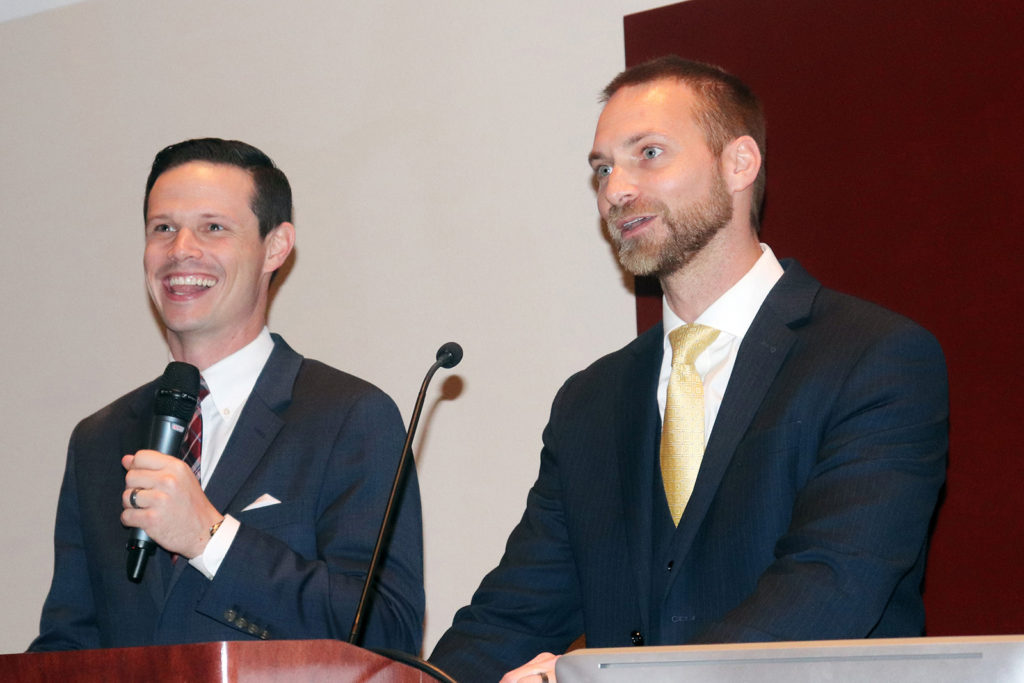
David Niles (right) and Adam Minihan (left), hosts of “The Catholic Man Show” based out of Tulsa, Oklahoma, emceed the Catholic Men’s Conference Feb. 2 at Xavier College Preparatory in Phoenix. During the conference they interviewed Bishop Thomas J. Olmsted about his most recent apostolic exhortation on the family, “Complete My Joy.”

Bishop Thomas J. Olmsted cited the importance of prayer in a man’s family leadership role.

“Husbands and fathers are not only called to be protectors and providers but especially to being the leaders of prayer in their homes,” he said. “You bring a sense of stability and security that is different from what a mother brings. You are a real blessing to your family.”

The men were also exhorted to be godly examples in the world around them — a call that came from the day’s only female speaker.

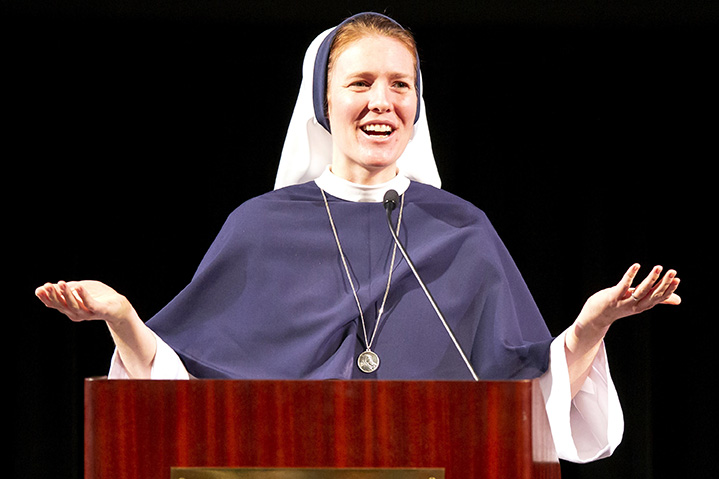
Sr. Bethany Madonna, SV, vocations director for the Sisters of Life, exhorts men that their voices and actions are needed to influence the world for Christ at Xavier College Preparatory in Phoenix. (Billy Hardiman/CATHOLIC SUN)

Sr. Bethany Madonna, SV, vocations director for Sisters of Life, a religious community in upstate New York, said the voices and actions of men are needed to influence the world for Christ.

“The strength of men — and I don’t mean essentially physical strength — but moral integrity and the capacity to impart this to others to foster in the home or the workplace an intolerance for evil, the courage to speak and act — this is what will change this culture,” she said, adding that young men of this generation are “desperate” for male mentorship.

Men, young and old, took the messages to heart.

“I have three kids. My role is to teach them in the faith even though they pulled away at a young age. It’s the society we live in,” said Oscar Acosta, of St. Rose Philippine Duchesne Parish in Anthem.

“I gained a better understanding of (evangelization),” said Tristan Handy, 14, an altar server and parishioner at St. Timothy in Mesa. “It’s going to help me be a good example to others. If I am that, it will lead them to Christ.”

“Listening to the importance of masculinity from a woman’s point of view. That struck me,” added Tristan’s father, Darren. “The way the culture is now characterizing men as buffoons — stepping away from responsibility, caring only about themselves — it is taking away the true gift of who we are as men.”

The conference took place on the day the diocese published the Family Prayer Guide to supplement Bishop Olmsted’s apostolic exhortation “Complete My Joy.”

Separate afternoon breakout sessions offered men the choice of learning more about defending their faith to an atheist, evangelization and starting a small group 
for men.

Aaron Anderson, father of four, teacher and parishioner at St. Anne in Gilbert, found the entire experience rewarding. “We should be mission-focused not just with our families, but we need to get out there in the world. It’s wonderful to see all of us together. It’s a reminder we are not alone in what we are called to be as Catholics in this diocese.”


What participants had to say:

Obispo a fieles en Misa de Sanación y Unción: ‘Ustedes no están solos’

El Padre Cruzado Hubert Kavusa ofrece el sacramento de la Unción de los Enfermos durante la Misa anual por el Día Mundial del Enfermo el 9 de febrero en la Catedral Ss. Simón y Judas. (Billy Hardiman/CATHOLIC SUN)

Como el pastor que cuida sus ovejas y apacienta el rebaño, el Obispo Auxiliar Eduardo A. Nevares, ofreció palabras de apoyo y aliento a los enfermos que asistieron a la Misa de Sanación y Unción con motivo del Día Mundial del Enfermo que se celebra en la Diócesis de Phoenix cada año auspiciada por la Orden de Malta.

“Ustedes no están solos. Dios vino a consolar a los afligidos, a liberar a los cautivos y a traer la Buena Nueva a los desamparados”, les dijo durante la homilía a las decenas de enfermos que participaron en la celebración Eucarística el 9 de febrero en la Catedral Ss. Simón y Judas. Entre ellos habían hombres, mujeres y niños quienes salieron reconfortados tras escuchar a su pastor y recibir el sacramento de la Unción de los Enfermos.

El Obispo Nevares recordó que ante los sufrimientos a causa de alguna enfermedad algunas personas caen en la tentación de cuestionar: “¿Qué pasa? Rezo, rezo y rezo y parece que Dios no me escucha. ¿Donde ésta?”

Pero les aseguró que “ustedes no están solos”, al subrayar que “por el sufrimiento somos víctimas con Jesús para la salvación del mundo”.

Y recalcó que en medio de nuestros sufrimientos y dolencias “Dios sí escucha nuestras oraciones y nos contesta según Su santa voluntad. Dios está con nosotros, nunca nos abandona. … Tenemos fe que Dios siempre nos escucha”.

En su mensaje el obispo expresó ante los fieles que escuchaban atentos: “Ofrecemos nuestros sufrimientos unidos a los de Cristo, así traemos gracia para nosotros y el mundo”.

Cabe mencionar que muchos de los que acudieron para comulgar y recibir la Unción de los Enfermos arribaron apoyados en bastones o andaderas, algunos en silla de ruedas y otros más llevados por cuidadores o familiares.

A todos ellos el Obispo Nevares les dijo: “Dios viene para dar consuelo a todos los que sufren. … El cuerpo se desgasta, pero el espíritu sigue rejuveneciendo. No se desesperen ni pierdan la esperanza. La fe es nuestra fortaleza y Él nos da la gracia de soportar los sufrimientos”.

Una vez que concluyó la homilía el obispo y otros varios sacerdotes concelebrantes procedieron a administrar la Unción de los Enfermos a todos los que, con fe y devoción la recibieron, algunos embargados por la emoción que no pudieron contener las lágrimas; enseguida continuó la Misa, al final de la cual hubo una feria de salud en la que diferentes agencias promovieron sus servicios.

El Obispo Auxiliar Eduardo A. Nevares bendice a Miah Penaloza, 10 años de edad, después de la Misa anual por el Día Mundial del Enfermo el 9 de febrero en la Catedral Ss. Simón y Judas. (Billy Hardiman/CATHOLIC SUN)

También al término de la Eucaristía el Obispo Nevares dirigió una bendición especial por todas aquellas personas que cuidan de los enfermos, a quienes les aseguró que Dios les recompensará su dedicación.

Bartha Morales, quien es feligrés de la Parroquia San Gregorio acudió por vez primera a Misa de Sanación y Unción.“Me voy fortalecida y llena de fe luego de escuchar las palabras del señor obispo”, dijo Morales. “Ofrezco mis sufrimientos por amor a Dios”.Dijo que durante 30 años ha padecido escleroderma, una rara enfermedad que afecta la sangre y el color de la piel.

Ofelia López tiene 10 años cuidando a una mujer que está enferma de cáncer y antes ya había cuidado otra. La feligrés de Ss. Simón y Judas comentó: “Las palabras del obispo dan consuelo y paz no solamente a los enfermos, sino también a los que cuidamos de ellos”.

Muchos de los que asistieron a la Misa recibieron botellitas con agua bendita traída de Lourdes, Francia, del lugar donde se apareció la Virgen de Lourdes; también escribieron en papelitos peticiones especiales que llevarán a Lourdes miembros de la Orden de Malta.

“Nuestra Misa de cada año es para pedir por la sanación del cuerpo y del alma, esto es una forma compartir con los enfermos la misericordia de Dios”, dijo la Dra. María Chavira, quien es miembro de la Orden de Malta y además es canciller de la Diócesis de Phoenix.

Dolan: Church loves, welcomes pregnant women, is ‘honored’ to serve them

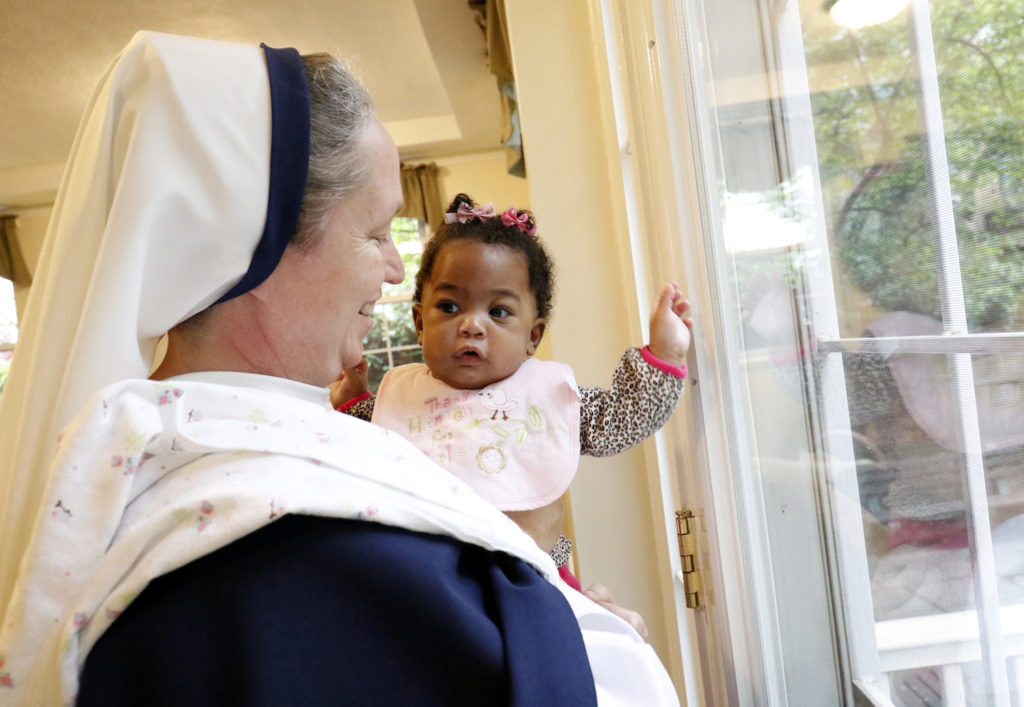
Sister Mary Elizabeth, vicar general of the Sisters of Life, holds 6-month-old Esther at the religious community's Holy Respite residence in the Hell's Kitchen neighborhood of New York City May 4, 2016. Holy Respite serves as a home and support center for pregnant women in crisis and new mothers. (CNS photo/Gregory A. Shemitz)

NEW YORK (CNS) — In a robust demonstration that actions speak louder than words, New York Cardinal Timothy M. Dolan Feb. 18 introduced representatives of six church-related organizations that help pregnant women in need.

Standing in the modest living room of a convent that Sisters of Life share with expectant and new mothers and their children, the cardinal reaffirmed the commitment first made in 1984 by his predecessor, Cardinal John J. O’Connor.

“Any pregnant woman can come to the Archdiocese of New York, to its parishes and facilities, and we will do all in our power to assist you, so that you never feel that you have no alternative except an abortion,” Cardinal Dolan said. “It does not matter what your marital status, your religion, or your immigration status might be. None of that matters, folks.”

Cardinal Dolan acknowledged that the timing of his reaffirmation of the church’s outreach coincided with the attention given to the Reproductive Health Act of 2019, which effectively removed restrictions on abortion in New York, and the current “almost pro-abortion atmosphere out there.”

New York Gov. Andrew Cuomo signed the measure into law Jan. 22, the anniversary of U.S. Supreme Court’s Roe v Wade ruling legalizing abortion nationwide.

“Every once in a while we need to trumpet and put a spotlight on the good work that we do,” the cardinal said. “Most of us bristle when the church is criticized for speaking all the time but not offering action. Nothing could be further from the truth.”

New York Cardinal Timothy M. Dolan speaks during a news conference Feb. 18, 2019, introducing representatives of six church-related organizations that help pregnant women in need. Pictured are Dr. Anne Nolte, co-founder of the Gianna Center for Women’s Health and Fertility in Manhattan; Mother Agnes Mary Donovan, superior general of the Sisters of Life; Dolores Ortiz, assistant executive director of Catholic Guardian Services; and Christopher Bell, president of Good Counsel, which runs four homes in the Archdiocese of New York for single pregnant women and their children. (CNS photo/Chris Sheridan, Catholic New York)

Cardinal Dolan said he was worried that poor women especially were getting the impression that abortion is their only choice. “This is a very teachable time for us to stand up and say, ‘We’re here. We love you. We welcome you. There is an alternative here and we’d be honored to serve you.'”

Mother Agnes Mary Donovan, superior general of the Sisters of Life, said her group has provided assistance to more than 9,000 women since the religious community was established in 1991, and they have shared their convents with pregnant women since 1996.

“We are standing in radical solidarity with women during an unexpected or difficult pregnancy. The sisters and the woman together find a pathway through fear, a pathway defined by realistic and ongoing emotional and practical support that she may respond with courage and dignity to one of life’s most difficult moments,” she said.

Mother Agnes Mary said the Sisters of Life serve 600 to 1,000 women each year. She said their message to vulnerable pregnant women is: “Know you are not alone. We believe in you. This pregnancy does not mean your life and your dreams are over. We stand ready to help you realize the deepest desires of your heart.”

She said approximately 85 percent of the women who contact the Sisters of Life for counsel “will choose to bring life to their child. We provide critical and strategic support that is timely and important to her life,” she said.

While her impossibly cute toddler captured all the attention in the room, an Ethiopian professional runner named Brhane described meeting the Sisters of Life in New York. It was when she was pregnant, alone, far from home and feeling pressure to abort her baby, she said.

“They helped me to find a home for me and my baby. They were with me the whole way and are still with me. They helped me with my immigration, to find a job, to find baby-sitting. They helped me with everything.”

Brhane named the little girl Sena Love, which translates, “I love my history.”

The Sisters of Life helped Brhane to run the New York Marathon and she is training to run professionally again, she said. “I love my daughter. She changed my life. I am so happy. Thank you God.”

Dr. Anne Nolte, director of the Gianna Center for Women’s Health and Fertility, said her medical practice provides primary care and reproductive health care to women and teenagers that aligns with church teachings. The center offers service to patients of all backgrounds and has “a particular commitment to helping women whose babies have an adverse diagnosis in the womb,” Nolte said.

Chris Bell is a co-founder with the late Father Benedict Groeschel, a Franciscan Friar of the Renewal, of five Good Counsel residences in New York and New Jersey for homeless single pregnant women and their children. He said his group provides “concrete help and real hope” to women in crisis.

Since 1985, Good Counsel has served more than 7,800 mothers and children with more than 755,000 nights of shelter as well as material aid, counseling, parenting and education programs.

The Good Counsel homes have a 100 percent occupancy rate, and women are invited to stay for up to a year to reap the maximum benefits of the program, Bell said.

Msgr. Kevin Sullivan, executive director of Catholic Charities of the Archdiocese of New York, described a network of 90 affiliated agencies that provide dignified, compassionate care to people in all stages of life. “Our door is open,” he said.

Among the agencies is the Catholic Guardian Society. Dolores Ortiz, assistant executive director, said each year more than 300 “at-risk pregnant and parenting women” receive support, case management services, parenting resources and referrals from Catholic Guardian Society.

Sister Mary Elizabeth, vicar general of the Sisters of Life, holds 6-month-old Esther at the religious community’s Holy Respite residence in the Hell’s Kitchen neighborhood of New York City May 4, 2016. Holy Respite serves as a home and support center for pregnant women in crisis and new mothers. (CNS photo/Gregory A. Shemitz)

Teresa Georgeo, a director of Archcare, the continuing care program of the Archdiocese of New York, said her group’s maternal child health program provides prenatal care for women with high-risk pregnancies, and helps new mothers and infants.

The speakers said their services are free or low-cost and available to all women regardless of race, religion, background or ability to pay.

Cardinal Dolan acknowledged the hurt, frustration and anger people in the archdiocese might feel at the new abortion law. “We should not respond with bitterness and divisiveness, but put our faith and trust in the Lord and reach out with love to troubled moms and their babies,” he said.

He said it would be a good time for people on both sides of the abortion debate to come together to discuss providing “life-giving alternatives to the horror of abortion.”

— Beth Griffin, Catholic News Service.

SVdP International president: Phoenix serves as model, but could use more youth

Renato Lima, center, international president of the Society of St. Vincent de Paul, poses with some of SVdP’s key Phoenix leaders in a prayer garden during his Jan. 7-9 visit. Panama, Portugal and Canada are also on his 2019 agenda. (Courtesy of the Society of St. Vincent de Paul)

The St. Vincent de Paul Society of Phoenix was blessed to have the society’s international president Renato Lima visit in January. Lima saw the SVdP Family Dining Room in action plus other ministries at the main campus and accompanied Vincentians making a home visit.

Lima comes from Brasilia, the capital of Brazil, where he is married and has an 18-year-old son and 15-year-old daughter.

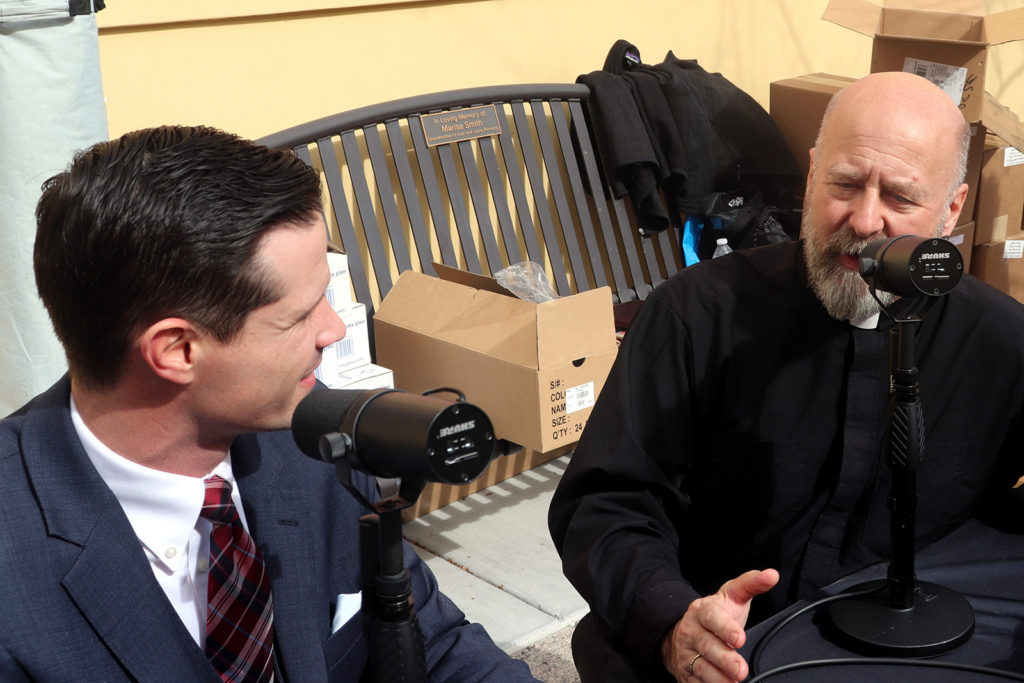
He also dropped by the Diocesan Pastoral Center where he spoke with Jennifer Ellis, producer of “The Bishop’s Hour” radio program. Below is a portion of that conversation which aired Jan. 26, as well as a short off-the-air discussion with The Catholic Sun. The radio transcript has been edited for clarity.

The Bishop’s Hour: When did your relationship with St. Vincent de Paul begin?

Lima: When I was in my high school in 1986, I was 15 years old. After my Confirmation, I asked Fr. Joachim, who was the priest of our chapel, to join one movement in the Church to practice my faith. He suggested me to join the Society of St. Vincent de Paul. I said, ‘What is this Society of St. Vincent de Paul?’ He told me, ‘Look, they do charity. They do home visits. They talk to the people, especially to the poor and evangelization and charity. It’s up to you. Go there. Visit the group. It will be your eternal movement in the Catholic Church.’

Get involved at Phoenix’s main campus Get involved in your nearest parish

Jump to 35:17 for Lima’s interview

TBH: How many countries have you visited?

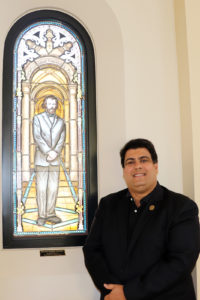
During his visit to the Diocesan Pastoral Center, Renato Lima, international president of the Society of St. Vincent de Paul, visited the chapel where there is a stained-glass window of Blessed Frédéric Ozanam, the society’s founder. (Tony Gutiérrez/CATHOLIC SUN)

Lima: Every year I try to visit around 15 countries. It’s not easy for me because I have a job. I have a boss. I work eight hours a day, 40 hours a week. So it’s not easy to deal with this situation — to be a president general of this institution. But this is my life; this is our life. We are laypeople. We are working simultaneously. We can do this simultaneously because God gave us the skills, the talents to do this.

I’m totally a volunteer in SVdP. I have my salary that comes from my job.

TBH: How is it that you balance all your roles?

Lima: This question, it’s impossible to answer, because at the beginning, I tried to, ‘How will it be because it’s impossible for me?’ But when I put on our Lord’s hands — for me, now it’s OK, because I know that He’s giving me the guidelines. He is in charge of this work; it’s not me. We’re here to serve. We are only people to serve. But who does the miracles, the activities? We know that it’s God.

TBH: What have been your impressions about Phoenix so far?

Lima: I will be here for two or three days. Yesterday I said to my friends here that the Society of St. Vincent de Paul in Phoenix is like a machine of charity. A machine of good service. Not only the home visits, but we have the special works. We have the social programs. We have here in Phoenix one complex, they call it the Vincentian campus, and lots of good service to the homeless, to the people who are seeking for health]care], dentist. Lots of excellent activities. So it’s a remarkable job the Vincentians of Phoenix are doing here.

This campus, this complex, is an excellent idea because at the same place we have lots of services being offered to the community. Different ministries, different perspectives, approach. In other countries you have the special works separated, in separate buildings. So here it is very interesting because we have everything together at the same place. Very nice idea that I will talk about when I visit other countries.

TBH: What are some programs that you have seen, maybe in other places that Phoenix could adopt?

Lima: If we work with the youth at the schools, at the university, at groups of Confirmation classes, for example, I think we can join more youth people to the Society of St. Vincent de Paul. The age of our groups, are a little higher. So we have to invite adults, young adults, youth people to join the society because we are a movement of faith, service and charity.

It’s up to the young because our seven founders in Paris in 1833 were all young people, around 20 years old: Frédéric Ozanam, 20; [Francois] Lallier, 21; [Auguste] Le Taillandier, 22; [Emmanuel] Bailly, was the most 38 years old, but the other founders around 20 years old, so it fits. This movement is especially suitable for the young people.

When I do home visits in Brazil with my kids, they realize that their reality is different. And to be more grateful, to have more gratitude to what we have instead of complain, complain and complain. So it’s very nice to invite the children, the teenagers, the youth people to see the reality, to see the poor, that they have needs, they are suffering. If you want to build a better society in this earth, we have to share what we have to the people.

TBH: When you interact with the people that St. Vincent de Paul serves, what did they say to you? What are your impressions of those people?

Related

Lima invites Vincentians to seek holiness

SVdP reaches the Cayman Islands

Lima: They are fantastic people. The Vincentians, they have the same faces in all the countries I visit. Could be different language, could be different cultures, the atmosphere, the government, even the Church, but the Vincentian is the same wherever I go. They love to serve. They have passion. First, we are friends, and then we do the charity. First we are Catholics. First we go to the Mass. First we receive the sacraments, and then we go to serve the Church, to serve Christ. So here in Phoenix, it’s not different. They are the same. They have the same face. They have the same synergy — the good relationship we have to the Church is in all the countries that I visit.

(web exclusive)
TBH: How does your Catholic faith inform your work?

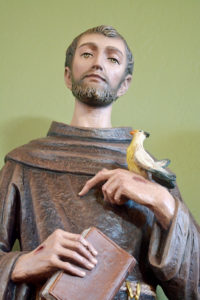
A statue of St. Francis sits on the right side of the altar in San Francisco de Asís Parish in Flagstaff. (Lisa Dahm/CATHOLIC SUN)

Lima: I have Vincentian spirit and a Franciscan spirit also; I have both. My parish in Brazil is St. Francis of Asis. St. Francis used to be a very charitable man. In St. Vincent de Paul, it’s 100 percent charity. So my grassroots came from St. Vincent de Paul and St. Francis of Asis.

(web exclusive)
TBH: So I’m guessing that you have a particular devotion to those saints. Are there any others?

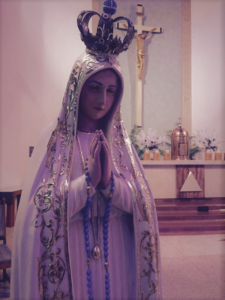
A statue of Our Lady of Fatima at Most Holy Trinity Parish in Phoenix (courtesy photo)

Lima: Our Lady of Fatima is very strong in Portugal and, of course, in Brazil. Because in the past Brazil used to belong to Portugal. Brazil was a colony of Portugal, equal to Mozambique. Today we have eight countries that are Portuguese-speaking countries. In the past, all of these eight countries belonged to Portugal. So we have a great influence of Portugal until now. So Our Lady of Fatima in Portugal is a huge devotion.

And I have this huge devotion. My SVdP group name is Our Lady of Fatima in Brasilia. So I have a great connection with Our lady of Fatima.

The Catholic Sun: What do you remember of your first home visit that kept you coming back?

Lima: It was love at first sight. ‘Oh, we do this?’ This is what I want for the rest of my life. I visit five to seven families weekly. We try to give a hand to solve their problems, not only materially, but spiritually. We read the upcoming [Sunday] Gospel with the family. We encourage sacraments. We help the Church. We try to reconciliate. We are the Church in movement [like Pope Francis says].

Related

SVdP literary competition

Vincentian reflection by Renato Lima

AZ’s Italian Festival Feb. 22-24
(a portion of proceeds benefits SVdP)

Sun: How many hours per week or month do you dedicate to St. Vincent de Paul?

Lima: A one-hour weekly meeting and a three-hour weekly home visit. I don’t do email on the weekends. It’s God, family, church, St. Vincent de Paul. If you have a good relationship with God, then you will be a good Vincentian.

(web exclusive)
Sun: You said you try to visit 15 countries each year. What other countries will you visit this year?

Lima: Panama (and meet with the pope and three days for a pre-[World Youth Day] journey with 300 Vincentians. Then Portugal, Canada, Hong Kong, Milan, Italy and France. In 2020, I’m going to Lebanon.

I do it on my vacation, license and holidays. [Note: “license” means if you work five years in one place, you can get three months off]

I once visited seven countries in Africa in 30 days: Burkina Faso, the [Democratic] Republic of the Congo, Nigeria, Mozambique [which is Portuguese -speaking], Botswana, South Africa and Zambia.