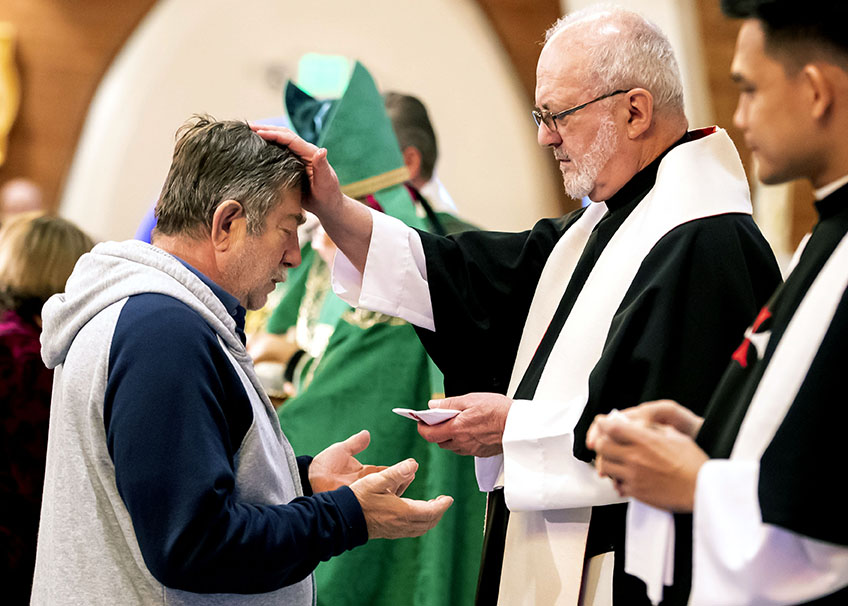
Crosier Father Bob Rossi offers the sacrament of Anointing of the Sick during the 2019 World Day of the Sick Mass at Ss. Simon and Jude Cathedral. (Billy Hardiman/CATHOLIC SUN)
Crosier Father Bob Rossi offers the sacrament of Anointing of the Sick during the annual World Day of the Sick Mass Feb. 9 at Ss. Simon and Jude Cathedral. (Billy Hardiman/CATHOLIC SUN)
Scores of individuals, some in wheelchairs, using walkers or assisted by the Order of Malta’s Knights and Dames, made their way forward to receive the sacrament of Anointing of the Sick at the annual World Day of the Sick Healing Mass Feb. 9 at Ss. Simon and Jude Cathedral.
A priest laid his hand atop the individual’s head, prayed
for them, then anointed their forehead and the palms of their hands with holy
oil.
“It was fantastic. I do feel blessed,” said Herman
Schimanke, a parishioner at Our Lady of the Angels Church in Paradise Valley
who had embedded glass removed from one of his feet following an at-home
accident that also required a skin graft.
The Mass, which has been organized by the Order of Malta for a decade, coincided with the Catholic Church’s annual day to recognize and pray for the ill and their caregivers.
“We were able to provide preferential treatment to the sick. They were able to receive Holy Eucharist and the sacrament of the sick. That makes it a glorious day not just for them but all of us,” said Tim Jeffries, the order’s Phoenix president.
St. Peregrine Cancer Shrine in Mesa
24-hour adoration
Submit a prayer request
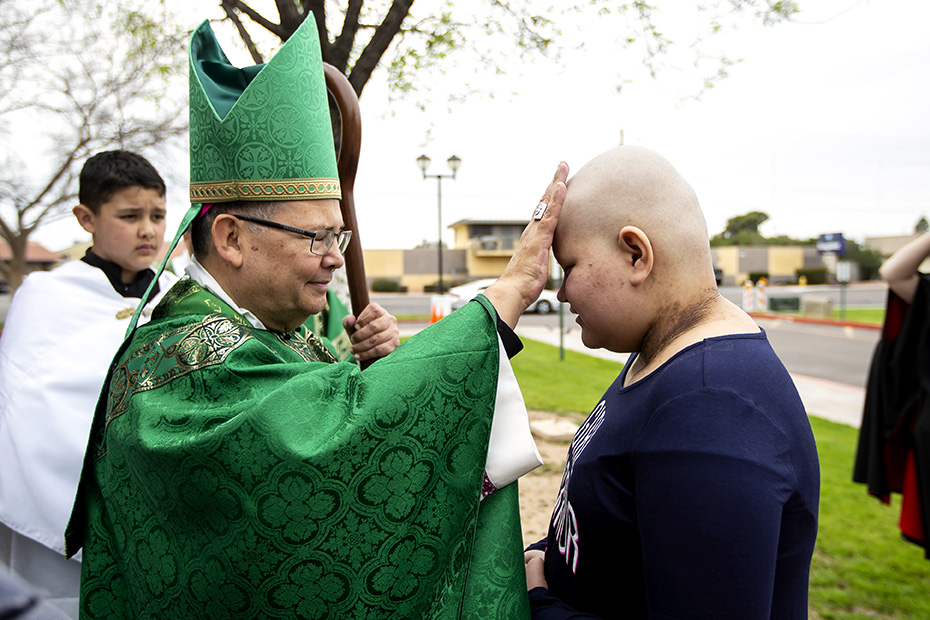
Marisela Penaloza, a parishioner of St. Clare of Assisi in Surprise, brought her 10-year-old daughter, Mhia. A cancer patient, Mhia was scheduled Feb. 13 to have a large tumor removed from one of her legs and have her knee replaced. She also has been receiving chemotherapy to address spread of the cancer to her lungs.
“Thankfully, the chemo has reduced those. (But) It’s been a very rough time,” said Marisela, tearing up. “She needs all the strength and faith she can have.”
Not all prayers result in immediate or eventual physical healing, noted celebrant Auxiliary Bishop Eduardo A. Nevares. But suffering can draw one closer to God and be a witness to those around them.
“Sometimes, God does not heal us physically but gives us the grace to bear the suffering. Suffering has meaning. When we unite ourselves to Christ and His suffering, we become victims with Jesus for the salvation of the world. Our suffering brings much grace to ourselves, families, friends and the world.”
As many members of one body, he said, someone is always suffering to one degree or another. Referencing the Second Reading, the bishop reminded the congregation that Paul told his readers the physical body naturally loses strength over time (2 Cor 4:16-18).
“Sometimes, God does not heal us physically but gives us the grace to bear the suffering. … Our suffering brings much grace to ourselves, families, friends and the world.”
Auxiliary Bishop Eduardo A. Nevares, Diocese of Phoenix
“But our spirit is effervescent. It is renewed each and every day as we put our gaze not on what is transitory — because what is transitory is passing. But we place our hope and trust in that which is eternal,” he continued.
Auxiliary Bishop Eduardo A. Nevares blesses Miah Penaloza, age 10, following the the annual World Day of the Sick Mass Feb. 9 at Ss. Simon and Jude Cathedral. (Billy Hardiman/CATHOLIC SUN)
“I could see people around me affected. One lady who went up
to be anointed, came back and she was crying,” said Marie LeMoine, a caregiver
who is also dealing with her own effects of a compromised immune system.
“There are always graces from a Mass. There are always
graces from a blessing with the oil. I come for that and anything the Lord will
provide,” said LeMoine, who is a parishioner at St. Timothy in Mesa.
The Mass, which was broadcast by AZTV and EWTN and
livestreamed on the diocesan Facebook page and YouTube channel, is part of an annual
observance instituted 27 years ago by Pope St. John Paul II. It coincides with
the Church’s annual Feast of Our Lady of Lourdes every Feb. 11.
Whether around the world or the block, having the community
pray for the sick is a blessing, said diocesan Chancellor Dr. Maria Chavira,
who is also a dame in the Order of Malta. “When someone is dealing with an
illness, they may feel really alone. This provides an opportunity to get
together as a community and remind them there are people praying for them and
they are not alone.”
Where this pastor was on the World Day of the Sick
VATICAN CITY (CNS) — When presented
with an accusation that a priest has sexually abused a child, “whether it’s
criminal or malicious complicity and a code of silence or whether it is denial”
on a very human level, such reactions are no longer tolerable, said the Vatican’s
top investigator of abuse cases.
Archbishop Charles Scicluna of
Malta, who handles abuse cases as adjunct secretary of the Congregation for the
Doctrine of the Faith, was part of a panel of speakers at a news conference
Feb. 18 to outline the Vatican’s plans and hopes for the summit meeting on the
protection of minors in the Church.
The meeting Feb. 21-24 was to bring
together almost 190 Church leaders: the presidents of national bishops’
conferences, the heads of the Eastern Catholic Churches, superiors of religious
orders of men and women, Roman Curia officials and invited experts and guest
speakers.
After reciting the Angelus Feb. 17,
Pope Francis publicly asked Catholics around the world to pray for the summit,
and he repeated the request Feb. 18 in a tweet, saying he wanted the meeting to
be “a powerful gesture of pastoral responsibility in the face of an urgent
challenge.”
At the news conference Cardinal
Blase J. Cupich of Chicago told reporters, “The Holy Father wants to make very
clear to the bishops around the world, not only those participating, that each
one of them has to claim responsibility and ownership for this problem and that
there is going to be every effort to close whatever loopholes there are.”
Bishops “are going to be held
accountable,” the cardinal said.
Jesuit Father Hans Zollner, a member of the organizing committee for the Feb. 21-24 Vatican meeting on the protection of minors in the church, attends a press conference to preview the meeting at the Vatican Feb. 18, 2019. (Paul Haring/CNS)
Cardinal Cupich said he expected
the meeting to be “a turning point” in the way the Catholic Church handles
allegations across the globe and the way it strengthens child protection
policies.
However, like the other speakers,
he said it would be unreasonable to expect the meeting to mark a sudden and
complete end to the clerical sexual abuse of minors and vulnerable adults.
“We are going to do everything
possible to make sure people are held responsible, accountable, and there’s
going to be transparency, because those three elements will keep children safe,”
the cardinal said.
Both Archbishop Scicluna and
Cardinal Cupich insisted that if all Church leaders around the world had a full
grasp of what is necessary to protect children from clerical sexual abuse, the Church
also would be in a better position to counter other situations of abuse,
including the abuse of vulnerable adults, women religious and seminarians.
While declining to describe if and
how he has seen Pope Francis change in response to abuse accusations,
Archbishop Scicluna said, “I think that if you are talking about the pope’s
experience in Chile,” where he initially insisted allegations against a bishop
were slanderous, “I have been impressed by the humility of the Holy Father, his
readiness to say, ‘I got that wrong.’”
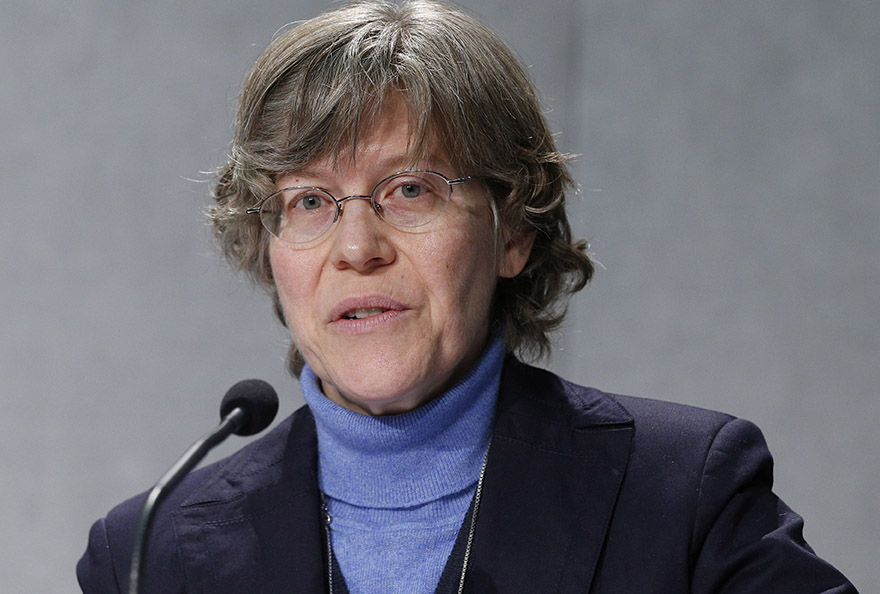
U.S. Sister Bernadette Reis, assistant to the director of the Vatican press office, speaks at a press conference to preview the Feb. 21-24 Vatican meeting on the protection of minors in the church, at the Vatican Feb. 18, 2019. (Paul Haring/CNS)
“That gives us great hope because
we leaders need to confront ourselves with prudential judgments that could have
been better,” but also need to “move forward,” the archbishop said. “If
something has gone wrong, we need to make it right.”
While the summit was not designed
to produce a new document, Archbishop Scicluna said a greater awareness of the
global reality of the problem and the serious responsibility of every bishop to
address it should lead to action around the world.
Participants will share what they
learned in Rome with other bishops and religious superiors and begin to take
action locally, the archbishop said. “That will need to be audited,” and Pope
Francis has asked the meeting’s organizing committee to stay in Rome after the
meeting to begin discussing follow-up.
The panel was asked by a
correspondent for LifeSiteNews if the summit would address “homosexuality among
the clergy” given that so many of the victims of clerical sexual abuse were
boys.
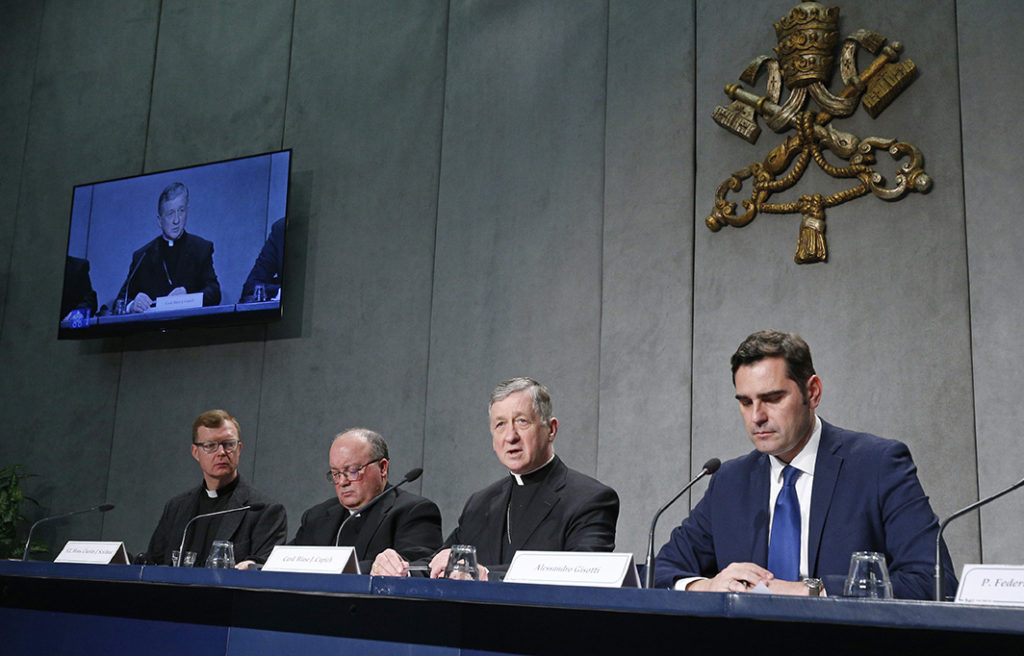
Jesuit Father Hans Zollner, Archbishop Charles J. Scicluna of Malta and Cardinal Blase J. Cupich of Chicago, all members of the organizing committee for the Feb. 21-24 Vatican meeting on the protection of minors in the church, attend a press conference to preview the meeting at the Vatican Feb. 18, 2019. Also pictured is Alessandro Gisotti, interim Vatican spokesman. (Paul Haring/CNS)
Cardinal Cupich said it is clear
the majority of clerical abuse cases involve priests abusing boys, but
high-level, independent studies, including the John Jay College of Criminal
Justice report in the United States and the report of Australia’s Royal
Commission into Institutional Responses to Child Sexual Abuse, “indicated that
homosexuality itself is not a cause.”
Both studies found that priest
abusers had more access to potential male victims and that poor screening of
candidates for the priesthood was a greater risk factor for abuse than
homosexuality was, he said.
Each of the first three days of the
meeting will be devoted to one aspect of the abuse crisis: responsibility,
accountability and transparency. Pope Francis and participants will attend a
penitential liturgy the evening of Feb. 23 and a Mass Feb. 24, both of which
will be livestreamed from the Sala Regia of the Apostolic Palace.
The main speakers for the meeting’s
general assemblies are: Cardinal Luis Antonio Tagle of Manila, Philippines;
Archbishop Scicluna; Colombian Cardinal Ruben Salazar Gomez of Bogota; Indian
Cardinal Oswald Gracias of Mumbai; Cardinal Cupich; Linda Ghisoni,
undersecretary of the Dicastery for Laity, the Family and Life; Sr. Veronica
Openibo, superior of the Society of the Holy Child Jesus; German Cardinal
Reinhard Marx of Munich and Freising; and Valentina Alazraki, a Mexican
television journalist.
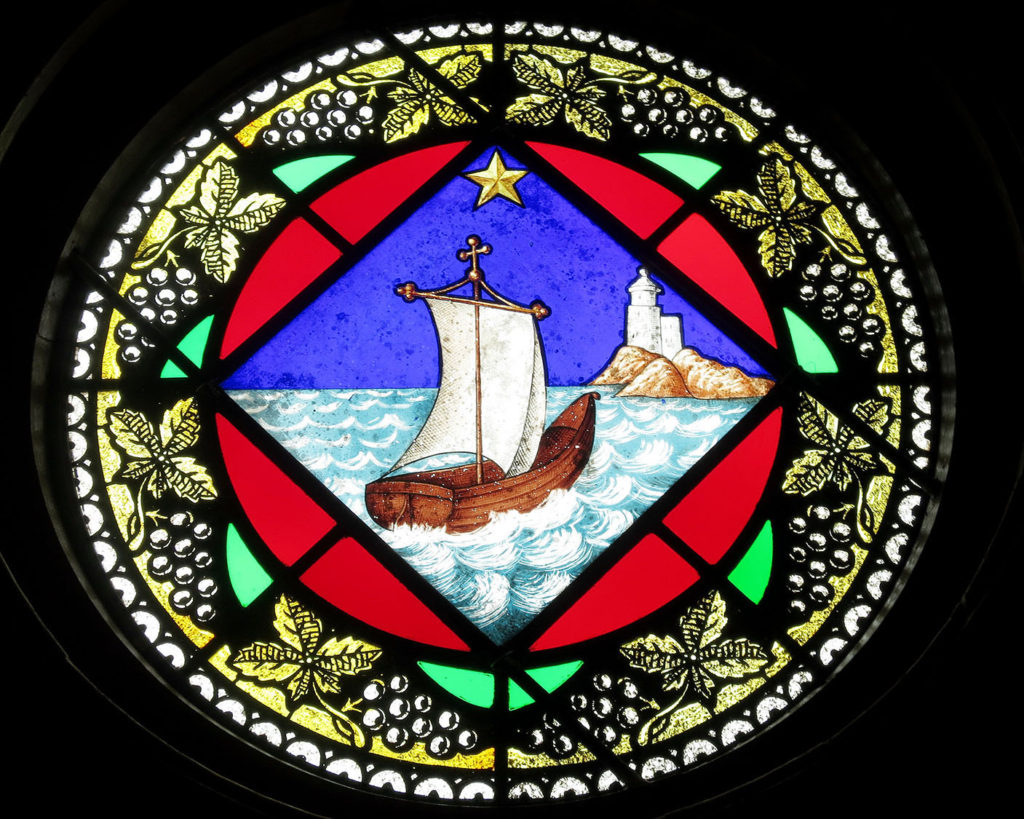
This stained-glass window in Holy Trinity Parish in Trinity, Indiana, depicts the Barque of Peter. For centuries, the Church has been referred to as the “Barque of St. Peter.” The barque, or boat, was a place of danger in several instances when Jesus and His Apostles sailed on the Sea of Galilee. (Public Domain/WIKIMEDIA COMMONS)
This stained-glass window in Holy Trinity Parish in Trinity, Indiana, depicts the Barque of Peter. For centuries, the Church has been referred to as the “Barque of St. Peter.” The barque, or boat, was a place of danger in several instances when Jesus and His Apostles sailed on the Sea of Galilee. (Public Domain/WIKIMEDIA COMMONS)
For centuries, the Church has been referred to as the “Barque of St. Peter” passing over the waters toward her heavenly destiny. It was in Peter’s boat that Jesus sat as He taught the crowds (Cf. Lk 5). The barque, or boat, was a place of danger in several instances when Jesus and His Apostles sailed on the Sea of Galilee. Sailors always need to be aware of storms at sea, especially of what would be called a perfect storm.
In my last column, I began to address the current scandals the Church has suffered due to the egregious behavior of certain priests over the past decades. For us as disciples of Jesus, it is important to face it squarely while remaining faithful to the Lord. Jesus knew full well that the Church would suffer the sins of her members throughout history, beginning with those of Judas and the other Apostles. When He established His Church, He promised that it would withstand the gates of hell. History has shown that the Church has endured other grave scandals over the centuries. In union with her Lord, we are most protected from storms of this world.
Today, let us consider some factors that contributed to the “perfect storm” in the culture and the Church over the past decades and that allowed for a setting where such evils could take place and not be dealt with in a swift and effective manner.
The Most Rev. Thomas J. Olmsted is the bishop of the Diocese of Phoenix. He was installed as the fourth bishop of Phoenix on Dec. 20, 2003, and is the spiritual leader of the diocese’s 1.1 million Catholics.
The Sexual Revolution led to changing attitudes toward human sexuality beginning in the middle of the last century and continuing to this day. This revolution promised “free love,” happiness and liberation from purported encumbrances of religion and tradition, particularly the Commandments. Church leaders, amidst these changes of thought and practice, though having the fullness of truth about the human person, failed to detect and address, with sufficient boldness, clarity and quickness, the lies that had crept into the culture. Sadly, the over-focus on sexual pleasure, the reducing and labeling of persons to their attractions (LGBTQ, etc.) and the viewing of persons as objects for pleasure have led to unprecedented numbers of infidelity, divorce, loneliness and abuse in the greater culture. The bitter fruit of such attitudes and acts surrounds us. Defense of sexual license, seen in recent laws like those passed in New York State, go so far as to permit the killing of a child up to the moment of birth.
Inadequate responses to this crisis, such as silence or harsh moralizing, have kept us from proclaiming God’s love in the face of a skewed understanding of the human person. An adequate response, however, did come from Pope St. John Paul II, who offered a deeper understanding of true love in what he called the Theology of the Body. It is a blessing to see deeper study of his Theology taking place now, study which proposes the good news of a greater call to love for which we are made by God.
Related to the general confusion about human love caused by the sexual revolution, we also suffered from an insufficient understanding of priestly celibacy. As Pope Francis recently stated, “celibacy is a gift to the Church” (Press Conference, Jan. 27, 2019). Indeed, in a world that believes that sexual pleasures must have free reign, even at the cost of innocent unborn children, there is need for those men and women who proclaim by their lives that ultimate love and fulfillment come from God and that self-mastery is certainly possible with God’s grace. Chaste celibacy, received as a gift of God and formed through spiritual and human direction, is a needed response to a false idea of “free love.”
Weak Seminaries and Theological Confusion
We see clearly now that Church leaders failed to adequately screen applicants for the priesthood during the confusion caused by the Sexual Revolution. In our seminaries, where young men are to be formed as true servants of Jesus and His Church, it was often assumed that the human and the spiritual qualities of the man were present and sufficient. This was a poor assumption, and it led to too little consideration of a man’s human virtues and of his relationship with Jesus Christ. As a result, some candidates unfit for ministry were accepted.
In the 1970s and ‘80s especially, many seminaries were places of dissent from orthodox teaching about Scripture, theology and especially sexual ethics. For example, the masculine spousal dimension in which a priest is called to love as Christ loved His Bride the Church (Cf. Eph 5) was not taught much at all. As a result, the priesthood was too frequently seen, not as a life of masculine love, but merely pertaining to certain ministerial functions. It was erroneously thought among some that the nature of the priesthood itself would change. Sadly, some seminaries became places with not only men who lacked a true calling from Jesus to the priesthood but even where a homosexual subculture sprang up. It is difficult to deny this problem considering the high percentage of abuse cases that occurred between men and post-pubescent boys.
Clericalism and Complacency
On several occasions, our Holy Father has stated that clericalism played a part in the current scandals as priests and bishops sought to cover up abuses. Disproportionate esteem for priests by the faithful, at times, was (and still can be) problematic. A priest is a man, a sinner redeemed by Christ, like everyone else; still, he is sent to serve, not to be served (Cf. Mk 10). He has a sacred calling as a custodian and minister of the Sacraments, especially Confession and the Eucharist, sacred mysteries essential for our salvation. Putting a priest on a pedestal not only fails to recognize his call to be a servant, but it can invite some to enter the priesthood for ulterior motives such as a “comfortable life.” Nothing could be farther from Jesus’ intentions for His priesthood.
One should enter the priesthood through a calling from Jesus to share in His mission. That mission is to proclaim Christ Crucified and Risen from the dead. Especially in this country, Church leaders have been slow to embrace this mission and settled for simply maintaining her membership rather than boldly evangelizing the culture. Instead of being Catholic out of conviction and a deep relationship with Jesus, the faith has become for too many something merely cultural. Some may say that they are Catholic because they are Irish or Mexican, rather than because they know Jesus Christ personally and that they love Him as their Savior and Lord. As Archbishop José H. Gómez of Los Angeles said, “Jesus Christ did not come to suffer and die so that He could make ‘cultural Catholics’” (“Evangelization, Education, and the Hispanic Catholic Future”). Such a faith lacks true conviction to follow Jesus when His teachings differ from ways of the culture.
Pope St. John Paul II, convinced that the answer to these scandals is great fidelity, said, “I sense that the moment has come to commit all of the Church’s energies to a new evangelization and to the mission ad gentes. No believer in Christ, no institution of the Church can avoid this supreme duty: to proclaim Christ to all peoples” (Redemptoris Missio 3).
While I could mention more things that went wrong in priestly formation, I will stop with these. Thankfully, many of these concerns are now being addressed well; I will write more about these in future columns. Like other times of storms in the Church, Jesus continues to renew His Mystical Body through holiness. You and I are called to be saints.
Just as with the storms experienced by the Apostles, it is Jesus who calms them as He likewise calms our hearts and reminds us to trust in Him.
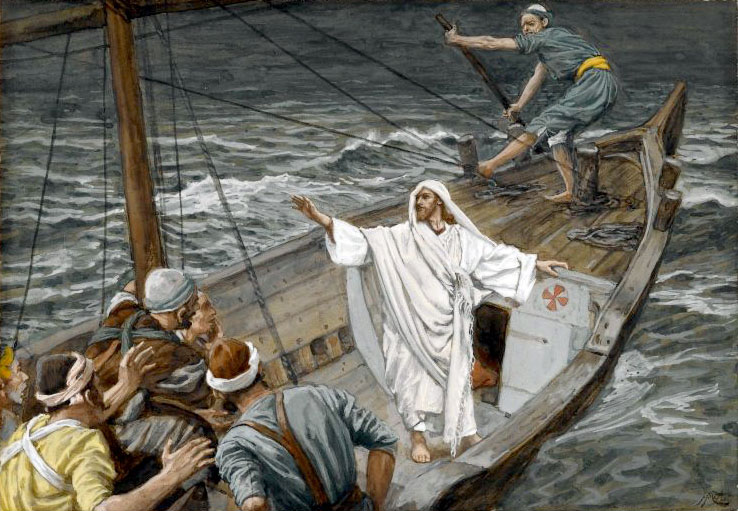
“Jesus Stilling the Tempest,” painted between 1886 and 1894 by realist French artist Jacques Joseph Tissot (1836-1902), depicts the Miracle of the Calming of the Storm from the Gospels of Matthew, Mark and Luke. Just as with the storms experienced by the Apostles, it is Jesus who calms them as He likewise calms our hearts and reminds us to trust in Him. (Public Domain/WIKIMEDIA COMMONS)
“Jésus calmant la tempête,” pintado entre los años 1886 y 1894 por el pintor y grabador francés Joseph Tissot (1836-1902), representando el Milagro de la Tempestad Calmada de los Evangelios de Mateo, Marcos y Lucas. Como los temores que los Apóstoles experimentaron, es Jesucristo Quien calma los temores y nuestros corazones, y nos recuerda confiar en Él. (Dominio Público/WIKIMEDIA COMMONS)
“Jésus calmant la tempête,” pintado entre los años 1886 y 1894 por el pintor y grabador francés Joseph Tissot (1836-1902), representando el Milagro de la Tempestad Calmada de los Evangelios de Mateo, Marcos y Lucas. Como los temores que los Apóstoles experimentaron, es Jesucristo Quien calma los temores y nuestros corazones, y nos recuerda confiar en Él. (Dominio Público/WIKIMEDIA COMMONS)
Durante siglos, la Iglesia se ha referido como la “Barca de San Pedro” pasando por encima de las aguas hacia su destino celestial. Fue en el barco de Pedro que Jesús se sentó mientras Él enseñó a las multitudes (cf. Lc 5). La barca era un lugar de peligro en varias ocasiones cuando Jesús y Sus Apóstoles navegaban en el mar de Galilea. Los marineros siempre deben ser conscientes de las tormentas en el mar, sobre todo de lo que se llamaría una tormenta perfecta.
En mi columna más reciente, comencé a dirigir los actuales escándalos que la Iglesia ha sufrido debido al atroz comportamiento de algunos sacerdotes en las últimas décadas. Para nosotros, como discípulos de Jesús, es importante enfrentarlo directamente permaneciendo fieles al Señor. Jesús sabía muy bien que la Iglesia sufriría los pecados de sus miembros a lo largo de la historia, empezando por los de Judas y los demás Apóstoles. Cuando Él estableció Su Iglesia, prometió que soportaría las puertas del infierno. La historia ha demostrado que la Iglesia ha soportado otros escándalos graves durante los siglos. En unión con su Señor, estamos más protegidos de las tormentas de este mundo.
Ahora, veamos algunos factores que contribuyeron a la “tormenta perfecta” en la cultura y la Iglesia en las últimas décadas y que permitieron un ambiente donde podrían tomar lugar tales males y no se trataron con ellos de una manera rápida y eficaz.
La Revolución Sexual
El Reverendísimo Thomas J. Olmsted es le obispo de la Diócesis de Phoenix. Fue instalado como el cuatro obispo de Phoenix el 20 de diciembre de 2003, y es el líder espiritual de los 1,1 millones católicos en la diócesis.
La Revolución Sexual condujo al cambio de actitudes hacia la sexualidad humana a partir de mediados del siglo pasado y continúa a este día. Esta revolución prometió “amor libre”, felicidad y liberación de gravamen aparente de la religión y tradición, especialmente los Mandamientos. Líderes de la Iglesia, en medio de estos cambios de pensamiento y práctica, aunque tiene la plenitud de la verdad sobre la persona humana, fracasó en detectar y abordar, con suficiente audacia, claridad y rapidez, las mentiras que se habían colado en la cultura. Lamentablemente, el enfoque excesivo en el placer sexual, la reducción y etiquetado de las personas a sus atracciones (LGBTQ, etc.) y la visualización de las personas como objetos de placer han llevado a un número sin precedente de infidelidad, divorcio, soledad y abuso en la mayor cultura. La fruta amarga de estas actitudes y actos nos rodea. La defensa de licencia sexual, vista en leyes recientes como la que fue aprobada en el estado de Nueva York, va tan lejos como para permitir el asesinato de un niño hasta el momento del nacimiento.
Respuestas inadecuadas a esta crisis, como silencio o moralizar áspero, nos privaron de proclamar el amor de Dios ante una sesgada comprensión de la persona humana. Una respuesta adecuada, sin embargo, llegó desde el Papa San Juan Pablo II, quien ofreció una comprensión más profunda del verdadero amor en lo que él llamó la Teología del Cuerpo. Es una bendición ver estudio más profundo de su teología tomando lugar ahora, estudio que propone la buena noticia de una mayor llamada al amor que somos hechos por Dios.
Relacionado con la confusión general sobre el amor humano causada por la Revolución Sexual, también sufrió de una insuficiente comprensión del celibato sacerdotal. Como ha dicho el Papa Francisco, “el celibato es un don para la Iglesia” (Conferencia de prensa, el 27 de enero del 2019). De hecho, en un mundo que cree que placeres sexuales deben tener reinado libre, incluso a costa de inocentes niños no nacidos, hay necesidad de los hombres y mujeres que proclaman por sus vidas que el último amor y la plenitud provienen de Dios y que el autodominio es ciertamente posible con la gracia de Dios. El celibato casto, recibido como un don de Dios y formado por medio de la dirección espiritual y humana, es una respuesta necesaria a una idea falsa de “amor libre”.
Los Seminarios Débiles y Confusión Teológica
Vemos claramente ahora que los líderes de la Iglesia fracasaron en evaluar adecuadamente a los solicitantes para el sacerdocio durante la confusión causada por la Revolución Sexual. En los seminarios, donde hombres jóvenes son formados como verdaderos siervos de Jesús y Su Iglesia, a menudo se asumieron que las cualidades humanas y espirituales del hombre estaban presentes y suficientes. Esto fue una mala suposición, y condujo a muy poca consideración de las virtudes humanas de un hombre y de su relación con Jesucristo. Como resultado, algunos candidatos no aptos para ministerio fueron aceptados.
En las décadas de 1970 y 1980 especialmente, muchos seminarios eran lugares de disidencia en las enseñanzas ortodoxas sobre las Escrituras, la teología y sobre todo la ética sexual. Por ejemplo, la dimensión conyugal masculina en la que un sacerdote está llamado a amar como Cristo amó a Su Novia la Iglesia (cf. Ef 5) no era enseñada mucho en absoluto. Como resultado, el sacerdocio era visto con demasiada frecuencia, no como una vida de amor masculino, sino perteneciendo sólo a ciertas funciones ministeriales. Erróneamente se pensaba entre algunos que cambiaría la naturaleza del sacerdocio mismo. Lamentablemente, algunos seminarios se convirtieron en lugares con no sólo los hombres que carecían de un verdadero llamado de Jesús al sacerdocio pero incluso donde surgió una subcultura homosexual. Es difícil de negar este problema teniendo en cuenta el alto porcentaje de casos de abusos ocurridos entre hombres y niños post-pubescentes.
El Clericalismo y la Autocomplacencia
En varias ocasiones, nuestro Santo Padre ha dicho que el clericalismo desempeñó un papel en los escándalos actuales en que los sacerdotes y obispos intentaron encubrir los abusos. La estima desproporcionada para los sacerdotes por los fieles, a veces, era (y todavía puede ser) problemático. Un sacerdote es un hombre, un pecador redimido por Cristo, como todos los demás; aún así, es enviado para servir, no para ser servido (cf. Mc 10). Tiene un llamado sagrado como custodio y ministro de los sacramentos, especialmente la Confesión y la Eucaristía, sagrados misterios esenciales para nuestra salvación. Poner a un sacerdote en un pedestal, no sólo no reconoce su llamado a ser un siervo, pero puede invitar a algunos a entrar en el sacerdocio para segundas intenciones como una “vida cómoda”. Nada podría estar más lejos de la intención de Jesús al sacerdocio.
Uno debe entrar en el sacerdocio por medio de un llamado de Jesús a compartir Su misión. Esa misión es proclamar a Cristo crucificado y resucitado de entre los muertos. Especialmente en este país, líderes de la Iglesia han sido lentos para abrazar esta misión y se han instalados para simplemente mantener la membresía Católica en lugar de evangelizar audazmente la cultura. En lugar de ser Católica por convicción y una profunda relación con Jesús, la fe ha sido para muchos algo meramente cultural. Algunos pueden decir que son Católicos porque son irlandeses o mexicanos, en lugar de porque ellos conocen a Jesucristo personalmente y que lo aman como su Salvador y Señor. Como dijo recientemente el Arzobispo José H. Gómez, de Los Ángeles, “Jesucristo no vino a sufrir y a morir para hacer ‘Católicos culturales’” (“La predicación y la enseñanza”, el 8 de junio del 2009). Esa fe carece de verdadera convicción para seguir a Jesús cuando sus enseñanzas difieren de las formas de la cultura.
El Papa San Juan Pablo II, convencido que la repuesta a estos escándalos era gran fidelidad, dijo, “Preveo que ha llegado el momento de dedicar todas las fuerzas eclesiales a la nueva evangelización y a la misión ad gentes. Ningún creyente en Cristo, ninguna institución de la Iglesia puede eludir este deber supremo: anunciar a Cristo a todos los pueblos” (Redemptoris Missio 3).
Mientras que podría mencionar más cosas que iban mal en la formación sacerdotal, me detengo con éstos. Afortunadamente, muchas de estas preocupaciones ahora se tratan bien; escribiré más sobre esto en futuras columnas. Como en otros tiempos de tormentas en la Iglesia, Jesús continúa renovando Su Cuerpo Místico a través de la santidad. Tú y yo estamos llamados a ser santos.
Al igual que con las tormentas experimentadas por los Apóstoles, es Jesús quien asimismo calma nuestros corazones y nos recuerda a confiar en Él.
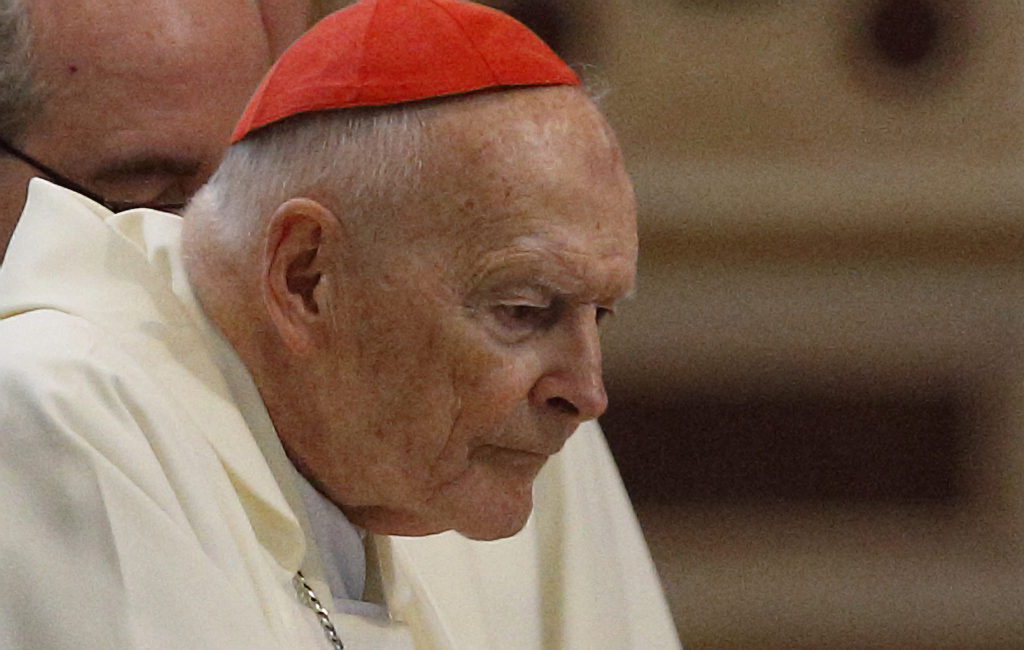
Then-Cardinal Theodore E. McCarrick attends a Mass in Rome April 13. The prelate, no longer a member of the College of Cardinals, has been accused of abusing a minor decades ago when he was a priest and being sexually inappropriate with seminarians in more recent years as a bishop. He has denied the allegations but his case roiled the U.S. Catholic Church in 2018 amid a growing abuse crisis. (CNS photo/Paul Haring)
Then-Cardinal Theodore E. McCarrick attends a Mass in Rome April 13. The prelate, no longer a member of the College of Cardinals, has been accused of abusing a minor decades ago when he was a priest and being sexually inappropriate with seminarians in more recent years as a bishop. He has denied the allegations but his case roiled the U.S. Catholic Church in 2018 amid a growing abuse crisis. (CNS photo/Paul Haring)
VATICAN CITY (CNS) — Pope Francis has confirmed the removal from the priesthood of Theodore E. McCarrick, the 88-year-old former cardinal and archbishop of Washington.
The Vatican announced the decision Feb. 16, saying he was found guilty of “solicitation in the sacrament of confession and sins against the Sixth Commandment with minors and with adults, with the aggravating factor of the abuse of power.”
A panel of the Congregation for Doctrine of the Faith found him guilty Jan. 11, the Vatican said. McCarrick appealed the decision, but the appeal was rejected Feb. 13 by the congregation itself. McCarrick was informed of the decision Feb. 15 and Pope Francis “recognized the definitive nature of this decision made in accord with law,” making a further appeal impossible.
By ordering McCarrick’s “dismissal from the clerical state,” the decision means that McCarrick loses all rights and duties associated with being a priest, cannot present himself as a priest and is forbidden to celebrate the sacraments, except to grant absolution for sins to a person in imminent danger of death.
The only church penalty that is more severe is excommunication, which would have banned him from receiving the sacraments. The other possible punishment was to sentence him to a “life of prayer and penance,” a penalty often imposed on elderly clerics; the penalty is similar to house arrest and usually includes banning the person from public ministry, limiting his interactions with others and restricting his ability to leave the place he is assigned to live.
McCarrick’s punishment is the toughest meted out to a cardinal by the Vatican in modern times.
McCarrick’s initial suspension from ministry and removal from the College of Cardinals in 2018 came after a man alleged that McCarrick began sexually abusing him in 1971 when he was a 16-year-old altar server in New York; the Archdiocese of New York found the allegation “credible and substantiated” and turned the case over to the Vatican.
At that point, in June, then-Cardinal McCarrick said he would no longer exercise any public ministry “in obedience” to the Vatican, although he maintained he was innocent.
In late July, the pope accepted McCarrick’s resignation from the College of Cardinals and ordered him to maintain “a life of prayer and penance” until the accusation that he had sexually abused a minor could be examined by a Vatican court.
In the weeks that followed the initial announcement, another man came forward claiming he was abused as a child by McCarrick, and several former seminarians spoke out about being sexually harassed by the cardinal at a beach house he had in New Jersey.
Since September, McCarrick has been living in a Capuchin friary in rural Kansas.
The allegations against McCarrick, including what appeared to be years of sexual harassment of seminarians, also led to serious questions about who may have known about his activities and how he was able to rise to the level of cardinal.
At least two former seminarians reported the sexual misconduct of McCarrick to their local bishops as far back as the 1990s. The Archdiocese of Newark and the dioceses of Metuchen and Trenton made a settlement with one man in 2005, and the Diocese of Metuchen settled with the other man in 2007.
A spokeswoman for the Diocese of Metuchen told Catholic News Service in August that both settlements were reported to the Vatican nuncio in Washington. The two archbishops who held the position of nuncio in 2004 and 2006 have since died.
“Abuse and its cover-up can no longer be tolerated, and a different treatment for bishops who have committed or covered up abuse, in fact, represents a form of clericalism that is no longer acceptable.”
Archbishop Carlo Maria Vigano, who served as nuncio in Washington from 2011-2016, made headlines in mid-August when he called for Pope Francis to resign, claiming the pope had known of allegations against McCarrick and had lifted sanctions imposed on McCarrick by now-retired Pope Benedict XVI.
The former nuncio later clarified that Pope Benedict issued the sanctions “privately” perhaps “due to the fact that he (McCarrick) was already retired, maybe due to the fact that he (Pope Benedict) was thinking he was ready to obey.”
In an open letter to Archbishop Vigano released in October, Cardinal Marc Ouellet, prefect of the Congregation for Bishops since 2010, said that in 2011, “I told you verbally of the situation of the bishop emeritus (McCarrick) who was to observe certain conditions and restrictions because of rumors about his behavior in the past.”
Then-Cardinal McCarrick “was strongly exhorted not to travel and not to appear in public so as not to provoke further rumors,” Cardinal Ouellet said, but “it is false to present these measures taken in his regard as ‘sanctions’ decreed by Pope Benedict XVI and annulled by Pope Francis. After re-examining the archives, I certify that there are no such documents signed by either pope.”
Cardinal Ouellet’s letter was published a few days after the Vatican issued a statement saying that it would, “in due course, make known the conclusions of the matter regarding Archbishop McCarrick.”
In addition, Pope Francis ordered “a further thorough study of the entire documentation present in the archives of the dicasteries and offices of the Holy See regarding the former Cardinal McCarrick in order to ascertain all the relevant facts, to place them in their historical context and to evaluate them objectively.”
The Vatican statement said it is aware “that, from the examination of the facts and of the circumstances, it may emerge that choices were made that would not be consonant with a contemporary approach to such issues. However, as Pope Francis has said: ‘We will follow the path of truth wherever it may lead.’ Both abuse and its cover-up can no longer be tolerated, and a different treatment for bishops who have committed or covered up abuse, in fact, represents a form of clericalism that is no longer acceptable.”
McCarrick had been ordained to the priesthood in 1958 for the Archdiocese of New York. James, the first child he baptized after ordination, claimed that from the time he was 11 years old and for some 20 years, McCarrick sexually abused him.
In 1977, McCarrick was ordained an auxiliary bishop for the Archdiocese of New York and, in 1981, St. John Paul II named him the first bishop of the Diocese of Metuchen, New Jersey. Five years later, he became the archbishop of Newark, New Jersey, and in November 2000 St. John Paul named him archbishop of Washington, D.C., and made him a cardinal early in 2001. McCarrick retired in 2006.
At least three other cardinals have been accused of sexual abuse or impropriety in the past 25 years. In the 1990s Austrian Cardinal Hans Hermann Groer was forced to step down as archbishop of Vienna and eventually to relinquish all public ministry after allegations of the sexual abuse and harassment of seminarians and priests; he died in 2003 without having undergone a canonical trial.
Pope Benedict XVI forced Scottish Cardinal Keith O’Brien to step down as archbishop of St. Andrews and Edinburgh in early 2013; after an investigation, Pope Francis withdrew his “rights and duties” as a cardinal, although he retained the title until his death in March 2018.
Australian Cardinal George Pell, facing charges of abusing minors, has been on leave from his post as head of the Vatican Secretariat for the Economy since mid-2017; he reportedly was found guilty of some charges in December, but the court has imposed an injunction on press coverage of the trial. Pope Francis told reporters he would not speak about the case until the court proceedings have run their course.
In theory, the now motionless Mars Rover could have captured a decent view of a Phoenix school’s winning project.
Instead, earthlings got that glimpse as junior high school students not just from Ss. Simon and Jude, but from across the state presented their written research and scaled models of what it would take to colonize Phobos, the largest and fastest of the two small moons that orbit Mars. The competition was part of the annual Aerospace Challenge that accompanies the Valley’s Fiesta Bowl festivities.
The challenge came with two main purposes. First, provide a sustainable base on Mars’ moon with minimal support from its Earthly neighbor. As a fun bonus, a secondary mission of the extracurricular challenge had students designing a team sport to be played “outdoors” in low-gravity.
Scored together, both challenges produced top finishing teams from two Catholic schools. Ss. Simon and Jude’s “Trinity 9,” a team of eighth-graders, returned from the final round of competition Feb. 9 the ultimate winners. They won a week-long experience at Space Camp in Alabama this summer and an on-field appearance at the 2019-2020 Fiesta Bowl game.
“Trinity 9,” an eighth-grade team from Ss. Simon and Jude Cathedral, earned first place in the Aerospace Challenge Feb. 9. The extracurricular challenge had them researching and sustaining life on one of Mars’ moons. (courtesy photo)
St. John XXIII students were among three other finalists in the 2019 “Titan Division” for seventh- and eighth-graders. The school with a lion mascot earned several other reasons to be proud of the pride. Separate teams earned awards for best team name, team spirit and honorable mention.
All participants emerged with a greater sense of teamwork, creative thinking and the type of skills needed in STEM careers.
This marked the seventh time the cathedral school took home top honors since the Aerospace Challenged launched in 1999. Only one other school, Challenger Charter in Glendale, has been a repeat winner with championship titles in 2009 and 2017.
VATICAN CITY (CNS) — Even if Christians struggle to recognize him with his “torn clothes (and) dirty feet,” Jesus is present in the migrants and refugees who seek safety and a dignified life in a new land, Pope Francis said.
If Jesus’ words, “Whatever you did for one of these least brothers of
mine, you did for me,” are true, the pope said, then “we must begin to
thank those who give us the opportunity for this encounter, namely, the
‘others’ who knock on our doors, giving us the possibility to overcome
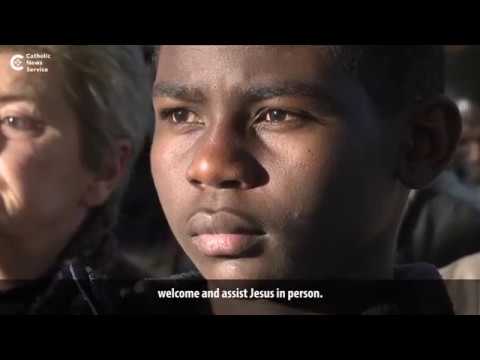
our fears in order to encounter, welcome and assist Jesus in person.”
Pope Francis spoke about overcoming fear and welcoming others during a Mass he celebrated Feb. 15 at a church-run retreat and conference center in Sacrofano, about 15 miles north of Rome.
The Mass was part of a conference titled, “Welcoming Communities: Free of Fear,” which was sponsored by the Italian bishops’ office for migration, Caritas Italy and Jesuit Refugee Service’s Centro Astalli. The 500 participants included representatives of parishes, religious orders and Catholic-run agencies assisting migrants and refugees, as well as individual families who host newcomers.
At a time when Italy’s government is trying to severely restrict immigration, Caritas Italy said the meeting was designed to encourage those working with migrants and refugees and to counteract fear of migration by highlighting how individuals and the entire country benefit from welcoming them.
The prayers of the faithful, most of which were read by migrants, included asking God to help pastors educate all Catholics to welcome migrants and refugees and to help government leaders promote tolerance and peace. Ending, as is traditional, with a prayer for the dead, the petitions made special mention of people who were killed for their faith.
In his homily, Pope Francis noted how the ancient Israelites had to overcome their fear of crossing the Red Sea and trust God in order to make it to the promised land. And, when the disciples were on the lake in a storm, Jesus told them to not be afraid and assured them he was there with them.
“The Lord speaks to us today and asks us to allow him to free us of our fear,” the pope said.
“Fear is the origin of slavery,” just as it was for the ancient Israelites, he said, “and it is also the origin of every dictatorship because, on the fear of the people, the violence of the dictator grows.”
Of course, the pope said, people naturally are afraid of what they don’t understand and of strangers who speak another language and have another culture. The Christian response is not to play on those fears, but to educate people and help them turn strangers into friends.
“We are called to overcome fear and open ourselves to encounter,” he said. “The encounter with the ‘other,’ then, is also an encounter with Christ. He himself told us this. It is he who knocks on our door hungry, thirsty, a stranger, naked, sick and imprisoned, asking to be met and assisted.”
Pope Francis asked Catholics who have had “the joy” of assisting migrants and refugees to “proclaim it from the rooftops, openly, to help others do the same, preparing themselves to encounter Christ and his salvation.”
Pope Francis kisses relics of saints before placing them in the new altar during Mass at the Cathedral Basilica of Santa Maria la Antigua during World Youth Day in Panama City Jan. 26. Also pictured is Msgr. Guido Marini, papal master of ceremonies. (CNS photo/Vatican Media)
By Carol Glatz Catholic News Service
VATICAN CITY (CNS) — The sacred liturgy is meant to help the people of God conform their heart, mind and actions more closely to Christ, Pope Francis said.
“We know that it is not enough to change liturgical books to improve
the quality of the liturgy. To just do this would be a deception,” he
said.
“For life to truly be a prayer that is pleasing to God, a change of heart is in fact necessary,” he said Feb. 14 during an audience with members of the Congregation for Divine Worship and the Sacraments.
The pope encouraged the congregation to continue helping the church
and noted how the Vatican and individual bishops’ conferences are meant
to work together through dialogue, cooperation and synodality.
“The Holy See, in fact, does not stand in for the bishops, but rather
collaborates with them in order to serve the prayerful vocation of the
church in the world in its wealth of various languages and cultures.”
The path to pursue, he said, is one of ecclesial communion “in which unity and variety find harmony. It’s a question of harmony.”
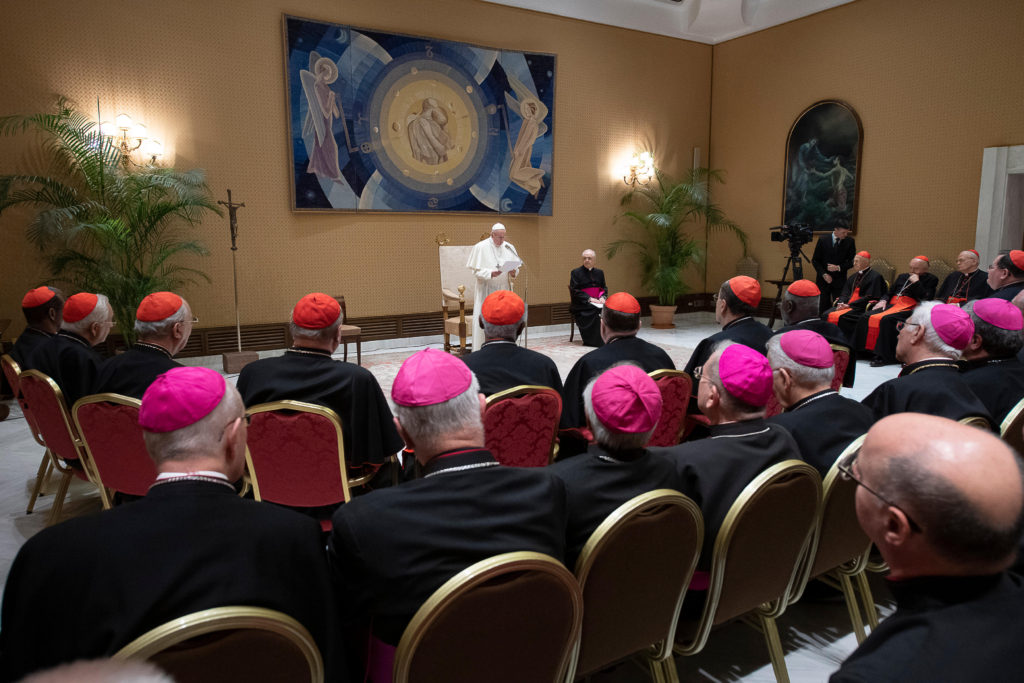
Pope Francis speaks to members of the Congregation for Divine Worship and the Sacraments during their plenary meeting at the Vatican Feb. 14. The pope urged the congregation to promote a love of and appreciation for the liturgy, avoiding “sterile ideological polarizations” and attitudes that would view the Mass as a place for “do-it-yourself” adaptations. (CNS photo/Vatican Media)
Their fundamental task is to help “spread among the people of God the
splendor of the living mystery of the Lord, who is manifest in the
liturgy,” and to help the faithful love the liturgy as an experience
where they encounter the Lord together with their brothers and sisters,
Pope Francis said.
“The liturgy is life that forms, not an idea to understand,” he said,
which is why it is important the liturgy, like other areas in life, not
end up being the object of “sterile ideological polarizations” that
often emerge when one’s own ideas are held as valid for all contexts.
If people are inspired by a need to react against some of the
“insecurities” in today’s world, “they risk falling back into a past
that no longer exists or escaping into a supposed future.”
“The starting point instead is to recognize the reality of the sacred
liturgy, a living treasure that can not be reduced to tastes, recipes
and trends, but is welcomed with docility and promoted with love”
because it is an irreplaceable source of nourishment for the faithful,
he said.
“The liturgy is not a ‘do-it-yourself’ place,” he said.
“The ‘we’ and not the ‘I’ — the real community, not the ideal subject — resound in the prayers and the gestures,” he said.
The Blessed Mother quietly meditated on how the Lord worked
in her life. That is, until she visited Elizabeth.
Then a 10-verse canticle and a three-month visit ensued.
Today’s Catholic women follow a similar pattern. Thoughts swirl in their minds and hearts while mindfully carving out time to reflect amongst themselves. In a particular way, this year’s diocesan Catholic Women’s Conference held Feb. 9 at Xavier College Preparatory served not just as a forum for that, but a springboard for those who want to go deeper and more frequently.
Spread in between three longer talks and a short table discussion sat an equal amount of invitations to join or expand area apostolates for Catholic women. For women who often care for others first and themselves somewhere down the line, the conference posed a question point blank at them: “Who Does He Say You Are?”
Terry Polakovic, the keynote speaker, co-founder of ENDOW — Educating on the Nature and Dignity of Woman — tackled that theme by sharing the stories of notable Catholic women throughout history with the conference’s nearly 400 women and the roles they played within the Church and secular culture. She put it in context with key Church documents in the last 140 years pertaining to human life and love.
Each period in which the six popes wrote these documents responded to something in the secular world that that somehow opposed God’s design for life, love and family. It was all something Polakovic details in her new book, “Life and Love: Opening Your Heart to God’s Design.”
Kerin Olson, among the younger — and repeat — attendees in the crowd, soaked up the history lesson wrapped in a Catholic perspective. The St. Helen parishioner and senior at Xavier learned about the effects of abortion and birth control that followed “Humanae Vitae” and left better equipped to dialogue with others of any viewpoint.
“We have something to rely on that we know is the truth, so we don’t just have to listen to the culture,” Olson said.
Roberta Bazaldua, president of Catholic Women of Phoenix which coordinates the annual conference, hoped women found confidence in Polakovic’s research that the Church has long spoken to women about their roles in the family, culture and Church.
“Terry’s insight, from her years with ENDOW and her research into the encyclicals and apostolic exhortations of the past 140 years, helps to bring these truths to light in a much more accessible way,” Bazaldua said. “Our hope is that her presentation would encourage women to read these documents and discover for themselves how important our role is as daughters of the Church.”
Deanna Kochman, a St. Andrew the Apostle parishioner, left the women’s conference relieved and inspired. She was glad to hear abortion being spoken about and clarified during a group panel.
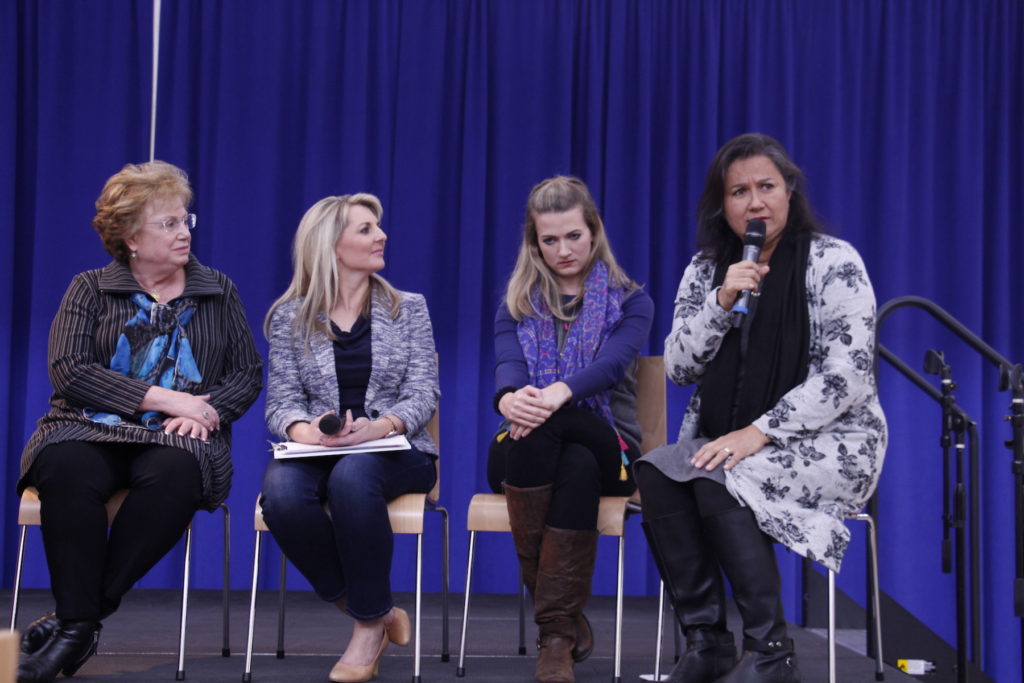
Abortion, particularly with regard to eugenics, was the first topic addressed during a pre-submitted Q-and-A panel discussion. Polakovic and two local Catholic leaders sat on the panel with all of them weighing in. One clarified statistics and Planned Parenthood’s not-so-hidden agenda to minimize certain races, as reported by outlets such as Live Action. Another offered tips for dialoguing with the pro-choice side, even if you don’t personally have all the answers.
Armida Escárcega shares some thoughts about the role women have in the Church and culture during a panel discussion that closed out the Phoenix Catholic Women’s Conference Feb. 9 at Xavier College Preparatory. (Ambria Hammel/CATHOLIC SUN)
Armida
Escárcega, a Theology of the Body presenter, family planning consultant at
Life Choices Women’s Clinic and radio host, among other titles, shared how she
was verbally attacked within “WhatsApp” for a “life”-related post.
“Not everyone comes readily into the Church and accepts everything. It’s a struggle,” Polakovic offered.
The key is to journey with one another, the women agreed. Whether it’s regarding the abortion issue, sex abuse headlines or anything else a person struggles with related to Church teaching, companionship is the answer. “That it’s done one-on-one. That’s how we enjoy ourselves. That’s who we women are,” Escárcega said.
At the same time, Danielle Burr, host of the diocesan podcast, “I Got Issues,” and a former youth minister, emphasized the importance of being a faith-filled woman. It’s crucial to develop in that way and not just serve others.
“I’m really not going to win anyone [for Christ] if they
don’t see that I love Him,” Burr said.
The panel also reflected on the possibility of the Church
getting smaller and what that looked like. Most agreed that it is, but it’s OK
if that means a more pure Church. That doesn’t become an excuse, however, to
not go out and witness to Jesus, Burr said.
No matter what, “be hard on the issues, gentle on the
person,” she said. “Our Lord was so perfect with that.”
Clare Dwyer, a St. Thomas the Apostle parishioner, editor of SpiritualDirection.com, Catholic blogger and more, summed it up nicely as panel moderator: “When you enter into someone else’s interior life, you need to take off your shoes because you’re entering holy ground.”
Beyond the conference
Ideas and events for Catholic women
to join:
ENDOW group
(Educating on the Nature and Dignity of Women)
Magis Women doing
more for Christ and therefore, others
Blessed is She — Blessed
Brunch Feb. 16 in Scottsdale and retreat Feb.
22 at St. Andrew the Apostle and community group
every third Monday at St. Andrew the Apostle
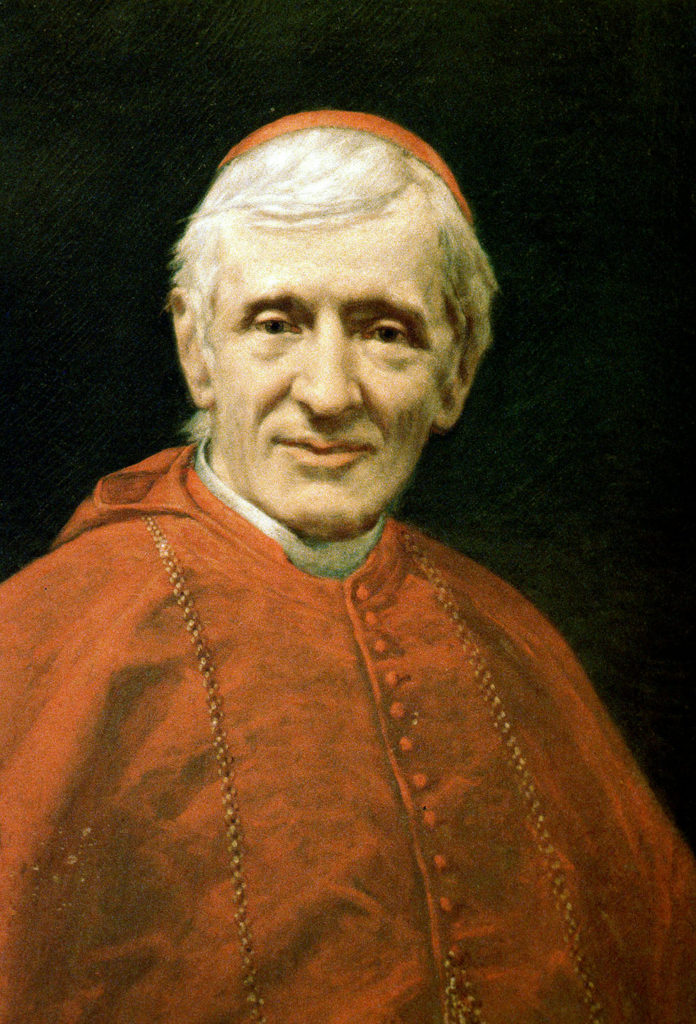
Cardinal John Henry Newman, who was one of the great intellectual minds of the Catholic Church in the 19th century, is seen in a portrait in a church in Rome. Deacon John Sullivan, 70, of Marshfield, Mass., says his healing from a debilitating spinal condition was due to the miraculous intercession of Cardinal Newman. (CNS, via Crosiers) (April 30, 2009) See DEACON-NEWMAN April 30, 2009.
By Cindy Wooden Catholic News Service
Cardinal John Henry Newman, who was one of the great intellectual minds of the Catholic Church in the 19th century, is seen in a portrait in a church in Rome. Pope Francis signed a decree Feb. 12 advancing his sainthood cause. (CNS, via Crosiers)
VATICAN CITY (CNS) — Pope Francis
has signed a decree recognizing a miracle attributed to the intercession of
Blessed John Henry Newman, the English cardinal, clearing the way for his
canonization.
The Vatican announced Feb. 13 that
Pope Francis had signed the decree the day before.
Also Feb. 12, he formally
recognized that the late Hungarian Cardinal Jozsef Mindszenty, jailed and
exiled by the communists, had lived the Christian virtues in a heroic way; the
recognition is an early step in the sainthood process.
In the sainthood cause of Blessed
Newman, Bishop Philip Egan of Portsmouth had reported in November that the
proposed miracle involved a young law graduate from the Archdiocese of Chicago
who faced life-threatening complications during her pregnancy but suddenly
recovered when she prayed to the English cardinal for help.
Blessed Newman was born in London
in 1801 and was ordained an Anglican priest in 1825. He was a leader in the
Oxford Movement in the 1830s, which emphasized the Catholic roots of
Anglicanism.
After a succession of clashes with
Anglican bishops made him a virtual outcast from the Church of England, he
joined the Catholic Church at the age of 44 and was ordained a Catholic priest
in 1846. Pope Leo XIII made him a cardinal in 1879 while respecting his wishes
not to be ordained a bishop.
A theologian and poet, he died in
1890 and his sainthood cause was opened in 1958. Pope Benedict XVI beatified
him in Birmingham, England, in 2010.
The date for his canonization will
be announced after Pope Francis holds a meeting of cardinals to formalize their
support for declaring Blessed Newman a saint.
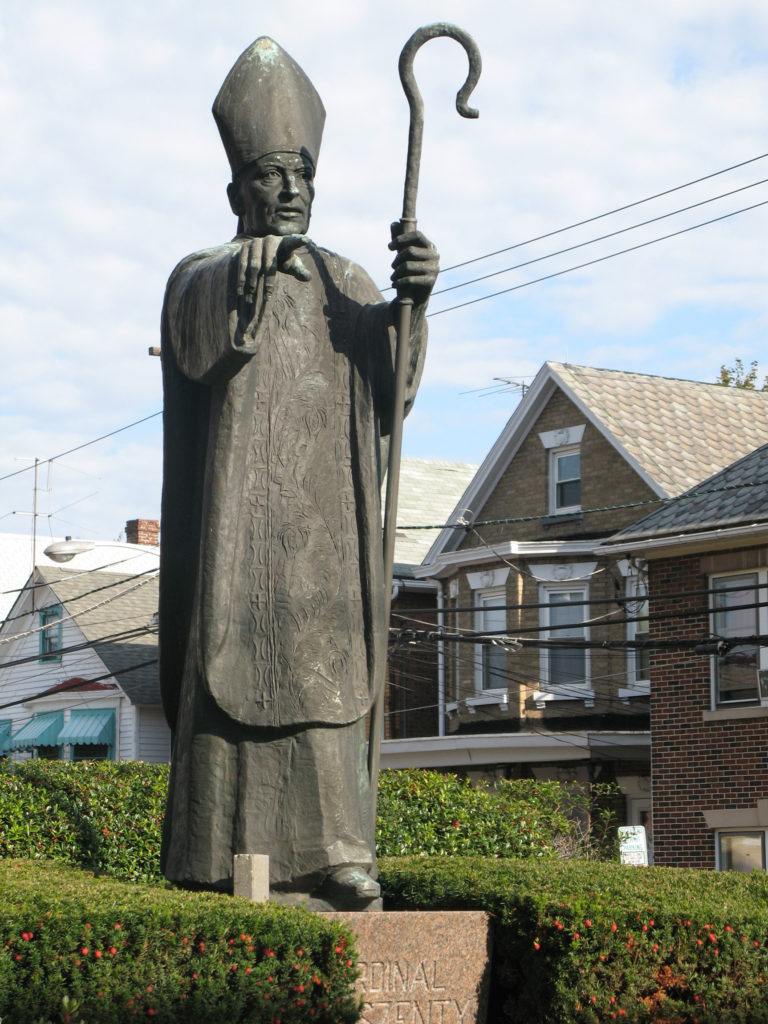
A statue of Cardinal Josef Mindszenty of Hungary is seen in a garden outside St. Ladislaus Church in New Brunswick, N.J., Oct. 19, 2009. Pope Francis signed a decree Feb. 12 advancing the sainthood cause of Cardinal Mindszenty, who had been jailed and exiled by the communists. (James McEvoy/CNS, via Catholic Spirit)
The sainthood cause of Cardinal
Mindszenty, who led the Archdiocese of Esztergom, Hungary’s primatial see, is
in its initial stages. The decree of “heroic virtues” means he can be called “venerable.”
Born March 29, 1892, in what was
Austro-Hungary, he was ordained to the priesthood in 1915, named archbishop in
1945 and a cardinal in 1946.
Arrested by the communists in 1948
on charges of treason, Cardinal Mindszenty was tortured into confessing. He was
sentenced to life in prison.
During the Hungarian Revolution of
1956, he was released, but when Soviet forces invaded Hungary to restore the Communist
government, he took refuge in the U.S. Embassy in Budapest. He spent more than
15 years there.
After negotiations with Pope St.
Paul VI, the cardinal was allowed to leave Hungary in 1971. He died in exile in
Austria in 1975. Once democracy was restored, his body was reburied in Hungary
in 1991.
In other decrees signed Feb. 12,
Pope Francis recognized:
The miracle needed for the canonization of Blessed Thresia Chiramel Mankidiyan, the Indian founder of the Sisters of the Holy Family. She died in 1926 and was beatified in 2000.
The martyrdom of Jesuit Father Victor Emilio Moscoso Cardenas, who was killed in Ecuador in 1897.
The heroic virtues of Fr. Giovanni Battista Zuaboni, an Italian diocesan priest who founded the Company of the Holy Family. He died in 1939.
The heroic virtues of Spanish Jesuit Father Emmanuel Garcia Nieto, who died in 1974.
The heroic virtues of Sr. Letizia Formai, the Italian founder of the Missionary Sisters of the Good News; she died in 1954.
The heroic virtues of Sr. Ana Julia Duque Hencker, the Colombian founder of the Sisters of the Annunciation, who died in 1993.