

The World Meeting of Families has teamed up with the City of Philadelphia Mural Arts Program to create a work of art dedicated to Pope Francis and the family of the 21st century.
The World Meeting of Families has teamed up with the City of Philadelphia Mural Arts Program to create a work of art dedicated to Pope Francis and the family of the 21st century.

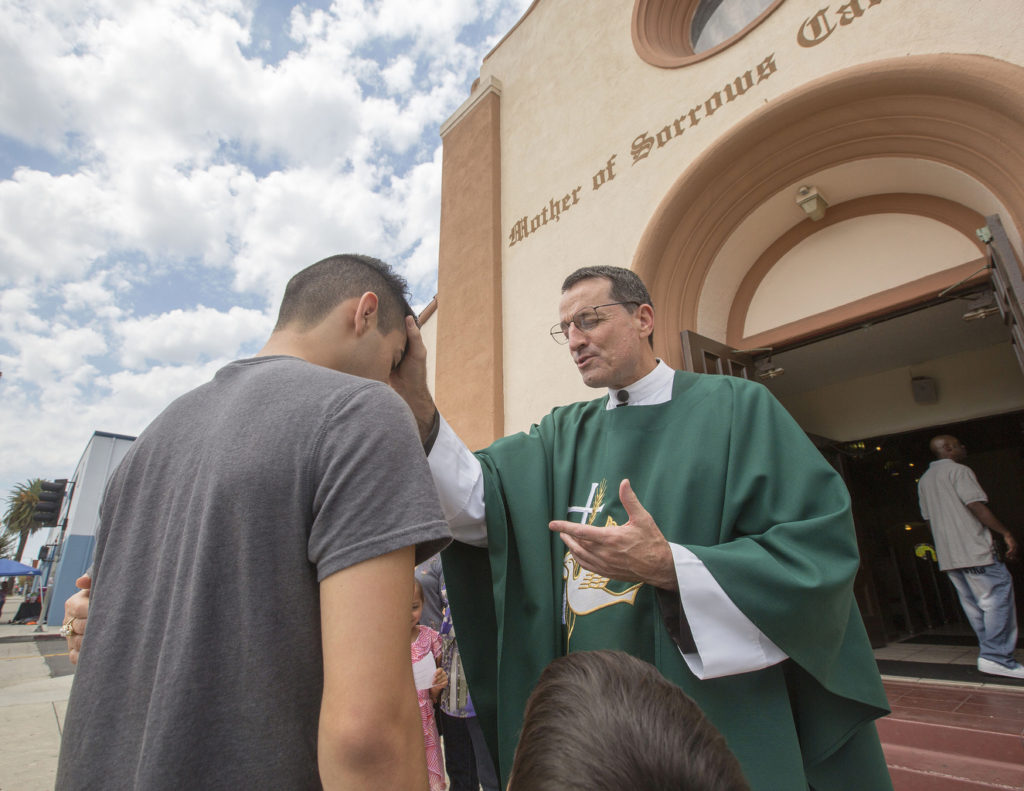
WASHINGTON (CNS) — Pope Francis has named three auxiliary bishops for the Archdiocese of Los Angeles and accepted the resignation of Auxiliary Bishop Gerald E. Wilkerson, 75.
The changes were announced July 21 in Washington by Archbishop Carlo Maria Vigano, apostolic nuncio to the United States.
The pope appointed two priests from Los Angeles and one from Chicago, the rector of Mundelein Seminary, to be auxiliary bishops.
Father Robert Barron, 55, is a native of Chicago who has served as rector of Mundelein and president of the University of St. Mary of the Lake, also in Mundelein, Illinois, since 2012. He is the founder of the global Word on Fire Catholic Ministries and has long been involved in media ministry.
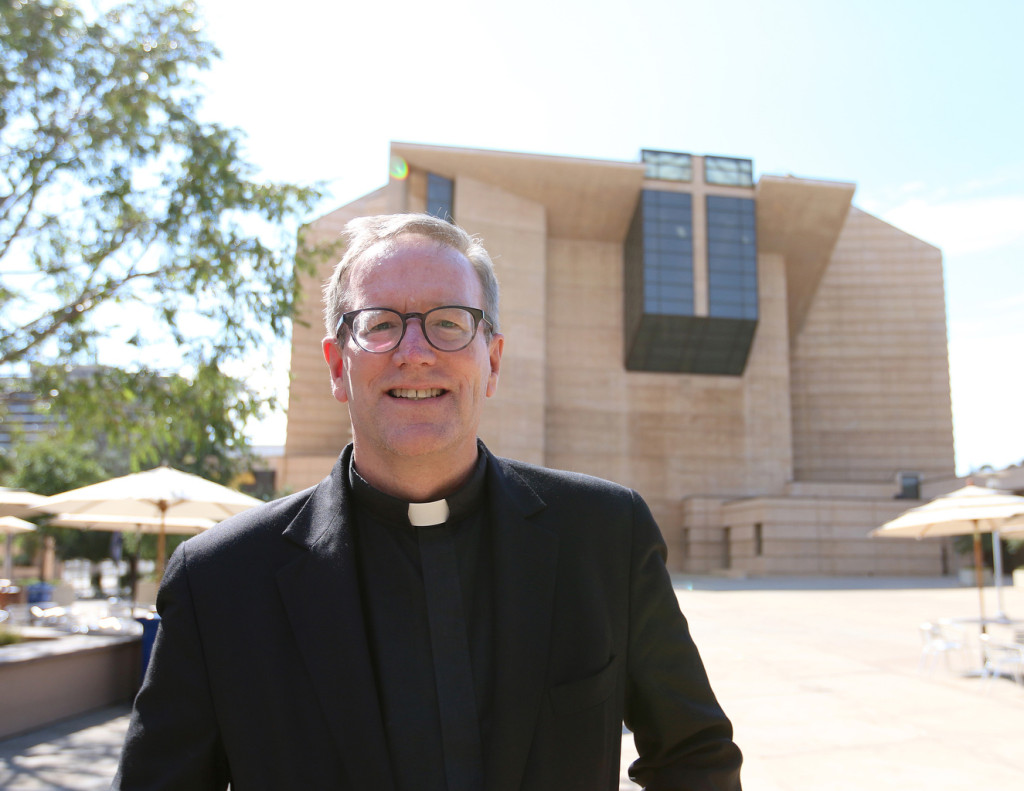
Msgr. Joseph V. Brennan, 61, vicar general and moderator of the curia in Los Angeles since 2013, is a native of Van Nuys, California, whose studies and assignments have all been in the Southern California archdiocese.
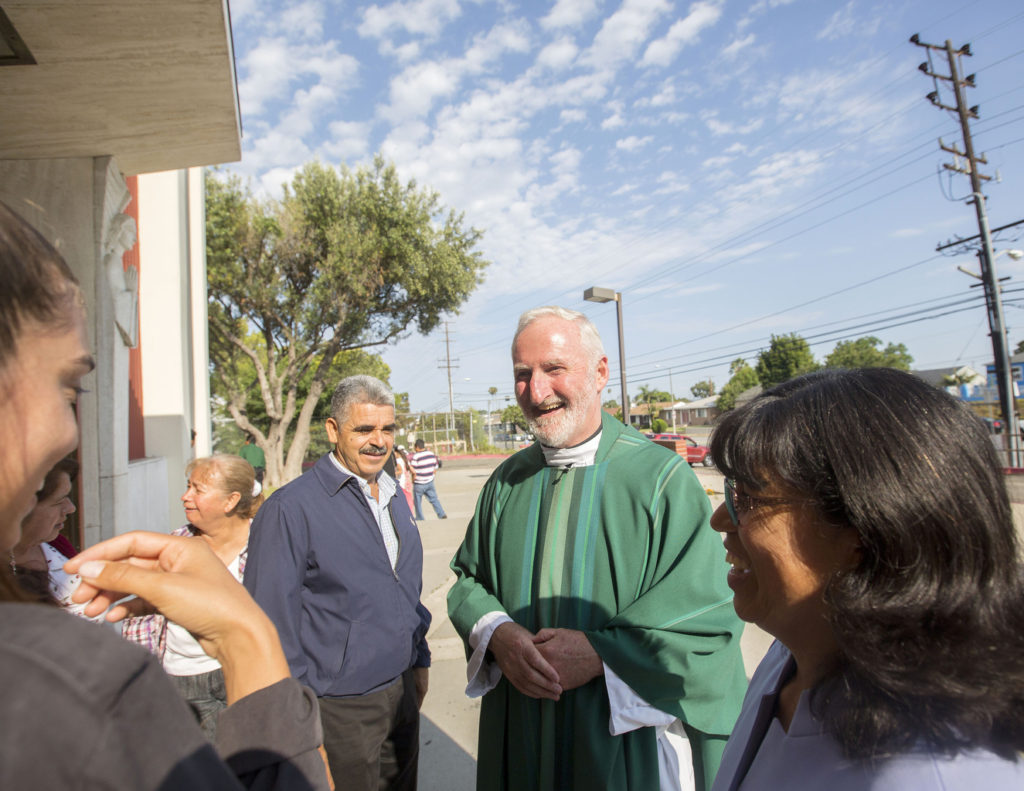
Msgr. David G. O’Connell, 61, is a native of County Cork, Ireland, who studied at All Hallows College in Dublin before being ordained a priest of the Los Angeles Archdiocese in 1979. He has been pastor of St. Michael’s Parish in Los Angeles since 2003.
Bishop Wilkerson turned 75 last October. Canon law requires bishops to offer their resignations at that age. A native of Des Moines, Iowa, Bishop Wilkerson was ordained for the Los Angeles Archdiocese in 1965. He was ordained an auxiliary bishop Jan. 21, 1998.
Los Angeles is the largest archdiocese in the country by population, with about 4.3 million Catholics. It has four other active auxiliary bishops and two others who are retired.
Headed by Archbishop José H. Gómez, the archdiocese currently has four active auxiliaries — Bishops Edward W. Clark, Thomas J. Curry, Oscar A. Solis and Alexander Salazar — and with Bishop Wilkerson’s retirement, there will be two retired auxiliaries; Auxiliary Bishop Joseph M. Sartoris retired in 2002. Archbishop Gómez’s predecessor, Cardinal Roger M. Mahony, retired in 2011.
“It was a complete surprise,” Bishop-elect Barron said about the appoinment in an interview with The Tidings, newspaper of the Los Angeles Archdiocese.
The author of almost a dozen books and a weekly radio commentator, the priest founded the nonprofit Word on Fire in 2000. He is creator of the “Catholicism” television series and is a regular presence on YouTube and the Web giving a Catholic perspective on mainstream cultural events.
While he is a sought after speaker, he said his main responsibility will be to serve as auxiliary bishop.
“I have to be present to the people of the archdiocese,” he said.
The appointment came as a surprise to Bishop-elect Brennan as well.
“It was like a punch in the stomach,” he said. “I had an immediate gut reaction that my life was going to be very different. We make our plans, but God has other ideas.”
Bishop-elect Brennan, who identifies mostly with his ministry as a pastor, has brought that pastoral sense to his role as vicar general.
“It’s a laying down of your life on a daily basis,” he said. “I think this episcopacy will be the same.”
Bishop-elect Brennan said he, like Pope Francis, makes it a point to bring joy into his ministry.
“I try to bring a real sense of gratitude for the day,” he said. “Even in the midst of difficult decisions and the problems and situations that need to be dealt with, without being flippant, I try to be joyful. I try to bring some humor to it.”
Bishop-designate O’Connell, who has been serving in parishes in South L.A. for more than 25 years, has ministered to communities that have suffered through gang violence and drugs.
“I do believe what’s really important is for us to be out in the neighborhoods, to be out with the people,” he said, explaining that his parishes always did Posadas and Stations of the Cross in the neighborhoods, not on church grounds.
“That’s how we can change South L.A. is to be out there and work with the people in the neighborhoods,” he said. “I’ve always loved them. I’ve always loved being in these parishes.”
Bishop-designate O’Connell, who serves on the Archdiocesan Finance Council, works with community leaders and law enforcement on gang intervention efforts.
Contributing to this story was J.D. Long-Garcia, editor of The Tidings in Los Angeles.

[quote_box_right]
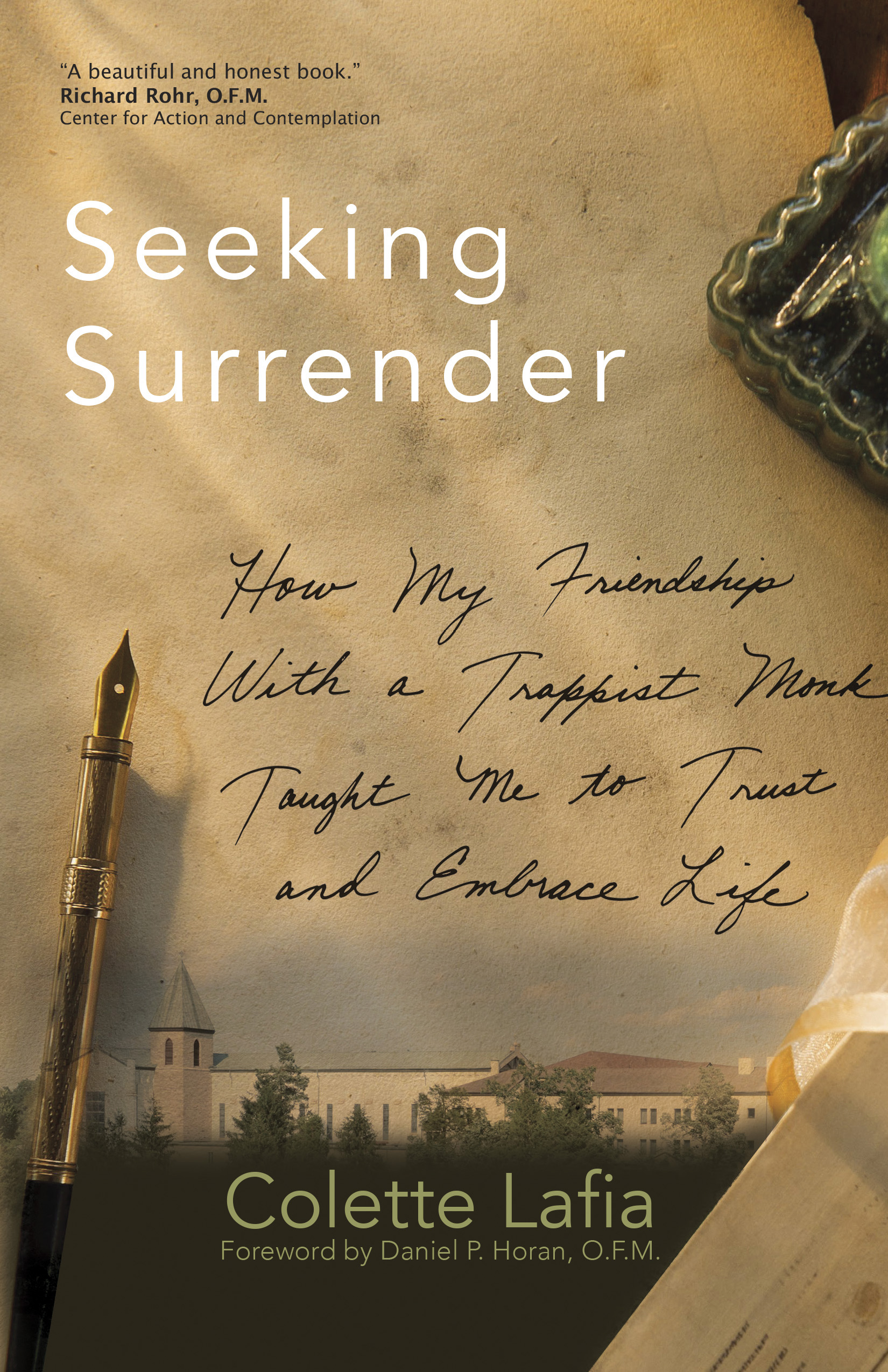 Seeking Surrender
Author: Colette Lafia
Publisher: Sorin Books
Length: 160 pages
Release Date: April 17, 2015
ISBN: 978-1-933-4958-8-0
Order: Ave Maria Press
Website: www.colettelafia.com
[/quote_box_right]
[dropcap type=”4″]S[/dropcap]ay the words, “Roman Catholic,” and what are the first images that pop into people’s minds?
Monks and nuns.
Colette Lafia’s new book, “Seeking Surrender,” is a story about herself and the long, enduring friendship with a Trappist monk, Brother René, of the Abby at Gethsemani, the same monastery where the great Thomas Merton lived for so many years.
Colette begins with a week-long retreat where she and her husband, Mark, seek the calm of a stressful life. Colette is consumed with the desire for a child, her biological clock on overtime and the pain of failure is palatable. She does what we all do when we are faced with cases such as this: we pray, we plead, we negotiate with God.
Many “why” questions are asked: why no fertility, why no baby, why no big family? Enter Brother René stage right.
The Lafias’ visit to Gethsemani coincides with Brother René’s 50th anniversary as a Trappist monk so that the stage for this future relationship between Colette and René is set at a very high level.
Both Mark and Colette are taken with the utter simplicity of the celebration of Brother René’s golden jubilee and for the joy and gratitude with which he celebrates; it was a learning experience for both Mark and Colette, and is important for us to understand as well.
Both Mark and Colette manage to find some of the peace they seek in the silence of the monastery.
Lafia’s book has a particular structure to it that not only tells the story, but helps us to understand the surrender necessary for peace. After the initial narrative, she begins each new section with a sketch of something happening in her life – usually a trial – then a letter to Brother René, a return letter from Brother René, and then a reflection for the reader to help them understand the process of surrendering.
From a quality standpoint, Lafia’s writing is some of the better I’ve read in which she elevates her prose to the poetic. What follows is an example:
“Writing my letters and receiving his letters becomes an essential part of my life. In the intimate exchange, I am whispering across pieces of paper, trying to make sense of what confounds me and listen to what resides in my heart. The voice of this monk speaks back to me from the scratches of his pen, a man who has lived most of his life in a monastery, rising in the middle of the night for prayers, walking down the long corridor of his mind, until he enters a quieter room, where he hears the language of his own heart.”
Abundant metaphors permeate Lafia’s work; it’s the kind of language that is elevated above the mundane, and brings us closer to God.
Lafia explored those small moments in life: swimming, hiking, bike riding, an ailing father, as moments in which we can surrender ourselves to find the calm that pushes us along in love and charity.
Finally, Lafia outlines the practical steps to surrender.
Do Mark and Colette finally have a child? No, but it’s not a spoiler alert because this book is truly about the journey and the joy and peace found in learning to accept the will of God.
Surely, in this pervasive world, this is something all of us need to learn to do.

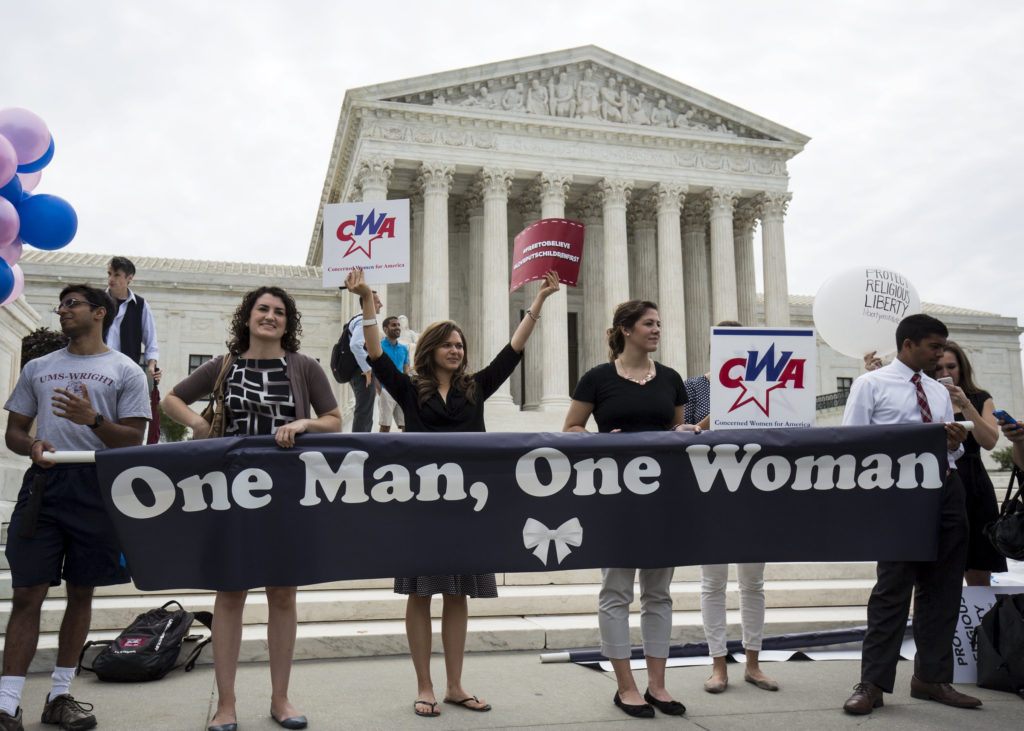
As news of the Supreme Court’s decision on same-sex marriage swept the country June 26, Catholic voices offered a decidedly different take for the secular media on the topic.
The court’s 5-4 decision in Obergefell v. Hodges legalized same-sex marriage in all 50 states, striking at the heart of the Church’s teaching on the human person and the gift of sexuality.
Catholic owners of businesses involved in the wedding industry wondered what the court’s decision would mean for them. Would they be fined for refusing to provide services to same-sex couples?
The Catholic Sun reached out to several such businesses in the Valley but owners were reluctant to go on the record for fear of reprisals. A florist noted that “tolerance seems to go all one way.” A Catholic caterer said he has already contacted the American Catholic Lawyers Association to help him defend his right to practice his faith in his business.
“Frankly I want nothing to do with catering a gay wedding. I’ve aligned my principles with what we are supposed to believe,” the man said.
“It’s a moral issue. It comes down to one thing. The natural law which is God’s law. The Fathers of the Church say anything that conflicts with the natural divine law… we are not to adhere to”.
Kevin Theriot, senior counsel with Alliance Defending Freedom, said the firm has represented Christian business owners who object to participating in same-sex weddings. One such client, Elaine Hugeunin, a photographer in New Mexico, was fined $7,000 in 2008 for refusing to photograph a same-sex ceremony. Theriot said ADF was “optimistic that the court’s going to do the right thing” but offered a caveat.
“I guarantee you that there are going to be many states and certainly many cities that are going to attempt to try to force people to participate in same-sex wedding ceremonies. We’re in the process of representing those people and helping folks to understand that you shouldn’t be forced to participate in a religious ceremony that violates your convictions,” Theriot said.
Shortly after same-sex marriage was legalized in Canada in 2005, a Knights of Columbus hall was fined for not renting its space for a lesbian couple’s wedding reception, and in 2011, Catholic Charities in Illinois had to close adoption services to avoid being forced to allow same-sex couples to adopt children in their care.
As clergy pondered the implications of the court’s decision, some wondered if there would soon be pressure on them to perform weddings between same-sex couples.
“It’s pretty clear that religious liberty in America would prohibit the state from forcing a pastor to solemnize a same-sex wedding ceremony. Now, that said, we certainly have started down a path where that will be possible,” Theriot said.
The Catholic Church teaches that marriage is the lifelong union of one man and one woman and that all are called to the virtue of chastity.
Mike Phelan, diocesan director of marriage and respect life, said the Church must redouble its efforts to reach out to those struggling with same-sex attraction.
“They are the ones, along with children, who are worst-served by this decision which legitimizes a lifestyle that is very damaging to the human person and seems to make it not only OK, but sanctifies it, in a way, with the law,” Phelan said.
[quote_box_right]
Statements by Archbishop Kurtz and Bishop Olmsted
Courage: an international apostolate of the Catholic Church, which ministers to persons with same-sex attractions and their family and friends.
[/quote_box_right]
Courage, a Catholic apostolate for those struggling with same-sex attraction, meets monthly in the Diocese of Phoenix. Jeff, who did not wish to reveal his last name, has been a member of the group for the last three years. He spoke to The Catholic Sun following the court’s decision on marriage.
“I’d like to see the Church reach out in a way that says, ‘We love you but we’re not going to accept this behavior’ and not be afraid to say that,” Jeff said. Many forces in the culture are working to normalize the gay lifestyle, he said, and “in order to do that, any kind of opposition has to be silenced. So they are working their way through institutions and one of the last ones left will be the Catholic Church.”
Beth, another member of Courage, said the group was saddened by the Supreme Court decision. “All of us there know the devastating effects of the gay lifestyle. … t tends to dismantle and destroy your inner life and your heart and soul.”
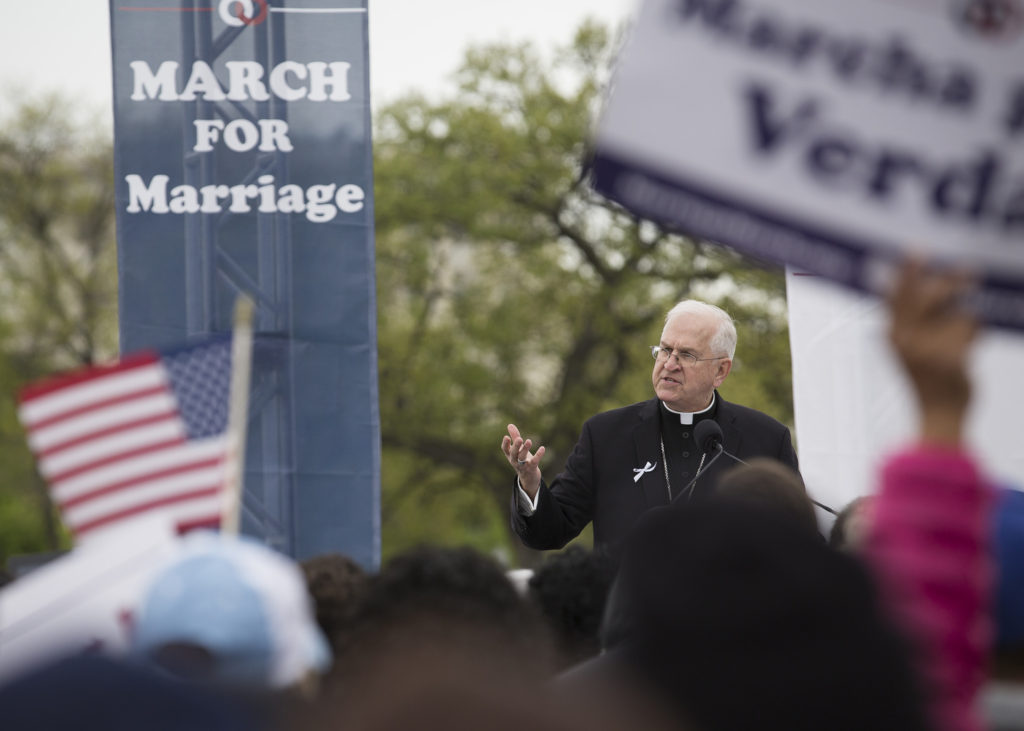
Archbishop Joseph E. Kurtz of Louisville, Kentucky, president of the U.S. Conference of Catholic Bishops, called the Supreme Court’s decision “tragic,” “wrong,” and “immoral.”
“Regardless of what a narrow majority of the Supreme Court may declare at this moment in history, the nature of the human person and marriage remains unchanged and unchangeable,” Archbishop Kurtz said. “Just as Roe v. Wade did not settle the question of abortion over 40 years ago, Obergefell v. Hodges does not settle the question of marriage today. Neither decision is rooted in the truth, and as a result, both will eventually fail.”
Bishop Thomas J. Olmsted of the Diocese of Phoenix said that “the Catholic Church remains sincere in striving to love all people, regardless of their sexual attraction” and that it is “strongly committed to preserving the conjugal definition of marriage.
“Marriage is an institution that predates all governments and has served civilization well through the years. God Himself is its author. There can be many forms of love, but marital love is unique and can only exist between a man and a woman. It is through this love that children are best served, as well as society as a whole,” Bishop Olmsted said.

[quote_box_right]
[/quote_box_right]Mientras que las noticias de la decisión de la Corte Suprema de EE.UU sobre el matrimonio entre personas del mismo sexo capturaban la atención del país el 26 de junio, voces católicas ofrecían una perspectiva distinta.
La decisión 5-4 de la corte en Obergefell v. Hodges legalizó el matrimonio entre personas del mismo sexo en cada uno de los 50 estados, golpeando al corazón de la doctrina de la Iglesia en lo que respecta a la persona humana y al don de la sexualidad.
Dueños católicos de negocios que están envueltos en la industria de bodas preguntaban lo que significaría para ellos. ¿Sufrirían multas por negarse a prestar servicios a parejas del mismo sexo?
The Catholic Sun llamó a varios de esos negocios en el Valle pero los propietarios estuvieron poco dispuestos a ser citados por miedo a represalias. Una floristería comentó que “parece que la tolerancia es una calle de sola una vía”. Un dueño católico de una empresa de hostelería dijo que él ya se ha había comunicado con la Asociación Americana de Abogados Católicos para que le ayudaron a defender su derecho de practicar su fe en su negocio.
“Francamente no quiero nada que ver con la hostelería de una boda gay. He alineado mis principios con lo que sé nosotros debemos creer”, dijo el hombre. “Es una cuestión moral”.
Kevin Theriot, abogado principal con la Alliance Defending Freedom, dijo que la firma ha representado a empresarios Cristianos que se oponen a participar en las bodas de personas del mismo sexo. Elaine Hugeunin, fotógrafa en Nuevo México, recibió una multa de $7,000 en 2008 por negarse a fotografiar una ceremonia de personas del mismo sexo. Theriot dijo que ADF se mantiene “optimista que la Corte va a hacer lo correcto” pero ofreció una advertencia.
“Te garantizo que van a ser muchos los estados y sin duda muchas las ciudades que van a tratar de obligar a la gente a participar en ceremonias de bodas de personas del mismo sexo. Estamos en el proceso de representación de esas personas y ayudando a la gente a entender que no deberían ser obligados a participar en una ceremonia religiosa que viole sus convicciones”, dijo Theriot.
A medida que el clero reflexionaba sobre las implicaciones de la decisión de la Corte, algunos se preguntaban si pronto habrá presión para realizar bodas entre parejas del mismo sexo.

“Está bastante claro que la libertad religiosa en América impediría al estado obligar a un pastor a solemnizar una ceremonia de boda entre personas del mismo-sexo. Sin embargo, sin duda hemos empezado un camino en el que será posible”, dijo Theriot.
Poco después de que el matrimonio homosexual fue legalizado en Canadá en 2005, un salón de los Caballeros de Colón fue multado por no alquilar su espacio para la recepción de la boda de una pareja de lesbianas, y en 2011, Caridades Católicas en Illinois tuvo que cesar ofreciendo servicios de adopción para evitar ser forzado a permitir que parejas del mismo sexo adopten a niños bajo su cuidado.
La Iglesia Católica enseña que el matrimonio es la unión permanente de un hombre y una mujer y que todos están llamados a la virtud de la castidad.
Mike Phelan, director de la oficina de matrimonio y respeto a la vida de la Diócesis de Phoenix, dijo que la Iglesia debe redoblar sus esfuerzos para llegar a aquellos que luchan con sentimientos de atracción hacia el mismo sexo.
“Ellos, junto con los niños, son los que son peor atendidos por esta decisión que legitima un estilo de vida que es muy perjudicial para la persona humana y parece hacerlo aceptable y lo santifica de una manera con la ley”, dijo Phelan.
Courage, un apostolado Católico que da apoyo espiritual a personas que sufren con la atracción al mismo sexo, tiene reuniones cada mes en la Diócesis de Phoenix. Jeff, quien no quiere revelar su apellido, ha sido un miembro del grupo durante los últimos tres años. Habló a The Catholic Sun después de la decisión de la Corte Suprema sobre el matrimonio.
“Me gustaría ver a la Iglesia tratar de conectarse de una manera que dice, ‘te amamos pero no vamos a aceptar este comportamiento’ y que no tengan miedo de decir eso”, dijo Jeff. Muchas fuerzas en la cultura están trabajando para normalizar el estilo de vida homosexual, dijo “para alcanzar ese objetivo cualquier tipo de oposición tiene que ser silenciada. Así que están trabajando a través de las instituciones y una de las últimas será la Iglesia Católica.
Beth, otra miembro de Courage, dijo que el grupo estaba descorazonado por la decisión de la Corte Suprema. “Sabemos los efectos desvastadores del estilo de vida homosexual”, dijo. “Tiende a desmontar y destruir tu vida interior y tu corazón y alma”.
El Arzobispo Joseph E. Kurtz de Louisville, Kentucky, presidente de la Conferencia de Obispos Católicos de los Estados Unidos, describió la decisión como “trágico”, “mal” e “inmoral”.
“Independientemente de lo que una mayoría estrecha de la Corte Suprema puede declarar en este momento en la historia, la naturaleza de la persona humana y el matrimonio permanecen inalterable e inmutable. Así como Roe v. Wade no resolvió el asunto del aborto hace más de 40 años, Obergefell v. Hodges no resuelve hoy el asunto del matrimonio. Ninguna decisión se arraiga en la verdad, y como resultado, ambas eventualmente fallarán”, dijo el Arzobispo Kurtz.
El Obispo Thomas J. Olmsted de la Diócesis de Phoenix, dijo que “la Iglesia Católica sigue siendo sincera al tratar de amar a todas las personas, independientemente de su atractivo sexual” y que está “firmemente comprometida con preservar la definición conyugal del matrimonio”.
“El matrimonio es una institución que antecede todo gobierno y ha servido bien a las civilizaciones a través de los años. Dios mismo es el autor del matrimonio. Pueden haber muchas clases de amor, pero el amor matrimonial es único y solo puede existir entre un hombre y una mujer. Es a través de este amor que los niños son mejor servidos y educados, así como también la sociedad entera”.
La Corte Suprema de Justicia de México legalizó el matrimonio entre personas del mismo-sexo el mes pasado en los 31 estados de México, proclamando que las leyes estatales que prohíben el matrimonio homosexual son inválidas. En México, los estados tienen el derecho de regular el matrimonio y solo el matrimonio civil es reconocido por la ley.
[dropcap type=”4″]T[/dropcap]heology, difficult as it can be, delves into the deeper truths of God. Church social doctrine comes out of theology and teaches us how to live as Jesus intended. With a deeper understanding of Church social doctrine and the willful act of putting away our useless pride, we can cease being Republicans or Democrats first and cease looking at the world only through a nationalistic lens.
A fellow Dominican, Fr. Brian Mullady, has written a book which clarifies social teaching, titled “Christian Social Order”.
His first point in this book, a point which half the postmodern Catholic population will immediately reject, is the notion that the Church claims authority for spiritual truths and that its teachings are fundamental to human nature. He rightly points out, however, that the Church does not seek any political power, and that politics, in the secular sense, is left to the civil realm. These truths, however, are never left out of the civil realm because believers, upon whose hearts these truths are written, exist in the civil realm.
Thus, the argument against Church authority is fundamentally meaningless because Jesus pointed at Simon, changed his name (did you ever wonder why Simon’s was the ONLY name ever changed by Christ?), called him the Rock, gave him the keys of the kingdom, gave him authority to loose and bind, and then commanded him to be the shepherd of his flock.
The social doctrine, formed over 19-plus centuries, details the foundation of human life and nature, giving us guidance to form our consciences.
Fr. Mullady states that it is natural for human beings to live in societies. The fundamental nature of society is to foster the common good. The common good, however, is rooted in natural law, i.e. the law of the nature of things, and is not subject, by reason, to mere whim. This means, according to Church teaching, that an objective truth lay at the heart of social interaction.
[quote_box_left]
Publisher: New Hope Publications
Author: Fr. Brian Mullady, OP, STD
Release Date: March 2015
Length: 198 pages
ISBN: 9781892875662
Order from: New Hope Publications
Website: www.rosary-center.org
[/quote_box_left]
Fr. Mullady traces the decline of objective truth in its various manifestations from the Enlightenment through the modernist period through to our present day. As an example, he writes, “The beginning of the 20th century also saw the full implications of the denial of personal responsibility which was heralded by Sigmund Freud in his discovery of neurosis. Freud’s theory of psychoanalysis sounded the death knell for the responsibility of the personal conscience in moral actions since it basically attributed moral behavior to a series of unconscious forces which ranged from repressed sexuality to the death wish.”
This problem literally surrounds us, in education, work, and especially in the news, and, as we can see, Fr. Mullady has named names.
One of our biggest problems today is that this denial of personal responsibility is partly responsible for radical change in the view of the human person as a unique individual to the mechanistic view that the human being is but a cog in a machine. With that, we have collectivism, or the centralizing of control over economics (i.e. over-regulation) and social action (i.e. welfare, healthcare, etc.). We can see this in all facets of our society. Because the Church teaches that the human person is created in the image of God – imago dei – and that all dignity is derived from Him, this modernist and post-modernist view is directly contrary.
Fr. Mullady also points out that the denial of personal responsibility has led us to a wrongful view of the conscience. A mechanistic view means that our consciences are formed merely by necessity, expediency, and what is useful. Absolute truth fades away and the whole society shudders. Abortion becomes the norm. Those of us who do believe, find our consciences bound to the truth which the Church teaches. Our natural freedom has allowed us the free-choice to follow the truth and avoid the free-for-all.
One really interesting find in Fr. Mullady’s book is the foundation of the idea of inalienable rights as illustrated in the Declaration of Independence. Cardinal Robert Bellarmine wrote a work called De Laicis in which he posited that power in government comes from the people and its authority is only actual if agreed upon by the people. This work was quoted in a book by a proponent of the divine right of kings as an argument. The passage from Bellarmine was underlined in the book and found in Thomas Jefferson’s personal library.
Fr. Mullady further discusses right and rights as part of the social order and then he turns Church teaching toward the actual practice in a magnificent defense of marriage.
A great and clear read.

MESA — Timothy Schmaltz and Rosa Molinar are two of the key names to know when St. Scholastica launches its first social work cohort since expanding into Arizona.
The private Catholic Benedictine college came to the Grand Canyon State last year and already offers Bachelor of Science and Master of Science degrees in Health Information Management and a Bachelor of Science in Nursing. The social work program will be St. Scholastica’s first based out of Mesa Community College.
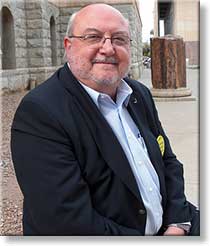
Both Schmaltz and Molinar will serve as adjunct faculty associate and consultant. Schmaltz has more than 40 years of experience in social work and community service. He previously served as CEO of Protecting Arizona’s Family Coalition, where he also was a coordinator for 12 years. Currently, Schmaltz serves as president of the National Association of Social Workers – Arizona Chapter Board of Directors. Schmaltz also teaches graduate-level social work courses at Arizona State University in Tempe.
“We are thrilled to welcome a community thought-leader and social work advocate like Tim to our growing faculty,” said Maria Laughner, Arizona regional director for St. Scholastica. “His exceptional background in social work and passion for bettering Arizona makes him an invaluable addition to our school and our social work program.”
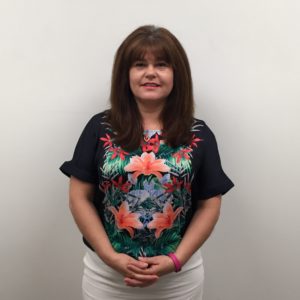
Molinar has an extensive background in social work, leadership management and education. She previously served as the community liaison for family engagement for the Tolleson Elementary School District, the executive coordinator to Arizona State University’s (ASU) Community Learning Center and is currently serving as a program manager of student affairs at Maricopa County Community Colleges, the district office.
Molinar holds a master’s degree in social work from ASU, a master’s degree in curriculum instruction bilingual education from ASU and is pursuing a doctoral degree.
“We are excited to have Rosa join our faculty,” Laughner said, “Her in-depth experience in program planning and implementation will be pivotal as we launch our social work program and as we continue expanding.”
The College of St. Scholastica is a 103-year-old private Catholic Benedictine college. St. Scholastica’s social work classes are offered at MCC, the largest community college in the largest community college district in the U.S. St. Scholastica’s main campus is in Duluth, Minn.
St. Scholastica offers several programs in Arizona including Bachelor of Science and Master of Science degrees in Health Information Management and a Bachelor of Science in Nursing. St. Scholastica’s health information management program has been a national leader since it began in 1934 as the first such degree program in the nation.

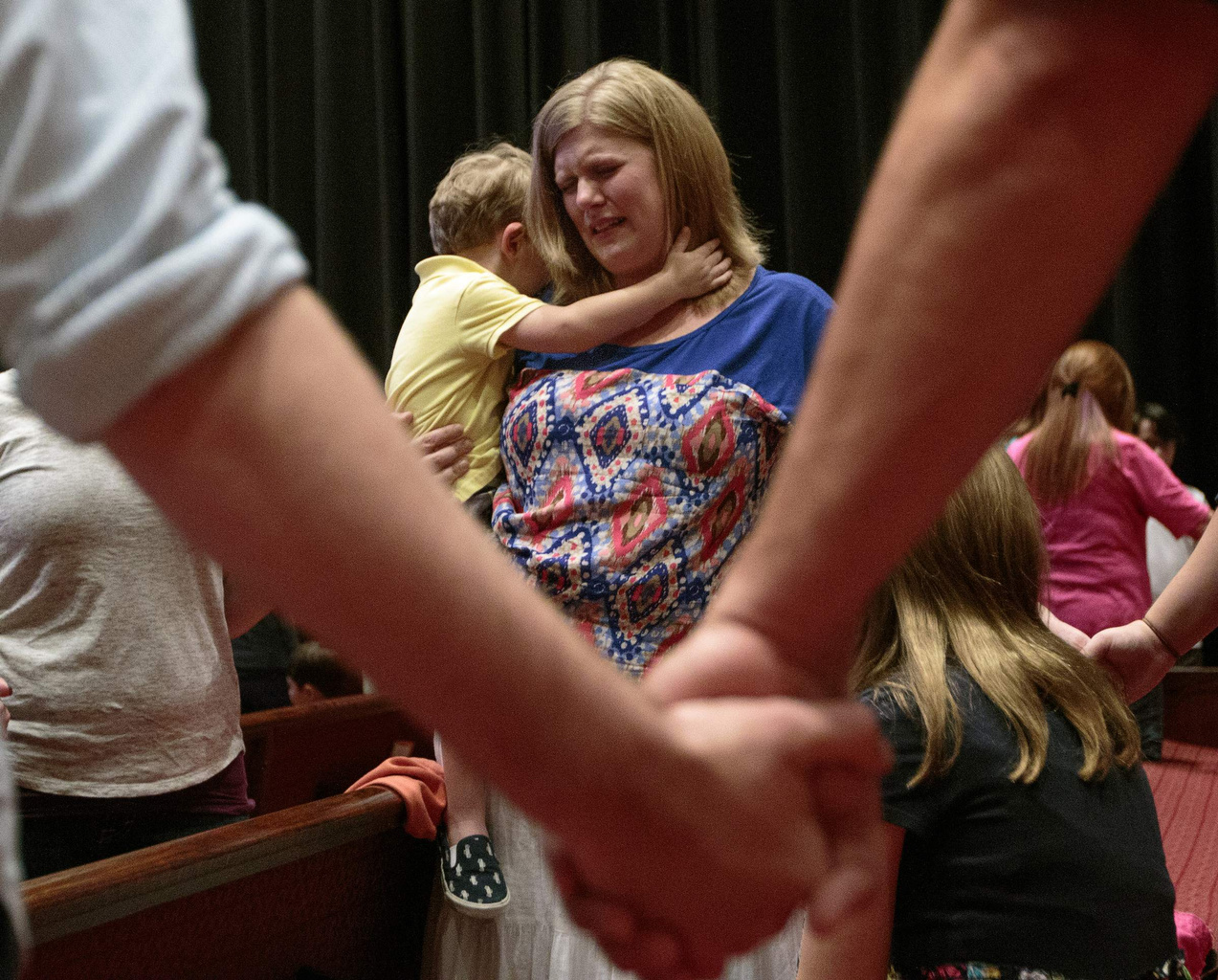
CHATTANOOGA, Tenn. (CNS) — An outpouring of sympathy and prayer washed over Tennessee for the victims of the July 16 shootings that left four Marines and the shooter dead.
Bishop Richard F. Stika of Knoxville, whose diocese includes Chattanooga, encouraged all Catholics and people of faith to participate in a community prayer service at the Basilica of Sts. Peter and Paul in Chattanooga held the afternoon of the shootings at a military recruiting center and a Navy-Marine training center a few miles away.
“Our community is deeply saddened by the tragic loss of four United States Marines in this senseless act of violence,” said a statement from Bishop Stika. “I have two brothers who served in the U.S. Marine Corps and I recognize and appreciate the selfless service all members of the military give to protect us. We ask for your prayers for the souls of those who lost their lives, the recovery of those wounded in these shootings, and for all of their families.”
Bishop Stika also planned to preside at a Mass July 19 at the basilica.
Father David Carter, pastor of the Basilica of Sts. Peter and Paul, led the prayer service for all the victims of the incident, including Muhammad Youssef Abdulazeez, 24, of Hixson, Tennessee, who was identified by law enforcement authorities as the gunman, and three people who were wounded in the attack.
Tennessee news reports identified the four murdered Marines as: Gunnery Sgt. Thomas J. Sullivan, 40; Lance Cpl. Skip Wells, 21; and Staff Sgt. David Wyatt and Sgt. Carson Holmquist, whose ages were not available.
Abdulazeez was shot to death by police, The Associated Press reported.
Father Carter said about 50 people attended the prayer service. He said they were seeking solace and guidance in dealing with the situation.
It was a sobering, somber experience, he said, that changed into one of hope “as we invited God to help us make sense of this situation.”
“We’re all shocked by the shooting. We didn’t expect it to happen in Chattanooga, this close to home. I have parishioners who went to high school with the young man identified as the assailant,” Father Carter told The East Tennessee Catholic, newspaper of the Knoxville Diocese.
“We’re saddened that our city had to experience such violence, but we have a way of uniquely responding to this situation,” he said. “We’re responding with hope and the belief that we play a part in making the world a better place. There’s far more good we can do to overcome the senseless acts of violence. We’re called to be light in the darkness.”
Another community-wide prayer service was planned for the afternoon of July 17 at Olivet Baptist Church.
In a statement, Bassam Issa, president of the Islamic Society of Greater Chattanooga, said that in his community, “our hearts are with the families of the brave Marines who died today and with the police officer and two bystanders who were shot and injured in this cowardly act.
“We condemn this act in the strongest possible terms as one of cowardice and hate. At the Islamic Society of Greater Chattanooga, we don’t see our community center as a ‘Muslim’ community; we are Chattanoogans first, and we see ourselves as part of the larger community of Tennesseans grieving today’s act.”
He said it is “vital, crucial, and essential that all Muslims in the Greater Chattanooga Community attend this event to express our con-solidarity, unity, empathy, and compassion. We are part of this great City of Chattanooga and should unite with our neighbors during these tragic times.
Bill Brewer, editor of The East Tennessee Catholic, contributed to this story.
The Archdiocese for the Military Services is holding a discernment event in Washington for priests to recruit more chaplains to minister to Catholic military families.
[quote_box_center]
Military chaplains bring God closer to soldiers on Ukraine front lines
Military chaplains play key role for Catholics serving active duty
Current seminarians discerning a vocation “within a vocation” via the Archdiocese for the Military Services
[/quote_box_center]

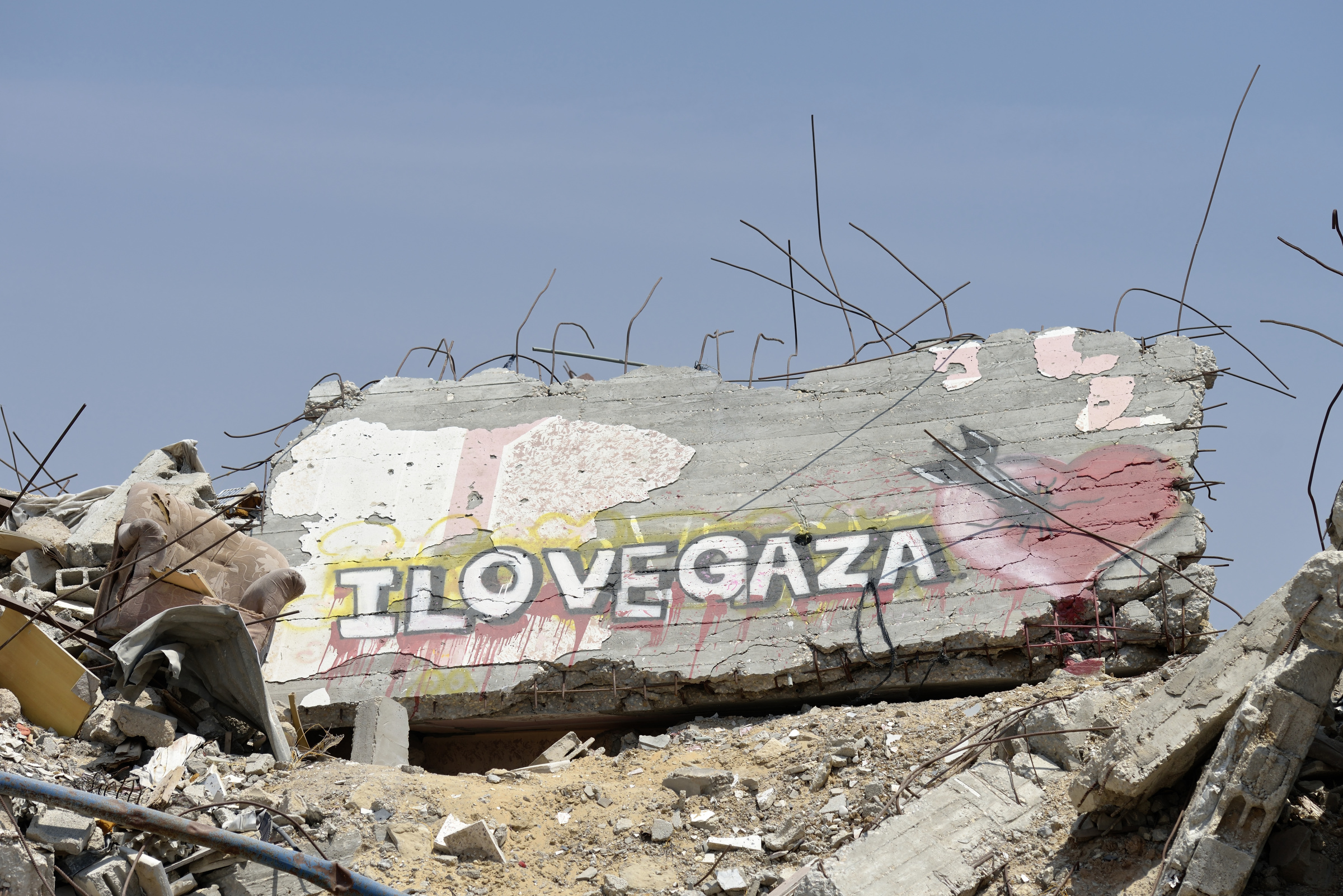
GAZA CITY, Gaza Strip (CNS) — One year after a war with Israel that turned daily life here into a nightmare, a Catholic priest in Gaza said the situation in this besieged Palestinian territory has deteriorated even further.
“Compared with a year ago, we’re worse off. Although a truce stopped the war, the blockade of Gaza by Israel has grown more intense. This has direct consequences for the population,” said Fr. Jorge Hernandez, pastor of Holy Family Catholic Parish in Gaza City.
The priest said the war also served as a recruiting tool for Hamas, the Islamic party that has controlled Gaza since 2007.
“The war generated new activism throughout Gaza. The number of people willing to fight has multiplied, whether on behalf of Hamas or Islamic Jihad or the Salafists, and now even with the Islamic State. Despite that, the great majority of the people of Gaza is not aligned with one party or another. They just want to live a normal life,” Fr. Hernandez, an Argentine missionary of the Institute of the Incarnate Word, told Catholic News Service.
The 50-day war cost the lives of more than 2,250 Palestinians, 65 percent of whom were civilians, according to a June report from a U.N. investigation. The report said “the scale of the devastation was unprecedented.” It said the Israeli military launched more than 6,000 air strikes, 14,500 tank shells and 45,000 artillery shells into Gaza between July 7 and Aug. 26, 2014.
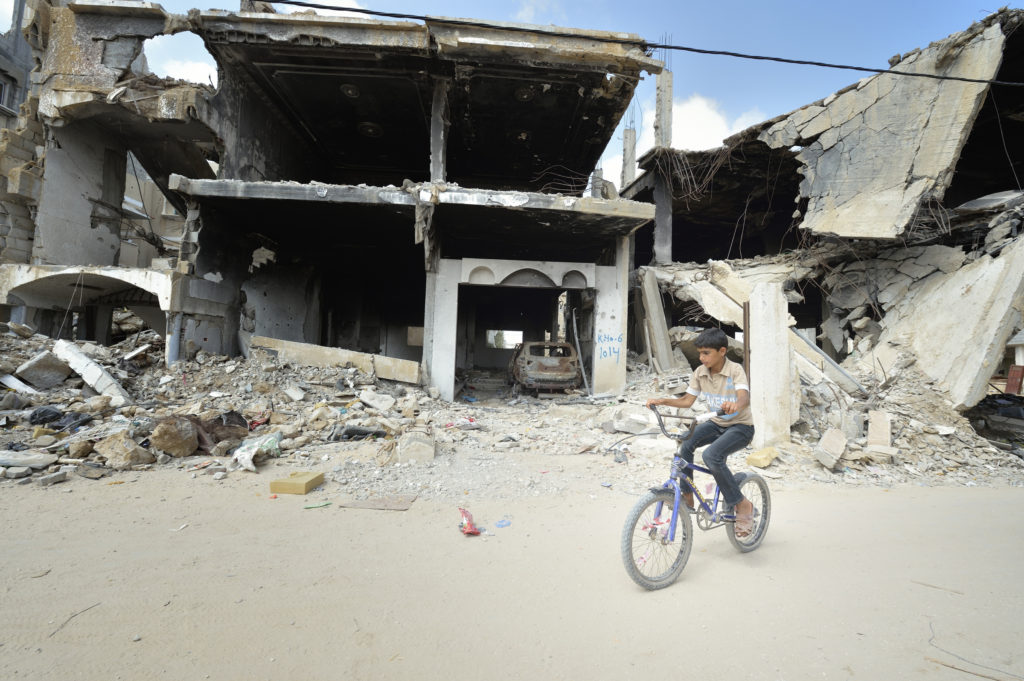
The war also “caused immense distress and disruption to the lives of Israeli civilians,” the U.N. said, reporting that nearly 4,900 rockets and more than 1,700 mortars were fired by Palestinian armed groups during that period. Sixty-six Israeli soldiers were killed, along with six civilians.
The report also cites as possible war crimes the conduct of Israeli operations in residential neighborhoods, as well as the killing of 21 suspected collaborators by Hamas’ armed wing.
Fr. Hernandez said militants came to his church compound twice looking for alleged spies among some 1,400 civilians who took shelter there. Church buildings were damaged when Israel bombed a neighboring house. At one point, Fr. Hernandez and several members of the Missionaries of Charity shepherded a group of 29 disabled children and nine elderly women into the open.
“We put them in the patio in front of church, a place that’s far from any homes. And then we prayed that Israel wouldn’t bomb the church,” he said.
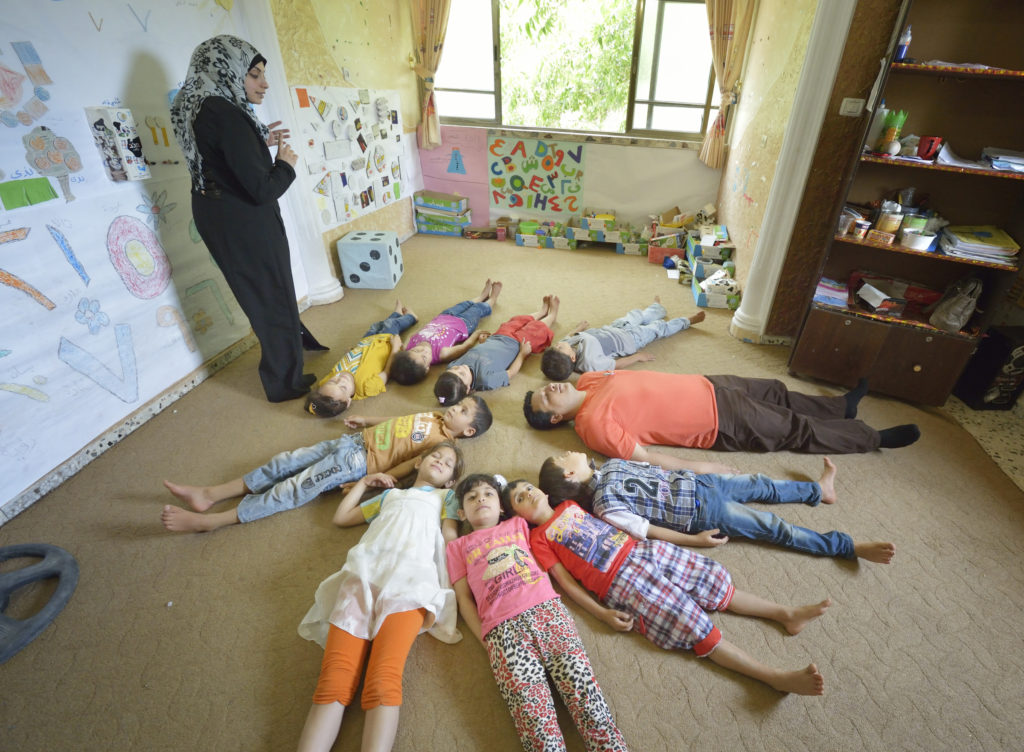
Gaza’s children continue to be affected by the war, the priest said. Besides thousands who remain in temporary shelters, he said the overwhelming violence of the conflict has created discipline problems, with normal tensions in the family and on the street more quickly escalating into physical violence. And lingering stress generates health problems.
“Some kids continue to have problems with speech or bed-wetting, and now that there are rumors of another war — some are even talking about specific dates — one child’s hair has started to fall out again,” he said.
One Catholic leader in the region said that Gaza’s Christians have nonetheless adjusted to their perilous situation.
“When I came here immediately after the war, everyone I talked to pleaded for a one-way ticket out of Gaza. But I no longer hear that. They are resilient, this is their home, and they’re resolved that they’re going to make a contribution to society. They are proud to be both Christian and Palestinian, no matter the difficult conditions,” said Sami El-Yousef, regional director for Palestine and Israel of the Catholic Near East Welfare Association.
Of Gaza’s 1.8 million population, only about 1,300 are Christian. Catholics number fewer than 200. Relations between this small minority and the Muslim majority have been marred by discrimination.
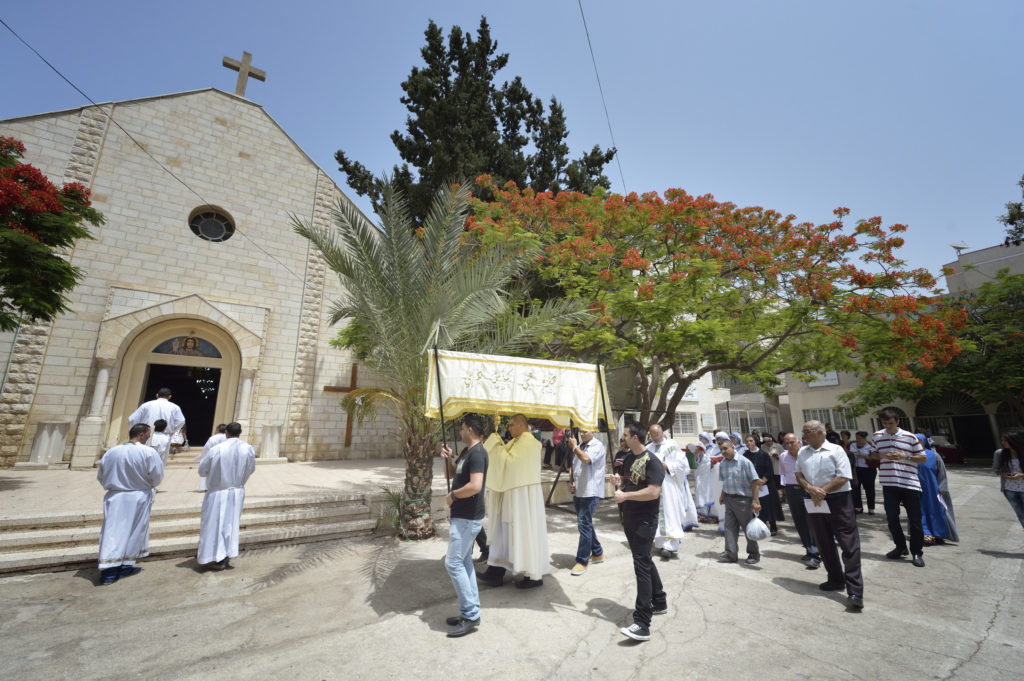
“When one looks for work here, the first thing they ask is if you are a Muslim. If you are, then they ask if you support Hamas or Fatah. If neither, they ask which mosque you go to, because they want to know who you’re loyal to,” Fr. Hernandez said. “But if you’re a Christian, you won’t get asked those questions because you won’t get the job. The only way Christians can get jobs is through a Muslim friend who serves as an intermediary. No store or school or bank will give them a job, so they come to the church asking for help.”
There are occasional episodes of harassment of Christians on the street, Fr. Hernandez said, which is one reason he maintains good relations with Hamas officials.
“It’s important for me to have good contacts, because if there’s a problem I just call someone at a high level and immediately they respond and grab the responsible person. If I had to go to the police to file a report, and the police officer had a long beard, then nothing would happen,” he said.
Vatican support for Palestinians, which has strengthened under Pope Francis, has helped ease tensions on the ground, Fr. Hernandez said.
[quote_box_right]
A year after war, Gazans persist at rebuilding — with help of aid groups (CNS via CatholicPhilly.com)
[/quote_box_right]
“We are treated by Israel as Palestinians, but at times other Palestinians don’t want to recognize us as Palestinians. What the pope has done has helped us a lot within our community. We are just as Palestinian as Hamas. And if they forget that, we remind them of what the pope has said and done,” he said.
Fr. Hernandez had an opportunity to personally thank Pope Francis for the Vatican’s protagonism when the priest was invited to the Vatican the day after the war ended last year.
“Bishop William Shomali (the auxiliary bishop of the Latin Patriarchate of Jerusalem) called me on the phone and said I had to leave Gaza immediately,” Father Hernandez recalled. “But we had just finished living through a war. I couldn’t understand what was more urgent than remaining here with the people. But he didn’t want to tell me the reason over the phone. I pushed him, and finally he told me in Latin, ‘The man in white wants to see you.’ At first I thought I was losing my Latin. I asked him if I was understanding correctly, and he said yes. I called my superior, and he went to talk with the Latin Patriarch. He called me back in 30 minutes and told me it was true. So I packed my things and left.”
Two days later, Fr. Hernandez was embraced by his fellow Argentine inside the Vatican.
“He was a true pastor, hurting for all that had happened to the people here. He was sad about the violence on both sides. When we spoke of the children, he got emotional. We spoke at length about how the chemicals used in the war had affected the health of the people. He knew a lot about what had gone on in Gaza,” Fr. Hernandez said.
“I told him how much we appreciated a message he sent us in the middle of the war. I told him we had translated it for all the people, and that it was a big source of hope and courage for us.”
The priest said that at one point during the hourlong meeting he confessed to Francis that he was nervous. “He told me not to worry, to feel at home. I looked around and thought, ‘The Vatican is now my house. Caramba.'”
— By Paul Jeffrey, Catholic News Service.
