

‘Cinderella’

Lily James and Richard Madden star in a scene from the movie "Cinderella." (CNS photo/Disney Enterprises)
Lily James and Richard Madden star in a scene from the movie “Cinderella.” (CNS photo/Disney Enterprises)

NEW YORK (CNS) — “Cinderella” (Disney) injects vibrant new life into a venerable fairy tale. The result is an exuberant live-action retelling of the oft-filmed fable, the most famous screen version of which is Disney’s classic 1950 animated feature.

Opting for fidelity and sincerity rather than a revisionist approach, director Kenneth Branagh sticks to the basic story, displaying genuine affection for its iconic characters. Familiar yet fresh, his delightful take, suitable for the entire family, nicely brings to the forefront dual lessons about compassion and forgiveness.

There’s a lot of death in the Cinderella story, but here that aspect of the tale is treated gently. Ella (Lily James) tends to her dying mother (Hayley Atwell), whose final request to her is, “Always have courage and be kind.” This becomes Ella’s life motto — and not a bad one at that. Her sunny nature and good will inspire all creatures, great (fellow humans) and small (white mice).

When her beloved father (Ben Chaplin) remarries, Ella’s patience is put to the test, but she never gives in to the dark side. The same, alas, cannot be said for Ella’s new stepmother, Lady Tremaine (Cate Blanchett), or her shrieking stepsisters, Drizella (Sophie McShera) and Anastasia (Holliday Grainger).

The ladies are ghastly in every respect, from their poor manners to their garish outfits. And anyone who calls her cat Lucifer, as Lady Tremaine does, is just about bound to be wicked.

[quote_box_right]

‘Cinderella’

The Catholic News Service classification is A-I, general patronage. The Motion Picture Association of America rating is PG, parental guidance suggested. Some material may not be suitable for children.

[/quote_box_right]

The standard narrative unfolds: Father dies, and Ella is reduced to waiting on her obnoxious relations in the manner of a servant. Covered in ashes from cleaning the fireplace, she’s derisively dubbed “Cinderella.”

Riding her horse through the forest one day, Cinderella encounters Kit (Richard Madden), aka Prince Charming. They meet cute but confused, she unaware of his royal status, he not catching her name. Cinderella retreats, and the prince, his heart aflame, vows to find the enchanting maiden.

A royal ball is arranged, with an invitation to all eligible ladies in the kingdom, titled or not. Lady Tremaine forbids Cinderella to attend, tearing her dress to pieces.

Cinderella’s Fairy Godmother (Helena Bonham Carter), naturally, has other ideas. The transformation of pumpkin, mice, lizards and a goose into a golden coach, white horses, footmen and driver, respectively, is one of the highlights of the film.

The other standout is Cinderella’s shimmering blue dress. Not since Scarlett O’Hara made an outfit from old curtains in “Gone with the Wind” has a skirt stolen the show to such an extent, swishing and swirling across the dance floor as though possessing a mind of its own.

While there are a few twists in store, a happy ending is assured, and the final message won’t leave a dry eye in the house.

Preceding “Cinderella” is a short animated film, “Frozen Fever,” featuring characters from the blockbuster 2013 movie “Frozen.” It’s Princess Anna’s (voice of Kristen Bell) birthday, and her sister, Queen Elsa (voice of Idina Menzel), is planning a party — despite feeling unwell. Given Elsa’s frost-producing proclivities, as highlighted in the original, however, her sneezes bring predictably chilly consequences.

By Joseph McAleer, Catholic News Service.

Gutiérrez, new ‘Catholic Sun’ editor, brings fresh vision, faith to post

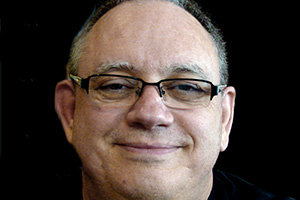
Tony Gutiérrez is editor of The Catholic Sun.

The new editor of The Catholic Sun is a critical thinker with an eye for detail and a thirst for knowledge.

Tony Gutiérrez is editor of The Catholic Sun.

Adrian “Tony” Gutiérrez, former associate editor of the North Texas Catholic in Forth Worth, said he is committed to using various platforms of New Media to partake in the New Evangelization.

“One of the ways people get their news is on social media, like Facebook. I want The Sun to be what people are sharing,” he said. “I really believe in using these tools to our advantage to get our message out.”

The Catholic Sun, which first began publishing in 1985, reaches more than 117,000 households each month throughout the Diocese of Phoenix and boasts a strong web and social media presence on Twitter and Facebook.

Gutiérrez is pursuing a master’s degree in journalism with a focus on the relationship between religion and media, and plans to complete his term as social media chairman for the Knights of Columbus, Texas State Council.

“Tony is a great addition to The Catholic Sun and I am confident he will serve the people of the Diocese of Phoenix with joyful enthusiasm and faith,” said Robert DeFrancesco, associate publisher and diocesan director of Communications.

DeFrancesco said readers can expect big changes in the coming months, including a greater concentration on the print edition’s Spanish-language section, La Comunidad, and more faith-filled features. Additionally, Gutiérrez will help develop new ways of increasing engagement with the Catholic community in English and Spanish through Facebook, Twitter and YouTube.

Finding faith

Religion was something Gutiérrez, 30, took a fancy to during high school while attending religious education classes at his home parish in Arlington.

“In high school I wanted to know what we believe and why we believe,” Gutiérrez said, but he added that he never got anything more than “general” answers.

His insatiable quest for truth and knowledge about the Catholic Church went unanswered and he walked away, turning to religions of the world. Gutiérrez studied Buddhism, Mormonism and Lutheranism. He attended a mosque, synagogue and a Baptist church, all the while honing his journalistic skills by interviewing the leaders of these faith communities.

During his search Gutiérrez said he did not self-identify as a Catholic, refusing to receive the sacrament of Confirmation in high school, but attended all the preparation classes.

He struggled.

As he plodded along, the running joke among his friends was, “what religion are you this week?”

Gutiérrez, an Eagle Scout who spent summers in Arkansas on staff at a Boy Scout camp, happened upon a holy card during a rainstorm and picked it up.

It was St. Anthony.

“He’s the most dedicated Catholic journalist I’ve ever run across.”

Little did he know his journey was about to come full circle with three pivotal experiences his senior year: his “first” invitation to a Catholic community, an Eagle project at a Catholic Church that helped “reconnect me with the traditions of Catholicism,” and a Billy Graham revival altar call.

“They did a call to come down and accept Jesus Christ and I never, truly did that and I wanted to be a Christian and His follower,” Gutiérrez said. “And then they did something dangerous. They gave me a Bible and I read it.”

Sitting at his desk at the Diocesan Pastoral Center in Phoenix, he recalled his frustration and disbelief when he realized “I was being led back to where I started. Intellectually, I knew the Bible was pointing to the Catholic Church and I just broke down and cried.”

Gutiérrez, the proud father of 6-month-old Kateri along with his wife, Tiffany, is a self-proclaimed “revert.”

“I don’t like to call myself a Cradle Catholic,” he said. “I was baptized, yes, but I relate my experience to that of converts. I say I’m a revert.”

Gutiérrez went through the RCIA program and was confirmed under the patron saint name of “St. Anthony” the summer of his high school graduation on Pentecost in 2003.

As for the whereabouts of the holy card, he still has it.

During his studies at the University of North Texas in journalism and history, Gutiérrez lived out his faith and served the community by participating in the Catholic Campus Ministry, the Knights of Columbus, Omega Delta Phi Fraternity, and as an assistant scoutmaster for a nearby troop.

“I try my best to be open to the will of God,” Gutiérrez said. “I’m a sinner and I have my mistakes but I’m thankful to the Lord, the divine psychiatrist, who provides the sacrament of Confession. I want to serve Him the best way I can knowing my human limitations.”

Jeff Hensley, editor of the North Texas Catholic who worked alongside Gutiérrez for more than six years, said the new editor of The Catholic Sun is an insightful and dedicated journalist.

“Tony has tremendous faith, great imagination and his writing reflects the best that we find in the Church,” Hensley said. “He’s the most dedicated Catholic journalist I’ve ever run across.”

Gutiérrez now fills the chair left vacant by John David Long-Garcia in 2014 when he took the position as editor-in-chief of The Tidings and Vida Nueva in the Archdiocese of Los Angeles. Joyce Coronel, a regular and longtime contributor to The Catholic Sun, served as the newspaper’s interim leader for the past year.

After two years in office, Pope Francis has 90 percent favorable rating

Pope Francis greets the crowd as he arrives to lead his general audience in St. Peter's Square at the Vatican March 11. (CNS photo/Paul Haring)
Pope Francis greets the crowd as he arrives to lead his general audience in St. Peter’s Square at the Vatican March 11. (CNS photo/Paul Haring)

WASHINGTON (CNS) — Two years after he was elected pope, Pope Francis’ popularity rating among U.S. Catholics is at 90 percent, surpassing Pope Benedict XVI’s best-ever popularity, and rivaling that of St. John Paul II.

Pope Francis, who is scheduled to visit Washington, New York and Philadelphia in September, garnered a “very favorable” view from 57 percent of U.S. Catholics, and “mostly favorable” from another 33 percent.

By comparison, Pope Benedict’s highest favorability rating was 83 percent in April 2008, when he visited the United States. St. John Paul achieved favorability scores of 93 percent in May 1990 and June 1996, and 91 percent in May 1987, four months before his second U.S. visit. All of those scores were nearly a decade or more into his papacy.

All polls were conducted by the Pew Research Center, which issued its findings March 5.

Pope Francis scored 84 percent favorability at his March 2013 election, dipped to 79 percent that September, then rose to 85 percent in February 2014.
[quote_box_center]

Anniversary tribute album

[/quote_box_center]
Among all Americans in the Pew survey, Pope Francis’ favorability ratings also have increased over the past two years. He started at 57 percent at the time of his election, inched upward to 58 percent the following September, increased to 66 percent last year and hit 70 percent this year.

In the latest survey, there was no segment of the U.S. population where Pope Francis did not gain majority favorability. In fact, every segment gave the pope a margin of at least 5-to-2 support.

Catholics who said they attend Mass regularly gave Pope Francis a 95 percent favorability rating, including two-thirds who said they held a very favorable opinion of the pope.

Pope Francis waves as he arrives to lead his general audience in St. Peter's Square at the Vatican March 4. (CNS photo/Paul Haring)
Pope Francis waves as he arrives to lead his general audience in St. Peter’s Square at the Vatican March 4. (CNS photo/Paul Haring)

Pope Francis also gained favorability ratings of 90 percent or better among Catholic women, non-Hispanic whites, those ages 50 and up, Democrats or those who lean Democratic, and conservatives.

“This nearly unanimous approval of the pontiff is striking even for highly observant Catholics,” said a Pew report detailing the survey findings.

Even the worst margins for Pope Francis among certain categories of Catholics would be the envy of any other public figure. Those who identified themselves as Republican or leaning Republican were 89 percent-10 percent in favor of the pope. Liberals were 87 percent-11 percent for the pontiff. And among those who go to church less often, Pope Francis scored an 86 percent-10 percent margin.

The survey was conducted Feb. 18-22 on both landlines and cellphones among a national sample of 1,504 adults. The margin of error for the whole group was plus or minus 2.9 percentage points.

Hearing confession is source of grace, conversion for priest, pope says

Pope Francis hears the confession of a young woman during World Youth Day in Rio de Janeiro July 26. Portable confessionals were set out in several public places for pilgrims attending World Youth Day. Five young people had the opportunity to take part in the sacrament of reconciliation with Pope Francis. (CNS photo/L'Osservatore Romano)
Pope Francis hears confession during a penitential liturgy in St. Peter's Basilica at the Vatican during the 2014 Lenten season. Pope Francis surprised his liturgical adviser by going to confession during the service. (CNS photo/L'Osservatore Romano via Reuters)
Pope Francis hears confession during a penitential liturgy in St. Peter’s Basilica at the Vatican during the 2014 Lenten season. Pope Francis surprised his liturgical adviser by going to confession during the service. (CNS photo/L’Osservatore Romano via Reuters)

VATICAN CITY (CNS) — Hearing a Catholic’s confession should be awe-inspiring for a priest, an experience that makes him look at his own life and willingness to convert, Pope Francis told a group of seminarians, new priests and priests who hear confessions in the major basilicas of Rome.

“Let yourselves be educated by the sacrament of reconciliation,” he told them March 12.

Hearing someone’s confession, he said, should lead the priest to make an examination of his conscience, asking, for example, “Do I, the priest, love the Lord like this old lady does?” Or, “Am I, as a confessor, willing to change and convert like this penitent, who I am here to serve?”

“These people edify us. They edify us,” the pope said.

Some 500 seminarians and newly ordained priests were attending a course on the sacrament of penance organized by the Apostolic Penitentiary, the Vatican office that also coordinates the work of confessors in St. Peter’s Basilica and the other major basilicas in Rome.

Cardinal Mauro Piacenza, head of the Apostolic Penitentiary, introduced the pope and thanked him for emphasizing the importance of the sacrament of reconciliation during his first two years in office. “In everyone’s hearts,” he said, “you are the pope of mercy.”

Pope Francis, who made substantial additions to his prepared text, told the priests and seminarians that in their ministry, the sacrament of reconciliation must be an opportunity to educate Catholics about God’s unending mercy and an opportunity for priests themselves to grow in holiness.

The only people God will not forgive are those who do not want God’s forgiveness, just like only those who stand in the shade are not warmed on a sunny day, Pope Francis said.

When people come to confession, he said, it should be an experience of “peace and understanding” and never one of “torture.”

“Everyone should leave the confessional with happiness in their hearts and a face radiant with hope even if sometimes, as we all know, it is bathed with the tears of conversion and the joy that comes from that.”

“Everyone should leave the confessional with happiness in their hearts and a face radiant with hope even if sometimes, as we all know, it is bathed with the tears of conversion and the joy that comes from that,” the pope said.

A good minister of God’s mercy, he said, is one who is able to find balance, gently leading the penitent to recognize his or her sins without conducting “a heavy, finicky and invasive interrogation.”

Taking both God and the penitent seriously, he said, means not pretending that nothing the person’s confesses is really a sin, but neither can the priest put on the robes of a judge.

Pope Francis hears the confession of a young woman during World Youth Day in Rio de Janeiro July 26. Portable confessionals were set out in several public places for pilgrims attending World Youth Day. Five young people had the opportunity to take part in the sacrament of reconciliation with Pope Francis. (CNS photo/L'Osservatore Romano)
Pope Francis hears the confession of a young woman during World Youth Day in Rio de Janeiro July 26. Portable confessionals were set out in several public places for pilgrims attending World Youth Day. Five young people had the opportunity to take part in the sacrament of reconciliation with Pope Francis. (CNS photo/L’Osservatore Romano)

“Too often people confuse being merciful with being lenient,” he said. Saying, “Oh, go on, that’s not a sin” is just as bad as insisting over and over, “but the law says this,” he told them. “Neither response takes the penitent by the hand and accompanies him or her on the journey of conversion.”

“This is very important,” he said. “Mercy means taking a brother or sister by the hand and helping him or her walk.”

The best way to find the right balance, the pope told the group, is for the priest to pray often and to recognize his own sinfulness and need for mercy.

“If you’ve never done that horrible thing the penitent tells you about, it’s always because of God’s grace,” he said.

Administering the sacrament of confession is a blessing, the pope said. It is the occasion for seeing how good people are and how sincerely they love God. Most priests, he said, will have witnessed “real and true miracles of conversion” in the confessional.

“How beautiful it is to welcome these repentant brothers and sisters with the blessing embrace of the merciful Father,” the pope said.

Priests always must remember that they were not chosen as priests because of their expertise in theology or canon law or because they have a special talent, he said. “We all have been made ministers of God’s mercy purely by the grace of God, freely and for love, or rather, for mercy.”

Remember, he said, “I’ve done this, this and this, but now I am called to forgive.”

When listening to someone confess a sin “with so much pain or fragility,” Pope Francis said, the priest should experience shame for his own sins. “This is a grace.”

— By Cindy Wooden, Catholic News Service.

Ss. Simon Jude students win Aerospace Challenge

Seventh-graders from Ss. Simon and Jude won the final round of the Aerospace Challenge and will visit (courtesy photo)
Seventh-graders from Ss. Simon and Jude won the final round of the Aerospace Challenge Feb. 28 and will visit  the Johnson Space Center in Houston. (courtesy photo)
Seventh-graders from Ss. Simon and Jude won the final round of the Aerospace Challenge Feb. 28 and will visit the Johnson Space Center in Houston. (courtesy photo)

Arizona is amid a two-month “SciTech Festival” aimed at exciting residents about how science, technology, engineering and math (STEM) will drive the state into the future.

Some 1,300 students on 300 teams across the Grand Canyon State who competed in the annual Honeywell Fiesta Bowl Aerospace Challenge didn’t need such encouragement. They already embraced the state’s largest extracurricular STEM program for elementary students.

A team of seventh-graders aced the challenge at the Feb. 28 finals competition. Under the direction of Maureen Hill, science teacher, the students developed an International Lunar Base and physical scale model. They earned an all-expense paid VIP trip to the Johnson Space Center in Houston and a special on-field experience at the next Fiesta Bowl.

The Aerospace Challenge allows fifth through eighth grade students the opportunity to enhance their knowledge of space technology. It also incorporates math, science, social studies, language and fine arts. They applied critical problem-solving, communication, team-building and decision-making skills to create their lunar base and answer questions from judges.

Ss. Simon and Jude is the only repeat winner of the Aerospace Challenge. Its students also won in 2001, 2004 and 2011.

St. Mary’s, Franciscan communities mourn loss of Fr. de Blas

Franciscan Father Alonso de Blas, well known among St. Mary's Basilica, St. Mary's High School and Franciscan Renewal Center circles, passed away March #. Visitation, rosary, Office of the Dead and funeral Mass is March 13 at St. Mary's Basilica. Internment will take place March 14 at St. Francis Cemetery.
Franciscan Father Alonso de Blas, well known among St. Mary’s Basilica, St. Mary’s High School and Franciscan Renewal Center circles, passed away March 6. Visitation, rosary, Office of the Dead and funeral Mass is March 13 at St. Mary’s Basilica. Internment will take place March 14 at St. Francis Cemetery. (photo courtesy of Peter Jordan)

Franciscan Father Alonso de Blas, who split much of his priesthood among St. Mary’s High School, St. Mary’s Basilica and the Franciscan Renewal Center in Scottsdale, passed away March 6. He was 75.

Fr. de Blas was born Oct. 25, 1939 in Caracas, Venezuela, according to the Franciscan Renewal Center, and was the youngest of three children. He lived across the street from St. Mary’s Basilica in Phoenix by age 11 where Franciscan influence would shape his vocation.

He attended what was then St. Mary’s elementary and high schools, but finished his education in 1956 at a minor seminary in Santa Barbara, California. The future friar then studied philosophy for four years, received the habit and studied theology for four years before being ordained for the Order of Friars Minor Dec. 19, 1964.

The Diocese of Phoenix was his second assignment. He spent 16 years teaching various levels of Spanish and religion at St. Mary’s High School in the 1970s and 1980s. Word of his passing quickly went viral on the school’s Facebook page with 145 “shares,” a total that jumped to 465 across other social media feeds.

Gloria Anne Luck summed up his public life in her comment on the Facebook page for St. Mary’s High School, “May this man that has spent a lifetime touching the lives of thousands, teaching and baptizing our parents, children and grandchildren, rest in peace with the most high, Father our God. Thank you for your life of gratitude.”

Jodi Humrich reflected on the baptism of her son in 1986 on the Franciscan Renewal Center’s Facebook page. She recalled the semi-private ceremony for a single mom and the baby of an interracial couple. It was a period of public judgment, but Humrich noted Fr. de Blas’ dignity, love and respect for all people.

He spent most of the 1990s teaching the faith to adults at the Franciscan Renewal Center and returned there to teach in retirement in 2009.

“He was a great teacher, who brought joy and life to every classroom in which he taught and to every student he encountered,” said Franciscan Deacon Herve Lemire, director of adult education and retreats at the Franciscan Renewal Center.

Dcn. Lemire, alongside his wife, Marianne, and their extended family, knew Fr. de Blas for over 25 years. He called the priest “a dynamic force at St. Mary’s High School.”

The school inducted him into its Hall of Fame as “Outstanding Franciscan” in 2009. He served as teacher, chaplain, board member, mentor, “and for sure, as everybody’s best friend,” Dcn. Lemire said.

“It was my honor and privilege to have known this great Franciscan Friar Minor who touched more lives, in and out of school, than anyone could ever imagine,” he said.

Lou LaScala, a one-time principal, said in a 2009 tribute video that Fr. de Blas had a rare ability to make kids want to learn something. Bob Kelly, a one-time teacher, put the priest among the top five list of smartest people he had ever met, but said Fr. de Blas was humble about it.

“He could make you think and think deeply and make you laugh at the same time. And that’s a pretty good gift. And he’s got it,” Kelly said in the tribute video.

Fr. de Blas’ fourth and final priestly assignment brought him back to a place he knew well: St. Mary’s Basilica. He served as associate pastor beginning in 2000.

“He had a special love for everybody and made them feel like the most important person in the world,” said Jeff Campbell, a friend and one-time parish manager at St. Mary’s Basilica.

Campbell said the Franciscan priest had an accessible teaching style, one even noticed by non-Catholics at funerals and weddings. He expected people of other faiths and no faith to attend the priest’s funeral March 13 at St. Mary’s Basilica.

“They could sense in him that he was genuine,” Campbell said.

His love for people and teaching gradually brought Fr. de Blas to share his wisdom via the printed word. When Campbell launched Tau publishing in 2002, Fr. de Blas’ books were among his first projects. The priest relished book signings.

Catholics for generations to come can grow closer to Christ through Fr. de Blas’ scriptural reflections for Lent, the Triduum, the journey from Easter to Pentecost and Advent. And what’s a Franciscan priest without a collection of prayers and exhortations on none other than St. Francis and St. Clare?

“You aren’t going to find anyone who loved people the way he did, who would drop everything to go to the hospital to anoint someone,” Campbell said, noting that it didn’t matter if it was the middle of the night or if the priest, himself, wasn’t operating at full strength.

He is survived by his brother, Romualdo de Blas, and his sister, Theresa Mulligan.

[quote_box_center]

Celebration of life

The greater community, especially those who knew Franciscan Father Alonso de Blas at St. Mary’s High School, St. Mary’s Basilica and the Franciscan Renewal Center, is invited to celebrate his life March 13 at St. Mary’s Basilica, 231 N. Third St.

  • 2 p.m. Visitation
  • 2:30 p.m. Rosary
  • 5 p.m. Office of the Dead with the friars
  • 7 p.m. funeral Mass
  • 11 a.m. March 14 inurnment at St. Francis Cemetery, 2033 N. 48th St.

[/quote_box_center]

After his two years as pope, ‘Francis effect’ has taken hold

Pope Francis waves as he arrives to lead his general audience in St. Peter's Square at the Vatican March 11. (CNS photo/Paul Haring)
Pope Francis waves as he arrives to lead his general audience in St. Peter’s Square at the Vatican March 11. (CNS photo/Paul Haring)

WASHINGTON (CNS) — Within two years of becoming pope, Pope Francis now has an effect named after him.

This “Francis effect” provides both comfort and challenges to Catholics, according to a panel of U.S. Catholic leaders speaking during a March 10 teleconference organized by Faith in Public Life.

“One of the most significant things about Pope Francis is the way in which he is reimagining how the church presents itself to the world,” said Jesuit Father Thomas Reese, a senior analyst for the National Catholic Reporter newspaper.

“If we think back three years ago, and you asked people in the street … ‘What’s the pope concerned about? What’ s the church concerned about?’ you’d get a very different response than what you’d get today,” Fr. Reese added. “In a sense, he has rebranded the Catholic Church.”

Pope Francis “challenges those on the left and the right,” said Kim Daniels, a senior adviser to the group Catholic Voices. For the right, she added, the challenge is “a fresh look at poverty”; for the left, “a fresh look at how to build a culture of life.”

“Our faith should challenge us,” Daniels said. “The content of Pope Francis’ challenge is resistance to a throwaway culture. This is a call to us to stand for the most vulnerable: the unborn,” she added, but also “the jobless, the migrants, to all who are marginalized. We’re all in this together.”

Sr. Simone Campbell, a Sister of Social Service who is executive director of the Catholic social justice lobby Network, said one key point of Pope Francis’ tenure is “his economic analysis that states so clearly that gross injustice requires more than economic growth, it requires changing the processes that protect those who have wealth at the top. He says market forces cannot be left alone. Market forces are a human institution and therefore can be flawed.”

The apostolic exhortation “The Joy of the Gospel” is an adage Pope Francis exemplifies daily, according to Sr. Simone. “‘The Joy of the Gospel’ explains how he is leading is in his approach to peacebuilding in our society,” she said. “Just a few weeks into the 114th Congress, I think Congress needs to work on peacebuilding among themselves so they can govern our beloved nation.”

“We need more politicians capable of sincere and effective dialogue and a focus on hearing the poor, seeing the problems. Nothing could be more countercultural in Washington today,” agreed John Carr, director of the Initiative on Catholic Social Thought and Public Life at Georgetown University in Washington. “When he stands before the Congress in six months, he will challenge everybody to think and act differently.”

The two dominant themes of Francis’ papacy are “the joy of the Gospel and the mercy of God. These are different emphases for a church that, frankly, has been tempted by or perceived on fear and focused on judgment,” Carr said. “I think he brings two basic perspectives. He looks at the world and he looks at the economy from the bottom up … and he looks at the church from the outside in. He’s tough on clerics and he’s tough on hierarchs. These priorities are not those of the hierarchy or the Curia.”

[quote_box_right]

Pope Francis at a glance

Based on manual counts from Pope Francis’ Vatican page

  • Elected March 13, 2013
  • Writings: 301 daily meditations, 11 apostolic letters, “Lumen Fidei” encyclical, “Evangelii Gaudium” apostolic exhortation, messages in 12 different categories including Lent
  • seven apostolic journeys outside of Italy
  • 521 Tweets and 5.7 million followers @pontifex

[/quote_box_right]

“Pope Francis has transformed the public perception of the church that had been seen as “judgmental, shouting a big no at the world. The church that Pope Francis portrays is humble, welcoming, open to the world,” said Stephen Schneck, director of the Institute for Policy Research & Catholic Studies at The Catholic University of America, Washington. “His vision imagines the church as a field hospital … for the spiritually wounded.”

Schneck talked about the pope’s upcoming encyclical on the environment and “how much it’s being dreaded in some quarters.” Already, he said, there’s been “a litany of pre-emptive strikes by conservatives even though not a word has been released,” he added, citing the journal First Things and the Acton Institute among the critics. Schneck said he suspects the pope “will morally validate responses to global warming” in the encyclical.

“There are some conservatives in the Catholic Church who have responded to Pope Francis and his agenda in a negative fashion,” Fr. Reese acknowledged. “But as the Pew Center recent data show, self-identified conservative Catholics like Pope Francis more than liberals and moderates. It’s the chattering class, the conservative ‘commentariat,’ that’s concerned about Pope Francis, not the conservative Catholics in the pews.”

The Pew Research Center survey on Pope Francis showed that 94 percent of conservative Catholics viewed him favorably, while 87 percent of liberal and moderate Catholics did.

Jessica Martinez, a Pew research associate, said evidence of a Francis effect is “really kind of mixed.” The share of Americans who identify as Catholic between 2012 and 2014 didn’t change, and neither did frequency of Mass attendance.

But “one-quarter said they had become more excited” since Pope Francis’ election, while two in five respondents said they pray more often and one in five said they read the Bible and other religious materials more frequently, Martinez said.

“The pope is not the Catholic Church,” Father Reese said. “For the Francis effect to take hold and really be long term, people have to buy in to what’s he’s going. We have to imitate him just as he’s imitating Jesus.”

By Mark Pattison, Catholic News Service.

Don’t be bitter or give up; offer world your wisdom, pope tells seniors

Pope Francis listens to a woman while greeting the disabled during his general audience in St. Peter's Square at the Vatican March 11. (CNS photo/Paul Haring)
Pope Francis listens to a woman while greeting the disabled during his general audience in St. Peter’s Square at the Vatican March 11. (CNS photo/Paul Haring)

VATICAN CITY (CNS) — Don’t pack it in or shift into cruise control, Pope Francis told his fellow seniors.

Today’s frenetic world, especially young people and families, needs the older generation’s prayers, wisdom and gifts to give them the encouragement, hope and faith they often lack, he said at his weekly general audience March 11.

“We, older people, can remind ambitious young people that a life without love is barren. We can tell fearful young people that worrying about the future can be overcome. We can teach young people who are in love with themselves too much that there is more joy in giving than receiving,” he said to those gathered in St. Peter’s Square.

The pope continued a series of audience talks about the family with the second part of two talks dedicated to the elderly, looking at the important role they play in modern society and the family.

The 78-year-old pope said he would use the pronouns “we” and “us” when talking about the elderly since “I, too, belong to this age group,” recalling with a smile how during his visit to the Philippines in January, the people there called him “Lolo Kiko — that is, Grandpa Francis.”

“It’s true that society tends to discard us, but the Lord definitely doesn’t. The Lord never rejects us,” he said.

In fact, there is a true vocation and mission set aside for older people, who have a lot more free time at their disposal now than before, he said.

“It’s still not time to ‘rest on one’s oars'” and just coast along, he said.

Being older is certainly different, and so when it comes to finding one’s new purpose in the world, seniors need to sort of “make it up” as they go along “because our societies are not ready, spiritually and morally, to give this period of life its full worth.”

Even “Christian spirituality has been taken a bit by surprise, and it involves sketching out a spirituality of older persons,” he said.

There are plenty of saints as role models, he said, especially the elderly Simeon and Anna in the temple, who had the knowledge and wisdom from life’s journey to recognize Jesus.

When they saw Jesus, “the weight of age and waiting disappeared at that moment,” and they found “new strength for a new task: to give thanks and bear witness to this sign of God,” the pope said.

Just as Simeon found inspiration to sing out with joy and Anna became the first to preach of Jesus, “Let us also become poets of prayer, let us acquire a love for looking for our words” to offer, as inspired by the word of God.

Pope Francis waves as he arrives to lead his general audience in St. Peter's Square at the Vatican March 11. (CNS photo/Paul Haring)
Pope Francis waves as he arrives to lead his general audience in St. Peter’s Square at the Vatican March 11. (CNS photo/Paul Haring)

The prayers of the world’s grandparents and older people are “a great gift for the church” and they offer “a great infusion of wisdom for all of society, too, especially for (those who are) too busy, too occupied, too distracted.”

Pope Francis remarked how wonderful it was that Pope Benedict XVI “chose to spend the final stretch of life in prayer and listening to God. This is beautiful,” he said to applause.

“It is truly a mission for grandparents, a vocation for older people,” he said, for them to hand down their wisdom and offer encouragement to those who are searching for meaning in life.

“How awful the cynicism of an older person is, he who has lost the meaning of his witness, scorns the young and does not communicate knowledge about life.”

He said he was praying for “a church that challenges the culture of disposal with the overflowing joy of a new embrace between young and old people.”

A grandparent’s words are so important, he said, telling his audience how he often reads a letter, which he keeps in his breviary, that his grandmother wrote him for his priestly ordination because “it does me good.”

St. Teresa of Avila outside St. Peter's Square in Rome March 11. At the end of his general audience, Pope Francis received a delegation of pilgrims observing the 500th anniversary of the birth of St. Teresa, a mystic, co-founder of the Discalced Carmelites and doctor of the church. (CNS photo/Paul Haring)
St. Teresa of Avila outside St. Peter’s Square in Rome March 11. At the end of his general audience, Pope Francis received a delegation of pilgrims observing the 500th anniversary of the birth of St. Teresa, a mystic, co-founder of the Discalced Carmelites and doctor of the church. (CNS photo/Paul Haring)

An excerpt of that letter, published in “Pope Francis: His Life in His Own Words” by Sergio Rubin and Francesca Ambrogetti, reads: “May these, my grandchildren, to whom I gave the best my heart has to offer, lead long and happy lives, but if one day hardship, illness or the loss of a loved one should fill them with grief, may they remember that one sigh directed to the tabernacle … and a glance toward Mary … may cause a soothing drop to fall on the deepest and most painful of wounds.”

At the end of the audience, the pope received a delegation of pilgrims observing the 500th anniversary of the birth of St. Teresa of Avila, a mystic, co-founder of the Discalced Carmelites and doctor of the church.

Celebrations, which run from her feast day Oct. 15, through the date of her birth, March 28, included a “world tour” of her wooden cane. The delegation showed the pope the relic, which is kept in specially made glass-covered wooden box.

By Carol Glatz, Catholic News Service.

Three teens have nothing to fear in poetry, Shakespeare contests

Three Catholic high school students in Arizona have conquered the top fear of most Americans: public speaking.

Two emerged as one of nine finalists in the 10th annual Arizona Poetry Out Loud competition. A third took first place in the Phoenix branch of the English Speaking Union Shakespeare Competition and is advancing to nationals.

Hale Stewart, a junior at Notre Dame Preparatory (courtesy photo)

Hale Stewart, a junior at Notre Dame Preparatory, took first place for his monologue from “Romeo and Juliet” and a sonnet Feb. 28. He heads to the ESU National Shakespeare Competition in New York City April 26-28.

Prizes include cash and scholarships to prestigious theater programs. Approximately 2,000 teachers and 15,000 students in nearly 60 ESU Branch communities participate each year.

Oluwatosin Babarinde, a junior at Brophy College Preparatory
Oluwatosin Babarinde, a junior at Brophy College Preparatory (courtesy photo)

Two other Catholic school students excelled in performance poetry. Oluwatosin Babarinde, a junior at Brophy College Preparatory, is one of three students from the central region entering the Arizona Poetry Out Loud competition March 12 at Herberger Theater Center.

Courtney Hale is one of three representatives in the northern region and is from St. Michael Indian School in St. Michaels.

The Arizona Commission on the Arts partners with the National Endowment for the Arts and the Poetry Foundation, as well as regional and local organizations, to administer the Poetry Out Loud program in Arizona. The contest encourages youth to learn about great poetry through memorization and recitation and helps students master public speaking skills, build self-confidence and learn about their literary heritage.

State finalists emerged first as classroom winners then school champions. Over 11,000 Arizona students and 47 schools in communities throughout the state participated in Poetry Out Loud this year.

“The students work hard to get to the finals,” said Robert C. Booker, executive director of the Arizona Commission on the Arts. “Watching such a diverse group of exceptional young people from around the state stand tall, recite, and display their understanding and love of poetry is truly remarkable and inspirational. These young people learn skills through this competition that will serve them for a lifetime.”

Phoenix poet and teaching artist Tomas Stanton will emcee the state competition. The event will also feature remarks by special guests Alberto Álvaro Ríos, Arizona’s Poet Laureate, and Eleanor Billington, program manager in the Literature & Arts Education Division of the National Endowment for the Arts.

Each state-level winner receives $200 and an all-expenses paid trip to Washington, DC, for national competition. The state winner’s school receives a $500 stipend for the purchase of poetry books. One runner-up receives $100; his or her school receives $200 for the purchase of poetry books.

Archbishop: Respect for human dignity anchor of civil rights movement

Thousands of people march across the Edmund Pettus Bridge in Selma, Ala., March 8 during a commemoration of the 50th anniversary of the 1965 civil rights march from Selma to Montgomery, the state capital. (CNS photo/Tami Chappell, Reuters)

SELMA, Ala. (CNS) — The message of the civil rights movement has always been that all people are created in the image and likeness of God and that the dignity of all must be respected, said Mobile Archbishop Thomas J. Rodi.

He was the main celebrant and homilist at a Mass March 8 at Queen of Peace Church in Selma marking the 50th anniversary of the 1965 civil rights marches from Selma to Montgomery.

Respect for the dignity of all remains the challenge for today, Archbishop Rodi said, adding that he wondered what the Rev. Martin Luther King Jr., who led the marches and was “first and foremost a religious leader,” would think about things today.

“Do we respect the dignity of the elderly, the immigrant, the baby in womb? That continues to be the struggle for each of us,” Archbishop Rodi said in a homily that described the Catholic Church’s persistent presence in addressing both the spiritual and temporal needs of God’s people.

He said that the media often leave out “Rev.” in describing the civil rights giant, and in doing so they are omitting the spiritual and primary vehicle that carried his nonviolent quest forward — one anchored in the dignity of the human person.

Concelebrants included three of the nation’s African-American Catholic bishops:

  • Louisiana Bishop Shelton J. Fabre of Houma-Thibodaux
  • Washington Auxiliary Bishop Martin D. Holley
  • retired Bishop John H. Ricard of Pensacola-Tallahassee, Florida

Others who concelebrated were Edmundite Fr. Stephen Hornat, superior general of the Society of St. Edmund; Edmundite Father Richard Myhalyk, pastor of Queen of Peace; Fr. James Curran from the Diocese of Richmond, Virginia; and Fr. Thomas Weise, retired pastor of St. Patrick Parish in Phenix City, Alabama, and a longtime civil rights advocate.

On March 7, 1965, a young Alabaman named John Lewis — now a veteran congressman representing Georgia’s 5th District — and other local civil rights activists led about 600 marchers in a peaceful procession from Selma across the Edmund Pettus Bridge toward Montgomery.

[quote_box_right]

Related

African American Catholics in the U.S. (USCCB)

‘Selma’ prompts painful memories for Sister of St. Joseph who marched (Catholic News Service)

Illinois bishop on racial divide in the U.S.

Sr. Ebo, an icon during the struggle for voting rights

[/quote_box_right]

They risked imprisonment and injury to protest infringement of voting rights against African-Americans in Selma and the brutal murder of a demonstrator by a state trooper a month earlier. March 7 came to be known as “Bloody Sunday,” as police — some on horseback — released tear gas and beat some of the marchers over the heads with truncheons.

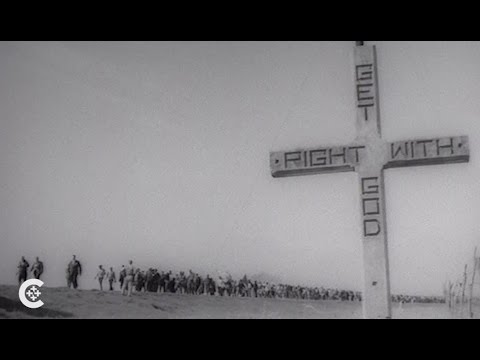
The Rev. Martin Luther King led the second march, which took place March 9, 1965. He galvanized more than 2,000 people to participate. They included ministers, priests, nuns and rabbis around the country who answered a call to join him. Through newspaper accounts and television coverage, the world saw blacks and whites, men and women, clergy of all faiths, Catholic priests and nuns, walking arm-in-arm.

But Rev. King turned the march back at the bridge, after time spent in prayer. He did so at the urging of members of Congress who wanted federal protection for the demonstrators but had not yet secured it. A third march started from Selma March 21, 1965, with federal protection for participants. Walking between seven and 17 miles a day, and camping along the way, the marchers reached the steps of the Capitol in Montgomery March 25, 1965. The crowd grew to 25,000 on the last day.

On Aug. 6, 1965, the federal Voting Rights Act was passed and it was signed into law by President Lyndon Johnson.

U.S. President Barack Obama and his family participate in a march across the Edmund Pettus Bridge in Selma, Ala., March 7. Demonstrators from across the country sang while retracing the steps of those who marched 50 years ago for civil rights with the Rev. Martin Luther King Jr. over the bridge from Selma to Montgomery, Ala. (CNS photo/Jonathan Ernst, Reuters)

This year on March 7 in Selma, a crowd of about 40,000 watched as President Barack Obama, first lady Michelle Obama and the couple’s two daughters were joined by U.S. Rep. Lewis, D-Georgia and a few others in a symbolic walk across the Edmund Pettus Bridge. For security reasons, the crowd could not walk on the bridge with the president.

More than 100 members of Congress were in attendance, as was former President George W. Bush, who signed the reauthorization of the Voting Rights Act in 2006.

“The march on Selma was part of a broader campaign that spanned generations, the leaders that day part of a long line of heroes,” Obama said in his remarks.

“We gather here to celebrate them. We gather here to honor the courage of ordinary Americans willing to endure billy clubs and the chastening rod; tear gas and the trampling hoof; men and women who despite the gush of blood and splintered bone would stay true to their North Star and keep marching toward justice,” he said.

“The Americans who crossed this bridge, they were not physically imposing. But they gave courage to millions,” said Obama. “They held no elected office. But they led a nation. They marched as Americans who had endured hundreds of years of brutal violence, countless daily indignities — but they didn’t seek special treatment, just the equal treatment promised to them almost a century before.”

Selma is not “some outlier in the American experience,” or a museum, or “a static monument to behold from a distance,” he said. “It is instead the manifestation of a creed written into our founding documents” that “all men are created equal.”

He said the racial unrest and rioting in Ferguson, Missouri, that followed the fatal shooting of a black teenager by a white police officer last August “may not be unique, but it’s no longer endemic (and) no longer sanctioned by law or custom,” as it was before the civil rights movement, he said.

At the same time, however, Ferguson is not “an isolated incident” and racism in the U.S. has not been “banished,” Obama said, adding that no one needs the Justice Department’s newly released report on racism in the Ferguson Police Department to know that racism has not been defeated.

“We just need to open our eyes and our ears and our hearts to know that this nation’s racial history still casts its long shadow upon us. We know the march is not yet over; we know the race is not yet won,” said Obama.

In Selma in 1965, Rev. King told John Wright Jr., a correspondent for the National Catholic News Service, as it was called then, that the presence of Catholic priests and nuns at the march “has given a new, creative and encouraging dimension to our whole struggle. It has identified the church with the struggle in a way that has not existed before.”

In one of his several reports filed back to the news service in Washington, Wright said Rev. King was deeply moved by the role priests and nuns played in the Selma march.

“(Rev. King) believes that the presence of the priests and nuns in Selma had a direct effect on the swiftness of President Johnson’s actions in recommending extensive voting laws to Congress,” Wright wrote.

Contributing to this story was Larry Wahl, editor of The Catholic Week, newspaper of the Archdiocese of Mobile.