
#RedCup reminders of mercy

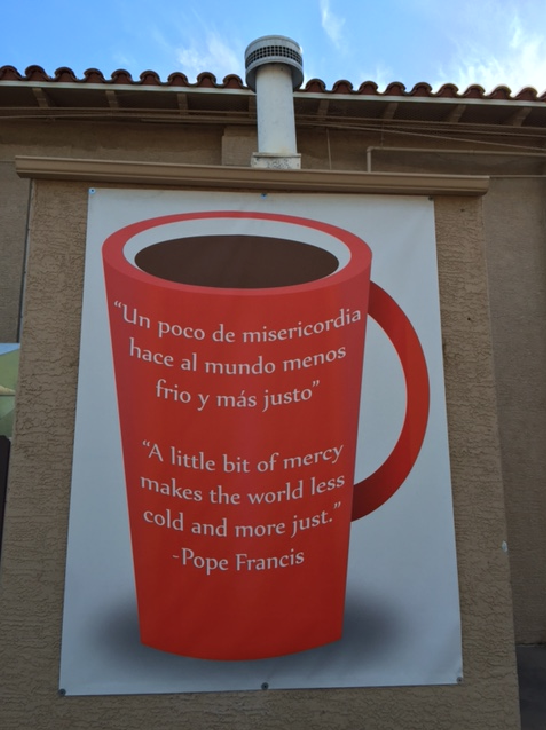
A likeness of the red cups parishioners at St. Matthew received to remind them of the need to be merciful. (courtesy photo)

Occasionally priests and bishops provide us with a copy of their homily. We recently received one from Fr. Ray Ritari at St. Matthew Parish.

It tied in #RedCup discussion on social media — the removal of secular Christmas imagery from this year’s holiday cup design at Starbucks — to our call to use words and actions of mercy, mutual love and reconciliation. Here are some excerpts.

Fr. Ritari delivered the homily during a bilingual Mass celebrating the feast of Christ the King Nov. 22. He first recalled the life of Clarence Jordan, co-founder — alongside his wife — of Koinonia Farm, an intentional Christian community in Georgia in 1942. The farm’s name was from the Greek used in the Acts of the Apostles to describe the early church community and its atmosphere of reconciliation and partnership.

Despite neighboring racial prejudice, Blacks and Whites worked and lived together on the farm, Fr. Ritari said. Such efforts led to Jordan’s expulsion from the local Baptist Church.
[quote_box_center]

Clarence Jordan believed the problem with Christianity was that people thought of Jesus as safely relegated to bible stories. Christ the King for many (as with many folks in our day and age) had become a person of the past whose radical message of inclusivity, peace and justice had lost its relevance.

Clarence Jordan felt that because of our silence regarding matters of justice had rid ourselves of the person of Jesus more so than those who crucified him over 2,000 years.
[/quote_box_center]

The homily continued
[quote_box_center]

Maybe this year we can stop yelling at others to “keep Christ in Christmas” and instead focus on being Christ- like ourselves. Our challenge is to be intentional Catholics who want to work to change the structures in society that cause the poor to grow poorer, that cause refugees and the undocumented to be resisted and rejected, for the unborn to be murdered, for women and girls to be trafficked, for the LGBT community to be treated as less than.

[/quote_box_center]

Seriously, do you think Christ the King  would rather have us prepare for his coming into the world during the Advent  and Christmas seasons by putting his name on a plastic red cup that’s going to end up in the trash? Or would he rather we remember his coming as our King by no longer treating one another as trash, or as disposable as a red cup?

Fr. Ritari challenged Catholics to shift priorities to things that matter more by “being conscious of Christ the King, who empowers us to co-create with him a world based upon justice, mercy, and inclusivity.”

[quote_box_center]

Remember, Christ the King:

  • is already at Starbucks!!!
  • is with the person behind you in the line as you prepare to go Christmas shopping.
  • is with those whom others would have us hate and take revenge upon when we have been harmed.
  • is with all people whose basic human rights are being disrespected.
  • Finally, Christ the King is sitting beside you as you sip that hot cup of coffee when you are at your wits end with regard to your job, family or personal life. Christ the King is everywhere!!!! Yet, are we with him?
    [/quote_box_center]
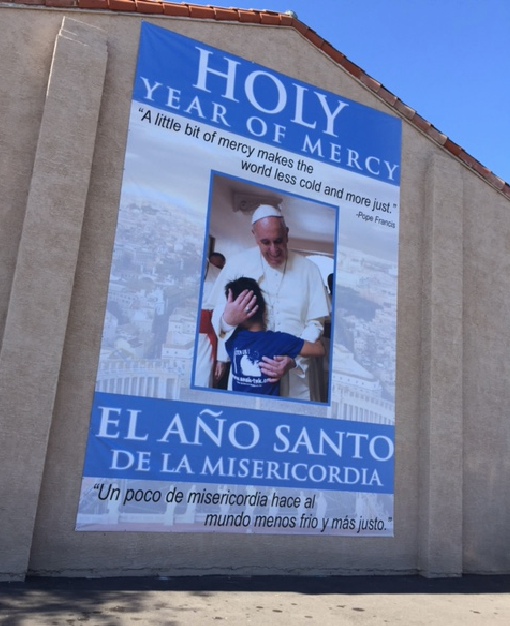
(courtesy photo)
(courtesy photo)

A Vatican spokesperson said that the Holy Year of Mercy is very. Its ”message of mercy, the love of God which leads to mutual love and reconciliation: this is precisely the answer we must give in times of temptation to mistrust.”

Fr. Ritari concluded his bilingual homily saying, “With our words and actions of mercy, mutual love, inclusivity, and reconciliation for all people, we will keep Christ the King in Christianity as Clarence Jordan wanted, rather than forcing the world to ‘keep Christ in Christmas.’  Or on red cup!”

Speaking of red cups, everyone today is receiving a red cup with a recent tweet from Pope Francis. It says, “A little bit of mercy makes the world less cold and more just.”

Keep this cup some place prominent in your home during the Holy Year that begins December 8 to remind you to be an instrument of mercy as God is merciful with all people.

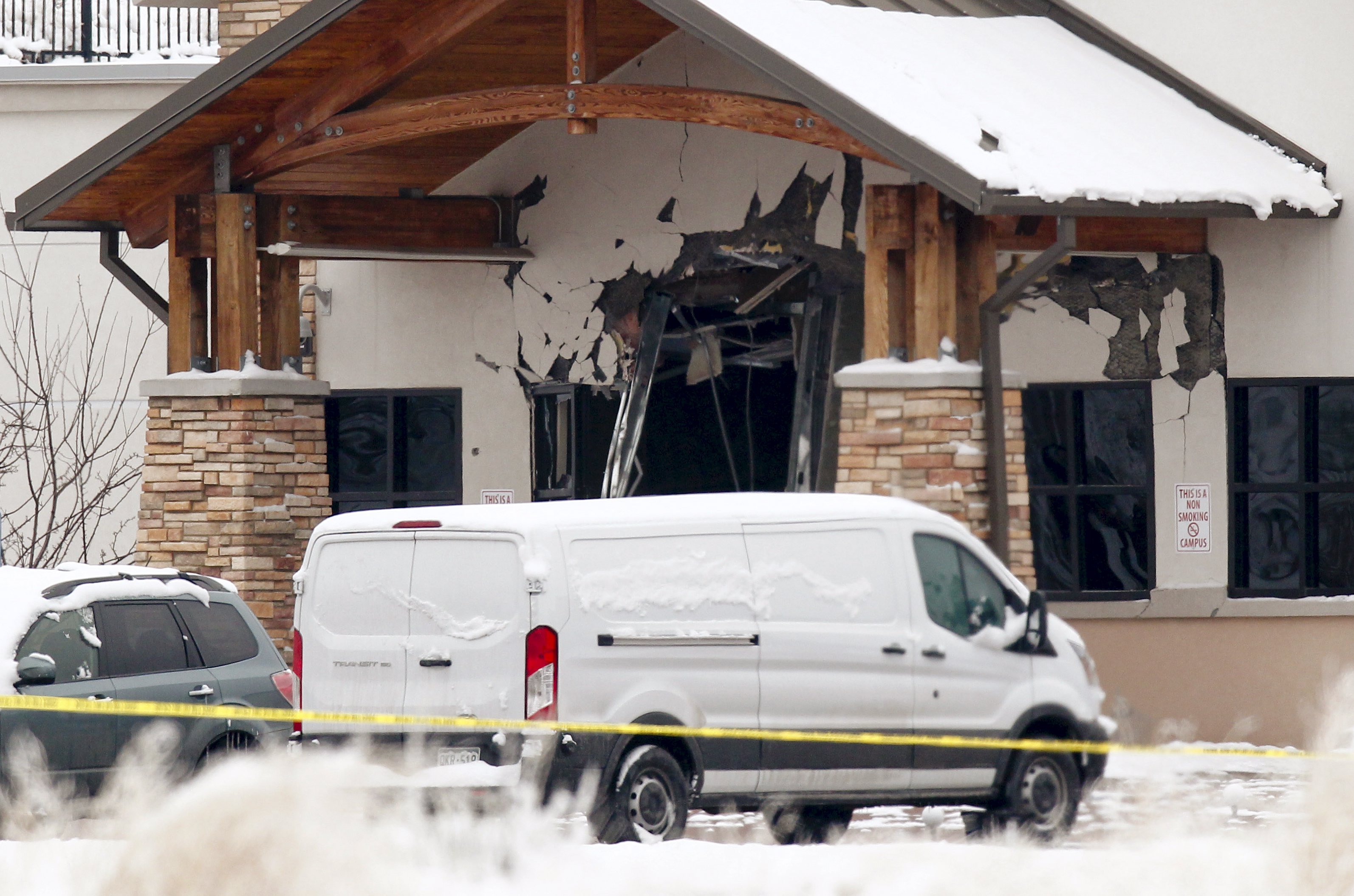
Shooting at Colorado Planned Parenthood facility antithesis of pro-life movement, says priest

Damage is seen to the entrance of the Planned Parenthood clinic after a Nov. 27 shooting in Colorado Springs, Colo. Police say Robert Lewis Dear killed three people during the shooting rampage and hours-long standoff at the clinic and was later taken into custody. (CNS photo/Isaiah J. Downing, Reuters)

COLORADO SPRINGS, Colo. (CNS) — A priest who celebrates Mass every Friday morning on a sidewalk near the Planned Parenthood facility targeted by a lone gunman Nov. 27 said the shooter’s actions were the antithesis of the pro-life cause.

“We want the conversion of Planned Parenthood, not their destruction,” said Fr. Bill Carmody, the longtime Respect Life director for the Diocese of Colorado Springs. “The pro-life movement has no place for violence.”

The attack on the facility in northwest Colorado Springs left three people dead, including a police officer, and nine others wounded. Planned Parenthood reported that none of its employees or patients was among those killed or seriously wounded in the Black Friday attack.

The facility sits near a busy shopping center that includes a grocery store, a bank and several other businesses. After the attack broke out around 11:30 a.m., local time, patrons and employees of the businesses “sheltered in place” for nearly six hours while police tried to contain the alleged shooter, Robert Lewis Dear, 57. The standoff ended with Dear’s arrest at 4:52 p.m., local time.

Among those killed was Garrett Swasey, a police officer at the University of Colorado at Colorado Springs and father of two. Swasey was also an elder at Hope Chapel, a pro-life evangelical community in Colorado Springs.

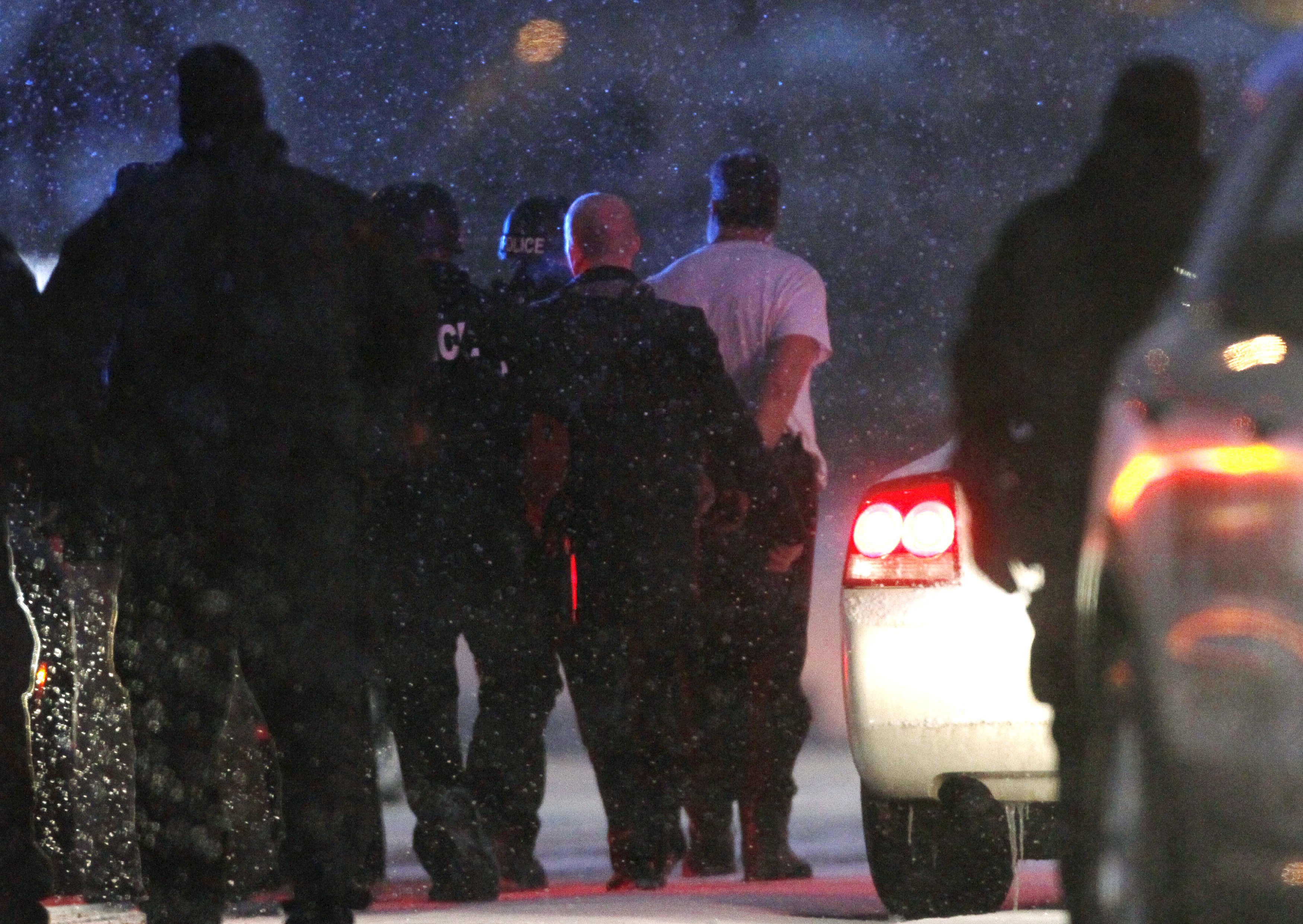
A suspect is taken into custody Nov. 27 outside a Planned Parenthood clinic in Colorado Springs, Colo. Police say Robert Lewis Dear killed three people during the shooting rampage and hours-long standoff at the clinic and was later taken into custody. (CNS photo/Rick Wilking, Reuters)

The facility is the frequent site of prayer vigils and other activities, in addition to the pro-life Masses, leading several national media outlets to speculate that Dear was a member of the pro-life movement.

However, Fr. Carmody said he did not recall ever having seen or spoken to Dear. On the day of the shootings, he had celebrated his usual weekly Mass, but he said that he and others in attendance departed shortly afterward because of the snowstorm hitting the region.

“We were long gone” before the attack started, Fr. Carmody told The Colorado Catholic Herald, the diocesan newspaper of Colorado Springs.

Others who regularly pray outside the facility also said they did not recall seeing Dear at any pro-life events.

Law enforcement officials would not discuss a motive for the shootings because their investigation was still underway. Dear was scheduled to appear in court Nov. 30.

According to The Gazette daily newspaper, Dear previously lived in South Carolina and North Carolina and had arrest records in both states. Voting records show that Dear maintains a residence in Hartsel, a small town about 120 miles west of Colorado Springs, The Gazette reported.

“Yesterday, our community experienced an act of pure evil at the local Planned Parenthood clinic,” Bishop Michael J. Sheridan of Colorado Springs said in a statement. “As Pope Francis recently reminded us, ‘The path of violence and hate can never solve the problems of humanity.’”

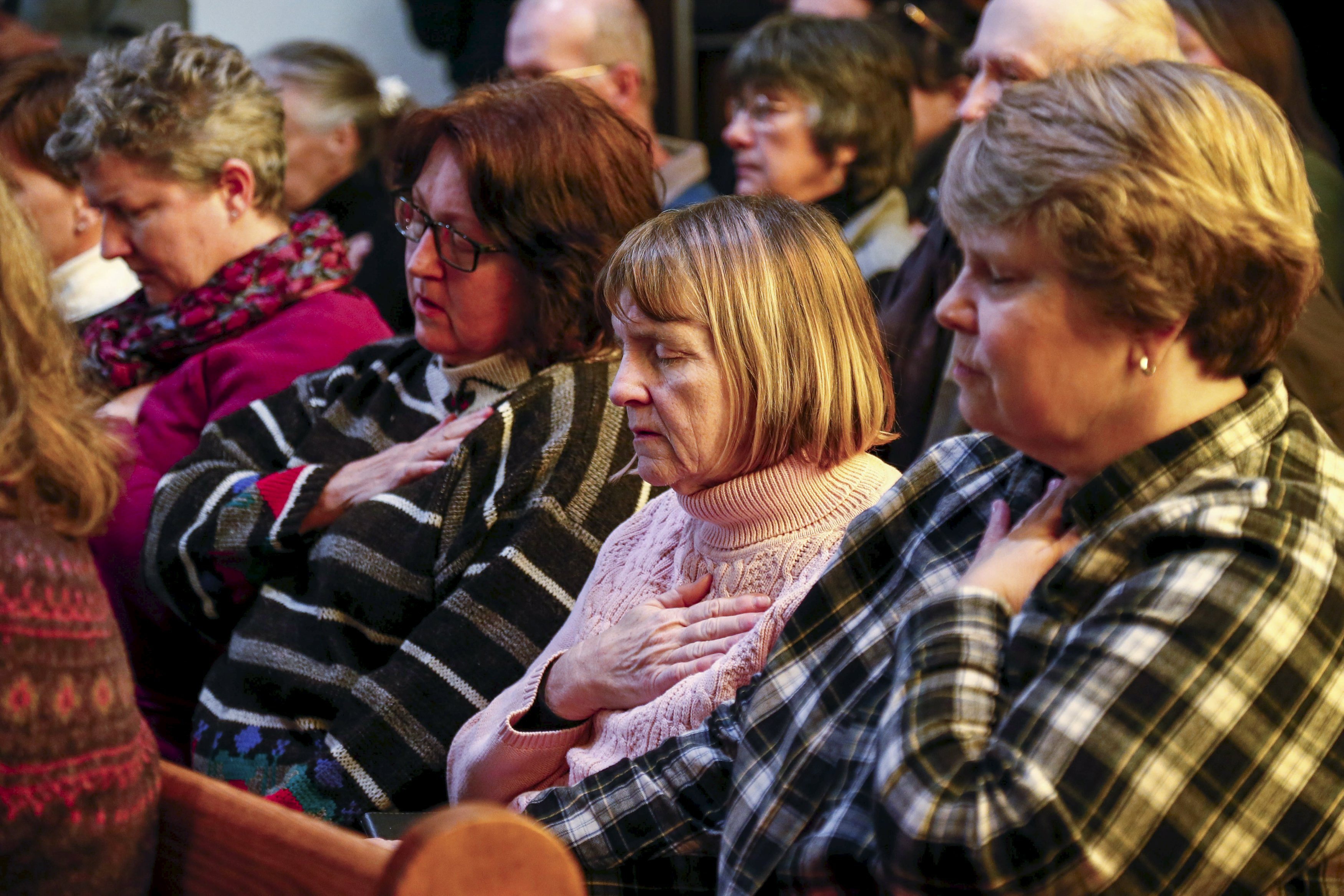
People pray during a vigil at All Souls Unitarian Universalist Church Nov 28, the day after a gunman opened fire on a Planned Parenthood clinic in Colorado Springs, Colo. Police say Robert Lewis Dear killed three people during the shooting rampage and hours-long standoff at the clinic and was later taken into custody. (CNS photo/Isaiah J. Downing, Reuters)

The National Right to Life Committee’s president, Carol Tobias, said her organization “unequivocally condemns unlawful activities and acts of violence regardless of motivation. The pro-life movement works to protect the right to life and increase respect for human life. The unlawful use of violence is directly contrary to that goal.”

Bryan Kemper, youth outreach director for Priests for Life and founder of Stand True, said in a Nov. 27 statement that “although we do not know the details behind the gun violence at Planned Parenthood in Colorado, it is important to say that we are against all violence against our fellow human persons.”

“From the abortionist, the workers, the patients, the children scheduled to die or anyone at that Planned Parenthood, all of their lives are precious and worth saving,” he said. “All of them are loved by God and deserve our prayers. I am sickened by the violence there today just as I am sickened by the violence there every day.”

Judie Brown, president of American Life League, said that “despite aggressive attempts of some news media to tie this brutal and egregious act to pro-life causes, there is no evidence supporting their case — and these attempts are simply irresponsible.”

“We abhor and condemn all acts of terrorism, all acts of savagery against the innocent — born and preborn — and we call upon our fellow Americans to do likewise,” she said in a Nov. 30 statement.

Brown urged people to “to look beneath the surface of escalating violence in this nation” to see that “the violent act” of surgical abortion is at the root of it, which “the media ignores.”

— By Veronica Ambuul, Catholic News Service. Ambuul is editor of The Colorado Catholic Herald, newspaper of the Diocese of Colorado Springs.

[quote_box_center]

RELATED

Blessed are the peacemakers via 40 Days for Life

[/quote_box_center]


Nuns, activists want new Salvadoran inquiry into 1980 churchwomen deaths

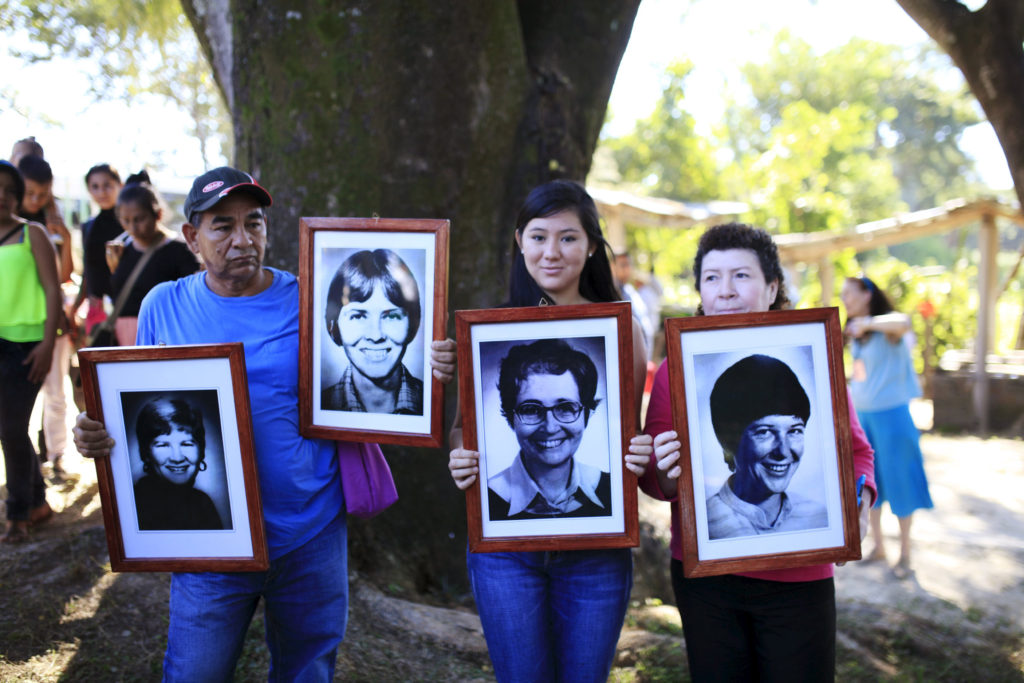
People hold pictures of four American churchwomen during a Dec. 2 memorial service to commemorate the 35th anniversary of their murder in the town of Santiago Nonualco, El Salvador. Members of Catholic and human rights organizations participated in a memorial at the place where four U.S. churchwomen, lay missioner Jean Donovan, Ursuline Sister Dorothy Kazel, Maryknoll Sisters Maura Clark and Ita Ford, were killed by members of the Salvadoran National Guard during the civil war. (CNS photo/Jose Cabezas, Reuters)

SAN SALVADOR, El Salvador (CNS) — Representatives of U.S. religious and human rights organizations called for the Salvadoran government to reopen the investigation of the 1980 killing of three U.S. nuns and a lay missionary.

It is important to “ask the Salvadoran government and prosecutors to open this case, so that the masterminds of this crime do not walk free, with impunity,” said Claire White, who came on behalf of her father, former Ambassador Robert White, who died in January.

White told Catholic News Service the U.S. government should pressure the Salvadoran authorities to do a proper investigation and not let the intellectual authors go unpunished.

On Dec. 2, 1980, Maryknoll Sisters Maura Clark and Ita Ford, Ursuline Sister Dorothy Kazel and lay missionary Jean Donovan were abducted, raped and murdered by members of the National Guard, when the North Americans traveled by car from the airport.

Civil war in El Salvador had erupted earlier that year. The churchwomen were in El Salvador to work with refugees of that conflict, but were regarded as leftist by the government.

[quote_box_center]

RELATED: In El Salvador, families say U.S. churchwomen’s work lives on

A reflection from the 30th anniversary

[/quote_box_center]

The U.N. Truth Commission, established in 1992 to investigate cases of political violence during the civil war, concluded that then-Col. Eugenio Vides Casanova, director of the National Guard, knew that a unit from his command had carried out the assassinations and facilitated the concealment of the facts, which hampered the investigation. In 1984, four guardsmen were found guilty of the killings and convicted to 30 years in prison, but those who planned the murders and gave the orders have never been brought to justice, said some of the more than 100 North Americans who traveled to El Salvador to commemorate the 35th anniversary of the murders.

“There may be justice if we North American women go back and do what we need to do in terms of strategizing to make that happen,” Ursuline Sister Janet Marie Peterworth of Louisville, Kentucky, told CNS during a Nov. 30 memorial service held in San Salvador’s Parque Cuscatlan.

She recalled the last letters she received from Donovan from El Salvador and added, “It’s cold and rainy in December in the States, and I can’t stop thinking of Jean Donovan and what she said in one of her last correspondence: ‘I would come home, but where else can you find roses in December?'”

“She did not come home, she decided to stay,” she added, with tears rolling down her cheek.

Sr. Peterworth said Donovan used to say that the Salvadoran military would not kill “an American blond.”

“But they did,” Sr. Peterworth added.

Isabel Hernandez, El Salvador office director of the SHARE Foundation, said: “We don’t want revenge, because we are Christians, but we do want justice, the truth, we want to know who gave the order.” She said the 1992 Salvadoran amnesty law must be repealed because it protects those responsible for the murders of the churchwomen and many other victims.

In 2002, Vides Casanova and former Defense Minister Jose Guillermo Garcia, who were both granted residence in the United States, were found responsible by a Florida jury in a federal civil case for the torture of three Salvadorans. In April 2015, Vides Casanova was deported to El Salvador for participating and assisting the torture and assassination of thousands of victims, including the four churchwomen.

The four guardsmen were convicted because they were not eligible for amnesty, as their case was regarded as nonpolitical.

During the current visit, U.S. delegates visited the tomb of Archbishop Oscar Romero, assassinated in March 1980. They also went to Central American University, where six Jesuit priests and two women were killed in November 1989 by a military unit.

On Dec. 2, they were to travel to Santiago Nonualco, a small town in La Paz department, to attend a memorial service at the very spot where the three nuns and the lay missionary were shot dead.

By Edgardo Ayala, Catholic News Service.

What is a holy door? [VIDEO]

Duquesne University art historian Elizabeth Lev explains the meaning of the Holy Doors.

[quote_box_center]

Looking for more?

Pope Francis on the door of mercy

Related articles on the Year of Mercy

[/quote_box_center]

Patrona de los inmigrantes: Santa Francisca Javiera Cabrini

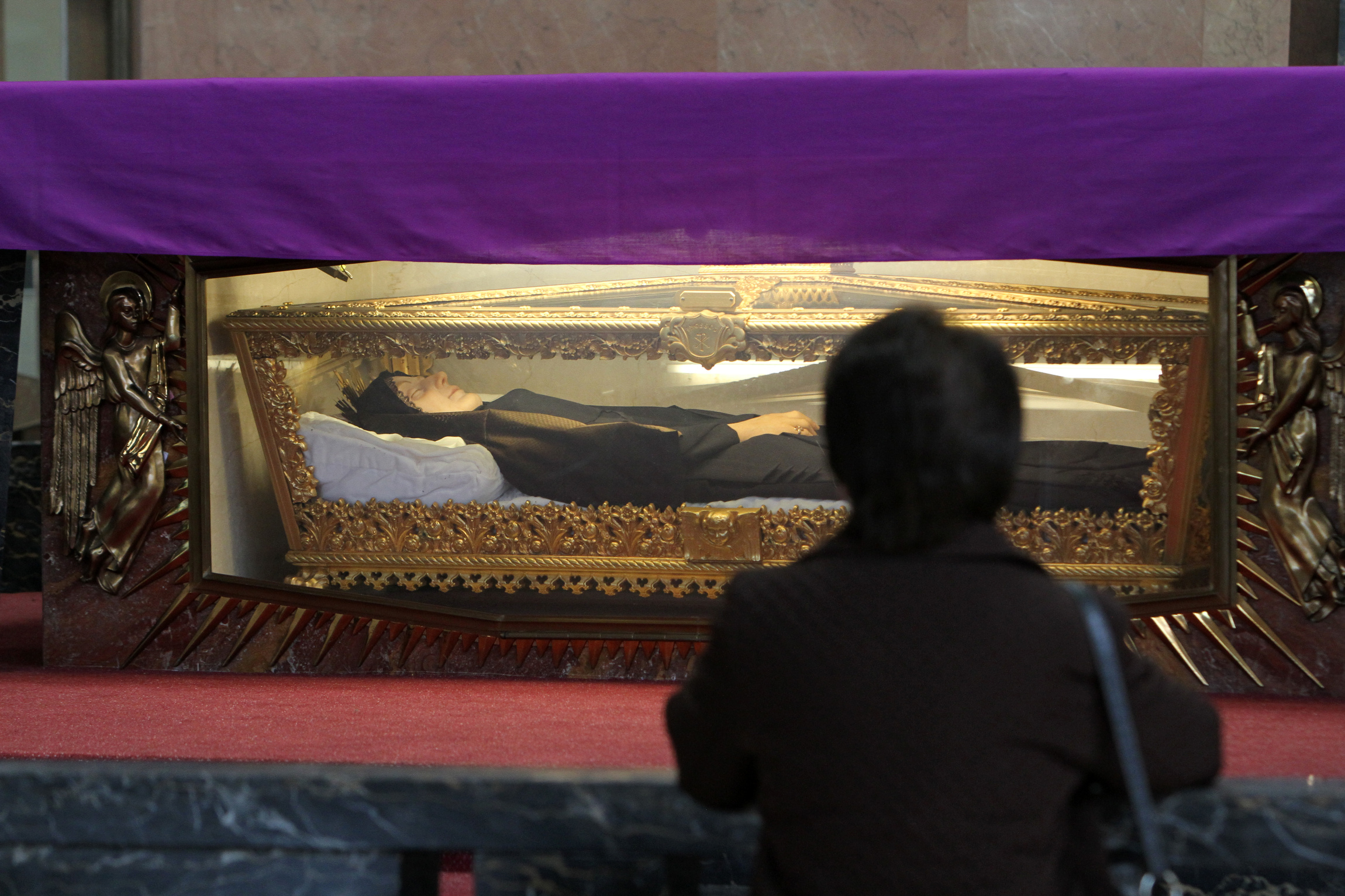
In this 2014 file photo, A woman prays before the body of St. Frances Xavier Cabrini, which rests in a glass casket under the altar in the saint's shrine chapel in the Washington Heights section of New York City. The chapel adjoins Mother Cabrini High School, an all-girls college preparatory school the saint founded in 1899. (CNS photo/Gregory A. Shemitz)
En esta foto de archivo, una mujer reza ante el cuerpo de Santa Francisca Javier Cabrini, cuyos restos descansan en un ataúd de cristal bajo el altar en su capilla en Washington Heights en Nueva York. (CNS foto/Gregory A. Shemitz)

[dropcap]L[/dropcap]a primera ciudadana Americana en ser canonizada fue una santa inmigrante a nuestro país y su vida fue dedicada al cuidado de los inmigrantes. Venir a América, sin embargo, no era lo que Francisca Cabrini tenía en mente cuando viajó de Milán a Roma en 1887 AD para reunirse con el sucesor de Pedro. Quería ser misionera en China. Desde el momento en que recibió el sacramento de la confirmación a la edad de ocho años, ella había soñado ser testigo de Cristo entre los chinos; y ese deseo sólo había crecido mientras discernía su llamado a la vida religiosa y escogió a San Francisco Javier como su patrón. Pero el Papa León XIII le dijo: “No vayas al Este, sino al Oeste, a Nueva York, en vez de China”. Instó a seguir la gran muchedumbre de emigrantes que salían de Italia cada semana hacia América.

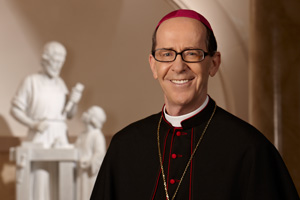
The Most Rev. Thomas J. Olmsted is the bishop of the Diocese of Phoenix. He was installed as the fourth bishop of Phoenix on Dec. 20, 2003, and is the spiritual leader of the diocese's 1.1 million Catholics.
El Reverendísimo Thomas J. Olmsted es le obispo de la Diócesis de Phoenix. Fue instalado como el cuatro obispo de Phoenix el 20 de diciembre de 2003, y es el lider espiritual de los 1,1 millones católicos en la diócesis.

En los 1880s, el cuidado de los inmigrantes era un motivo de preocupación de la Iglesia, especialmente del Papa León XIII y los obispos de América. Entre los decretos finales del famoso tercer Consejo plenario de Baltimore (que autorizó el desarrollo del bien conocido Catecismo de Baltimore) fue un llamado urgente de proporcionar instrucción religiosa para los inmigrantes en su lengua nativa. Los obispos también elogiaron a los distintos organismos y apostolados que asistieron a las necesidades sociales de las grandes olas de inmigrantes que llegaban a nuestras costas.

El Papa León y los obispos estadounidenses sabían de las dificultades que enfrentaban los inmigrantes: las duras condiciones que tuvieron que afrontar en su viaje a través del océano y a su llegada, su extrema pobreza y el fanatismo feo que encontraron con frecuencia y los peligros graves para la práctica de su fe. Ellos también sabían que, a través de los siglos, Dios había llamado repetidamente a su pueblo para ofrecer hospitalidad a extranjeros, y para estar particularmente atento a sus necesidades materiales y espirituales. Donde hay inmigrantes, allí debe estar la Iglesia para: dar la bienvenida, educar, ayudar y ser una voz para aquellos sin voz. Esta misión fue algo añorado por el corazón de la Santa Francisca Javiera Cabrini.

Después de su conversación con el Papa Leó XIII, entonces, la Madre Cabrini comenzó a hacer planes para servir a los inmigrantes italianos en América. Desde su llegada en 1889 AD hasta su muerte en 1917 AD, ella y los miembros del instituto religioso que fundó, las Misioneras del Sagrado Corazón de Jesús, se entregaron al servicio de los italianos que habían llegado recientemente aquí. Ella fundó orfanatos, abrió escuelas católicas, e inauguró hospitales y otras instituciones en Nueva York, luego Chicago, New Orleans, Denver, Los Ángeles, Seattle y otras ciudades en los E.U. sin dejar de mencionar sus obras en Centro y Sur América así como también en Inglaterra, Francia y España. Donde emigraron los italianos, ella y sus hermanas pronto siguieron, comprometidas para ver que ninguno de ellos perdiera su fe católica.

A pesar de su frágil salud, que había impulsado a dos institutos religiosos negar su admisión a sus filas, Francisca Cabrini cruzó el océano 25 veces y constantemente viajó por tren, carro y otros medios de transporte a través de los vastos territorios de América. Dondequiera que ella fue, fundó instituciones (67 en total) que pronto se convertirían en centros para satisfacer las necesidades sociales, educativas, sanitarias y religiosas de los inmigrantes. Ella fue verdaderamente una madre espiritual para ellos. En total, ella estableció 67 instituciones.

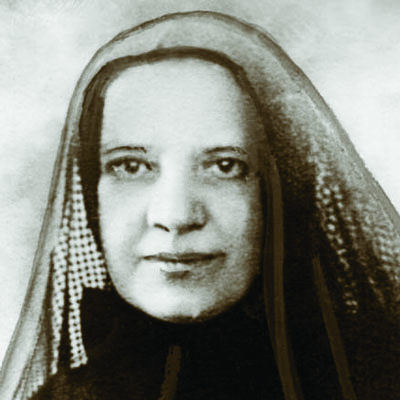
Mother Frances Xavier Cabrini, the first American to be named a saint, is little known by U.S. Catholics, says Catholic studies scholar Francesco C. Cesareo. Born in Italy, she became a naturalized American citizen in 1909. She worked among Italian immigrants establishing schools, hospitals and orphanages. Her feast day is Nov. 13. (CNS file photo)
La Madre Francisca Javiera Cabrini es la primer ciudadana de los Estados Unidos que fue canonizada como santa en la Iglesia Católica. (CNS foto archivo)

La Madre Cabrini sinceramente hubiese estado de acuerdo con lo que dijo el Papa Francisco a los inmigrantes y refugiados en la Plaza de la Independencia en Filadelfia este pasado septiembre: “Muchos de ustedes han inmigrado a este país a un gran costo personal, pero con la esperanza de construir una nueva vida. No se desanimen por las dificultades que tengan que afrontar. Les pido que no olviden que, al igual que los que llegaron aquí antes, ustedes traen muchos dones a esta nación. … Pienso, en particular, en la vibrante fe que muchos de ustedes poseen, en el profundo sentido de la vida familiar y los demás valores que han heredado. Al contribuir con sus dones, no solo encontrarán su lugar aquí, sino que ayudarán a renovar la sociedad desde dentro. …”.

¿Qué fue lo que motivó a la Santa Francisca Javiera Cabrini a dedicar su vida al servicio de los inmigrantes? Sin duda su amor por el Sagrado Corazón de Jesús fue un constante fuego espiritual en su corazón, y la exhortación del Papa León XIII reforzó su confianza en que el cuidado de los inmigrantes era la voluntad de Dios para ella. Además, ella fue motivada por su aguda conciencia que la hospitalidad a los extranjeros ocupa un lugar central en las Sagradas Escrituras y la entera tradición Judeo-Cristiana. Dar la bienvenida al extranjero es un acto de caridad y más; es parte integrante de nuestra identidad en Cristo. Dice Jesús (Mateo 25: 35-40), “estaba de paso, y me alojaron; desnudo, y me vistieron; enfermo, y me visitaron; preso, y me vinieron a ver. … Les aseguro que cada vez que lo hicieron con el más pequeño de mis hermanos, lo hicieron conmigo”.

El Papa León XIII no tan solo instó a la Madre Cabrini a servir a los inmigrantes en los Estados Unidos, es también el primer Sucesor de Pedro en emitir una encíclica, Rerum Novarum, que habla del derecho de una persona a emigrar para mantener a su familia. El Papa Francisco emitió una declaración similar en nombre de los inmigrantes en su reciente mensaje durante el 101 Día Mundial de los Migrantes y Refugiados, publicado el 3 de septiembre del 2015. Tal vez con la Madre Cabrini en mente, escribió, “desde el comienzo, la Iglesia es madre con el corazón abierto al mundo entero, sin fronteras. Este mandato abarca una historia de dos milenios. … Todo esto adquiere hoy un significado especial. De hecho, en una época de tan vastas migraciones, un gran número de personas deja sus lugares de origen y emprende el arriesgado viaje de la esperanza, con el equipaje lleno de deseos y de temores, a la búsqueda de condiciones de vida más humanas. No es extraño, sin embargo, que estos movimientos migratorios susciten desconfianza y rechazo, también en las comunidades eclesiales, antes incluso de conocer las circunstancias de persecución o de miseria de las personas afectadas. … sentimos la tentación de ser cristianos manteniendo una prudente distancia de las llagas del Señor”.

La vida y el testimonio de la Santa Francisca Javiera Cabrini nos desafía a tí y a mí a dar la bienvenida al extranjero en nuestro día. Los refugiados y los inmigrantes que llegan a Arizona hoy día vienen con graves necesidades de asistencia no diferente a los que dirigió la Madre Cabrini. Ojalá sigamos su ejemplo de la hospitalidad para los inmigrantes y refugiados, por amor al Sagrado Corazón de Jesús. ✴

The Pope and the Prodigal Son

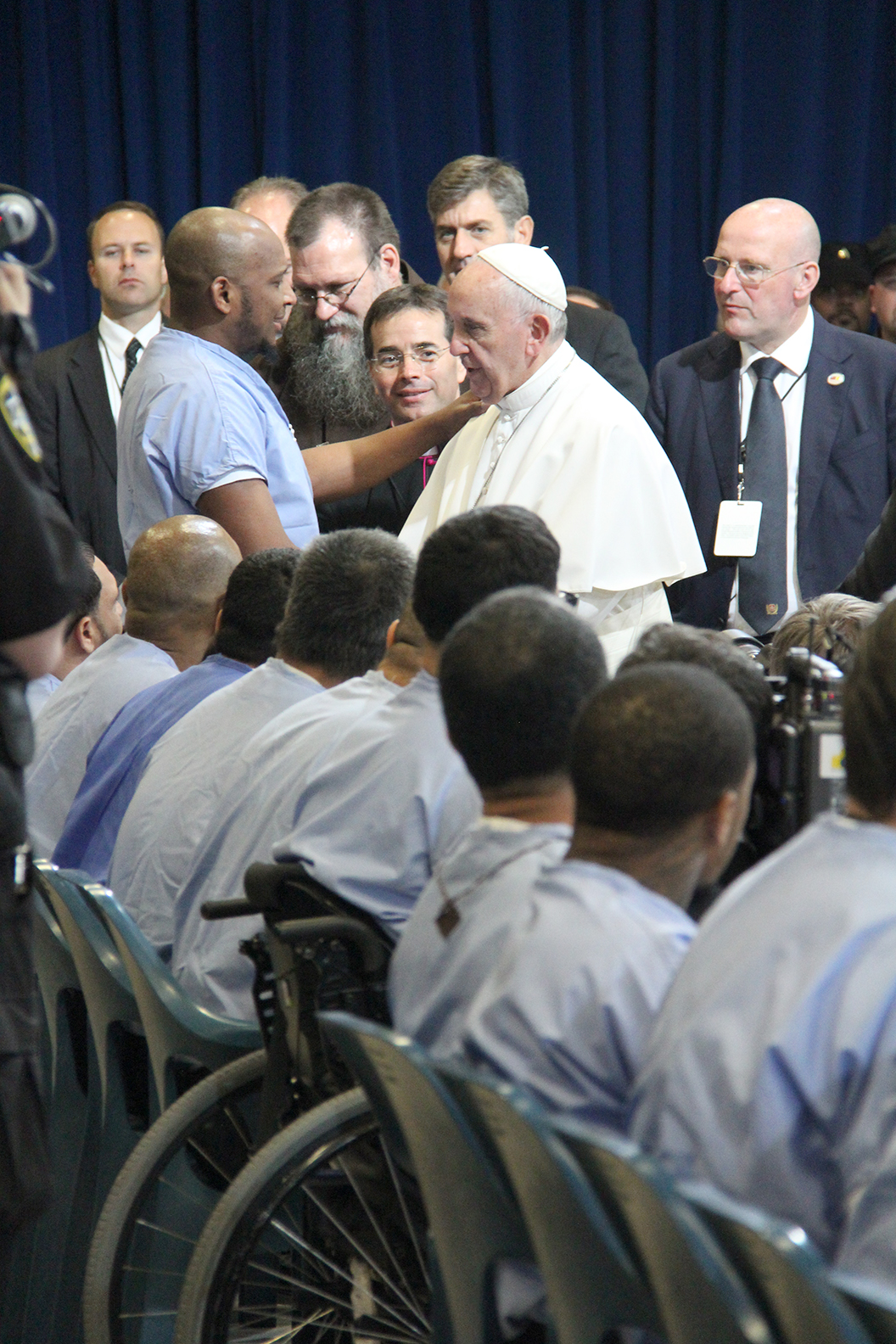
Pope Francis embraces an inmate during his visit to the prison. (Justin Bell/CATHOLIC SUN)
Pope Francis embraces an inmate during his visit to the Curran-Fromhold Correctional Facility in Philadelphia Sept. 27 as part of his apostolic visit to the United States. (Justin Bell/CATHOLIC SUN)

[dropcap]A[/dropcap]fter what anybody would have to conclude was a triumphant tour of the Unites States, Pope Francis is enjoying a renaissance of sorts with almost all Americans regardless of their religious positions and perspectives. And the reason for that lies in what most say is his obvious sincerity, integrity and commitment to spreading the love of Christ.

In fact, his reputation is so solid in this regard that he has had a particular resurgence of popularity with some of the most unlikely of fans — social liberals in America. Previously they felt it quite fashionable to denigrate Catholicism for being far too opposed to their liberated lifestyle. And it seems that his popularity with them might have some within the Church who fall into the more conservative ranks a little riled.

Chris Benguhe is a columnist for The Catholic Sun. Opinions expressed are the writers' and not necessarily the views of The Catholic Sun or the Diocese of Phoenix.
Chris Benguhe is a columnist for The Catholic Sun. Opinions expressed are the writers’ and not necessarily the views of The Catholic Sun or the Diocese of Phoenix.

Why? Well quite understandably many of them want the Pontiff to stand up more forcefully for the rules of the Church, and let these liberated thinkers know that he is not now — nor ever — going to bend those rules to their liking, And they wonder why he is spending what seems to be an inordinate amount of time on things like climate change, economic justice and welcoming those that seem to break the rules of the Church.

Well as a great big fan of this pope and one who very vocally argued for a pope from the Americas this time around, let me offer you my take on what he is doing and why he’s doing it. And you can take it or leave it with a grain of salt.

First of all there’s his namesake Francis of Assisi’s purported call to action, “Preach the Gospel at all times and when necessary use words.” It’s pretty obvious to even the most casual of observers that when Francis reaches out to love and accept the downtrodden, the unwanted and the castaways of society, as well as the sinners among us (that means all of us by the way) he is doing exactly that. And I don’t think any well-intentioned Catholic or any other Christian for that matter has a problem with that — hopefully!

But I think some might want a few more words from this pope on right and wrong. And specifically who is right and who is wrong on a multitude of issues.

For those I offer this insight — the story of the Prodigal Son. You all remember the tale of the father with two sons — one who always does the right thing and stays with the father to help him, and the other who asks for his inheritance from the father then splits and squanders it living the life of wine, women and song. When the second son returns the father welcomes him not only with understanding arms, but in fact practically a hero’s welcome, offering him anything that he has.

Understandably the good son becomes a bit irate. But the father reminds him that he has enjoyed the father’s love perpetually, but he is rejoicing because “he who was lost is found.”

Now the things that Pope Francis is talking about recently are all in line with Catholic doctrine — whether it means the concept of taking care of the poor and being concerned about poverty, or about respect for life at every stage from time in the womb to time on Death Row. And as for the respect for the environment, not only are we to be good stewards as the Bible tells us, but as his encyclical states emphatically over and over again, we need to see the environment as a gift to be shared by all the world’s people, and to respect the environment means to be respecting those people and their rights to it.

But I also think he just might be focusing on some of these topics more than others in order to bring back a few Prodigal Sons (and Daughters) into the Church. And just maybe, if he can do that, then we can all celebrate together a resurgence of faith in Christ in the world in a way that we have not seen in a long, long time, and for all the RIGHT reasons.

So read, listen and think carefully about this pope and what he’s saying before passing judgment on Francis or his new fans. They might be our Prodigal Brothers and Sisters coming home. And we might do well to rejoice with our pope and our Father in heaven over their return.


Pope Francis in Africa highlight reel [VIDEO]

Pope Francis concluded his three-nation trip to Africa Nov. 30 visiting countries with as little as 20-something percent Catholic to Uganda, which is nearly 42 percent Catholic.

Fast Facts on Kenya, Uganda and Central African Republic

Pope in Central African Republic: Open the doors of mercy, counter violence with love

African bishops praise caregivers of people with HIV, AIDS

Pope in Bangui: Open the doors of mercy, counter violence with love

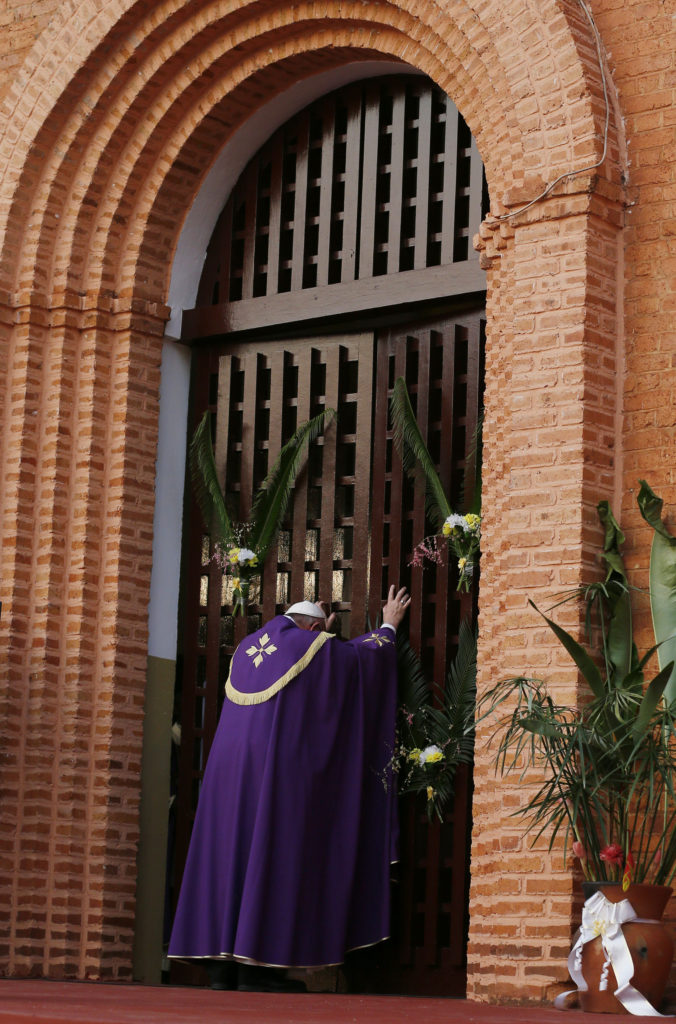
Pope Francis leads a ceremony to open the Holy Door as the begins the Holy Year of Mercy before a Mass with priests, religious, catechists and youths at the cathedral in Bangui, Central African Republic, Nov. 29. (CNS photo/Paul Haring) See POPE-BANGUI-MERCY Nov. 29, 2015.

BANGUI, Central African Republic (CNS) — Put down the weapons of war and work for justice, Pope Francis urged the people of the Central African Republic.

“Even when the powers of hell are unleashed, Christians must rise to the summons, their heads held high, and be ready to brave blows in this battle over which God will have the last word. And that word will be love and peace,” the pope said in an evening homily Nov. 29 at Bangui’s cathedral.

Pope Francis opens the Holy Door as he begins the Holy Year of Mercy at the start of a Mass with priests, religious, catechists and youths at the cathedral in Bangui, Central African Republic, Nov. 29. (CNS photo/Paul Haring)

A civil war that began in 2013 and ongoing outbursts of violence, including between mainly Muslim and mainly Christian militias, have sown terror in the Central African Republic, which already was on most lists of the five poorest countries in Africa. A fifth of the country’s population has fled abroad or is living in camps for displaced people.

Explaining to people outside the Bangui cathedral that their city was, for the day, “the spiritual capital of the world,” Pope Francis prayed for the mercy and grace of peace as he used both hands and his body weight to push open the Holy Door of the cathedral. The main opening of the Year of Mercy will be Dec. 8 at St. Peter’s Basilica in Rome.

[quote_box_right]

RELATED

What is a holy door?

God never shuts the door, Church always must be open too, pope says

[/quote_box_right]


Marking the first Sunday of Advent at the Mass with priests, religious, catechists and youths, Pope Francis urged the Catholic community to be committed to helping the country make a new start.

Christians, and especially those with a vocation to priesthood or religious life, are called to love their enemies, “which protects us from the temptation to seek revenge and from the spiral of endless retaliation,” the pope said in his homily.

Anyone who has a role of evangelizer, teacher or preacher in the Christian community, he said, must be “first and foremost practitioners of forgiveness, specialists in reconciliation, experts in mercy.”

As Catholics observe the Advent time of waiting to celebrate Christ’s coming, he said, they should keep reminding themselves that God is a God of justice and of love — two things the people of Central African Republic need desperately.

“God is stronger than all else,” the pope said. “This conviction gives the believer serenity, courage and the strength to persevere in good amid the greatest hardships.”

“To all those who make unjust use of the weapons of this world, I make this appeal: Lay down these instruments of death! Arm yourselves instead with righteousness, with love and mercy, the authentic guarantors of peace,” the pope said.

Pope Francis arrived at the cathedral after a meeting with representatives of the Central African Republic’s evangelical and Protestant communities.

Catholic Archbishop Dieudonne Nzapalainga of Bangui, president of the Central African Republic bishops’ conference, Rev. Nicolas Guerekoyame-Gbangou, president of the Evangelical Alliance of the Central African Republic, and Imam Oumar Kobine Layama, president of the Islamic Community of Central African Republic, have been working together to persuade their people to end the vendettas and embrace peace and reconciliation.

Rev. Guerekoyame-Gbangou was among those welcoming Pope Francis Nov. 29 to a special meeting with representatives of the country’s evangelical and Protestant communities.

The pope publicly expressed “closeness and solidarity to Pastor Nicolas, whose home was recently ransacked and set on fire, as was the meeting-place of his community. In these difficult circumstances, the Lord keeps asking us to demonstrate to everyone his tenderness, compassion and mercy.”

For too long, too many Central Africans have been suffering, the pope said.

“There are also those who have been scarred in soul or body by hatred and violence, those whom war has deprived of everything: work, home and loved ones,” the pope said. When God looks upon the suffering, he does not see members of one denomination or another.

“I have often called this the ecumenism of blood,” he said. “All our communities suffer indiscriminately as a result of injustice and the blind hatred unleashed by the devil.”

Pope Francis urged the country’s Christians to continue on the path of ecumenism, cooperation and common prayer.

“The lack of unity among Christians is a scandal,” he said, “above all because it is contrary to God’s will.”

But it is also a scandal in a world torn apart by hatred and violence, a world yearning for a word of peace and unity, he said.

By Cindy Wooden, Catholic News Service.

Charitable tax credit

https://vimeo.com/106447560

Tomorrow is Giving Tuesday. If you haven’t made a monetary contribution to a charitable agency in Arizona yet this year, feel free to do so tomorrow or anytime through Dec. 31. You’ll get that same dollar sum taken off of your taxes.

Circle the City, which provides medical respite for patients who are homeless and basic medical care for those who can’t afford it, created this video to show how the process works.

Diócesis invita a fieles ‘Honra a Tu Madre’, la Virgen de Guadalupe, el 5 de diciembre

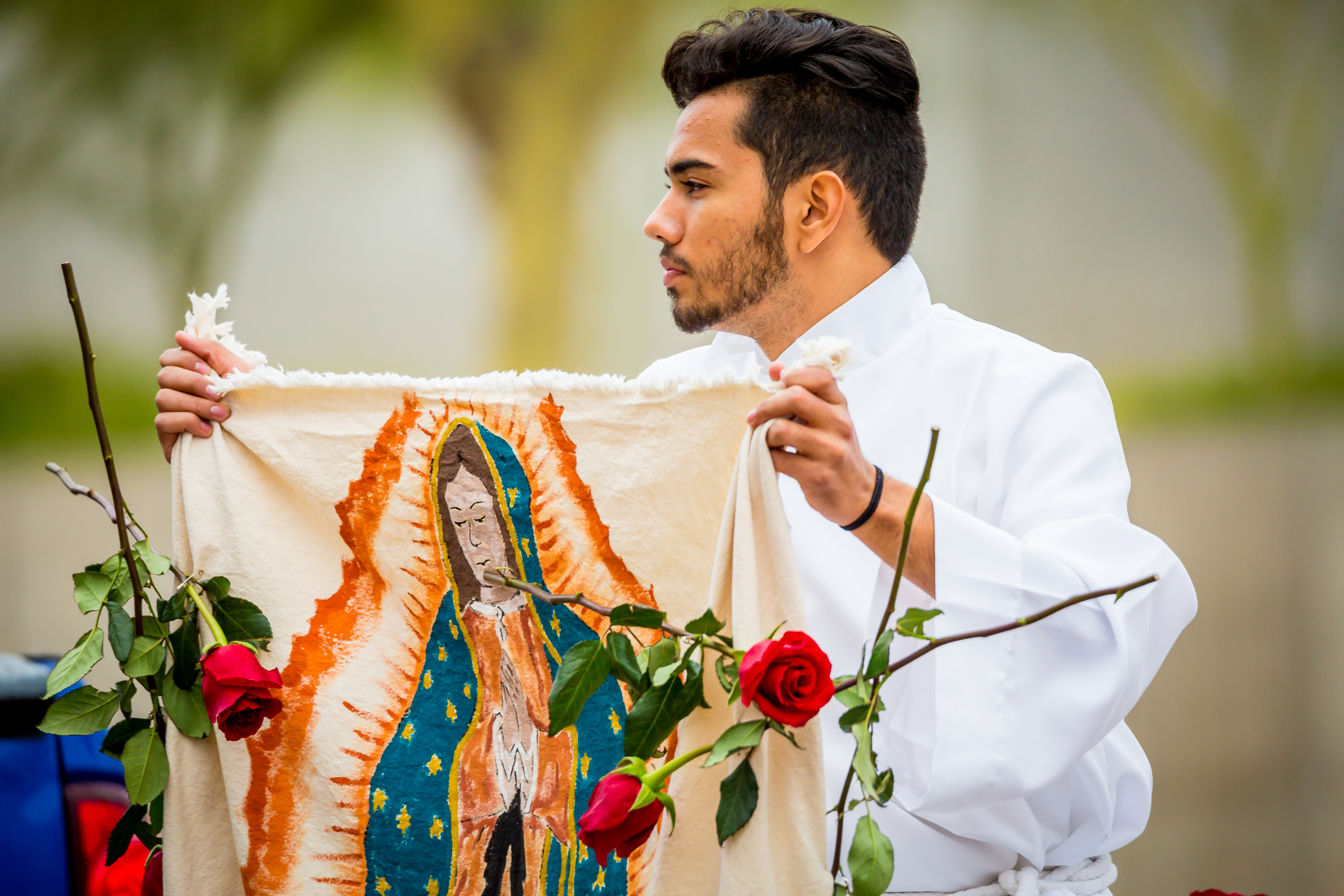
Local parishioner Juan Pablo Morales is dressed as St. Juan Diego at the 2014 "Honor Your Mother" event in downtown Phoenix. (Billy Hardiman/CATHOLIC SUN file photo)

[dropcap]N[/dropcap]uestra Señora de Guadalupe apareció en México hace 484 años para ayudar a difundir el Evangelio a las Américas. Para conmemorar esto, la Diócesis de Phoenix, los Misioneros de María y Ministerios de María invitan a los fieles de a través de la diócesis para asistir a la novena anual “Honra a Tu Madre”, un evento público de gran escala en honor a la Emperatriz de las Américas — el 5 de diciembre.

“El propósito es unir a los católicos de las diferentes razas y nacionalidades, como lo hizo la Virgen de Guadalupe al unir a dos culturas hace cientos de años”, dijo Ignacio Rodríguez, director de la oficina de ministerios étnicos para la diócesis.

Nuestra Señora de Guadalupe es la única aparación Mariana apropada por la Iglesia en las Américas. Apareció a San Juan Diego — un nativo que se había convirtido al Cristianismo — en 1531, mandándole a edificar una iglesia. Cuando el ordinario no le creyó, ella le pidió colocar rosas en su tilma y llevarlos al obispo. Cuando Juan Diego se reunió con el obispo, él abrió su tilma y todos los presentes se arrodillaron en veneración de la imagen que fue capturada en la tilma.

La imagen de la Virgen Morena, Nuestra Señora de Guadalupe, proclamado a los pueblos indígenas de las Américas “la Buena Nueva de la dignidad filial de todos sus habitantes. Ya nadie más es solamente siervo sino todos somos hijos de un mismo Padre hermanos entre nosotros”, dijo el Papa Francisco en su homilía en la fiesta de la Virgen el 12 de diciembre del año pasado.

Hoy en día, la imagen es venerada por varios millones de peregrinos cada año en la Basílica de Nuestra Señora de Guadalupe en la Ciudad de México y es uno de los lugares de peregrinación más visitados en el mundo. Su fiesta toma lugar el 12 de diciembre.

Local parishioner Juan Pablo Morales is dressed as St. Juan Diego at last year's "Honor Your Mother" event in downtown Phoenix. (Billy Hardiman/CATHOLIC SUN file photo)
Juan Pablo Morales a San Juan Diego en el evento “Honra to Madre” en 2014. (Billy Hardiman/CATHOLIC SUN foto archivo)

Procesión para Nuestra Señora

[quote_box_right]

Honra tu Madre

El sábado, 5 de diciembre
  • 8 a.m. — Actividades de pre-procesión
    Parroquia Inmaculado Corazón, 909 E. Washington St.
  • 10 a.m. — Procesión al Centro Pastoral Diocesano, 400 E. Monroe St.
  • 11 a.m. — Bendición del Obispo Olmsted
  • Mediodía — Misa

[/quote_box_right]

Enriqueta Sosa, representante de los Misioneros de María y una de las coordinadoras del evento, informó a The Catholic Sun que, al igual que años anteriores, será un evento lleno de colorido, pero sobre todo de devoción y fervor.

Las celebraciones empiezan a las 8:30 de la mañana en la Parroquia Inmaculado Corazón de María, con las mañanitas a la Guadalupana y la procesión hacia el Centro Pastoral Diocesano. La procesión estará integrada por unos 15 carros alegóricos, 56 grupos de matachines, danzas y ballets folklóricos; así como por más de 60 grupos parroquiales y asociaciones religiosas como las Guadalupanas y Caballeros de Colón.

Sosa destacó que durante el trayecto las danzas, matachines y ballets folklóricos bailarán en honor de la Reina del Tepeyac; asimismo, se rezará el santo Rosario en un ambiente de respeto, fervor y devoción.

Tras la caminata del Inmaculado Corazón de María al Centro Pastoral Diocesano, los peregrinos serán recibidos por el Obispo Thomas J. Olmsted y el Opisbo Auxiliar Eduardo A. Nevares. Después, presidirán una misa pública en la que estarán acompañados de varios sacerdotes de la diócesis.

“Será una ocasión para celebrar, expresar y confirmar”, dijo el Padre Arango, el administrador parroquial. “Celebrar la fe, expresar nuestra identidad como católicos en un evento público en las calles de la ciudad, y expresar que somos peregrinos y que la fe nos hace que seamos una familia”.

Recalcó que en el evento ‘Honra a Tu Madre’ los participantes confirmarán su catolicismo, su fe en Cristo y su gran devoción guadalupana.

Armando Ruiz, fundador de Ministerios de María y de los Misioneros Guadalupanos, fue uno de los que comenzaron el evento Honra a Tu Madre por encargo del Obispo Olmsted.

“Será importantísimo sobre todo en estos tiempos en los que algunos quieren evitar que haya eventos públicos como éste porque dicen que esos actos deben ser privados”, dijo Ruiz. “Nosotros les queremos decir que la fe no puede ser separada de la vida pública, por eso el evento Honra a tu Madre es una expresión pública de fe”.

— Por Leo Hernández, The Catholic Sun.