
Ice bucket challenge brings attention to pro-life research center

Tom Otten, principal of Elder High School in Cincinnati, and Jim Rigg, superintendent of Catholic schools for the Archdiocese of Cincinnati, take the ALS Ice Bucket Challenge at the school Aug. 21. Their donations will go to the John Paul II Medical Research Institute in Iowa. (CNS photo/John Stegeman, Catholic Telegraph)

WASHINGTON (CNS) — Few people think of Iowa City, Iowa, as a hotbed of medical research. But in a roundabout way more Catholics are beginning to take notice of a Catholic, pro-life medical research center.[quote_box_right]

Related: Catholic schools determine how to take part in ALS fundraising effort

[/quote_box_right]
This summer’s ALS ice bucket challenge craze has netted nearly $100 million in donations for the ALS Association as celebrities and commoners alike are taking to social media, posting videos of themselves getting doused with ice-cold water (and sometimes ice cubes), and challenging four friends to do the same: Get an ice-cold soaking, make a donation, or both, all for the purpose of fighting amyotrophic lateral sclerosis or Lou Gehrig’s disease.

But because the ALS Association has acknowledged conducting research using embryonic stem cells — a practice opposed by the Catholic Church, and one the association said is funded by one specific donor and is coming to an end — a few dioceses have recommended making donations instead to the John Paul II Medical Research Institute, which conducts ALS research without using such cells.

Staff and students at St. John XXIII School in Scottsdale joined that list. Preston Colao, principal, issued a statement on the matter.

“We appreciate the compassion that has caused so many people to engage in this challenge throughout the world,” Colao said of the ALS ice bucket challenge. “It is a well-established moral principle that a good end is not enough. The means to that end must be morally licit. Unfortunately, some of the ALS Associations research and studies use embryonic stem cells, in which an embryo must be destroyed to harvest its stem cells; a practice we as Catholics know is the equivalent of taking a life through abortion.”

He went on to request money raised via the challenge go instead to the John Paul II Medical Research Institute and hinted that school staff may soon take to social media responding to the ice bucket challenge. Students are already behind the effort.

The John Paul II Medical Research Institute focuses on developing core technologies that all diseases need, and doing this within a pro-life value system.

Compared to what the ALS Association is pulling in from the challenge, the institute’s income thus far has been, well, a drop in the bucket, but it represents a 100 percent increase in donations.

“Last year, we raised $170,000 of private donations, primarily through word of mouth, people we know. Because we’re small, we don’t have an organizer for marketing, a professional fund-raising organization,” said Dr. Alan Moy, who co-founded the institute in 2006 with his wife Jeanne.

“In the last 10 days, we’ve received exposure and that’s doubled. That’s pretty significant,” Moy told Catholic News Service Aug. 29. “But compared to ALSA, that’s peanuts.”

Colao expects the fundraising total to increase by $1,000 this week. He is confident St. John XXIII students will raise that much and responded to the student challenge via a video message.

Monies raised reportedly goes to good use. The John Paul II Medical Research Institute’s website says that it saves costs by being in the Midwest as opposed to either of the two coasts, and it doesn’t pay huge salaries to its researchers. In all, according to Moy, there are 10 full- or part-time employees in all phases of the institute, including nonresearch tasks.

Moy said the findings of the research done by the institute would have applications for ALS as well as for cancer and other debilitating illnesses.

“Our model is what do we need to do that can reduce the time and money it costs to push a drug into a clinical trial,” he said.

At the institute, as at Catholic hospitals, “there’s a lot of people who may not be Catholic and they may not be pro-life, but they have to recognize that the hospital isn’t going to do anything that’s opposed to Catholic teaching,” Moy explained. “They’re going to have to abide by certain Catholic principles. As long as they know that, I want them to work passionately, work hard, and know what the end game is. … People are interested in making a difference.”

The institute takes credit for several accomplishments:

  • helping facilitate the first commercial adult stem cells for medical research
  • helping facilitate achieving the world’s largest repository of adult stem cells
  • helping facilitate the development of induced pluripotent stem cells, which takes a patient’s cell and, through genetic manipulation, creates a stem cell that has all of the biological features of an embryonic stem cell but without the need to destroy embryos
  • creating technology to convert stem cells into neurological cells
  • creating a clinical infrastructure to recruit patients from private centers around the country with less red tape than found in academia and government.

Moy said many of the adult stem cells created at the institute have therapeutic potential for ALS.

The institute, which partners with Mercy Hospital of Iowa City to gain access to patients, has a plan — contingent on continued increased donations — to “scale up” its activities, Moy said. Elements of that plan include recruiting more ALS patients around the globe, collecting their clinical data, creating personalized stem cells from them, screening drugs on those ALS stem cells to find the best lead drug candidates for entering into clinical trials, manufacturing FDA-approved adult stem cells that could be approved for ALS clinical trials, and then participating in those trials.

Moy also hopes to double the institute’s staff.

“The ice-bucket challenge created an awareness among pro-life individuals about ALS and the supportive position of the ALS Association towards embryonic stem cell research,” Moy said in an Aug. 28 email to CNS. “With all of the attention given to this media phenomena, pro-life individuals just stumbled across the institute and decided to give us financial support to conduct research on ALS.”

By Mark Pattison, Catholic News Service. The Catholic Sun in Phoenix contributed to this story.

Rome soccer match promotes peace [VIDEO]

Pope Francis met with soccer stars, including Diego Maradona of Argentina, ahead of a game promoting peace and inter-religious dialogue.

Married couples share wisdom, secrets of wedded bliss

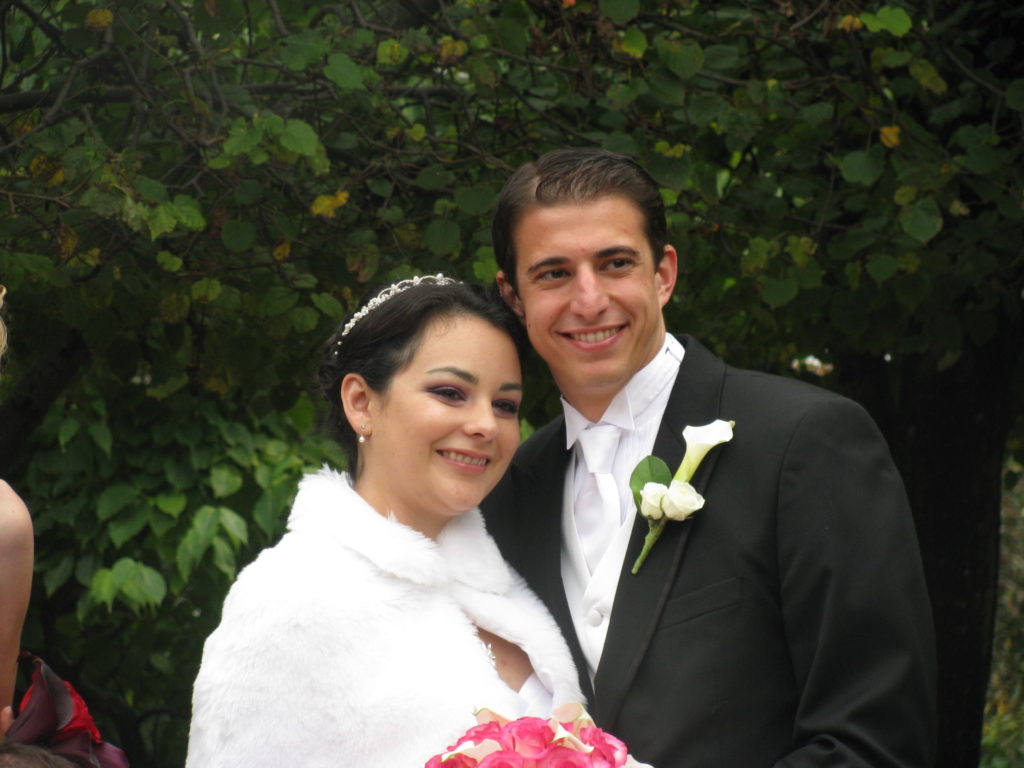
A groom and bride hold hands on their wedding day. (CNS file photo/Jon L. Hendricks)

[quote_box_center]

DON’T MISS: Celebrating Marriage Mass and Luncheon

Celebrate the Sacrament of Matrimony as a couple with a jubilee wedding anniversary — 25, 40, 50 or 51+ years from 10 a.m. to 2 p.m., Sept. 27, at Ss. Simon and Jude Cathedral, 6351 N. 27th Ave. Phoenix, with Bishop Thomas J. Olmsted.
Couples of all ages welcome! Jubilee couples will receive a special blessing, a photo opportunity with Bishop Olmsted, as well as frameable acknowledgement of their special anniversary.
Luncheon and Keynote by Steve and Becky Greene, local radio personalities, speaking on “The Surprising Joys Surrounding Marriage.”
Registration required for full event: $45 per couple for luncheon; $30 per single person. Families welcome to attend and celebrate. Info: (602) 354-2355. Mail-in registration form available or register online at ourcovenantoflovephx.org.
[/quote_box_center]

[quote_box_right]

10 tips for a great marriage

The Catholic Sun asked local couples their best advice for having a great marriage. What’s your secret?

“In marriage, love is unconditional — It is not 50/50 — it’s a 100 percent commitment that cannot be measured. Whenever you begin to measure, marriage, in the day to day, becomes a burden.”

— Peter and Cynthia Lemieux, married 42 years

“Always find time to pray together and put God first in everything you say and do.”

— Deacon Gene and Judi Messer, married 42 years

“Remember to laugh, especially at yourself. Putting your spouse’s needs before yours in the small things will help you to do it in the big things too.”

— Steve and Cindy Bird, married 5 years

“Always act from tenderness. Kind words can turn hot tempers into warm embraces.”

— Ken and Rebecca Roberts, married 5 years

“Center your marriage on Jesus; all love comes from Him, and He may ask you to help carry His sufferings for the redemption of others.”

— Jenelle and Mark Van Brunt, married 43 years

“Stick it out, especially during the most difficult storms, even when ‘you’re done.’ The storms will nourish, mature, and transform your love, instilling trust in your spouse and your children, who need to know that we can and desire to be faithful, even when our humanity gets in the way.”

— Steve and Bridgette Cosentino, married 27 years

“Always assume the best in your spouse’s intentions, especially if you don’t totally understand them.”

— Cindy and Mike Leonard, married 36 years

“Husbands, love your wives even when you don’t feel respected. Wives, respect your husbands even when you don’t feel loved.” (See Ephesians 5.)

— Mike and Sharon Phelan, married 18 years

“Date regularly: Mark it in the calendar and earmark it in the budget. Your spouse is still worth courting and ­splurging on.”

— Mark and Mary Moore, married 14 years

“If we expect God to forgive us, He expects us to forgive each other. Do not go to bed angry.”

— Deacon Narciso and Donna Macia, married 30 years

[/quote_box_right][dropcap]T[/dropcap]he day a man and woman stand before God and promise to love each other “until death do us part” may seem like the pinnacle of a love story.

As the years go by, however, happily married couples find they love each other even more deeply than they did the day they marched down the aisle. So what’s their secret?

Radio personalities Steve and Becky Greene, who have enjoyed the blossoming of their love through four children and 12 years of marriage, say following the Church’s teaching on the sacrament of matrimony turns out to be the best advice of all.

Welcoming children is one way the Greenes say they grew in their love for each other.

“When I met her, I fell in love with this attractive young lady who was intelligent and funny and we could have a good conversations,” Steve said. “Then as a mom, I fall in love with her in this whole new way.”

At the time, these discoveries seem like something novel, the Greenes said. Except that then it dawns on couples that in her wisdom, the Church has always had the same teachings about marriage: that it is to remain open to life, that the promises made on one’s wedding day are meant to last a lifetime.

“People are always asking for marriage advice,” Becky said. “The Church has the best advice for us if we are just willing to trust and obey.”

“The teachings of the Church and practicing your faith then become this safe haven for the marriage,” Steve said. “We don’t have to reinvent the wheel and fly solo and figure it all out on our own.”

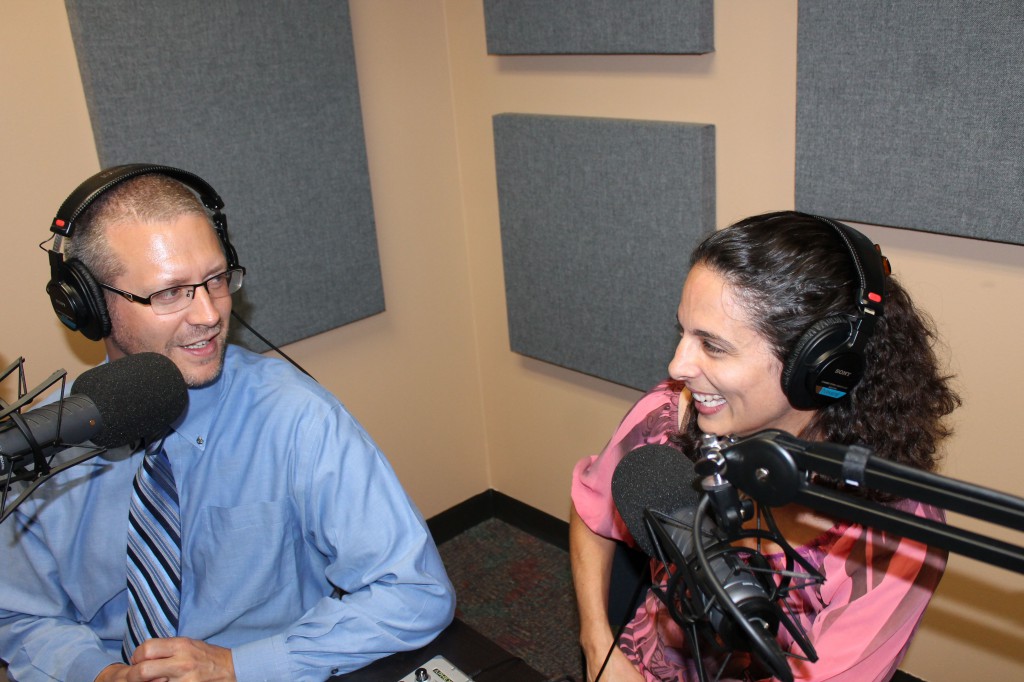
Steve and Becky Greene, the “Cradle” and the “Convert” of The Catholic Conversation, focus on helping Catholics faithfully live their vocation by providing Church teaching, navigating moral challenges and exploring current issues facing Catholics, each Tuesday at 11 a.m. on 1310 AM in Phoenix.

Celebrate marriage

These are just some of the nuggets couples will learn if they attend a special Mass Sept. 27 followed by a luncheon, at which the Greenes will share their secrets to a lifetime of wedded bliss.

One theme the couple plans to explore points out that today’s me-centered culture is the exact opposite of the vocation of marriage.

“There’s this great ironic contradiction that you’re supposed to pursue things for the self, especially when it comes to marriage,” Becky said. “It’s very much about, ‘Does this person meet my needs and do they make me happy?”

Properly lived, the vocation of marriage is all about serving the other and putting your spouse’s desires ahead of your own. It’s often a surprise, the Greenes say, when couples live their vows in a generous way.

“You find that not only is it good and healthy for you to put the other ahead of your own desires, but that you actually find great joy in that,” Becky said.

This dying to self, the Greenes said, is not an easy proposition, but in the end, bears much fruit.

“We probably think we’re holier when we enter into marriage, but as you get further along, you realize how much work you have to do,” Becky joked.

Mike Phelan, director of the office of Marriage and Respect Life for the Diocese of Phoenix, hopes that many couples will attend the Sept. 27 event at Ss. Simon and Jude Cathedral.

“When you see a couple that’s been married 65 or 70 years walking down the aisle, it’s a very inspiring moment,” Phelan said. “Anybody that loves marriage will thoroughly enjoy this day.”

Rebecca and Ken Roberts will celebrate five years of marriage in October. "The joy you experience in marital intimacy is directly proportional to the love you have for Christ," the couple said.
Rebecca and Ken Roberts will celebrate five years of marriage in October. “The joy you experience in marital intimacy is directly proportional to the love you have for Christ,” the couple said.

Wartime pontiff started tradition of papal peacemaking

An archive picture shows a statue of Christ on the cross on a tree in Fricourt, France, in October 1916. A viscount in the Armored Cavalry Branch of the French army left behind a collection of hundreds of glass plates taken during World War I that have never before been published. The images, by an unknown photographer, show the daily life of soldiers in the trenches, destruction of towns and military leaders. The year 2014 marks the 100th anniversary of the start of WWI. (CNS photo/courtesy of the Collection Odette Carrez via Reuters)

VATICAN CITY (CNS) — Among the various World War I-related anniversaries of this centennial year, the election of Pope Benedict XV, 100 years ago Sept. 3, is apt to be one of the less widely observed.

Pope Benedict XV is the most obscure of the nine men who have led the Catholic Church over the last century — the title of his biography by historian John F. Pollard is “The Unknown Pope” — and in some ways, this negative distinction seems justified. His seven-and-a-half-year pontificate was relatively short and, with respect to his most prominent undertaking, spectacularly unsuccessful.

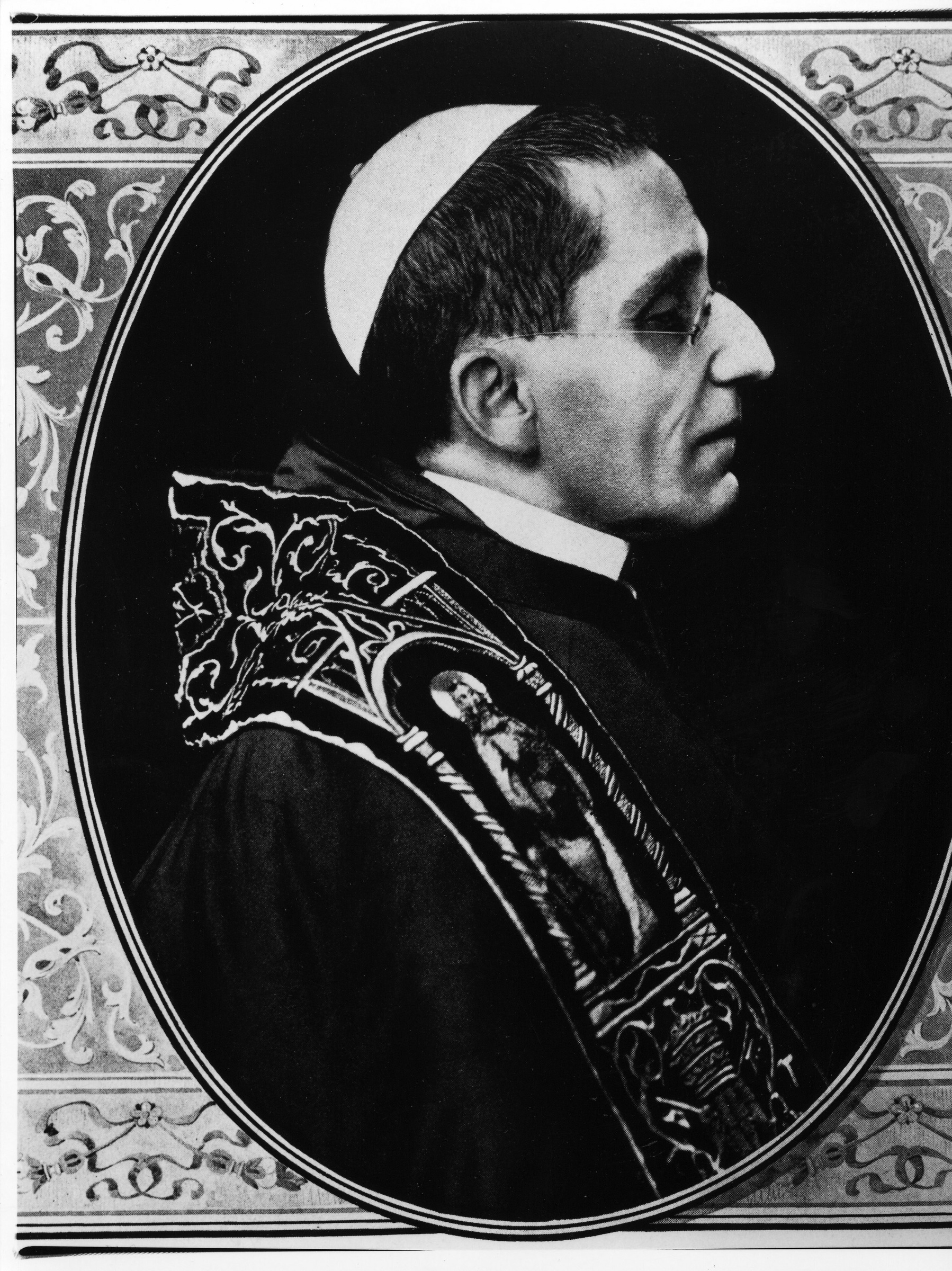
Pope Benedict XV is pictured in this image from L'Osservatore Romano's Fondo Giordani collection. He was elected pope less than six weeks after the outbreak of World War I — and almost immediately started campaigning against it. (CNS photo/L'Osservatore Romano)
Pope Benedict XV is pictured in this image from L’Osservatore Romano’s Fondo Giordani collection. He was elected pope less than six weeks after the outbreak of World War I — and almost immediately started campaigning against it. (CNS photo/L’Osservatore Romano)

Yet Pope Benedict left a legacy of lasting significance for the papacy and the church as a whole in the vital area of teaching and practice on war and peace.

Cardinal Giacomo della Chiesa of Bologna, Italy, was elected pope less than six weeks after the outbreak of the world war — and almost immediately started campaigning against it. His efforts reached their peak in his Peace Note of 1917, which urged all belligerents to stop fighting in favor of international arbitration of their disputes.[quote_box_right]


Pope’s apostolic exhortation to the peoples at war and their rulers

[/quote_box_right]
All of these efforts were for naught, largely because of the weakness of Vatican diplomacy, which had languished since the Holy See lost the Papal States half a century earlier.

“The Vatican by 1914 had relations with only two great powers; one was Austria-Hungary, the other was the Russian empire, and with the Russian empire, relations were pretty bad,” Pollard said.

U.S. President Woodrow Wilson, who took his nation into the war in 1917, was dismissive of Pope Benedict’s attempts to intervene. Even many Catholic bishops on both sides put patriotism ahead of loyalty to the pope and openly undercut his calls for peace.

After the war ended in November 1918, the victors kept the Vatican out of the peace conference in Paris. Pope Benedict presciently objected to the punitive treatment of Germany, which Adolf Hitler later exploited in his rise to power.

The pope was more successful in his efforts to organize prisoner exchanges and humanitarian relief for refugees and other noncombatants during the war.

He also left behind an enhanced Vatican diplomatic establishment.

“By the time Benedict died in 1922, the Vatican had relations with nearly all of the great powers, including Germany, except America and except the USSR,” Pollard said.

Today, the Holy See has full diplomatic relations with 180 countries.

Pope Benedict’s most significant contribution, however, was the new way he approached the age-old problem of war.

An archive picture shows a priest celebrating Mass for French soldiers on the Champagne front in eastern France in 1915. A viscount in the Armored Cavalry Branch of the French army left behind a collection of hundreds of glass plates taken during World War I that have never before been published. The images, by an unknown photographer, show the daily life of soldiers in the trenches, destruction of towns and military leaders. The year 2014 marks the 100th anniversary of the start of WWI. (CNS photo/courtesy of the Collection Odette Carrez via Reuters)
An archive picture shows a priest celebrating Mass for French soldiers on the Champagne front in eastern France in 1915. The year 2014 marks the 100th anniversary of the start of WWI. (CNS photo/courtesy of the Collection Odette Carrez via Reuters)

In condemning the world war as a whole without taking sides, the pope did not reason in terms of traditional church teaching about just and unjust wars. With Catholic nations on both sides of the conflict and the Vatican no longer a territorial power with a strategic stake in the outcome, the pope was free to reject the horror of war per se.

He was able to see that modern technology — especially the novelty of aerial bombardment — had made traditional moral calculations and distinctions between combatants and noncombatants increasingly meaningless.

Pope Benedict’s influence on his successors is clear in:

  • Pope Pius XII’s attempts to use diplomacy to forestall World War II
  • St. John XXIII’s call for a ban on nuclear weapons
  • Pope Paul VI’s cry of “no more war, war never again” in a speech at the United Nations
  • St. John Paul II’s interreligious prayers for peace at Assisi

After Cardinal Joseph Ratzinger was elected pope in 2005, he said he chose the name Benedict in honor of his wartime predecessor, “that courageous prophet of peace, who guided the church through turbulent times of war. In his footsteps, I place my ministry in the service of reconciliation and harmony between peoples.”

Pope Francis — whose efforts to end or prevent war have included a vigil for peace in Syria that drew 100,000 people to St. Peter’s Square and a joint prayer for peace with the Israeli and Palestinian presidents in the Vatican Gardens — told an international gathering of diplomats earlier this year that it was Pope Benedict XV who had shown world leaders the “royal road” of “diplomacy of dialogue.”

That legacy is one example of how, even in the practicalities of international politics, the papacy measures its influence and success not in years but in centuries.

By Francis X. Rocca, Catholic News Service. Contributing to this story was Robert Duncan.

Debating just-war theory in light of Islamic State and past Iraqi wars

WASHINGTON (CNS) — In the days that followed Pope Francis’ Aug. 18 remarks on U.S. airstrikes earlier in the month against Islamic State, the buzz was about whether the pope had actually given his consent to them.

The more sobering post-buzz reality is how one stops what, in the pontiff’s words, is an “unjust aggressor.”

Does the United States go in, alone or as part of a broader coalition of nations? Or, to use the language of just-war theory, is the United Nations the “competent authority” to judge these particulars?

Pope Francis appeared to endorse the U.N. during his in-flight news conference returning to the Vatican from South Korea.

“A single nation cannot judge how to stop this, how to stop an unjust aggressor. After the Second World War, there arose the idea of the United Nations. That is where we should discuss: ‘Is there an unjust aggressor? It seems there is. How do we stop him?'” he said.

“The U.N. charter permits military intervention in response to armed attack at the invitation of a legitimate government or with the approval of the U.N. Security Council,” said Gerard F. Powers, professor of the practice of Catholic peacebuilding at the Kroc Institute for International Peace Studies at the University of Notre Dame in Indiana.

“In this case, you can make the case that the unilateral intervention is, from a legal point of view, legitimate, because it’s at the request of a legitimate government, in this case, the Iraqi government,” he added.

“We should try to build as big a coalition as possible, and the U.N. is a venue to do that,” said Jim Nicholson, who was U.S. ambassador to the Vatican during the first term of President George W. Bush. “President Bush tried to do that before going into Iraq (in 2003). He got very close,” but was ultimately unsuccessful, he added.

Speaking about the Islamic State situation, Nicholson said the United Nations was “a legitimate place” to try to build a coalition.

“It’s interesting to analyze whether that becomes sort of the collective prudential judgment to fulfill that justification. Does (the U.N.) then become the body that’s responsible for the common good? I think you could probably argue that, yeah, it could be legitimatized that way, that they could collectively begin to take steps. I think the United States would certainly welcome that.”

[quote_center]Is there an unjust aggressor? It seems there is. How do we stop him?[/quote_center]

Nicholson said trying to convince the Vatican of the U.S. justification to invade Iraq in 2003 was “the biggest diplomatic challenge I had in the four years I had as ambassador. In January of 2003 at his annual address to the diplomatic corps, (St. John Paul II) looked right at me and said, “No to war,” and he went on to say that war is a failure of mankind — the last resort — and that war should never be prosecuted when there are any other alternatives remaining.” And despite bringing in Catholic philosopher Michael Novak and papal biographer George Weigel to bolster his case, Nicholson never succeeded in changing the pope’s mind.

Robert George, McCormick professor of jurisprudence at Princeton University and the former chairman of the U.S. Commission on International Religious Freedom, advocates military action against Islamic State. He recently launched an online petition, already with more than 12,000 signatures, calling for Islamic State’s military destruction in order to protect religious minorities in the region.

George said a “better model” than 2003 is “(President) George H.W. Bush in the first Iraq war (in 1991). Most of the world united to evict Saddam Hussein from Kuwait.

“He (Bush) got a lot of criticism for not deposing Saddam at the time. The principle was that you can’t permit one nation to invade another nation with impunity in order to acquire territory. Bush held back from deposing him,” George added. “When you create a coalition like that, you stick to what the coalition’s goals are. And you don’t go beyond what the nations agreed to.”

Neither George nor Nicholson discount the nature of the threat.

“Force is justified when it’s necessary to protect innocent people against atrocities. Christians, Yezidis, Shia Muslims, even some Sunni Muslim communities in Iraq are being subjected to genocides,” George said. “There is no other way to prevent these genocides — burying people alive, cutting off people’s head, raping women, torturing people. Negotiations are impossible. There are no borders to push them back to. I know of no one who thinks we have a hope of protecting them” absent military action.

“I raised the questions again in this moral justification of today’s weaponry and today’s communication and the mindset that this caliphate has,” Nicholson said. “Do you have to wait until you yourself become a victim, or do you take action to protect your people and assist others? I think it’s the subject of just enormous importance. And it needs to be dealt with posthaste.”

Notre Dame’s Powers said any confrontation with Islamic State fighters would not be just another engagement in Iraq.

“It’s important to first understand that we’ve been deeply involved in the conflicts in Iraq one way or another for decades,” dating back to the 1980s when Iraq invaded Iran twice, he said.

“This particular intervention is just a continuing of the Iraqi intervening of 2003, which created the conditions for massive involvement in Iraq — which created the conditions that led to the formation of the current problem. And we’ve been engaged in one form or another — deeply engaged — since we overturned the regime.”

Powers said then-Secretary of State Colin Powell’s invoking the apocryphal Pottery Barn rule in 2002 — “you broke it, you bought it” — is “not quite the aphorism” that applies to Iraq. Instead, he added, “we broke it and we need to help fix it.”

— By Mark Pattison, Catholic News Service.

A Catholic Hall of Famer you’ve never met but may want to

I was introduced to Fr. Timothy Hirten seven weeks ahead of his induction into the Franciscan University of Steubenville’s “Baron Hall of Fame.” I first met him via a press release from the Archdiocese for the Military Services. Then again through archived articles from Catholic and secular sources.

He’d be a good guy to know in person.

The political science major and basketball star of the ’70s went on to play for several teams in several countries — including the Washington Generals who are known for playing against the Harlem Globetrotters. Fr. Hirten’s one season with a pro league in Manila helped sell out every game in a 19,000-seat arena, according to an ArchMil press release.

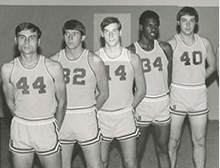
Father Timothy J. Hirten, Ch, Maj, USAF, in basketball team photo with the Barons of Franciscan University of Steubenville, Ohio, 1975. (photo courtesy of Archdiocese for the Military Services)
Fr. Timothy J. Hirten, Ch, Maj, USAF, in basketball team photo (center) with the Barons of Franciscan University of Steubenville, Ohio, 1975. (photo courtesy of Archdiocese for the Military Services)

“I still play hoops and run with my troops,” Fr. Hirten said in the release, reporting that he recently scored 92 percent on his annual military fitness test.

He was the only athlete in Franciscan University of Steubenville history to play four different varsity sports and bore the title of captain for the Baron’s basketball and tennis teams. He was College Man of the Year in 1975.

Fr. Hirten has spent the last 21 years as a priest for the Diocese of Brooklyn. He’s also a military chaplain who served two deployments to Iraq. Fr. Hirten continues to be of service to both his 88-year-old wheelchair-bound mother and the large Catholic community on base at Joint Base McGuire-Dix-Lakehurst in New Jersey.

[quote_box_right]Becoming a Catholic chaplain[/quote_box_right]Fr. Hirten, an Air Force chaplain, considers it a privilege to serve those who serve. “I love being a military chaplain,” he said. “I thank God on my knees every day for the opportunity to serve our nation.”

The priest seemingly embraces media opportunities. Maybe he’s used to it from his basketball days. Here are some of his headlines over the years:

Fr. Hirten is among five baron Hall of Fame inductees this year. They include three other athletes and a coach. The induction ceremony is Aug. 31.

Little League player says team has ‘a lot to be thankful for’

Tai Shanahan tips his cap as he is introduced along with his Taney Dragons Little League teammates at a special ceremony Aug. 27 at Philadelphia's Citizens Bank Park before the Phillies-Nationals game. The 13-year-old altar server at Philadelphia's St. Francis de Sales Parish was being honored because his team played in the Little League World Series. (CNS photo/John Knebels, CatholicPhilly.com)
Tai Shanahan tips his cap as he is introduced along with his Taney Dragons Little League teammates at a special ceremony Aug. 27 at Philadelphia’s Citizens Bank Park before the Phillies-Nationals game. The 13-year-old altar server at Philadelphia’s St. Francis de Sales Parish was being honored because his team played in the Little League World Series. (CNS photo/John Knebels, CatholicPhilly.com)

PHILADELPHIA (CNS) — Although Philadelphia’s Taney Dragons didn’t walk away with the Little League World Series title, they captured the country’s attention by making it to the quarterfinals and have been honored as heroes in their home city.

At some point soon, the media blitz and celebrity status will come to an end.

But for now, the team has been managing interview and autograph requests, appearances on NBC’s “Today” show and waving to onlookers in a six-mile parade in Philadelphia.

One celebration that arguably overshadowed the others was Aug. 27, when the Phillies’ baseball team honored the Little League team with a pregame ceremony at Citizens Bank Park.

Before the Phillies-Nationals game, each Taney player and coach walked together on a makeshift red carpet from center field to the pitcher’s mound. They shook hands with area dignitaries, and every Phillies player and coach and were individually introduced to the crowd.

The Little League team members took a victory lap around the stadium before joining in unison to throw out the game’s traditional first pitch. Players and coaches were each presented with a game ball and an official Phillies jersey with their names and numbers on the back.

After the team’s big win against Texas Aug. 17 in the Little League World Series in Williamsport, Pennsylvania, Taney lost the next two games of the double-elimination tourney, bringing the season that had begun in April to an end.

Tai Shanahan, an outfielder for the Dragons, says he is ready to resume normal life.

Shanahan, a seventh grader from St. Francis de Sales School, said: “On one hand I think I will miss it, but then I think I’ll be really fine with it.”

He said he was disappointed the team didn’t get to the championship, “because we came so close.”

“But something like this hardly ever happens for people, especially our age. We have a lot to be thankful for,” he told CatholicPhilly.com, the online news site of the Archdiocese of Philadelphia.

Tai’s brother, Liam, who played for Taney’s 15-year-old team, said he wished he “could have played in something so amazing” and admitted living vicariously through his brother’s experience. The brothers have been longtime altar servers at St. Francis de Sales Parish.

Liam said he didn’t imagine the team would have advanced to the third round. For that matter, given the competition, he was surprised that Taney had even reached the prestigious tournament, which was eventually won by the South Korean team.

As the Taney Dragons continued to advance, Liam and his father, Pat, a 1980 graduate of St. John Neumann High School and a 25-year teacher at Roman Catholic High School, helped the Taney coaches by hitting batting practice.

“None of the players or their families will ever forget this, obviously,” Liam said. “This was a once-in-a-lifetime experience, and I think they did a really great job of handling the pressure.”

When Tai and his teammates watched the highlights of their victory match on ESPN’s “SportsCenter,” he had a difficult time believing they were on television.

“Never thought that would ever happen,” he said, “and I doubt it will ever happen again.”

The team, the first from Philadelphia to reach the Little League World Series, also included standout pitcher Mo’ne Davis, the first American female player in 10 years to compete in the World Series.

Taney blitzed through districts, sectionals, states and then regionals with few serious scares. Once the team got to the Little League World Series, it enjoyed, in many ways, a no-lose situation.

And as the wins mounted, the entire Philadelphia region took notice.

Tai’s father Pat pointed out that one thing the team experienced will always stick with them.

“It’s not just the memories, but it is the friendships that have developed,” he said. “These are moments that will last a lifetime.”

— By John Knebels, Catholic News Service. 

Immigrants, activists urge Obama to act on immigration reform

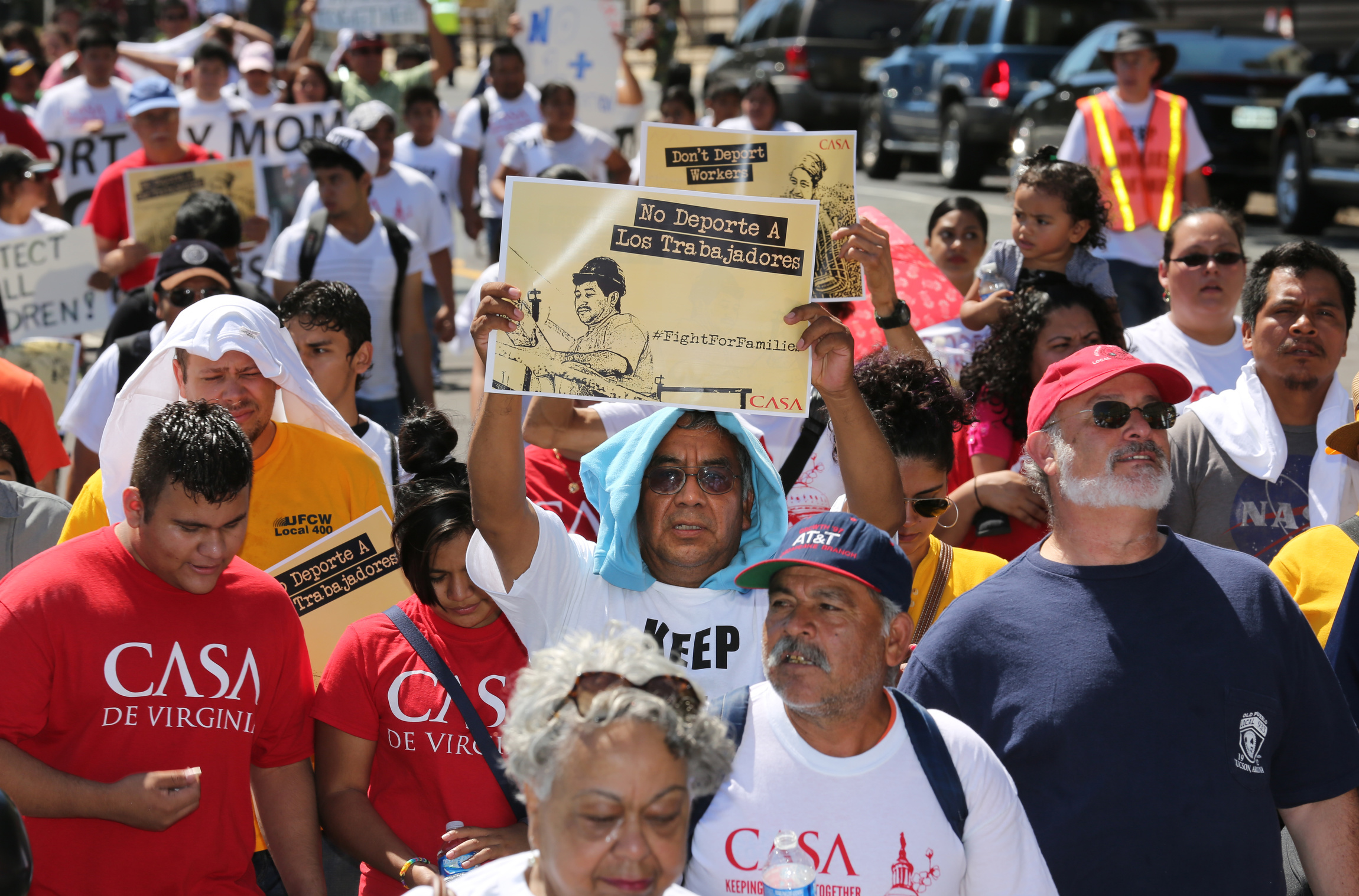
A man displays a sign during an immigration march and rally near the U.S. Immigration and Customs Enforcement headquarters in Washington Aug. 28. (CNS photo/Bob Roller)

WASHINGTON (CNS) — Hundreds of protesters took part in a rally and march in Washington Aug. 28 chanting: “Not one more! Not one more!” to urge President Barack Obama to stop the deportation of immigrant families, workers and children.

The participants, including many young children, also got their message across holding aloft placards saying: “Don’t deport my dad” and wearing T-shirts with the words: “Keep families together.”

“We’re here because the president must act and he must act now,” one of the rally speakers said over a bullhorn to a cheering crowd erupting into shouts of “Si, se puede” (“Yes we can”) — a motto of United Farm Workers and a slogan of Obama’s 2008 presidential campaign.

The gathering started at the U.S. Immigration and Customs Enforcement headquarters, just a few blocks from the National Mall, while police officers stood watching and office workers looked out their windows. Participants then walked several blocks to the White House, chanting slogans in Spanish that translated to “Obama, listen, we’re in this together.”

“We’re here fighting to stop deportation,” said rally participant Rene Santos, originally from El Salvador. “We came here to work and feed our families. We are not criminals,” he told Catholic News Service through an interpreter.

A woman from Bolivia said she came to the rally because she has been waiting for six years for her mom to “get her papers” securing her legal immigration.

“My brother wants to come; it’s not easy,” she said.

Mercy Sister Anne Curtis, joined by a group of women religious, stressed the sisters’ long-term commitment in working with immigrant families and trying to secure a just immigration reform.

“We’re concerned about families that are separated and what happens to these women and children,” she told CNS on the sidewalk where crowds were forming alongside a row of food trucks.

Protesters shout during an immigration rally and march outside the U.S. Immigration and Customs Enforcement headquarters in Washington Aug. 28. (CNS photo/Bob Roller)

“We need to stop the deportation of mothers and children and not warehouse them,” she added, noting that faith-based communities can find alternative ways to help.”

She also said she hoped Catholic members of Congress, no matter their political party, would respond to the needs of immigrants “out of tradition of their faith.”

The Rev. Paul Lee, a Lutheran minister who teaches at the Elliott School of International Affairs at George Washington University, said the need for immigration reform is a concern to the church as a whole.

He said he attended the rally because he was “frustrated at the lack of immigration reform” efforts by Congress.

Rev. Lee, who has worked with asylum seekers from Ethiopia, said he cannot understand why the United States does not offer similar refuge to people from Guatemala, El Salvador and Honduras.

“I’ve worked in those countries,” he told CNS. “Fear of persecution is very much a reality.”

“We have to protect that right. This country has always been a refuge,” he added.

He also noted that he sees Pope Francis as a sign of unity in the church and believed that if he were in this country now, “he’d be right here” at the rally.

The White House has said that since Congress has failed to pass a comprehensive immigration reform bill or the supplemental funding Obama requested to handle the surge of unaccompanied minors and families crossing the border this year, the president would announce executive actions to address some aspects of the problems.

As summer draws to a close, immigration law experts have been weighing in on what some of those actions might include.

In an Aug. 26 teleconference, attorneys including the former general counsels of government immigration services laid out what they consider some of the likely actions Obama can take and how those square with the boundaries of presidential authority.

David Leopold, former president and former general counsel to the American Immigration Lawyers Association, said there’s a clear constitutional authority for the administration to set enforcement priorities.

The Deferred Action for Childhood Arrivals, or DACA, program is just one example of how presidents have opted to use prosecutorial discretion, he noted.

“Another way to look at it is the whole concept of the immigration code, as written by Congress, gives the executive branch pretty unfettered discretion in many areas,” Leopold said.

Stephen Legomsky, former chief counsel of USCIS, now a professor at Washington University School of Law, said the funding priorities of Congress give the president the necessary legal authority.

“When Congress knowingly only gives the Department of Homeland Security enough resources to go after a tiny percentage of the undocumented population, Congress gives the president authority to prioritize” how to spend those resources, he said.

Cristina Rodriguez, now a Yale Law School professor but formerly in the office of legal counsel at the Justice Department, said Obama might expand the program to include the spouses or parents of U.S. citizens or the spouses or parents of DACA recipients.

He also could expand how the administration uses its authority to grant humanitarian parole, now used sparingly, to wider populations, she said.

Rodriguez cautioned that “a decision to halt all deportations would likely extend beyond his authority,” because there are some financial resources to continue deportations.

By Carol Zimmermann, Catholic News Service. Contributing to this story was Patricia Zapor.

Seminarian orientation in Rome

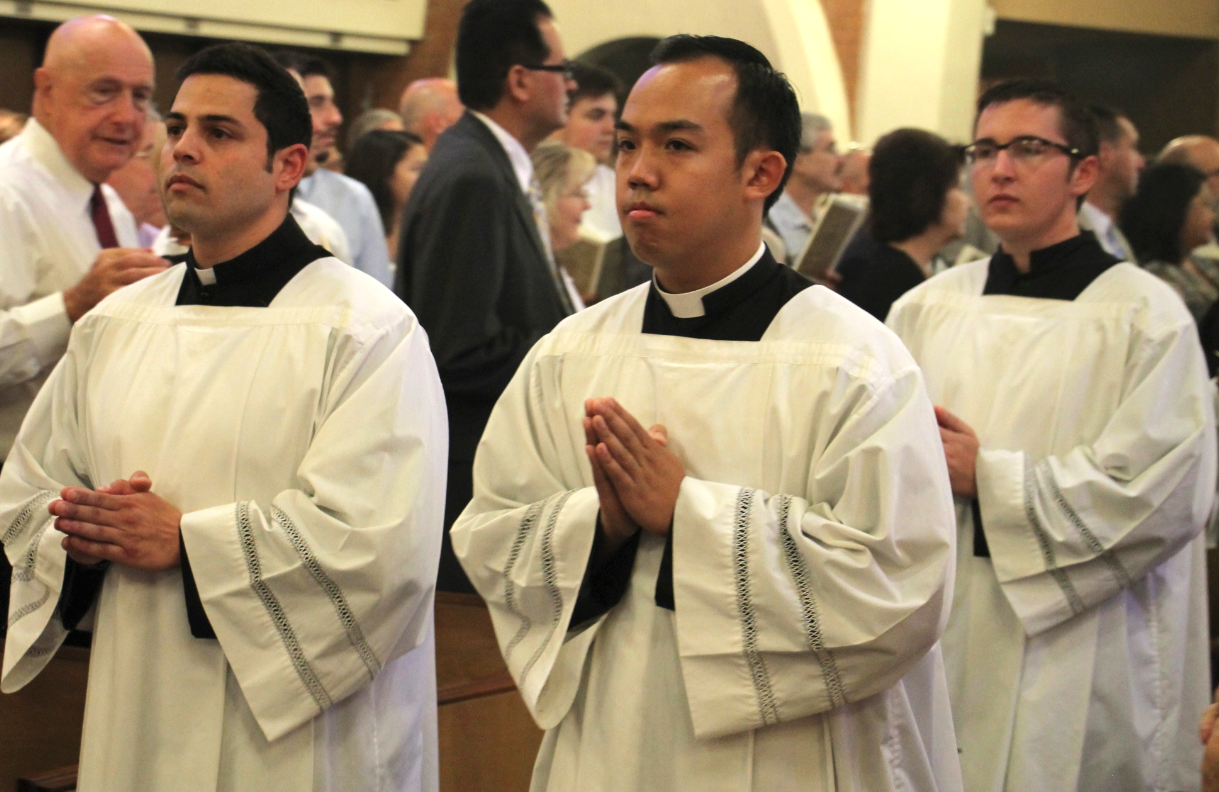
Vinhson Nguyen, center, is pictured during the 2014 priestly ordination at Ss. Simon and Jude. Nguyen is now studying in Rome and just wrapped up orientation week. (Ambria Hammel/CATHOLIC SUN)
Vinhson Nguyen, center, is pictured during the 2014 priestly ordination at Ss. Simon and Jude. Nguyen is now studying at the Pontifical North American College in Rome and just wrapped up orientation week. (Ambria Hammel/CATHOLIC SUN)

The Diocese of Phoenix has 31 seminarians discerning the priesthood at campuses across the country. Three of them are in Rome at the Pontifical North American College.

Vinhson Nguyen moved there recently joining fellow Phoenix seminarians Fernando Camou and Dan Connealy. It appears that the official “orientation” period for newly arrived seminarians is over following a week of Italian language classes, tours, orientation talks, and prayer. The men celebrated together last night with faculty at the traditional “Welcome Banquet,” according to Pontifical North American College’s Facebook page.

The college’s Flickr album is good to thumb through on occasion too. It’s a fun challenge to find the seminarian you know. I think I found some images of Vinhson.

Take a look at what he and the other seminarians experienced during orientation:

The men are now off in Assisi enjoying a fraternal weekend. If you’re interested, here is the full orientation photo album.


On a related note, it appears the 2014-15 seminarian posters are ready to be delivered to diocesan parishes and schools. Keep an eye out for the new poster in the coming weeks.

In the meantime, bios of eight of the Phoenix Diocese’s 12 new seminarians are online. Give them a read and a prayer. More bios and photos should start rolling in soon.

A few highlights from the seminarian poster and bio:

  • First timers — This is the first time in recent memory that men from the following parishes have actively discerned priesthood as a seminarian:
    -Vietnamese Martyrs
    -St. Matthew
    -Our Lady of the Lake in Lake Havasu City
    -ASU Newman in Tempe
    -St. Paul
  • Multiple vocations — There are three men from both St. Mary Magdalene in Gilbert and St. Timothy in Mesa. There are two listed on the poster with St. Rose in Anthem as their home parish, but a third spent some time growing up there before moving to the southeast Valley.
  • Rex Rumsey starts off his bio “Peace be with you”
  • Miguel Solis credited Bishop Eduardo A. Nevares for getting him considering the priesthood.
  • Miguel Solis and Leonardo Sabogal are from Mexico and Colombia respectively.
  • One of the seminarians first discerned through a religious order and transferred to the Diocese of Phoenix two years ago. Another transferred this year from the Archdiocese of Atlanta.

‘Catechesis of the Good Shepherd’ opens national office in Scottsdale

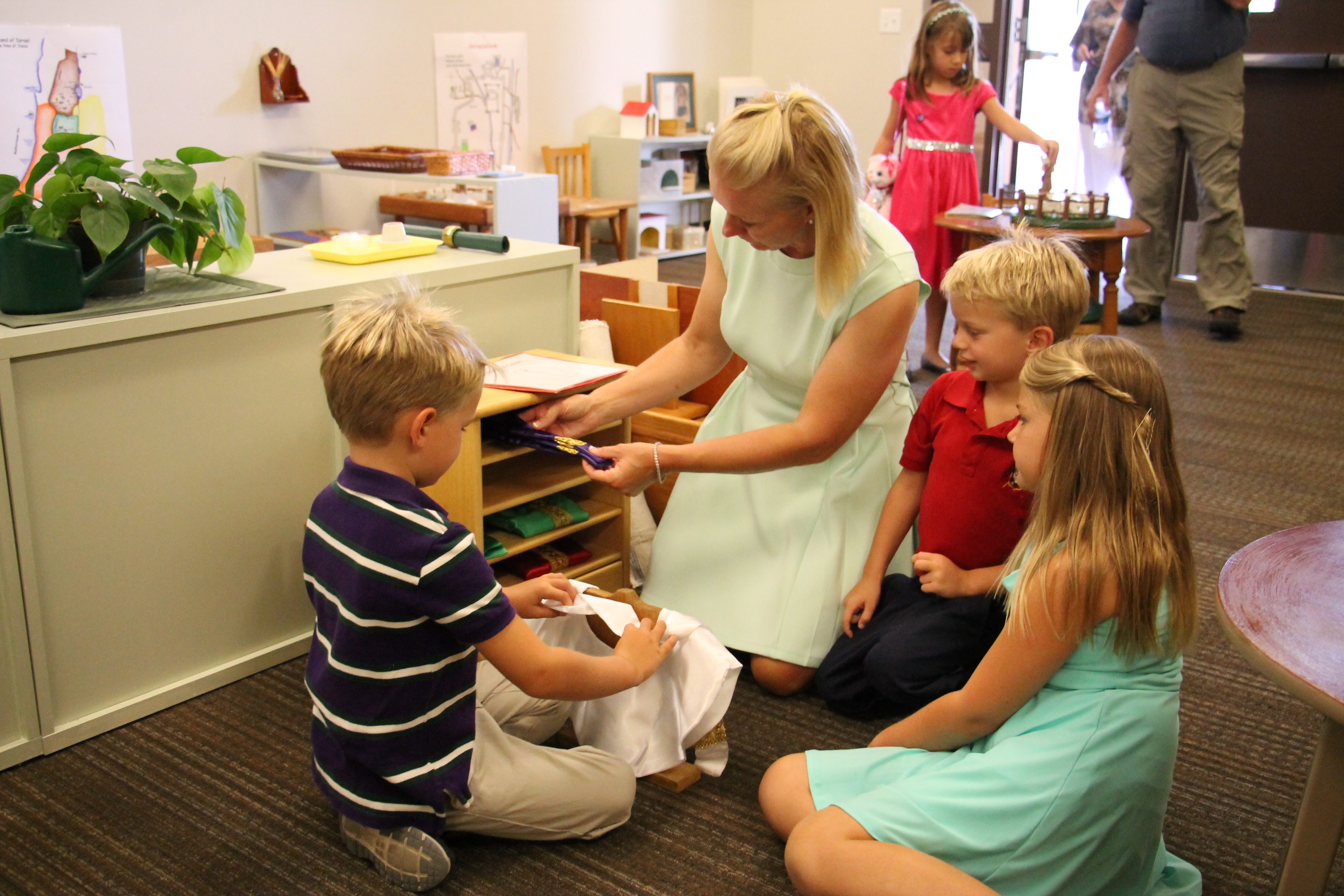
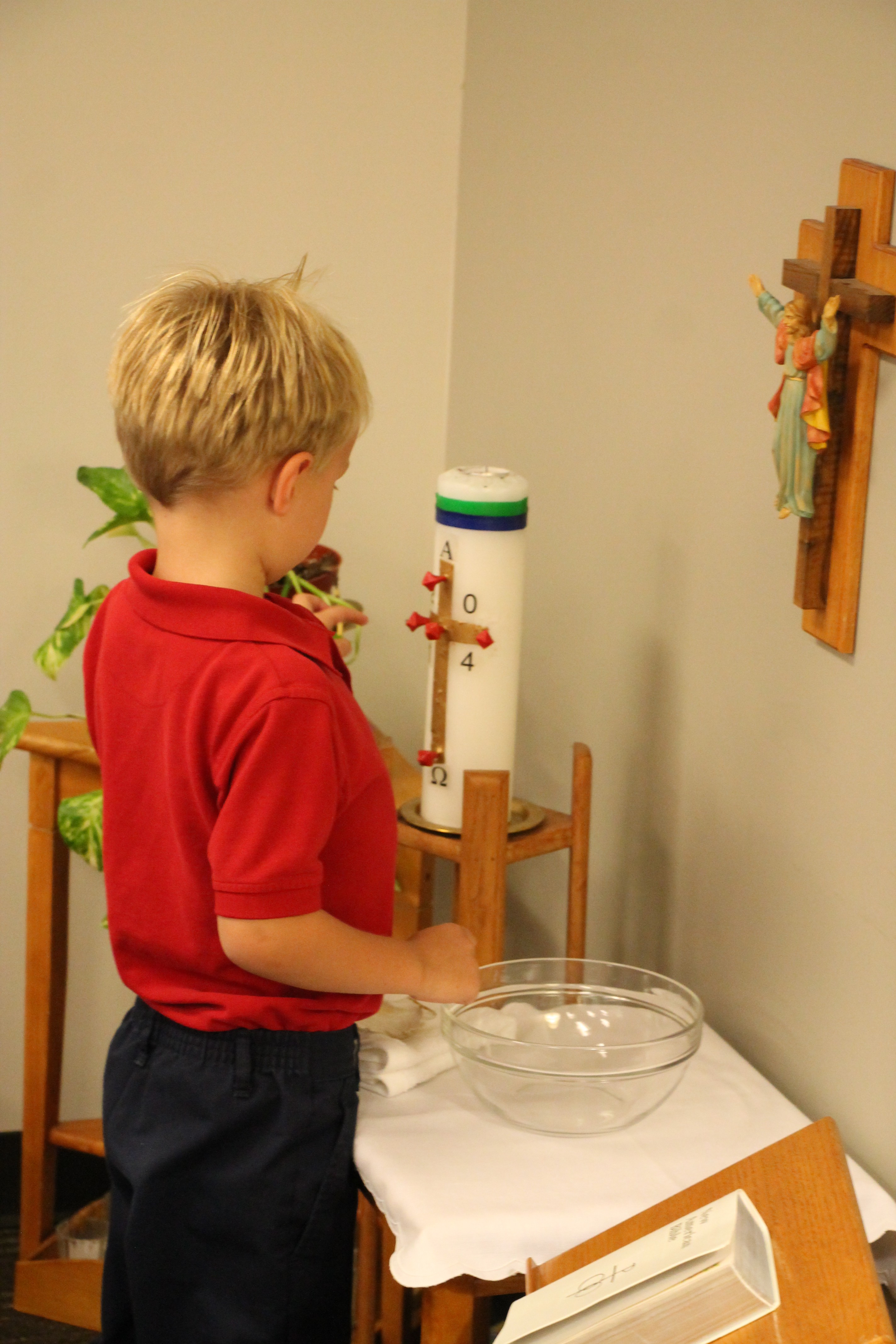
Catechists encourage children to draw closer to Christ the Good Shepherd through hands-on activities in the atrium.


Catechists encourage children to draw closer to Christ the Good Shepherd through hands-on activities in the atrium.
Catechists encourage children to draw closer to Christ the Good Shepherd through hands-on, prayerful  activities in the atrium.

SCOTTSDALE — The National Association of the Catechesis of the Good Shepherd opened its national office Aug 24 at the parish life center located at Our Lady of Perpetual Church in Scottsdale.

For more than 60 years, children have been nurtured in their relationship with God through the prayerful encounters they experience through the Catechesis of the Good Shepherd.

Based on the Montessori model of education and principles developed by CGS founders, Dr. Sofia Cavalletti and Gianna Gobbi, children hear the word of God in an environment centered on the Eucharist and the liturgical life of the Church.

Many parishes throughout the United States and around the world invite children into a deeper relationship with God through CGS. The new national office in Scottsdale will be a provide space for the daily support of catechists, parents and others in the Church and beyond.

Mary Mirrione, national director of CGS, has been involved with the program since 1991 when she was the director of religious education at St. Anne Parish in Gilbert. The pastor at the time, Fr. Doug Lorig, learned about CGS and sent Mirrione for formation. Since that time, she’s been involved as a catechist and director of religious education as well as a trainer of other catechists.

In the last few years, Mirrione said, the Missionaries of Charity, the congregation of religious sisters begun by Blessed Mother Teresa, have embraced CGS. Mirrione has traveled to Calcutta three times to form sisters in the catechetical program.

“We are overjoyed that we have found a home for the national office here in Scottsdale,” Mirrione said. “Through the work of Fr. Greg Schlarb and the gifts of several generous donors, we have been literally given ‘an upstairs room that is spacious and furnished,’ and we are very grateful.”

The national office is already busy preparing to welcome 550 catechists from 18 countries for an Oct. 1-4 conference to be held at the Black Canyon Conference Center in Phoenix. The conference will be an occasion to celebrate the 60th anniversary of the CGS.

Deacon Jeff Arner, director of religious education at Our Lady of the Lake Parish in Lake Havasu City, has watched children’s spiritual development blossom as they experience formation in the CGS. He’s also had level one and level two training as a CGS catechist.

IMG_8152“I believe it’s the hands-on experience the children have, being able to use all their senses in learning about our faith, what happens at Mass and how they can incorporate everything into prayer,” Deacon Arner said. “That really helps that they get into the heartbeat of what the Church is and the liturgical season.”

Some 60 children in the parish are learning the faith in the atrium and Deacon Arner said he believes CGS is a unique method to form kids in the faith.

“They get to enter into it fully like we do at Mass when we participate fully,” Deacon Arner said. “I believe they do that fully within the atrium.”

CGSUSA has published more than 74 books, journals and articles, and trained over 160 formation leaders around the country. Today, there are over 1,025 atria operating in this country, serving thousands of children in parishes, homes and schools.