
Cardinal blesses cemetery plaques honoring memory, legacy of slaves

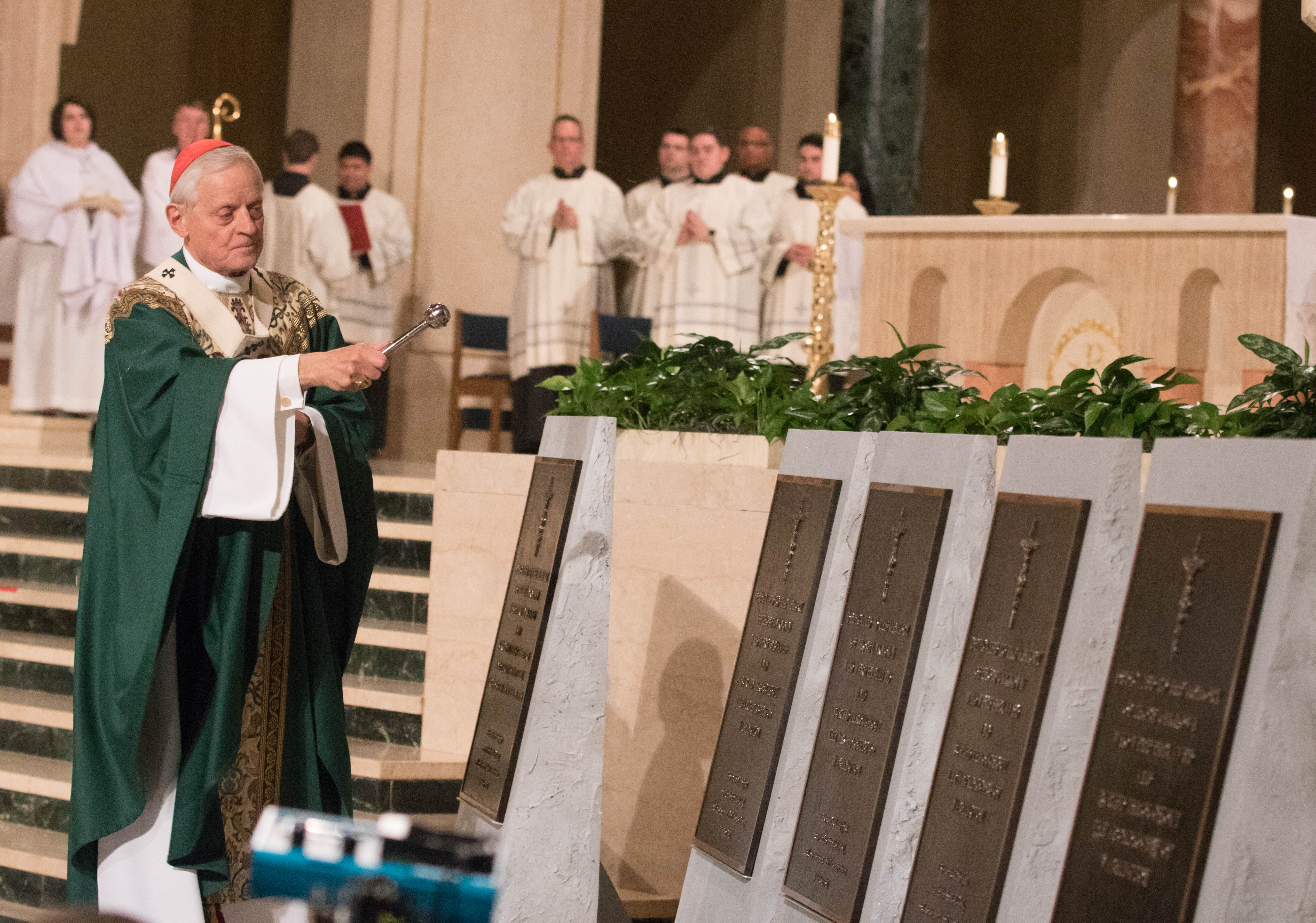
Washington Cardinal Donald W. Wuerl blesses memorial plaques during a Feb. 3 Mass at the Basilica of the National Shrine of the Immaculate Conception in Washington. The plaques honor enslaved men, women and children buried throughout the Archdiocese of Washington, which includes the District of Columbia and five surrounding Maryland counties. (CNS photo/Daphne Stubbolo, Archdiocese of Washington) See WUERL-PLAQUES-ENSLAVED Feb. 6, 2018.
Washington Cardinal Donald W. Wuerl blesses memorial plaques during a Feb. 3 Mass at the Basilica of the National Shrine of the Immaculate Conception in Washington. The plaques honor enslaved men, women and children buried throughout the Archdiocese of Washington, which includes the District of Columbia and five surrounding Maryland counties. (Daphne Stubbolo/CNS via Archdiocese of Washington)

By Mark Zimmermann
Catholic News Service

WASHINGTON (CNS) — Saying the time had come to “right a wrong,” Cardinal Donald W. Wuerl blessed and dedicated commemorative bronze plaques honoring unknown enslaved men, women and children buried throughout the Archdiocese of Washington.

Washington’s archbishop sprinkled holy water on the plaques during a Feb. 3 Mass at the Basilica of the National Shrine of the Immaculate Conception.

“We have gathered today to begin to right a wrong and correct a failure — a serious and unjust failure,” the cardinal said in his homily. “It seems that over decades and decades, not to say centuries, our brothers and sisters in the faith who were enslaved, who lived in human bondage, were treated with the same inequity at their burial. Many received no public marker … what we have come here to do today is to see that here and now all are properly remembered.”

The inscription on the plaques reads: “Dedicated to the memory of those unknown who were enslaved and buried throughout the Archdiocese of Washington.” The top of each plaque has an image of Christ crucified on the cross, and the bottom includes a quotation from Wisdom 3:1: “The souls of the just are in the hand of God, and no torment shall touch them.”

During Mass, the plaques were temporarily put in the lower sanctuary of the national shrine. By this spring, the plaques are to be placed in the five major cemeteries of the archdiocese, which covers the District of Columbia and five surrounding Maryland counties. In addition to Mount Olivet Cemetery in Washington, the archdiocese has two cemeteries in Montgomery County, Maryland, and one each in St. Mary’s County, Maryland, and Prince George’s County, Maryland.

The Mass opened with the St. Augustine Gospel Choir singing the spiritual “We’ve Come This Far by Faith.” St. Augustine Parish — the mother church for African-American Catholics in the nation’s capital — was founded in 1858 by free men and women of color, including some who were emancipated from slavery.

The gospel choir sang at the 2015 White House welcome for Pope Francis hosted by then-President Barack Obama, the nation’s first African-American president.

Washington Auxiliary Bishop Roy E. Campbell, Jr., who is African-American, welcomed people to the Mass and said that the enslaved men and women who had once been buried in unknown, forgotten graves “will now be honored in death, with the Christian and human dignity that they were not afforded during their lifetimes.”

The bishop said the Mass would honor “those who labored in obscurity and died in unjust servitude,” and he expressed gratitude toward those who had come to the liturgy “for being a part of our recognition of the past, and being a part of our commitment to the healing and recognition of the human dignity of all of God’s children, today and all of our tomorrows.”

About 600 people attended the Mass. Cardinal Wuerl was the main celebrant, with Bishop Campbell, Washington Auxiliary Bishop Mario E. Dorsonville and six priests as concelebrants.

In his homily, Cardinal Wuerl said blessing the plaques offered a “simple gesture and solemn moment.”

“We make a visible and permanent declaration that, in ground made holy by their remains as a temple of the Holy Spirit, we mark and remember them,” the cardinal said.

Catholic funerals and burial sites, he said, reflect “our belief in the resurrection of the dead and the life of the world to come.” He added that Catholic cemeteries “provide us with holy ground where we can, with some regularity, remember our dead, recall their goodness to us and ask God’s blessing on them.”
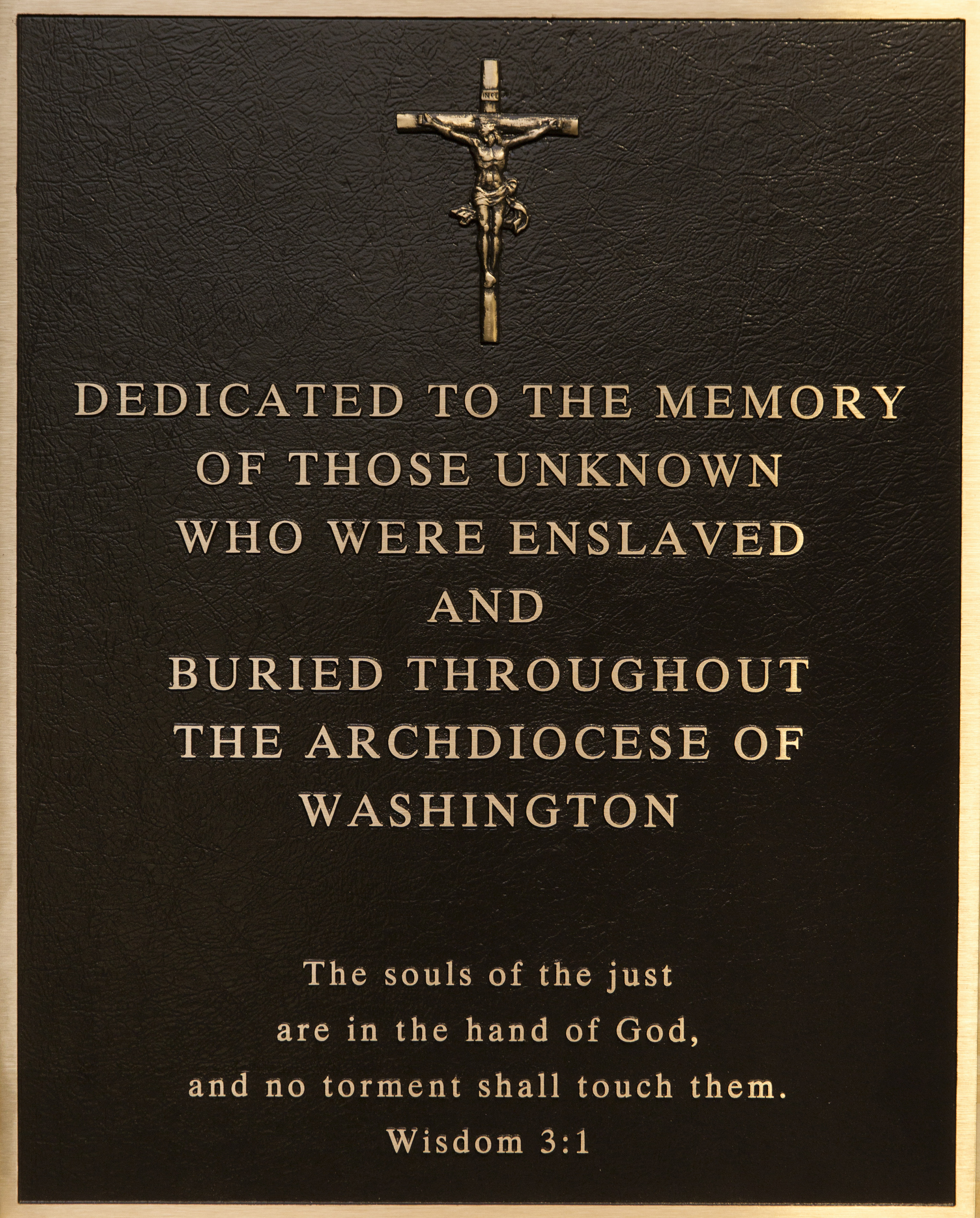
This is one of the bronze memorial plaques the Archdiocese of Washington will install this spring at its five major Catholic cemeteries to honor the unknown enslaved men, women and children buried throughout the archdiocese, which includes the District of Columbia and five surrounding Maryland counties. (Jaclyn Lippelmann/CNS via Catholic Standard)

With that understanding, he said the Catholic Church of Washington had gathered that day as the markers were blessed in recognition that “with this marker, in whatever cemetery it stands, we recognize that somewhere in this burial space are the remains of brothers and sisters. With this memorial, we honor their memory.”

Cardinal Wuerl said, “May our presence say loudly that this is one small effort to right what was a very great wrong.”

He quoted from his November 2017 pastoral letter, “The Challenge of Racism Today,” saying: “Today we need to acknowledge past sins of racism and, in a spirit of reconciliation, move toward a Church and society where the wounds of racism are healed.”

“Each step forward we take,” he said in his homily, “is a step that the next generation — your children and their children — will not have to take again.”

Cardinal Wuerl praised the witness of faith of generations of “African-American Catholics who kept the faith through eras of enslavement, segregation and societal racism,” and who remained “steadfastly faithful” to the Lord, His Church and His creed.

That remark drew applause from the congregation, which included people of diverse racial and ethnic backgrounds. Some African-American Catholics seated in a front section of the basilica wore colorful sashes made of kente cloth to reflect their African ancestry.

“In Christ, we are brothers and sisters to one another,” the cardinal said, noting that people in their shared earthly pilgrimage to heaven, should move forward together with faith in God’s grace, with hope and determination, “and above all with love for each other as children of God,” recognizing “in baptism, in Christ’s Church, we are all brothers and sisters.”

Blessing the markers, he said, not only involved honoring those from the past, but also looking to the future.

“We renew, once again, our pledge to strengthen our efforts to live that communion of faith and love,” the cardinal said. “We affirm our common heritage in baptism and the call to live it out in a solidarity of respect, equality and dignity.”


Mark Zimmermann is editor of the CATHOLIC STANDARD, newspaper of the Archdiocese of Washington.

Coping with school shootings: surreal part of U.S. students’ routine

Students and parents arrive for voluntary campus orientation Feb. 25 at Marjory Stoneman Douglas High School in Parkland, Fla. (CNS photo/Angel Valentin, Reuters)

This slideshow requires JavaScript.

By Carol Zimmermann
Catholic News Service

WASHINGTON (CNS) — Students in schools across the country have to navigate their way around classes, exams, relationships, cliques, cafeteria food and crowded hallways.

They also have to think about what they would do if someone with a gun came into their school, which seems all the more possible after the Feb. 14 shooting at Marjory Stoneman Douglas High School in Parkland, Florida.

The students there now enter brand-new terrain that only students from schools where mass shootings have taken place have any idea about. When classes resume at Stoneman Douglas on a modified schedule Feb. 28, they will face all their usual routines and challenges right up against the horrific memories of the fear and loss of just two weeks before.

#NeverAgain

Movement gathers momentum (The New Yorker)

Colleges support protests (USA Today)

Op-Ed on Gun laws (Bloomberg)

A closer look – video (Late Night with Seth Meyers)

At first, many of these students channeled their raw grief into gun control activism. They gave speeches at vigils and numerous television interviews; they marched and planned bigger marches. They challenged political leaders and businesses associated with the National Rifle Association to do more to stop the carnage they had witnessed. They coined a movement name — #NeverAgain — and spread its message on social media.

But these students — for all their passion and eloquence on camera — also have admitted to reporters that they have a hard time sleeping, or don’t want to be alone or are afraid of sudden noises.

And all of that and more is straight out of books and studies on post-traumatic stress symptoms after what they just experienced.

“What these students have gone through is unfathomable. I think it will be incredibly difficult to cope and move on,” said Rachel Annunziato, an associate professor of psychology at Jesuit-run Fordham University in New York. She said each student will have to find the support they need and to try different coping strategies.

For now, she said: “the activism they are showing is heroic and may well help with coping as it could decrease a sense of helplessness and it also strengthens their support network.”

The high school has provided grief counselors to students and families since the shooting took place and Annunziato said that will need to continue.

“Some people, miraculously, are very resilient,” she said, but others can have a harder time and need help to connect with others to find healing.

She also told Catholic News Service that the impact of this shooting extends far beyond Parkland, as also was proven by research after the 9/11 terrorist attacks when those impacted by the events were not just the people who directly experienced it. For example, her own 7-year-old sons in New York have talked about the school shooting in Florida and said the students are scared.

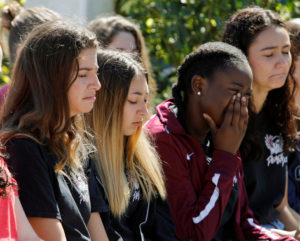
Students mourn during a Feb. 15 prayer vigil in Pompano Beach, Fla., for victims of the shootings at nearby Marjory Stoneman Douglas High School in Parkland. At least 17 people were killed in the shooting. The suspect, 19-year-old former student Nikolas Cruz, is in custody. (CNS photo/Jonathan Drake, Reuters)
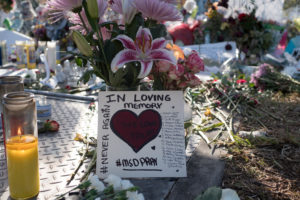
Flowers and mementos are seen at a memorial as hundreds of students and parents arrive for campus orientation Feb. 25 at Marjory Stoneman Douglas High School in Parkland, Fla. Attendance at the orientation was voluntary but it was being held in anticipation of the school officially reopening Feb. 28. (CNS photo/Angel Valentin, Reuters)

Marco Clark, president and CEO of Bishop McNamara High School in Forestville, Maryland, just outside of Washington, said his students had “heightened anxiety” after the Parkland shooting and were talking with teachers about what they should do in a similar situation.

The day after the shooting, the National Catholic Educational Association issued a statement with a link to a prayer service in response to a school shooting and articles about how to talk to kids about these events and turning to God in times of tragedy.

As students nationwide — and particularly in Parkland — consider moving forward, there is one person with particular insight into this situation.

Frank DeAngelis, principal at Columbine High School from 1996 to 2014, was principal at the Littleton, Colorado, school during the 1999 school shooting that killed 12 students and one teacher. Recently retired, he is now an international speaker about school violence and its impact on communities.

USA Today reported that he already has given some advice to Ty Thompson, the Stoneman Douglas principal, telling him: “It’s the things you don’t even think about, things that will trigger the emotions. Teachers won’t know what to expect. It’s a day-by-day experience.”

And the day before the Florida shooting, DeAngelis, who is Catholic, gave a talk at Gregorian Court University, a school founded by the Mercy sisters in Lakeland, New Jersey.

Related

Parkland students urge gun control

Parishes console, help plan funerals

Miami archbishop on Florida school shooting

Florida Conference of Catholic bishops on the tragedy

Therapy dog brings joy, stress relief to students at Catholic school

He told students and faculty not only about the horror of the 1999 school shooting but also of the long and difficult road to recovery afterward, even for him.

He said he struggled with survivor guilt — and still does. He wasn’t even sure he would make it after the shooting but was urged on by his pastor, Msgr. Kenneth Leone of St. Frances Cabrini Parish in Littleton.

The priest, who is now retired, told Angelis he had a “spiritual imperative” to rebuild the community. That inspired him at first to stay at the job until 2002, when all the students in the freshman class of 1999 graduated, but he ended up continuing as principal until 2014, when the children who were in their earliest school year in 1999, graduated.

At the New Jersey college, the retired principal said a key aspect to finding healing at the high school so marred by tragedy was reaching out to those who felt marginalized.

To illustrate that each student was “loved and included and that they were an indispensable link,” he gave each one a link in a chain that they forged together.

Today, he said, the chain remains for all to see in a prominent place in the school.


Contributing to this report was Lois Rogers, who writes for The Monitor, newspaper of the Diocese of Trenton.

Inspiring pope: Francis often speaks of Paul VI’s influence on him

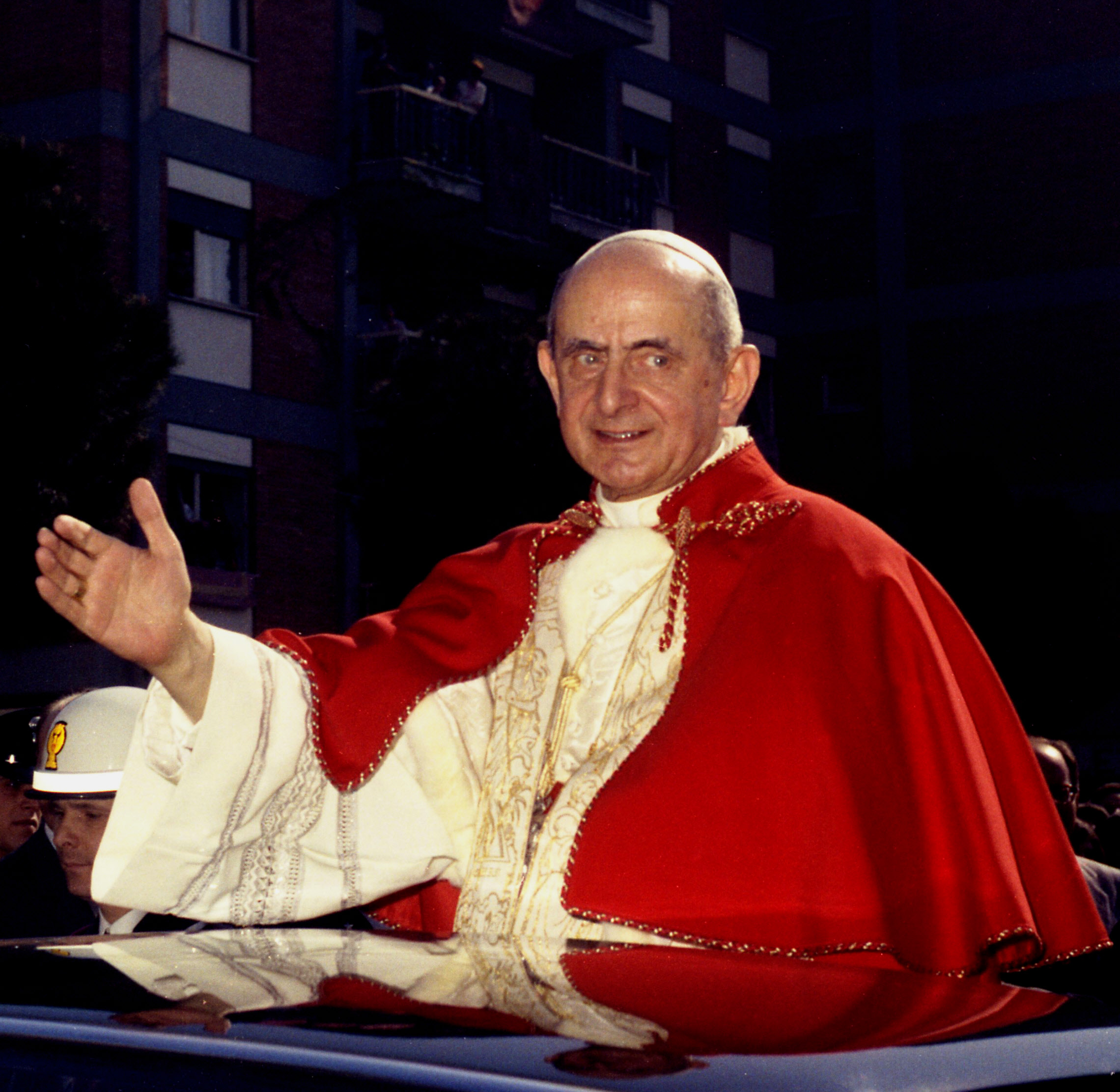
Pope Paul VI greets the crowd as he visits the parish of Jesus the Divine Master in Rome April 2, 1972. Pope Francis will beatify Pope Paul Oct. 19 during the closing Mass of the extraordinary Synod of Bishops on the Family. (CNS photo/Giancarlo Giuliani, Catholic Press Photo)
Pope Paul VI greets the crowd as he visits the parish of Jesus the Divine Master in Rome April 2, 1972. (Giancarlo Giuliani/CNS, Catholic Press Photo)

By Cindy Wooden
Catholic News Service

VATICAN CITY (CNS) — While Pope Francis thinks Blessed Paul VI wrote “the greatest pastoral document that has ever been written,” great writing does not make a pope a saint.

A saint is a person who has lived a holy life to an extraordinary degree. The Catholic Church officially has recognized thousands of women and men as saints, and it honors millions more, unnamed and unnoticed, on All Saints Day each November.

Pope Francis said in mid-February that he would add Blessed Paul VI to the host of formally proclaimed saints this year.

Particularly after the death of Pope St. John Paul II, the pastoral wisdom of canonizing popes has been the object of debate. After all, one reason for so publicly and formally recognizing a person as a saint is to provide modern Catholics with models to imitate in their own striving for holy living, and the life of a pope is not exactly that of an average Catholic.

But the Catholic Church also canonizes certain women and men to highlight specific Christian virtues at a specific time.

For example, while it obviously was not the only reason, the canonization of St. John Paul II in 2014 — just nine years after his death — could be seen as affirming before the world the dignity and value of human life even when it is obviously fragile. And the canonization of St. Mother Teresa of Calcutta in 2016, during the Year of Mercy, highlighted how receiving God’s mercy should lead to sharing it with others, particularly in concrete works of mercy.

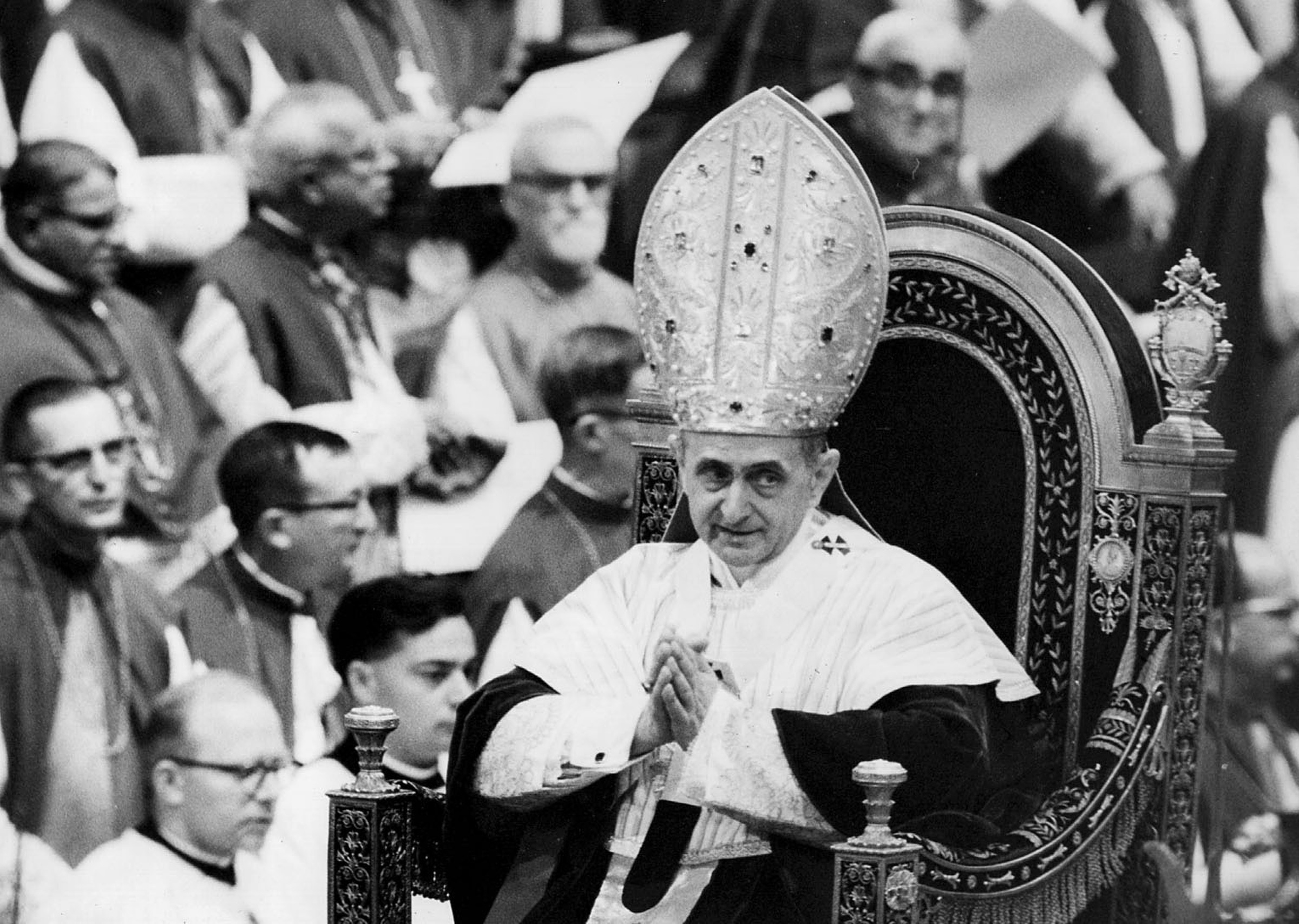
Pope Paul VI makes his way past bishops during a session of the Second Vatican Council in 1964. (CNS file photo)

That Pope Francis has a similar point to make about Pope Paul VI, who led the Church from 1963 to 1978, can be seen in comments he has made about his predecessor throughout the five years of his own papacy.

The remarks go well beyond his repeated praise for “the greatest pastoral document that has ever been written,” a reference to “Evangelii Nuntiandi,” the 1975 apostolic exhortation on evangelization in the modern world. Pope Francis’ own “Evangelii Gaudium (The Joy of the Gospel)” pays tribute to it, not just in its title, but in its whole focus on the obligation of every Christian to “go out,” joyfully sharing the faith with others.

Asked by Catholic News Service about the commonalities between Pope Francis and Blessed Paul, Fr. Carlos Maria Galli, dean of the faculty of theology at the Catholic University of Argentina, sent a 29-page essay he wrote on the topic. The central point of contact, he said, is “the communion of both with the Good Shepherd and on the mission of communicating the joy of Christ.”

Fr. Galli identified a long list of commonalities, including: their devotion to the Scriptures and the Eucharist; sensitivity to modern cultures; commitment to the reforms of the Second Vatican Council; “a great ecumenical heart” and commitment to interreligious dialogue; and, “above all, a life shaped by pastoral charity.”

For both, he said, a bishop or priest must be “a shepherd who goes before, beside and behind the flock entrusted to them.”

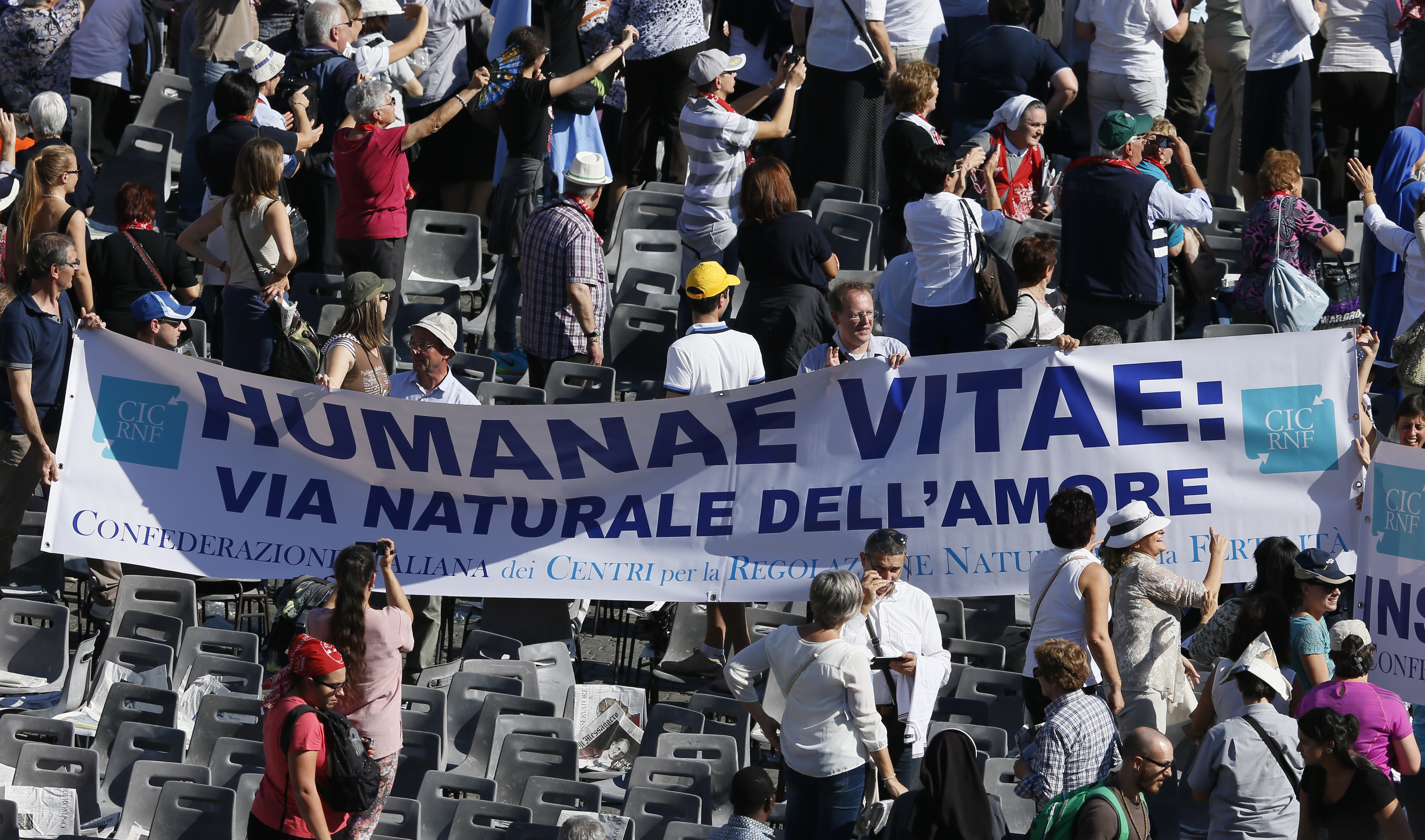
Members of the flock, however, can and do disagree with their shepherd. The very public criticism of both popes is another thing the two share. For Pope Paul VI, the criticism honed in on the Second Vatican Council and, especially, on “Humanae Vitae,” his 1968 encyclical on married love that included a reaffirmation of Church teaching against artificial contraception. For Pope Francis, it’s a pastoral style that seems to downplay rules and regulations; that is particularly true with the question of Communion for divorced and civilly remarried Catholics.

A banner referencing “Humanae Vitae,” the 1968 encyclical of Blessed Paul VI, is seen in the crowd at the conclusion of the beatification Mass of Blessed Paul celebrated by Pope Francis in St. Peter’s Square at the Vatican Oct. 19, 2014. The Mass also concluded the extraordinary Synod of Bishops on the family. Blessed Paul, who served as pope from 1963-1978, is most remembered for “Humanae Vitae,” which affirmed the Church’s teaching against artificial contraception. (Paul Haring/CNS)

“After ‘Humanae Vitae,’ many difficulties and misunderstandings emerged that were the result of all of the tension accumulated in the first years after the council,” said Msgr. Gilfredo Marengo, a professor of theological anthropology at Rome’s Pontifical John Paul II Institute for Studies on Marriage and Family and leader of a group of scholars researching how and why Pope Paul wrote the encyclical.

Paul VI was well aware of the upheaval and “suffered greatly because of it,” Msgr. Marengo told CNS. “‘Evangelii Nuntiandi’ was his attempt to close a problematic season in the life of the Church — a season in which opposition to ‘Humanae Vitae’ was just the most noticeable sign — and set the Church again on the path of mission and evangelization.”

In “Amoris Laetitia,” his document on the family, Pope Francis cites “Humanae Vitae” as Pope Paul VI’s contribution to Church teaching on marriage and family life. The fact that Pope Francis quotes the document “excludes any formal distancing by Francis from this part of the magisterium of Paul VI,” Msgr. Marengo said, apparently responding to persistent rumors among a small group of Catholics that Pope Francis, with Msgr. Marengo’s help, was preparing to “lift the ban” on artificial birth control.

Speaking to a group of pilgrims from Brescia, Italy, Pope Paul’s home diocese, Pope Francis said his predecessor had “experienced to the full the Church’s travail after the Second Vatican Council: the lights, the hopes, the tensions. He loved the Church and expended himself for her, holding nothing back.”

And, beatifying Pope Paul in 2014, Pope Francis noted that even in the face of “a secularized and hostile society,” Pope Paul “could hold fast, with farsightedness and wisdom — and at times alone — to the helm of the barque of Peter while never losing his joy and his trust in the Lord.”

Pope Francis referred to him as “this great pope, this courageous Christian, this tireless apostle,” who demonstrated a “humble and prophetic witness of love for Christ and His Church.”

Those are qualities that make a saint.

Court blocks Trump administration’s effort to end DACA in March

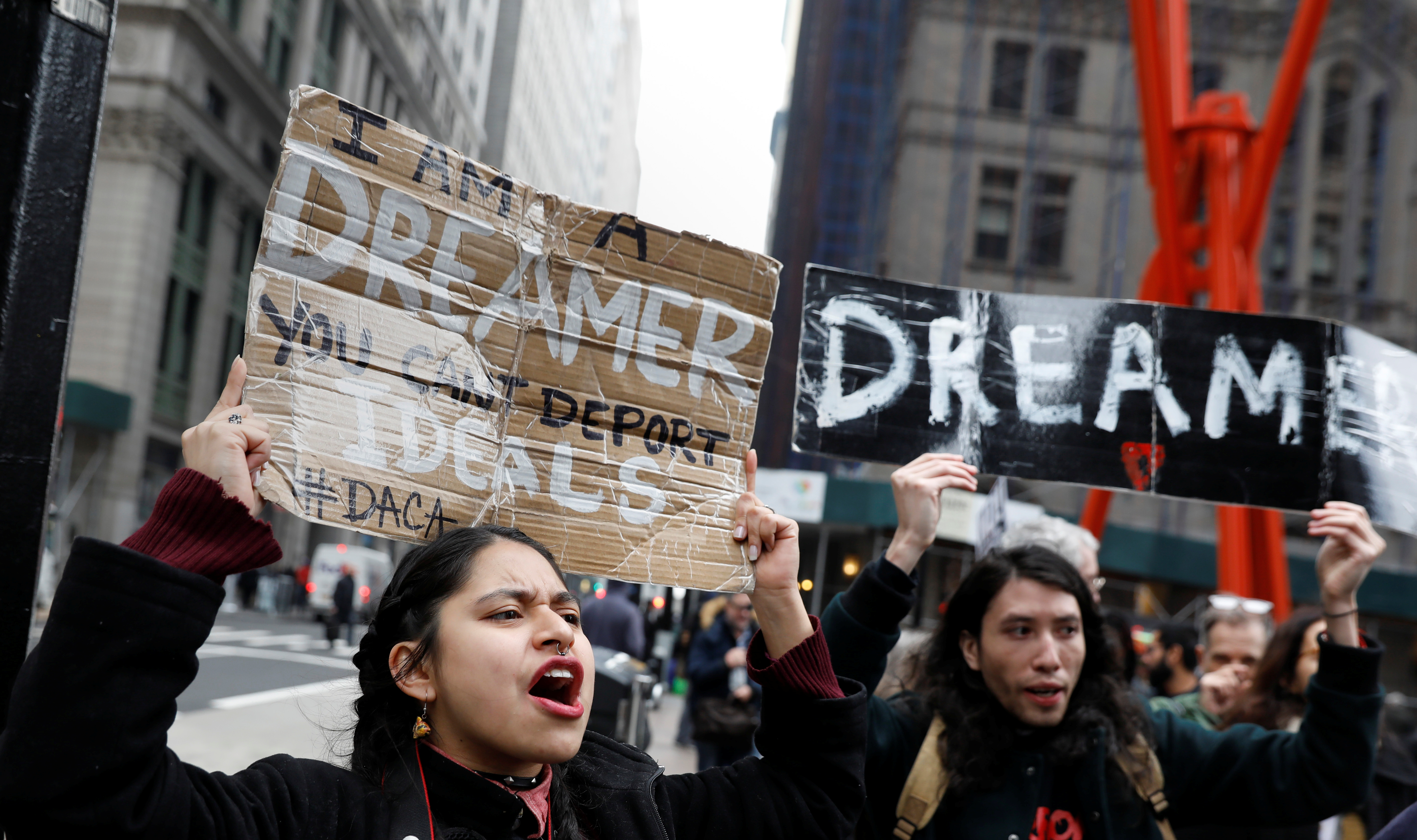
Activists and recipients of the Deferred Action for Childhood Arrivals, or DACA program, march up Broadway in New York City Feb. 15 during the start of their "Walk to Stay Home," a five-day 250-mile walk from New York to Washington to demand that Congress pass a clean DREAM Act to save the program. (CNS photo/Shannon Stapleton, Reuters) See SCOTUS-DACA and DACA-CALL-IN-ADVOCATES Feb. 26, 2018.
Activists and recipients of the Deferred Action for Childhood Arrivals, or DACA program, march up Broadway in New York City Feb. 15 during the start of their “Walk to Stay Home,” a five-day 250-mile walk from New York to Washington to demand that Congress pass a clean DREAM Act to save the program. (Shannon Stapleton/CNS via Reuters)

By Rhina Guidos
Catholic News Service

WASHINGTON (CNS) — The U.S. Supreme Court has dealt a blow to the Trump administration’s effort to end a program in March that protects young adults brought to the U.S. without legal permission as minors.

On Feb. 26, the court declined to hear and rule on whether the administration has the right to shut down the Deferred Action for Childhood Arrivals, or DACA program.

In September, President Donald Trump announced his administration was ending the program, giving lawmakers until March 5 to find a legislative solution to protect the young adults benefiting from DACA.

Two federal judges have blocked the Trump administration’s efforts to end the program, ruling the government must continue to accept renewal applications for DACA. In turn, the administration asked the Supreme Court to hear and rule on one of those decisions, from a judge in California, in an effort to bypass the process of an appeal going through the 9th U.S. Circuit Court of Appeals based in San Francisco.

That means the March 5 deadline essentially no longer of any significance and those benefiting from DACA can keep applying to renew permits that protect them from deportation and allow them to have a work permit and other documents, as long as they meet certain criteria.

In a brief unsigned comment, the court said it expected the Court of Appeals “will proceed expeditiously to decide this case.”

The decision was announced the day the U.S. Conference Catholic Bishops called for a “National Call-in Day for the Protection of Dreamers,” encouraging Catholics to call their representatives in Congress to urge support for the young adults called “Dreamers.”

The name comes from the DREAM Act — the Development, Relief, and Education for Alien Minors Act. The legislative proposal has explored allowing qualifying youth conditional residency and down the line permanent residency, but it has been repeatedly defeated in Congress.

The court’s decision may delay the end of the DACA program, started in 2012 by President Barack Obama via executive order, but immigrant advocates continued to urge action to provide the youth with permanent relief.

“Although the Supreme Court decision buys Congress time to address the situation of undocumented youth, it should not give them an excuse to delay action,” said Kevin Appleby, senior director of international migration policy for the Center for Migration Studies in New York. “These young people remain at risk and deserve permanent protection and a chance to plan their futures. Catholic advocates should continue to push Congress and the president to grant them a path to citizenship.”

USCCB Vice President Archbishop José H. Gómez of Los Angeles, in a statement and via Twitter, warned Feb. 26 that the high court’s decision “does not change anything.”

“It is long past time for members of Congress to take their responsibilities seriously — seriously enough that they are willing to act with courage to negotiate and seek compromises and resist the temptation to keep using this issue for their political advantage,” he said. “People’s lives and families’ futures hang in the balance.”

Without legislative protection, “these young people will lose their permission to work in this country and face deportation. This is wrong and it is up to Congress to make it right,” he said.

California’s Catholic bishops sent a letter to their state’s congressional delegation.

“Listen to these voices of reason this coming week. (The Dreamers) are valuable members of our neighborhoods, our workplaces and our families,” the bishops said. “They contribute to the common good and should be part of our common future as a nation.”

Other bishops throughout the country, too, voiced their support for the youth during the call-in day.

In an opinion piece for The New York Times titled “If You’re a Patriot and a Christian, You Should Support the Dream Act,” Cardinal Joseph W. Tobin of Newark, New Jersey wrote that “the Gospel of Jesus Christ calls on us to welcome and protect the stranger. This should not be hard to do when the stranger is young, blameless and working hard to make this country a better place.”

On Feb. 27, the PICO National Network, a faith-based community organization based in California, has helped coordinate the “Catholic Day of Action with Dreamers” along with Faith in Public Life and a coalition of Catholic social justice organizations based in Washington. At least one Catholic prelate, Bishop John Stowe of Lexington, Kentucky, will participate.

“The groups are demanding a new policy which protects Dreamers while not harming their families and communities,” the groups said in a Feb. 26 statement.

National Gallery exhibit explores St. Francis’ reception of stigmata

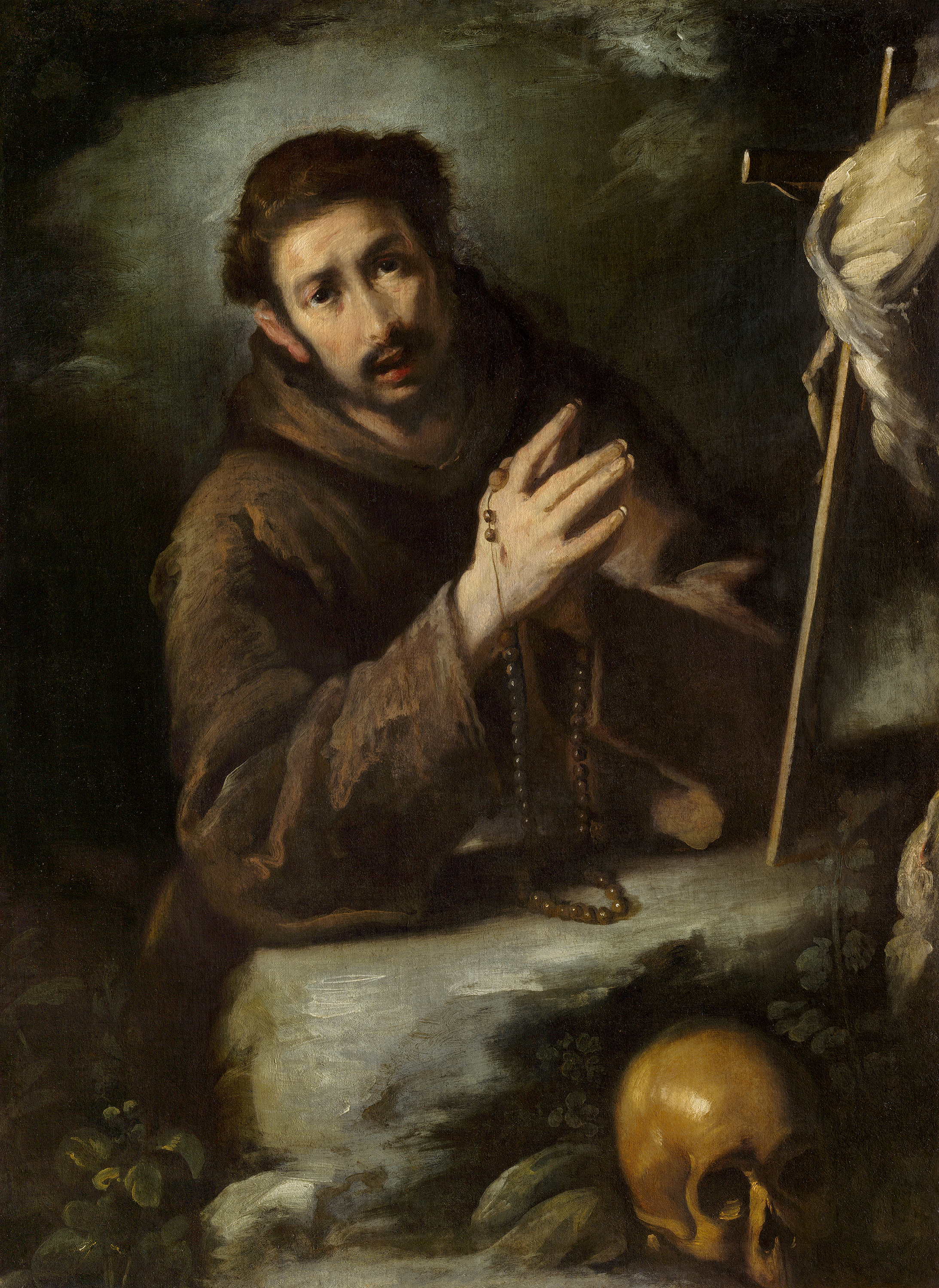
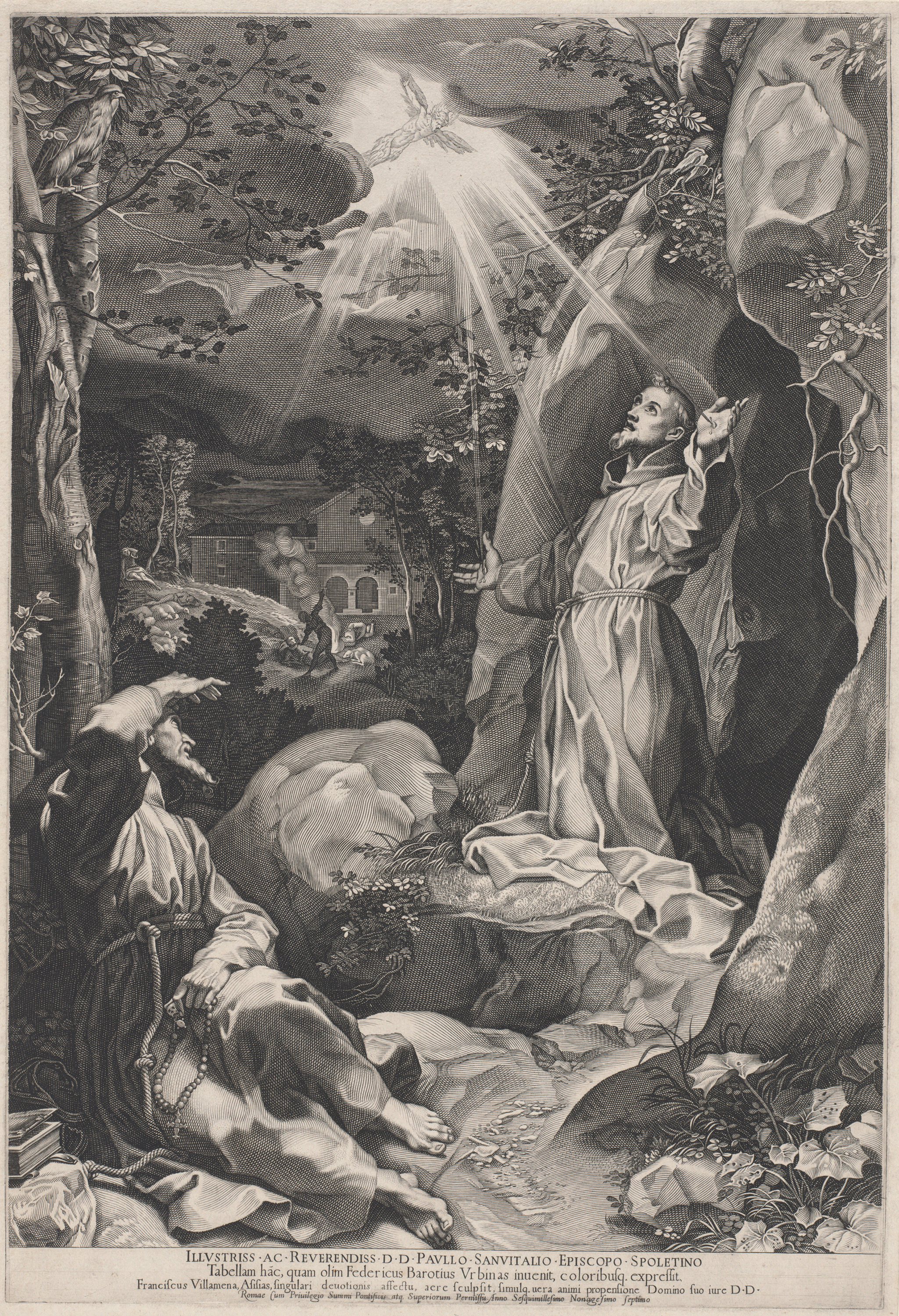
This 17th-century oil on canvas painting by Bernardo Strozzi titled "Saint Francis in Prayer" is part of the "Heavenly Earth: Images of Saint Francis at La Verna" exhibit at the National Gallery of Art in Washington. (Courtesy of National Gallery of Art/CNS) See FRANCISCAN-EXHIBIT Feb. 22, 2018.

“Heavenly Earth: Images of Saint Francis at La Verna”

National Gallery of Art
6th and Constitution Ave. NW
Washington, DC 20565

Feb. 25-July 8
10 a.m.-5 p.m. EST, Monday through Saturday
11 a.m.-6 p.m. EST, Sunday

Admission is free.

MORE INFORMATION

By Dennis Sadowski
Catholic News Service

WASHINGTON (CNS) — St. Francis of Assisi’s reception of the stigmata, the wounds of Christ, at La Verna in Italy and its depiction by artists beginning in the 15th century is the focus of a National Gallery of Art exhibit.

“Heavenly Earth: Images of Saint Francis at La Verna” includes 30 pieces of Franciscan art centered on the miraculous 13th-century event. The exhibit opened Feb. 25.

Ginger Hammer, an assistant curator at the museum in Washington, said the display focuses on an “unprecedented event in Western spirituality.” No one in recorded history had experienced such an occurrence before St. Francis did in 1224.

It happened while St. Francis was meditating on the passion of Christ during one of his regular retreats in the mountain wilderness.

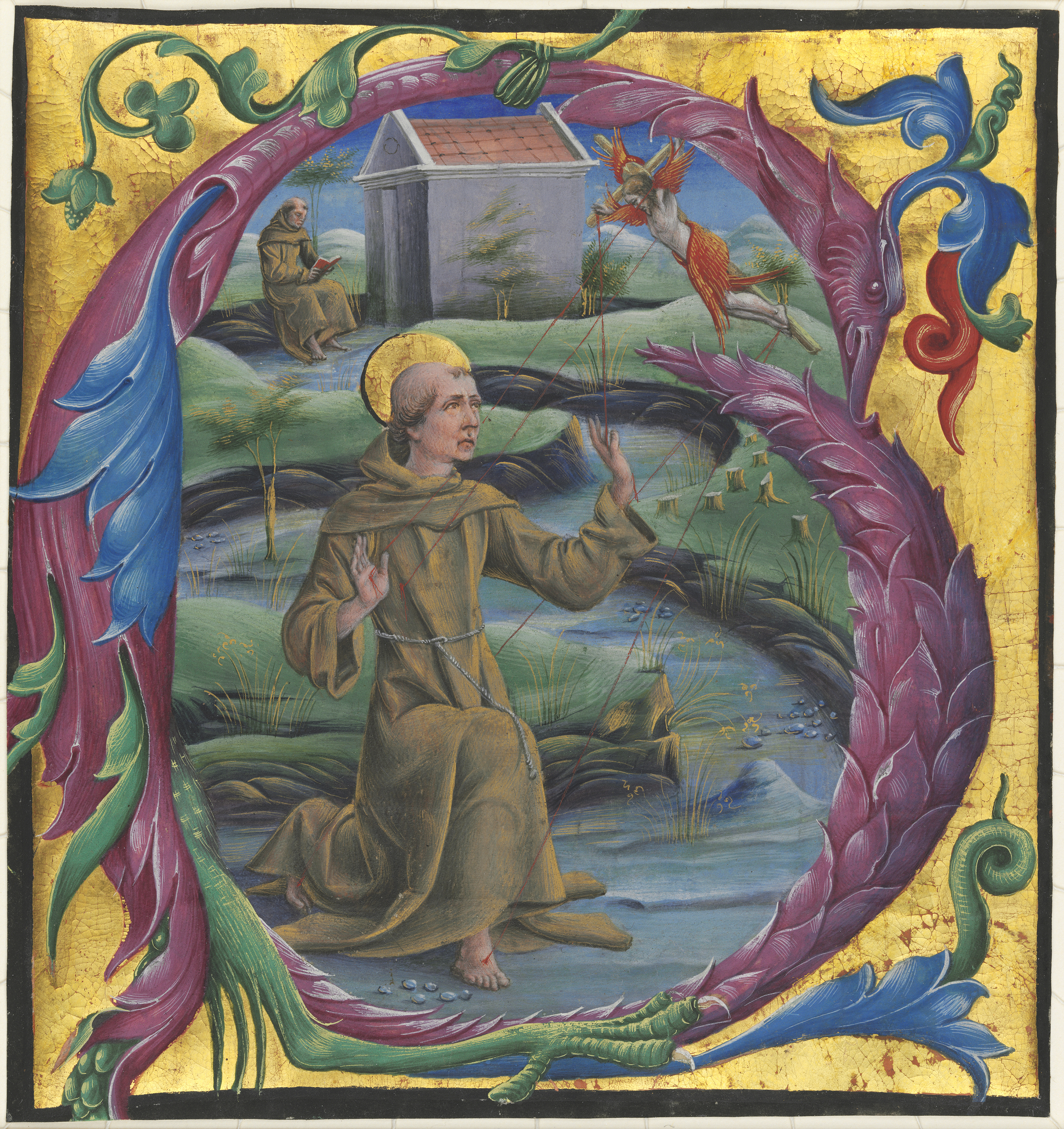
“He wanted to understand the very suffering that Christ endured. The result of his prayers reportedly is that a seraph, or six-winged angel, approached him enfolding the image of Christ on the cross. When the seraph departed, the actual wounds of Christ’s passion were transferred to the body of Francis,” Hammer told Catholic News Service Feb. 20 during a media preview.

This 17th-century oil on canvas painting by Bernardo Strozzi titled “Saint Francis in Prayer” is part of the “Heavenly Earth: Images of Saint Francis at La Verna” exhibit at the National Gallery of Art in Washington. (Courtesy of National Gallery of Art/CNS)

“That had never happened before and it was quite remarkable that through his own endeavors something mystical of this magnitude could happen to a human being,” she said.

A Franciscan sanctuary and museum complex mark the La Verna site today and continues to welcome pilgrims.

The event was so extraordinary that artists over the centuries have tried to capture it to share with others. The exhibit focuses on work in various media from the 15th through 18th centuries.

Each piece showcases the imaginations of artists inspired by some aspect of St. Francis’ experience: his devotion to being one with Jesus; a life lived in joy; the promotion of love of other as brother and sister; and an appreciation of nature and God’s creation. Some are highly emotional while others are more impressionistic.

The exhibit features engravings, pen-and-ink drawings, etchings and hand-colored wood cuts by Italian, German and Dutch artists including Nicolo Boldrini, Federico Barocci, Sebastiano Ricci, Lucas Emil Vorsterman and Johann Matthias Kager. There’s even a work from Rembrandt, “St. Francis Beneath a Tree Praying,” created in 1657.

Many of the images include St. Francis’ close friend, Brother Leo, as well as other landmarks, such as churches, and symbols meaningful to local communities.

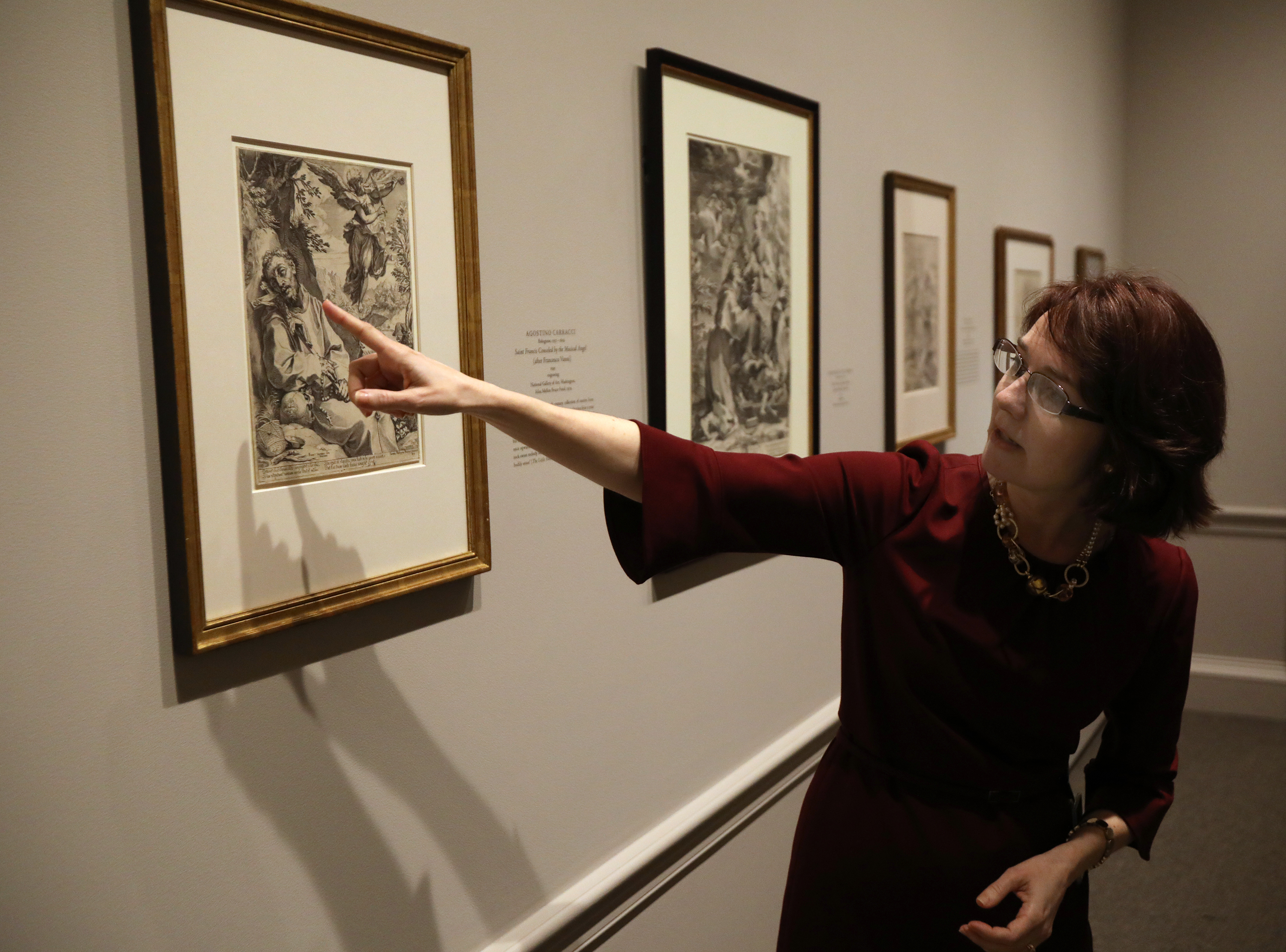
Ginger Hammer, an assistant curator at the National Gallery of Art in Washington, describes details in a painting during a Feb. 20 media preview of the “Heavenly Earth: Images of Saint Francis at La Verna” exhibit at the gallery. (Bob Roller/CNS)

Not all of the works on display capture the miraculous moment. Some show St. Francis embracing the Christ Child or with the Holy Family, a reminder that he introduced the idea of a live Nativity to teach people about Jesus’ birth.

This 15th-century hand-colored woodcut by an unknown German artist titled “Saint Francis in Prayer” is part of the “Heavenly Earth: Images of Saint Francis at La Verna” exhibit at the National Gallery of Art in Washington. (Courtesy of National Gallery of Art/CNS)

“It’s a unique topic for a show at the National Gallery,” Hammer said, “but I think it’s a really happy one. Francis promoted joy. There are very few people who could dislike St. Francis of Assisi.”

Hammer said she was inspired to develop the exhibit while cataloging images of La Verna in a baroque book produced in the early 17th century by Jacopo Ligozzi, head of the Academy of the Arts of Drawing in Florence, Italy. He had been commissioned by Franciscan Brother Lino Moroni to illustrate the events surrounding St. Francis as well as the Franciscan sanctuary at La Verna for future generations of artists, historians, the faithful and the curious.

Digging deeper, Hammer discovered the National Gallery of Art already had another similar book with engravings by Ligozzi in its holdings as well as numerous pieces of Franciscan-related art. It took several years to prepare, but the exhibit now is ready for viewing.

“My hope is when people come to see the show that they will walk with a certain understanding of the importance of Franciscan imagery within the 15th to the 18th centuries. … This was a period of great change for the Catholic Church,” Hammer explained.

This 15th-century miniature on vellum by Cosme Tura titled “Saint Francis Receiving the Stigmata” is part of the “Heavenly Earth: Images of Saint Francis at La Verna” exhibit at the National Gallery of Art in Washington. (Courtesy of National Gallery of Art/CNS)

“First you have the Protestant Reformation and then you have the Counter-Reformation prompted by the Reformation. So the Catholic Church is trying to address those very big challenges made to it,” she said.

St. Francis was admired by Catholics and Protestants alike, Hammer added. Catholics liked him because he venerated the saints and promoted austerity through his desire to live simply and give up his possessions. Protestants liked that he held an “absolute adherence” to the Gospel and Scripture.

St. Francis’ influence continues to this day, evidenced by Cardinal Jorge Bergoglio choosing the name Francis when he became pope in 2013, Hammer told CNS.

“The fact that our current pope chose the name of Francis is inspiring in that he is returning to the values represented by (St.) Francis, which are joy, loving one’s enemies, embracing all of creation. This is something that was revolutionary at the time. … (St. Francis) was trying to take the truth of the Gospel and apply it directly to his every action,” she said.

How Lent heals [VIDEO]

Fr. John Muir dives back into the season of Lent with a quick reflection on three spiritual dysfunctions in us and how prayer, fasting and almsgiving heals each one.

Catechism expert returns to Phoenix to re-energize catechists, school teachers

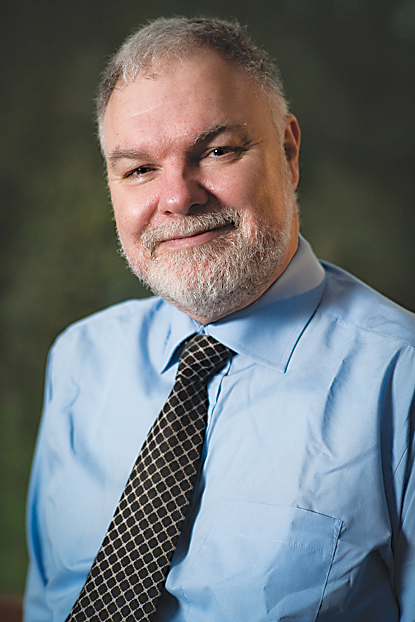
Dr. Petroc Wiley (courtesy photo)

Dr. Petroc Willey, whose array of titles include director of the newly formed Catechetical Institute at Franciscan University, author and appointed consultor for the Pontifical Council for the Promotion of the New Evangelization in Rome, is returning to the Diocese of Phoenix.

He was here in January to speak at a symposium through the Kino Catechetical Institute. Now, it’s parish catechists and Catholic school educators who will hear from “the foremost English-language-speaking expert on the Catechism.”

Catechetical Congress

8:30 a.m.-5 p.m., March 10
Full agenda

Phoenix Convention Center – West,
100 N. Third St., Phoenix

The gathering begins with an 8 a.m. Mass at St. Mary’s Basilica and
continues with the Congress which includes practical sessions, parent planning, youth leader tracks,
scriptural formation and more.

Cost: $30


CLICK HERE for more information or call Ana at (602) 354-2323

Willey will share “God’s Pedagogy: A Family Model for Education” during the diocesan in-service March 9. He co-founded a homeschooling association in England with his wife because Catholic schools there, though abundant, lacked strong Catholic identity and teachers.

On March 10, he will address an estimated 300-400 parish catechists at the Catechetical Congress, which features formation and hands-on workshops. Willey’s keynote talk focuses on “The Family: Living Symbol of the Father’s Loving Plan.”

“He is going to bring back to us that the family, the domestic church, is directly related to the strength of the Church itself and all of our catechetical efforts must be directed at equipping parents in their roles as primary educators or assisting them with this important task. We cannot underestimate the role of the family,” said Angela Gaetano, director of parish leadership support.

Secular and faith-based studies reveal the irreplaceable role of parents in a child’s faith formation. Willey’s “gentleness in working with souls” conveys that vital role, Gaetano said.

Willey spoke with The Catholic Sun about his faith life growing up, the state of catechesis at the parish and school level and how adults can become better models of the faith.

Dr. Petroc Wiley (courtesy photo)

Sun: What are some things you suspect catechists are doing right in their ministry?

Dr. Willey: One of the things that really strikes me is the generosity of the volunteer catechists in terms of the time they gave for the sake of those they’re teaching.

The challenge for all of us is finding that time and energy and enthusiasm for remaining in formation [ourselves]. A ministry is where you give … of yourself with conviction and energy and what is so important is to keep in mind the need to spend time with the Lord so that He can take care of you! Otherwise, there tends to be a gradual burnout.

Sun: You’ll be talking about the family, which can look very different from one domestic church to another. What was your family faith life like growing up?

Dr. Willey: It’s a really interesting one. I was raised Protestant, but eventually most of my family converted to Catholicism. We’re very much a work in progress — all of us. Five of the six of us became Catholic.

Also, two of my siblings are adopted. We’re very mixed, culturally. My mom is from London and my dad is from a rural part of England.

It provided a good foundation for me growing up. We’ve all come over to the States now. Three of my children are at Franciscan. One is at John Paul the Great. My wife and I are just getting to know empty-nester syndrome.

Sun: Did you know Christ growing up or how did you come to know Him?

Dr. Willey: I was raised in a deeply Christian home but, like many, neglected the faith in my teen years. Reading the Gospel of Luke brought me back eventually. A number of people come back to the Church by reading the Gospel. It’s interesting how powerful it is just to read the Gospel beginning to end.

My re-engagement came back in my late teens. I was drawn particularly in the direction of a monastic vocation which got me in the Catholic Church. From that point, I knew I wanted to respond by giving myself 100 percent to God, but I didn’t know how to do that. I realized that, as a Protestant, I didn’t before have a sense of an ongoing tradition. It’s more that you just gave your life to Christ and that was your moment… but now I knew I needed a path to walk on.

Catholicism has that sense that every day you’re in a place of needing conversion. … I ultimately found my vocation in marriage — and a second vocation in teaching. Now, I couldn’t be in any better place.

Sun: What can catechists do to help parents better equip and encourage families to be more active in their domestic church?

Dr. Willey: The first thing is let parents know that they really are the key educators. Without the parents’ involvement, it’s very hard to provide an adequate substitute. Parents very rarely think of themselves as the key figures for their children, and there can often be a sense of inadequacy in the light of what is seen as a professional environment. But they are the key figures — and not least because all catechetical ministry is a relational ministry.

Sun: What are some of your “go to” resources — books, apps, videos — for growing in the faith personally? For teaching it?

Dr. Willey: For me personally, for growing in the faith, I always go first to the Scriptures and the Catechism. Reading these, studying these, absorbing these — it’s like water on a stone that slowly but surely makes an impression!

By the final reel: films for Lent with conversion themes

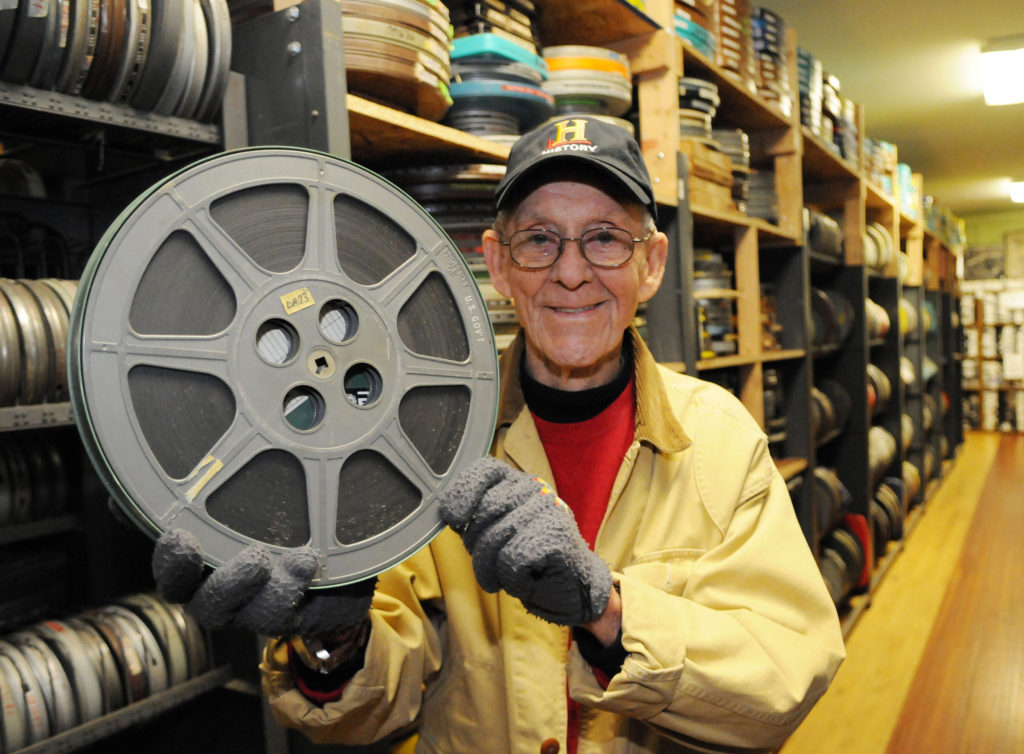
Lou Reda holds a reel from his film archive at the former St. Michael Church in Easton, Penn., in this 2014 file photo. His film company has produced hundreds of hours of programming for the History, Biography and A&E channels, earning five Emmy awards. (CNS photo/Ed Koskey Jr., The Catholic Spirit)

By John Mulderig
Catholic News Service

NEW YORK (CNS) — Lent is intended to be a season of ongoing conversion for the baptized, as well as of increasing conformity to the message of the Gospel among catechumens and those coming into full communion with the church.

With that in mind, here, in alphabetical order, are capsule reviews of 10 films that showcase characters experiencing a positive change of heart, mind or outlook.

The movies are mostly of relatively recent vintage, couple hearken back to Hollywood’s Golden Age and suitable for an adult audience. But a, while another two make appropriate viewing for the whole family. Each review includes the film’s Catholic News Service classification (CNS) and its Motion Picture Association of America rating (MPA), where applicable.

“Angels With Dirty Faces” (1938)

Depression melodrama in which a gang of New York toughs (Billy Halop, Leo Gorcey and other Dead End Kids) regard a local gangster (James Cagney) as a hero until a priest (Pat O’Brien) who was his boyhood pal persuades him to help the boys by making a sacrifice on the way to the electric chair. Directed by Michael Curtiz, the simplistic plot is buttressed by convincing performances, especially the counterpoint between Cagney’s cocky crook and O’Brien’s sincere cleric. Stylized violence and justice questions.

CNS: A-II, adults and adolescents
MPA: Not rated by the Motion Picture Association of America

“Babette’s Feast” (1988)

Screen version of a story by Isak Dinesen, set in a rugged Danish fishing village in 1871, shows the impact of a French housekeeper (Stephane Audran) on two pious sisters who carry on their late father’s work as pastor of a dwindling religious flock. The conclusion follows the preparation and consumption of an exquisite French meal, with focus on its sensual and religious implications and its healing effect on the austere sect and the Frenchwoman who prepares it. Danish director Gabriel Axel’s low-key and understated work is rich with detail and fine, controlled performances. Subtitles. Cerebral treatment.

Trailer
CNS: A-II, adults and adolescents
MPA: G, general audiences, all ages admitted

“Brother Orchid” (1940)

Seriocomic tale of a gang boss (Edward G. Robinson) returning from a vacation in Europe to find his mob has a new leader (Humphrey Bogart), but he escapes being rubbed out by hiding in a monastery where he works as a gardener while plotting his comeback — until he has a change of heart. Director Lloyd Bacon mixes some droll comedy and a bit of spiritual uplift into a standard crime melodrama, with surprisingly agreeable results. Stylized violence and criminal menace.

Trailer and full film
CNS: A-II, adults and adolescents
MPA: Not rated by the Motion Picture Association of America.

“Changing Lanes” (2002)

Tense drama about a cocky young lawyer (Ben Affleck) and an insurance broker (Samuel L. Jackson) whose chance encounter in a minor fender-bender escalates into a terrifying tit-for-tat as each tries to retaliate against the other’s callous comportment. Director Roger Michell’s morality tale provokes reflection on corporate ethics, individual responsibility and self-destructive behavior while weaving a taut, disturbing tale of two men caught in the increasingly tangled web of their own actions. Brief violence, much menace and intermittent rough language with some profanity.

Trailer
CNS: A-III, adults
MPA: R, restricted. Under 17 requires accompanying parent or adult guardian.

“Charley and the Angel” (1973)

After Fred MacMurray is informed by angel Harry Morgan that he has only a short time on earth, he changes his ways and becomes a dedicated family man. Director Vince McEveety handles the Disney Depression-era story with a suitably light touch that allows Harry Morgan a maximum amount of fun while emphasizing the positive messages of the story.

Trailer
CNS: A-I, general patronage
MPA: G, general audiences. All Ages Admitted.

“The Music Man” (1962)

Rousing screen version of Meredith Willson’s Broadway musical about Professor Harold Hill (Robert Preston), a smooth-talking con man who tries to swindle a rural community by spinning dreams of a school marching band until love pushes larceny out of his heart when he falls for the town librarian (Shirley Jones). Directed by Morton Da Costa, the show revolves around the irrepressibly energetic Preston, supported by a strong cast (Pert Kelton, Paul Ford and little Ronny Howard), nostalgic bits of 1912 Iowa corn and Willson’s lovely yet lively song-and-dance numbers, including the show-stopping “76 Trombones.” Fine family fare, though a bit long for small attention spans.

Trailer and full film
CNS: A-I, general patronage
MPA: G, general audiences. All Ages Admitted.

“Rain Man” (1988)

A shady Los Angeles car dealer (Tom Cruise) loses the family inheritance to an older brother (Dustin Hoffman) who suffers from irreversible autistic savant syndrome and has been institutionalized most of his life. On a cross-country auto journey, the younger brother drops his plans for a custody battle when he learns to love his brother despite his disability. Under Barry Levinson’s direction, the brothers’ intense and sometimes comical interaction during the life-affirming journey is wonderful but the rest of the movie is less satisfying and detracts from the character study. Much profanity, a few intense but brief emotionally unhinged outbursts by the autistic protagonist and a fleeting off-camera sex scene.

Trailer
CNS: A-III, adults and adolescents
MPA: R, restricted. Under 17 requires accompanying parent or adult guardian.

“Remember the Titans” (2000)

Uplifting drama set in 1971 about the desegregation of two powerhouse high school football teams that learn to overcome racism and go on to victory under the leadership of their African-American coach (Denzel Washington). Aside from occasionally faltering with emotional manipulation, director Boaz Yakin’s heartwarming, fact-based saga shows the triumph of the human spirit over adversity, fear and societal prejudices. Racism theme and fleeting crass language.

Trailer
CNS: A-II, adults and adolescents
MPA: PG, parental guidance suggested. Some material may not be suitable for children.

“Schindler’s List” (1993)

Sobering account of an opportunistic German businessman (Liam Neeson) who comes to occupied Poland to make his fortune by exploiting Jewish capital and labor but, after witnessing the increasing barbarism of Nazi racial policies and the sadistic perversions of the local concentration camp commandant (Ralph Fiennes), he risks his life by using his talents for manipulation to save the Jews in his employ. Director Steven Spielberg painstakingly restages the appalling history of the Holocaust on an epic scale that gives horrifying dimension to one man’s attempt to save a few innocent lives. But the narrative provides little insight into the German’s moral transformation or the individual lives of his slave laborers. Realistically graphic treatment of an infamous historical period and its crimes against humanity, a few discreet sexual scenes and occasional rough language.

Trailer
CNS: A-II, adults and adolescents
MPA: R, restricted. Under 17 requires accompanying parent or adult guardian.

“The Widow of Saint-Pierre” (2001)

Historical drama set in 1849-50 on a French island off the coast of Canada where a condemned man (Emir Kusturica) awaiting the arrival of a guillotine and executioner is rehabilitated by the wife (Juliette Binoche) of the island’s military commander (Daniel Auteuil) who also comes to believe the execution should not be carried out and risks everything to prevent it. Director Patrice Leconte delicately unreels a fact-based story of unconditional love which strongly questions the morality of capital punishment. Subtitles. Brief violence, fleeting bedroom scene and some sexual innuendo.

CNS: A-II, adults and adolescents
MPA: R, restricted. Under 17 requires accompanying parent or adult guardian.

1,200 attend Diocese’s World Day of the Sick Healing Mass

More than 1,200 people, including many ill and some with infirmities, filled Ss. Simon and Jude Cathedral for the Mass of Healing and Anointing celebrated Feb. 10, the weekend of the Church’s 26th annual World Day of the Sick.

Bishop Thomas J. Olmsted preaches the homily during the World Day of the Sick Mass at Ss. Simon and Jude Cathedral Feb. 10. (Jeff Grant/CATHOLIC SUN)

“The miracles Jesus performed 2,000 years ago and those He is still working today demonstrate the merciful love of God. We gather today because we know in faith that Jesus continues to heal, whatever is our deepest need for healing — either of our bodies, our souls, our spirits — just as it was needed 2,000 years ago,” Bishop Thomas J. Olmsted said in his homily.

Minutes later, the bishop joined nearly a dozen priests from across the Diocese of Phoenix in administering the sacrament of the Anointing of the Sick to a number of those gathered. Several hundred men, women and children made their way to the foot of the altar, where Bishop Olmsted and the priests greeted each person, first placing hands upon them and praying for them, then anointing them with holy oil on the forehead and palms. Wheelchair-bound individuals were either led up to the front of the nave or were met by a priest if moving them was too cumbersome.

This slideshow requires JavaScript.

Betty Brennan, 80, who was diagnosed two years ago with cancer, was among the recipients. Brennan, who lost her husband just before learning of her illness, recalled him speaking of peace after his anointing and said she felt that same peace after receiving the sacrament.

“At that moment, I felt I was totally in the presence of Christ. There was such a stillness that I just can’t explain. I was able to realize He was there, (that) I was loved, totally surrender to Him and to forgive anybody in any way I might have been annoyed with or angry with, and hope I get well,” said Brennan, who alternates between attending the Church of the Ascension in Fountain Hills and St. Bernard of Clairvaux in east Scottsdale.

Jamie Baker, 15, who is recovering from Stage 4 brain cancer surgery, puts her head on the shoulder of her mother, Peggy, during the World Day of the Sick Mass at Ss. Simon and Jude Cathedral Feb. 10. At right is Jamie’s older sister, Kate, 16. (Jeff Grant/CATHOLIC SUN)

Peggy Baker, whose daughter, Jamie, 15, underwent surgery in June 2015 after being diagnosed with Stage 4 non-Hodgkin’s lymphoma that spread to the girl’s brain, attended the Mass with Jamie, older daughter Kate, 17, and husband, Paul. Parishioners of Our Lady of Perpetual Help in Scottsdale, the family carried the image of the Blessed Virgin Mary to lead the Mass’ procession. For Jamie, who also underwent a bone-marrow transplant and intense chemotherapy before being declared cancer-free in 2016, the Mass was the latest of several anointings.

“We believe in the sacraments and power of the Anointing of the Sick as well as regular prayer,” Peggy said. “So many people have been praying for Jamie. She still needs healing from side effects. We had received such an amazing gift from God in being healed. Any opportunity to celebrate and give praise to God is welcome, but we also were there to pray for other people.”

Caregivers, who received a blessing of the hands, felt peace as well.

Maria Cassano, 65, who attends to an elderly woman with declining mental health, said receiving the blessing lifted her physically as well as spiritually. “When you are taking care of someone with mental issues, you need a lot of patience, compassion and understanding because it’s not easy,” said Cassano, a parishioner of St. Elizabeth Seton Parish in Sun City.

Order of Malta Dame Patricia Wilson reads the first reading from Isaiah during the World Day of the Sick Mass at Ss. Simon and Jude Cathedral Feb. 10. (Jeff Grant/CATHOLIC SUN)
The faithful join hands in reciting the Lord’s Prayer the World Day of the Sick Mass at Ss. Simon and Jude Cathedral Feb. 10. (Jeff Grant/CATHOLIC SUN)

Instituted in 1992 by Pope St. John Paul II as a vehicle for prayers and a blessing for the sick, the World Day of the Sick coincides with the feast of Our Lady of Lourdes, Feb. 11. The latter commemorates a series of 18 apparitions of the Blessed Virgin Mary to St. Bernadette Soubirous, a 14-year-old peasant girl in Lourdes, France, in 1858. During one of the appearances, the Blessed Mother directed Bernadette to a spring whose waters have since been consumed by thousands of visitors who report curing of medical conditions through the water and prayer.

For many years, the World Day of the Sick Mass has been organized by the Sovereign Order of Malta, a global lay religious order founded in 1048 whose twofold mission is defense of the Catholic faith and service to the poor and the sick. The Order staffed the Phoenix Mass with 50-60 members and a number of volunteers, according to Michael Grace, chancellor of the Order’s Western Association in the United States.

https://twitter.com/lynerika/status/962441747082219521

“It has grown in ways I never would have imagined. We started [participating] maybe 20 years ago, and they were small and not well-attended. Who knows how many watched on television and the internet. What a wonderful gift to be able to share the faith of the Church with the whole world — a world [that] is truly in need of healing.”

Phoenix was one of numerous sites around the globe hosting a Mass. In addition to being live-streamed via YouTube, the diocese’s liturgy was broadcast live by the ETWN Network and AZTV Channel 7 locally.

“We think we’re achieving our goal, which is to reach as many sick as possible,” said Gabrielle Chung, co-chair of the Mass and the health fair that followed.

“I was in the vestibule. It was standing-room only. We had a lot of mothers with babies born with birth defects. They were thrilled to be able to have their babies anointed. At any stage of our life, we’re all sick. And we need this kind of healing Mass.”

Fr. Valentine Boyle, OCarm (1920-2018)

Carmelite Father Valentine Boyle, who served as associate pastor of St. Agnes Parish and on the Diocese of Phoenix Tribunal, as well as in the Native American missions, died at 97 on Feb. 1, at Scottsdale Square Health Center in Phoenix.

Fr. Valentine Boyle, O. Carm

Born: June 29, 1920 in Pittsburgh

Professed Solemn Vows: 1940

Ordained: June 11, 1946

Service in the Diocese of Phoenix

  • St. Agnes Parish, 1975-?
  • Diocese of Phoenix Tribunal
  • Administrator of Good Shepherd Mission in New River, 1985-?
  • Retired to the  St. Thérèse Priory in Phoenix in 2003

Died: Feb. 1, 2018

“He was very quiet, but had a strong presence and impacted a lot of people, not only among us, but to the people he served,” said prior provincial Fr. William J. Harry, OCarm.

Fr. Valentine was born Leonard Raymond Boyle to John Joseph and Frances Barbara Boyle June 29, 1920, in Pittsburgh. He attended Mount Carmel Junior Seminary and Mount Carmel College in Niagara Falls, Ontario, then professed vows in 1940, taking the name Valentine. On Aug. 15, 1943, he made his solemn profession with the Carmelites. He attended the Catholic University of America in Washington, D.C., and was ordained a priest June 11, 1946.

As a priest, Fr. Valentine taught and served at a parish in Chicago, and served at parishes in Joliet, Illinois, and in Leavenworth, Kansas.

In 1975 Fr. Valentine moved to Phoenix, where he served at St. Agnes and on the tribunal.

“He worked to bring healing to marriages,” Fr. Harry said.

In 1985, while working with the tribunal, he was appointed administrator of Good Shepherd Mission in New River. He also assisted the Native American Missions on the Gila River/Pima Reservation, his “most enjoyable work,” according to Fr. Harry.

In 2003, Fr. Valentine retired to the Carmelite Community at St. Thérèse Priory in Phoenix, where he remained until his death.