
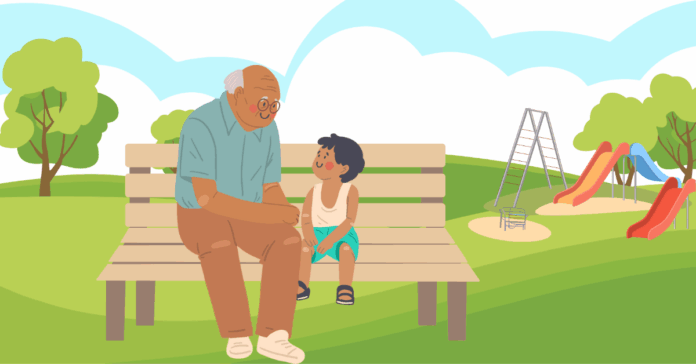
Everyone needs a grandparent.
When my son started college in a distant state, he prioritized finding “his people.” He found them, or maybe I should say her, at the church. She was a kind older woman, sitting in the pew, who smiled at him with quiet encouragement. Over the coming year, she became a surrogate grandmother, and when I visited at the end of the year, she was one of the people he was most excited for me to meet.
My children have the rare blessing of knowing all of their grandparents, and a few honorary ones as well. They’ve benefited greatly from what researchers now refer to as “The Grandparenting Effect.”
The power of presence
Grandparenting has been consistently linked to improved well-being for both children and grandparents. A warm relationship with a grandparent provides emotional stability and a strong sense of identity, positively influencing a child’s socialization, emotional development and even their core values. Studies show that children who are close to their grandparents exhibit fewer emotional issues and lower levels of depressive symptoms.
Grandparents offer something unique: unconditional love without the burden of day-to-day discipline. They’re another trusted adult, often sharing family traditions, stories and wisdom that deepen a child’s connection to their heritage. In many families, grandparents reinforce the culture and values the parents are trying to instill — sometimes even more effectively because their influence feels less authoritative and more enduring.
These bonds also correlate with improved outcomes in school, stronger problem-solving skills and better long-term emotional resilience particularly when the grandparent is not the primary caregiver.
Benefits beyond the kids
But it isn’t all about the grandchild. In situations where the parents are supportive of building the bonds between child and grandparent, being involved in the life of a grandchild is good for grandparents too. Involvement with the younger generation brings an increased cognitive engagement, strengthens social connection, reduces loneliness and provides a greater sense of purpose in the life of the older adult. In fact, one study estimates that being moderately involved with grandchildren is associated with an additional 10 years of lifespan!
The balancing act
Of course, no relationship is without challenges. Conflicts can arise over discipline styles, spending habits, education choices or concerns about overindulgence. These inter-family tensions are often exacerbated when contact is infrequent. The generation gap widens due to a lack of shared time or involvement.
Researchers describe a “U-shaped” curve in grandparental involvement: When grandparents are either too distant or too involved, the benefits decline — and in some cases, negative effects emerge. Under-involvement can weaken the bond entirely, while over-involvement can lead to confusion over roles. The key is balance. Open communication, healthy boundaries and mutual respect are essential in navigating this unique family dynamic.
Embracing the ‘Grandparenting Effect’
Understanding the nuances of grandparent involvement can help families foster strong, healthy relationships that benefit everyone involved. When done well, grandparenting creates a beautiful bridge between generations — a source of love, wisdom and lasting connection.
Whether biological or honorary, every child deserves the warmth and guidance of a grandparent figure. And every grandparent can benefit from loving the littlest souls in their lives.